Haircut numbers: clipper guard sizes in millimeters and inches
Haircut numbers are clipper shorthand for the length of hair a guard is designed to leave, not the amount cut off. On Wahl’s standard chart, each step from #1 to #8 adds 1/8 inch, so a #2 leaves 1/4 inch. Other brands label some lengths differently, so confirm the measurement, not just the number.
| What you’re asking | Quick answer |
|---|---|
| What the number describes | The length a guard is designed to leave, not the hair removed |
| Wahl #1 to #8 | 1/8 in (3 mm) up to 1 in (25 mm), in 1/8-inch steps |
| Number 2 haircut | 1/4 in on Wahl, Andis and Oster models checked here |
| #0 vs. no guard | Not reliably the same; #0 is often a 1/16-inch attachment |
| Half guard | An in-between attachment, such as Wahl’s #1-1/2 at 3/16 in |
| Taper lever | Open for longer, closed for closer; no published universal mm figure |
| Across brands | Labels split below #1 and above #4 |
| What to tell your barber | A measurement plus where it goes |
What haircut numbers mean
A haircut number is clipper shorthand for the length a guard is designed to leave on your head. Wahl says its guards cut hair to the length listed on the guard, so a #8 listed at 1 inch trims anything longer down to 1 inch. Higher numbers leave more hair. The number itself is not a universal unit.
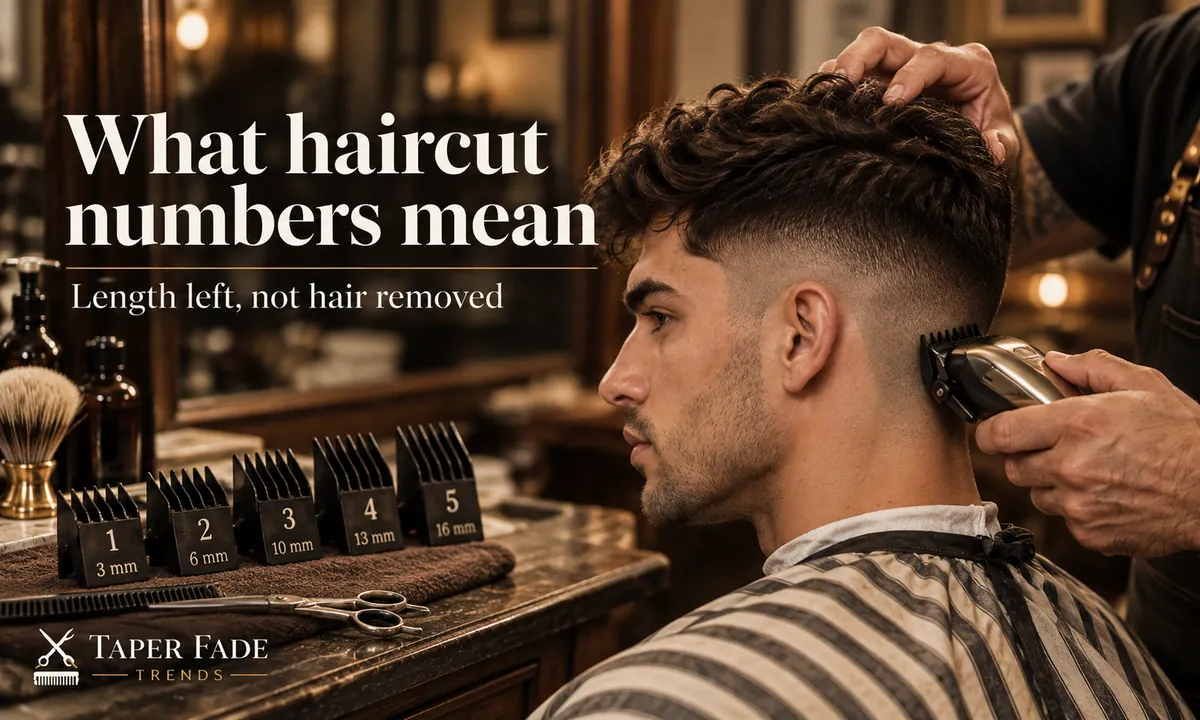
A haircut number describes hair left, not hair removed. A #2 means the clipper setup is aiming to leave about 1/4 inch, whether you walked in with two inches of growth or half an inch. Brand, blade and lever settings can still change the exact result.
A clipper guard, which Wahl also calls a guide comb, is the plastic or metal attachment that holds hair away from the blade. The blade does the cutting. The guard decides how far from the scalp that cut happens. Numbers work well between people using the same guard system. Across different clippers, millimeters or inches are the only labels that mean the same thing everywhere.
Haircut number chart in mm and inches
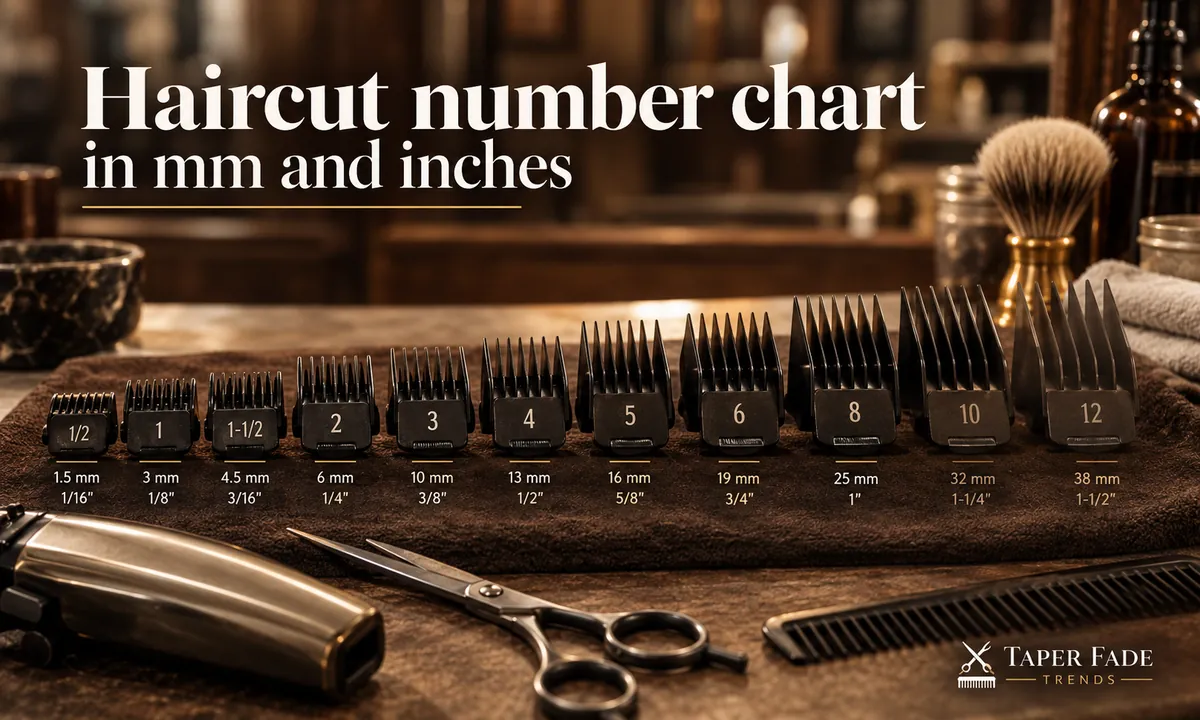
These nominal lengths come from Wahl’s guard size chart, with millimeters from Wahl’s Chrome Pro kit listing. They are manufacturer figures, not measurements taken for this guide.
Wahl chart
Wahl chart
Wahl Chrome Pro kit
Wahl chart
Wahl chart
Wahl chart
Wahl chart
Wahl chart
Wahl chart
Wahl chart
Wahl rounds its metric figures. A quarter inch is 6.35 mm and 3/8 inch is 9.525 mm, so a guard printed “6 mm” or “10 mm” is the same Wahl length, not a different size.
Number 2 haircut length
On Wahl’s guide-comb chart, a #2 haircut leaves 1/4 inch of hair, which Wahl’s Chrome Pro kit lists as 6 mm. A quarter inch is exactly 6.35 mm, so 6 mm is Wahl’s rounded figure. Andis and Oster also label 1/4 inch as #2 on the models checked here, but confirm the length printed on the guard.
Half guards
A half guard is an in-between attachment that fills a gap between whole numbers. Wahl’s Chrome Pro kit includes a #1/2 at 1/16 inch (1.5 mm) and a #1-1/2 at 3/16 inch (4.5 mm). Other brands may give the same length a different label, so read the length printed on the guard.
The same kit also ships left and right ear-taper combs. Those are shaped for cutting around the ear and do not have a single number.
Guards longer than #8
Wahl’s own chart describes #8 as the longest you can go with a clipper, yet Wahl also sells #10 and #12 guide combs at 1-1/4 and 1-1/2 inches. Treat #8 as the top of a standard kit, not the top of what exists.
Why guard numbers are not universal
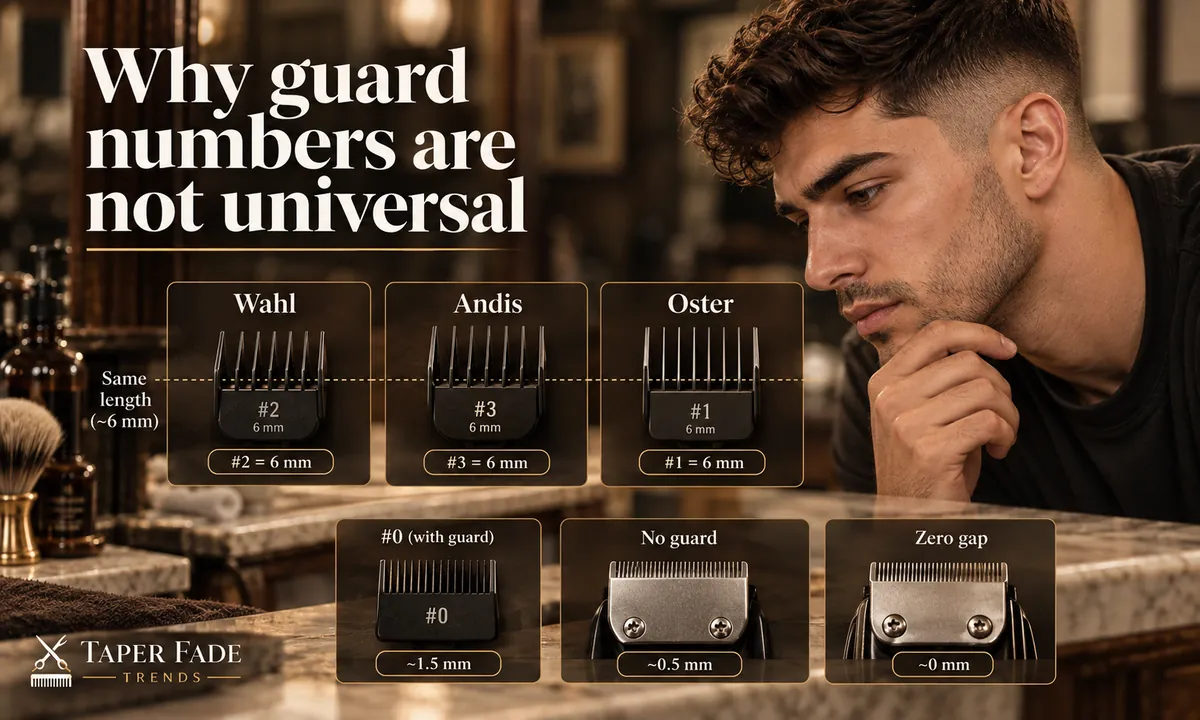
Clipper guard sizes are not the same across brands for every number. Wahl, Andis and Oster agree from #1 to #3 on the models checked for this guide, and Oster matches Wahl at #4. Below #1 and above #4 the labels split: Andis calls 1/16 inch #0, and Oster’s Craftsman labels 3/4 inch #5 and 1 inch #6.
Same length, different number
| Length | Wahl chart | Andis inLINER II trimmer | Oster Craftsman clipper |
|---|---|---|---|
| 1/16 in | #1/2 | #0 | Not in kit |
| 1/8 in | #1 | #1 | #1 |
| 1/4 in | #2 | #2 | #2 |
| 3/8 in | #3 | #3 | #3 |
| 1/2 in | #4 | Not in kit | #4 |
| 5/8 in | #5 | Not in kit | Not in kit |
| 3/4 in | #6 | Not in kit | #5 |
| 1 in | #8 | Not in kit | #6 |
Sources: Wahl guard size chart, Andis inLINER II, Oster Craftsman.
The practical risk sits at the long end. Ask for “a 6 on top” and an Oster Craftsman #6 leaves 1 inch, while a Wahl #6 leaves 3/4 inch. A quarter inch is two full steps on the Wahl scale. No brand is wrong here; each number is only reliable inside its own guard system.
#0, no guard and zero gap
A “#0” does not reliably mean no guard. No guard means the attachment comb is off and the bare blade sets the length, which depends on the clipper and lever. A #0 is often a physical attachment: Andis’s inLINER II trimmer and Oster’s Ace Mini Trimmer both come with a #0 comb rated at 1/16 inch.
Many barbers and guides still use “zero” to mean no guard, so ask which one you are getting. A bare blade has its own length. Wahl’s UK site gives 0.8 mm for its standard blade with no comb fitted; other clippers differ.
Zero gap is a third thing again. It is a blade adjustment that moves the cutting blade flush with the fixed blade for the closest possible cut, and Oster lists its Ace trimmer as one that can be zero-gapped. It changes the blade, not the guard, and a zero-gapped blade leaves less room for error against the skin.
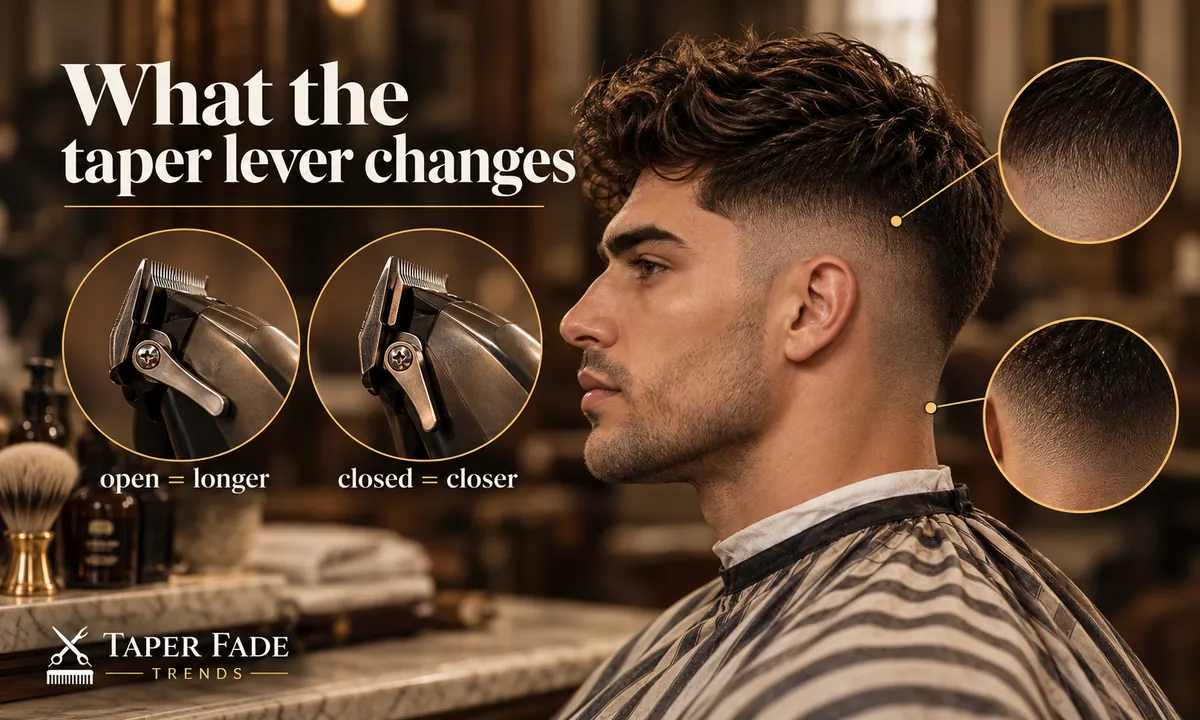
What the taper lever changes
Opening the taper lever makes the cut longer and closing it makes the cut closer, but the manufacturer pages checked here give no millimeter figure for the change. On Wahl clippers, moving the lever down lengthens the cut and moving it up shortens it. Oster says its Craftsman lever runs from a #000 to a #1 blade setting.
Wahl describes the lever as a way to adjust the closeness of the cut between guard lengths, which is why barbers use it to blend a line between two guards. The size of that adjustment depends on the clipper and its blade.
Some guides state that an open #1 equals a #1-1/2, or that the lever adds a fixed 0.5 to 1 mm. Neither the Wahl nor the Oster pages behind this guide say that, so treat those figures as rules of thumb to check against your own clipper’s manual, not as specifications.
How haircut numbers look on real hair
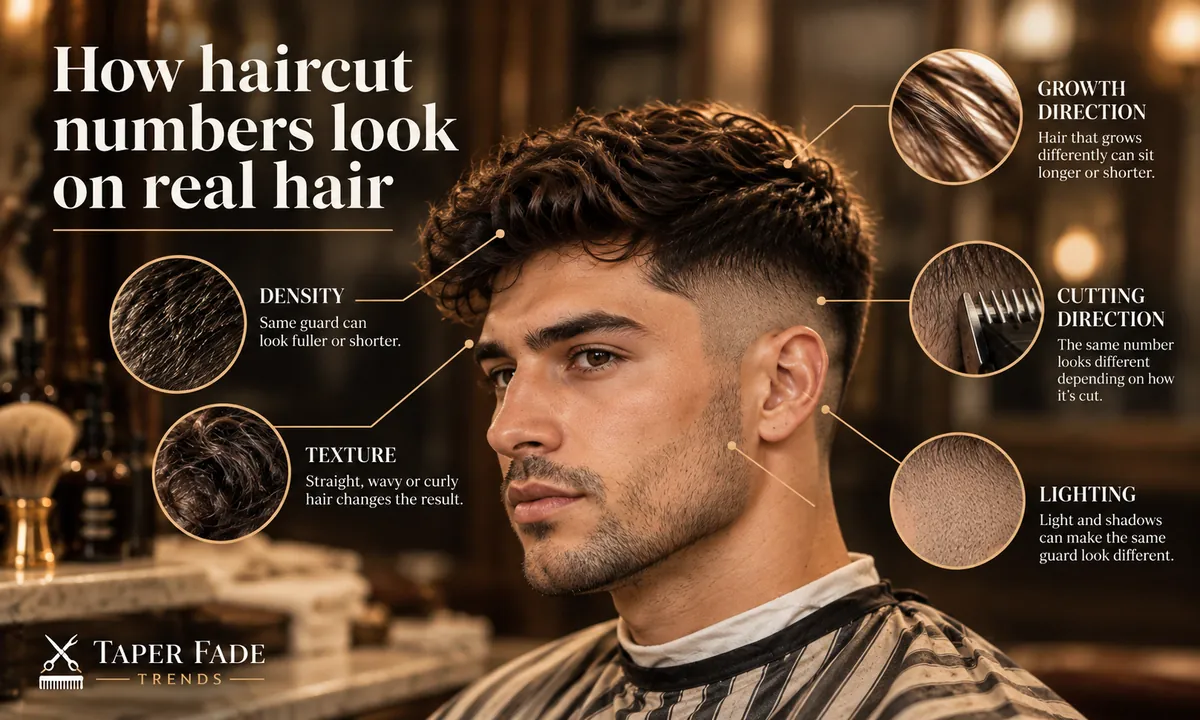
The same haircut number will not look identical on everyone. A guard sets a nominal cutting length, but density, texture, growth direction, crown whorls, lighting and cutting direction all change what you see. Wahl notes that cutting with the grain can miss hairs, so direction alone can leave one head looking longer than another.
What changes the look at the same length
- Density. More hairs per square inch fill the same length, so less scalp shows through.
- Texture. Straight, wavy, curly and coily hair sit differently at the same cut length.
- Growth direction. Crowns, whorls and cowlicks can make one guard length stand up in one spot and lie flat in another.
- Cutting direction. Wahl recommends cutting against the growth so every hair feeds through the guard.
- Light and angle. Two photos of the same cut can read as different lengths.
None of this makes a number right or wrong for a hair type. It means the chart tells you the target length, and your head decides how that length looks.
Why photos cannot prove a guard length
How to choose a starting number
Choose a starting number by the length you are willing to keep, then go one guard longer if you are unsure. A barber can take more off in the same visit; nobody can put it back. Book of Barbering’s guard size guide gives the same start-longer advice.
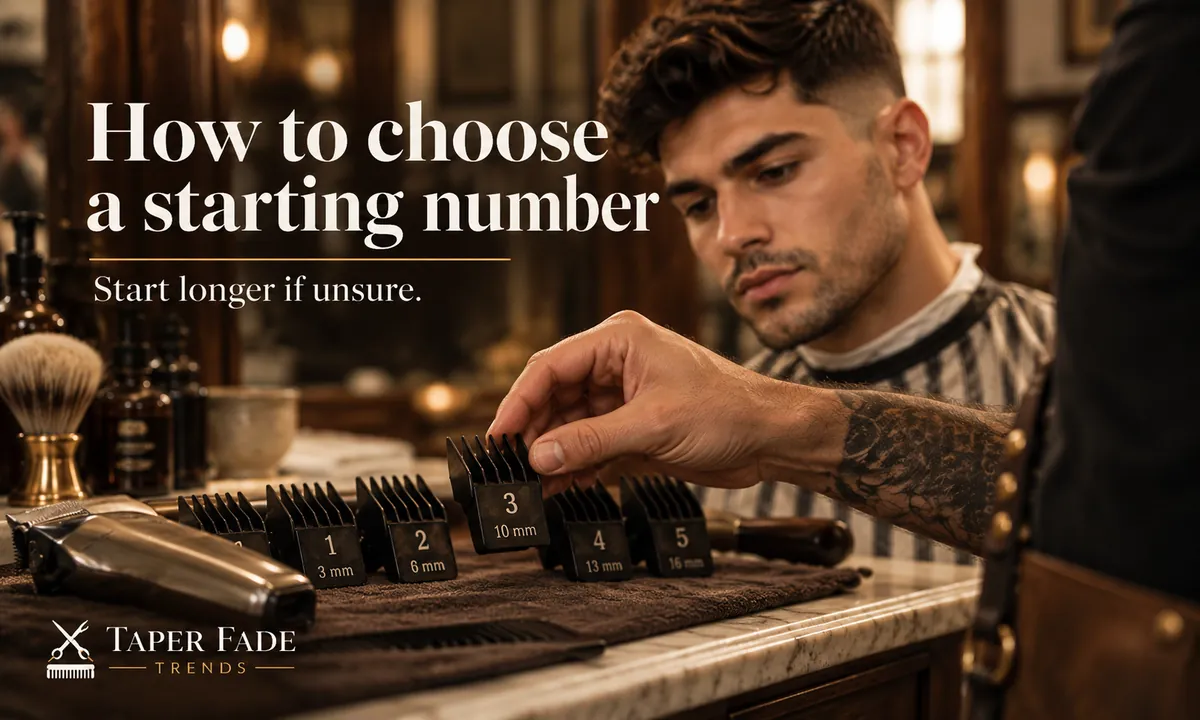
- Decide how much length you want to keep on the sides and on top. They are two separate numbers.
- Find that length in inches or millimeters in the chart above, then read the matching number.
- If the barber or clipper is new to you, ask which brand of guards they use, and check the brand table.
- Ask the barber to cut one section, then look before going shorter.
A number gives the starting length. Blending, scissor work and the fade itself still shape the finished cut.
What to tell your barber
Ask for a measurement and a location, not just a number. For example: “Keep the lower sides and back at about 1/4 inch, blend up to around the temple, and leave the top long enough to push to the side.” Then show a photo and ask which guard system the barber uses.
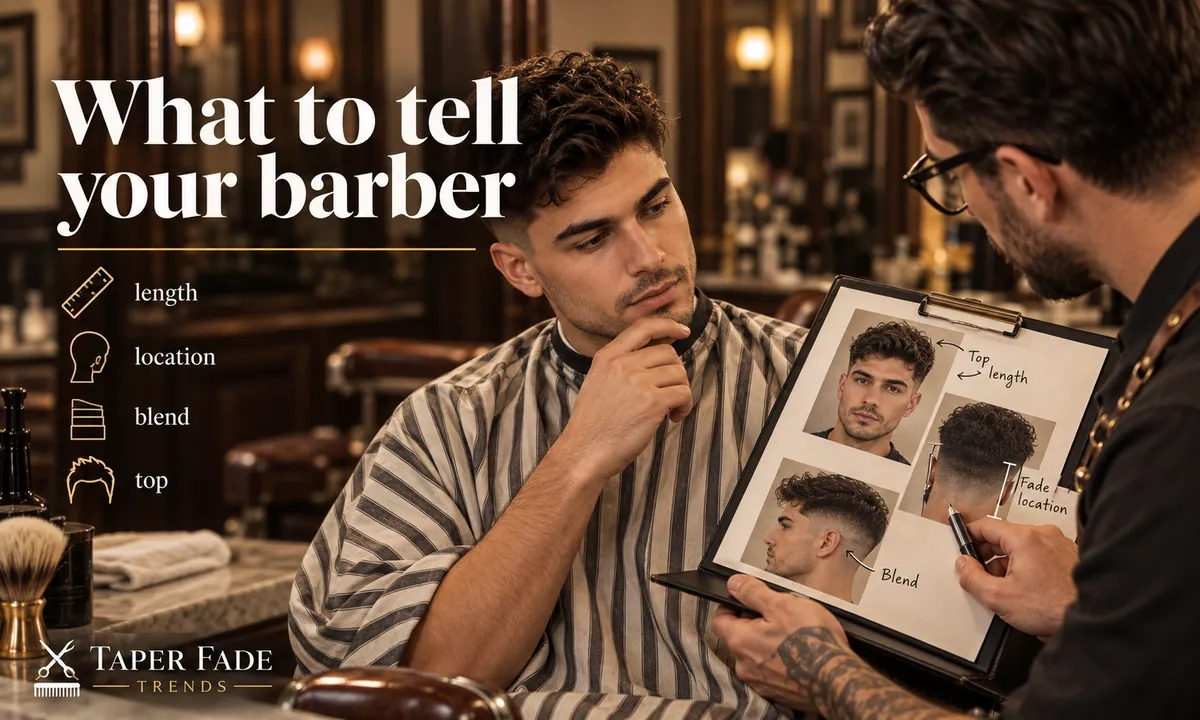
That request covers four separate things: the shortest length, how high the short part climbs, how the blend should look, and the top length. A single number only covers the first. The barber can then translate your measurements into their own guards, blade and lever.
If you bring photos, bring a front view, both side profiles and the back. The sides show where the fade sits; the back shows the neckline.
Common haircut-number mistakes
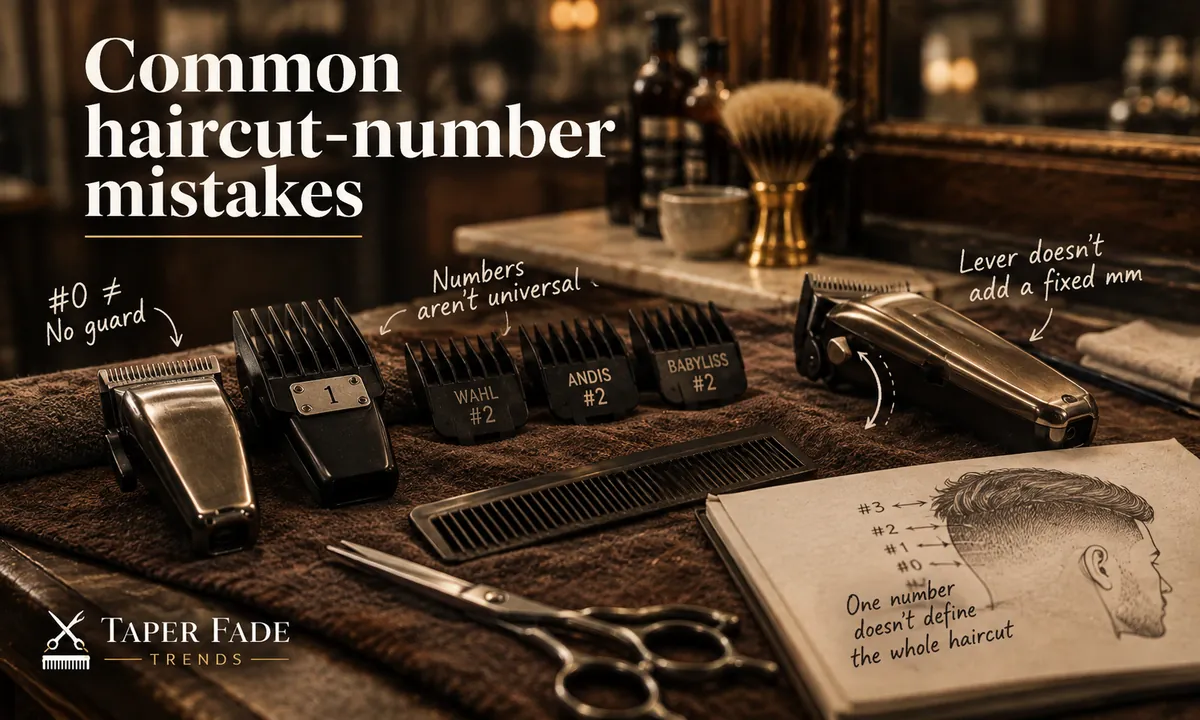
- Treating #0 and no guard as the same thing. On Andis and Oster trimmers, #0 is a 1/16-inch comb.
- Assuming a #6 is the same length everywhere. On the Oster Craftsman it leaves 1 inch; on Wahl, 3/4 inch.
- Calling #8 the longest guard. Wahl sells #10 and #12.
- Expecting the lever to add a fixed number of millimeters. The manufacturer pages checked here give none.
- Treating one number as the whole haircut. It says nothing about fade height, blend or top length.
- Reading a guard number off a photo. Without a recorded setup, a picture shows only the result.
Method and sources
Taper Fade Trends compiled every length on this page from manufacturer product and guide pages viewed on September 29, 2026. We did not cut or measure hair for this guide, and no clipper was physically tested. Manufacturers update listings, so the guard printed in your hand outranks any chart, including this one.

- Wahl USA, Ultimate Guide to Hair Clipper Guard Sizes
- Wahl USA, Chrome Pro Corded Clipper Kit 09670-1201
- Wahl USA, #10 and #12 Long Hair Guide Comb Set
- Wahl UK, Understanding Clipper Cutting Lengths
- Andis, inLINER II Trimmer (RT-2, item 563070)
- Oster Professional, Craftsman Adjustable Mag Clipper
- Oster Professional, Craftsman and Ace Combo Kit
- Book of Barbering, Hair Clipper Guard Sizes
Next: choose the fade shape
A haircut number sets the length. It does not decide where a fade or taper starts, how high it climbs or how it meets the top. With your measurement settled, choose the fade shape and height as a separate instruction; the Taper Fade Trends taper fade guide covers that decision.
Keep reading
All guides
Taper fade: a visual guide to heights, finishes and top styles
Where a taper fade sits from the front, side and back, how low, mid and high differ, and how to ask for side coverage and a finish with or without skin.
How to ask for a taper fade: a five-part barber brief
How to ask for a taper fade: say where it may reach, how short the base goes, how much side weight stays and what to do on top, then check the plan first.
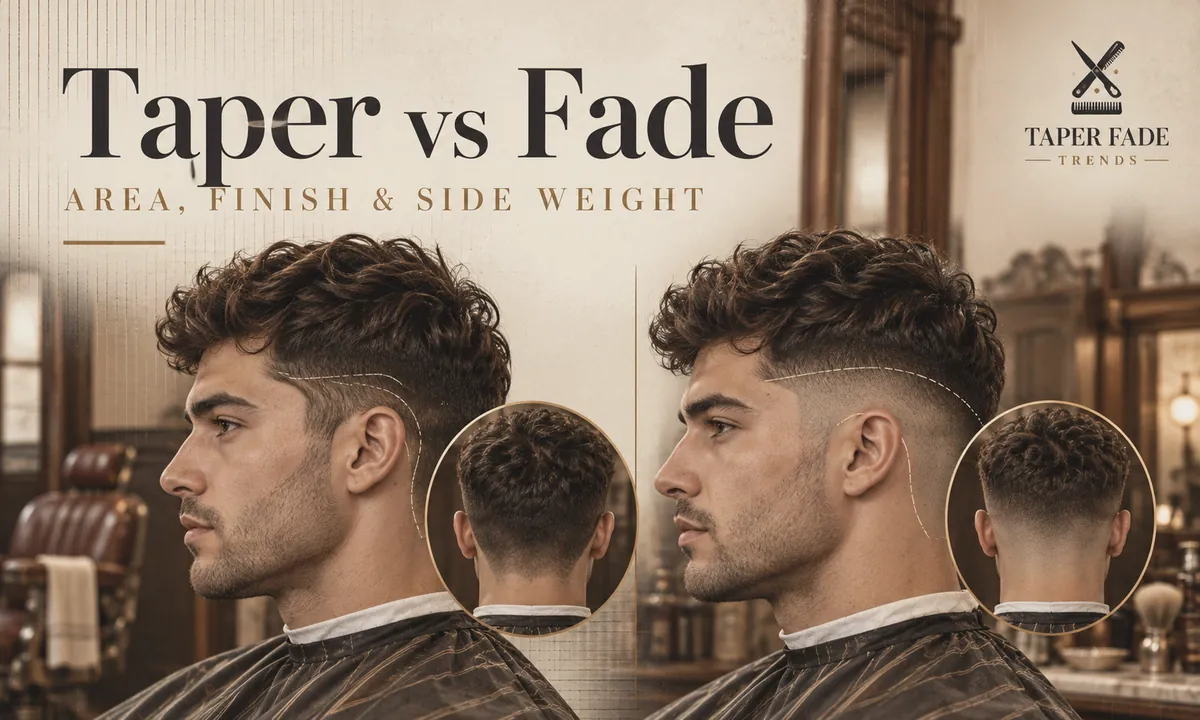
Taper vs fade: what changes in area, finish and side weight
Taper vs fade compared by coverage, height, shortest finish and side weight, with a back-view check and word-for-word barber scripts for either cut.
More in barber brief and upkeep
Barber brief and upkeep: all 4- How to ask for a taper fade: a five-part barber brief9 min
- Haircut numbers: clipper guard sizes in millimeters and inchesYou are here
- How to maintain a taper fade between haircuts11 min
- How long does a taper fade last? Fresh, tidy and grown-out stages13 min