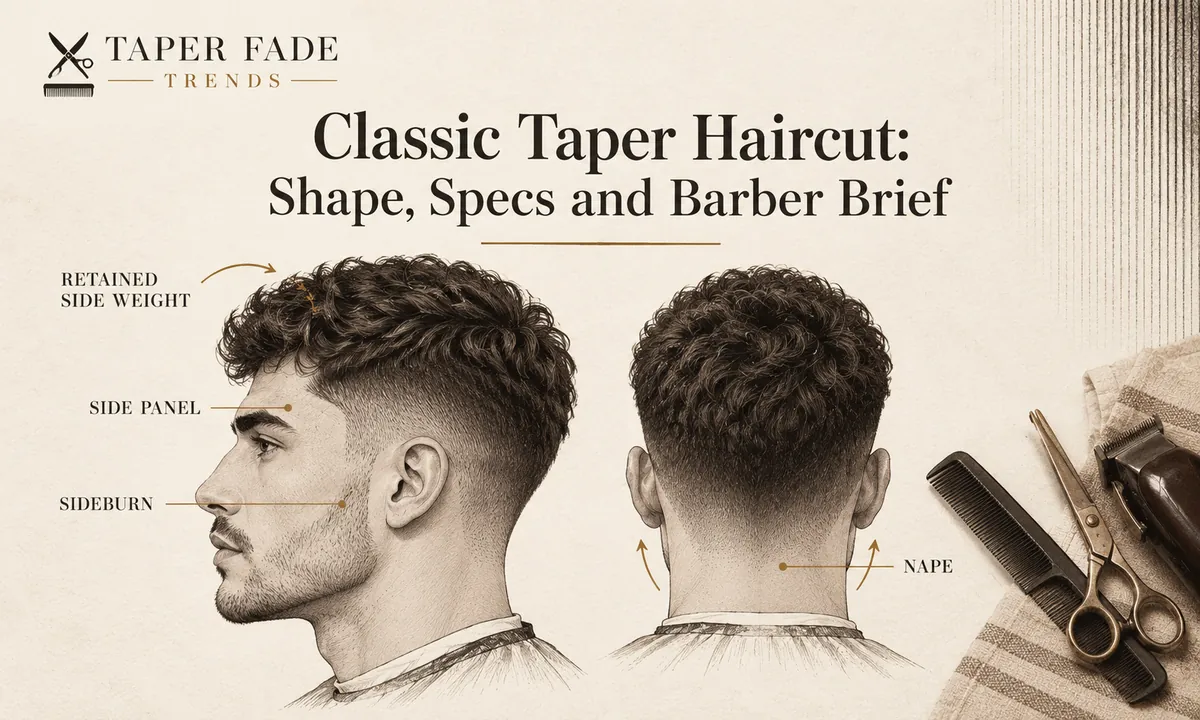
Classic taper haircut: shape, specs and barber brief
A classic taper haircut keeps side weight while the sideburns and nape go shorter. See the specs to choose, the skin question and what to tell your barber.
What a taper fade is, where it came from, and the styles that sit on top of one at any height. Read these before you pick a placement.
A taper fade shortens the hair closest to the skin at the sideburns, temples and nape, while the rest of the sides and back keep more length than a full fade. The guides here cover the cut itself rather than one placement of it.
If you already know you want a low, mid or high taper, skip to that height. If the words taper and fade still blur together, start with the main guide below.
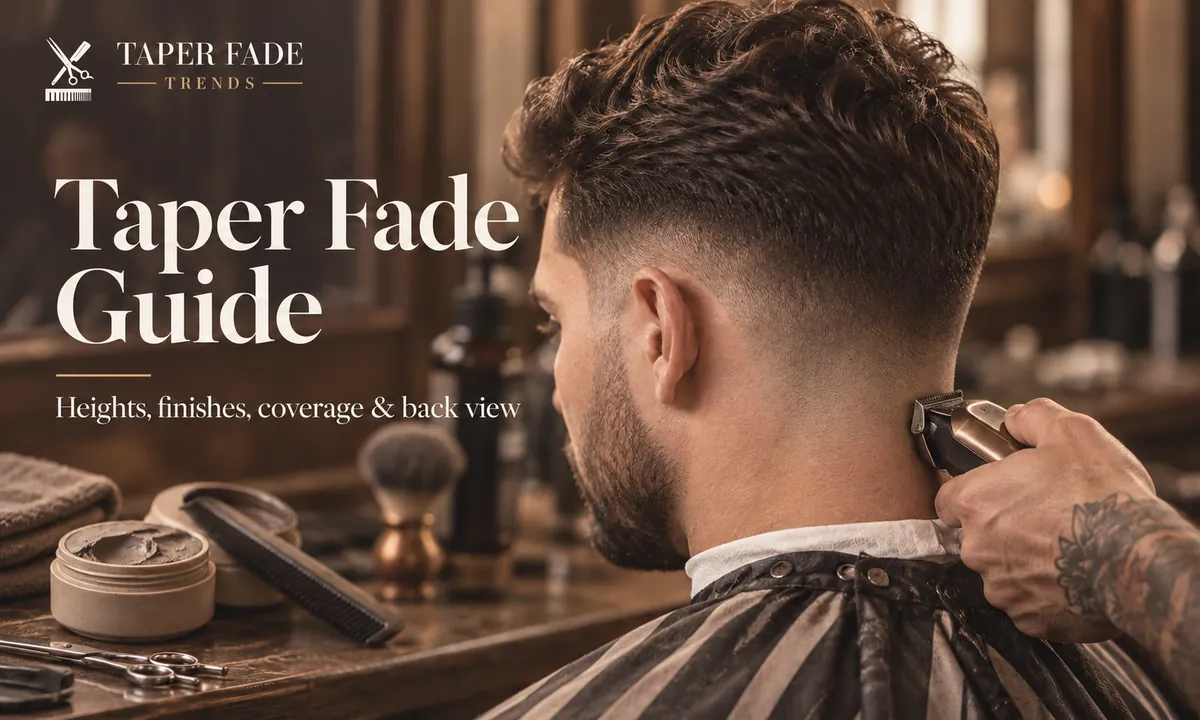
A taper fade shortens the hair closest to the skin in two places, the sideburns and temples and the nape, while the rest of the sides and back keep more length than a full fade. You choose its height, side coverage, shortest finish and top separately, then confirm all four with side and back references before the clippers start.
A classic taper haircut keeps side weight while the sideburns and nape go shorter. See the specs to choose, the skin question and what to tell your barber.
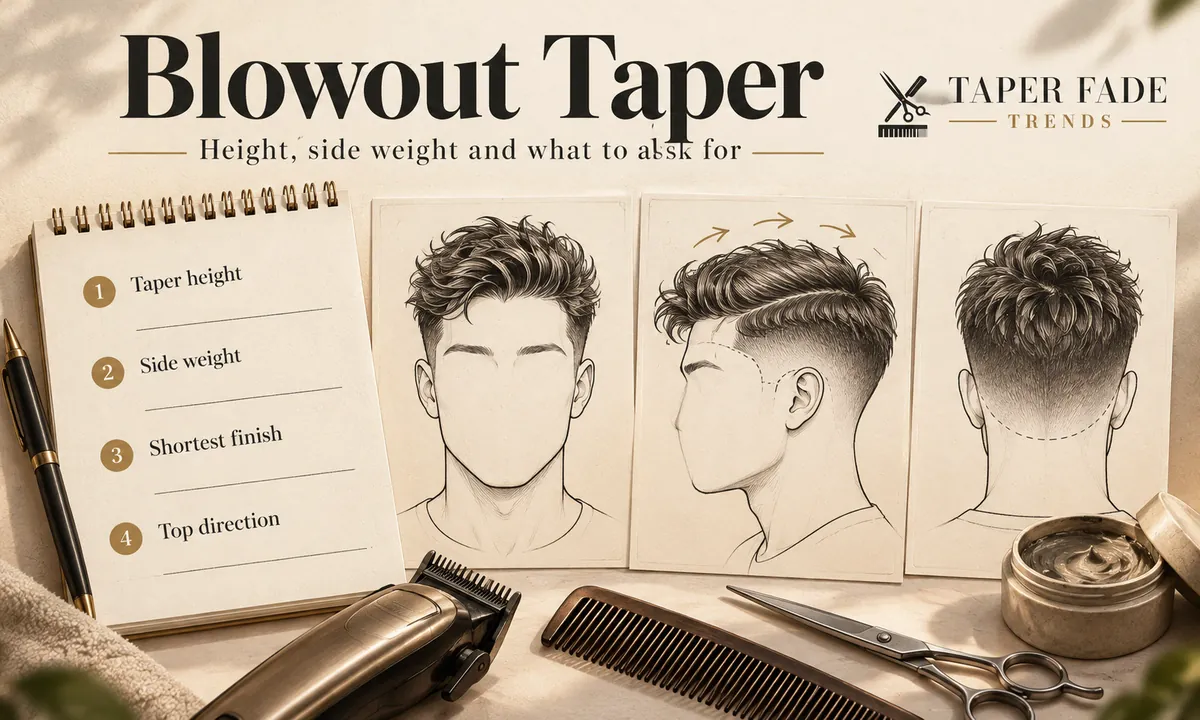
What a blowout taper is, how taper height, side weight and finish differ, how much top length sources suggest, and a barber brief to fill in.
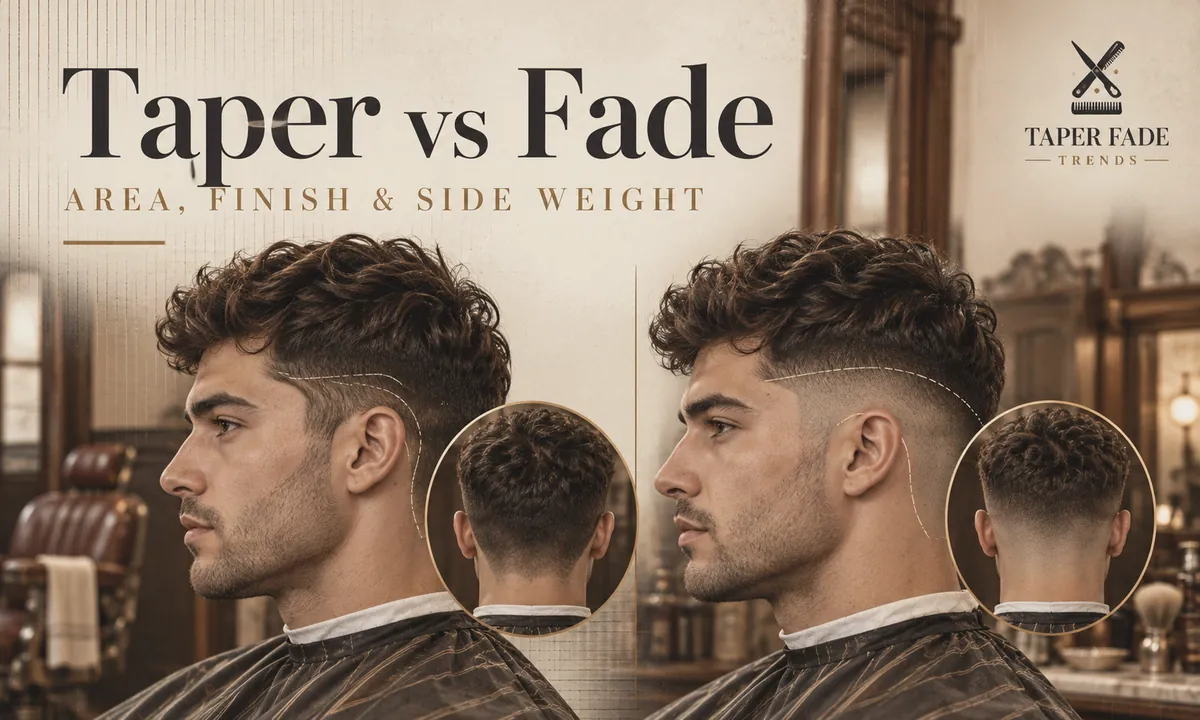
Taper vs fade compared by coverage, height, shortest finish and side weight, with a back-view check and word-for-word barber scripts for either cut.
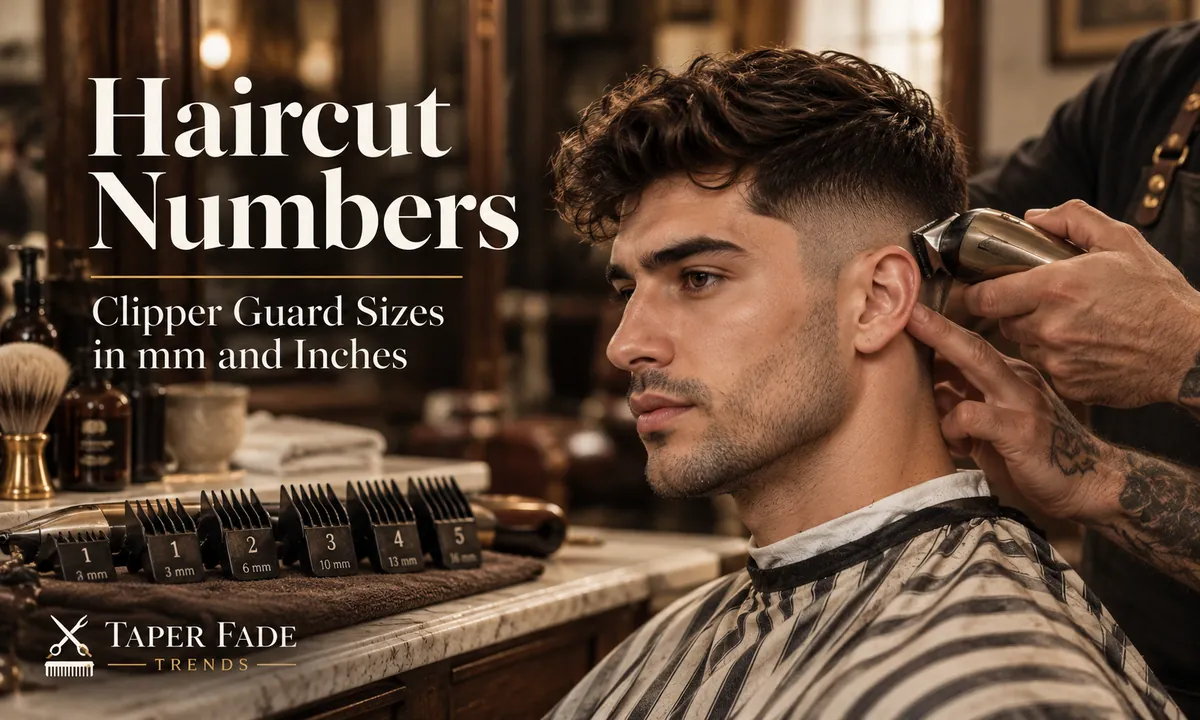
Haircut numbers in mm and inches, checked against Wahl, Andis and Oster specs, plus why #0 isn’t always no guard and what to tell your barber.
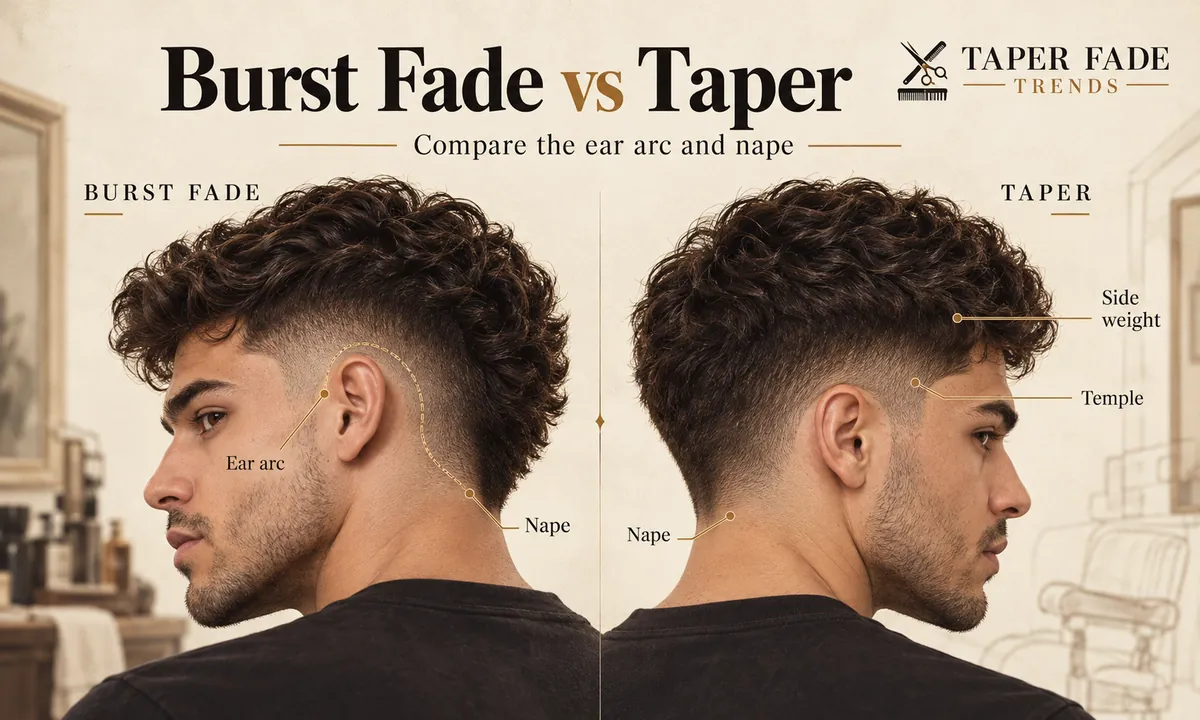
Burst fade vs taper compared by ear arc, side coverage, nape treatment and shortest finish, plus a five-part barber brief and the photos to bring.
A low taper keeps the short work at the sideburns and nape, so most of the side panel stays full. These guides cover it on different hair types and under different tops.
14 guides
A mid taper sits between low and high: it takes more off the sides than a low taper, while the side panel keeps more hair than a full mid fade.
6 guides
A high taper starts its blend at the temple corner but keeps the short work to a narrow band, so the sides and back stay fuller than on a full high fade.
8 guides
A burst fade curves the short work around the ear instead of running it level around the head. These guides cover where it sits and how to ask for it.
3 guides
Two cuts with similar names, compared on the same criteria: where the short work sits, how much side hair stays, the finish and how each grows out.
5 guides
The practical side: the words to use at the chair, the guard numbers behind them, and what happens to the cut in the weeks after.
4 guides