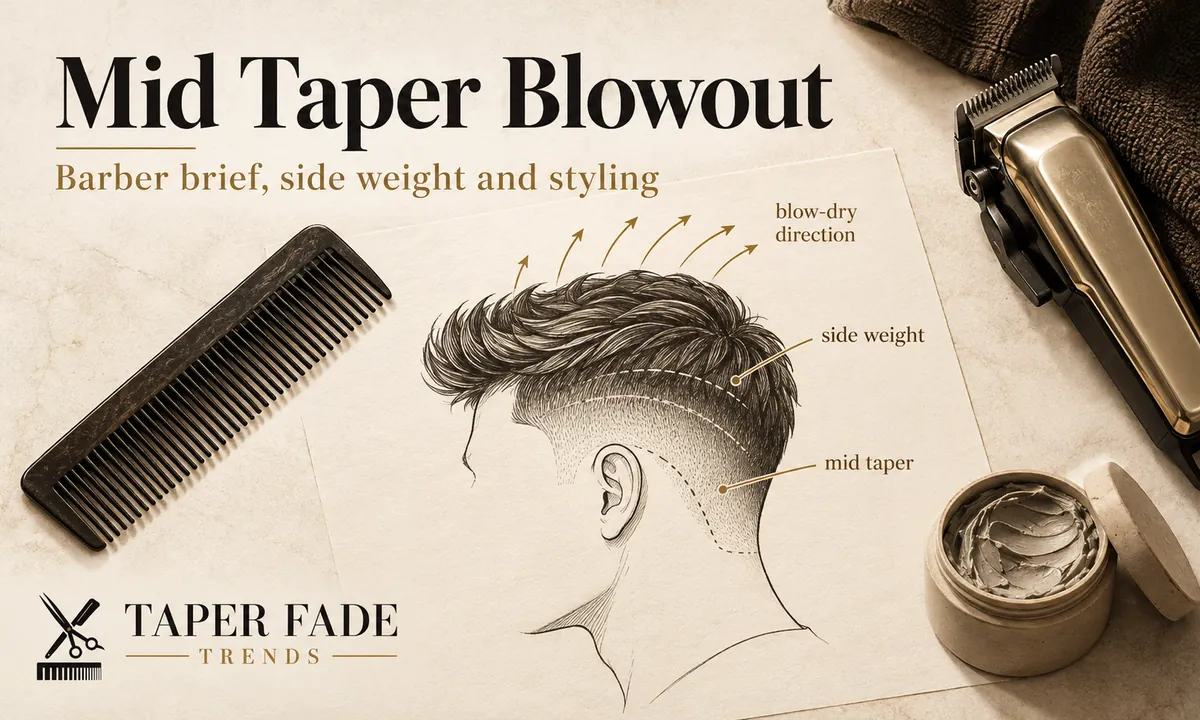
Mid taper blowout: keep volume without flattening the sides
A mid taper blowout is a temple-height taper plus enough top and upper-side length to dry up and out. What to tell your barber and how to style it.
A mid taper sits between low and high: it takes more off the sides than a low taper, while the side panel keeps more hair than a full mid fade.
Like every taper height, “mid” only names placement. Whether it finishes at bare skin or stops at a shadow is a separate call, and so is how much side weight stays.
The guides below cover the mid taper on its own, under a blowout, on curly hair, where dry length and width matter more than the guard number, and on straight hair, where density and growth direction decide how much side weight stays.
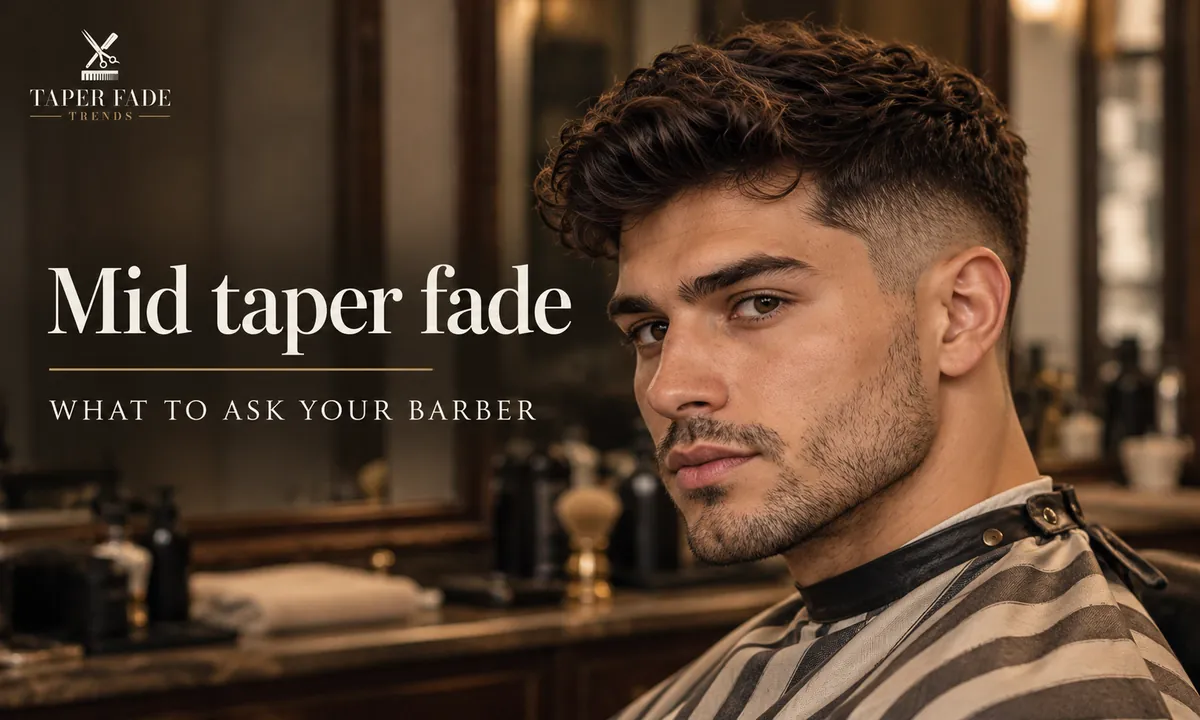
A mid taper fade starts shortening the sides at about temple height and keeps the shortest work to the sideburns, the hair around the ears and the nape, so the side panel keeps more hair than a full mid fade. It can finish at bare skin or stop at a shadow. That part is your call.
A mid taper blowout is a temple-height taper plus enough top and upper-side length to dry up and out. What to tell your barber and how to style it.
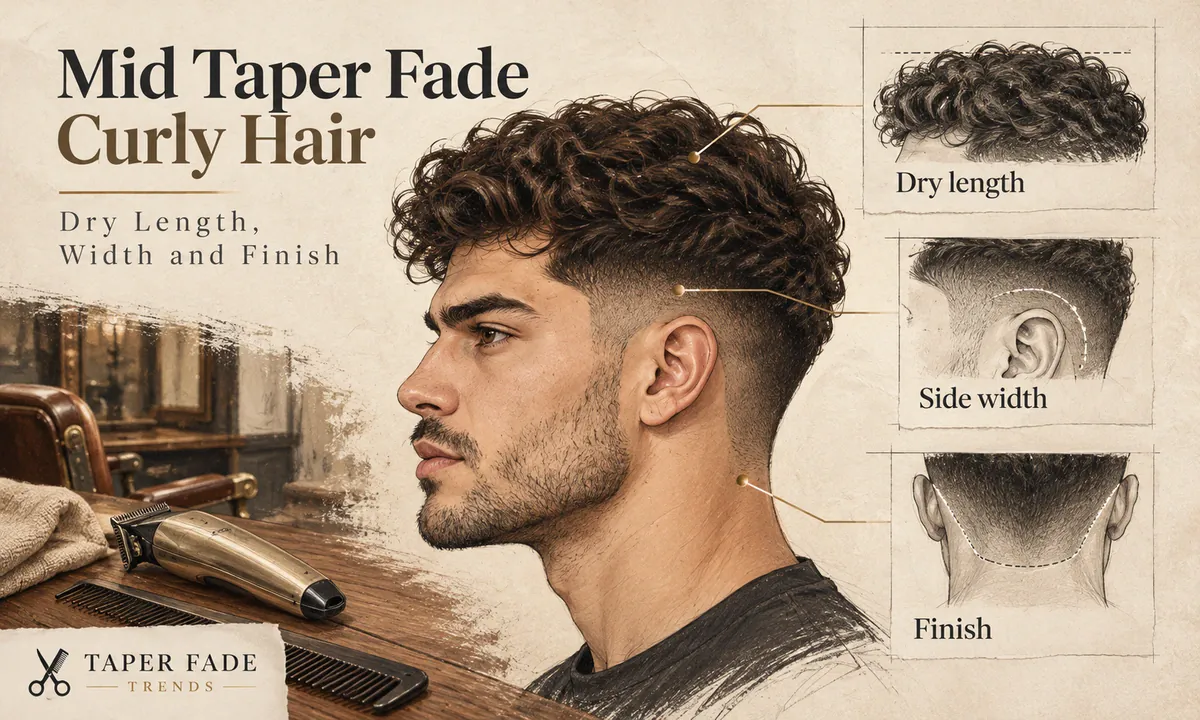
Mid taper fade curly hair guide: what it keeps vs a full mid fade, how to judge dry length and side width, and the four specs to give your barber.
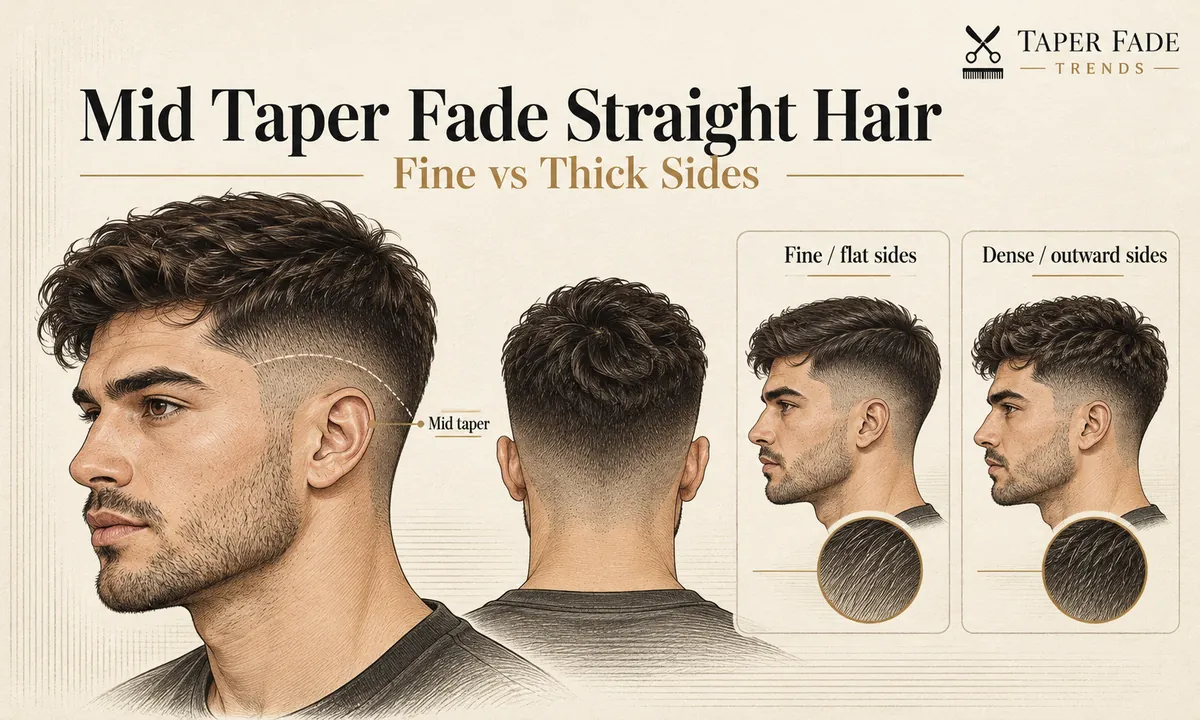
Mid taper fade straight hair guide: how much side weight to keep on fine or dense sides, why sides stick out after a cut, and what to tell your barber.
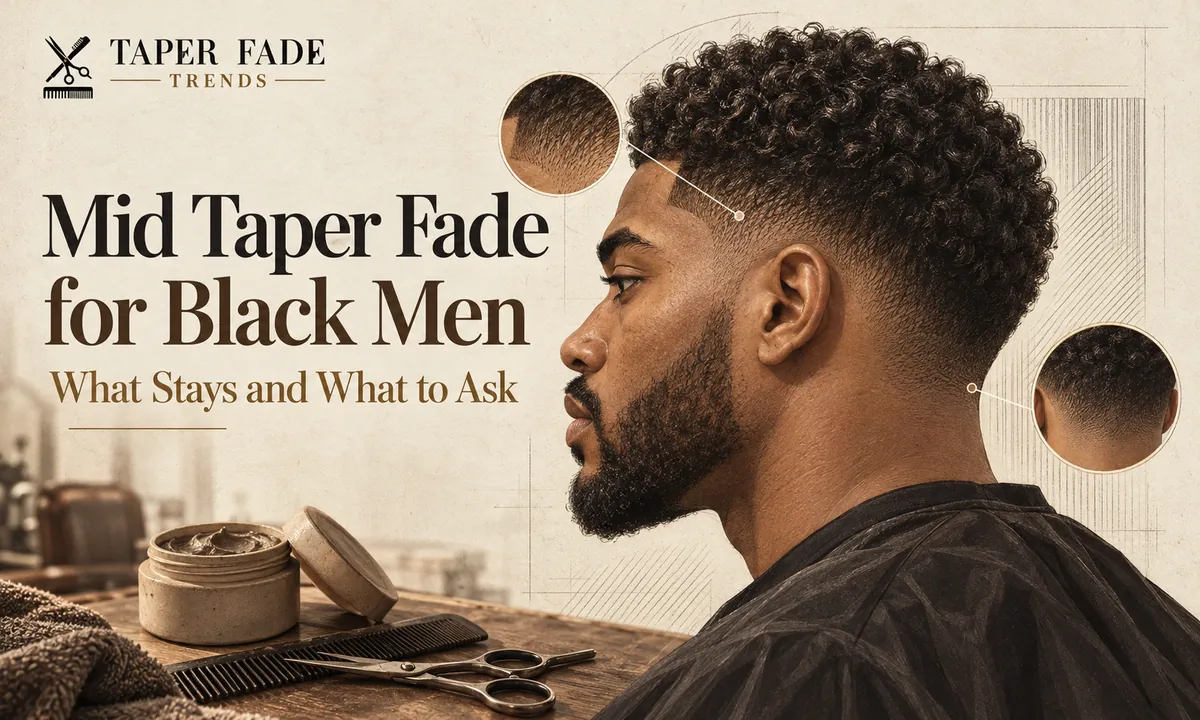
Mid taper fade Black male guide: keep more side weight than a full mid fade, set finish and hairline, protect waves, coils or locs, and brief your barber.
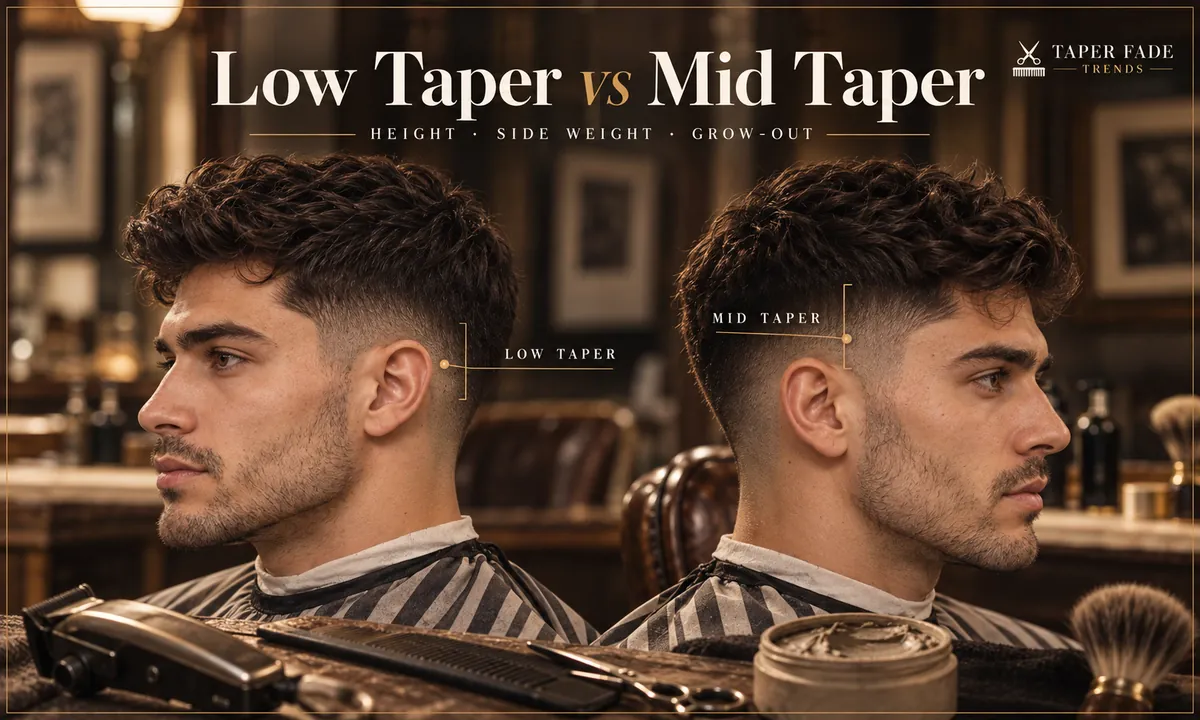
Low taper vs mid taper compared on height, side weight, shortest finish and grow-out, why switching mid to low takes time, and what to tell your barber.
What a taper fade is, where it came from, and the styles that sit on top of one at any height. Read these before you pick a placement.
6 guides
A low taper keeps the short work at the sideburns and nape, so most of the side panel stays full. These guides cover it on different hair types and under different tops.
14 guides
A high taper starts its blend at the temple corner but keeps the short work to a narrow band, so the sides and back stay fuller than on a full high fade.
8 guides
A burst fade curves the short work around the ear instead of running it level around the head. These guides cover where it sits and how to ask for it.
3 guides
Two cuts with similar names, compared on the same criteria: where the short work sits, how much side hair stays, the finish and how each grows out.
5 guides
The practical side: the words to use at the chair, the guard numbers behind them, and what happens to the cut in the weeks after.
4 guides