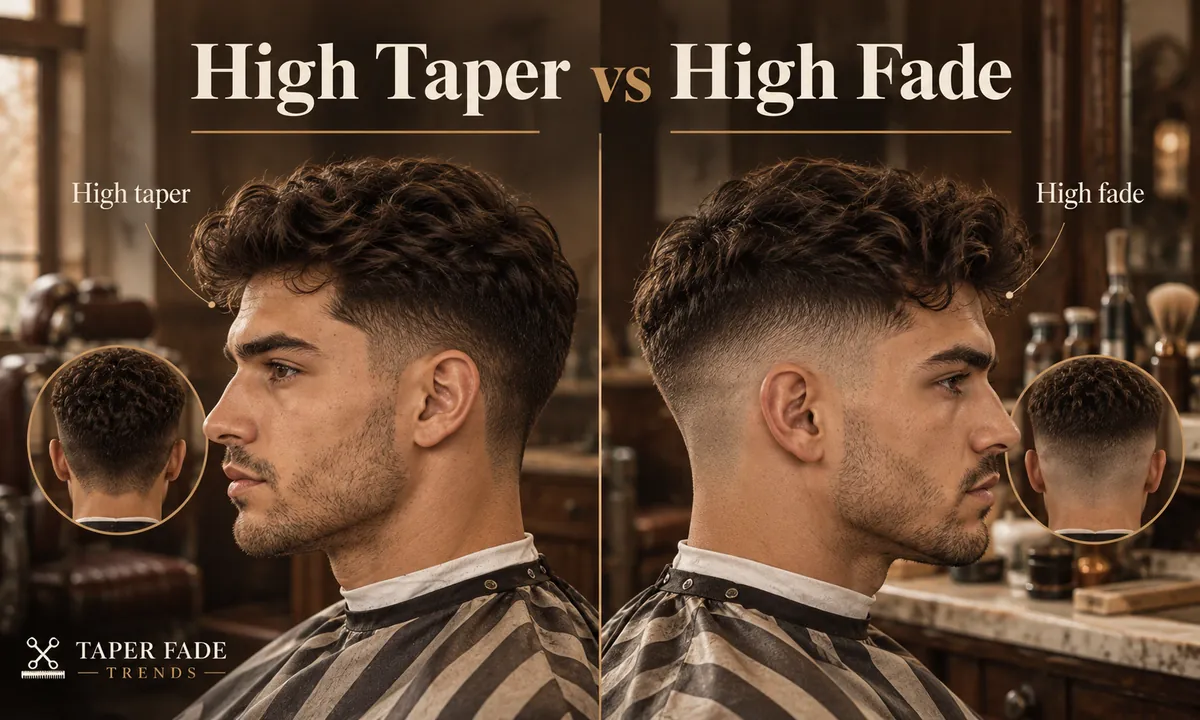
High taper vs high fade: side, back and coverage
High taper vs high fade compared by side weight, back coverage and shortest finish, plus why barbers use the names differently and a four-point brief.
Two cuts with similar names, compared on the same criteria: where the short work sits, how much side hair stays, the finish and how each grows out.
Most bad haircuts start with a label both people understood differently. These comparisons put the two cuts next to each other so you can name the one you want and recognise the one you do not.
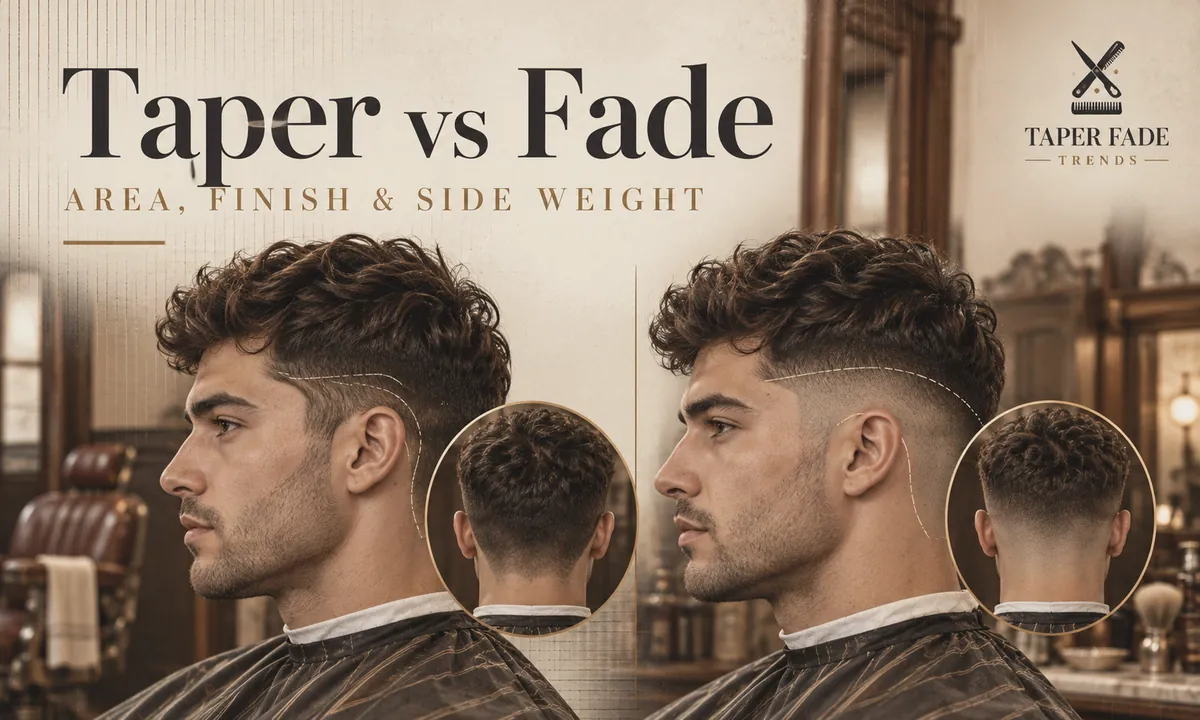
Taper vs fade is mostly a question of area. A taper usually keeps its shortest work at the temples, sideburns and nape and leaves more weight through the sides, while a fade carries the transition across a wider part of the sides and back. Neither word fixes the shortest finish, so name skin, shadow or visible hair yourself.
High taper vs high fade compared by side weight, back coverage and shortest finish, plus why barbers use the names differently and a four-point brief.
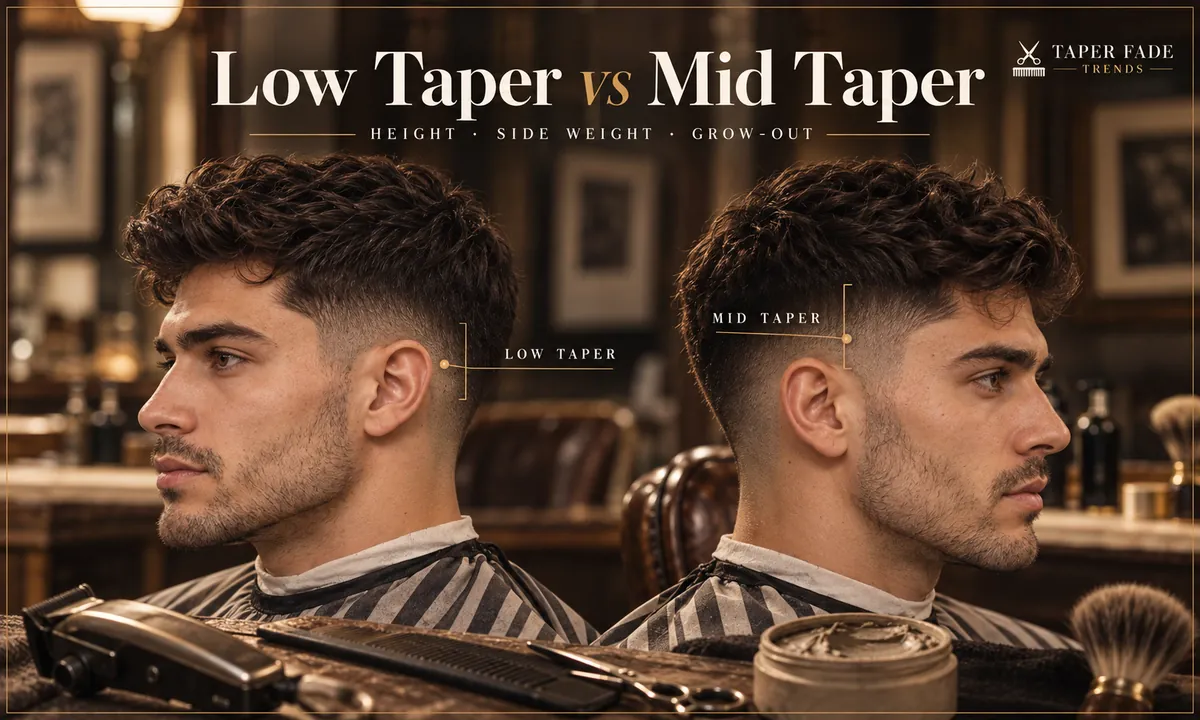
Low taper vs mid taper compared on height, side weight, shortest finish and grow-out, why switching mid to low takes time, and what to tell your barber.
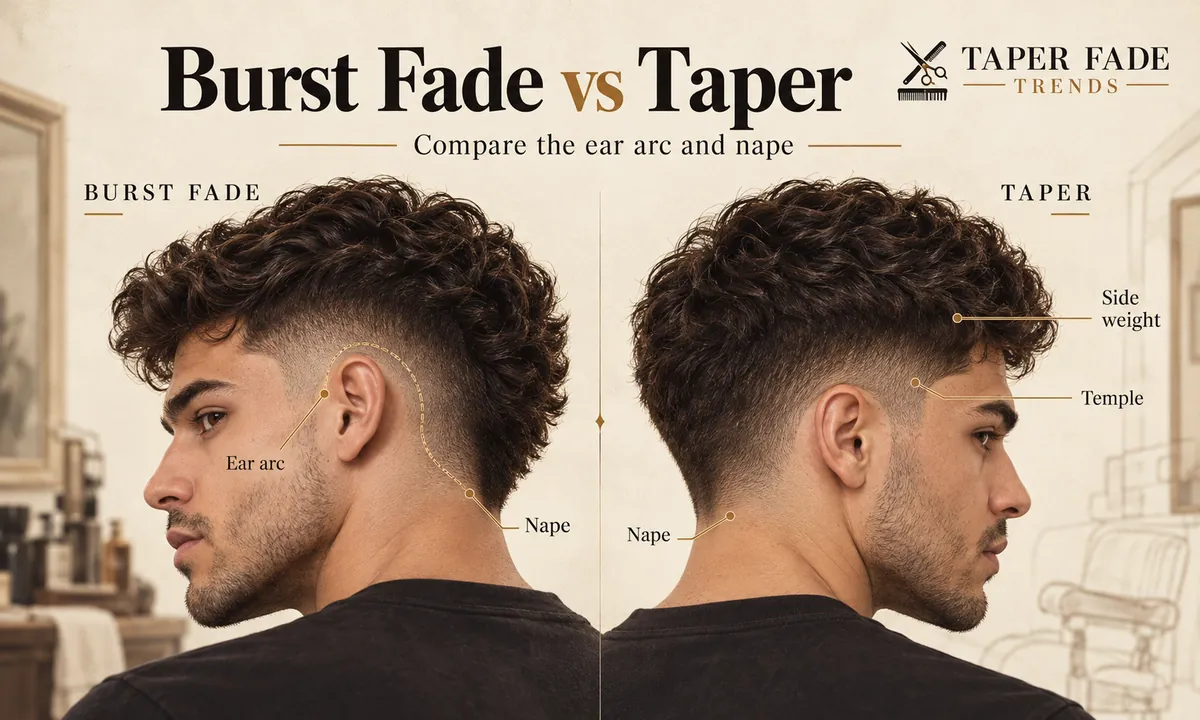
Burst fade vs taper compared by ear arc, side coverage, nape treatment and shortest finish, plus a five-part barber brief and the photos to bring.
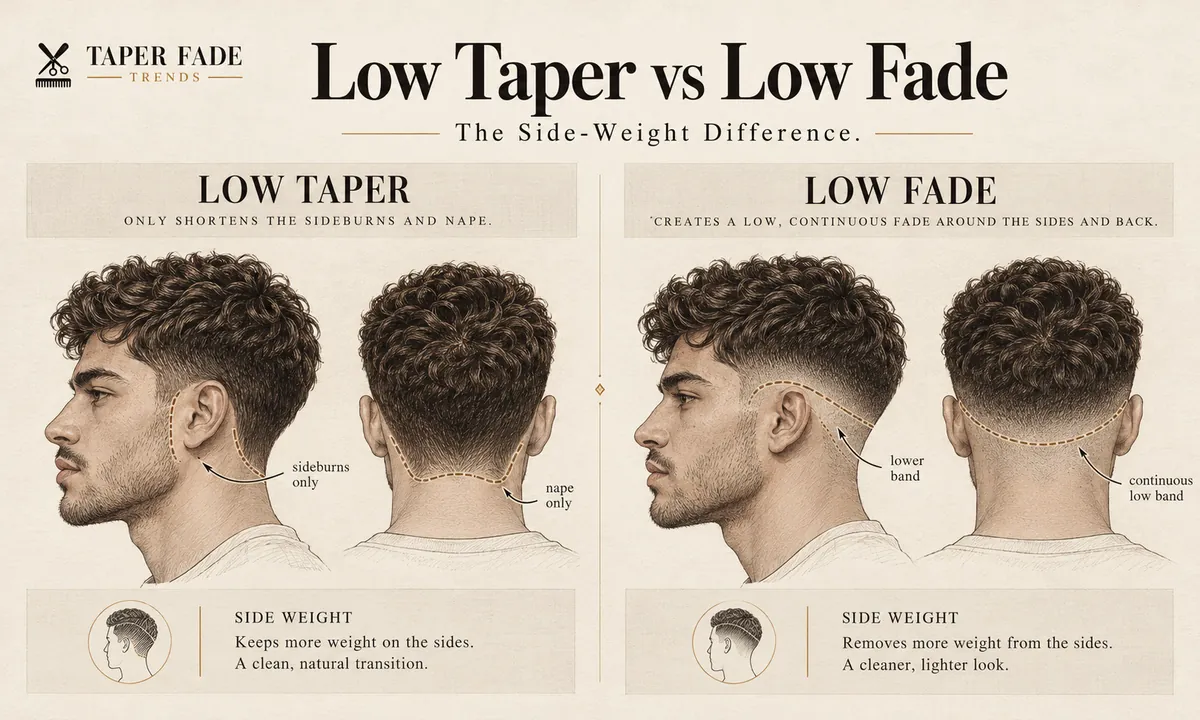
Low taper vs low fade: a low taper shortens the sideburns and nape; a low fade shortens a band around the lower sides and back. Compare finish and upkeep.
What a taper fade is, where it came from, and the styles that sit on top of one at any height. Read these before you pick a placement.
6 guides
A low taper keeps the short work at the sideburns and nape, so most of the side panel stays full. These guides cover it on different hair types and under different tops.
14 guides
A mid taper sits between low and high: it takes more off the sides than a low taper, while the side panel keeps more hair than a full mid fade.
6 guides
A high taper starts its blend at the temple corner but keeps the short work to a narrow band, so the sides and back stay fuller than on a full high fade.
8 guides
A burst fade curves the short work around the ear instead of running it level around the head. These guides cover where it sits and how to ask for it.
3 guides
The practical side: the words to use at the chair, the guard numbers behind them, and what happens to the cut in the weeks after.
4 guides