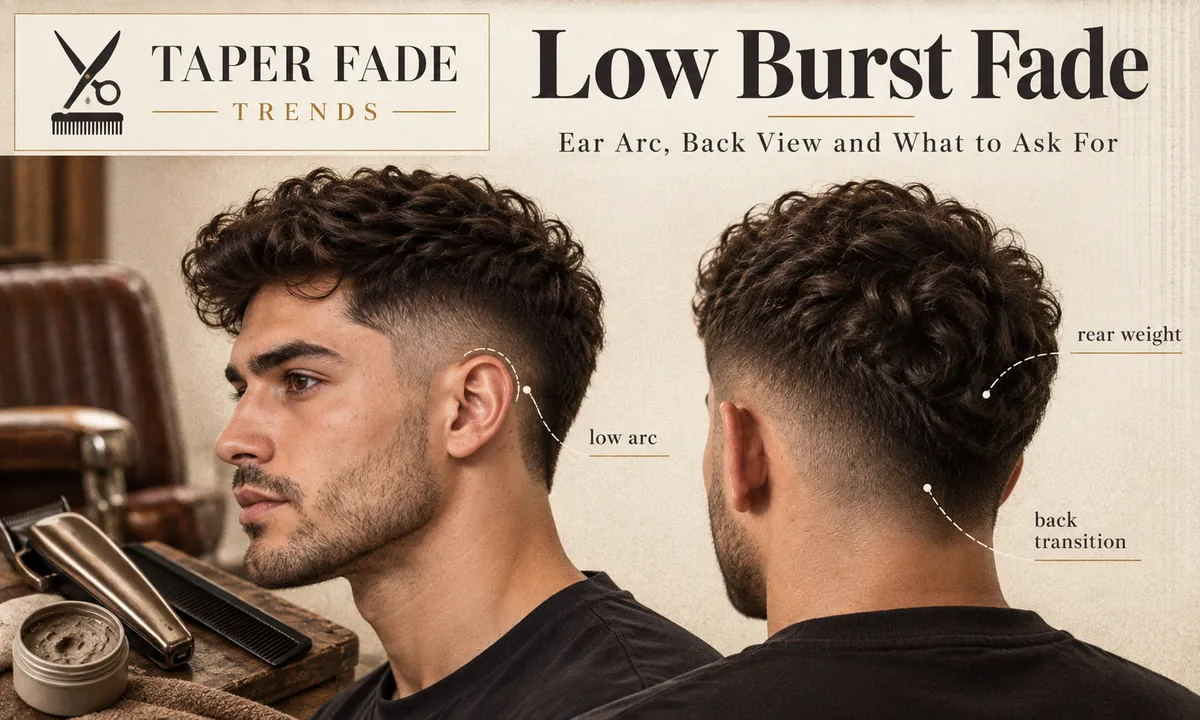
Low burst fade: the low ear arc and back transition
A low burst fade curves low around the ear and can keep length at the back. Compare skin vs shadow, burst vs drop fade, and what to tell your barber.
A burst fade curves the short work around the ear instead of running it level around the head. These guides cover where it sits and how to ask for it.
Each guide here names the placement, the finish and what happens at the back, so you can ask for a burst fade without guessing.
Start with the main guide: it sets out the three choices a burst leaves open (arc height, shortest finish and the back) and how the cut differs from a drop fade and a taper.
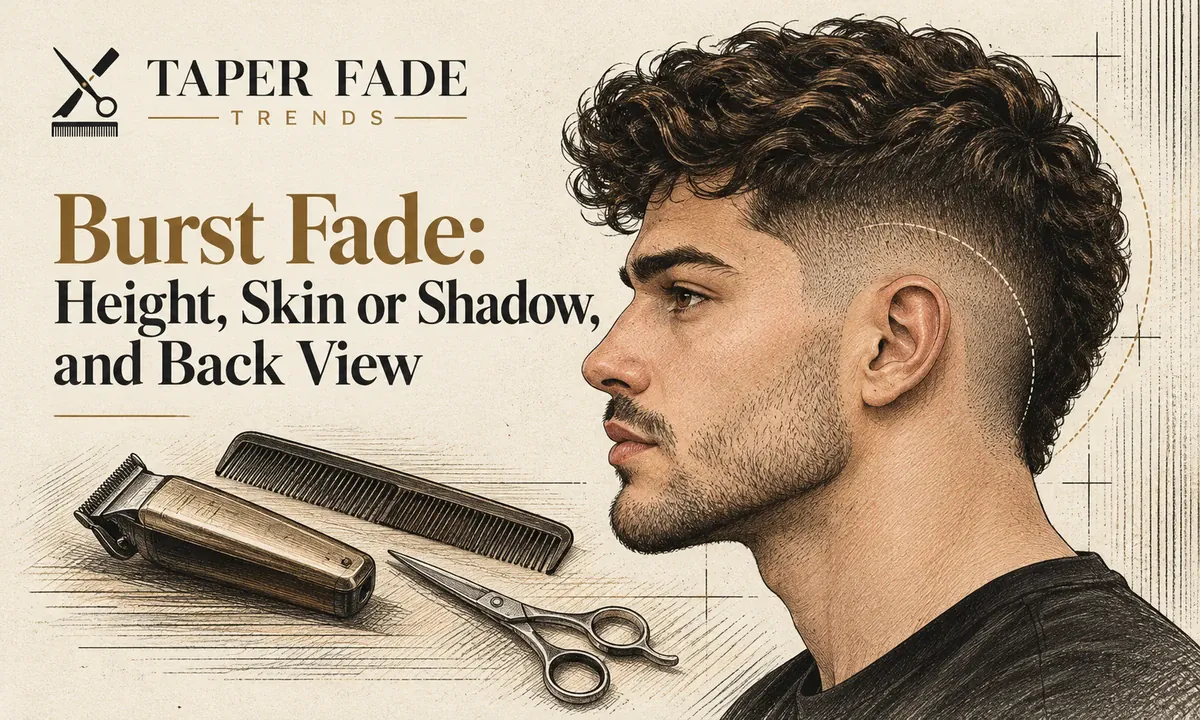
A burst fade is a fade whose short-to-long blend forms a rounded arc around the ear; height, shortest finish and rear/nape treatment are separate choices. The arc does not have to reach skin, and most versions keep more length at the back than a full fade. Decide all three before the barber sets the first line.
A low burst fade curves low around the ear and can keep length at the back. Compare skin vs shadow, burst vs drop fade, and what to tell your barber.
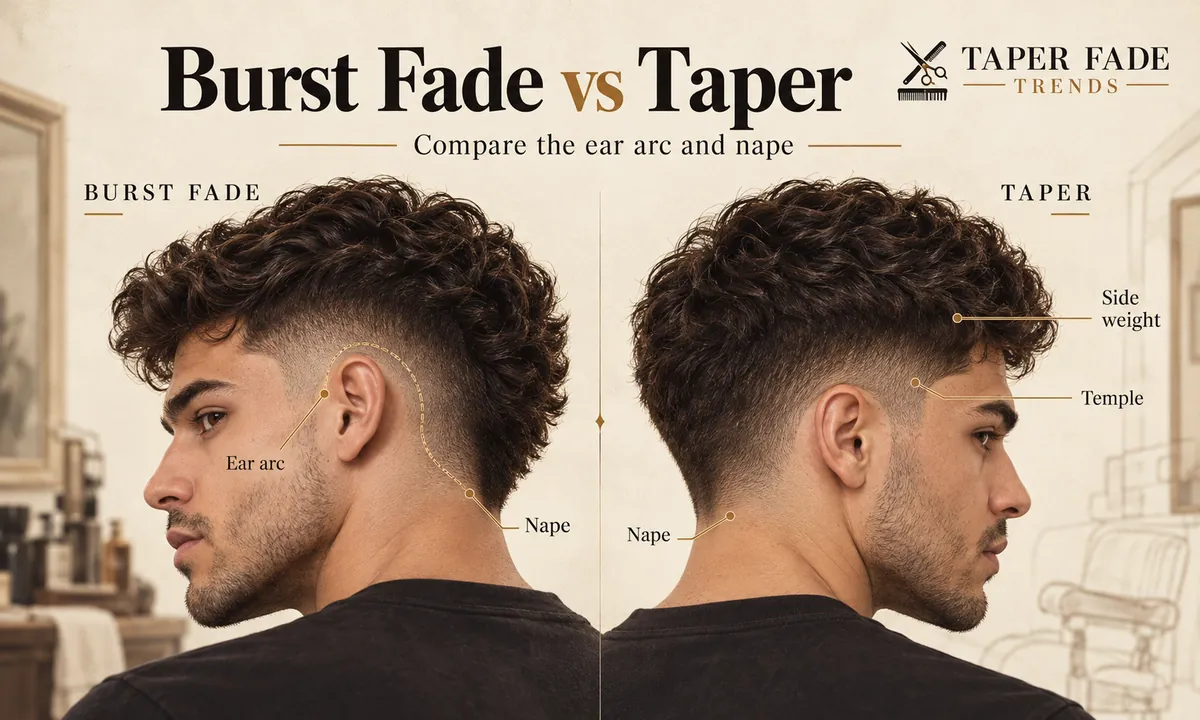
Burst fade vs taper compared by ear arc, side coverage, nape treatment and shortest finish, plus a five-part barber brief and the photos to bring.
What a taper fade is, where it came from, and the styles that sit on top of one at any height. Read these before you pick a placement.
6 guides
A low taper keeps the short work at the sideburns and nape, so most of the side panel stays full. These guides cover it on different hair types and under different tops.
14 guides
A mid taper sits between low and high: it takes more off the sides than a low taper, while the side panel keeps more hair than a full mid fade.
6 guides
A high taper starts its blend at the temple corner but keeps the short work to a narrow band, so the sides and back stay fuller than on a full high fade.
8 guides
Two cuts with similar names, compared on the same criteria: where the short work sits, how much side hair stays, the finish and how each grows out.
5 guides
The practical side: the words to use at the chair, the guard numbers behind them, and what happens to the cut in the weeks after.
4 guides