Burst fade vs taper: compare the ear arc and nape
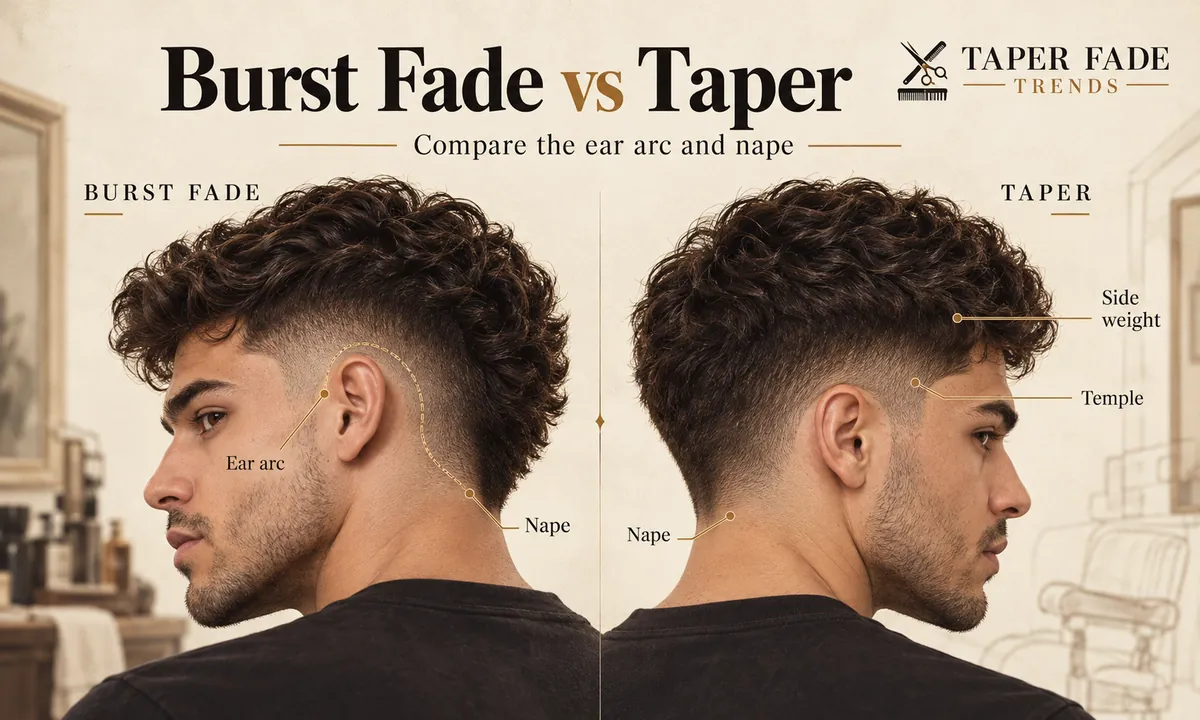
Burst fade vs taper comes down to where the shortest hair sits. A burst fade curves its short work around the ear and often leaves the back longer. A taper keeps its short work at the sideburns, temples and nape and leaves more of the side panel at length. Neither cut has to reach skin.
Burst fade vs taper: the practical difference
The practical difference between a burst fade and a taper is placement. A burst fade puts its shortest zone in a curve around the ear. A taper puts its shortest graduation at the sideburn or temple and at the nape, so more of the side panel keeps its length. How short either cut goes is a separate choice: skin, zero or shadow.
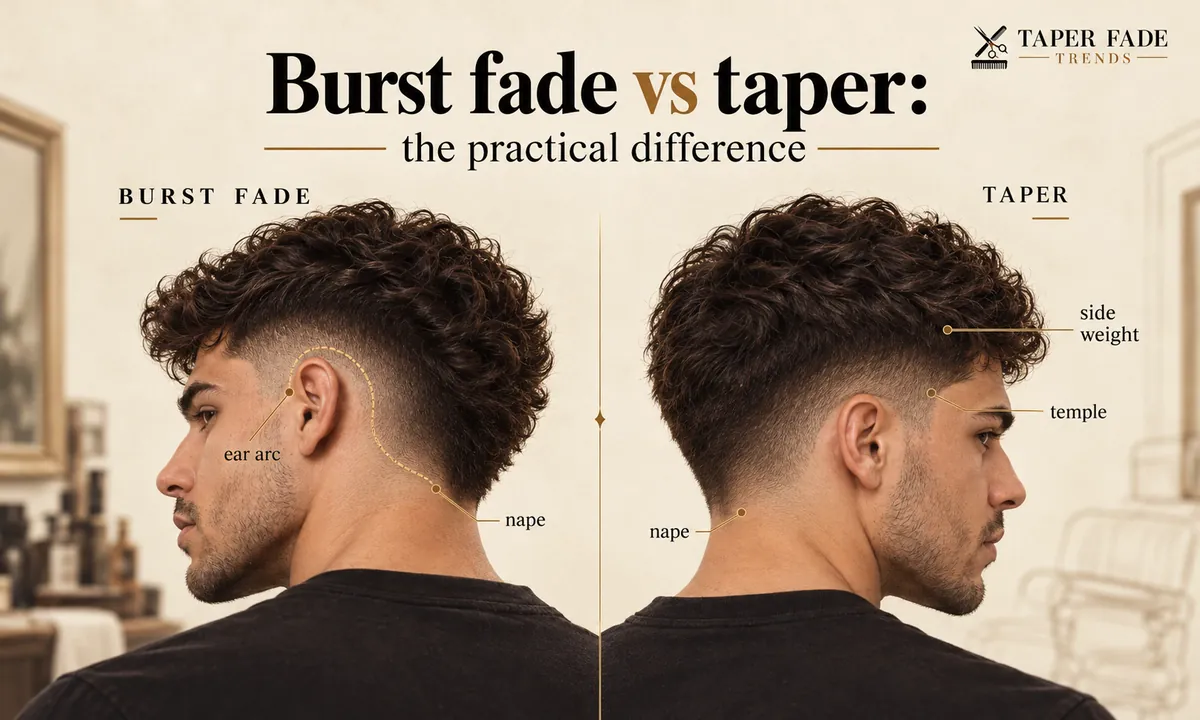
A burst fade is a fade whose shortest zone curves around the ear in a rounded arc, with the exact height, finish and back treatment chosen separately. The ear arc is the rounded line that curve traces around the ear.
Shops use “taper” in different ways, so this guide fixes one meaning. A taper is localized graduation at the haircut’s perimeter, usually the sideburn/temple and nape, while more of the side panel keeps its length. The side panel is the hair on the side of the head between those edges; the length left there is the retained side weight. The nape is the hairline at the back of the neck.
The shortest finish is how close the lowest point is cut, such as skin, zero or visible shadow, independent of whether the shape is a burst or taper.
| Burst fade | Taper | |
|---|---|---|
| Where the shortest work sits | A curved zone around the ear | Sideburn or temple, and the nape |
| Side panel | Shortened only where the arc passes | Mostly keeps its length |
| Back and nape | Often left longer through the center back | Neckline cleaned up |
| Has to reach skin? | No | No |
| Can they combine? | Yes, a burst can get separate nape taper work | Yes, as part of that same hybrid |
| Decided separately | Arc height, shortest finish, back treatment | Placement, height, shortest finish |
| Photos to bring | Both sides and the back | Both sides and the back |
The table leaves out boldness on purpose. How loud either cut looks depends mostly on height and shortest finish, so a high skin taper can look sharper than a low shadow burst.
For how a taper differs from a full fade, see taper vs fade.
See the ear arc and nape from the same angles
Judge both cuts from the same two angles. The side view shows where the short zone sits against the ear, and the rear view shows what happens at the nape. A burst and a taper can look close from the front, and a side-only photo hides the back, which is where the two cuts differ most.
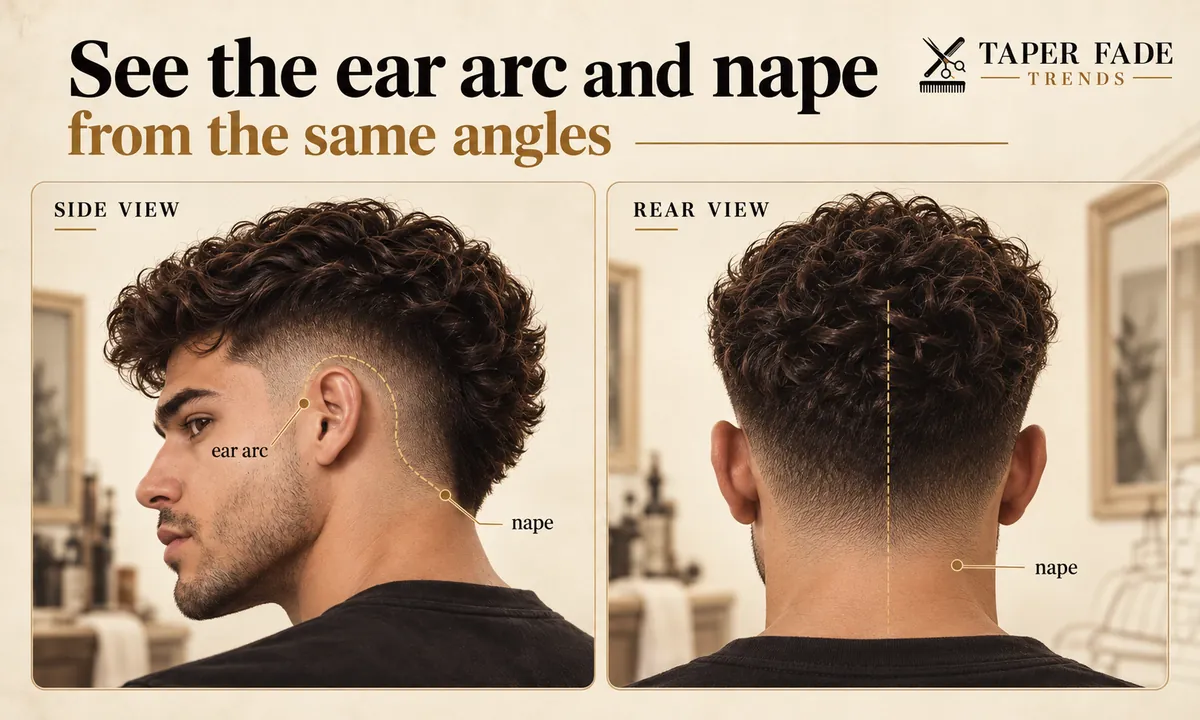
Side view: where each cut’s shortest work sits
In profile, a burst fade shows a rounded short zone centered on the ear. A taper shows short work along the sideburn or temple edge, with the side panel above and behind the ear left at length.
The ear arc can sit low and tight or climb toward the temple, and no standard inch or millimeter measurement separates a low burst from a mid or high one. Point to where the arc should stop instead of saying “low” or “high” alone.
“Burst” names the shape around the ear. It says nothing about the top, and it does not mean bare skin.
Rear view: what happens at the nape
From the back, a burst fade often keeps more length through the center back because its short zone is concentrated around the ear, while a taper normally cleans up the nape itself. That is a habit, not a rule. A barber can add separate taper work to a burst, so say what you want at the back.
In a rear photo, check two things:
- Whether the center back keeps visible length or is cut short along with the sides.
- Whether the neckline has its own taper, and whether the ear arcs blend into it or stop short of it.
Can a burst fade and a taper be combined?
Yes. A barber can keep a burst-shaped arc around the ear and add separate taper work at the nape, so the neckline is cleaned up while the ear arc stays the feature. What is unreliable is the name for that result, because publishers and shops attach “burst taper” to different cuts.
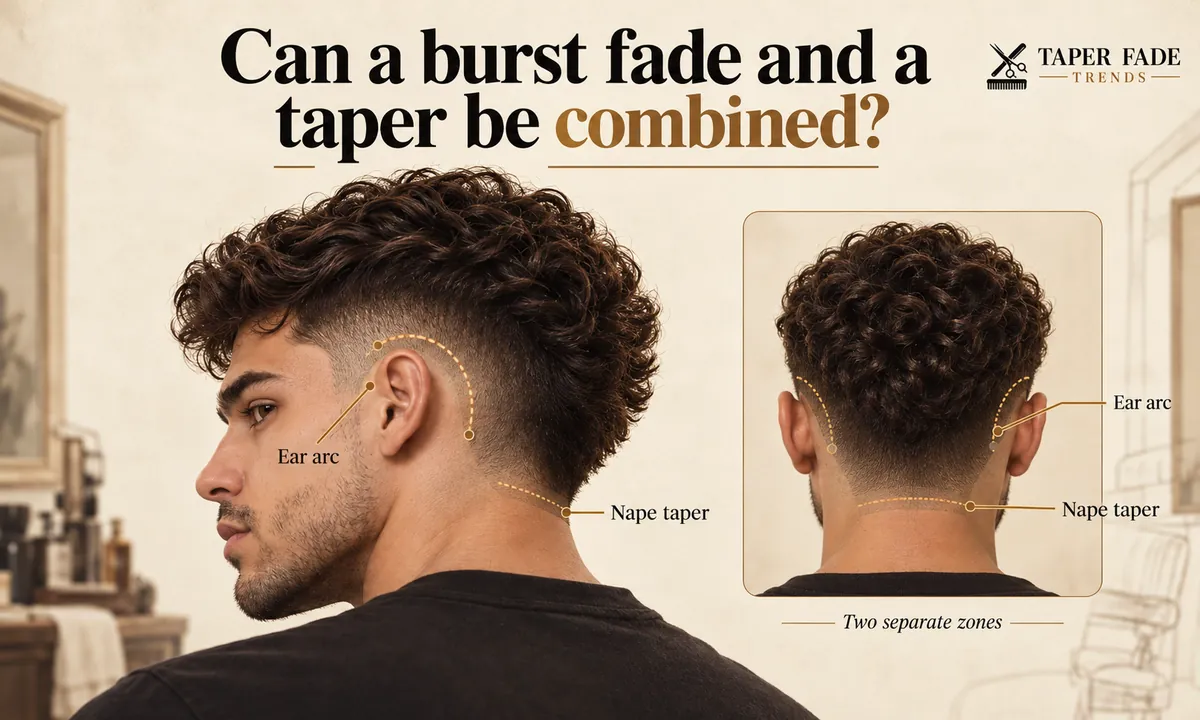
Burst taper is an inconsistent shop term, so this guide treats it as a prompt to confirm the ear arc, nape treatment and shortest finish rather than as one fixed haircut.
Ask for nape taper work when you want the ear arc with a tidier neckline. Leave the back alone when you want the most length through the center back, for a mullet or a longer back shape. If you want the longer back but also the hair behind the ear, a low taper mullet shortens only the edges instead.
Skin, zero or shadow: finish is a separate choice
A burst fade does not have to go to skin. It can finish at bare skin, at a zero that leaves light stubble, or at a shadow that keeps a visible layer of hair, and a taper’s short zones can finish at any of the same three. “Burst” describes the curve around the ear, not how short the lowest point is cut.
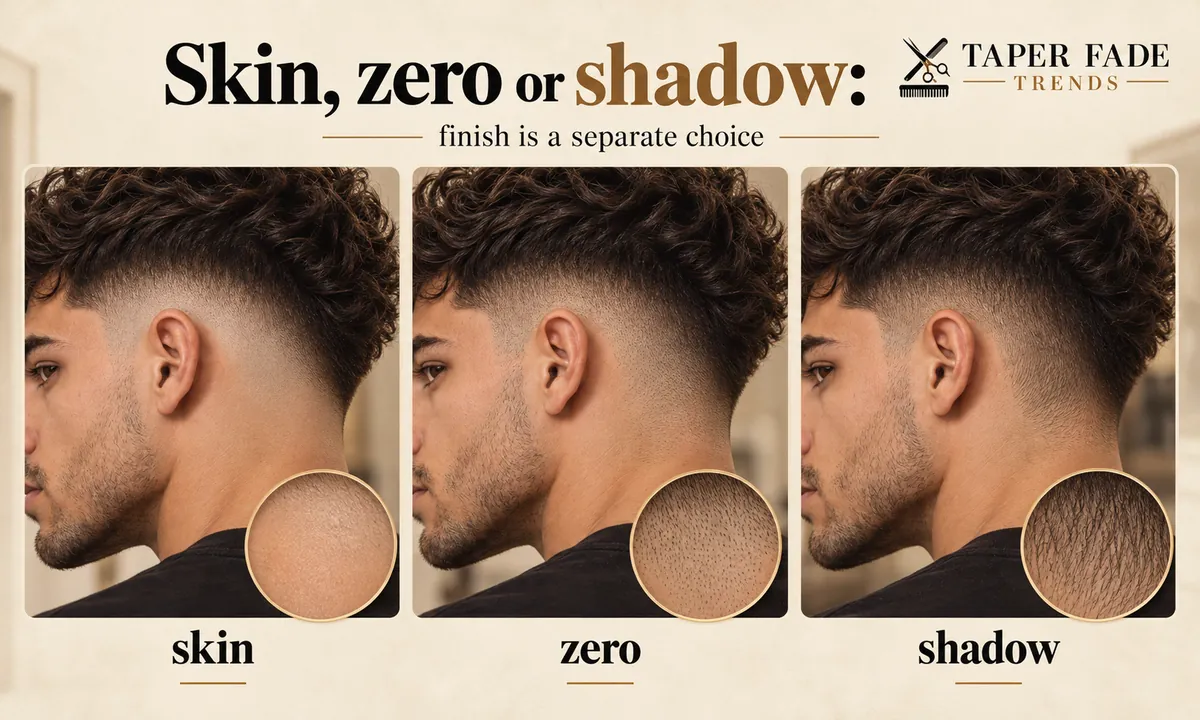
| Shortest finish | What you see | How regrowth shows |
|---|---|---|
| Skin | Bare scalp at the lowest point | First, because it starts with the most contrast |
| Zero | Light stubble, not bare scalp | Between skin and shadow |
| Shadow | A short, visible layer of hair | Last, because it starts with the least contrast |
Name the finish out loud; otherwise the barber may use the shop’s usual default. These words describe what you see, not a clipper setting, and guard sizes don’t always match between brands. The clipper guard numbers guide explains why.
Which cut fits your routine?
Pick by the result you want to see and how long you want it to hold. A burst fade fits someone who wants a visible curve around the ear with more length at the back. A taper fits someone who wants clean edges and fuller sides. For softer regrowth, the shortest finish matters more than which of the two cuts you choose.
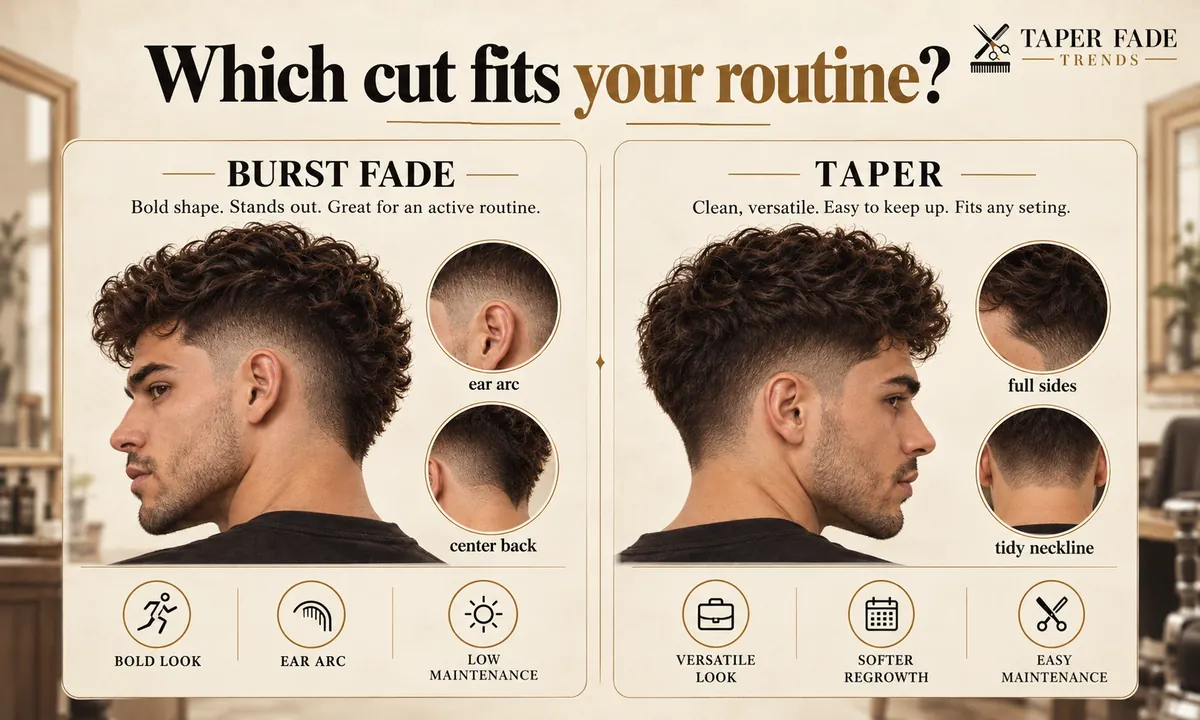
| If you want | Lean toward | Tell the barber |
|---|---|---|
| A visible curve around the ear | Burst fade | Where the arc should stop, and the shortest finish |
| Length kept through the center back | Burst fade | Leave the back long |
| A tidy neckline | Taper, or a burst with nape taper work | Taper the nape as its own request |
| Full sides | Taper | Keep the side panel at length |
| Slower-looking regrowth | Either, with a shadow finish | Shadow, not skin |
Regrowth follows the finish. MedlinePlus puts healthy hair growth at about half an inch a month, roughly an eighth of an inch a week, so a skin finish starts showing regrowth sooner than a shadow, which began with less contrast to lose. Your growth rate and how crisp you want the outline set the schedule. No single rebooking interval fits everyone.
No hair texture rules out either cut. Texture changes how sharply the arc or edge reads, and density changes how much scalp shows through the short zones, so even a shadow can look high-contrast on low-density hair. Choose the shape and side weight first, then let the barber adapt the finish to your hair.
If you might switch later, a taper is the easier starting point. It leaves the side panel long enough for a barber to cut an arc into it, while a burst’s close-cut zone has to grow back before a taper can replace it.
For work or school, a written grooming policy decides what is allowed, not the haircut’s name. A low placement with a shadow finish draws the least attention either way.
What to tell your barber
Describe the visible result in five parts instead of naming the cut: placement, height, shortest finish, the nape and retained side weight. Then show side and rear photos and ask the barber to repeat the plan before the clippers start, because neither “burst” nor “taper” guarantees any of those five.
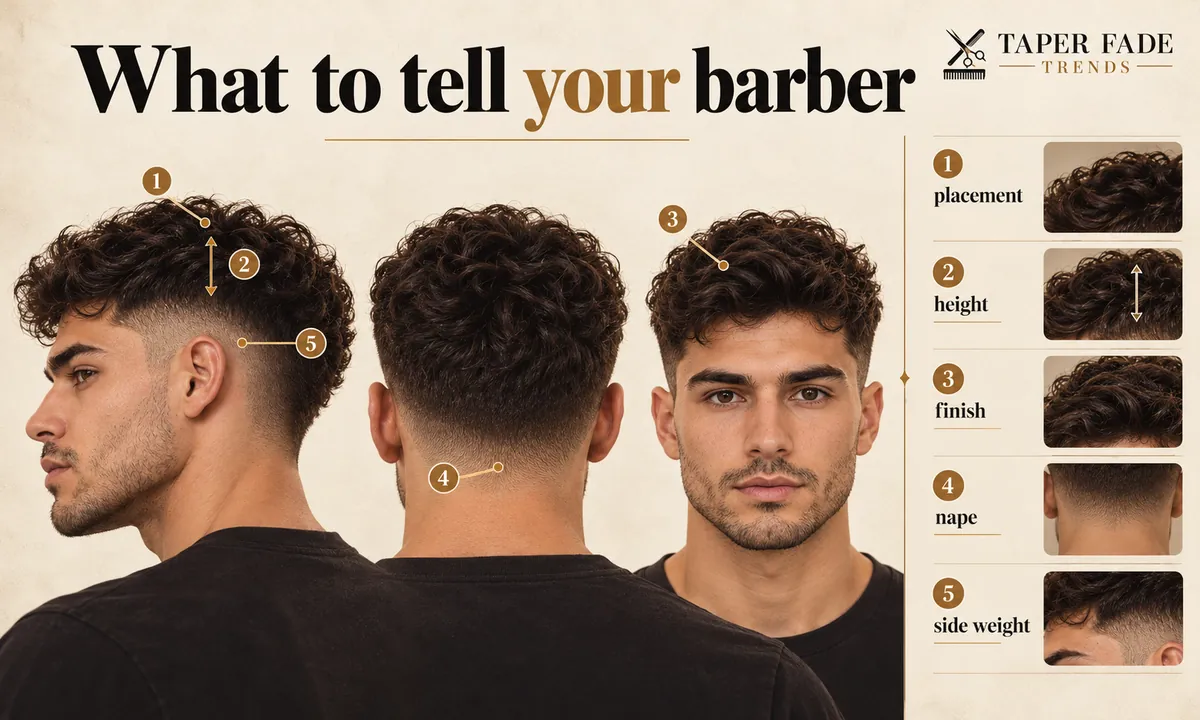
- Placement: an arc around the ear, or short work at the sideburn or temple and the nape.
- Height: how far up the short work may travel, pointed out against your ear or temple.
- Shortest finish: skin, zero or shadow.
- Nape: left long, cleaned up at the neckline, or given its own taper.
- Retained side weight: how much length stays on the side panel.
Describe the top separately; neither name sets it. A brief to adapt:
“I’d like a burst fade curved around my ears, finished at a shadow. Keep the center back long, clean up only the neckline, and leave most of the length on the sides. Here are the side and back views I mean. Can you tell me your plan first?”
Bring these views, ideally of one haircut so the angles match:
- Left and right sides, so the arc or taper edge shows on each
- A straight rear view that shows the nape and neckline
- A front view if the temple edge matters to you
Leave guard and blade choices to the barber. For the full version of this brief on the taper side, see how to ask for a taper fade.
Limits of haircut names and reference photos
A haircut name does not fix the visible result, and a reference photo cannot reveal clipper settings. Use the photo to agree on placement and the back, then name the shortest finish in words.
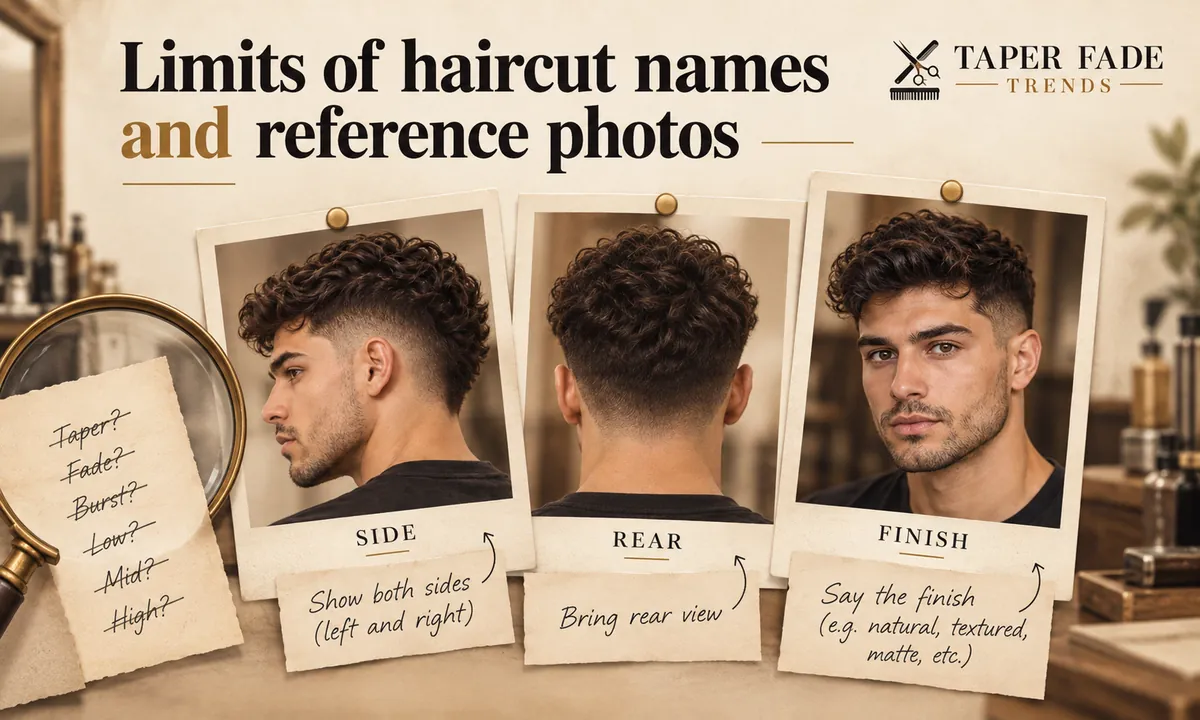
| What you want to know | Does a photo show it? | Safer approach |
|---|---|---|
| Where the arc or taper sits | Yes, in a clear side view | Show both sides |
| What happens at the nape | Only in a rear view | Bring a straight rear photo |
| Skin, zero or shadow | Often unclear; lighting and hair color change it | Say the finish |
| Guard, blade or lever setting | No, not reliably | Let the barber choose and confirm |
| What the cut is called | No; shops differ | Describe the zones |
A barber who can see your hairline and growth pattern in person can judge how an arc or nape taper will sit on your head. A photo of someone else’s head cannot.
How we compared these cuts
Taper Fade Trends Editorial put this comparison together in October 2026 to help you agree on a visible result before your appointment. We read how current haircut publishers and a working barbershop define the burst fade and the taper, checked them against this site’s own taper definitions, and separated the parts the labels blur: placement, height, shortest finish and back treatment. Where sources disagree, mainly over the nape and the name “burst taper,” the page shows the disagreement instead of choosing a winner.
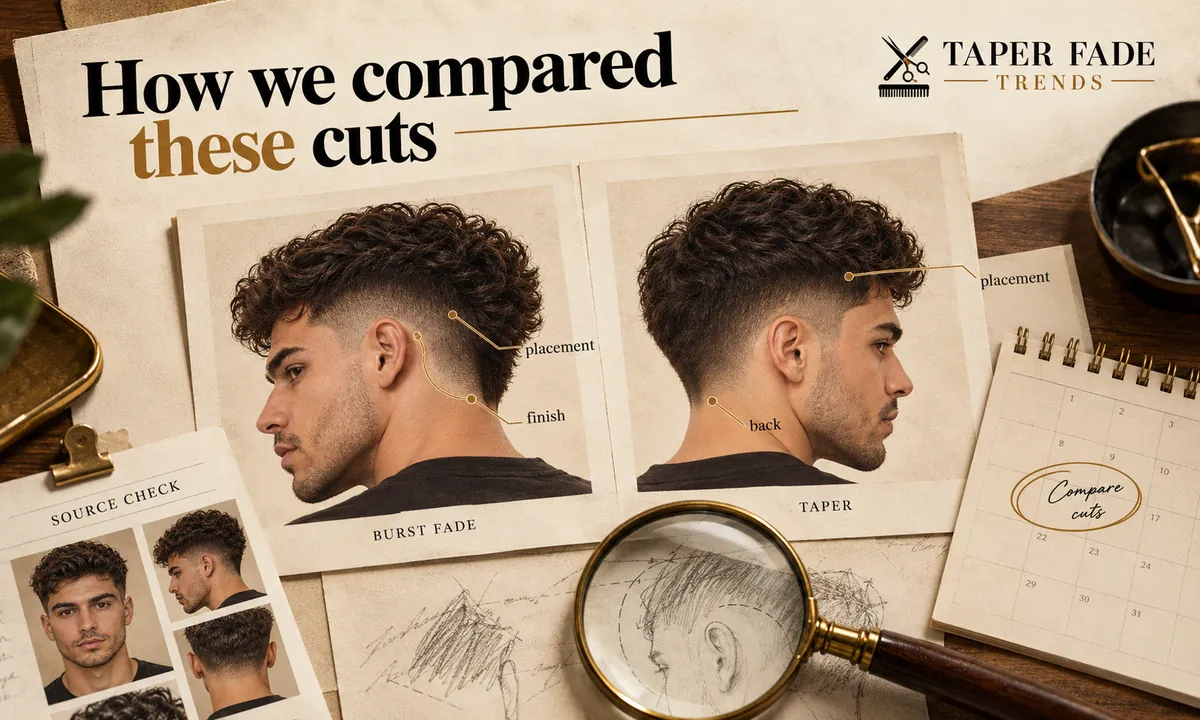
The images on this page are illustrations, not photographs of documented cuts, and no cut measurements were recorded for it. No barber has reviewed this version yet; when one does, their name, role and review date will be added here.
Last checked October 14, 2026. Found an error? The editorial policy explains how corrections are made and dated, or you can contact us.
Sources:
- Taper vs Fade: Area, Finish and Side Weight, Taper Fade Trends
- Burst Fade vs Taper Fade: Differences, Maintenance & Which to Choose, Burst & Taper
- Burst Fade vs Taper Fade: Differences & What to Ask, Taper Trends
- The Burst Fade, Explained, fadepedia
- 20 Burst Taper Fade Styles Every Guy Should Try, Haircut Vibes
- Fade vs Taper vs Burst Fade: What’s the Difference?, Stilo Barbershop
- Hair Problems, MedlinePlus, National Library of Medicine
Burst fade vs drop fade, and what to read next
A burst fade and a drop fade both curve, but they treat the back differently. A burst centers its short zone on the ear and usually leaves the back longer. A drop fade dips lower behind the ear and keeps fading across the back toward the neckline. Barbers use both names loosely, so point to where the line should run.
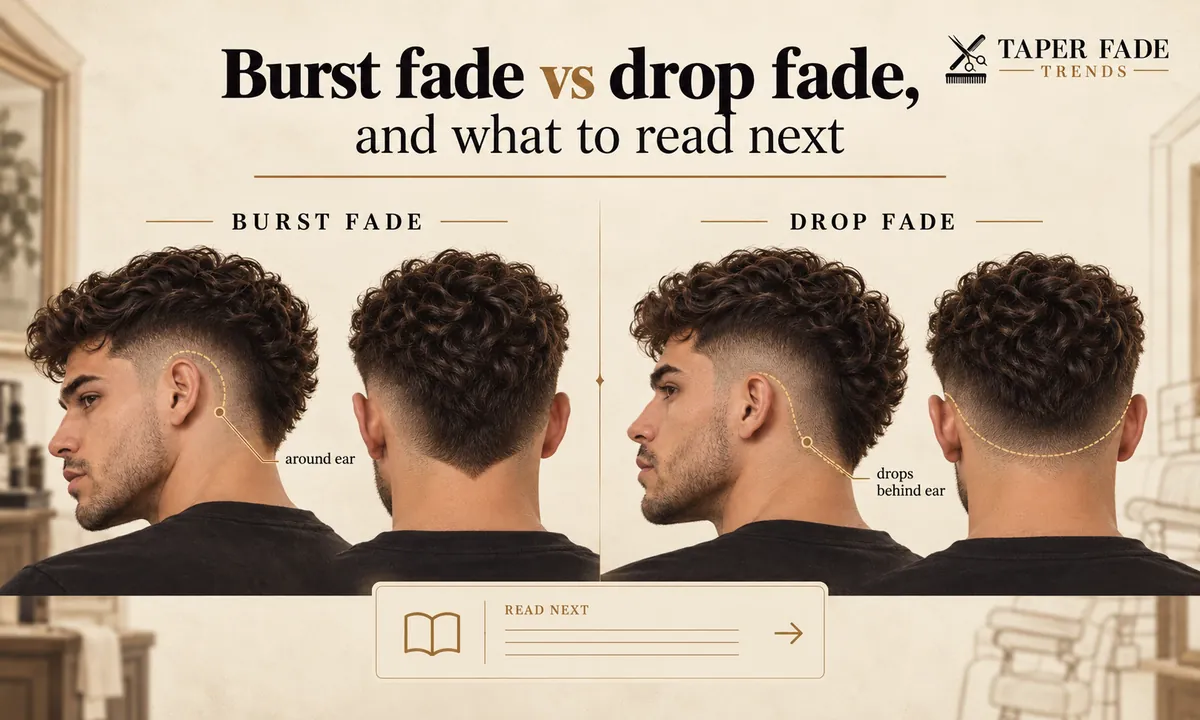
To set height, finish and coverage on the taper side, open the taper fade guide. For another cut judged from the side and the back, see high taper vs high fade.
Keep reading
All guides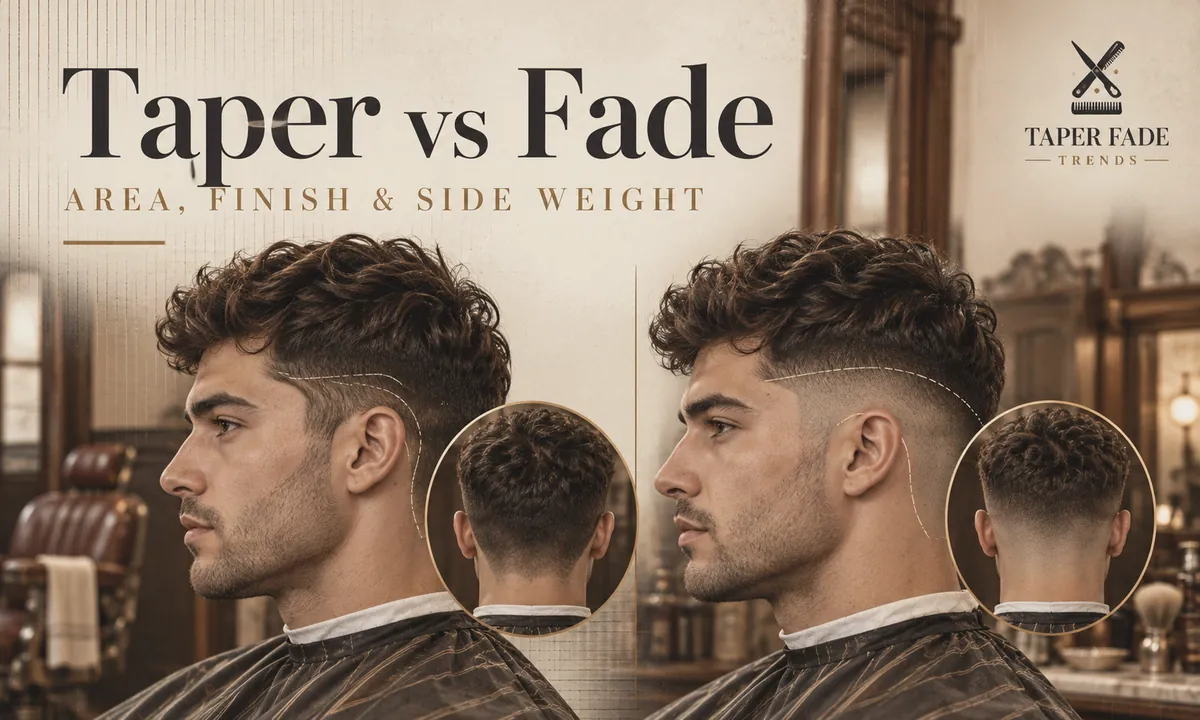
Taper vs fade: what changes in area, finish and side weight
Taper vs fade compared by coverage, height, shortest finish and side weight, with a back-view check and word-for-word barber scripts for either cut.
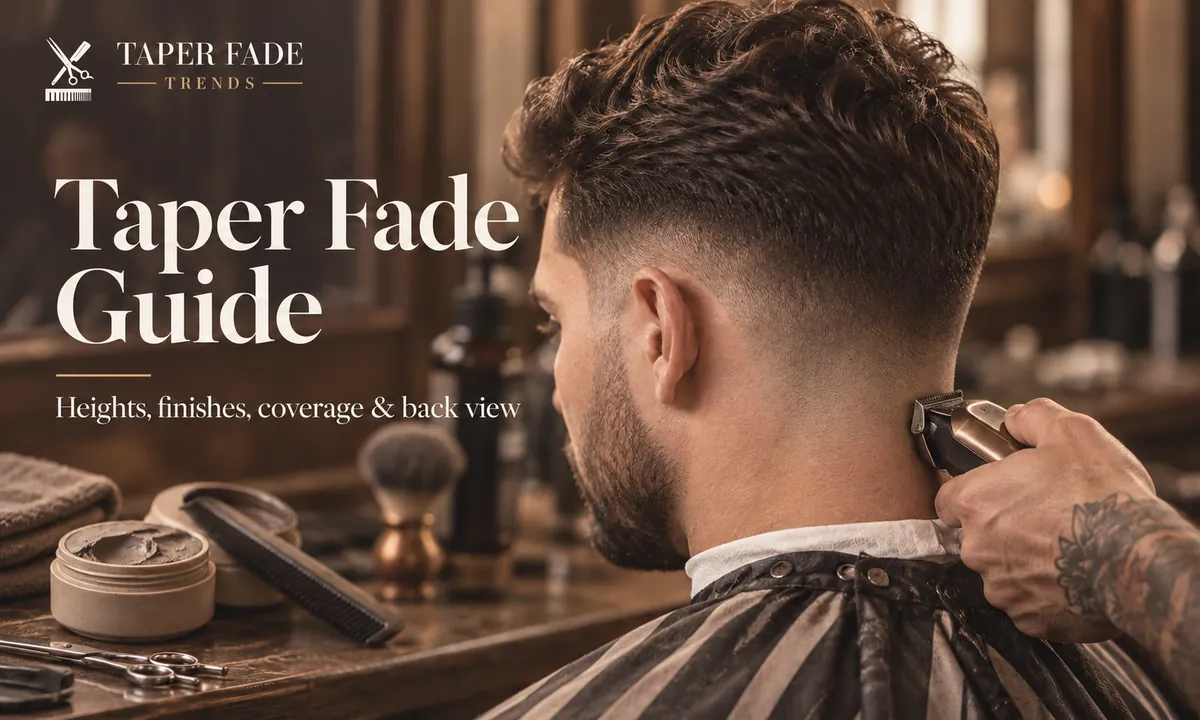
Taper fade: a visual guide to heights, finishes and top styles
Where a taper fade sits from the front, side and back, how low, mid and high differ, and how to ask for side coverage and a finish with or without skin.
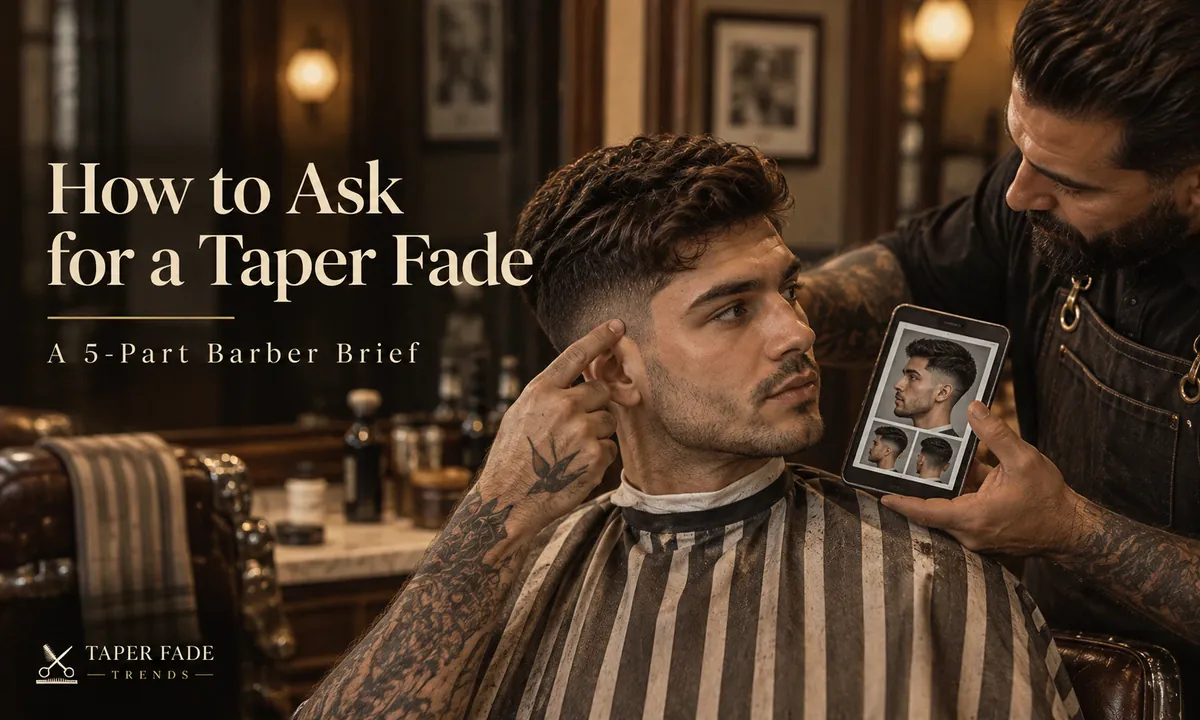
How to ask for a taper fade: a five-part barber brief
How to ask for a taper fade: say where it may reach, how short the base goes, how much side weight stays and what to do on top, then check the plan first.
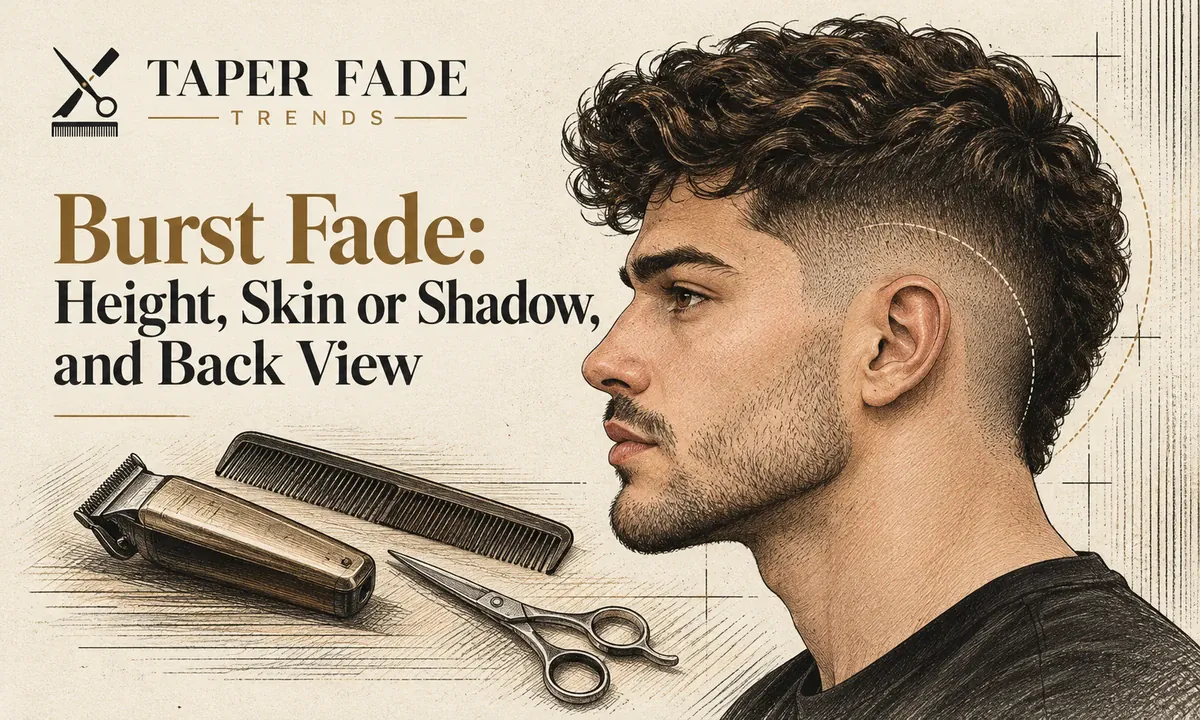
Burst fade: arc height, shortest finish and back view
A burst fade curves around the ear. It doesn’t have to reach skin, and the back is a separate choice. See the three controls and what to tell your barber.
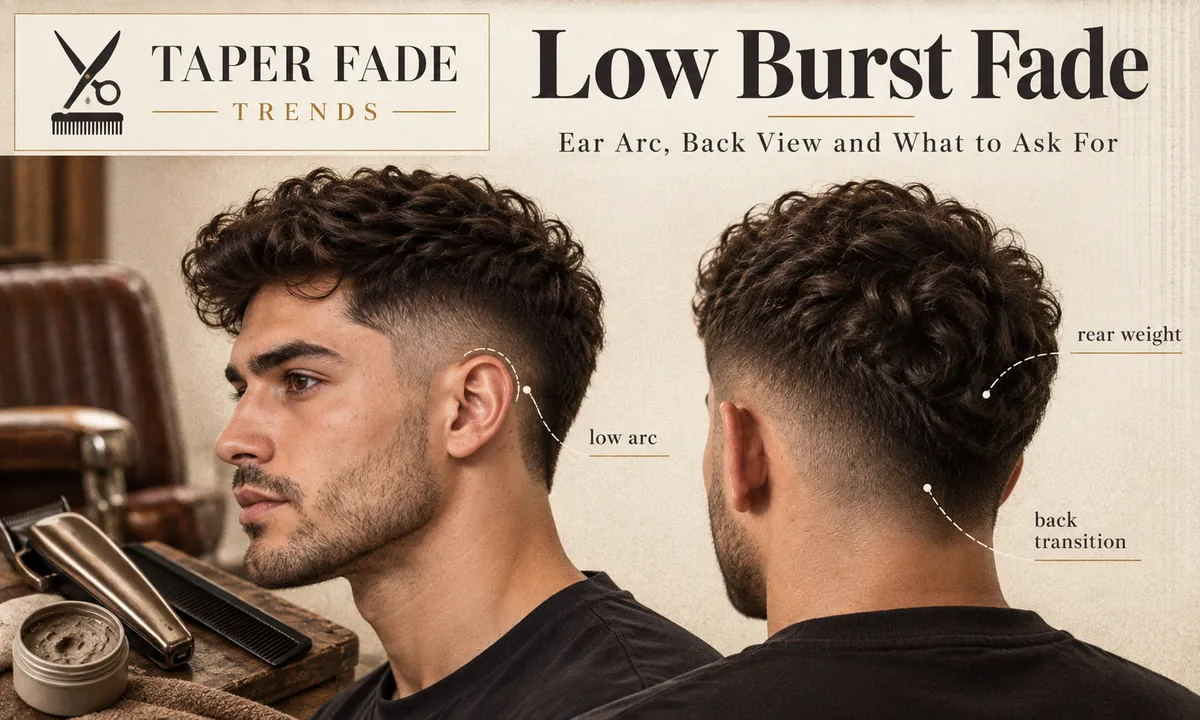
Low burst fade: the low ear arc and back transition
A low burst fade curves low around the ear and can keep length at the back. Compare skin vs shadow, burst vs drop fade, and what to tell your barber.
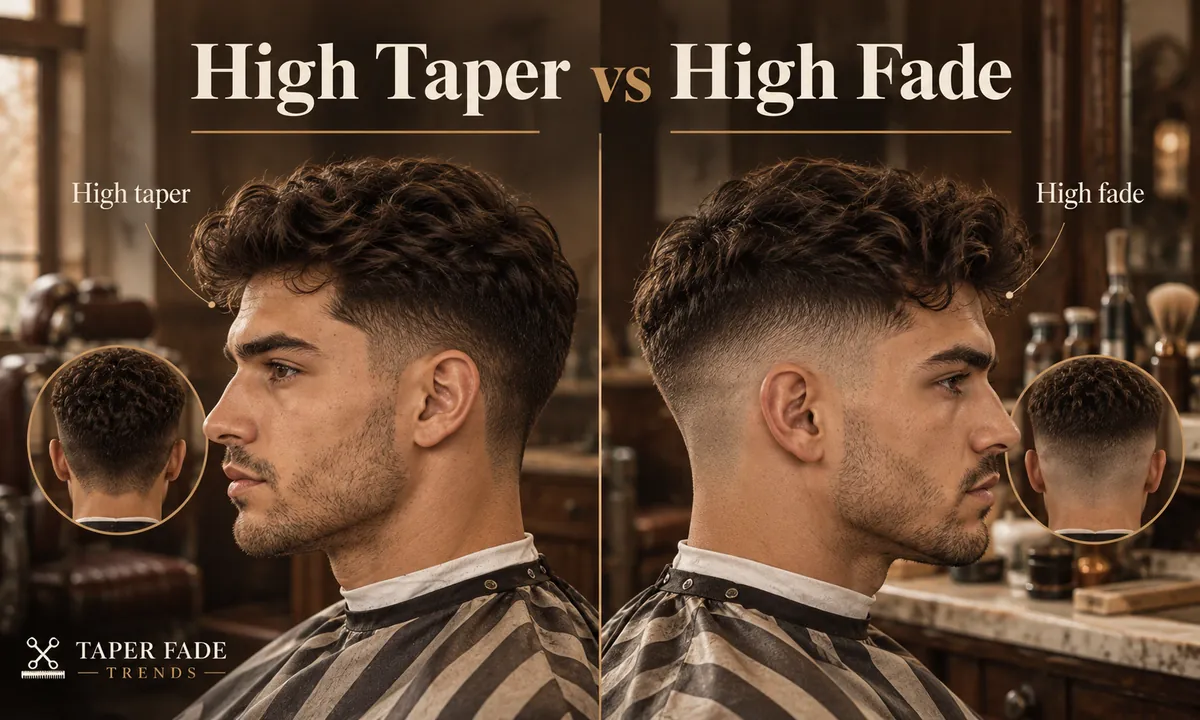
High taper vs high fade: side, back and coverage
High taper vs high fade compared by side weight, back coverage and shortest finish, plus why barbers use the names differently and a four-point brief.
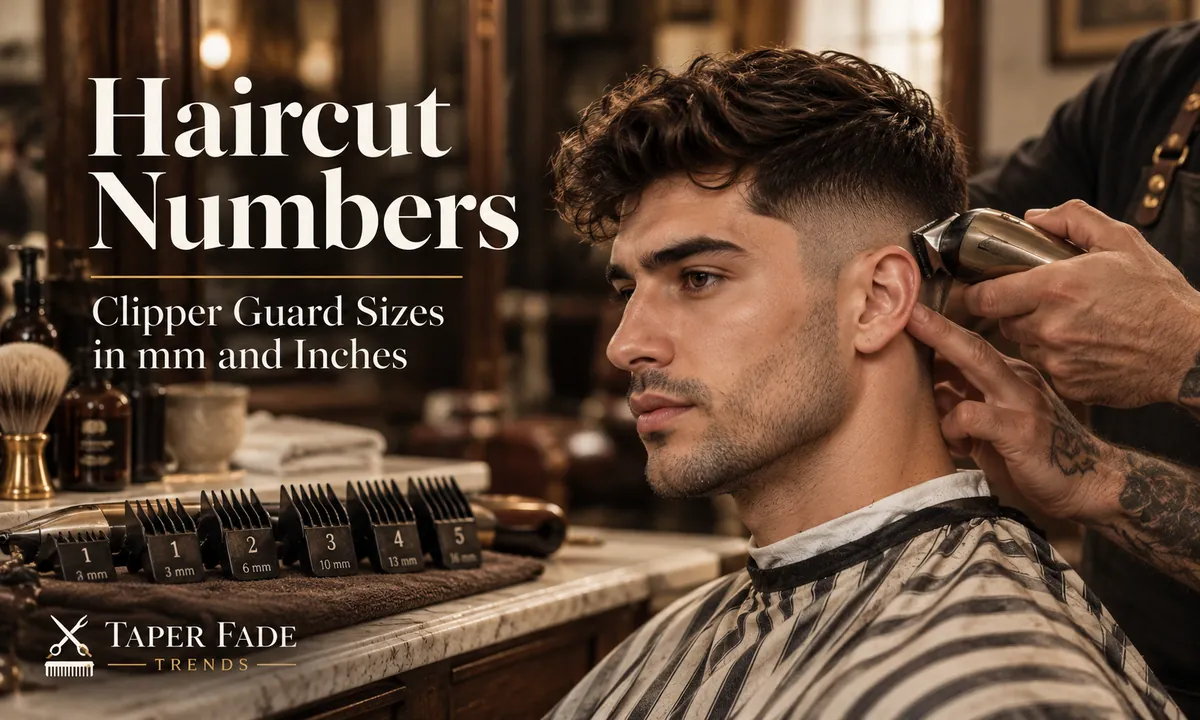
Haircut numbers: clipper guard sizes in millimeters and inches
Haircut numbers in mm and inches, checked against Wahl, Andis and Oster specs, plus why #0 isn’t always no guard and what to tell your barber.
More in taper and fade comparisons
Taper and fade comparisons: all 5- Taper vs fade: what changes in area, finish and side weight10 min
- High taper vs high fade: side, back and coverage8 min
- Low taper vs mid taper: what changes when only the height moves10 min
- Burst fade vs taper: compare the ear arc and napeYou are here
- Low taper vs low fade: compare coverage and side weight11 min