Low burst fade: the low ear arc and back transition
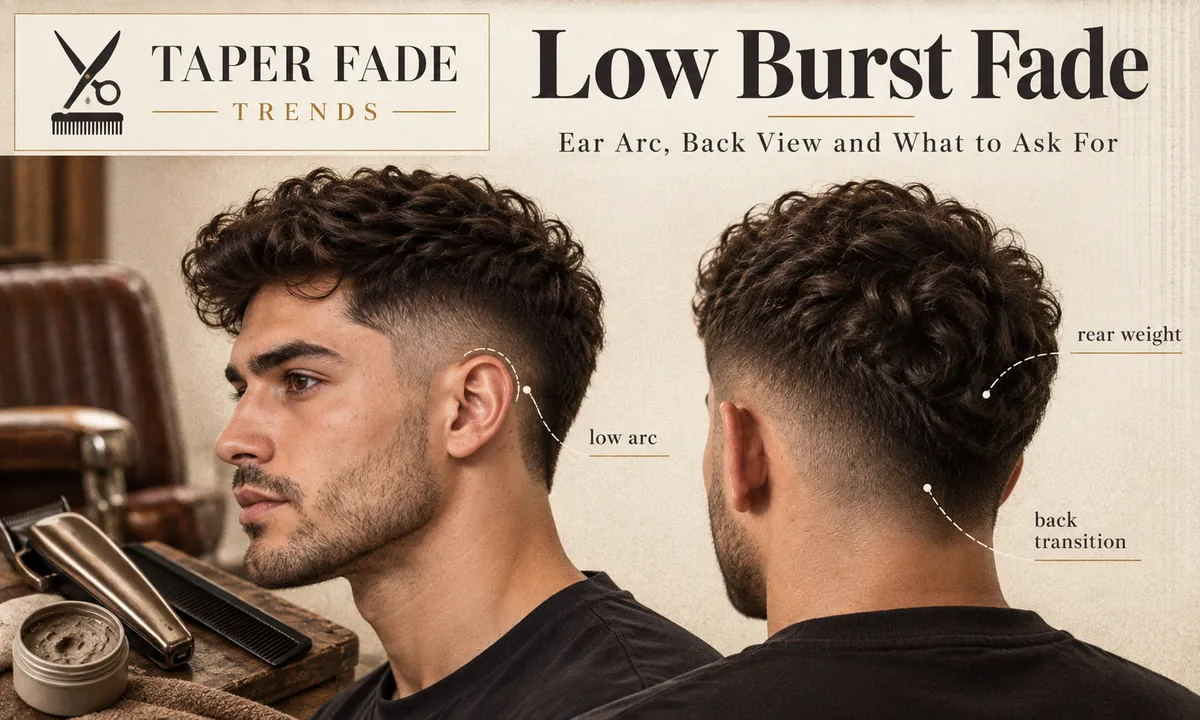
A low burst fade curves the fade around the ear and keeps that arc low, so more hair can stay above it and at the back. “Low” sets where the arc sits, not whether it reaches skin. Settle five things before the cut: arc height, arc width, shortest finish, rear weight and nape shape.
| Setting | What it decides | How to ask |
|---|---|---|
| Arc height | How close to the ear the curve stays | Point to the highest spot on a side photo |
| Arc width | How far the curve runs behind the ear | “Keep it compact” or “take it wider behind the ear” |
| Shortest finish | Skin, stubble or a shadow at the lowest point | Name it; “low” does not say it |
| Rear weight | How much hair stays behind the ear and across the back | Show a rear photo |
| Nape shape | Natural, tapered or shaped neckline | Say it; a burst does not require a mullet |
| Top | Length and texture on top | Separate instruction; the fade does not set it |
| Guard or blade | The tools that produce the lengths | Barber’s call; a number does not describe the arc |
What is a low burst fade?
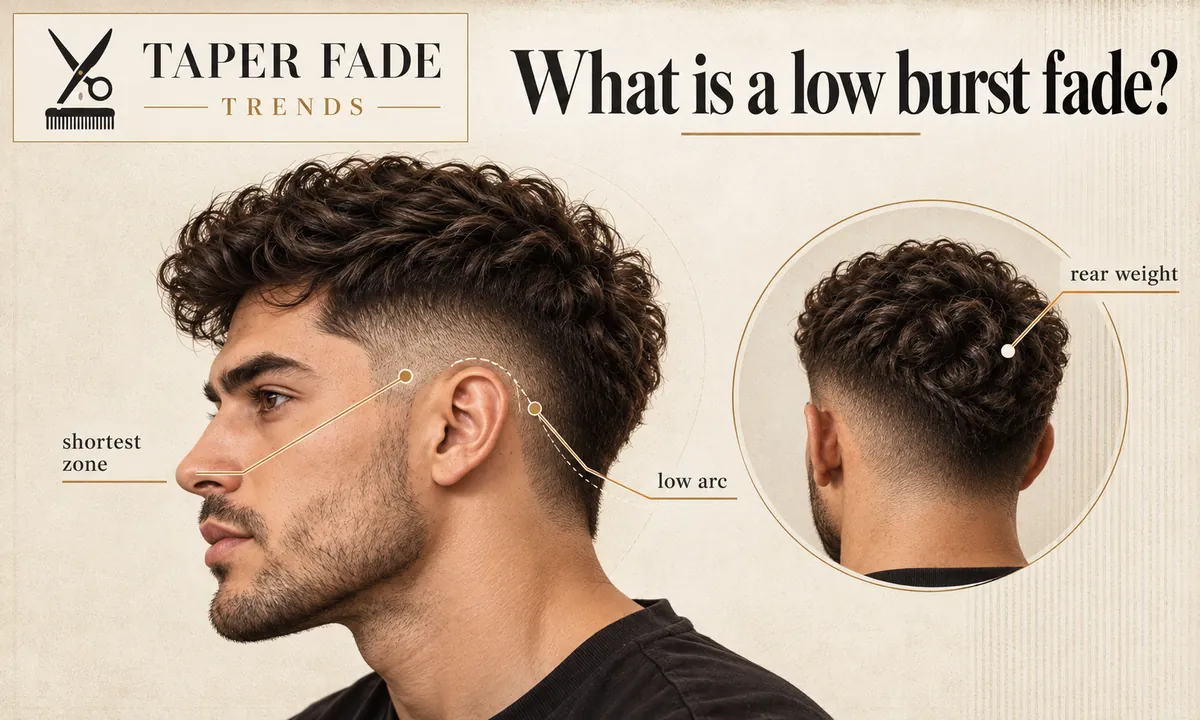
A low burst fade is a fade whose curved transition stays low and close to the ear, concentrating the shortest hair around the ear instead of running it in a band around the back. Because the arc stays low, more hair is left above the ear and behind it than a higher or wider burst leaves.
Barbers describe the same shape. Cutters Yard, a London shop whose owner has cut hair since the 1990s, says a burst fade curves around the ear in a semicircle and that the low version starts just above the ear. Frisco, Texas shop Elevate Barberstudio lists its burst fade as a half-moon around the ear with length kept at the back.
This guide calls that curve the burst arc. Rear weight is the length and bulk left behind the ear and across the back. A mid or high burst uses the same curve placed higher on the head, which takes more weight off the sides.
Set the arc, finish and back before the cut
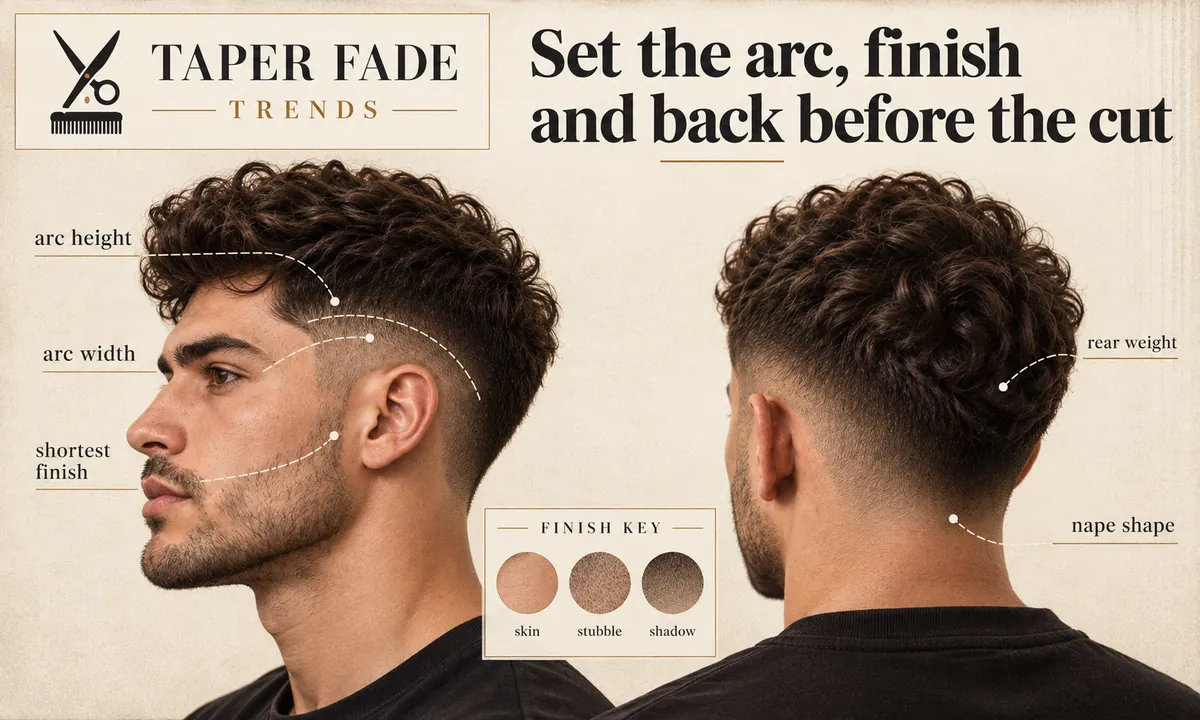
A low burst fade comes down to five separate settings: how high the arc sits, how far it travels behind the ear, how short the lowest point goes, how much weight stays behind the ear, and how the nape finishes. The name settles only the first, so the other four need to be said out loud or shown.
Mullet Style’s low burst guide makes the same point: the shortest length, arc position, weight behind the ear, neckline and top length all change the finished shape, so two cuts sold as a “low burst fade” can look quite different.
| Setting | Common mix-up |
|---|---|
| Arc height | Hearing “low” as a request for skin |
| Arc width | Picturing the burst as only the patch behind the ear |
| Shortest finish | Treating skin as part of the definition |
| Rear weight | Expecting a guard number to set it |
| Nape shape | Assuming a burst fade means a mullet |
How low should the arc sit?
No universal inch measurement defines a low burst fade, because ears, temples and hairlines differ from head to head. In practice the arc stays close to the ear and leaves clearly more hair above it than a mid or high burst. Point to the highest spot the arc may reach on a side photo, and give it as a limit.
Does it have to reach skin?
No. A low burst fade does not have to reach skin. “Low” describes where the arc sits, not how short its lowest point is, so the finish can be skin, stubble or a shadow of visible hair. Skin gives the strongest contrast and shows regrowth soonest. Name the finish on its own so “low” isn’t heard as “skin.”
| Finish | What’s left at the lowest point | Trade-off |
|---|---|---|
| Skin | Bare-looking scalp | Sharpest contrast; regrowth shows first |
| Stubble | Very short, even hair | Crisp, a little softer than skin |
| Shadow | Visible dark hair | Softest edge; tolerates more growth |
Mullet Style and BurstFades.net both note that a skin finish shows new growth sooner than a shadow or guarded finish.
How much hair stays behind the ear?
How much hair stays behind the ear on a low burst fade is your choice, set mainly by arc width. A compact arc ends close behind the ear and keeps most rear weight; a wider arc removes more and separates sides from back more sharply. Only a rear photo shows where that boundary sits.
Say whether the back should stay full, be tapered, be cut short, or sit disconnected (an abrupt change in length with no blend). Mullet Style warns that carrying the fade too far into the back turns a compact burst into something closer to an ordinary fade around the head.
Low burst fade examples with different outcomes
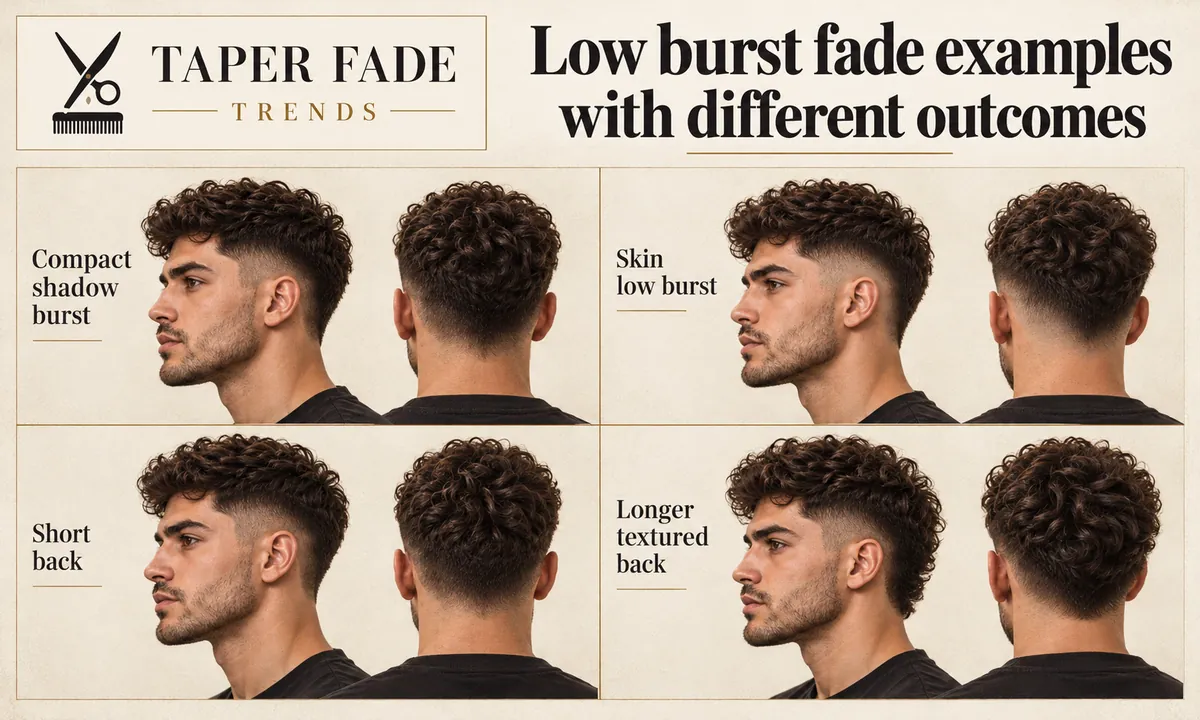
Four versions of the low burst fade differ in what changes at the ear and what stays at the back: a compact shadow burst, a skin low burst, a short back without a mullet, and a longer textured back. Pick the one closest to what you want, then set the remaining choices separately.
| Version | What sets it apart | How it reads | What fades first |
|---|---|---|---|
| Compact shadow burst | Small arc, shadow finish | Soft, low-contrast curve | Very little; the edge just fills in |
| Skin low burst | Same low arc, skin finish | Strongest contrast at the ear | The bare zone, soonest of the four |
| Short back, no mullet | Back and nape kept short | The ear curve is the only feature | The nape outline |
| Longer textured back | Most rear weight kept | A clear step from ear to back | The step between ear and back |
Compact shadow burst
This is the smallest change the cut allows: a short arc tight to the ear with a shadow left at the lowest point. Mullet Style points out that a shadow burst can take more growth before it looks different from the day it was cut. It is also the safest first request, since the arc can be widened or taken to skin at the next visit, and hair can’t be put back.
Skin low burst
Same low arc, but the lowest point goes to skin. The curve becomes the most visible thing about the haircut, and it shows more of the head’s outline around the ear. Expect the bare zone to soften first, which is why skin versions get the shortest touch-up advice in the sources below.
Short back, no mullet
Yes, a low burst fade can have a short back without becoming a mullet. The burst describes the curve around the ear; a mullet describes long hair left at the back. Ask for the back cut short with a natural or tapered neckline, and say the burst should stay at the ear rather than wrap across the nape.
The trade-off: if the shortest band is carried across the back, the result stops reading as a burst and starts reading as a low fade or drop fade. Mullet Style suggests treating neckline cleanup as a separate step from the burst for this reason. We had no photographed example of this version to show.
Longer textured back
Keep most of the rear weight and the arc becomes a visible step between the short ear area and a fuller back. This is the version that pairs with a mullet, and Cutters Yard calls the burst fade mullet one of the most popular combinations. If you are growing the back, tell the barber not to shorten it during fade cleanups.
Low burst fade vs drop fade and low taper
A low burst fade and a drop fade can both sit low; the difference is where the short area goes after the ear. On a low burst fade it stays curved around the ear and the back keeps length. On a drop fade it curves down and dips lower across the back. A rear photo settles it.
| Criterion | Low burst fade | Drop fade | Low taper fade |
|---|---|---|---|
| Where the short work sits | A curve around the ear | Around the head, dipping lower behind the ear | Sideburns, over the ears and the nape |
| What happens at the back | Length usually kept | The fade runs through it | Nape is tapered; side panel stays full |
| Can sit low | Yes | Yes | Yes, by definition |
| Photo that separates them | Rear view | Rear view | Side and rear view |
Cutters Yard says a drop fade curves down behind the ear and dips lower at the back, following the shape of the head, while a burst stays curved around the ear. Elevate Barberstudio’s cut list draws the same line, describing its drop fades as curving down behind the ear. The low taper column follows the Taper Fade Trends low taper fade guide.
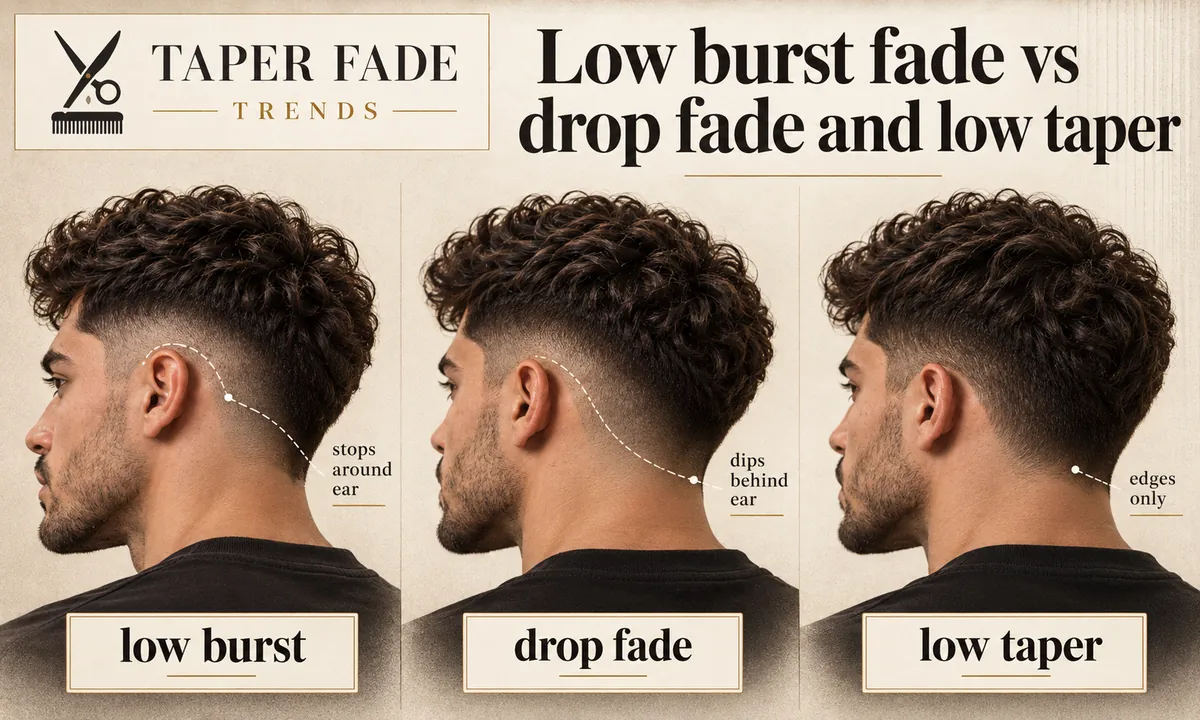
Is a low burst taper the same thing?
Sometimes. Elevate Barberstudio describes its “Low Burst Taper” and its “Burst Fade” in identical words: a half-moon fade around the ear with length kept at the back. Mullet Style treats a burst taper as a smaller, softer version of the same curve. Since shops differ, describe the arc and finish, not just the name.
If you want the sides left fuller and the short work kept to the edges, read the low taper fade guide. For the broader difference between the two families of cut, see taper vs fade.
How hair texture and growth change the result
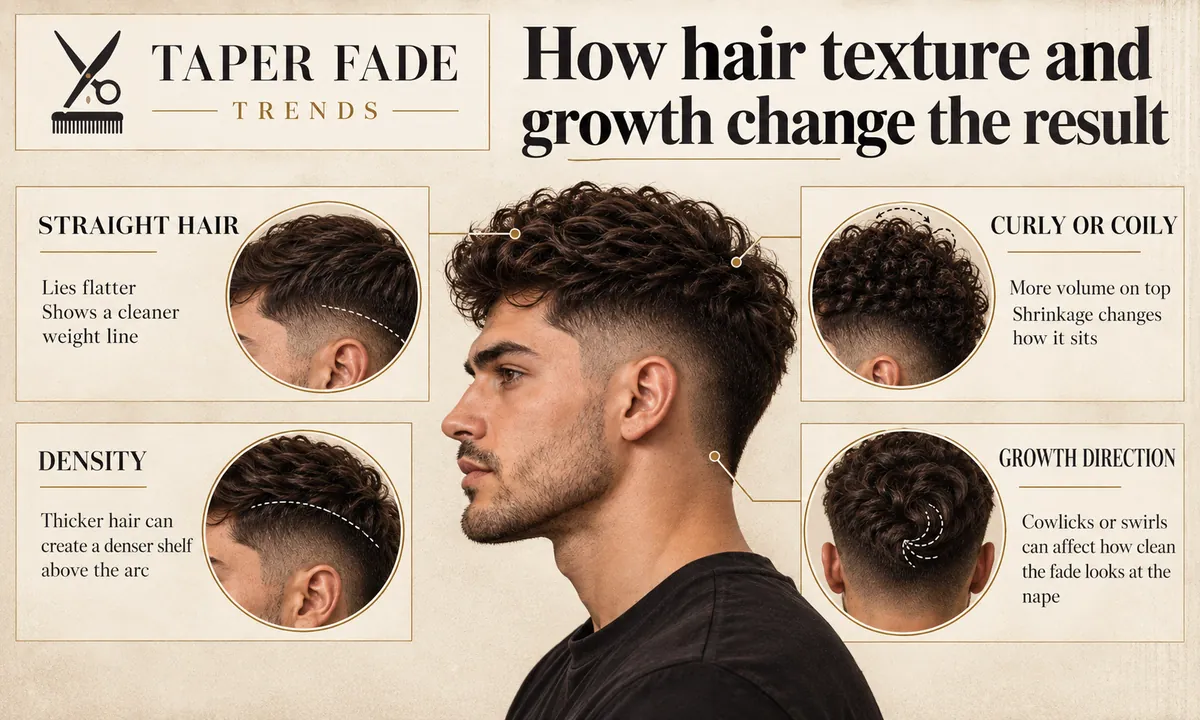
Hair texture changes how the blend and the hair above a low burst fade look, not what the cut is. Straight hair shows weight lines plainly, curls shrink as they dry, dense hair can leave a shelf above the arc, and low-density hair can show scalp. Describe those traits, rather than a label, before the cut starts.
| Trait | What can change | What to say or show |
|---|---|---|
| Straight hair | Steps in the blend and the weight line stay visible | Ask for a longer, softer blend if you want it hidden |
| Curly or coily hair | Shrinkage makes length judged wet sit shorter dry | Ask for length above the arc to be judged dry |
| Density | Dense hair can form a shelf above the arc; sparse hair can show scalp | Say whether to thin above the arc or keep length |
| Growth direction | A cowlick or crown whorl can push hair out near the ear or nape | Point it out before the first pass |
These patterns come from Mullet Style’s texture section and match the Taper Fade Trends guides on curly and straight low tapers. Bring a reference photo of hair close to yours in curl and density; a burst on dense coils will not look the same on fine straight hair.
What to tell your barber
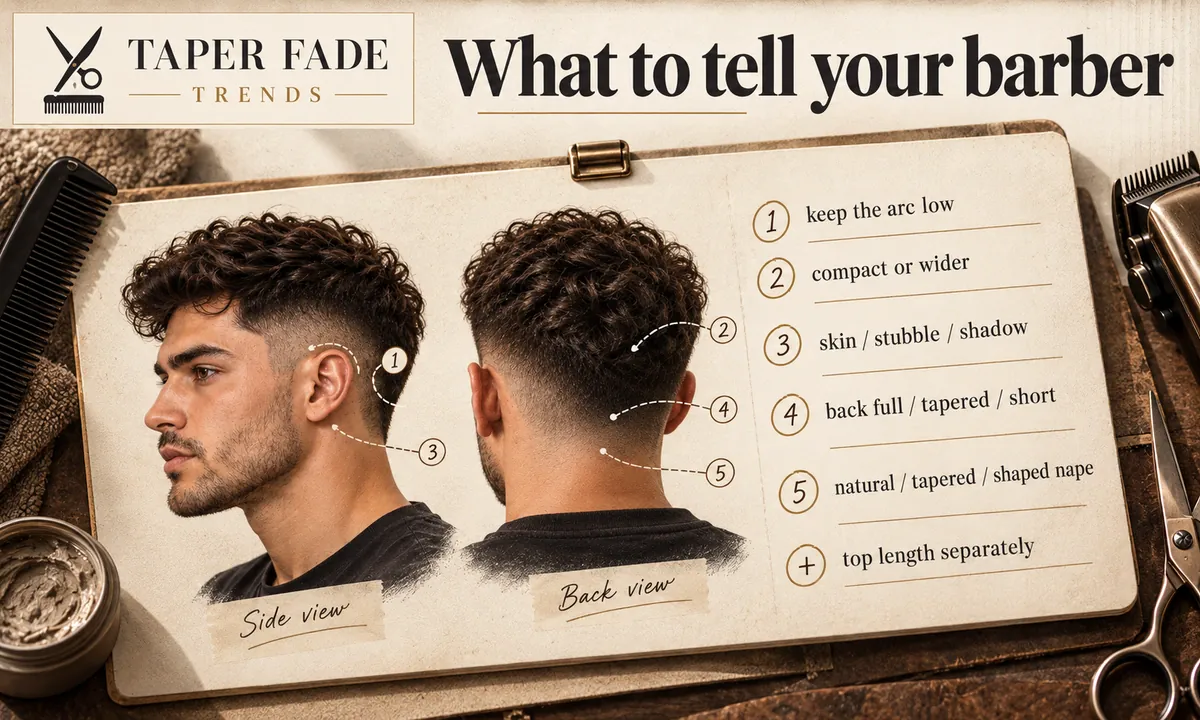
Ask for a low burst fade in five lines: keep the arc low, say how far it travels behind the ear, name the shortest finish, say how much weight stays behind the ear, and describe the nape. Then show side and rear photos of the same haircut and ask the barber to repeat the plan back before cutting.
- “Low burst fade, and please don’t take the arc above here.” Point to the spot on a side photo.
- “Keep the arc [compact / a little wider behind the ear].”
- “Take the lowest point to [skin / stubble / a shadow].”
- “Leave the back [full / tapered / short] behind the ear.”
- “[Natural / tapered / shaped] neckline, and keep the burst off the nape.”
Then the top, as its own sentence: “On top, leave [length and style from my photo].” Leave guard, blade and lever settings to the barber. A number sets one cutting length and says nothing about arc height, width or rear weight, and the same number can leave different lengths on different brands; the haircut numbers and guard lengths guide has the chart.
Bring a left side, right side and back view, plus a front view if the top matters. The guide on how to ask for a taper fade covers the check before the clippers start: you point to your limit, the barber points to theirs, and you settle any gap then.
Styling, grow-out and maintenance
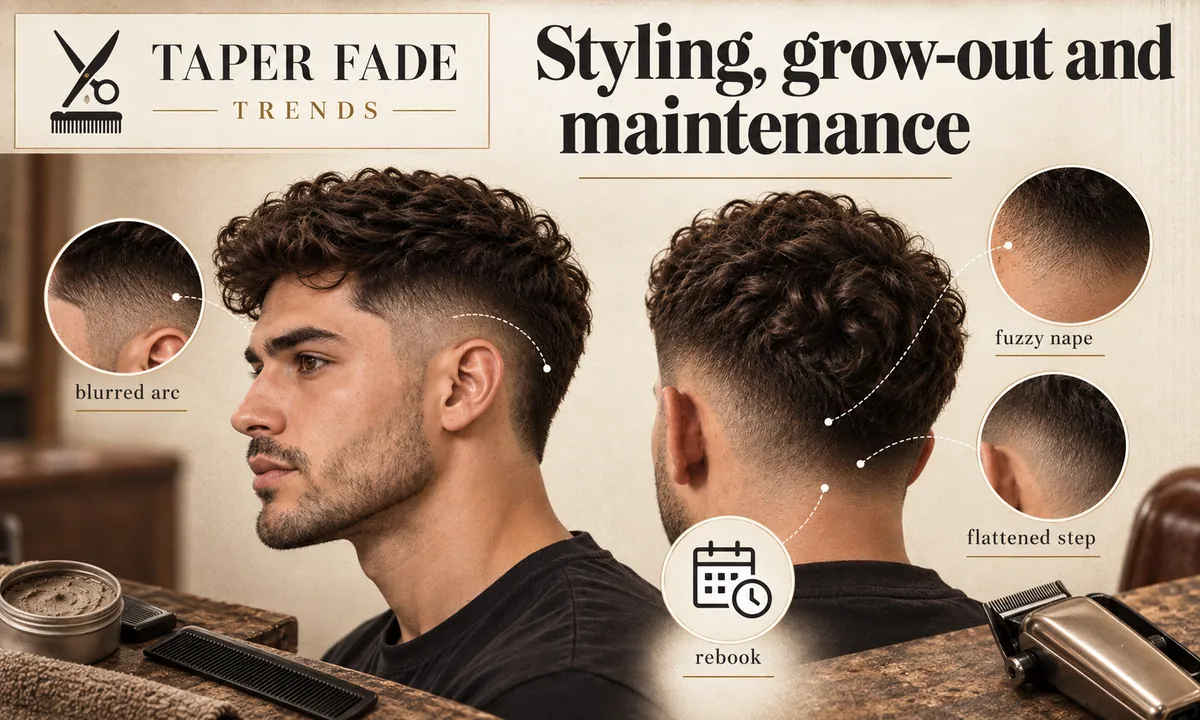
No single touch-up interval fits every low burst fade. Published guidance runs from about two to four weeks, and the sources don’t agree with each other. A skin finish loses its contrast sooner than a shadow, so rebook when the arc blurs or the nape turns fuzzy rather than on a fixed count of weeks.
| Source | Published guidance |
|---|---|
| Mullet Style | About 2 to 3 weeks for a sharply defined burst; longer if you accept a softer look |
| BurstFades.net | About every 2 to 3 weeks to keep the curved line sharp |
| Burst Fade Blog | 3 to 4 weeks in its comparison table; 2 to 4 weeks in its FAQ |
| Cutters Yard | Every 2 to 4 weeks for burst and drop fades alike |
These are each site’s own advice, not measurements. They also split on whether a low burst lasts longer than a higher one: Burst Fade Blog says it does, while BurstFades.net says the trim schedule barely changes with height. Watch for these signs instead:
- The shortest area at the ear no longer stands out from the hair around it
- The arc looks blurred rather than curved
- The nape has fuzz or stray hair below the outline
- The step between the ear and the back has flattened
Take side and rear photos on cut day and again when it looks overgrown. The pair shows your own growth rate better than any chart. Day-to-day styling depends on the top, not the fade; the burst itself needs nothing.
Method, limits and sources
Taper Fade Trends Editorial checked this guide on October 14, 2026, against the pages linked here: two barbershops (Cutters Yard in London and Elevate Barberstudio in Frisco, Texas), three burst fade guide sites, and the Taper Fade Trends guides on low tapers and guard numbers. Where sources disagree, on the low burst taper label and on upkeep, the page shows each version.
Every image is a labeled illustration. No haircut was cut, photographed or measured for this guide, no guard settings are claimed, and no barber has reviewed this version. No inch height or guard recipe is given for a low burst fade, because none is universal.

Sources cited:
- Cutters Yard: Burst fade vs drop fade
- Elevate Barberstudio: Signature cuts
- Mullet Style: Low burst fade haircut
- BurstFades.net: Low burst fade styles
- Burst Fade Blog: Low burst fade haircut
Found an error? Contact us or read our editorial policy.
Choose the next guide
Pick the next guide by the question still open.
- Want the sides kept fuller with short work only at the edges: low taper fade
- Not sure whether you want a taper or a fade at all: taper vs fade
- Need the request in words your barber will act on: how to ask for a taper fade
Keep reading
All guides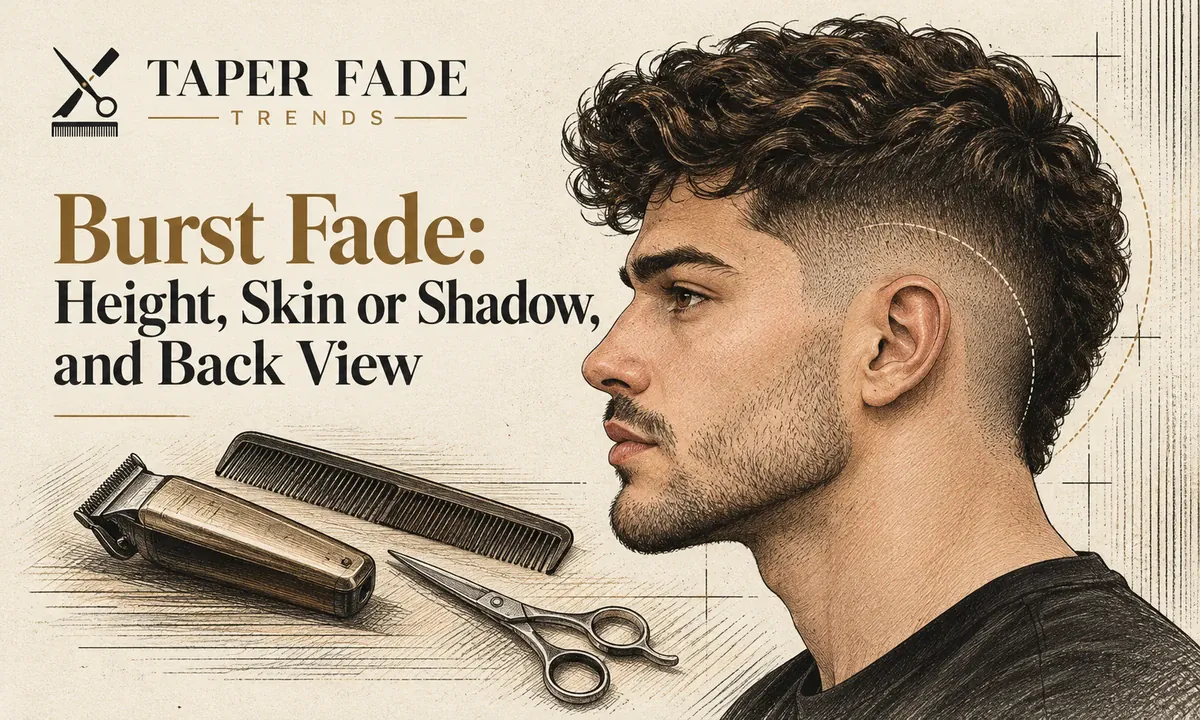
Burst fade: arc height, shortest finish and back view
A burst fade curves around the ear. It doesn’t have to reach skin, and the back is a separate choice. See the three controls and what to tell your barber.
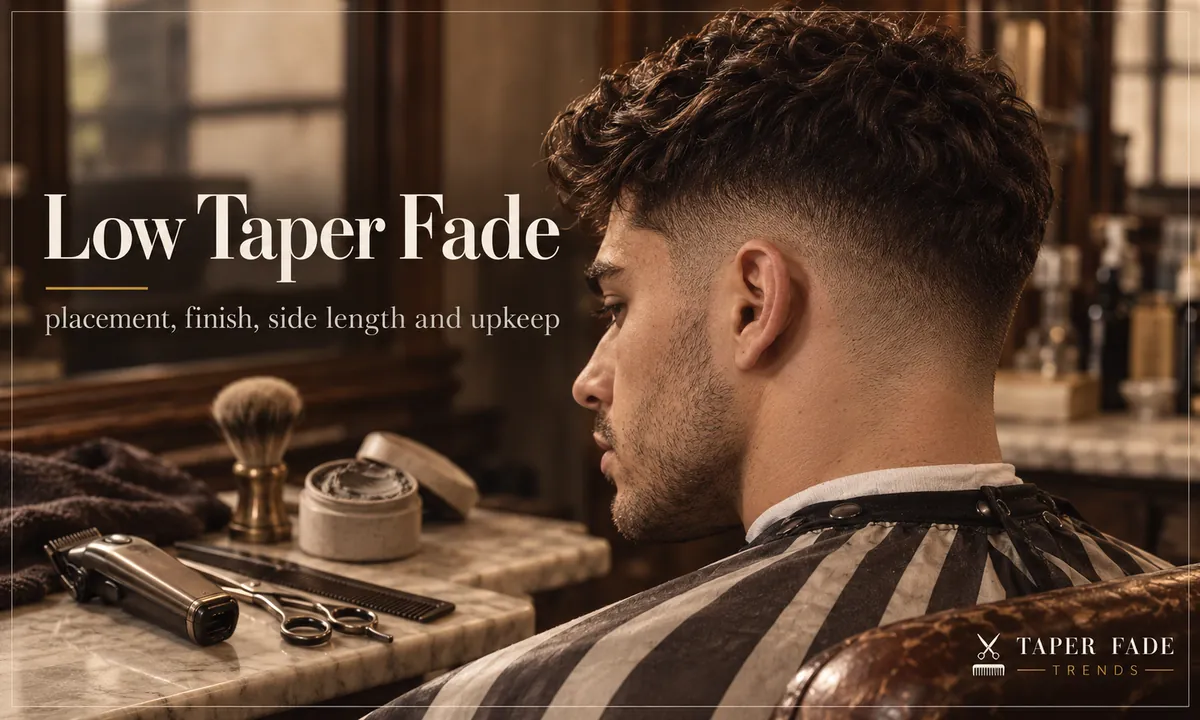
Low taper fade: placement, finish, side length and upkeep
A low taper fade shortens the sideburns and nape and keeps the sides full. See the four choices to make, whether it can go to skin, and what to say.
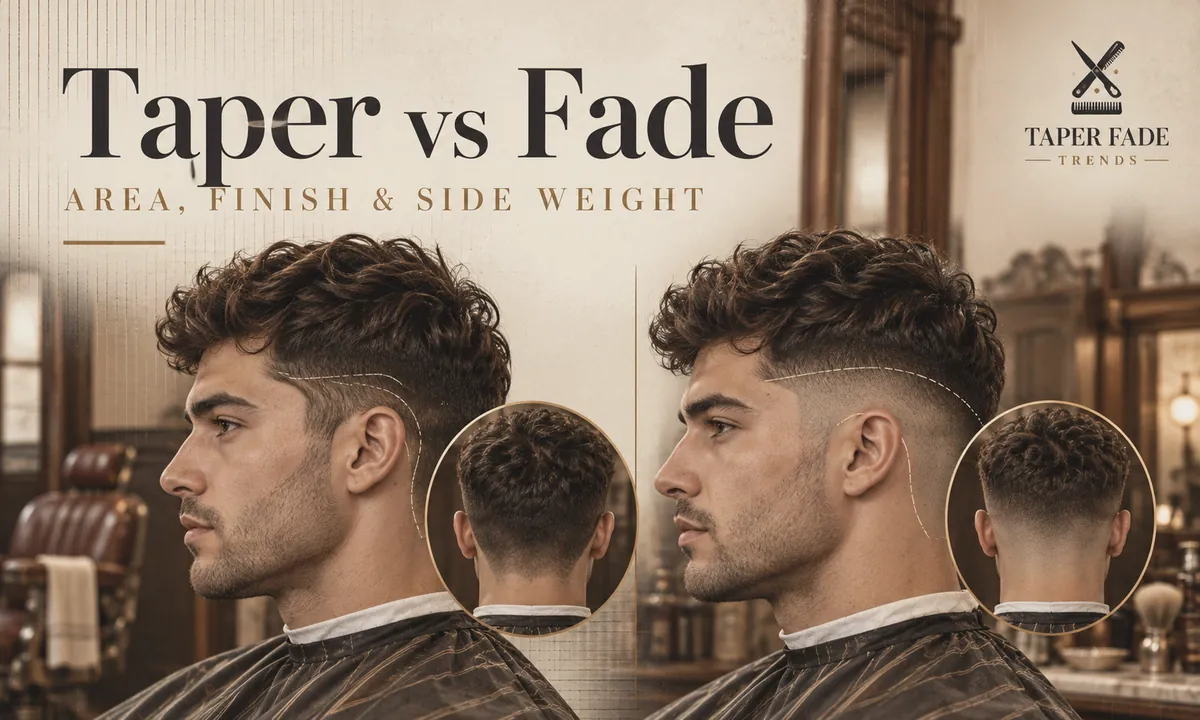
Taper vs fade: what changes in area, finish and side weight
Taper vs fade compared by coverage, height, shortest finish and side weight, with a back-view check and word-for-word barber scripts for either cut.
How to ask for a taper fade: a five-part barber brief
How to ask for a taper fade: say where it may reach, how short the base goes, how much side weight stays and what to do on top, then check the plan first.
Haircut numbers: clipper guard sizes in millimeters and inches
Haircut numbers in mm and inches, checked against Wahl, Andis and Oster specs, plus why #0 isn’t always no guard and what to tell your barber.
More in burst fades
Burst fades: all 3- Burst fade: arc height, shortest finish and back view15 min
- Low burst fade: the low ear arc and back transitionYou are here
- Burst fade vs taper: compare the ear arc and nape10 min