Burst fade: arc height, shortest finish and back view
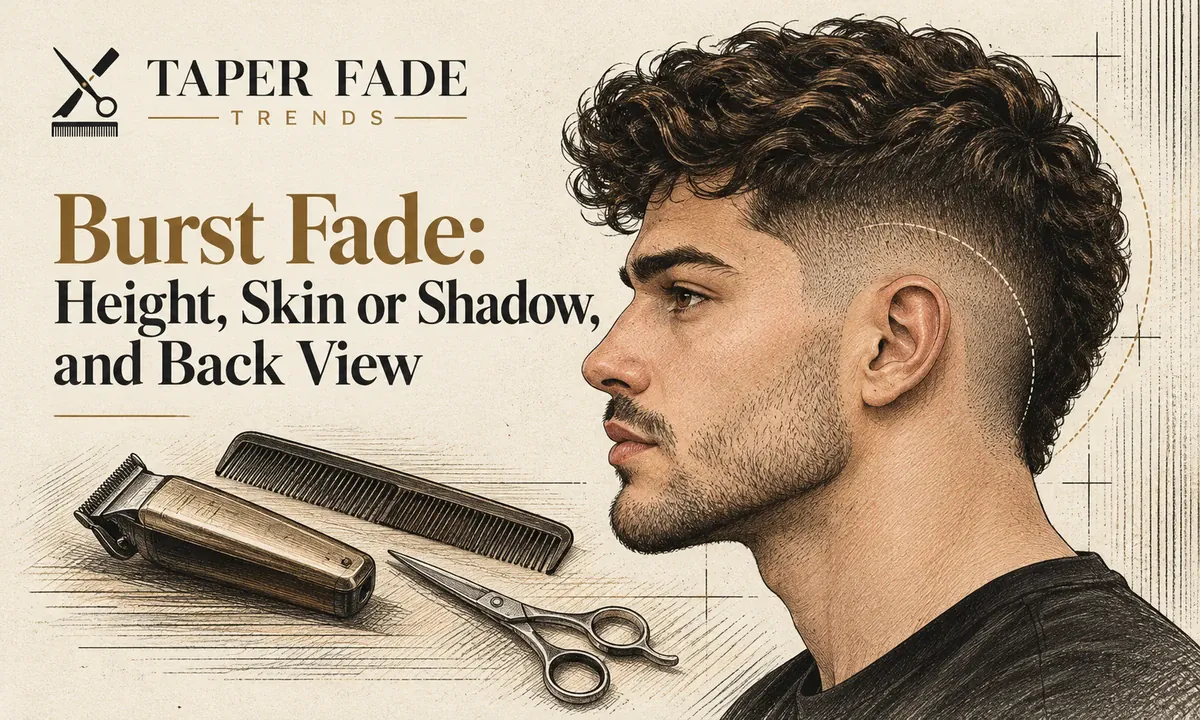
A burst fade is a fade whose short-to-long blend forms a rounded arc around the ear; height, shortest finish and rear/nape treatment are separate choices. The arc does not have to reach skin, and most versions keep more length at the back than a full fade. Decide all three before the barber sets the first line.
| What to decide | What it means |
|---|---|
| Defining shape | A rounded arc around the ear, shortest near the ear and longer moving away from it. |
| Arc placement | Low, mid or high: how far up the side the arc climbs. Shops draw the boundaries differently, so point to the line. |
| Shortest finish | Skin, a zero, or a shadow left by a short guard. The word “burst” does not choose it for you. |
| Rear/nape treatment | Left long, long with a lightly tapered neckline, or faded to connect. Sources disagree on which still counts as a burst. |
| Top | Mullet, mohawk, curls, crop, fringe or a longer top. The burst does not decide it. |
| Reference photos | A side or three-quarter view plus a rear view of the same cut. |
| Upkeep | Rebook when the arc edge blurs. Most guides reviewed put that at two to three weeks. |
What is a burst fade?
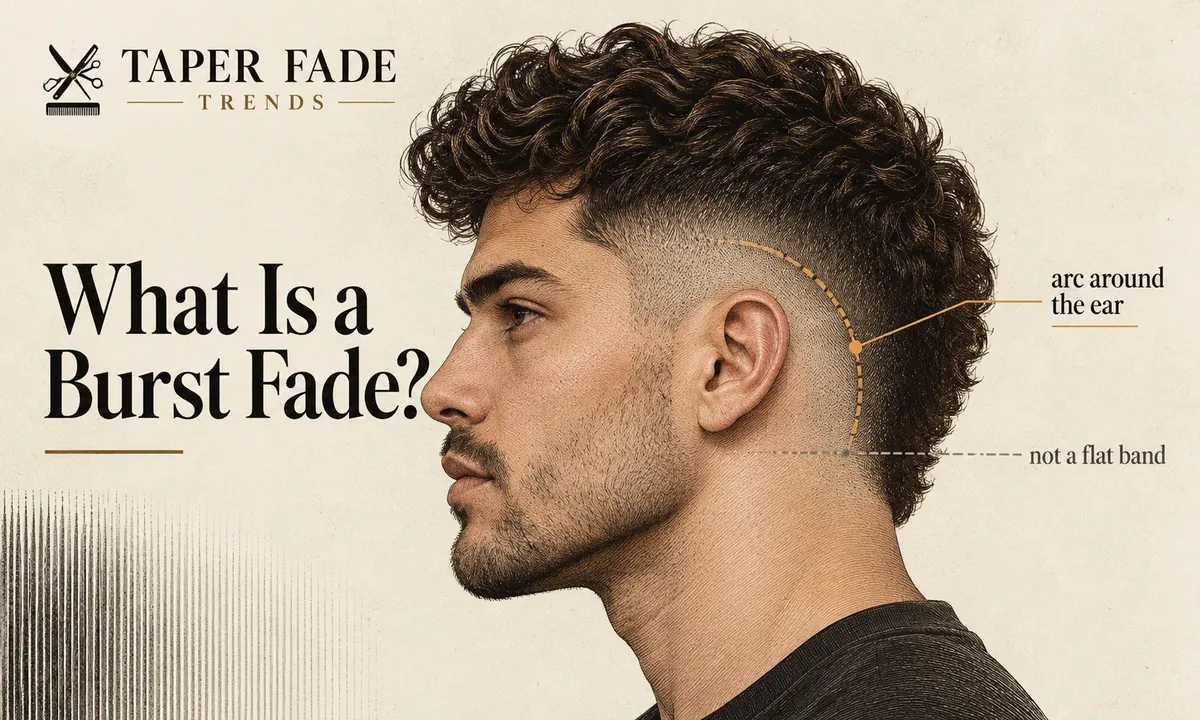
A burst fade is a fade whose blend forms a rounded arc around the ear instead of a level band across the side. “Burst” names the shape only. How high the arc climbs, how short its base goes and what happens at the back and nape are separate choices you still have to make.
CADMEN Barber Academy, a barber school, has barbers draw that arc as a guideline before any blending. It rises in front of the ear, dips just below the lobe and climbs again behind it, so the ear sits in the middle of a semicircle. A standard high fade, by contrast, runs at one level across the side.
CADMEN starts its guideline roughly 2.5 to 4 cm (1 to 1.5 in) above the ear at the front and back. That is one school’s starting point, and other shops size the arc differently, which is why the reference photo matters more than the name.
Because the name fixes only the shape, two burst fades can look nothing alike. The disagreements between sources sit in the next three choices, and this guide treats each one on its own.
Choose the three fade controls
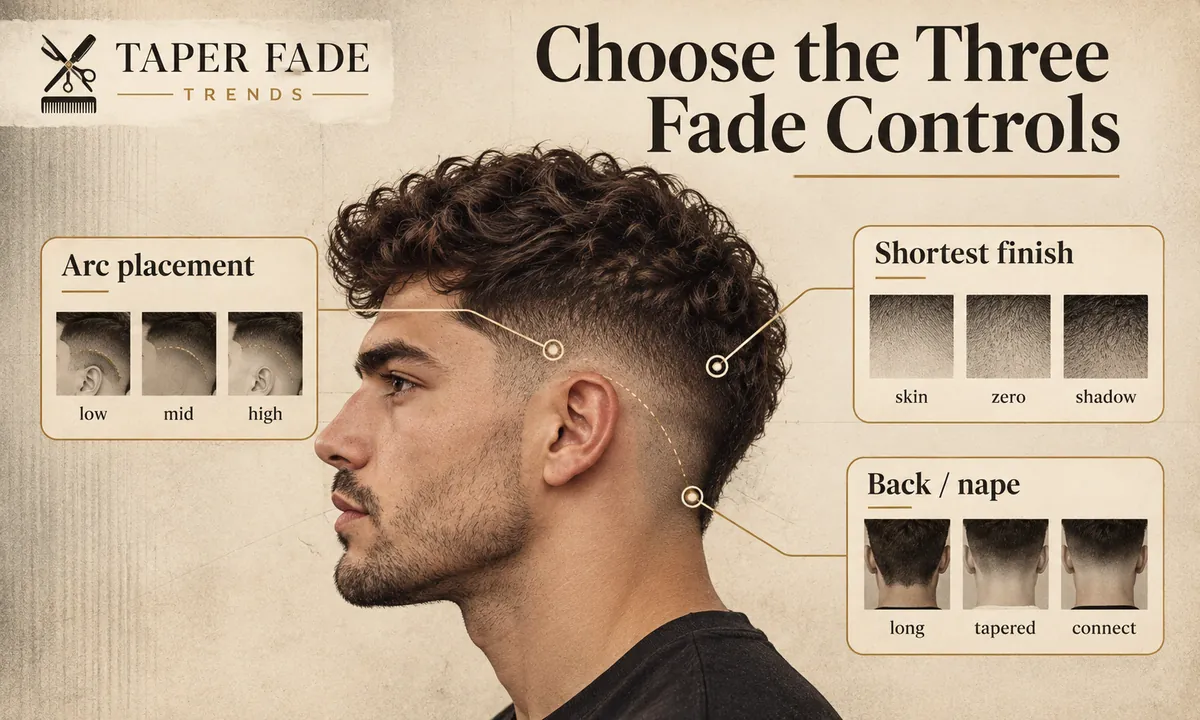
A burst fade comes down to three choices: arc placement (how high the arc climbs), shortest finish (how short its base goes) and rear/nape treatment (what happens behind the ear and at the neck). None of them sets another. A low arc can still end at skin, and a high one can stop at a shadow.
| Control | Options | What it changes | Where shops differ |
|---|---|---|---|
| Arc placement | Low, mid, high | How much of the side the arc covers and how bold it reads | No standard boundary |
| Shortest finish | Skin, zero, shadow | How much scalp shows and how fast regrowth shows | Some barbers default to skin |
| Rear/nape treatment | Left long, tapered neckline, faded to connect | The silhouette from behind | Whether a faded back is still a burst |
1. Arc height and coverage
Low, mid and high describe how far up the side a burst fade’s arc climbs, not how short its base goes. A low arc stays close to the ear and keeps most side length; a high arc climbs toward the temple and crown and shows the most contrast. Shops draw these boundaries differently, so point to the line you want.
Taper Trends borrows the usual fade landmarks: low starts just above the natural hairline, mid around the middle of the temple, high near the temple and crown. A higher arc also removes more side weight, which makes the top look taller and narrower (Mullet Style).
If you are unsure, start low. Mullet Style points out that a high arc cannot be brought back down in the same appointment, while a low one can always be raised on the next pass.
2. Shortest finish: skin, zero or shadow
A burst fade does not have to reach skin. Current barber and editorial guides use “burst” for the curved shape and treat skin, a zero or a shadow as the shortest finish, a separate choice. Some barbers default to skin on this cut, so say the finish out loud before the first line is set.
That default is noted by Taper Trends, and Hair Pundits describes the same cut taken to bare skin or stopped at a half guard. A skin finish describes how short the base is cut, not the shape of the fade.
- Skin: bare scalp shows at the bottom of the arc, which gives the strongest contrast.
- Zero: very close, with a trace of stubble. “Zero” can mean a clipper with no guard or a #0 attachment, which is not the same length, so ask.
- Shadow: a short guard leaves visible stubble, and the arc reads as soft shading instead of a hard edge.
A shadow also grows out more gradually, because its lowest point already shows hair (Mullet Style). Guard numbers vary by brand; the haircut numbers guide lists them in millimeters and inches.
3. Back and nape treatment
A burst fade usually keeps more length behind the ear than a full fade, but sources disagree on whether the nape must stay untouched. Treat the back as its own decision: leave it long, keep it long with a lightly tapered neckline, or fade it to connect. Show a rear or three-quarter photo, because a side view hides the nape.
Here is where the sources split. Fadepedia says a burst never connects around the back, and that a short back makes it a different cut. New York Master Barbers is blunter: if the back of the neck is faded, it is a drop fade.
CADMEN, writing for barbers, says the area behind the ear is typically left longer, then tells barbers to ask first, because some clients want a fade in the back that connects to the burst sides and others want a softer, tapered back. Taper Trends and Mullet Style also treat the neckline as a step of its own.
This guide defines the burst fade by the arc and treats rear/nape treatment as a separate choice. If you want the version every source accepts, ask for the nape untouched.
- Left long: the hair behind the ear and down the nape keeps its length. Mullets and mohawks depend on this version.
- Long back, tapered neckline: the back stays long and only the hairline at the nape gets a short, soft taper.
- Faded to connect: the fade carries on behind the ear into the back. Some shops will call the result a drop fade, so show a photo of exactly this.
What a burst fade looks like from the side and back
From the side, a burst fade shows a curved boundary centered on the ear. From behind, it shows how much length stays behind the ear and what the nape does. New York Master Barbers adds that a plain side profile often hides the shape, which reads best in three-quarter view. Judge the cut from at least two angles.
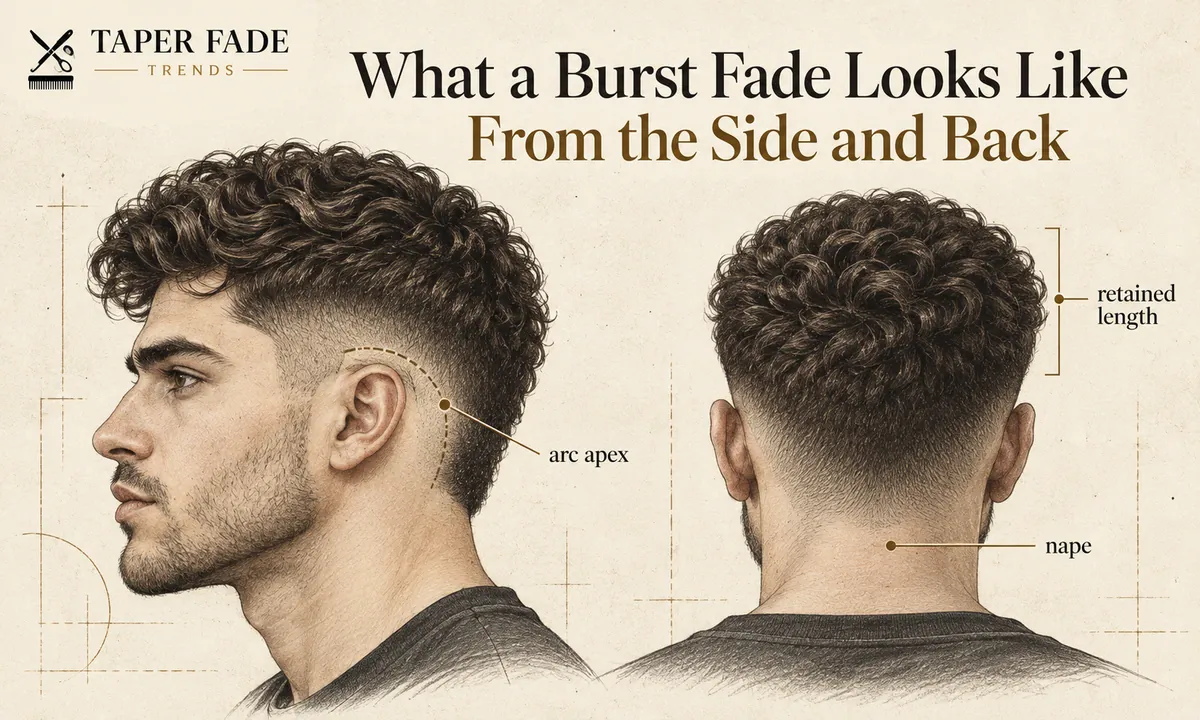
Check five things in a reference pair, or in a hand mirror before you leave the chair:
- Arc apex: where the curve stops climbing above the ear.
- Roundness: the line should curve, not run flat. CADMEN names a too-flat arc as a common beginner mistake, because it reads as a misplaced high fade, and Fadepedia warns that squaring off the back corner loses the round shape.
- Symmetry: both arcs should sit at about the same height. CADMEN lists a lopsided arc as the other common mistake. Ears and heads are rarely identical, so close is the target.
- Retained length: how much hair stays behind the ear compared with the side.
- Nape: left long, tapered or faded, matching what you agreed.
With the arc, finish and back settled, the remaining question is how a burst differs from the fades it gets confused with.
Burst fade vs drop fade and taper
A burst fade is shaped by an arc around the ear. A drop fade is a continuous fade whose line descends behind the ear and continues through the back of the head (Fadepedia, CADMEN, New York Master Barbers). A taper fade names a third thing: on this site, short work kept to the sideburns, temples and nape.
| Burst fade | Drop fade | Taper fade | |
|---|---|---|---|
| What the name fixes | The arc around the ear | A line that dips behind the ear | Where the shortest work sits |
| Path of the line | Centered on the ear | Around the head, lower behind the ear | Sideburns, temples and nape |
| The back | Usually longer; whether it can be faded is disputed | Faded through to the nape | Nape tapered, back fuller than a full fade |
| Shortest finish | Your choice | Your choice | Your choice |
| View that settles it | Rear or three-quarter | Rear | Side and rear |
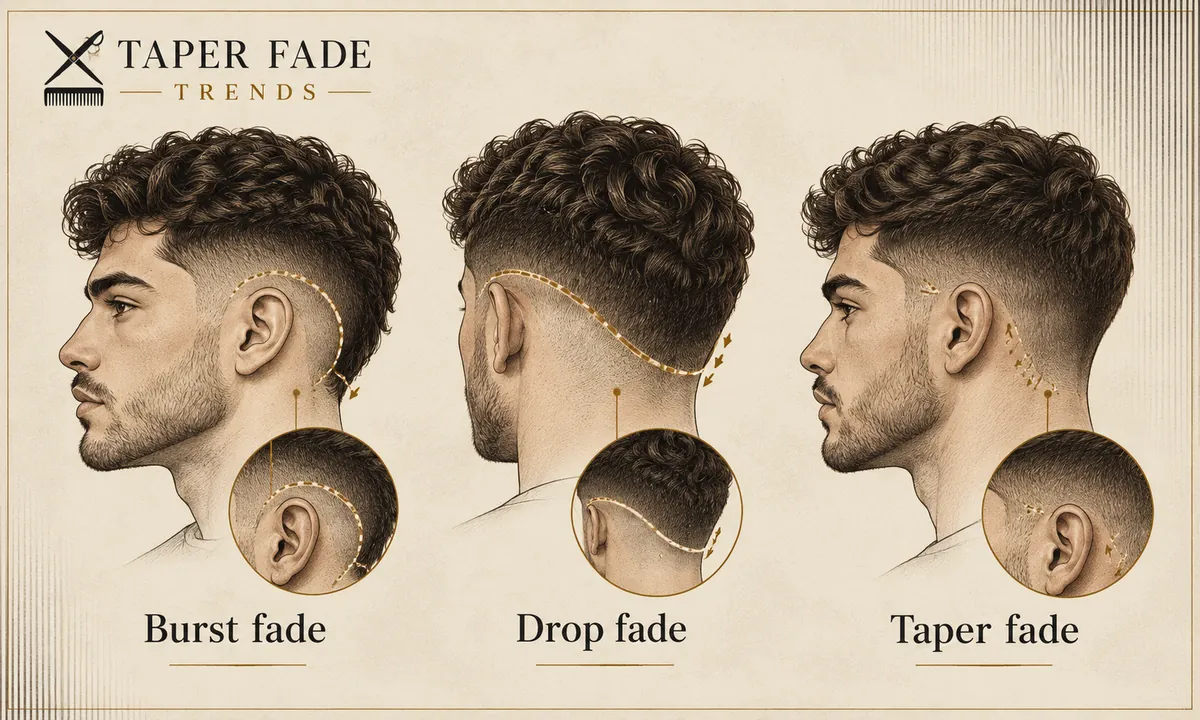
Burst fade vs drop fade
A burst fade keeps its arc centered on the ear and usually leaves the back longer. A drop fade runs its line around the head, dipping behind the ear, and fades through the back to the nape. Both curve near the ear, so check the nape: long points to a burst; faded in one continuous line points to a drop.
Hair Pundits puts the choice simply: a drop fade if you want a short, clean neckline, a burst if you want the back fuller. Taper Trends notes that some barbers use the two names interchangeably, which is one more reason to bring the rear photo instead of relying on either word.
Burst fade vs taper and “burst taper”
A burst fade and a taper fade name different things. On Taper Fade Trends, a taper fade keeps its shortest work at the sideburns, temples and nape, while a burst fade is defined by the arc around the ear. “Burst taper” often means a softer burst. Specify the arc, shortest finish and nape instead of the label.
Mullet Style uses “burst taper” for a more compact arc that keeps weight behind the ear, while Taper Empire files the burst under the taper family altogether. Neither usage is a standard. The taper fade guide covers the taper side of the vocabulary, and taper vs fade compares the two by area and finish.
Which version fits your hair and top style?
A burst fade works on straight, wavy, curly and coily hair, because the arc is cut on the sides and the texture mostly shows on top. Texture and density change how sharply the arc reads and how much top length balances it. Bring a reference photo of hair with a similar texture and density.
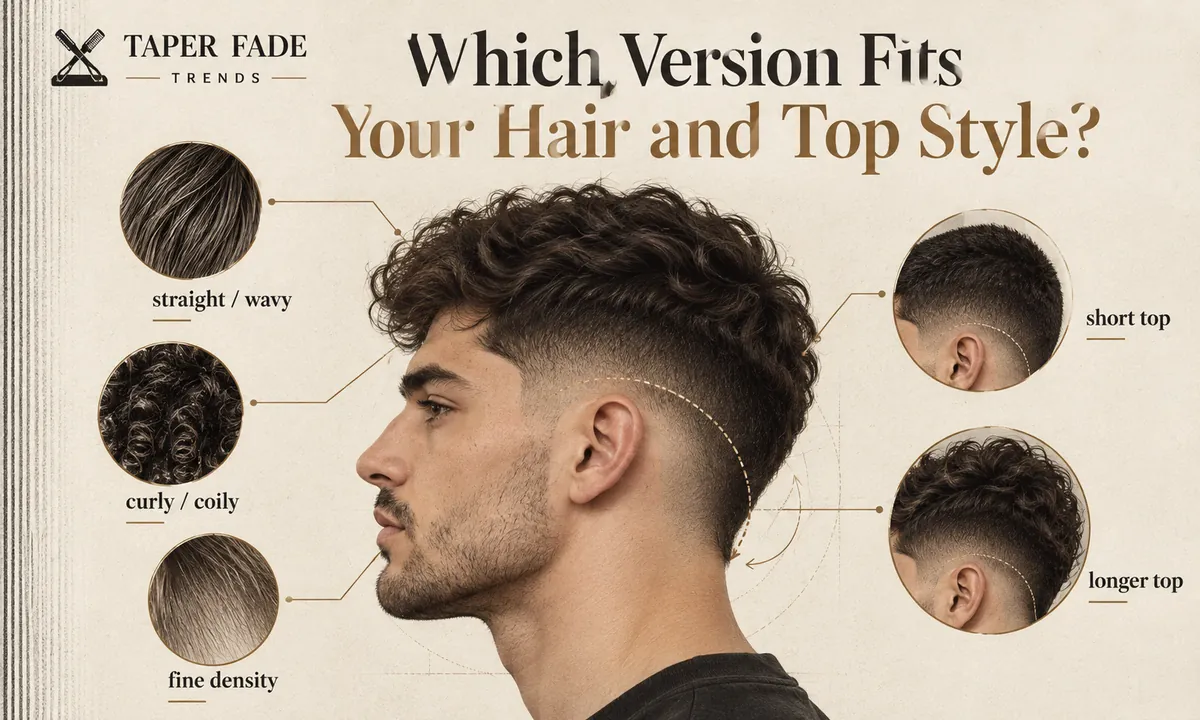
| Hair or top | What changes | What to settle with the barber |
|---|---|---|
| Straight or wavy | The curve shows most clearly, but a flat top can look unfinished against a sharp side. | Enough top length for a part, movement or direction. |
| Curly or coily | Curls shrink as they dry, and the same guard reads shorter than on straight hair. | Judging the top dry, and possibly one guard longer on the sides. |
| Fine or low density | Less contrast holds, and scalp can show in a ring around the arc. | A lower arc or a shadow finish. |
| Short top | The arc becomes a quiet detail rather than the point of the cut. | How much contrast you want. |
| Mullet, mohawk or long top | The back length and the arc read together. | Back length, stated separately from the arc. |
The straight-hair and density rows draw on Taper Trends; the curl and fine-hair notes come from New York Master Barbers. For checking curl length dry and damp, the high taper fade on curly hair guide walks through the method, and it applies here too.
A burst fade does not have to be a mullet. The burst sets the shape around the ear, not the top or back. A burst fade often comes with a mullet or mohawk because both keep length behind the ear, but guides also show it under curls, crops and textured fringes. Name the top and back as separate requests.
Sources split on short tops as well. Taper Empire says the cut looks incomplete with under about 5 cm (2 in) on top; Taper Trends and Hair Pundits both show it under a short textured crop, where the arc becomes a detail.
Face-shape advice for this cut contradicts itself. Hair Pundits says a burst flatters round faces; Taper Empire says to avoid it on round and heart-shaped faces. Neither shows evidence, so this guide gives no face-shape rule. Texture, density and the top you want are better guides.
What to tell your barber
Tell your barber four things about a burst fade: where the arc should stop, how short its base goes, what happens at the back and nape, and how long the top stays. Point to the arc in a side or three-quarter photo and show the back in a rear photo. The word “burst” alone covers only the shape.
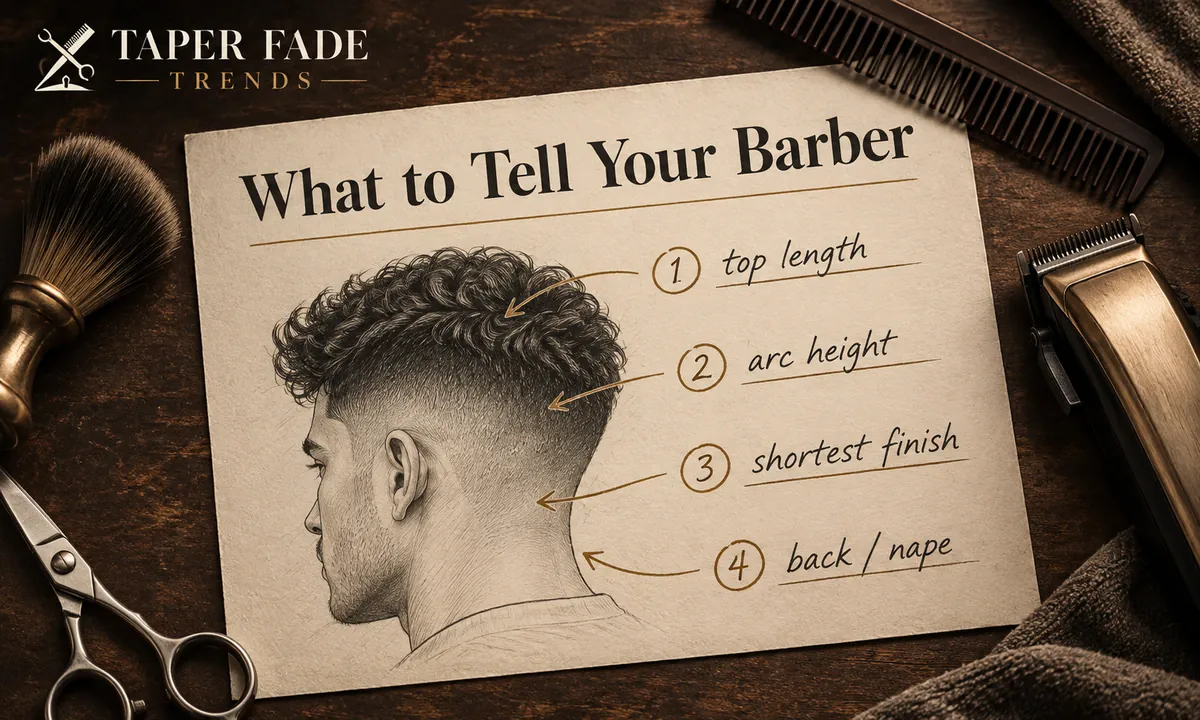
Fill in the brackets:
- “A burst fade, with the arc shaped like this side photo.”
- “Stop the top of the arc here,” pointing at your head, or “about an inch past my ear” (2.5 cm). New York Master Barbers suggests the ear as the ruler because every barber can measure against it.
- “Take the shortest point to [skin / a zero / a shadow].”
- “At the back, [leave the nape untouched / keep the back long and lightly taper the neckline / fade it to connect], like this rear photo.”
- “Leave the top at [length or style].”
If you wear a beard, add whether the sideburn should fade into it. The arc usually swallows the sideburn unless you say otherwise (New York Master Barbers).
Bring these photos:
- Both side profiles, since one side cannot be assumed to match the other.
- A three-quarter view, which shows the arc and the back together.
- A rear view, which shows the length behind the ear and the nape.
- References on hair with a texture and density close to yours.
Describe the result, not the clipper settings. Guard numbers, blade and lever are the barber’s to choose, and a photo cannot reveal them. Before the first pass, ask the barber to repeat your four choices back. The general version of this brief is in how to ask for a taper fade.
With the cut agreed, what is left is how much upkeep you want and when another fade would serve you better.
Fade styling and upkeep
Rebook a burst fade when you can no longer see where the short arc ends and the longer hair begins. Most guides reviewed here put that at two to three weeks, but that figure is common advice, not a rule: a skin finish and a high arc blur sooner, and a shadow finish and a low arc last longer.
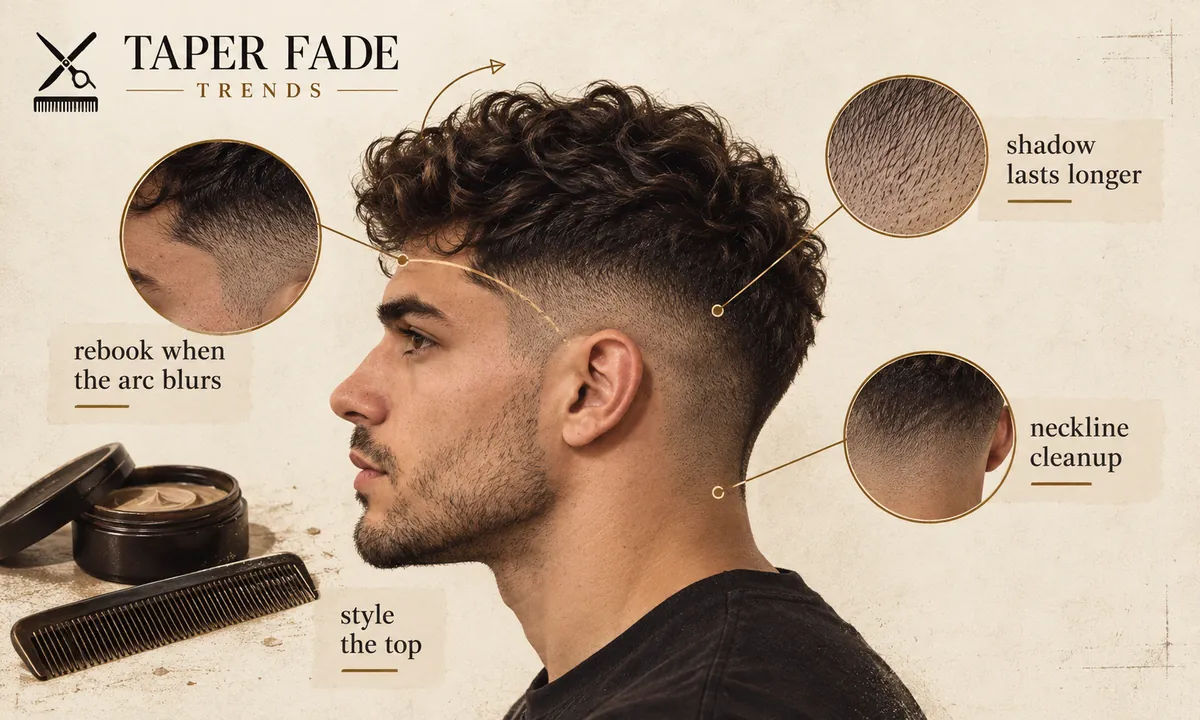
Fadepedia, Hair Pundits, New York Master Barbers and Forte Series all give two to three weeks; Taper Empire says two. Mullet Style declines to set a schedule at all, which is the honest position for a cut whose finish varies this much.
| Variable | How regrowth shows | What to decide |
|---|---|---|
| Shortest finish | Skin shows regrowth first; a shadow tolerates more growth. | The finish you will actually keep up. |
| Arc height | A high arc exposes more scalp, so regrowth shows over more of the head. | A lower arc if you want longer between visits. |
| Rear/nape treatment | A long back hides some regrowth; a tapered neckline loses its edge as it grows. | Whether the neckline should stay sharp between cuts. |
| How crisp you like it | A sharp look shows lost definition days earlier than a lived-in one. | Your trigger: the arc edge blurring, or the back getting heavy. |
Hair Pundits and New York Master Barbers both note that the longer back hides some of the regrowth, so an overdue burst looks scruffy before it looks unkempt. A trimmer can keep the outline around the ear tidy between visits, but Hair Pundits advises against redrawing the curved blend at home.
A neckline cleanup between full cuts refreshes the nape without touching the arc. It also shortens the nape, so skip it if you are growing the back out for a mullet.
The arc needs no styling; the top does. Choose product for the top’s length and texture: Hair Pundits suggests a texturizing clay for mohawks and crops and a curl cream for natural curls.
A skin finish is a close shave at the bottom of the arc. DermNet, a dermatology reference, says razor bumps can appear wherever hair is shaved close, occur most often on the face and neck, and are more likely with tightly curled, coarse hair; its prevention advice includes leaving about 1 mm of stubble. If bumps keep appearing along the arc, a shadow finish is the simple swap, and a dermatologist is the right call if they persist. This is general information, not a diagnosis.
Limits and alternative fades
A burst fade is the wrong request if you want the fade line to run through the back (ask for a drop fade) or only a light cleanup at the sideburns and nape (ask for a taper fade, covered in the taper fade guide).
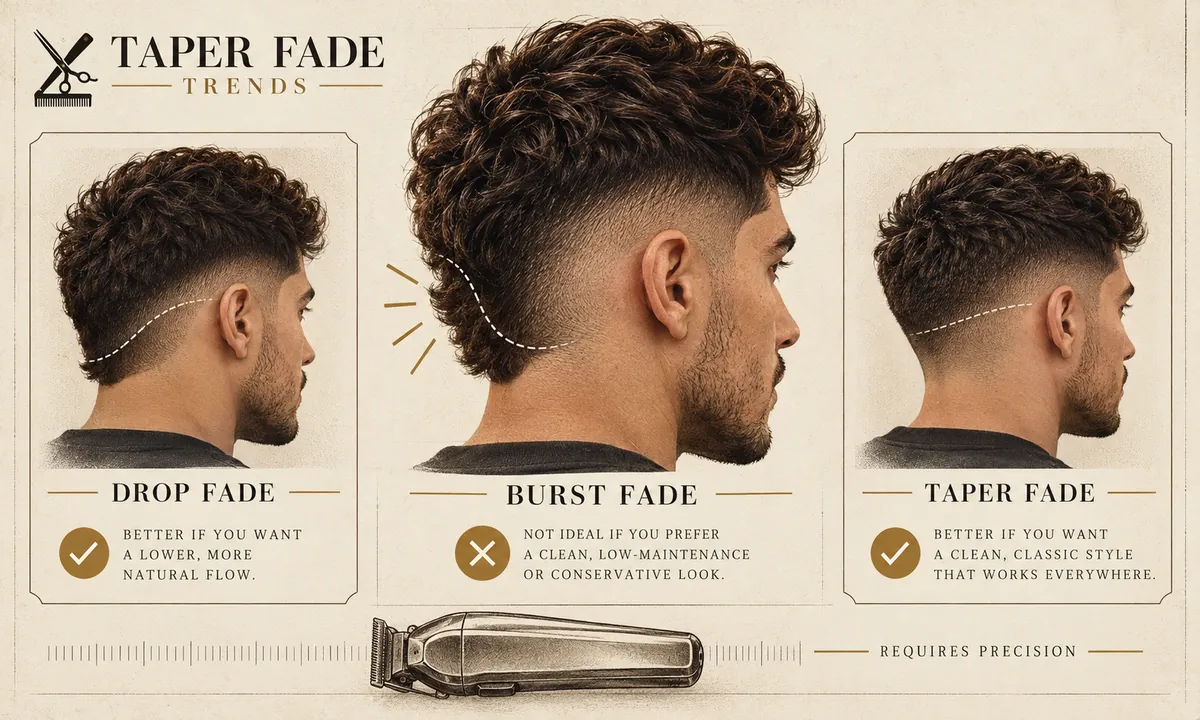
The cut also leans on barber skill. CADMEN says the curved guideline takes more precision than a level fade and adds 5 to 10 minutes to the cut. Hair Pundits suggests asking whether the barber cuts burst fades regularly.
Burst fade is not a standardized label. None of the sources reviewed points to a governing standard, so this guide’s definition rests on comparing barber-school, barbershop and editorial pages, and a shop with a stricter or looser version will cut to its own.
A reference photo shows one head on one day. It cannot show how your density and growth direction will change the result.
How this fade guide was researched
Taper Fade Trends built this guide by comparing how a barber school, a working barbershop and several grooming publishers define and describe the burst fade, read on October 14, 2026. Where they disagree, mainly on the back and nape, the page says so and states its own position: the arc defines the burst fade, and shortest finish and rear/nape treatment are separate choices.
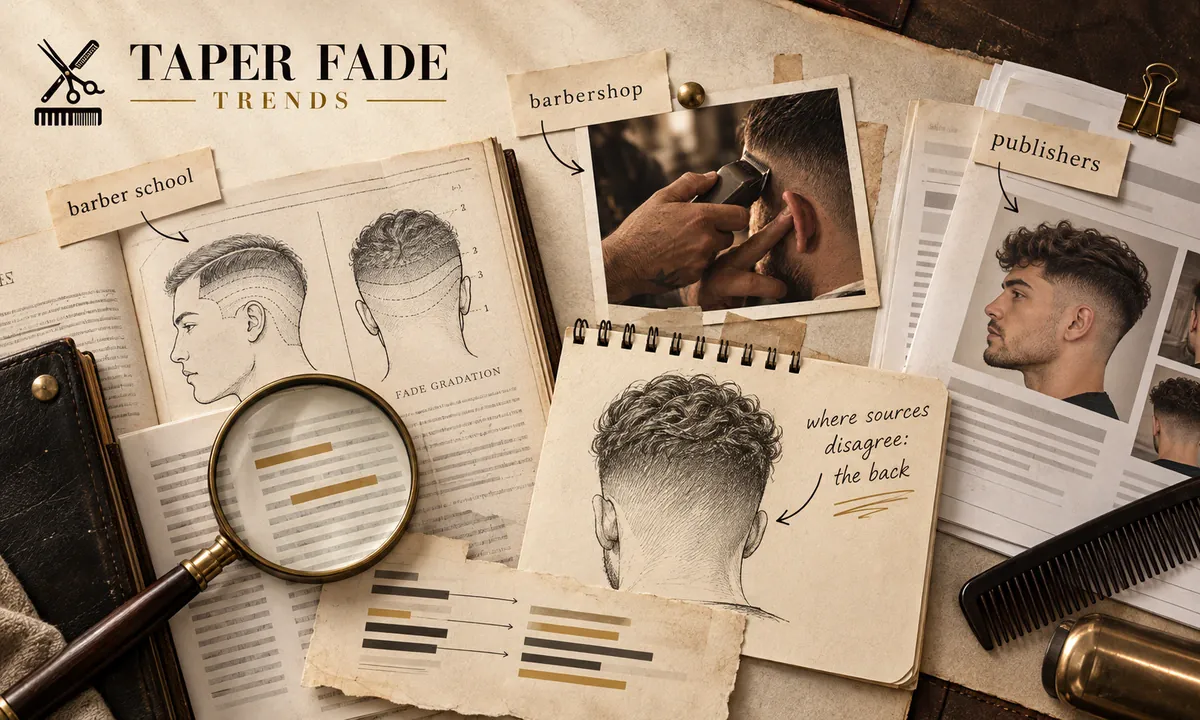
Every image on this page is an illustration of geometry, not a photo of a documented cut. No barber has reviewed this version yet; when one does, their name, role and review date will be added here. Found an error? Our editorial policy explains how corrections are made and dated, or you can contact us.
Sources:
- CADMEN Barber Academy: Burst fade, what it is and how to cut it
- Fadepedia: The burst fade, explained
- New York Master Barbers: Burst fade and what to ask for
- Hair Pundits: Burst fade haircut guide
- Taper Trends: Burst fade haircut, low, mid and high
- Mullet Style: Burst fade taper haircut
- Taper Empire: Burst fade geometry brief
- Forte Series: Burst fade styles for men
- DermNet: Pseudofolliculitis barbae (razor bumps)
Which fade guide to read next
Save the side and rear reference you actually want, and take the five-line brief above to your appointment. For the edge work around this cut, read the taper fade guide. To turn a finish into a guard length your barber’s clippers understand, use haircut numbers.
Keep reading
All guides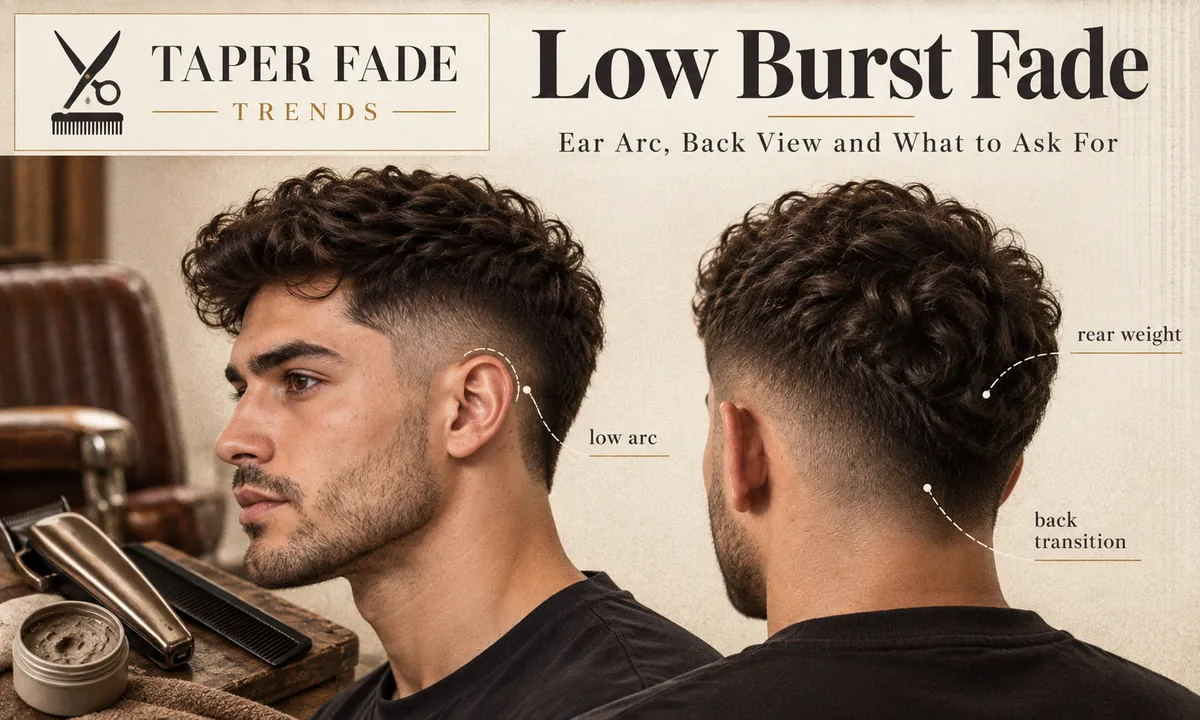
Low burst fade: the low ear arc and back transition
A low burst fade curves low around the ear and can keep length at the back. Compare skin vs shadow, burst vs drop fade, and what to tell your barber.
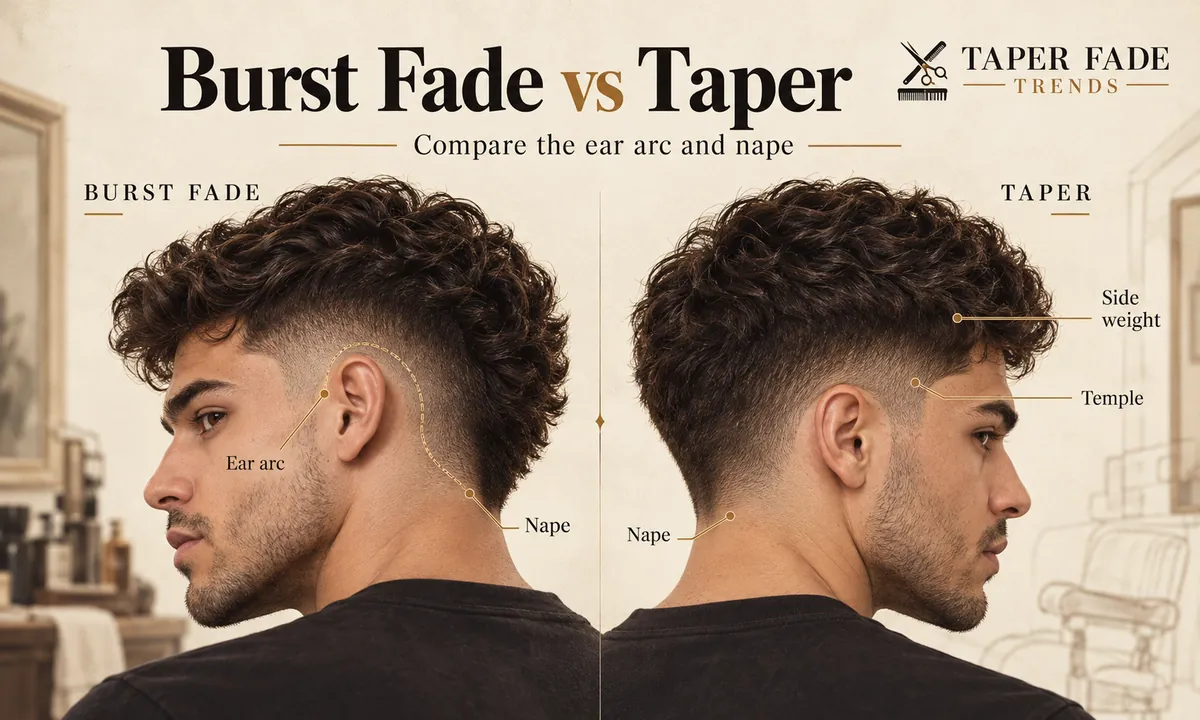
Burst fade vs taper: compare the ear arc and nape
Burst fade vs taper compared by ear arc, side coverage, nape treatment and shortest finish, plus a five-part barber brief and the photos to bring.
Taper fade: a visual guide to heights, finishes and top styles
Where a taper fade sits from the front, side and back, how low, mid and high differ, and how to ask for side coverage and a finish with or without skin.
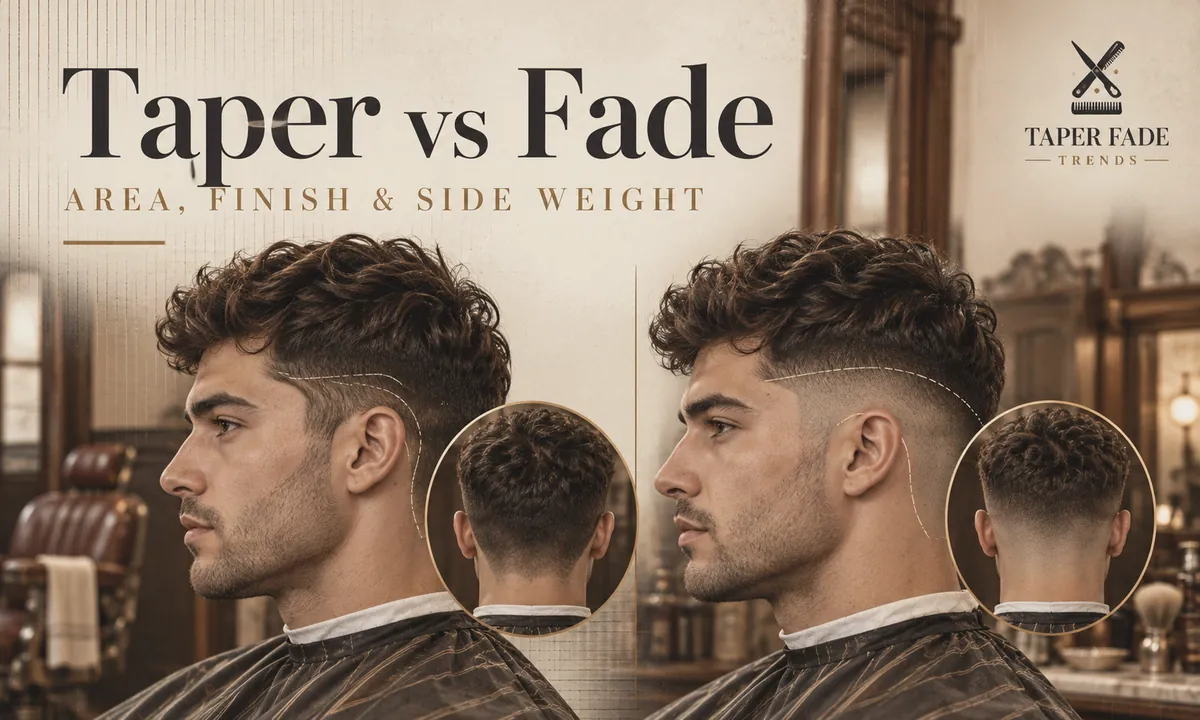
Taper vs fade: what changes in area, finish and side weight
Taper vs fade compared by coverage, height, shortest finish and side weight, with a back-view check and word-for-word barber scripts for either cut.
How to ask for a taper fade: a five-part barber brief
How to ask for a taper fade: say where it may reach, how short the base goes, how much side weight stays and what to do on top, then check the plan first.
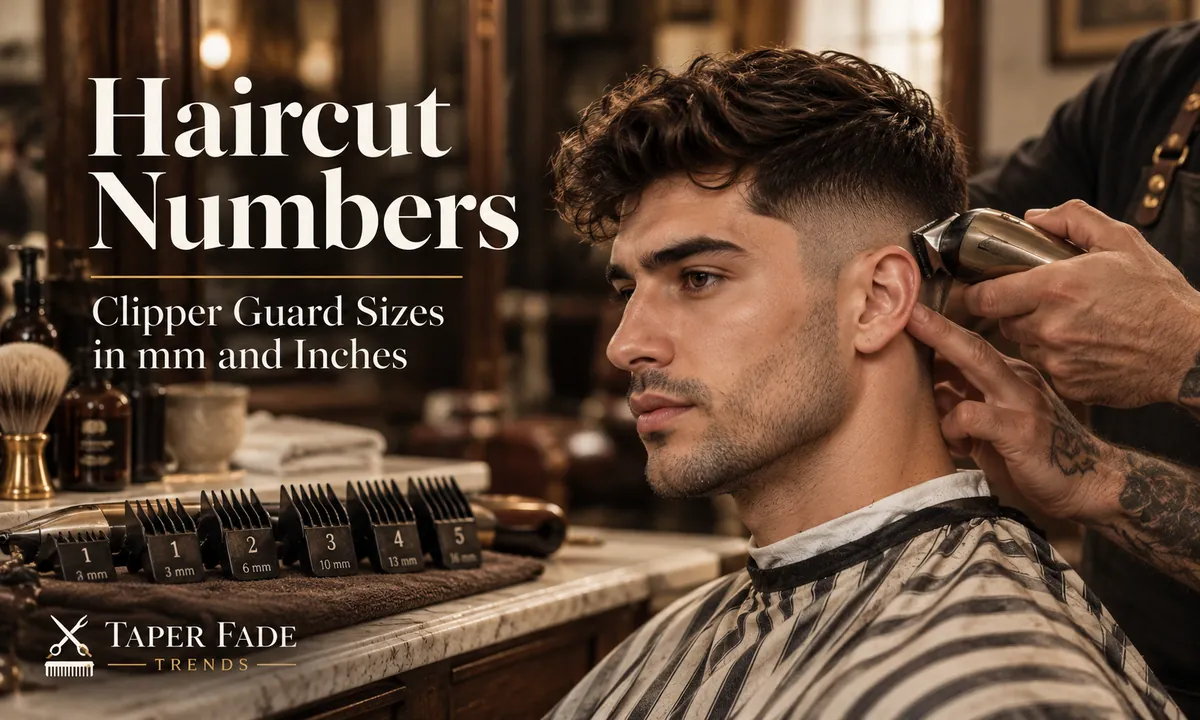
Haircut numbers: clipper guard sizes in millimeters and inches
Haircut numbers in mm and inches, checked against Wahl, Andis and Oster specs, plus why #0 isn’t always no guard and what to tell your barber.
More in burst fades
Burst fades: all 3- Burst fade: arc height, shortest finish and back viewYou are here
- Low burst fade: the low ear arc and back transition12 min
- Burst fade vs taper: compare the ear arc and nape10 min