Blowout taper: choose lift, silhouette and taper height
A blowout taper pairs a short, localized taper at the temples, sideburns and nape with enough length on top to dry or shape into lift, volume or a forward fringe. The name is not a fixed recipe, so decide the taper height, side weight, shortest finish and top direction before you sit down.
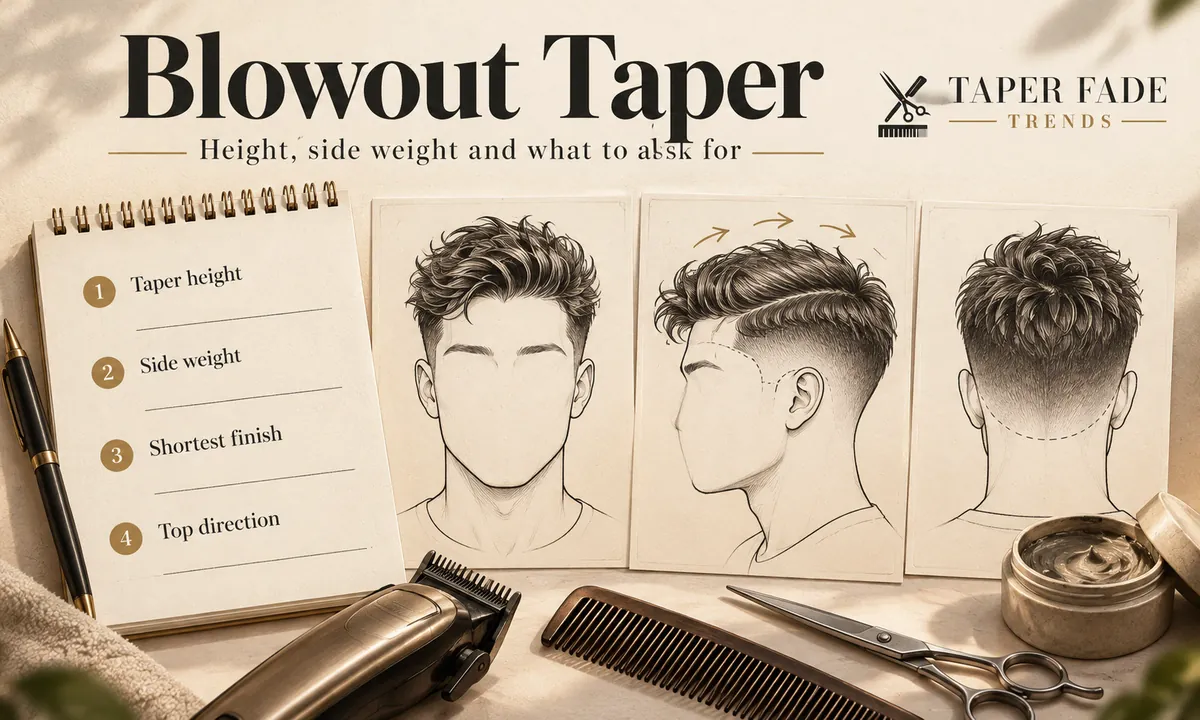
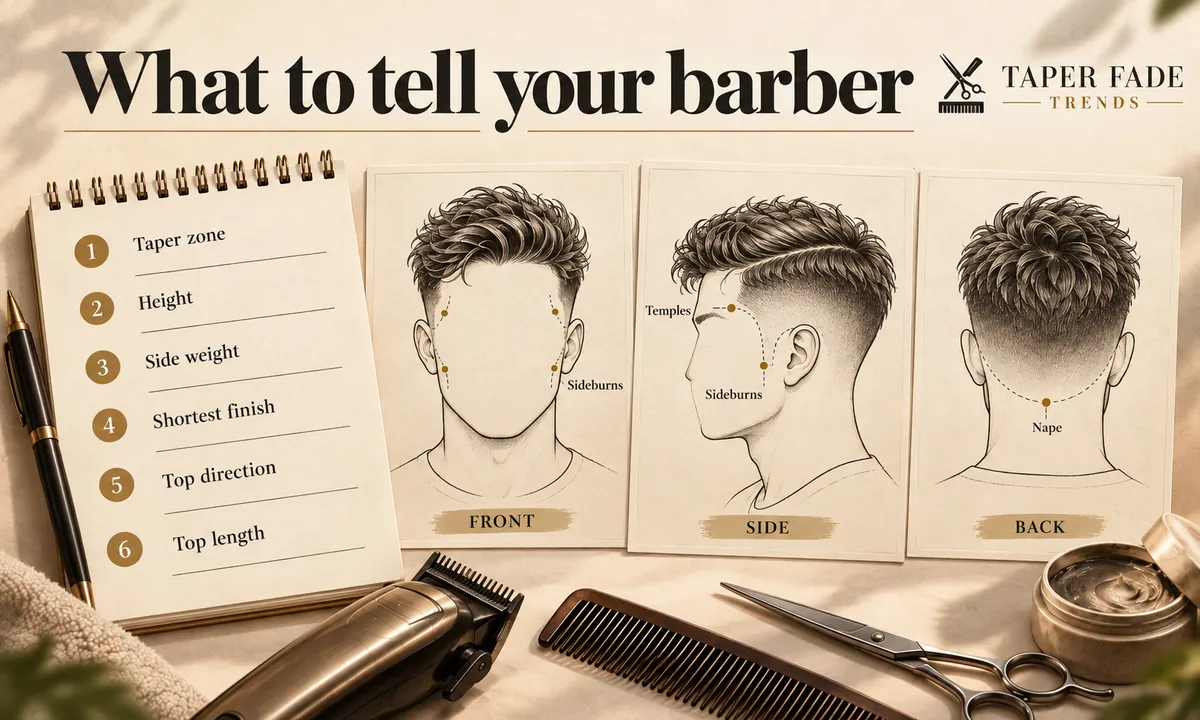
| Decision | What to tell the barber |
|---|---|
| Taper zone | Temples, sideburns and nape. Shops draw the edges slightly differently. |
| Taper height | Low, mid or high. Point to where the blend should stop. |
| Side weight | How much length and bulk stays above and around the taper. |
| Shortest finish | Skin, stubble or visible hair. The name doesn’t choose it for you. |
| Top silhouette | Lifted and back, rounded out, forward into a fringe, or your natural curl. |
| Top length | Measure what you have. Published figures run from about 2 to 5 inches. |
| Daily routine | Whether you will blow-dry most mornings. |
| Reference views | Front, both sides and back of one cut. |
| Not in a photo | Guard, blade and lever settings, top length in inches, and the product used. |
What is a blowout taper?
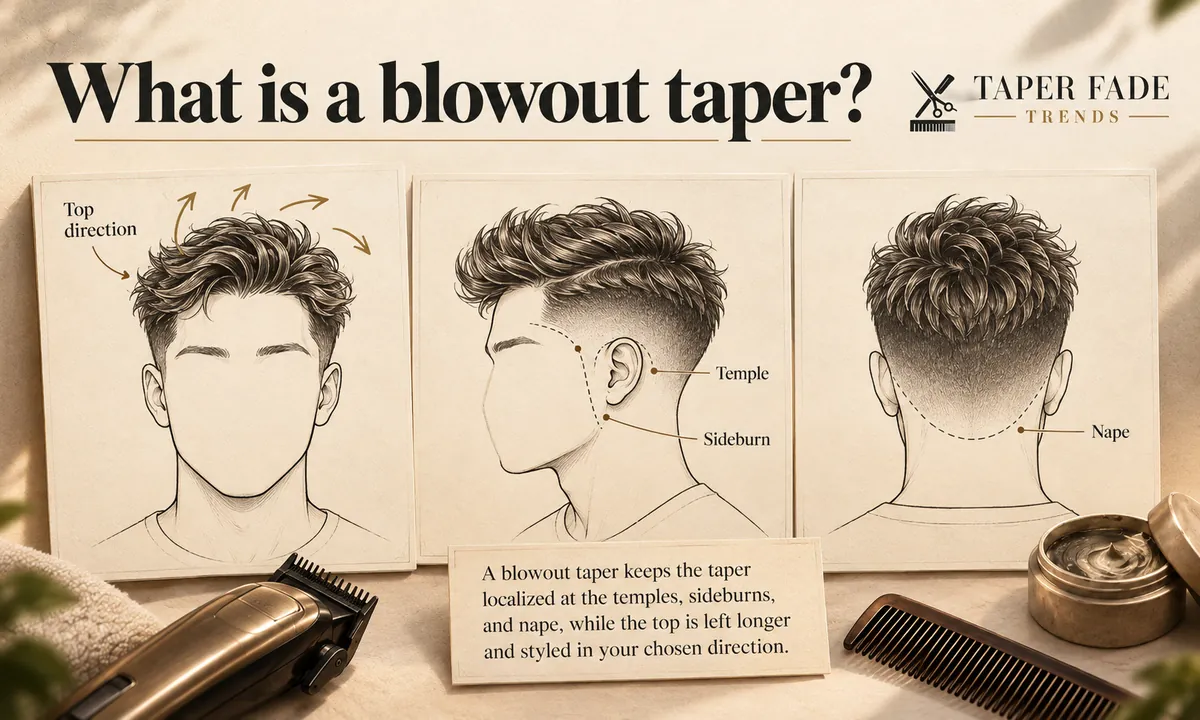
A blowout taper is a haircut-and-styling combination. A localized taper cleans up the temples, sideburns and nape, and the longer hair above is kept full enough to be dried or shaped into lift, outward volume or a set direction. Compared with an ordinary taper, the difference sits above the taper, not in it.
Sources agree on that two-part structure and disagree on where the top should go. Barber.Style lists up, back, forward as a fringe, or left to follow the curl. Sapia’s Barber Shop in Clearwater, Florida, describes hair blown up and out. WouldSuitMe builds its version around a top dried forward and outward. One name, three different tops, so the direction has to be part of your request.
A plain taper fade describes the edges only. A blowout taper adds a rule for the hair above them: keep the weight.
The two controls: taper and blowout shape
“Blowout” names part cut, part styling. The barber cuts the taper and decides how much weight the top and upper sides keep; the lift itself is usually finished with a dryer. WouldSuitMe says the barber’s main job on top is to leave the weight in, and Sapia’s says the shape comes from the styling as much as the cut.
| Part | Set by | What it controls |
|---|---|---|
| Taper zone | The barber, at the cut | How short the temples, sideburns and nape go |
| Retained weight | The barber, at the cut | How much length and bulk the top and upper sides keep |
| Direction and lift | You, each time you style | Whether the top rises, rounds out, falls forward or curls |
That split explains a common letdown: a correctly cut blowout taper that looks flat because nobody dried it. TheBlowoutTaper.com, a specialist site that presents its author as a Miami barber, lists skipping the blow-dry as the first mistake.
Blowout taper, blowout fade and temp fade
These names overlap, and the difference is mostly in how far the short work travels. In Barber.Style’s usage, a blowout taper keeps the short blend at the temples and neckline, a blowout fade carries it across more of the sides and back, and a temple fade (temp fade) concentrates at the temples without requiring a blown-out top.
The name also covers two eras. Sapia’s describes the original New York blowout, also called a Brooklyn fade, as a temp fade with the top brushed straight up and back, and the blowout taper people ask for now as a low taper or low fade under a blown-out top. If you mean the older cut, say so.
Neither name requires skin. Barber.Style lists skin, stubble or visibly longer hair as possible bottoms, while some shops, Sapia’s among them, treat a low taper as leaving no bare skin and a low fade as usually reaching it. Say the finish you want. The taper vs fade guide compares the two structures by coverage and finish.
Choose taper height without losing the silhouette
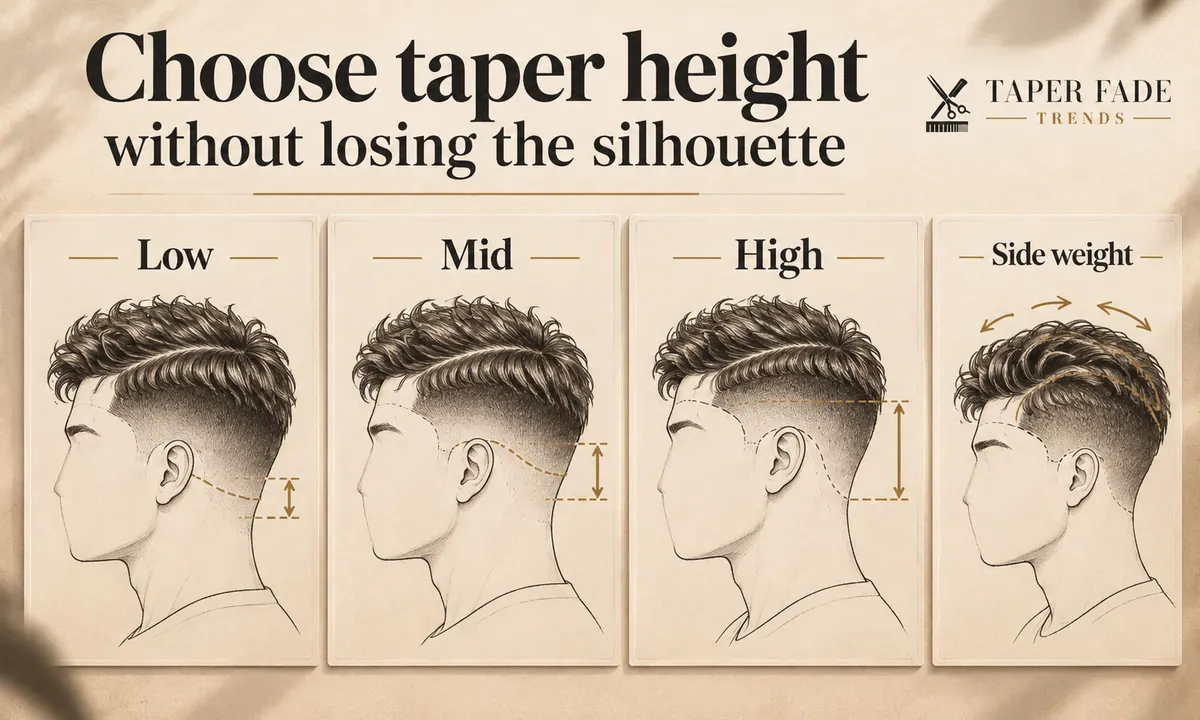
Taper height is how high the shortened perimeter blend rises before it meets retained hair. Choose it by pointing to where the blend should stop, then set side weight as its own decision. A higher taper adds contrast, and once it runs across the side it starts to read as a blowout fade.
| Height | Where the blend stops (approximate) | What changes | Watch for |
|---|---|---|---|
| Low | Near the ear and neckline | Least contrast and the softest grow-out | Check the back so the nape matches the sides |
| Mid | Around the temple | Visible contrast with weight still above it | Shops place “mid” at slightly different heights |
| High | At or above the temple corner | Strongest contrast and slimmer-looking sides | The rounded side shape is the first thing to go |
Sapia’s steers first-timers to a low taper because it is the easiest to live with and can always go shorter next time. TheBlowoutTaper.com warns that a high taper looks sharpest in its first week and loses that edge by about week three if you don’t return. For placement detail, see the high taper fade guide or the low taper vs mid taper comparison.
Some guides assign heights by face shape. Barber.Style and WouldSuitMe both call face-shape advice a convention rather than a rule, and point to texture, density and routine as better predictors of how the cut turns out.
Height and side weight are separate decisions
Side weight is the amount of length and bulk kept above and around the taper, independent of how high the taper starts. Two low tapers can look unrelated: one keeps soft, full sides, while the other has the bulk thinned away. Barber.Style names a taper taken too high, losing the reference’s rounded sides, as a common reason the result disappoints.
Say “keep the weight on the sides” before the clippers start, and point to the fullness you want in a side reference. No single clipper guard number sets side weight, because the same number can cut to different lengths on different clippers and lever settings.
Choose the top shape and front direction
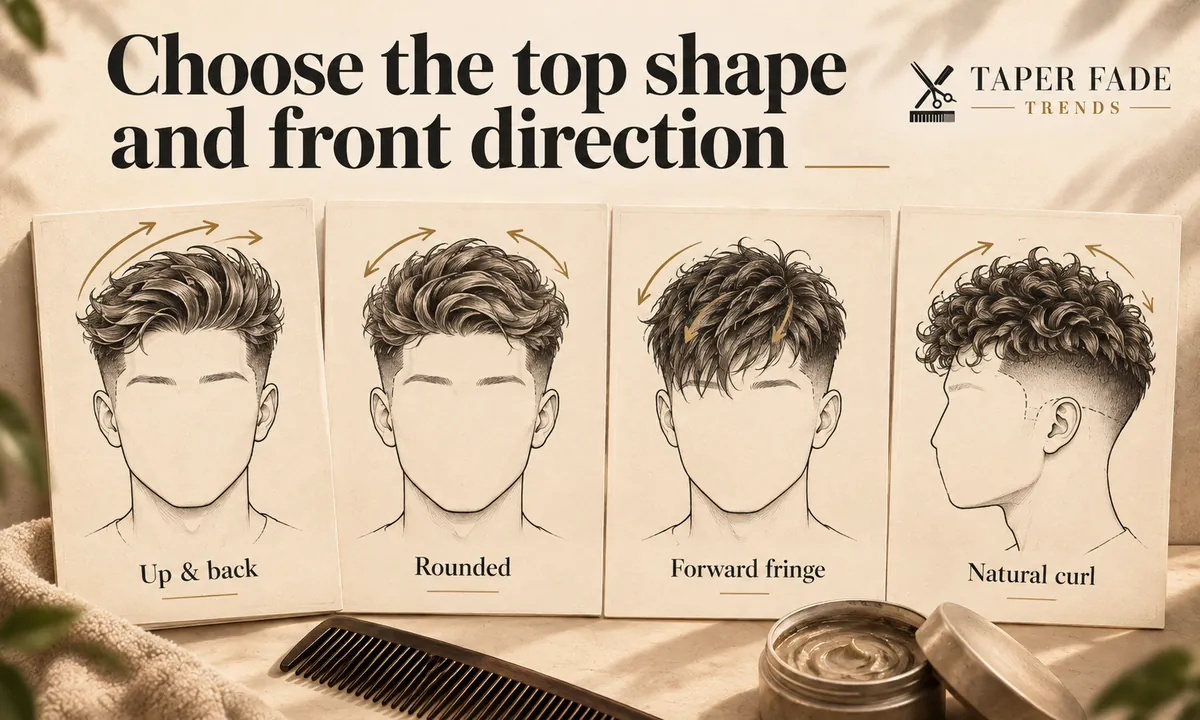
The top is a separate request from the taper. Pick one direction and name it: lifted up and back, rounded out, forward into a fringe, or following your natural curl. Each needs a different amount of retained length and drying, so a matching front reference matters more here than anywhere else on the cut.
- Lifted and back: the front rises off the forehead and sweeps toward the crown. It needs the most length at the front and usually a dryer.
- Rounded out: the top and upper sides fill out evenly. Say whether the sides should round out or stay closer to the head.
- Forward: the front falls toward the forehead, often broken up into a fringe. Say where it should stop.
- Natural curl: the shape follows your curl pattern instead of a dryer, so describe how you wear your curls on a normal day.
Can a blowout taper have a textured fringe?
Yes. A textured fringe is a front/top treatment that directs separated or broken-up hair forward, and it can be paired with a blowout taper. Barber.Style lists a forward fringe among blowout top directions, and Sapia’s calls the textured fringe the same idea worn in the other direction. The taper doesn’t change; only the front does.
Tell the barber how far forward the fringe should fall and whether it should sit straight or sweep to one side, then show a reference with that front.
Match the cut to your hair and routine
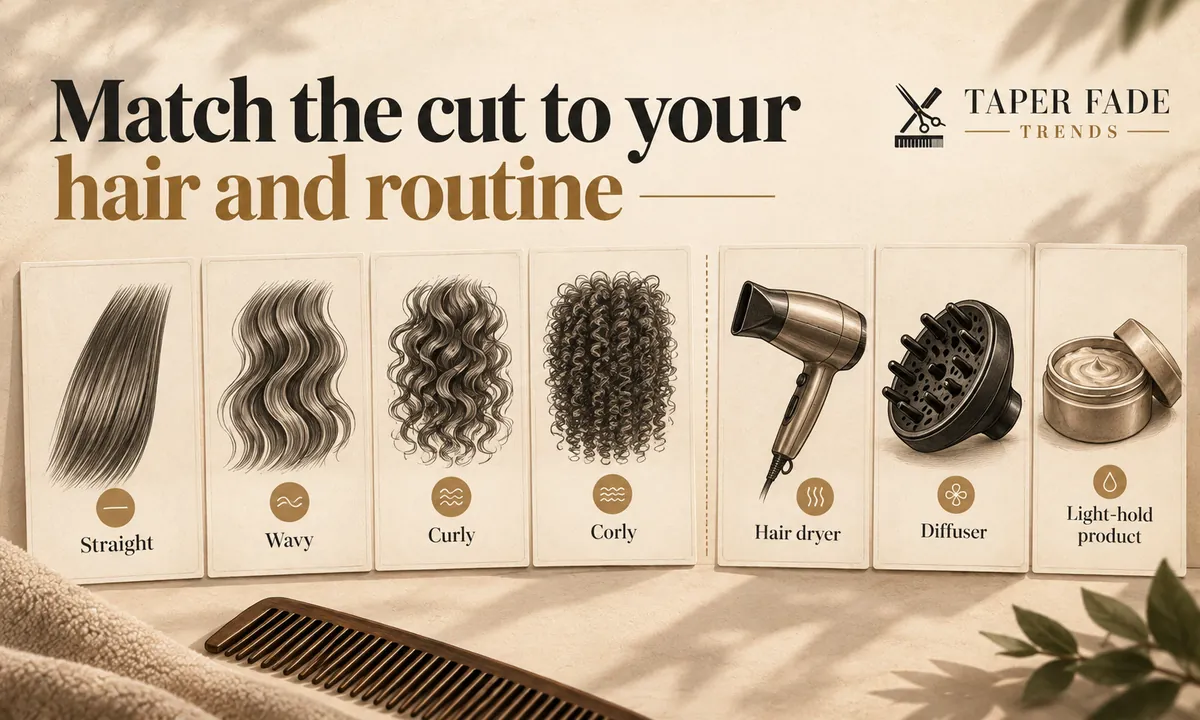
Texture, density, growth direction and how often you will use a dryer decide whether a blowout holds its shape. Straight and fine hair usually needs cut-in texture and drying to lift; wavy and curly hair brings movement on its own. Choose the version your hair and your mornings can support, not the one that looked best in a photo.
| Hair | What current sources say | Ask your barber |
|---|---|---|
| Straight or fine | Lift is possible but often needs layering, a light pre-styler and drying. WouldSuitMe says fine hair may hold lift only a couple of hours. | Whether keeping more side weight makes the shape look fuller |
| Wavy | The bend supplies movement; decide whether to enhance it or blow it smoother. | Where the top meets the heavier sides, so no shelf forms |
| Curly or coily | The “blowout” can be a rounded, expanded curl shape rather than straight height. Shrinkage matters. | How much bulk to keep above the taper, judged dry |
| Cowlick or strong crown | Growth direction can move where the volume sits. | To check how your hair falls before setting the top |
The texture notes follow Barber.Style’s hair-type guidance and TheBlowoutTaper.com’s, which agree that straight hair needs more drying than wavy or curly hair to hold a lifted top.
How much length do you need?
There is no single minimum. Published figures for the top run from about 2 to 5 inches, depending on the version and the source. Texture and density move the number, so choose the shape first, measure what you have at the top and front, and ask the barber how much your hair needs to reach that shape.
| Source | Figure given | Context |
|---|---|---|
| TheBlowoutTaper.com | Under 2 inches leaves nothing for a blow-dry to lift | Specialist site; author presented as a Miami barber |
| Taper Empire | At least 3 inches; 4 to 5 for the best flow | Gallery guide; notes curly hair can show the effect shorter |
| WouldSuitMe | 4 inches or more; its chair script asks for 4 to 5 | Its own forward, fluffy version, drawn rather than photographed |
| Barber.Style | No single measurement | Curl, density, layering and direction change the usable length |
Read the table as a spread, not a rule. A shorter top leans harder on texture and drying; a longer one gives the barber more to shape and more to style each morning.
What a reference photo cannot tell you
A reference photo shows placement, side weight and the shape on the day it was taken. It cannot show the guard, blade or lever setting, the top length in inches, the product used, or whether the hair was blow-dried that morning.
Bring the front, both sides and the back of the same cut. A single front-facing photo hides the taper height and the neckline, which are the parts most often misread.
What to tell your barber
Ask for a blowout taper, then give six specifics: taper height, how far the taper wraps around, the shortest finish, how much side weight to keep, the top direction, and whether you blow-dry daily. Show front, side and back references of one cut, and leave the guard choice to the barber who will do the cutting.
A barber brief you can adapt
Fill in the brackets before the appointment, then say it while you show the references.
- Height: “Keep the taper [low / mid / high], and don’t take it above [point on your head].”
- Coverage: “Keep the short work to my sideburns, temples and nape, not across the whole side.”
- Finish: “Leave [skin / stubble / visible hair] at the lowest point.”
- Side weight: “Keep [full / medium / light] weight on the sides, like this side photo.”
- Top: “Leave enough on top to go [up and back / rounded out / forward into a fringe / with my natural curl].”
- Routine: “I [do / don’t] blow-dry most mornings, so it has to sit well [with / without] a dryer.”
Then ask the barber to repeat the height and the finish before cutting. The taper fade barber brief covers how to check that plan and how to record a cut you want repeated.
Style the blowout you actually chose
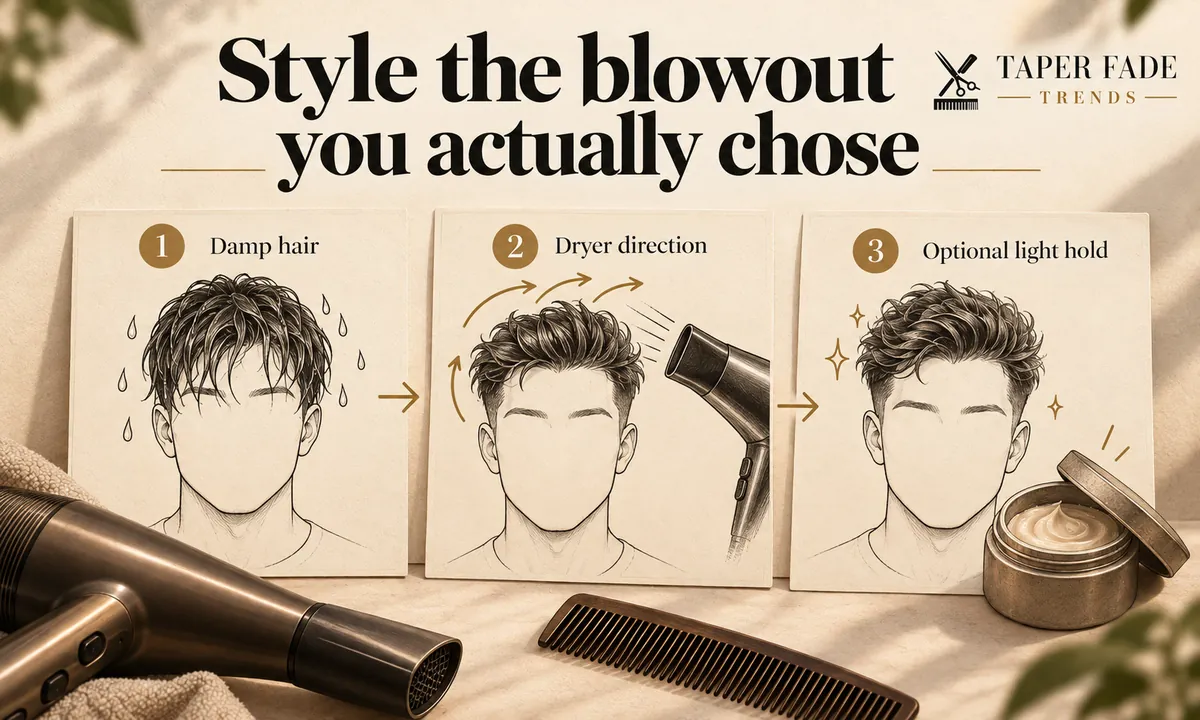
Not every blowout taper needs a daily blow-dry. If your hair already holds lift or curl in the direction you chose, fingers and a little product may be enough. A smooth lifted top or a forward, fluffy one usually needs drying each time; WouldSuitMe says its version collapses when left to air-dry.
When the version you picked does need a dryer, the routine is short:
- Start with damp hair, not soaking wet.
- Dry from the roots in your chosen direction: up and back for lift, forward for a fringe, or with a diffuser to keep curls formed.
- Stop once the shape is dry, then add a small amount of light product only where the shape needs hold.
Sapia’s estimates about five minutes in the morning for its version. Taper Fade Trends has not timed a routine, so treat that as one shop’s figure.
Go easy on heat. The American Academy of Dermatology advises letting hair partly air-dry before styling and blow-drying fewer times a week, and notes that excessive heat can damage any hair type. Use the lowest setting that still sets the shape.
Grow-out, maintenance and starting from shorter hair
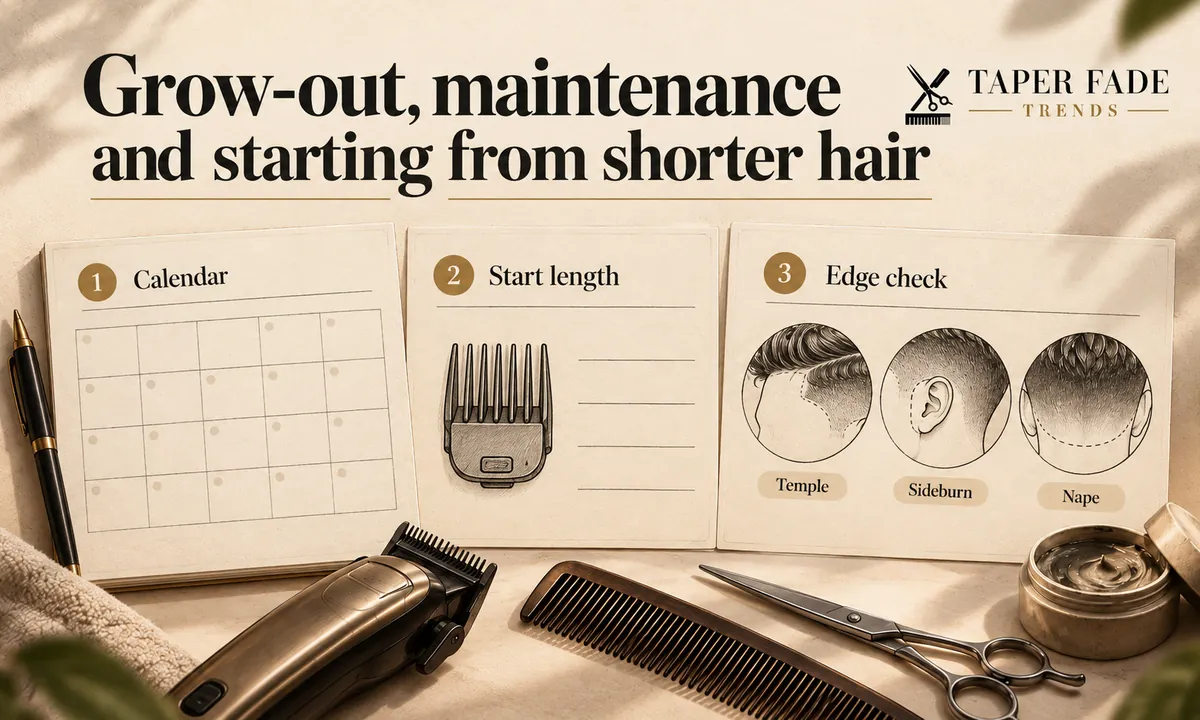
There is no universal trim interval. The taper edge blurs first, and a skin finish or high placement shows it soonest; the top can usually go longer before it needs reshaping. Published schedules range from about two to six weeks, so rebook when the edge stops looking deliberate rather than by the calendar.
| Source | Taper or edge cleanup | Full cut or reshape |
|---|---|---|
| Sapia’s Barber Shop | Sides soften after 2 to 4 weeks | Every 4 to 6 weeks |
| TheBlowoutTaper.com | Every 2 to 3 weeks | Every 3 to 4 weeks |
| Taper Empire | Every 2 weeks (high) to 3 to 4 weeks (low) | Not given separately |
| WouldSuitMe | Not given separately | About every 4 weeks |
| Barber.Style | No universal interval | No universal interval |
If the top still works and only the edges have blurred, ask for a taper cleanup and leave the top alone. Both Sapia’s and Barber.Style suggest splitting visits that way.
| What you notice | What it usually means | What to ask for |
|---|---|---|
| The taper no longer looks deliberate | Regrowth has softened the blend | Re-cut the taper to the same finish |
| The neckline looks fuzzy | Regrowth at the nape | A neckline cleanup only |
| The top won’t hold its direction | Length has grown past the shape | Reshape the top to the same silhouette |
| The top goes wide instead of tall | Weight has settled at the sides | Check side weight against your reference |
Starting from a short cut
MedlinePlus says healthy hair takes about a month to grow half an inch. At that average, growing a top from 1 inch to 3 inches takes roughly four months. Ask what shape suits the length you have now, and let the barber clean only the taper edge while the top grows. Individual growth rates vary.
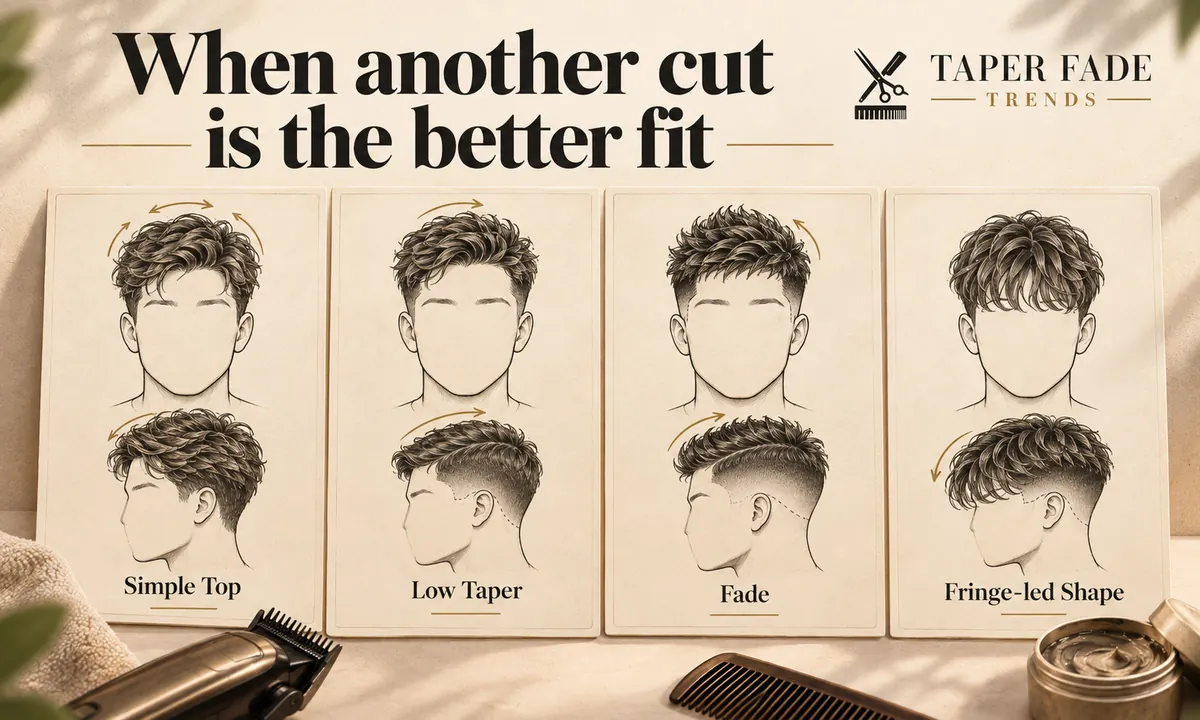
When another cut is the better fit
Skip the blowout taper if you won’t style the top, if your hair won’t hold the shape you want without daily drying you’d resent, or if you want very short sides overall. One of these is likely the better order.
| Alternative | Choose it when | Where to read more |
|---|---|---|
| Taper fade with a simple top | You want clean edges and little morning work | Taper fade guide |
| Low taper fade | You want the quietest edge and full sides | Low taper fade |
| Fade | You want stronger contrast and less side weight | Taper vs fade |
| Fringe-led cut | The front direction matters more to you than the sides | Ask for a textured fringe by name |
How this guide was checked
Taper Fade Trends Editorial compared current blowout-taper guides from a barber directory, a Florida barbershop, a specialist blowout-taper site, a hairstyle catalog and a gallery publisher, then separated what they agree on from what they don’t. Where they disagree, on top length, upkeep and naming, this page shows the spread instead of picking a winner. Heat advice comes from the American Academy of Dermatology and the growth rate from MedlinePlus.
The images on this page are AI-generated illustrations, labeled as such; none is a photograph of a real cut. No barber has reviewed this version yet; when one does, their name, role and review date will be added here. No timed styling routine, measured cut or grow-out log is claimed.
Sources cited in this guide:
- Barber.Style: Blowout taper meaning, variations and what to ask for
- Sapia’s Barber Shop: Blowout haircut in Clearwater, FL
- TheBlowoutTaper.com: The blowout taper, every style
- WouldSuitMe: Blowout taper
- Taper Empire: Blowout taper fade
- American Academy of Dermatology: Hair styling without damage
- MedlinePlus: Hair problems
Found an error? The editorial policy explains how corrections are made and dated.

Next: confirm whether you want a taper or fade
If you’re still unsure how far the short work should travel around your head, compare a taper and a fade by coverage and finish first. That choice decides whether you ask for a blowout taper or a blowout fade.
Keep reading
All guides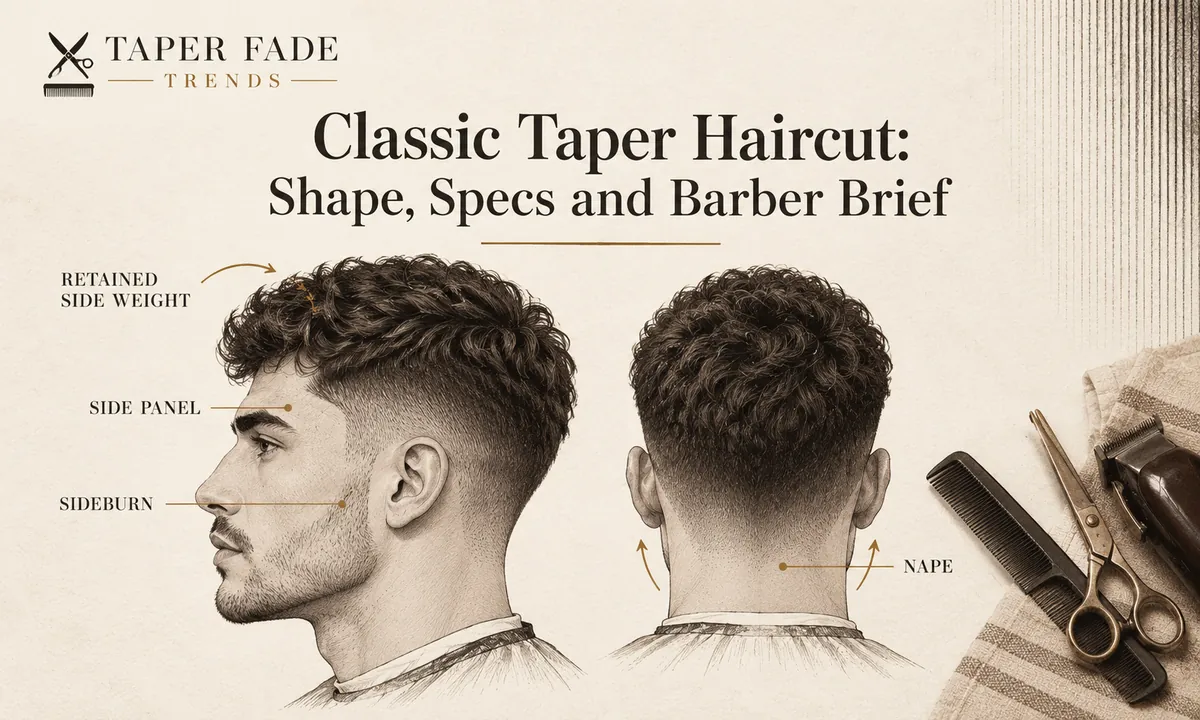
Classic taper haircut: shape, specs and barber brief
A classic taper haircut keeps side weight while the sideburns and nape go shorter. See the specs to choose, the skin question and what to tell your barber.
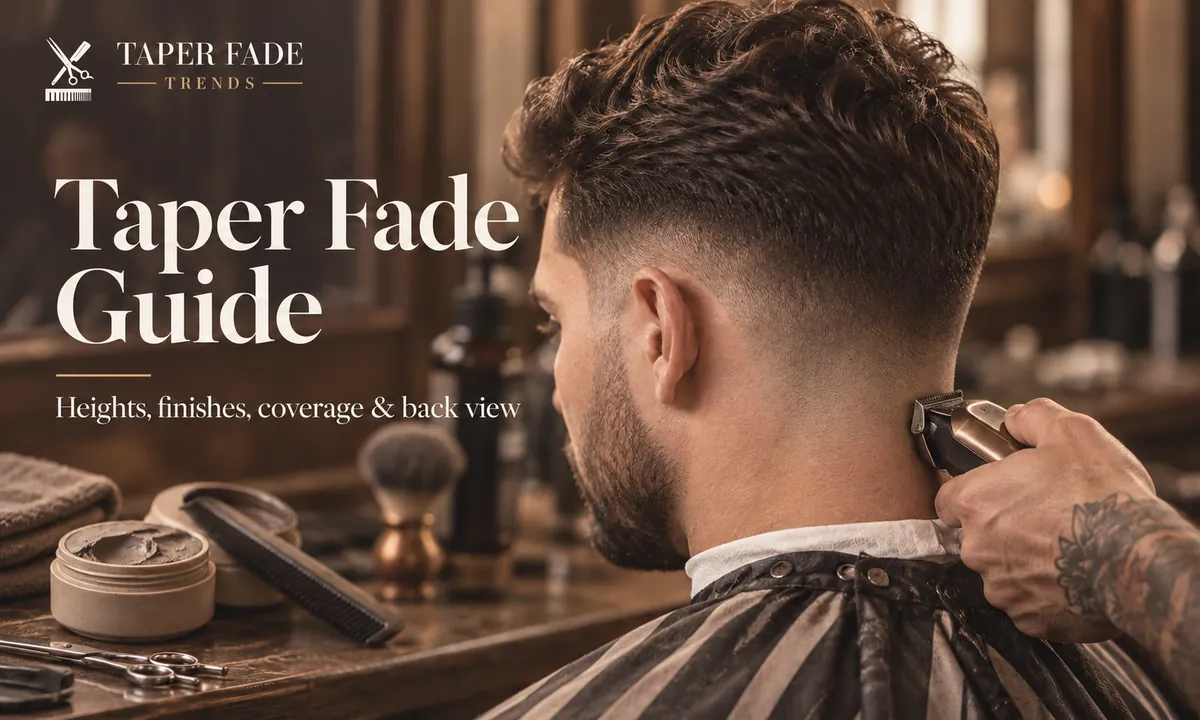
Taper fade: a visual guide to heights, finishes and top styles
Where a taper fade sits from the front, side and back, how low, mid and high differ, and how to ask for side coverage and a finish with or without skin.
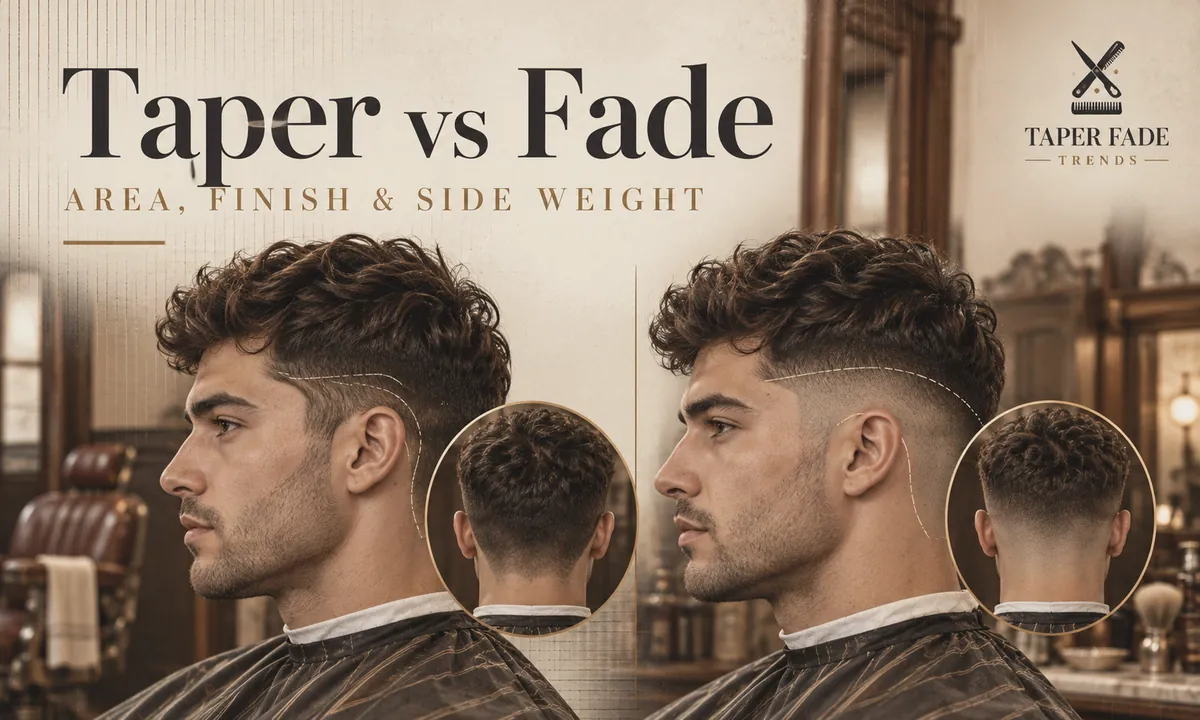
Taper vs fade: what changes in area, finish and side weight
Taper vs fade compared by coverage, height, shortest finish and side weight, with a back-view check and word-for-word barber scripts for either cut.
How to ask for a taper fade: a five-part barber brief
How to ask for a taper fade: say where it may reach, how short the base goes, how much side weight stays and what to do on top, then check the plan first.
High taper fade: placement, finish and barber brief
Where a high taper fade sits, how much side weight stays, skin vs shadow finishes, what the back should look like, and exactly what to tell your barber.
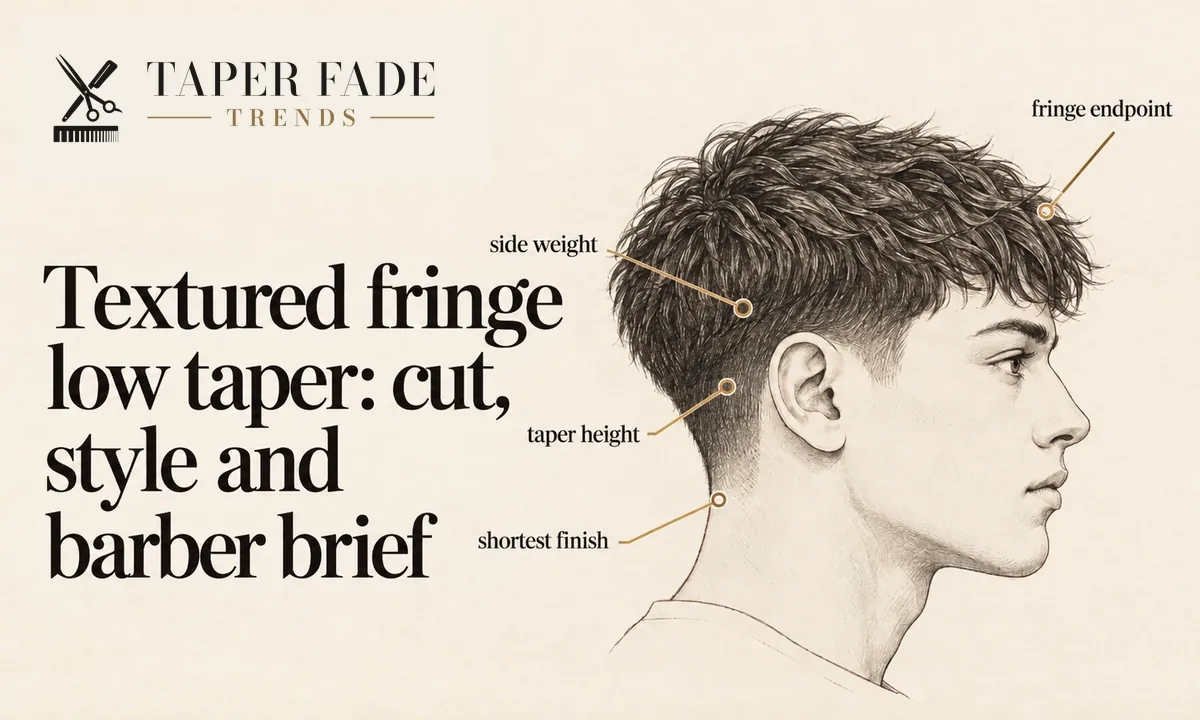
Textured fringe low taper: cut, style and barber brief
A textured fringe low taper explained: four choices to settle, whether straight hair needs a perm, what to tell your barber, and fixes for a flat fringe.
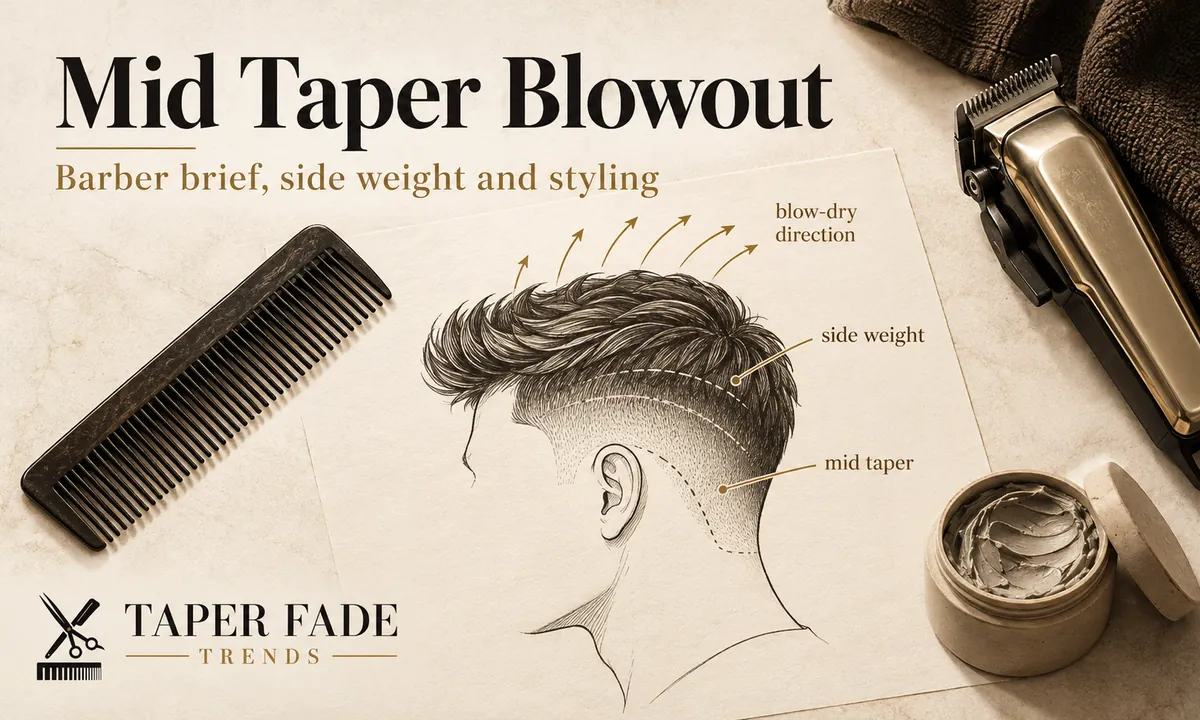
Mid taper blowout: keep volume without flattening the sides
A mid taper blowout is a temple-height taper plus enough top and upper-side length to dry up and out. What to tell your barber and how to style it.
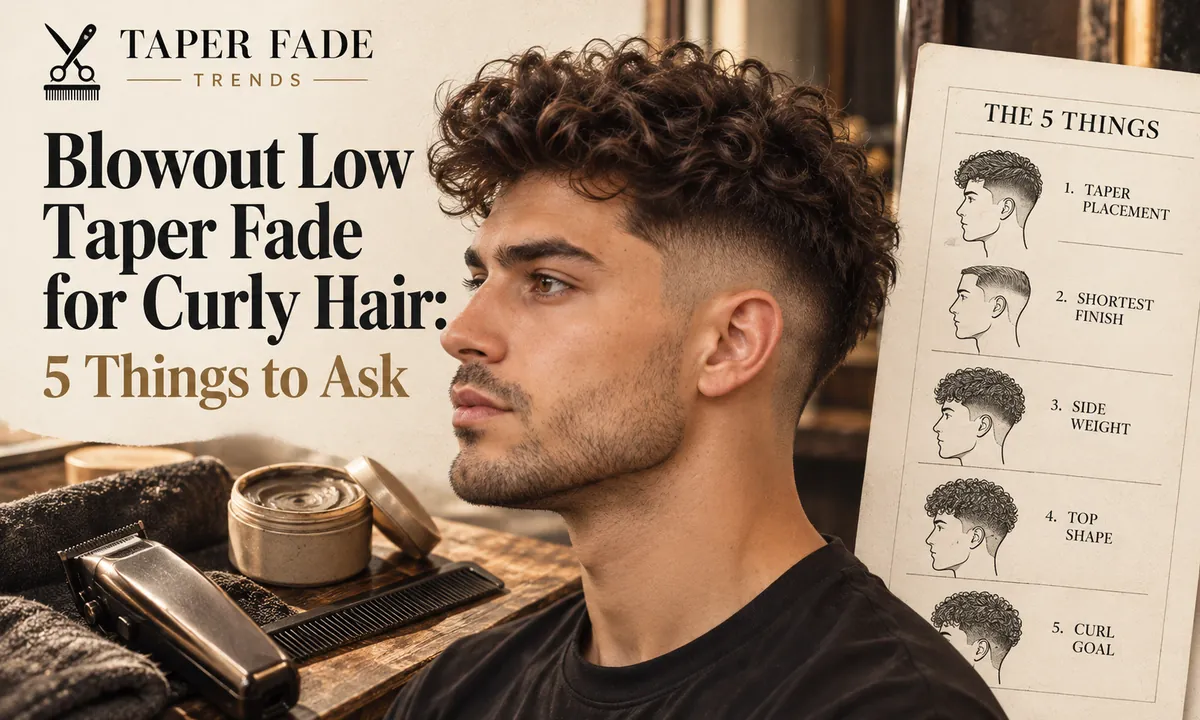
Blowout low taper fade curly hair: keep volume, keep definition
A blowout low taper fade for curly hair is a shape, not a guard recipe. Set the taper placement, shortest finish, side weight, top shape and curl goal.
More in taper fade basics
Taper fade basics: all 6- Taper fade: a visual guide to heights, finishes and top styles12 min
- Classic taper haircut: shape, specs and barber brief16 min
- Blowout taper: choose lift, silhouette and taper heightYou are here
- Taper vs fade: what changes in area, finish and side weight10 min
- Haircut numbers: clipper guard sizes in millimeters and inches10 min
- Burst fade vs taper: compare the ear arc and nape10 min