Low taper vs mid taper: what changes when only the height moves
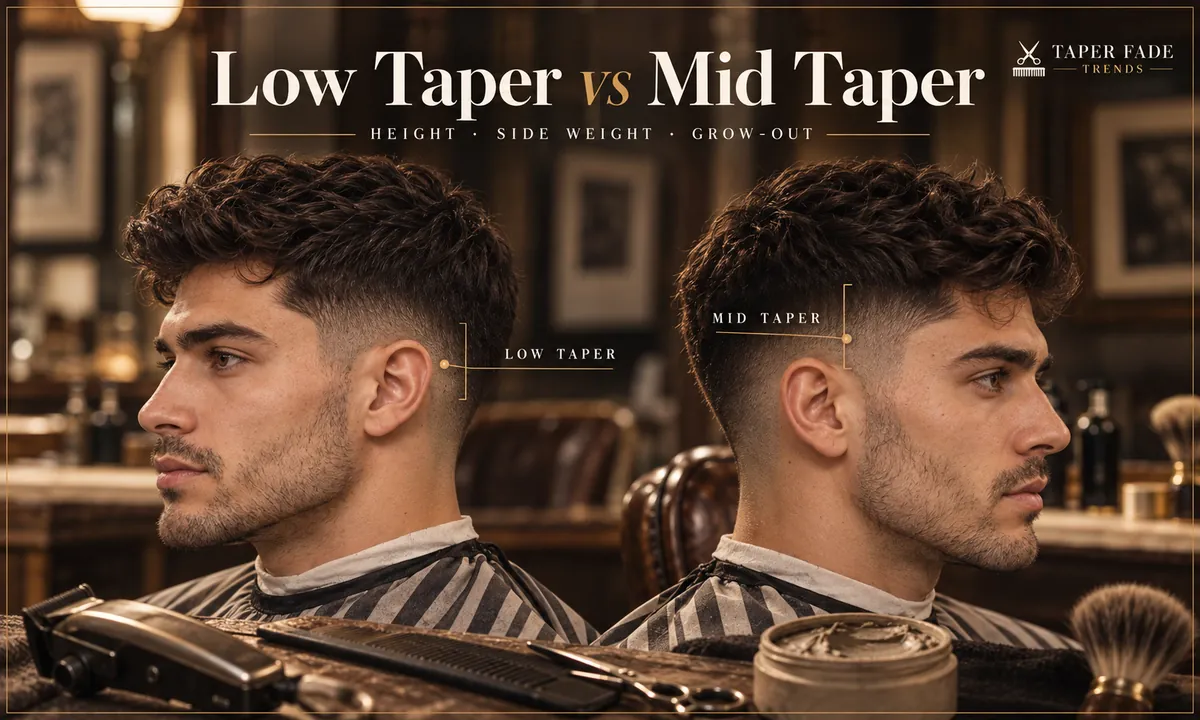
Low taper vs mid taper comes down to where the transition sits. A low taper keeps it near the sideburns and neckline and leaves more side weight. A mid taper starts it higher, around the temple, so the blend shows more. Neither has to finish at skin, and only one direction is quick to change later.
Low taper vs mid taper at a glance
A low taper and a mid taper differ in taper height. The low taper keeps the transition near the sideburns and nape; the mid taper starts it higher, around the temple. Hold top length, coverage and shortest finish equal, and that single change decides how much side weight stays and how visible the blend looks.
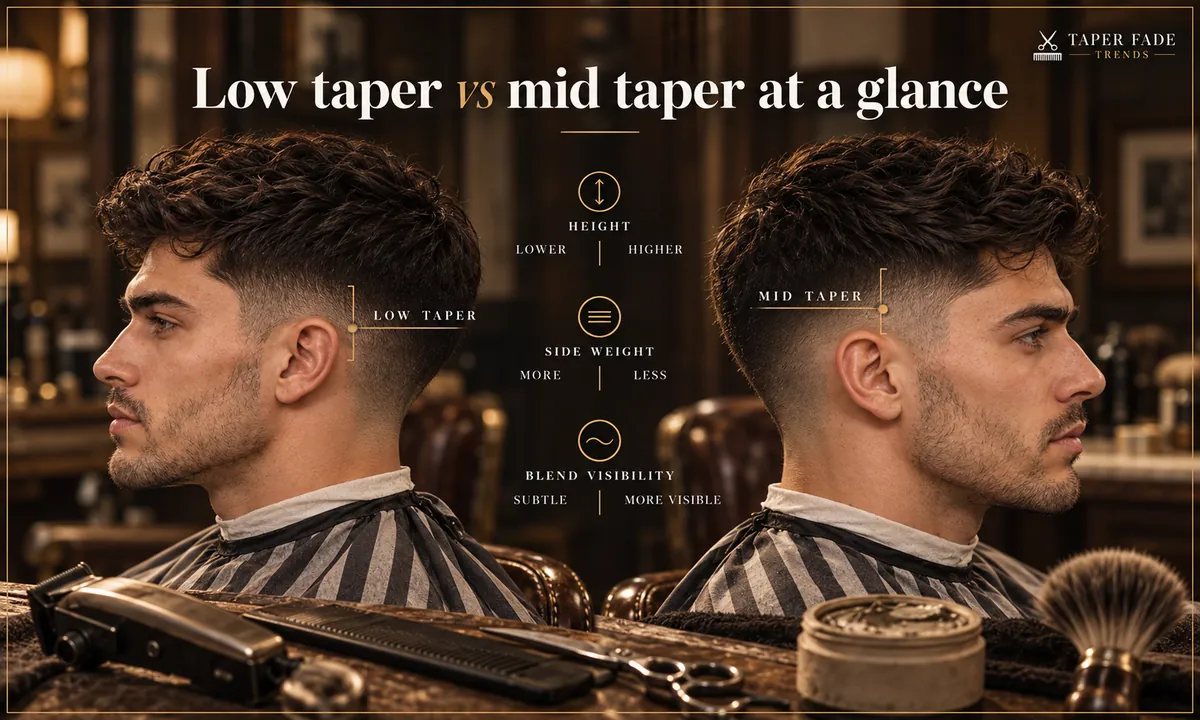
A low taper is a taper placed so the transition stays close to the lower perimeter, which keeps more side weight when everything else about the cut is the same. A mid taper is a taper that starts the transition higher, around the temple, so the blend is easier to see while the short work still stays at the edges rather than across the whole side.
Three terms do the work on this page. Taper height is where the transition sits. Shortest finish is how short the bottom of it goes. Coverage is how much of the sides and back the taper touches. Side weight is simply the visible hair left on the sides above the transition.
| Low taper | Mid taper | |
|---|---|---|
| Taper height | Near the sideburns and nape | Higher, around the temple |
| Side weight kept | More | Less, because shortening starts higher |
| How visible the blend is | Subtle from the front | Clear from the front and in profile |
| Shortest finish | Shadow, guarded length or skin | Shadow, guarded length or skin |
| Coverage | Chosen separately from height | Chosen separately from height |
| Grow-out | Usually softer, not guaranteed | Depends on finish, density and growth |
| Fixed rebooking interval | None that applies to everyone | None that applies to everyone |
| Switching later | Can go to mid at the next cut | Needs regrowth to go back to low |
The table assumes the top, coverage and finish match. The exact landmarks for “low” and “mid” shift from barber to barber.
The practical difference is height and side weight
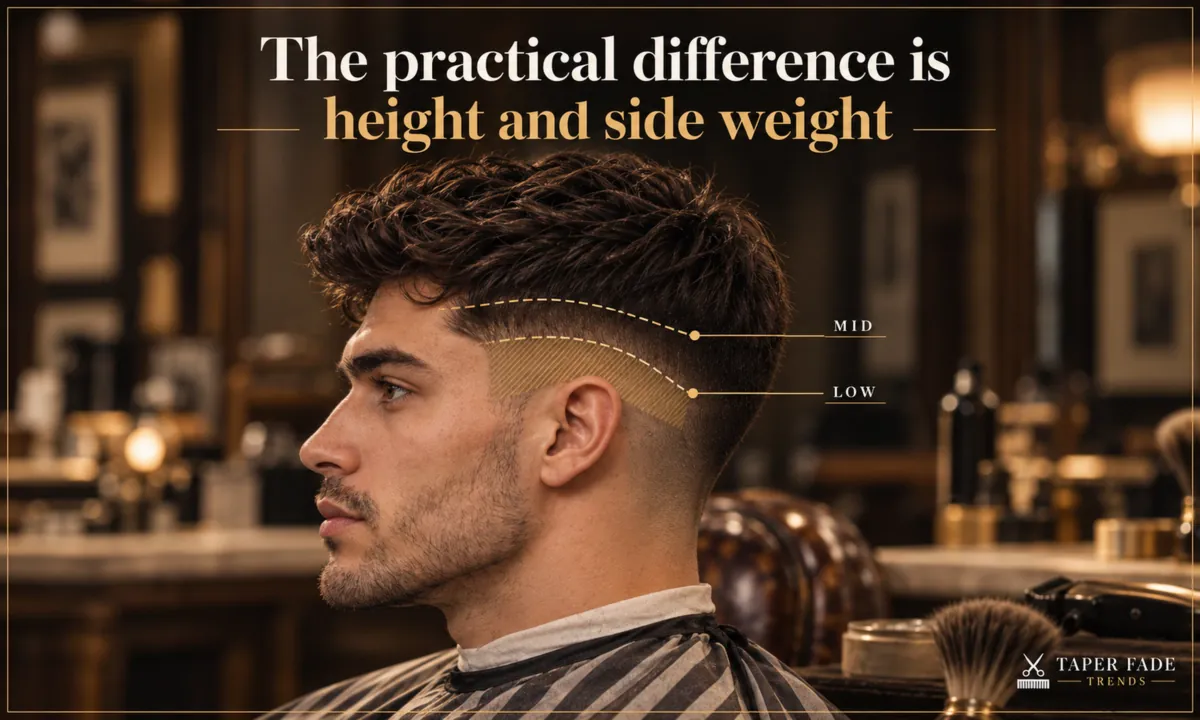
With the same top, coverage and shortest finish, a low taper keeps more visible hair on the sides than a mid taper, because the mid taper starts shortening higher. Dense hair makes the gap obvious; fine hair makes it subtler. Judge the difference on a reference photo of similar hair, not on a measurement.
Cutters Yard, a London barbershop, describes the trade the same way: the low taper keeps more weight, the mid taper gives more definition.
Neither a low taper nor a mid taper has to finish at bare skin. Height says where the transition sits; the shortest finish says how short its bottom goes, and you choose them separately. Pall Mall Barbers make the same point about skin fades, which can start low, mid or high.
Coverage is the third control. A taper keeps its short work around the sideburns and nape; a full fade graduates much more of the sides and back. Our guide to taper height and shortest finish covers how those controls combine on any taper.
What a low taper changes
Mostly the edges. The sideburns and neckline get cleaned up and blended, while the hair above and around the ear stays close to its full length. From the front, a fresh low taper can be hard to spot, which is the point for anyone who wants a tidy cut that doesn’t announce itself. The catch: if your sides bulk up quickly after a trim, a low taper may not take off enough.
What a mid taper changes
A mid taper starts taking length off higher, around the temple, so it reaches into the side bulk instead of only tidying the perimeter. Beard Beasts’ comparison puts the split well: a low taper suits a cut whose shape already works, a mid taper suits sides that are the problem. Moving the height up does not widen the coverage or force a skin finish on its own.
Switching between low and mid taper: one direction is faster
Going from a mid taper to a low taper usually takes more than one visit. Hair the mid taper already shortened has to grow back before that area can hold fuller side weight, and the barber can only rework the length that remains. Going from low to mid is quicker, because it only takes more off.
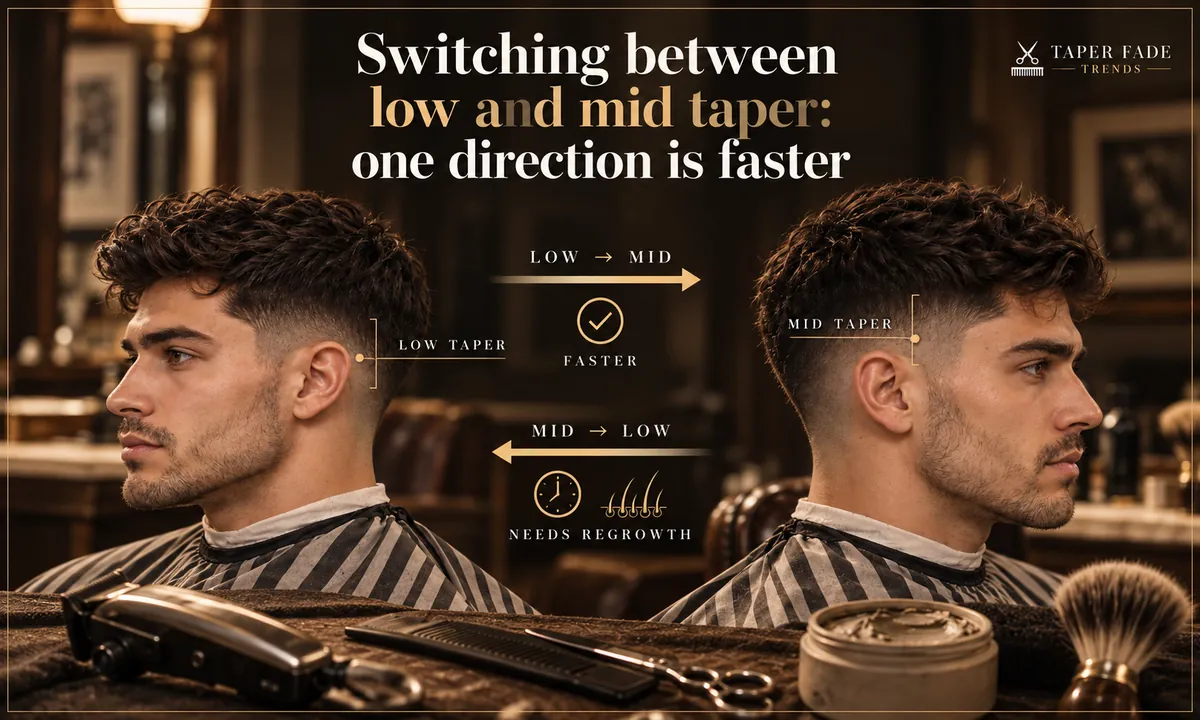
That asymmetry is the most practical reason to start low when you are unsure. Beard Beasts gives the same advice. If the low taper leaves the sides heavier than you like, the next cut can take it to mid. If a mid taper turns out too exposed, the barber can tidy the blend, but the fuller low shape comes back only as the hair does.
Be wary of any promise to turn a fresh mid taper into a low taper in one sitting by “lengthening” the upper blend. Cut hair cannot be made longer.
How to read a low or mid taper in a photo
Look for where the shortening stops, not for the label in the caption. In a side view, find the point where the hair stops getting shorter and compare it with the top of the ear and the temple; a mid taper puts that point higher. In a back view, check the nape and how wide the sides look above the ears.
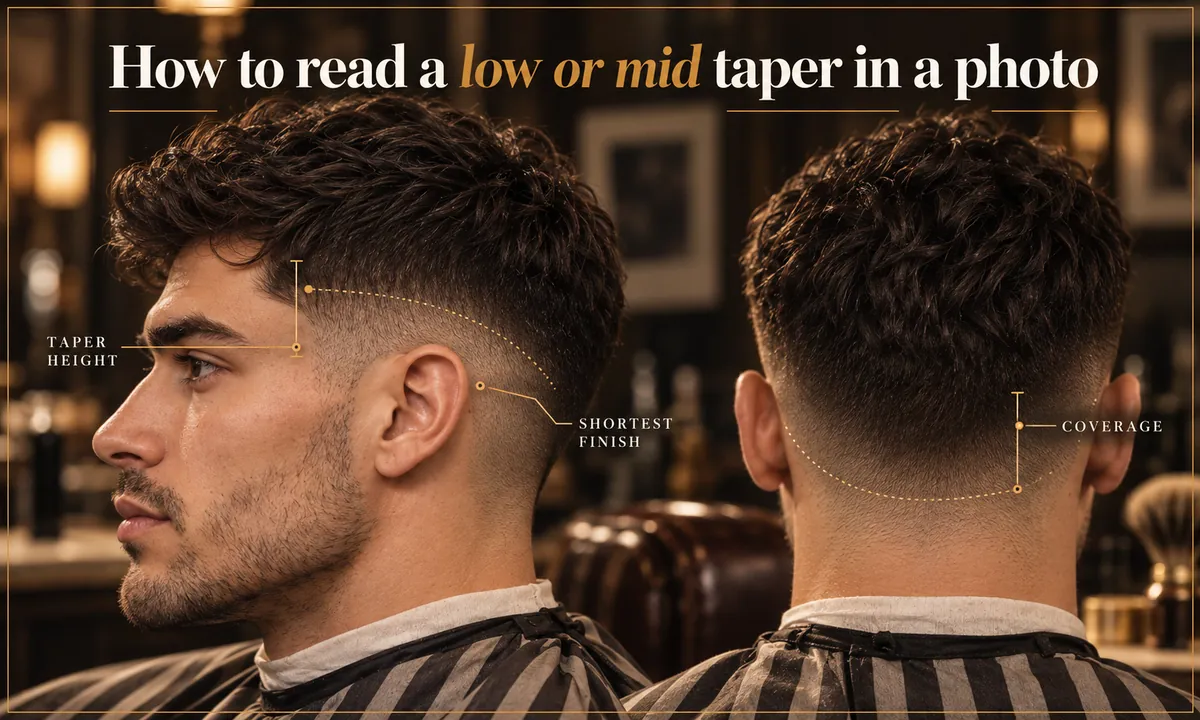
A fair comparison holds everything else equal: same head, same top length, same shortest finish, same lighting and angle. If two photos differ in any of those, they show more than taper height.
Photos also hide things. A picture won’t tell you the clipper setting, the exact top length or how much styling product is holding the shape, so treat any reference as a target to discuss, not a specification.
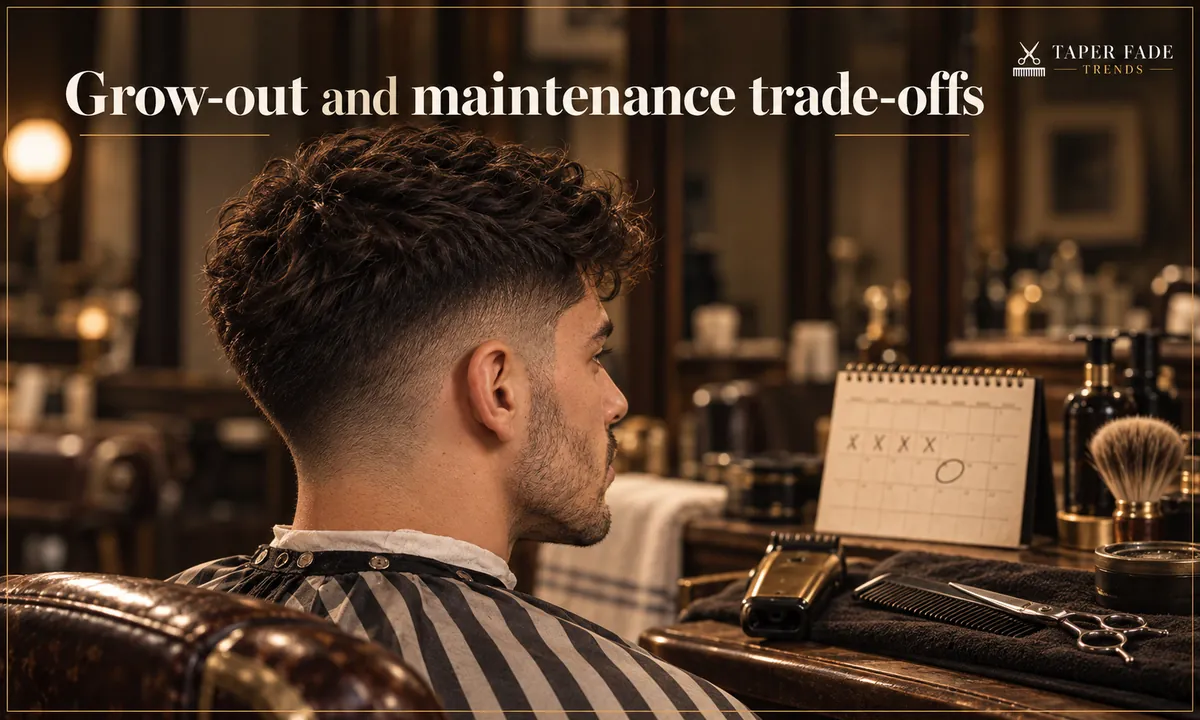
Grow-out and maintenance trade-offs
How long a low taper or mid taper looks fresh depends on the shortest finish, growth rate, density, outline work and your tolerance for regrowth. Taper height sets where the transition sits and how much side weight remains, and none of the rest.
| Variable | What it changes | Who controls it |
|---|---|---|
| Shortest finish | Skin usually looks grown-in sooner than a shadow | You and the barber |
| Growth rate | How fast regrowth appears at either height | Your hair |
| Density | How visible the transition and its regrowth are | Your hair |
| Outline work | How soon crisp edges soften | You and the barber |
| Tolerance for regrowth | When a refresh feels due | You |
Which grows out softer?
A low taper usually grows out softer than a mid taper because it leaves more side weight to cover the regrowth, but that is a tendency, not a promise. The shortest finish, your growth rate, density, outline work and how much fuzz you tolerate all change when either taper starts to look due.
Does a mid taper need more frequent cuts?
A mid taper does not automatically need more frequent cuts than a low taper. No fixed rebooking interval follows from the height alone. A skin finish usually looks grown-in sooner than a shadow finish, and people differ in growth rate and how crisp they want the edges. Book when the outline stops matching what you chose.
Many guides print two-, three- or four-week schedules. Treat those as rules of thumb. Man Cave Barbershop notes that how fresh a taper looks also depends on how short or long the fade goes, which is the finish, not the height.
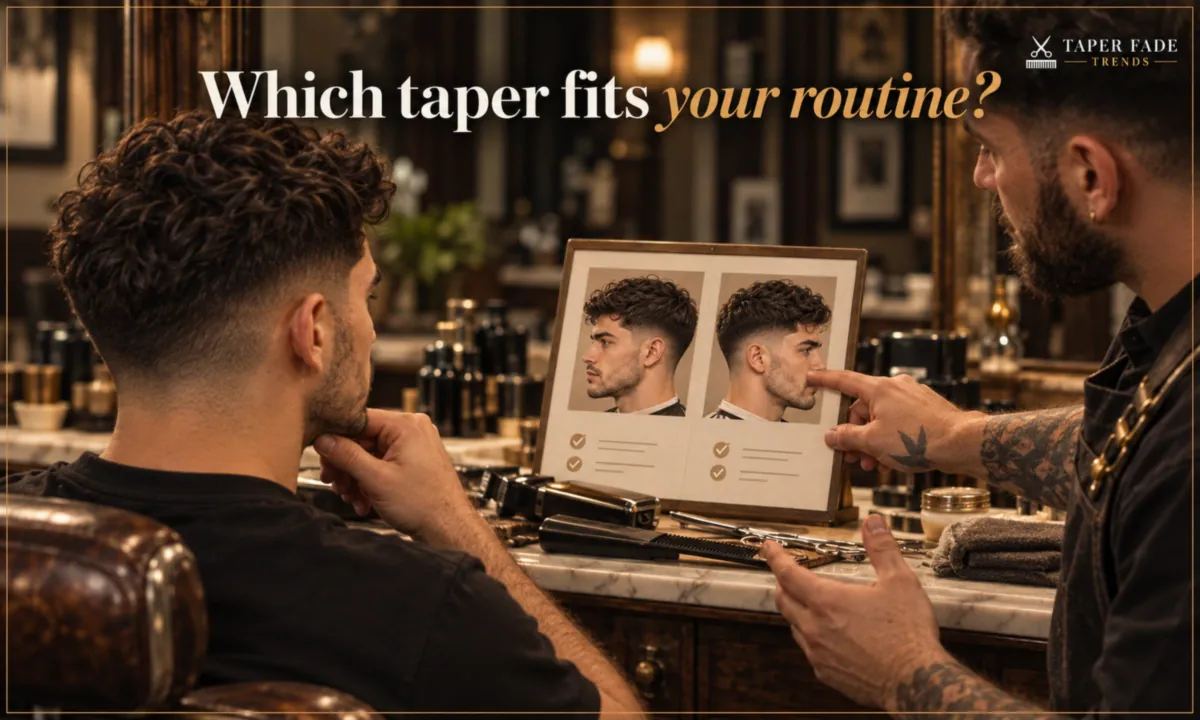
Which taper fits your routine?
Hair texture does not decide between a low taper and a mid taper. Straight, wavy, curly and coily hair can all take either height; texture and density only change how visible the transition looks. The deciding question is how much side weight and fullness you want to keep, so bring a reference with similar hair.
| Your priority | Pick | Why |
|---|---|---|
| Keep the sides full, tidy the edges | Low taper | The transition stays near the sideburns and neckline |
| Cut down side bulk around the temple | Mid taper | Shortening starts higher |
| A blend people notice from the front | Mid taper | The higher transition reads more clearly |
| Softer-looking regrowth | Low taper | More side weight is left as it grows, though not guaranteed |
| Not sure yet | Low taper | You can go to mid at the next cut; going back takes regrowth |
Face shape and workplace rules show up in a lot of taper guides. They are preferences, not rules, and this guide leaves them out rather than dress them up as fact.
If a mid taper still leaves more side weight than you want, the high taper fade guide covers the next placement up. To keep that side weight under a top dried up and out, see the mid taper blowout guide.
What to ask your barber
Ask for a low or mid taper as five separate instructions rather than one label: taper height, side weight to keep, how far the taper travels, the shortest finish and the top length. Bring a side view and a back view of the result you want, and ask the barber to repeat the plan before cutting.
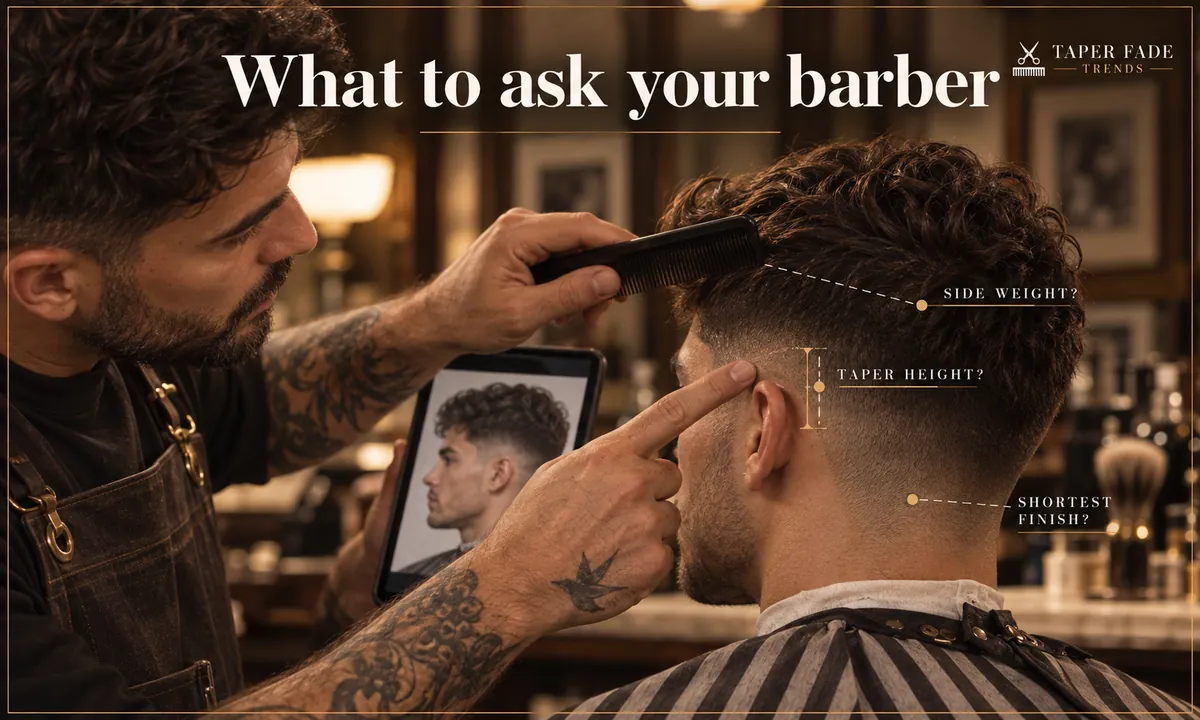
- Name the taper height, low or mid, and point to where the transition should sit.
- Say how much side weight to keep, or how much bulk to remove around the temple.
- Say how far the taper should travel around the sides and back, and how to finish the neckline.
- Name the shortest finish: a shadow, a guarded length or skin.
- State the top length you are keeping.
Ask for the result rather than a guard number. Wahl notes that guard sizes may differ between brands, so a “number 1” on one clipper is not a promise of the same length on another. Your barber knows what their tools leave behind.
Mid taper vs mid fade, and other label traps
A mid taper is not the same as a mid fade. Both use “mid” to describe height; the difference is coverage. A mid taper keeps its short work around the sideburns and neckline, while a mid fade carries the graduation across much more of the sides and back. Confirm coverage separately from height.
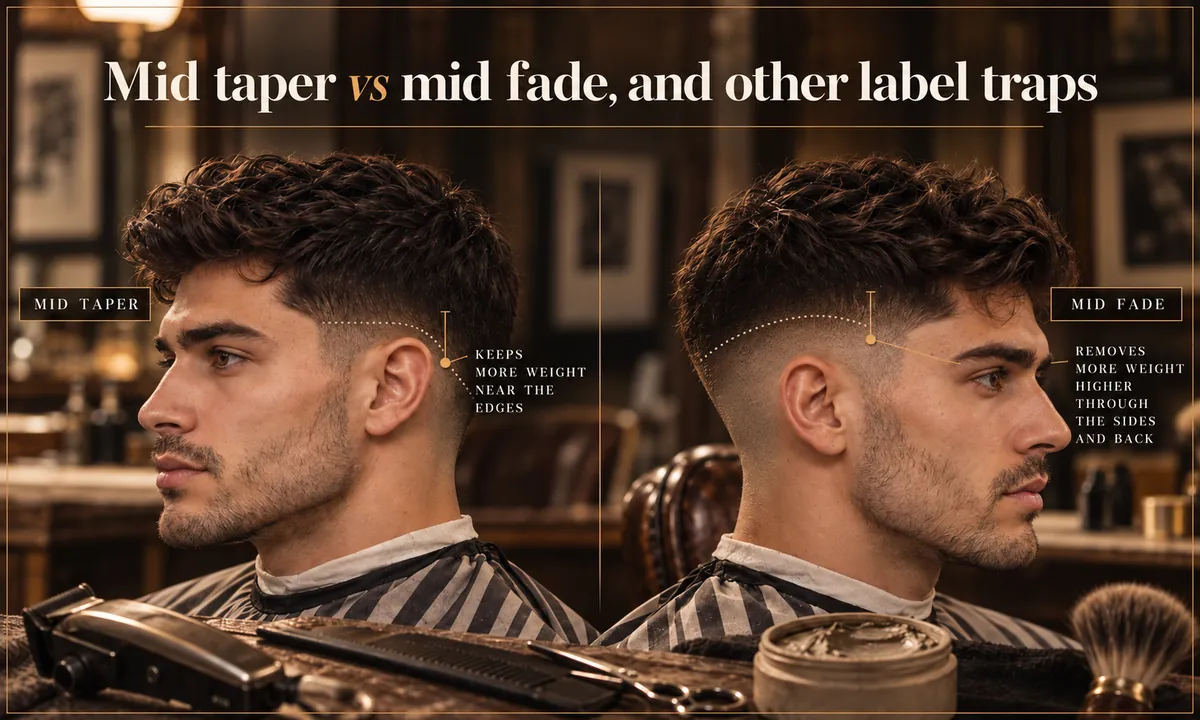
Burst & Taper’s mid taper guide draws the same line. If the short graduation in your reference photo runs across most of the side, you are probably looking at a fade, and our taper vs fade guide walks through that check. At low height, low taper vs low fade runs the same coverage check.
Barbers do not share one measured landmark for low and mid tapers, because head shapes and growth patterns differ, so the same cut can earn either label. Treat the words as starting vocabulary. Point to where the transition should sit on your own head or a photo, and ask the barber to repeat the plan.
Man Cave Barbershop says as much: it is hard to say exactly where each height sits on a given head, so they suggest pointing to the spot.
How this low vs mid taper guide was made
Taper Fade Trends Editorial wrote this comparison to help readers choose a taper height before a barber visit. We compared published barbershop and grooming references, separated height from coverage and shortest finish, and left out claims we could not support, including fixed rebooking schedules and face-shape rules.
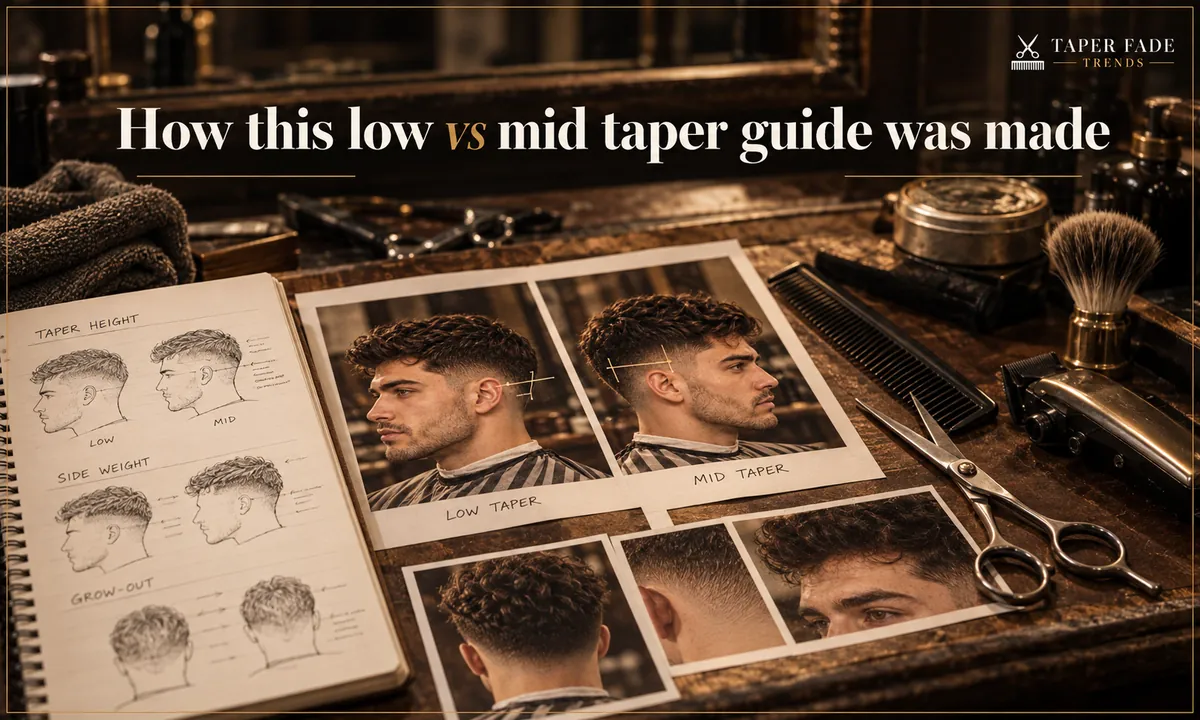
No barber has reviewed this page yet. The hero image and the section images are illustrations, not real haircuts, and the page contains no client photos. Sources were checked on October 6, 2026.
Sources: Cutters Yard on weight and definition; Pall Mall Barbers on height versus finish; Man Cave Barbershop on landmarks and finish; Beard Beasts on side bulk; Burst & Taper on taper versus fade coverage; Wahl on guard sizes.
If your real question is how much of the side should be faded rather than where the taper sits, read taper vs fade next. For a low taper under a clipper-short top, see the low taper fade buzz cut guide. If your sides grow outward and the choice is about side length, the Asian low taper fade guide covers it.
Keep reading
All guides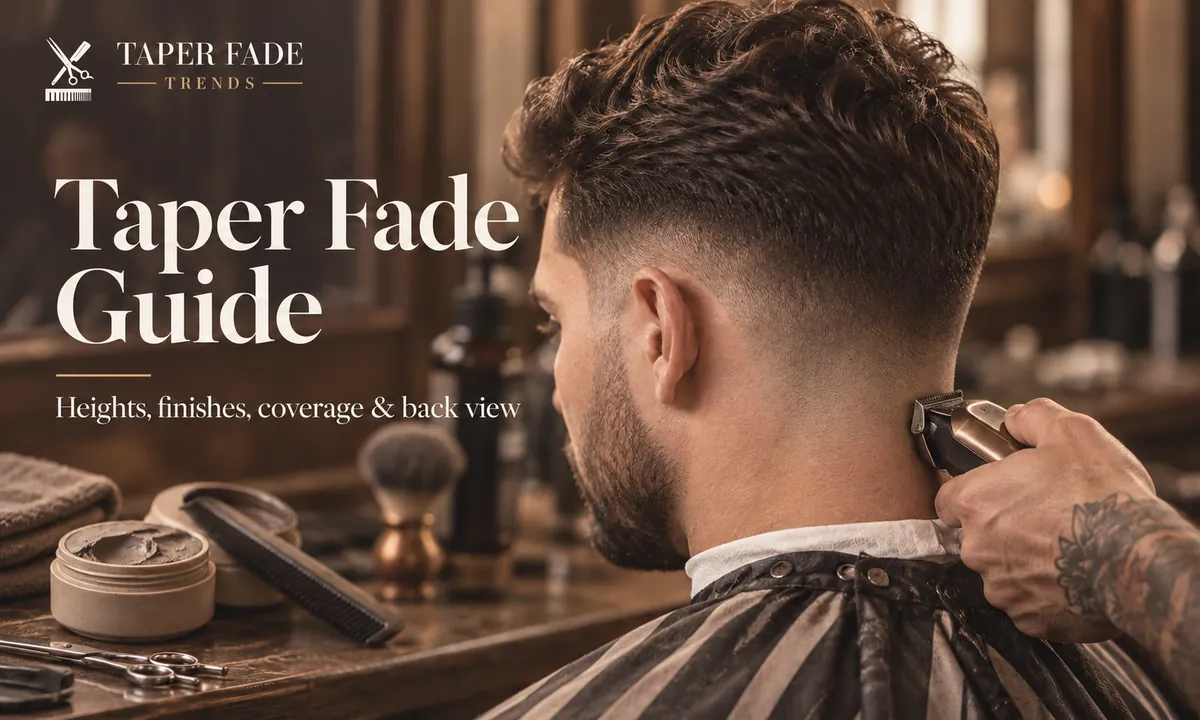
Taper fade: a visual guide to heights, finishes and top styles
Where a taper fade sits from the front, side and back, how low, mid and high differ, and how to ask for side coverage and a finish with or without skin.
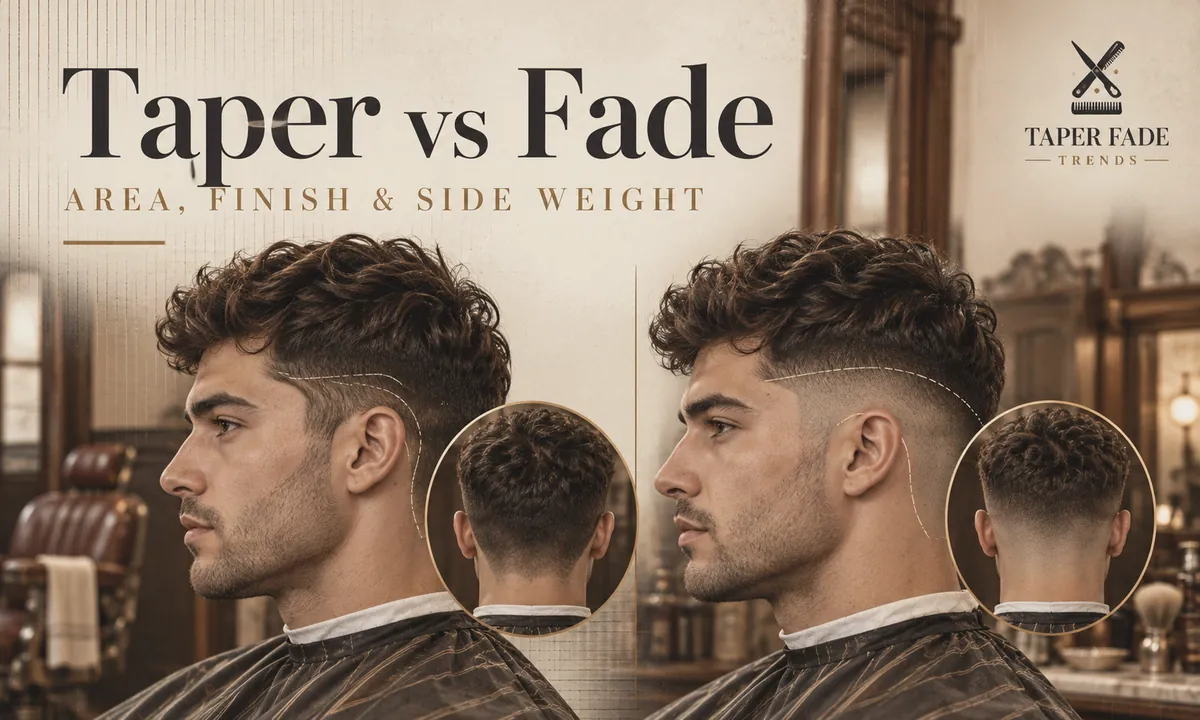
Taper vs fade: what changes in area, finish and side weight
Taper vs fade compared by coverage, height, shortest finish and side weight, with a back-view check and word-for-word barber scripts for either cut.
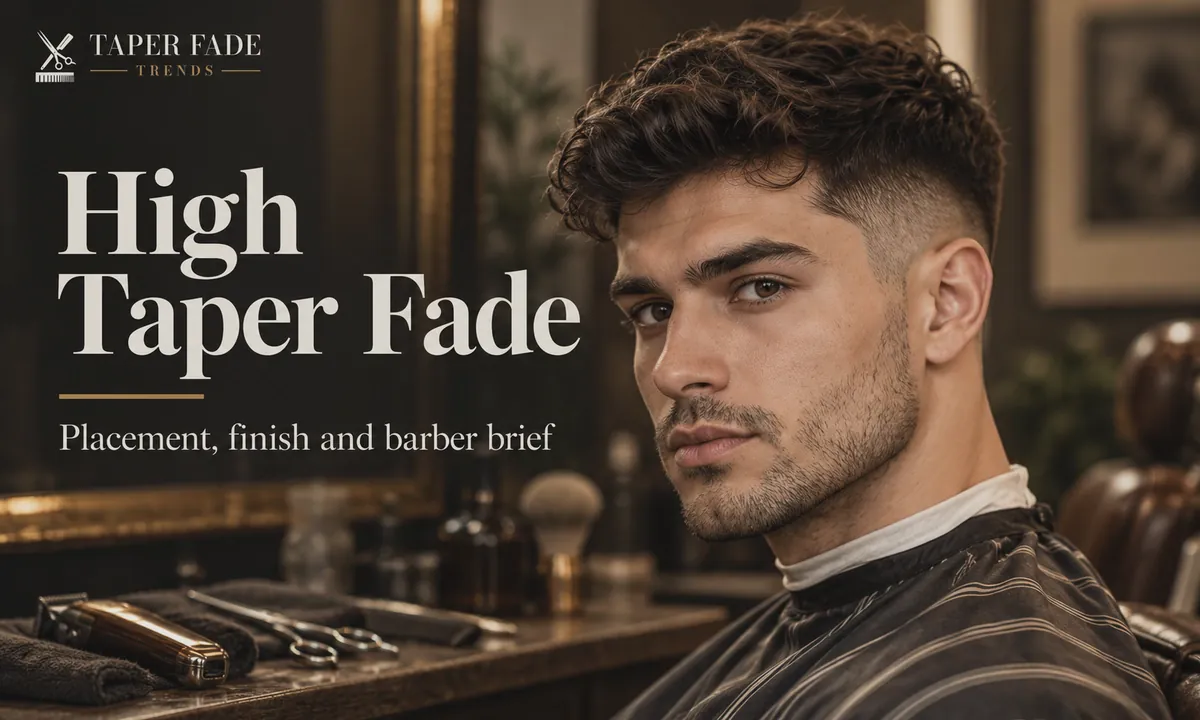
High taper fade: placement, finish and barber brief
Where a high taper fade sits, how much side weight stays, skin vs shadow finishes, what the back should look like, and exactly what to tell your barber.
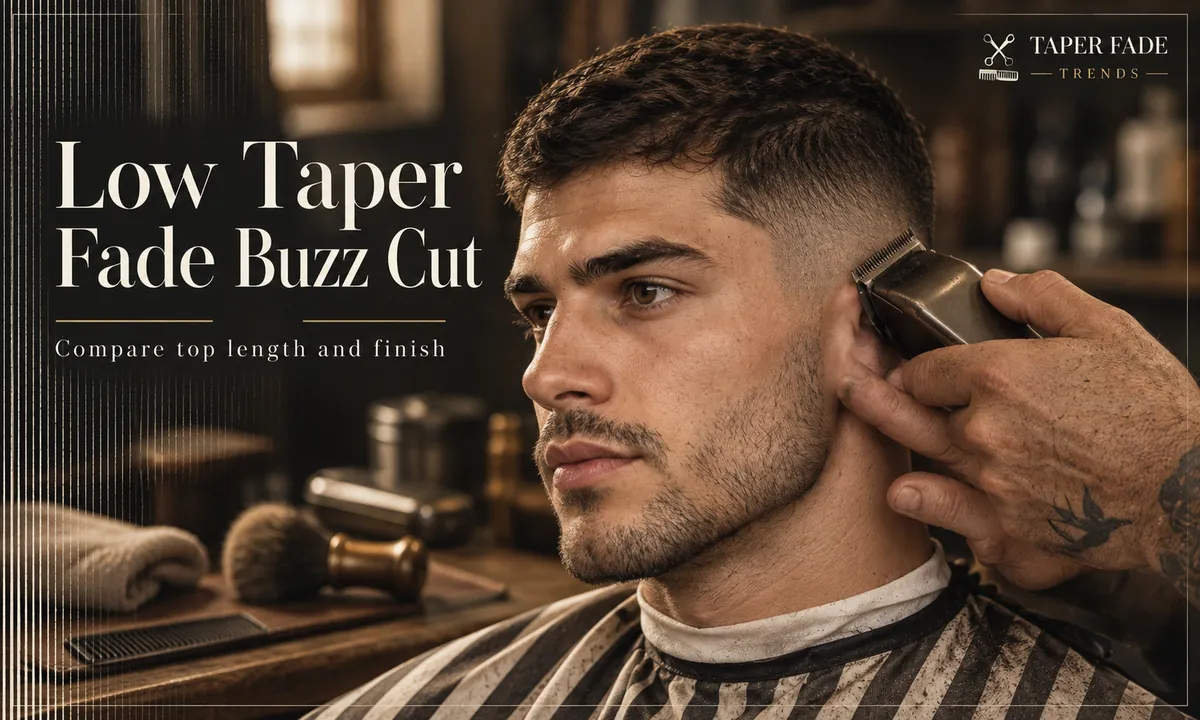
Low taper fade buzz cut: compare top length and finish
A low taper fade buzz cut is two choices: how long the top is and how short the taper ends. Compare Wahl #1 to #4, skin or no skin, and what to say.
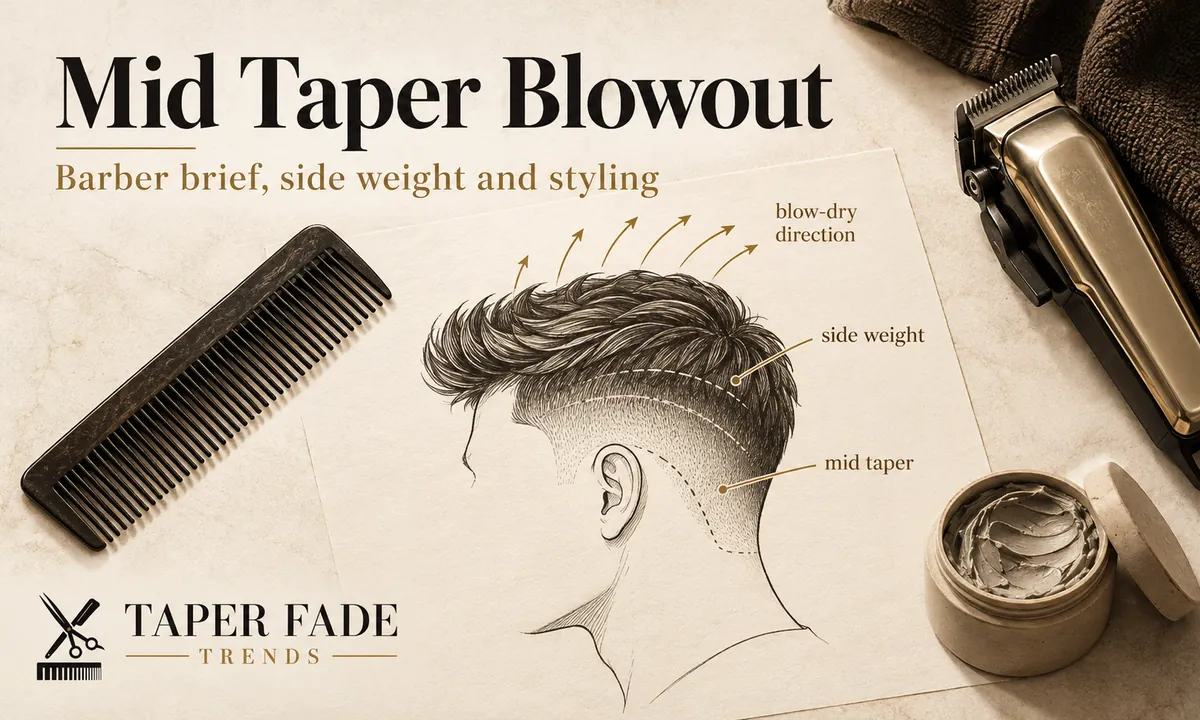
Mid taper blowout: keep volume without flattening the sides
A mid taper blowout is a temple-height taper plus enough top and upper-side length to dry up and out. What to tell your barber and how to style it.
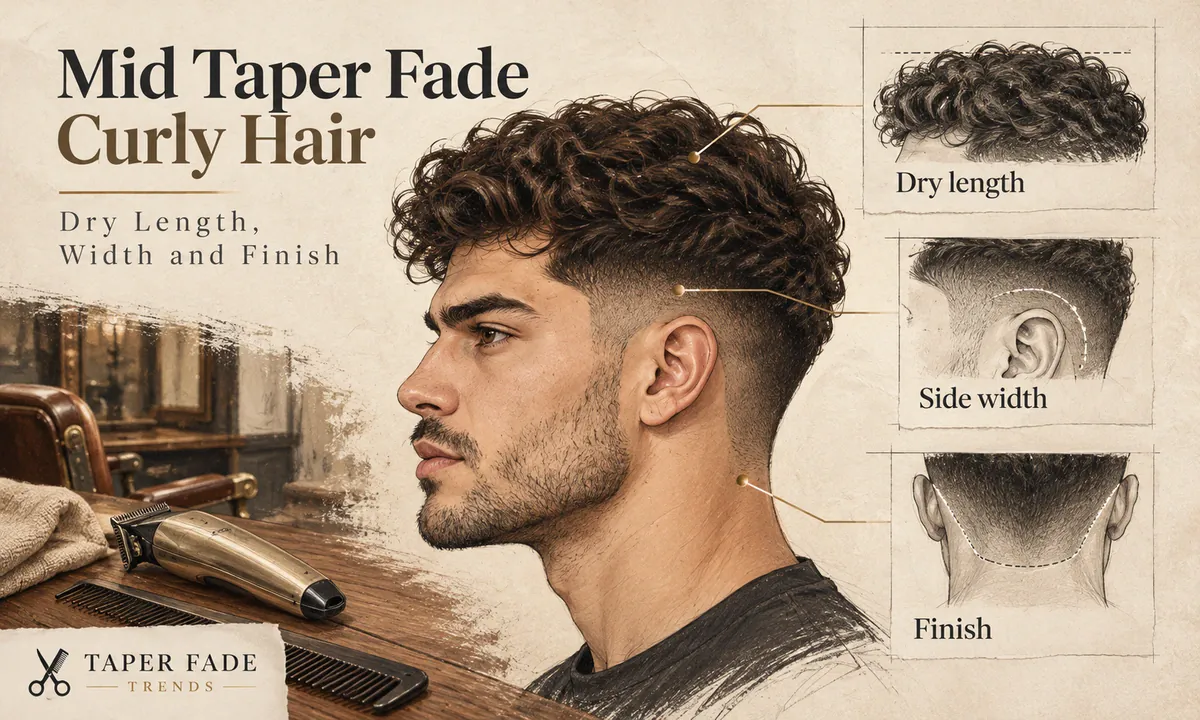
Mid taper fade curly hair: choose dry length, side width and finish
Mid taper fade curly hair guide: what it keeps vs a full mid fade, how to judge dry length and side width, and the four specs to give your barber.
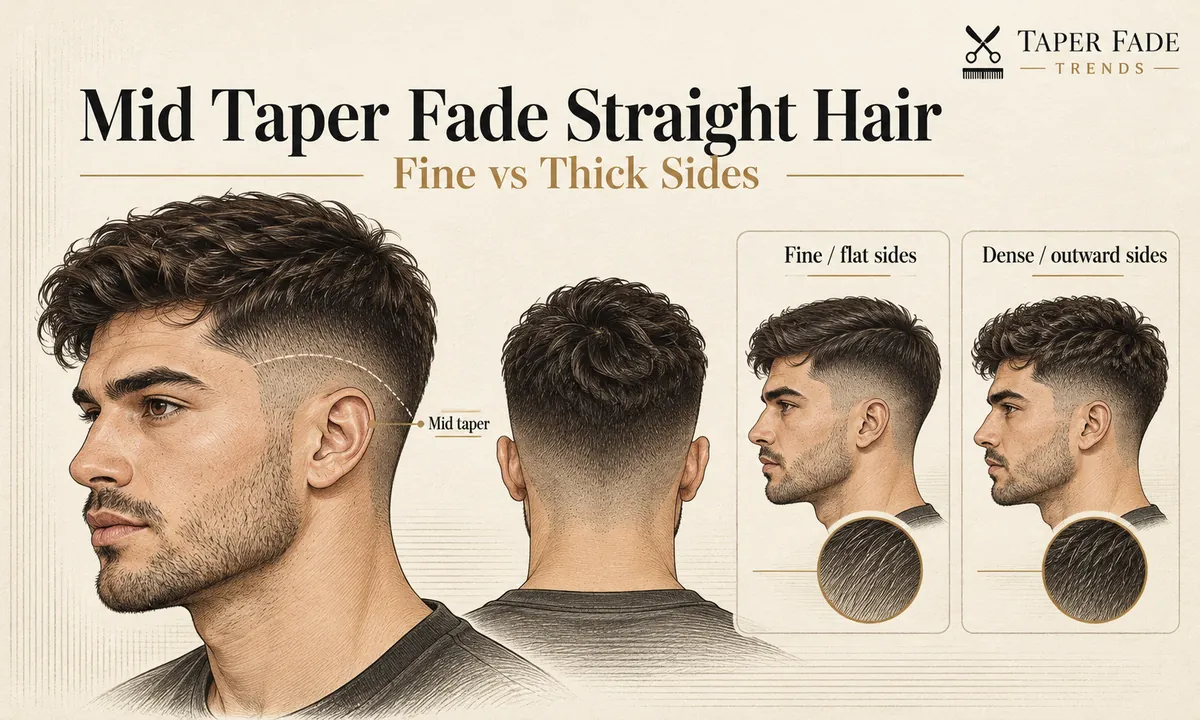
Mid taper fade straight hair: fine, flat and outward-growing sides
Mid taper fade straight hair guide: how much side weight to keep on fine or dense sides, why sides stick out after a cut, and what to tell your barber.
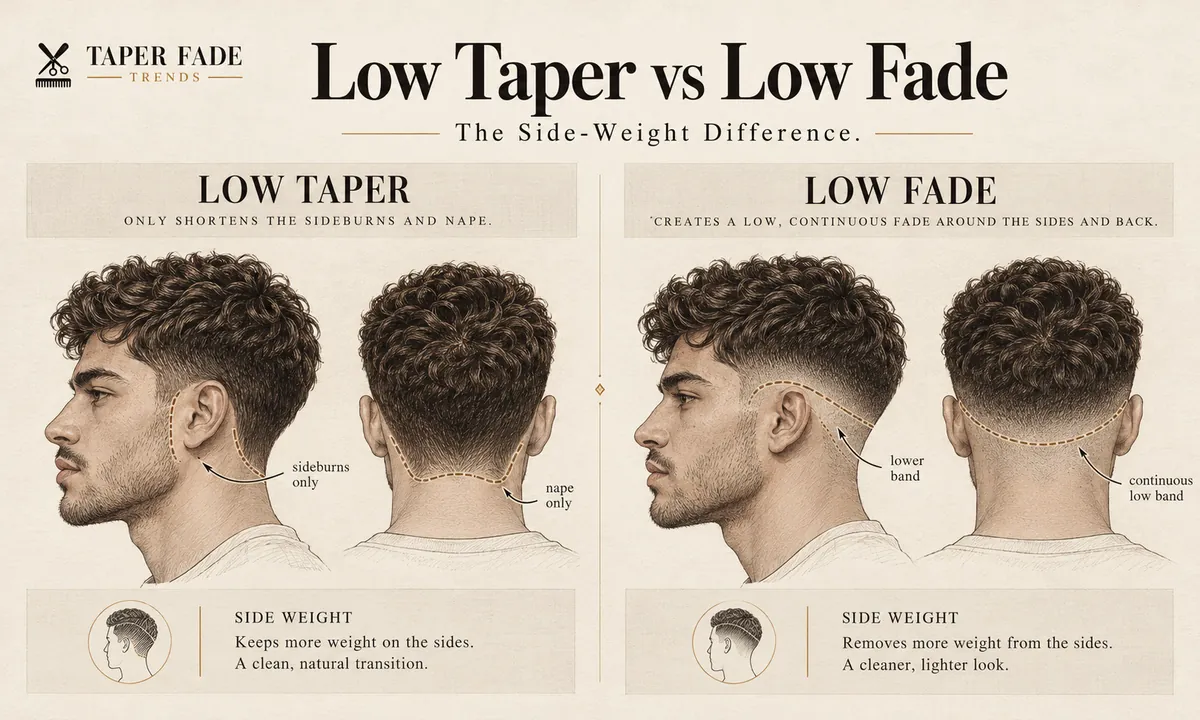
Low taper vs low fade: compare coverage and side weight
Low taper vs low fade: a low taper shortens the sideburns and nape; a low fade shortens a band around the lower sides and back. Compare finish and upkeep.
More in taper and fade comparisons
Taper and fade comparisons: all 5- Taper vs fade: what changes in area, finish and side weight10 min
- High taper vs high fade: side, back and coverage8 min
- Low taper vs mid taper: what changes when only the height movesYou are here
- Burst fade vs taper: compare the ear arc and nape10 min
- Low taper vs low fade: compare coverage and side weight11 min