High taper vs high fade: side, back and coverage
High taper vs high fade comes down to coverage. Both start high on the side, but a high taper keeps the shortest work at the temples, sideburns and nape, so more side weight stays. A high fade carries that short zone across the sides and around the back. Shops use the names differently, so specify coverage and finish.
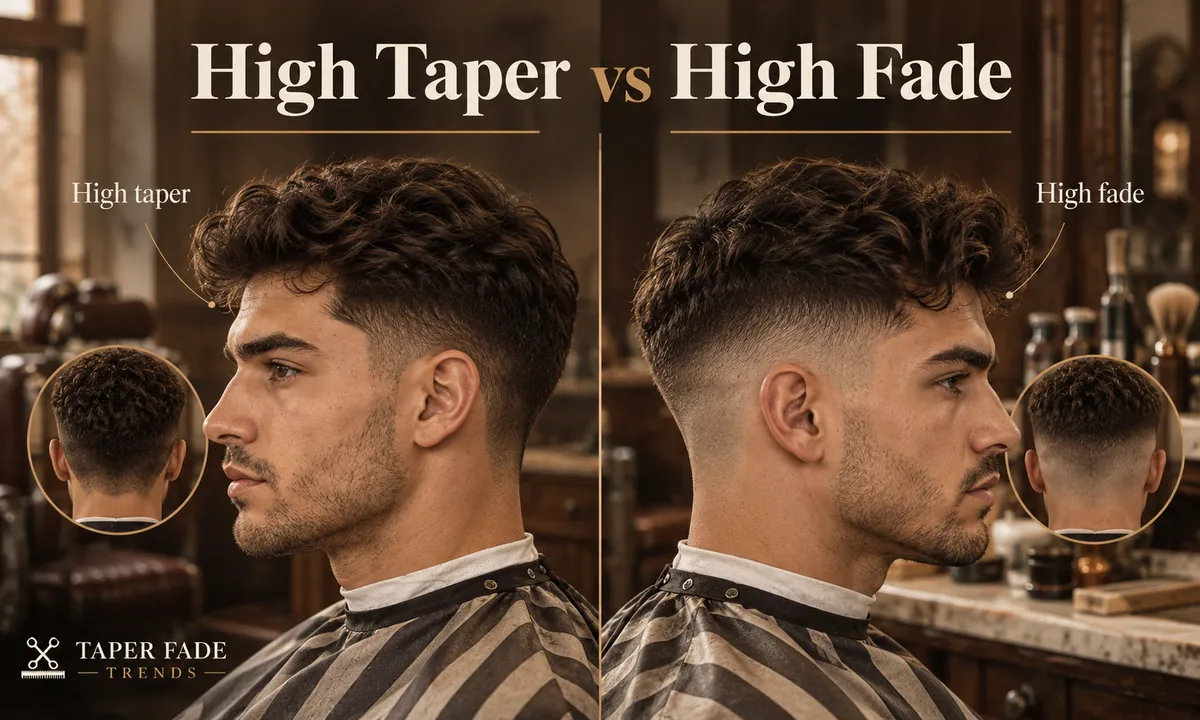
| Criterion | High taper | High fade |
|---|---|---|
| Placement | High on the side; no fixed inch mark | High on the side; no fixed inch mark |
| Where the shortest work sits | Temples, sideburns and nape | Across the sides and around the back |
| Side weight kept | More | Less |
| Back of the head | Short zone stays at the nape | Short zone wraps around the back |
| Shortest finish | Not set by the name | Not set by the name |
| Scalp showing | Smaller area, depends on finish | Larger area if taken close |
| Regrowth | Shows in a smaller zone | Shows across more of the head |
| Say this | “Keep the short work at my temples and nape” | “Take the short zone all the way around” |
The table follows the coverage convention. Some shops split the names by finish instead; the terminology note below explains both.
High taper vs high fade at a glance
A high taper and a high fade both start high on the side. Under the coverage convention, the high taper keeps its shortest work at the temples, sideburns and nape, while the high fade takes it across the sides and around the back. Former barber Nick Hall draws the same line in his Man of Many guide.
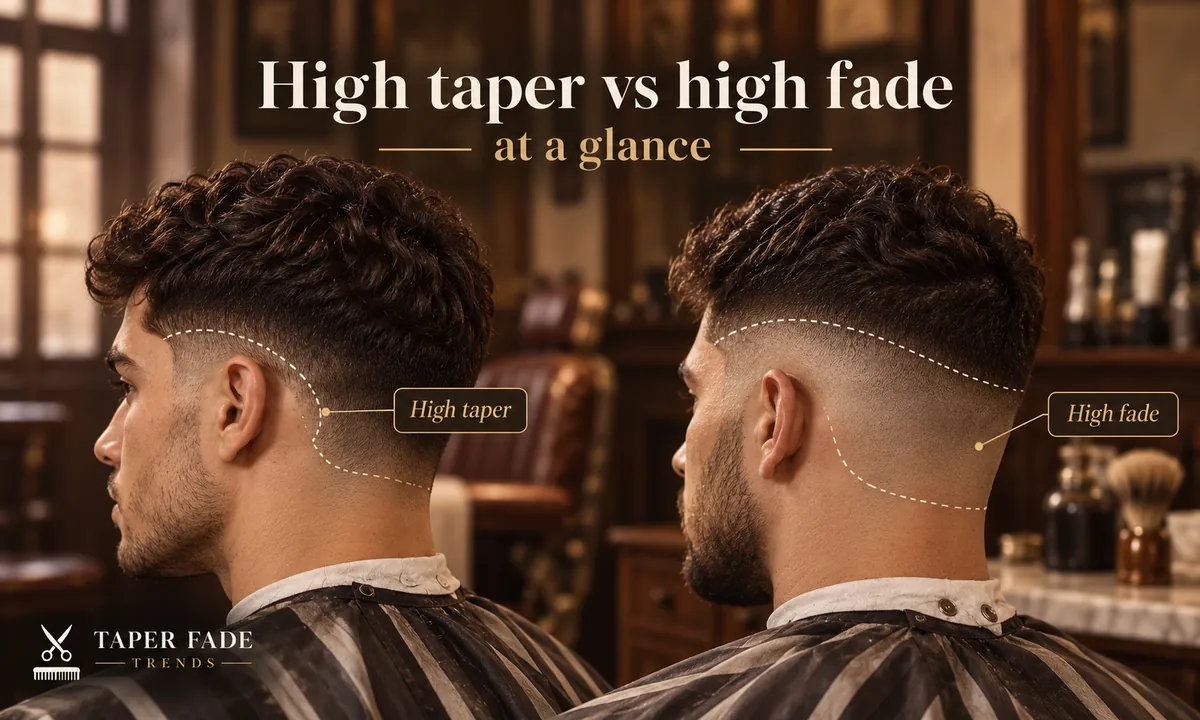
On this page, a high taper is a high-placed, localized shortening around the temples, sideburns and nape that keeps more of the side panel. A high fade is a high-placed fade that carries the short gradient across a broader area of the sides and back. The shortest finish is the length at the bottom of the blend: skin, a shadow or visible hair. It is a separate decision from coverage, which is why it has its own row above.
Are a high taper and a high fade the same? Not reliably. Some shops separate them by coverage, others by whether the shortest point reaches skin, and CADMEN Barber Academy describes a high taper fade with bare skin covering most of the sides, which a coverage-based shop would call a high fade. Describe the result, not the label.
For styles and upkeep of the cut itself, see the high taper fade guide.
The difference from the side
From the side, a high taper keeps more of the side panel at longer lengths than a high fade started at a similar height, because its shortest work stays near the temple and sideburn. CADMEN’s high fade guide says a high fade puts more of the side into the fade and leaves less hair there.
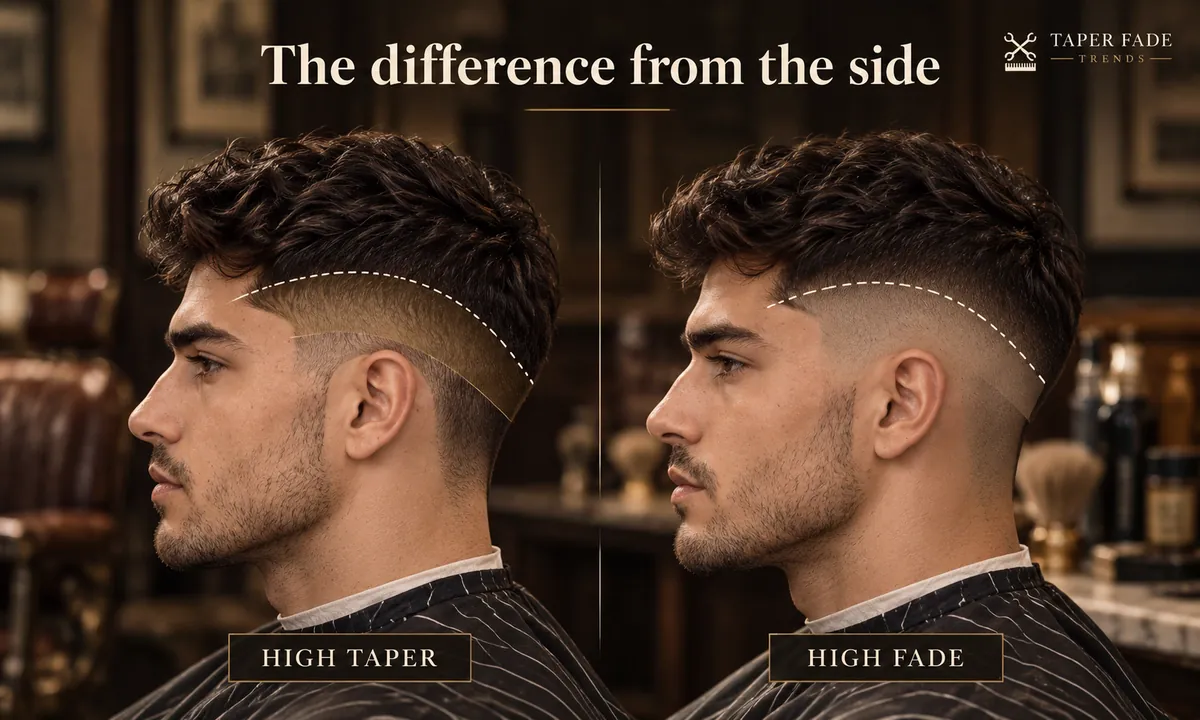
Treat that as a comparison of coverage, not a guard recipe. Density, growth pattern, top length and the barber’s blend all change how much weight looks retained, so the same coverage can read differently on two heads. Nick Hall notes the contrast shows most on darker, thicker or curlier hair.
The difference from the back
From the back, a high taper keeps the shortest zone at the nape and leaves more weight behind the ears. A high fade carries the short zone around the back to join both sides. Manhattan Barbershop in New York splits taper and fade the same way: perimeter only for the taper, entire sides and back for the fade.
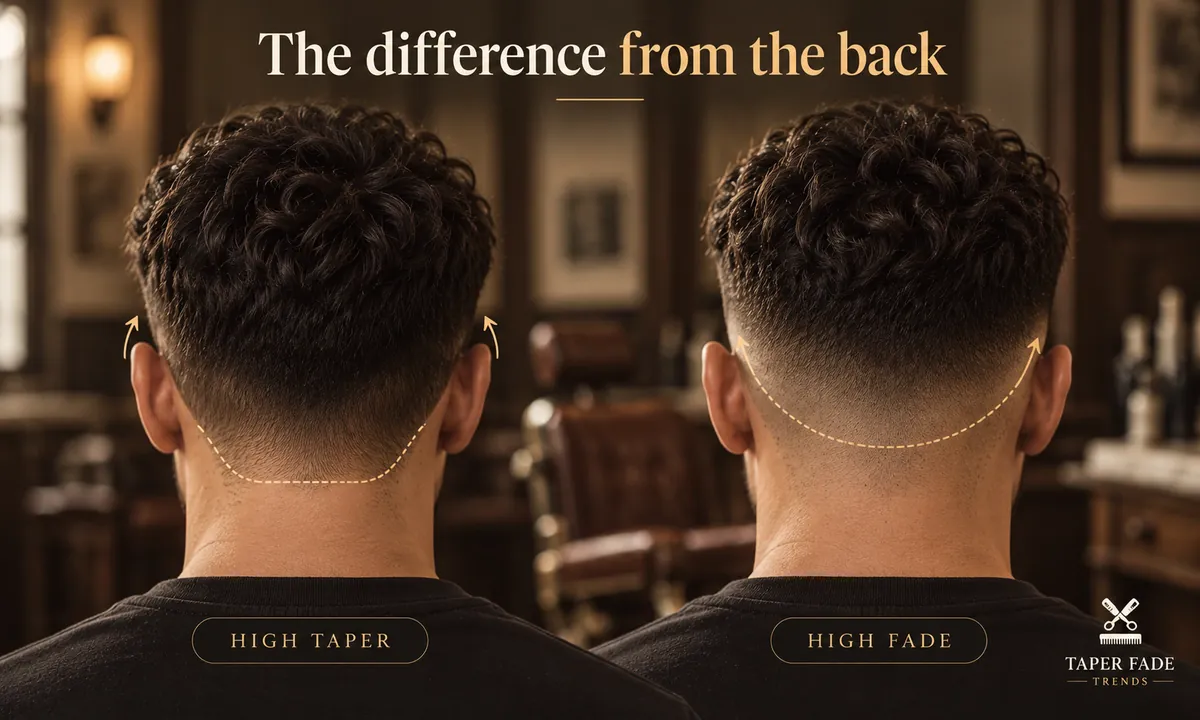
You cannot see your own back in the chair, and a profile photo will not show how far the short zone wraps behind the ear. That is why Hall tells readers to bring a side profile and a back shot, not one photo from the front.
Skin, shadow and shortest finish are separate
Can a high taper go to skin? Yes, at shops using the coverage convention, where “high taper” describes where the short work sits and the finish can be skin, a shadow or visible hair. Shops using the endpoint convention keep “taper” for a finish with hair and call it a fade once it reaches skin. Say the finish out loud.
Even the endpoint shops disagree on where a taper stops. CADMEN says a taper typically ends at a guard 0.5 or 1; Manhattan Barbershop says a #2 or #3. CADMEN’s own high fade page then allows a guard 0, a guard 1 or skin as a fade’s shortest length. A name will not tell you how short the bottom goes.
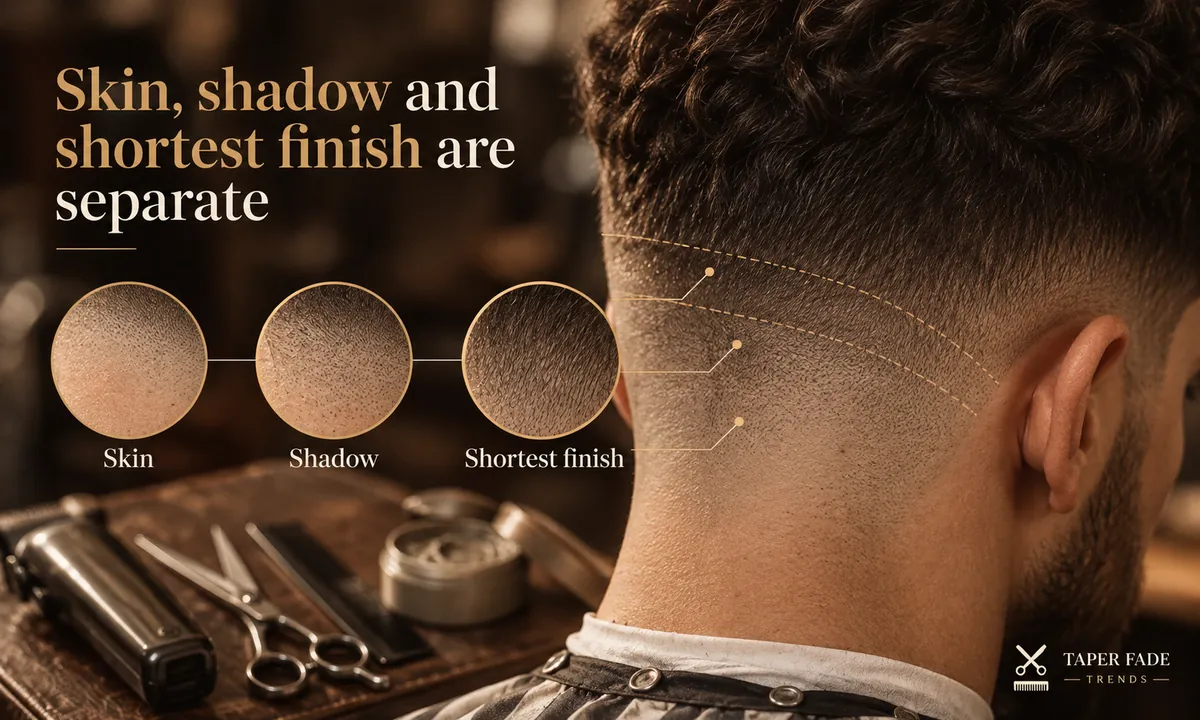
Which shows more scalp? Usually the high fade, because it takes more area short. In a same-model demonstration for Modern Barber, BaBylissPRO ambassador Pete Cranfield shows a taper keeping more scalp covered through the back and sides. Still, a high taper taken to skin bares the temples, and a high fade can stop at a guard 1.
For height and finish basics behind these terms, see taper fade heights and finishes.
Why the terminology changes by shop
“Taper fade” is not a standardized cut, and adding “high” fixes only the starting height. Manhattan Barbershop lists three readings: a taper with a clean neckline, a taper with a real fade near the ear, or a softer fade that never goes bald. Use the phrase as an opener, then define coverage, finish and side weight.
Which cut fits your routine?
Pick the high taper if you want to keep side fullness and limit regrowth to a smaller zone. Pick the high fade if you want the strongest contrast and accept that regrowth shows across more of the head. Neither name sets a rebooking date.
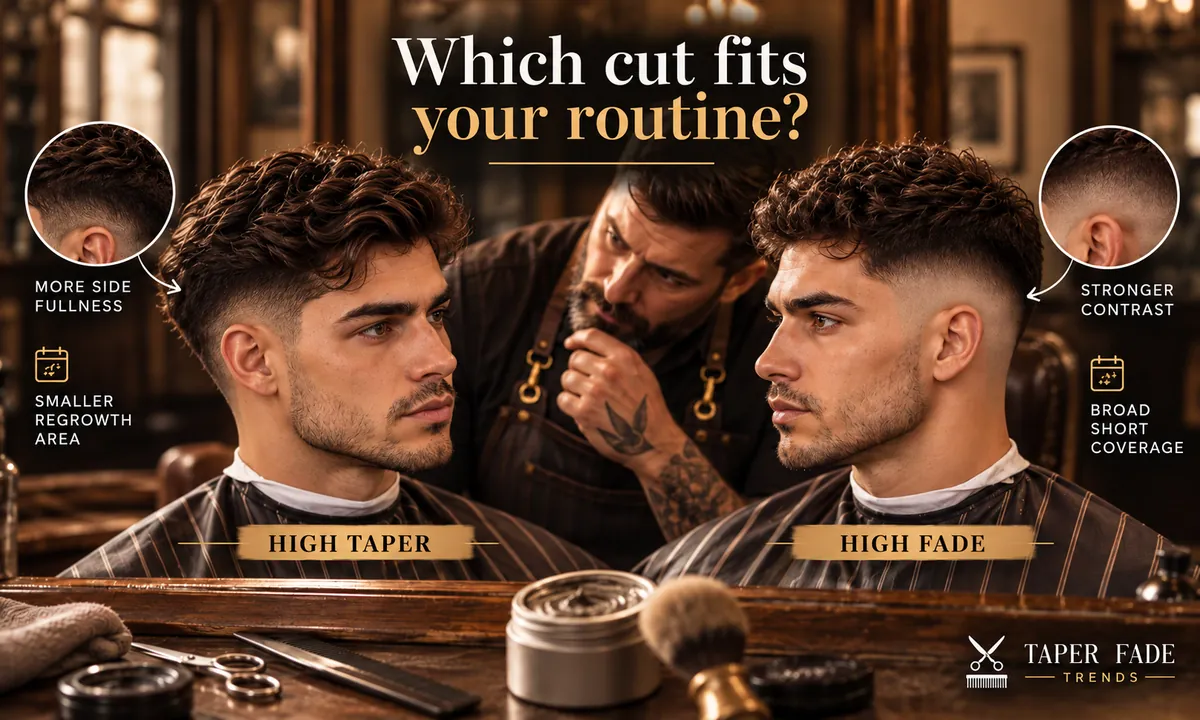
| If you want | Choose | Trade-off |
|---|---|---|
| Side fullness with contrast at the edges | High taper | The temples and nape still show regrowth first |
| The most contrast between sides and top | High fade | More scalp on show, and regrowth across more of the head |
| To decide later | High taper | Widening the short zone next visit is easier than growing it back |
Which grows out faster? Neither name fixes an interval. A broader short zone shows regrowth across more of the head; CADMEN says a high fade typically shows noticeable growth at the upper sides by about two weeks. Growth rate, density, finish and your tolerance decide the rest, so a dated photo each week is the honest test.
What to tell your barber
Ask for the result in four controls, not a label: where the transition starts, how far the shortest area spreads, how short the finish goes, and how much side panel stays long. Manhattan Barbershop says to name the guard number and coverage area and bring photos; Nick Hall adds a side profile and a back shot.
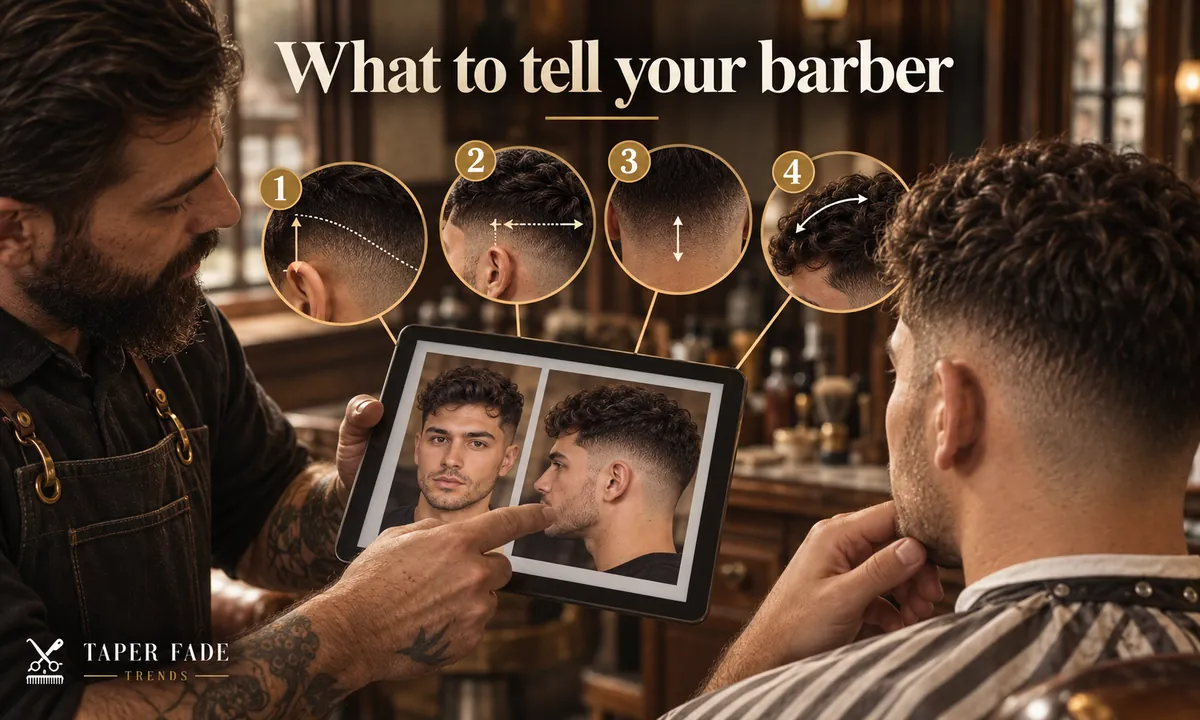
- Where the transition starts, pointed out on your own head, such as at or just above the temple.
- How far the shortest area spreads: around the temples, sideburns and nape only, or across the sides and around the back.
- How short the finish goes: skin, a shadow, or a guard number you name.
- How much of the side panel and the back should stay long.
Bring a profile and a back photo at minimum. The profile shows how much side panel stays long; the back shows whether the short zone stops at the nape or wraps around. A front photo helps with the top shape but says little about this choice. Pick references with hair texture and density close to yours.
For a high taper: “Start it high, at the temple, but keep the short work around my temples, sideburns and nape. Leave weight through the sides and across the back, and take the bottom down to skin.”
For a high fade: “Start it high, at the temple, and take the short zone all the way around the sides and back, down to skin at the bottom.”
Swap “skin” for “a shadow” or a guard number if that is the finish you want, and leave the guard, blade and lever choices to the barber.
Limits, method and next useful guide
Taper Fade Trends Editorial compared current definitions from a barber academy, a New York barbershop, a former barber’s guide and a BaBylissPRO ambassador’s demonstration, all viewed on October 6, 2026. We did not cut or photograph either style for this page. The figures are labeled illustrations of the zones those sources describe, not photos of a finished haircut, and no barber has reviewed this page yet. Barbers do not share one definition of “taper” or “fade,” so confirm coverage, finish and side weight in the chair.
Sources used on this page:
- CADMEN Barber Academy: The Taper Fade
- CADMEN Barber Academy: High Fade for Men
- Manhattan Barbershop NY: Stop Saying “Taper Fade”
- Man of Many: Nick Hall’s taper fade guide
- Modern Barber: Ask the Experts, Taper vs Fade
If you know you want the localized option, the high taper fade guide is the next stop for choosing the finish and top shape. If you still need the basics of height and finish, start with the taper fade guide.
Keep reading
All guides
High taper fade: placement, finish and barber brief
Where a high taper fade sits, how much side weight stays, skin vs shadow finishes, what the back should look like, and exactly what to tell your barber.
Taper fade: a visual guide to heights, finishes and top styles
Where a taper fade sits from the front, side and back, how low, mid and high differ, and how to ask for side coverage and a finish with or without skin.