Mid taper fade Black male guide: what stays and what to ask for
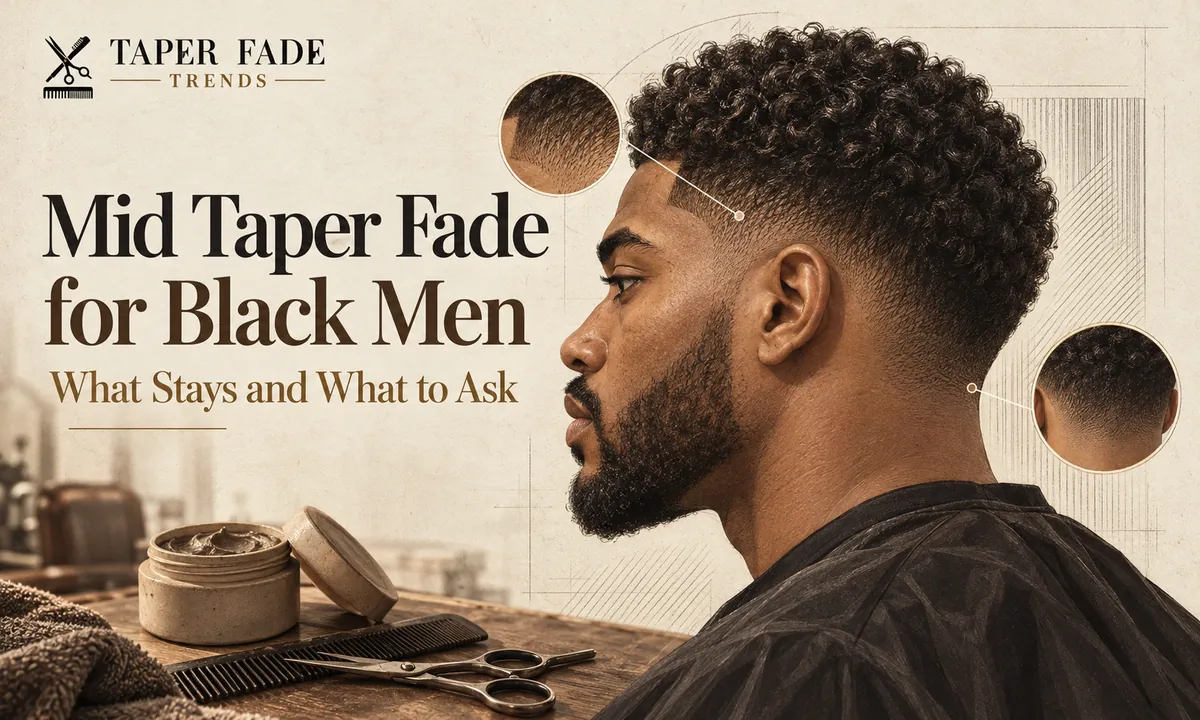
A mid taper fade for Black men starts around the temple and keeps its shortest work at the sideburns, ears and nape, so the side panel keeps more weight than a full mid fade. Waves, coils, an Afro, twists or locs can sit on top. Set height, finish, side weight and hairline separately.
| Setting | What to decide |
|---|---|
| Placement | Where the blend starts, around the temple; shops place “mid” differently, so point to it |
| Coverage | Sideburns, around the ears and the nape, not a band across the whole side |
| Shortest finish | Shadow or skin, chosen separately from placement |
| Side weight | Full, slightly narrowed, or cut farther into the side |
| Top | Waves, coils or an Afro, twists, braids or locs; the taper does not set it |
| Hairline | Natural hairline or line-up, stated on its own |
| Nape and beard | Neckline shape, and whether the sideburn blends into a beard |
| Reference views | Front, both sides and back |
| Guard numbers | Optional; a number only means something inside one clipper system |
| Upkeep | No universal interval; refresh when the edges stop looking deliberate |
What a mid taper fade changes for Black men
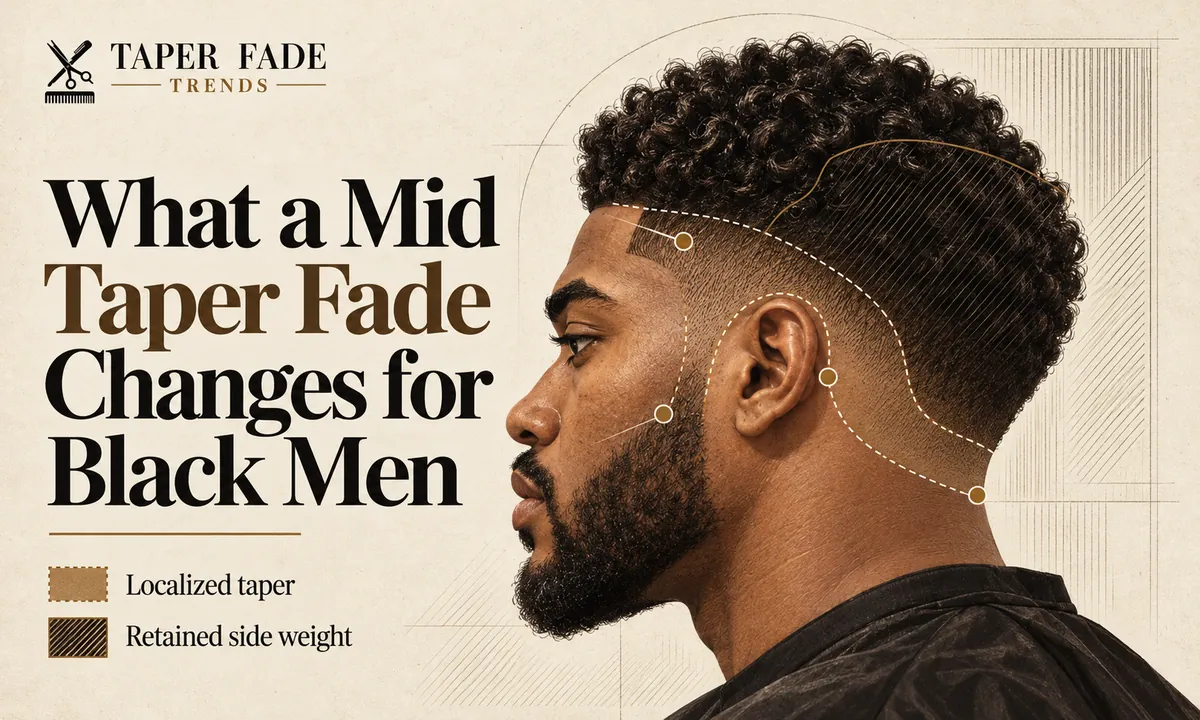
A mid taper fade for Black men is a localized taper. The blend starts around temple height and does its shortest work at the sideburns, around the ears and at the nape, so more hair stays on the side panel than a full mid fade leaves. The top style is a separate choice, and the name does not set the finish.
“Black men” in the search says who is asking, not what the hair does. Texture, density, shrinkage and growth direction vary from head to head, so this guide sorts the cut by what has to stay on top rather than by a hair-type label.
Shop vocabulary is loose. Some published guides use “mid taper” for a blend that runs across the sides and back from the middle of the head, which this guide calls a full mid fade. Point to where the blend should start and stop instead of trusting the name.
Mid taper vs full mid fade
A mid taper fade and a full mid fade can start at the same height, but they remove different amounts of hair. The mid taper keeps its shortest work at the sideburns, ears and nape and leaves the side panel fuller. A full mid fade carries the blend across most of the side and back. Either one can end in a shadow or skin.
| Choice | Mid taper fade | Full mid fade |
|---|---|---|
| Coverage | Sideburns, around the ears and the nape | Most of the side and back |
| Side weight kept | More | Less |
| How the side reads | Hair with clean edges | One continuous fade |
| Shortest finish | Shadow or skin, chosen separately | Shadow or skin, chosen separately |
For the same comparison at every height, see taper vs fade.
Choose the four controls of a mid taper
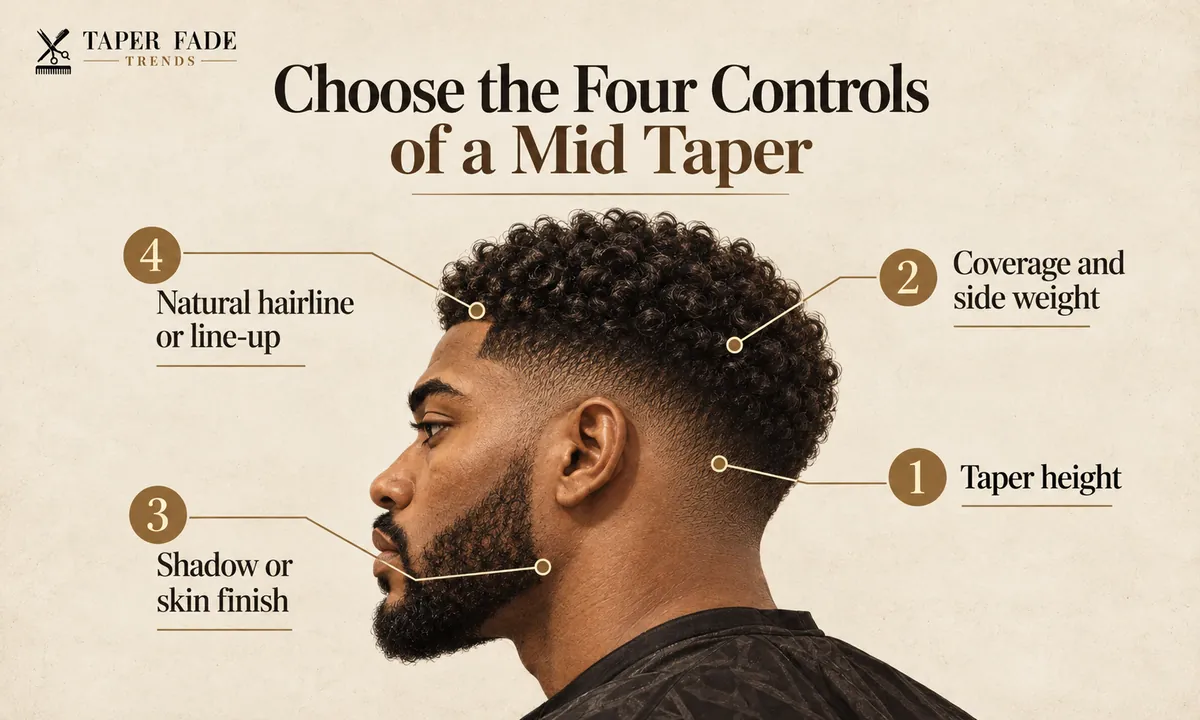
Four separate choices set a mid taper fade: taper height, coverage and side weight, shortest finish, and hairline treatment. Changing one does not settle the others, so a barber needs all four. The four labels are this guide’s way of splitting the request into parts, not standard industry terms.
| Control | The choice | What it changes |
|---|---|---|
| Taper height | Where the blend starts | How visible the taper is from the front and side |
| Coverage and side weight | How far the taper spreads and how much side hair stays | The side silhouette and Afro outline |
| Shortest finish | Shadow or skin | How close the bottom reads and how soon regrowth shows |
| Hairline treatment | Natural hairline or line-up | The front and temple edge |
Taper height and coverage
Height sets where the blend begins, and coverage sets how far it travels. For a mid taper fade, the blend starts around the temple and stays at the sideburns, ears and nape. No standard measurement fixes “mid,” so point to the start line on your own head or on a side photo and name the highest point the taper may reach.
If you are unsure, start lower. A barber can take a taper higher in the same visit, but hair that comes off has to grow back.
Shadow or skin finish
A mid taper fade does not have to finish at bare skin. A shadow finish leaves visible hair at the shortest point of the taper, and a skin finish takes that point to bare scalp. Height, coverage and finish are separate choices, so say “shadow” or “skin” out loud before the first pass.
Published guides disagree here. Some say a taper never reaches skin, while others, including this site, treat skin as an optional finish. The disagreement is about the word, not the haircut, which is why the finish needs its own sentence.
Natural hairline or line-up
Yes, you can keep a natural hairline with a mid taper fade, because hairline treatment is separate from taper height. A natural hairline keeps the front and temple edge close to where it already grows. A line-up is deliberate shaping of that edge. Ask the barber to clean up without pushing the edge back, or ask for a line-up by name.
If you want a line-up, ask that it follow your existing hairline. Pushing the edge back to make the taper look sharper moves where your hairline appears, and that hair takes weeks to return.
Side weight and Afro outline
How much Afro outline stays is a shape decision, not a guard number. Pick one of three and show it from the side and back, because a front photo cannot show the width above the ear:
- Full: the side panel keeps its width, and the taper only cleans the edge around the ears and neckline.
- Slightly narrowed: the side loses a little width near the temple and holds the rest.
- Cut farther into the side: more of the side panel comes down, and the cut starts to read as a full mid fade.
Match the taper to what stays on top
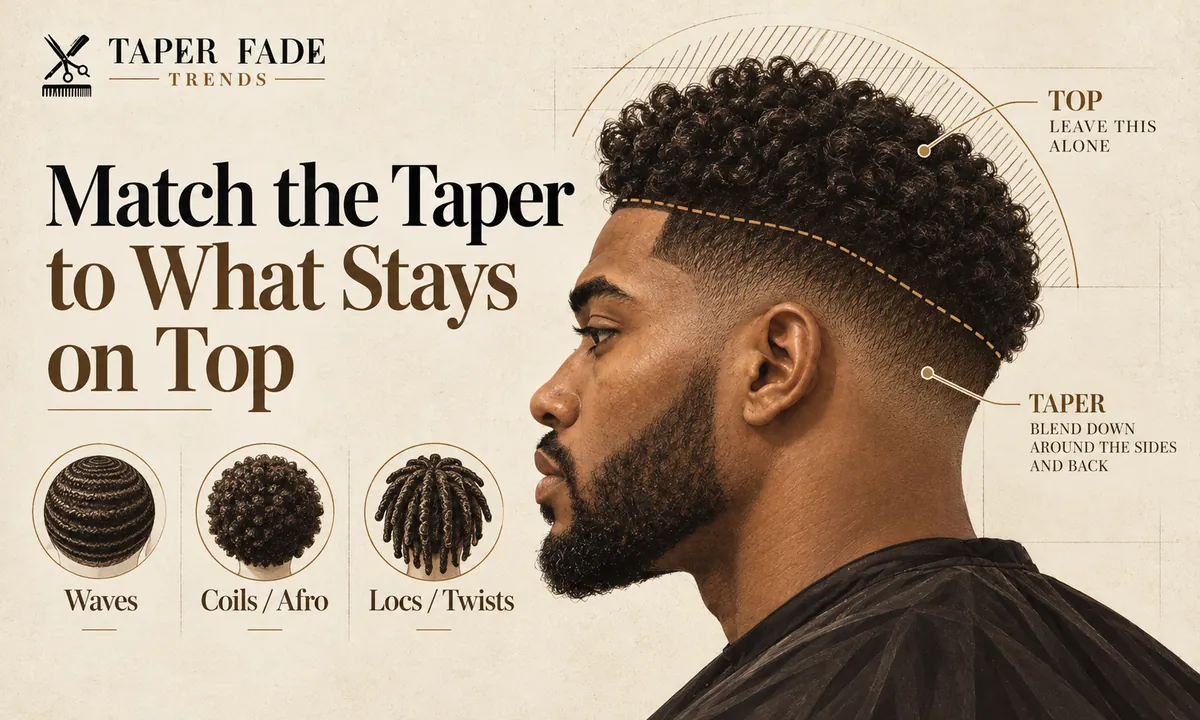
The top does not change what a mid taper fade is; it changes what the taper must leave alone. Decide where the taper boundary sits, meaning the line where the tapered edge ends and kept hair begins, then check that line against your waves, coils, Afro, twists or locs before any clipper work starts.
| Top | The taper leaves alone | The choice that decides it | What the photo must show |
|---|---|---|---|
| Waves | The wave pattern and its outer edge | How far the taper reaches into the waves; natural hairline or line-up | Where the waves end at the temple, from the side and back |
| Coils or Afro | The side outline | Full, slightly narrowed or cut farther in | Side width from the side and back |
| Twists, braids or locs | Every section you keep | Where the boundary sits below the outer sections | The bases of the outer sections and the boundary under them |
Mid taper with waves
On waves, a mid taper fade should clean the sideburns, ears and nape without cutting farther into the wave pattern than you intend. Clipper work that crosses into the waves at the temple removes pattern there, and that hair has to grow back and be brushed in again. Show a side photo where the taper meets the waves the way you want.
A line-up also changes where the waves end at the front. Keep the natural hairline if you want the pattern to run to its existing edge.
Mid taper on a coily or Afro-shaped top
Yes, a mid taper fade works on coily and 4C hair, because the cut responds to density, shrinkage and growth direction rather than to a type label. The deciding choice is side weight. Keep a full outline, narrow it slightly near the temple, or go farther in toward a full mid fade.
Coils look shorter dry than stretched, so judge the side width with your hair dry and shaped the way you wear it. If you pick out or shape your top, ask the barber to do that before setting the side weight.
Mid taper with locs and twists
With locs, twists or braids, the deciding question is where the taper boundary stops below the sections you keep. Settle these before the cut:
- Which outer sections are off-limits, pointed out in the mirror or shown in a side and back photo
- How much side weight stays
- Whether the nape is tapered, and to what finish
- Natural hairline or line-up
Watch for taper creep. If each cleanup takes the boundary a little higher, the outer ring of your locs or twists gets smaller over time. Ask for the boundary to stay where it was last time, and talk to your loctician or braider before you move it.
Use reference photos that show the whole cut
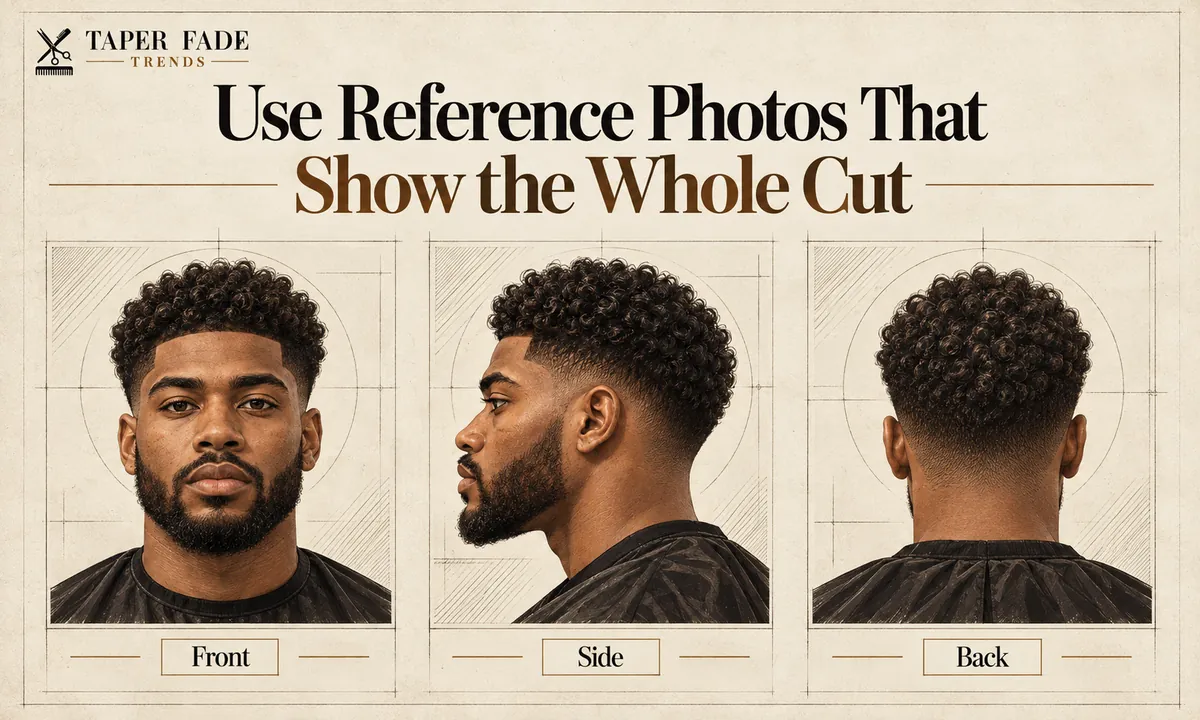
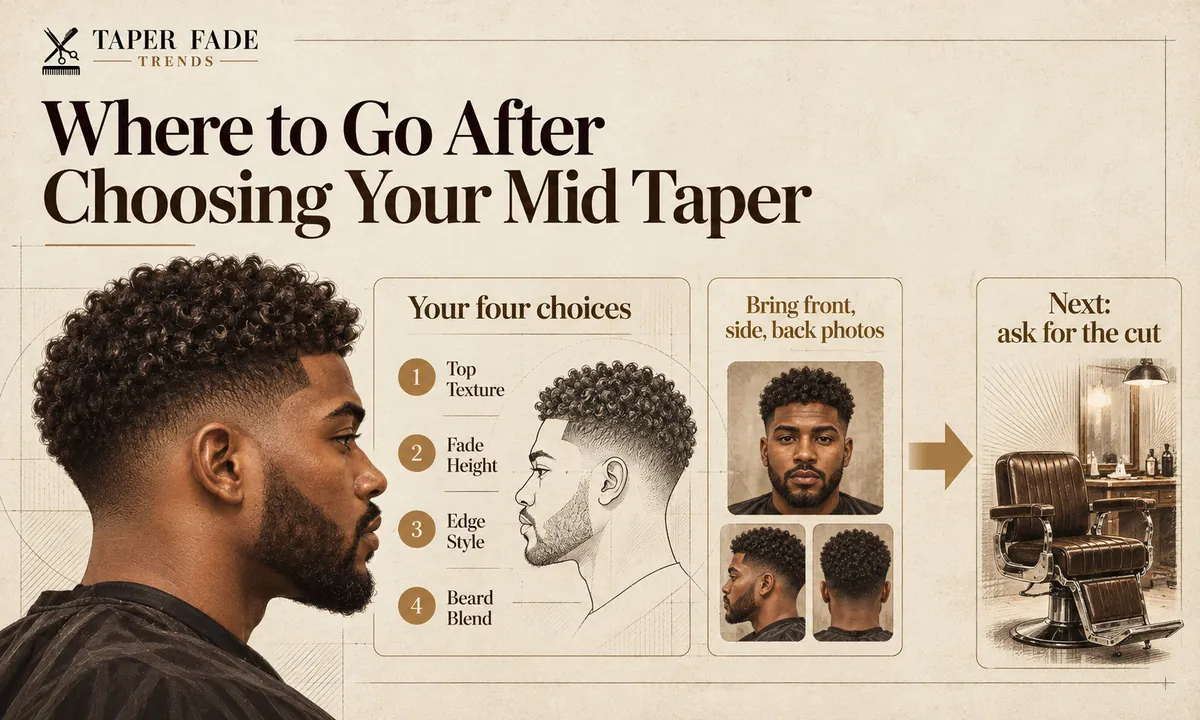
Bring a front, side and back reference, plus the other side if your two sides differ. Together they show taper placement, side weight, hairline treatment and the shape on top. A photo cannot show the guard, blade position or lever setting behind the cut, so describe the visible result and let the barber choose the tools.
- Front: the hairline treatment and how the top sits above it.
- Side, both if they differ: where the taper starts and how much side weight stays.
- Back: the nape boundary and the neckline.
Add a current photo of your own hair, worn the way you wear it, so the barber can compare density and growth direction with the reference.
What to tell your barber
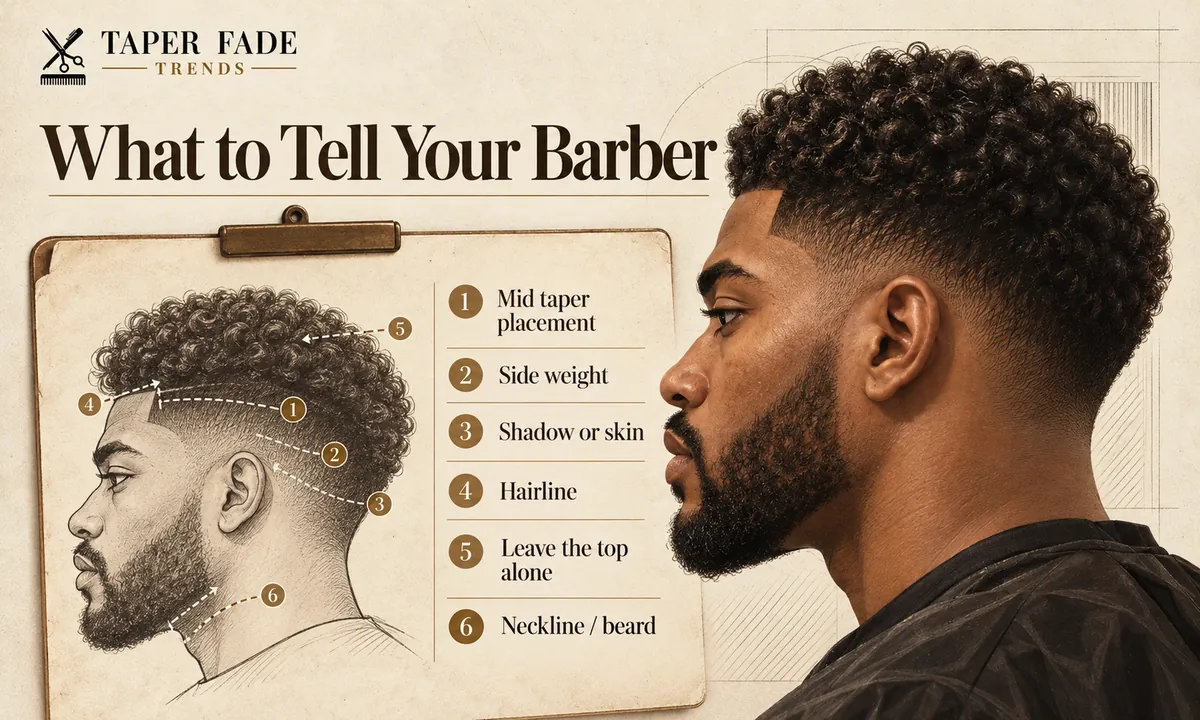
Ask for a mid taper fade at the sideburns, around the ears and at the nape, then give four specifics: how much side weight stays, shadow or skin, natural hairline or line-up, and what on top is off-limits. Show side and back photos. Name a guard number only if you know the barber’s clipper system. Adapt this script:
- “Mid taper, please. Start the blend where my photo shows, and keep it to the sideburns, ears and nape.”
- “Keep the sides [full / slightly narrowed / cut farther in]. Don’t go higher than this point.”
- “Shortest finish: [shadow / skin].”
- “Hairline: [natural, don’t push it back / a line-up that follows my hairline].”
- “Leave [the waves / my Afro shape / these locs or twists] untouched.”
- “Neckline [natural / tapered to match the sides], and [blend / don’t blend] the sideburns into my beard.”
Before the clippers start, ask the barber to point to where the blend will begin and compare it with your limit. If the cut comes out right, ask what was used and save front, side and back photos, so your next visit starts from a record. The full consultation method is in how to ask for a taper fade.
Style it, watch the grow-out, protect your skin
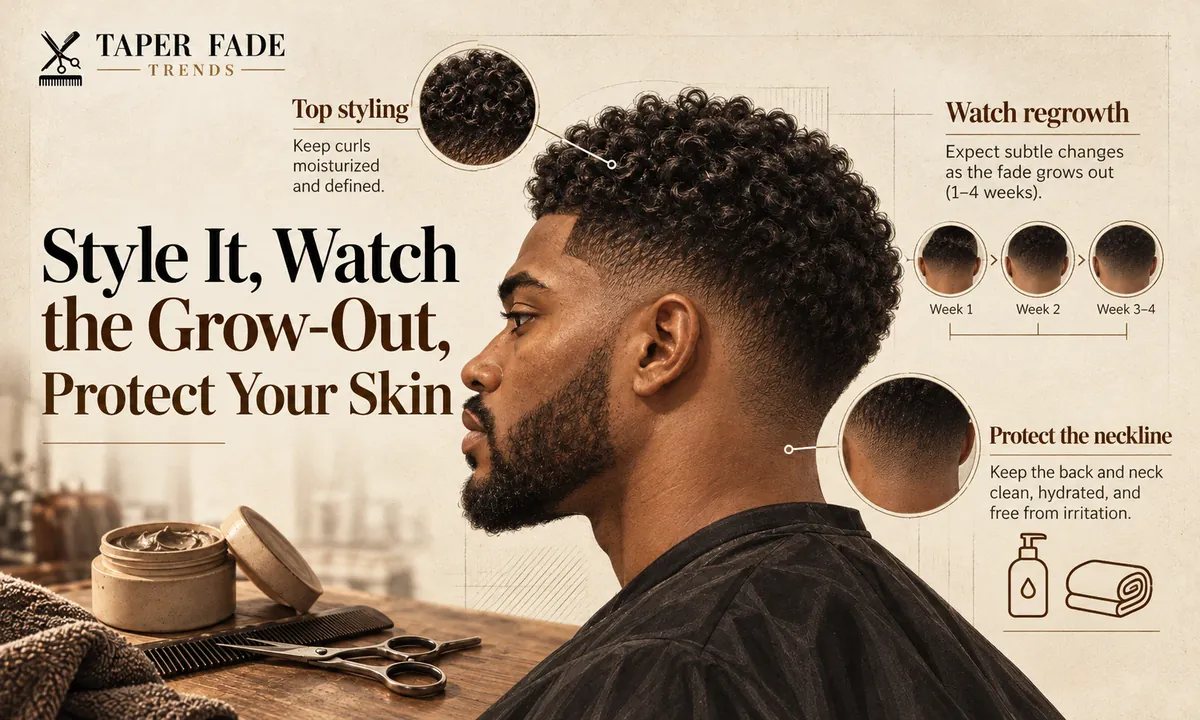
A mid taper fade splits upkeep in two. You style the top every day, and the barber refreshes the edges when they stop looking deliberate. A skin finish or a sharp line-up shows regrowth sooner than a shadow finish with a natural hairline, so the finish you choose sets most of the maintenance.
Styling the top of a mid taper
The taper needs no styling, so the daily work goes into the top and the shape you chose. On waves, that means a pattern that runs cleanly to the taper boundary. On coils or an Afro, it means holding the side weight you picked, and on locs or twists, keeping the sections above the boundary. This guide recommends no products or routine; ask whoever maintains your hair.
How often should you redo a mid taper?
No fixed interval fits every mid taper fade. Scalp hair grows about half an inch a month, roughly 1/8 inch a week, which is the length a Wahl #1 guard leaves. A skin finish shows that stubble within days, while a shadow finish changes less visibly. Refresh when the blend loses its start point, the sides grow past your outline, or the nape or line-up blurs.
| What changes the timing | Why |
|---|---|
| Shortest finish | Skin shows regrowth against bare scalp; a shadow finish already has hair at the base |
| Hairline | A line-up has a sharp edge to lose; a natural hairline has none |
| Neckline | A shaped nape shows regrowth sooner than a natural one |
| Growth rate and direction | Both vary by person and by area, so the crown, temples or nape can lose shape first |
Ask a barber who has cut your hair what to watch for on your head.
What if close cuts irritate the back of your neck?
If close cuts at the back of your neck leave bumps or itching, tell the barber before the neckline is touched and ask for a shadow finish there instead of skin. This guide cannot say whether any finish suits your skin, and a mid taper fade does not treat or prevent a skin condition. Bumps that keep coming back need a board-certified dermatologist.
When another cut is a better fit
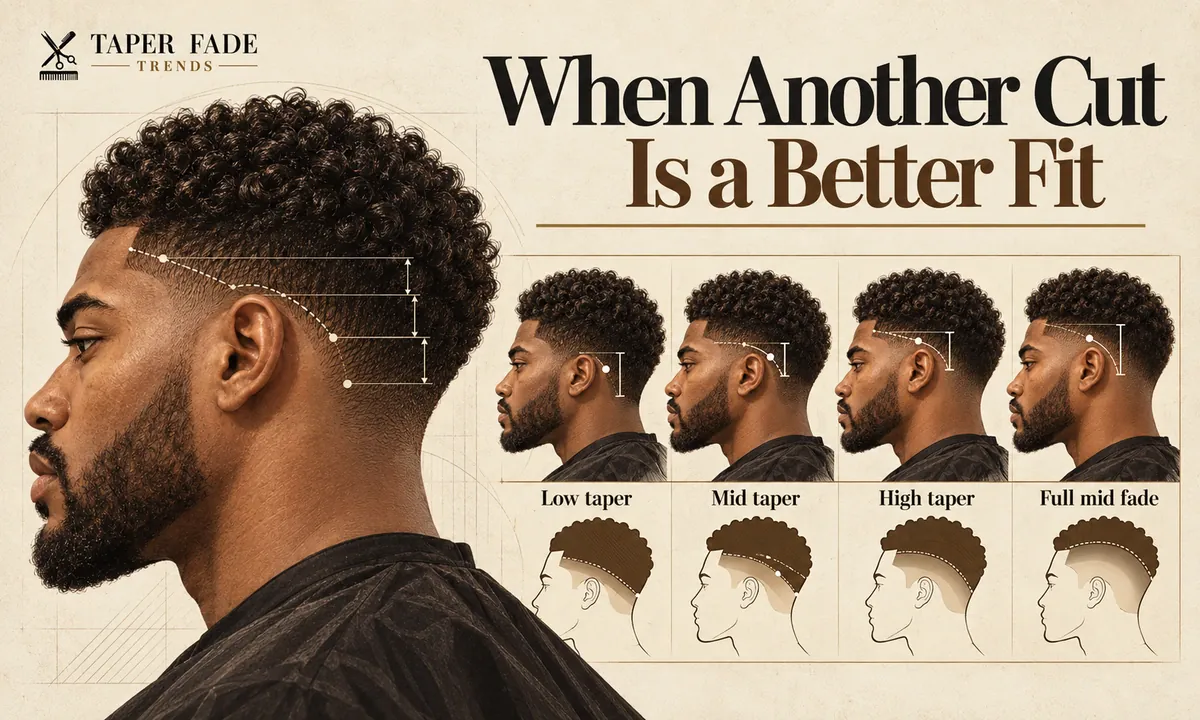
Choose a different cut when a mid taper fade’s coverage does not match the side shape you want. A low taper keeps more of the side and sits lower and quieter, while a full mid fade takes more of the side and back. Height alone does not decide between a taper and a fade; coverage and side weight do.
| Option | Where the short work sits | Side weight kept | Pick it when |
|---|---|---|---|
| Low taper fade | Sideburns and nape, below the temple | Most | You want the taper less visible and the sides full |
| Mid taper fade | Starts around the temple; sideburns, ears and nape | More than a full mid fade | You want a visible taper and a mostly intact side panel |
| High taper fade | Starts higher, at the temple corner | Less near the temples | You want more contrast set higher |
| Full mid fade | Most of the side and back | Less | You want the side to read as one fade |
For the same tops at other heights, see low taper fade for Black men and high taper fade for Black men. To compare the two lower heights directly, see low taper vs mid taper.
How this mid taper guide was researched
This guide draws on Taper Fade Trends’ own taper guides, published haircut guides compared for how they use the terms, American Academy of Dermatology pages on razor bumps and acne keloidalis nuchae, and MedlinePlus on hair growth. It contains no original cut records: no client photos, measurements or recorded guard settings.
Every image on this page is a labeled illustration that explains geometry; none shows a real haircut or a result. No barber has reviewed this version, and no guard lengths are given because none were recorded. Haircut vocabulary varies by shop, so terms are defined where they first appear.
Corrections follow the editorial policy.
Sources cited:
- American Academy of Dermatology, Razor bump remedies for men with darker skin tones
- American Academy of Dermatology, Acne keloidalis nuchae: Overview
- American Academy of Dermatology, Acne keloidalis nuchae: Causes
- American Academy of Dermatology, Acne keloidalis nuchae: Self-care
- MedlinePlus (National Library of Medicine), Hair problems

Where to go after choosing your mid taper
Take your four choices and your front, side and back photos to how to ask for a taper fade, and turn them into one short request before the appointment. If the height is still open, the taper fade guide compares low, mid and high placement from the front, side and back.
Keep reading
All guides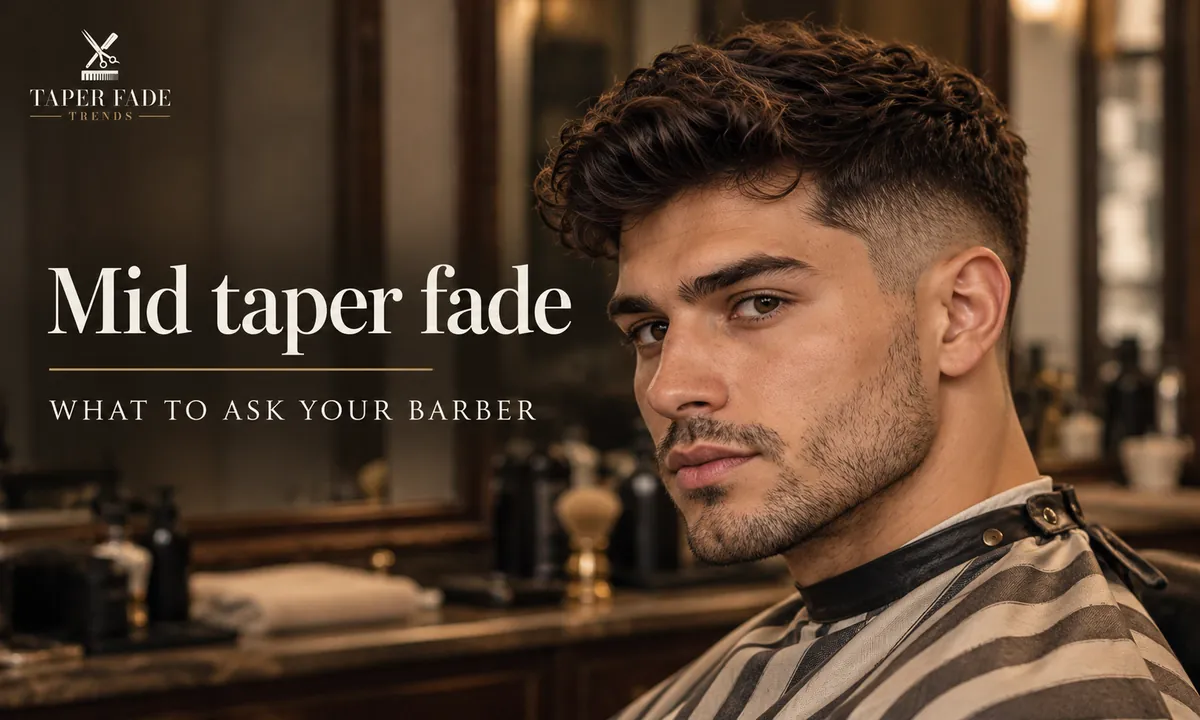
Mid taper fade: what it is and what to ask your barber
What a mid taper fade is, how it differs from a full mid fade, why skin is optional, and the four specs to give your barber before the cut starts.
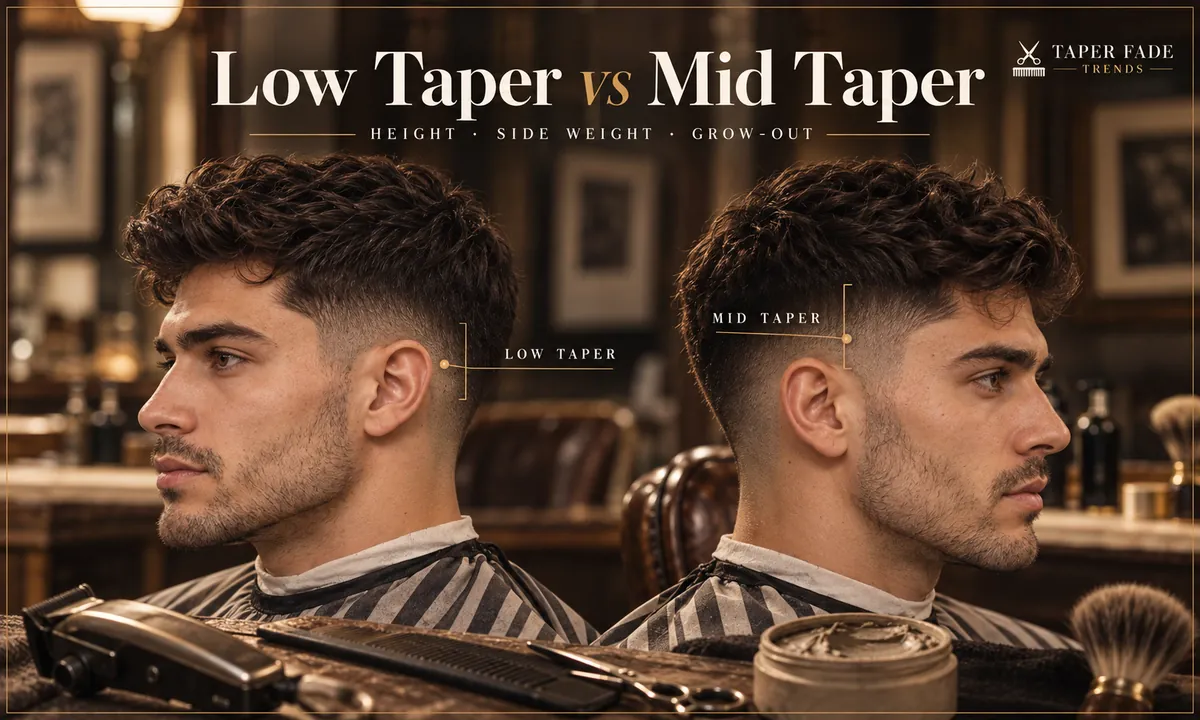
Low taper vs mid taper: what changes when only the height moves
Low taper vs mid taper compared on height, side weight, shortest finish and grow-out, why switching mid to low takes time, and what to tell your barber.
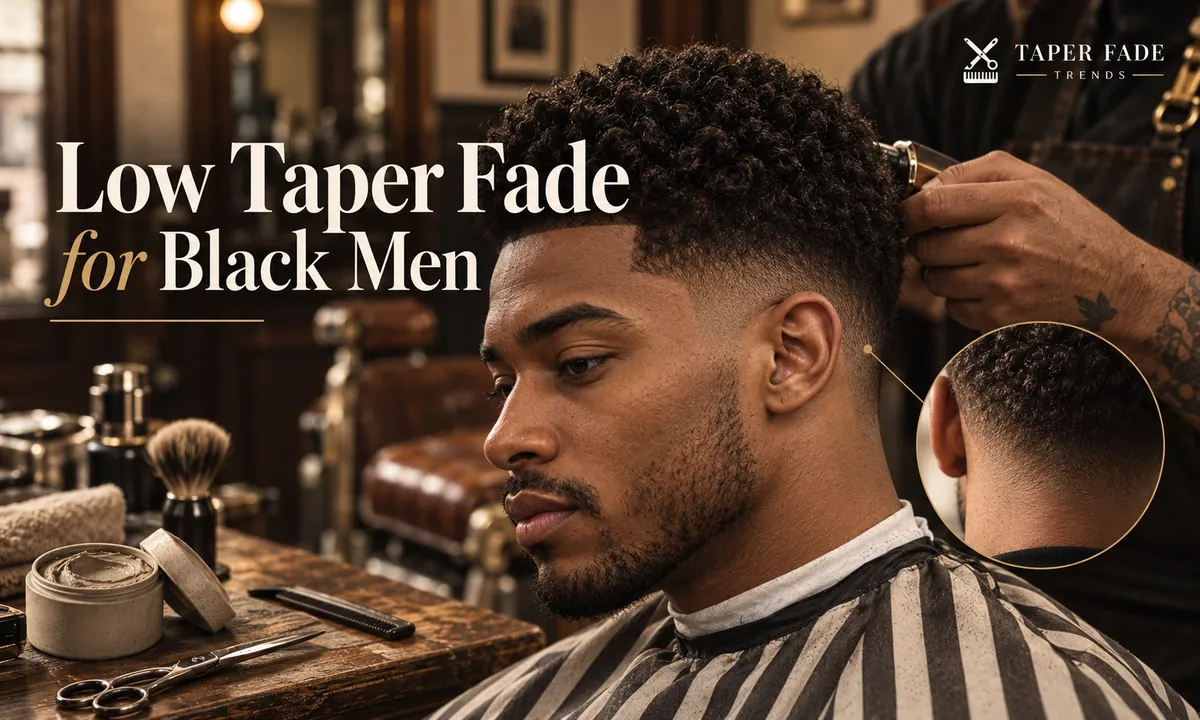
Low taper fade Black male guide: choose the top, hairline and nape
Low taper fade Black male guide: pick the top, hairline and nape, then use a five-point barber brief, with dermatologist advice on bumps at the nape.
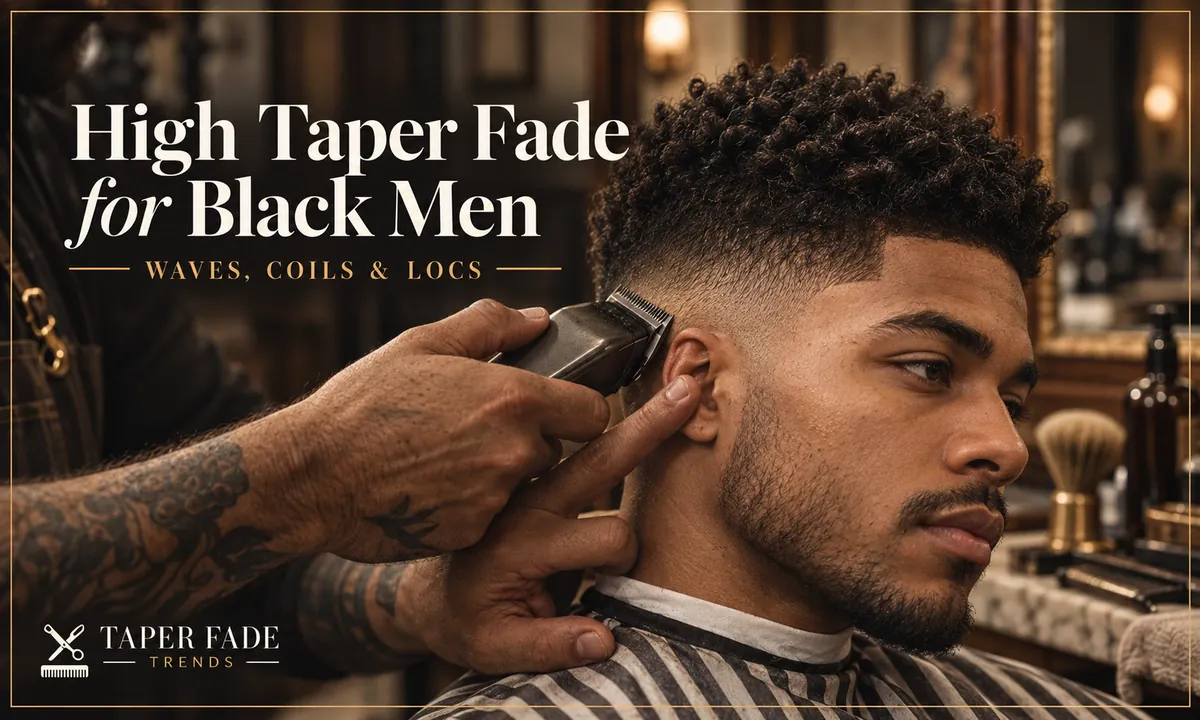
High taper fade Black male styles: waves, coils, twists and locs
High taper fade Black male guide: how it sits with waves, coils, twists and locs, skin vs. guard finishes, and a fill-in barber brief.
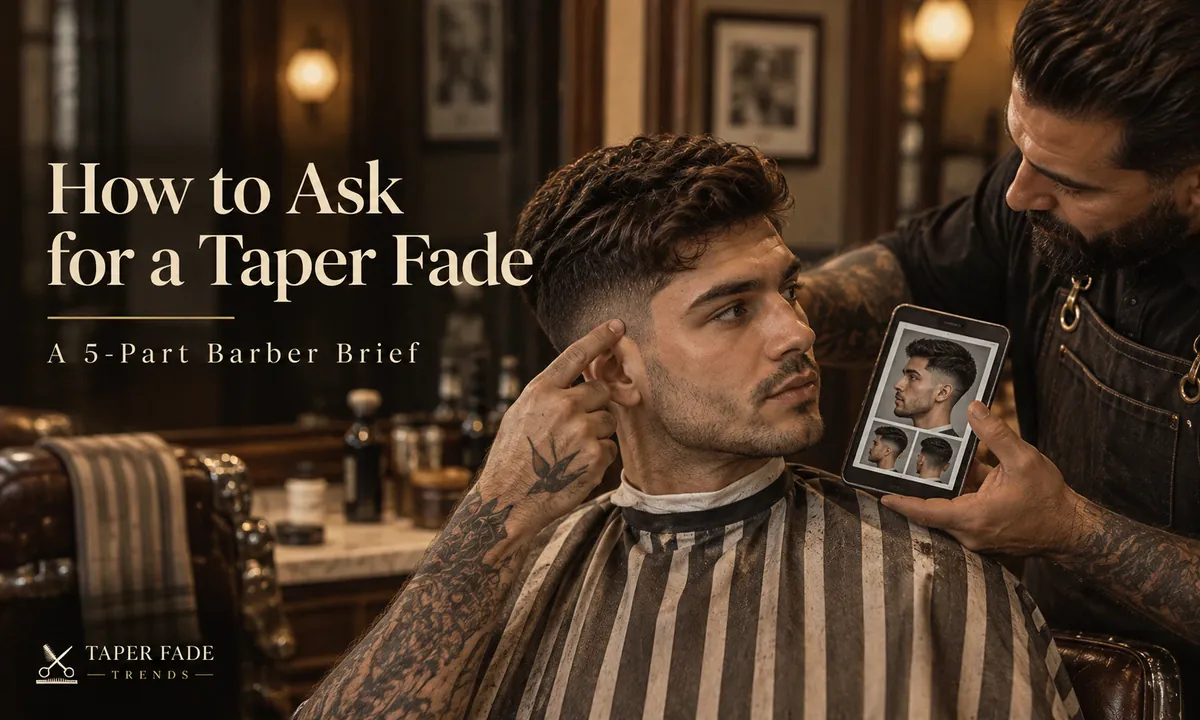
How to ask for a taper fade: a five-part barber brief
How to ask for a taper fade: say where it may reach, how short the base goes, how much side weight stays and what to do on top, then check the plan first.
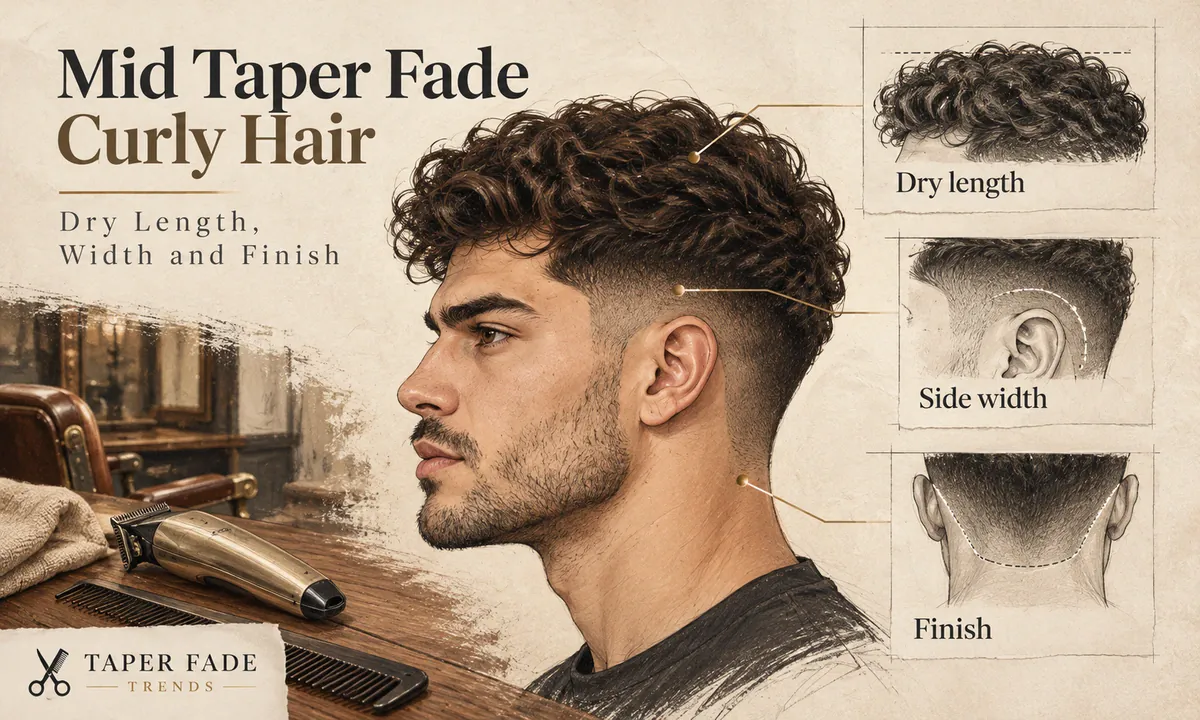
Mid taper fade curly hair: choose dry length, side width and finish
Mid taper fade curly hair guide: what it keeps vs a full mid fade, how to judge dry length and side width, and the four specs to give your barber.
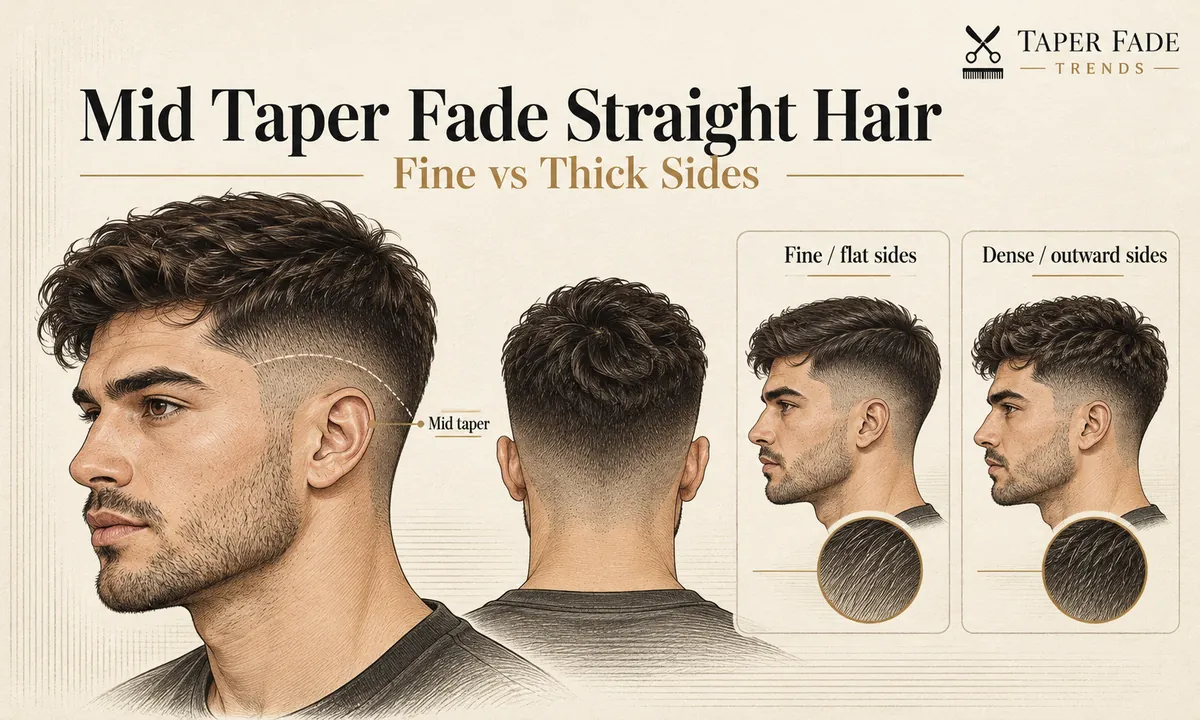
Mid taper fade straight hair: fine, flat and outward-growing sides
Mid taper fade straight hair guide: how much side weight to keep on fine or dense sides, why sides stick out after a cut, and what to tell your barber.
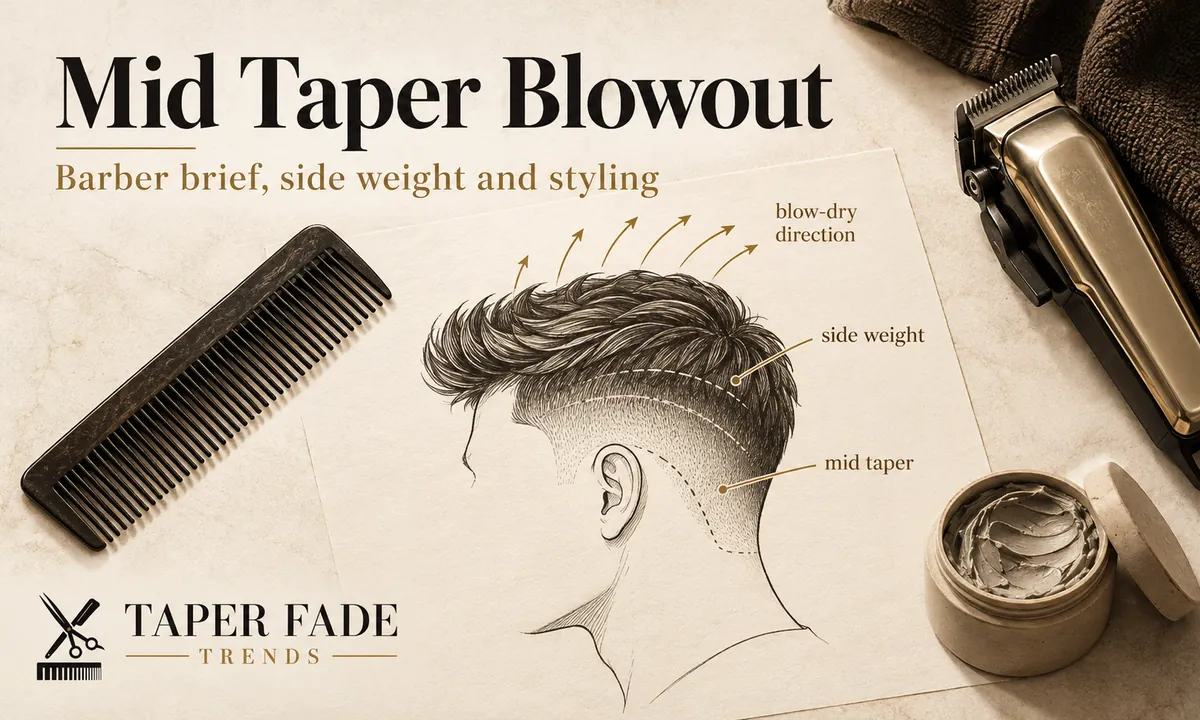
Mid taper blowout: keep volume without flattening the sides
A mid taper blowout is a temple-height taper plus enough top and upper-side length to dry up and out. What to tell your barber and how to style it.
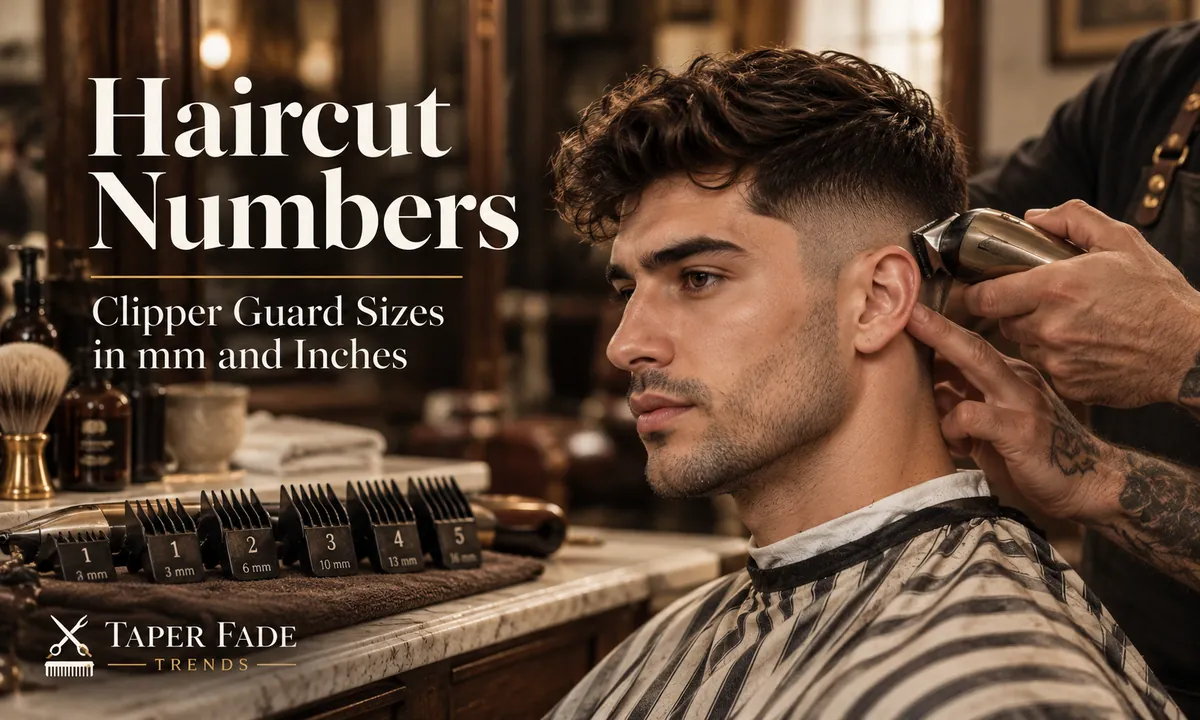
Haircut numbers: clipper guard sizes in millimeters and inches
Haircut numbers in mm and inches, checked against Wahl, Andis and Oster specs, plus why #0 isn’t always no guard and what to tell your barber.
More in mid taper fades
Mid taper fades: all 6- Mid taper fade: what it is and what to ask your barber12 min
- Mid taper blowout: keep volume without flattening the sides11 min
- Mid taper fade curly hair: choose dry length, side width and finish9 min
- Mid taper fade straight hair: fine, flat and outward-growing sides11 min
- Mid taper fade Black male guide: what stays and what to ask forYou are here
- Low taper vs mid taper: what changes when only the height moves10 min