Mid taper fade: what it is and what to ask your barber
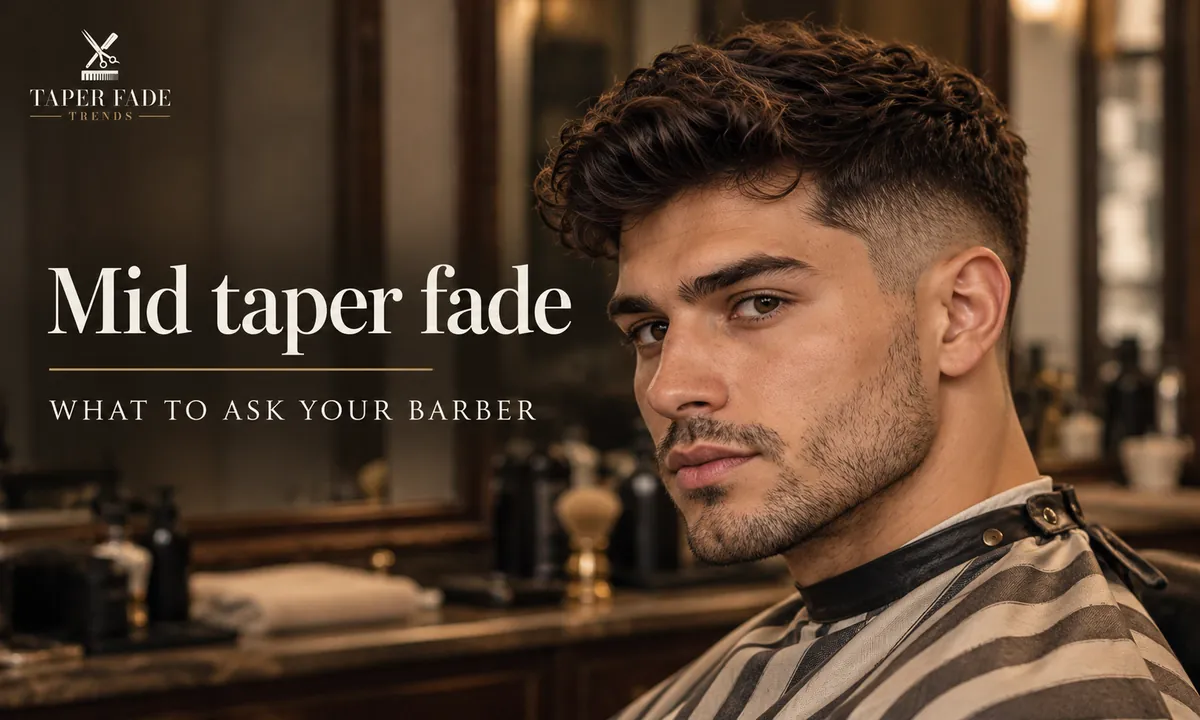
A mid taper fade starts shortening the sides at about temple height and keeps the shortest work to the sideburns, the hair around the ears and the nape, so the side panel keeps more hair than a full mid fade. It can finish at bare skin or stop at a shadow. That part is your call.
| Specification | What to decide |
|---|---|
| Placement | Where the blend starts, usually around the temple. A zone you point to, not a fixed measurement. |
| Coverage | How far the blend travels. For a mid taper fade: sideburns, ear perimeter and nape. |
| Shortest finish | Shadow, stubble or skin. Chosen separately from placement. |
| Side-panel weight | How much hair stays above and behind the ear. More than a full mid fade keeps. |
| Top length and style | A separate decision. The taper doesn’t set it. |
| Neckline and hairline | Natural or lined up. A style choice, not part of the definition. |
| Guard or tool setting | Only meaningful inside one clipper system. Leave it to the barber unless you know the tools. |
| Upkeep | No universal interval. Rebook when the edges stop looking deliberate. |
What a mid taper fade actually is
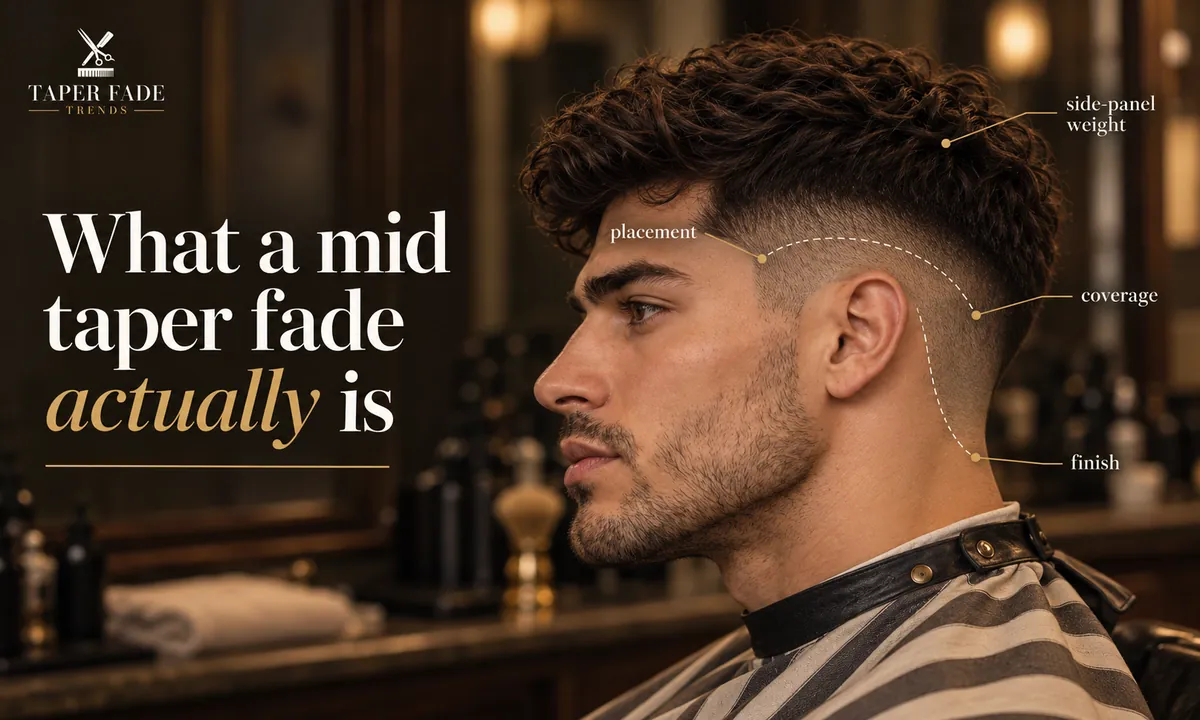
A mid taper fade is a localized taper that begins around temple height and does its shortest work at the sideburns, ear perimeter and nape. Compared with a full mid fade, it leaves more hair on the side panel. The name says nothing about skin, so the shortest finish has to be requested on its own.
That is the working definition this guide uses, and it lines up with how several barbershops describe a taper. CREATO Barbers says shops commonly use “taper fade” for a light fade confined to the temple, sideburn and neckline area, and Wolf’s Head describes a taper as leaving length at the sideburns and neckline where a fade goes short. Not every shop agrees. Rush describes its mid taper fade as beginning halfway down the sides and back and blending into the neckline, which is closer to what this guide calls a mid fade. Two shops, one name, two different haircuts. That gap is the reason for everything below.
The four specifications that define it
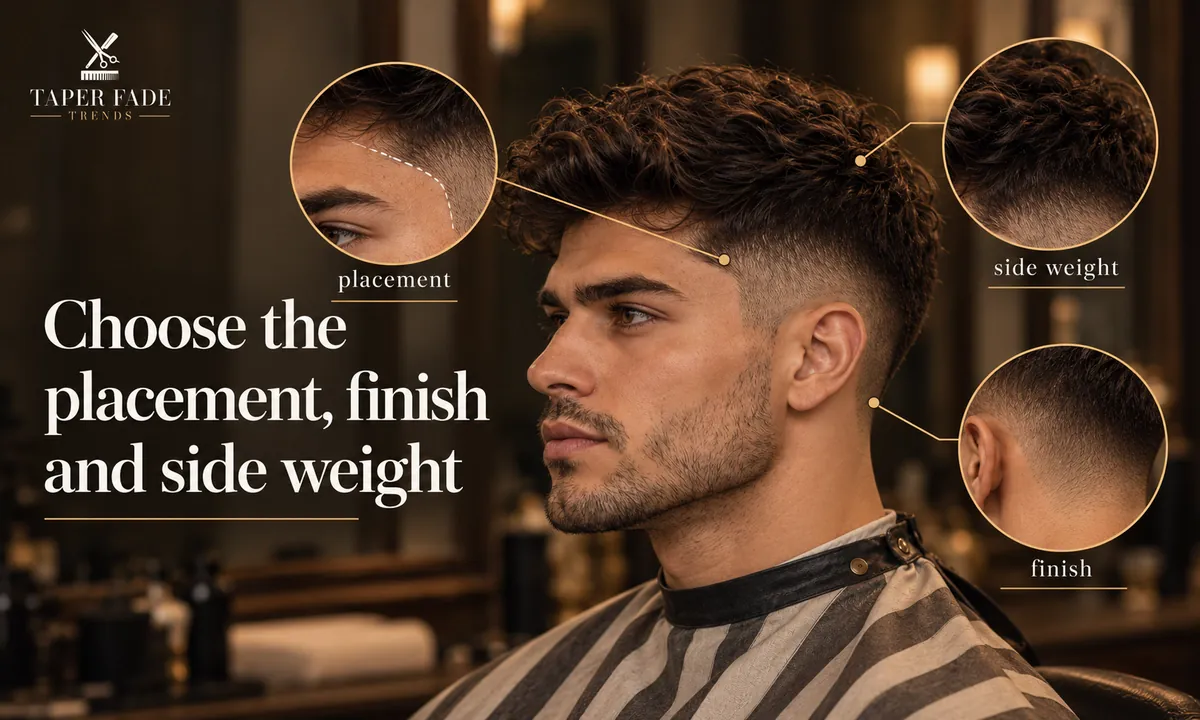
Four settings turn “mid taper fade” into an order a barber can follow: placement, coverage, shortest finish and side-panel weight. Say all four and there is little left to interpret.
- Placement is where the blend starts.
- Coverage is how far it travels. A mid taper fade stays at the sideburns, ear perimeter and nape instead of running across the whole side.
- Shortest finish is how short the bottom gets, from a soft shadow to bare skin.
- Side-panel weight is how much hair stays above and behind the ear. It is the setting that keeps a mid taper fade from turning into a mid fade.
“Mid” is a placement zone, not a measurement. Barbershops such as Best Fort Worth Barber put the start of a mid taper around temple level, while Laifen’s fade guide puts it at eyebrow level. Point to the line on your own head instead of trusting the word to carry it.
No clipper guard number defines a mid taper fade. A guard number is a cutting length inside one maker’s system: Wahl’s guard-size chart lists its #1/2 at 1/16 inch, and Wahl UK notes other brands may size guards differently. If you don’t know the clipper, describe the finish instead.
Wahl system only. Wahl describes it as the shortest guard short of going bald; other brands number their guards differently.
Mid taper fade vs mid fade
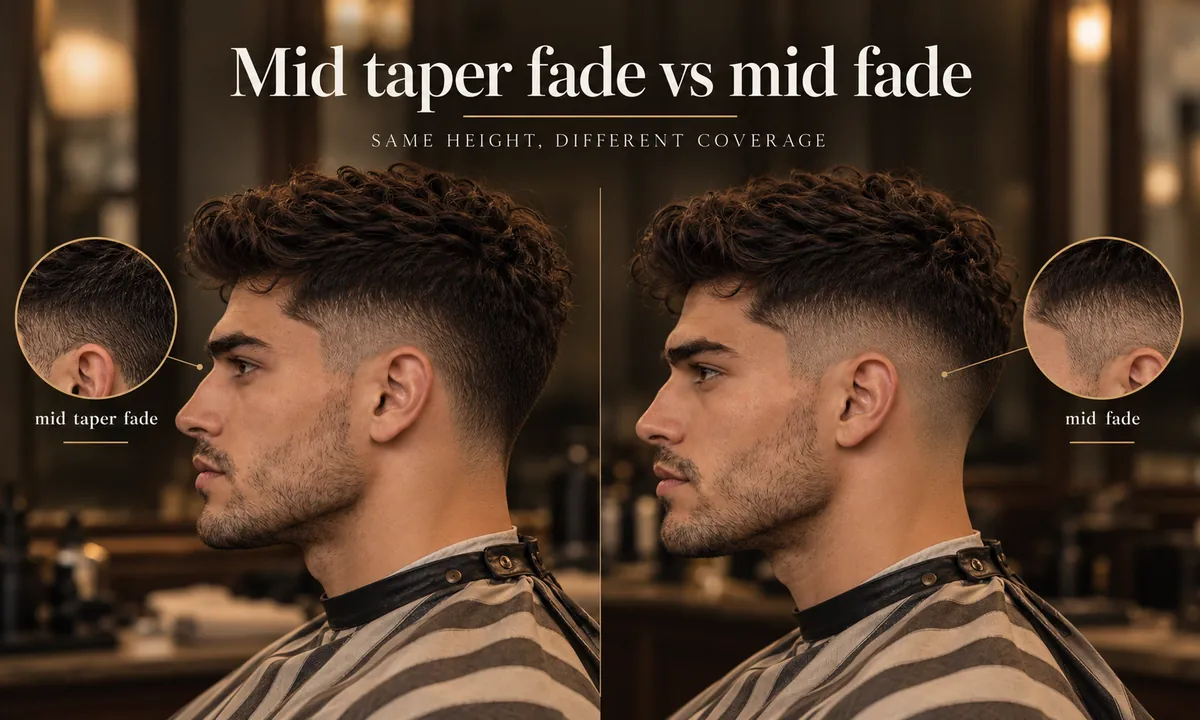
A mid taper fade and a mid fade can start at about the same height, but they take off different amounts of hair. The mid taper keeps its shortest blend near the sideburns, ears and nape and leaves the side panel fuller. A mid fade graduates across most of the sides and back, so the contrast is stronger.
| Attribute | Mid taper fade | Mid fade |
|---|---|---|
| Placement | Starts around the temple | Also starts around mid-head height |
| Coverage | Sideburns, ear perimeter and nape | Continuous across most of the sides and back |
| Side-panel weight | More hair kept above and behind the ear | Less kept; the side reads as one fade |
| Contrast | Softer, held at the edges | Stronger, visible across the whole side |
| Shortest finish | Shadow, stubble or skin, chosen separately | Shadow, stubble or skin, chosen separately |
Same height, different coverage
No fixed amount of side-panel weight defines a mid taper fade. The useful test is comparative: enough hair stays above and behind the ear that the side still reads as hair rather than one continuous fade. A precise length only means something when it is measured on a real cut, and this guide has no measured cut to report.
In practice, that means two customers can ask for a taper that starts at the same point and walk out looking different. The barber who carries the blend further back and higher across the side has cut a mid fade, whatever the ticket said.
Skin is a finish, not the definition
A mid taper fade does not have to reach skin. Placement, coverage and the shortest finish are three separate choices. Ask for a shadow, or name a shortest length, if you want visible hair at the base. Ask for skin only if you want the lowest part taken to bare scalp.
A skin finish takes the shortest part to bare scalp. A shadow finish leaves visible hair there. Published guides split on this: some say a taper never reaches skin, others show mid tapers blended into it. Both finishes can sit on the same placement and coverage, which is why the finish needs its own sentence in your request.
Two mid taper fade specification patterns
The two patterns below keep the same placement and the same top, then change only the finish and the side-panel weight. They are labeled illustrations built from the specification fields, not photographs of a real haircut. No documented cut record was available for this guide.
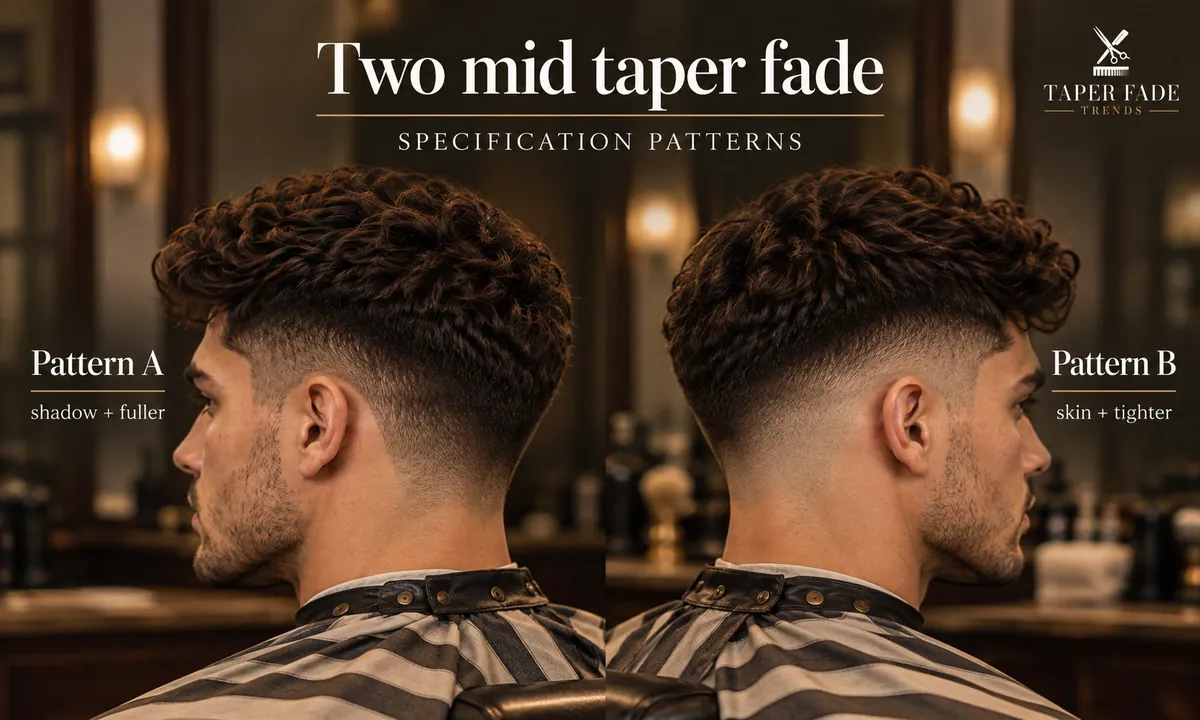
Pattern A
A shadow finish with a fuller side panel. The taper reads as a soft blend rather than a line.
| Field | Pattern A |
|---|---|
| Placement | Around mid-temple height |
| Coverage | Sideburns, ear perimeter and nape |
| Shortest finish | Shadow; visible hair at the base |
| Side-panel weight | Fuller; more length above and behind the ear |
| Top | Medium, textured; same in both patterns (illustrated, not measured) |
| Neckline | Natural |
| Guard or tool | Unknown; illustrated pattern, not a recorded cut |
Pattern B
Same top and placement as Pattern A, with a skin finish and a tighter side panel. Contrast at the perimeter goes up.
| Field | Pattern B |
|---|---|
| Placement | Around mid-temple height (same as A) |
| Coverage | Sideburns, ear perimeter and nape (same as A) |
| Shortest finish | Skin; bare scalp at the base |
| Side-panel weight | Tighter; less length above and behind the ear |
| Top | Same as Pattern A (illustrated, not measured) |
| Neckline | Lined up |
| Guard or tool | Unknown; illustrated pattern, not a recorded cut |
Put the two side by side and the lesson is plain. The top didn’t change and the start line didn’t move, yet the two heads read as different haircuts.
Choose the placement, finish and side weight
Three questions settle most mid taper fade choices: how much contrast you want at the edges, how much bulk you want to keep above the ear, and how soon you’re willing to go back. Answer those before you name a top style.
| Combination | How it reads | What shows first as it grows | Suits someone who wants |
|---|---|---|---|
| Shadow finish, fuller side panel | Soft, gradual blend | Least visible change at the base | A low-contrast cut that grows out gently |
| Skin finish, tighter side panel | Sharp contrast at the edges | Regrowth at the base, early | A defined, high-contrast look |
| Shadow finish, tighter side panel | Soft base, less bulk | The outline before the base | Less bulk without bare skin |
| Skin finish, fuller side panel | Sharp base, bulk kept higher | The base; the side panel changes less | Sharp edges without thinning the sides |
The “what shows first” column follows a common barbershop observation that sharper fades show regrowth faster. How soon depends on your hair.
Hair texture and density
Hair texture and density change how visible a mid taper fade’s blend looks and how much bulk the sides can hold, but they don’t change what the cut is. Straight hair tends to show the blend line more plainly, while curls and coils tend to soften it. Growth direction and cowlicks decide where the barber has to adjust the blend. For waves, coils, an Afro, twists or locs, the mid taper fade for Black men guide covers what the taper has to leave alone. For naturally wavy hair, the mid taper fade wavy hair guide covers side weight and the dry top shape.
Fine or thin hair shows more scalp at the same length, so a skin finish can look more exposed than the reference photo suggested. That is a reason to ask the barber to check your hair dry before setting the shortest length.
Top length and styling commitment
The top style is the length and shape worn above the taper, chosen separately from the taper itself. It decides most of your daily styling time.
- A short, cropped top needs little more than a quick pass with fingers and a small amount of product.
- A medium, textured top takes a few minutes of product and direction and works with either finish.
- A longer top with volume or a part takes the most daily work, and the barber has to keep its shape in proportion with the taper line.
Blowouts, middle parts and curl-forward tops all sit on the same taper; the taper settings above don’t change for them.
What to tell your barber
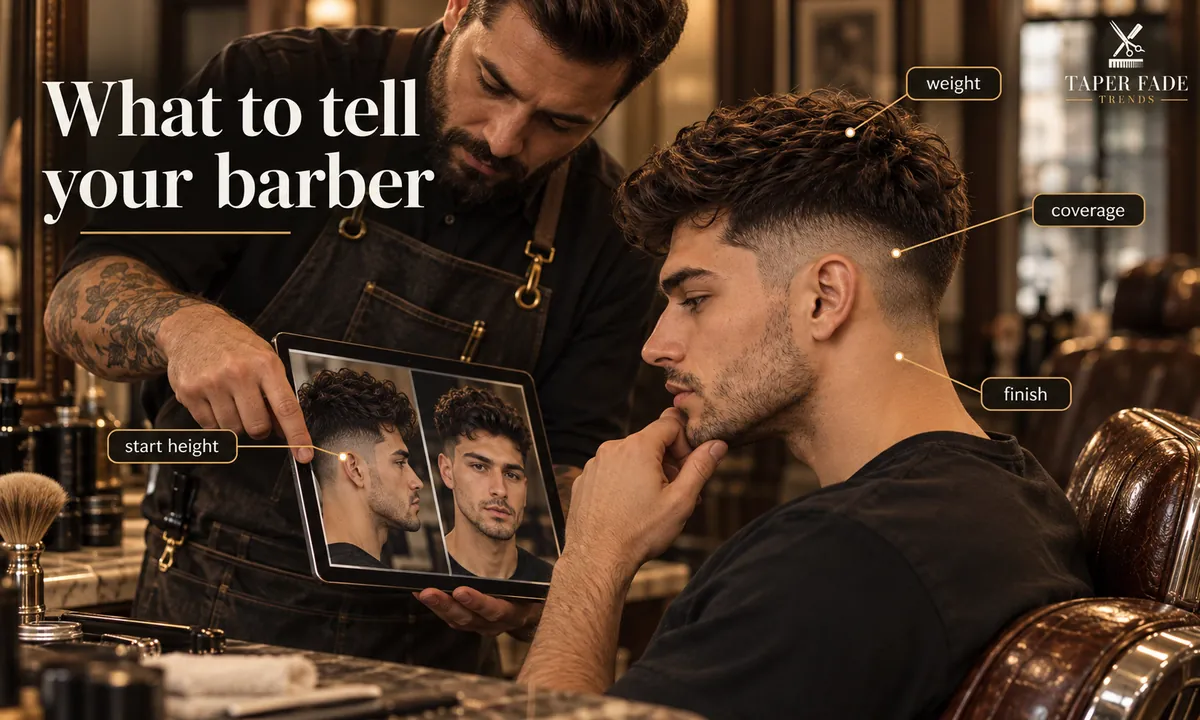
Tell your barber four things before you name a top style: where the mid taper fade should start, how far the blend should travel, the shortest finish you’ll accept and how much side-panel weight to keep. Then give the top length and direction, and show front, side and back photos that match.
A reusable barber brief
Say something close to this and fill in the brackets:
- “Start the taper around [temple height / a little higher / a little lower].”
- “Keep the blend to my sideburns, around the ears and the nape. Don’t carry it across the whole side.”
- “Take the shortest point to [a soft shadow / skin].”
- “Leave [more / less] weight on the side panel so it doesn’t turn into a full mid fade.”
- “On top, [length and direction].”
- “Neckline [natural / lined up].”
Skip the guard number unless you know the barber’s clipper system. The finish you describe is the target; the tool that hits it is the barber’s decision.
Reference photos to bring
Bring at least a side profile and a back view of a mid taper fade, plus a front or three-quarter view if the top shape matters. The side shows start height and retained weight, the back shows the nape, and the front shows the hairline and silhouette. Point at specific details rather than asking for a copy.
Take both profiles if you can, because the left and right of a head don’t always match. StyleSeat’s taper vs fade guide makes the same case for photos from the other side of the chair: “taper fade” started as a mix-up between two terms, so a barber may default to a plain taper unless you show what you mean.
Styling and upkeep
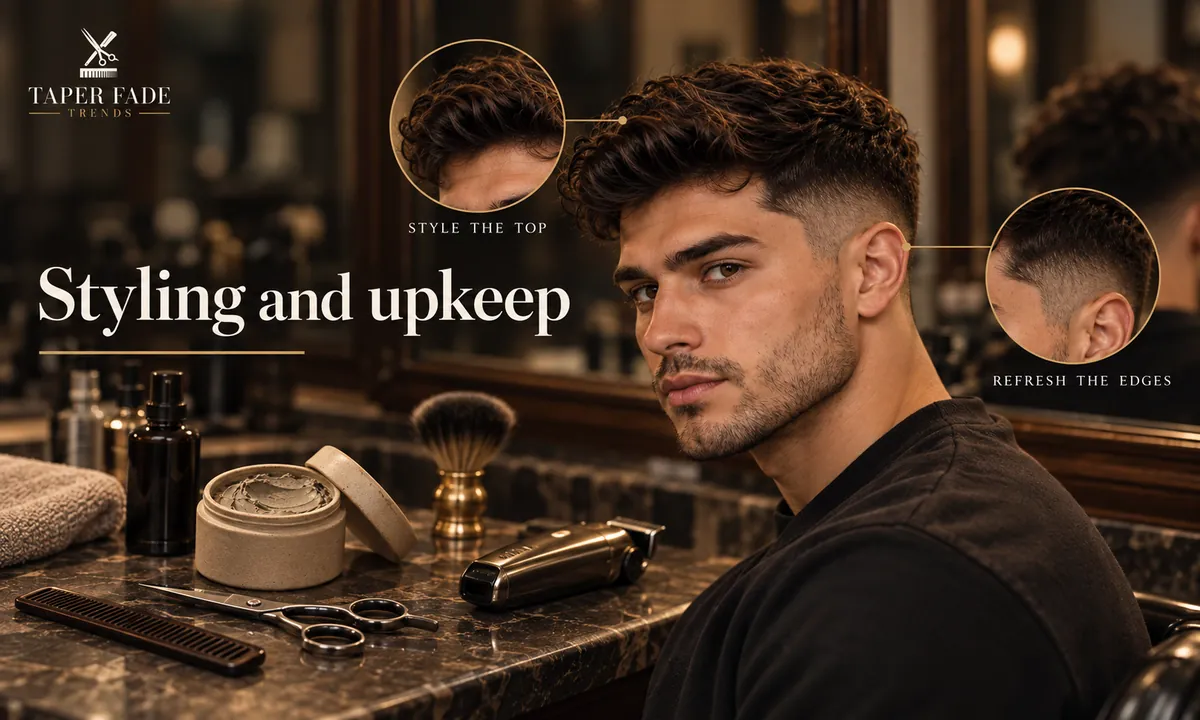
A mid taper fade needs two kinds of care on two schedules. You style the top every day. The barber maintains the taper at the edges, and a skin finish or a sharp neckline shows regrowth sooner than a shadow with a soft outline.
Style the top, not the taper
Nothing you do at the mirror changes the taper, so daily effort goes into the top. A short top usually needs a little product worked through with fingers. A longer top holds its shape better when it is directed with a comb or brush while damp than when it is left to air-dry. Curly and coily tops respond to routines built around defining the curl, which is a subject of its own.
When the cut needs a refresh
No evidence-backed rebooking interval fits every mid taper fade. Published guides give fixed ranges that disagree, from about two weeks to five. A better trigger is visual: rebook when the sideburn or nape no longer looks deliberately tapered, then note how many weeks that took so you know your own cycle.
Faster growth, a skin finish and a lined-up neckline all bring that point forward. Slower growth, a shadow and a natural outline push it back.
Limits, alternatives and next steps
A mid taper fade is the wrong order if you want broader coverage, a different start height or a softer transition overall. Pick one of the alternatives below instead.
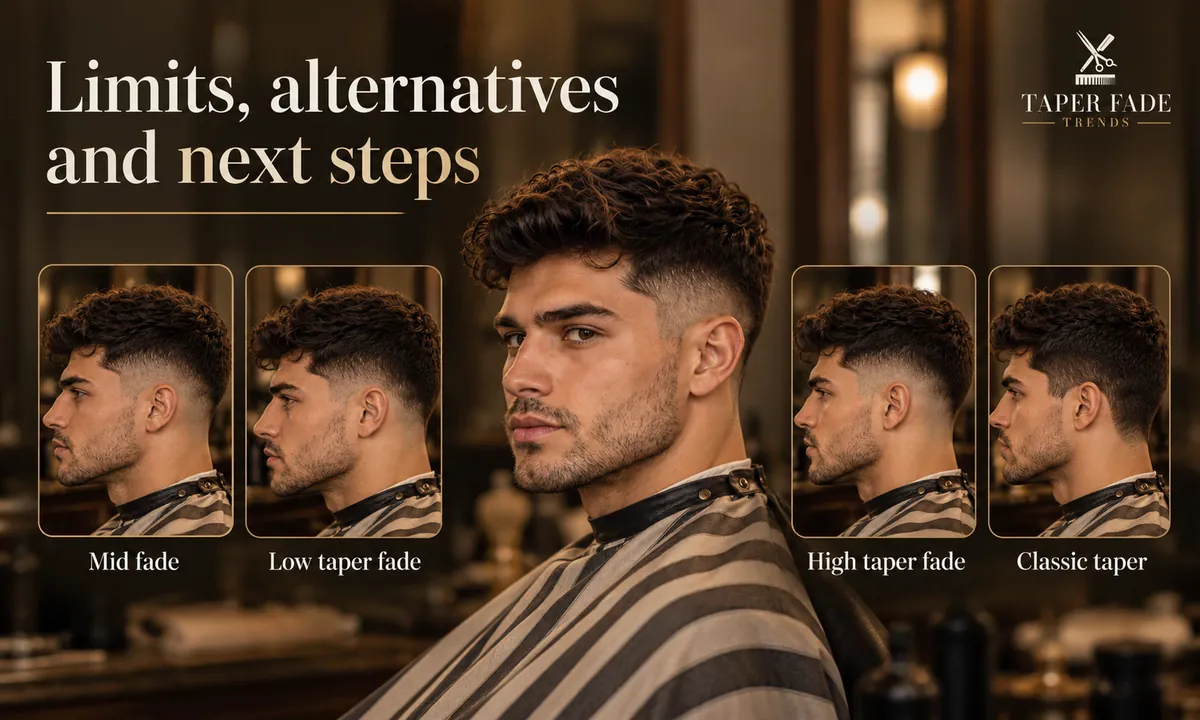
| Alternative | What it changes | Choose it when |
|---|---|---|
| Mid fade | Graduates across most of the sides and back | You want stronger contrast and less side-panel weight |
| Low taper fade | Moves the start down toward the ear | You want a quieter, less visible taper |
| High taper fade | Moves the start above the temple | You want more contrast set higher |
| Classic taper | Shortens gradually without fade-level contrast | You want a soft, conservative finish throughout |
One skin note before you ask for skin at the nape. The American Academy of Dermatology lists frequent close-shave haircuts among the things that irritate the back of the neck in acne keloidalis nuchae (AKN), a condition of inflamed follicles on the nape and scalp. Its self-care advice for people with AKN is to avoid haircuts that shave the back of the neck. If that applies to you, a shadow finish at the nape is the safer request, and a dermatologist is the right person to ask about the skin itself.
If you wear a beard, ask for the sideburn and beard line to be planned in the same visit so the two meet cleanly. For a top clipped short all over, the mid taper fade buzz cut guide compares Wahl #1, #2 and #3 tops over the same taper.
When a full mid fade fits the goal better
A full mid fade fits better when you want less weight on the side panel and a graduation that runs across the side and back rather than stopping at the edges. Start height doesn’t decide between the two cuts, since both can begin at the same point. Coverage and side-panel weight do.
What a photo cannot prove
Use photos to show the result you want. The settings that get there are the barber’s to choose and confirm.
Method and sources
This guide checked the working definitions against current barbershop explainers and haircut guides, because no single standard fixes what “mid” or “taper” means from shop to shop. Where sources disagree, the disagreement is stated rather than settled by picking a side. Guard lengths come from the manufacturer, and the skin note comes from the American Academy of Dermatology.

The patterns and diagrams on this page are AI-generated illustrations, labeled as such. They explain geometry; they are not photographs of a real haircut. No measured cut record, grow-out log or barber review is claimed. The page is written and maintained by the Taper Fade Trends editorial team.
Sources cited in this guide:
- Wahl USA: Ultimate Guide to Hair Clipper Guard Sizes
- Wahl USA: #1/2 (1/16 in) clipper guide comb
- Wahl UK: Understanding clipper cutting lengths
- American Academy of Dermatology: Acne keloidalis nuchae, causes
- American Academy of Dermatology: Acne keloidalis nuchae, self-care
- StyleSeat: Taper vs. fade
- CREATO Barbers: Taper or fade
- Wolf’s Head: Taper vs fade vs blend
- Best Fort Worth Barber: Low, mid and high taper fade
- Laifen: Low, mid, high and burst taper fade guide
- Rush: Mid taper fade haircuts
Keep reading
All guides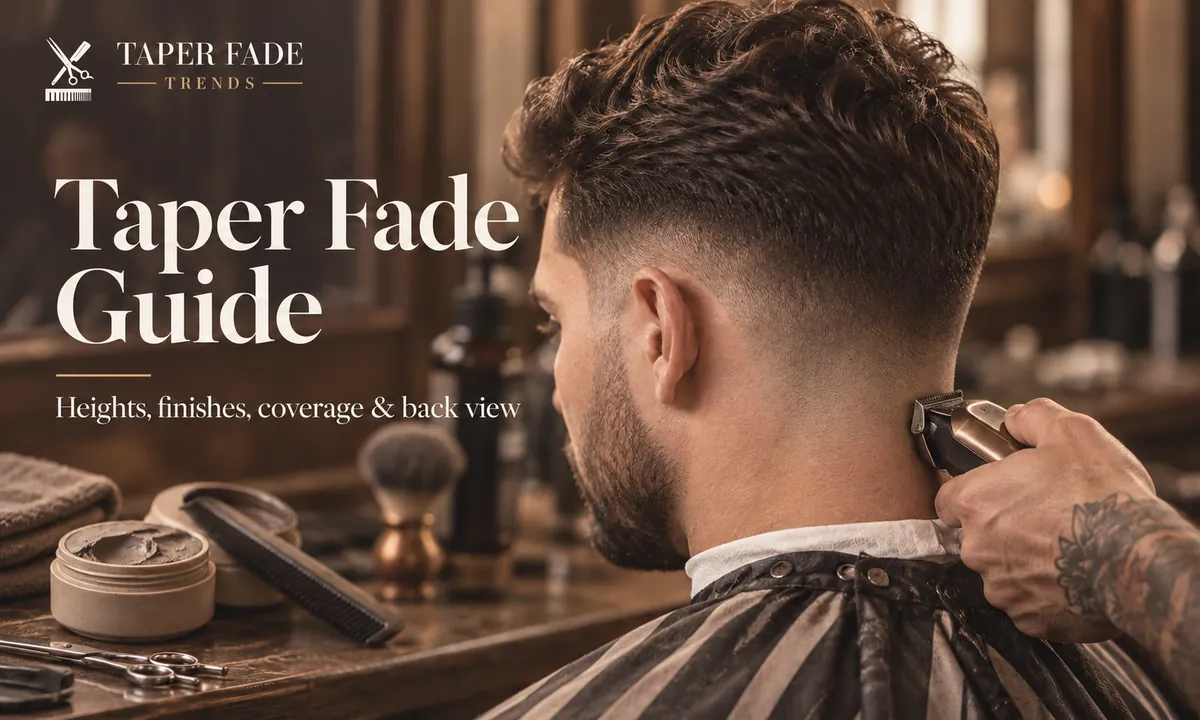
Taper fade: a visual guide to heights, finishes and top styles
Where a taper fade sits from the front, side and back, how low, mid and high differ, and how to ask for side coverage and a finish with or without skin.
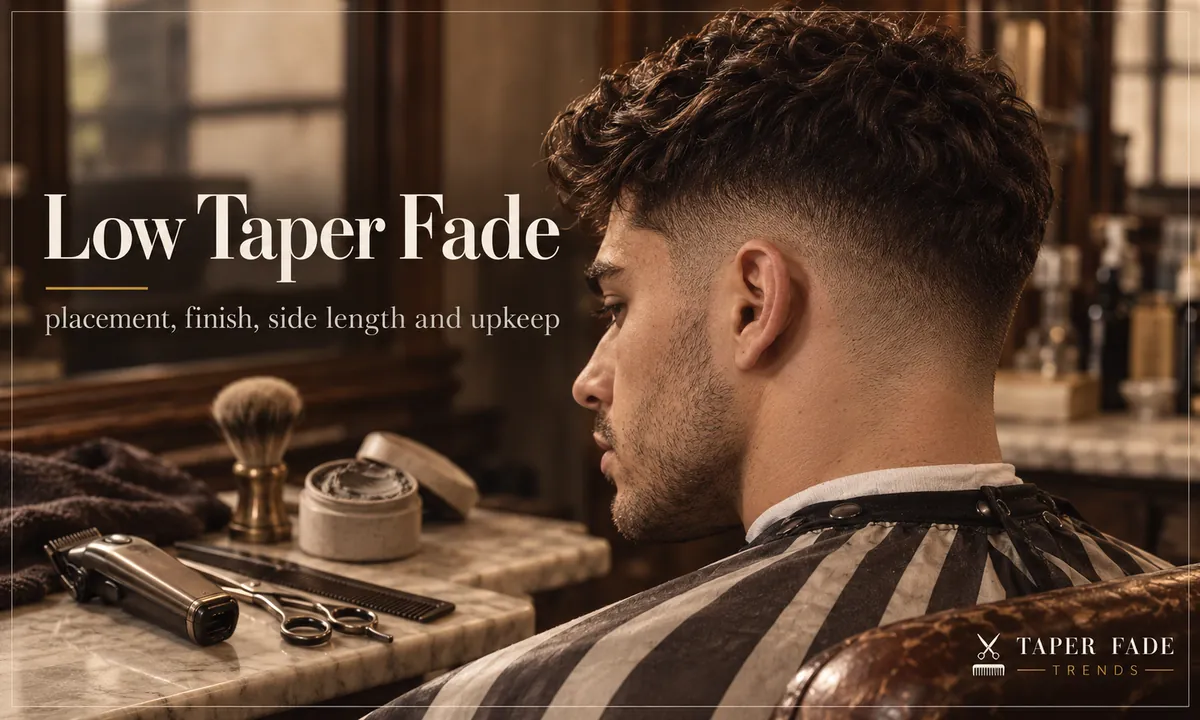
Low taper fade: placement, finish, side length and upkeep
A low taper fade shortens the sideburns and nape and keeps the sides full. See the four choices to make, whether it can go to skin, and what to say.
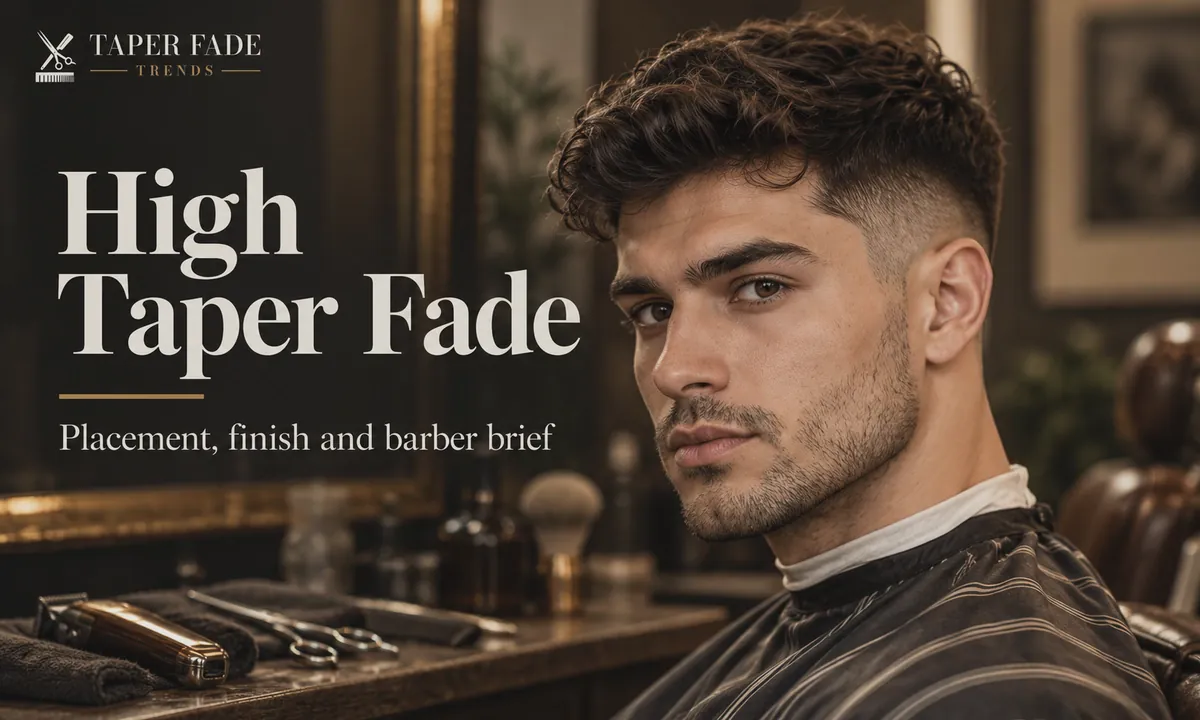
High taper fade: placement, finish and barber brief
Where a high taper fade sits, how much side weight stays, skin vs shadow finishes, what the back should look like, and exactly what to tell your barber.
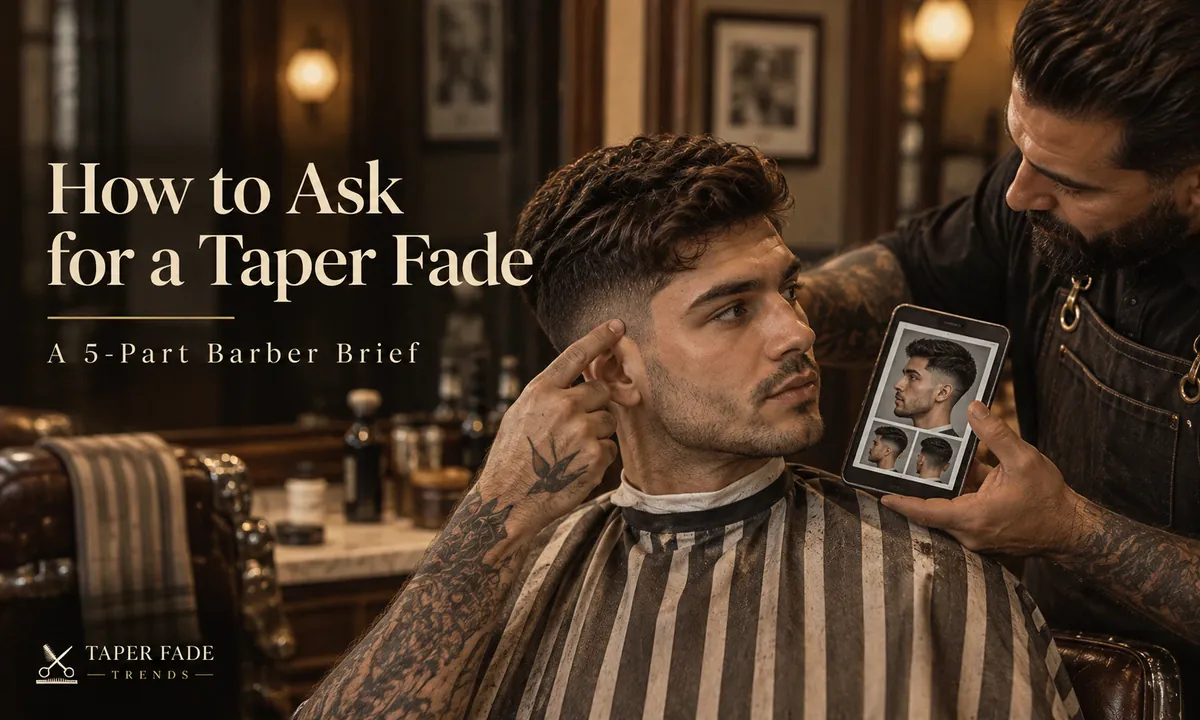
How to ask for a taper fade: a five-part barber brief
How to ask for a taper fade: say where it may reach, how short the base goes, how much side weight stays and what to do on top, then check the plan first.
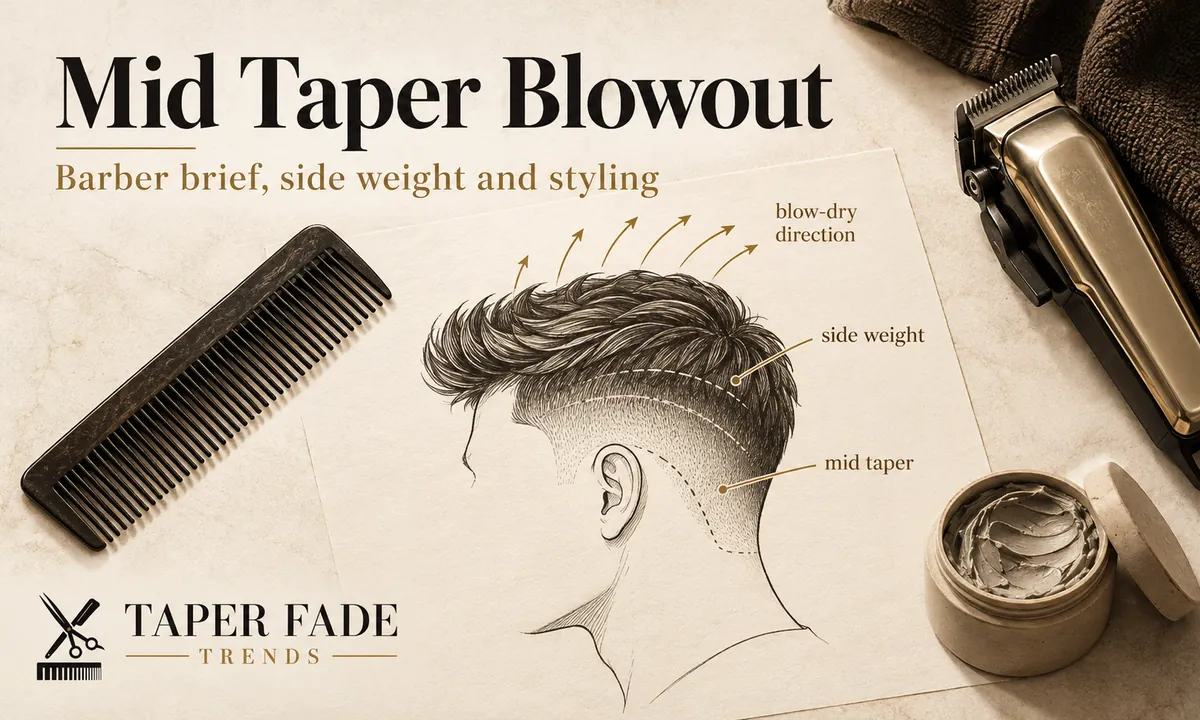
Mid taper blowout: keep volume without flattening the sides
A mid taper blowout is a temple-height taper plus enough top and upper-side length to dry up and out. What to tell your barber and how to style it.
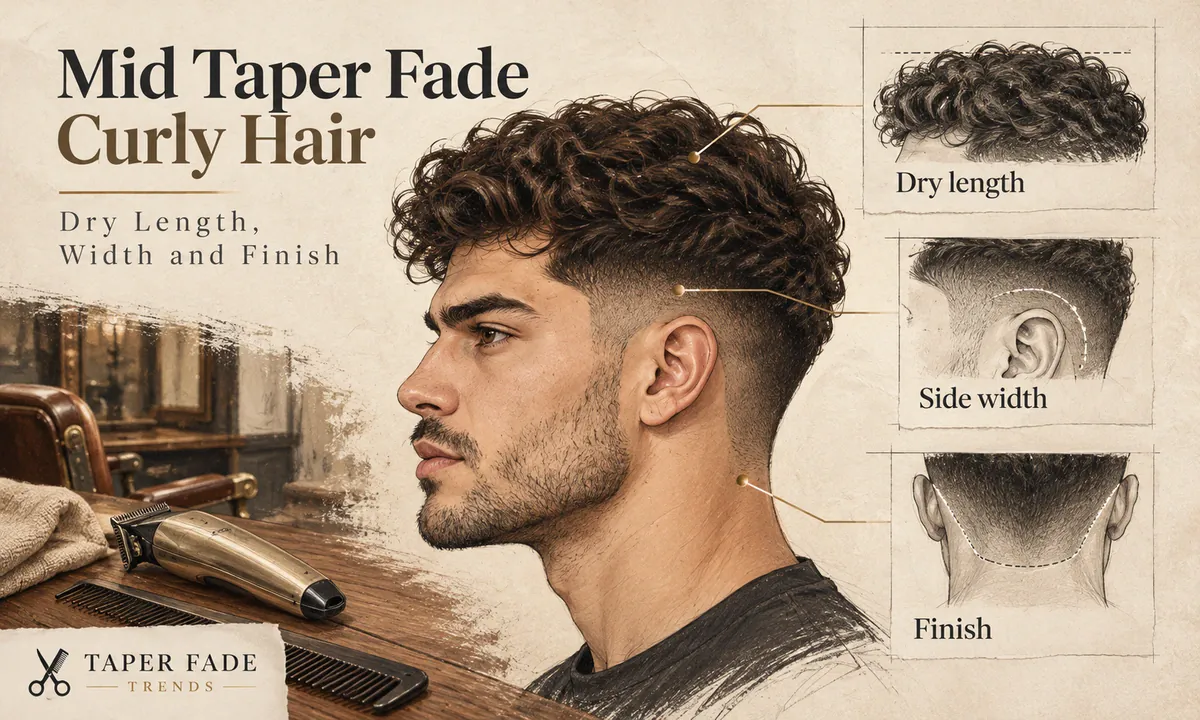
Mid taper fade curly hair: choose dry length, side width and finish
Mid taper fade curly hair guide: what it keeps vs a full mid fade, how to judge dry length and side width, and the four specs to give your barber.
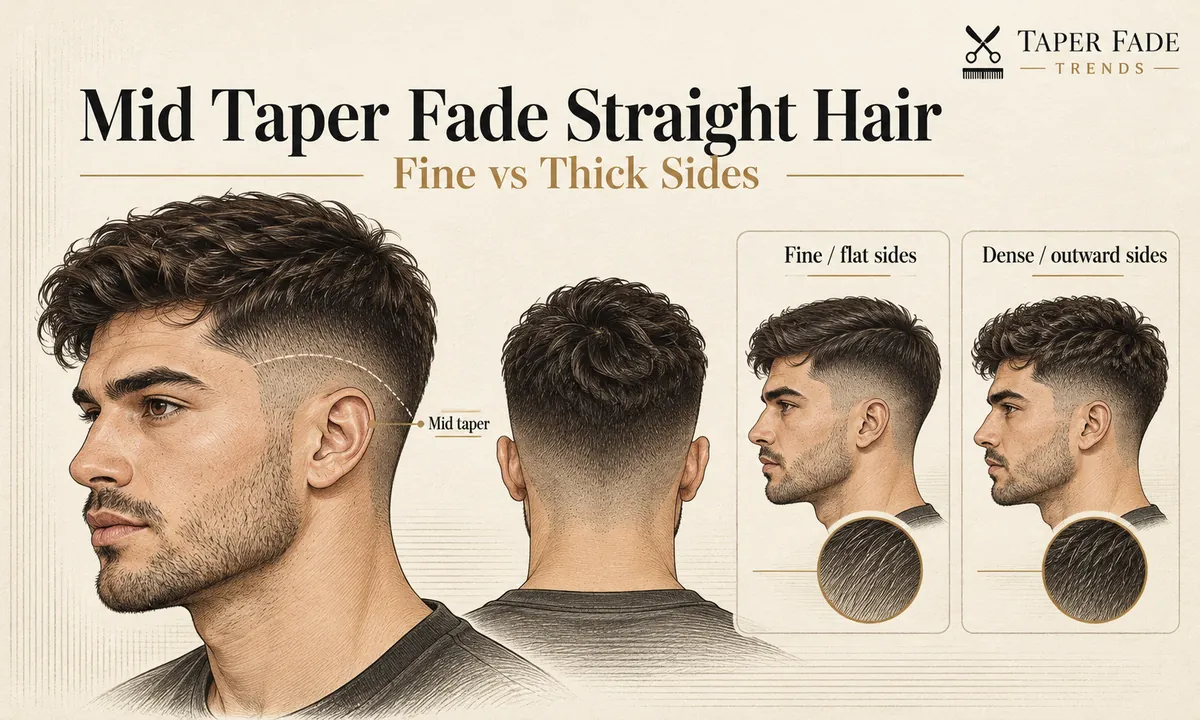
Mid taper fade straight hair: fine, flat and outward-growing sides
Mid taper fade straight hair guide: how much side weight to keep on fine or dense sides, why sides stick out after a cut, and what to tell your barber.
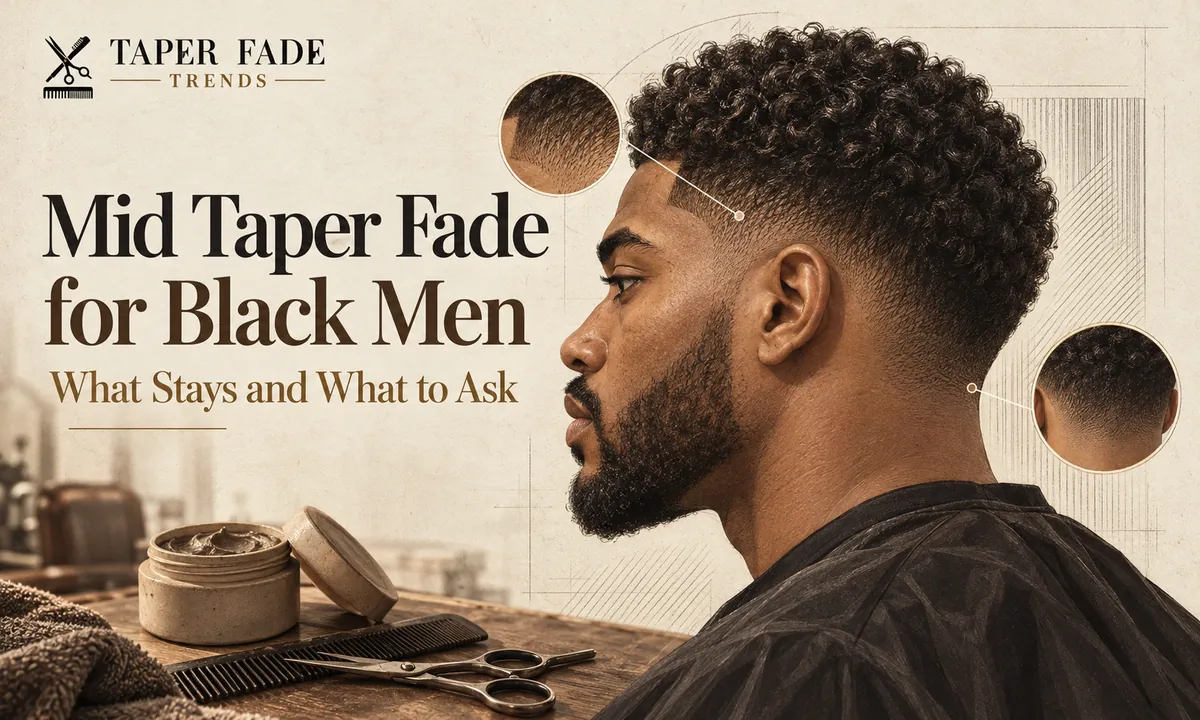
Mid taper fade Black male guide: what stays and what to ask for
Mid taper fade Black male guide: keep more side weight than a full mid fade, set finish and hairline, protect waves, coils or locs, and brief your barber.
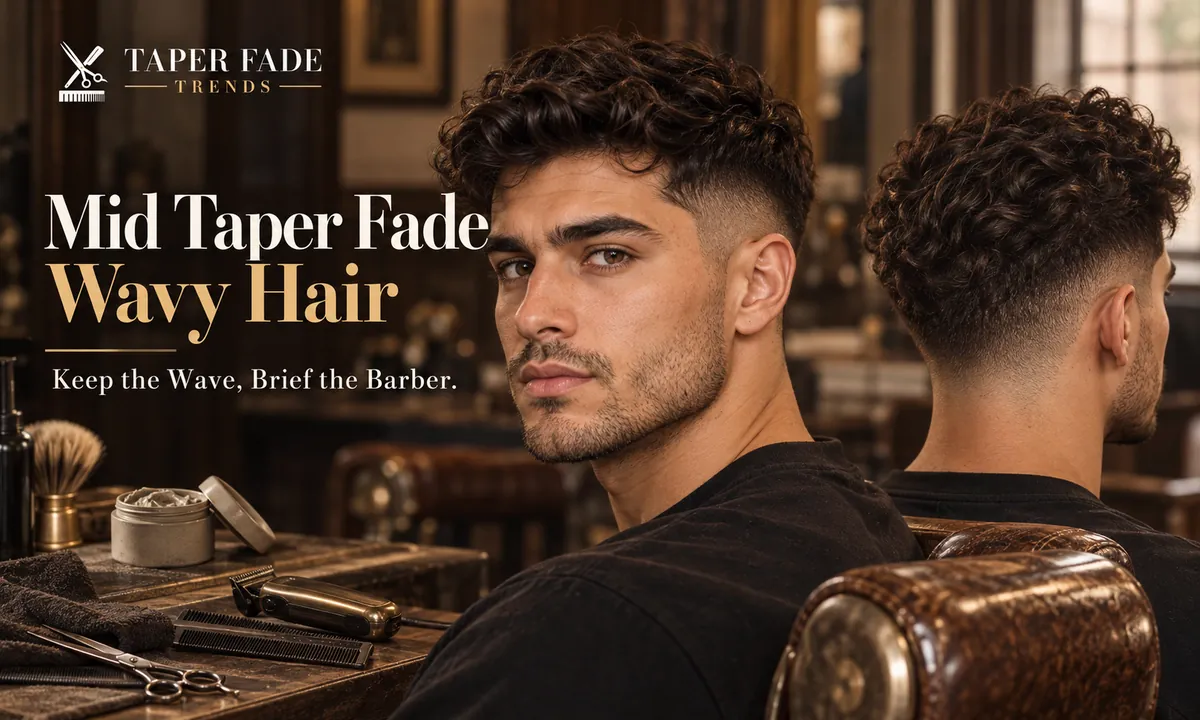
Mid taper fade wavy hair: work with the natural bend
Mid taper fade wavy hair guide: where the taper starts, how much side weight to keep, why top-length advice conflicts, and what to tell your barber.
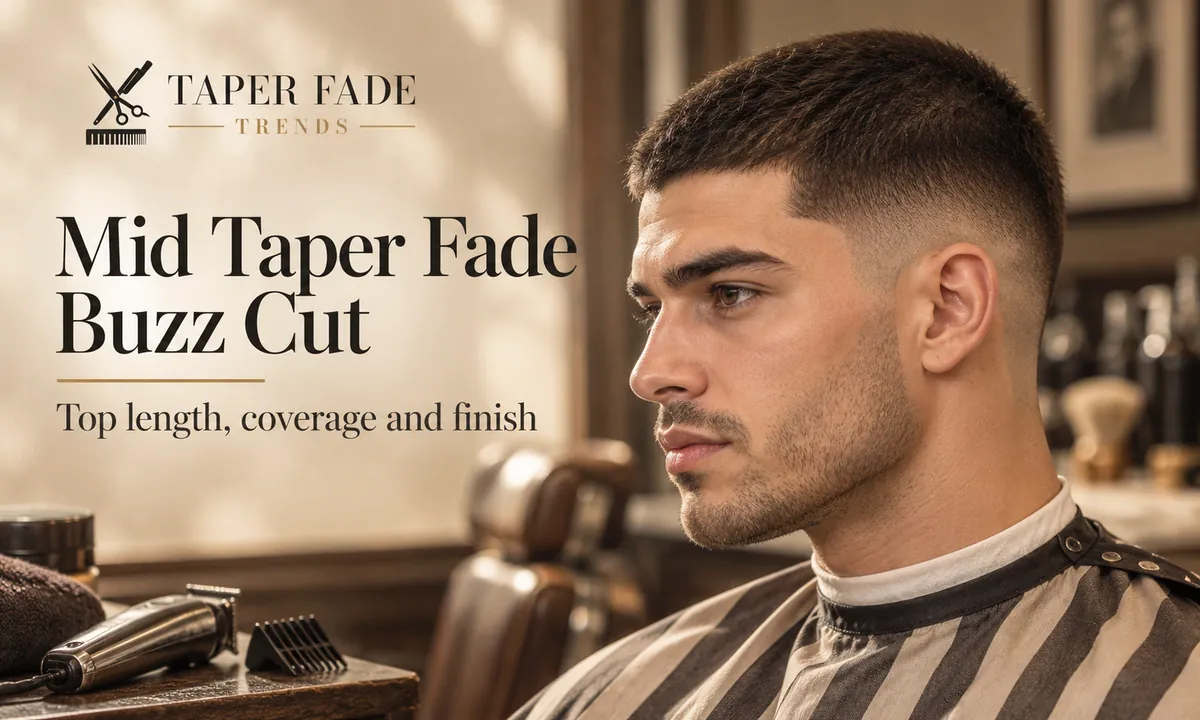
Mid taper fade buzz cut: top length, coverage and finish
Compare Wahl #1, #2 and #3 tops on a mid taper fade buzz cut, see how it differs from a full mid fade, and get a five-line brief to read to your barber.
More in mid taper fades
Mid taper fades: all 8- Mid taper fade: what it is and what to ask your barberYou are here
- Mid taper blowout: keep volume without flattening the sides11 min
- Mid taper fade curly hair: choose dry length, side width and finish9 min
- Mid taper fade straight hair: fine, flat and outward-growing sides11 min
- Mid taper fade Black male guide: what stays and what to ask for13 min
- Mid taper fade wavy hair: work with the natural bend12 min
- Mid taper fade buzz cut: top length, coverage and finish8 min
- Low taper vs mid taper: what changes when only the height moves10 min