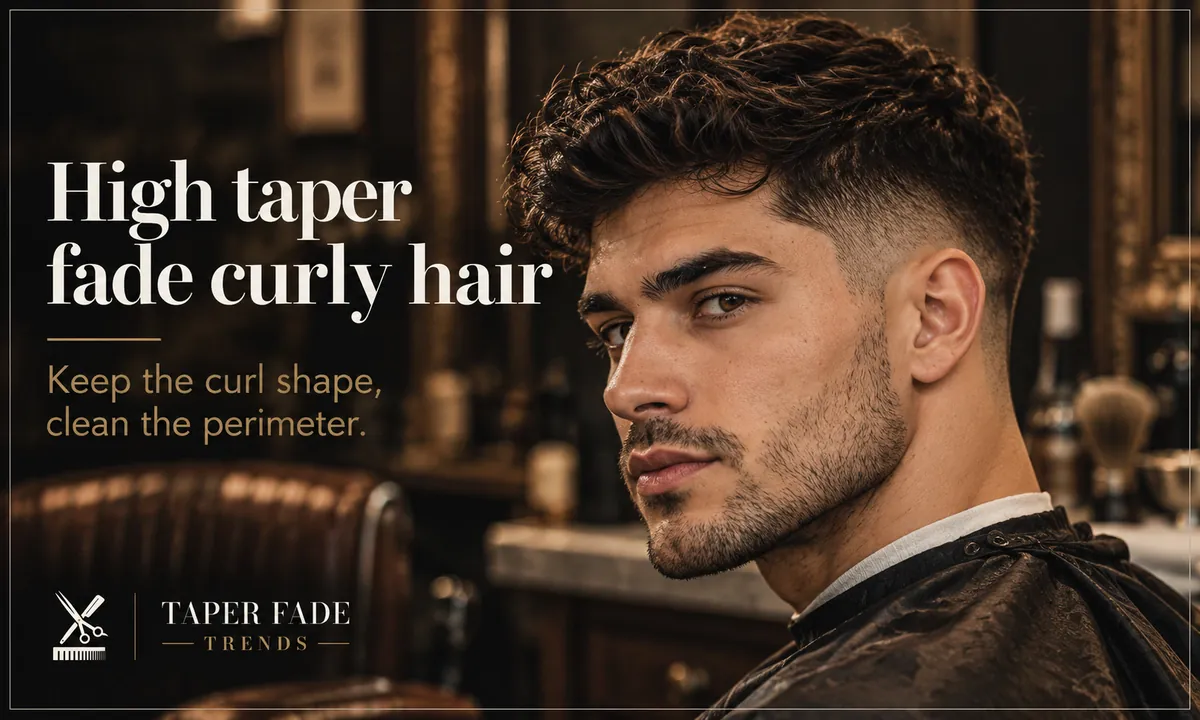
High taper fade curly hair: keep the curl shape, clean the perimeter
A high taper fade on curly hair cleans up the temples and nape high on the head while keeping more width and curl mass above the blend than a full high fade. Decide coverage, shortest finish and dry top shape separately, and judge the result dry. Curls shrink differently on every head, so measure your own.
| Control | What to decide for this cut |
|---|---|
| Placement | High, around the temple and nape. Your reference photo sets the exact stop point. |
| Coverage | How far the blend travels into the side. A high taper keeps it near the perimeter. |
| Shortest finish | Skin, shadow or visible hair at the base. Separate from how high the taper sits. |
| Retained side weight | The curl mass kept above the stop point. Show it in a side-profile photo. |
| Top shape | Rounded, controlled or fringe-forward, judged when the curls are dry. |
| Natural dry length | Your curls at rest after air-drying. Measure it yourself (method below). |
| Damp/stretched reference length | The same curl damp and gently straightened. Compare it with the dry length. |
| Edge/line-up | Ask for it separately. It has nothing to do with taper height. |
| Reference views | Front, left profile, right profile and back, all of the same haircut. |
What is a high taper fade on curly hair?
A high taper fade on curly hair places the taper high around the temple and nape zones while keeping more curl mass above the blend than a full high fade. The name sets placement only. The shortest finish, side coverage, retained side weight and top shape still need their own instructions, or the barber has to guess.
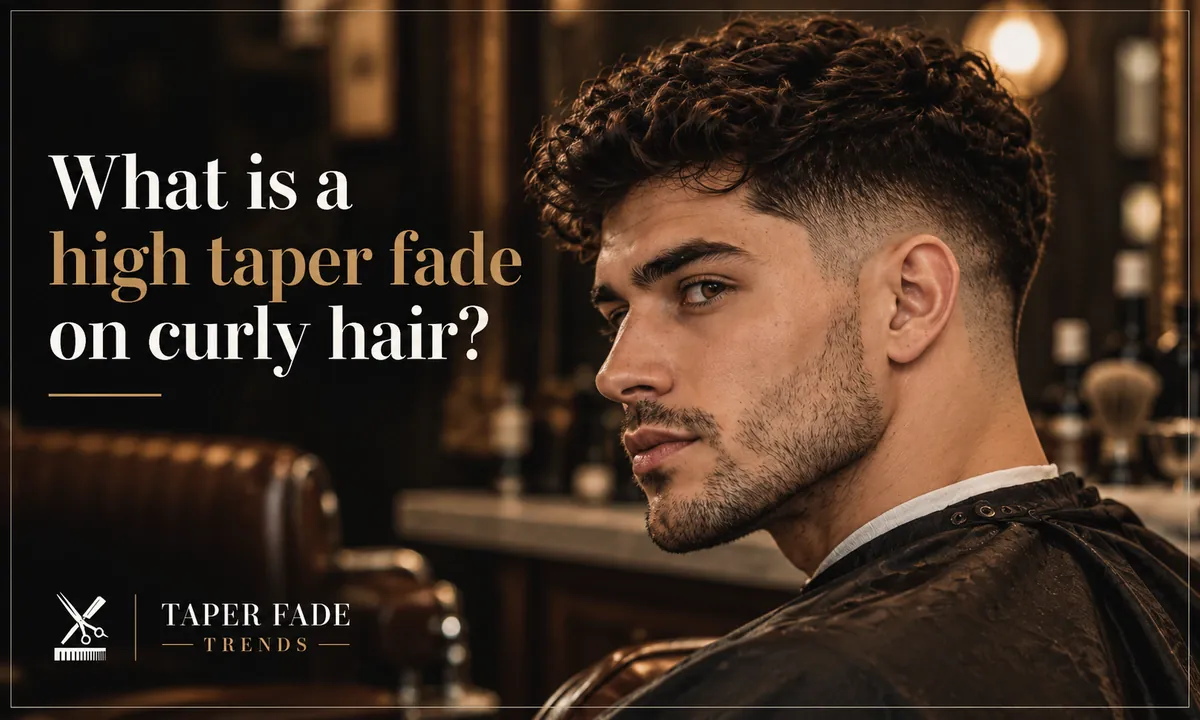
Coverage is how much of the side and back is taken into the short-to-long transition. A high taper keeps that transition close to the temple and nape. Barber Trevor Moots, quoted by Behindthechair.com, draws the same line: a taper stays in the sideburn and nape area, while a fade connects around the head and over the ear.
Shortest finish is the shortest visible length at the base of the taper, and shops disagree about it. Treatwell’s taper fade guide says a taper ends closely clipped but not fully shaved. A Murdock London barber describes taking the nape and temple to skin. Say which one you want.
This page covers what curly hair changes. The parent guide to the high taper fade covers placement and blending on every hair type, and the general guide explains what a taper fade is.
Choose what stays above the taper
To keep width above a high taper, tell the barber where the taper should stop and show the curly silhouette you want above that point. Ask them not to chase the blend up into the upper side. A side-profile reference does more than a guard number here, because a guard sets a length, not how far the short work spreads.
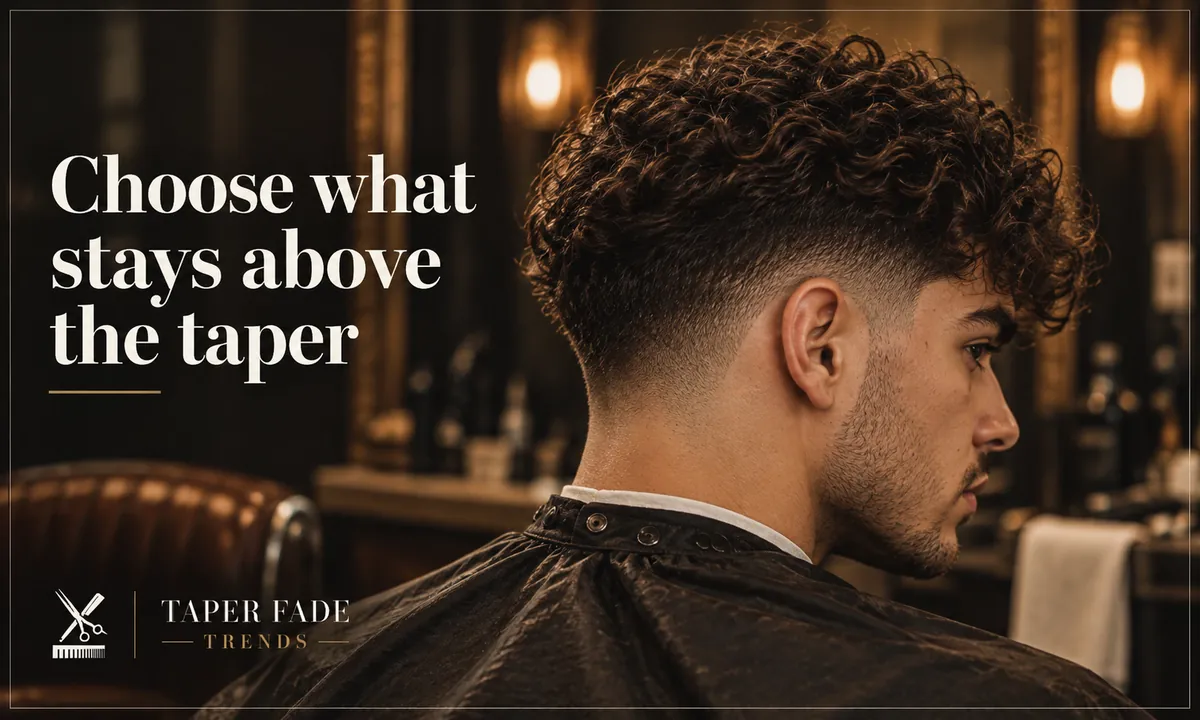
Retained side weight is the curl mass deliberately left above the taper. On curly hair it decides whether the sides and top read as one rounded shape or as a top sitting on a shaved base. Top shape is a second, separate choice: bring a photo of the top you want, not only the sides you want short.
Face-shape charts are common on gallery pages, but none of the ones we checked cites a source. Judge by the silhouette you like on your own head. If your temples are thinning, note that a high taper puts its shortest work right at the temple.
More width above the taper
A lower stop point leaves more curl mass above the blend, so the sides and top sit closer to one continuous shape. Pick this if you want the taper to tidy the edges rather than set up strong contrast.
A curly fringe
A curly fringe can stay with a high taper fade if enough length and weight remain through the front and upper sides. The trade-off is visual: a very high or wide blend can leave the fringe looking cut off from the hair beside it. Decide the fringe outline and side width first, then let the taper clean only the perimeter.
A shorter top at the same height
Top length is its own setting. The barber can shorten the top without moving the stop point or widening the coverage. That brings the top and sides closer together in the outline while the perimeter cleanup stays the same.
How shrinkage changes the barber brief
The barber should judge the finished shape of a high taper fade on curly hair when the curls are dry, because that is how you will wear it. The cutting itself does not have to be dry-only. Dry, damp and mixed methods all have defenders. What matters is checking natural fall and shrinkage before removing weight you want to keep.
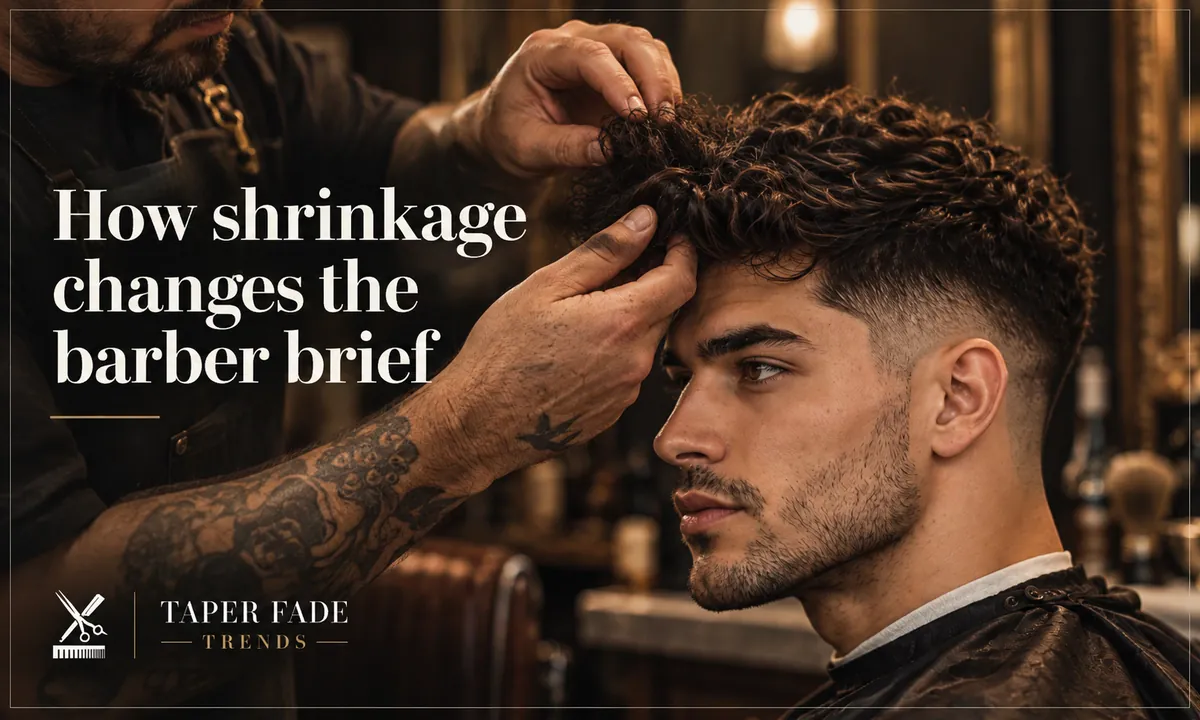
Sources disagree on method. Lily Jackson Hairdressing, a curl salon, says curly hair should always be cut dry. CADMEN Barber Academy calls dry cutting often the more accurate method, notes that some barbers dampen only certain sections, and says the result is evaluated once the hair is dry. Both agree on the last part, and that is the part to insist on.
There is no defensible single percentage for how much curly hair shrinks as it dries. CADMEN gives roughly 20% for loose waves and over 50% for tight coils, a spread across hair types, not a prediction for your head. Curl pattern, styling, tension, humidity and the hair’s starting state all move the number.
CADMEN’s practical advice for anyone who doesn’t know their own shrinkage is to ask the barber to cut conservatively on the first visit and adjust once the hair has dried. That is the safest way to protect the side width you came in to keep.
Measure your own curls dry and damp
Natural dry length is the visible resting length after your curls dry in their normal pattern. Damp/stretched reference length is the same curl measured damp and gently straightened. Shrinkage is the visible difference between those two states. This guide doesn’t publish a measured example yet, so the method below is for your own hair.
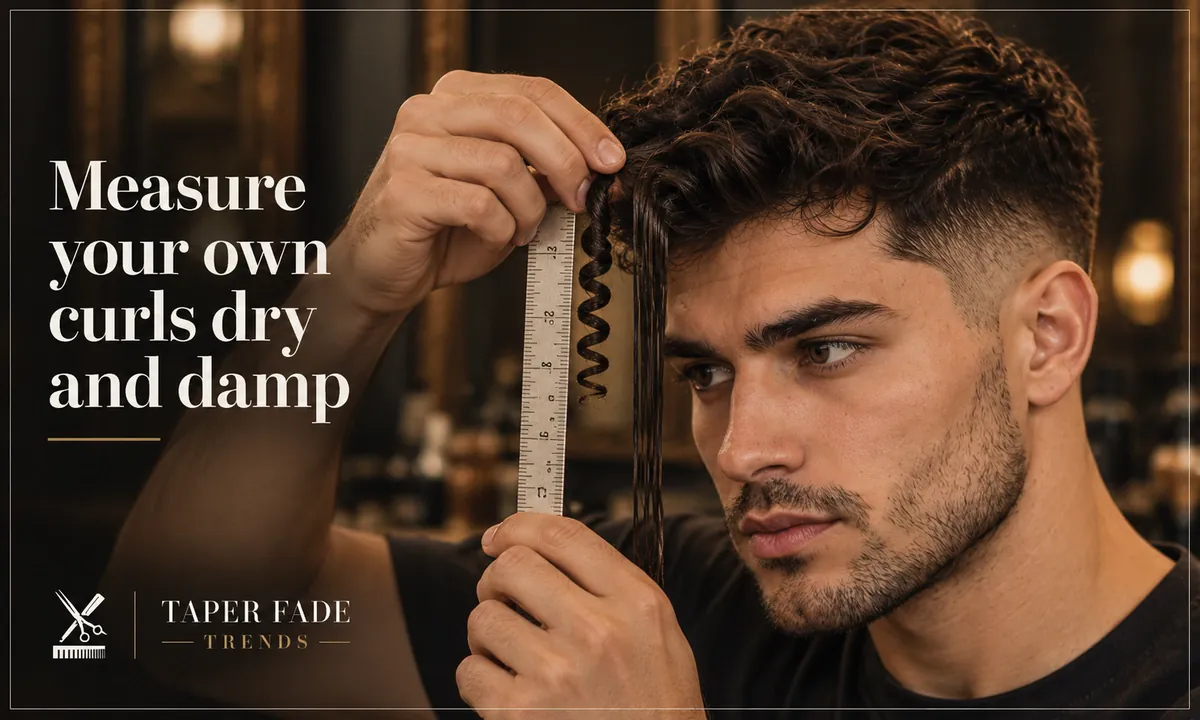
- Let your hair air-dry with your usual product, then pick one curl on top, near where the fringe or crown will sit.
- Measure it from scalp to the tip of the curl as it rests, without pulling. Write the number down.
- Dampen the same curl, straighten it gently with your fingers (don’t tug), and measure scalp to tip again.
- Note the date and both numbers. Repeat at the side, just above where the taper will stop.
| Record field | What to write down |
|---|---|
| State | Natural dry, or damp/stretched, on the same curl |
| Length | Scalp to tip, in inches or millimeters |
| Location | Top, fringe or upper side |
| Date | When you measured, and whether you used product |
Show the barber both numbers and a photo of the dry curl. Together they show how much your hair springs back, which no curl-type label can.
What to tell your barber for a high taper fade on curly hair
Tell the barber four things for a high taper fade on curly hair: where the taper should start, how much side width must stay, the shortest finish you want, and the dry top shape you are keeping. Bring front, both side profiles and back references. Then ask how they read “high taper,” since shops use the term differently.
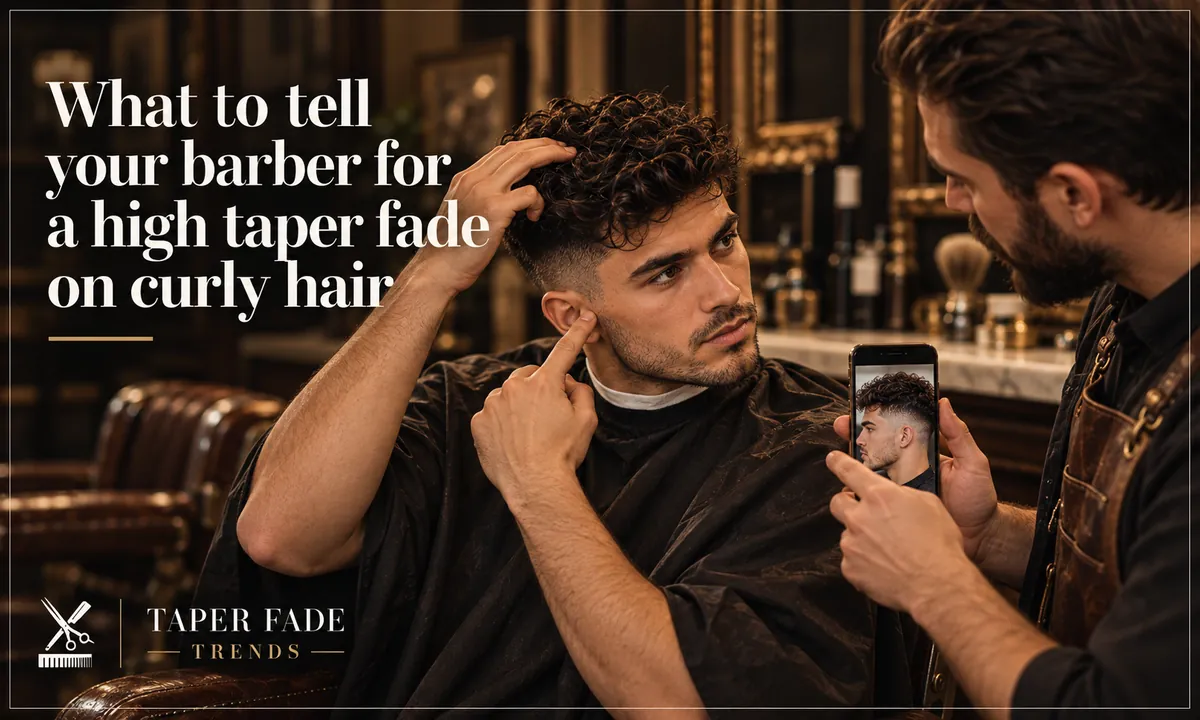
- Point to where the taper should start at the temple and nape.
- Show how much side width stays, and the fringe if you are keeping one.
- Say skin, shadow or visible hair at the base.
- Show the dry top shape and say whether you want a lined-up edge.
Leave the tools to the barber. Bring a reference set that shows one target haircut from the front, left profile, right profile and back, plus a natural dry view of your own curls if you have one. One flattering three-quarter photo hides how far the blend travels, which is the thing you most need the barber to see.
A guard number is not the haircut specification. On Wahl’s guide-comb chart, #1 is 1/8 inch and #2 is 1/4 inch, but Wahl also notes that the taper lever changes how close the clipper cuts between guard sizes. Guards set length, not coverage, so treat them as background, not a recipe.
Wahl; length only, not fade coverage
Wahl; length only, not fade coverage
High taper vs full high fade on curly hair
A high taper fade and a full high fade on curly hair can start at a similar height, but they differ in how much of the side gets taken short. The high taper keeps the shortest work near the temple and nape. The full high fade carries it across the side and back. Shop vocabulary varies, so show the silhouette.
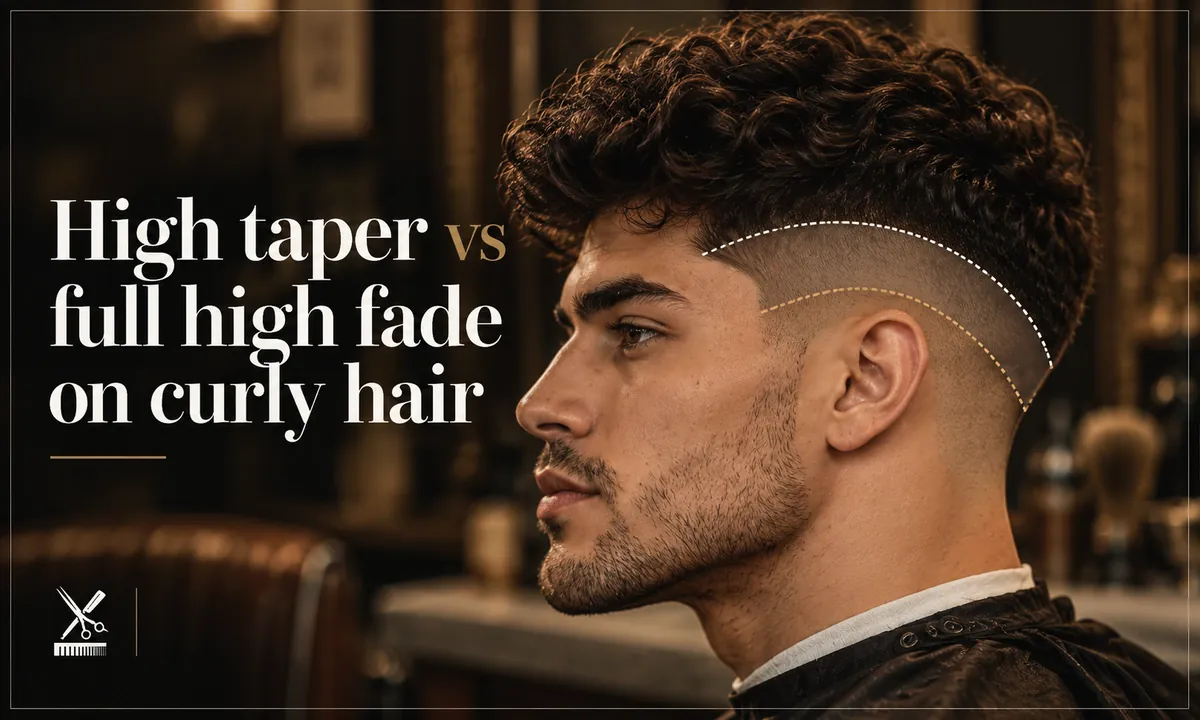
| Attribute | High taper fade | Full high fade |
|---|---|---|
| Placement | High, around temple and nape | Can start at a similar height |
| Coverage | Held near the perimeter | Carried across the side and back |
| Retained side weight | More curl mass above the blend | Less side mass above the blend |
| Choose it when | You want a cleanup that still reads full and curly | You want more side contrast |
The switch only goes one way. A barber can turn a high taper into a full high fade at a later visit by taking more coverage. Going back means waiting for the sides to grow.
Styling and grow-out
No single touch-up interval fits every high taper fade on curly hair. How fast it looks grown out depends on your growth rate, how short the finish is, how crisp the edges are, and how much softness you will accept. Use your own dated photos to decide when the perimeter needs another cleanup.
Published advice shows why. Several gallery pages we checked say every two to three weeks without a source. CADMEN’s curly-hair guide puts side and back upkeep for tapered curly cuts at four to six weeks, and Moots recommends a taper for clients who stretch appointments because it grows out softer than a fade.
- A skin or shadow finish shows regrowth sooner than one left in visible hair.
- Strong contrast between hair and scalp makes early regrowth easier to see.
- A crisp lined-up edge loses its line before the blend itself looks grown out.
The top and the perimeter run on different clocks. You can ask for a perimeter-only cleanup and leave the curls alone. For the curls themselves, CADMEN suggests a leave-in conditioner on damp hair followed by a defining cream or gel for tighter curls. It recommends air-drying or diffusing, and blotting with a microfiber towel or T-shirt rather than rubbing.
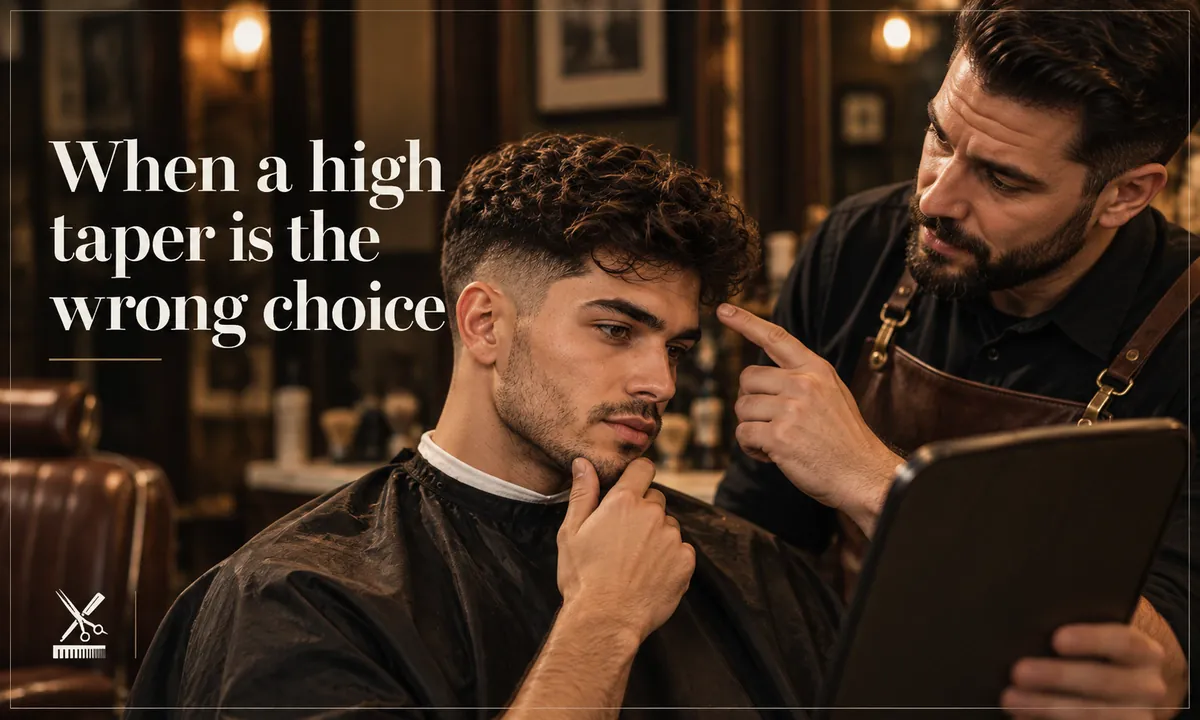
When a high taper is the wrong choice
A high taper fade is the wrong choice for curly hair when you want more side fullness than it leaves or more contrast than it gives.
- For maximum side fullness, a lower taper, or none, keeps more length all around.
- For maximum side contrast, a full high fade removes more side coverage.
- With thinning temples, a high taper places its shortest work in the sparse zone.
- If your hair is straight, the shrinkage advice on this page won’t apply.
Skin finishes and razor bumps are a separate issue. The American Academy of Dermatology explains that razor bumps develop when a razor cuts coarse, curly hairs short and they curve back into the skin. Its page is written about shaving the beard area. If a skin finish at your temples or nape leaves bumps, ask a dermatologist. In the meantime you can ask the barber for a shadow or visible-hair finish instead.
How this guide was researched
Taper Fade Trends’ editorial team wrote this guide. No named barber has reviewed it, and it contains no photos or measurements of a real cut yet, so every figure is a labeled illustration. Guard lengths come from Wahl’s chart, viewed October 2, 2026. Definitions follow this site’s taper framework, checked against the barber sources linked above.
| What | Status |
|---|---|
| Photos and diagrams | Illustrations only; no real-cut photo set yet |
| Guard lengths | Wahl USA guide-comb chart, linked inline |
| Shrinkage | No figure for a real example; method given so you can measure your own |
| Barber review | Not yet reviewed by a named barber |
If you are still deciding how high the taper should sit, settle placement in the high taper fade guide before saving a curly reference photo.
Keep reading
All guides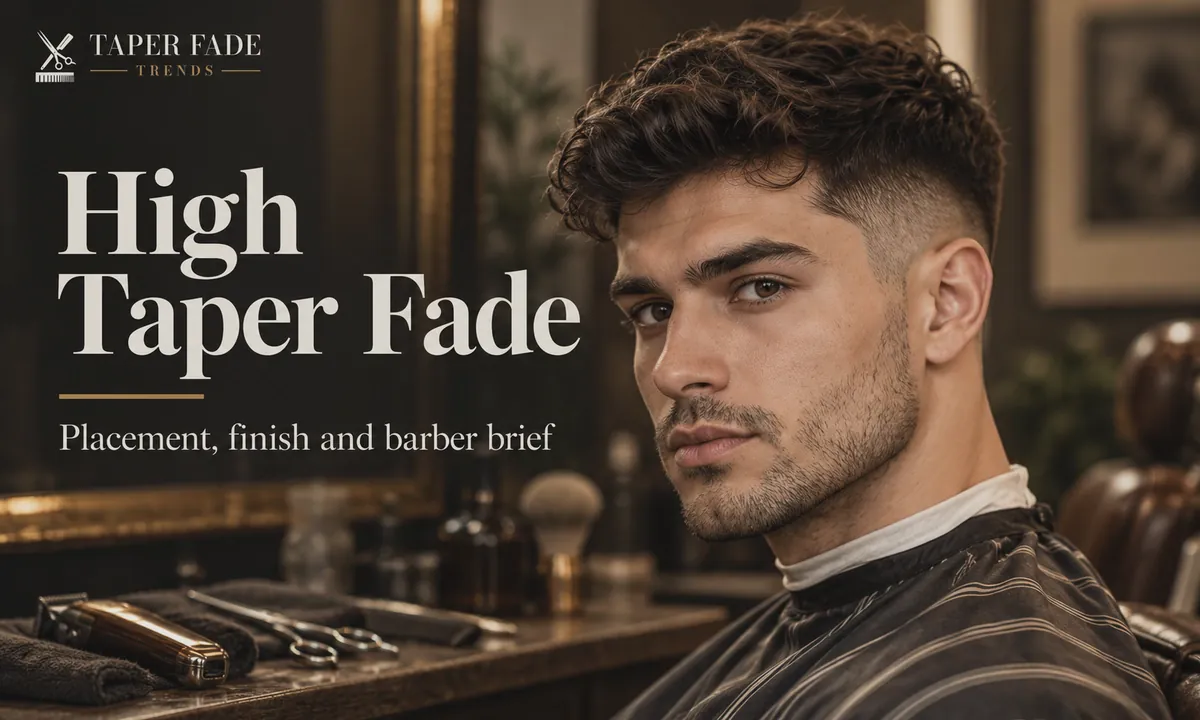
High taper fade: placement, finish and barber brief
Where a high taper fade sits, how much side weight stays, skin vs shadow finishes, what the back should look like, and exactly what to tell your barber.
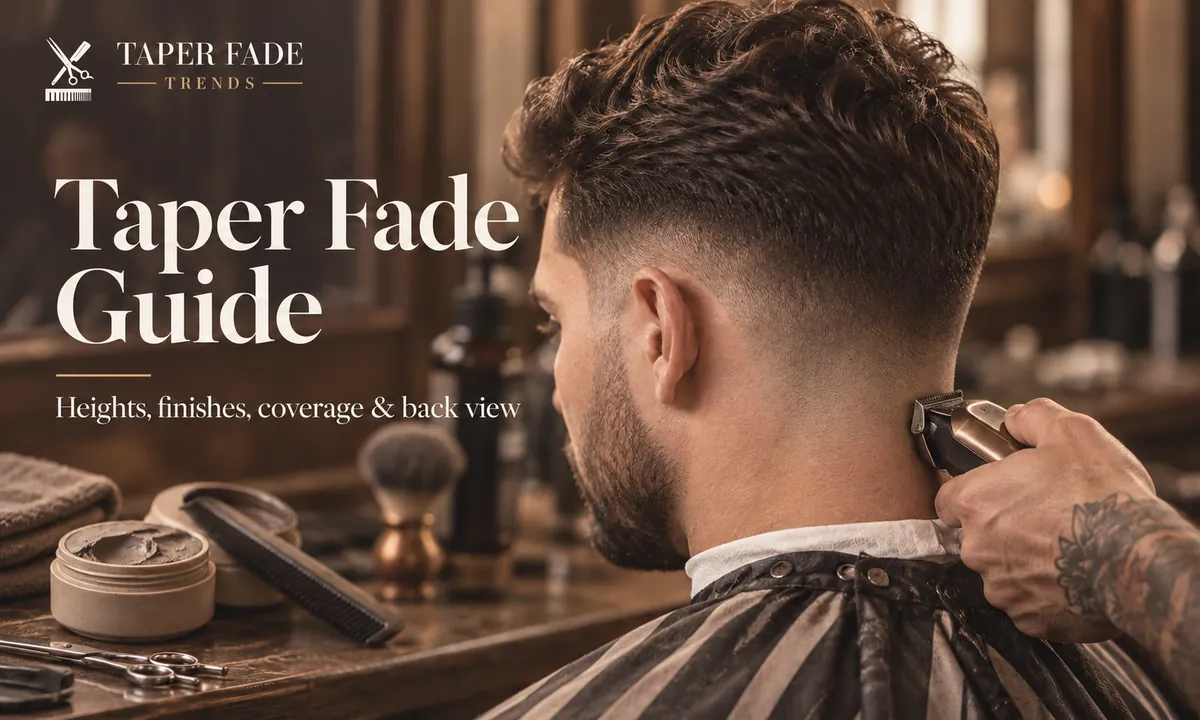
Taper fade: a visual guide to heights, finishes and top styles
Where a taper fade sits from the front, side and back, how low, mid and high differ, and how to ask for side coverage and a finish with or without skin.
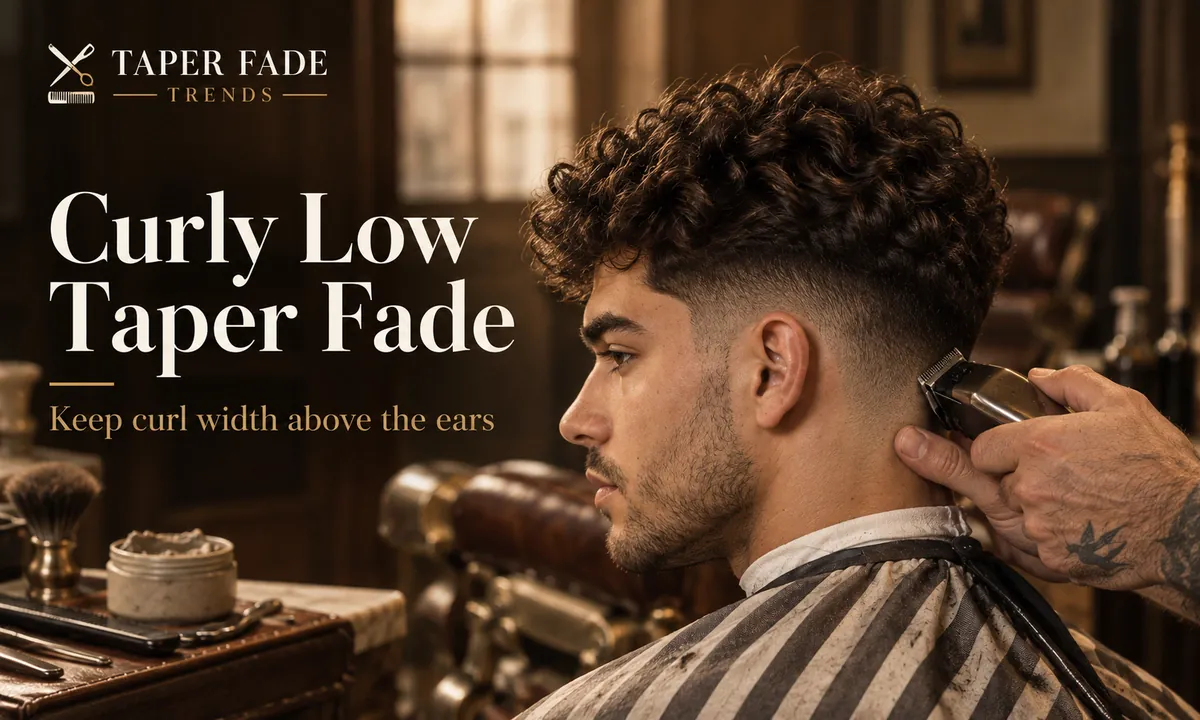
Curly low taper fade: keep curl width above the ears
A curly low taper fade cleans the temples, sideburns and nape but keeps curl width above the ears. What to decide, check dry and tell your barber.
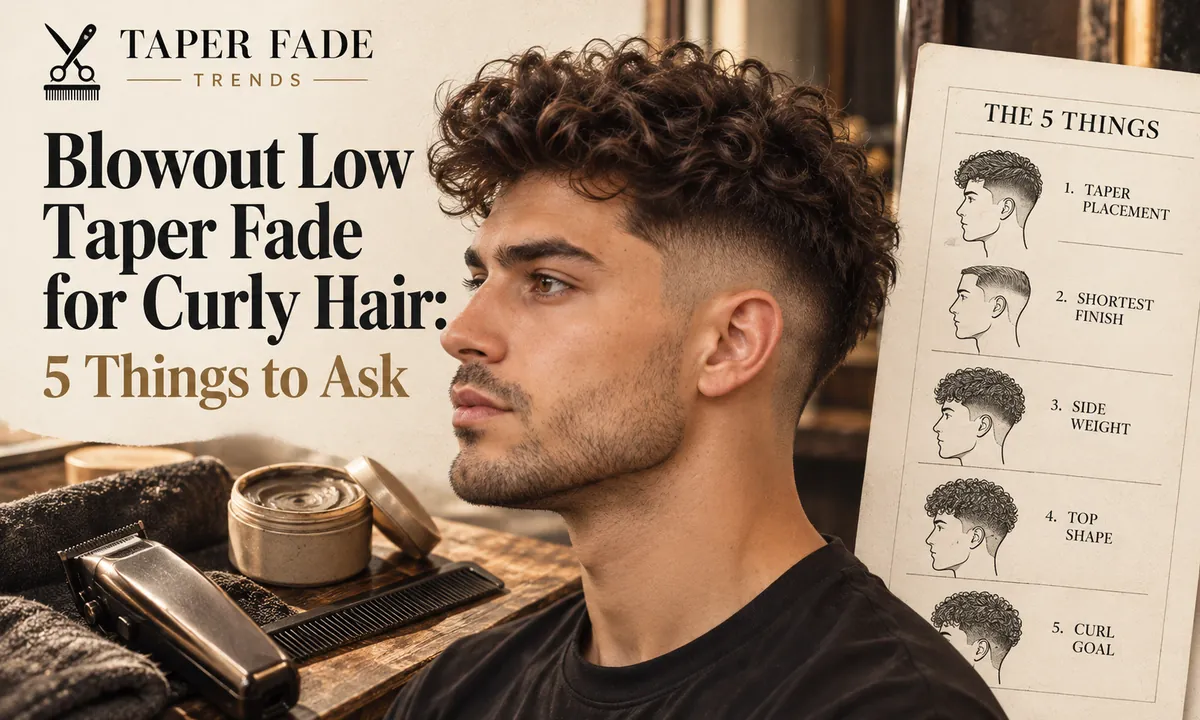
Blowout low taper fade curly hair: keep volume, keep definition
A blowout low taper fade for curly hair is a shape, not a guard recipe. Set the taper placement, shortest finish, side weight, top shape and curl goal.
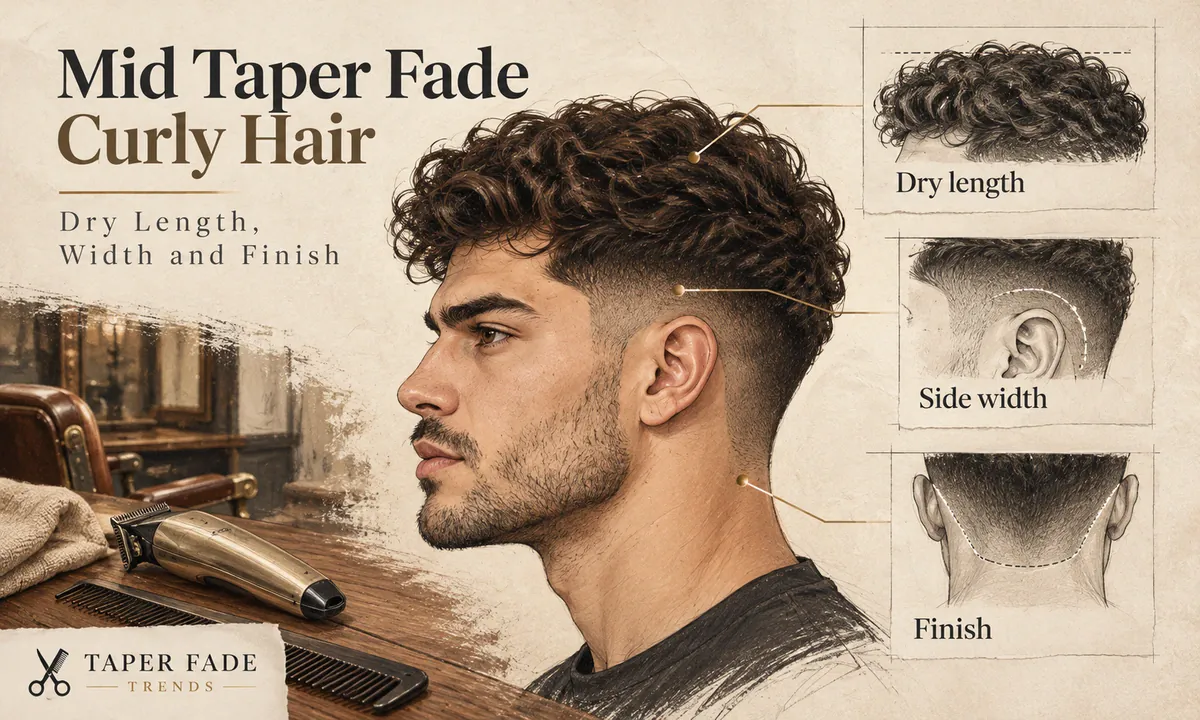
Mid taper fade curly hair: choose dry length, side width and finish
Mid taper fade curly hair guide: what it keeps vs a full mid fade, how to judge dry length and side width, and the four specs to give your barber.
More in high taper fades
High taper fades: all 8- High taper fade: placement, finish and barber brief11 min
- High taper fade curly hair: keep the curl shape, clean the perimeterYou are here
- High taper fade straight hair: control side weight and avoid a shelf9 min
- High taper fade Black male styles: waves, coils, twists and locs9 min
- High taper fade wavy hair: keep your wave pattern10 min
- High taper fade short hair: Compare crop, crew and textured tops11 min
- High taper fade with beard: how the sideburn meets the beard11 min
- High taper vs high fade: side, back and coverage8 min