Hair sticking out after taper: growth or side weight?
Hair sticking out after a taper usually comes from side hair that grows outward, side weight left above the blend, or both at once. Judge it dry before anyone cuts more. A damp styling test and a few matched photos tell you whether to restyle it, grow it or ask your barber to reshape it.
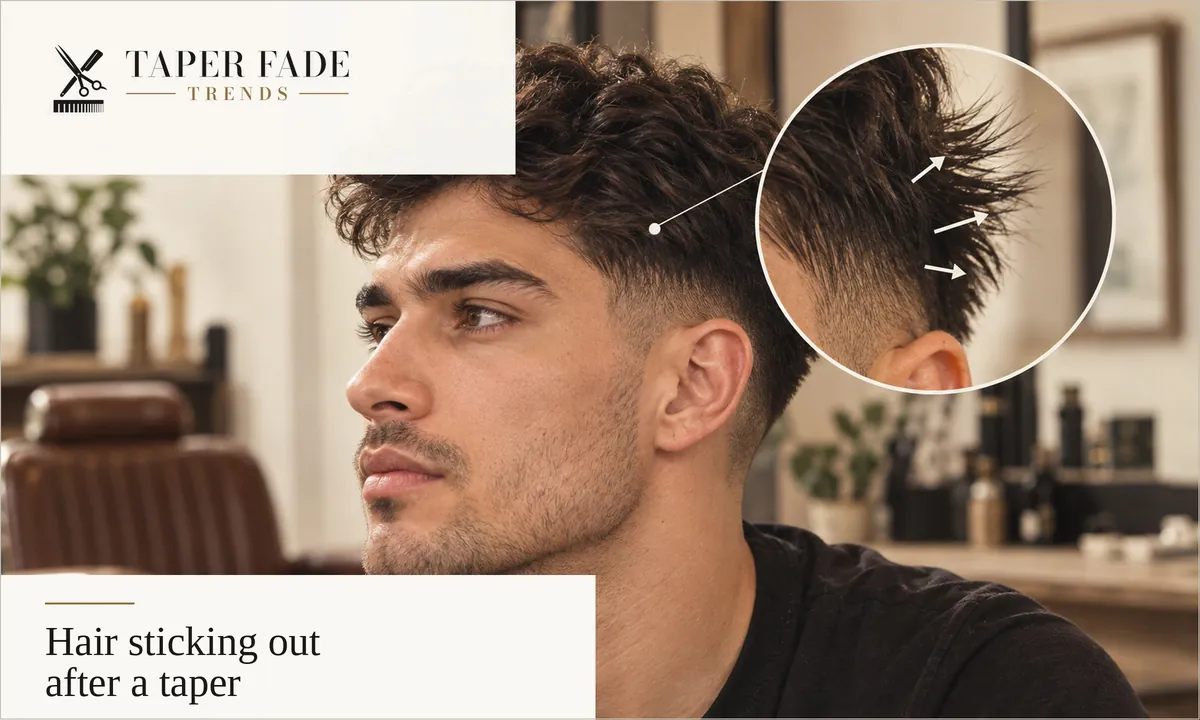
Match what you see to a row, then run the first check before anyone cuts. Each row is explained below.
| What you see | Likely cause | First check | What to ask your barber | What the check cannot prove |
|---|---|---|---|---|
| One patch or one side flares while the other lies flat | Growth direction differs on that side | Compare both sides dry, with no product | Check the growth direction on both sides before cutting | The exact follicle angle |
| A broad ledge or a wide front outline above the short blend | Excess side weight or a rough connection | Front and both profiles, dry, in the same light | Smooth the connection or remove weight by section | How much weight is excess |
| Sides sat flat after the cut, then flared a few weeks in | The hair has reached a middle length that stands out | Note how many weeks after the cut it starts | Keep more length, or go short on purpose | The length where your hair settles |
| Flat while damp, back out once dry | Styling sets the hair while it dries, then it springs back | Repeat the damp test after the next wash | Whether styling alone is enough | Whether the fix holds for days |
Why hair sticks out after a taper
Hair sticking out after a taper usually comes from three things: side hair that grows outward, a length that stands away from the head, and fullness left where the sides meet the short blend. One head can have all three. Judge the hair dry and unstyled before calling the cut a mistake, because damp hair and product change the outline.
A taper fade shortens the hair at the sideburns, temples and nape, while the side panel above keeps more length, as the taper fade guide explains. So a taper can look clean at the edges and still leave bulk above the ear, which is where most sticking-out shows. Seen from the front, that wide outline above the ears is what people call a mushroom shape. The word describes the silhouette, not the cause.
Length matters as much as direction. Montreal barber Youssef Ouda notes that on stiff hair, some middle lengths stand up more than hair that is very short or long enough to settle. HIRO GINZA’s Singapore barbers describe the same cycle on thick, straight hair: clean after the cut, then spiky, then bulky, then cut short again. That is why sides that looked right on day one can flare a few weeks later.
Growth direction versus excess side weight
Growth direction is the direction hair leaves the scalp and naturally lies. A cowlick is a patch whose growth direction differs from the hair around it. Excess side weight is length and density left in the side panel that widens the outline or breaks a smooth transition. A weight line is the visible step where one length meets another; a pronounced one above the ears is often called a shelf. It is not the same as a dark line in a fade.
The two causes leave different clues. Growth direction shows up as a patch, or one side, that points out at most lengths. Excess side weight shows up as a broad, even ledge on both sides. Pintor Barber says bulky sides are often a weight-distribution problem rather than a length problem.
One side sticking out more than the other does not by itself mean the barber cut unevenly. Traditional Haircutting describes fine, straight hair cut to the same length on both sides where one side still puffed out, because its grain ran downward while the other side’s ran back. Compare both sides dry, then ask the barber to check the growth direction.
Test it without cutting
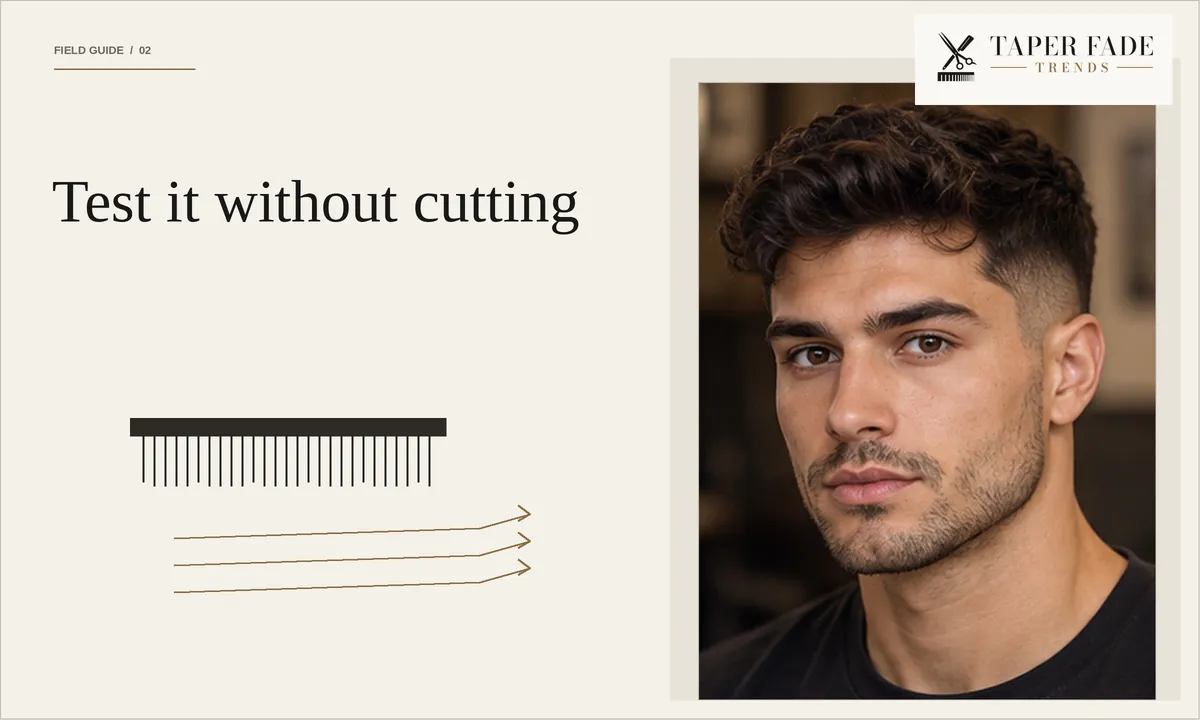
A damp styling test shows whether side hair sticking out after a taper will sit down with styling alone. It changes how the hair dries, not the direction it grows, so any result lasts until the next wash. Run it on clean hair before booking a correction, and judge it only once the hair is fully dry.
- Wash, then towel-dry or let the sides partly air-dry. The American Academy of Dermatology advises letting hair partly air-dry before styling and blow-drying less often.
- Guide the problem section the way you want it to lie with your fingers or a comb, starting at the root. Hair Caffe Lab, a San Francisco salon that also sells hair products, notes that the shape is set while hair dries, so pressing down hair that is already dry does little.
- If you use a dryer, keep it moving on the lowest heat that works, aim the airflow down the hair, and hold it about 6 inches away. Back off if your scalp feels hot.
- Hold the section in place until it cools, then leave it alone.
Distance and heat both count. In a 2011 laboratory study on hair samples, surface damage rose as the dryer got hotter and closer, while a dryer kept moving at 15 cm (about 6 inches) caused less damage than air-drying alone. That was a lab test, not a styling trial, so it guides technique without setting a safe temperature for your head.
Check the result when dry
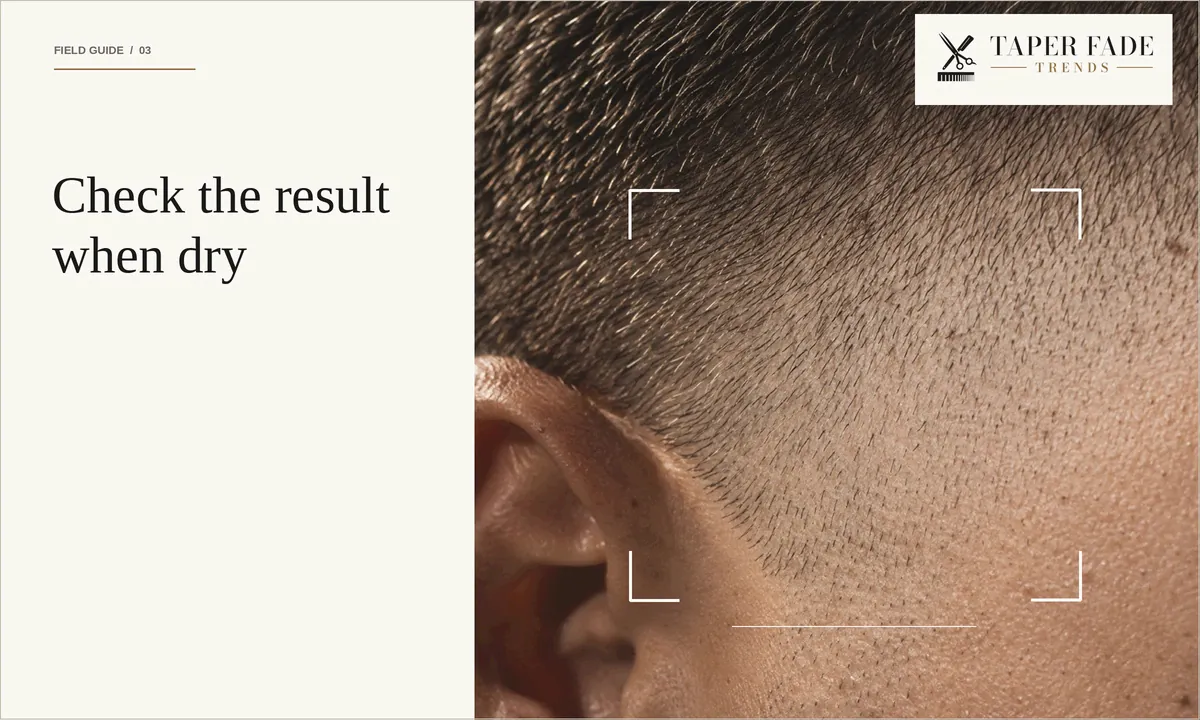
Judge the result once the hair is fully dry, comparing the front and both profiles in the same light. If the section stays down, styling is a workable fix. If a broad ledge stays, the cut needs a look. Neither result shows the follicle angle or exactly how much side weight is excess.
Give a fresh cut a fair trial first. Pintor Barber suggests washing and styling it as usual and waiting a day or two before deciding it is wrong.
Take three sets of photos: before any product, after the damp test has dried, and after your next normal wash. Use the same distance, height, angle and light each time, shoot the front, left profile, right profile and back, and never mirror the side views.
| What you see when dry | What it suggests | What it cannot show |
|---|---|---|
| The section settles with gentle styling | Styling can manage it | The follicle angle |
| A broad ledge stays on both sides | The cut deserves a look | How much side weight is excess |
| Flat while damp, back out after washing | Styling is setting the hair only until the next wash | Whether the cut or growth direction is the bigger factor |
If it springs back after every wash, repeat the test once under the same conditions. If it fails again without product, treat it as a cut question. How long a taper fade lasts shows how the cut changes week by week.
Choose the correction
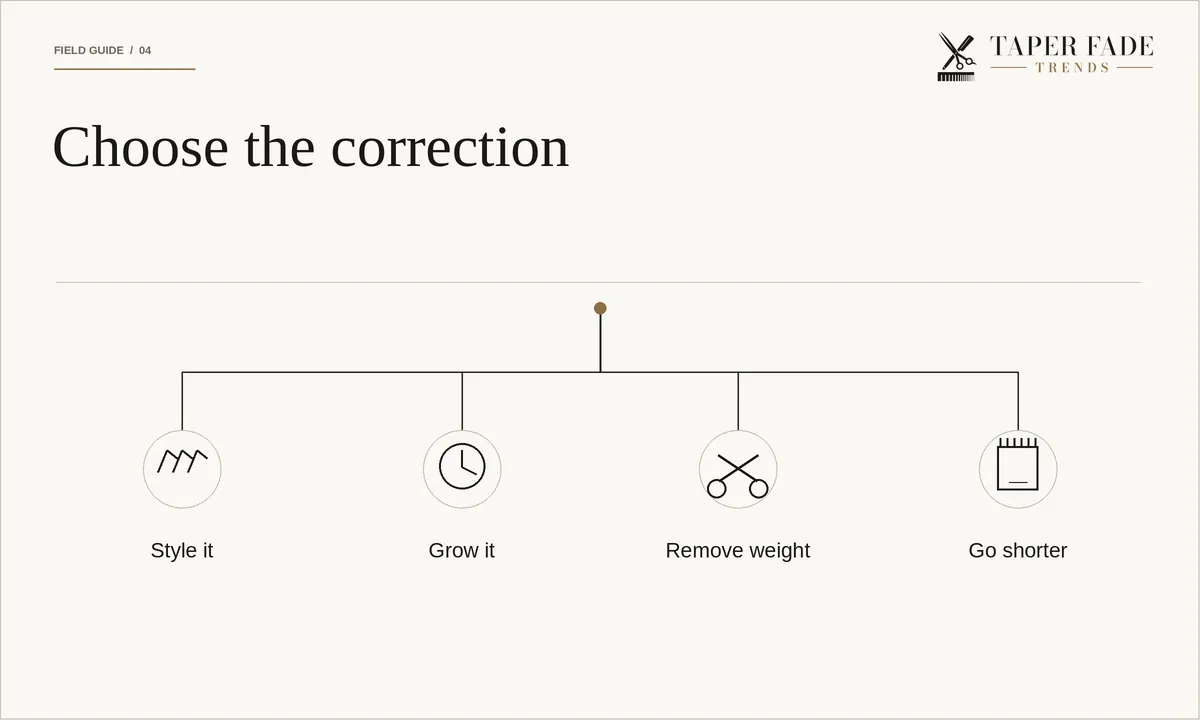
There are four ways to deal with side hair sticking out after a taper: style it, grow it, remove weight selectively, or go shorter on purpose. No guard number or length works for every head. Pick the route with your barber after the dry check, because cutting shorter is the only option you cannot undo.
| Route | Choose it when | What changes | Trade-off |
|---|---|---|---|
| Style it | The section stays down when dry and after a wash | Nothing is cut | You repeat the styling after every wash |
| Grow it | The hair stands out at its current length | Longer hair can gain enough weight to lie down | An awkward middle stage with no fixed timeline |
| Remove weight selectively | A broad ledge stays when dry | A narrower outline and smoother connection | Too much removal leaves short ends that stick out |
| Go shorter on purpose | You want the ledge gone now and accept more upkeep | The projecting length is cut away | Cannot be undone; it can return as the hair grows back |
Shorter is not automatically better. Youssef Ouda warns that cutting at the wrong point can add width through the sides instead of removing it. Traditional Haircutting’s barber lists cutting the sides extra short as one fix, alongside combing with the grain or letting the puffy side grow longer. Both hold: short enough clears the problem, while a middle length can make it worse.
Some barbershops, including HIRO GINZA, also offer a down perm, a chemical service that sets the side hair flatter. It acts on the hair you already have, so new growth comes in with the same direction. Leave chemical work to a professional. If you are weighing a move from a taper to a full fade, taper vs fade compares how much side weight each keeps.
Why thinning can backfire
Thinning shears are not a safe default for side hair sticking out after a taper. Youssef Ouda warns that thinning used everywhere can leave short strands that push out as they grow. Ask for weight removed by section, only where the hair expands, and for the result to be checked dry and at rest.
What to tell your barber
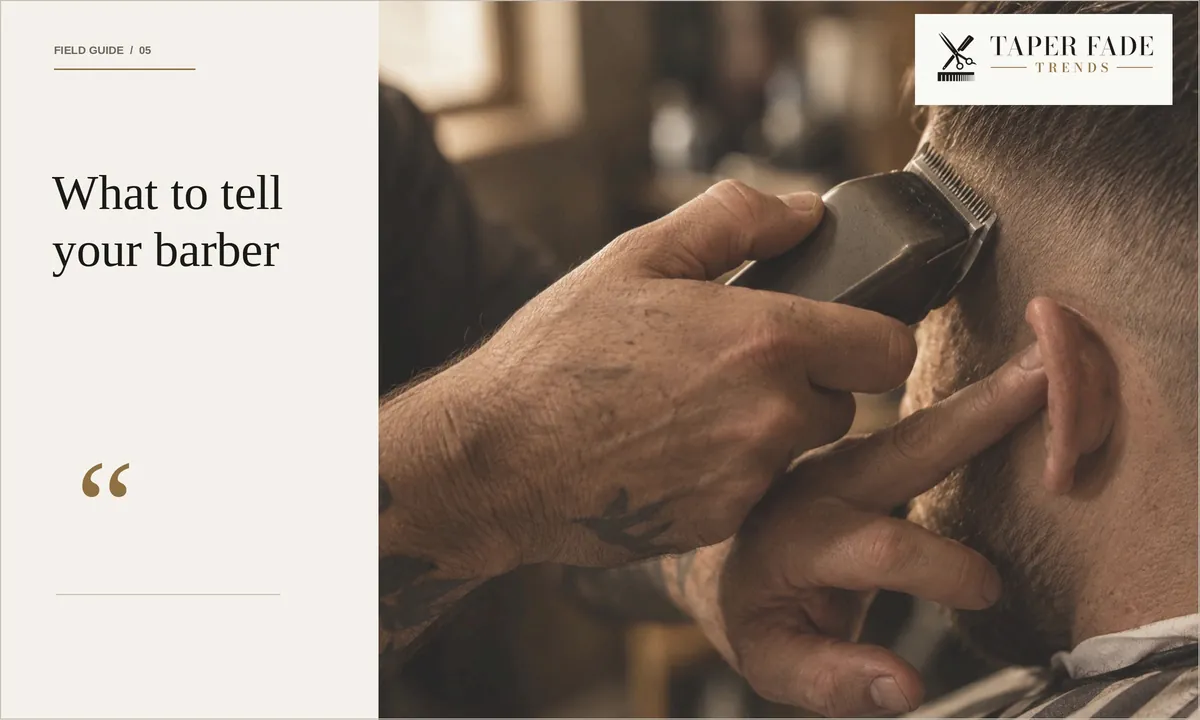
Show your barber exactly where the hair sticks out, when it starts after a cut and how much length you want kept. Ask them to check the growth direction dry before any weight comes off. Describe the shape you want rather than a guard number, because guard numbers vary by clipper brand and lever setting.
“This side sticks out above my ear once it’s dry, starting about [number] weeks after a cut. Can you check the growth direction on both sides before cutting? I’d like to keep [this much] length. Tell me whether the fix is a smoother connection, less weight in this spot or more length.”
- Bring the front, left, right and back photos from your dry check.
- Say when it starts. Hair Caffe Lab suggests noting how many weeks after a cut the spot lifts, which tells a barber more than “it sticks out.”
- Say how high the taper may go and how short its shortest point may get, or ask to keep both as they are.
- Ask for a grain check. Traditional Haircutting’s method is to comb against the grain and watch which way the first inch of hair leaves the scalp.
Why numbers vary is covered in clipper guard numbers. For a full brief on a new cut, see how to ask for a taper fade.
When to stop and get help
Stop before trimming a sticking-out patch at home with clippers or scissors. A small cut into the blend can remove the length a barber needs to reshape it, and Pintor Barber warns that home clipper work can make a correction harder. Book an in-person assessment instead, and take scalp symptoms to a doctor, not a barber.
- A dark line where two lengths meet is a blending problem, not side hair sticking out. A barber can usually soften it.
- One side clearly shorter than the other is an uneven cut, not growth direction, and needs an in-person look.
- A new bare patch, thinning, pain, redness or scaling is not a haircut problem. The American Academy of Dermatology recommends a board-certified dermatologist for concerns about your hair.
What photos can and cannot prove
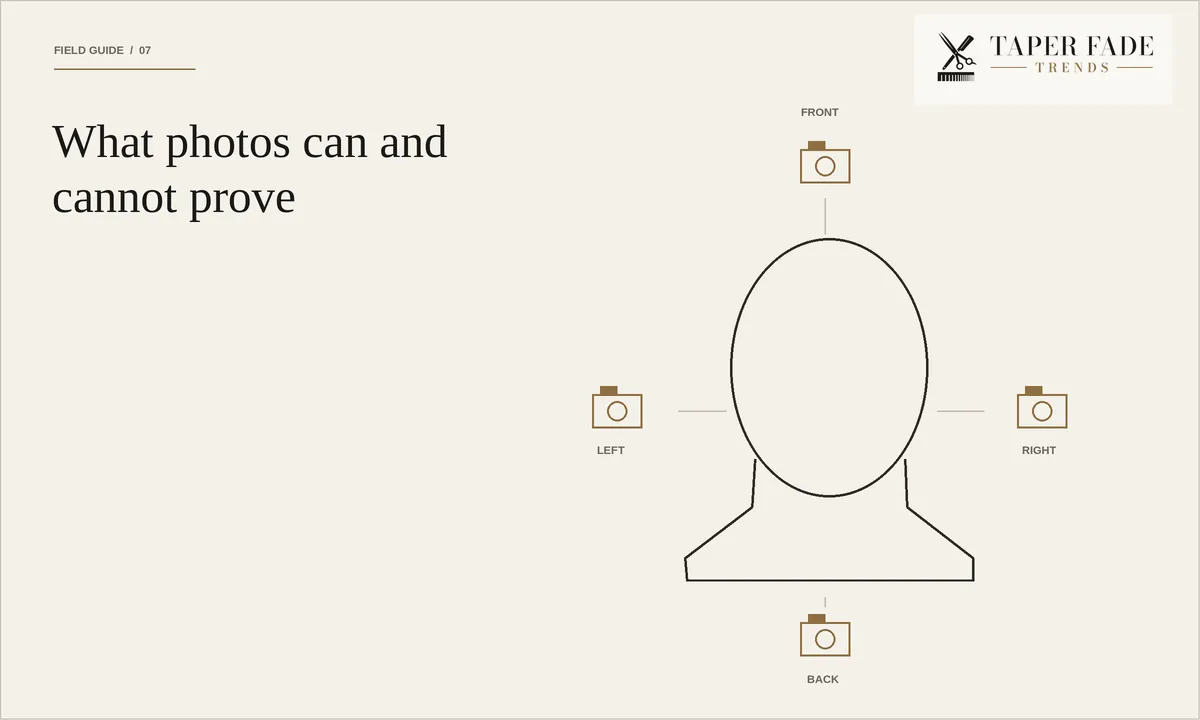
Matched photos of the same head can show whether the visible side outline changed between two dates under the same light and styling. They cannot show which guard or lever produced the cut, the follicle angle, or whether the shape will hold after the next wash. Write those conditions down with each set.
This guide shows no before-and-after result. Its images are labeled illustrations, not photos of real haircuts.
How this guide was researched
Taper Fade Trends prepared this guide in October 2026 from published barber, salon and dermatology sources, each linked where it is cited and read on October 22, 2026. It includes no client case, measured test or barber review, so it gives no guard numbers or grow-out timelines. Terms such as weight line and shelf vary between shops. Found an error? Our editorial policy explains how corrections are made and dated.
Sources:
- Men’s haircut for thick or straight hair, Youssef Ouda, barber, Montreal
- Why do the sides of my hair keep sticking out?, HIRO GINZA Premium Barber, Singapore
- One side “puffs” out, Traditional Haircutting
- Can barbers fix a bad haircut?, Pintor Barber, Vancouver
- When short hair sticks out, Hair Caffe Lab, a salon that also sells hair products
- Hair styling without damage, American Academy of Dermatology
- Hair shaft damage from heat and drying time of hair dryer, Lee et al., Annals of Dermatology, 2011
Next: keep the shape between cuts
How soon side hair starts sticking out again depends on how fast it grows and how crisp you want the outline, so no single interval fits every head. How to maintain a taper fade covers what is safe between appointments. If your hair is straight, low taper fade for straight hair explains how much side weight to keep at the next cut.
Keep reading
All guides
Taper fade: a visual guide to heights, finishes and top styles
Where a taper fade sits from the front, side and back, how low, mid and high differ, and how to ask for side coverage and a finish with or without skin.
How to ask for a taper fade: a five-part barber brief
How to ask for a taper fade: say where it may reach, how short the base goes, how much side weight stays and what to do on top, then check the plan first.
How to maintain a taper fade between haircuts
How to maintain a taper fade between haircuts: what is safe at home, where to stop before the blend, and when to book a cleanup or a full cut.
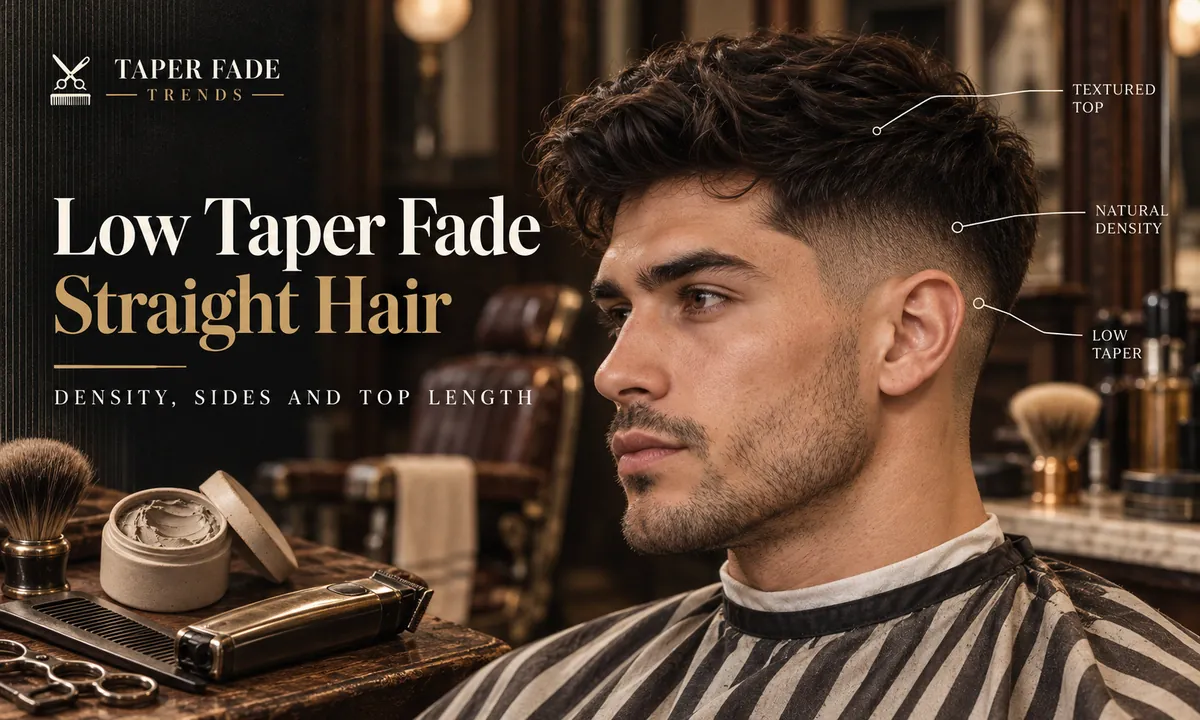
Low taper fade straight hair: density, sides and top length
Low taper fade straight hair guide: how much side weight to keep for your density and growth direction, why sides stick out, and what to ask your barber.
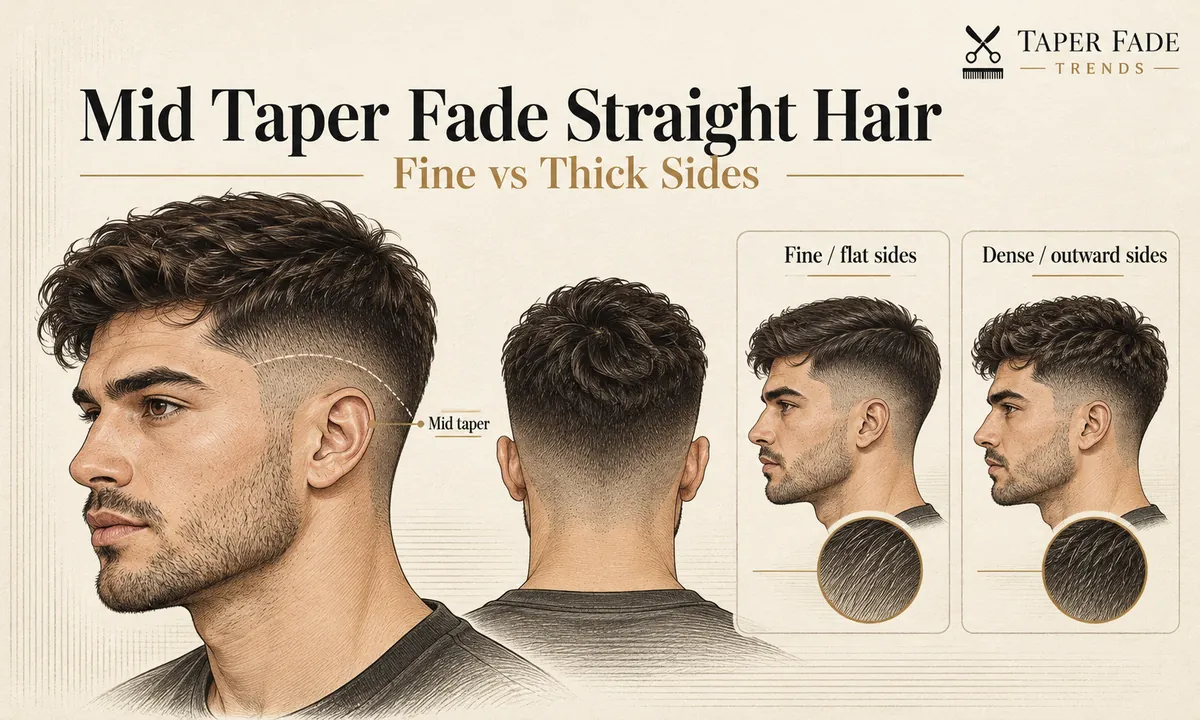
Mid taper fade straight hair: fine, flat and outward-growing sides
Mid taper fade straight hair guide: how much side weight to keep on fine or dense sides, why sides stick out after a cut, and what to tell your barber.
High taper fade straight hair: control side weight and avoid a shelf
High taper fade straight hair, explained by density, growth direction and side weight, with a barber script and why sides stick out as it grows.
More in barber brief and upkeep
Barber brief and upkeep: all 5- How to ask for a taper fade: a five-part barber brief9 min
- Haircut numbers: clipper guard sizes in millimeters and inches10 min
- How to maintain a taper fade between haircuts11 min
- How long does a taper fade last? Fresh, tidy and grown-out stages13 min
- Hair sticking out after taper: growth or side weight?You are here