High taper fade straight hair: control side weight and avoid a shelf
A high taper fade on straight hair works when side weight is chosen as carefully as height. Fine or lower-density hair shows scalp sooner as the blend gets close. Dense hair that grows outward can puff out if too much weight stays, or stick out if too much comes off. Settle placement, coverage, shortest finish and retained side weight first.
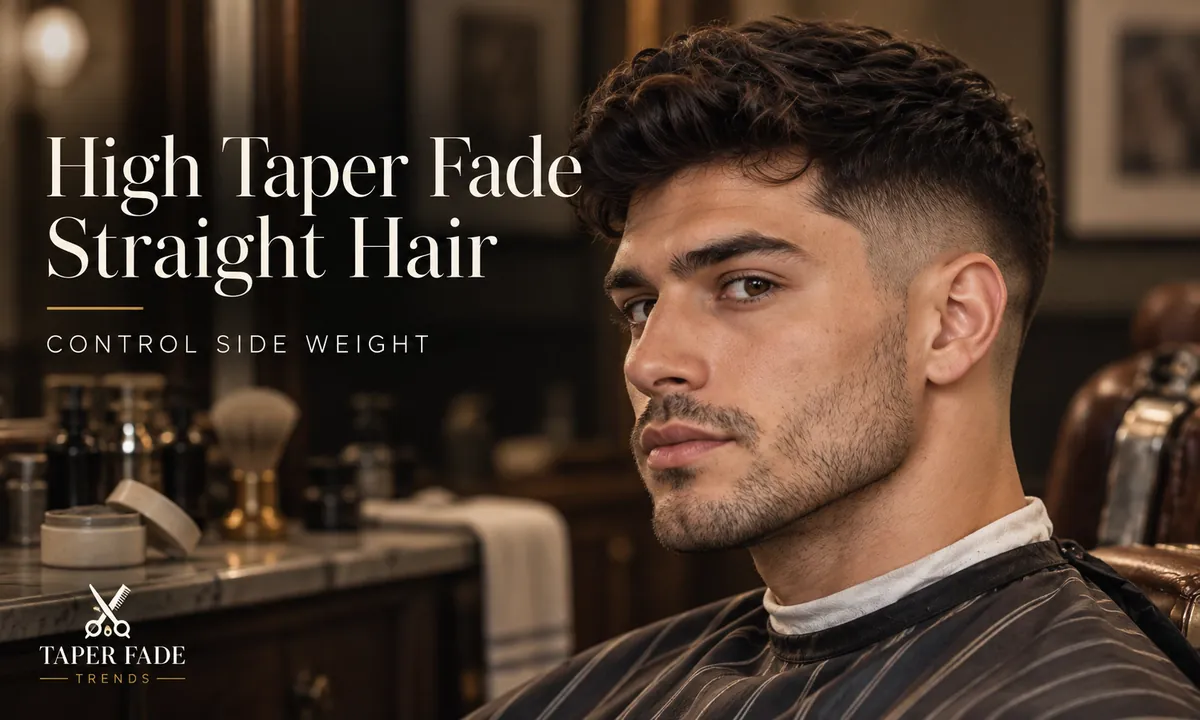
| Decision | What to settle |
|---|---|
| Placement | Where the blend starts: high, at the temple and sideburn. Point to it on your own head. |
| Coverage | Whether the short zone stays local or runs across most of the side. The second version is a high fade in this guide’s terms. |
| Shortest finish | Skin, a shadow or visible hair. This is a separate choice from placement. |
| Retained side weight | How much length stays above and between the taper zones. |
| Density | Fine or lower-density, medium, or dense. A visual read, not a diagnosis. |
| Growth direction | Whether the side hair lies down or pushes outward. Judge it on dry hair. |
| Top | Crop, fringe, side part or quiff. Product shapes the top; it does not add density. |
What a high taper fade changes on straight hair
A high taper fade on straight hair moves the short blend high around the temples, sideburns and nape. Coverage, shortest finish and retained side weight shape the result. Straight hair lies flat, so every transition shows. The name alone does not tell a barber to go to skin, use a set guard or cut a full high fade.
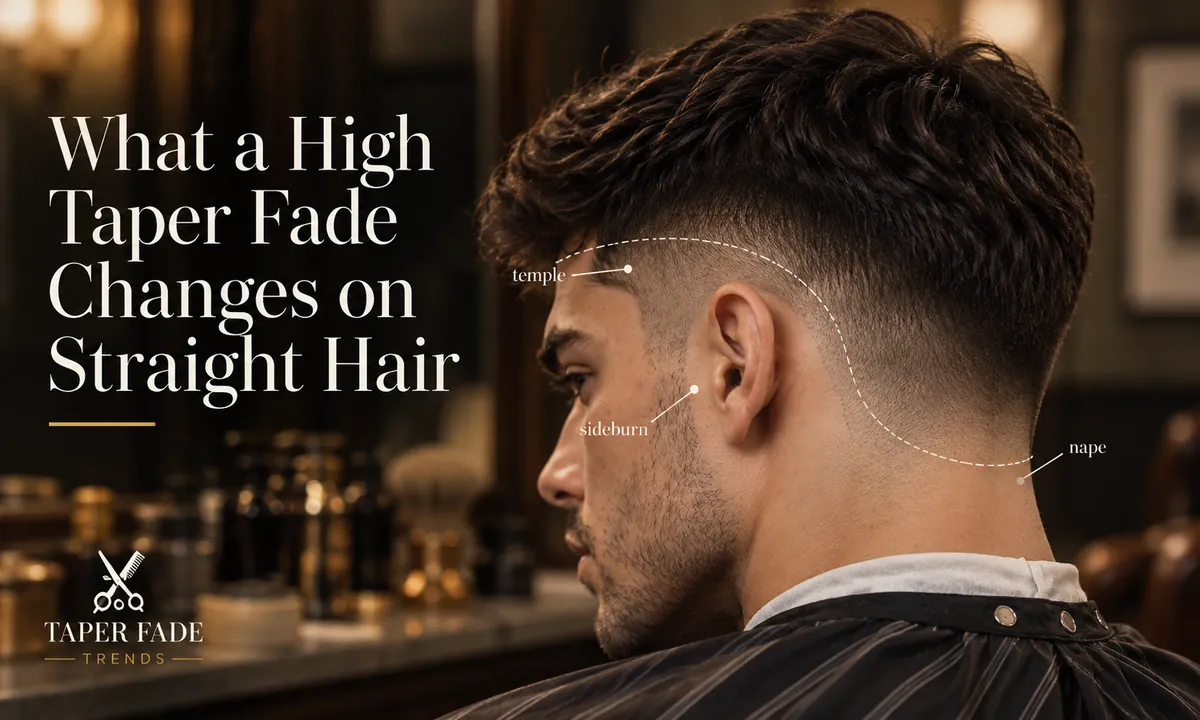
In Taper Fade Trends usage, a high taper fade is a perimeter cut whose blend starts high around the temple and sideburn, with the shortest work kept local instead of carried across the whole side. Retained side weight is the length left above and between those taper zones, whatever height the taper starts at.
Straight hair, here, just means hair without a persistent wave, curl or coil. Straight is not the same as fine. Density and growth direction vary a lot on straight hair, and they change the cut more than the texture label does.
Shops don’t agree on the words. StyleSeat’s taper vs. fade guide says clients and barbers both use “taper” and “fade” interchangeably, and it describes a high taper taken down to skin. Treatwell’s taper fade guide draws the line the other way: its taper fade stays closely clipped at the nape and sideburns but stops short of bare scalp. Because both readings are in use, this guide treats placement and shortest finish as two separate instructions. The high taper fade placement and coverage guide covers those controls on any hair type.
Choose side weight before you choose a guard
Fine or lower-density straight hair needs more side weight left in, because a close blend shows scalp sooner. Dense straight hair gives the barber more to work with, but if it grows outward, two mistakes show: leave too much weight and the side puffs out, take too much and short pieces stand up. Judge density and growth direction separately.
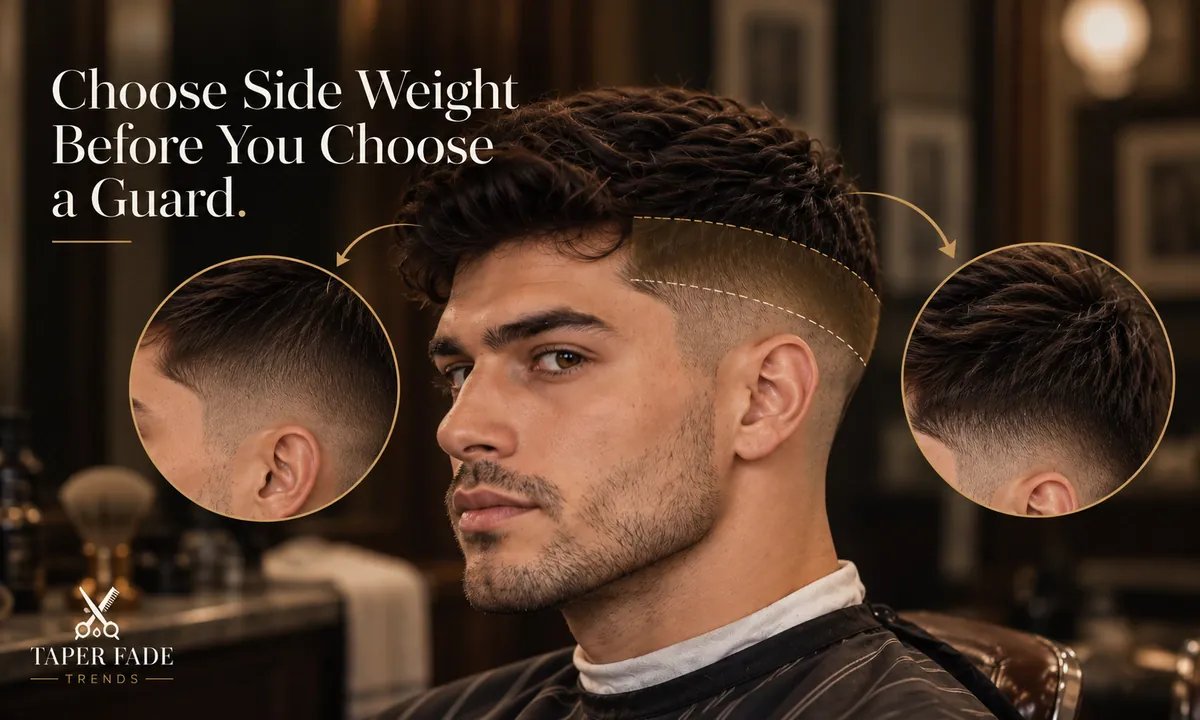
Work in this order. Decide how much side weight you want to keep, have density and growth direction checked on dry hair, then pick the shortest finish. Choosing a guard first fixes the finish before anyone has looked at how your sides grow.
| Density | Growth direction | Main risk | What to ask for |
|---|---|---|---|
| Fine or lower-density | Lies down | Scalp shows as the blend gets close | More retained side weight and a gradual blend |
| Fine or lower-density | Pushes outward | Not covered by the sources we checked | A dry check of the sides before the finish is set; no shorter by default |
| Dense | Lies down | Lowest scalp show-through of the four | The finish you want, with a gradual weight line |
| Dense | Pushes outward | Puffing if weight stays; a shelf if the weight stops abruptly | Bulk removed gradually, with no hard stop |
Fine or lower-density straight hair
Fine or lower-density straight hair shows scalp sooner as a blend gets closer, so the useful question is how much side weight to keep, not how short to go. Treatwell’s advice for fine, straight hair is a longer top and sides tapered very gradually, partly because every flaw in the blend shows more on fine hair. If scalp show-through bothers you, ask for a shadow or visible-hair finish and a little more length above the taper.
Dense straight hair that grows outward
Dense straight hair that grows outward can go wrong in both directions. In a September 2026 post on cutting thick, straight hair, Hiro Ginza Premium Barber in Singapore explains that too much weight left above the short section makes the sides swell outward as they grow, while too much removed leaves short pieces that start sticking out a few weeks later. A shelf is the third version: a visible weight line where short hair meets fuller hair too abruptly.
What you want is a gradual weight line and a barber who looks at the sides dry. Damp hair is heavier and usually lies flatter than it will at home.
What to tell your barber
Tell the barber four things: where the taper starts, how far the short zone travels, what the shortest point shows (skin, a shadow or hair) and how much side weight stays. Then show side and back photos. Skip the guard recipe unless it came from your own last cut, because the same numbers behave differently on different heads.
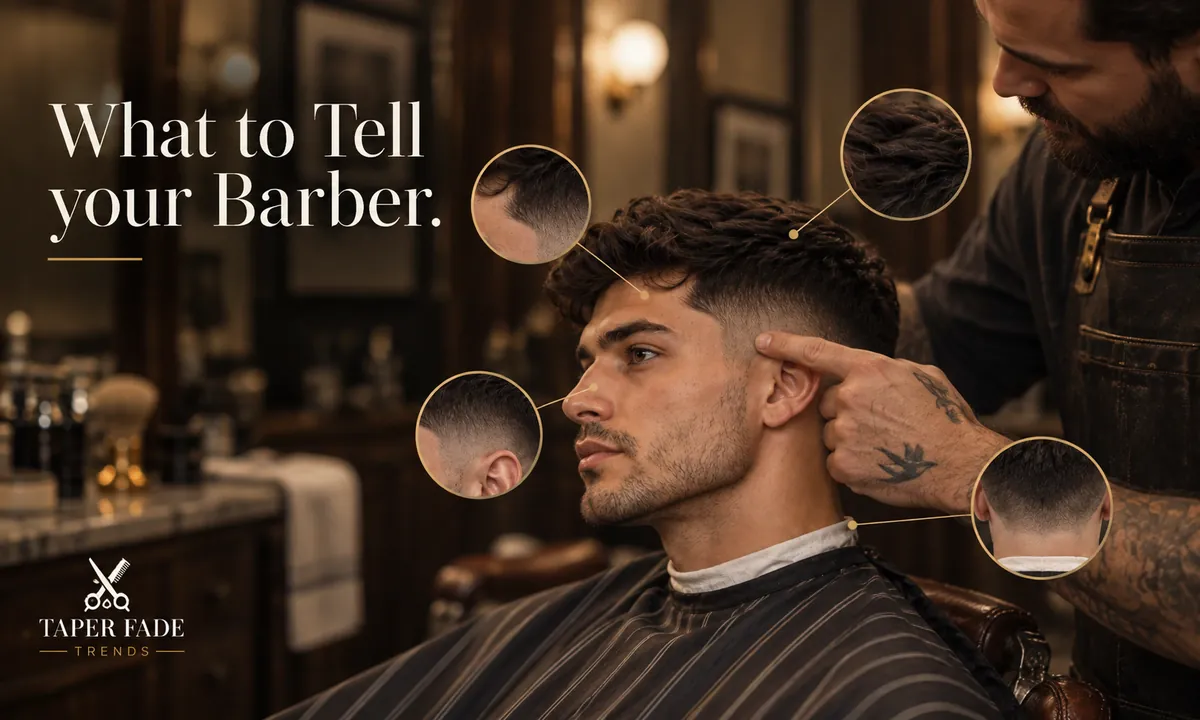
If you liked a previous cut, ask that barber which guard and lever setting they used, and save it in your phone. That record is worth more than any number from the internet. With no record, describe the finish and let the barber translate it into tools.
Bring photos of the front, both profiles and the back, ideally of hair close to yours in density. A single side photo leaves the nape and the coverage to guesswork.
Can I keep the taper but make the whole side shorter?
You can make the whole side shorter, but that changes coverage and retained side weight, not the taper’s height. Ask the barber to show where the short zone will stop before cutting. If the short work wraps across most of the side, Taper Fade Trends calls the result a high fade rather than a high taper.
The high taper fade placement and coverage guide shows that boundary.
How straight hair grows out after a high taper
Grow-out depends on your finish and your growth rate, so there is no single rebooking date. MedlinePlus puts healthy hair growth at about half an inch a month, roughly an eighth of an inch a week. That eighth is a big change on a skin finish and a small one on a finish that already shows hair.
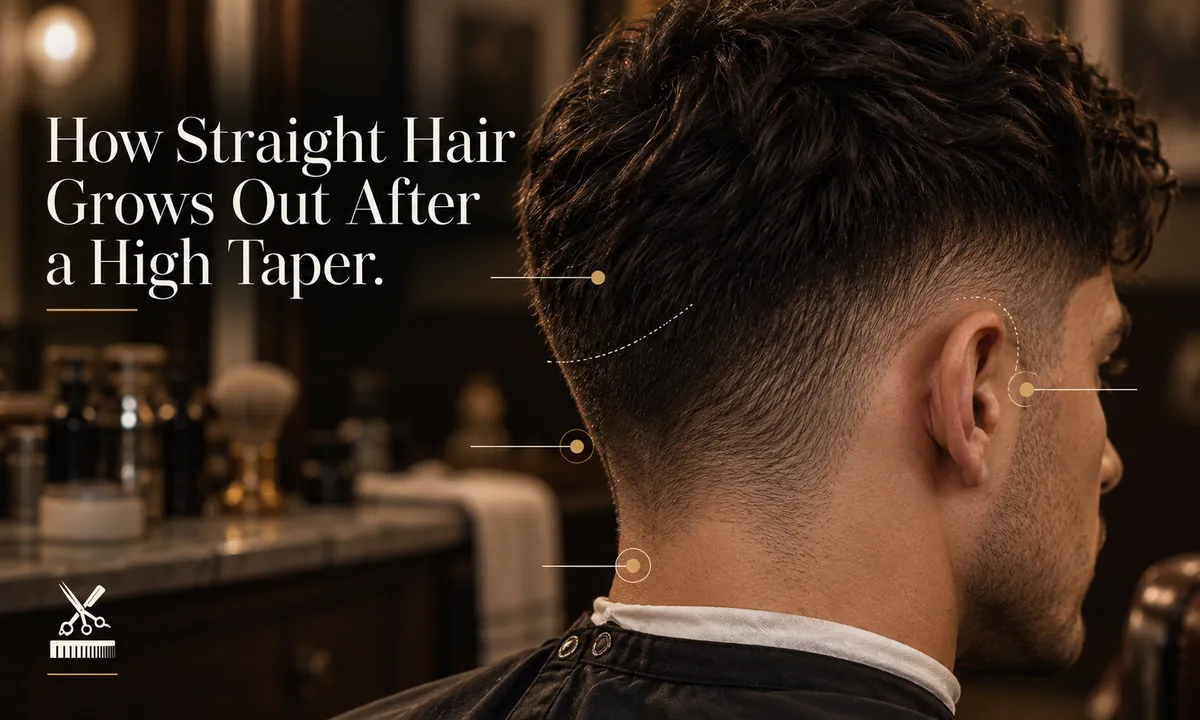
Published intervals vary. Treatwell suggests a high taper about every two weeks if you want the lines kept sharp. Read that as one guide’s figure for one goal, not a rule; your own sideburns are a better signal than the calendar.
| Area | What to watch as the cut grows |
|---|---|
| Sideburn | Whether the outline stays crisp or starts to blur |
| Nape | Whether the neckline holds its shape |
| Side flare | Whether side hair lies down or starts pushing outward |
| Weight line | Whether the step between tapered and retained hair stays gradual or starts to read as a ledge |
We have not yet photographed the same head a week after the cut, so this section tells you what to watch rather than showing a result.
Why do my sides stick out after a week?
Straight sides stick out when the hair grows outward and the remaining length is too short to fall under its own weight. Cutting shorter is the obvious fix but not always the right one: Hiro Ginza Premium Barber notes that taking too much off thick hair leaves short pieces that stick out weeks later. Check the side dry before deciding.
Style the top without flattening it
Set the top’s direction while the hair is damp, dry it that way, and add a small amount of lightweight product only if the shape needs help. Product can hold a shape. It cannot add density the hair does not have, and this guide does not rank products.
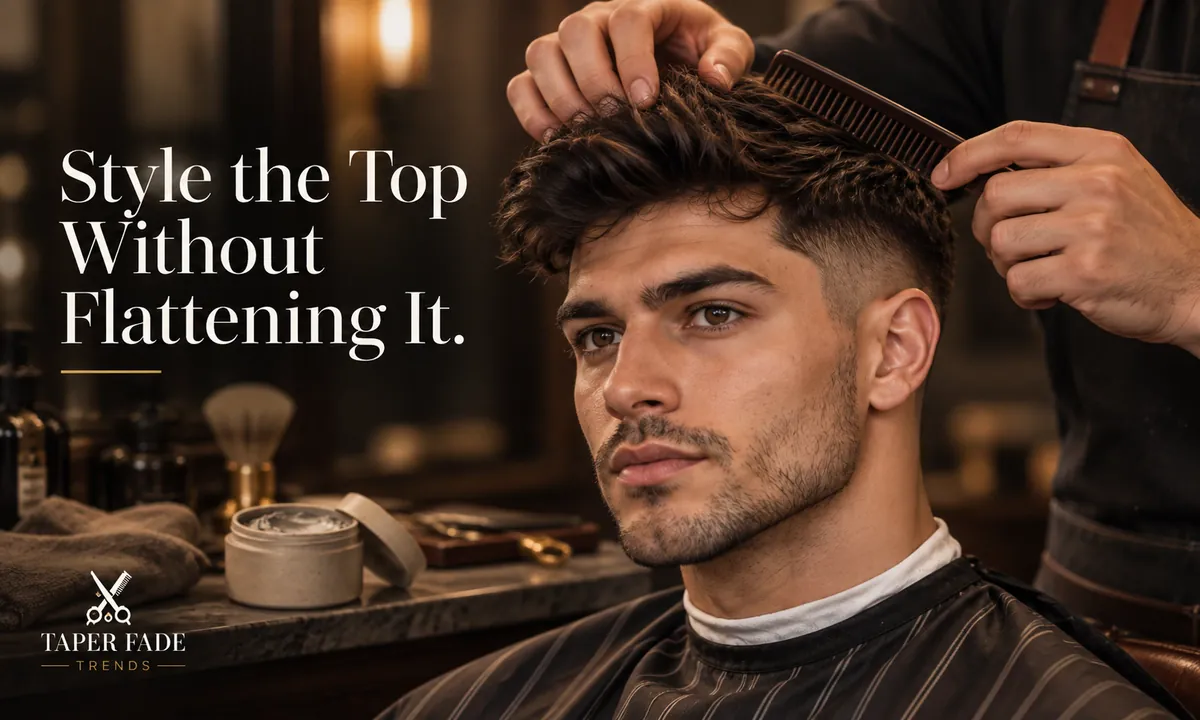
- Decide where the top should fall: forward, to one side or up.
- Blow-dry it in that direction while it is still damp, lifting at the root.
- Add product last, and only as much as the shape needs.
What if the top stays flat?
If the top stays flat, don’t ask for tighter sides first. Work out whether the top is short of length, lift or direction. Controlled drying and a little light product can add shape, but neither creates density. On fine hair, protect the fullness you have and check these in order before changing the sides:
- Length. Is the top long enough to hold a shape at all?
- Drying. Was it dried flat against the head, or lifted at the root?
- Product. Is there more product weighing it down than the shape needs?
When a different taper is the better choice
Choose a lower taper when you want less contrast, more side coverage or a grow-out that keeps more fullness near the temple. Choose a full high fade when you want short coverage across more of the side. These are preference and shape decisions, not “best for your face” rules, and no face-shape chart overrides how your sides grow.
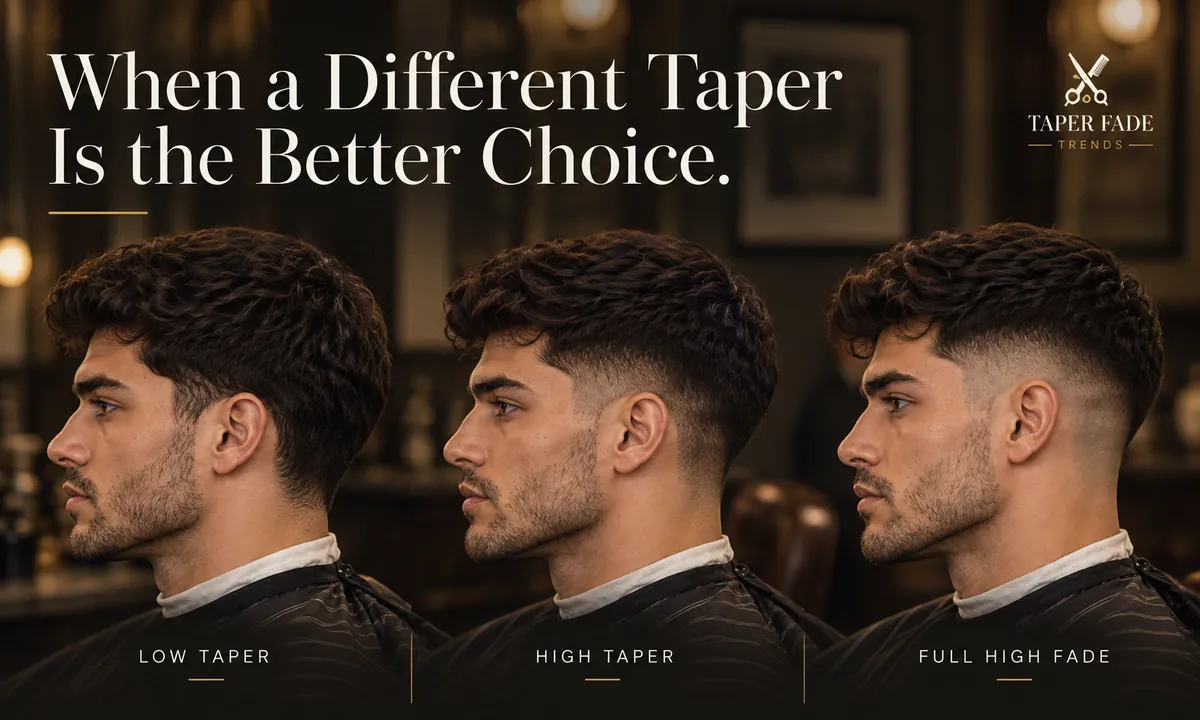
| Option | What changes | Consider it when |
|---|---|---|
| Lower taper | Less contrast, more side coverage | You want a softer transition or a fuller grow-out near the temple |
| High taper (this guide) | A local short zone with side weight kept above it | You want sharp contrast without short coverage across the whole side |
| Full high fade | Short coverage across more of the side | That wider short zone is the look you want |
Treatwell also points out that a lower fade can sit better with a strong cowlick or a receding hairline, which is worth raising with your barber if either applies. For low, mid and high placements side by side, see taper fade heights and finishes. Curly hair changes this decision again and needs its own brief.
Method and sources
Taper Fade Trends wrote this guide to help you choose and describe a high taper fade on straight hair. The cut terminology follows our high taper fade guide. Factual claims link to their sources: Treatwell and StyleSeat for terminology and fine-hair advice, Hiro Ginza Premium Barber for the thick, outward-growing side problem, and MedlinePlus for growth rate. The barber sources are practitioner advice, not research.

Every image on this page is an AI-assisted illustration, labeled as one, and none shows a real client’s result. This edition has no recorded guard, blade or lever settings, no photographed cases and no one-week follow-up, and no named barber has reviewed it. When those exist, they will be added and dated.
Keep reading
All guides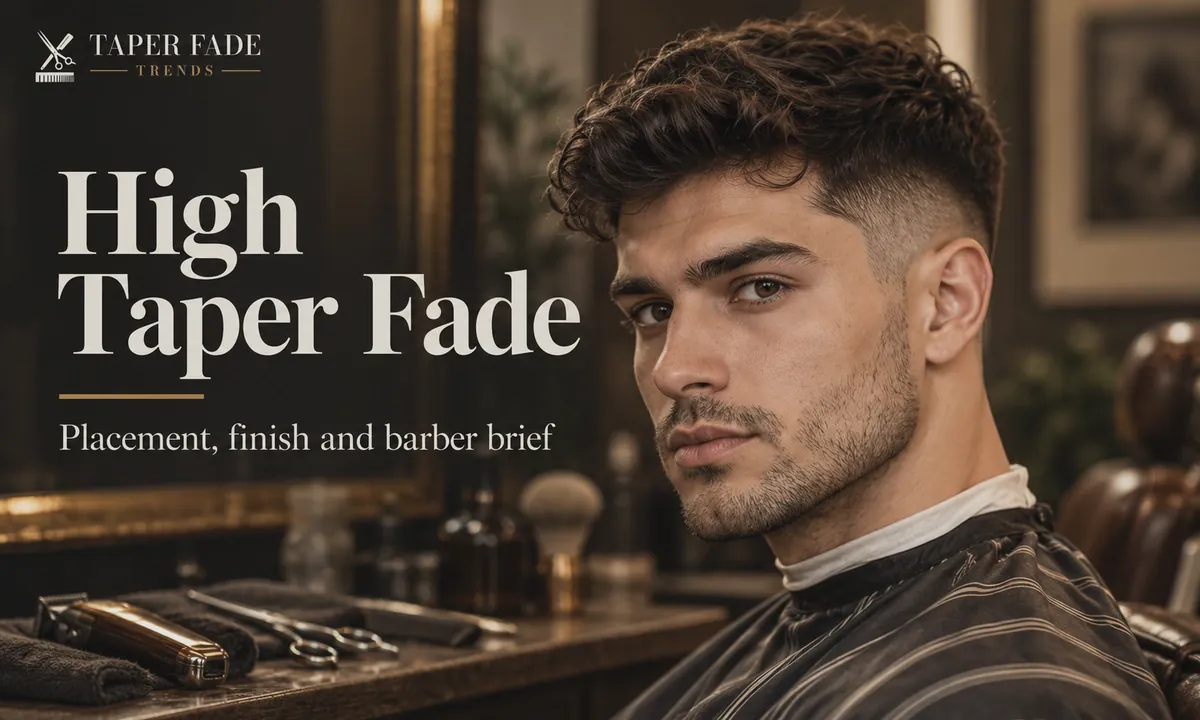
High taper fade: placement, finish and barber brief
Where a high taper fade sits, how much side weight stays, skin vs shadow finishes, what the back should look like, and exactly what to tell your barber.
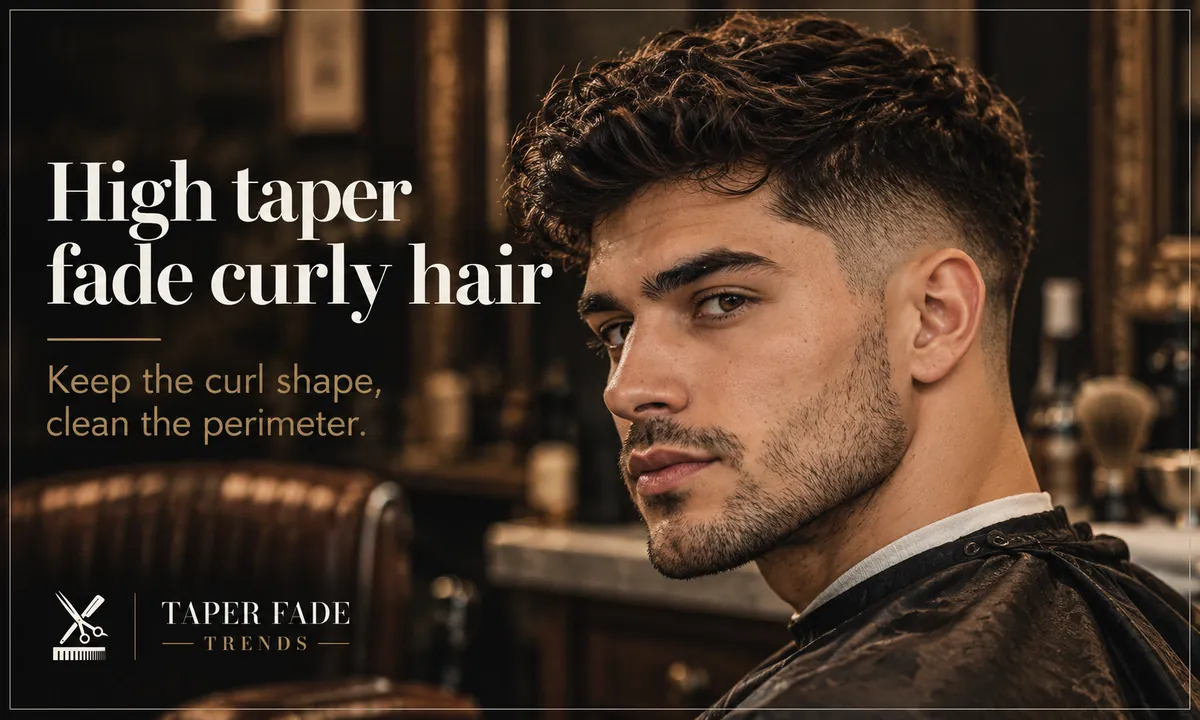
High taper fade curly hair: keep the curl shape, clean the perimeter
How a high taper fade works on curly hair: what side weight to keep, why curls are judged dry, how to measure shrinkage and what to tell your barber.
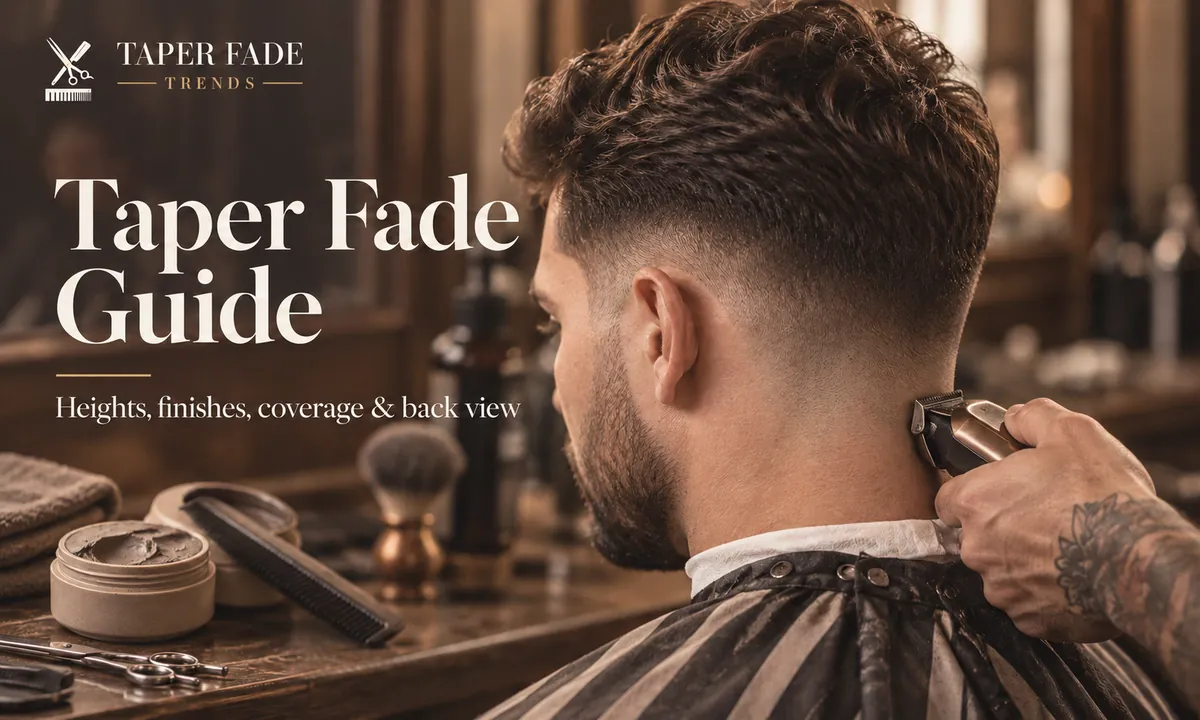
Taper fade: a visual guide to heights, finishes and top styles
Where a taper fade sits from the front, side and back, how low, mid and high differ, and how to ask for side coverage and a finish with or without skin.