High taper fade: placement, finish and barber brief
A high taper fade starts its blend high, at the temple corner, but keeps the short work to a narrow band around the temples, sideburns and nape, so the rest of the sides and back stay fuller than on a full high fade. The name doesn’t tell a barber whether to go to skin, so ask for that separately.
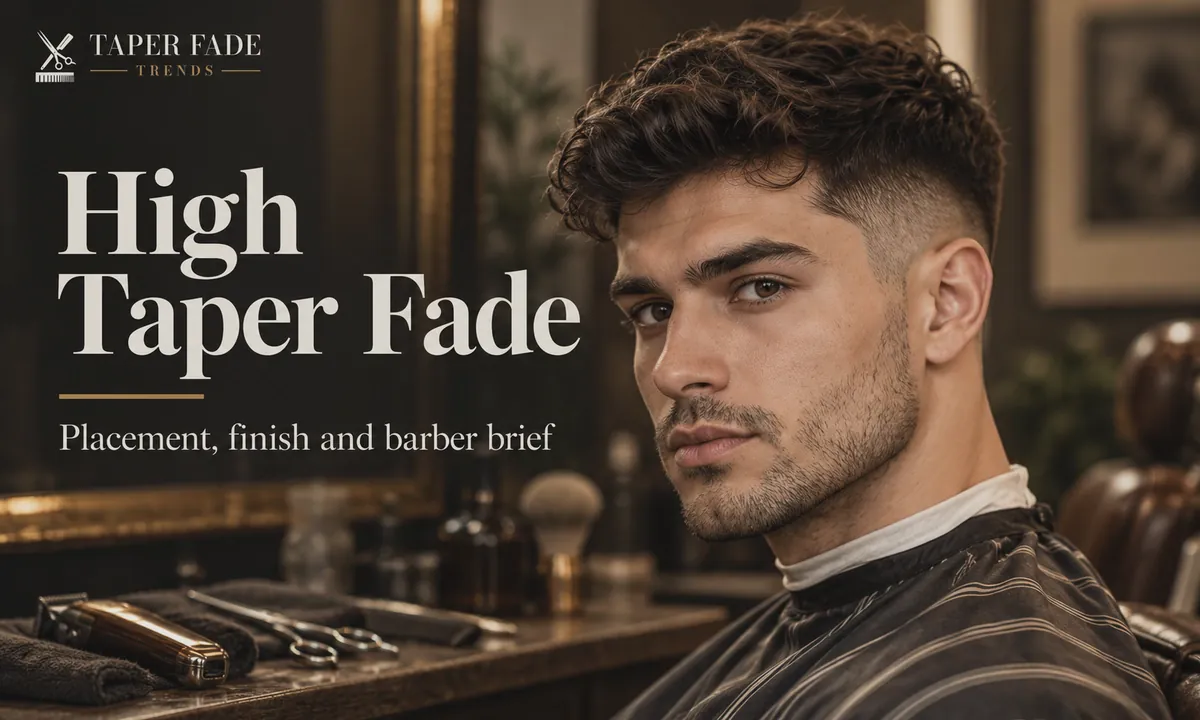
The cut at a glance, as this guide defines it:
| Element | High taper fade | How to get it across |
|---|---|---|
| Placement | Blend starts high, at or above the temple corner; no fixed inch mark | Point to it on a side photo |
| Side and back coverage | A narrow band at the temples, sideburns and nape | Mark where the short zone stops |
| Shortest finish | Not set by the name: visible hair, shadow or skin | Say it out loud |
| Retained side weight | More than a full high fade leaves at the same height | Say how full the sides should stay |
| Back and nape | Short work stays local; rear height and width are set separately | Show a rear photo |
| Top | Independent of the blend | Describe length and shape |
| Guard numbers | Only meaningful for a named clipper system, such as Wahl | Optional |
What is a high taper fade?
A high taper fade is a haircut where the shortest clipper work starts high, around the temple corner, but stays in a narrow band at the temples, sideburns and nape. The rest of the sides and back keep more length than a full high fade would leave. Whether the bottom reaches skin is a separate choice.
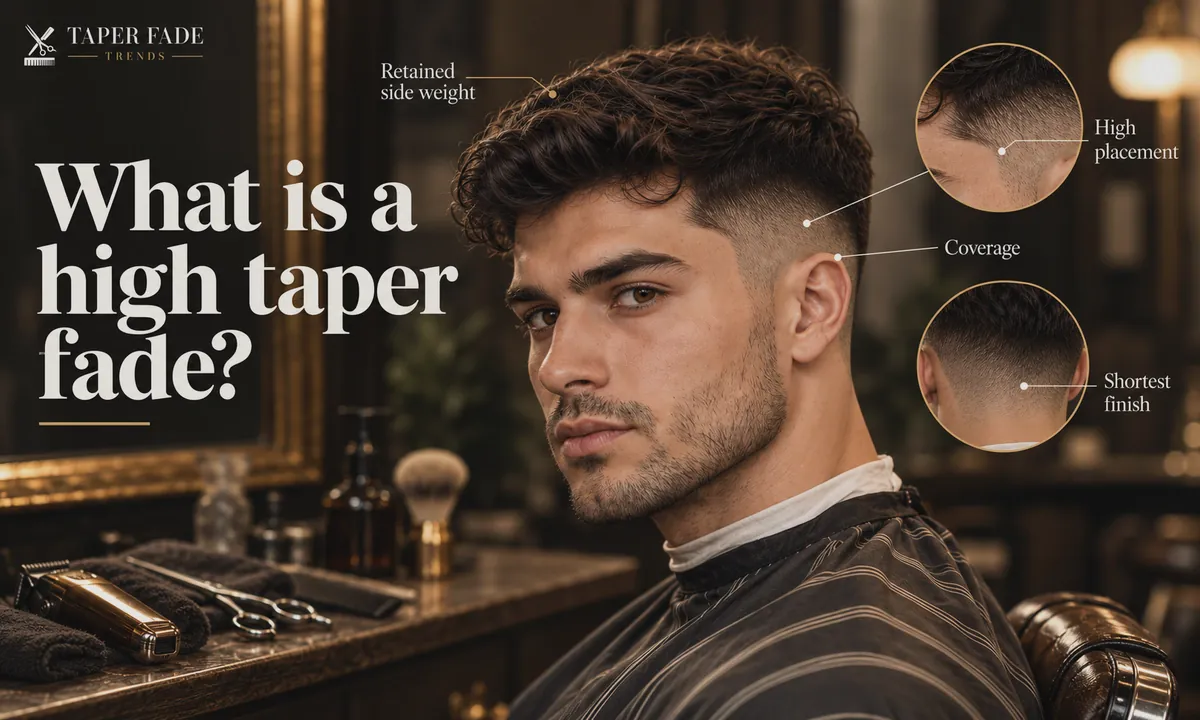
Our taper fade guide splits any taper into three decisions: how high it starts, how short the bottom finishes, and how much weight stays above the taper band. At this height one more decision takes over: coverage, meaning how far around the head the short zone is allowed to run. Start high and let the short zone wrap the whole side, and you have a high fade instead.
Working barbers draw the same line. Barber Darius Davie, quoted in a bald-fade roundup republished by AOL, describes a high taper as working a smaller section than a full skin fade around the head. Freshly Faded Barber + Shop describes its skin taper the same way: kept to the temple area on the sides, and no higher than the occipital bone at the back.
The four controls that define the cut
Four settings decide how a high taper fade looks, and each can change without the others: placement, coverage, shortest finish and retained side weight. Top length sits outside all four. Ask for each one on its own, because a barber who hears only “high taper” has to guess at three of them.
| Control | What it sets | If you leave it unsaid |
|---|---|---|
| Placement | How high the blend starts at the temple and sideburn | The barber picks a height from habit |
| Coverage | How far around the sides and back the short zone runs | A narrow taper can drift into a full high fade |
| Shortest finish | Visible hair, shadow or skin at the bottom | You can get skin when you expected hair, or the reverse |
| Retained side weight | How much length stays through the rest of the side | The sides can come out shorter overall than you pictured |
High taper fade vs high fade
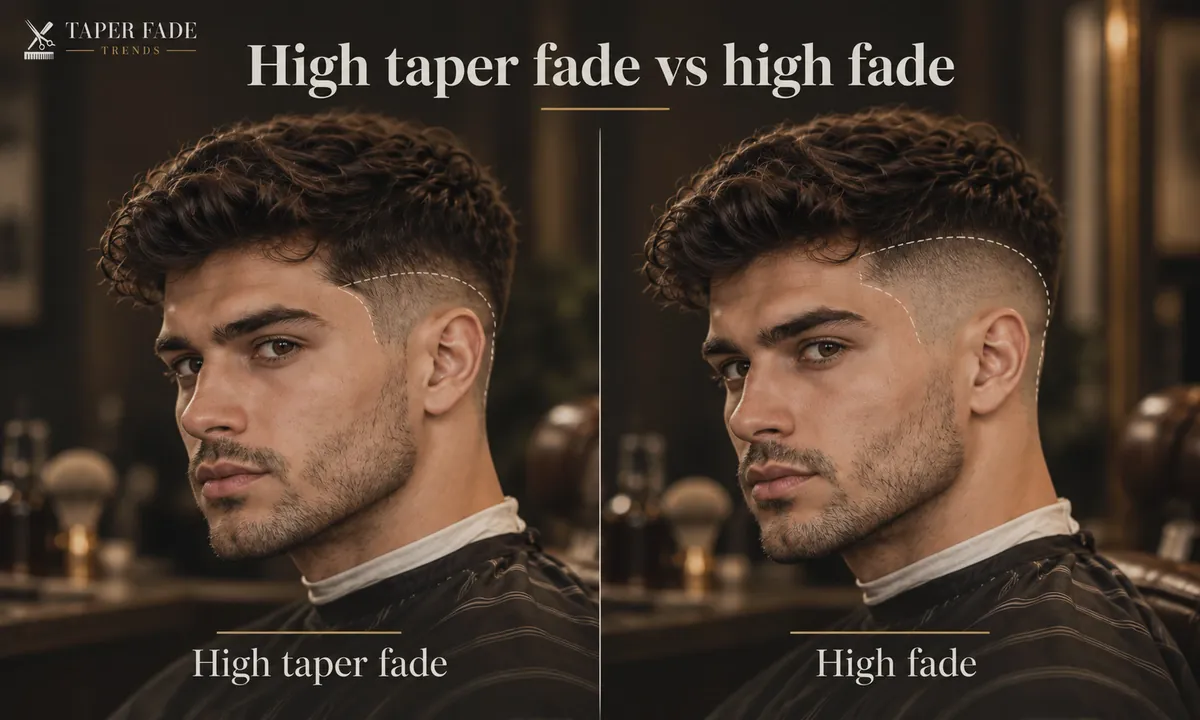
A high taper fade and a high fade are different cuts in this guide. Both start high, but the high taper fade keeps its short work around the temples, sideburns and nape, while a full high fade carries short hair farther around the sides and back. At the same starting height, the high fade leaves less hair on the sides.
| High taper fade | High fade | |
|---|---|---|
| Where the short zone sits | Temples, sideburns and nape | Temples, sideburns and nape, then farther around |
| Side and back coverage | Local to that band | Across more of the side and back |
| Side weight left | More | Less, at the same height |
| Shortest finish | Set separately: hair, shadow or skin | Set separately: hair, shadow or skin |
Shops use both labels loosely, so the name alone won’t settle which cut you get. Bring a reference photo and ask the barber to point to where the short zone will stop.
Choose the height, coverage and finish
Set the height, coverage and finish of a high taper fade as three separate choices, then check how much side weight is left. Height says where the blend starts, coverage says how far around it runs, and the finish says what remains at the bottom. None follows from the others, so give each its own sentence.
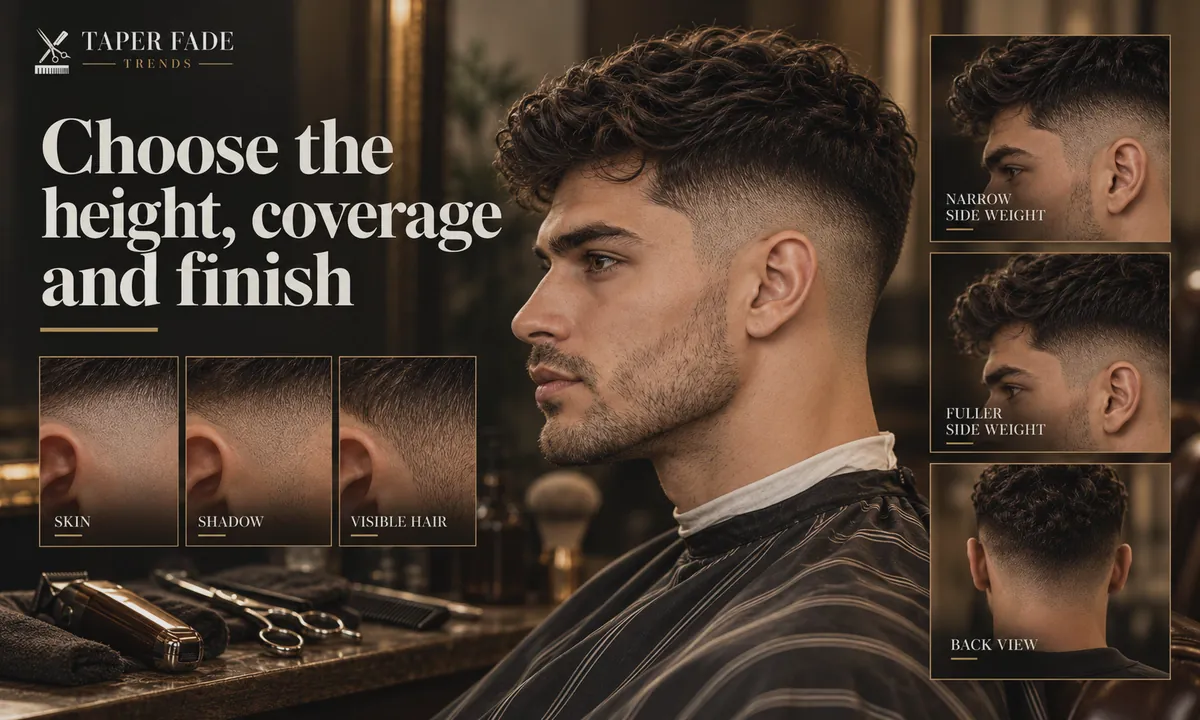
If you can’t decide between two heights, ask for the lower one. Man of Many’s taper guide, written by a former barber, makes the practical point: a barber can always take a blend higher, but can’t put hair back once it’s gone.
Skin, zero or shadow
A high taper fade doesn’t have to reach skin, and it doesn’t have to stop short of it either. CADMEN Academy, a barber school, treats a taper as ending in visible hair and suggests asking for “taper, not to skin.” Shops that cut a skin taper take it to bare scalp. Name the finish you want.
Skin means bare scalp. A shadow leaves a haze of very short hair, so the bottom reads grey rather than bare. “Zero” is the loosest of the three words from shop to shop, so pair it with “skin” or “no skin” to remove the doubt.
Quote a guard number only when you know which clipper it refers to. Wahl’s clipper guard size chart lists its #1 guard at 1/8 inch and its #2 at 1/4 inch, and notes that the taper lever shifts the cut length between guard sizes. With a barber you don’t know, describing the visible finish works better than a number.
Wahl’s listed length; the taper lever and the clipper system change the result
Wahl’s listed length; other brands’ numbers may not match
How much side weight should stay
A high taper fade can keep plenty of side weight as long as the short zone stays narrow around the temple and nape. Coverage, not height, controls this: widen the short zone and more side hair goes, even if the highest point of the blend doesn’t move. Mark on a photo exactly where the short zone should stop.
What the back should look like
The back of a high taper fade should follow the plan set at the temples, not be guessed from a side photo. Decide how high the rear blend climbs at the nape and whether it stays narrow or wraps wider toward the ears. A profile can’t show either choice, so bring a rear reference.
Two more details sit at the back. Man of Many’s guide makes both points: match the nape taper to the height set at the sideburns, and decide whether the back hairline is tapered or squared off. Then ask for a hand mirror before you leave the chair.
Examples by hair type and top length
Hair type changes how a high taper fade reads, not what it is. Placement, coverage and finish stay the same requests on every head. What shifts is how visible the blend line is, how much contrast shows at the bottom, and how much top length has to connect into the blend. These are texture patterns, not photos of specific cuts.
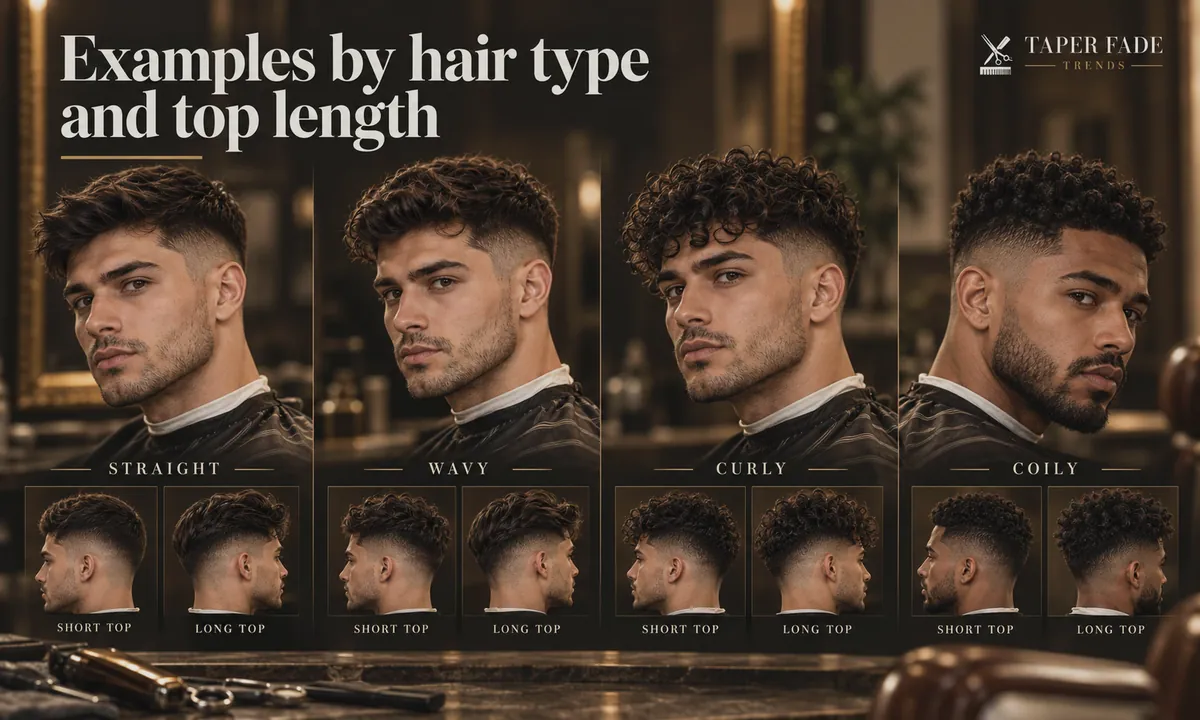
| Hair type | What tends to change | Worth raising at the chair |
|---|---|---|
| Straight or fine | Hair lies flat, so guard lines and steps show | A longer, softer blend |
| Wavy | Movement softens the edge of the transition | Whether you want the edge crisp or soft |
| Curly | Shrinkage makes dry hair sit shorter than it was cut | Setting the height on dry hair |
| Coily or coarse | The jump from skin to hair is the most visible part | Skin or shadow, chosen on purpose |
Straight and wavy hair
Straight hair shows the mechanics of a high taper fade more than any other texture. It lies flat, so a guard line or a hard step reads clearly, and a longer blend zone is the usual fix. Wavy hair softens the transition, which hides small errors but works against a sharp line, so decide which you want.
Curly and coily hair
Curly and coily hair can hide where a high taper fade actually starts. Shrinkage makes dry hair sit shorter than the length that was cut, so a height set on wet hair can land higher than planned. A barber writing for Stylex advises setting the height on dry hair, and that’s worth asking for.
On coarse, tightly curled hair, CADMEN Academy notes that the difference between bare skin and the first length of hair is very clear, so the bottom of the blend is the most visible part of the cut. That makes the skin-or-shadow decision matter more here, not less.
Short top vs long top
Top length changes how the top connects into the blend, while the four controls for the sides and back stay the same.
| Top length | What changes | Styling note |
|---|---|---|
| Short top | Top and blend meet over a short distance, so the transition reads fast | Little daily styling needed |
| Long top | More length has to connect into the same blend height | Usually needs product and direction to look intentional |
What to tell your barber
Tell your barber four things about a high taper fade: where the blend starts, how far the short zone may reach, what finish sits at the bottom, and how much length must stay on the sides and top. Show a side and a rear photo, then ask the barber to repeat the plan back before cutting.
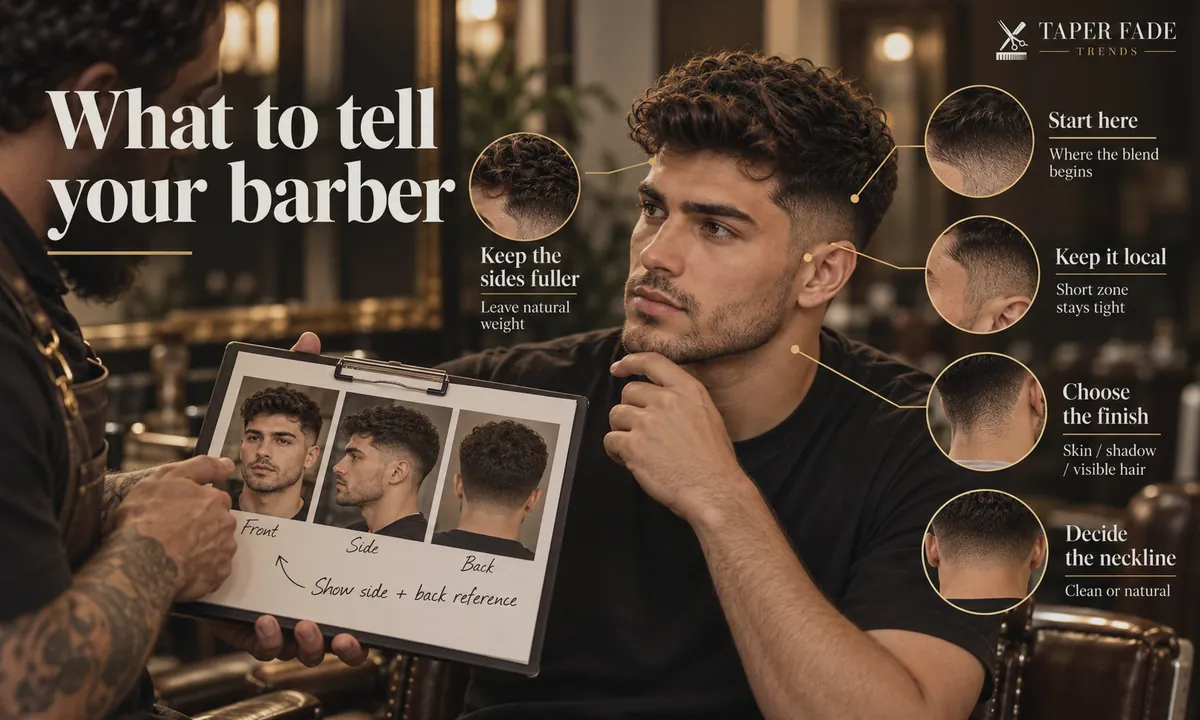
Wording you can use at the chair, filled in with your own choices:
- “Start the blend here, at my temple corner.” Point to the spot.
- “Keep the short part to my temples, sideburns and nape. Don’t wrap it around the whole side.”
- “Finish the bottom at [skin / shadow / visible hair, no skin].”
- “Leave the rest of the sides fuller, and keep about [length] on top.”
- “Taper the neckline,” or “Square off the neckline.”
- “Can you walk me through the plan before you start?”
Bring reference photos from four angles, ideally of hair like yours:
- Front
- Left side
- Right side
- Back
Leave blade and lever settings to the barber unless you know their clipper system. Those follow from the outcomes above.
Styling, grow-out and upkeep
How long a high taper fade stays sharp depends mostly on the finish, not the height. Skin shows regrowth within about a week, CADMEN Academy notes, while a taper that stops on a short guard grows at the same rate but looks tidy for longer. Hair-to-scalp contrast and how crisp you like the outline shift it further.
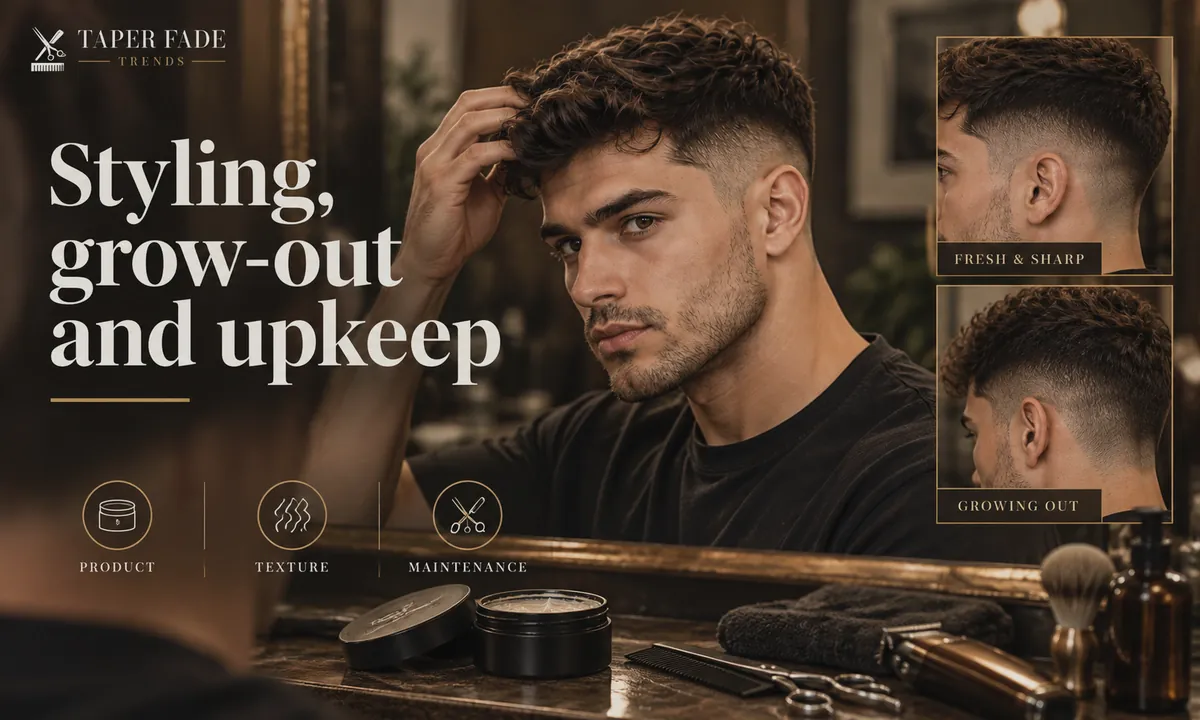
That’s why this guide doesn’t give a fixed schedule. Treat any week count as a rough starting point, because growth rate varies from person to person.
The top is a separate job. You can restyle it with product any day; it’s the blend at the sides and back that softens first as hair grows in.
When another cut makes more sense
A high taper fade is a poor fit if you want rare barber visits, uniformly short sides, or no visible transition at all. A reference photo shows placement and coverage, but it can’t show how that plan will look with your density, growth pattern and hair-to-scalp contrast, so treat it as a starting point.
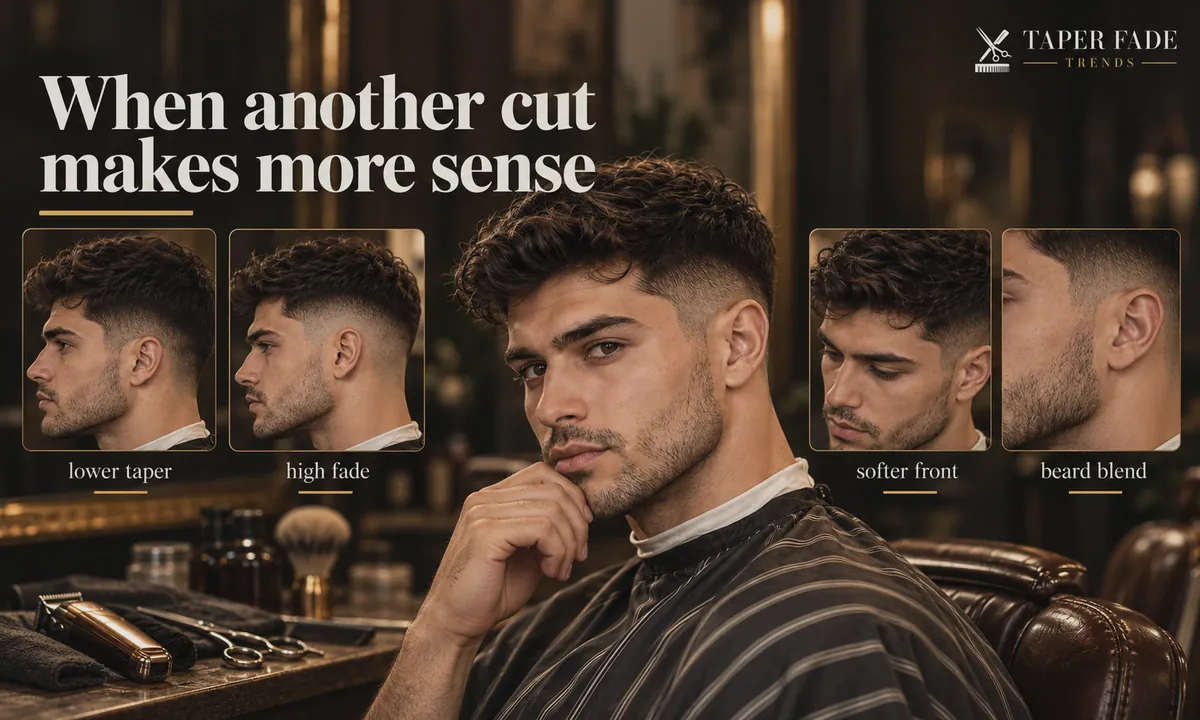
Consider something else when:
- You’d rather not book often. A lower taper grows out less visibly, and so does keeping the high placement but finishing on a guard instead of skin.
- You want the whole side short. That’s a full high fade, which carries the short zone across more of the side and back.
- Your temples are receding. A high placement puts the shortest hair right where recession shows, so a lower or softer blend at the front is worth discussing.
- You wear a beard. Decide whether the sideburns should blend into the beard or break cleanly, because that changes the sideburn part of the taper.
How this guide was researched
Taper Fade Trends Editorial compared how a barber school, working barbershops, a clipper manufacturer and competing guides use “high taper fade.” They disagree most about whether a taper reaches skin, so this guide organizes the cut around four settings instead of a single definition, and names its sources where a claim depends on one.
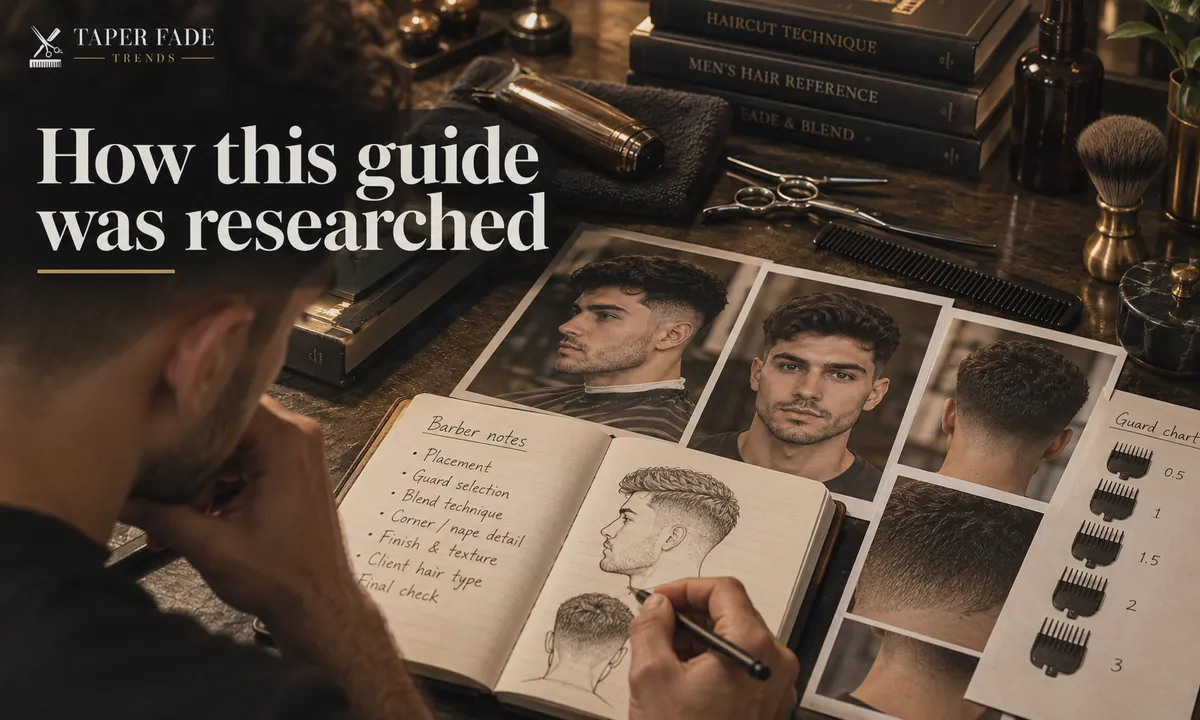
Every figure on this page is a labeled illustration, not a photo of a finished cut. We’ll add real, credited photos tied to recorded cut specs when we have them. This version has not yet had the barber review our editorial policy calls for on technique guides; the reviewer’s name and the review date will appear here once it has. To report an error, see our editorial policy.
Sources cited in this guide:
- CADMEN Academy: taper fade vs skin fade
- Freshly Faded Barber + Shop: the skin taper
- Wahl: clipper guard size chart
- Man of Many: taper fade haircuts
- Stylex: taper fade vs skin fade
- AOL: modern bald fades, with barber Darius Davie
- American Academy of Dermatology: razor bump remedies
If height is still the open question, compare low, mid and high placement in our taper fade guide.
Keep reading
All guides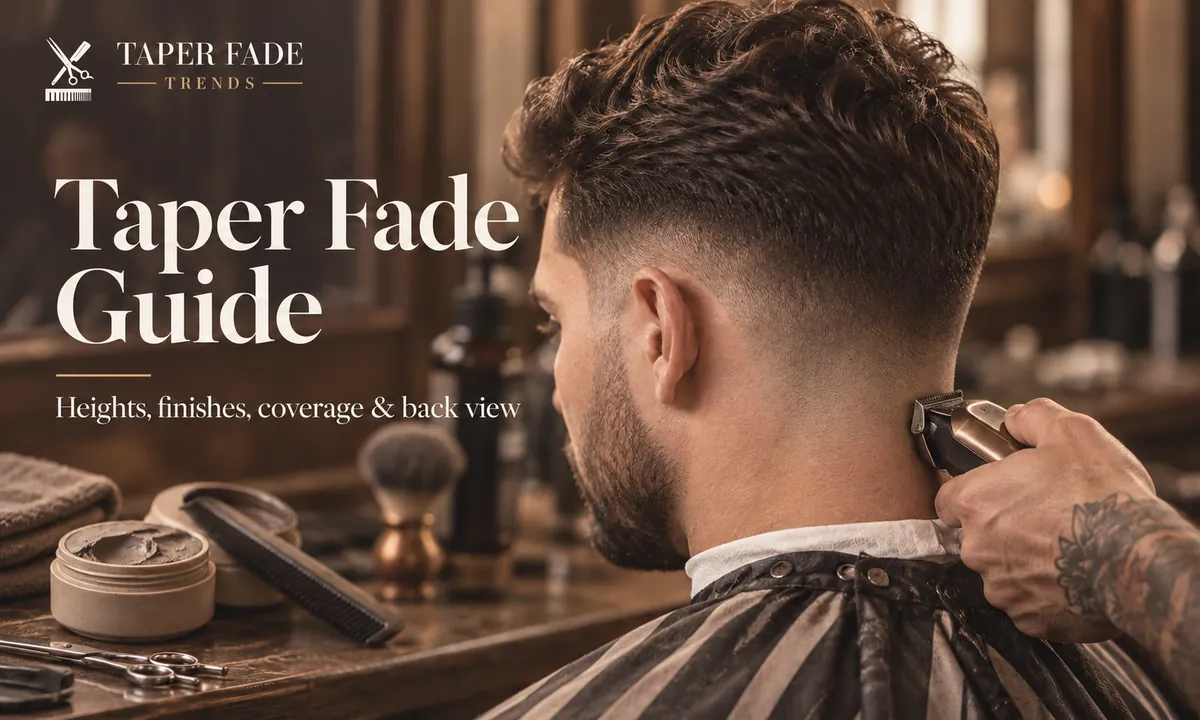
Taper fade: a visual guide to heights, finishes and top styles
Where a taper fade sits from the front, side and back, how low, mid and high differ, and how to ask for side coverage and a finish with or without skin.
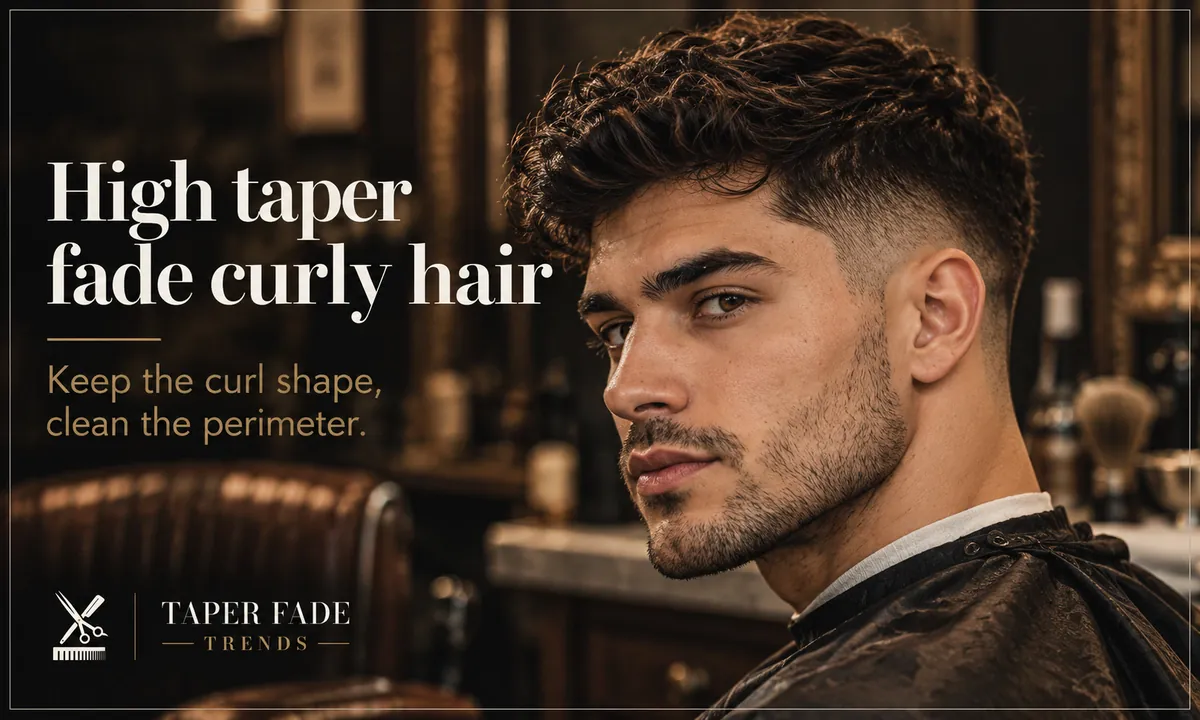
High taper fade curly hair: keep the curl shape, clean the perimeter
How a high taper fade works on curly hair: what side weight to keep, why curls are judged dry, how to measure shrinkage and what to tell your barber.
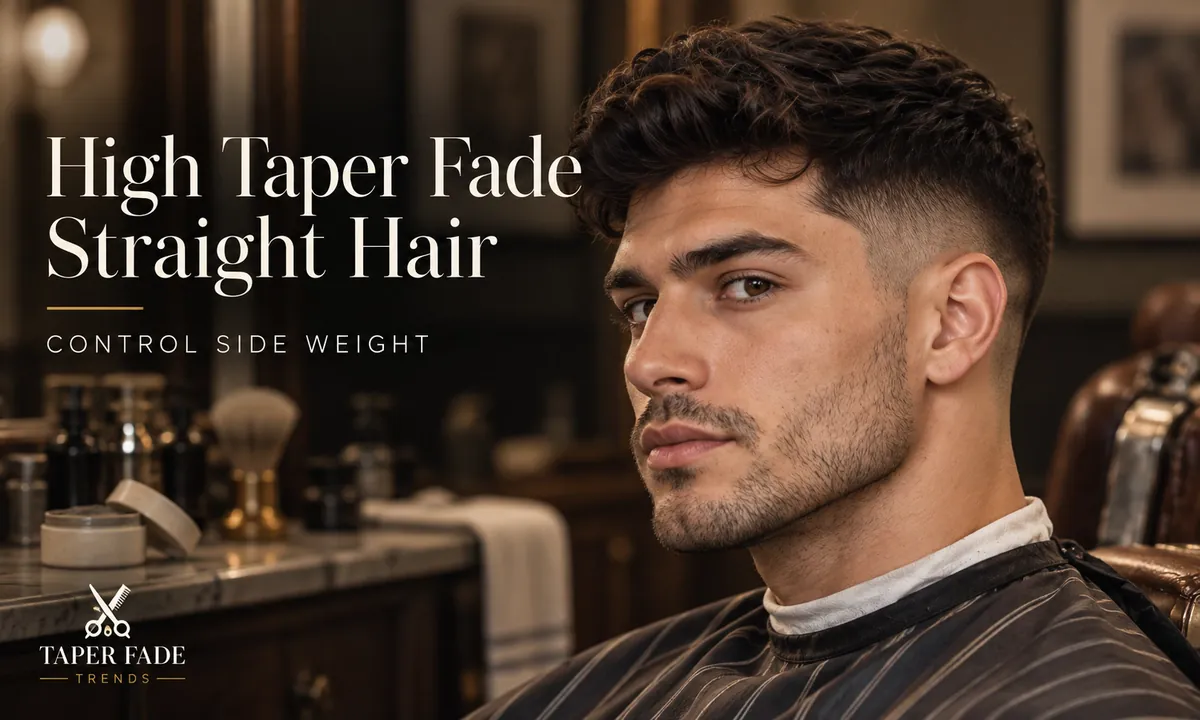
High taper fade straight hair: control side weight and avoid a shelf
High taper fade straight hair, explained by density, growth direction and side weight, with a barber script and why sides stick out as it grows.
More in high taper fades
High taper fades: all 8- High taper fade: placement, finish and barber briefYou are here
- High taper fade curly hair: keep the curl shape, clean the perimeter10 min
- High taper fade straight hair: control side weight and avoid a shelf9 min
- High taper fade Black male styles: waves, coils, twists and locs9 min
- High taper fade wavy hair: keep your wave pattern10 min
- High taper fade short hair: Compare crop, crew and textured tops11 min
- High taper fade with beard: how the sideburn meets the beard11 min
- High taper vs high fade: side, back and coverage8 min