High taper fade wavy hair: keep your wave pattern
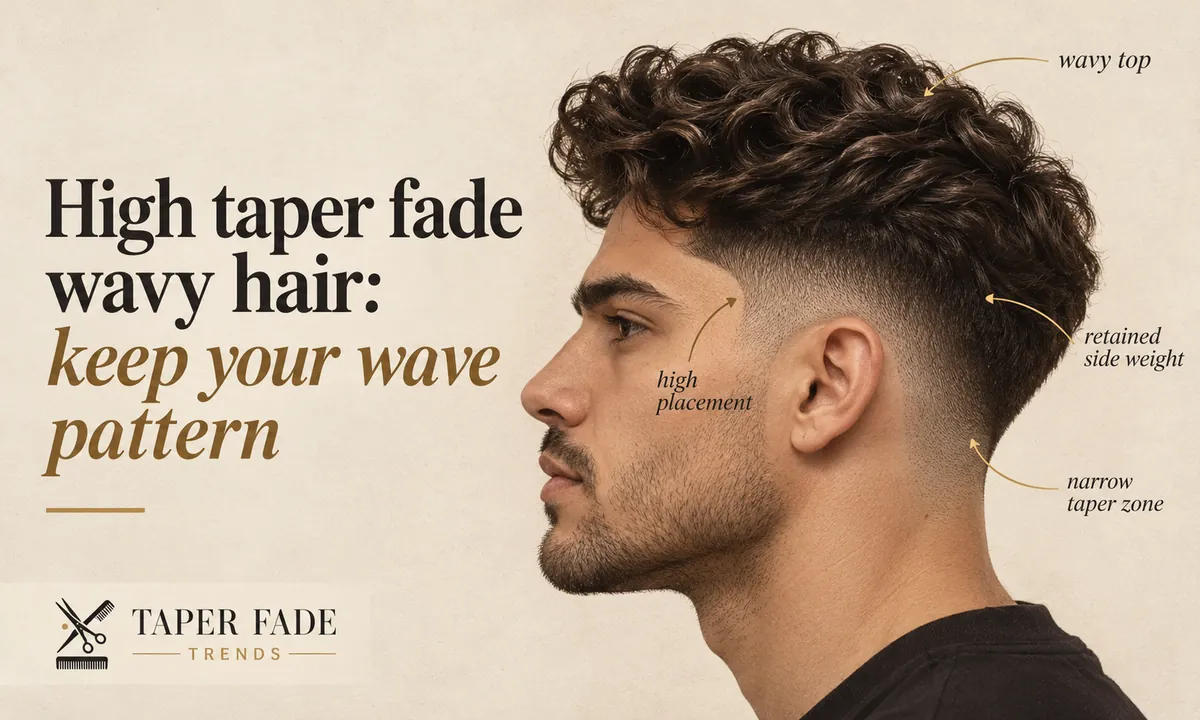
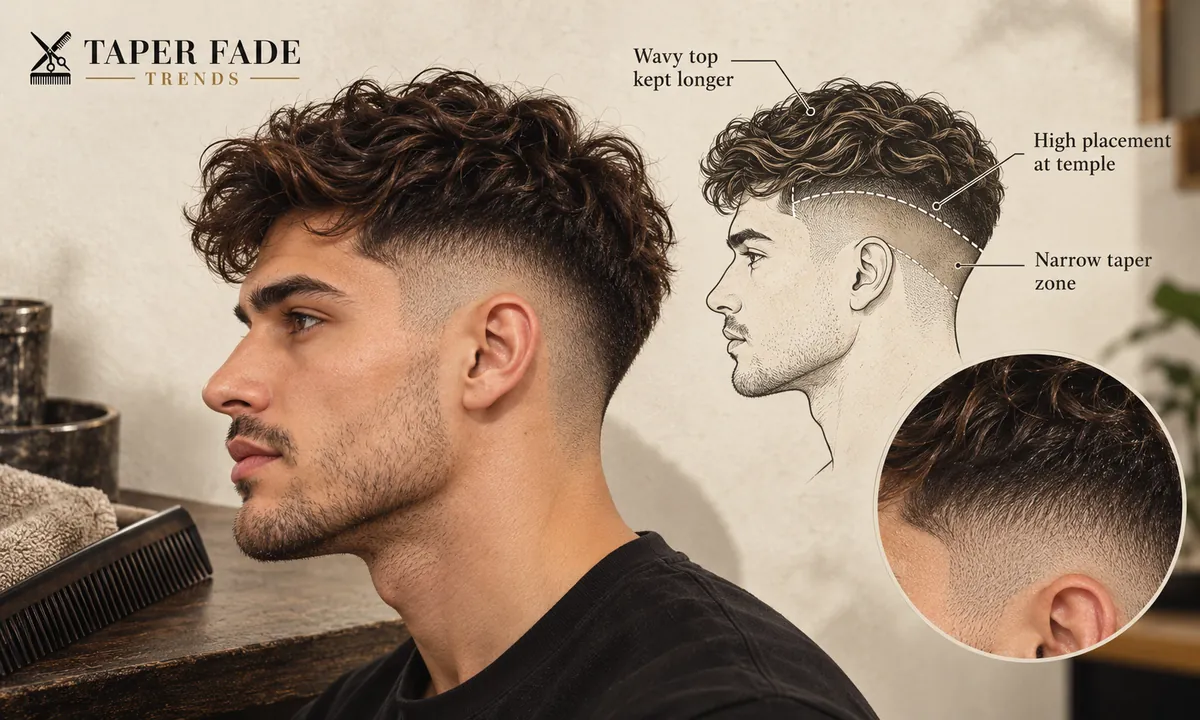
A high taper fade on naturally wavy hair starts the short zone high at the temple but keeps it to a narrow band around the temples, sideburns and nape, so the sides keep weight and the top stays long enough for your wave to show. Set top length from how your hair bends dry, not from a guard number.
This guide is for hair that waves on its own. If you train 360 waves, read the 360 section first, because the haircut risk is different.
| Control | What to settle | How to get it across |
|---|---|---|
| Placement | Where the short zone starts: high, at or above the temple corner. No fixed inch mark. | Point to it on a side photo |
| Coverage | How far the short zone runs. On a high taper it stays a narrow band at the temples, sideburns and nape. | Mark where it should stop |
| Shortest finish | Skin, shadow or visible hair. “High” doesn’t decide it. | Say it out loud |
| Retained side weight | How much side hair stays above the short zone, and how much wave shows there | Name a landmark, such as the top of the ear |
| Top length | Long enough for your wave to finish its bend when dry. No universal number. | Ask for a dry check before the top is cut |
| Growth direction | How hair leaves the scalp at the crown, hairline and sides | Point out cowlicks and whorls |
| Wave type | Natural waves or trained 360 waves | Say which before anything else |
| Neckline | Tapered or squared (blocked) | Say it; a photo rarely settles it |
| Drying | Air-dry or limited heat | Tell the barber how you usually dry it |
What is a high taper fade on wavy hair?
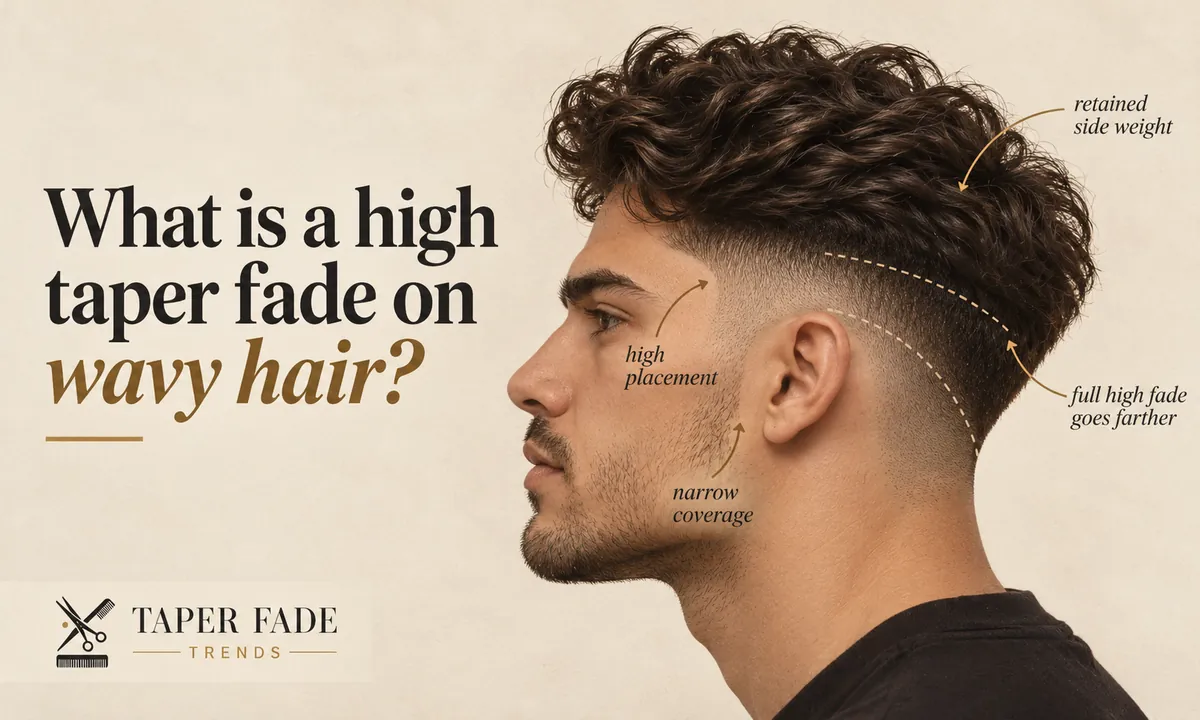
A high taper fade on wavy hair is a haircut where the short zone starts high, at the temple corner, but stays a narrow band at the temples, sideburns and nape. The rest of the sides keeps more length than a full high fade leaves, and the top stays long enough for the natural wave to show.
Four settings define the cut, and each can change without the others. Placement is where the short zone starts. Coverage is how far it runs. Shortest finish is the minimum length at the perimeter, the outer edge of the hair around the ears and neck, and it can be skin, shadow or visible hair. Retained side weight is how much side hair stays long above the short zone. The high taper fade guide explains all four for every hair type. This page covers what changes when the hair is naturally wavy.
Working barbers draw the taper the same way. Freshly Faded Barber + Shop describes its skin taper as going no higher than the temple area on the sides and no higher than the occipital bone at the back.
In this guide, naturally wavy hair means hair that forms visible bends or S-shaped movement without a brushing-and-compression routine. That is a working definition for choosing a haircut, not a medical hair-type classification.
High taper vs high fade on wavy hair
A high taper and a full high fade can start at the same height. The difference is coverage: the high taper keeps its short zone at the temples, sideburns and nape, while the high fade carries it across more of the sides and back. On wavy hair, that decides how much side wave survives.
| High taper fade | Full high fade | |
|---|---|---|
| Short zone | Narrow band at the temples, sideburns and nape | Carried across more of the sides and back |
| Retained side weight | More | Less, at the same height |
| Wave left on the sides | Over most of the side | Over less of the side |
Some shops use the two names for the same cut, so bring a photo with the stop line marked. The full comparison, with side and back views, is in high taper vs high fade.
Natural waves and 360 waves are different
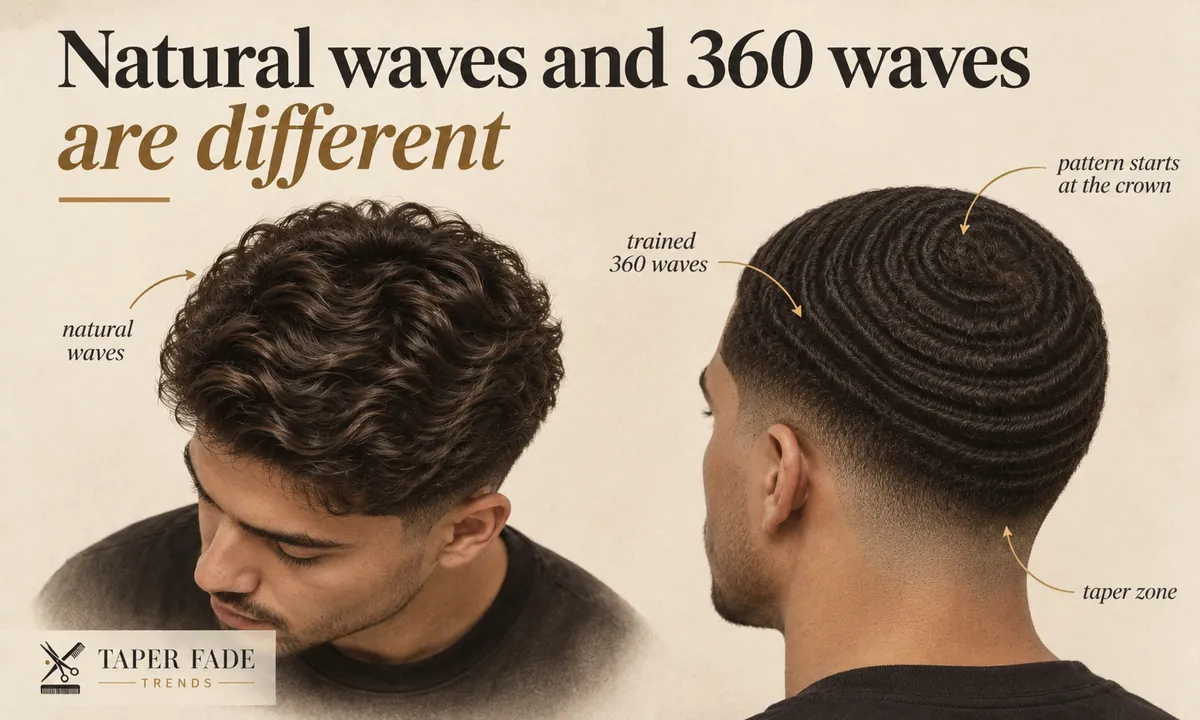
Naturally wavy hair and 360 waves need different haircut briefs. Natural waves are bends your hair forms on its own. 360 waves are a pattern trained by brushing, moisturizing and compressing short hair, usually under a durag or wave cap. Haircut galleries call both “waves,” so say which one you mean first.
| Natural waves | Trained 360 waves | |
|---|---|---|
| Where the pattern comes from | The hair’s own bend | Daily brushing from the crown, plus compression |
| What the high taper puts at risk | Retained side weight and the dry bend on top | Pattern at the temples and sideburns |
| What to tell the barber | How much top length and side weight to keep | How far down the sides the pattern must stay |
The routine side of 360 waves, daily brushing and a durag or wave cap, follows Men’s Health’s master-barber guide.
On trained waves, the risk sits at the temples and sideburns. Where the clippers go short enough to cut through the pattern, that part of the wave is gone until the hair regrows and is brushed back in. Coverage decides how much is lost, not the word “high,” so point to where the pattern has to stay before the sides are cut.
The high taper guide for waves, coils, twists and locs covers where the taper should stop on a trained pattern. The rest of this page is about natural waves.
How much length should stay on top?
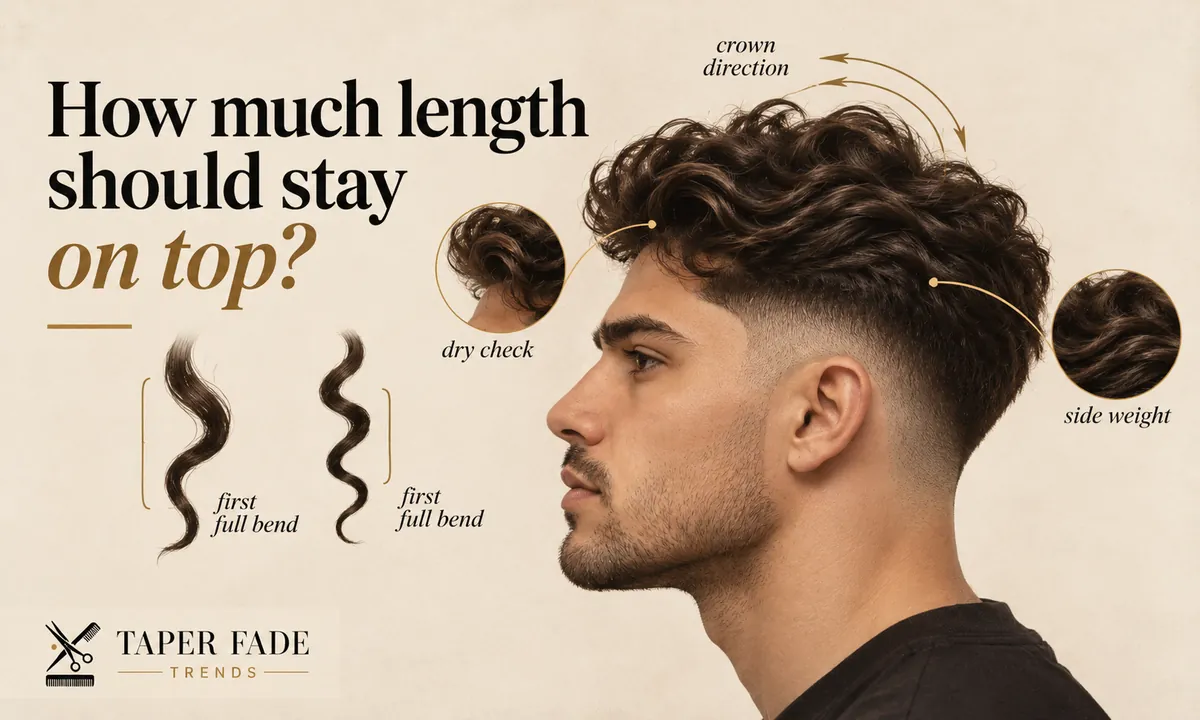
Keep enough top length for your natural wave to finish its bend when the hair is dry. No inch or guard number works for every wavy pattern, density or growth direction. Ask the barber to judge the bend dry, shorten the top in stages, and stop before the length that makes the wave.
- Arrive with your hair dry and worn the way you usually wear it, or ask for a dry check. Wavy hair usually sits shorter and tighter dry than it looks wet, so wet length is a poor guide.
- Have the top shortened in stages, with a dry check between passes.
- If you’re unsure, leave it longer. Length can come off at the next visit, but cut hair only comes back with regrowth, about half an inch a month according to MedlinePlus.
Growth direction and dry wave shape
Growth direction is the way hair leaves the scalp, and it changes where a wave sits as much as length does. Check it with the hair dry.
- At the crown, the top-back of the head, hair often spirals out from one point called a whorl. The wave there can sit differently from the hair around it.
- At the front hairline, hair that grows forward falls differently from hair that grows back, so the same length can show a different wave.
- At the sides, hair that grows outward sits wider above the short zone than hair that grows down.
Point these out to the barber before any length comes off.
Density and retained side weight
Density changes how heavy the same retained side weight looks. Keep more and you keep more wave at the sides, with a wider outline. Take more off and the outline narrows while less wave shows.
On fine wavy hair, a high taper can make the top look thin against the short zone, so keep more side weight and a softer transition. On dense hair, the sides can push outward as they grow, which is the usual reason to take more weight off. Don’t copy side weight or top length from someone else’s photo without checking that their density looks like yours.
Once those controls are clear, compare only references that show a genuinely different wave or coverage decision.
High taper examples to compare before your appointment
Compare wavy high taper references by the decision each one shows, not by how good the photo looks. Check three things: how much top length the wave needs, how much retained side weight stays, and whether the pattern is natural or trained. Choose photos with a wave and density close to yours.
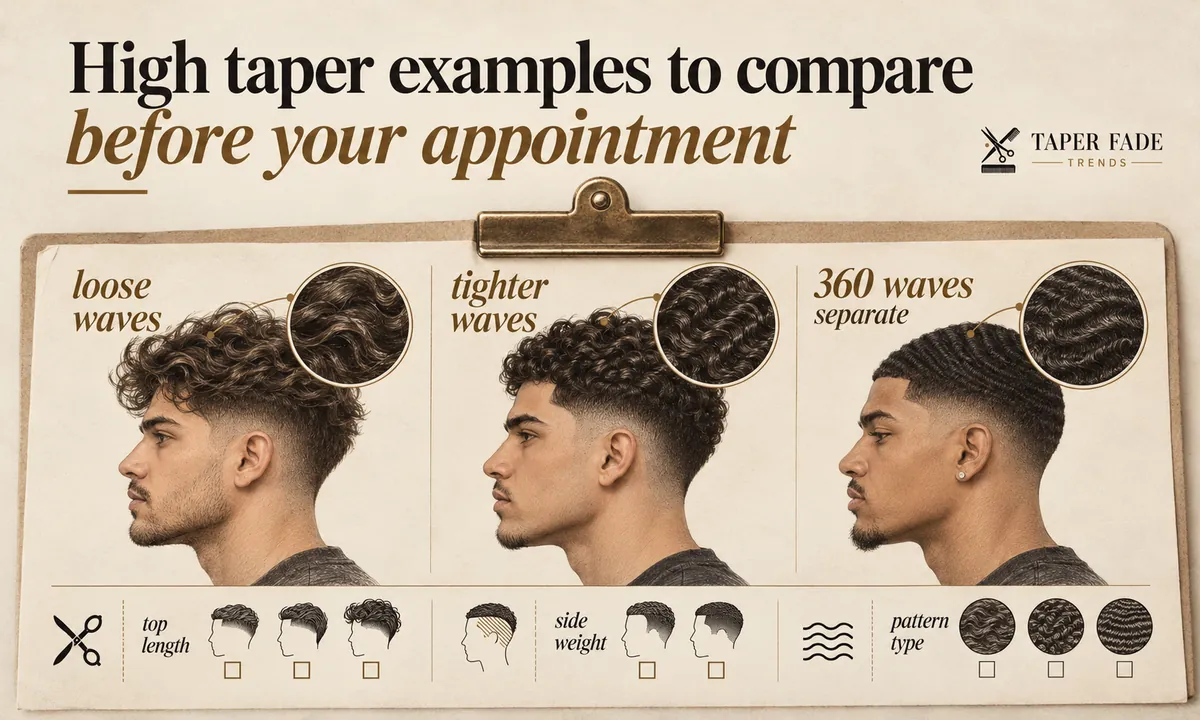
This guide doesn’t have photos of real cuts yet, so use the table to test any reference you find.
| Loose natural waves | Tighter natural waves | |
|---|---|---|
| Main decision | Enough top length for the gentle bend to complete | How much wave stays visible at the sides |
| Top length | Usually needs more to show a wave | Often shows a wave at less length |
| Choose this reference if | Your dry bend is gentle and you want it kept | Your dry bend is pronounced and you want wave at the sides too |
Loose natural waves
On loose waves, top length is the decision that matters most. A gentle bend needs more length to complete, so put the shortening into the short zone, not the top. Keep enough side weight for the bend to show above the taper.
Tighter natural waves
On tighter waves, the bend often shows at a shorter top length, so the bigger choice moves to the sides: how much pattern stays above the short zone. Look for a reference where the sides still wave instead of lying flat.
Trained 360 waves: separate reference
Don’t use a natural-wave photo for a 360 cut. Bring a photo of your own pattern, mark where it must survive on the sides, and ask the barber to show where the short zone will stop before the clippers start.
What to tell your barber
Ask for a high taper on wavy hair by describing five things: placement, coverage, shortest finish, retained side weight and top length. Add how you wear the top and which neckline you want. Bring front, left, right and back references, and don’t rely on one guard number to describe the whole cut.
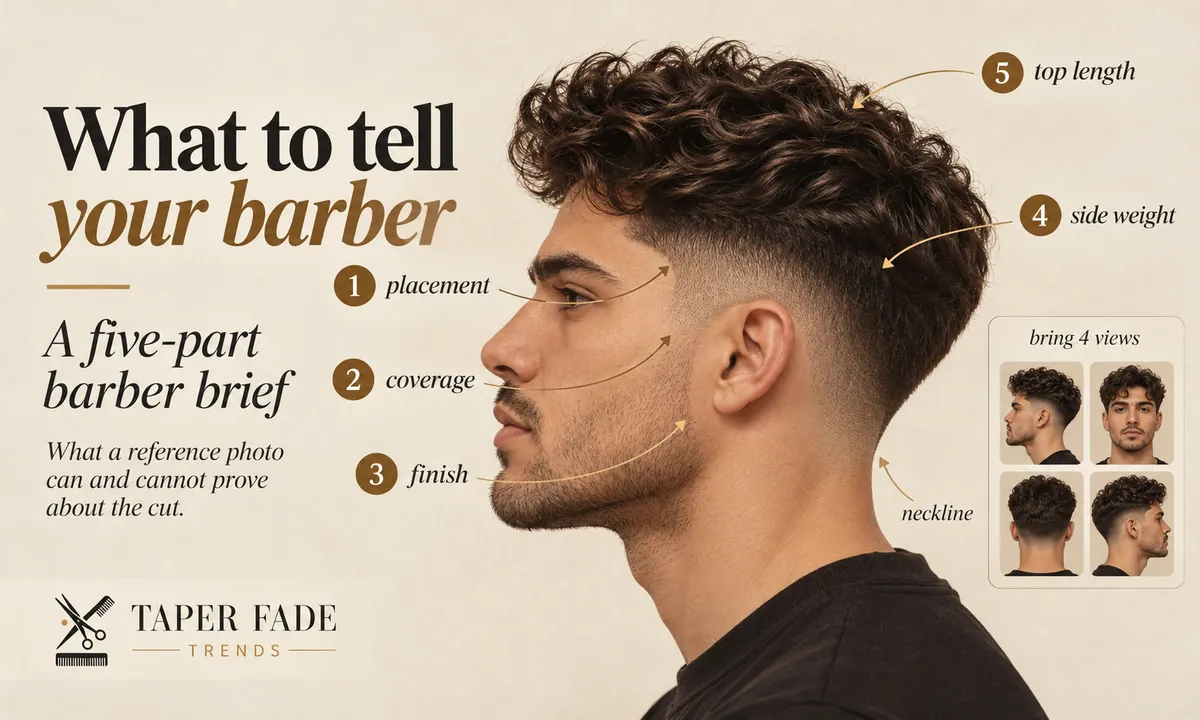
The general method is in how to ask for a taper fade. Here is the wavy version.
A five-part barber brief
Say outcomes, in this order, and back each one with a photo where you can.
- Placement: “Start the taper high, here at the temple corner. Show me where before you cut.”
- Coverage: “Keep the short part to my temples, sideburns and nape. Don’t carry it around the whole side.”
- Shortest finish: “Finish the bottom at skin,” “at a shadow,” or “with visible hair, no skin.”
- Retained side weight: “Keep the sides full enough that the wave still shows above the taper, down to about here.” Point to a landmark such as the top of the ear.
- Top length: “Leave the top long enough for my wave to finish when it’s dry. Check it dry before you shorten it.”
Then add the neckline: “Taper the neckline” or “Square it off.” A tapered neckline follows your natural neckline and shortens gradually; a squared, or blocked, one is a straight line across the nape. Finish with how you wear the top (forward, back or parted) and whether you’re growing it out.
A guard number is a cutting length on one maker’s clippers, not a description of a haircut. Wahl’s guard size chart lists its #1 at 1/8 inch and its #2 at 1/4 inch, and explains that the taper lever adjusts the cut between guard lengths. Name a guard only with the clipper system it belongs to. Otherwise, describe the finish.
Wahl’s listed length; other brands can differ
Wahl’s listed length; other brands can differ
What a reference photo can and cannot prove about the cut
A reference photo shows the outline and where the short zone stops. It doesn’t show which guard, blade or lever setting made it, unless those were written down at the time. Bring four views so the barber can read the whole cut:
- Front: the hairline and how the top falls.
- Left and right sides: where the short zone starts and stops, and how much side weight stays. Bring both, because the two sides can differ.
- Back: the nape and the neckline.
Add one photo of your own hair dry, so the barber can compare your wave with the reference. For converting guard numbers between brands, see clipper guard sizes.
Once the cut is specified, three decisions remain: how to dry the hair, when to refresh the cut, and whether a different placement would keep more side wave.
Can you air-dry wavy hair after a high taper?
Yes. Air-drying works after a high taper on wavy hair, and it keeps blow-dryer heat out of the routine. The American Academy of Dermatology lists air-drying as an alternative to towel-drying and says excessive heat can damage any hair type. How the wave looks still depends on your hair and how you handle it.
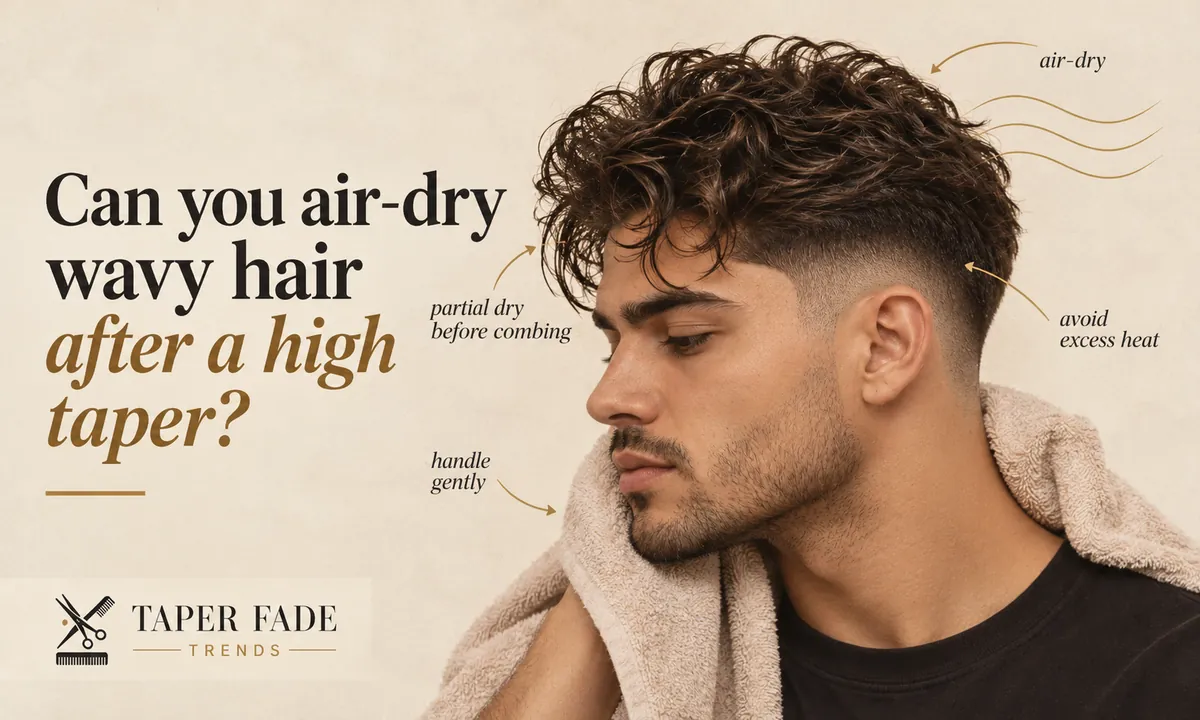
The same AAD styling guidance adds a few points that matter for waves:
- Handle wet hair as little as possible, because it breaks more easily when combed or brushed. The AAD makes an exception for tightly curled hair.
- Let the hair partly air-dry before you comb or style it, and blow-dry fewer times a week.
- Go easy on long-lasting-hold products, because combing through them can break hair.
If the bend doesn’t show once the hair is dry, check the top length as well as the taper. A top cut shorter than the wave needs will dry flat whatever the sides look like.
How the cut grows out and when to touch it up
No single touch-up interval fits every high taper on wavy hair. Healthy hair grows about half an inch a month, according to MedlinePlus, so the short zone softens first while the top changes slowly. Rebook when the edges no longer match the fresh-cut look you wanted, not on a fixed schedule.
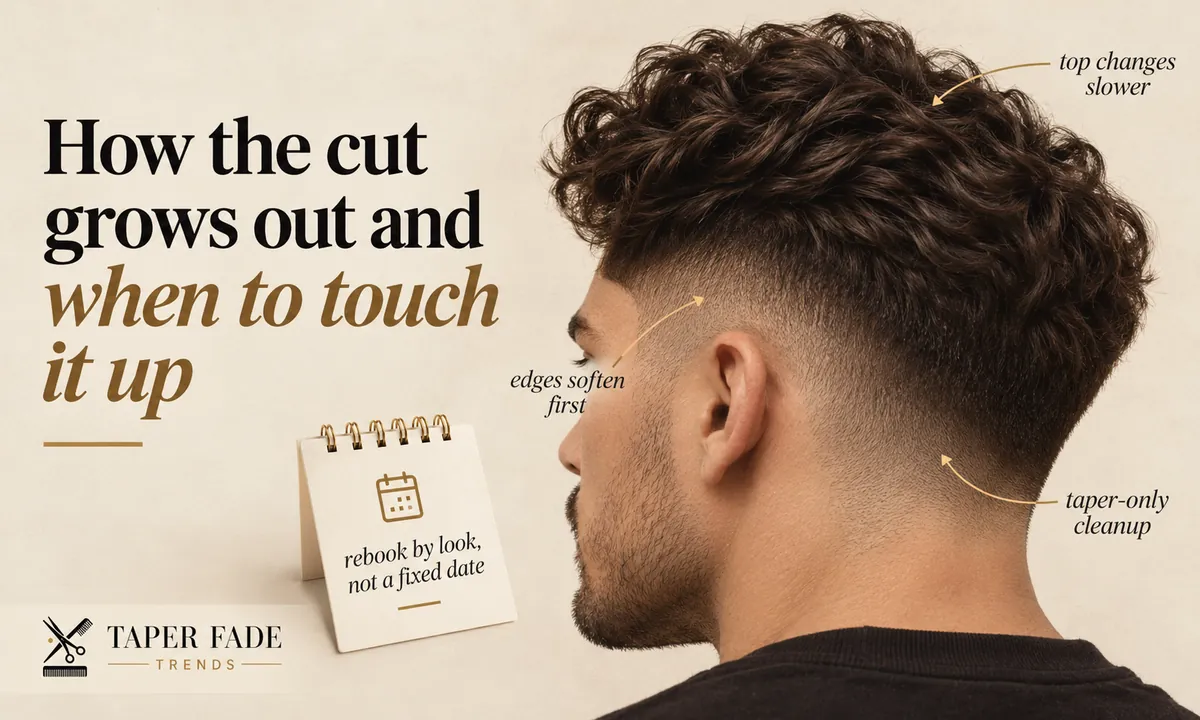
| What you chose | What changes as it grows | Effect on rebooking |
|---|---|---|
| Skin finish | At about 1/8 inch a week, bare skin reaches roughly Wahl #1 length in a week | Shows regrowth soonest |
| Guard or shadow finish | Starts with length, so new growth blends in | Holds its look longer |
| Squared neckline | The straight line blurs as hair grows below it | Looks grown out sooner than a tapered neckline |
| How crisp you like it | Your tolerance for soft edges | Two people with the same cut can rebook weeks apart |
The neckline row follows The Art of Manliness’s barber guide, which notes that blocked napes look untidy as hair grows out while a tapered nape stays blended.
Judge the short zone and the top separately. The temples and nape can look grown out while the wave on top still looks right, so tell the barber whether you’re booking a taper-only cleanup or a change to the top.
When a different taper or fade may fit better
A lower placement keeps more side wave, and a full high fade keeps less. Choose a high taper when you want the short zone to start at the temple and the rest of the sides to keep their weight. If you’re torn between two heights, ask for the lower one: raising a taper takes one visit, while lowering it means waiting for regrowth.
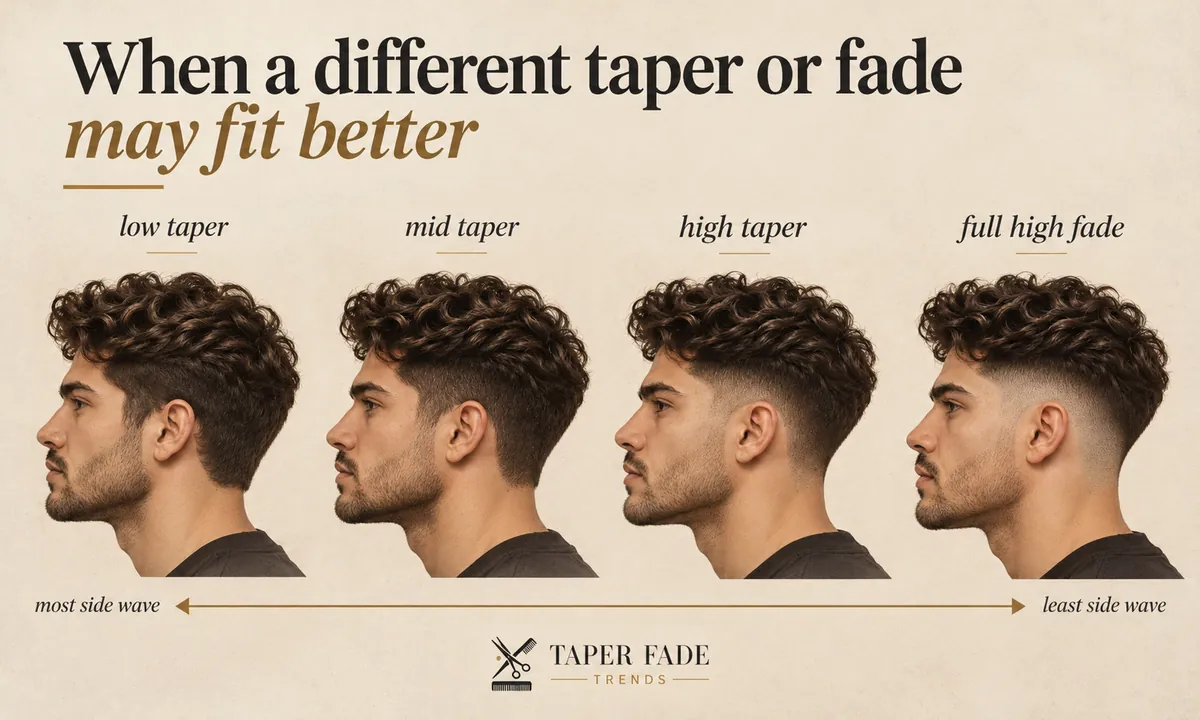
| Option | Choose it when | What changes on wavy hair |
|---|---|---|
| Low taper fade | You want the short zone low, near the sideburn and nape | The most side wave stays visible |
| Mid taper fade | You want the short zone partway up the side | Side wave and contrast sit between low and high |
| High taper fade | You want the short zone to start at the temple corner | Less side wave than a low taper, more than a full high fade |
| Full high fade | You want the sides short all the way around | The least side wave stays |
If your bends are closer to curls than waves, the high taper fade for curly hair guide deals with shrinkage in more depth. If the top is already too short for a bend to show, a wave brief doesn’t apply yet. Let it grow, or brief the cut as a short top.
How this high taper guide was researched
Taper Fade Trends Editorial prepared this guide by comparing current haircut references and competing guides with the site’s own high taper definitions, Wahl’s guard specifications, MedlinePlus on hair growth and American Academy of Dermatology styling guidance. Its purpose is to help you choose and describe a high taper for naturally wavy hair before you sit down.
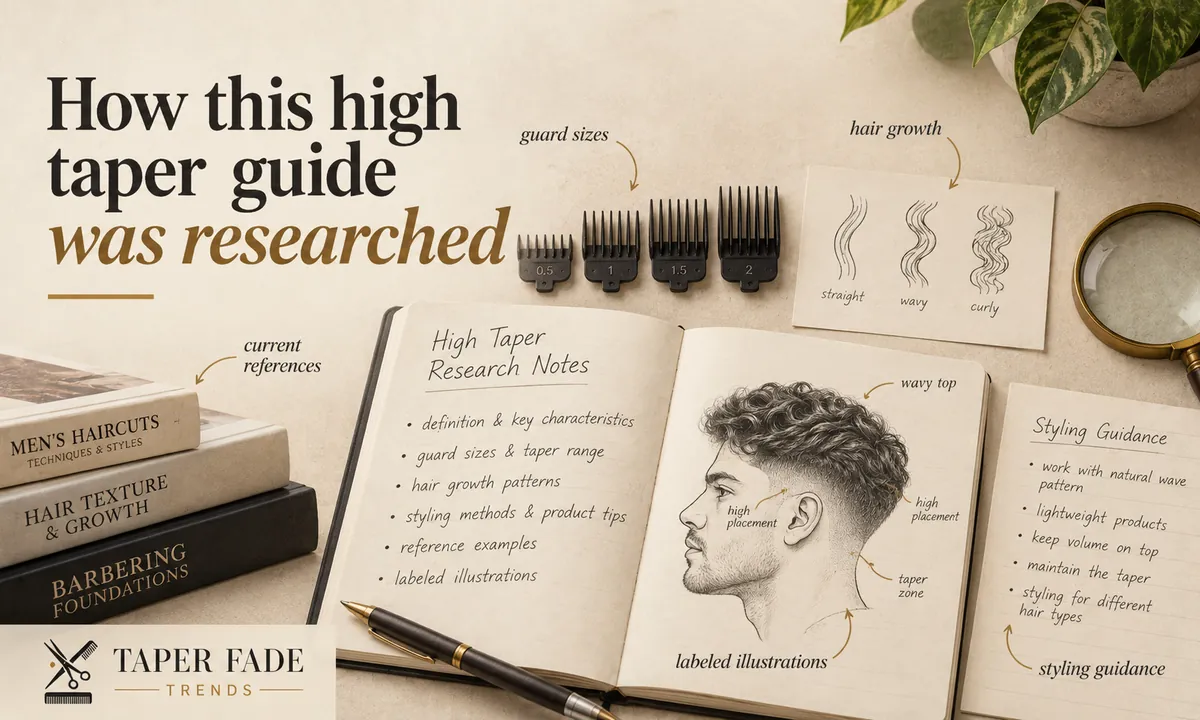
Every figure on this page is a labeled illustration, not a photo of a real cut. This version has no measured top lengths or recorded clipper settings, so it makes no claim about any real result. It hasn’t yet had the barber review our editorial policy calls for on technique guides. The reviewer’s name and the review date will appear here once it has.
Shops use “high,” “taper,” “fade” and “waves” differently, and guard numbers differ between brands, so the definitions on this page are working definitions, stated where they first appear.
Sources cited in this guide:
- American Academy of Dermatology: hair styling without damage
- MedlinePlus: hair problems
- Wahl: clipper guard size chart
- Freshly Faded Barber + Shop: the skin taper
- Men’s Health, via AOL: getting 360 waves
- The Art of Manliness: how to talk to your barber
To report an error, see our editorial policy.
Next: build your barber request
Turn the placement, coverage, shortest finish and top length you chose here into a request you can read out with the how to ask for a taper fade guide.
Keep reading
All guides
High taper fade: placement, finish and barber brief
Where a high taper fade sits, how much side weight stays, skin vs shadow finishes, what the back should look like, and exactly what to tell your barber.
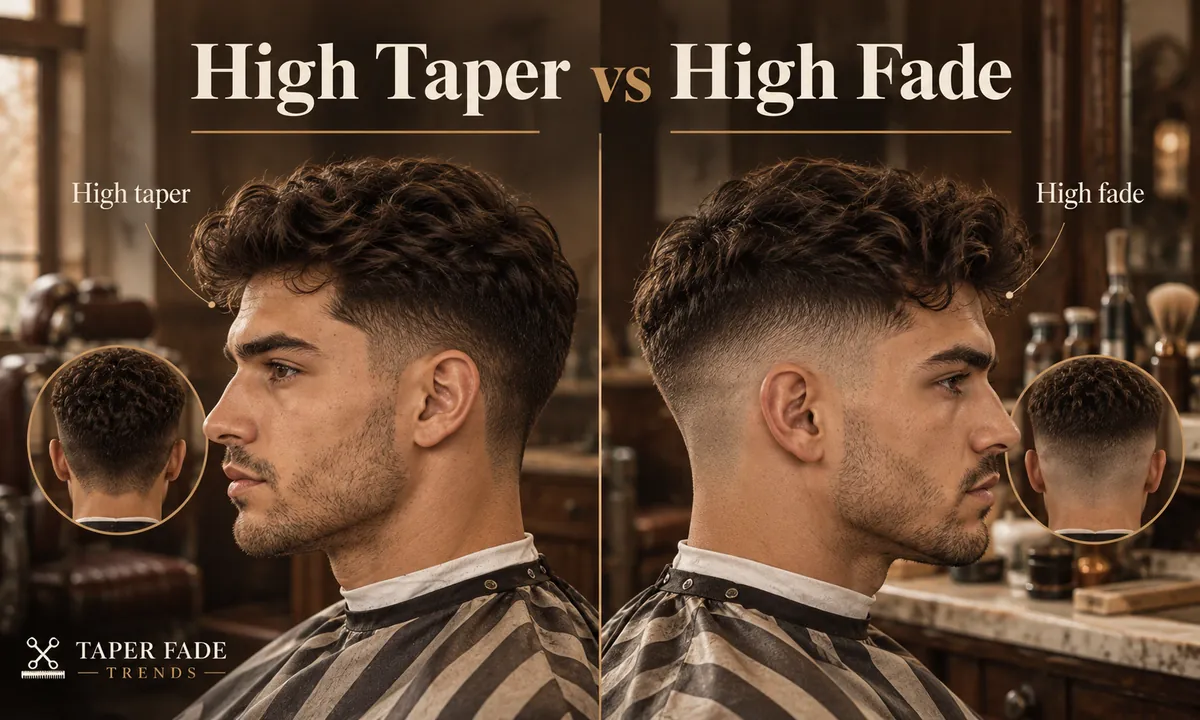
High taper vs high fade: side, back and coverage
High taper vs high fade compared by side weight, back coverage and shortest finish, plus why barbers use the names differently and a four-point brief.
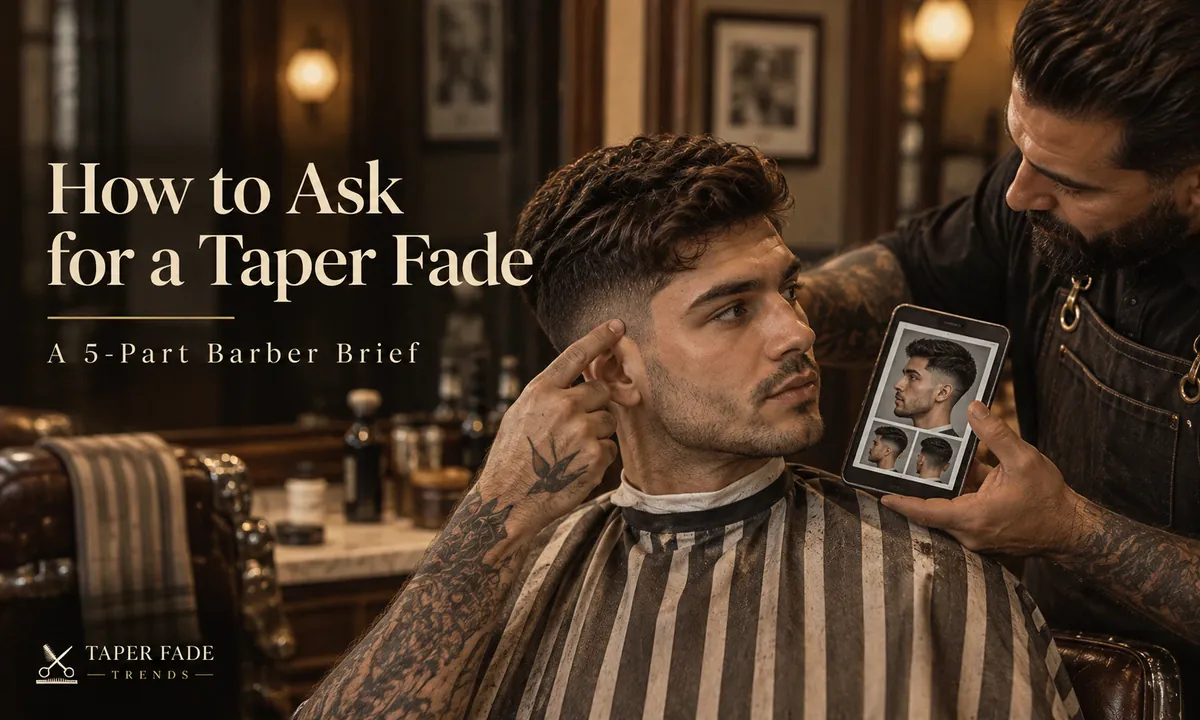
How to ask for a taper fade: a five-part barber brief
How to ask for a taper fade: say where it may reach, how short the base goes, how much side weight stays and what to do on top, then check the plan first.
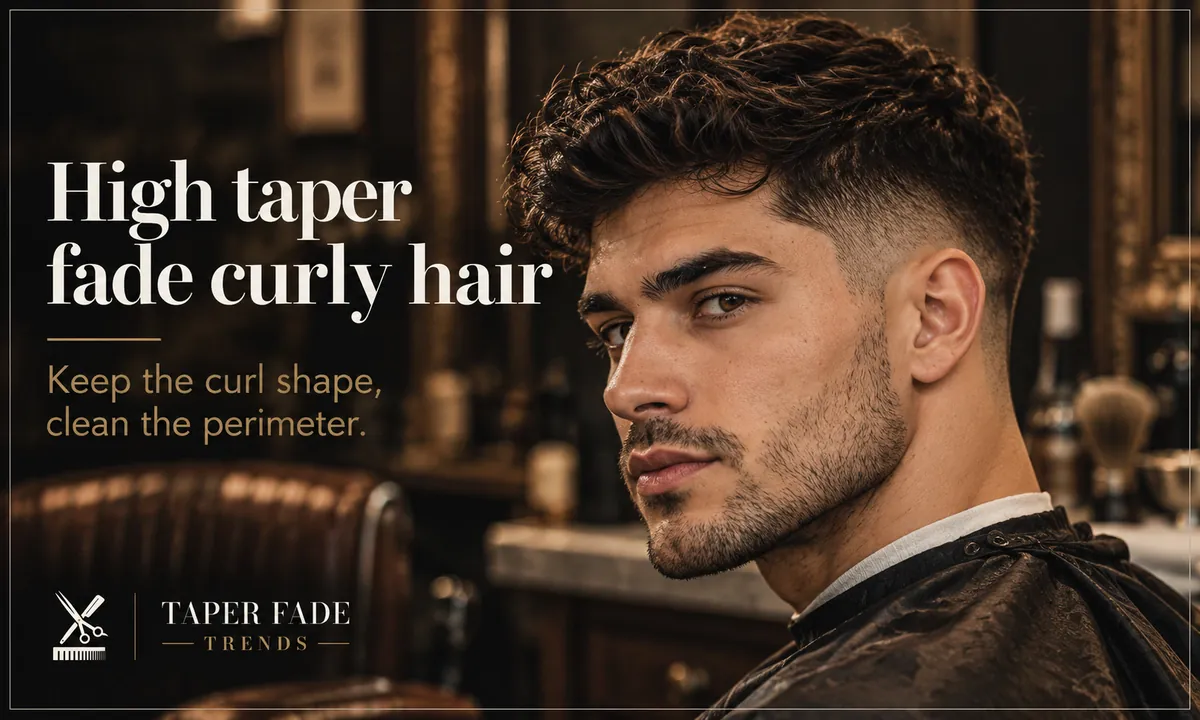
High taper fade curly hair: keep the curl shape, clean the perimeter
How a high taper fade works on curly hair: what side weight to keep, why curls are judged dry, how to measure shrinkage and what to tell your barber.
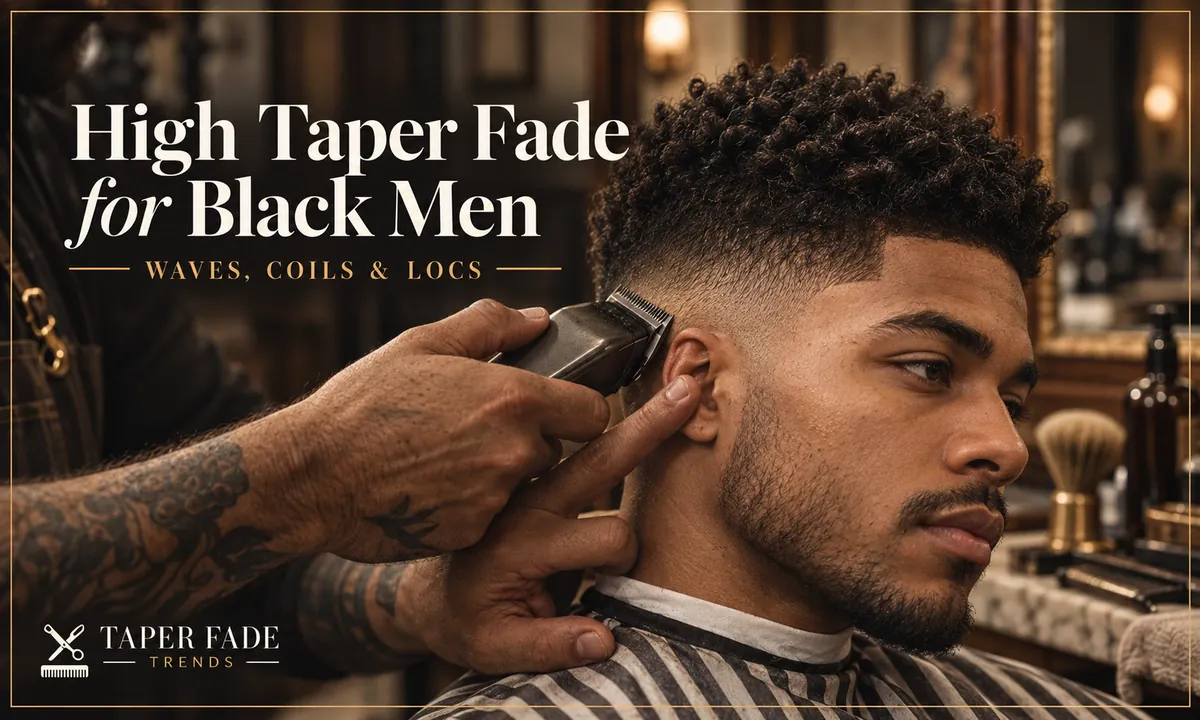
High taper fade Black male styles: waves, coils, twists and locs
High taper fade Black male guide: how it sits with waves, coils, twists and locs, skin vs. guard finishes, and a fill-in barber brief.
High taper fade straight hair: control side weight and avoid a shelf
High taper fade straight hair, explained by density, growth direction and side weight, with a barber script and why sides stick out as it grows.
How to maintain a taper fade between haircuts
How to maintain a taper fade between haircuts: what is safe at home, where to stop before the blend, and when to book a cleanup or a full cut.
More in high taper fades
High taper fades: all 8- High taper fade: placement, finish and barber brief11 min
- High taper fade curly hair: keep the curl shape, clean the perimeter10 min
- High taper fade straight hair: control side weight and avoid a shelf9 min
- High taper fade Black male styles: waves, coils, twists and locs9 min
- High taper fade wavy hair: keep your wave patternYou are here
- High taper fade short hair: Compare crop, crew and textured tops11 min
- High taper fade with beard: how the sideburn meets the beard11 min
- High taper vs high fade: side, back and coverage8 min