High taper fade short hair: Compare crop, crew and textured tops
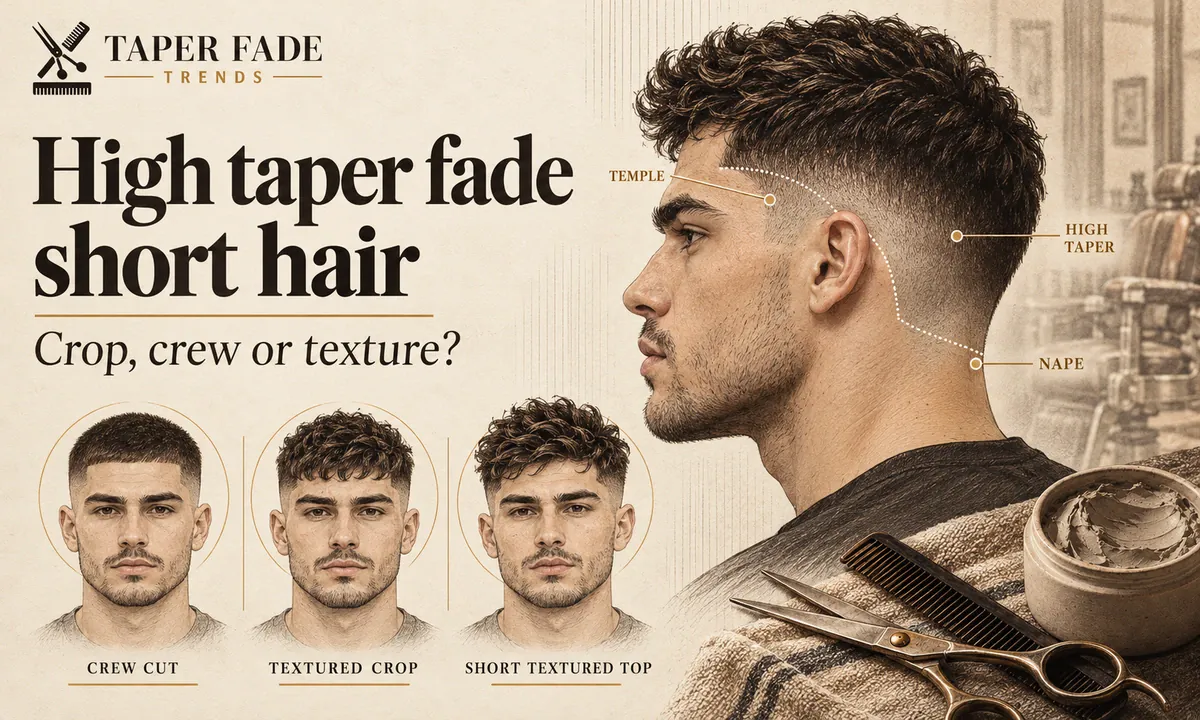
A high taper fade on short hair starts the blend high, near the temple corner, but keeps the short zone narrow around the temple, sideburn and nape. The top is a separate choice: crew cut, textured crop or short textured top. The shortest finish, the side weight you keep and the back each need their own instruction.
What is a high taper fade on short hair?
A high taper fade on short hair is a high taper under a short top. The blend starts at or near the temple corner, the shortest work stays in a narrow band at the temple, sideburn and nape, and the top is cut short in whatever shape you pick. The name doesn’t set the finish, the guard or the top.
That separation is the useful part. The taper describes the sides and back, and the top sits on its own, so there is no minimum top length for a high taper. A buzzed top, a crew cut and a two-inch textured crop can all sit over the same side plan. The top changes the silhouette and the daily routine, not where the short zone sits.
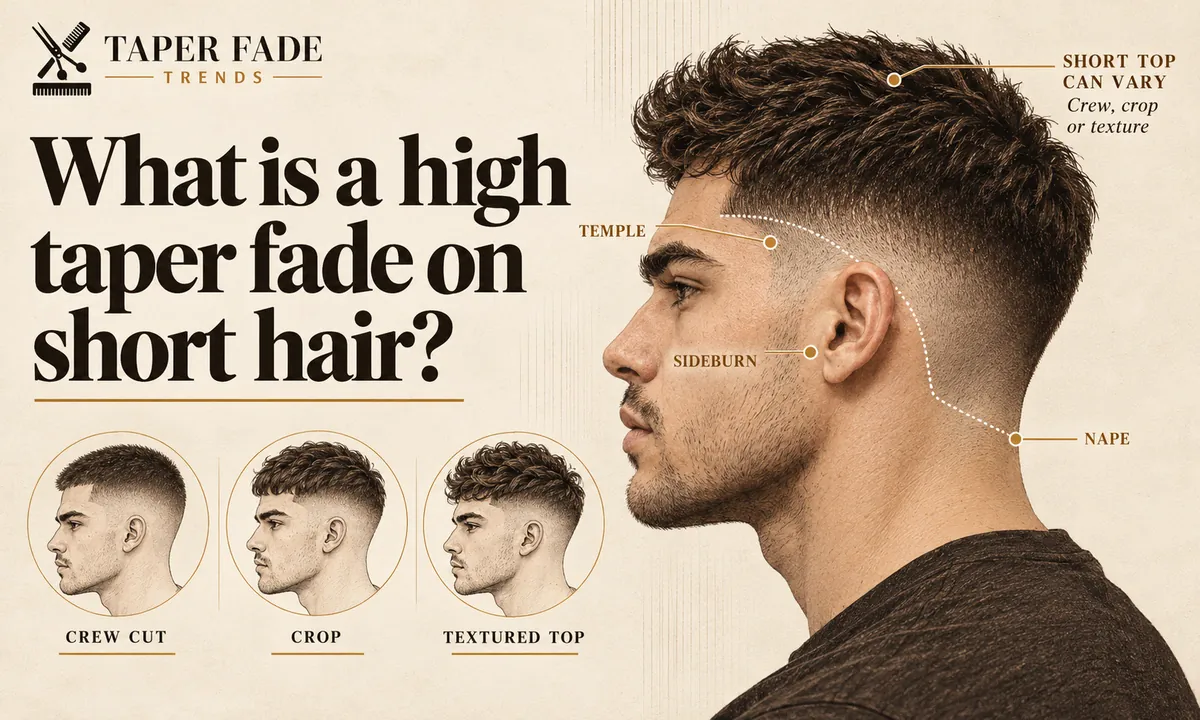
Settle these before the clippers start:
| Control | High taper fade on short hair | How to get it across |
|---|---|---|
| Placement | Blend starts high, at or near the temple corner; no fixed inch mark | Point to it on a side photo |
| Coverage | A narrow short zone at the temple, sideburn and nape, not the whole side | Mark where the short zone stops |
| Shortest finish | Not set by the name: visible hair, shadow or skin | Say it out loud |
| Retained side weight | Fuller hair above and behind the short zone | Say how full the sides should stay |
| Top | Crew cut, textured crop or short textured top | Name the shape and the length in inches |
| Back | Rear height, width toward the ears, neckline shape | Show a rear photo |
| Guard and blade settings | Depend on the clipper system | Leave them to the barber unless you know the system |
For placement and finish on any top length, start with the high taper fade guide.
Keep the taper local, not full-side
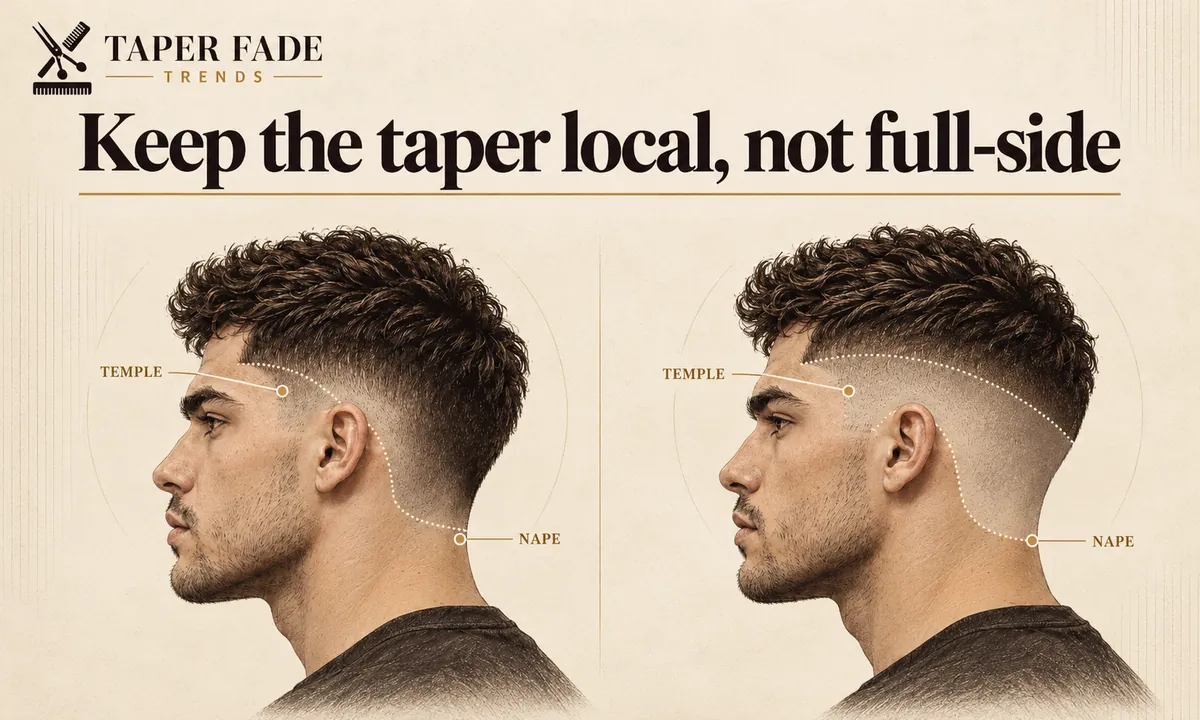
A high taper fade and a full high fade can start at the same height. The difference is coverage: the high taper keeps its short zone narrow at the temple, sideburn and nape, so more hair stays on the sides, while a full high fade carries the short work farther around the sides and back. Describe coverage, not just height.
| High taper fade | Full high fade | |
|---|---|---|
| Start height | High, at or near the temple corner | Can be the same |
| Short zone | Narrow band at the temple, sideburn and nape | Runs farther around the sides and back |
| Side weight left at the same height | More | Less |
| Shortest finish | Chosen separately | Chosen separately |
To see the two cuts from the side and back, read high taper vs high fade. For the general distinction, see taper vs fade.
Once the coverage is fixed, the visible decision is the shape on top.
Crew cut, textured crop or short textured top?
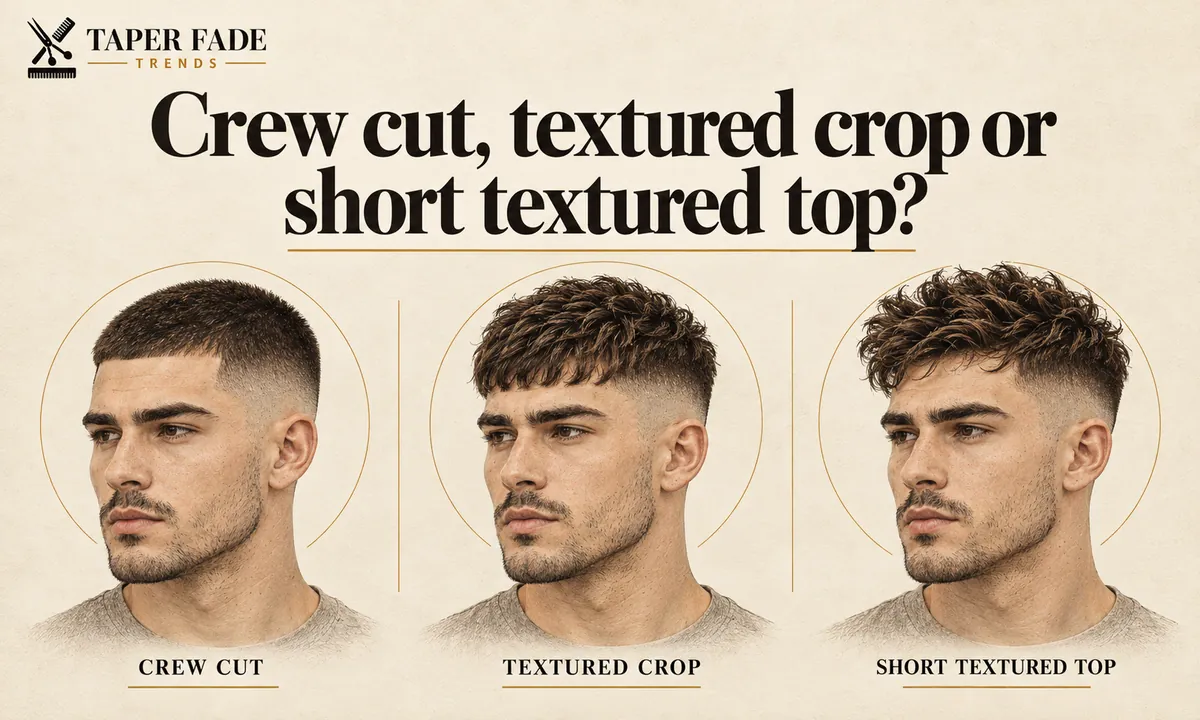
Choose a crew cut for a short top that graduates from longest at the front hairline to shortest at the crown and needs little or no styling. Choose a textured crop for a choppy, point-cut top with the fringe worn forward. Choose a short textured top for visible movement without committing to a fringe. All three sit over the same high taper.
| Crew cut | Textured crop | Short textured top | |
|---|---|---|---|
| Shape on top | Graduated: longest at the front hairline, shortest at the crown | Choppy, point-cut top with the fringe worn forward | Short layers with movement and no set fringe |
| Typical top length | About 1/4 in to 2 in | Often about 1.5 to 3 in; shorter versions exist | Not standardized; give a length in inches |
| Daily styling | Little or none | A small amount of matte product to separate pieces and set the fringe | Enough product to show the direction you wear it |
| Pick it if | You want the shortest routine | The fringe is the point of the cut | You want texture without a fringe |
The labels overlap at the edges. A short textured crop with almost no fringe and a textured crew cut can look nearly identical, so ask for the feature you want (graduation, a fringe or movement) and bring a photo rather than relying on the name.
Crew cut
A crew cut is a short top graduated from the longest hair at the front hairline to the shortest at the back of the crown, so the top reads close to level in profile. Wikipedia’s crew cut entry, drawing on barbering manuals, gives a short version as about 3/4 inch at the front and 1/4 inch at the crown. A buzz cut differs by being one length all over, as a current crew cut guide puts it. Over a high taper, the front carries the shape.
Textured crop
A textured crop is a short, choppy top, point-cut so the ends separate, with the fringe worn forward somewhere between mid-forehead and the brow. One current textured crop guide puts the top at about 1.5 to 3 inches; shorter crops exist, so give your length in inches. Its neater relative, the French crop, has a smoother top and a blunt fringe.
Short textured top
“Short textured top” is this guide’s own label, not a standard haircut name. It means a short layered top cut for separation or movement, without the forward fringe that defines a crop. A barber may call the same look a textured crew cut or a messy crop, so describe it: “short and textured on top, no fringe, worn up” (or forward, or to the side).
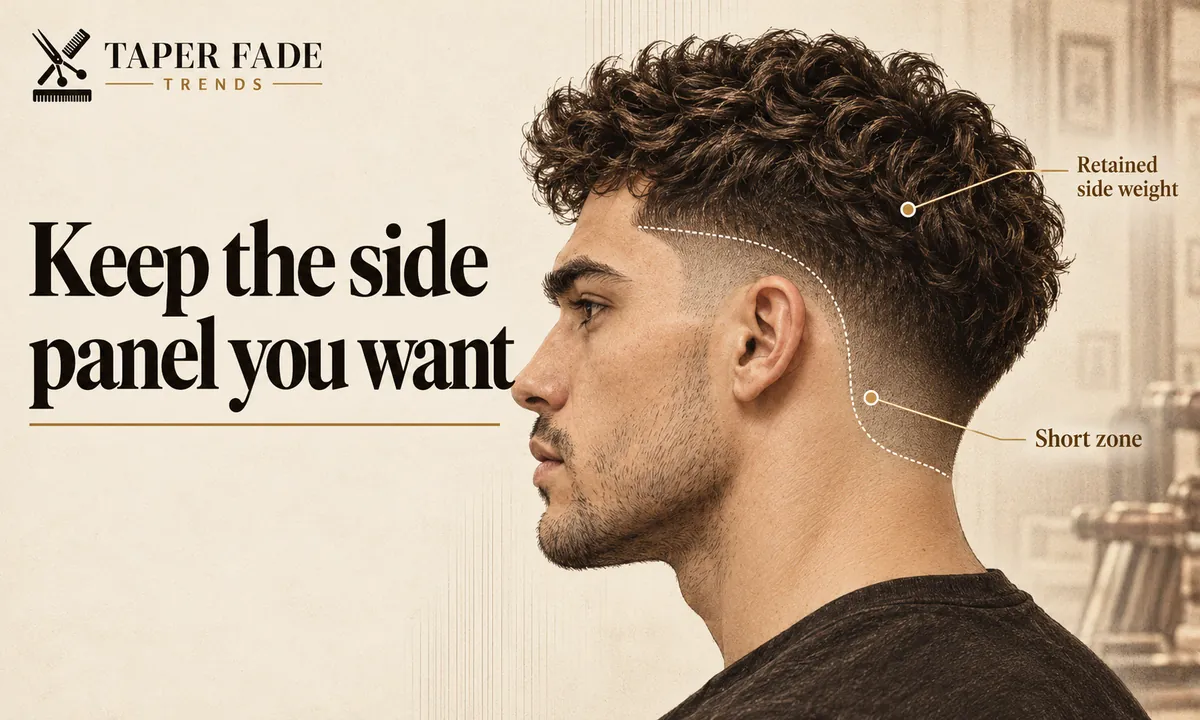
Keep the side panel you want
A high taper can keep plenty of side weight if the short zone stays narrow. Coverage, not height, decides how much side hair goes: widen the short zone and the sides thin out even if the top of the blend never moves. Ask the barber to show where the short zone will stop, and say the hair above and behind that line stays fuller.
If the sides came out thinner than you wanted last time, ask for a narrower short zone before you ask for a lower start. If you want the sides short all the way round, that is a full high fade, and it’s worth saying so.
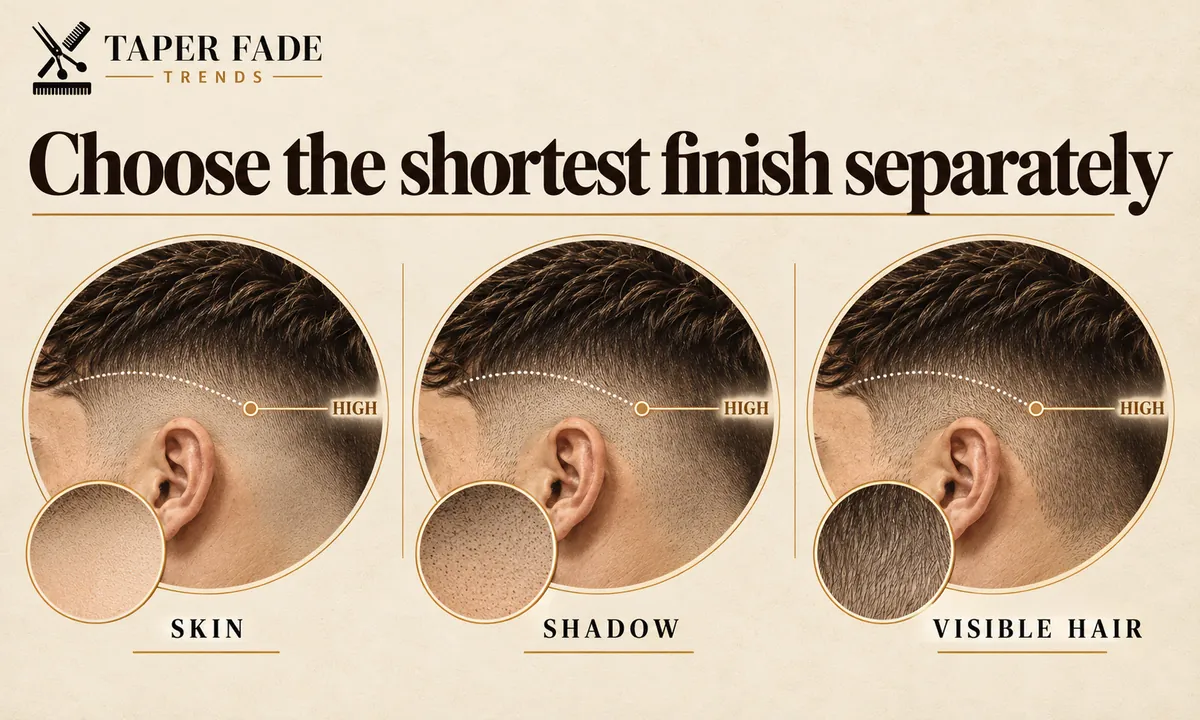
Choose the shortest finish separately
“High” describes where the blend starts, not how short it ends. A high taper can finish at visible hair, shadow or skin, depending on the shop and what you ask for. Give the finish its own sentence and bring a photo, and quote a guard number only when you know the clipper system and its actual cutting length.
| Finish | What remains in the short zone | How it grows out |
|---|---|---|
| Skin | Bare scalp | Shows regrowth soonest |
| Shadow | Very short hair that reads as a haze rather than bare scalp | Softens more gradually |
| Visible hair | Short hair that still reads as hair | Softest change, least contrast |
Guard numbers aren’t interchangeable between clipper brands, which is why the guide to clipper guard numbers works in inches and millimeters. Pick the finish by what you want to see, and let the barber choose the setting that gets there.
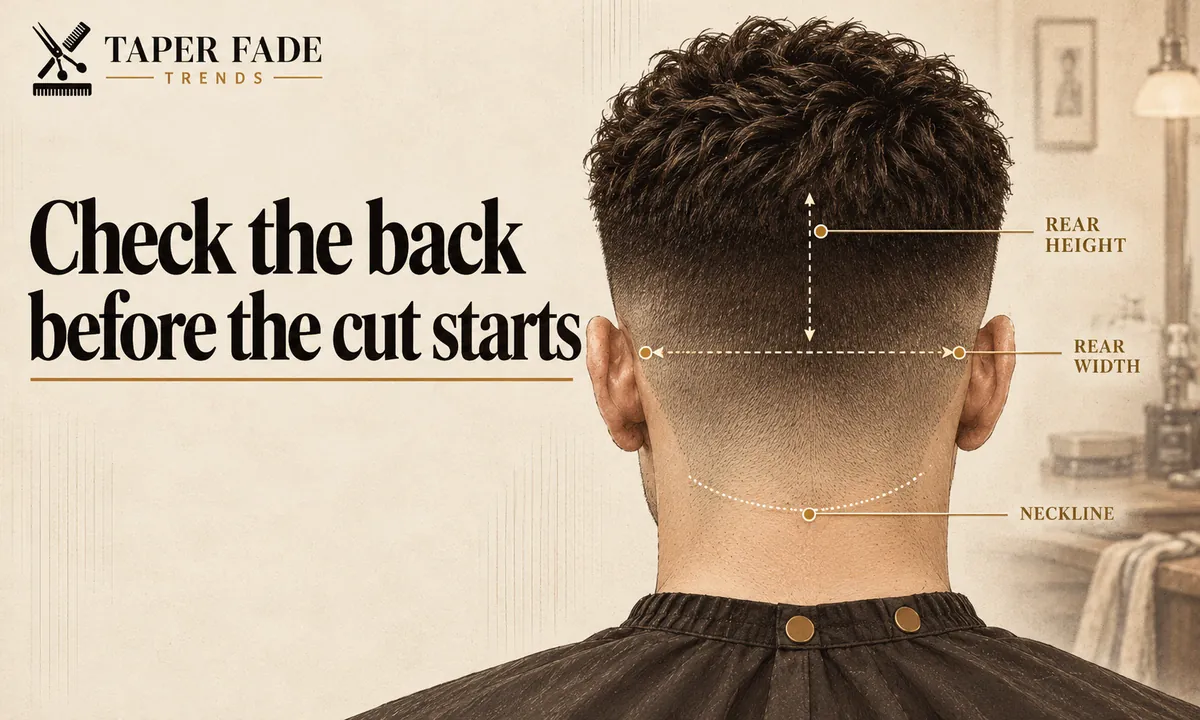
Check the back before the cut starts
The back of a high taper needs its own plan, because a side photo can’t show it. Decide how high the nape blend climbs, how wide the short zone spreads toward the ears and whether the neckline is tapered or squared. Bring a rear reference, and ask for a hand mirror before you leave the chair.
- Rear height: how far up the back of the head the blend climbs.
- Rear width: how far the short zone spreads from the nape toward each ear.
- Neckline: tapered, so hair shortens gradually into the nape, or squared, with a straight edge.
- Rear reference: a photo of the back of a head that shows all three.
Choose by hair behavior, not face-shape rules
Density, growth direction, curl and color change how a high taper reads more than any face-shape chart. This guide skips face-shape rules, because they describe taste rather than anything a barber can measure. Tell the barber about these four instead:
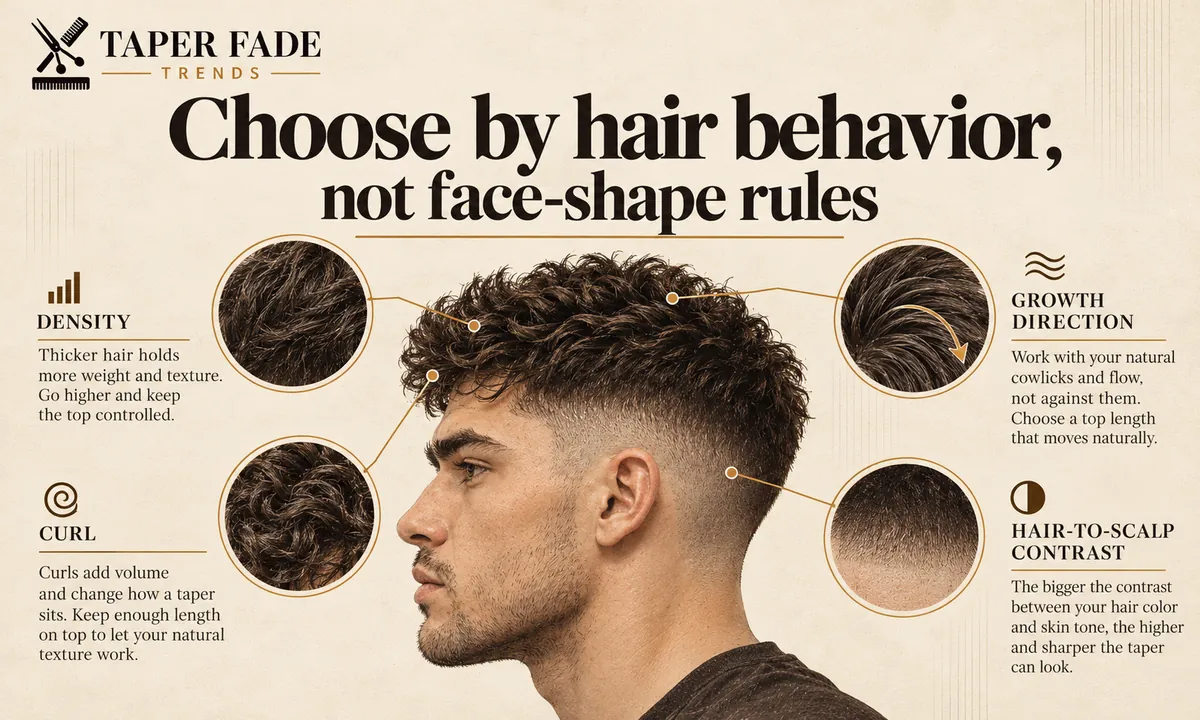
- Density: thick hair shows a crisp edge at the short zone, while fine hair can look patchy there, so a longer, softer blend helps.
- Growth direction: a cowlick (a patch that grows against the rest) at the crown or nape changes how a crew cut stands and where the rear blend sits cleanly.
- Curl: curly hair dries shorter than it was cut, so set top length and blend height on dry hair. The high taper fade for curly hair guide covers measuring curls both ways.
- Color and contrast: the bigger the difference between hair and scalp, the more the short zone stands out. Nick Hall, a former barber writing for Man of Many, warns that light or blond hair can look closer to bald than intended at this height and suggests a softer blend through the temples.
With the top, finish, side weight and back chosen, the last step is one brief you can say or show.
A barber brief for this exact cut
Tell the barber five things: where the blend starts, where the short zone stops, the shortest finish, how much side weight stays and which top you chose, with its length in inches. Bring front, both side and rear photos of hair like yours, and ask the barber to repeat the plan before the clippers start.
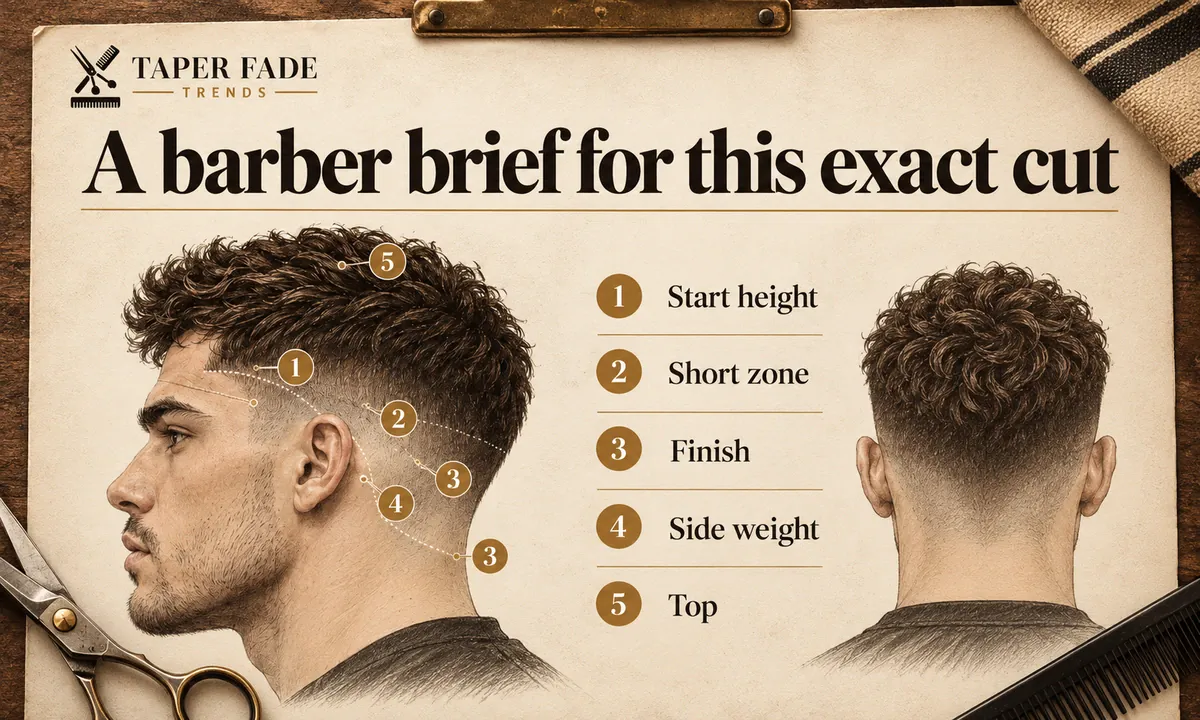
Wording you can use, filled in with your choices:
- “Start the blend high, here at the temple corner.” Point to the spot.
- “Keep the short part to my temples, sideburns and nape, and stop it at this line in the photo.”
- “Finish it at skin” (or shadow, or visible hair with no skin).
- “Leave the sides above that line full.”
- “On top, a crew cut, about (your length) at the front,” or “a textured crop, about (your length), fringe to mid-forehead,” or “short and textured, no fringe.”
Add the neckline: “Taper the neckline” or “Square it off.”
Photos to bring:
- Front: the top shape and fringe, if any.
- Left and right sides: where the short zone stops and how much side weight stays.
- Back: rear height, width and neckline.
The general version of this script, for any taper height, is in how to ask for a taper fade.
Styling and grow-out
There’s no single rebooking date for a high taper. The finish sets the pace: skin shows regrowth soonest, while shadow and visible hair soften more gradually. Nick Hall suggests a cleanup every two to three weeks if you want mid and high taper edges to stay crisp. Treat that as a starting point and adjust to your own growth.
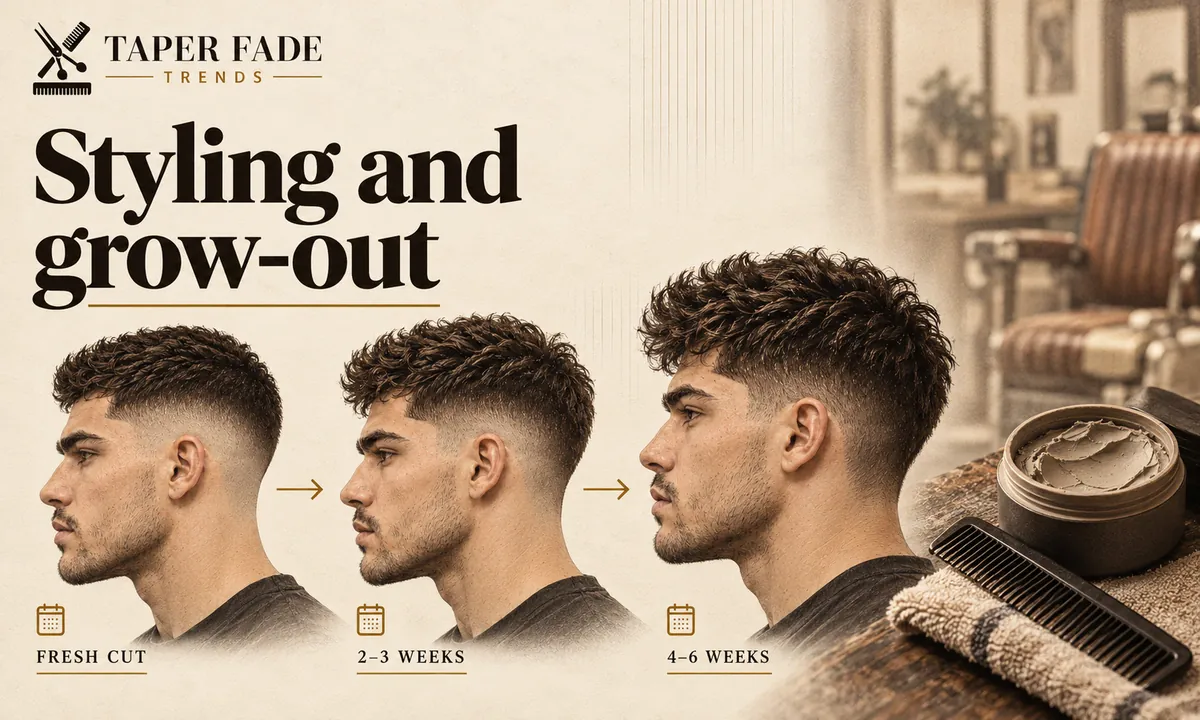
| What changes the timing | Effect | What to decide |
|---|---|---|
| Shortest finish | A closer finish shows regrowth sooner | How much blur you accept in the short zone |
| Hair-to-scalp contrast | Higher contrast makes regrowth easier to see | Crisp edge or softer finish |
| Neckline | A squared edge shows regrowth more clearly than a tapered one | Squared or tapered |
| Your growth rate | Faster growth ends the fresh look sooner | Book by what you see, not by the calendar |
Styling the top is a separate job from keeping the perimeter. A crew cut needs little more than towel-drying, a textured crop takes a small amount of matte product pinched into pieces at the fringe, and a short textured top needs just enough to hold its direction. The taper fade grow-out guide shows the stages in between.
When another cut makes more sense
A different cut fits better when the height, the coverage or the top length doesn’t match what you want.
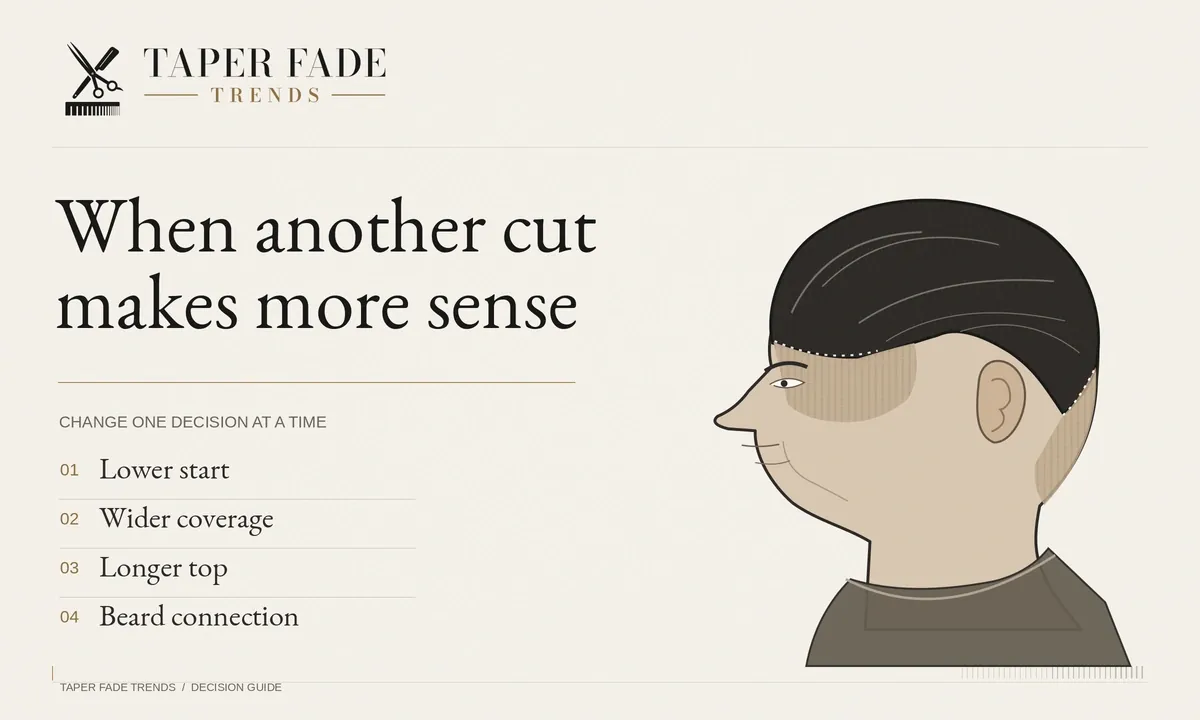
- You’re torn between two heights. Start lower: as Hall puts it, a barber can always take a blend higher but can’t put hair back.
- You want the whole side short. That’s a full high fade, which carries the short zone across more of the side and back.
- You’re coming from a full high fade or skin over a wide area. Hair outside the new, narrower zone has to grow back before the barber can narrow it, so it can take more than one visit.
- Your top is longer than the tops compared here. The high taper fade guide covers longer tops.
- You wear a beard. Decide whether the sideburns blend into the beard or break cleanly before you sit down, because that changes the sideburn part of the brief.
How this high taper guide was researched
Taper Fade Trends Editorial compared how working barbers, a barbering-manual summary and current style guides define the high taper, the crew cut and the textured crop. They were checked against the site’s own high taper guide as of October 21, 2026. Skin guidance comes from the American Academy of Dermatology.
Every figure on this page is a labeled illustration of geometry, not a photo of a finished cut. No guard settings are given because no cut was recorded for this page. Real, credited photos tied to recorded cut specs will be added when they exist. This guide hasn’t yet had the barber review the editorial policy calls for; the reviewer’s name and the review date will appear here once it has. To report an error, see the editorial policy.
Sources cited in this guide:
- High taper fade: placement, finish and barber brief, Taper Fade Trends
- 19 Cool High Taper Fade Haircuts For Men, According To A Barber, Men’s Hairstyles Today
- 7 Best Taper Fade Haircuts for Men, According to a Barber, Man of Many
- Crew cut, Wikipedia
- Crew Cut Haircuts for Men: 25 Styles, From Military Short to the Ivy League
- Textured Crop Haircuts for Men: 28 Styles, From Low Fade to French Crop
- Razor bump remedies for men with darker skin tones, American Academy of Dermatology
- Acne keloidalis nuchae: self-care, American Academy of Dermatology
Where to go next with a short-hair high taper
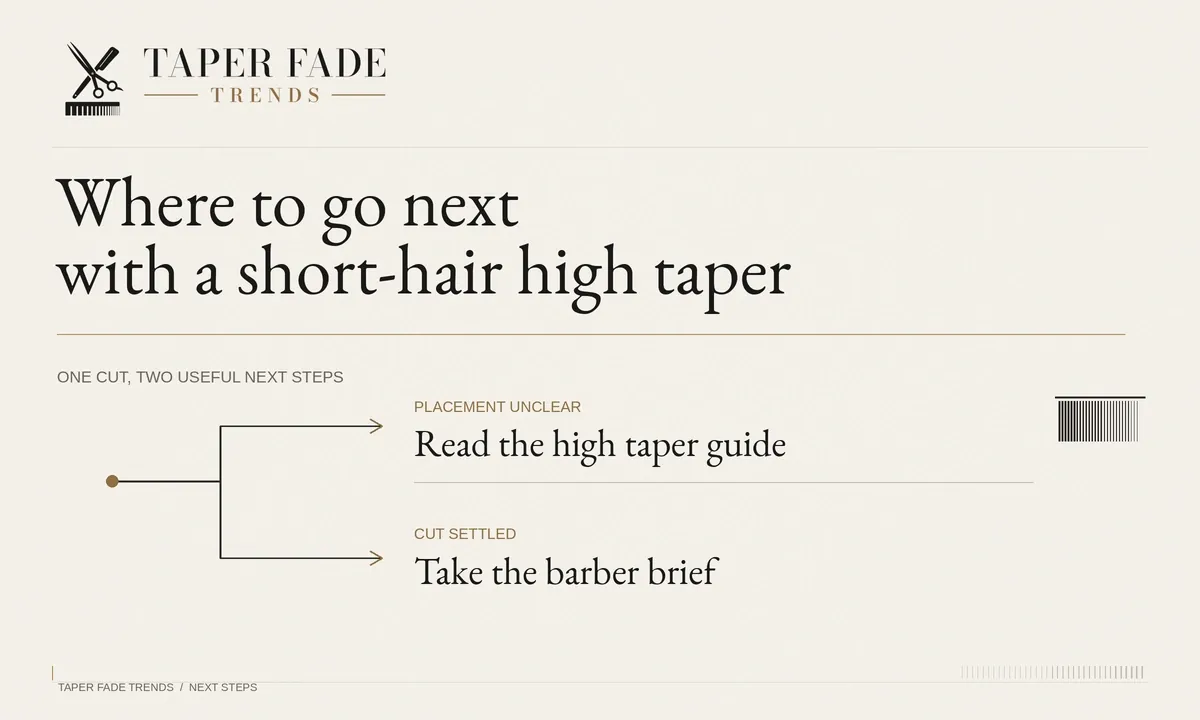
If your hair is wavy, straight or coily, the high taper fade for wavy hair, straight hair and Black men’s hair guides cover what changes on top of the same side plan. If the side placement is still unclear, go back to the high taper fade guide. If the haircut is settled, take the five-part brief in how to ask for a taper fade to your appointment.
Keep reading
All guides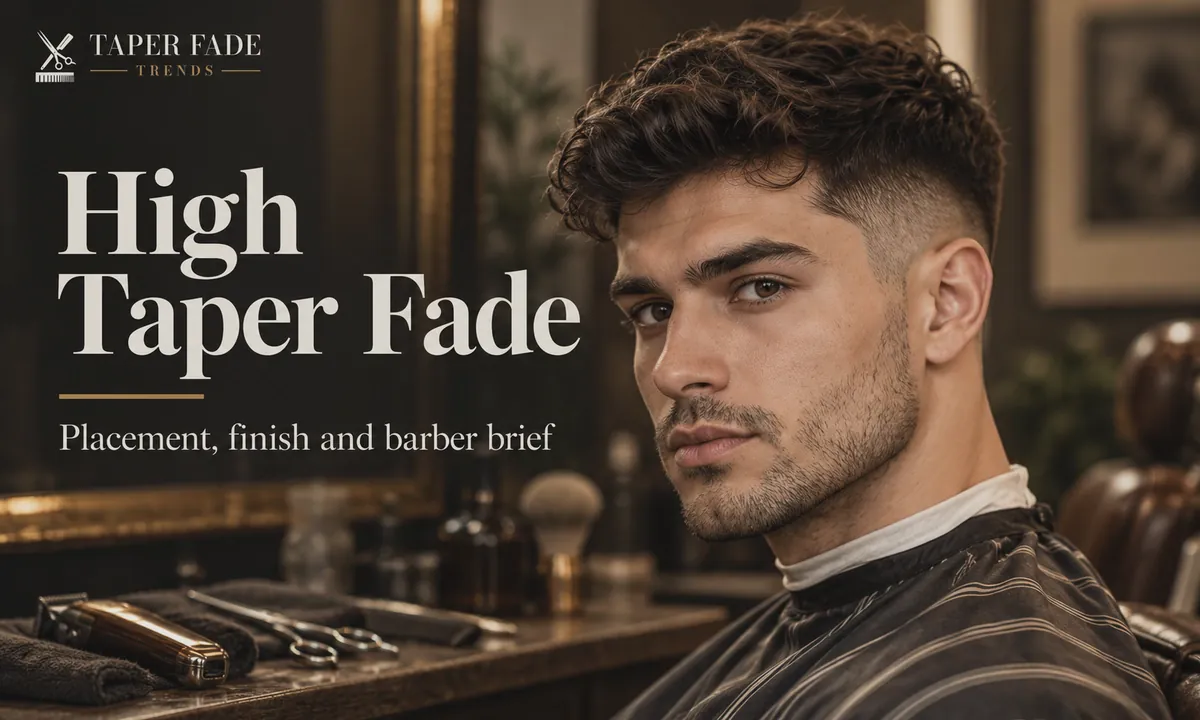
High taper fade: placement, finish and barber brief
Where a high taper fade sits, how much side weight stays, skin vs shadow finishes, what the back should look like, and exactly what to tell your barber.
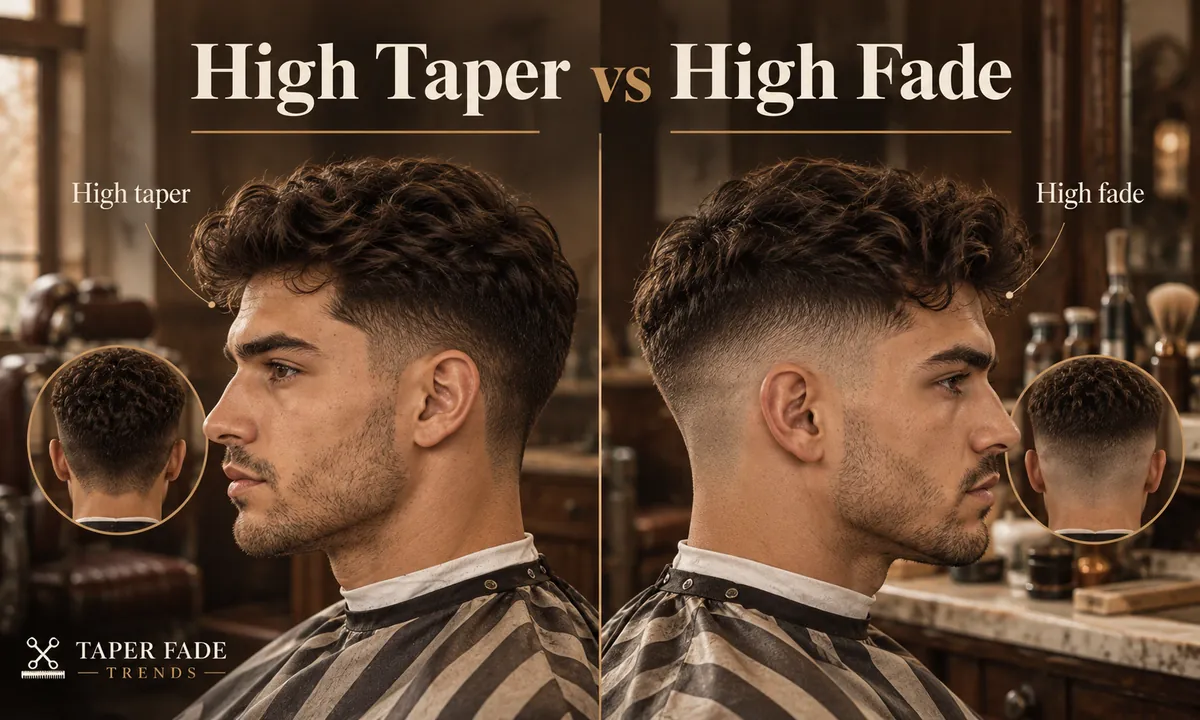
High taper vs high fade: side, back and coverage
High taper vs high fade compared by side weight, back coverage and shortest finish, plus why barbers use the names differently and a four-point brief.
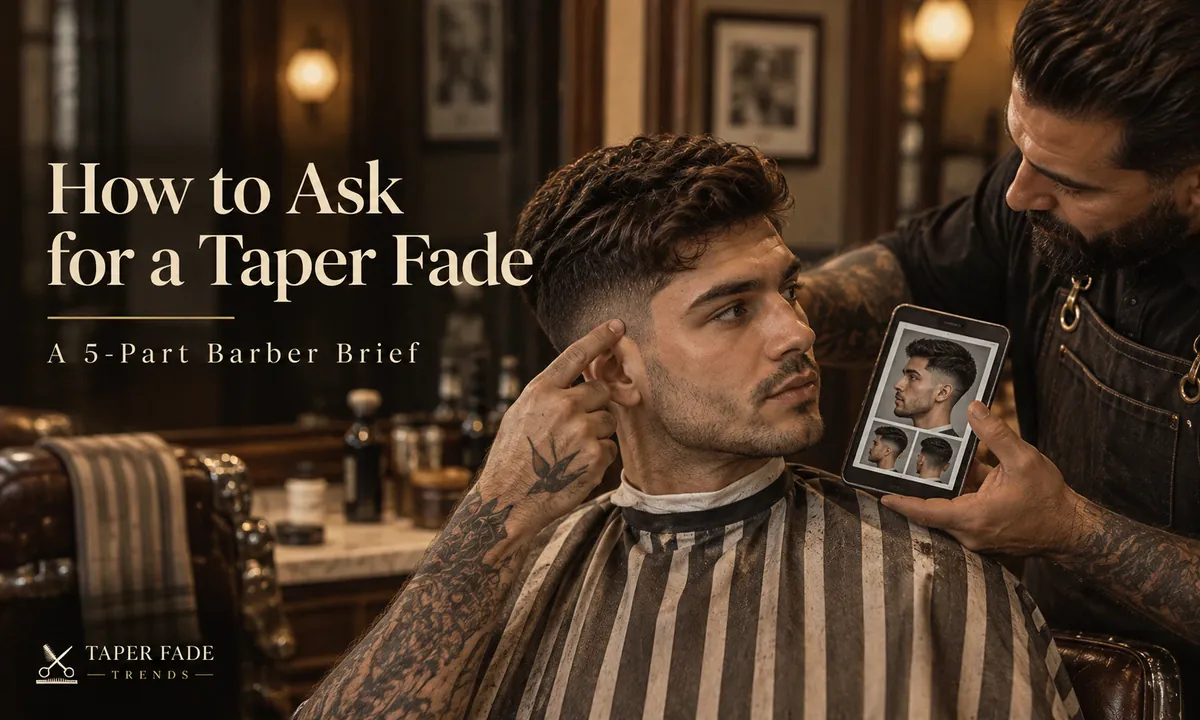
How to ask for a taper fade: a five-part barber brief
How to ask for a taper fade: say where it may reach, how short the base goes, how much side weight stays and what to do on top, then check the plan first.
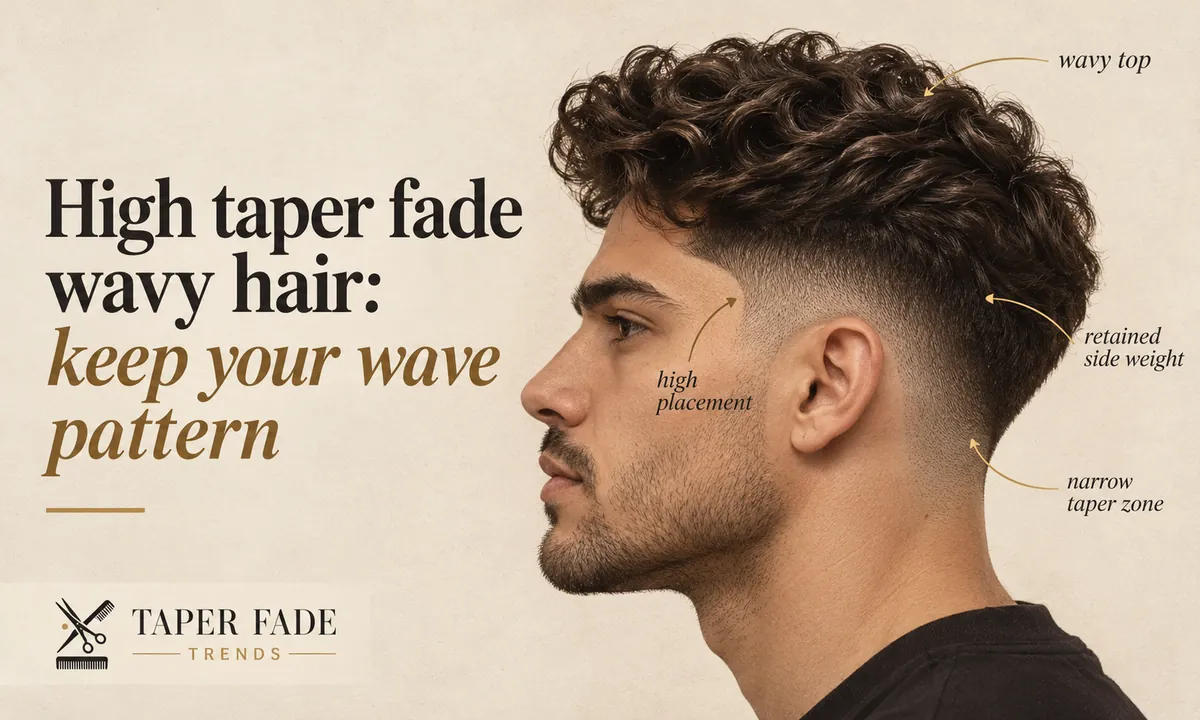
High taper fade wavy hair: keep your wave pattern
See how a high taper fade works on naturally wavy hair: how much top length to keep, what to tell your barber, and how to air-dry and maintain it.
High taper fade straight hair: control side weight and avoid a shelf
High taper fade straight hair, explained by density, growth direction and side weight, with a barber script and why sides stick out as it grows.
High taper fade curly hair: keep the curl shape, clean the perimeter
How a high taper fade works on curly hair: what side weight to keep, why curls are judged dry, how to measure shrinkage and what to tell your barber.
High taper fade Black male styles: waves, coils, twists and locs
High taper fade Black male guide: how it sits with waves, coils, twists and locs, skin vs. guard finishes, and a fill-in barber brief.
How to maintain a taper fade between haircuts
How to maintain a taper fade between haircuts: what is safe at home, where to stop before the blend, and when to book a cleanup or a full cut.
More in high taper fades
High taper fades: all 8- High taper fade: placement, finish and barber brief11 min
- High taper fade curly hair: keep the curl shape, clean the perimeter10 min
- High taper fade straight hair: control side weight and avoid a shelf9 min
- High taper fade Black male styles: waves, coils, twists and locs9 min
- High taper fade wavy hair: keep your wave pattern10 min
- High taper fade short hair: Compare crop, crew and textured topsYou are here
- High taper fade with beard: how the sideburn meets the beard11 min
- High taper vs high fade: side, back and coverage8 min