High taper fade with beard: how the sideburn meets the beard
A high taper fade with beard starts the haircut’s short work high at the temple corner and treats the sideburn as the handoff into facial hair. The beard can blend out of the sideburn or meet it at a deliberate edge. Name the placement, shortest finish, sideburn connection and beard density instead of trusting the label.
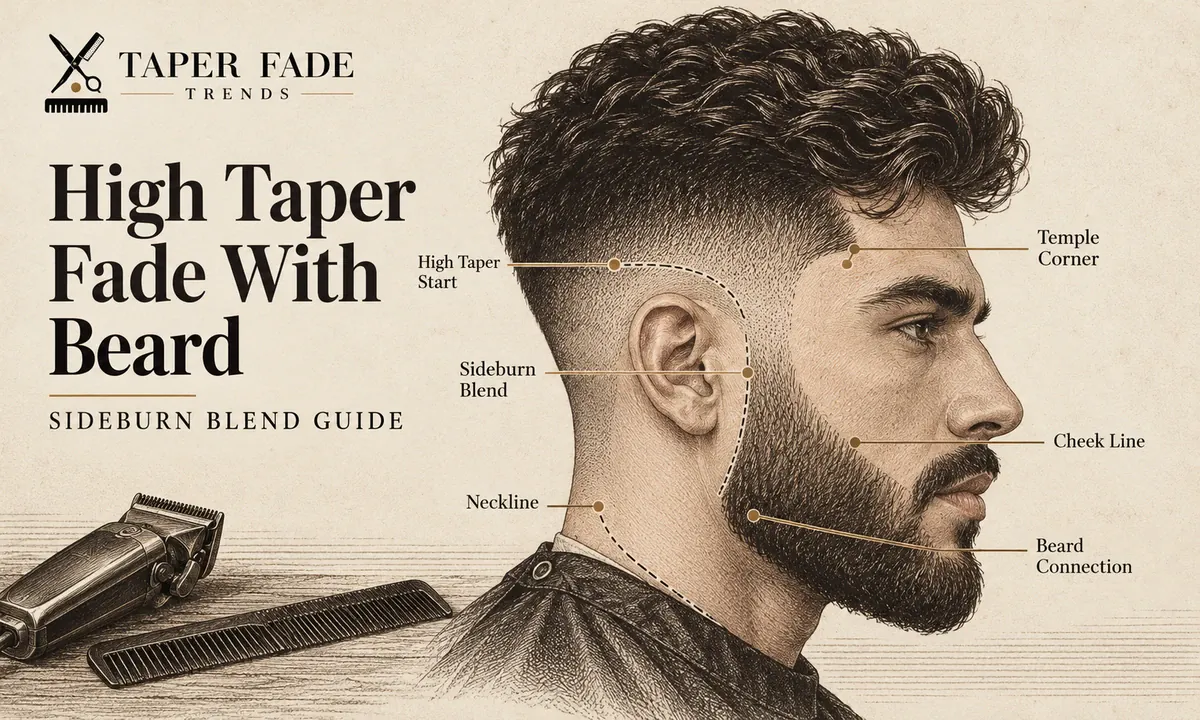
The cut at a glance. Settle each row before the clippers start, because none of them follows from the name.
| Spec | What it decides | How to say it |
|---|---|---|
| Placement | How high the short work starts | Point to the temple corner on a side photo |
| Coverage | How far around the sides and back the short zone runs | Mark where it stops; run it all the way around and it becomes a high fade |
| Shortest finish | What sits at the bottom of the taper | Skin, shadow or visible hair, said out loud |
| Retained side weight | How much length stays above the taper | “Keep the sides fuller” or “take them down” |
| Sideburn connection | How the haircut meets the beard | A blend into the beard, or a clean break |
| Beard density | What the sideburn and cheek can carry | Show the barber any thin or patchy areas |
| Beard length and lines | How much graduation the sideburn needs; where the cheek line and neckline sit | Stubble, short or full, then the lines separately |
| Top | The haircut above the taper | Length and shape, asked for on its own |
What is a high taper fade with beard?
A high taper fade with beard is a haircut whose short taper starts high, around the temple corner and sideburn, worn with a beard that either blends out of the sideburn or stops at a deliberate edge. Shops use the label loosely, so ask for the placement, the shortest finish and the sideburn connection rather than the name alone.
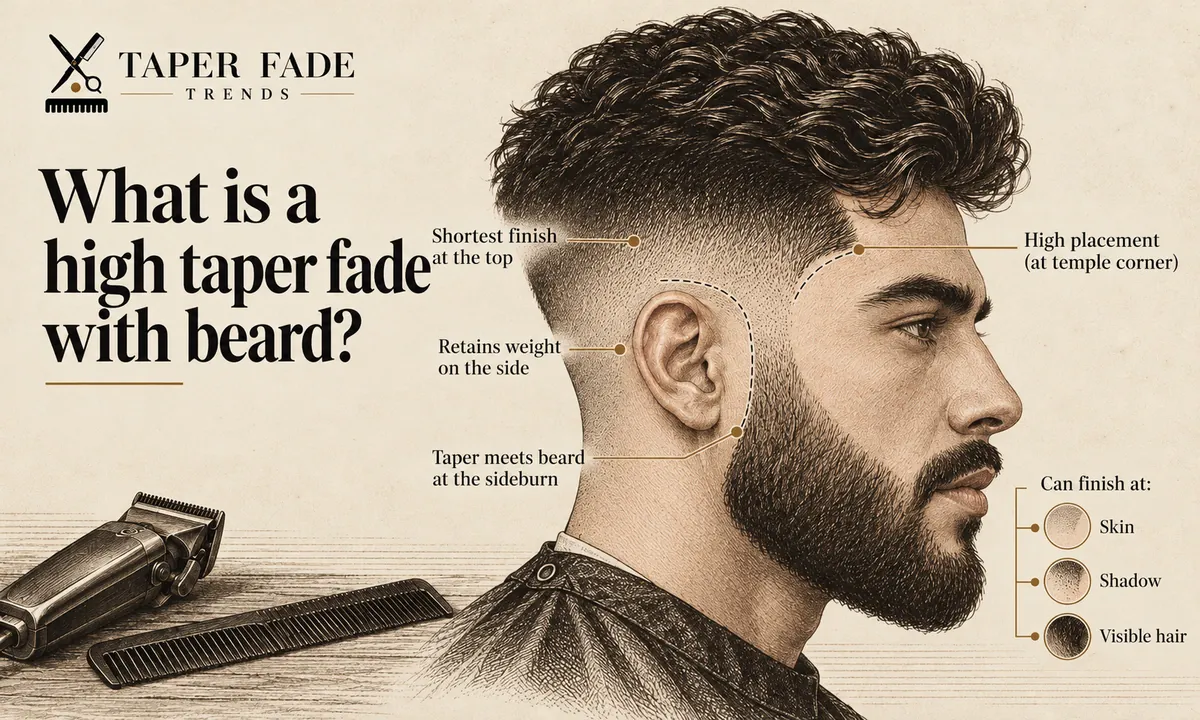
“High” describes placement, not closeness. Wahl’s fade guide separates low, mid and high by where the line starts on the side of the head, and the barber-written Man of Many taper guide tells readers to say how short the lowest point should go as its own request. Our high taper fade guide covers the haircut without a beard, including coverage, the setting that separates a high taper from a full high fade.
Does a high taper fade have to go to skin?
No. A high taper fade can finish at skin, at a shadow of very short hair, or at visible hair on a guard. “High” only says where the taper starts. Ask for the shortest finish as a separate instruction, because two barbers can hear the same label and cut the bottom to different lengths.
What a beard adds to the cut
A beard adds one decision at the sideburn: whether the short taper hair graduates into the beard or stops at a line. A faded, or blended, beard runs short at the sideburns and longer on the cheeks and chin, as both Philips and Braun describe it. Under a high taper, that graduation picks up where the taper ends.
How should the sideburn connect to the beard?
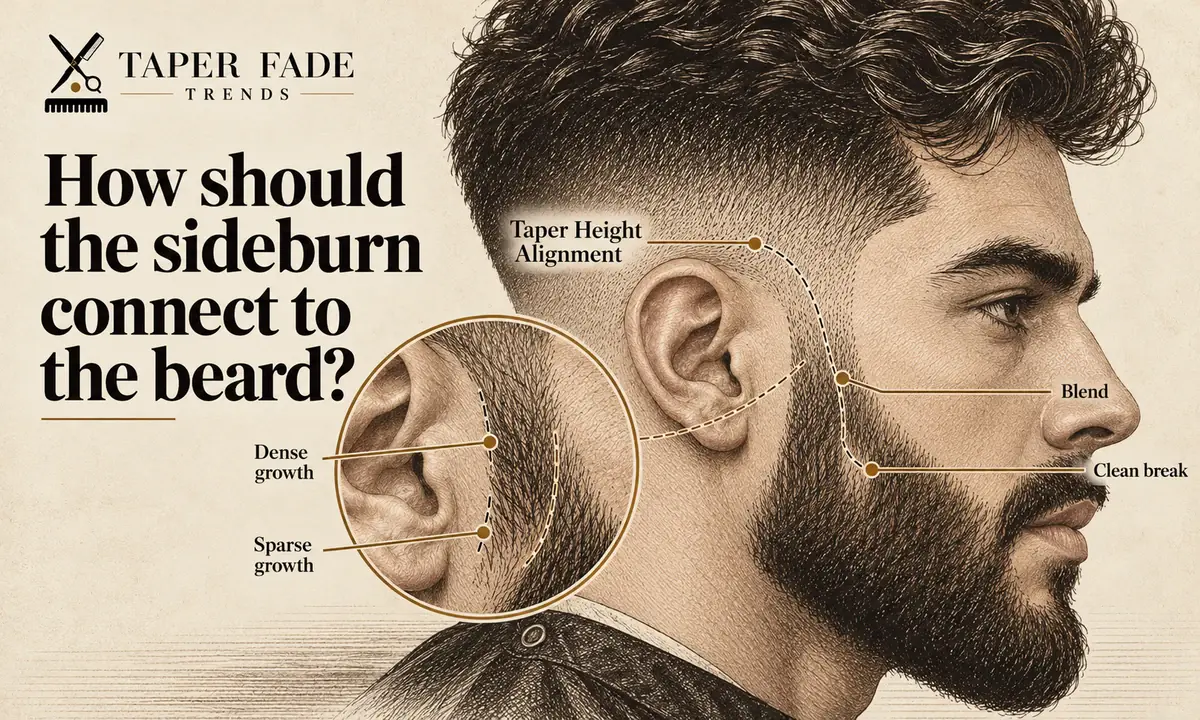
The sideburn should connect where the haircut’s short temple work reaches it, then follow the beard growth that is actually there. No universal starting point exists. Point to the spot on a side-profile photo, and if the sideburn is thin, keep more length there or choose a clean break instead of forcing a blend.
Connected blend or deliberate disconnect
Both are legitimate. A connected blend shortens the sideburn, then lets the beard lengthen gradually toward the cheek and chin. A deliberate disconnect keeps a visible boundary between haircut and beard. Pick by the look you want and the density you have, and make the choice visible in your reference photo instead of leaving it to a label.
| Connected blend | Deliberate disconnect | |
|---|---|---|
| At the sideburn | Short, then graduating longer into the beard | Ends at a visible line |
| Overall read | One transition from temple to jaw | Haircut and beard as two shapes |
| Depends most on | Even density through the sideburn | An outline agreed before cutting |
Does the beard fade have to match the taper height?
No. Haircut placement and beard graduation are separate controls. A high taper can lead into a short beard fade, a longer graduation down the cheek, or a clean break. Even the labels don’t line up: grooming brands use “low” and “high” fade beard for how much of the face the beard covers, not where a haircut starts.
In Braun’s beard-fade guide, a low fade beard leaves the cheeks bare and keeps full length near the jaw, while a high fade beard covers much more of the face. Philips draws the same line. Neither term is tied to a high or low haircut, so describe the beard in its own words.
Dense or even sideburn growth
Dense, even growth at the sideburn gives the barber the most room. A connected blend or a clean break will both hold, so choose by look. In a close-up, the useful check is where the shortest hair ends and full beard length begins. A smooth blend shows no step between the two.
Sparse or patchy sideburn growth
A high taper fade with beard still works with a sparse or patchy sideburn, but the connection has to follow the hair that is there. A barber may keep more length through the thin zone, soften the cheek line, or break the beard away from the taper. No fixed guard sequence suits every patch pattern.
Braun and Philips both suggest a low fade beard, which keeps the upper cheeks clear and the length close to the jaw, as a way to hide patchy growth. Show the barber a close-up of the thin area before cutting, so the plan is built on your density rather than on a photo of someone else’s.
Which beard length works with a high taper fade?
Any beard length can work with a high taper fade, from stubble to a full beard, and the haircut name sets no minimum. What changes with length is how much graduation the sideburn has to cover between the shortest taper hair and full beard length, and how visible the step looks if you skip the blend.
| Beard length | What happens at the sideburn | Decision to make |
|---|---|---|
| Stubble or short beard | Little length to graduate through; a step only shows when the taper finishes much shorter than the beard | Blend the small difference, or keep a clean break |
| Full beard | The most length to graduate through | How far down the cheek the graduation runs, and whether cheek density can carry it |
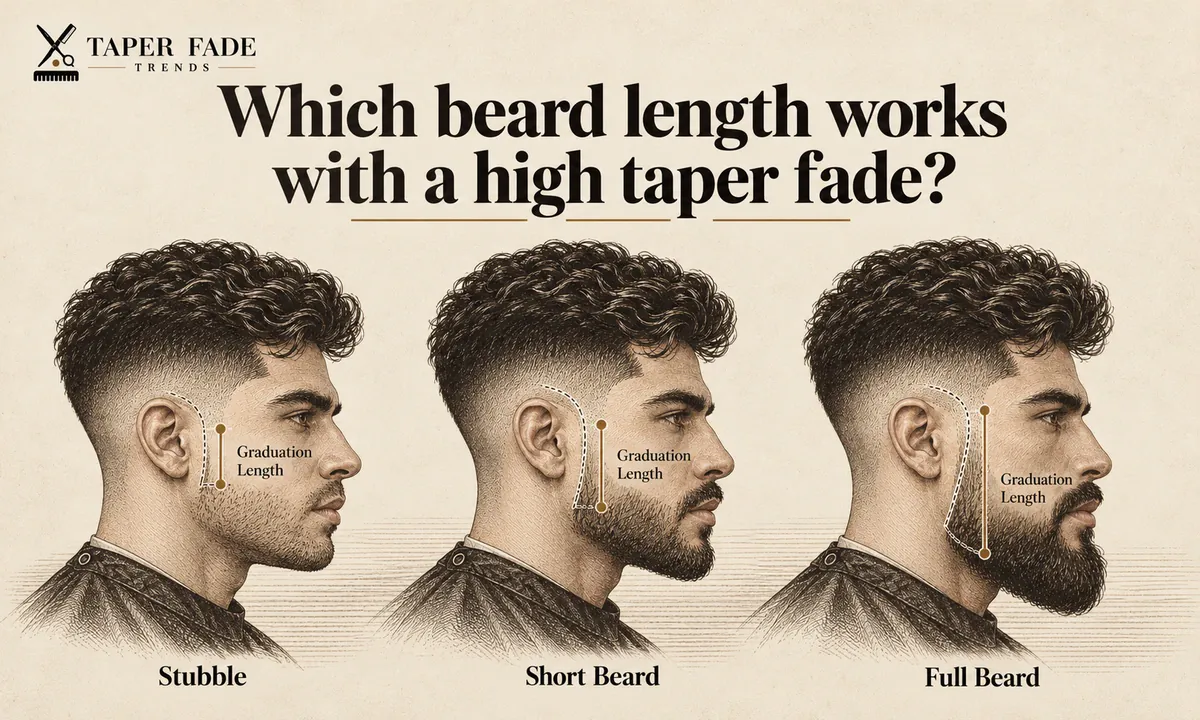
Texture changes what you see. Curly beard hair sits shorter than its stretched length, so judge length as it sits, the same way our curly high taper guide treats the top. Growth direction can also change across the cheek and jaw, so ask the barber to check it where the blend crosses.
Does a high taper clash with a full beard?
It can, when the step between very short sides and a heavy beard is left unplanned. A former barber writing for Man of Many notes that a low taper connects into a beard more naturally, and that a high taper with a full beard can clash if the contrast isn’t balanced. The fix sits at the sideburn: run a longer graduation down the cheek, finish at a shadow or guard instead of skin, or make the break deliberate.
When a lower taper or high fade fits better
Choose a lower taper when you want the softest connection into a full beard and less contrast at the sides; our low taper fade guide covers that cut. Choose a full high fade when you want the whole side short, not just a band at the temple. The high taper vs high fade guide compares the two.
What to tell your barber
Show a side-profile photo and settle four things before cutting: where the taper starts, how short its bottom finishes, how much side weight stays above it, and how the sideburn meets the beard. Then describe the beard outline separately. Leave guard and lever settings to the barber unless the numbers come from your own recorded cut.
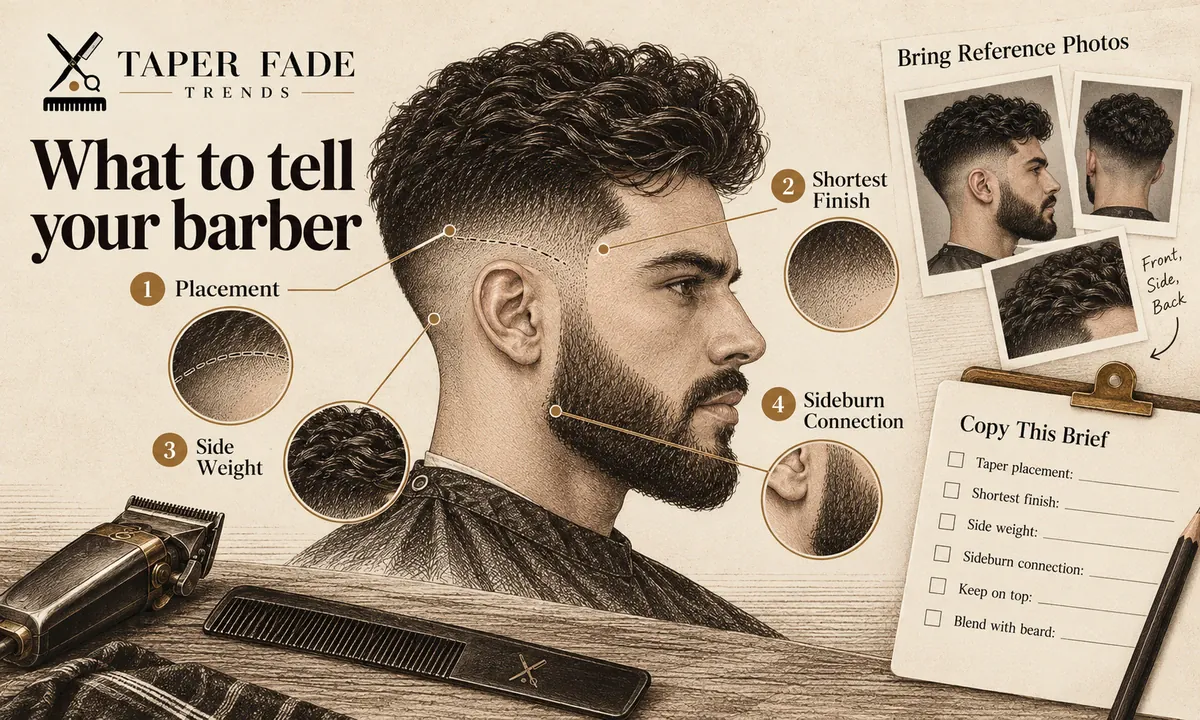
Four decisions before the clippers start
- Placement: point to the temple corner on the photo.
- Shortest finish: skin, shadow or visible hair.
- Side weight: how full the sides stay above the taper.
- Sideburn: a blend into the beard or a clean break, shown on the side profile.
Ask for the cheek line, the neckline and the top as separate requests. Our taper fade barber brief covers the general version for any taper.
Which reference photos to bring
Bring a clear side profile that shows the temple, sideburn, cheek line and enough beard to reveal the transition. Add the opposite side to check symmetry and a back view for the neckline. A front-only photo hides the part of this cut that matters most, and photos of hair like yours translate best.
A photo still can’t show the guard or lever used, the density behind the beard line, or how the cut grows out. Treat it as a picture of an outcome, and let the barber tell you what your hair can do.
Copyable barber brief
Fill in the brackets. The wording states outcomes and leaves tool settings to the barber.
Skip guard recipes copied from the internet. A number only means something for a named clipper system, as our haircut numbers guide explains, and a recipe from someone else’s head doesn’t carry over to yours.
How often does a high taper fade with beard need upkeep?
No single interval fits everyone. The blend stops looking intentional sooner when the finish is skin, the contrast between hair and skin is high, or your hair grows fast. A former barber writing for Man of Many books mid and high tapers every two to three weeks for crisp edges; treat that as one barber’s habit.
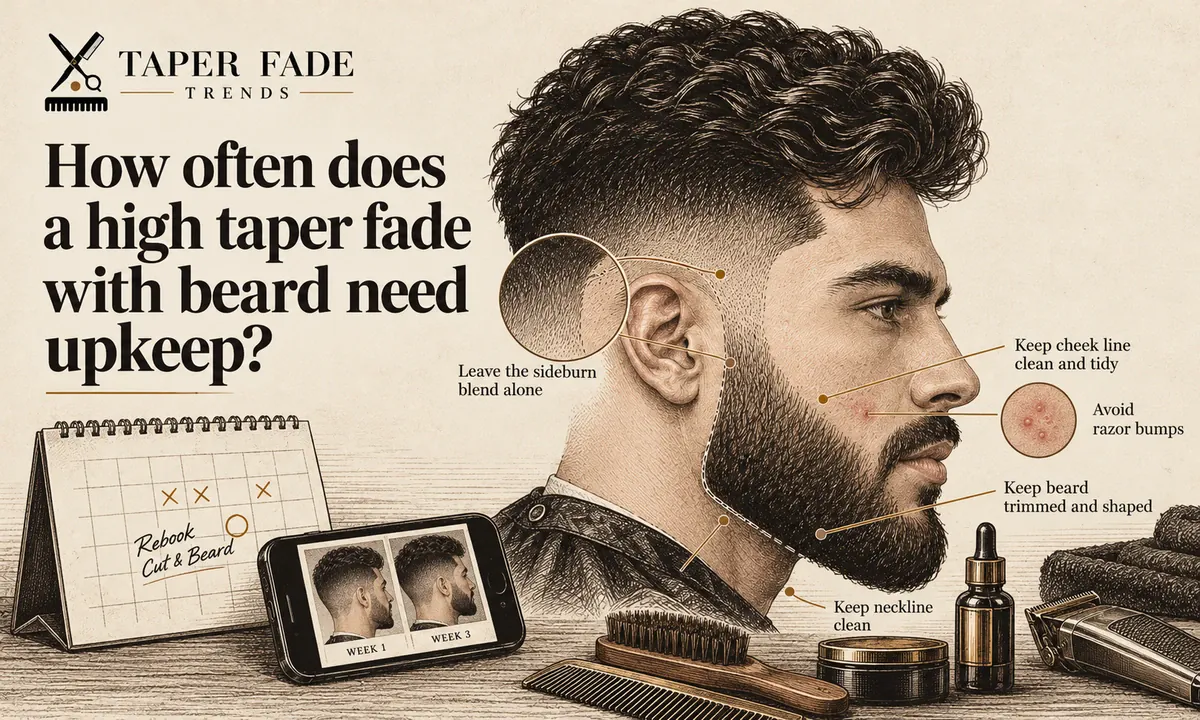
A guarded finish with lower contrast hides regrowth longer. The practical method is your own record: photograph the cut the day it’s done, again from the same angles as it grows, and rebook when the sideburn no longer looks planned. Our guide to how long a taper fade lasts walks through that week by week.
What to maintain at home between visits
Keep the beard length and the neckline tidy, and leave the sideburn blend and the cheek line where the barber set them. Both are easy to push back and hard to put back evenly. Our taper fade maintenance guide covers what to touch at home and what to leave alone.
If close beard lines cause razor bumps
If shaving the cheek line or neckline close gives you razor bumps, put your skin ahead of the sharpest line. The American Academy of Dermatology advises softening the hair first, using a moisturizing shaving cream, and shaving in the direction the hair grows. Letting that edge grow instead of shaving it removes the cause.
Mistakes that spoil the sideburn blend
Most disappointing results come from a gap between what was said in the chair and what was meant. Three show up most at the sideburn:
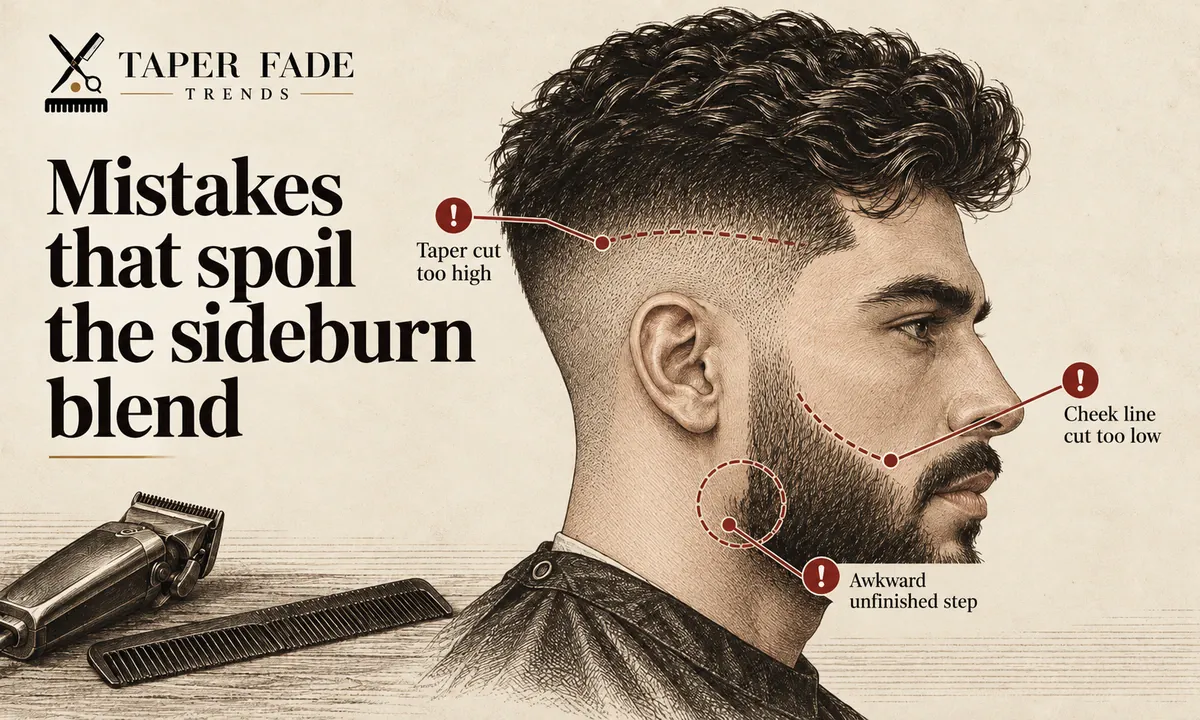
- The taper goes higher than agreed. That takes more side weight than planned, and nothing goes back until it grows. If you’re torn between two heights, ask for the lower one; a barber can go higher next visit.
- The cheek line gets cut below where the beard grows. The shaved strip comes back as stubble, so the line blurs instead of staying crisp.
- The sideburn ends in a step that is neither a blend nor a planned line, and it reads as unfinished. Check both sides with a hand mirror before you leave.
When another guide fits better
This guide covers a high taper meeting a beard. If you have no beard, or you plan to cut the beard fade yourself, start somewhere else.
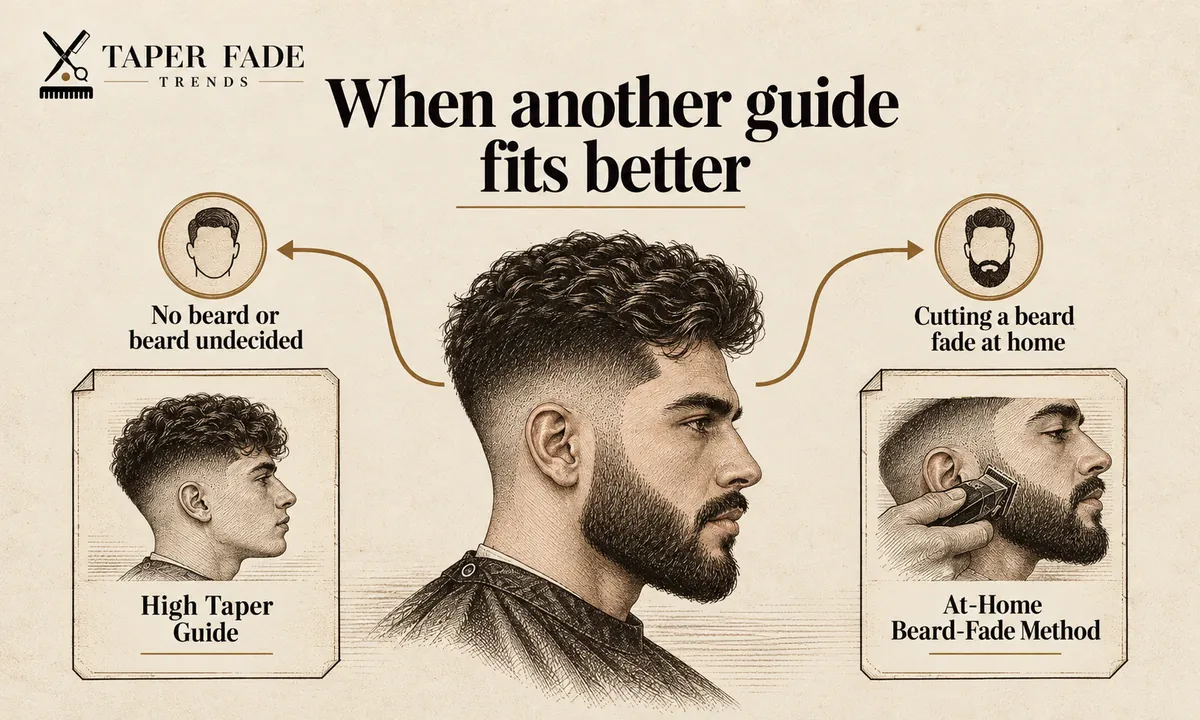
| Situation | Why this guide doesn’t settle it | Where to go |
|---|---|---|
| No beard, or beard undecided | The specs above assume facial hair | Our high taper fade guide |
| Cutting a beard fade at home | This page covers the blend and the brief, not clipper technique | Philips’ step-by-step faded-beard method |
How this guide was researched
Taper Fade Trends Editorial wrote this guide to show how a high taper can meet a beard at the sideburn. Definitions were checked against a clipper maker (Wahl), two grooming-tool makers (Philips and Braun) and a barber-written guide (Man of Many). The razor-bump advice comes from the American Academy of Dermatology. Sources were read in October 2026.
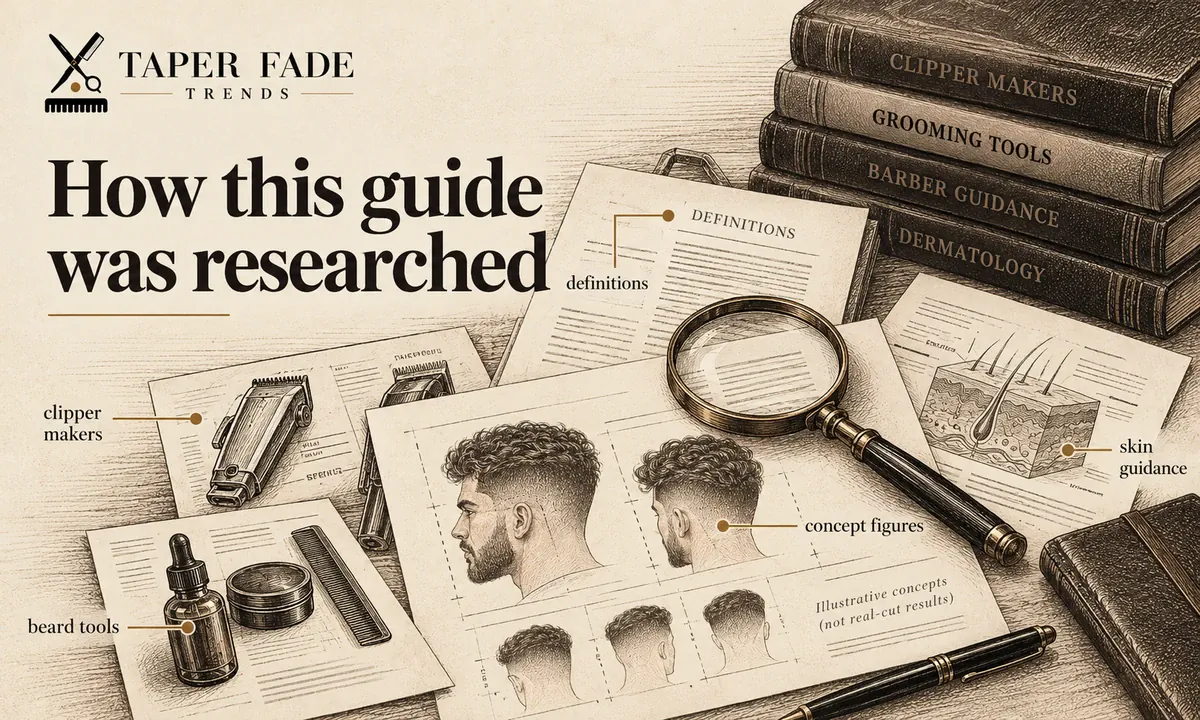
Shops use “high taper” and related labels differently, so this guide asks you to state placement, shortest finish and the sideburn connection rather than relying on a name.
Every figure on this page is a labeled illustration of a concept, not a photo of a finished cut. We’ll add real, credited photos tied to recorded cut details when we have them. This version has not yet had the barber review our editorial policy calls for on technique guides; the reviewer’s name and the review date will appear here once it has. To report an error, see our editorial policy.
Sources cited in this guide:
- Wahl: how to fade hair
- Man of Many: taper fade haircuts, by a former barber
- Philips: how to style a faded beard
- Braun: beard fades
- American Academy of Dermatology: razor bump prevention
If you’re still deciding how much of the side to take off, compare a high taper with a high fade before you book.
Keep reading
All guides
High taper fade: placement, finish and barber brief
Where a high taper fade sits, how much side weight stays, skin vs shadow finishes, what the back should look like, and exactly what to tell your barber.
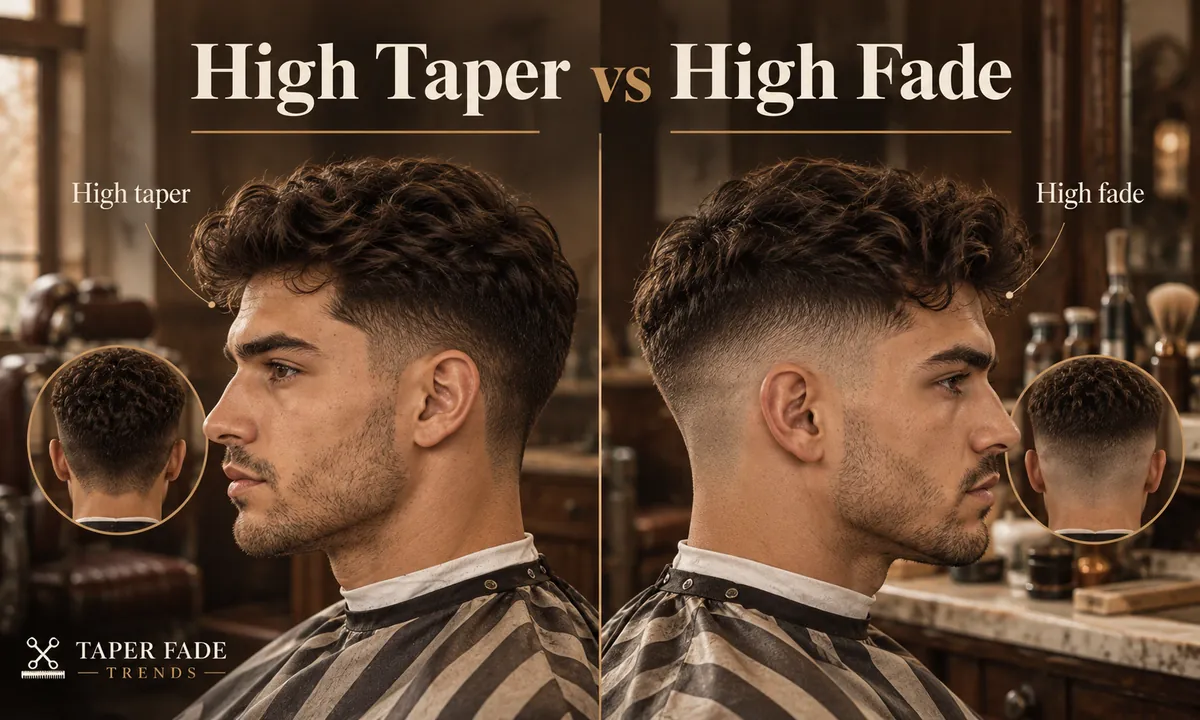
High taper vs high fade: side, back and coverage
High taper vs high fade compared by side weight, back coverage and shortest finish, plus why barbers use the names differently and a four-point brief.
How to ask for a taper fade: a five-part barber brief
How to ask for a taper fade: say where it may reach, how short the base goes, how much side weight stays and what to do on top, then check the plan first.
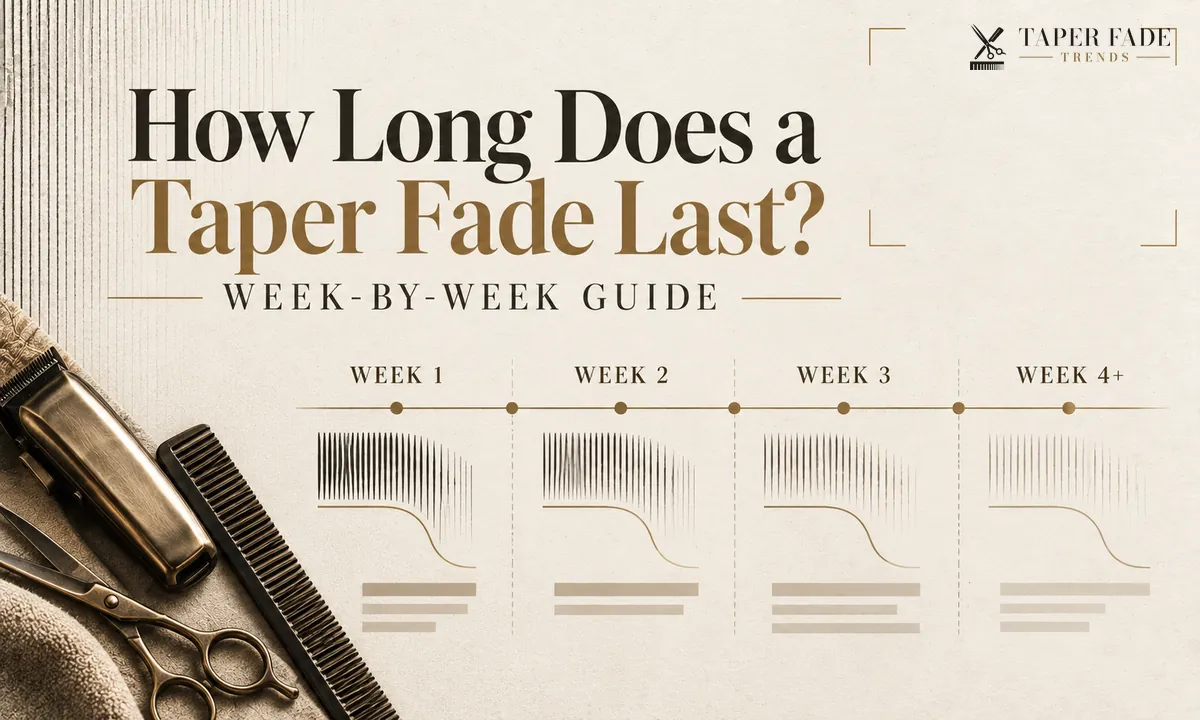
How long does a taper fade last? Fresh, tidy and grown-out stages
How long does a taper fade last? Sharpest for 1 to 2 weeks, tidy for about 2 to 4. See what changes each week and when a touch-up beats a full cut.
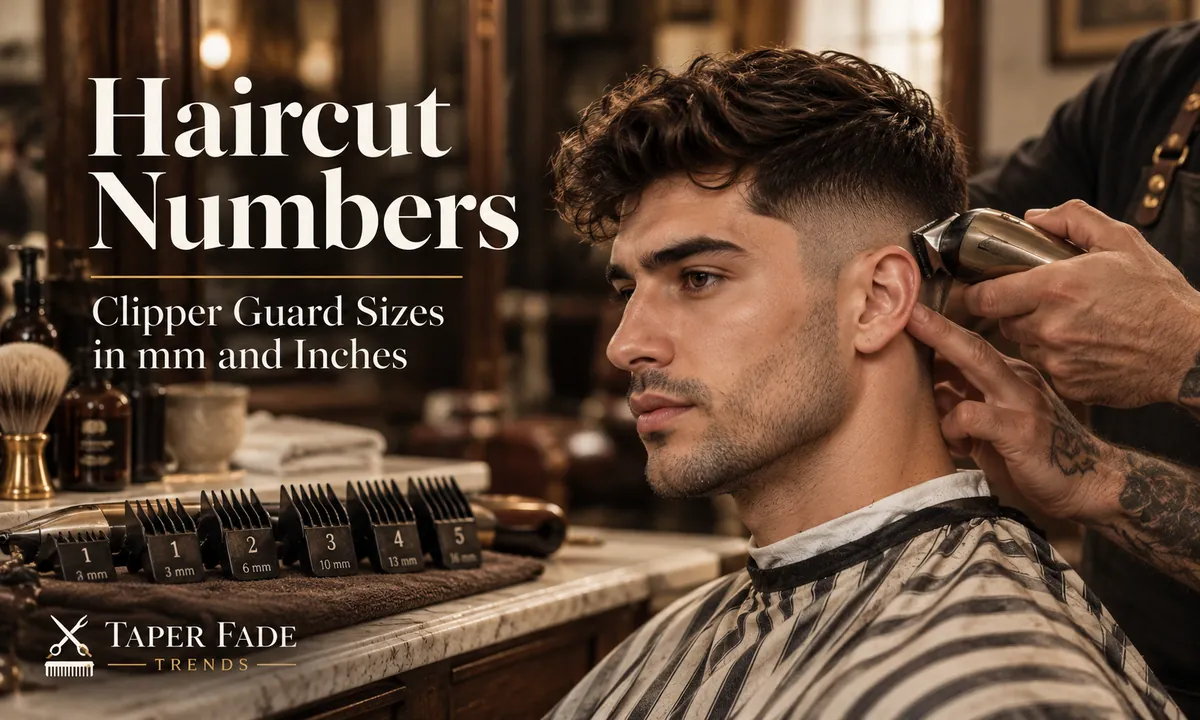
Haircut numbers: clipper guard sizes in millimeters and inches
Haircut numbers in mm and inches, checked against Wahl, Andis and Oster specs, plus why #0 isn’t always no guard and what to tell your barber.
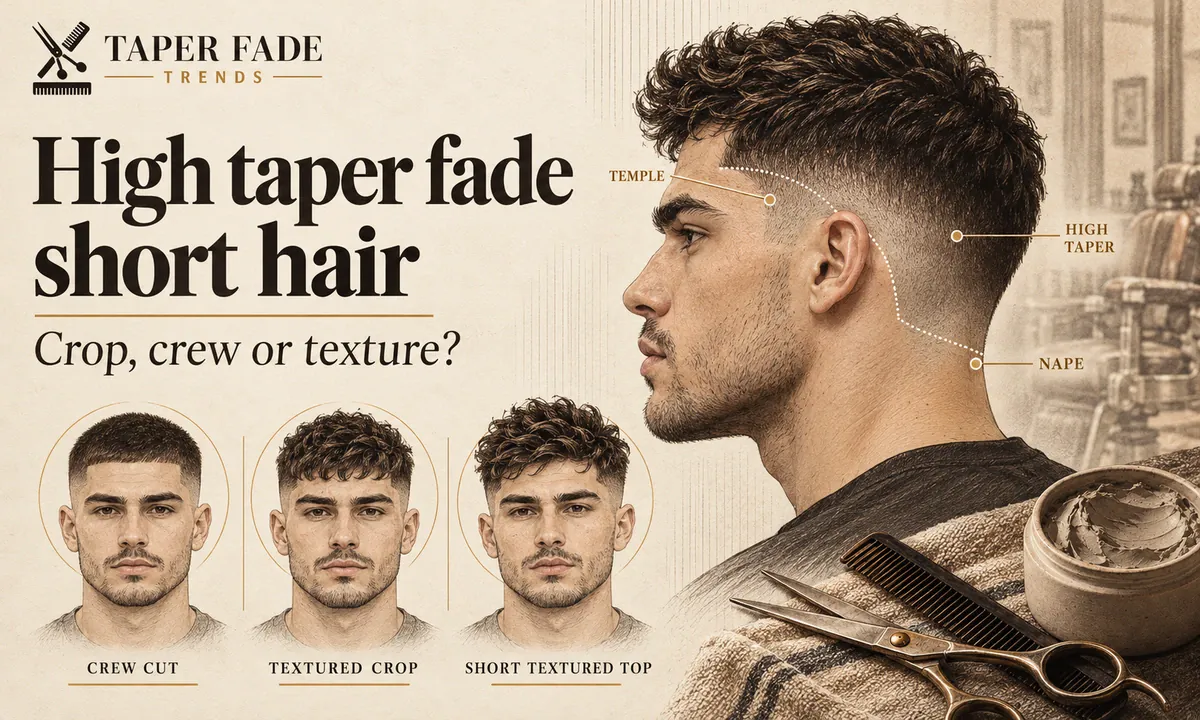
High taper fade short hair: Compare crop, crew and textured tops
High taper fade on short hair, compared across a crew cut, textured crop and short textured top, with side weight, finish, the back and a barber script.
High taper fade curly hair: keep the curl shape, clean the perimeter
How a high taper fade works on curly hair: what side weight to keep, why curls are judged dry, how to measure shrinkage and what to tell your barber.
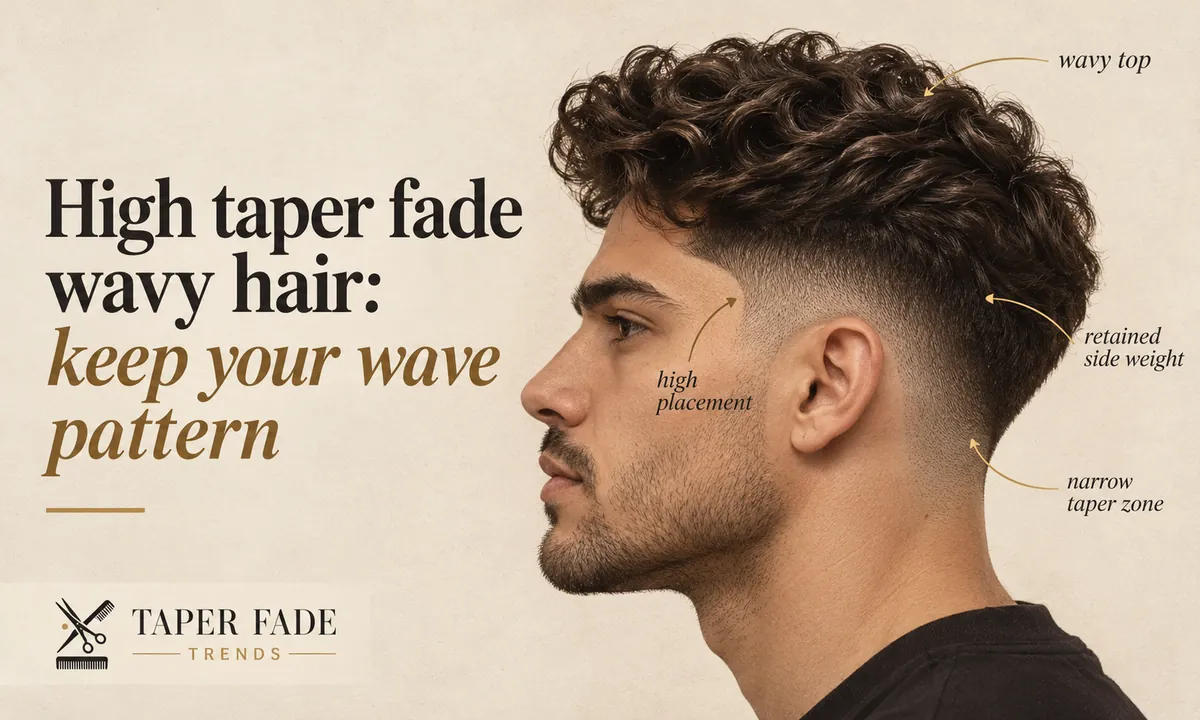
High taper fade wavy hair: keep your wave pattern
See how a high taper fade works on naturally wavy hair: how much top length to keep, what to tell your barber, and how to air-dry and maintain it.
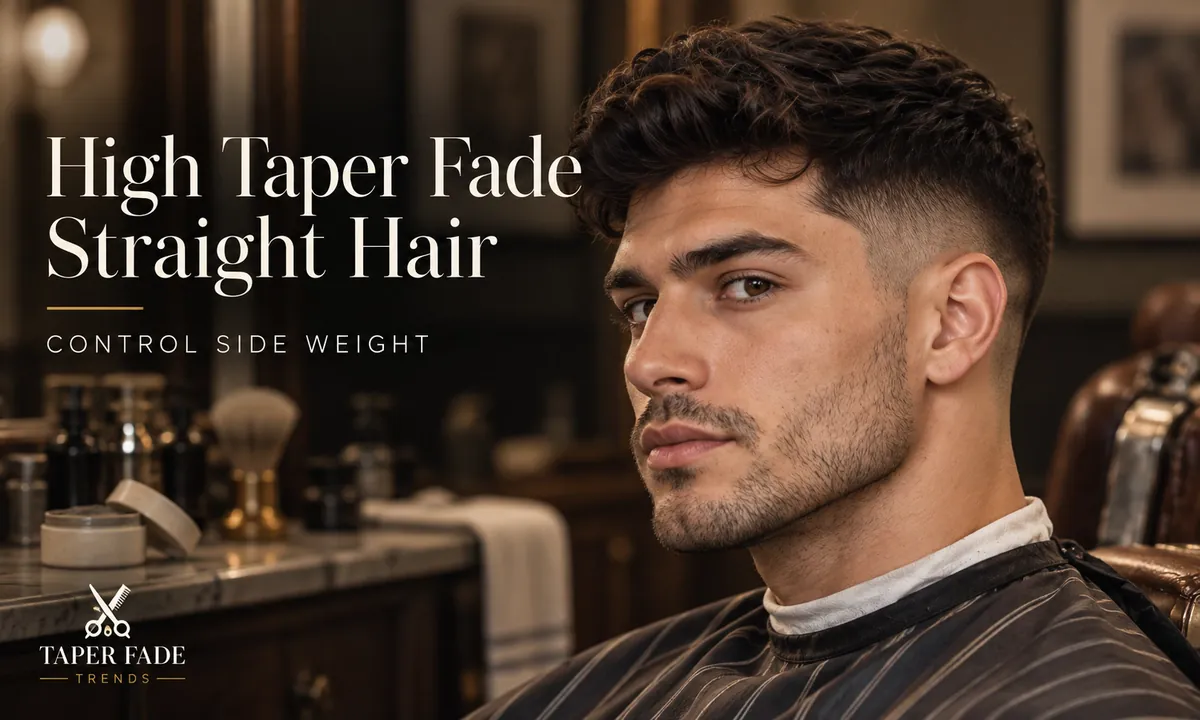
High taper fade straight hair: control side weight and avoid a shelf
High taper fade straight hair, explained by density, growth direction and side weight, with a barber script and why sides stick out as it grows.
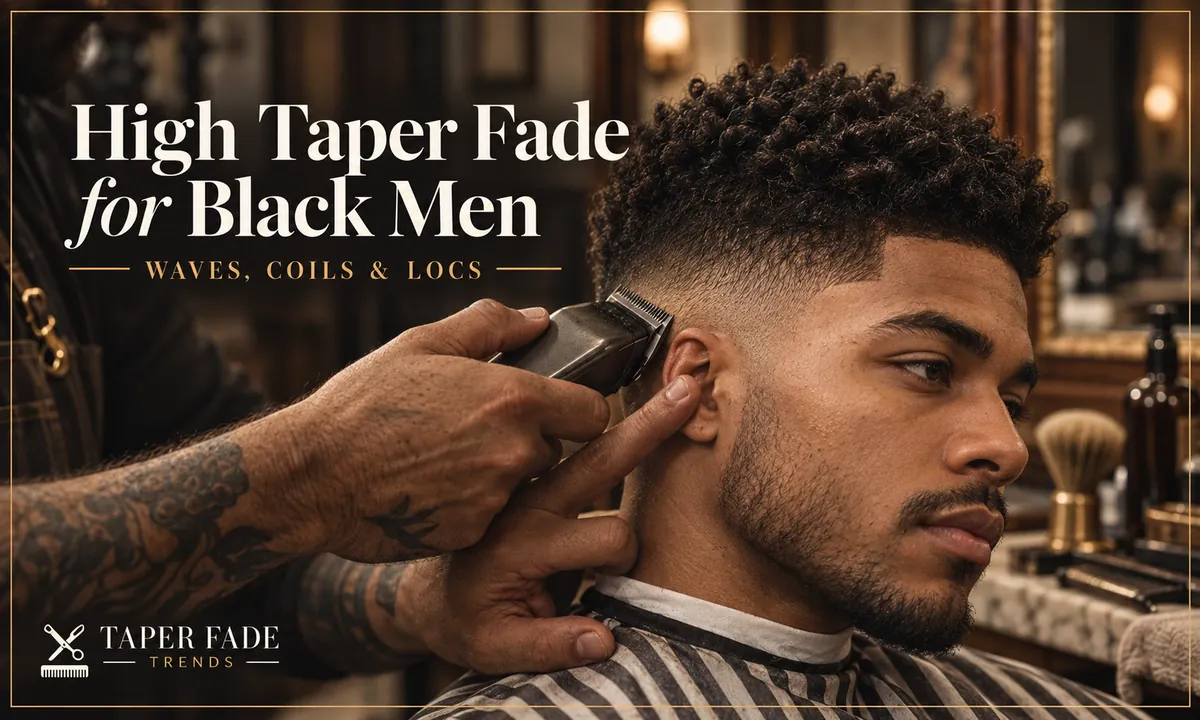
High taper fade Black male styles: waves, coils, twists and locs
High taper fade Black male guide: how it sits with waves, coils, twists and locs, skin vs. guard finishes, and a fill-in barber brief.
How to maintain a taper fade between haircuts
How to maintain a taper fade between haircuts: what is safe at home, where to stop before the blend, and when to book a cleanup or a full cut.
More in high taper fades
High taper fades: all 8- High taper fade: placement, finish and barber brief11 min
- High taper fade curly hair: keep the curl shape, clean the perimeter10 min
- High taper fade straight hair: control side weight and avoid a shelf9 min
- High taper fade Black male styles: waves, coils, twists and locs9 min
- High taper fade wavy hair: keep your wave pattern10 min
- High taper fade short hair: Compare crop, crew and textured tops11 min
- High taper fade with beard: how the sideburn meets the beardYou are here
- High taper vs high fade: side, back and coverage8 min