High taper fade Black male styles: waves, coils, twists and locs
A high taper fade for Black men puts the shortest work high around the temples and sideburns, usually with a matching nape, while the middle of the sides keeps more weight than a full high fade leaves. The top can stay as waves, coils, an Afro, twists or locs. Height and closeness are separate choices.
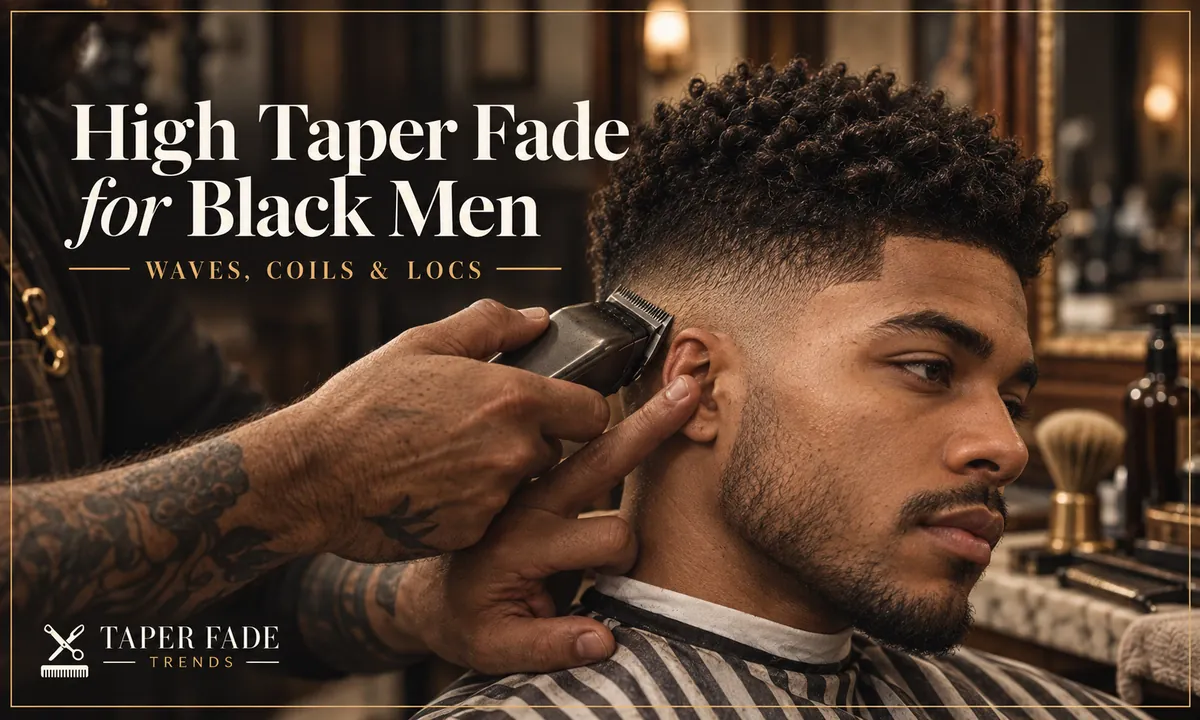
| What to set | For a high taper fade |
|---|---|
| Placement | High, starting near the temple corner and sideburn; StyleSeat puts it a couple of inches above the ears |
| Coverage | Temples and sideburns, usually the nape too; the middle of the sides stays fuller |
| Shortest finish | Skin, shadow or a guard length, chosen separately from height |
| Retained side weight | More than a full high fade keeps |
| Top style | Waves, short coils, an Afro, twists, cornrows or locs |
| Hairline | Natural cleanup or a line-up, a separate choice |
| Reference views | Front, left, right and back |
| Confirm in the chair | Height, shortest finish, neckline, and which clipper system any guard number refers to |
What changes with a high taper on Black hair?
A high taper fade for Black men is a localized taper. The shortest hair sits high at the temples and sideburns, and usually at the nape, while the middle of the sides keeps more length than a full high fade. The top style stays your choice, and the name alone sets neither height nor closeness.
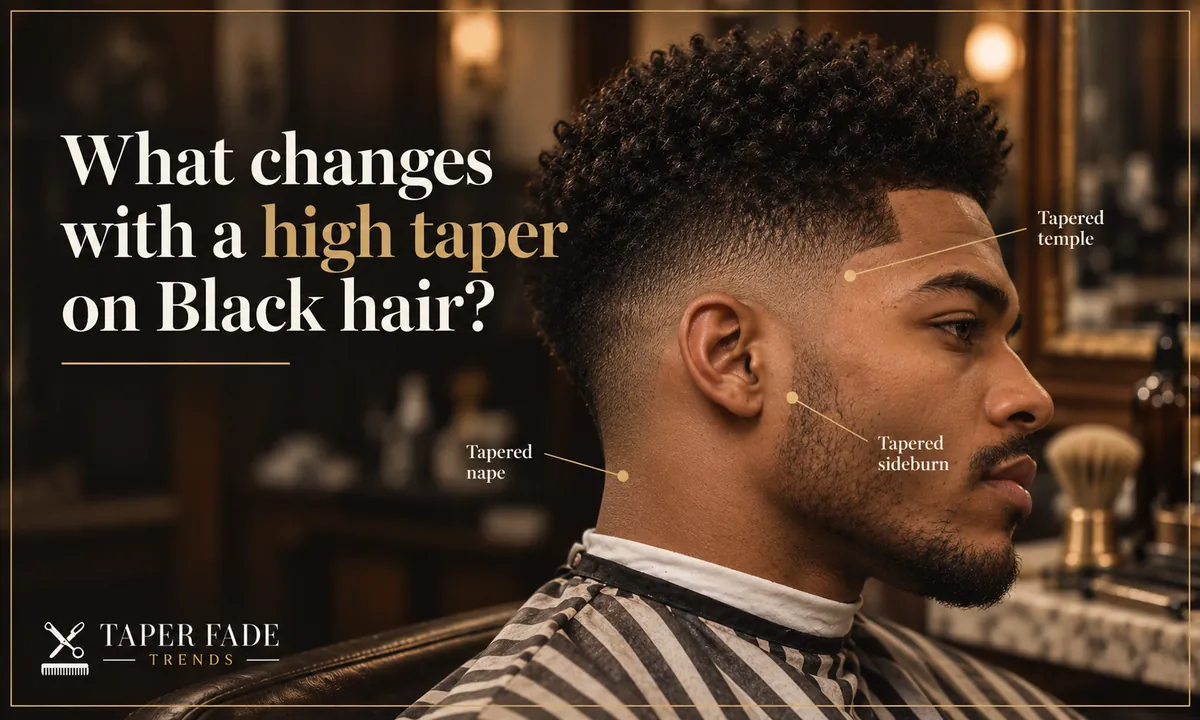
A full high fade starts at a similar height but carries the short zone around the sides and back, so far more weight comes off. The words overlap in real shops. StyleSeat notes that plenty of people, barbers included, use “taper” and “fade” interchangeably. That is why this guide describes the cut by what it does rather than what it is called.
That definition follows the site’s high taper fade guide, which also compares high placement with low and mid.
Set four controls before the barber starts
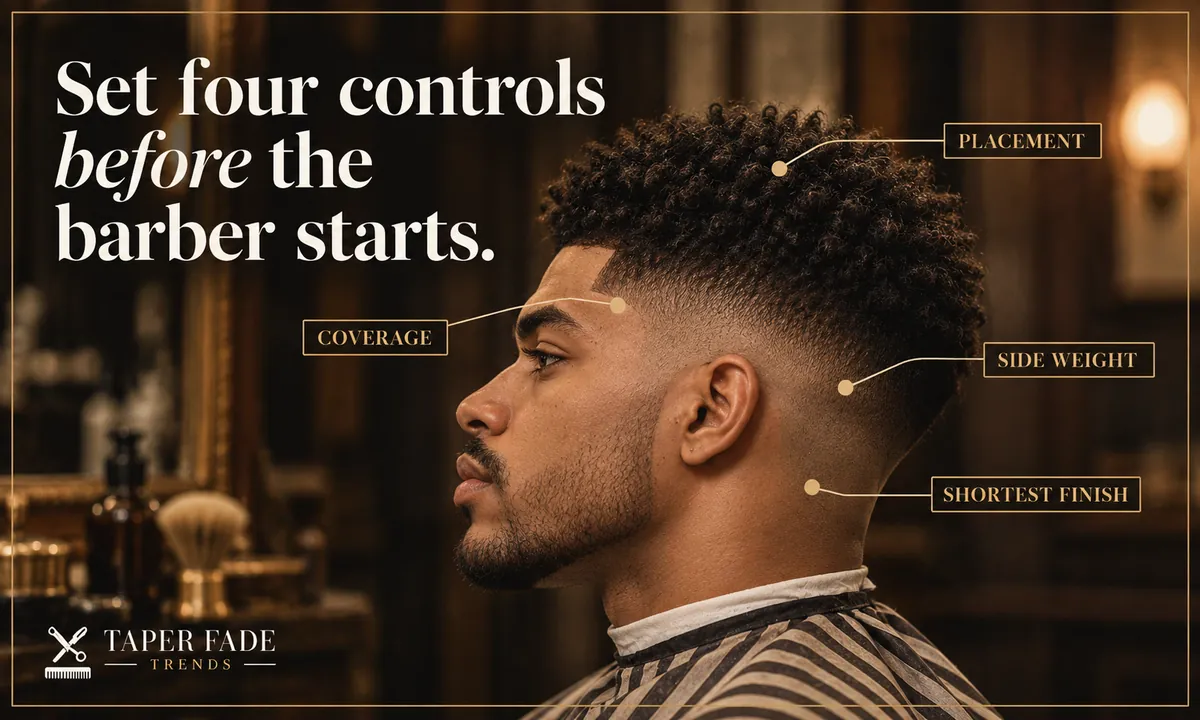
Four controls define the cut:
- taper placement (how high)
- coverage (which areas get tapered)
- shortest finish (how close the bottom goes)
- side weight (how much bulk stays above the taper)
Say all four out loud before the clippers start. The name carries none of them reliably.
No standard measurement sets where a high taper starts. StyleSeat describes it as beginning a couple of inches above the ears, and most barbers place it by eye from the temple corner and sideburn. Point to the spot on your own head, then say how far the tapered band should run around the ear and down to the nape.
No single guard number defines a high taper fade. A guard number sets cutting length on one maker’s clippers and says nothing about height. Wahl lists its #1 at 1/8 inch (3 mm) and its #2 at 1/4 inch (6 mm). Name a number only if you know the barber’s clipper system and want that exact length.
a cutting length on Wahl guards, not a taper height
a cutting length on Wahl guards, not a taper height
For how tapers and fades differ at every height, see the taper fade guide.
Once those four controls are set, choose a top-style reference that shows how much shape and side weight you actually want to keep.
High taper examples by top style
Waves, short coils, sponge curls, a rounded Afro, two-strand twists, cornrows and locs can all sit above a high taper fade. The fit depends on the top’s density, growth direction, retained length and the outline you want, not on ethnicity as a stand-in for texture. Two people with the same background can need different cuts.
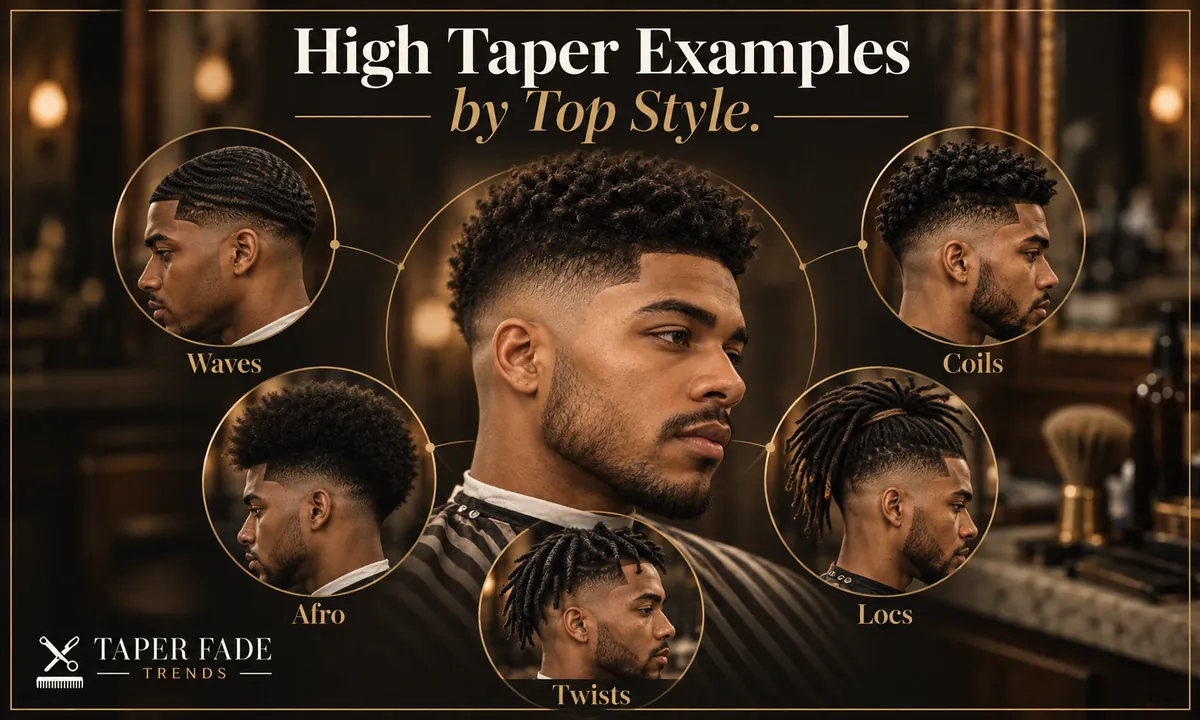
This page has no haircut photos yet. Each example says what to decide and what to show, so you can test any reference photo against it.
| Top | Decide first | Where the taper should stop | Grow-out note |
|---|---|---|---|
| 360 waves | Whether the blend may cut into the outer waves | Below the pattern, or into it by agreement | Waves cut at the temple have to grow and be brushed back in |
| Short coils, sponge curls | Length judged dry or stretched | Set against your density, not a guard recipe | Shrinkage changes how long the top reads |
| Rounded or shaped Afro | Where the round shape begins | Where side bulk can go without flattening the outline | The shape needs trims as it grows |
| Two-strand twists | Where the twisted sections start | Below the first twisted row | Re-twisting can move the boundary |
| Locs, cornrows, braided bases | Where each base is anchored | Below every base | Loc or braid upkeep runs on its own schedule |
360 waves
With 360 waves, decide whether the high taper should cut into the outer edge of the pattern at the temples or stop just below it. Clippers taken through the waves remove pattern there, and it has to grow back and be brushed in again. Bring a side reference where the blend meets the waves the way you want.
Short coils and sponge curls
Short coils and sponge curls look cleanest when the barber sets the taper against your actual density and growth direction instead of a stock guard sequence. Coils that shrink when dry can make the top read shorter than its stretched length, so say whether you want length judged dry. Hair given the same type label can still behave differently.
Rounded or shaped Afro
With a rounded Afro, the high taper decides where the round shape begins. A higher taper takes more of the outline off the sides. A lower one keeps it fuller. Agree on the shape from the front and the taper height from the side, because one photo angle rarely settles both.
Two-strand twists
Twists need hair at the perimeter to twist cleanly, so the taper should stop where the twisted sections start rather than run through them. Show the barber that line before cutting. Check it again each time the twists are redone, since new growth and re-parting can move it.
Locs and braided bases
Yes. Locs, cornrows and other braided styles can sit above a high taper fade as long as the taper stays below the base. Show the barber where each section is anchored and which perimeter has to stay. If reaching the planned height would mean cutting into a base, lower the taper instead. Ask your loctician or braider first.
Decide how much outline and side weight to keep
Keep as much side and temple weight as your silhouette needs. No number fits everyone, because density, shrinkage and the shape you chose all change the answer. Bring a side-profile reference, then point to the highest spot on your head where you are fine losing bulk. That instruction holds up better in the chair than any measurement.
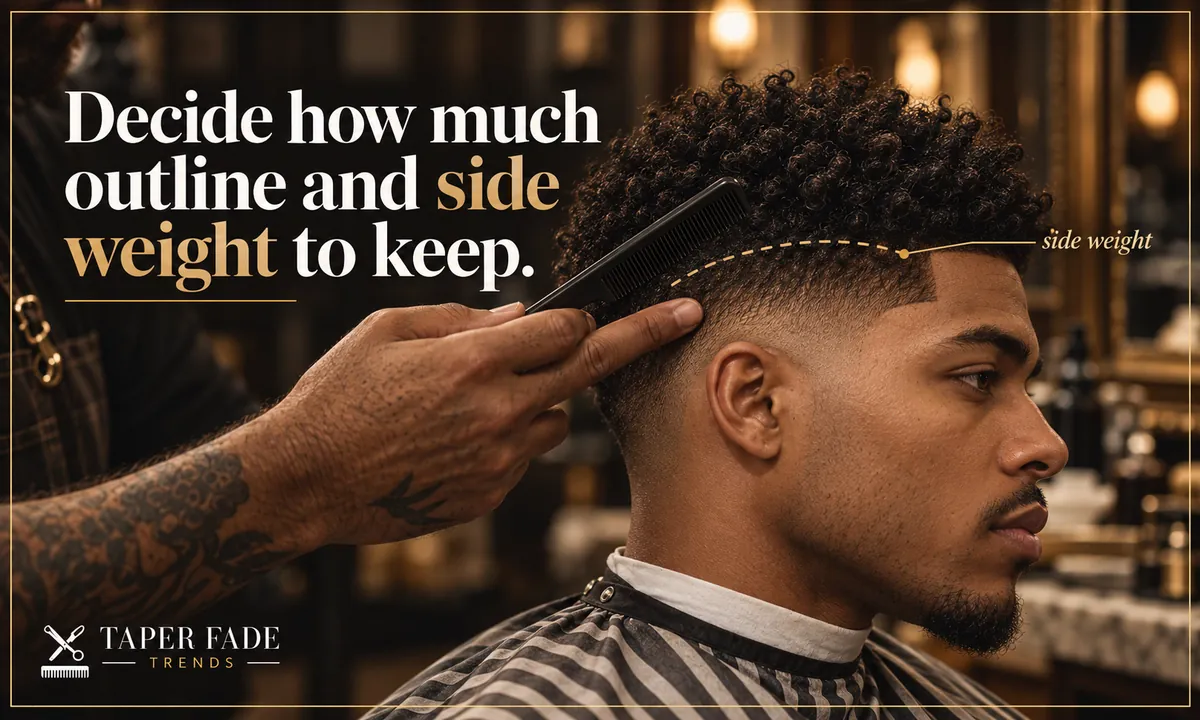
Side weight is also the control that keeps a high taper from turning into a full high fade. If the middle of the sides comes down to match the temples, you have a high fade, whatever the ticket says.
What to tell your barber
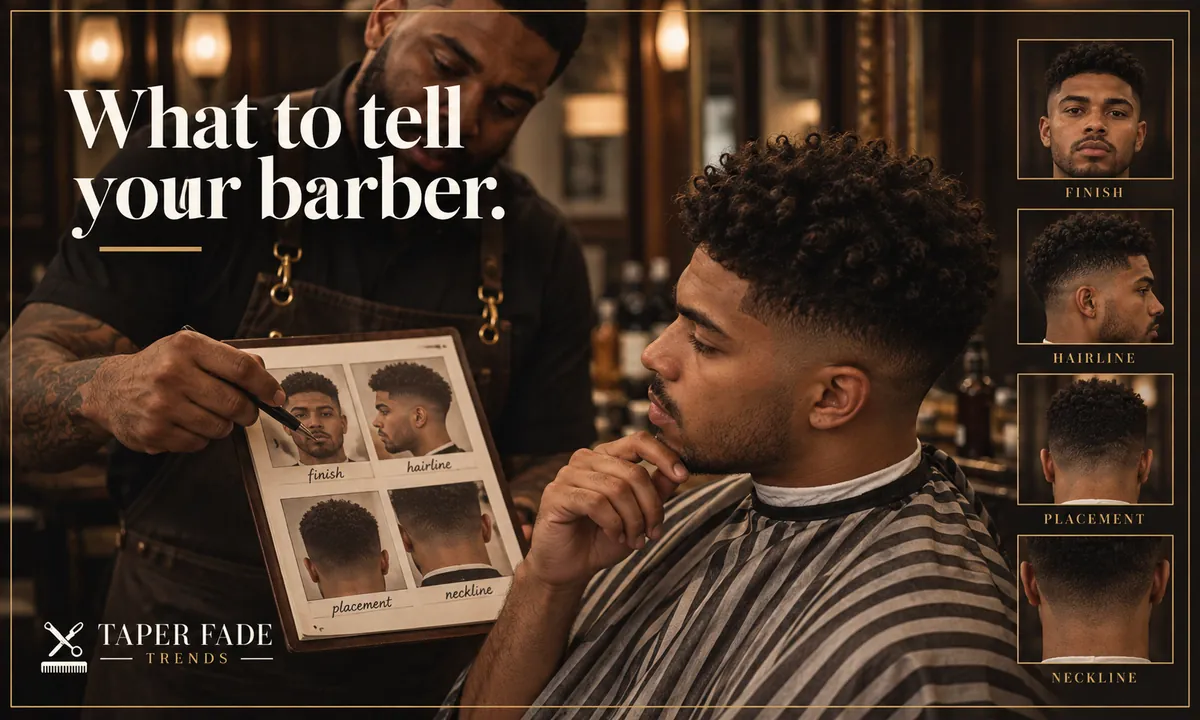
Tell the barber four things: high placement, which areas to taper, the shortest finish and the top shape to keep. Then add your hairline and neckline preferences and show front, side and back references. Skip guard sequences unless you know the barber’s clipper system and genuinely want those exact lengths.
A fill-in barber brief
Fill in the outcomes and leave the tool settings to the barber.
- Taper starts at: ______ (point to it)
- Areas to taper: temples / sideburns / nape
- Shortest finish: skin / shadow / guard ______
- Side weight to keep: ______
- Top style and length: ______
- Hairline: natural cleanup / line-up
- Neckline: tapered / squared / natural
Show four views with it: front, left side, right side and back.
Keep a natural hairline or add a line-up?
Yes, a high taper fade can keep your natural hairline. Ask for the front edge to be cleaned up, not reshaped, and say so before the trimmer comes out. A line-up is a separate choice. If you want one, ask for it to follow your existing hairline rather than push the edge back to make the taper look sharper.
The reference gets you through the consultation. What is left is how the cut should grow out and how close you want the shortest areas to be.
Styling, grow-out and close-cut limits
A high taper fade has no fixed rebooking interval. Scalp hair grows about half an inch a month, roughly 1/8 inch a week. That 1/8 inch is the length Wahl gives for its #1 guard. So a skin finish regrows to about guard #1 length within a week, while a guarded finish changes less visibly. Rebook when the edge or the blend stops looking the way you want.
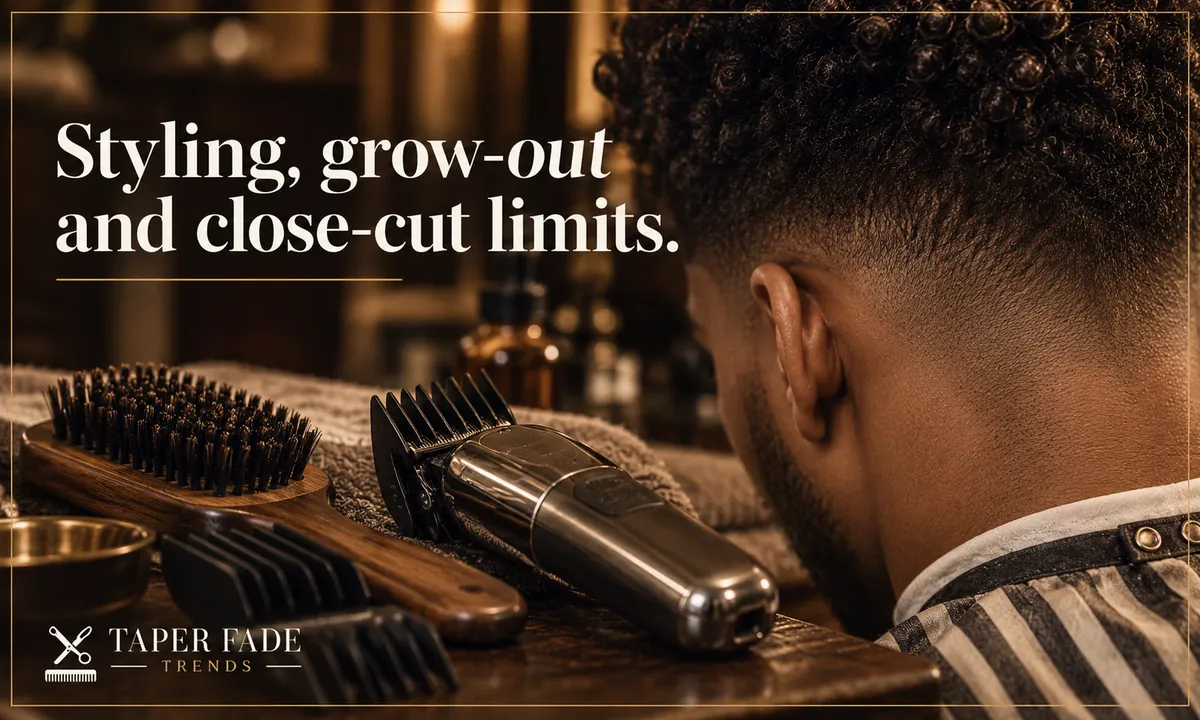
The taper needs no daily styling. The top keeps its own routine, whether that means brushing waves, defining coils or caring for twist and loc roots.
If close cutting gives you bumps, ask for a guarded finish instead of skin. The American Academy of Dermatology says razor bumps form when a razor cuts coarse, curly hair short enough to curve back into the skin. It also says that shaving the back of the neck and head can make acne keloidalis nuchae flare. Recurring bumps there need a dermatologist.
The AAD describes acne keloidalis nuchae as most common in Black males, often starting between ages 14 and 25, and says self-care alone cannot treat it. For people who have it, the AAD also advises stopping pomade or hair grease. This guide cannot diagnose anything from a description.
When another taper is the better reference
If you want fuller sides, a mid or low taper keeps more coverage. If you want the short zone to wrap the whole side and back, ask for a full high fade instead. Raising a taper takes one visit. Lowering it means waiting for the removed hair to grow back at about half an inch a month, so start lower if you are unsure.
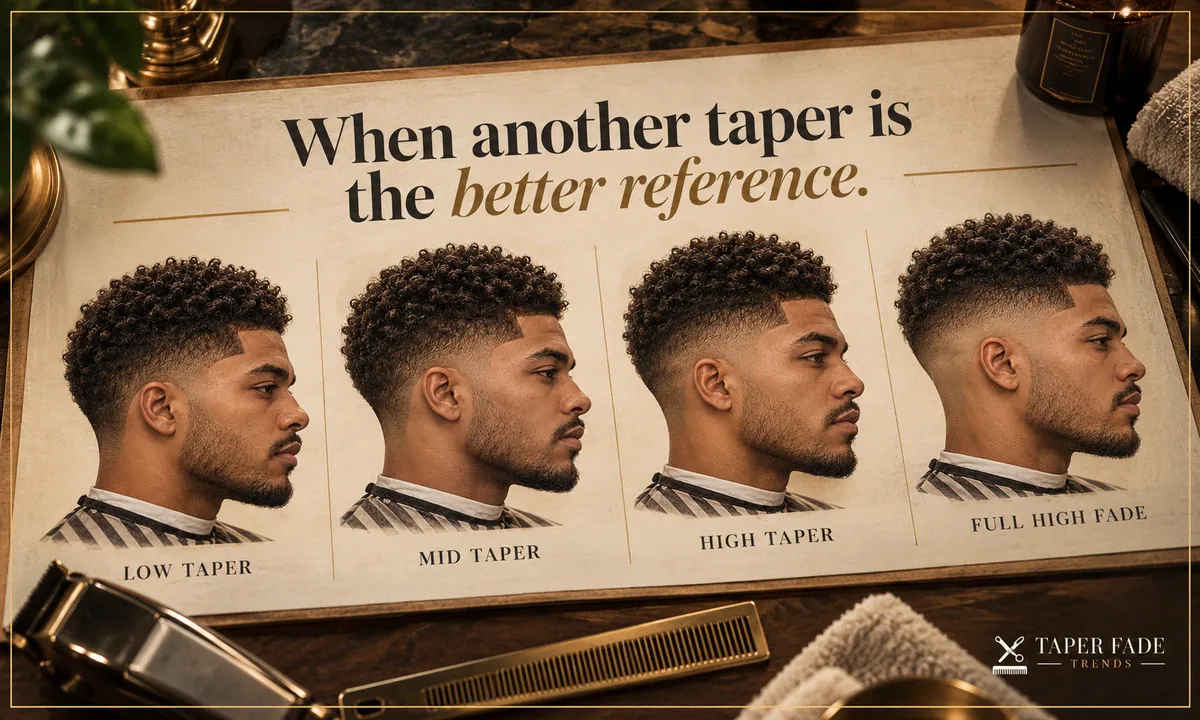
The top-style notes here assume waves, coils, an Afro, twists or locs. For looser curls or straight hair, the four controls still apply, but the examples will not match your hair.
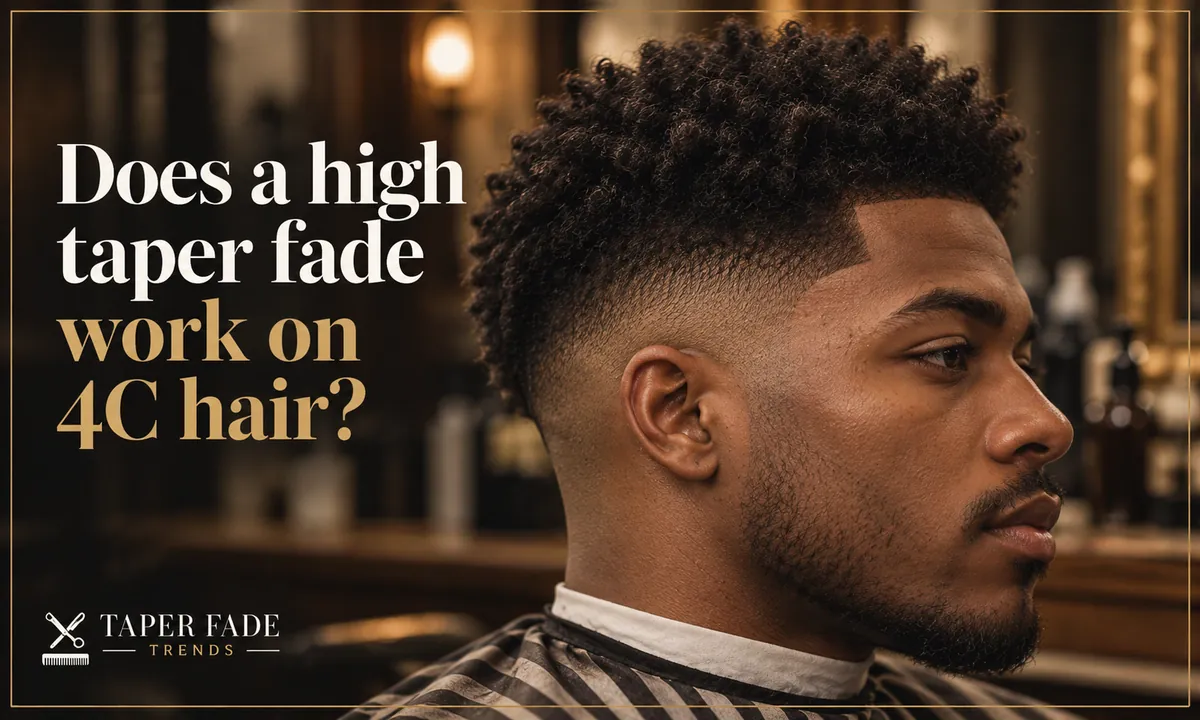
Does a high taper fade work on 4C hair?
Yes. A high taper fade works on 4C hair because the cut responds to density, growth direction and shrinkage, not a type label. Two people who both call their hair 4C can need different tapers. Bring front, side and back references and describe the result you want, rather than expecting one fixed cut from a hair type.
Method, sources and image notes
Taper Fade Trends Editorial prepared this guide by comparing current haircut references with the site’s own taper definitions, Wahl’s guard specifications, MedlinePlus on hair growth and American Academy of Dermatology guidance on close-cut skin limits. Its purpose is to help you choose a reference and give a barber a precise brief.

The images on this page are labeled illustrations, not photos of real haircuts. This version contains no client photos and has not been reviewed by a named barber. Real haircut photos, if added, will be credited with their recorded cut details.
Sources:
- Razor bump remedies for men with darker skin tones, American Academy of Dermatology
- Acne keloidalis nuchae: Overview, American Academy of Dermatology
- Acne keloidalis nuchae: Self-care, American Academy of Dermatology
- Ultimate Guide to Hair Clipper Guard Sizes, Wahl USA
- Hair Problems, MedlinePlus (National Library of Medicine)
- Taper vs. Fade, StyleSeat
Still deciding how high the taper should sit? See the high taper fade guide for placement, coverage and finish comparisons.
Keep reading
All guides
High taper fade: placement, finish and barber brief
Where a high taper fade sits, how much side weight stays, skin vs shadow finishes, what the back should look like, and exactly what to tell your barber.
Taper fade: a visual guide to heights, finishes and top styles
Where a taper fade sits from the front, side and back, how low, mid and high differ, and how to ask for side coverage and a finish with or without skin.