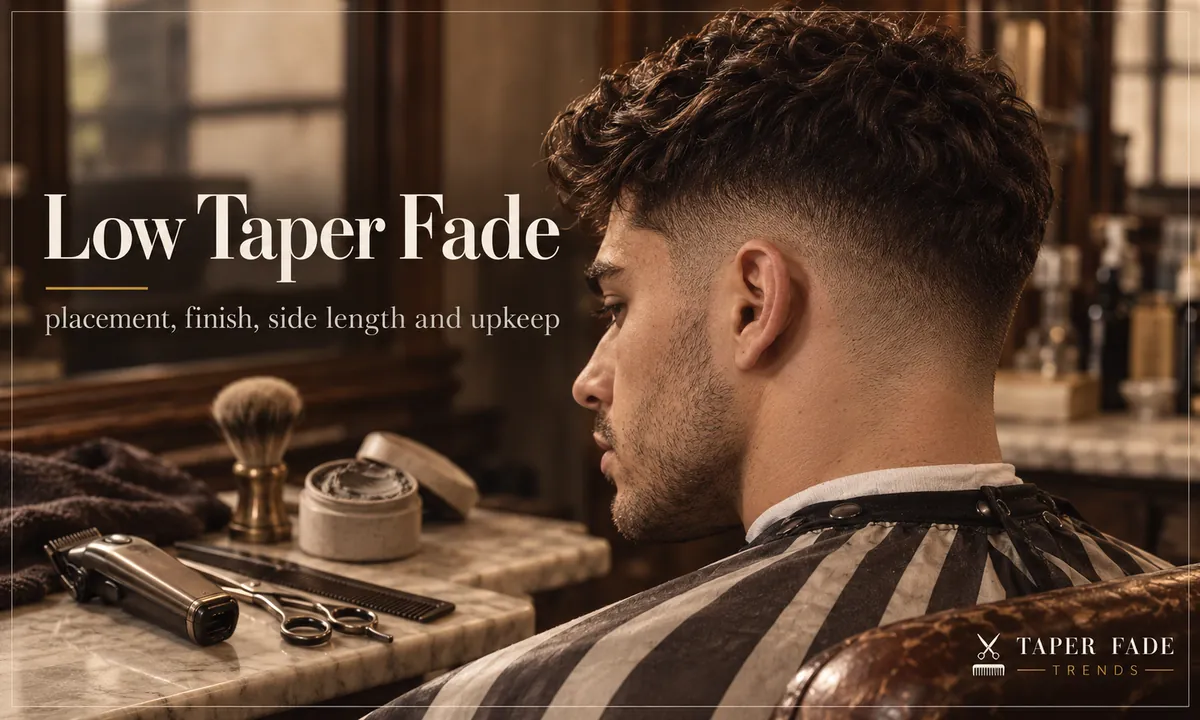
Low taper fade: placement, finish, side length and upkeep
A low taper fade shortens the hair at the sideburns and nape while most of the side panel stays full. “Low” tells the barber where that short work sits. It doesn’t say how short the bottom goes. Settle four things before the cut: placement, retained side length, shortest finish, and the neckline and top.
| Choice | What it controls | What to say or show |
|---|---|---|
| Placement | Where the short work sits: sideburns and nape, below the temple | Point to the spot on a side photo |
| Retained side length | How much of the side panel stays full above the taper | A guard number, such as a #2, or “scissors on the sides” |
| Shortest finish | What’s left at the very bottom: skin, a zero or a guarded length | Name it out loud; the haircut’s name won’t |
| Sideburns | Kept, tapered or blended away | Say it, or they may be blended away |
| Neckline | Natural, rounded or squared | Show a back-view photo |
| Top | Length and shape on top, independent of the taper | Inches, or a photo of the top |
What is a low taper fade?
A low taper fade is a gradual shortening kept low on the head, at the sideburns, over the ears and down the nape, with most of the side panel left fuller above it. The name fixes where the blend sits. It does not reliably fix how short the bottom gets, because barbers use “taper” in different ways.
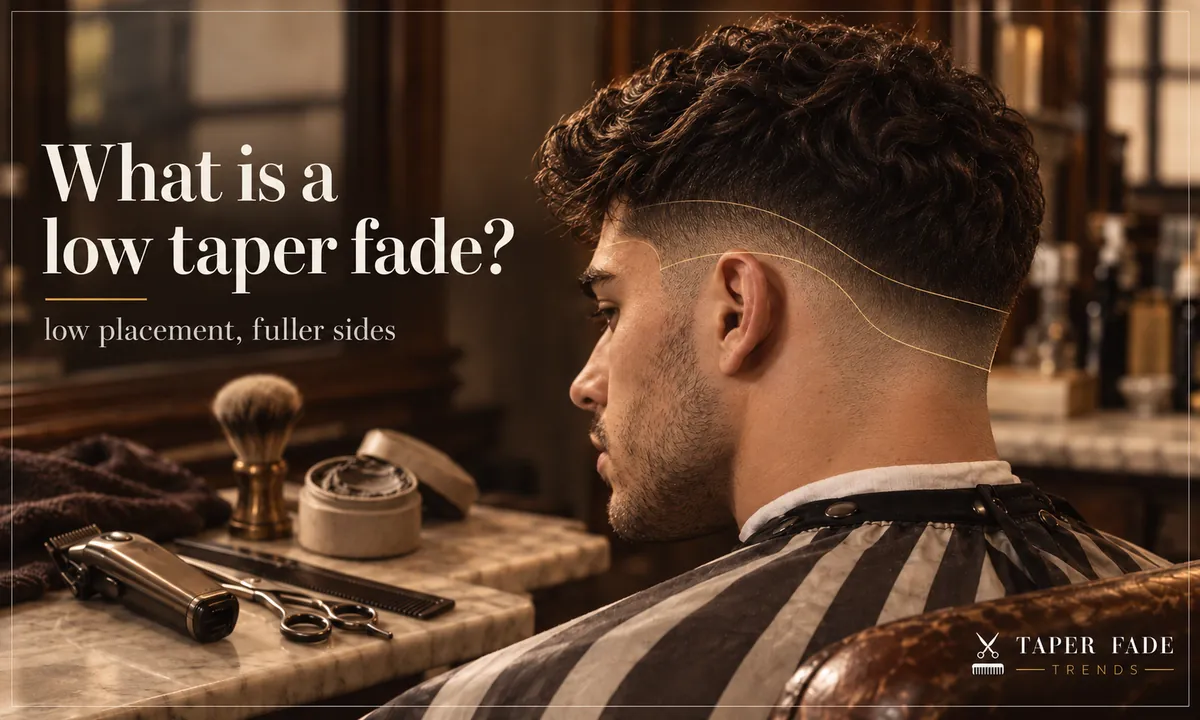
Barber.Style describes the cut as shortening kept close to the sideburns and neckline while most of the sides stay full, and notes that “low taper” and “low taper fade” are often used for the same thing in the chair. Golden Scissors, a London barbershop, places the blend just above the ear and below the temple. Both agree on placement. Where they part ways is the finish, covered below.
This page covers the low placement in detail. For how low, mid and high compare, see the taper fade guide.
Low describes placement, not shortest finish
“Low” describes where the blend sits: close to the ear and the neckline, below the temple. It is not a guard number, and it does not promise bare skin. Golden Scissors and The Kinsman, a New York barbershop, both treat height and bottom length as separate settings, so the finish needs its own sentence.
Low taper vs low fade
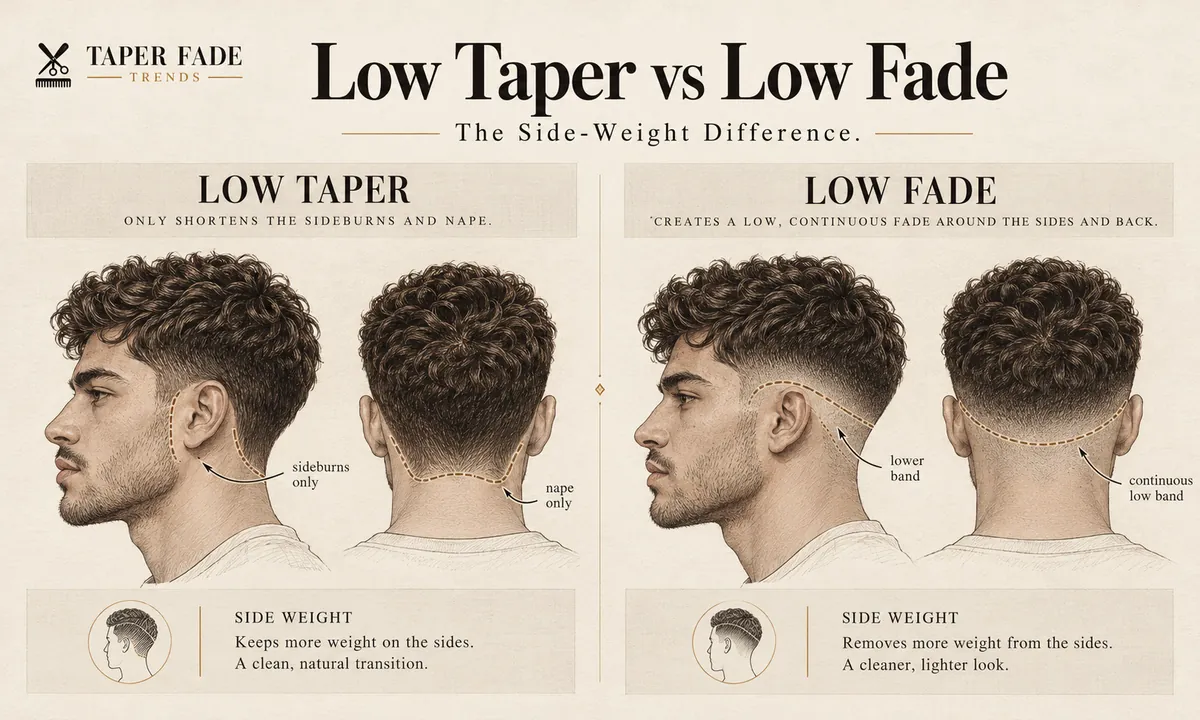
A low taper fade and a low fade both sit low, but shops separate them in two different ways. Barber.Style and The Kinsman separate them by coverage: the taper shortens only the sideburns and nape, while the low fade carries a shorter band around the sides and back. Golden Scissors separates them by finish instead: stubble versus bare skin.
| Usage | Low taper fade | Low fade | Who uses it |
|---|---|---|---|
| Coverage | Short work at the sideburns and nape; side panel stays full | A continuous shorter band around the sides and back | Barber.Style (Australia), The Kinsman (New York) |
| Finish | Stops at stubble, usually a #1 or #0.5 | Goes to bare skin | Golden Scissors (London) |
Golden Scissors itself points out that many American barber channels use “taper” for just the neckline and the patch around the ears, which is closer to the coverage meaning. You don’t have to guess which usage your barber follows. Point to where the short zone should stop, then name the finish.
Choose the four parts before you sit down
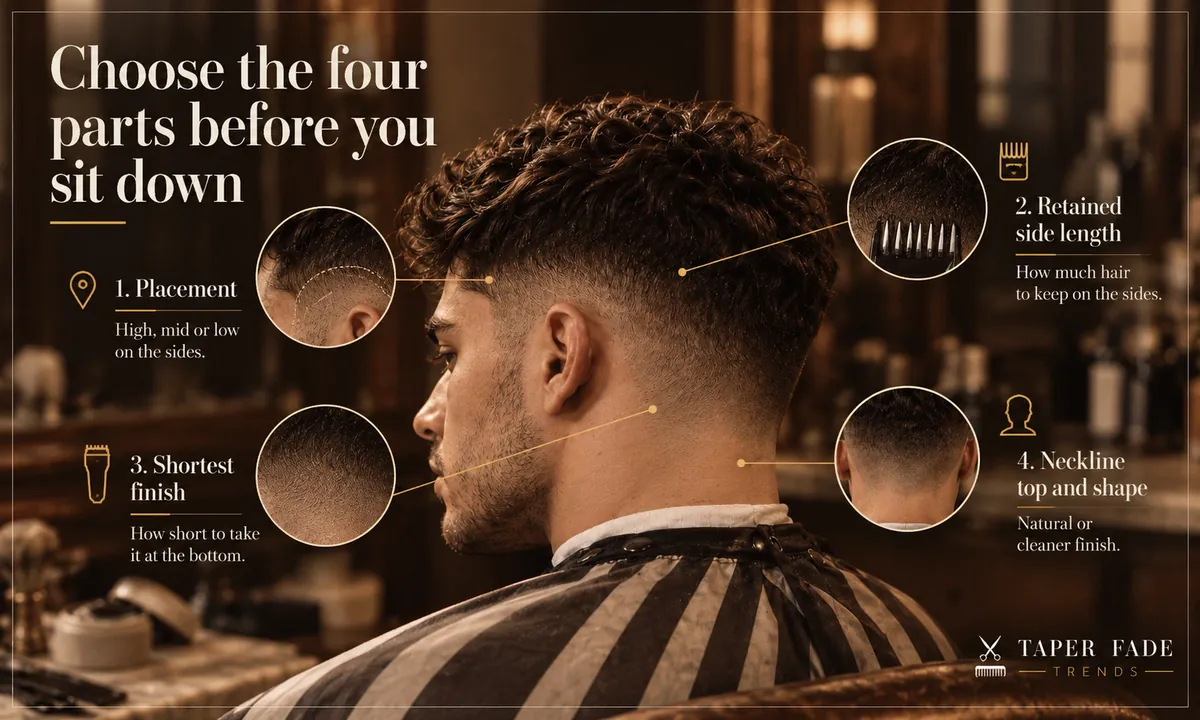
Order a low taper fade as four separate settings: where the taper sits, how much side length stays, what the bottom finishes at, and how the neckline and top are handled. Changing one doesn’t decide another: #2 sides can sit over a skin finish or a #1, under a crop or a longer top.
1. Taper placement
Placement is where the short work sits. For a low taper fade, that means the sideburns, the hairline over the ears and the nape, staying below the temple rather than climbing the side of the head. Shops describe it against the ear and hairline, not in inches, so show it on a photo.
2. Retained side length
Retained side length is the hair left on the side panel above the taper zone. It is the setting that keeps a low taper fade from reading as a full fade: the more side length that stays, the more the short work looks like clean edges rather than a gradient. Give it as a guard number or ask for scissors.
On Wahl’s guide combs, a #1 leaves 1/8 inch (3 mm) and a #2 leaves 1/4 inch (6 mm). Those numbers describe cutting length on that guard system, not taper height. Other brands aren’t guaranteed to match, so if a number matters to you, ask what your barber’s guard actually leaves.
Wahl guide-comb length for a #2; check the guard system your barber uses
3. Shortest finish
Shortest finish is the length left at the very bottom of the blend: skin, a zero or a guarded length. Whether a low taper fade can go to skin depends on who you ask. Barber.Style lists skin as one of its base options. Golden Scissors says its low taper stops at a #1 or #0.5 and never reaches skin.
Both describe real haircuts under different names, which is why the finish has to be said out loud.
| Finish | What’s left at the bottom | Words to use | Trade-off |
|---|---|---|---|
| Skin | Bare-looking scalp | “Down to skin” | Most contrast; shows regrowth soonest |
| Zero | Fine stubble from an unguarded clipper | “Zero at the bottom” | Close to skin, with fine stubble left |
| #0.5 or #1 | Short, clearly visible hair | “Down to a one,” “no skin” | Softer edge; grows out more gradually |
Wahl guide-comb length for a #1; Golden Scissors calls a one its standard low taper finish
4. Neckline, sideburns and top
Yes, you can keep a natural neckline with a low taper fade. Ask for the taper to stay at the nape without a new hard line cut in, and show a back-view photo. Golden Scissors notes that a squared neckline looks sharpest at first, while a natural one grows out with no line, which suits longer gaps between cuts.
Sideburns need a word too. Golden Scissors warns that a low taper runs through where the sideburns start, so if you say nothing, they tend to get blended away. The top sits outside the taper entirely. Describe its length and shape on their own.
Three low taper fades by retained side length
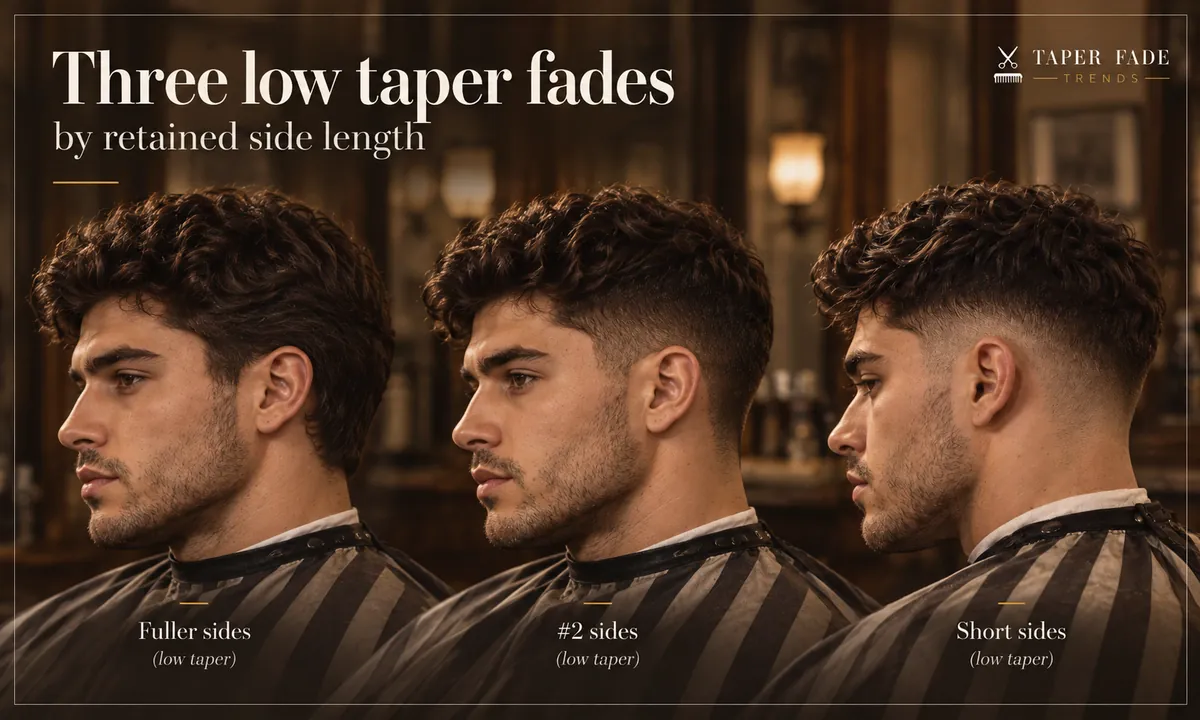
The three versions below differ in how much side length stays, not in their names. They are illustrated options, not photographs of documented cuts. Pick the one closest to the side length you want, then set the finish separately.
| Version | Side panel | How it reads | What softens first |
|---|---|---|---|
| Fuller sides, compact edge taper | Mostly untouched, often scissor-kept | A tidy haircut with clean edges | The sideburn and nape edges, with little contrast to lose |
| #2 sides, tapered edges | About 6 mm (1/4 in) on Wahl guards | Short, even sides with a cleaner perimeter | The taper at the sideburns and nape |
| Shorter sides, stronger contrast | Below a #2, with a wider taper zone | A visible gradient, closer to a low fade | The line between the short zone and the sides |
Fuller sides with a compact edge taper
This is the smallest change you can ask for: the taper stays in a tight band at the sideburns and nape, and the side panel keeps its length. From the front it barely reads as a fade. Because there is little contrast between the short zone and the sides, it has the least to lose as it grows.
#2 sides with tapered edges
Yes. You can ask for a low taper fade with the main sides kept at a #2, which is 1/4 inch (6 mm) on Wahl’s guide combs, and the taper worked only into the sideburns and nape. The #2 sets retained side length. The bottom of the taper still needs its own finish: skin, a zero or a #1.
This is close to how The Kinsman describes a standard taper: sides and back left at roughly a guard 2 to 3, with the hair only getting noticeably shorter around the sideburns and neckline.
Shorter sides with stronger contrast
Take the sides below a #2 and widen the taper zone, and the same low placement starts to look like a gradient rather than clean edges. Under the coverage usage described above, that result is a low fade. Expect the line between short and full to show regrowth first, since that contrast is the point of the cut.
How to ask your barber for a low taper fade
Ask for a low taper fade in pieces: keep the taper low at the sideburns and nape, say how much side length stays, choose the shortest finish, say what happens to the neckline and sideburns, then describe the top. Show side and back photos before the clippers start. That leaves the barber far less to guess.
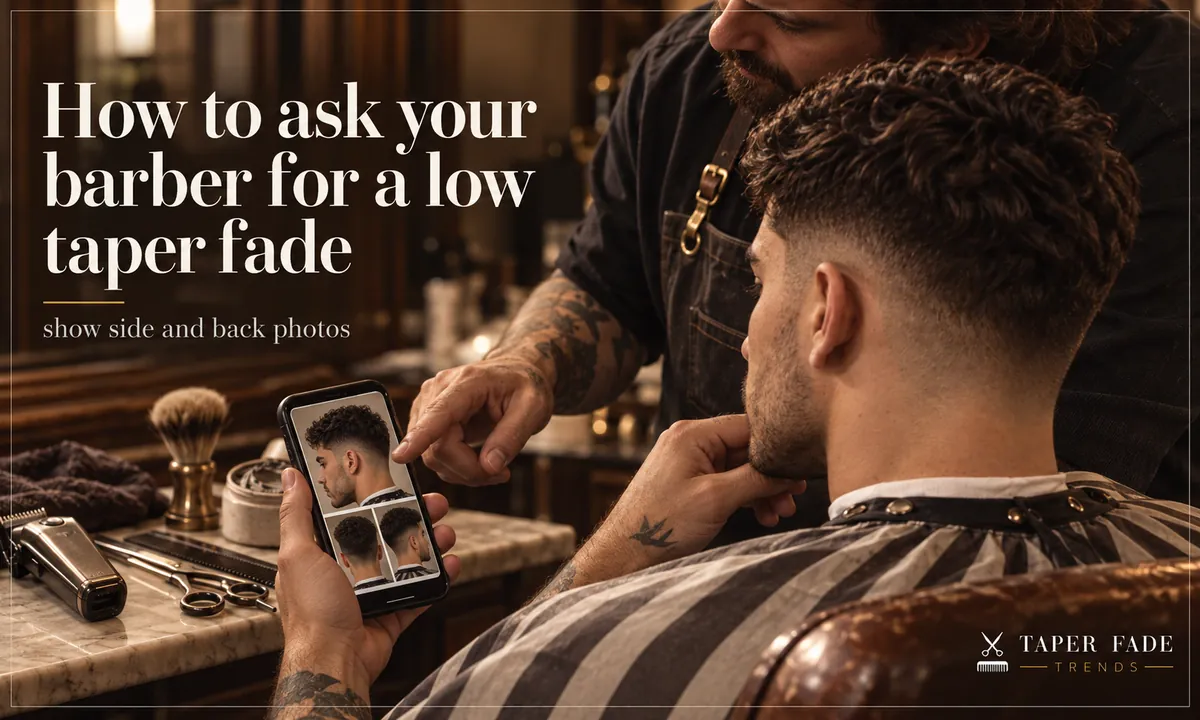
A barber brief you can adapt
- “Low taper fade, please. Keep the short work to the sideburns and nape.”
- “Leave the sides full above it, at [scissors / a #2 / a #3].”
- “Take the bottom down to [skin / a zero / a one].”
- “[Keep / blend] the sideburns, and a [natural / rounded / squared] neckline.”
- “On top, leave about [length], [shape or style].”
If you have a cowlick or a double crown, mention it at the start. Both shops cited here ask for that, because it changes how tight the back can go.
Which reference photos to bring
Bring a side photo and a back photo, ideally of the same haircut. The side view shows how high the taper sits and how much of the side panel stays. The back view shows how the blend wraps the nape and what the neckline looks like, which a side photo can’t. Add a front view if the top matters to you.
A photo still leaves gaps. It can’t tell your barber which guard was used, whether a lever was open, how long the top is in inches, or how that hair behaves compared with yours. That is why the photo goes with the four spoken settings, not instead of them.
How hair texture changes the result
The low placement works on straight, wavy, curly and coily hair, but the same guard numbers won’t look the same on each. Density, curl pattern and growth direction change how visible the blend is and how the side panel joins the top. Mention your texture, and any cowlick, before the cut.
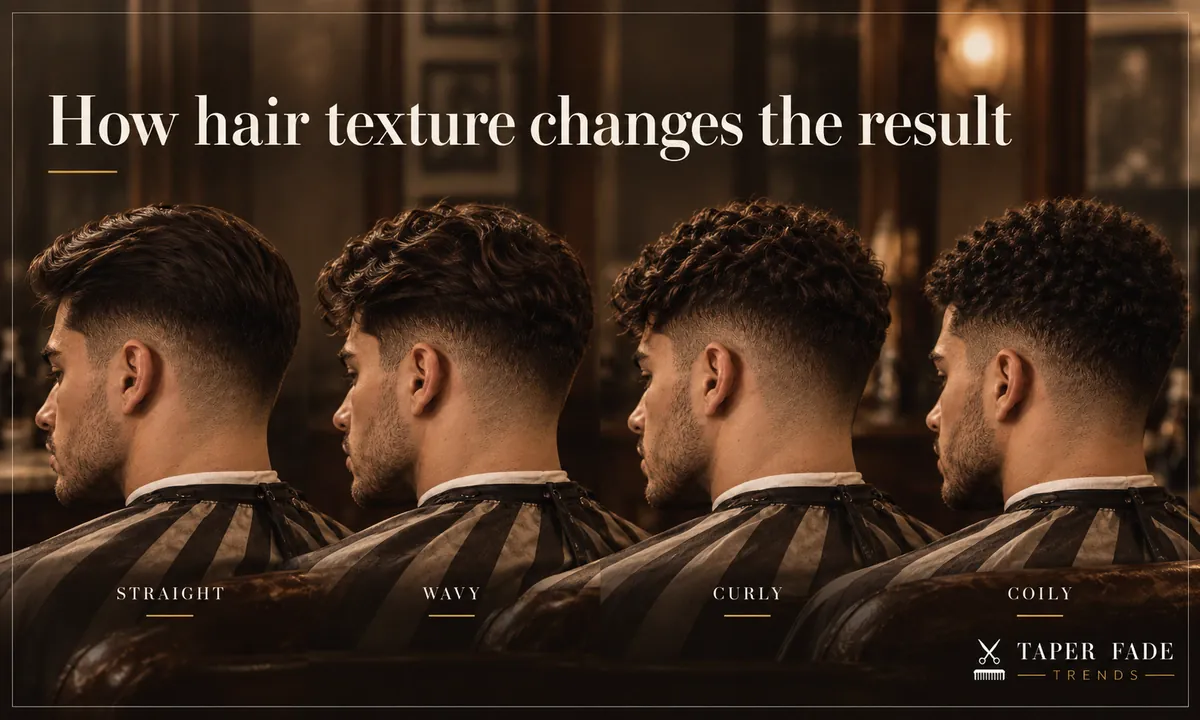
| Hair type | What tends to change | Worth saying |
|---|---|---|
| Straight | Lies flat, so a step in the blend is easier to see | Whether you want a longer, softer blend |
| Wavy | Movement softens the taper line | Whether you want the edge crisp or soft |
| Curly | Shrinks as it dries, so length judged wet can end up shorter | Judge side and top length on dry hair |
| Coily | Clipper work pushed up into a dense top can leave a shelf | Whether the join to the top should be scissor-blended |
Straight and wavy hair
Straight hair shows the mechanics of a low taper fade most plainly, because it lies flat and any uneven step stays visible. Wavy hair blurs that same line on its own. That hides small unevenness but works against a crisp edge, so decide which you’d rather have before the clippers start.
Curly and coily hair
Curly hair shrinks as it dries. The Curly Hair Institute describes curly hair cut to length while wet ending up too short once it dries, so ask for side and top length to be judged dry. Golden Scissors adds that a low taper takes bulk off the perimeter without removing the weight curls need to sit well. In its afro taper fade guide, the shop says scissors should do the join on a dense coily top, because clipper work pushed up into the coils leaves a shelf.
How a low taper fade grows out
No single rebooking interval fits every low taper fade. How fast it softens depends on how close the finish is, how fast your hair grows, how much contrast sits between the taper and the side panel, and how crisp you want the edge. The one pattern the shops cited here agree on: the closer the finish, the sooner regrowth shows.
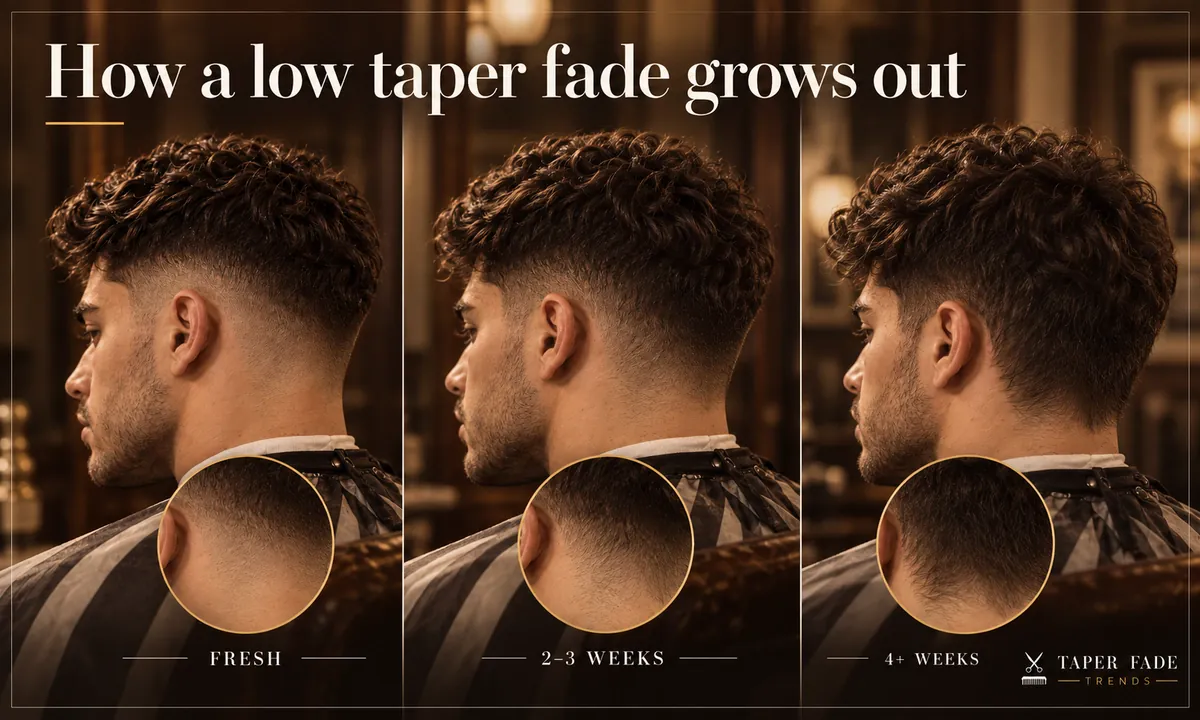
| Source | Closer finish | Guarded finish |
|---|---|---|
| Barber.Style | Skin taper: about 2 to 3 weeks | #0.5 or #1: about 3 to 5 weeks |
| The Kinsman | Skin fade: 2 to 3 weeks | Taper fade: 4 to 5 weeks |
| Golden Scissors | Skin fade: best inside 10 days, unfinished by week 3 | Low taper at a #1 or #0.5: 2 to 3 weeks to stay sharp; a regular short cut by week 4 |
These are each shop’s own published guidance, not measurements, and they don’t agree. Use them as a range, then rebook when your edges stop looking the way you want.
What changes first
The edge of the taper usually softens first, since that is where the length gap between the short zone and the side panel is biggest. Check these before deciding it’s time:
- The line above the ear, where regrowth blurs the top of the taper zone
- The nape, especially if the neckline was squared
- The sideburns, if they were shaped rather than left natural
- The contrast between the taper zone and the retained side length
When a skin-close finish may not suit you
If you get razor bumps, a skin finish deserves caution. The American Academy of Dermatology explains that razor bumps form when a razor cuts coarse, curly hairs short and they curve back into the skin. Its guidance is written for shaving the beard area, but a skin finish also cuts hair to the skin.
Barber.Style’s advice for bump-prone clients is to stop at a guarded length, avoid repeated passes and skip the foil shaver. Bumps on the back of the neck or scalp aren’t always razor bumps, either. The AAD notes they can be acne keloidalis nuchae, which needs a dermatologist rather than a different haircut.
How this guide was checked
Taper Fade Trends checked this guide on September 30, 2026, against the pages cited in it: two barbershops (Golden Scissors in London and The Kinsman in New York), the barber guide site Barber.Style, Wahl’s published guide-comb lengths, the Curly Hair Institute on curl shrinkage, and two American Academy of Dermatology pages. Where the shops disagree, on skin finishes, on what separates a low taper from a low fade, and on upkeep, the page shows each usage rather than picking one.
Every image on this page is a labeled illustration. None shows a documented haircut, and no guard settings are claimed for any image. No barber has reviewed this version of the page.
Sources cited:
- Barber.Style: Low taper fade
- Golden Scissors: Low taper fade guide
- The Kinsman: Taper fade vs skin fade vs mid fade
- Wahl USA: 10-piece clipper guide comb set
- Golden Scissors: Afro taper fade
- Curl Keeper / Curly Hair Institute: Cutting shock
- American Academy of Dermatology: Razor bump remedies
- American Academy of Dermatology: Acne keloidalis nuchae
Found an error? Contact us or read our editorial policy.
Where to go next
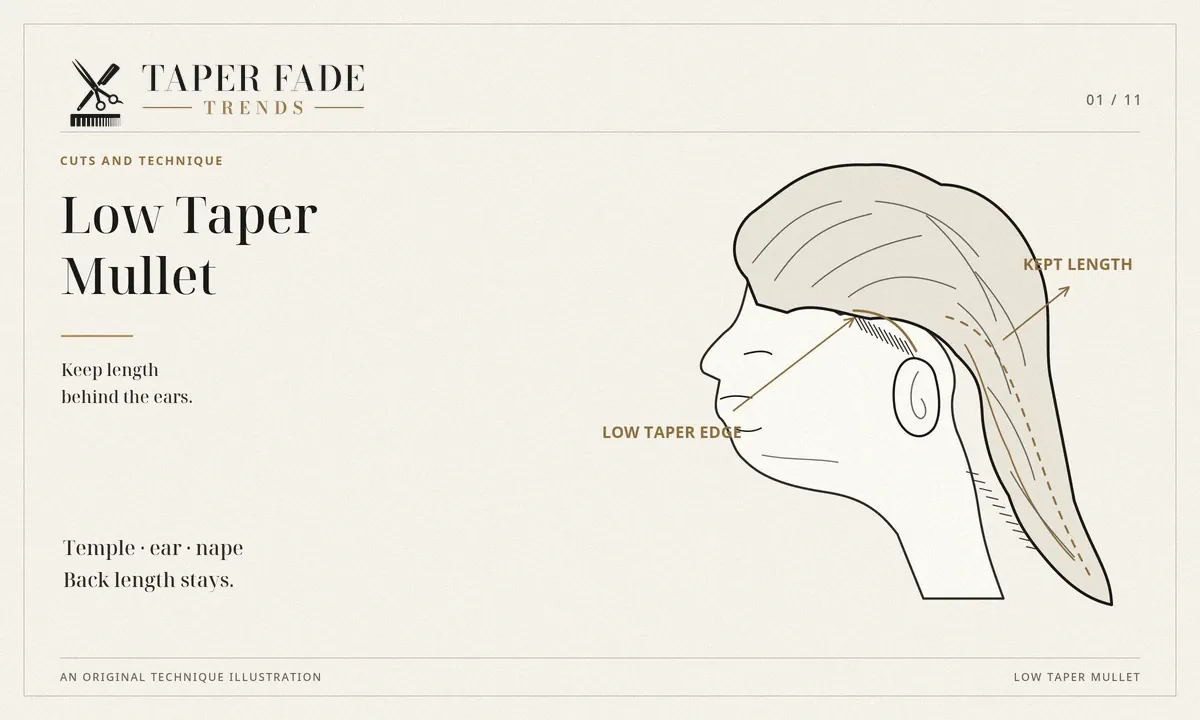
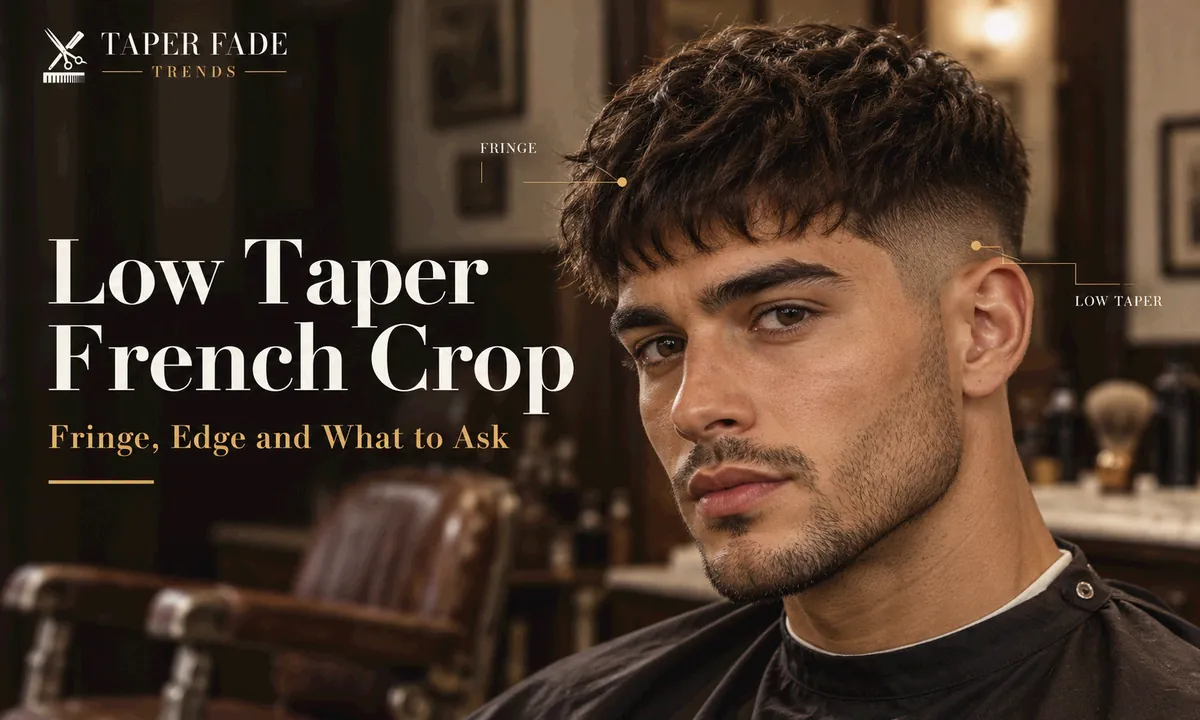
If the height itself is still open, compare low, mid and high placement in the taper fade guide. If you want more contrast than a low placement gives, the high taper fade guide covers the same idea with the blend placed higher on the head. For a clipper-short top, the low taper fade buzz cut guide compares #1 to #4 tops and finishes. For a longer front worn forward, the textured fringe low taper guide covers the cut, styling and barber brief. For a top dried up and out over full sides, the blowout taper guide covers taper height, side weight and what to ask for. For a curly top shaped into lift or volume, the blowout low taper fade for curly hair guide covers the five things to ask for. If you want the short work to curve around the ear and leave the back longer, the low burst fade guide covers the arc, the finish and the back. If your side hair is straight and pushes outward as it grows, the Asian low taper fade guide sets side length by how your sides behave. For a longer top that splits down the center over connected sides, the middle part low taper fade guide covers how much upper-side weight keeps the curtains connected. If you wear locs and want only the perimeter shortened, the low taper fade with dreads guide covers the loc boundary, the taper zone and what to tell your barber and loctician. If you want the hair above and behind the ears kept long and carried into a longer back, the low taper mullet guide covers the no-cut zones, the nape and how to grow it out. For a short top pushed forward into a fringe, the low taper French crop guide covers where the dry fringe lands, blunt or broken edges and what to ask for.
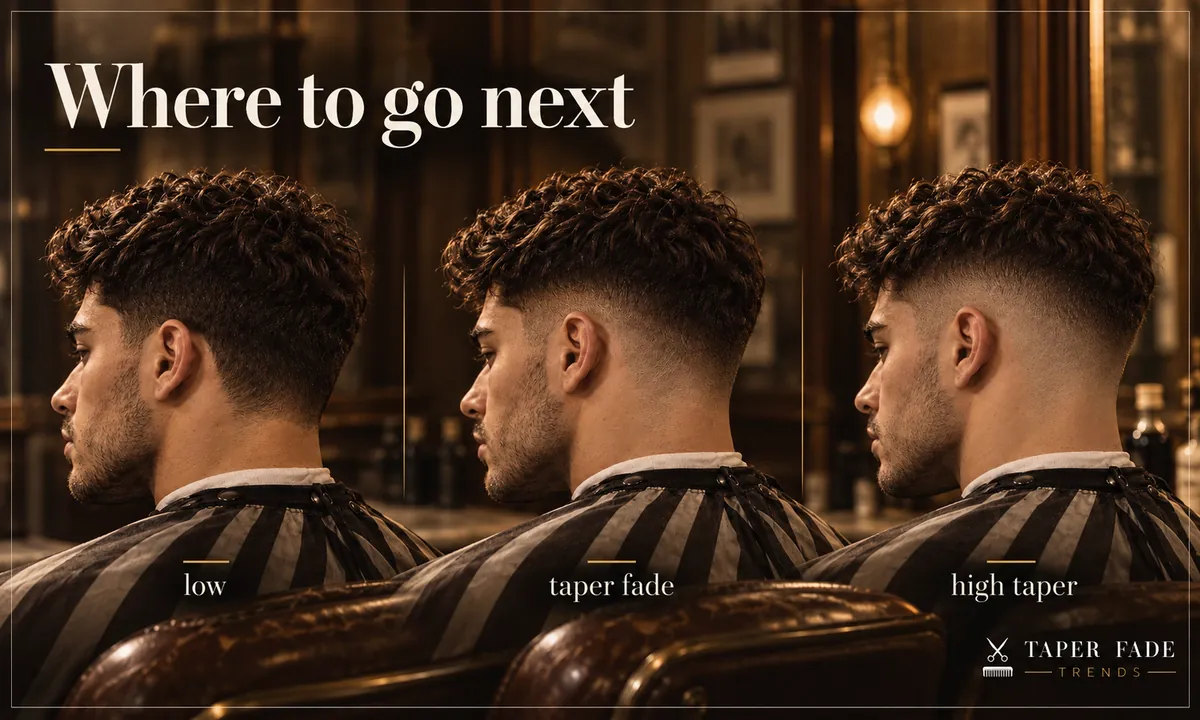
Keep reading
All guides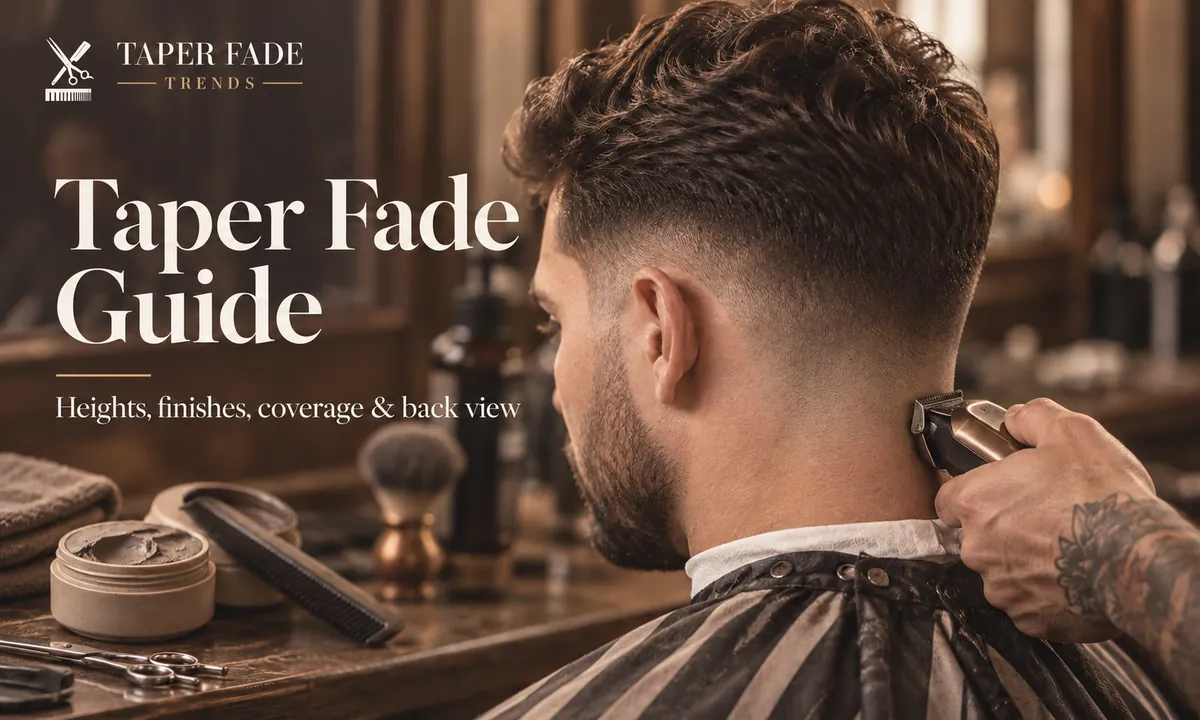
Taper fade: a visual guide to heights, finishes and top styles
Where a taper fade sits from the front, side and back, how low, mid and high differ, and how to ask for side coverage and a finish with or without skin.
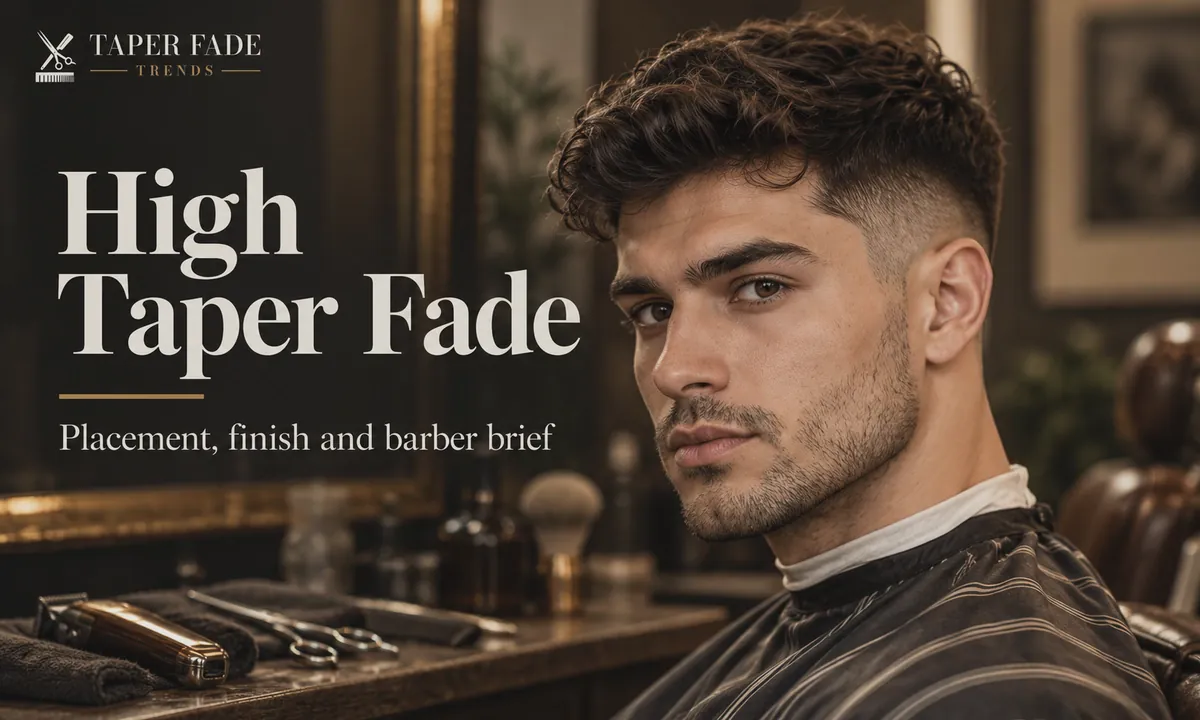
High taper fade: placement, finish and barber brief
Where a high taper fade sits, how much side weight stays, skin vs shadow finishes, what the back should look like, and exactly what to tell your barber.
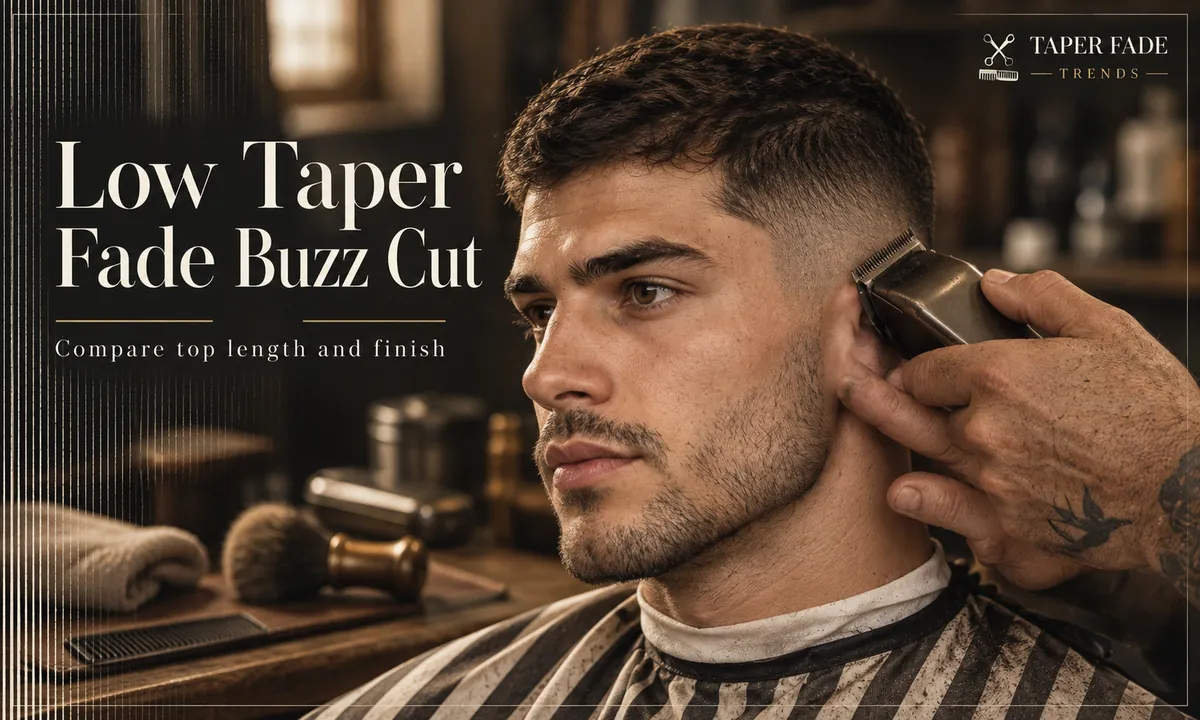
Low taper fade buzz cut: compare top length and finish
A low taper fade buzz cut is two choices: how long the top is and how short the taper ends. Compare Wahl #1 to #4, skin or no skin, and what to say.
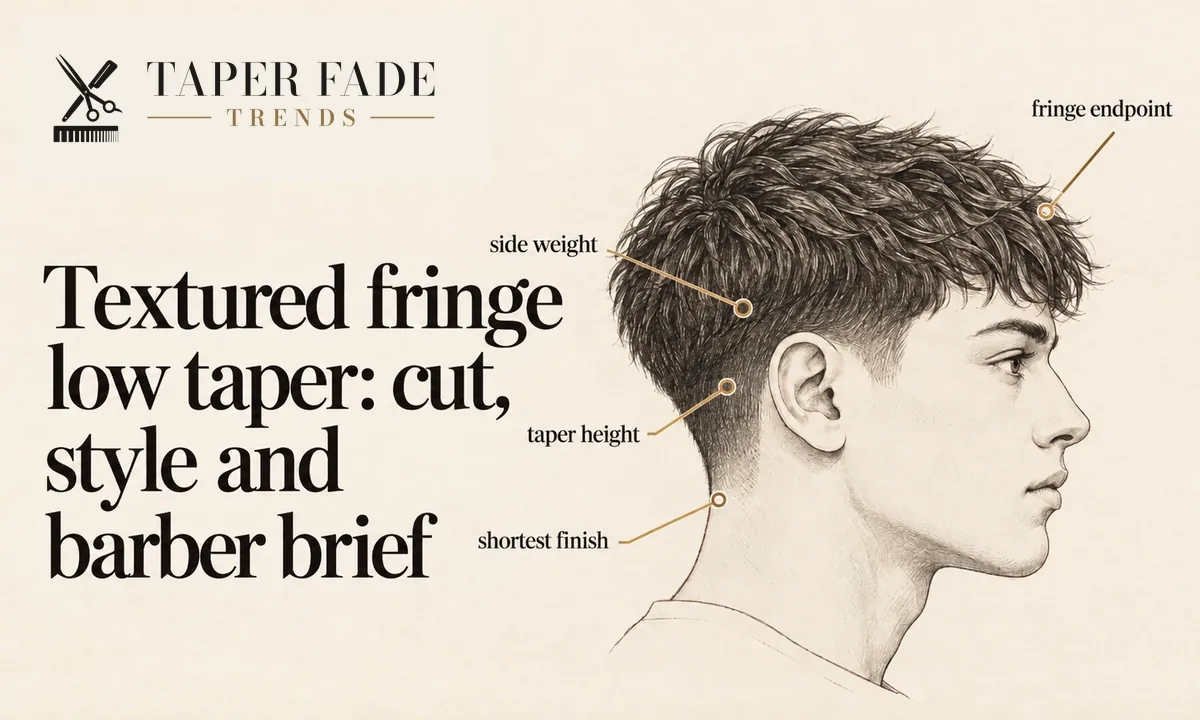
Textured fringe low taper: cut, style and barber brief
A textured fringe low taper explained: four choices to settle, whether straight hair needs a perm, what to tell your barber, and fixes for a flat fringe.
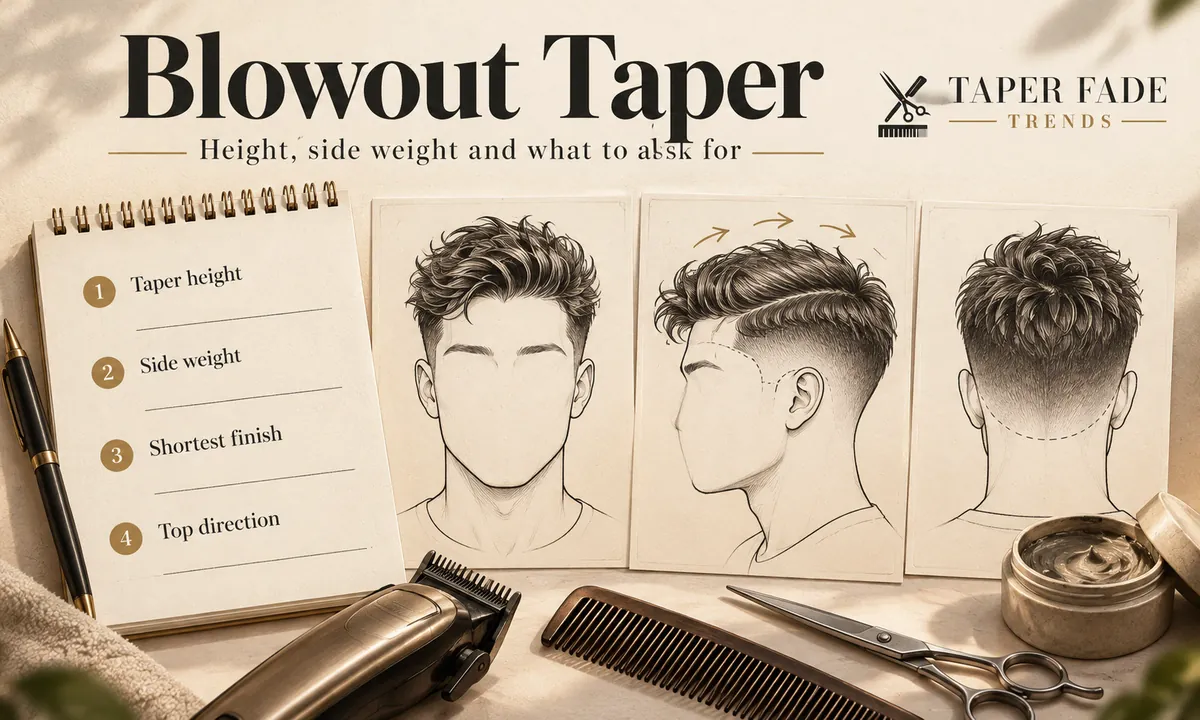
Blowout taper: choose lift, silhouette and taper height
What a blowout taper is, how taper height, side weight and finish differ, how much top length sources suggest, and a barber brief to fill in.
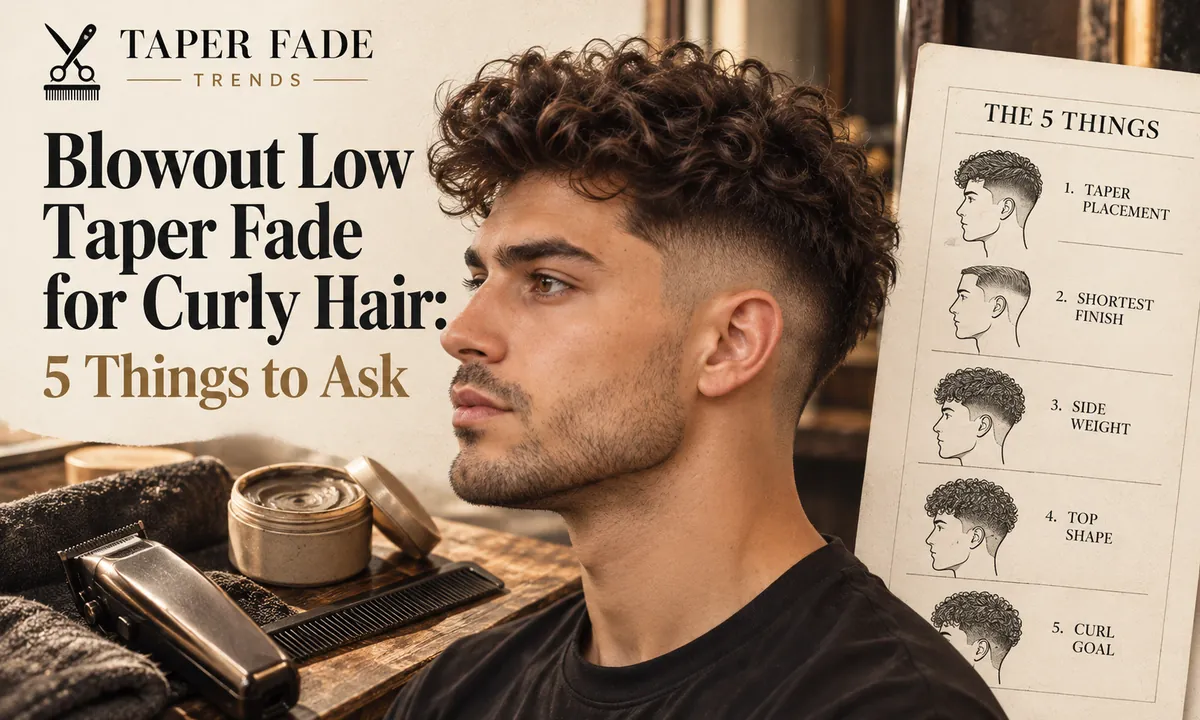
Blowout low taper fade curly hair: keep volume, keep definition
A blowout low taper fade for curly hair is a shape, not a guard recipe. Set the taper placement, shortest finish, side weight, top shape and curl goal.
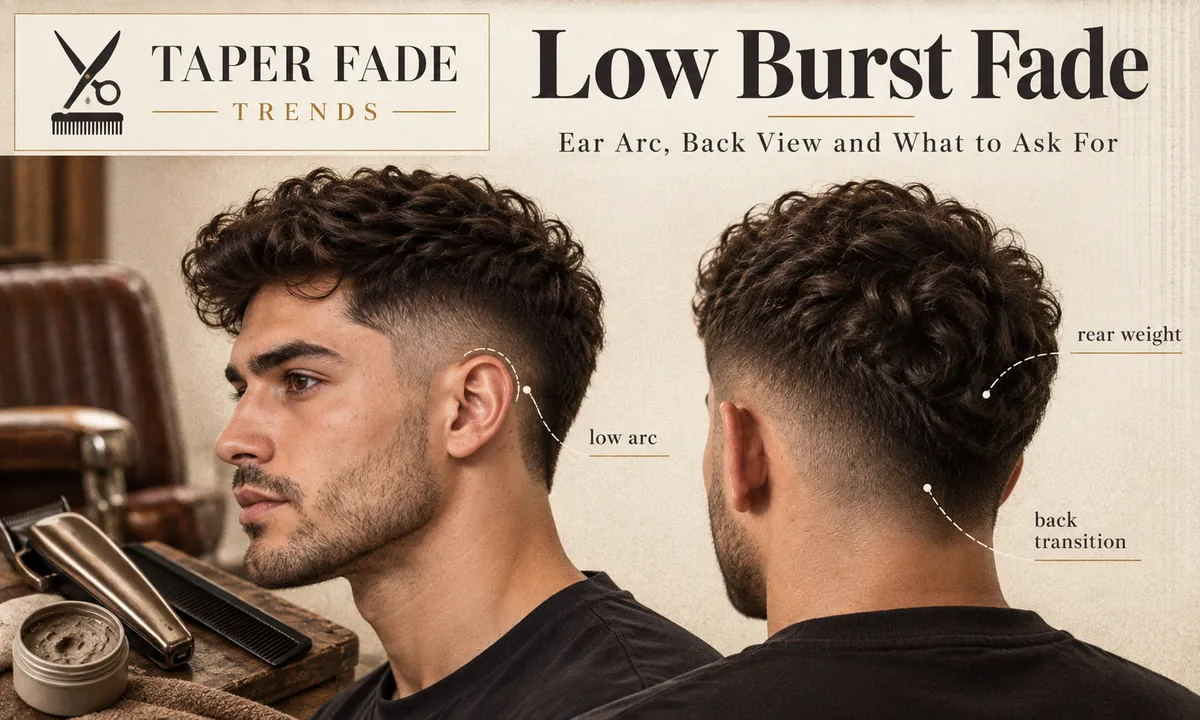
Low burst fade: the low ear arc and back transition
A low burst fade curves low around the ear and can keep length at the back. Compare skin vs shadow, burst vs drop fade, and what to tell your barber.
Low taper vs low fade: compare coverage and side weight
Low taper vs low fade: a low taper shortens the sideburns and nape; a low fade shortens a band around the lower sides and back. Compare finish and upkeep.
Low taper mullet: keep length behind the ears
A low taper mullet keeps length behind the ears and through the back. See what to tell your barber, how texture changes it, and how to grow it out.
Low taper French crop: set the fringe length and edge
A low taper French crop explained: where the dry fringe should land, blunt vs broken edges, low taper vs low fade, and exactly what to tell your barber.
More in low taper fades
Low taper fades: all 15- Low taper fade: placement, finish, side length and upkeepYou are here
- Low taper fade straight hair: density, sides and top length11 min
- Low taper fade Black male guide: choose the top, hairline and nape10 min
- Curly low taper fade: keep curl width above the ears10 min
- Low taper fade buzz cut: compare top length and finish12 min
- Textured fringe low taper: cut, style and barber brief12 min
- Blowout low taper fade curly hair: keep volume, keep definition11 min
- Low taper fade wavy hair: what to ask for13 min
- Asian low taper fade: choose by how your sides grow7 min
- Middle part low taper fade: keep the curtains connected8 min
- Low taper fade with dreads: protect the loc boundary12 min
- Low taper mullet: keep length behind the ears13 min
- Low taper French crop: set the fringe length and edge14 min
- Low taper vs mid taper: what changes when only the height moves10 min
- Low taper vs low fade: compare coverage and side weight11 min