Curly low taper fade: keep curl width above the ears
A curly low taper fade cleans up the temples, sideburns and nape while leaving the curls above them at full width. No guard number defines it. The decision that shapes the result is how much curl width you keep above the ear, so settle that, check your curls dry, and show your barber the side and back you want.
What a curly low taper fade changes
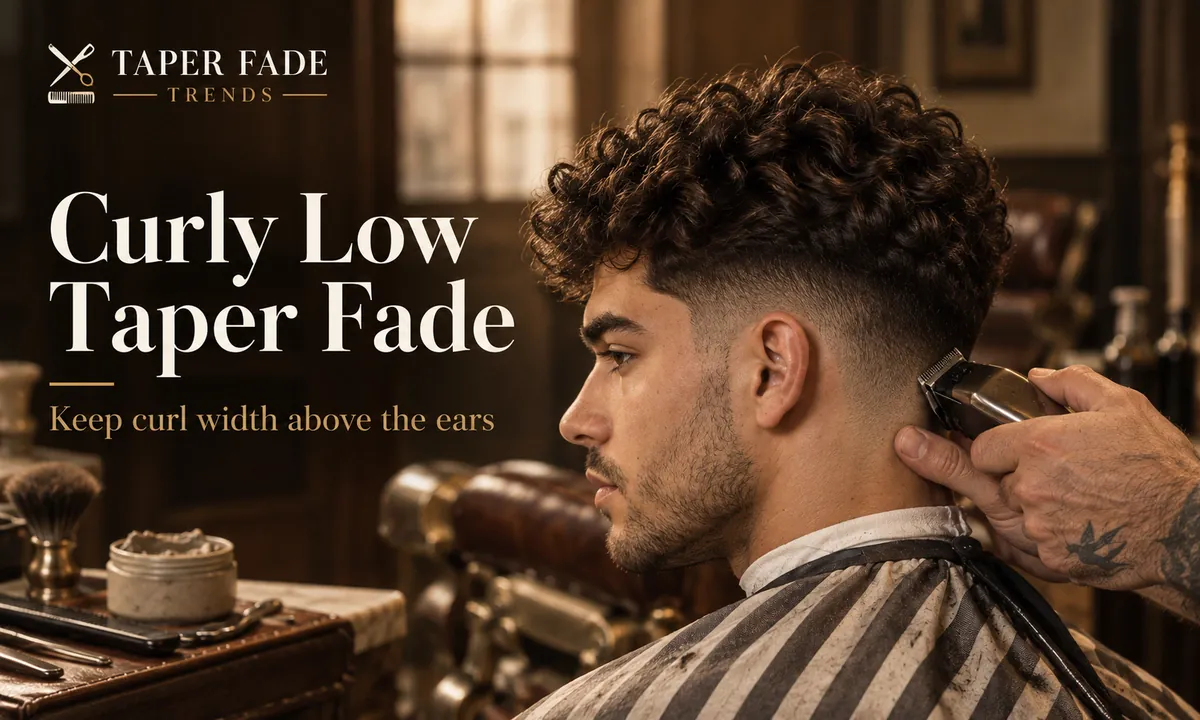
A curly low taper fade is a low-positioned perimeter blend that shortens the temples, sideburn area and nape while keeping curly length and weight above the taper. Maneva Magazine describes it the same way: hair comes off mainly at the temples, sideburns and neckline, not high into the sides.
The perimeter is the outer edge of the haircut around the ears and neck.
Taper placement is what separates it from a higher fade. Keeping the blend low preserves upper-side weight, meaning the curl fullness left on the sides above the ear. Once the blend climbs toward the widest part of the head, the cut starts to read as a higher fade, and the curly top can suddenly look bigger and cut off from the sides.
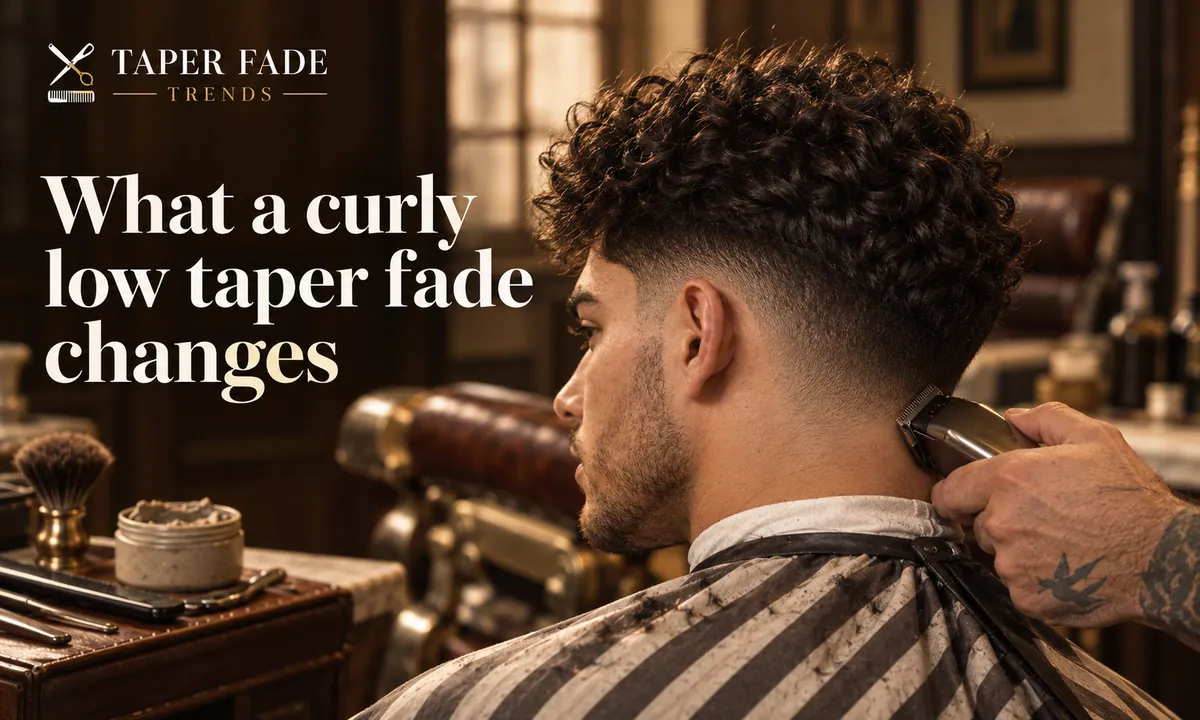
A low taper fade suits curly hair when you want a cleaner outline without losing much curl mass on the sides. It is not automatically right for every head. Density, how your curls sit dry, the side width you want, your hairline and how much visible regrowth you will put up with should drive the decision.
Quick specs to decide before the cut
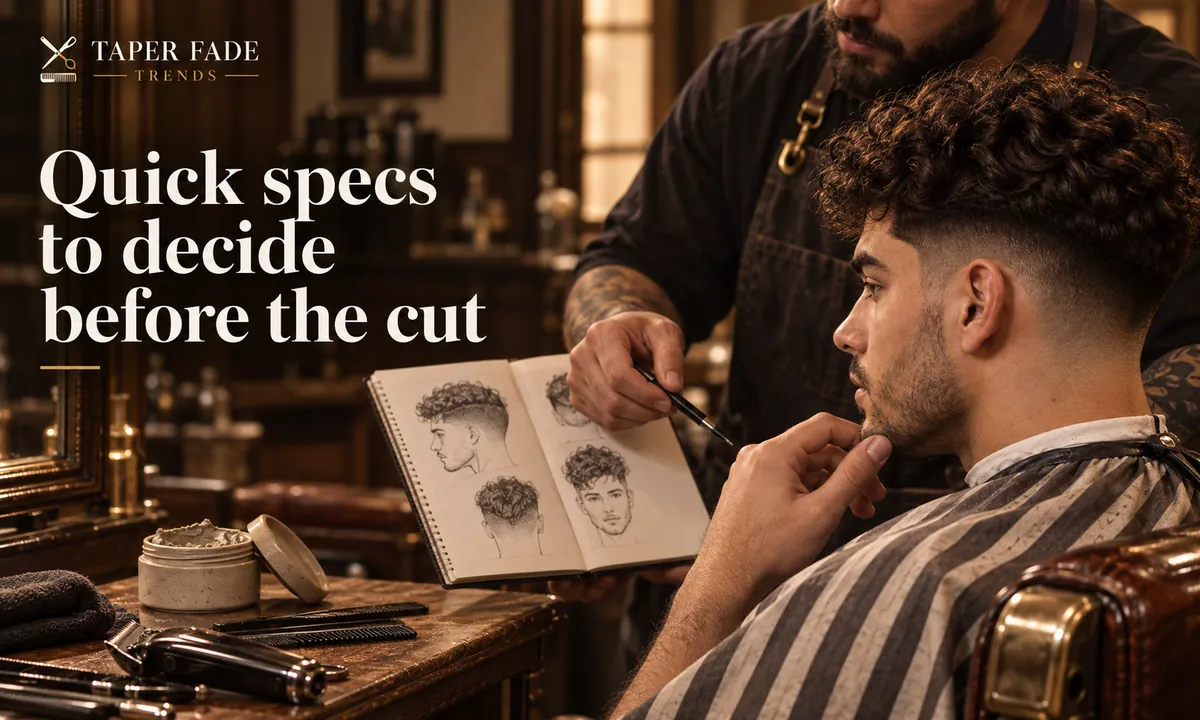
Settle five things before the clippers start: taper placement, upper-side weight, shortest finish, dry top shape and hairline finish. Shortest finish is the shortest visible hair length or skin exposure at the bottom of the taper, and it is a separate choice from how high the blend goes.
| Spec | What to settle |
|---|---|
| Taper placement | Temples, sideburns and nape; point to the boundary on a side and back photo |
| Upper-side weight | How much curl width and coverage stays above the ear |
| Shortest finish | Skin, short stubble or a little length at the very bottom |
| Dry top shape | The width and length you want the curls to show when dry |
| Hairline | Natural hairline or a defined lineup |
| How it is cut | Barber looks at the hair dry first; the cutting itself may be dry, damp or both |
How to keep the curl perimeter full
To keep the curl perimeter full, confine the taper to the temples, sideburns and nape, then name the curl width you want left above the ear. Maneva advises saying outright that the upper-side curl density stays, because “low taper” alone does not tell a barber how much side weight to keep.
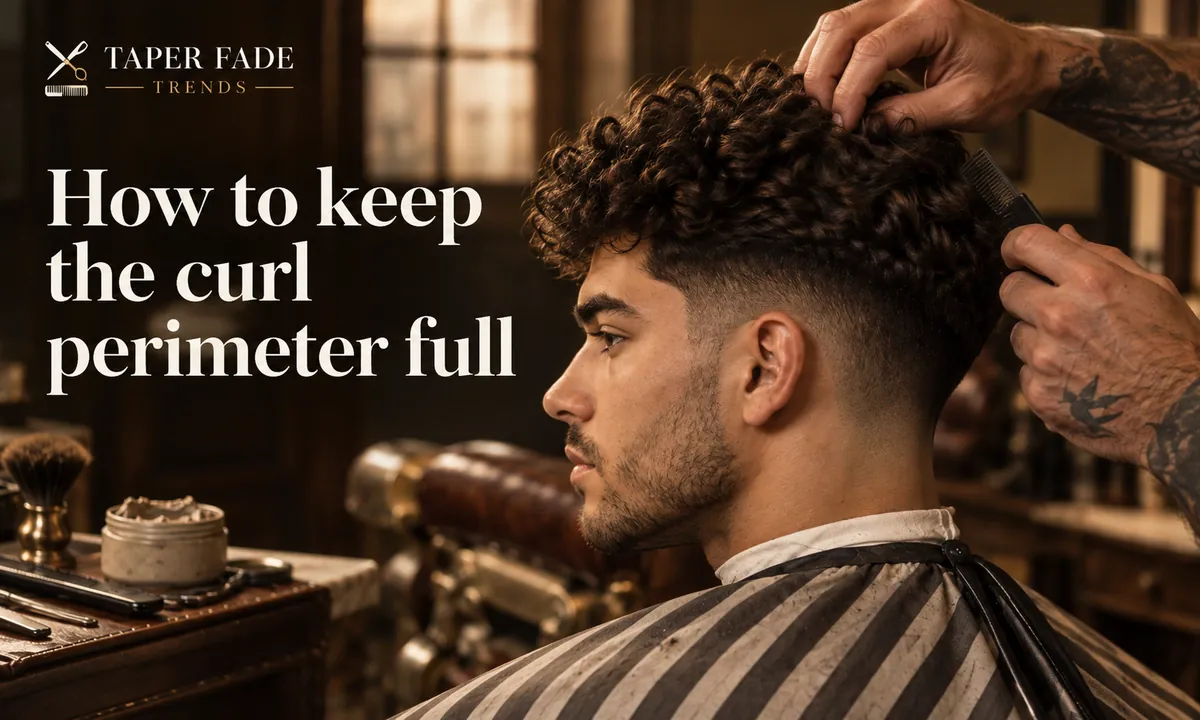
Density changes how full the same retained zone looks, so one plan reads differently on two heads. Thinning is the other risk. Maneva warns that aggressive thinning can disturb how curls group and leave the texture uneven, so if your curls are dense, ask for shape control rather than bulk removal.
Check the shape dry first
Your barber should look at your curls dry, the way you normally wear them, before deciding the finished shape, because curls sit shorter once they dry. That does not mean the whole cut must be done dry. Maneva says the method depends on the haircut and curl pattern, so the top may be shaped dry, damp or both.
Guides disagree on this point. Trendy Hair Picks says curly tops should be cut dry, and TaperStyles says to measure dry, always. Maneva and Taper Fade Cuts put it more carefully: judge the top by how the curls naturally sit, not by stretched or wet length. This guide follows that version. Assessing dry is the rule; the cutting method is the barber’s call.
How much curls shrink as they dry varies from head to head. This guide gives no shrinkage percentage, because a figure measured on one person does not transfer to another.
Choose how much width to keep above the ear
Tell the barber to keep the taper at the temples, sideburns and nape and to leave the curls above the ear at the width you want. Show that width on a side photo and a rear three-quarter photo. A guard number alone will not do it, because the same guard can leave very different silhouettes on different curls.
Keep enough dry length on top for your curls to form the shape you want. Maneva notes that a top cut too short loses curl grouping and looks fuzzy rather than defined. No single top length fits every curl pattern, so this guide gives no number.
Decide the nape and temple finish
A curly low taper fade does not need a lineup. A lineup is a finish choice, not part of the cut’s definition, and Maneva treats it the same way. A defined lineup gives a sharper, more graphic edge, while a natural hairline keeps the front softer. Your existing hairline and the look you want should decide it.
| Finish | Result | Grow-out |
|---|---|---|
| Natural hairline | Softer edge that follows existing growth | Usually grows out more gently |
| Defined lineup | Sharper, more graphic edge | Regrowth at the edge shows sooner |
If you choose a lineup, ask the barber to clean up your existing hairline rather than push it back to sharpen the corners. Maneva notes that your natural hairline limits how much can be cleaned without losing density at the front.
Three top shapes over the same low taper
Each shape below keeps the taper low and changes one thing: how much upper-side weight stays, how compact the dry top is, or how far longer curls fall over the taper. These are illustrations, not photos of real cuts.
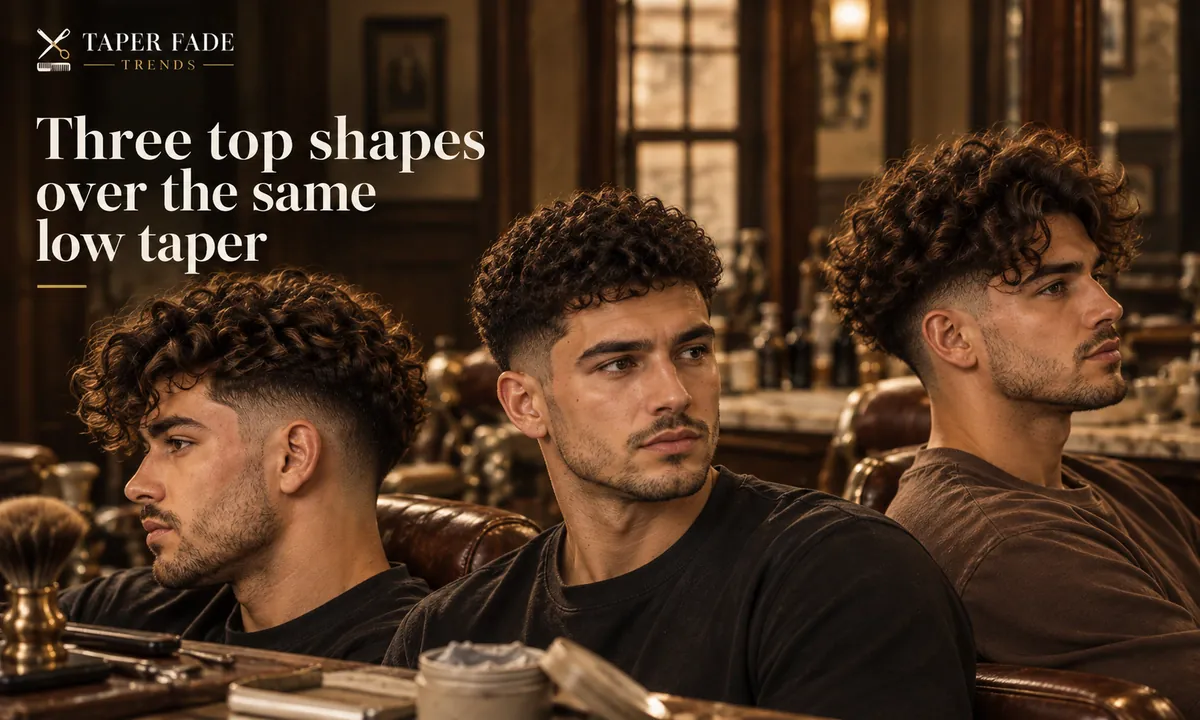
Full upper sides
Full upper sides keep the most curl width above the ear. The taper stays at the temples, sideburns and nape, and the curls above it keep their full dry width. Maneva describes a two-block-style version where the retained upper-side weight is the whole point; if the fade goes too deep into the side, that shape disappears. Expect a wider outline.
Short compact curls
A short compact top gives a tighter outline that sits closer to the head. With less curl length above the taper, the taper placement and shortest finish carry more of the visible shape. Maneva’s caution applies most here: leave enough length for the curls to group, or the top reads fuzzy.
Longer curls with a soft connection
Longer curls fall toward the sides and hang over part of the taper, which softens the connection. Maneva advises keeping the taper conservative under a longer top, because taking the sides too high makes the top look detached. Where the dry curls come to rest decides how much of the taper shows.
Low taper fade vs low fade on curls
Barbers and guides use “low taper fade” and “low fade” inconsistently, so treat both as rough descriptions and confirm the result with a photo. CareAboutYourHair uses “taper” for a blend that stops short of skin and “fade” for one that reaches it. Taper Empire defines the low taper by distance above the ear. Name the placement and shortest finish instead of relying on the label.
| What you want | Say this | Confirm on a photo |
|---|---|---|
| Maximum curl width kept on the sides | Low taper at the temples, sideburns and nape only | Where the blend stops above the ear |
| More side bulk removed | A higher or wider blend | How far up the side the short hair reaches |
| Softer contrast | A longer shortest finish, no skin | What the very bottom of the taper shows |
| Sharper contrast | Skin or near-skin at the bottom | What the very bottom of the taper shows |
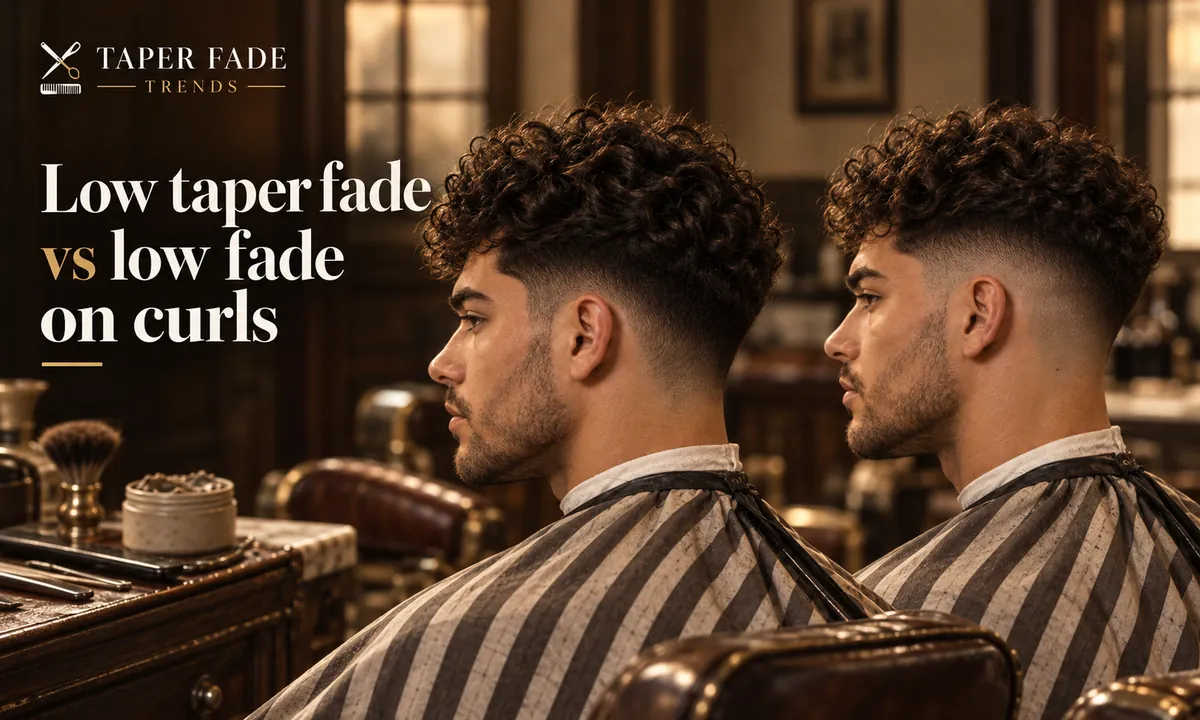
Contrast comes mostly from the shortest finish, not the name. A low taper with skin at the bottom can look sharper than a low fade left at a short guard.
What to tell your barber
Tell the barber five outcomes in this order: where the taper stops, what stays full, the shortest finish, how to treat the top, and the hairline. Describe what you want to see and let the barber choose the guards.
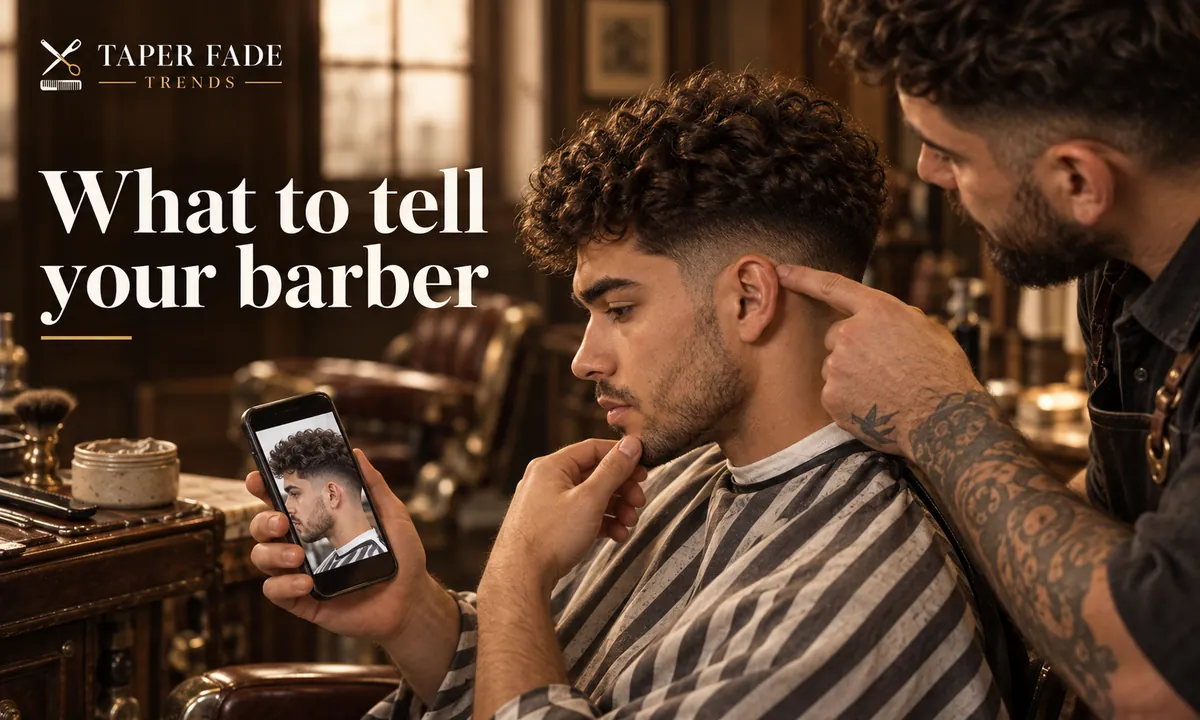
- Taper placement: “Keep the taper low, at my temples, sideburns and nape, and stop it before the curls above my ears.”
- What stays full: “Leave the curls above my ears at this width,” while showing a side photo.
- Shortest finish: “At the very bottom I want [skin / short stubble / a little length].”
- The top: “Look at my curls dry, as I wear them, and tell me whether you’ll shape the top dry, damp or both.”
- Hairline: “I want [a natural hairline / a defined lineup]. Please clean the edge without pushing it back.”
A curl label such as 3A or 4C does not translate into a guard number. Instead, describe how your curls sit, where they grow in different directions and how much they shrink. If you like the result, ask for the settings afterward and note them with the date.
What a reference photo can and cannot show
Bring a side view and a rear three-quarter view, in dry styled hair, of someone whose curls look like yours. Add front and back views if you have them. A photo shows silhouette and placement. It cannot show the curl density, growth direction, shrinkage or clipper settings behind the cut. Maneva points out that density and growth direction decide how the same idea has to be cut on another head.
Taper-only upkeep and rebooking
On a curly low taper fade, the perimeter usually looks grown out before the curly top needs reshaping, so the two can be booked separately. Maneva observes that the taper loses crispness first. Rebook the taper when the temples or nape stop looking the way you want, and reshape the top on its own timeline.
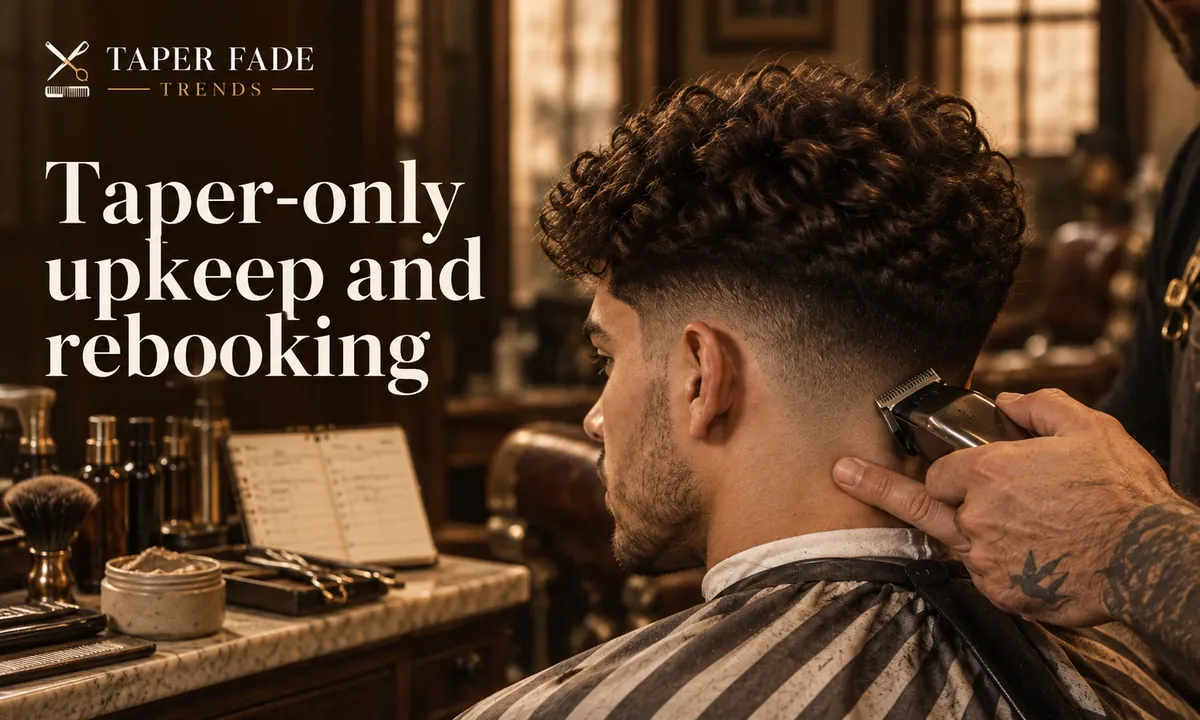
For styling, Maneva’s approach is simple: apply a lightweight curl cream or leave-in to damp hair, diffuse tighter curls on low heat, and touch the curls as little as possible once they form. Too much product can turn defined curls into a heavy mass.
Can you refresh only the taper?
Yes. A barber can clean up the temples, sideburns and nape and leave the curly top untouched, as long as the top still has the shape and length you want. How much work that takes depends on how the previous blend has grown out. Agree where the cleanup stops before the clippers start, so the curls above the ear stay untouched.
How often should a curly low taper fade be maintained?
No single interval fits every curly low taper fade. The guides checked for this page range from every one to three weeks (Maneva, varying by style) to every four to six weeks (Cadmen Academy). Rebook when the temples or nape stop looking right to you. These factors move that date:
| Factor | Effect on how soon the taper looks grown out |
|---|---|
| Shortest finish | Skin or very short hair shows regrowth sooner; a softer, lower-contrast blend hides it longer |
| Hairline finish | A defined lineup shows edge regrowth sooner than a natural hairline |
| Growth rate | Varies by person |
| How crisp you like it | A crisper preference means earlier visits |
Limits and alternatives
Choose something other than a curly low taper fade if you want much less side bulk, a softer edge or a different top. This guide covers only the low perimeter on curly hair.
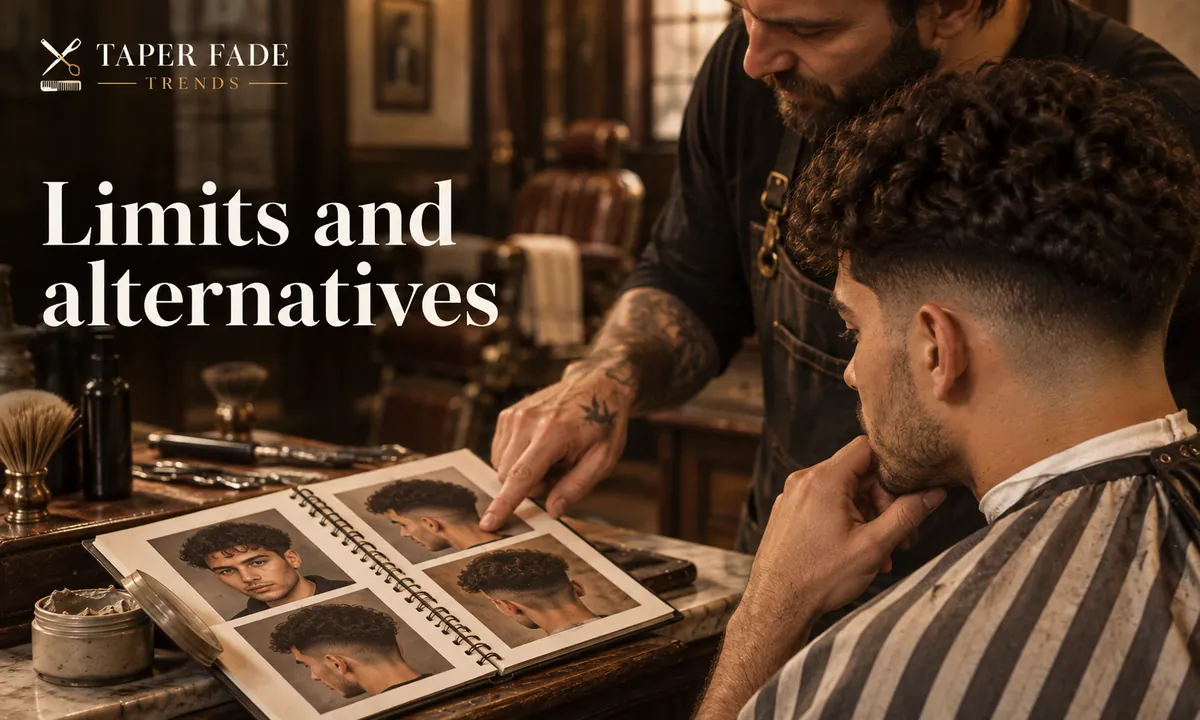
- For more bulk off the sides, a mid or high taper moves the blend higher and keeps less upper-side weight. Change the taper placement in the brief and keep the other four outcomes.
- For less contrast, ask for a low-contrast taper that never reaches skin. Maneva describes a “temple shadow” version that leaves no large bare patch beside the curls.
- If your hair waves more than it curls, the low taper fade for wavy hair guide keeps more of the natural bend.
- A blowout top over a low taper is a separate style with its own guides, so it is not covered here.
Method and sources
This guide compares public haircut guides read on October 6, 2026. It keeps only advice it can attribute to a named source, plus plain definitions. Where sources conflict, it says so. It contains no original haircut test, no measured shrinkage and no guard recipe. The images are illustrations, not haircut results, and the guide makes no scalp or hair-growth claims. The Taper Fade Trends editorial team publishes it.

Sources, all accessed October 6, 2026:
- Maneva Magazine: taper placement, upper-side density, dry assessment, thinning, lineup, grow-out and styling
- Taper Fade Cuts: judging the top by how curls naturally sit
- CareAboutYourHair, TaperStyles and Taper Empire: conflicting guard and definition claims
- Trendy Hair Picks: the cut-dry-always position
- Cadmen Academy: a longer maintenance interval
Keep reading
All guides
Low taper fade: placement, finish, side length and upkeep
A low taper fade shortens the sideburns and nape and keeps the sides full. See the four choices to make, whether it can go to skin, and what to say.
High taper fade curly hair: keep the curl shape, clean the perimeter
How a high taper fade works on curly hair: what side weight to keep, why curls are judged dry, how to measure shrinkage and what to tell your barber.
Low taper fade Black male guide: choose the top, hairline and nape
Low taper fade Black male guide: pick the top, hairline and nape, then use a five-point barber brief, with dermatologist advice on bumps at the nape.
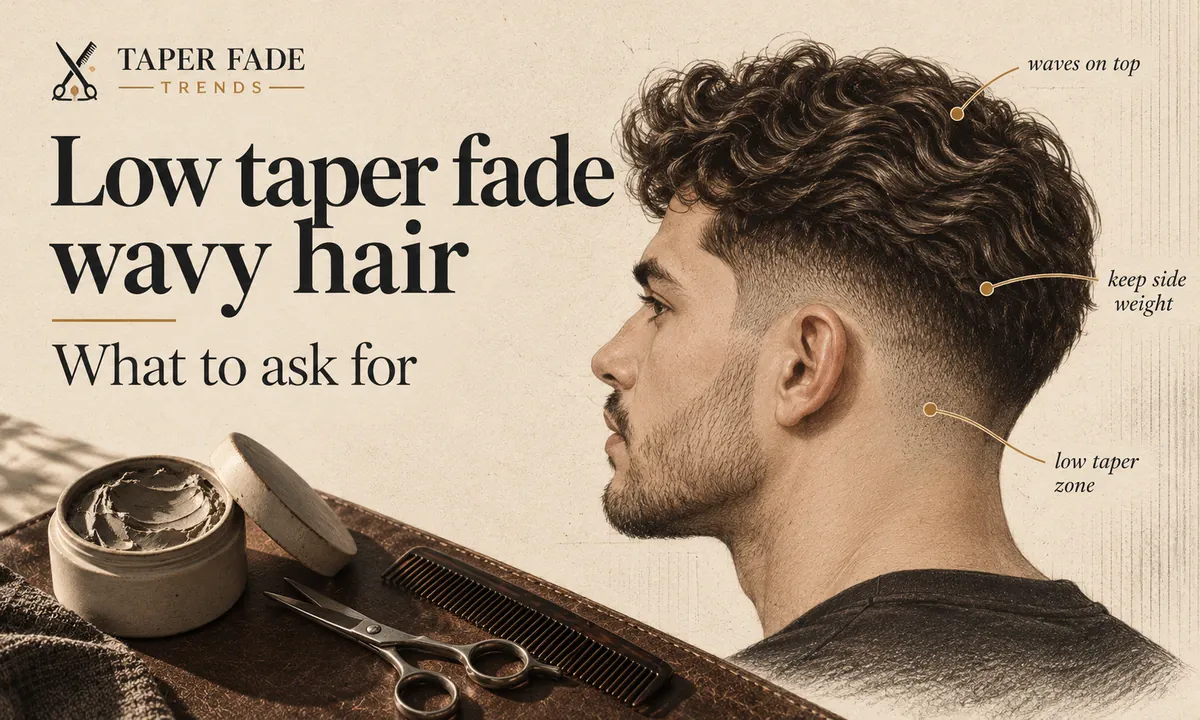
Low taper fade wavy hair: what to ask for
A low taper fade on wavy hair keeps the waves and cleans the edges. What to keep, what to tell your barber, how to air-dry it, and how 360 waves differ.
How to ask for a taper fade: a five-part barber brief
How to ask for a taper fade: say where it may reach, how short the base goes, how much side weight stays and what to do on top, then check the plan first.
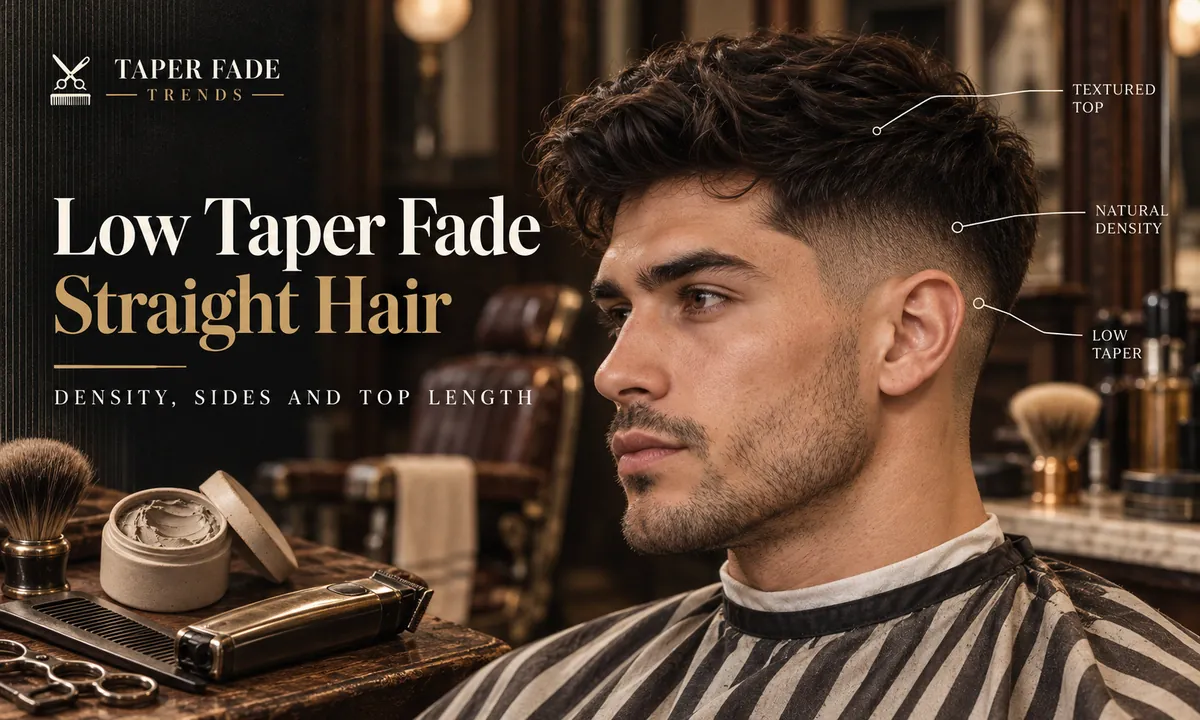
Low taper fade straight hair: density, sides and top length
Low taper fade straight hair guide: how much side weight to keep for your density and growth direction, why sides stick out, and what to ask your barber.
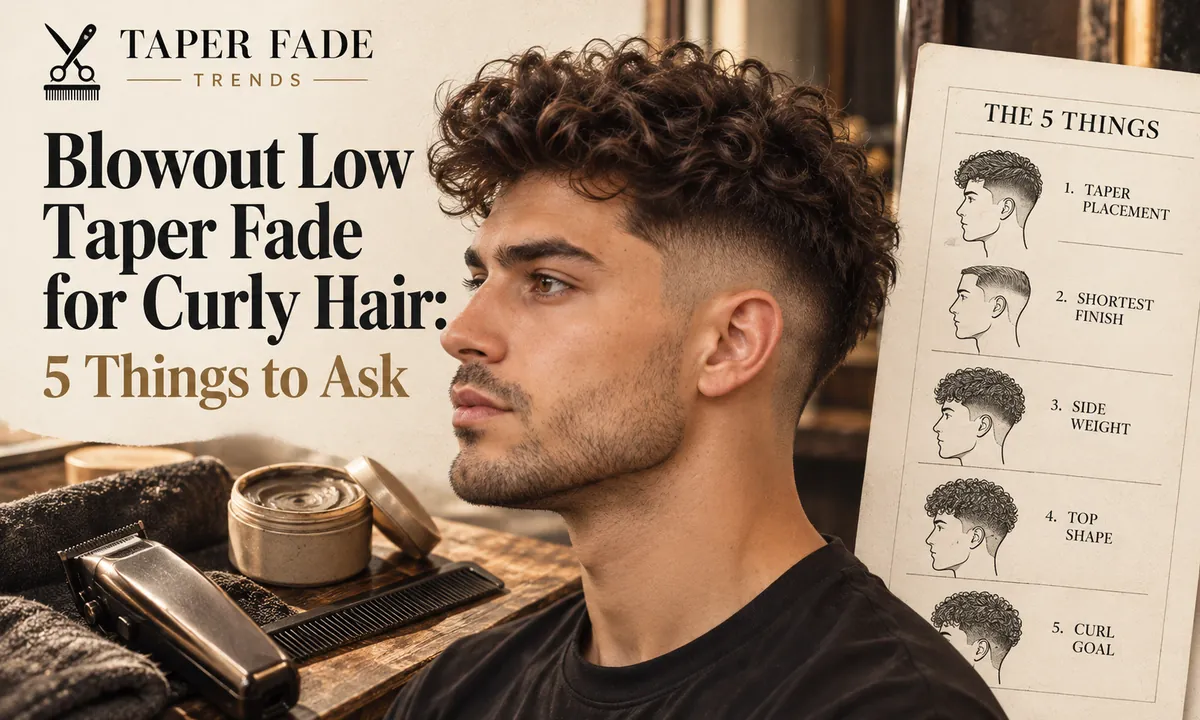
Blowout low taper fade curly hair: keep volume, keep definition
A blowout low taper fade for curly hair is a shape, not a guard recipe. Set the taper placement, shortest finish, side weight, top shape and curl goal.
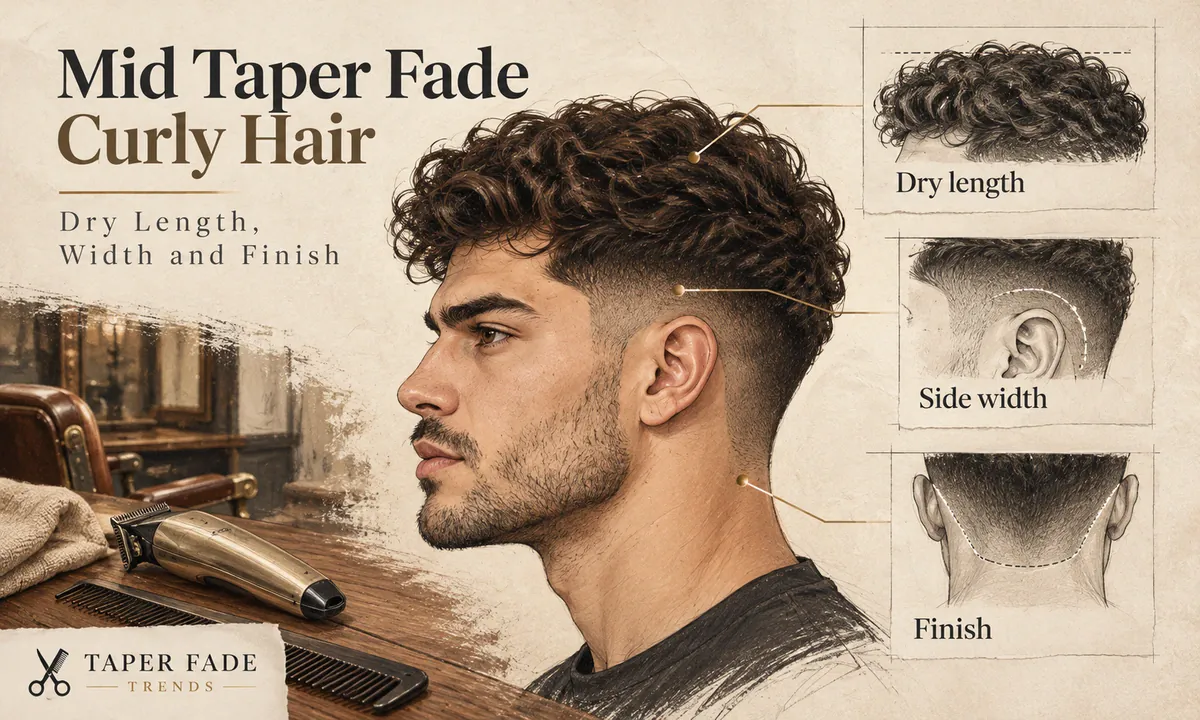
Mid taper fade curly hair: choose dry length, side width and finish
Mid taper fade curly hair guide: what it keeps vs a full mid fade, how to judge dry length and side width, and the four specs to give your barber.
More in low taper fades
Low taper fades: all 14- Low taper fade: placement, finish, side length and upkeep12 min
- Low taper fade straight hair: density, sides and top length11 min
- Low taper fade Black male guide: choose the top, hairline and nape10 min
- Curly low taper fade: keep curl width above the earsYou are here
- Low taper fade buzz cut: compare top length and finish12 min
- Textured fringe low taper: cut, style and barber brief12 min
- Blowout low taper fade curly hair: keep volume, keep definition11 min
- Low taper fade wavy hair: what to ask for13 min
- Asian low taper fade: choose by how your sides grow7 min
- Middle part low taper fade: keep the curtains connected8 min
- Low taper fade with dreads: protect the loc boundary12 min
- Low taper mullet: keep length behind the ears13 min
- Low taper vs mid taper: what changes when only the height moves10 min
- Low taper vs low fade: compare coverage and side weight11 min