Low taper mullet: keep length behind the ears
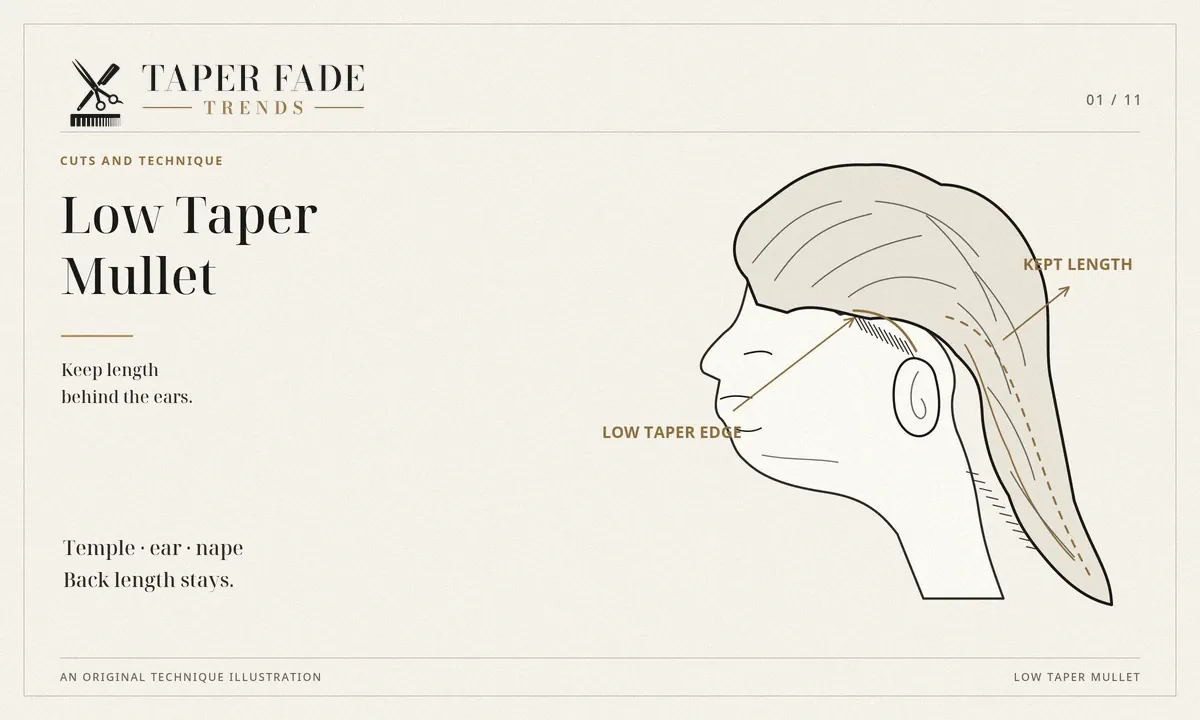
A low taper mullet keeps the shortening in a narrow band at the lowest temples, the sideburns, around the ears and usually the neckline, so the hair above and behind the ears stays long and connects to a longer back. No back length or guard number defines it. Your choice is how much side, crown and nape length to keep.
| Specification | Low taper mullet |
|---|---|
| Where the taper sits | A narrow band at the lowest temples and sideburns, around the ears and usually at the nape (Hector’s) |
| What stays long | The hair above and behind the ears, the crown and the back |
| Shortest finish | Skin, shadow or a longer clipper length; none of them defines the cut |
| Back length | No required number; anything from a short step past the sides to a long nape (Maneva) |
| Crown | Enough weight to join the top to the back, unless you want a deliberate break |
| Neckline | Soft taper or natural, kept below the nape length you are growing |
| Texture | Changes layering and weight removal, not where the taper sits |
| Upkeep | Two separate jobs: clean the taper, reshape the back. Published visit intervals run from about 3 weeks to 6 to 8 weeks |
| Not given here | Guard numbers, inch targets or a fixed rebooking date, because no measured cut supports them |
What a low taper mullet changes
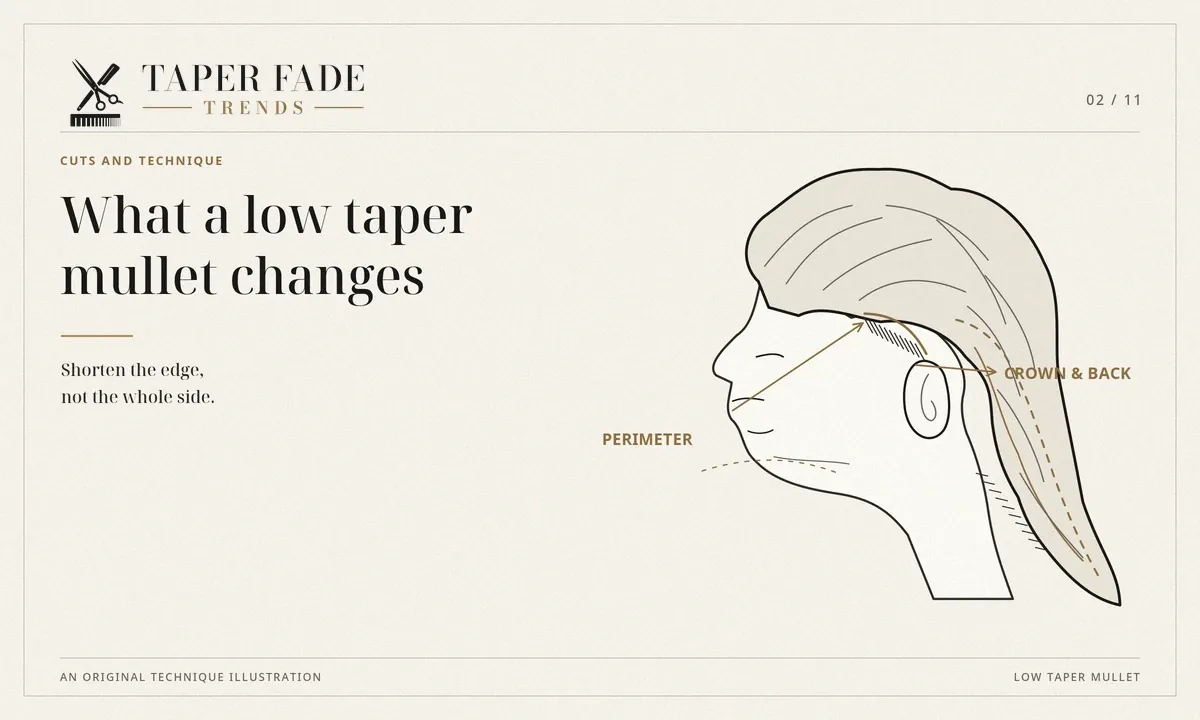
A low taper mullet changes only the edge of a mullet. The taper is a gradual shortening confined to the perimeter: the lowest temples and sideburns, a narrow band around the ear, and usually the nape. Everything above that band keeps its weight, so the sides stay full enough to carry into the longer back. (Hector’s, Luxe Digital)
A low taper is a localized gradual shortening at the haircut’s lower perimeter that preserves more upper-side weight than a broad fade. The perimeter is the haircut’s outer edge: temples, sideburns, the line around the ears and the hairline at the back of the neck. Luxe Digital’s version of the request is the same idea in barber terms: taper the sideburns and neckline only, keep the sides at scissor length, leave the back full.
The nape is the lower back-of-neck hairline area whose retained length helps determine how strongly the haircut reads as a mullet. The neckline is the cut edge along that hairline. The shortest finish is what is left at the bottom of the taper: bare skin, a shadow just above skin, or a longer clipper length.
The top, crown and back can differ from one low taper mullet to the next. The constant is a longer back over a taper that stays at the low edge. Some shops and publishers call the same cut a low taper fade mullet; this guide uses low taper mullet throughout. The taper by itself, without the longer back, is covered in the low taper fade guide.
Low taper vs low fade mullet
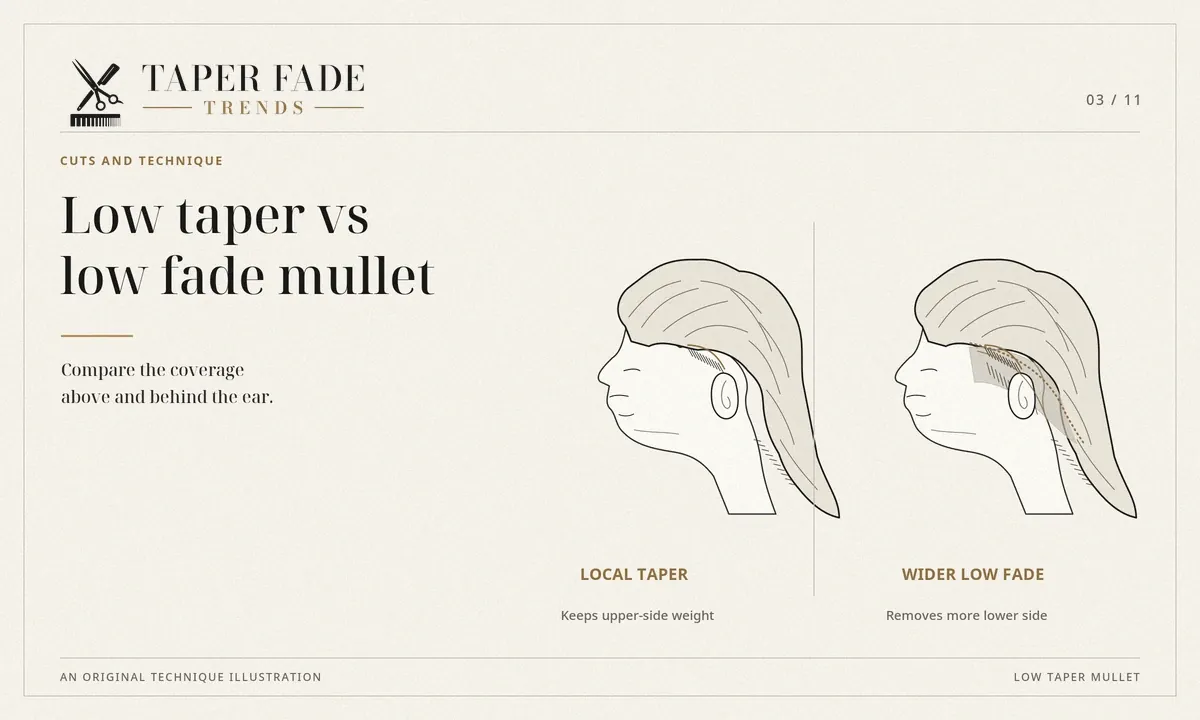
A low taper mullet keeps more hair above and behind the ears than a low fade mullet. The taper shortens only the perimeter, while a low fade carries the short-to-long change across the whole lower side and usually finishes closer to skin. Shops use both labels loosely, so describe the coverage you want and bring a photo. (Mullet Style, Hector’s)
A low fade mullet is a mullet with a broader lower-side transition into very short hair or skin, creating more side-to-back contrast than a localized taper.
| Criterion | Low taper mullet | Low fade mullet |
|---|---|---|
| Where hair is shortened | A narrow band at the temples, sideburns, around the ears and the nape | The whole lower side of the head |
| Hair above and behind the ear | Kept | Partly removed |
| Side-to-back contrast | Soft; the sides still read as hair | Strong; the sides read as short |
| Regrowth | Softens as it grows, with no hard line | A visible line after two or three weeks, according to Hector’s |
| If you later want longer sides | Little to regrow | More to regrow |
The difference between the two techniques on any haircut, not only a mullet, is laid out in taper vs fade.
How much length to keep behind the ears
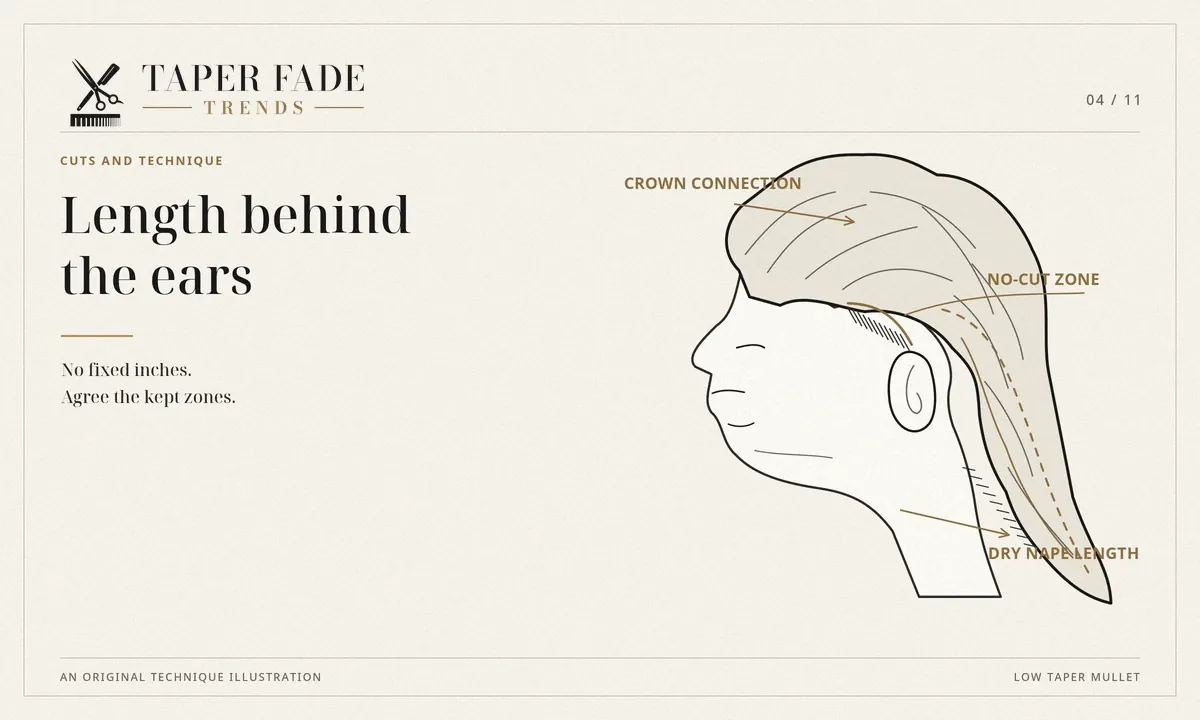
A low taper mullet can keep all the length above and behind the ears, and that is usually why people choose it over a fade. Name those areas as no-cut zones, meaning sections the barber agrees not to shorten, and ask for the taper to stop below them. Where that line falls varies with your ears and hairline. (Mullet Style, Luxe Digital)
Treat the zone map at the top of this page as a starting point. Your barber sets the actual boundary by looking at your head.
Back length has no fixed number
No single back length defines a low taper mullet. A short step past the sides reads as a compact mullet, and more nape length makes the back the main feature. Judge the front, crown and back together, and measure your own dry nape length before the appointment instead of copying an inch target from someone else. (Maneva, Mullet Style)
Some guides publish starting guard recipes for this cut, Faxhion Tips among them. None of the guides reviewed for this page ties its numbers to a measured haircut, so this one gives none.
Keep the crown connected to the back
The crown is the area at the back of the top of the head where the top meets the back. On a low taper mullet, crown weight is what joins the top to the longer back. Thin or shorten the crown too much and the back can look like a separate tail. Some people want that break, so decide on purpose: Maneva lists a deliberately disconnected back as its own variation. (Mullet Style, Maneva)
Choose the shape for your hair
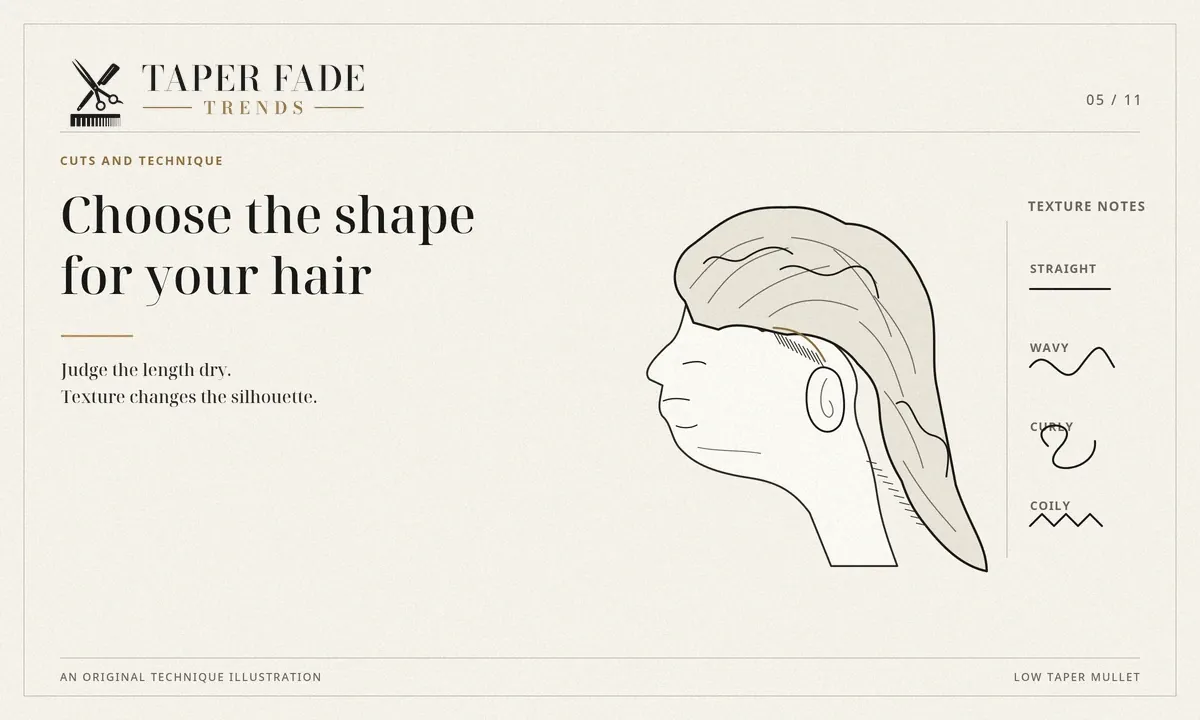
Texture changes how a low taper mullet sits, not where the taper goes. Straight hair shows every cutting line, wavy hair needs enough length for the wave to form, and curly or coily hair sits shorter dry than wet. Plan every length from your hair dry and in its normal finished state. (Mullet Style, Maneva, Barberfaxhion)
| Hair texture | What changes | Plan around |
|---|---|---|
| Straight | Shows the cutting lines most clearly, including any shelf between crown and back | Layering through the crown and back |
| Wavy | Cut too short, the wave changes how it bends and sits | Enough length for the wave to form |
| Curly | Sits noticeably shorter dry than stretched or wet, and adds width at the crown | Dry nape length and kept crown weight |
| Coily | The biggest gap between stretched and natural length | The shape in its natural state, not an inch figure |
Density matters separately from texture. Fine describes how thick each strand is; density describes how many strands there are, so fine hair can still be dense. Hector’s recommends the low taper over a higher one for fine hair, because the sides cannot afford to lose weight. (Mullet Style, Hector’s)
Face-shape charts for this cut exist, but Hector’s says face shape is rarely the limiting factor, and Maneva treats it as a guide to proportion rather than a rule. Density, growth direction and how you wear the top usually decide more.
With the kept zones and proportions settled, the next step is choosing which version to point at.
Examples that show meaningful choices
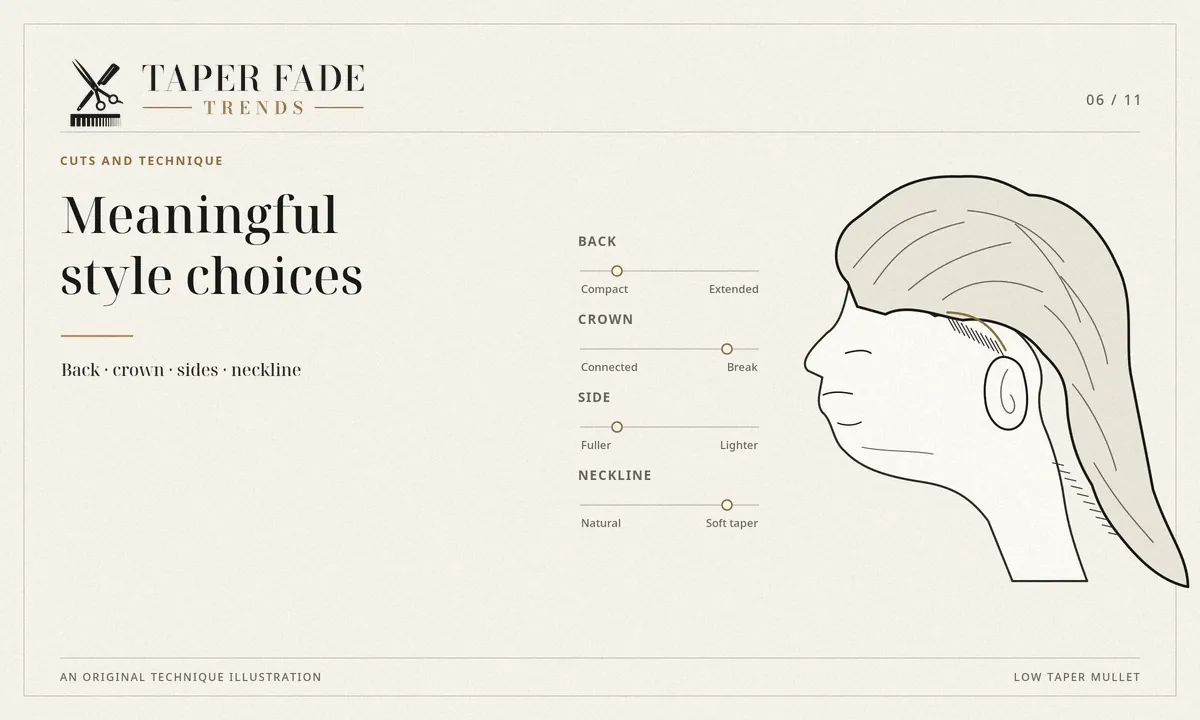
Useful low taper mullet examples differ by one decision at a time: back length, crown connection, side weight or neckline. A style name doesn’t tell the barber which of these you want. Pick one option from each row and you have most of a brief.
| Decision | Options | What changes | Choose by |
|---|---|---|---|
| Back length | Compact or extended | Compact is a small step past the sides; extended makes the back the main feature | How much you want the back noticed |
| Crown | Connected or disconnected | Connected runs one line from top to back; disconnected leaves a visible break | Whether you want one shape or two |
| Side weight | Fuller or lighter above the ear | Fuller keeps the sides in the silhouette; lighter shows more ear and contrast | Whether keeping length behind the ears is the point |
| Neckline | Natural, soft taper or shaped | Natural grows as it is; a soft taper blends the edge; shaped draws a defined line | Whether nape length or a clean edge matters more |
The side-weight row is where the cut can stop being a low taper mullet. Once the shortening spreads across the lower side, it matches the low fade mullet definition above. The neckline row trades directly against length: a long nape and an aggressively tapered neckline work against each other. (Mullet Style)
What one photo cannot tell you
A single side photo cannot show a whole low taper mullet. It hides the opposite temple, the crown connection, the neckline and the true back length. Bring front, side and back views of the same cut, ideally on hair like yours, and treat any length the photo doesn’t state as unknown. (TaperMode, Barberfaxhion)
TaperMode labels its own image as a generated illustration and warns that one angle cannot show the transition, neckline or growth pattern. The same caution applies to any AI-made haircut picture: it shows an idea, not a result your hair can reproduce.
How to ask your barber
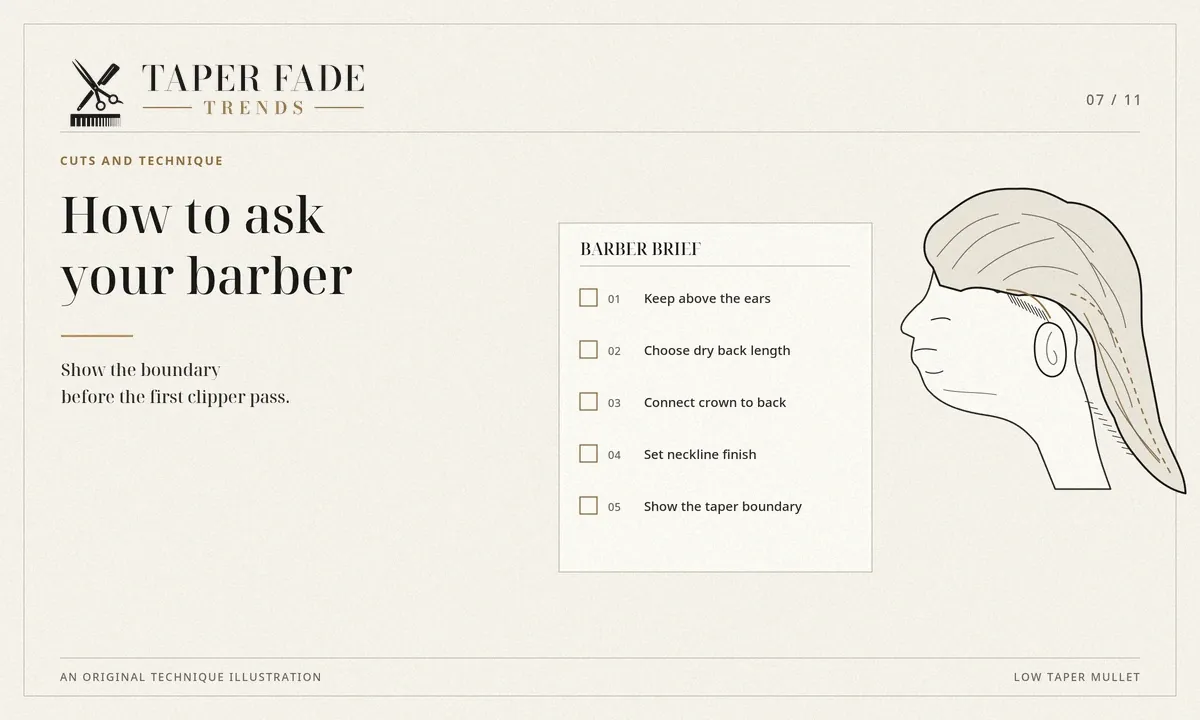
Ask for a low taper kept to the temples, sideburns, around the ears and the neckline, with the hair above and behind the ears and through the back left long. Then give the back length, the crown connection and the neckline you want, and show front, side and back photos. Let the barber choose the guards. (Mullet Style, Barberfaxhion)
Say these in order, replacing the brackets:
- “I want a low taper mullet. Keep the taper at the temples, sideburns and around the ears, and leave the length above and behind my ears.”
- “Keep the back at about [your dry nape length]. I measured it dry.”
- “Connect the crown to the back.” Or: “Leave a break at the crown.”
- “Leave the neckline [natural / softly tapered / shaped], and don’t take it above the hairline.”
- “Make the shortest point [skin / a shadow / longer than that].”
- “Show me where the taper will stop before you start.”
Hector’s describes its own order: agree the back length and the corner where the back meets the sides first, then taper the perimeter underneath so the two shapes agree. If your barber starts with the clippers, it is fair to ask where the back will end up first.
If your hair grows outward at the crown or nape, say so before cutting; growth direction changes how the connection sits. The general consultation process for any taper fade, including how to check the plan before the clippers start, is in how to ask for a taper fade.
If you are growing out a short taper or fade
Growing a low taper mullet from a short taper or fade starts with not cutting the sides above the taper or the back. Allow cleanup only at the perimeter while those areas gain length. Hector’s tells clients switching from a fade to expect one appointment of letting the sides gain weight first; the full shape can take longer. (Hector’s)
- Name the areas that must gain length: the sides above the taper and the back. These are your no-cut zones.
- Allow cleanup at the perimeter only, and only if the outline needs it. Keep the neckline at the hairline.
- At each visit, check the crown and back from the side and back before deciding what comes off.
Keep the taper at the same low height every visit. Raising it a little each time slowly removes the side length that connects to the back. (Mullet Style)
Once the shape is in place, upkeep has to protect it.
Styling and upkeep without shortening the back
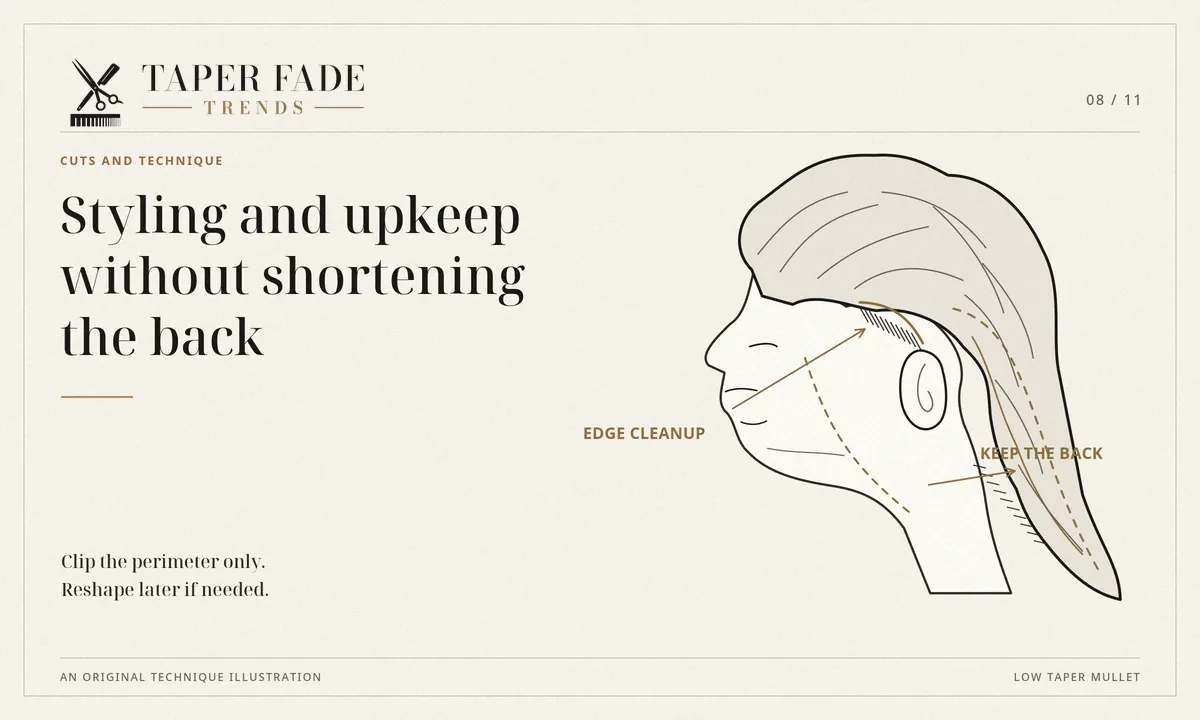
Upkeep for a low taper mullet is two jobs. Cleaning the taper keeps the edge sharp; reshaping the crown and back keeps the silhouette. They rarely fall due together, so tell the barber the back is off-limits on a cleanup visit. Styling changes how the hair sits on a given day and never its length. (Mullet Style, Maneva)
| Job | What it touches | Do it when |
|---|---|---|
| Taper cleanup | Temples, sideburns, around the ears, neckline | The edge no longer looks the way you want |
| Back reshaping | Crown and back | The crown and back stop forming the shape you chose, or the ends look ragged |
| Daily styling | Top, crown and back | Every time you style; it removes nothing |
| Hair | Product type | How |
|---|---|---|
| Straight | Light paste or texture spray | Dry with your fingers for direction, then a small amount on dry hair |
| Wavy | Light cream or mousse | Apply damp, scrunch, and let the wave form |
| Curly or coily | Curl cream, leave-in or gel | Apply damp, diffuse on low heat, and don’t brush once dry |
Work product through the back as well as the top, or the back looks dry and separate from the rest. Start with a small amount; more is easy to add. (Mullet Style, Hector’s)
How often to clean up the low taper
Published guides put a low taper mullet’s visits anywhere from about three weeks (TaperMode) to six to eight weeks for a full reshape (Hector’s). Treat that as a range. A skin finish, fast growth, a shaped neckline or a liking for sharp edges pulls you toward the short end; a shadow finish stretches it.
Mullet Style’s explanation is the useful part: a skin taper shows new growth against bare skin sooner, while a shadow taper looks softer over the same weeks. Find your own point by noting how many weeks pass before the edge bothers you, then book the cleanup there and the back reshape less often. How fast a taper loses its outline is covered in how long a taper fade lasts.
Should the neckline be tapered while growing the back?
Most barbers taper or soften the neckline on a low taper mullet, but it should stay at the hairline while you grow the back. A neckline taper that climbs, or a cleanup that squares off the nape every visit, removes the length you are building. Ask what will come off the nape before the clippers start. (Hector’s, Mullet Style)
Hector’s finishes the neckline soft rather than blocked, so it grows out without a hard edge. A squared or sharply shaped neckline is a valid choice when the back length is already where you want it.
When another mullet or fade makes more sense
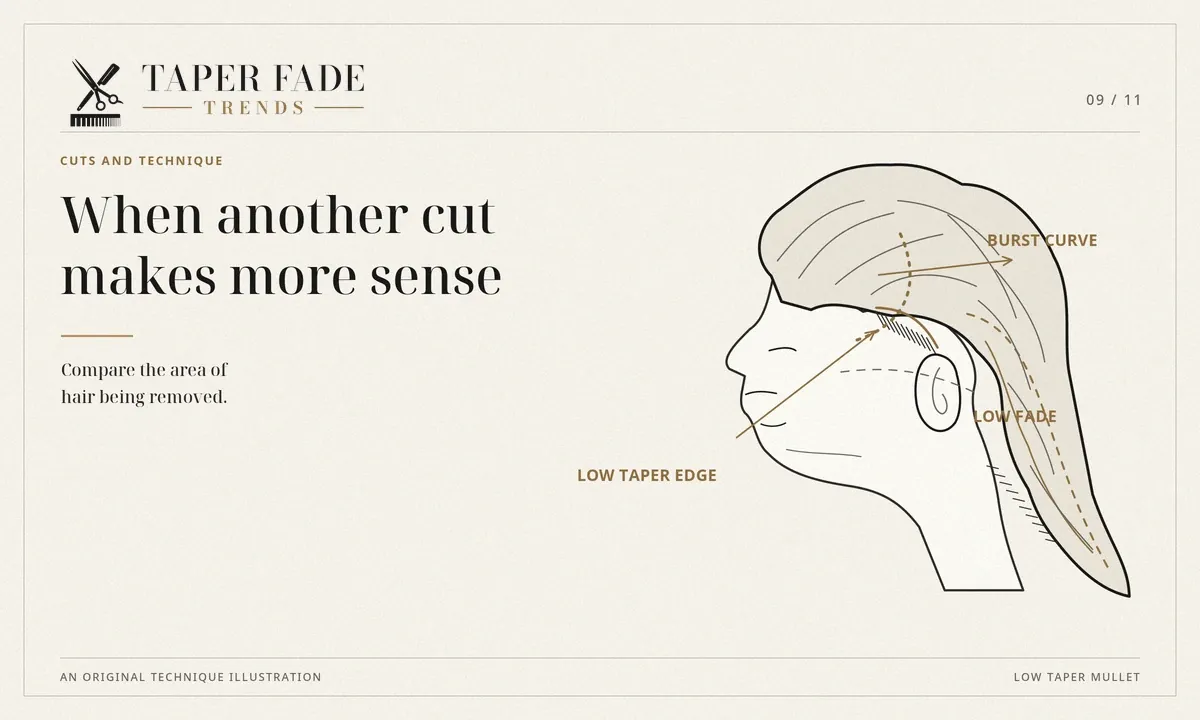
A low taper mullet is the wrong reference if you want strong side contrast, a cut curved around the ear, more weight removed above the ear, or no longer back at all. Pick the row that matches, then show the barber photos of that cut rather than relying on its name.
| Choose | If you want | What changes |
|---|---|---|
| Low fade mullet | Strong side-to-back contrast | More hair removed across the lower side; a regrowth line appears sooner |
| Burst fade mullet | A short curve around the ear | Hair behind the ear goes short and the neck stays long (Luxe Digital) |
| Mid taper mullet | Less bulk on thick hair that gets heavy above the ear | The taper starts higher on the side (Hector’s) |
| Low taper without a mullet | The same low edge with no longer back | The back stays at the length of the rest |
A burst fade mullet and a low taper mullet treat the area behind the ear in opposite ways. A burst fade cuts short in a curve behind the ear while the neck stays long; a low taper keeps the hair behind the ear and shortens the edges. If keeping length behind the ears is the point, choose the taper. (Luxe Digital, Mullet Style)
How a low and a mid taper differ in height and side weight is compared in low taper vs mid taper.
Method, image notes and sources

Taper Fade Trends Editorial built this guide from two technique pages by Hector’s, a London salon; Luxe Digital’s barber-quoted mullet guides; and five published low taper mullet guides, compared for where they agree and where they conflict. No haircut was photographed or measured for it, which is why it gives no guard numbers or lengths. No barber has reviewed this version; when one does, their name, role and review date will go here. Every image is a labeled illustration, not a photograph of a documented cut.
Sources: Hector’s: modern mullet low taper, Hector’s: taper mullet, Luxe Digital: modern mullet, Luxe Digital: burst fade, Mullet Style, Maneva Magazine, Barberfaxhion, Faxhion Tips and TaperMode. Found an error? The editorial policy explains how corrections are made and dated.
Next: build the full barber brief
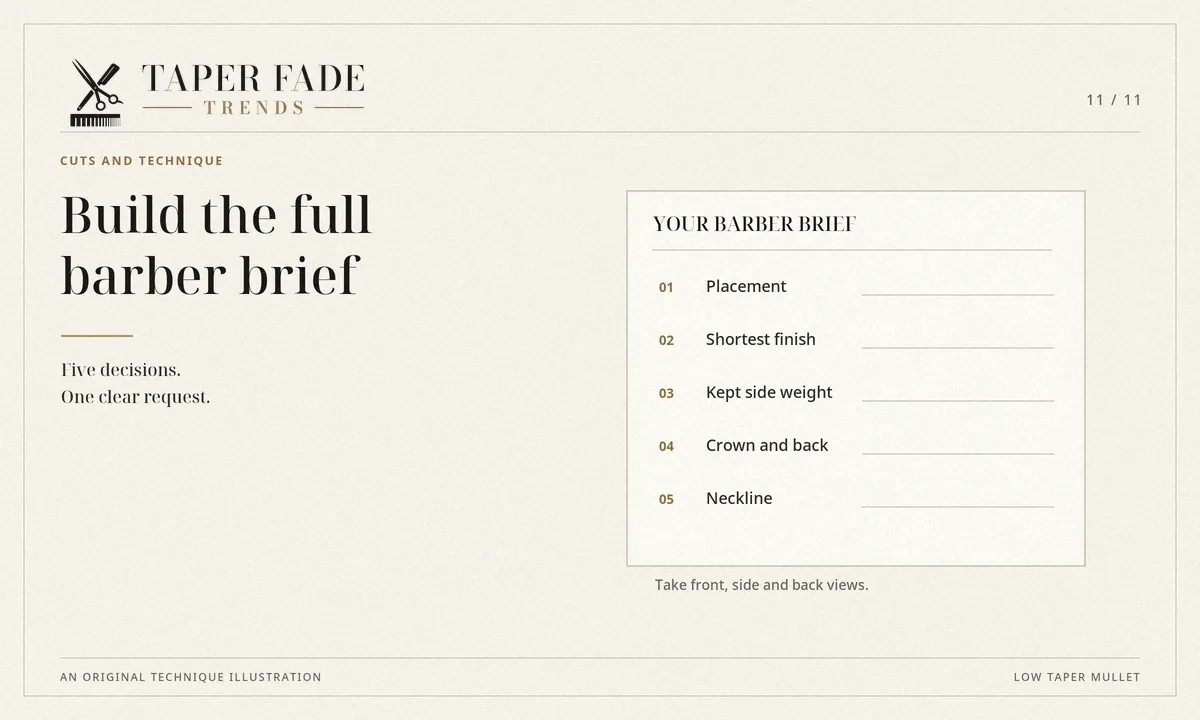
The five-part brief in asking for a taper fade covers placement, finish, side weight, top and edges for any taper, with a check-the-plan step to run before the first clipper pass. Add the no-cut zones from this page to part 2.
Keep reading
All guides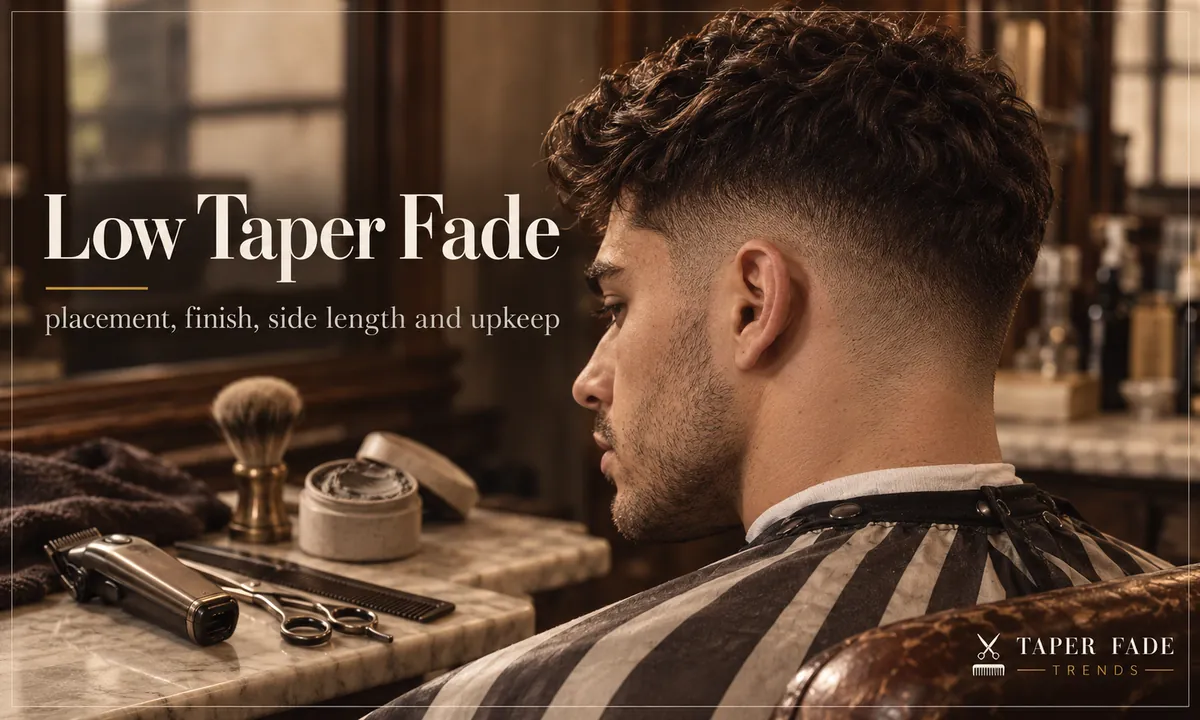
Low taper fade: placement, finish, side length and upkeep
A low taper fade shortens the sideburns and nape and keeps the sides full. See the four choices to make, whether it can go to skin, and what to say.
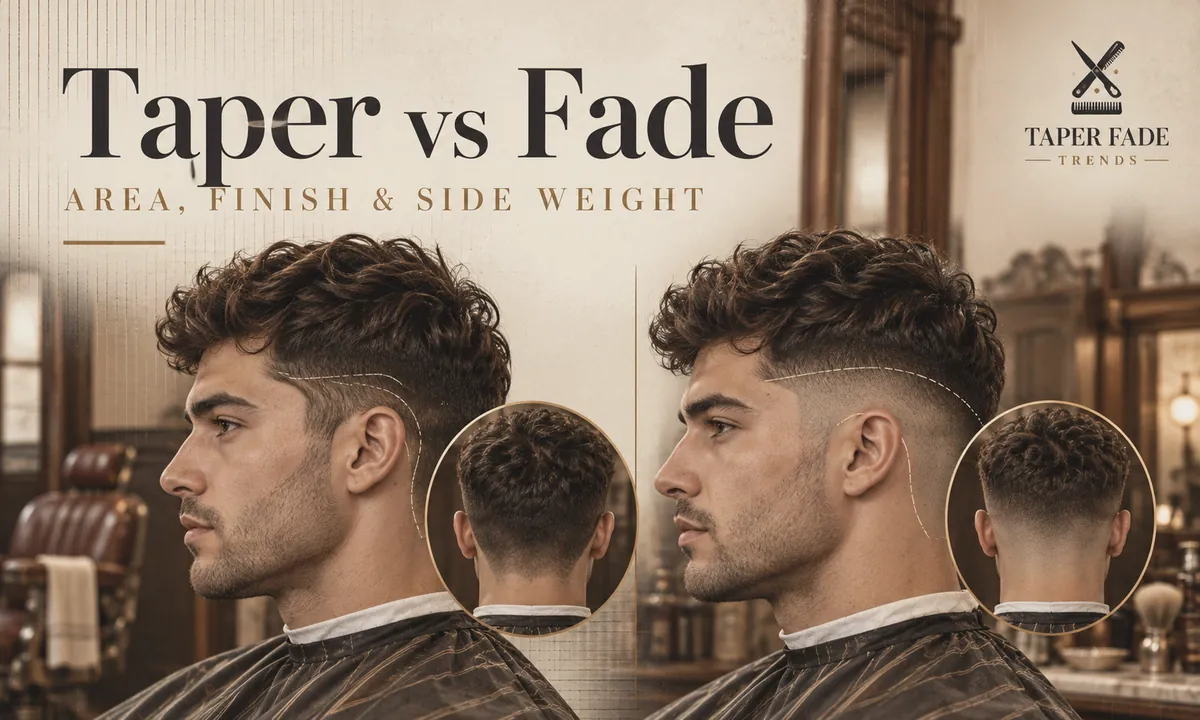
Taper vs fade: what changes in area, finish and side weight
Taper vs fade compared by coverage, height, shortest finish and side weight, with a back-view check and word-for-word barber scripts for either cut.
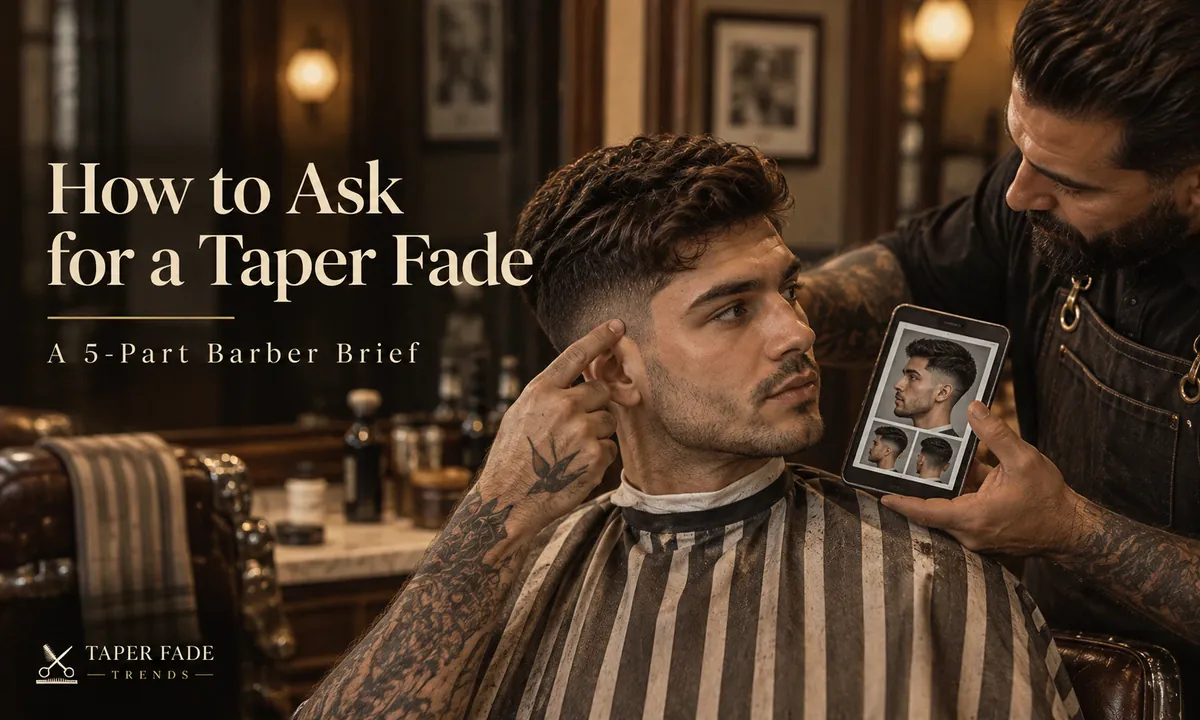
How to ask for a taper fade: a five-part barber brief
How to ask for a taper fade: say where it may reach, how short the base goes, how much side weight stays and what to do on top, then check the plan first.
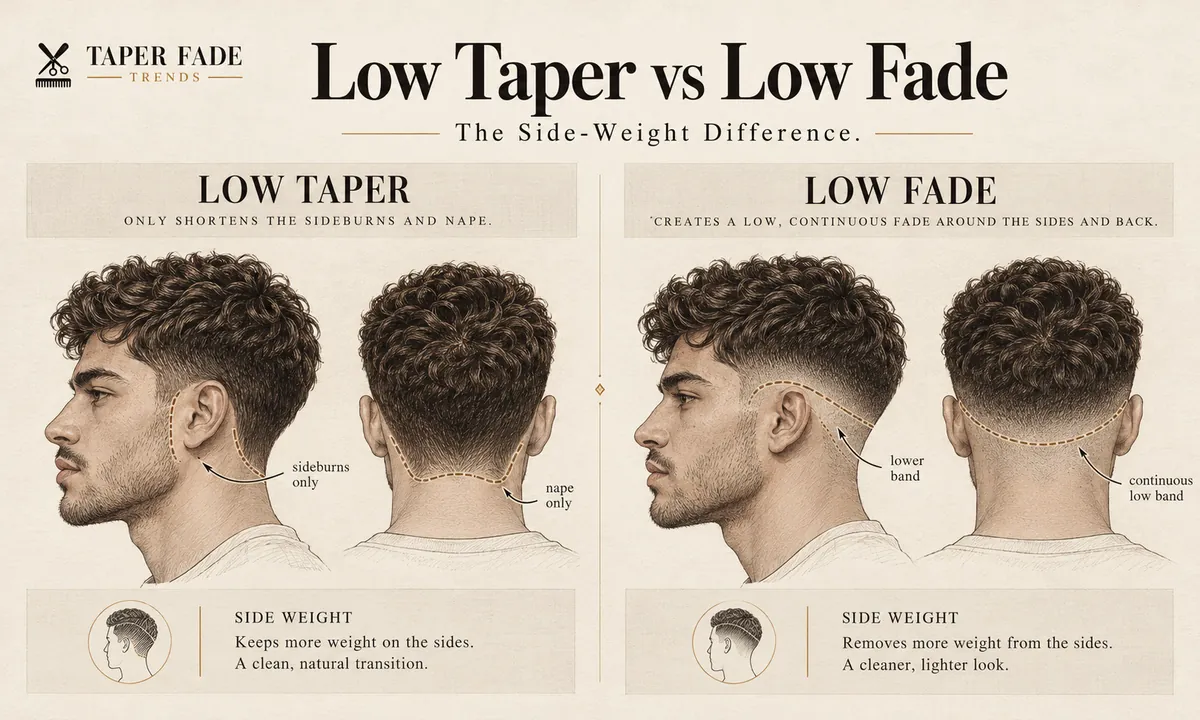
Low taper vs low fade: compare coverage and side weight
Low taper vs low fade: a low taper shortens the sideburns and nape; a low fade shortens a band around the lower sides and back. Compare finish and upkeep.
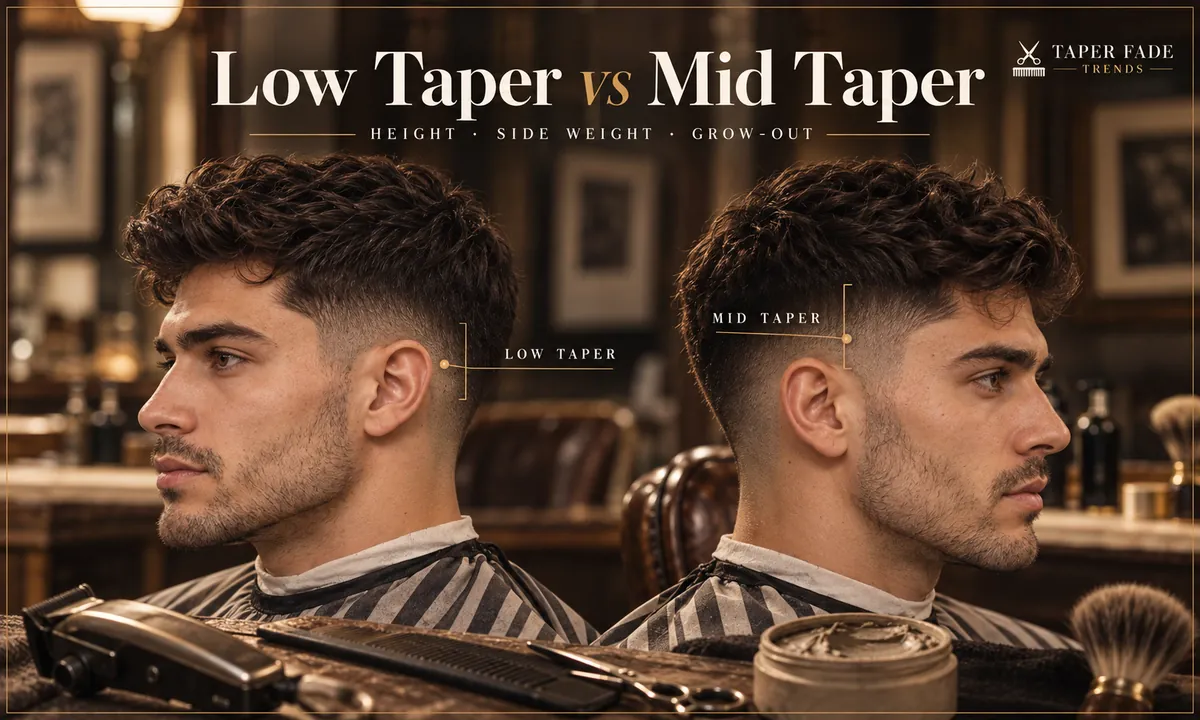
Low taper vs mid taper: what changes when only the height moves
Low taper vs mid taper compared on height, side weight, shortest finish and grow-out, why switching mid to low takes time, and what to tell your barber.
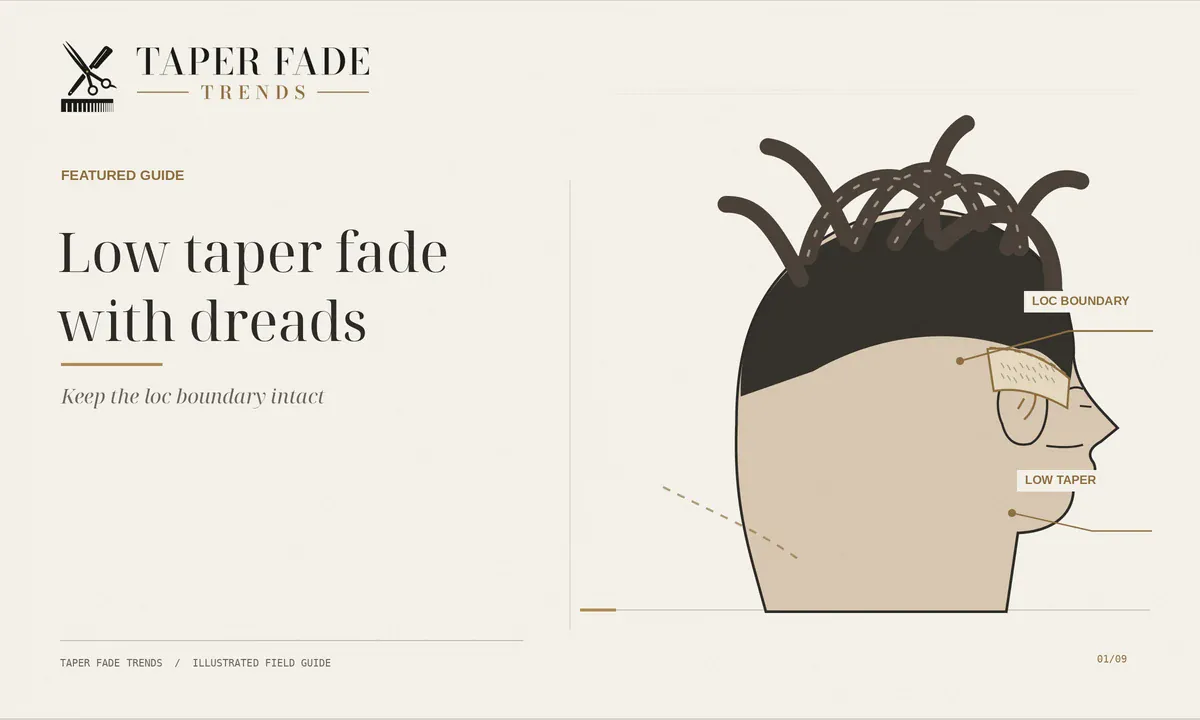
Low taper fade with dreads: protect the loc boundary
Low taper fade with dreads: which loc bases to protect, how to set the taper zone and endpoint, and what to tell your barber and loctician first.
More in low taper fades
Low taper fades: all 14- Low taper fade: placement, finish, side length and upkeep12 min
- Low taper fade straight hair: density, sides and top length11 min
- Low taper fade Black male guide: choose the top, hairline and nape10 min
- Curly low taper fade: keep curl width above the ears10 min
- Low taper fade buzz cut: compare top length and finish12 min
- Textured fringe low taper: cut, style and barber brief12 min
- Blowout low taper fade curly hair: keep volume, keep definition11 min
- Low taper fade wavy hair: what to ask for13 min
- Asian low taper fade: choose by how your sides grow7 min
- Middle part low taper fade: keep the curtains connected8 min
- Low taper fade with dreads: protect the loc boundary12 min
- Low taper mullet: keep length behind the earsYou are here
- Low taper vs mid taper: what changes when only the height moves10 min
- Low taper vs low fade: compare coverage and side weight11 min