Mid taper vs mid fade: how much side hair comes off
Mid taper vs mid fade is mostly a question of coverage. Both start around temple height. A mid taper keeps its shortest work at the sideburns, ears and nape, so more side hair stays. A mid fade carries that short zone across the sides and back. Some barbers split the names by finish instead, so say both.
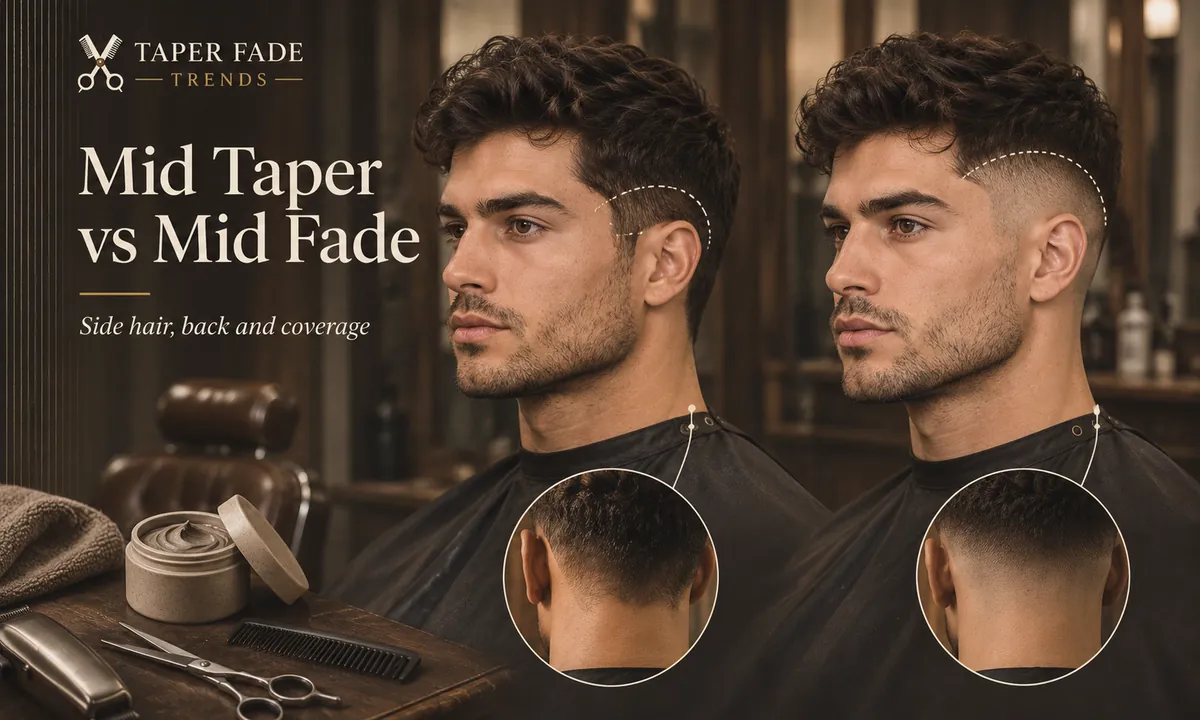
| Mid taper | Mid fade | |
|---|---|---|
| Where it starts | Around temple height; varies by barber | Around temple height; varies by barber |
| Where the shortest work sits | Sideburns, ear perimeter and nape | Across the sides and around the back |
| Hair above and behind the ear | More of it kept | Most of it graduated short |
| Back of the head | Short zone stays near the nape | Short zone wraps around the back |
| Shortest finish | Not set by the name; some shops keep tapers above skin | Not set by the name; often taken to skin |
| Top length | A separate choice | A separate choice |
| Regrowth | Shows in a smaller area | Shows across more of the head |
| Clipper guard | Not set by the name | Not set by the name |
| Say this | “Keep the short work at my sideburns and nape.” | “Take it across the sides and around the back.” |
The table follows the coverage convention that most comparison guides use. Some barbershops split the two names by finish instead; the second section explains both.
Mid taper vs mid fade at a glance
A mid taper and a mid fade start at about the same height, so “mid” does not tell them apart. In most comparison guides, a mid taper is a localized graduation at the sideburns, ears and nape that keeps the side panel fuller, while a mid fade graduates a broader section of the sides and back.
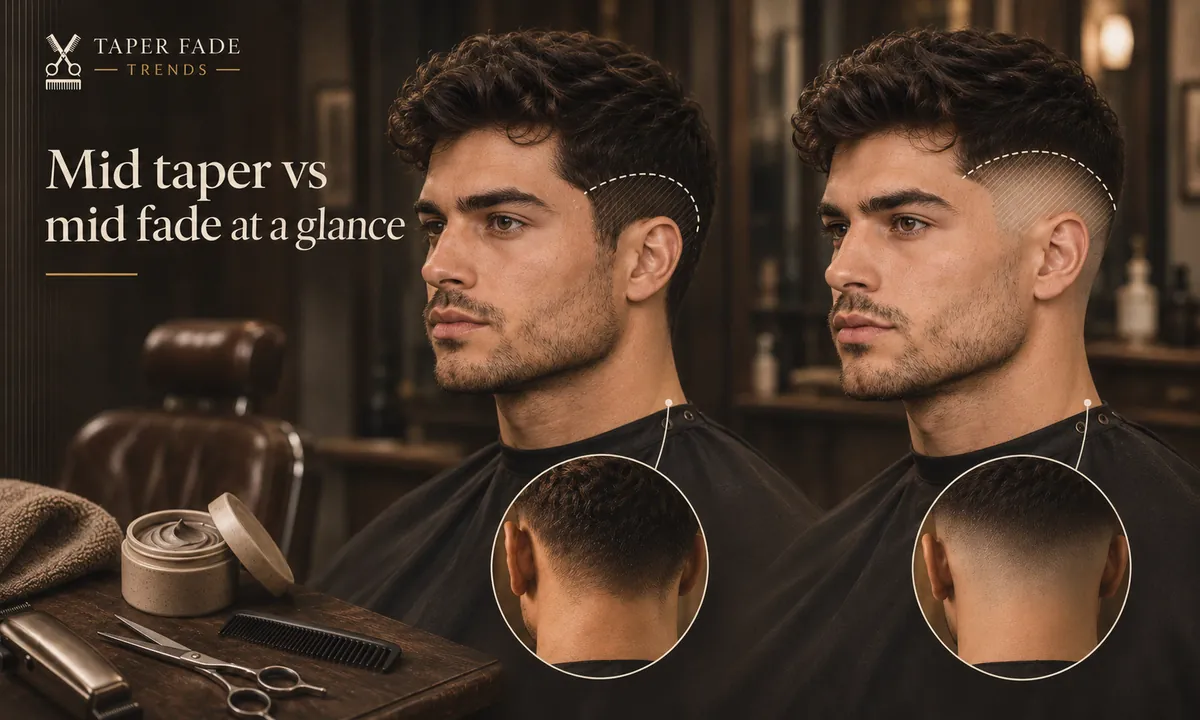
That is how BarberLaunch, Barber.Style and Hairstyle Atlas draw the line, and it matches our mid taper fade guide.
“Mid” is a placement, not a measurement. Published landmarks run from roughly the top of the ear to an inch or so above it (Jonny the Barber) up to about an inch and a half above the ear, level with the corner of the eyebrow (Hairstyle Atlas). Point to the line on your own head instead of trusting the word.
Two ways barbers tell them apart
Barbers use two conventions. Under the coverage convention, a mid taper keeps its short work at the edges and a mid fade runs across the sides and back. Under the finish convention, the cuts start at the same height, but a mid taper stops at a short visible length and a mid fade goes to skin or near it.
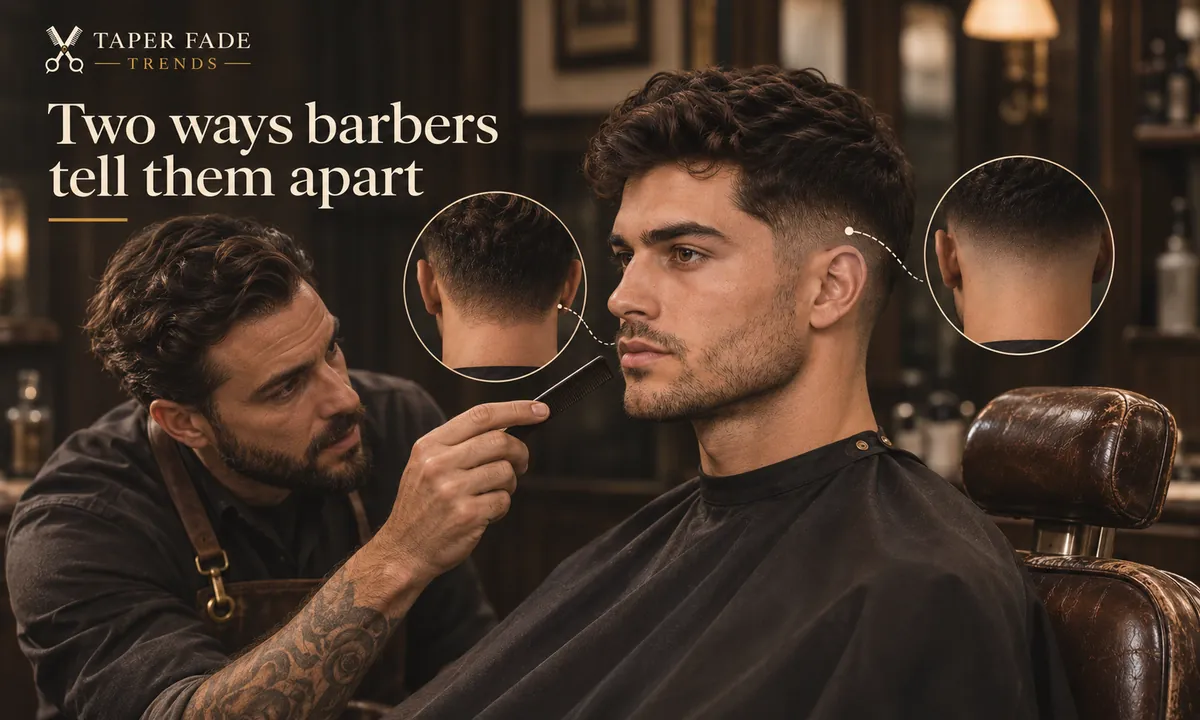
| Convention | Mid taper means | Mid fade means | Used by |
|---|---|---|---|
| Coverage | Short work at the sideburns, ears and nape; skin is optional | Short work across the sides and back; skin is optional | BarberLaunch, Barber.Style, Hairstyle Atlas, this site |
| Finish | A gradual blend that stops at a short length, such as a #1 or #2 | Same start height, taken shorter, often to skin | Jonny the Barber, a New York barbershop; CADMEN Barber Academy for tapers and fades in general |
Neither convention is universal, and they collide on one request. Under the finish convention, a mid taper taken to skin reads as a mid fade. Jonny the Barber’s fix for getting an unwanted mid fade is to say “nothing shorter than a #1.” CADMEN Barber Academy teaches the same split: a taper ends at a short visible length, a fade at or near skin. Under the coverage convention, a skin-finish mid taper is an ordinary mid taper.
Can a mid taper go to skin? Under the coverage convention, yes. BarberLaunch lists skin, zero and guarded finishes for both cuts. Under the finish convention, a taper keeps visible hair at the bottom, so skin makes it a fade. Either way, say the finish out loud and ask your barber how they use the two names.
If close shaves irritate your skin, BarberLaunch suggests a zero, 0.5 or #1 at the bottom rather than a foil-shaved finish. Our taper vs fade guide covers the same naming split for tapers and fades at every height.
Where the difference shows on the side and back
From the side, a mid taper keeps more hair above and behind the ear, because its shortest work stays near the sideburn and nape. A mid fade graduates more of that side panel short. The comparison holds when the top length, the length above the blend and the hair texture are similar on both cuts.
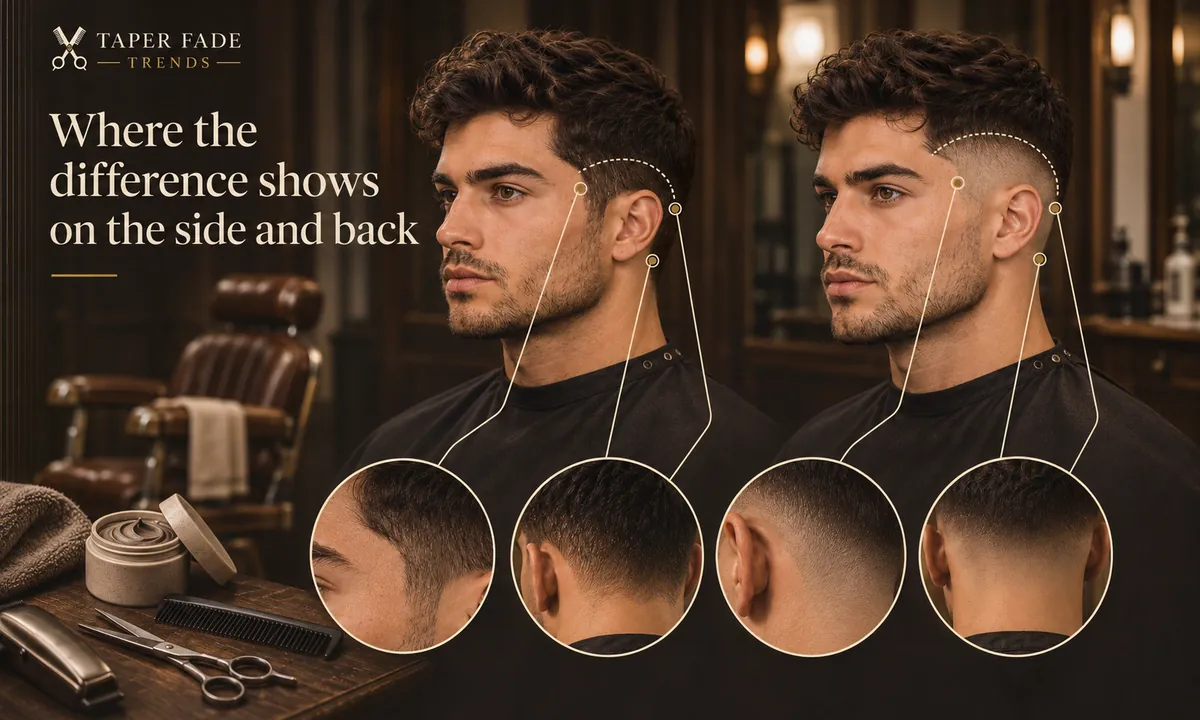
Read any reference photo in four zones, using the same angle for both cuts:
- Sideburn and temple: where the shortest blending starts.
- Above the ear: how much hair stays full before the blend begins.
- Behind the ear: whether the graduation keeps going around the head or stops near the ear.
- Back panel above the nape: how much of the back is blended short, not only how the neckline ends.
Back-view check
From behind, a mid taper keeps the shortest work near the nape and leaves weight behind the ears. A mid fade carries the short zone across the back, through the occipital area (the curve at the back of the skull), to join both sides. A side photo cannot show this, so bring a straight-back view taken at the same height.
BarberLaunch makes the same point: the back is where the two cuts differ most, so a front-only reference leaves the main question open.
Choose by side weight, hair and upkeep
Choose a mid taper to keep side weight above and behind the ears and a softer grow-out. Choose a mid fade for less bulk across the sides and back and contrast from every angle, if you accept that regrowth shows across more of the head. The top is a separate choice, so the same fringe or part works with either.
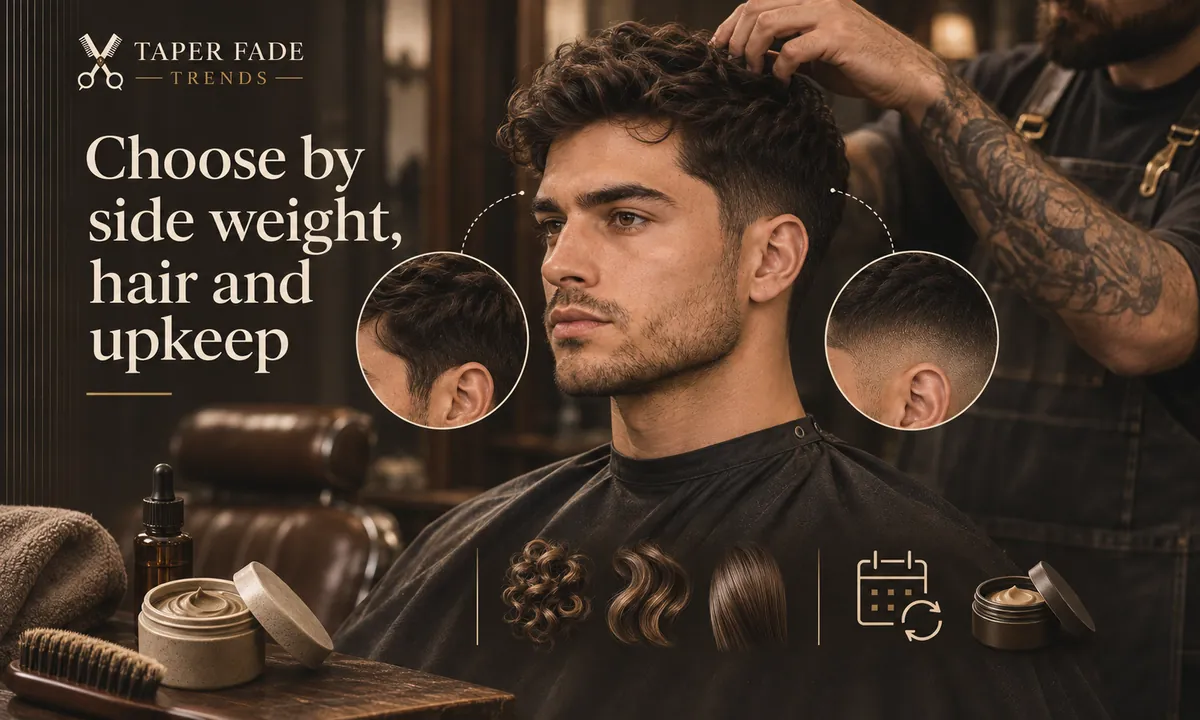
| If you want | Choose | Trade-off |
|---|---|---|
| Fuller sides with clean edges | Mid taper | The temples and nape still show regrowth first |
| Less bulk across the sides and back | Mid fade | More scalp shows if the bottom is taken close |
| Contrast you see from the side and back | Mid fade | A rough blend shows from every angle too |
| To decide later | Mid taper | Widening it into a fade is one cut away; side weight takes regrowth to get back |
Plenty of guides assign these cuts by face shape or by school and office rules. Those are preferences, not rules, so this page leaves them out.
Curls, waves and straight hair
On curly or wavy hair, a mid taper usually keeps more curl width around the ears than a mid fade, as long as the top and the bulk removal stay the same. A mid fade separates the curls more sharply from the sides. Judge both dry, because curls shrink as they dry and density changes how much contrast shows.
BarberLaunch frames the curly choice the same way: the taper for fullness, the fade for a tighter, higher-contrast shape. Our mid taper fade curly hair guide covers dry length, shrinkage and side width in detail.
On straight hair the blend line itself is easier to see. Barber.Style notes that fine straight hair shows blend lines more readily, so a slightly longer shortest length can look smoother on either cut.
Switching cuts and taper drift
Going from a mid taper to a mid fade takes one visit. Going back takes regrowth, because hair the fade removed can’t be restored. BarberLaunch adds a slower version of the same problem: a taper taken a little higher at each appointment can gradually become a full fade. Agree on where the short zone stops, and repeat it every visit.
Upkeep without a fixed schedule
A mid fade can make regrowth more visible than a mid taper, because its short area is larger, and a skin finish shows growth sooner than a guarded one. Neither name sets a rebooking date, and the published intervals don’t agree with each other.
Beard Beasts gives one to two weeks for a mid fade and three to four for a mid taper. Barber.Style says two to three weeks for a mid skin fade and three to five for a taper. Jonny the Barber puts a mid taper at four to five weeks, and BarberLaunch gives two to three weeks for either cut. None of them cites measurements, so treat the numbers as shop rules of thumb.
A better trigger is visual. Rebook when the sideburns and nape stop matching your reference, note how many weeks that took, and use that as your own cycle. Our guide to how long a taper fade lasts walks through the stages.
What to ask your barber for each cut
Describe the result, not just the name: where the blend starts, how far the short zone travels, the shortest finish, how much side weight stays and the top length. Neither name sets a clipper guard, and guard sizes vary between makers, so leave the guard, blade and lever to the barber unless you know the tools.
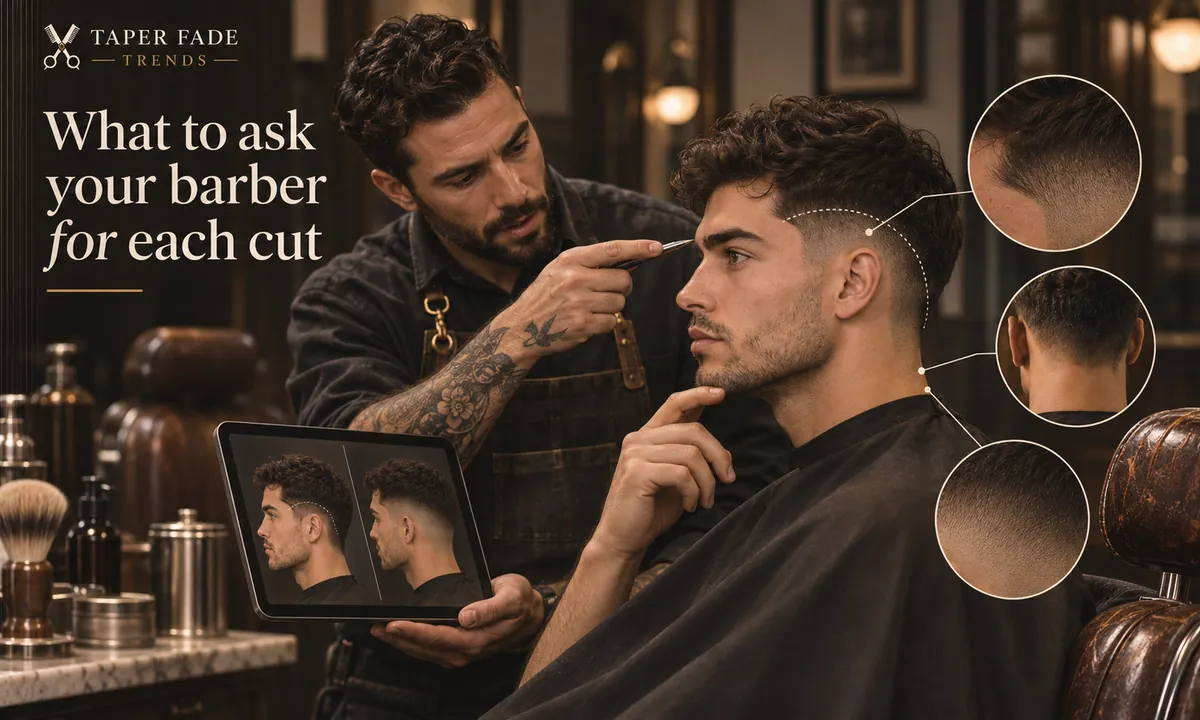
Our clipper guard number chart explains why a number means different lengths on different clippers, and how to ask for a taper fade covers the full consultation.
Bring reference photos of one cut, taken at the same distance and in the same light:
- Front
- Left side, ear visible
- Right side, ear visible
- Straight back, nape visible
Make the words and the photo agree. Guides split on which one a barber follows when they don’t: BarberLaunch says the picture, Hairstyle Atlas says the word. A mid taper request with a mid fade photo is a coin toss.
Mid taper request
“Mid taper, please. Start it around here [point to the temple]. Keep the short work at my sideburns, around my ears and at the nape, and leave the side panel full above and behind my ears. Take the bottom to [a shadow / skin]. Keep the top as it is, with a natural neckline.” Then ask the barber to say back which areas they will blend.
Mid fade request
“Mid fade, please. Start it around here [point to the temple]. Take the short zone across the sides and around the back, and blend it into the top with no hard line. Take the bottom to [skin / a shadow]. Keep the top as it is.” Before the cape comes off, check the back in a hand mirror: the fade should wrap the back at the height you pointed to.
Limits, method and sources
A reference photo shows an outline, not the guard, blade or lever behind it. It can’t show the other person’s density or curl shrinkage, lighting can change how much contrast shows, and a side view hides the back. Use photos to show the result, and let the barber choose the settings.
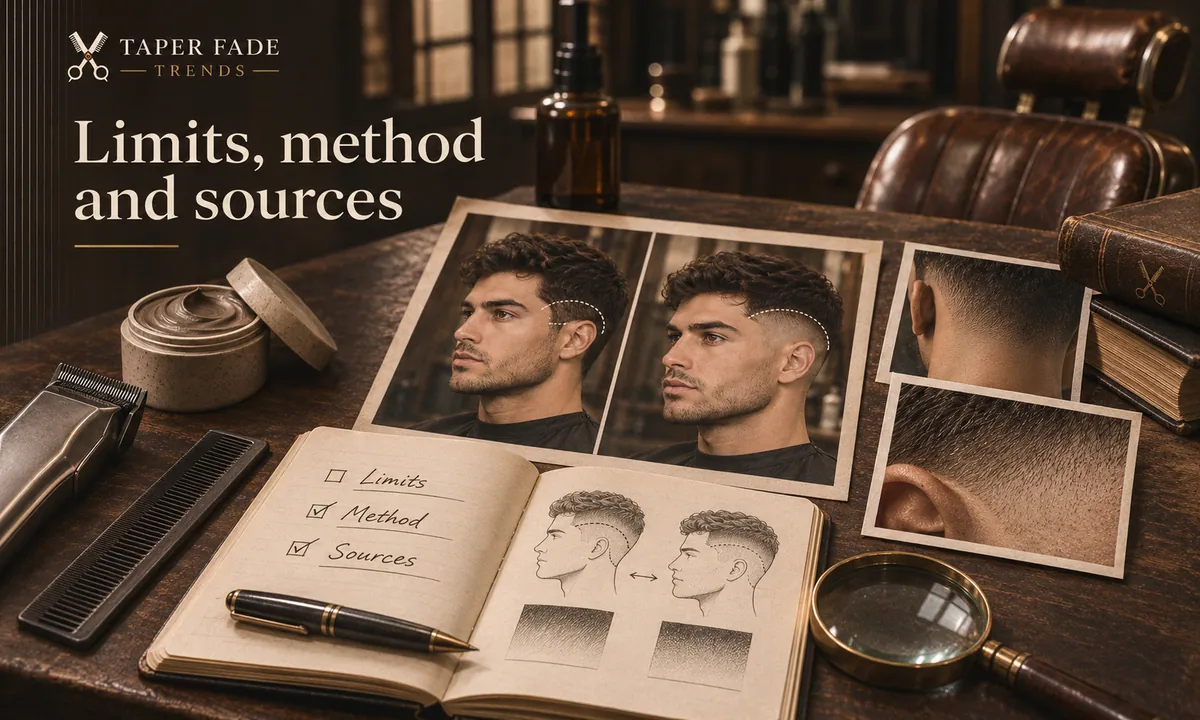
Taper Fade Trends Editorial wrote this comparison to help readers say how much side and back hair should come off before a barber visit. We compared current comparison guides, a New York barbershop’s guide and a barber academy’s technique article, all viewed on October 22, 2026, and stated the disagreements instead of picking a side.
We did not cut or photograph either style for this page. The figures are labeled AI-generated illustrations of the zones those sources describe, not photographs of a haircut, and no barber has reviewed this page yet. If something here is wrong, our editorial policy explains how we correct it.
Sources:
- BarberLaunch: Mid taper fade vs mid fade, on coverage, finishes, the back view and taper drift
- Barber.Style: Mid fade vs mid taper, on coverage, straight hair and upkeep intervals
- Hairstyle Atlas: Mid fade haircut, on placement and the word-versus-photo problem
- Jonny the Barber: The mid taper, on the finish convention, placement and upkeep
- CADMEN Barber Academy: How to do a taper haircut, on the taper-versus-fade finish split
- Beard Beasts: Mid taper vs mid fade, on upkeep intervals
For the localized cut on its own, the mid taper fade guide covers finish patterns and styling. For the same choice at other heights, see high taper vs high fade or low taper vs mid taper.
Keep reading
All guides
Mid taper fade: what it is and what to ask your barber
What a mid taper fade is, how it differs from a full mid fade, why skin is optional, and the four specs to give your barber before the cut starts.
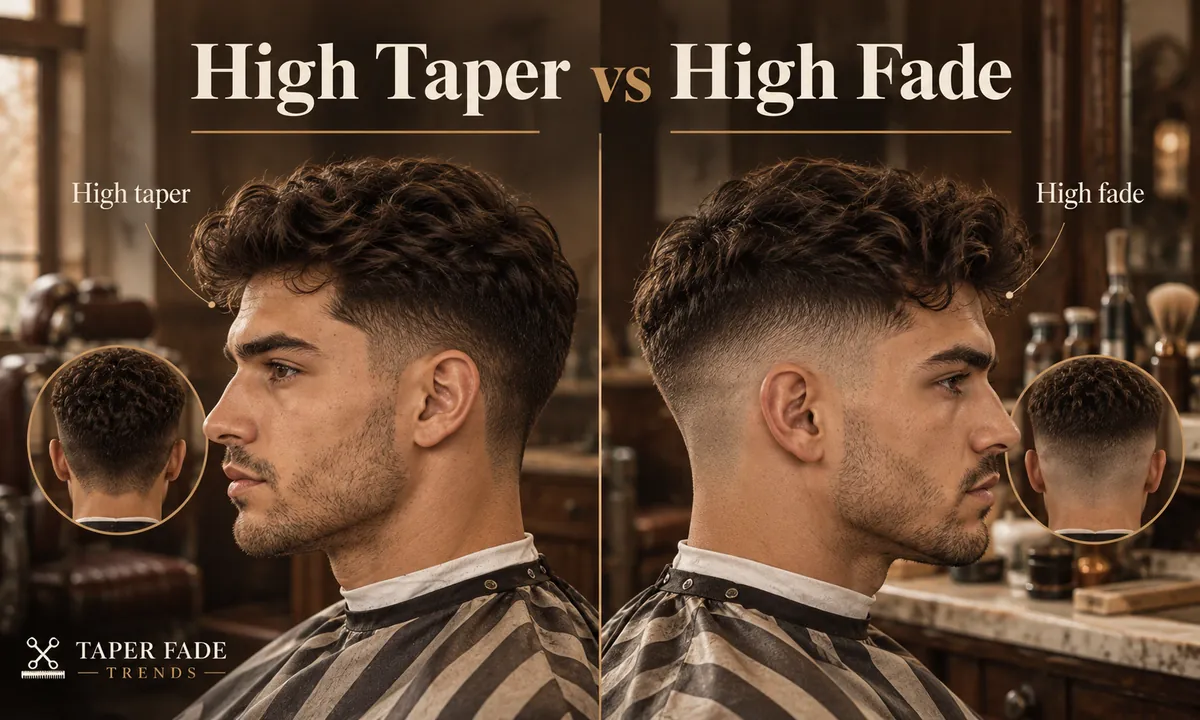
High taper vs high fade: side, back and coverage
High taper vs high fade compared by side weight, back coverage and shortest finish, plus why barbers use the names differently and a four-point brief.
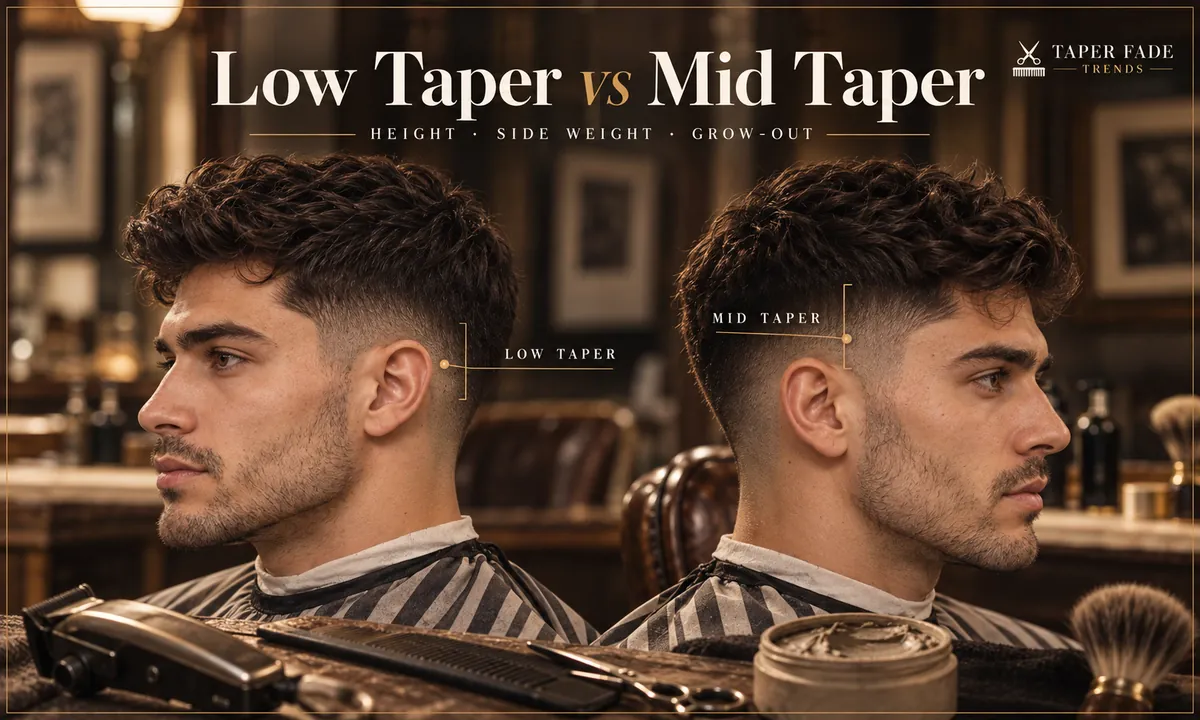
Low taper vs mid taper: what changes when only the height moves
Low taper vs mid taper compared on height, side weight, shortest finish and grow-out, why switching mid to low takes time, and what to tell your barber.
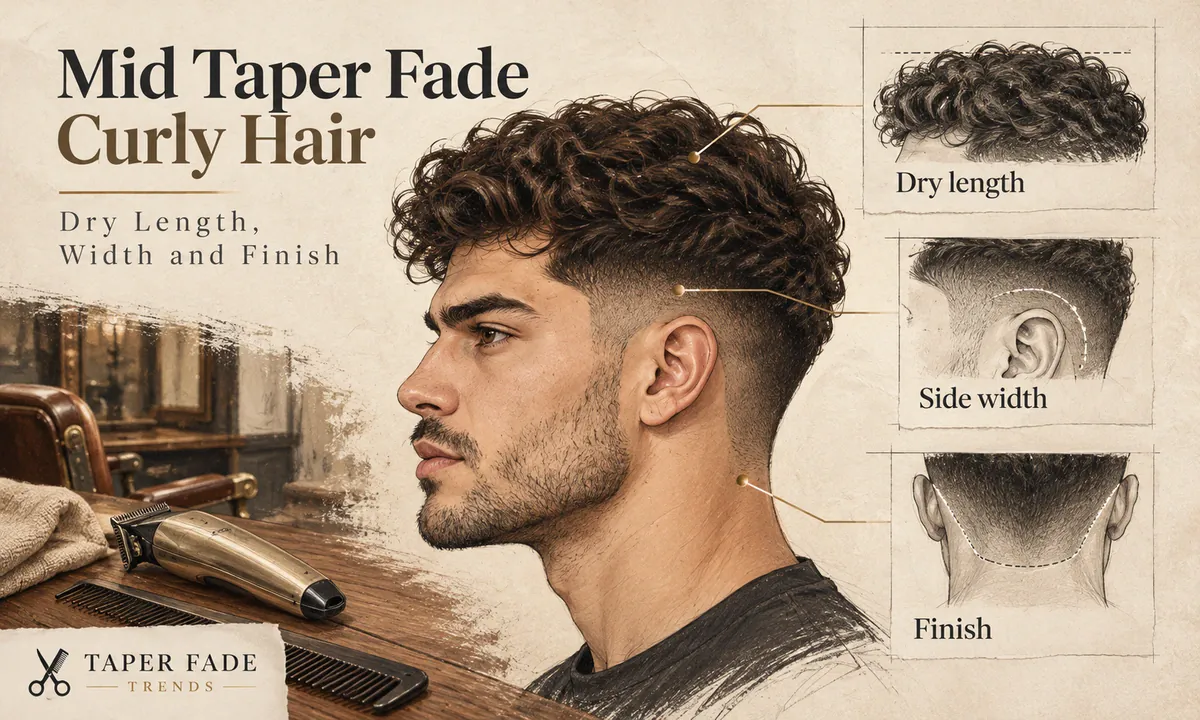
Mid taper fade curly hair: choose dry length, side width and finish
Mid taper fade curly hair guide: what it keeps vs a full mid fade, how to judge dry length and side width, and the four specs to give your barber.
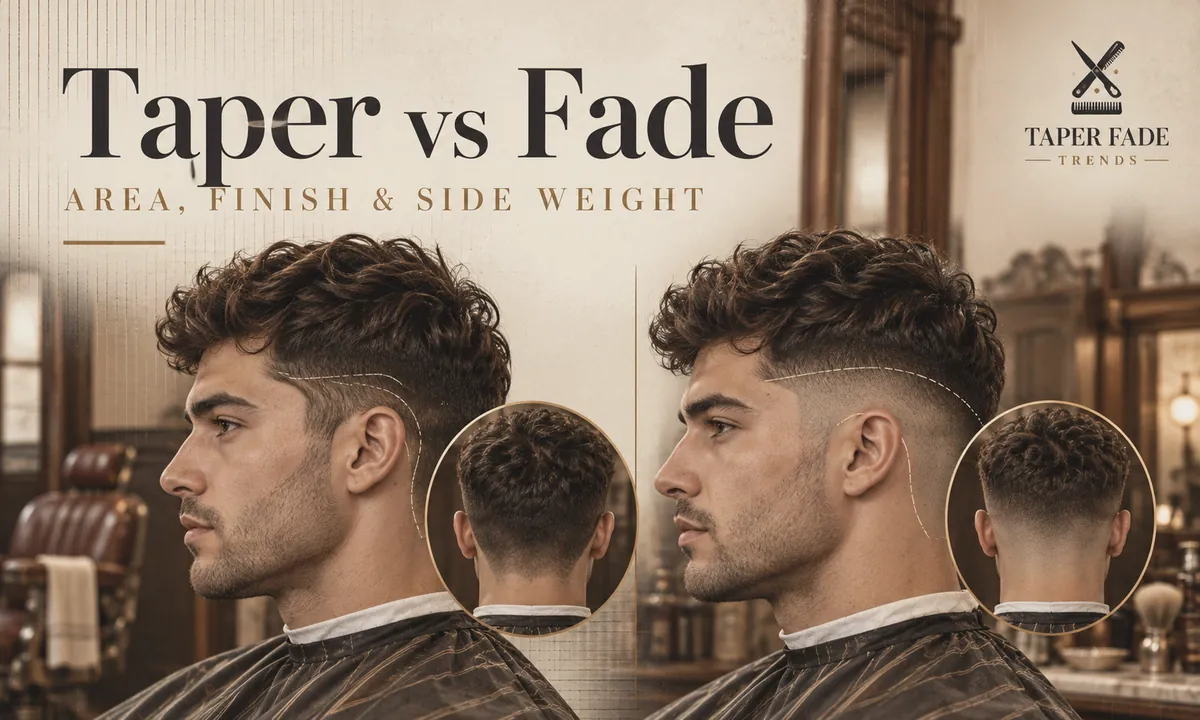
Taper vs fade: what changes in area, finish and side weight
Taper vs fade compared by coverage, height, shortest finish and side weight, with a back-view check and word-for-word barber scripts for either cut.
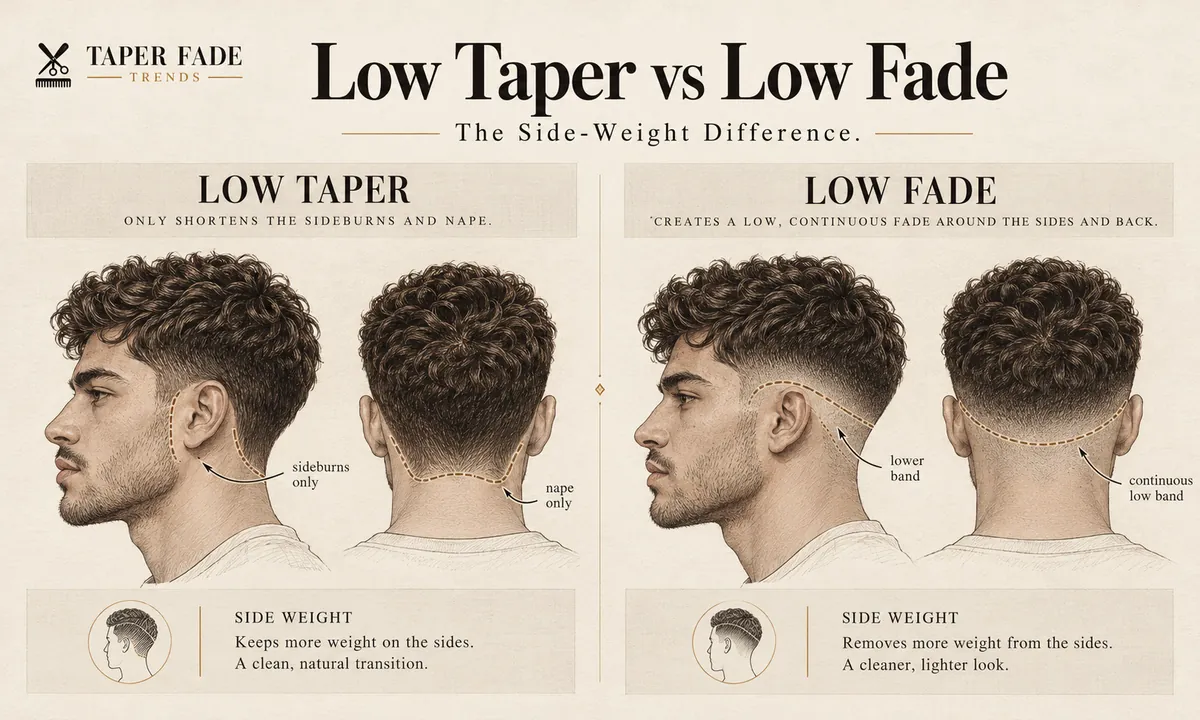
Low taper vs low fade: compare coverage and side weight
Low taper vs low fade: a low taper shortens the sideburns and nape; a low fade shortens a band around the lower sides and back. Compare finish and upkeep.
Mid taper fade waves: preserve 360-wave connections
Mid taper fade waves: where the blend cuts 360-wave connections, low vs mid height, what to tell your barber, and how to keep the taper and the waves.
Mid taper fade wavy hair: work with the natural bend
Mid taper fade wavy hair guide: where the taper starts, how much side weight to keep, why top-length advice conflicts, and what to tell your barber.
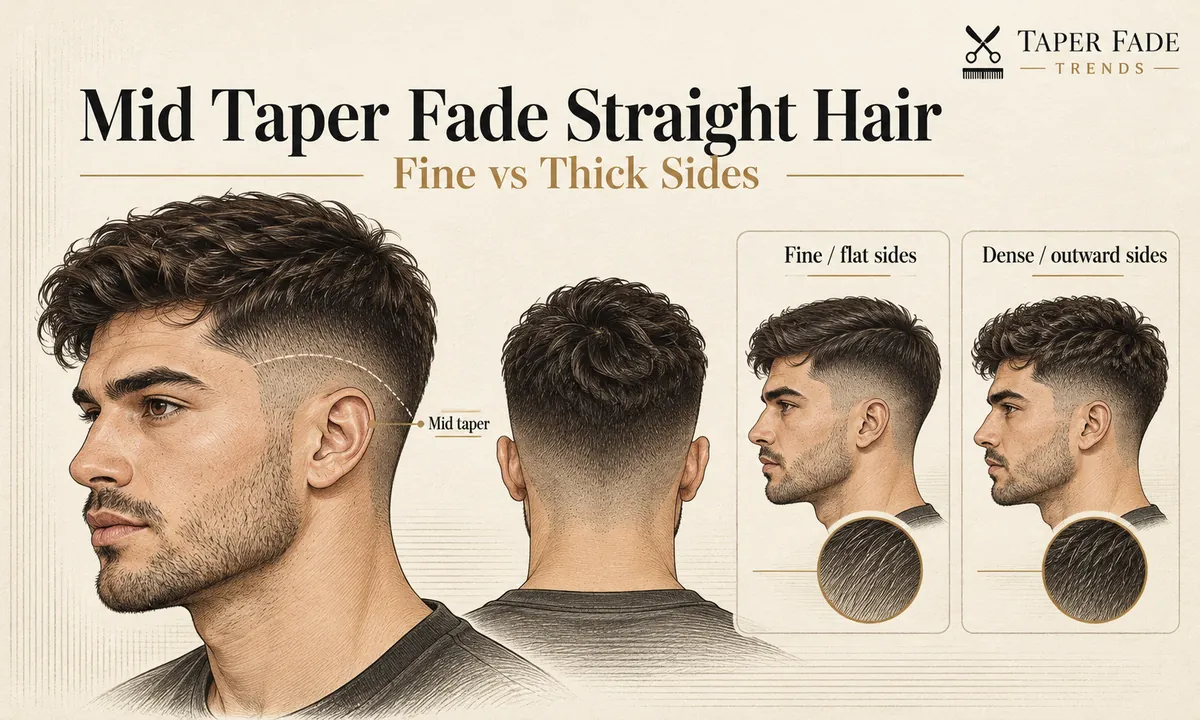
Mid taper fade straight hair: fine, flat and outward-growing sides
Mid taper fade straight hair guide: how much side weight to keep on fine or dense sides, why sides stick out after a cut, and what to tell your barber.
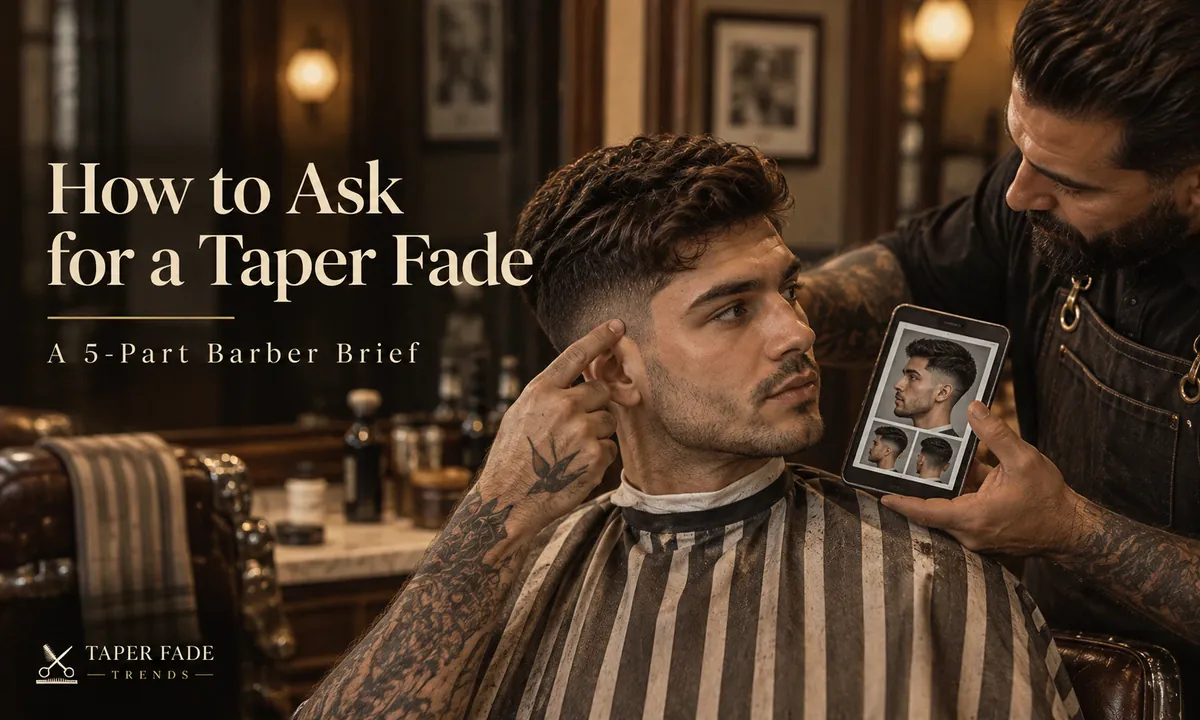
How to ask for a taper fade: a five-part barber brief
How to ask for a taper fade: say where it may reach, how short the base goes, how much side weight stays and what to do on top, then check the plan first.
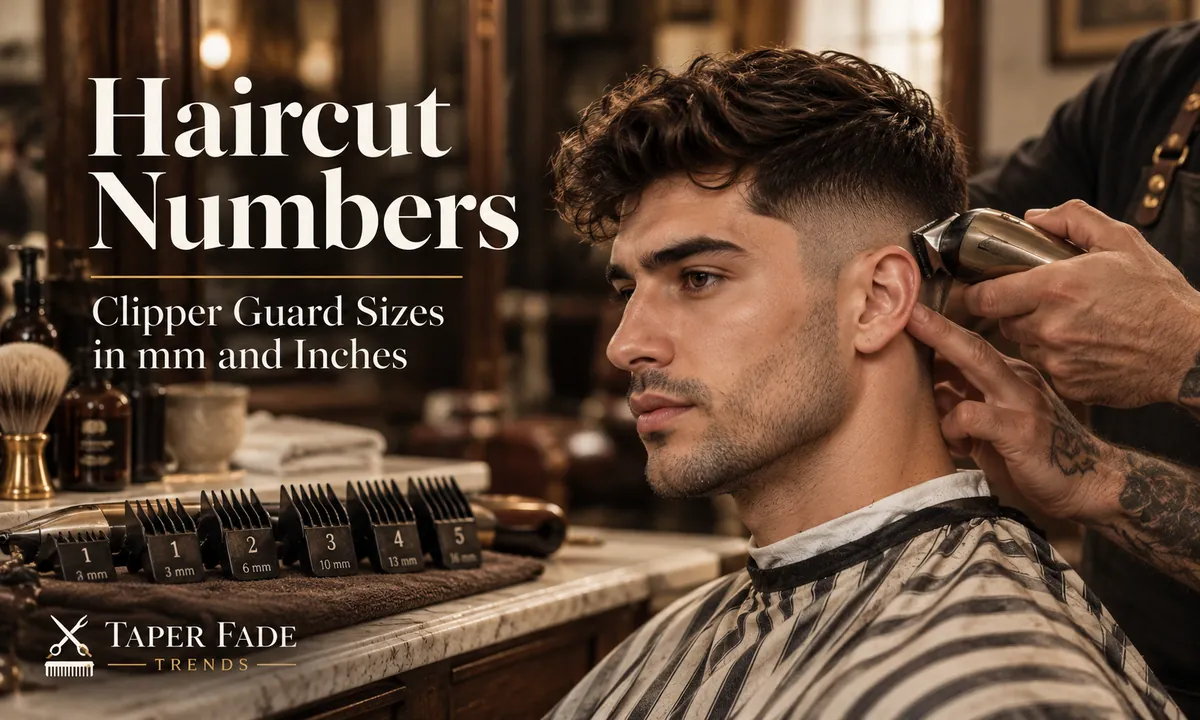
Haircut numbers: clipper guard sizes in millimeters and inches
Haircut numbers in mm and inches, checked against Wahl, Andis and Oster specs, plus why #0 isn’t always no guard and what to tell your barber.
More in taper and fade comparisons
Taper and fade comparisons: all 6- Taper vs fade: what changes in area, finish and side weight10 min
- High taper vs high fade: side, back and coverage8 min
- Low taper vs mid taper: what changes when only the height moves10 min
- Burst fade vs taper: compare the ear arc and nape10 min
- Low taper vs low fade: compare coverage and side weight11 min
- Mid taper vs mid fade: how much side hair comes offYou are here