Burst fade curly hair: keep the curl shape around the ear
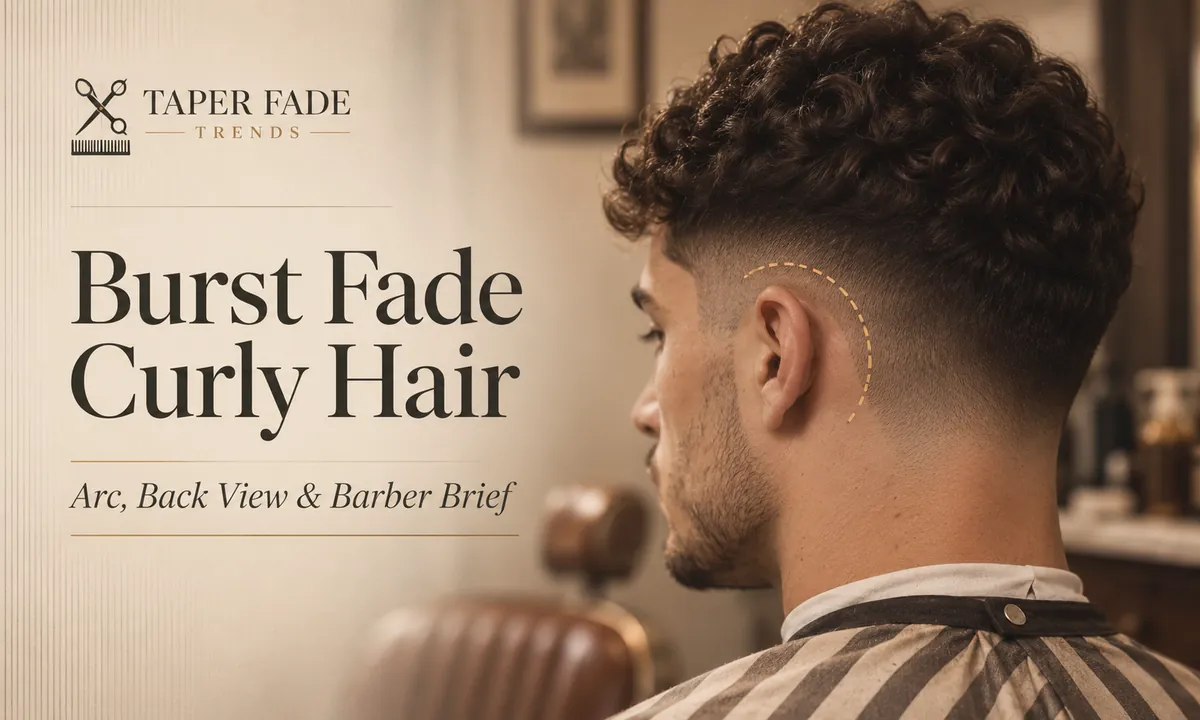
A burst fade on curly hair is a fade shaped as an arc around the ear, with the curls above it and the back decided separately. The arc can end at skin or at a softer shadow. Agree the arc height, how much curl width stays above it once dry, and the nape, then show side and rear photos.
| Spec | What you decide | Range or limit |
|---|---|---|
| Arc path | Where the rounded fade runs around the ear | Close to the ear, or reaching farther behind it |
| Arc placement | How high the arc climbs | Low, mid or high; no standard distance in inches or millimeters |
| Shortest finish | The least hair left at the base of the arc | Skin, zero or shadow |
| Retained side weight | How far the curls reach above the ear when dry | A lower, narrower arc keeps more |
| Top and fringe | The dry shape of the curls on top | Chosen separately from the fade |
| Nape treatment | What happens behind the ear and at the back of the neck | Left natural, lightly tapered or left longer |
| Clipper settings | Guard, blade and lever | The barber’s call; the haircut name does not fix them |
Our burst fade guide covers the three controls every burst needs: arc placement, shortest finish and nape treatment. Curls add a fourth. How much width stays above the arc once your hair dries decides whether the cut looks full or pinched, and the rest of this page is about getting that one right.
Where does the curved fade start and stop?
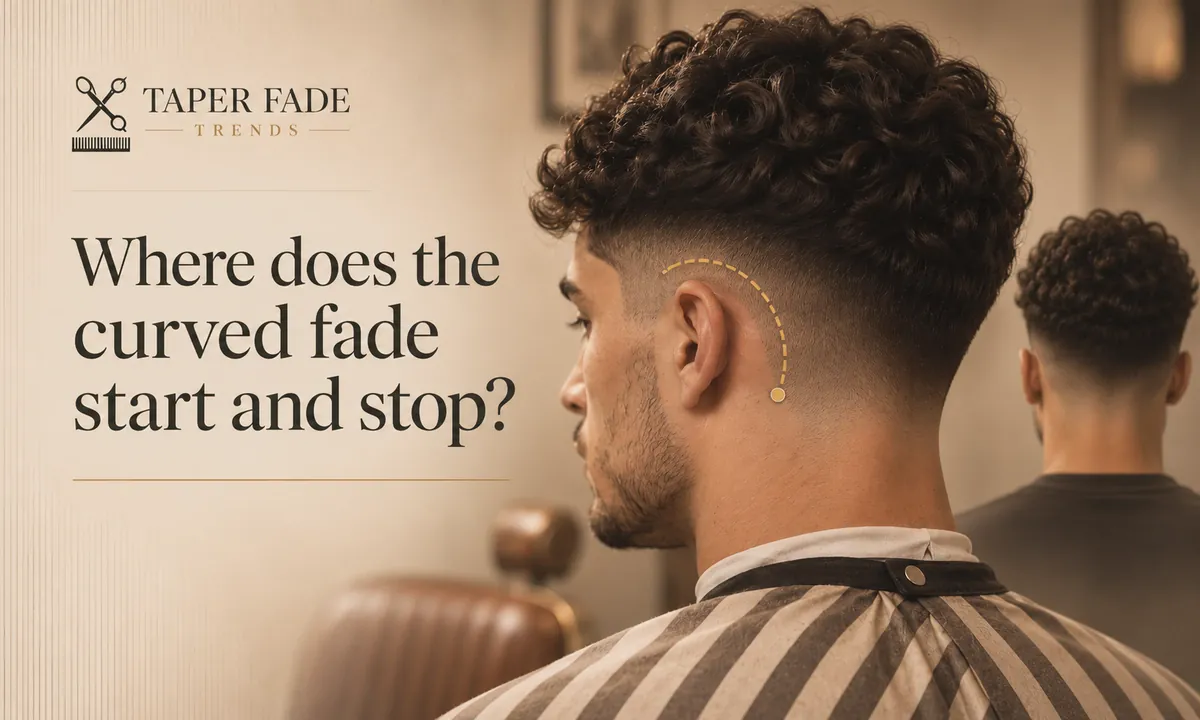
A burst fade on curly hair is defined by a rounded fade around the ear, not by a clipper guard. The arc dips just below the ear and rises in front of and behind it. How high it climbs and how far it reaches behind the ear vary by shop, so agree the endpoint from side and rear photos.
In CADMEN Barber Academy’s method, barbers draw the arc before blending: about 1 to 1.5 inches above the ear at the front, down to just below the lobe, and back up 1 to 1.5 inches behind it. That is one school’s starting point. Other shops size the arc differently.
Low, mid and high have no fixed measurement either. New York Master Barbers suggests using your ear as the ruler, for example asking for the arc to stop about an inch past it. On the rear photo, point to where the short hair should end. That spot is the specification; the name is not.
How much curly weight stays above the ear?
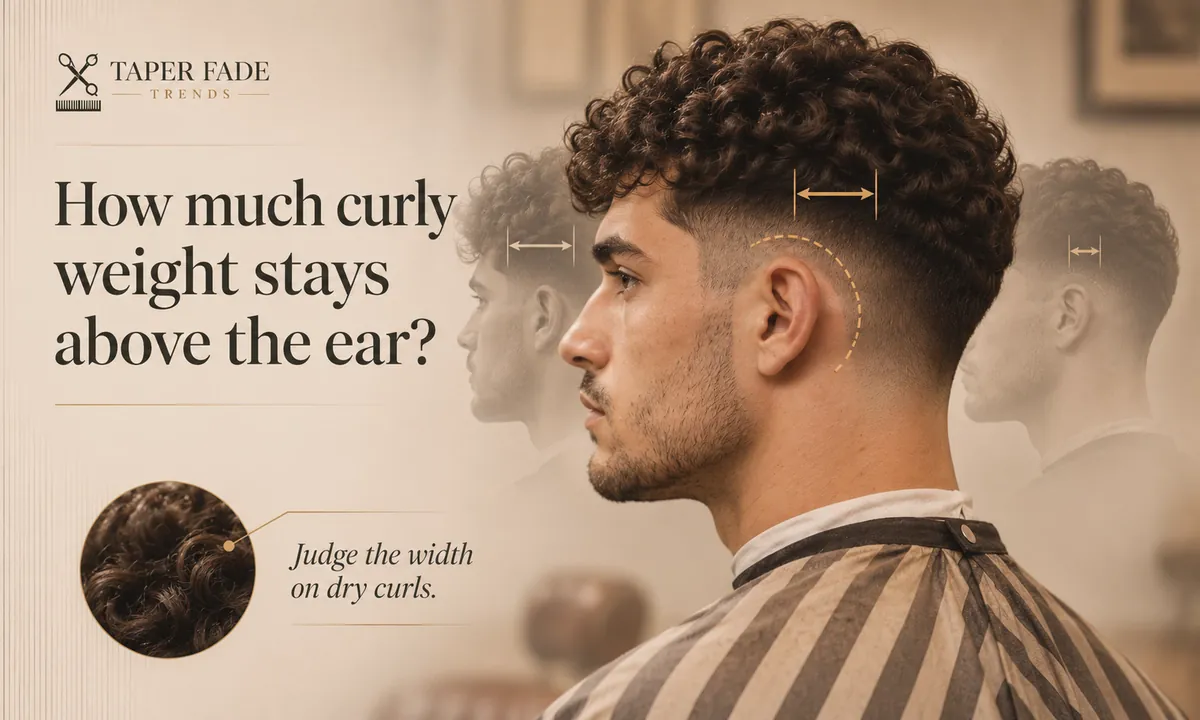
Retained side weight is the curl you keep above a burst fade, and it should be judged on dry hair. A lower, narrower arc leaves more of it; a higher or wider arc removes more and narrows the curly silhouette. Density and growth direction change how one outline sits, so copy a reference shape, not a setting.
Curls shrink as they dry, by an amount that varies from head to head. No percentage applies to everyone, which is why a wet or stretched check can mislead.
The clipper side has a curl-specific catch too. New York Master Barbers notes that the same guard reads shorter on curly hair than on straight hair, because scalp shows between the coils, and suggests asking for one guard longer than you would on straight hair, then judging it dry.
Can the burst finish without bare skin?
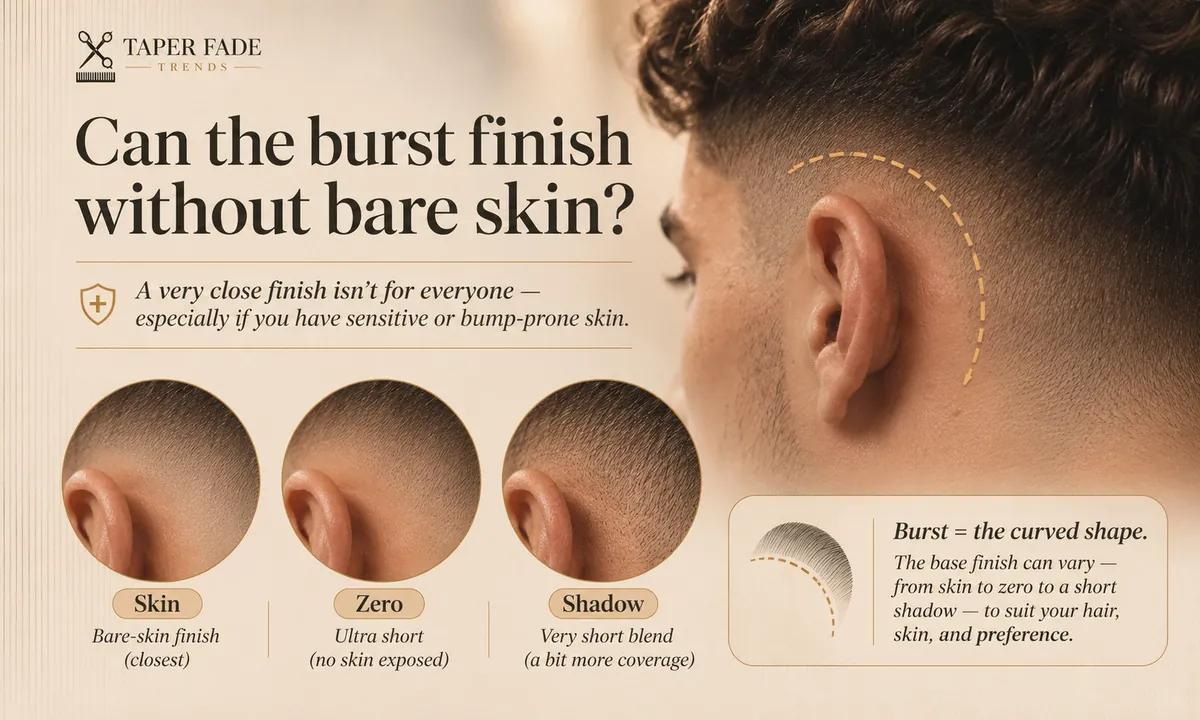
Yes. A curly burst fade does not have to reach skin. “Burst” names the curved shape around the ear, while skin, zero or shadow names the shortest finish, and any of them can sit under any arc height. A shadow keeps visible very short hair and a softer contrast. Confirm both choices before the first pass.
| Finish | What is left at the base | Contrast with the curls |
|---|---|---|
| Skin | Bare scalp | Strongest |
| Zero | A trace of stubble | Strong |
| Shadow | Visible very short hair | Softest |
“Zero” is the one to pin down. A #0 is often a 1/16-inch attachment, while “no guard” means the bare blade sets the length, so ask which one your barber means. Guard numbers also differ between brands at some sizes; the clipper guard numbers guide lists them in millimeters and inches.
When should you avoid a very close finish?
If bumps that look like acne or razor bumps keep appearing at the nape or along the arc, the American Academy of Dermatology advises seeing a board-certified dermatologist when you notice them. One cause, acne keloidalis nuchae, tends to worsen without treatment. Tell your barber before the next cut. This is general information, not a diagnosis.
What should the back and nape show?
From behind, a curly burst fade should show where the ear arc ends and how much curl stays through the crown and nape. The nape can stay natural, take a light taper or be left longer. A side photo hides this choice, so bring a rear photo and say whether the curls stay full at the neck.
Sources split on the back. New York Master Barbers treats an untouched nape as the defining feature and calls a faded nape a drop fade. CADMEN tells barbers to ask first, because some clients want the back faded to connect and others want it softer. If you want the version every source calls a burst, ask for the nape untouched, in a sentence of its own.
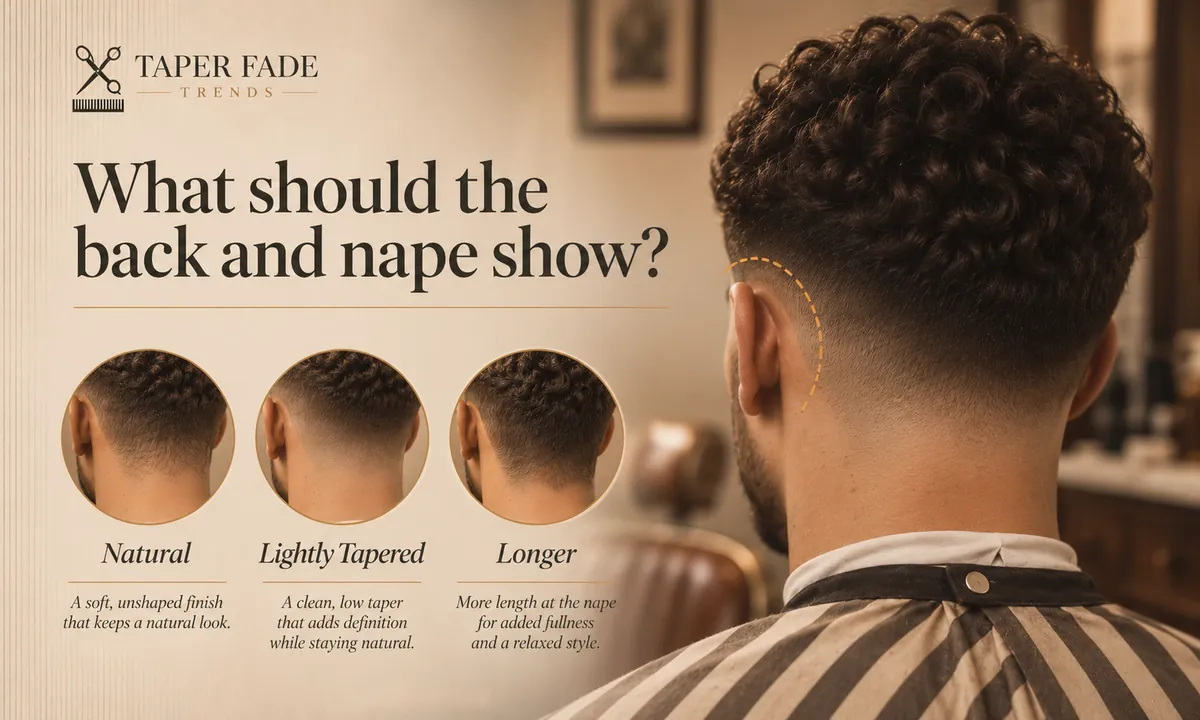
With the arc and back settled, the next question is how your curls carry that shape.
Which curl characteristics change the result?
Density, curl width, shrinkage and growth direction change how a curly burst fade sits. A reference photo will not transfer unchanged between loose curls and tight coils, or between sparse and thick hair, and no single top length fits every curly silhouette. Have the barber look at your curls dry before choosing the arc.
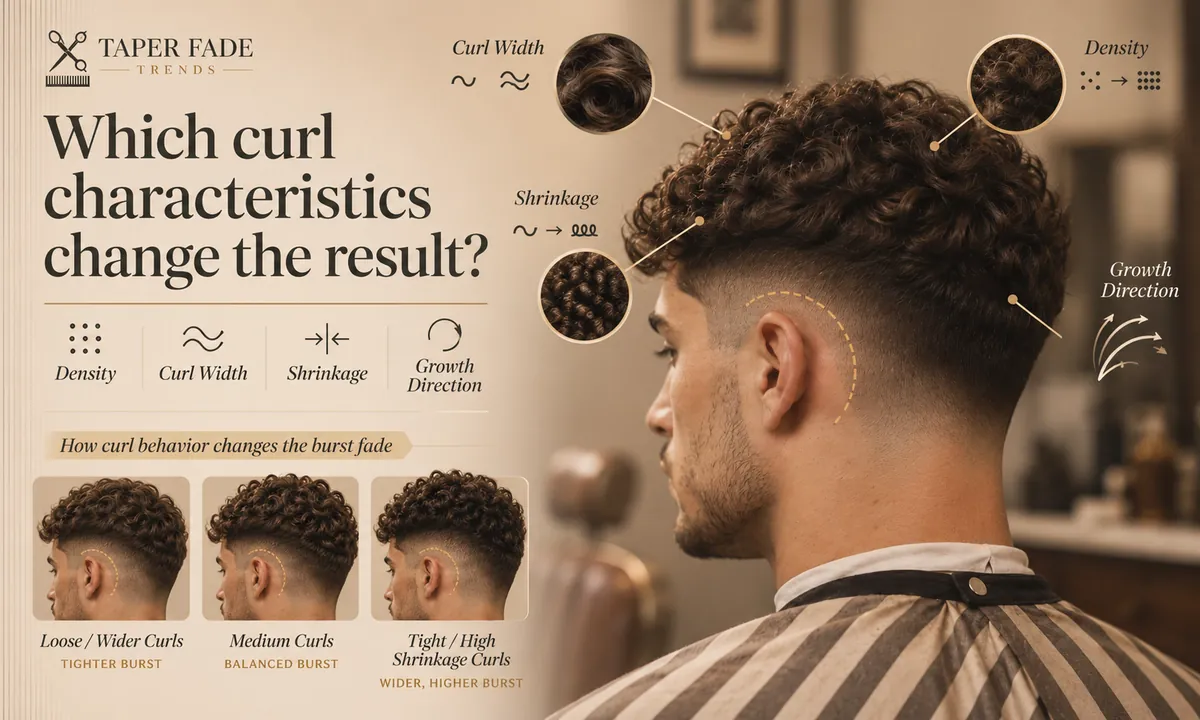
- On fine hair, New York Master Barbers notes, scalp can show in a ring around the arc. A lower arc or a shadow finish leaves more cover.
- Loose curls and tight coils clump differently, so the edge of the retained side weight can look different at the same arc.
- A cowlick or a swirl at the crown can change where curls fall near the arc. Point yours out before the cut.
Ask whether the plan is based on your dry length or your stretched length. The answer changes how much comes off the top.
Four distinct curly burst fade shapes
Compare curly burst fades by what visibly changes, not by trend names. A low shadow burst keeps the most retained side weight, a mid burst shows a clearer arc, a high skin burst keeps the least, and a long-back version keeps curls at the nape. Check a side and a rear view of any example before copying it.
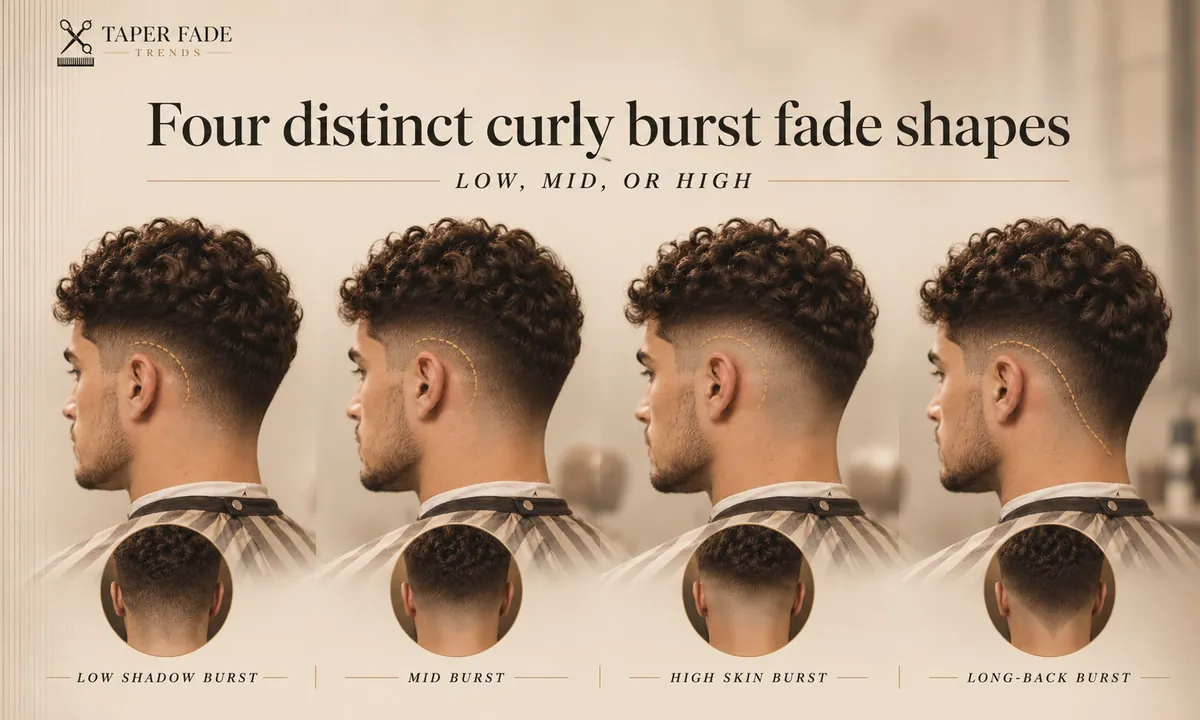
| Shape | Example controls | Change from the low shadow | Pick it when |
|---|---|---|---|
| Low shadow burst | Low arc, shadow, natural nape | Baseline: widest curls, softest contrast | Width matters most |
| Mid burst | Mid arc, shadow, natural nape | Arc only: clearer curve, less side weight | You want the arc visible and some width |
| High skin burst | High arc, skin, natural nape | Arc and finish: strongest contrast, narrowest curls, regrowth shows sooner | Contrast matters more than width |
| Long-back burst | Low arc, shadow, longer nape | Back only: curls stay full at the neck, closer to a burst fade mullet profile | You want a fuller back |
These are example specifications, not clipper settings.
Low, mid or high?
Pick a low burst fade when keeping curl width at the sides matters most. A mid burst shows a clearer arc and takes less side hair than a high one. A high burst gives the strongest contrast and the narrowest silhouette. Arc height does not set the shortest finish, so any of the three can end at skin or shadow.
The low burst fade guide covers the low version on its own.
What should you tell the barber?
Ask for a burst fade that curves around your ear, then state the arc placement, the shortest finish and how much retained side weight stays above it. Say whether the nape stays natural, takes a light taper or stays long, and show side and rear references. Ask the barber to check your curls dry first.
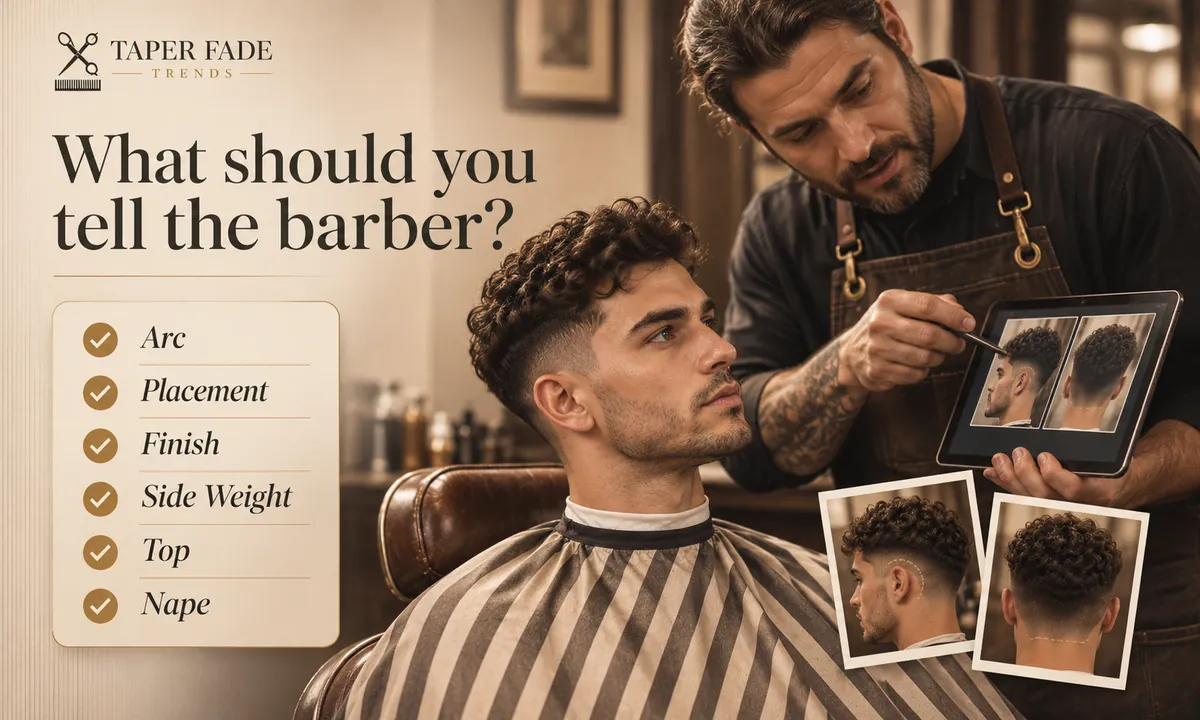
Say these six things in this order:
- Arc: a fade curving around the ear, ending where your rear photo shows.
- Placement: low, mid or high, measured against your ear.
- Shortest finish: skin, zero or shadow.
- Side weight: how full the curls stay above the ear when dry.
- Top: the dry length and shape of the curls and fringe.
- Nape: natural, lightly tapered or longer.
Bring both side profiles, a three-quarter view and a rear view, ideally of dry curls on hair close to yours in texture and density. New York Master Barbers points out that a plain side profile often hides a burst, which reads best at three-quarters. A photo shows the outline. It cannot show the guard, blade or lever, so leave those to the barber, and ask them to repeat the plan back before the first pass. The how to ask for a taper fade guide has the general request structure.
Common mismatches and what to ask for next time
| What you see | Likely cause | Ask for next time |
|---|---|---|
| The arc looks flat, like a high fade | Arc drawn too flat (CADMEN lists this as a common mistake) | A rounder arc centered on the ear |
| One side sits higher | Uneven arcs (CADMEN’s other common mistake) | A mirror check of both sides before you leave |
| The back is faded short | Fade carried through the nape | “Don’t fade the nape,” said separately |
| Curls look pinched above the ear once dry | Arc too high or wide, or cut from stretched length | A lower arc, judged on dry curls |
| Scalp shows through the sides | Guard too short for curly hair | One guard longer than on straight hair |
With the shape agreed, the curls on top and the arc around the ear need different care as the cut grows in.
How do you style the curls?
Style a curly burst fade by working only on the curls above the arc; the faded area needs no styling. The American Academy of Dermatology’s curly hair care tips cover what matters between cuts:
- Wash only when needed. The AAD says thick curly hair does not need daily or even weekly washing, but recommends washing at least every 2 to 3 weeks.
- Condition all of the hair, not just the ends, then add a leave-in conditioner or oil after washing.
- Detangle wet, with leave-in conditioner and your fingers or a wide-toothed comb. Brushing dry curls leads to breakage and frizz.
- Expect trial and error with products. The AAD notes it is often needed to find a routine that suits your curls.
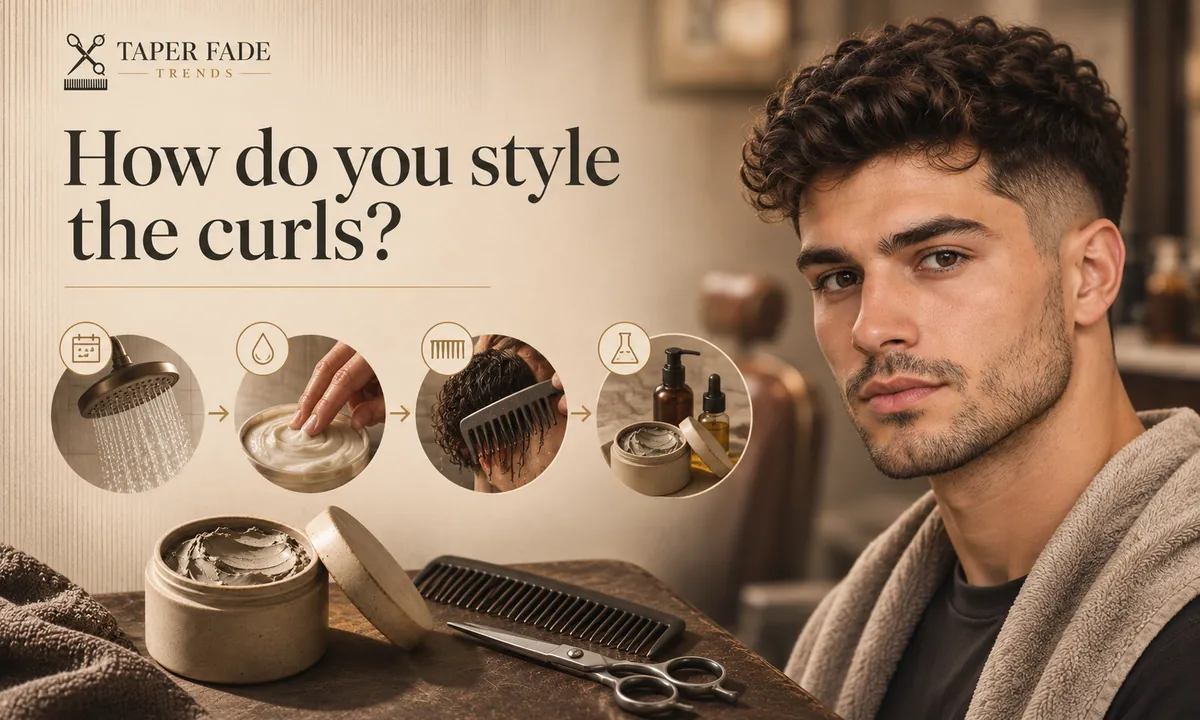
Styling changes how curls sit. It cannot move the arc or change how much hair stays above it, so a result that is too wide or too narrow is a conversation for the barber.
What changes as the cut grows out?
A curly burst fade loses contrast around the ear first, while the curls on top may hold their shape longer. New York Master Barbers puts a burst’s life at two to three weeks, but a skin finish and a high arc blur sooner and a shadow lasts longer. Refresh the arc when its edge blurs; reshape the top separately.
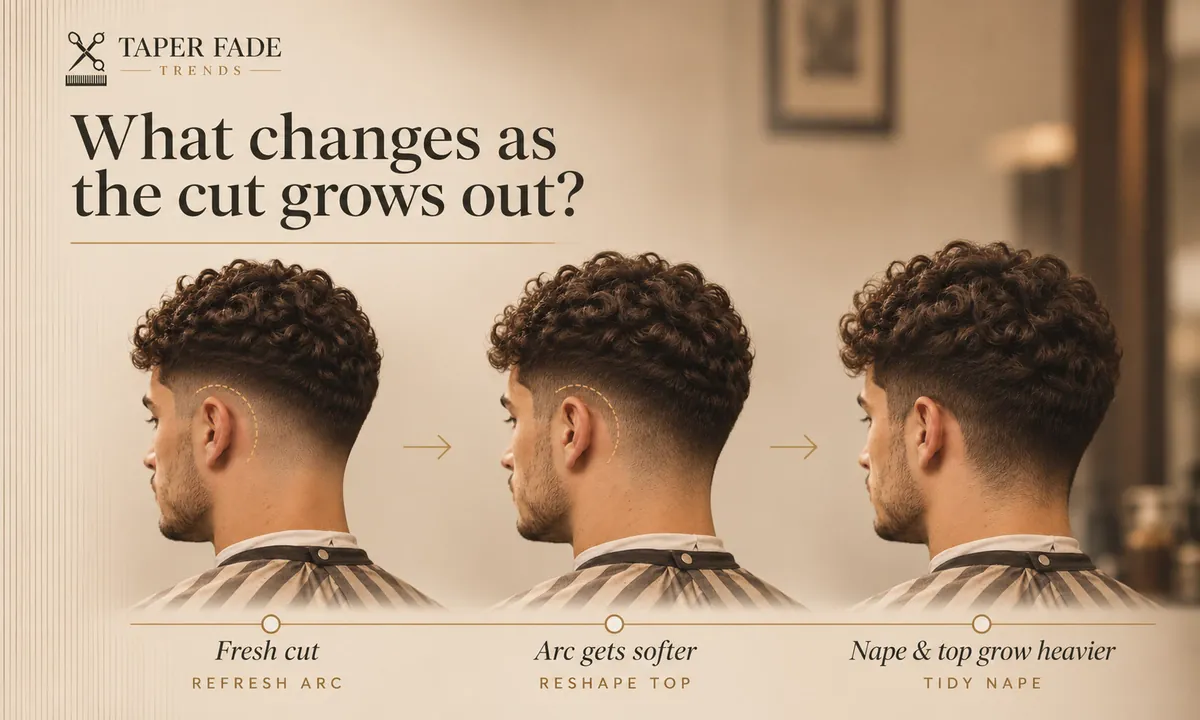
| What you notice | What has changed | What to ask for |
|---|---|---|
| You can’t see where the arc ends | Short hair around the ear has grown in | An arc refresh only |
| The arc is clear but the top has lost its shape | The curls have grown past your shape | A reshape of the top, arc untouched |
| The nape looks heavy or uneven | The neckline has grown out | A nape tidy that keeps your chosen nape treatment |
If you are growing the back out, skip neckline cleanups between cuts. The how to maintain a taper fade guide covers general upkeep between appointments.
When is another fade a better choice?
Choose a drop fade if you want the fade to continue across the back to a faded nape. Choose a burst fade if you want the curve concentrated at the ear with curl left at the back. Some shops use the names loosely, so compare rear photos and point to where the short hair must stop.
A drop fade is a fade whose lower curve continues across the back instead of concentrating around the ear.
| Criterion | Burst fade | Drop fade |
|---|---|---|
| Defining curve | Around the ear | Lowers behind the ear and keeps going |
| Nape | Usually left long | Faded |
| Confirm with the barber | Where the arc stops behind the ear | How far down and across the back it runs |
A taper is the third option. A burst taper is an inconsistently used term; verify the requested perimeter coverage and shortest finish instead of treating it as a universally standardized cut. Burst fade vs taper compares the two by ear arc and nape, and the curly low taper fade guide covers keeping curl width with a taper instead.
How this guide was checked
Taper Fade Trends Editorial prepared this guide by comparing a barber school’s technique notes and a working barbershop’s style guide with our own burst fade and curly taper guides, then checking hair-care and scalp points against the American Academy of Dermatology. Sources were read on November 4, 2026.
Every image is a labeled illustration of a possible placement, not a photo of a cut we documented. No barber has reviewed this page yet; if one does, their name and the review date will be added here. Burst fade, burst taper and drop fade are not standardized terms, so the definitions describe common usage. Found an error? Our editorial policy explains how corrections are made.
Sources:
- CADMEN Barber Academy: Burst fade, what it is and how to cut it
- New York Master Barbers: Burst fade, what it is and what to ask for
- American Academy of Dermatology: 6 curly hair care tips from dermatologists
- American Academy of Dermatology: Acne keloidalis nuchae overview
- Taper Fade Trends: Haircut numbers
Take the side and back brief to your barber
Save your side, three-quarter and rear references, write down the six points, and agree the plan before the clippers start. If you are still choosing the fade itself, the burst fade guide sets out all three controls on any hair type.
Keep reading
All guides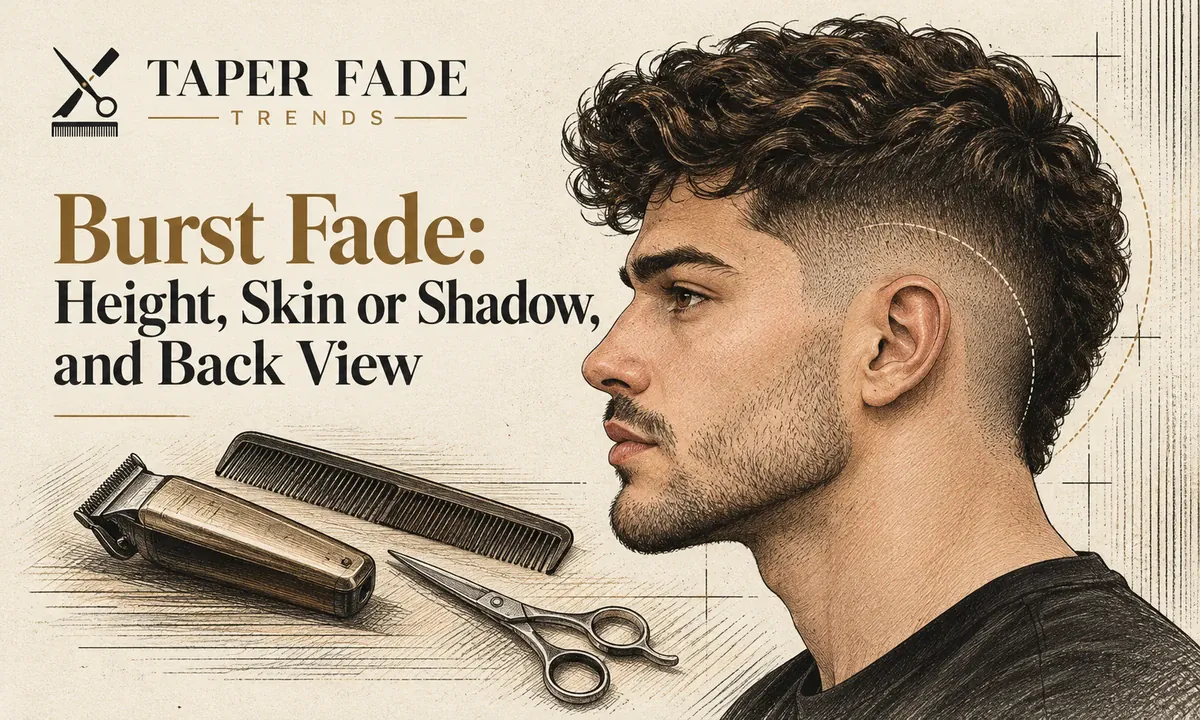
Burst fade: arc height, shortest finish and back view
A burst fade curves around the ear. It doesn’t have to reach skin, and the back is a separate choice. See the three controls and what to tell your barber.
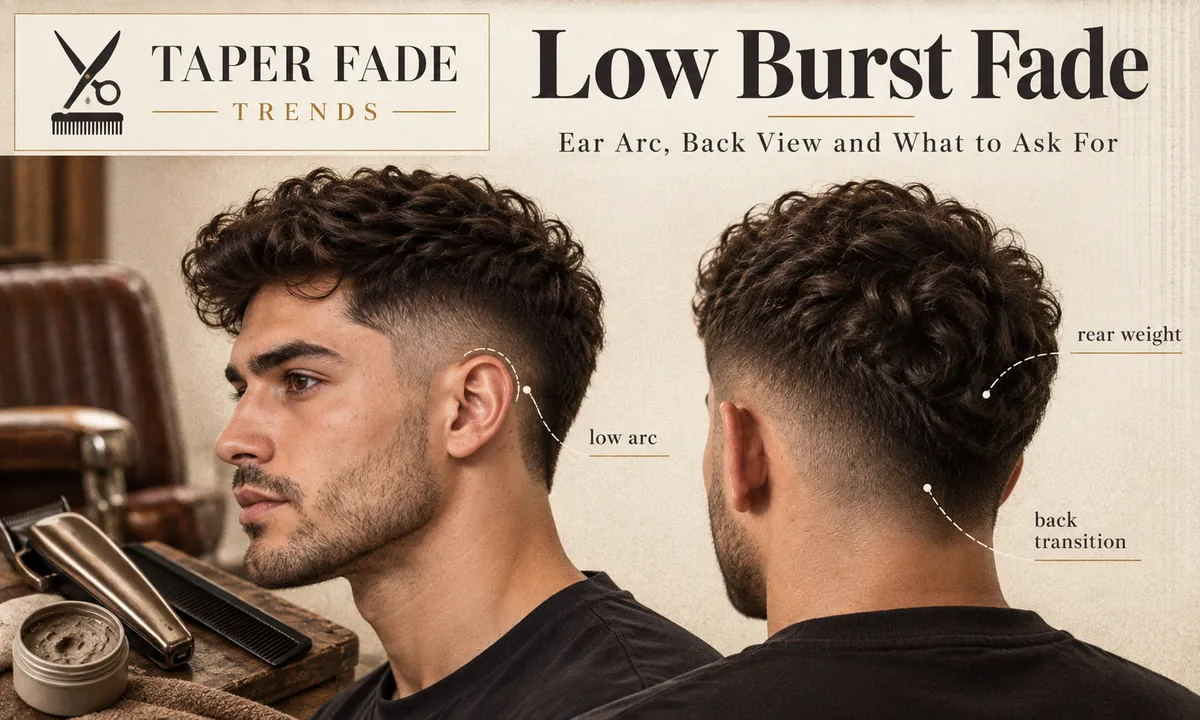
Low burst fade: the low ear arc and back transition
A low burst fade curves low around the ear and can keep length at the back. Compare skin vs shadow, burst vs drop fade, and what to tell your barber.
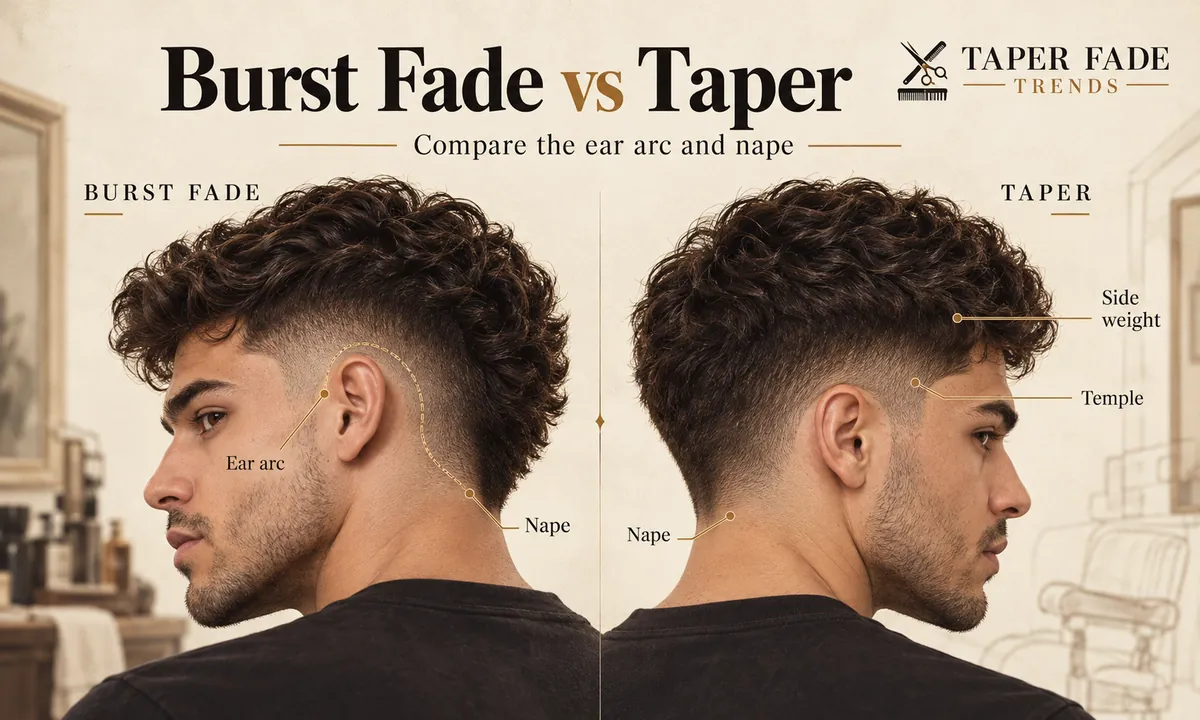
Burst fade vs taper: compare the ear arc and nape
Burst fade vs taper compared by ear arc, side coverage, nape treatment and shortest finish, plus a five-part barber brief and the photos to bring.
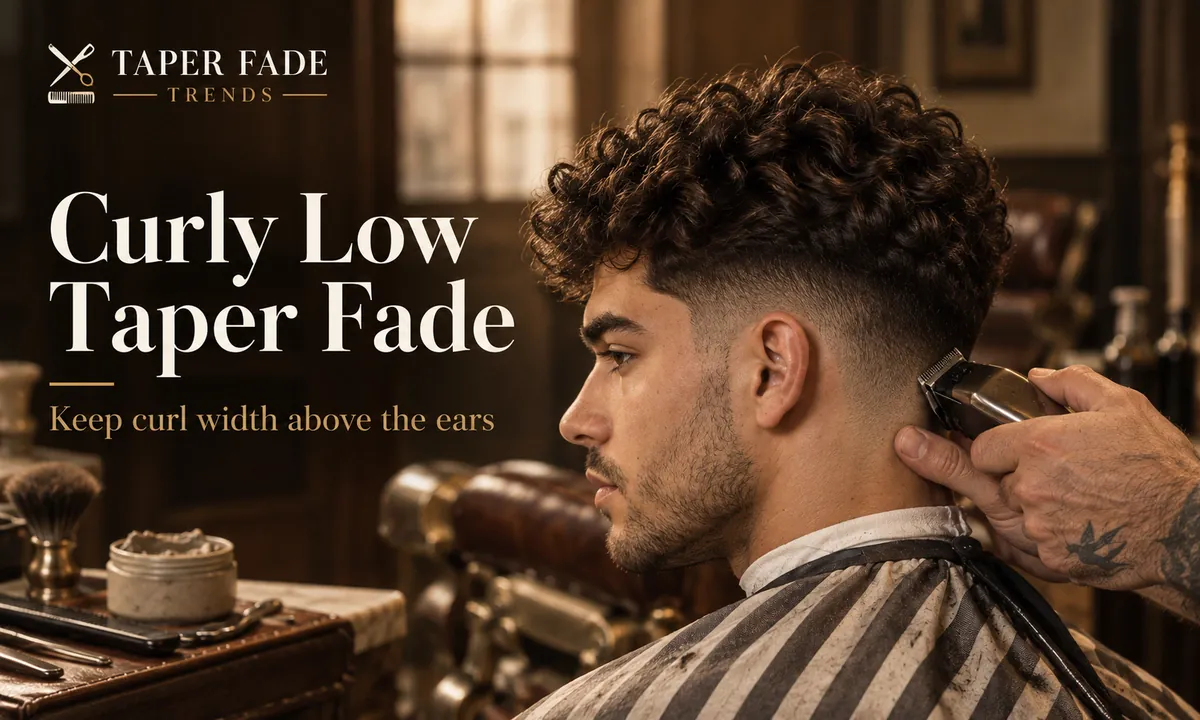
Curly low taper fade: keep curl width above the ears
A curly low taper fade cleans the temples, sideburns and nape but keeps curl width above the ears. What to decide, check dry and tell your barber.
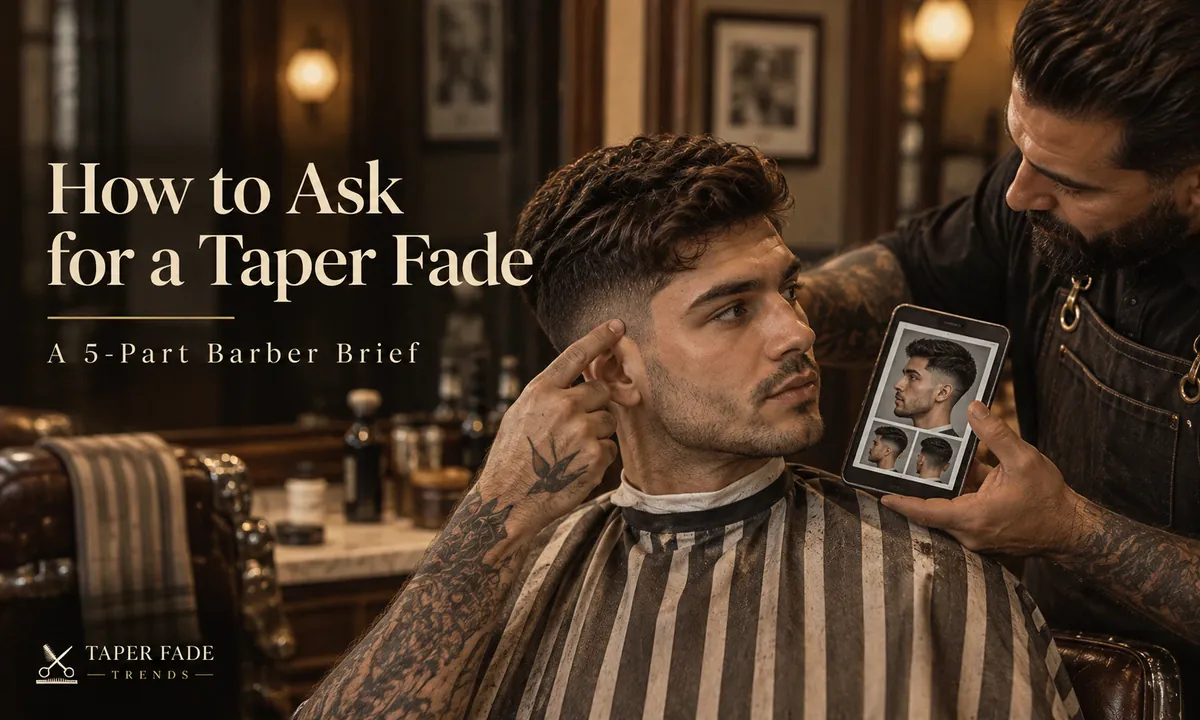
How to ask for a taper fade: a five-part barber brief
How to ask for a taper fade: say where it may reach, how short the base goes, how much side weight stays and what to do on top, then check the plan first.
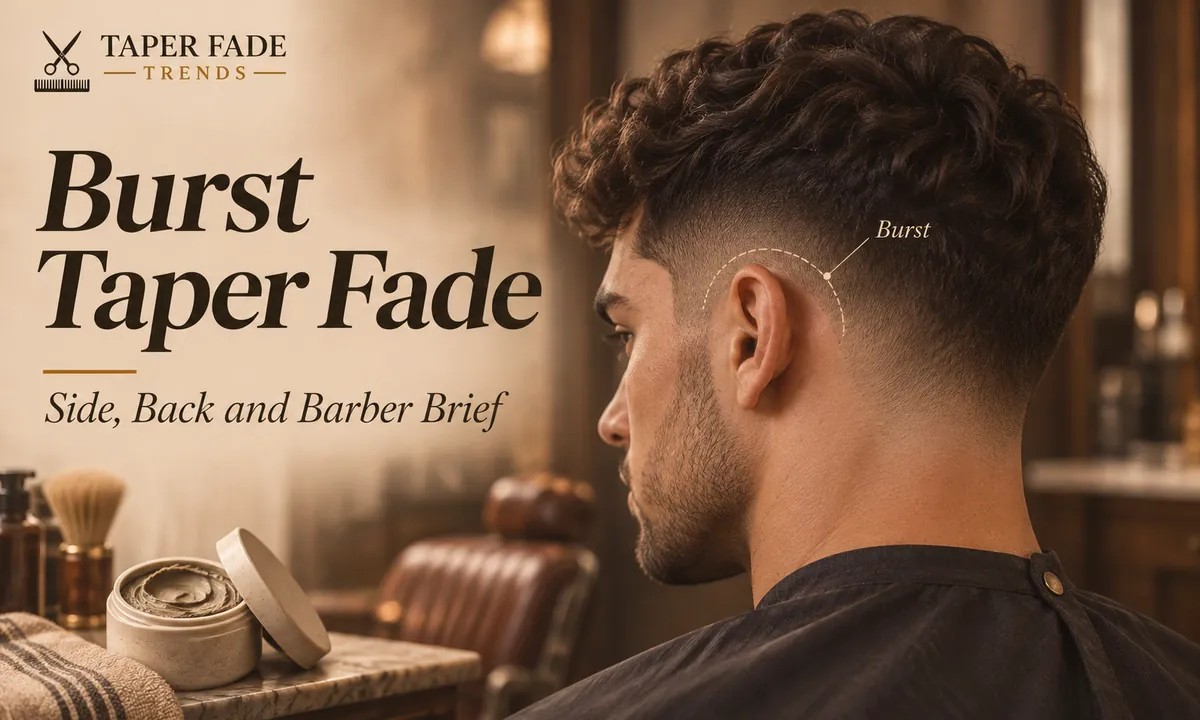
Burst taper fade: what the side and back should show
A burst taper fade curves around the ear and tapers the edges. See what the side and back should show, and the five-part brief to give your barber.
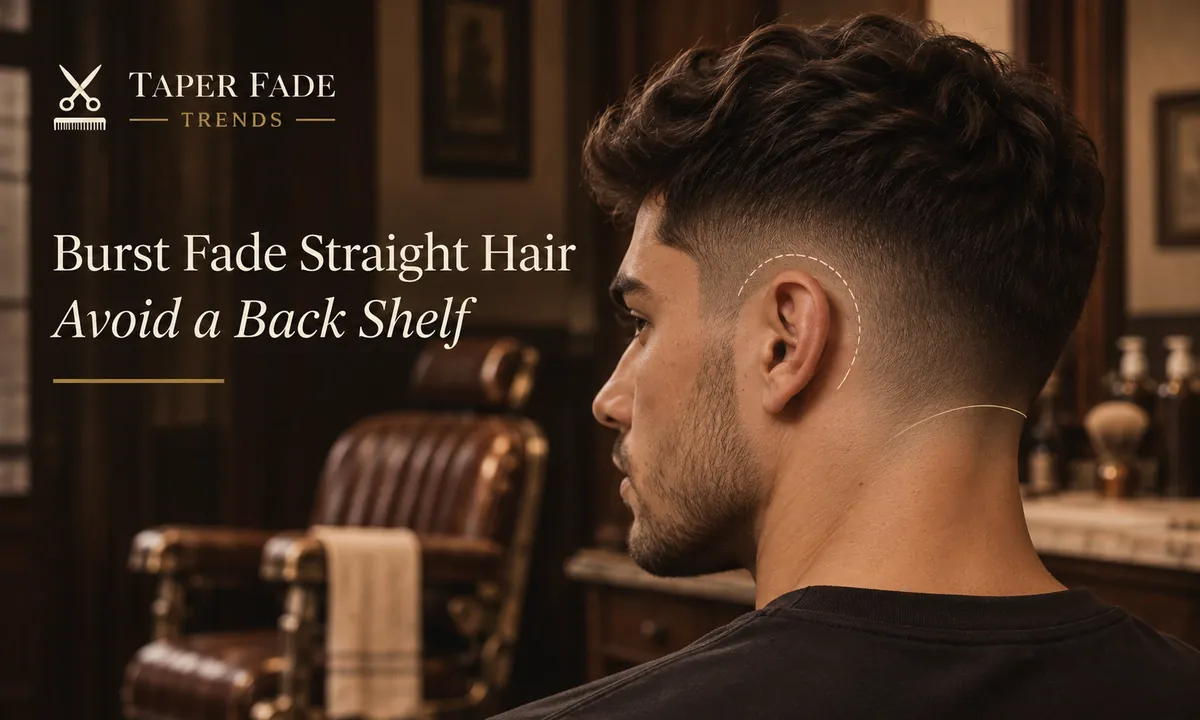
Burst fade straight hair: avoid a disconnected-looking back
A burst fade on straight hair shows every step. See where the ear arc should stop, how the crown connects, and what to tell your barber to avoid a shelf.
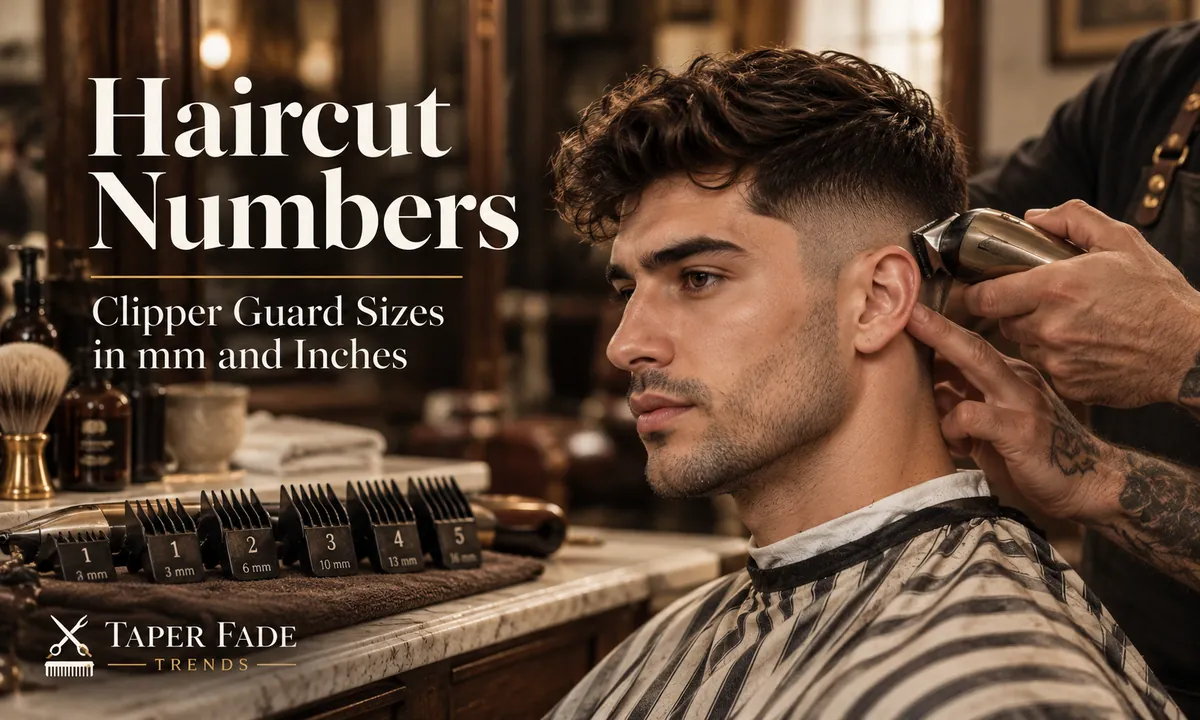
Haircut numbers: clipper guard sizes in millimeters and inches
Haircut numbers in mm and inches, checked against Wahl, Andis and Oster specs, plus why #0 isn’t always no guard and what to tell your barber.
How to maintain a taper fade between haircuts
How to maintain a taper fade between haircuts: what is safe at home, where to stop before the blend, and when to book a cleanup or a full cut.
More in burst fades
Burst fades: all 8- Burst fade: arc height, shortest finish and back view15 min
- Low burst fade: the low ear arc and back transition12 min
- Burst taper fade: what the side and back should show9 min
- Burst fade curly hair: keep the curl shape around the earYou are here
- Burst fade straight hair: avoid a disconnected-looking back10 min
- Burst fade black men: waves, coils and longer tops13 min
- Burst fade mullet: map the ear arc and keep the back12 min
- Burst fade vs taper: compare the ear arc and nape10 min