Burst fade black men: waves, coils and longer tops
A burst fade for Black men is a fade cut in a curve around each ear that usually leaves more hair toward the back. It can frame 360 waves, short coils, an Afro, twists or locs. Before the cut, agree how high the arc reaches, whether the shortest point is skin or shadow, and which hair on top stays untouched.
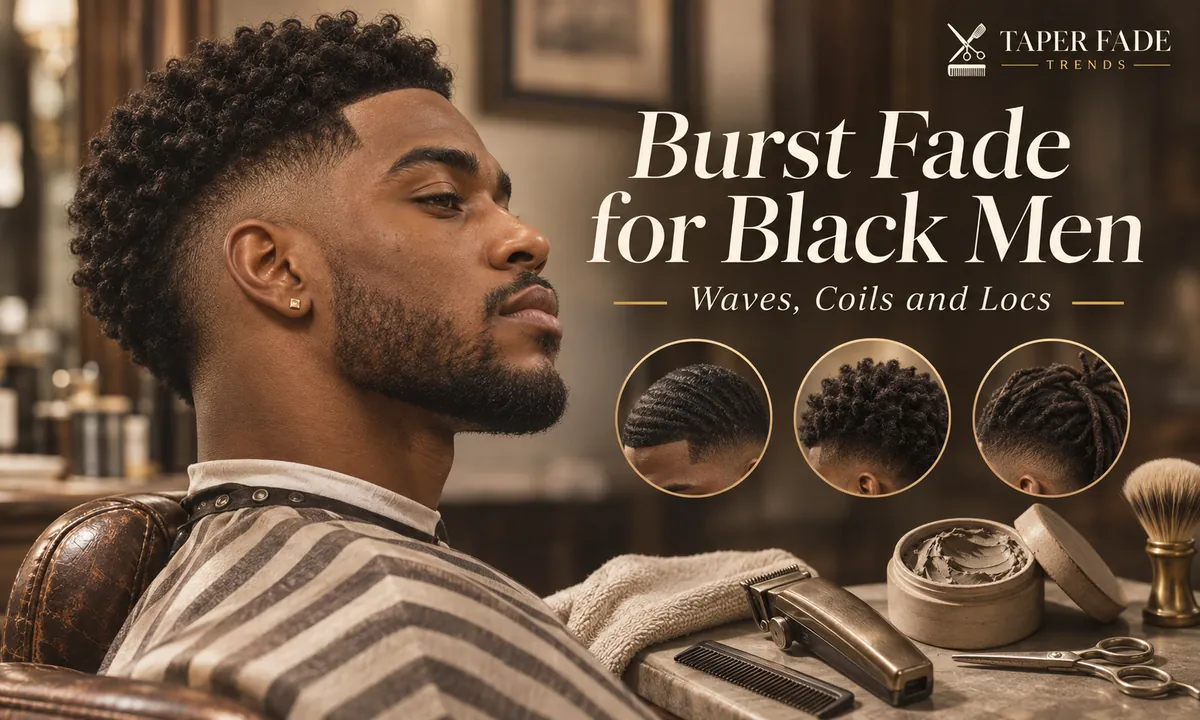
Eight decisions define this cut. Most galleries cover the first three; the no-cut line is the one that protects waves, coils and loc sections, so settle it before the clippers start.
| Decision | What to settle |
|---|---|
| Arc height | Point to the highest spot the arc may reach. No inch measurement is standard between shops. |
| Arc width | How far the short zone runs behind the ear before it stops. |
| Shortest finish | Shadow, zero or skin. This is separate from arc height. |
| Back and nape | Full, tapered, or short and connected. Only a rear photo shows it. |
| No-cut line | The lowest wave row, coil width, Afro outline, or twist and loc sections that must stay. |
| Hairline | A natural cleanup or a defined line-up. A burst fade requires neither. |
| Photos | Left side, right side and back of the cut you want, on hair close to yours. |
| Guard settings | The barber’s call. A guard number does not describe the arc. |
What makes a burst fade on Black hair?
A burst fade is a graduated haircut whose shorter area arcs around the ear while typically keeping more hair behind it. On Black hair the arc is cut the same way as on any other texture. What changes is what sits above it: wave rows, coils, an Afro outline, or twist and loc sections that must not be cut.
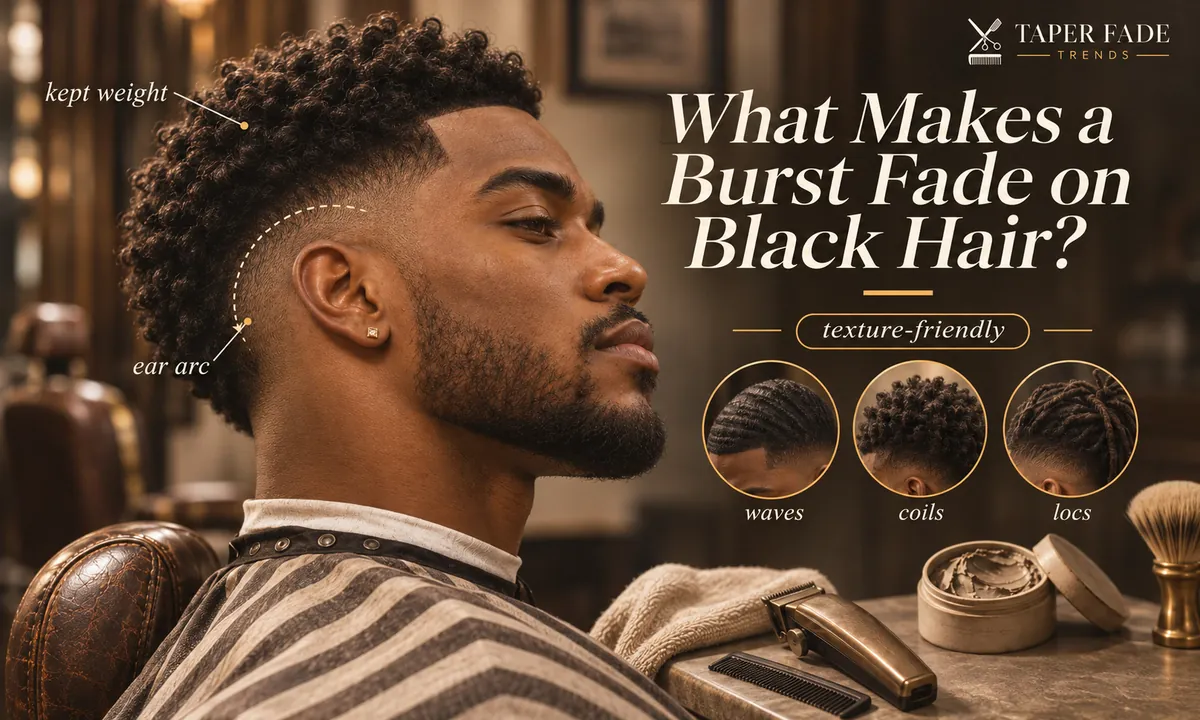
The name fixes only the shape. Arc height, the shortest finish, the back and the top are separate requests, and barbers put low, mid and high at different points on the head. Hair texture also varies widely from one person to the next, so match a reference photo to your own curl pattern and density rather than to a label.
The burst fade guide covers the shape on any hair type. This page covers the choices that change when the top has a pattern or sections to protect.
Read the ear arc from the side and back
A burst fade shows its highest point from the side and its retained back length from behind, so one photo cannot show the whole cut. It usually leaves more length directly behind the ear and toward the center back than a drop fade does, although a short, connected back is possible if you ask for it.
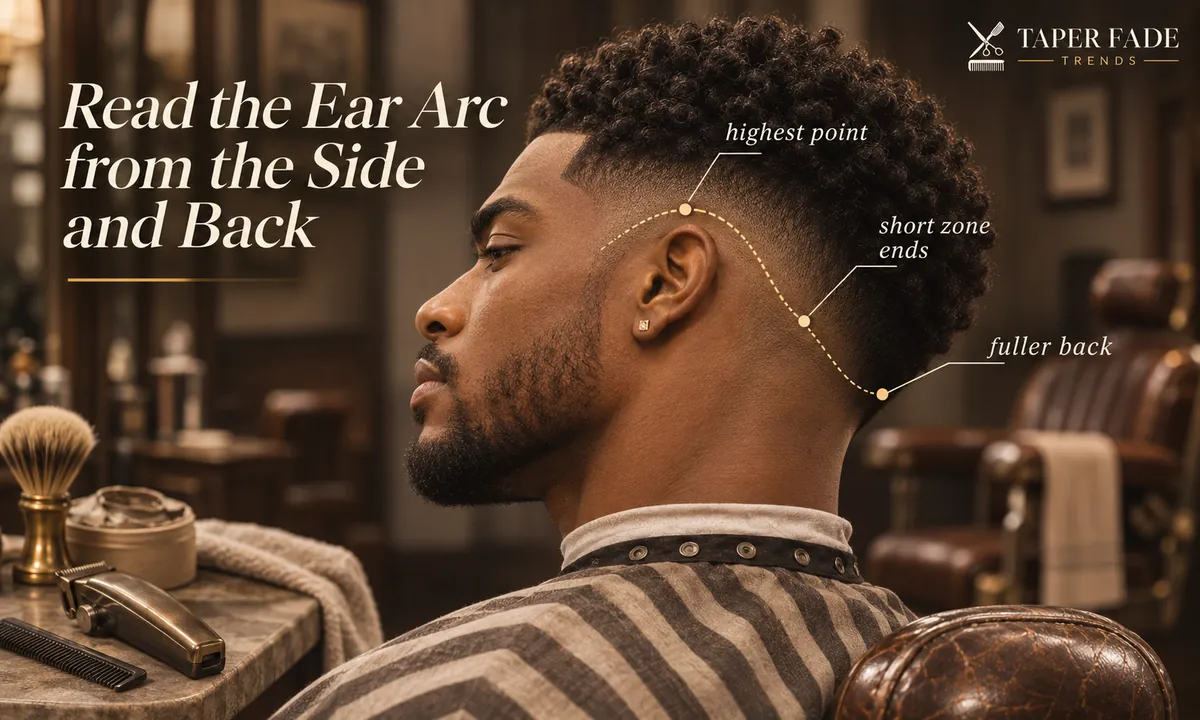
A drop fade is a fade whose side transition dips lower behind the ear and continues across the back. A longer center back does not by itself make a burst fade mullet, and a short back does not stop it being a burst.
Check three things on any reference photo:
- The highest point of the arc, from a side view.
- Where the short zone ends behind the ear, from a side or three-quarter view.
- Whether the center back stays full or connects short to the neckline, from a rear view.
A front photo cannot show the back, and no photo shows which guard, blade or lever setting the barber used.
Choose height, finish and retained weight
A burst fade does not have to reach bare skin. “Burst” describes the curved placement around the ear, and the shortest finish is a separate choice: shadow, zero or skin. Arc height is a third choice. A low arc can still end at skin and a high arc can stop at a shadow, so name both before the first pass.
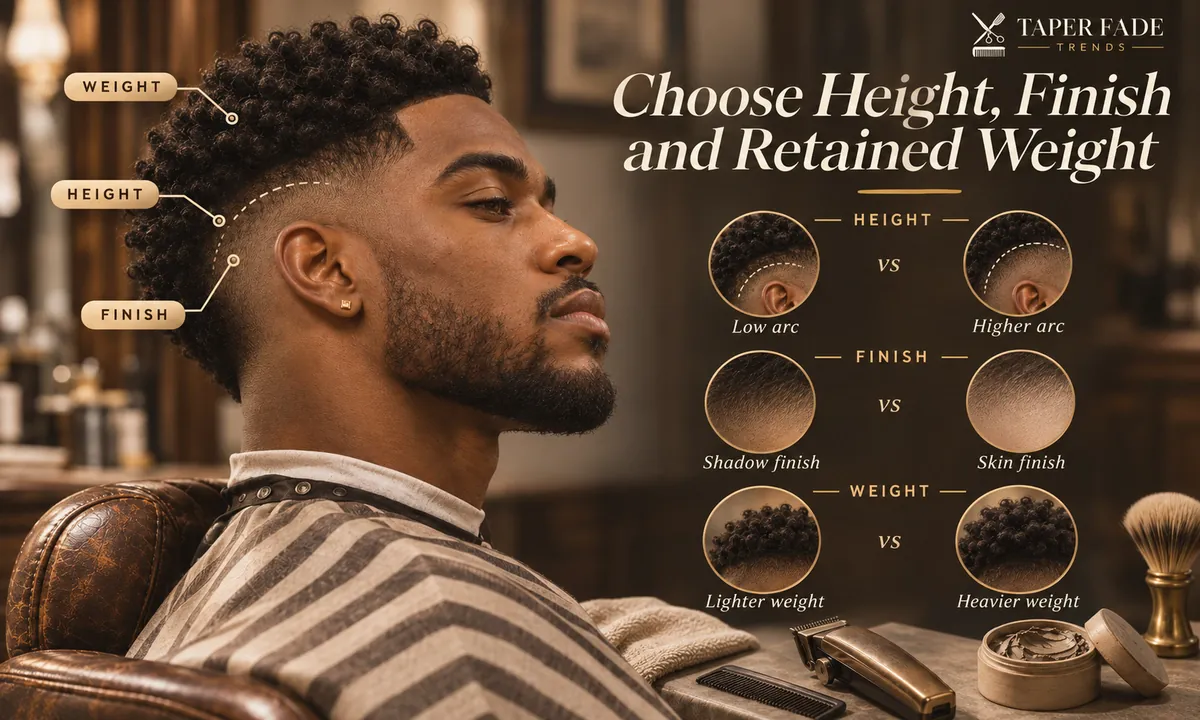
A shadow burst is a burst-shaped fade that keeps visible short hair at its shortest point. A skin burst is a burst-shaped fade whose shortest point is bare skin. Zero sits between them: clipper-close, but not automatically bare.
| Option | What it controls | Effect | Watch for |
|---|---|---|---|
| Lower arc | Height | Keeps more weight above the ear | Less contrast with the top |
| Higher arc | Height | Exposes more of the side, stronger contrast | Can cut into wave rows, coil width or loc sections |
| Shadow | Shortest finish | Short hair stays visible at the base | Softer edge than skin |
| Skin | Shortest finish | Bare scalp at the base | The most contrast; regrowth shows first |
Retained weight is the hair left above and behind the ear once the arc is cut. A lower arc keeps more of it; a higher arc exposes more of the side and gives stronger contrast. If you are protecting waves, top width or loc sections and are unsure, agree on a lower maximum first. Hair the clippers remove cannot be put back, but a low arc can be raised next visit.
A burst taper is an inconsistently used barbershop phrase for a narrower or less-close burst. Agree on the area and the finish instead of assuming one universal definition. The low burst fade guide covers the softest end of that range.
Guard numbers set neither height nor finish. Wahl labels its No. 2 comb 1/4 in (6 mm) in its premium guide comb kit, and the length you actually get still varies with the clipper, blade and lever.
Wahl premium guide comb label only, not a burst recipe
The clipper guard numbers guide explains why labels differ between brands.
Once those three choices are fixed, the top decides how much hair the arc may remove.
Six distinct top and back options
Each top sets a different no-cut line for a burst fade, and each needs a different photo angle to confirm it. Find your top in the table, then read its section.
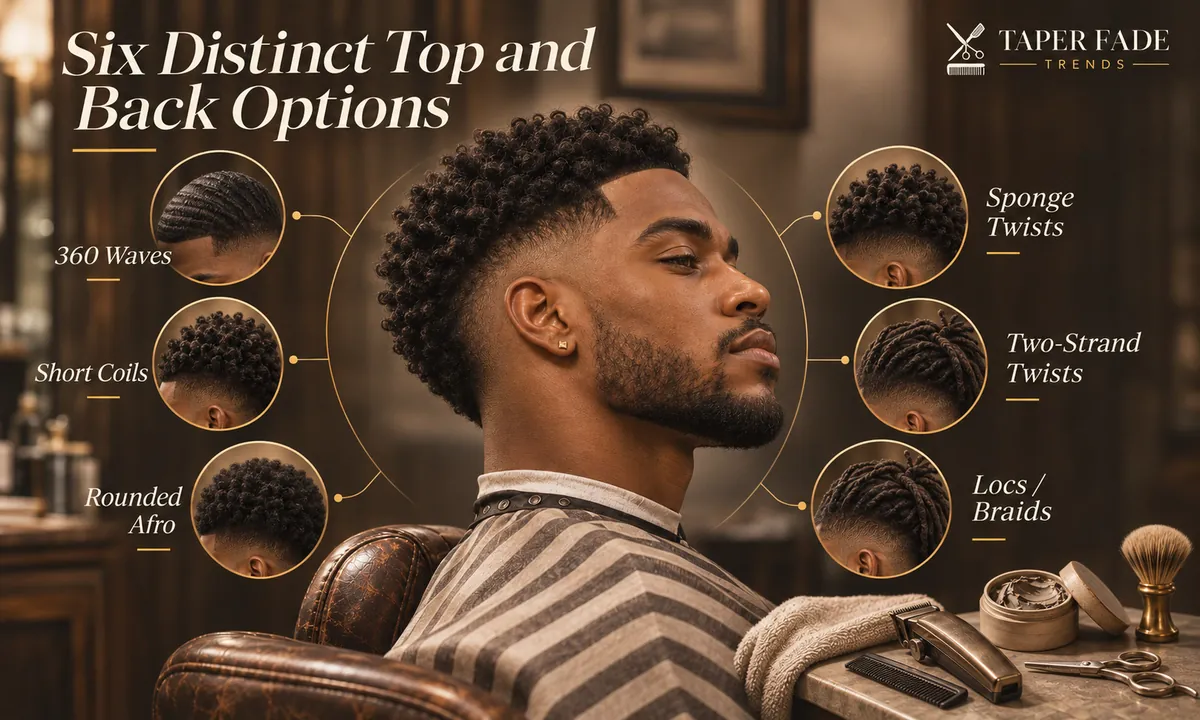
| Top | No-cut line | Photo to bring | Trade-off |
|---|---|---|---|
| 360 waves | The lowest wave row you keep | Rear and side, plus brushing direction | A higher arc can remove pattern along the side |
| Short coils | Coil width above the ear | Side view, dry | A higher arc lowers weight above the ear |
| Rounded Afro | The outline from front and rear | Front and rear | A higher arc separates the sides more sharply |
| Sponge twists | The border of the twisted top | Side and top-down | An arc past the border cuts twists you keep |
| Two-strand twists | The parting boundary | Side and rear | Re-parting moves the boundary |
| Locs or braids | Base sections agreed with your loctician or braider | Side and rear, styled | Growing locs shift where sections fall |
360 waves: keep the outside rows
A burst fade can work with 360 waves when the barber keeps the ear arc below the wave rows you want to preserve. A high or wide arc can remove established pattern along the side, and no guard number protects every wave pattern. Show your usual brushing direction and a rear photo, and name the lowest row to keep.
Short coils: keep side density
A burst fade frames short coils by removing hair around the ear while leaving volume above and behind it. Density, shrinkage and your dry outline set how high the arc can rise, and no single shrinkage percentage applies to everyone. Ask the barber to judge the top and the arc with your hair dry, not wet.
Rounded Afro: protect the outline
On a rounded Afro, the arc removes hair around the ear and leaves the roundness above and behind it. The deciding question is how high the arc rises against the outline you want: lower keeps the sides part of the shape, higher separates the Afro from them. Show the front for roundness and the rear for the full back.
Sponge twists: place the border
Sponge twists are a short top rubbed with a twist sponge into small coils or twists. The border of that top is the no-cut line. If the arc rises past it, the clippers take twists you meant to keep. Leave enough length on top to sponge, then agree where the border sits at the side.
Two-strand twists: preserve the part
A burst fade can sit under two-strand twists when the barber leaves the hair your kept sections need. Mark the parting boundary before the clippers touch the sides. Re-parting moves where each twist starts, so a line marked on old twists may not fit new ones. If your section map is uncertain, ask your stylist first.
Keep tension light too. The American Academy of Dermatology (AAD) advises asking a stylist to stop and redo braids or similar styles that hurt, because pain signals damage.
Locs or braids: agree on base sections
A burst fade can sit under locs or braids, but the barber and your loctician or braider should agree which base sections stay before any clipper work. Hair cut from an established loc can’t be restored by the next visit, and growing locs shift where sections fall, so confirm the boundary every time.
The same conversation is laid out in protecting the loc boundary under a low taper.
Choose the cut without losing your top
Choose arc height by what must survive on the sides. Wave rows, twist parts and loc sections call for a lower maximum height. A top with nothing to protect at the sides leaves height as a style choice.
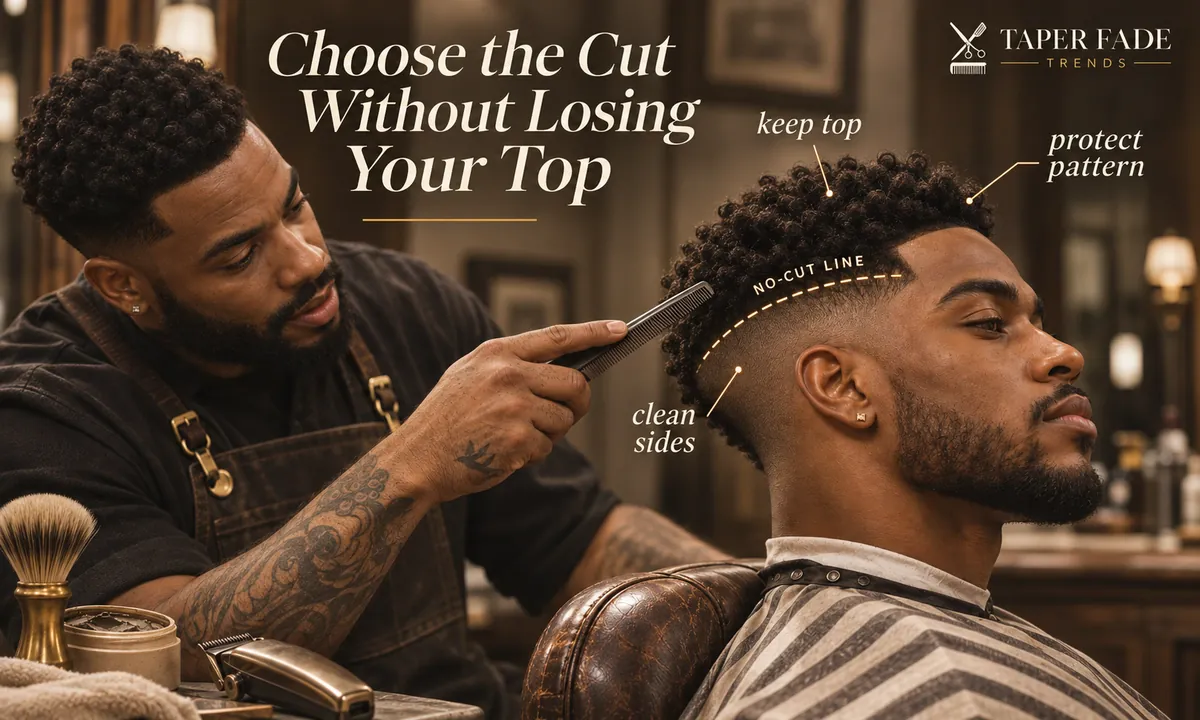
- Wearing 360 waves: set the maximum arc below the lowest row you want to keep.
- Coils or an Afro that change shape as they dry: judge the arc against your dry outline.
- Twists or locs with sections to keep: put the no-cut line above the arc and confirm it with your stylist or loctician.
- Bumps after close cuts in the past: start with a shadow finish (see the care section below).
- Nothing at the sides to protect: a higher arc is purely a contrast choice.
- If the curve itself is more contrast than you want, a low taper fade for Black men keeps a subtler perimeter, and the high taper fade on waves and coils is the level-line alternative for the same textures.
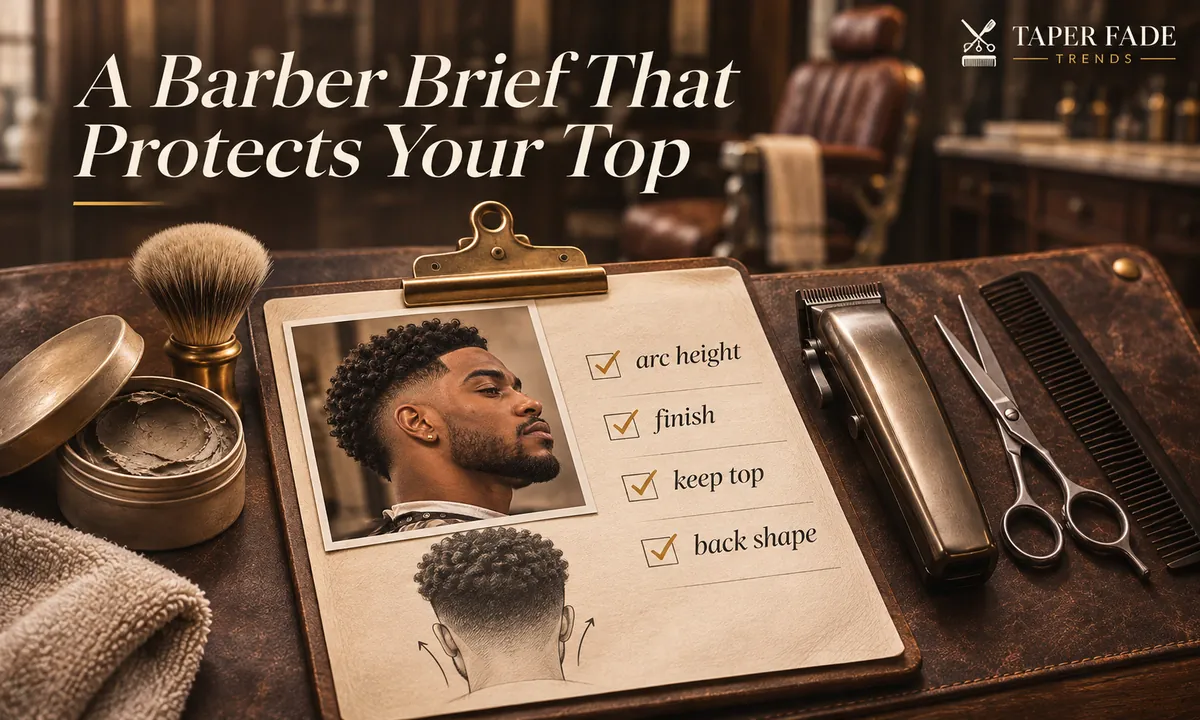
A barber brief that protects your top
Ask for a burst fade by outcome: point to the arc’s highest permitted spot, name the shortest finish, say what stays untouched on top and behind the ear, and choose a natural or defined line-up. Bring side and rear photos of hair like yours, and leave guard numbers to the barber.
- “A burst fade: a curve around each ear that leaves more length behind it.”
- “The arc can reach this spot,” pointing to it on your side photo.
- “Take the shortest point to [shadow / zero / skin].”
- “Keep my [wave rows / coil width / Afro outline / twist parts / loc sections] untouched. The no-cut line is here.”
- “Keep the center back [full / short and connected], with a [natural / tapered] neckline.”
- “A [natural cleanup / defined line-up], and [blend / don’t blend] the sideburn into my beard.”
Bring four reference views: front, left side, right side and back, with the arc’s highest point and the no-cut line marked on the side views. Ask the barber to repeat your choices back before the first pass.
A line-up pushed behind your natural hairline takes weeks to grow back, so say clearly if you want your own edge kept. If you are growing the back or the top, also say that a cleanup should not shorten them. The how to brief your barber guide covers the general consultation method.
Burst, drop and South of France
A burst fade centers the short work around the ear and often keeps a fuller center back. A drop fade’s line dips lower behind the ear and continues across the back. The rear view shows that difference more reliably than a front photo, and some barbers use the two names loosely.
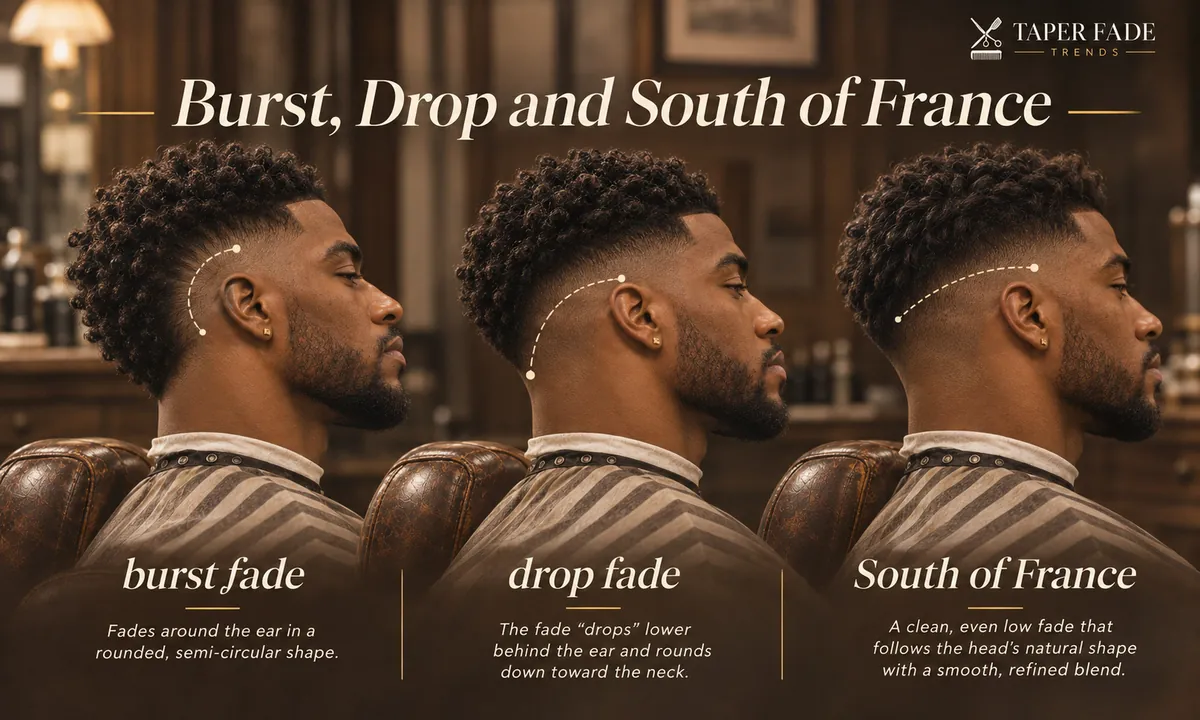
| Criterion | Burst fade | Drop fade |
|---|---|---|
| Where the short work centers | Around the ear | Around the head, dipping behind the ear |
| Center back | Often fuller | The blend continues across the back |
| Weight behind the ear | Usually more | Usually less |
| View that settles it | Side for the arc, rear for the back | Rear, where the line dips |
These are typical shapes, not fixed rules, so match the rear photo you bring to the shape your barber describes.
Shops disagree on “South of France.” Some use it for a burst fade paired with a mohawk strip, others for burst fades in general. A burst arc does not by itself make the cut a mohawk, a frohawk or a bare-skin cut, so ask for photos and a description of the top rather than relying on the name.
A burst is also not a taper: burst fade vs taper compares the ear arc with short work kept to the edges, and taper fade versus a full fade covers the wider label split.
Care, regrowth and close-cut limits
A burst fade needs refreshing when the ear arc, line-up or sideburn loses the definition you want, not on one universal schedule. A skin finish shows new growth sooner than a shadow, a defined line-up shows it sooner than a natural cleanup, and your own growth rate sets the pace. Rebook by what the mirror shows.
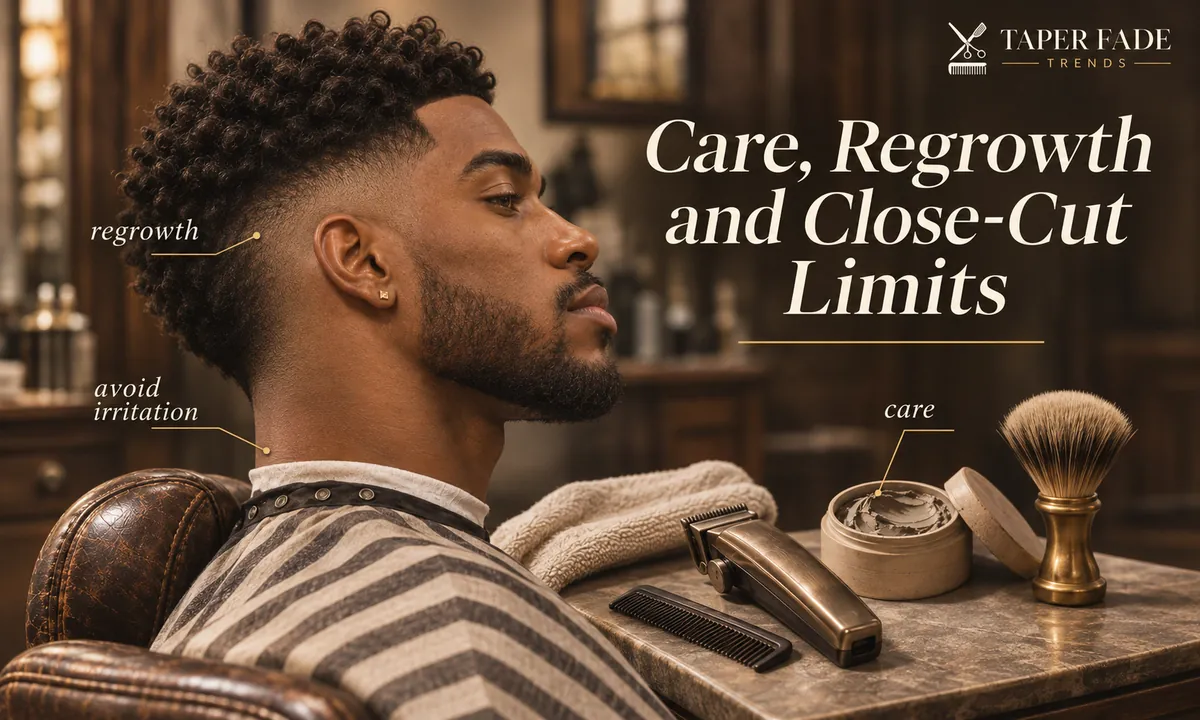
Keep the two jobs apart. The barber’s work sets the arc, line-up and neckline. You keep up the top on its own terms: wave brushing, coil shaping, or twist and loc care. For washing, AAD dermatologists suggest washing Black hair once a week or every other week and using conditioner every time, according to its everyday Black hair care tips.
The skin is the real limit on how close to go. The AAD says razor bumps form when shaved hairs curl back into the skin, and its razor bump prevention tips are written for shaving, so they don’t prove a clipper fade causes them. At the nape, the AAD lists frequent close-shave haircuts among the things that can irritate the skin in acne keloidalis nuchae (AKN). It also says AKN cannot be caught from dirty clippers.
AKN often looks like acne or razor bumps on the back of the neck and scalp. The AAD says it is most common in Black men, usually begins between ages 14 and 25, and can cause raised scars and hair loss without treatment (AKN overview). If bumps at the nape keep returning, hurt or scar, stop going closer, ask for a shadow finish, and see a board-certified dermatologist. A haircut photo cannot show whether either condition applies to you.
Choose a different cut when your top cannot spare the sides. If the lowest arc your barber will cut still reaches wave rows, twist parts or loc sections you keep, a burst fade is the wrong shape for that top.
How this burst fade guide was checked
Taper Fade Trends compared published burst fade descriptions from grooming and haircut-reference sites, first read on October 17, 2026 and rechecked on November 4, 2026. The page keeps arc height separate from the shortest finish, takes the guard length from Wahl’s own product page, and uses American Academy of Dermatology pages only for the hair-care and skin limits above.
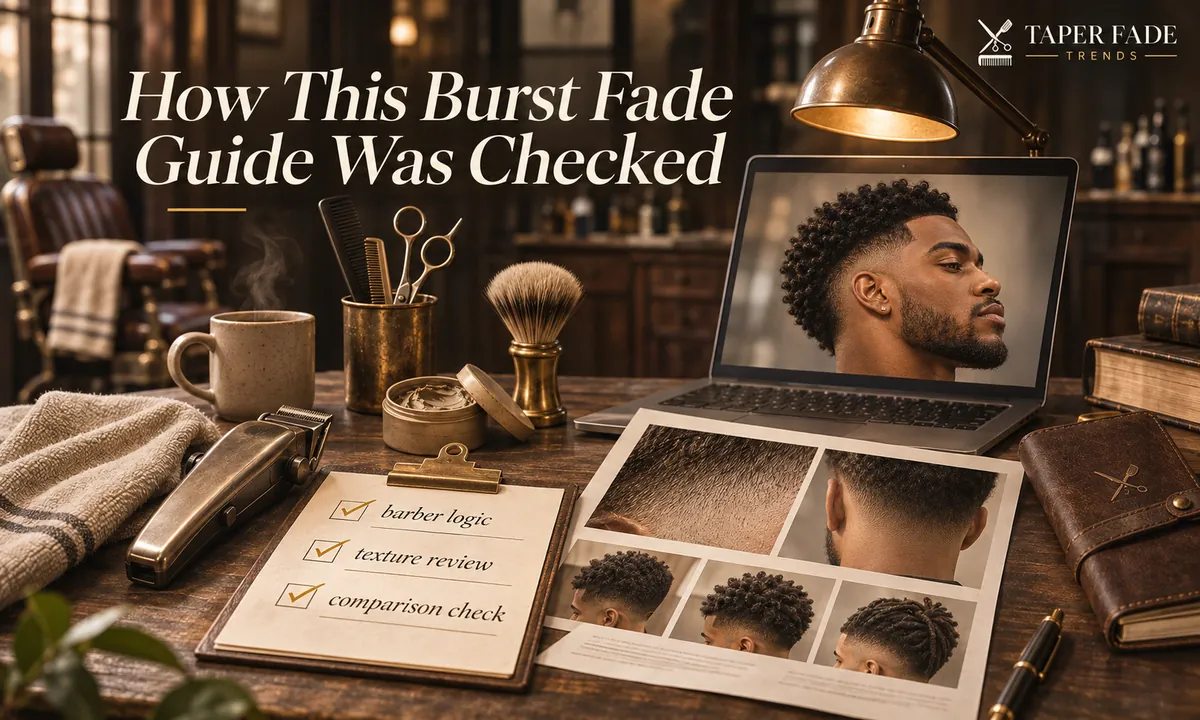
Burst taper, South of France and low, mid or high are not standardized between shops, and the page says so where they appear. Every image here is an illustration of geometry, not a photo of a documented cut, and no client results are claimed. No barber has reviewed this version yet; when one does, their name, role and review date will be added here. Found an error? Our editorial policy explains how corrections are made and dated, or you can contact us.
Sources:
- Burst Fade vs Drop Fade: The Ear Is the Real Difference, Beard Beasts: arc and rear comparison
- Burst Fade Haircuts: Types, Placement & Barber Guide, Burst & Taper: shadow, zero and skin finishes
- Burst Fade Haircuts for Black Men: 25 Styles, Mullet Style: shrinkage, loc grids and back connection
- Burst fade for Black men: 15 styles, Taper Trends: texture and consultation decisions
- Wahl Pro Premium Guide Comb Master Kit, Wahl: No. 2 comb label
- Black hair: Tips for everyday care, American Academy of Dermatology
- 6 razor bump prevention tips from dermatologists, American Academy of Dermatology
- Acne keloidalis nuchae: Overview and Causes, American Academy of Dermatology
Next: confirm the side and back before the cut
Save a side and a back reference, mark the hair you want untouched, then take the brief to your barber. For the shape on straight, wavy or curly hair, read the burst fade guide.
Keep reading
All guides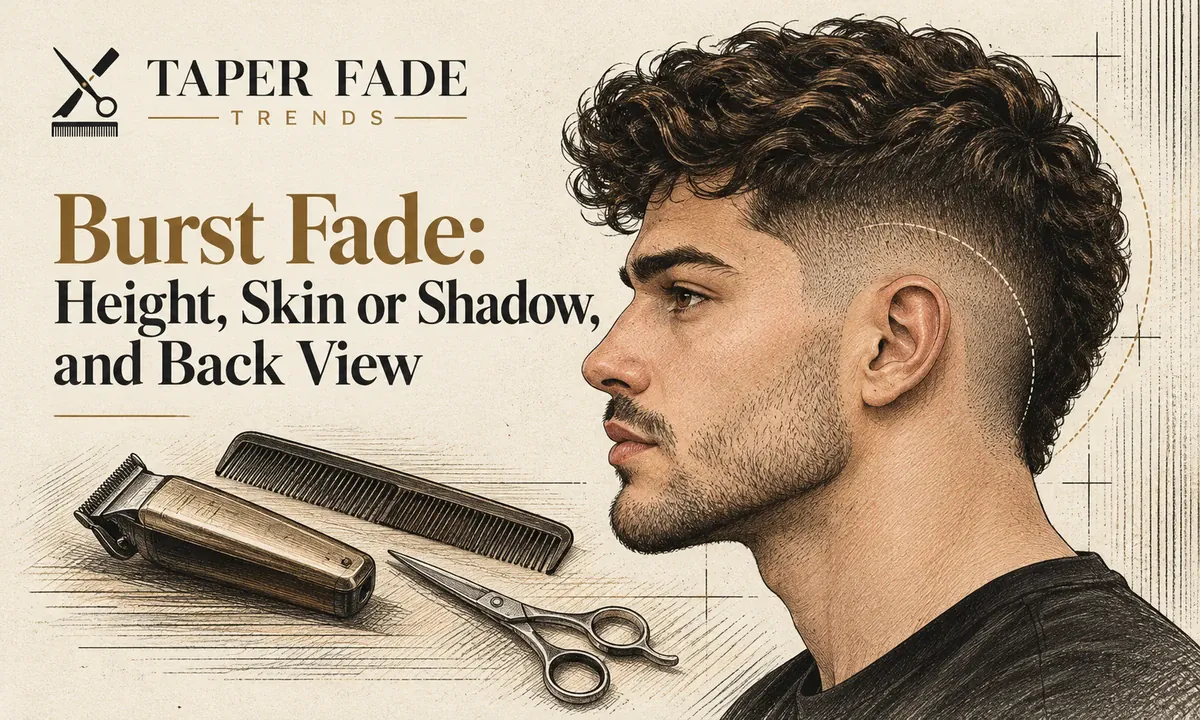
Burst fade: arc height, shortest finish and back view
A burst fade curves around the ear. It doesn’t have to reach skin, and the back is a separate choice. See the three controls and what to tell your barber.
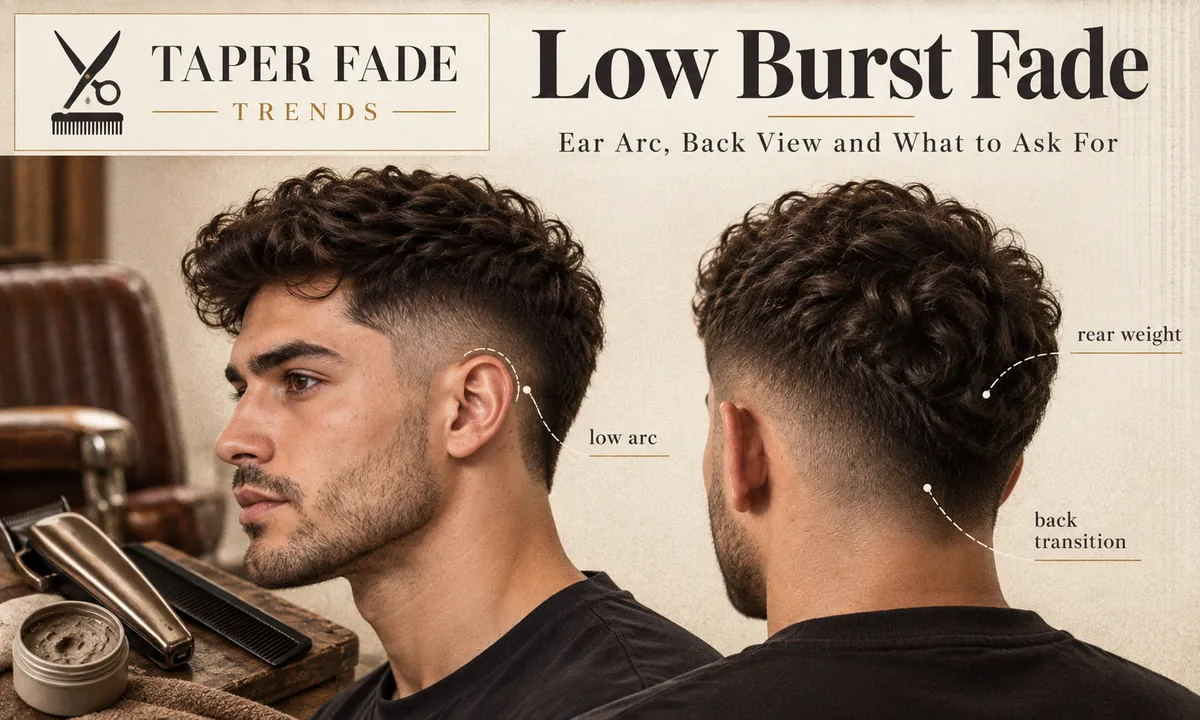
Low burst fade: the low ear arc and back transition
A low burst fade curves low around the ear and can keep length at the back. Compare skin vs shadow, burst vs drop fade, and what to tell your barber.
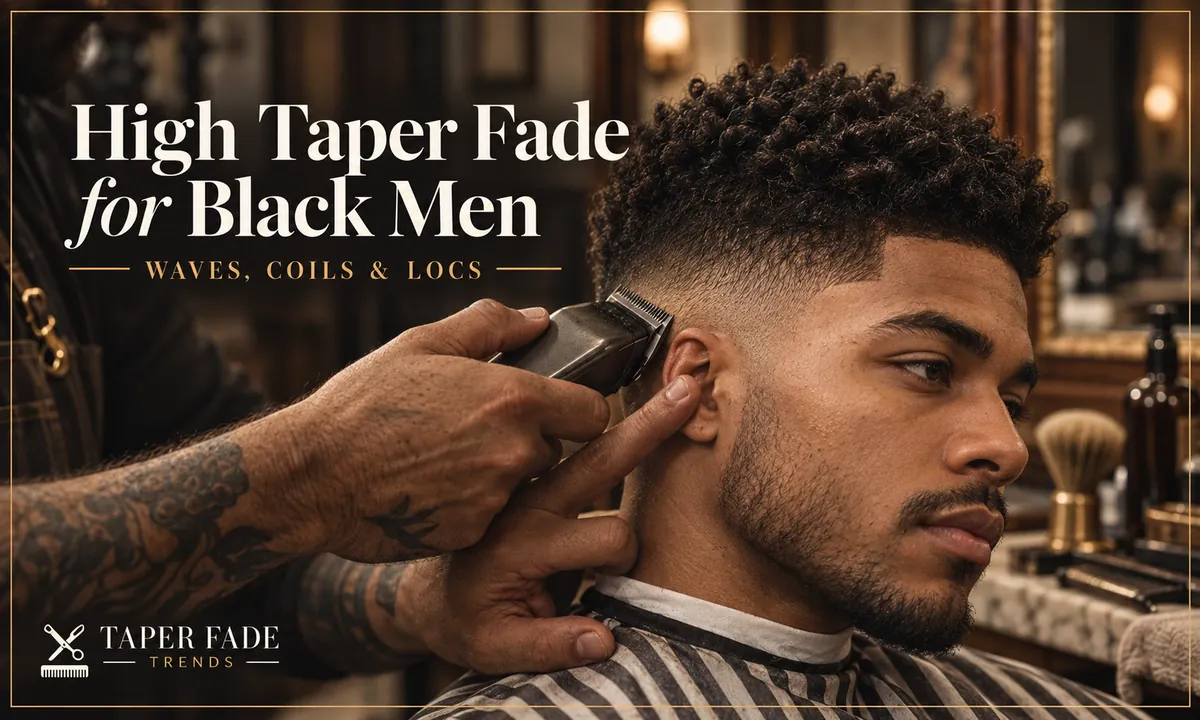
High taper fade Black male styles: waves, coils, twists and locs
High taper fade Black male guide: how it sits with waves, coils, twists and locs, skin vs. guard finishes, and a fill-in barber brief.
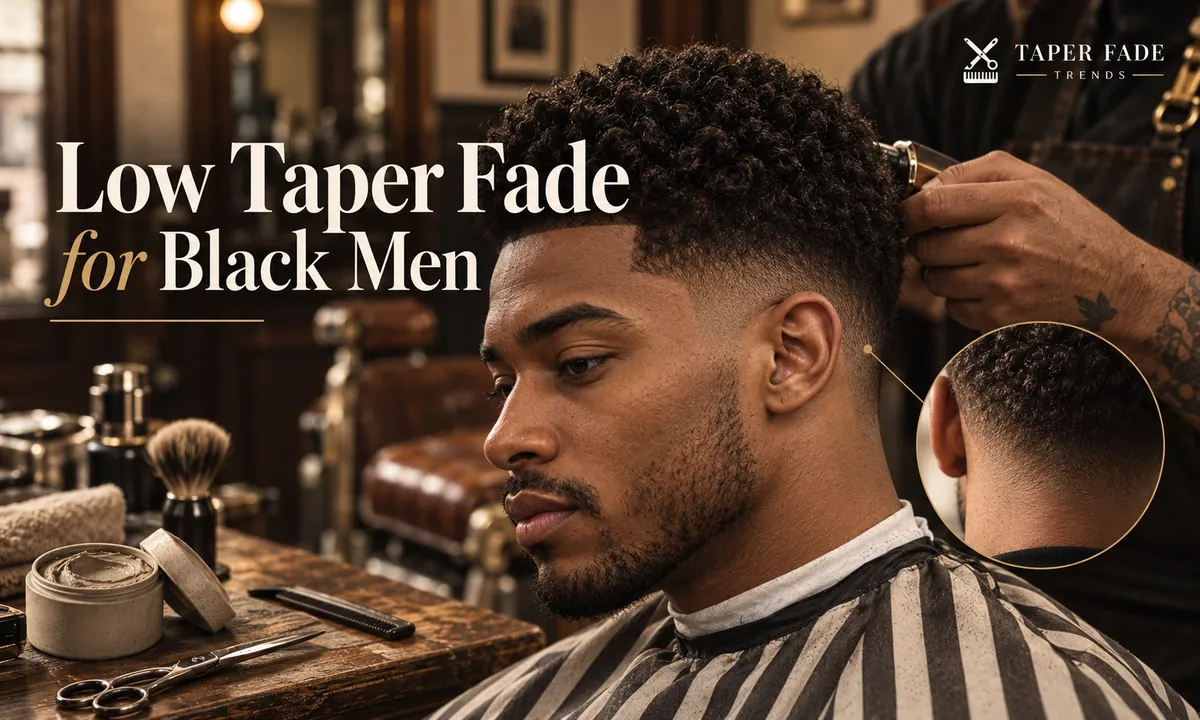
Low taper fade Black male guide: choose the top, hairline and nape
Low taper fade Black male guide: pick the top, hairline and nape, then use a five-point barber brief, with dermatologist advice on bumps at the nape.
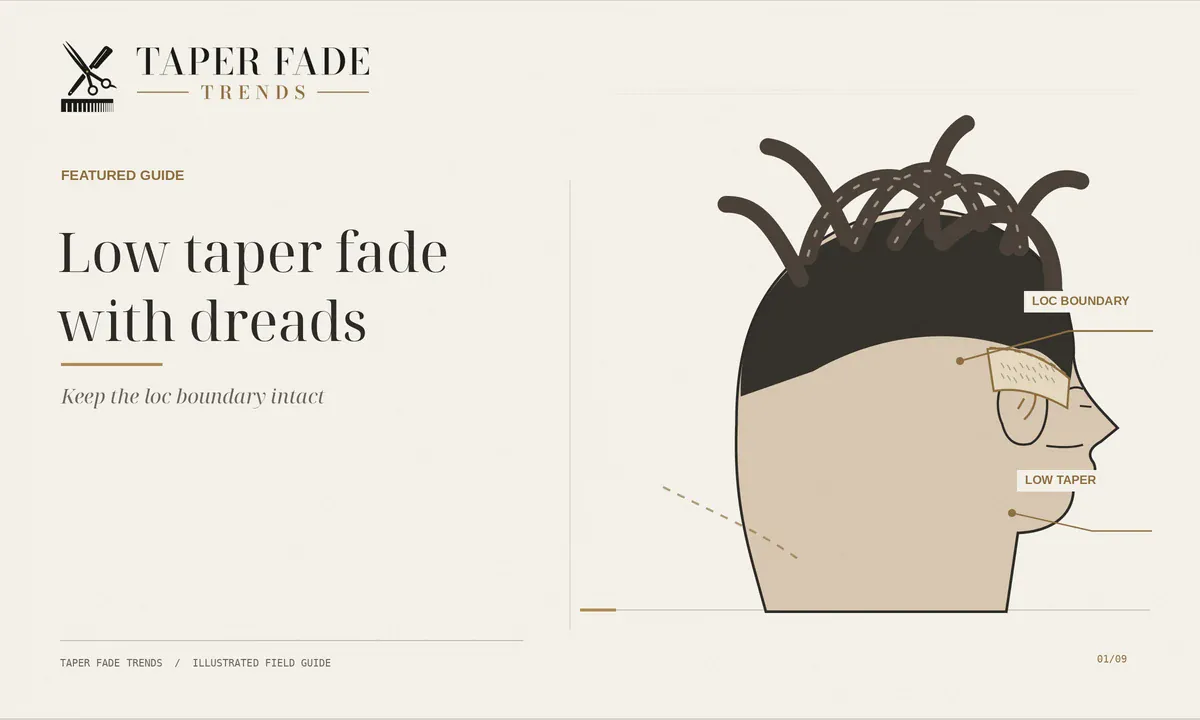
Low taper fade with dreads: protect the loc boundary
Low taper fade with dreads: which loc bases to protect, how to set the taper zone and endpoint, and what to tell your barber and loctician first.
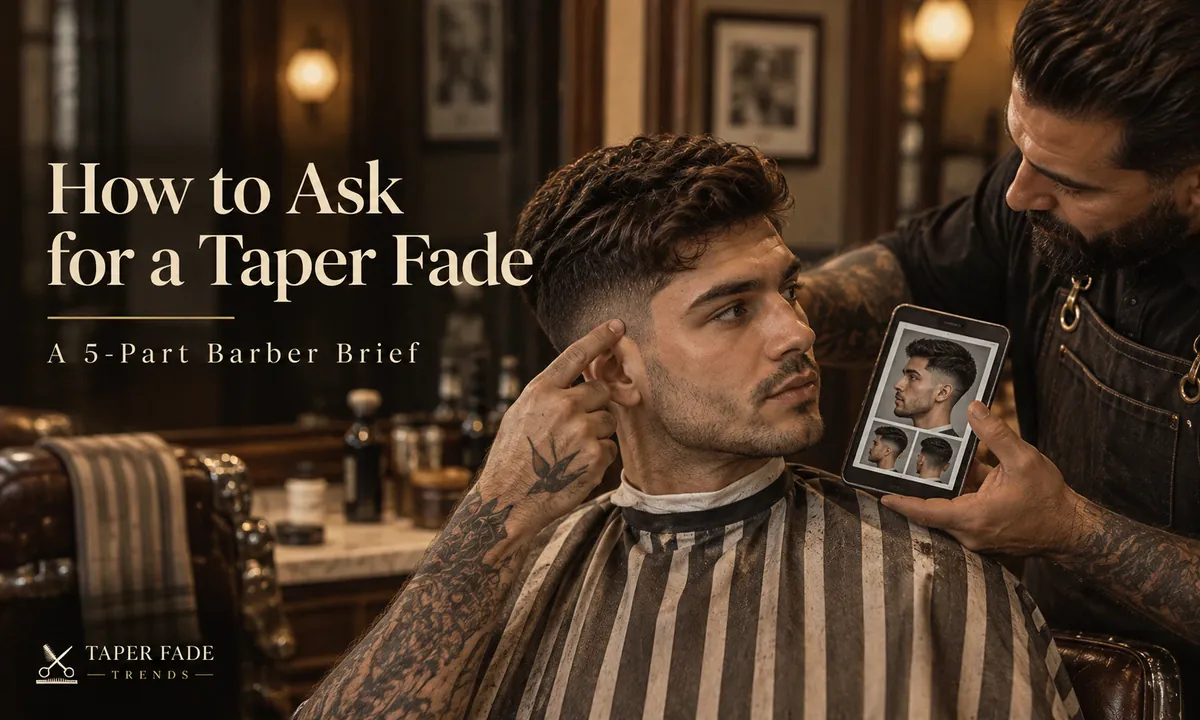
How to ask for a taper fade: a five-part barber brief
How to ask for a taper fade: say where it may reach, how short the base goes, how much side weight stays and what to do on top, then check the plan first.
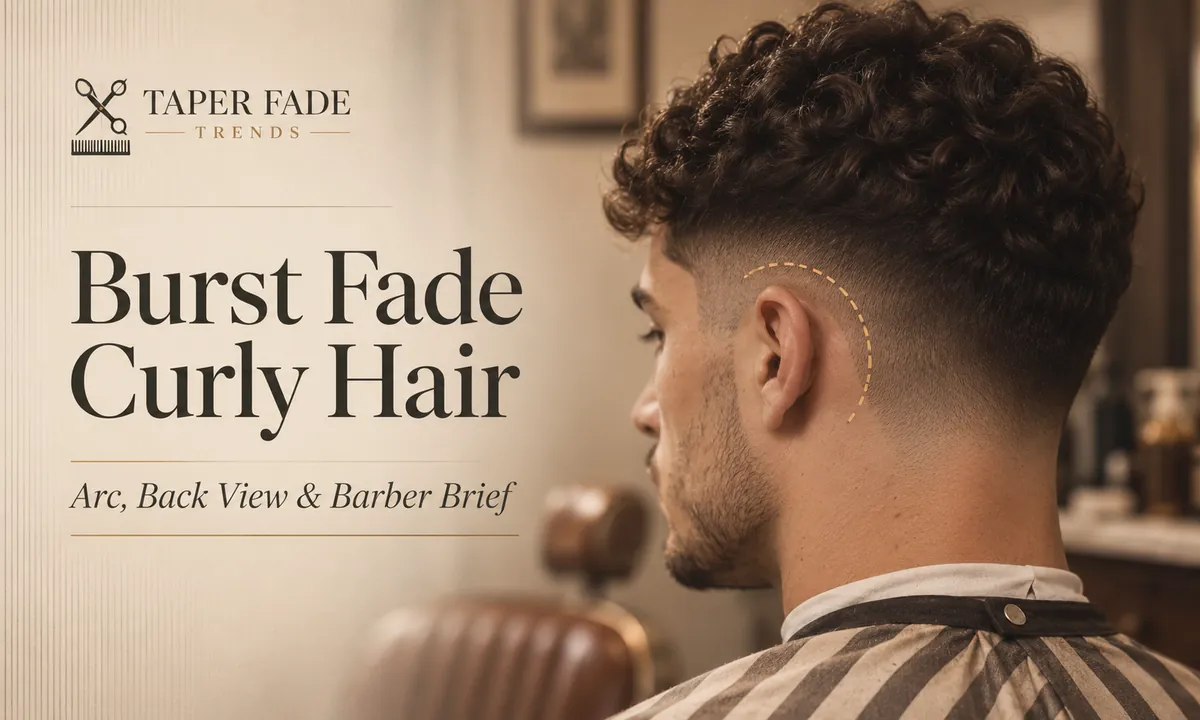
Burst fade curly hair: keep the curl shape around the ear
A burst fade on curly hair curves around the ear. Set the arc, skin or shadow finish and nape on dry curls, then take a six-point brief to your barber.
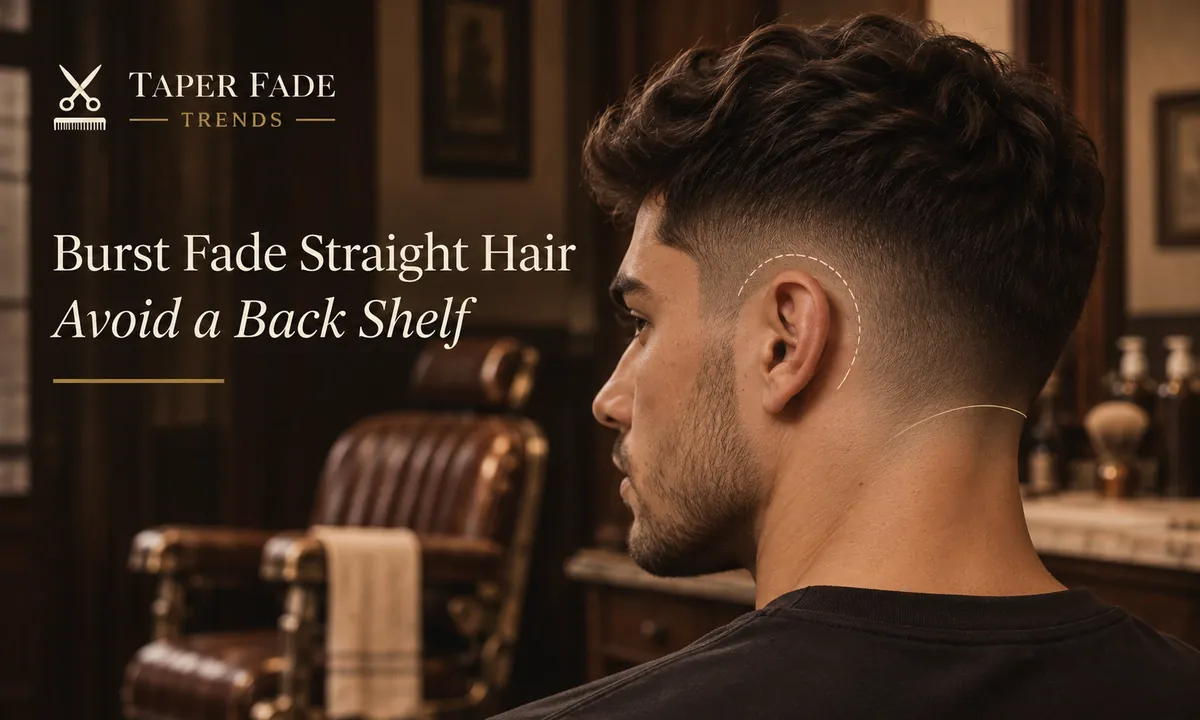
Burst fade straight hair: avoid a disconnected-looking back
A burst fade on straight hair shows every step. See where the ear arc should stop, how the crown connects, and what to tell your barber to avoid a shelf.
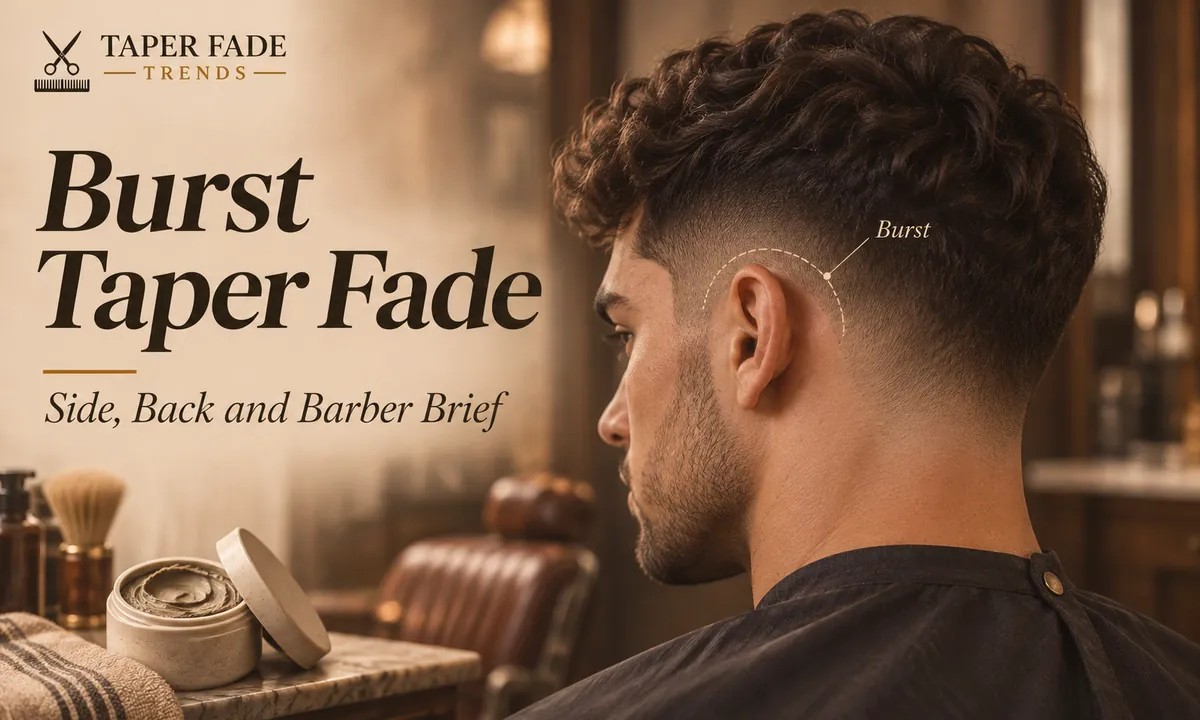
Burst taper fade: what the side and back should show
A burst taper fade curves around the ear and tapers the edges. See what the side and back should show, and the five-part brief to give your barber.
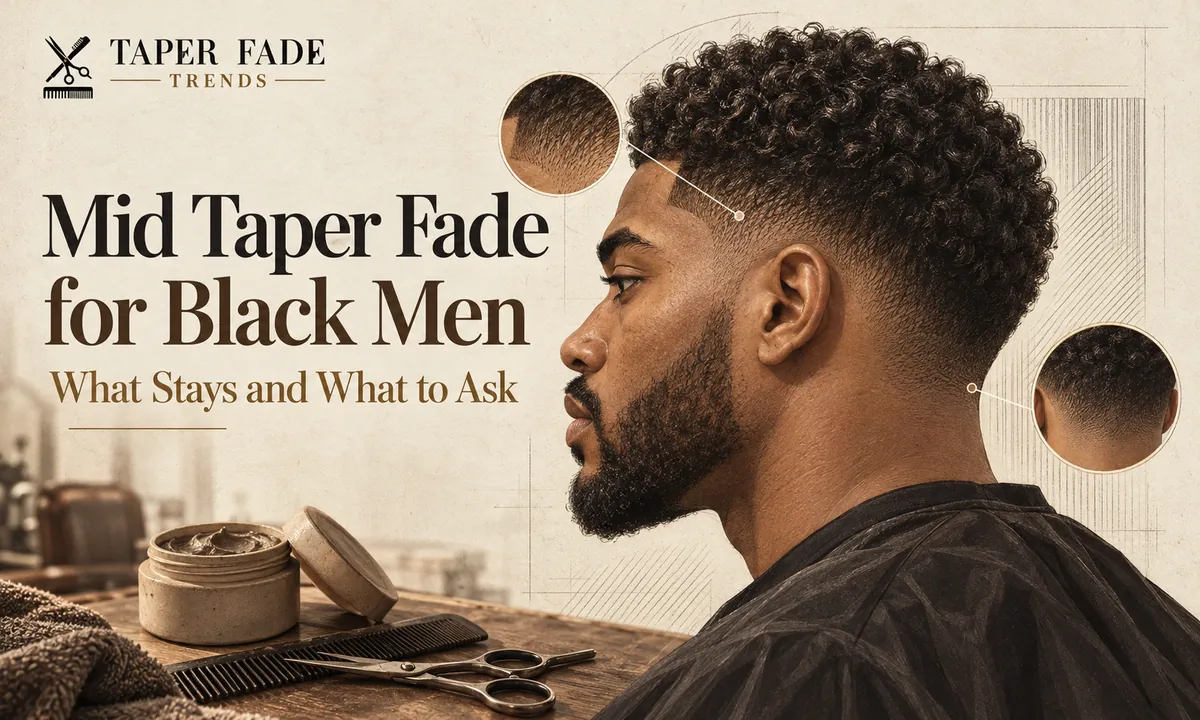
Mid taper fade Black male guide: what stays and what to ask for
Mid taper fade Black male guide: keep more side weight than a full mid fade, set finish and hairline, protect waves, coils or locs, and brief your barber.
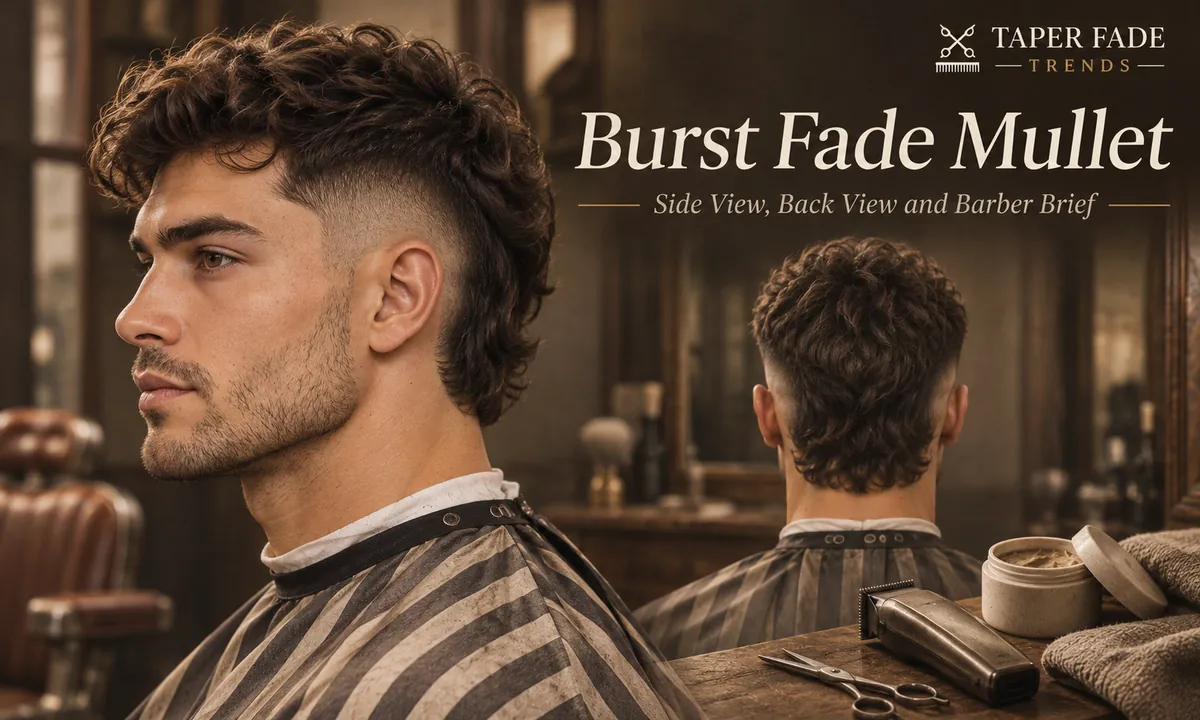
Burst fade mullet: map the ear arc and keep the back
See where a burst fade mullet should stop behind the ear, how much length to keep at the nape, and what side and rear views to show your barber.
More in burst fades
Burst fades: all 8- Burst fade: arc height, shortest finish and back view15 min
- Low burst fade: the low ear arc and back transition12 min
- Burst taper fade: what the side and back should show9 min
- Burst fade curly hair: keep the curl shape around the ear12 min
- Burst fade straight hair: avoid a disconnected-looking back10 min
- Burst fade black men: waves, coils and longer topsYou are here
- Burst fade mullet: map the ear arc and keep the back12 min
- Burst fade vs taper: compare the ear arc and nape10 min