Burst taper fade: what the side and back should show
A burst taper fade curves the fade around each ear and adds taper work at the sideburns or neckline. The name does not set how high the arc rises, whether it reaches skin, or what happens at the center back and nape. Agree on those with side and rear photos before the cut.
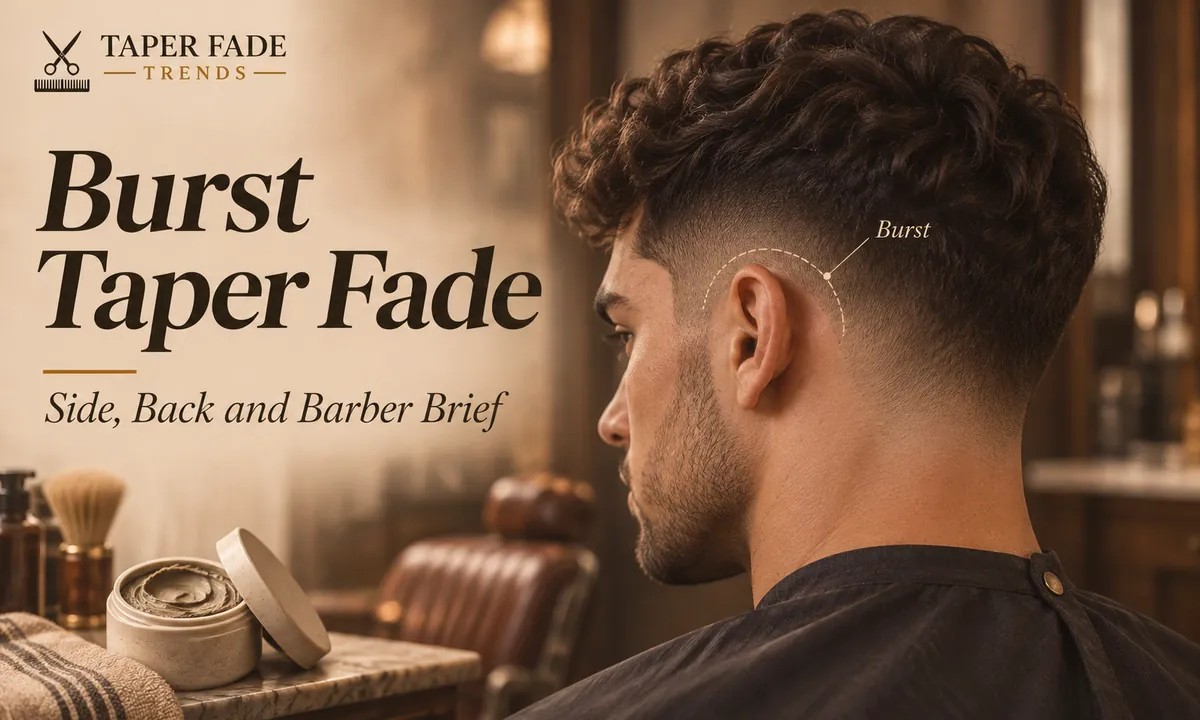
Six decisions shape this cut, and the name settles only the first: that there is an arc around the ear.
| Decision | What to point to | Choice to confirm | What a photo can’t show |
|---|---|---|---|
| Ear arc | The top edge of the curve above and behind each ear | The highest line it may reach | Exact height; low, mid and high are relative |
| Shortest finish | The closest-cut point of the arc | Skin, zero or shadow | The guard, blade or lever used |
| Side weight | Hair kept above and outside the arc | How much length stays | Your density and growth direction |
| Center back | Hair between the two arcs | Kept full or shortened | Anything outside a side-only frame |
| Nape | The hairline at the back of the neck | Natural, lightly tapered or shaped | Anything cropped above the neck |
| Top | Length and direction on top | What stays and how you wear it | Product and drying method |
What is a burst taper fade?
A burst taper fade is a burst fade, where the shortest zone curves in a rounded arc around the ear, combined with taper work at the sideburns, temples or neckline. TheBurstFade treats “taper burst fade” as the same request. Shops don’t standardize the name, so height, finish and back treatment still need agreeing.
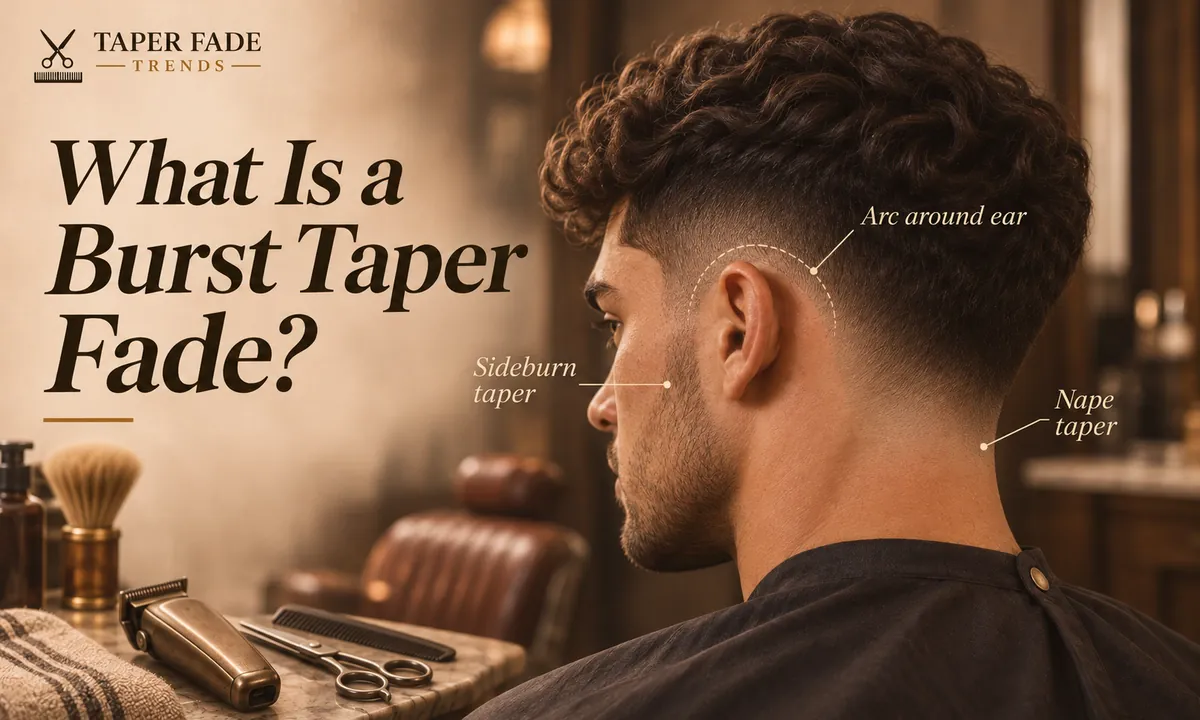
The three terms underneath it:
- A burst fade is a fade whose shortest zone curves around the ear in a rounded arc, and it often leaves the center back fuller, as Burst & Taper describes it.
- A taper is localized shortening at the sideburn, temple and nape, with more of the side panel left at length. Taper fade basics covers it in full.
- The shortest finish is how close the lowest point is cut: skin (bare scalp), zero (light stubble) or shadow (a visible layer of hair).
A burst taper fade does not have to reach skin. “Burst” describes where the curve sits, not how short its lowest point goes, and Burst & Taper treats skin, zero and shadow as a separate choice for any fade shape. “Zero” can mean no guard or a #0 attachment, which cut differently, so check what the number means and name the finish out loud.
Publishers also attach “burst taper” to different cuts. Some mean a softer burst, others a burst with a tapered nape. Burst fade vs taper sets out the competing meanings, and taper versus fade explains the two families of cut.
Read the side and back photos
A burst taper fade needs a side view and a rear view of the same haircut. The side view shows the arc around the ear and the hair kept above it. The rear view shows whether the center back stays full and how the neckline ends. A front-only photo shows neither.
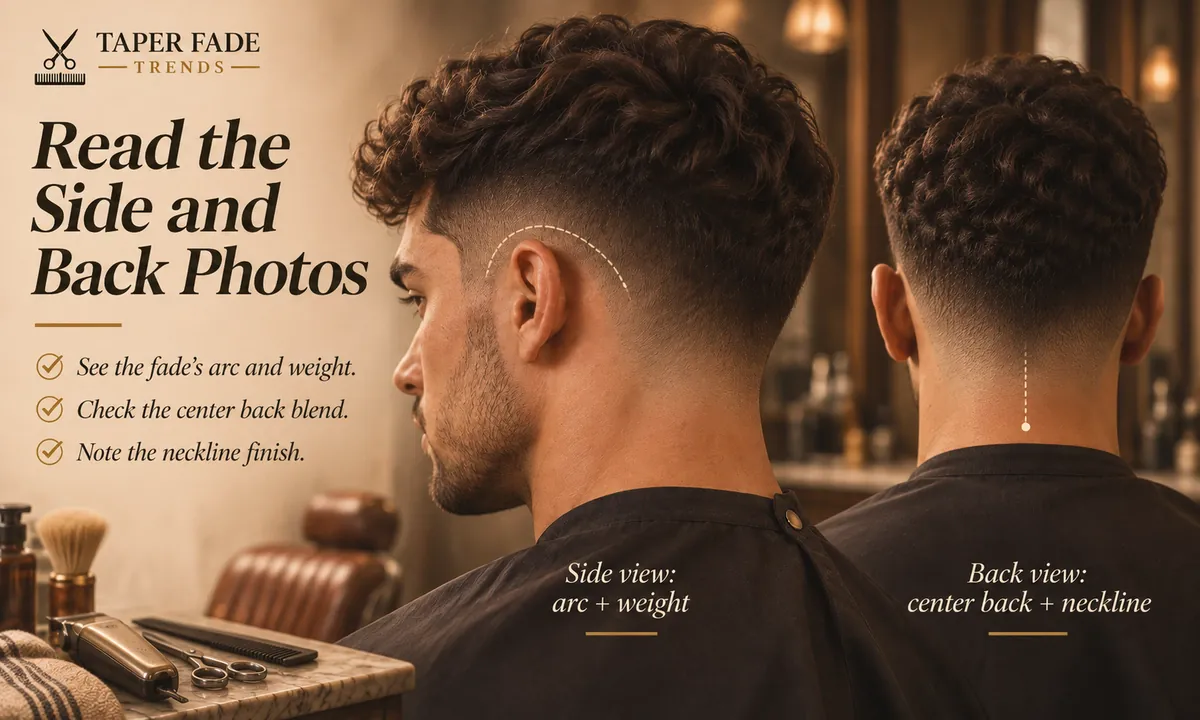
Check a reference in two steps:
- Side view: find the top edge of the arc, and decide the highest line you would accept on your own head. Check that both sides sit at about the same height.
- Rear view: find where the center back keeps its length and where the neckline starts to shorten.
If a reference shows only one angle, ask the barber what the missing angle would look like before you agree to it.
What the side view proves
The side view proves where the arc sits and how much hair stays above and outside it. It can’t prove the arc’s height in inches or the shortest finish. Low, mid and high are relative labels, and lighting and hair color change how skin, zero and shadow read in a photo.
What the rear view proves
The rear view shows two separate things: whether the center back keeps its length, and whether the nape gets its own taper. Sources split on the nape. TheBarberList and TheBurstFade both taper the neckline while the back stays long. Republic of Barbers, a shop in Adelaide, describes a burst that leaves the back and nape longer. This guide treats center back and nape as two choices.
The photos show where to look; the next decision is what the barber leaves at the back.
Choose the arc, back and neckline
A burst taper fade usually keeps more hair through the center back than a drop fade. A drop fade is a continuous fade whose line curves down behind the ears and runs across the back, as Burst & Taper describes it. The name does not decide the nape, so choose the rear outcome first. Carry the fade across the back and the cut becomes a drop fade.
| Rear outcome | From behind | Upkeep | Pick it if |
|---|---|---|---|
| Full center back, natural nape | Full hair between the two arcs | No back edge to keep sharp; the arcs still show regrowth | You’re growing the back or want the arcs to stand out |
| Full center back, tapered nape | Full center with a shortened bottom edge | One more edge that may blur between visits | You want a tidier neckline without fading the back |
| Fade connected across the back | The short zone runs right across | The most short hair to keep even | You want one unbroken fade, which is a drop fade |
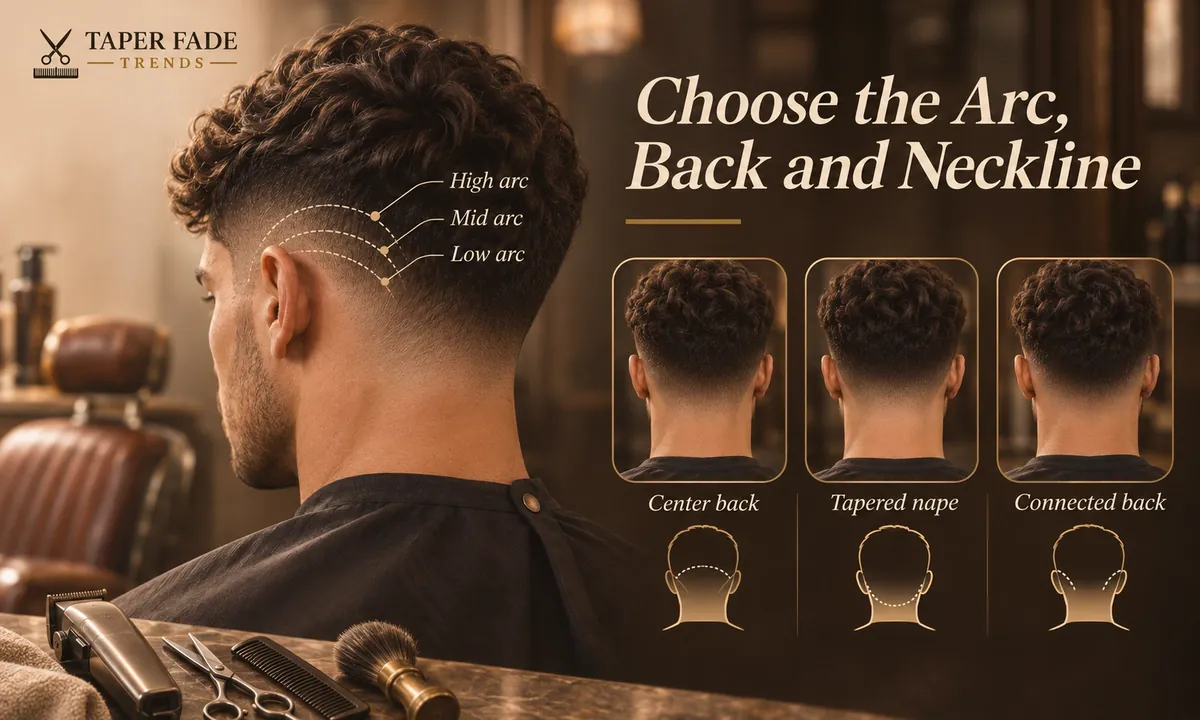
Low, mid and high set how far up the side the arc climbs, not how short it goes. A low arc stays close to the ear and keeps the most side weight. A high arc removes the most and shows the strongest contrast. The labels are relative, so point to the highest line you will accept.
| Placement | What changes | Short area to keep even | Pick it if |
|---|---|---|---|
| Low | Arc hugs the ear; most side weight stays | Smallest | You want the arc to read quietly |
| Mid | Arc climbs the side; less weight stays | Medium | You want a clearer curve and some side weight |
| High | Arc climbs toward the temple; least weight stays | Largest | You want maximum contrast |
If you’re unsure, start low. A barber can raise an arc on the next pass, but a high arc can’t come back down until it grows.
The shortest finish is its own choice. Skin gives the most contrast against the hair above it and shows regrowth first. A shadow gives the least contrast and hides regrowth longest.
Four burst taper fade versions to compare
Four burst taper fade references are enough when each changes one decision and all four show matched side and rear views. Start from a baseline of a low arc, shadow finish, full center back and natural nape, then change one setting at a time. Four cropped photos of unrelated cuts are not four versions.
| Version | What changes | How it reads | What shows regrowth first |
|---|---|---|---|
| 1. Low shadow arc (baseline) | Nothing | A quiet curve with the most side weight | Very little; the edge fills in |
| 2. Low arc at skin | Finish only | The strongest contrast at the ear | The bare zone |
| 3. Mid arc, shadow | Height only | A larger short area, less side weight | The wider short area |
| 4. Low arc, tapered nape | Nape only | Full center back with a tidy neckline | The neckline edge |
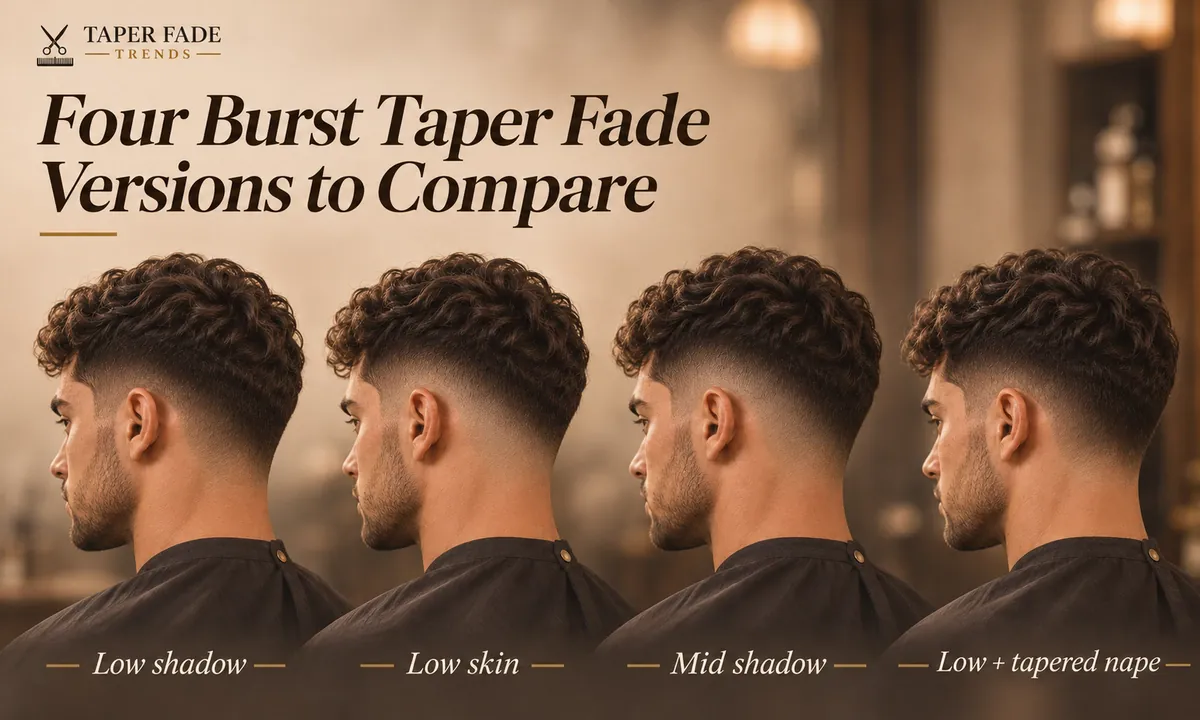
If two versions appeal, work out whether the height or the finish is the real draw. You can request one without the other.
A burst taper fade works on straight, wavy, curly and coily hair. Texture and density change how clearly the ear arc reads and how much length must stay above it. TheBurstFade notes that straight hair shows every step in the blend, while curls need enough length for the pattern to form. On low-density hair, even a shadow can show scalp. Match references to hair like yours, not to a face-shape chart.
A barber brief you can show
Describe five outcomes for a burst taper fade: the highest point of the arc, the shortest finish, the side weight, the center back and nape, and the top. Show side and rear photos of one haircut, then ask the barber to repeat the plan before the clippers start. The name alone covers only the shape.
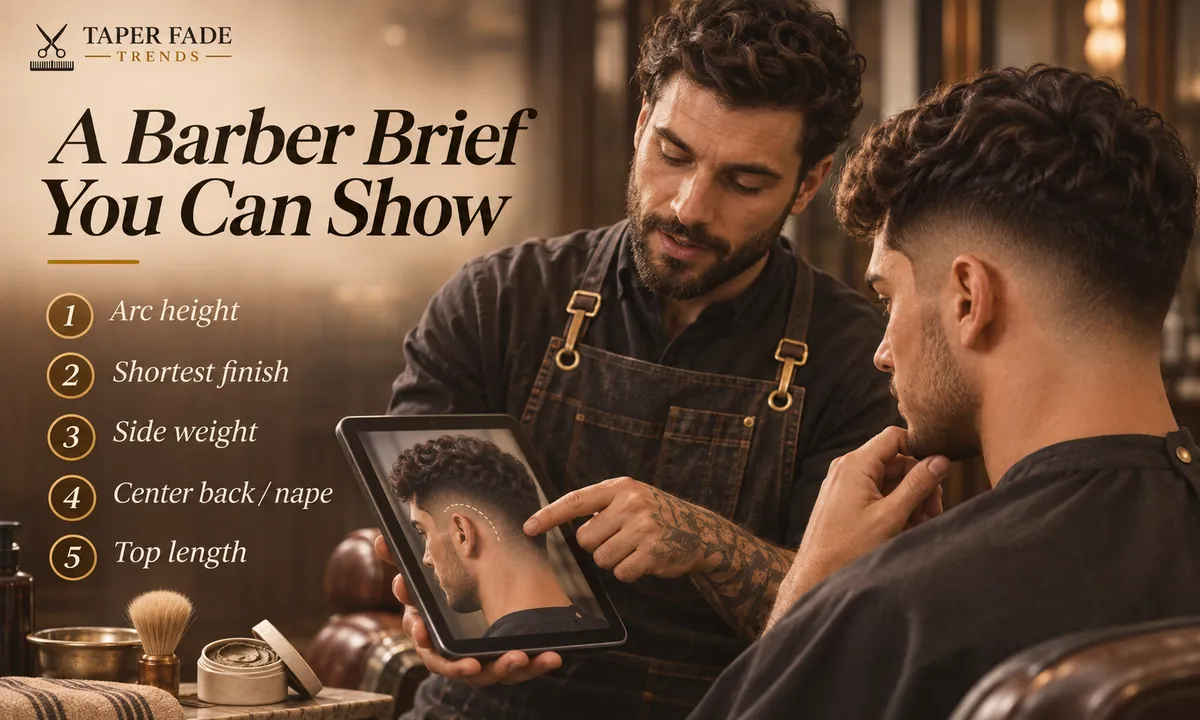
Say it in this order, filling the brackets:
- “Keep the arc around each ear no higher than here,” pointing to the spot on your head.
- “Take the shortest point to [skin / a zero / a shadow].”
- “Leave the hair above the arc about this long,” showing the side photo.
- “Keep the center back [full / this length], and [leave the nape natural / lightly taper the nape].”
- “On top, [take the ends off / keep the length], and I wear it [direction].”
Add any outcome you can’t accept:
- “Please don’t fade across the center back.”
- “Don’t take the arc above the point I showed you.”
- “No closer than the finish I named.”
Bring four views of the same haircut: the front for the sideburn edge, each side for the two arcs, and the back for the center back and nape. The five-part taper fade brief covers the pre-cut check in more detail.
Burst taper versus drop fade
A burst taper fade keeps its shortest zone in an arc around each ear and usually leaves the center back fuller. A drop fade carries its band around the head, dipping behind the ears and fading through the back. A nape taper on a burst can make the two look alike in photos, so compare rear views.
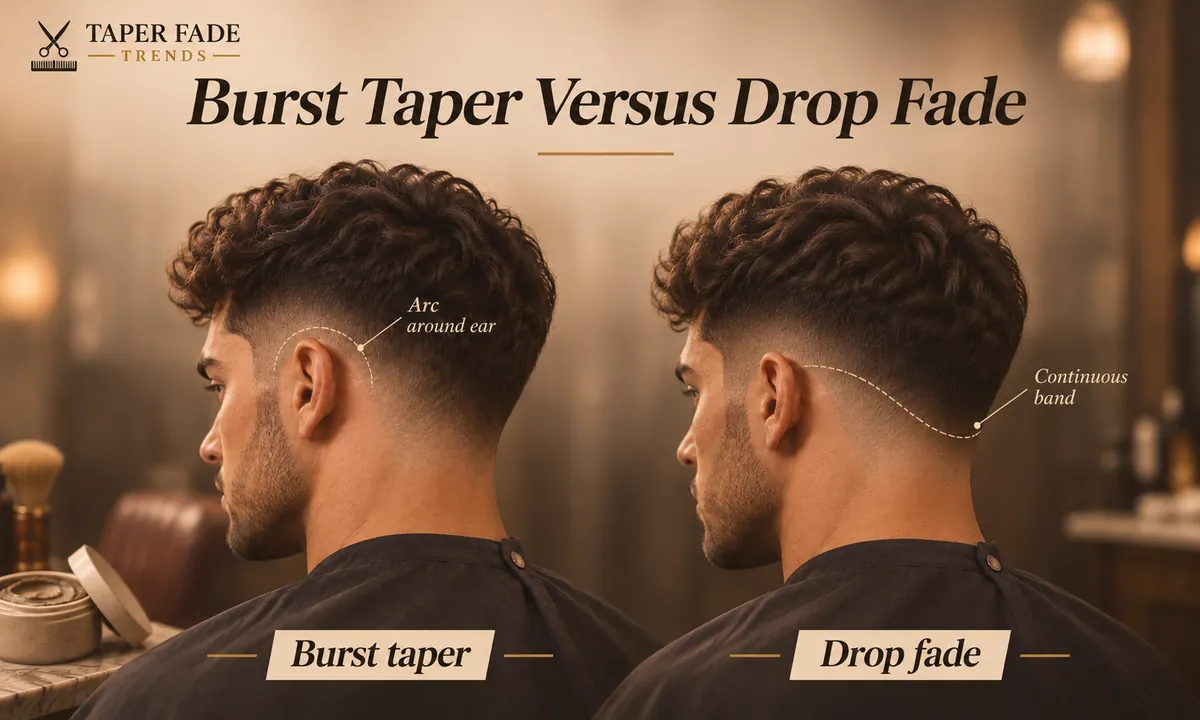
| Criterion | Burst taper fade | Drop fade |
|---|---|---|
| Path of the short zone | A rounded arc around each ear | Around the head, dipping lower behind the ears |
| Center back | Usually kept fuller | Part of the fade |
| Nape | Its own choice: natural or tapered | Faded through |
| Shortest finish | Skin, zero or shadow | Skin, zero or shadow |
| Pick it if | You want back length kept | You want one continuous fade |
Burst & Taper also describes a hybrid, the drop burst fade, where the curve keeps dropping behind the ear toward the nape instead of closing around it. Shops use that name loosely as well. If a reference looks like one, agree how far the line drops and whether the center back stays long. The burst fade guide compares the burst and drop shapes in more depth.
Once the outline is agreed, how soon it needs attention depends on how close the arc is cut and how fast your hair grows.
Styling, regrowth and limits
A burst taper fade loses contrast as hair grows, and no single rebooking interval suits everyone. MedlinePlus puts healthy hair growth at about half an inch a month. A skin arc therefore shows regrowth soonest, and a shadow arc hides it longest. Rebook when the ear curve blurs or the nape turns fuzzy, not on a fixed count of weeks.
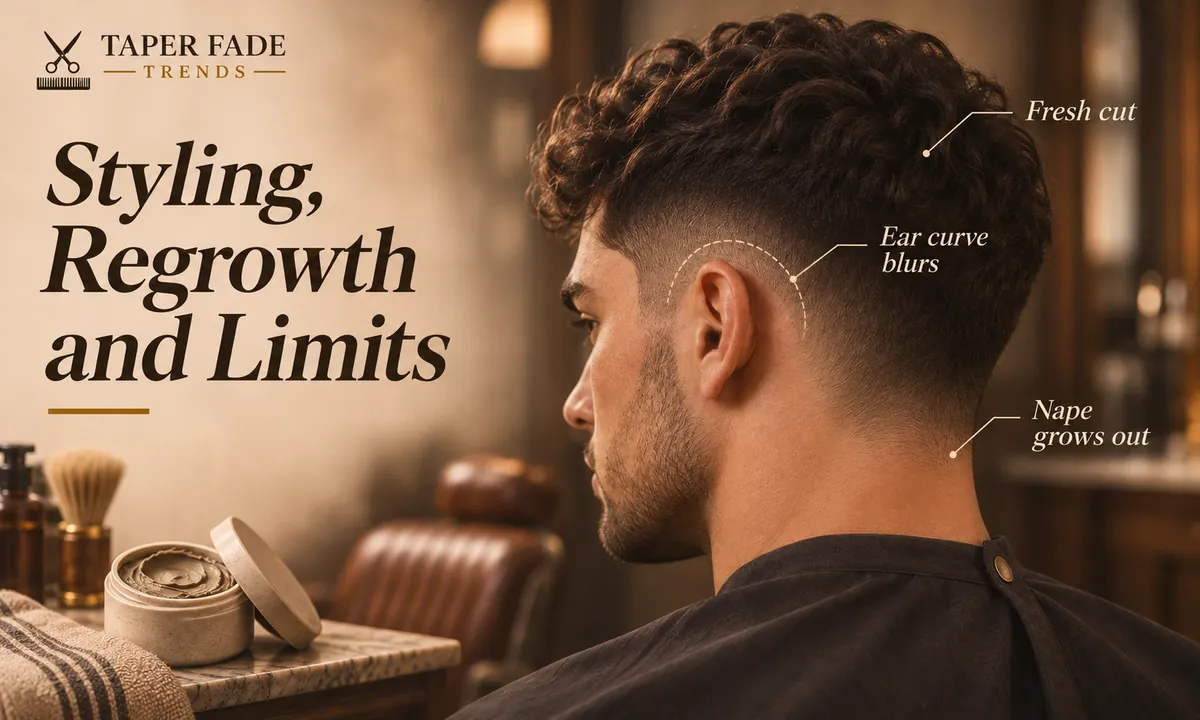
A tapered nape shows regrowth before a natural one, because it starts as a defined edge. Strong contrast between hair color and skin makes any grown-out edge visible sooner. For tidying between visits, see how long a taper fade lasts.
The arc needs no styling; the top does. Style the top in the direction it already grows. No product can restore a grown-out arc or nape.
Two situations call for a different request:
- You want one unbroken fade around the head: ask for a drop fade.
- Your reference shows short work only at the temple and nape, with no curve around the ear: that is a taper, whatever the photo is labeled.
A skin finish is a close shave at the bottom of the arc. DermNet, a dermatology reference, says razor bumps can appear anywhere hair is shaved close and are more likely with curly, coarse hair. If bumps keep appearing along the arc, a shadow finish is the simple swap. See a dermatologist if they persist. This is general information, not a diagnosis.
How this guide was checked
Taper Fade Trends Editorial compared how a working barbershop, a barber directory and several haircut publishers describe the burst taper fade’s ear arc, center back and neckline. The sources were checked on November 4, 2026. “Burst taper fade” isn’t a standardized name, so this guide treats arc height, shortest finish, center back and nape as choices to confirm with the barber. Where sources disagree, mainly on the nape, the page shows each version.
Every image on this page is an illustration of shape, not a photograph of a documented cut, and no cut measurements were recorded. No barber has reviewed this version yet; when one does, their name, role and review date will be added here. Found an error? The editorial policy explains how corrections are made and dated, or you can contact us.
Sources:
- TheBarberList: Burst Taper Fade: Types, Benefits and Upkeep
- TheBurstFade: Taper Burst Fade: A Complete Guide to the Burst Taper Fade
- Burst & Taper: Burst Fade vs Drop Fade
- Republic of Barbers: Drop Fade vs Burst Fade Explained
- MedlinePlus: Hair Problems, National Library of Medicine
- DermNet: Pseudofolliculitis barbae (razor bumps)
- How to Ask for a Taper Fade: A Five-Part Barber Brief, Taper Fade Trends
Check your barber brief next
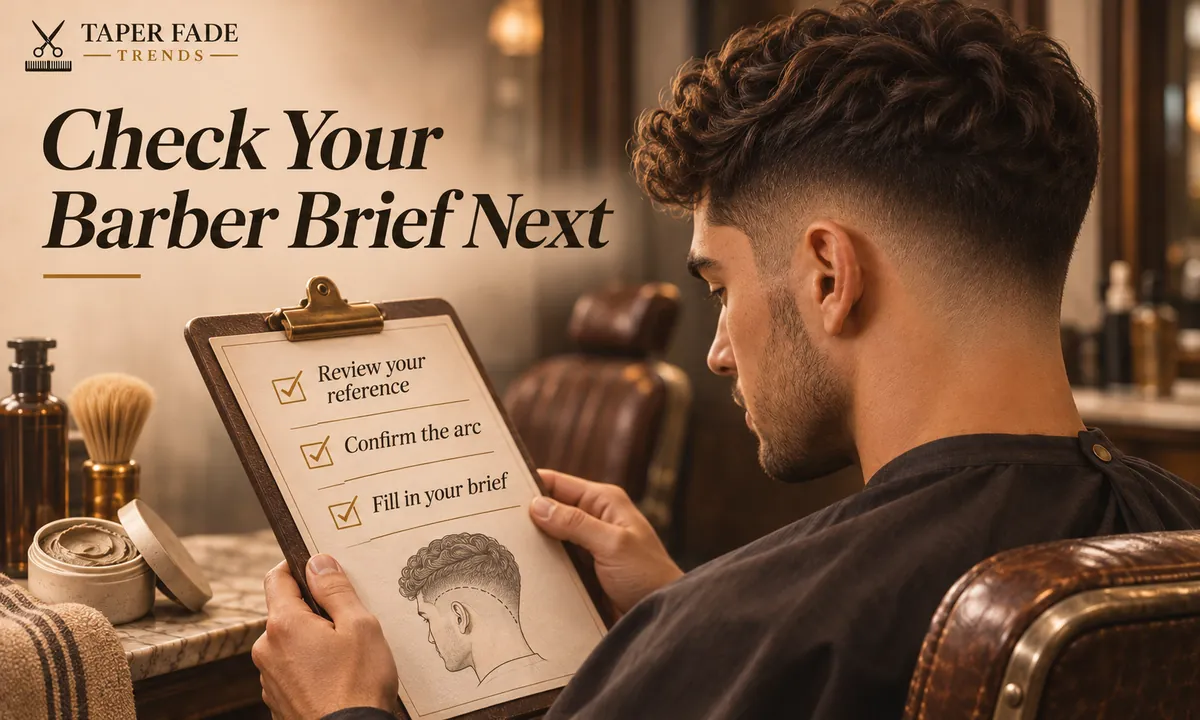
Before you book, hold each reference photo against the six decisions at the top of this page and fill in the five-line brief. The burst fade guide covers the wider family of burst cuts. Burst fade vs taper helps if you’re still choosing between the two.
Keep reading
All guides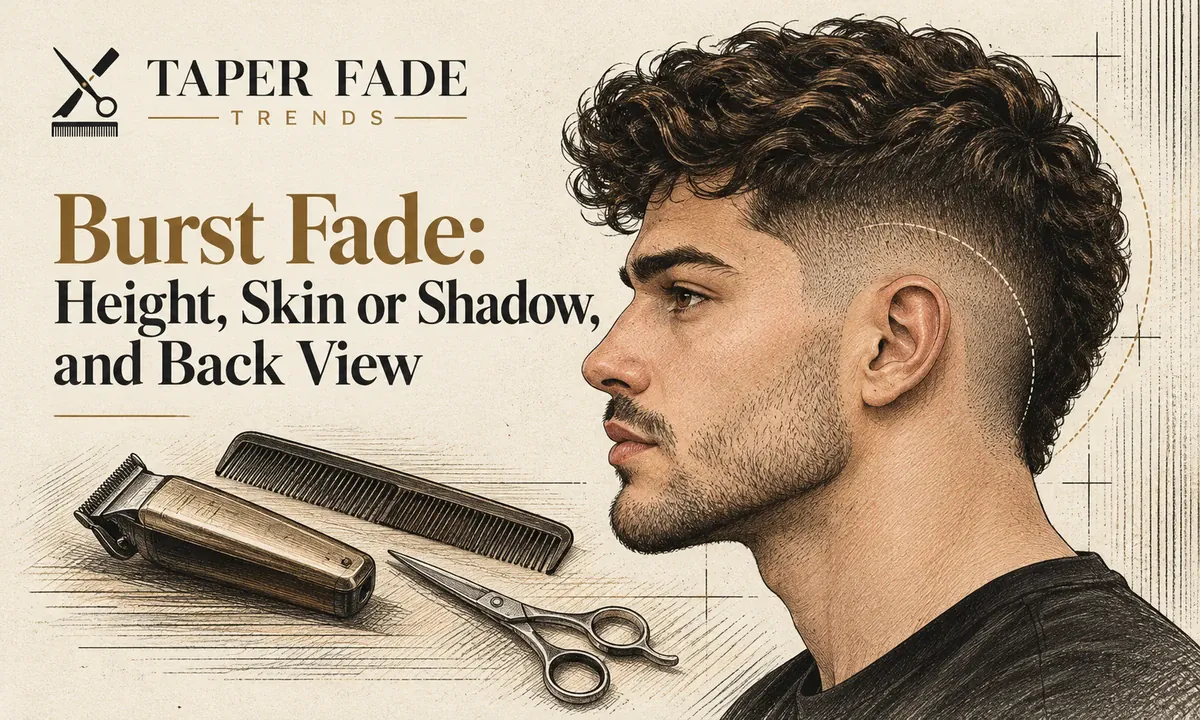
Burst fade: arc height, shortest finish and back view
A burst fade curves around the ear. It doesn’t have to reach skin, and the back is a separate choice. See the three controls and what to tell your barber.
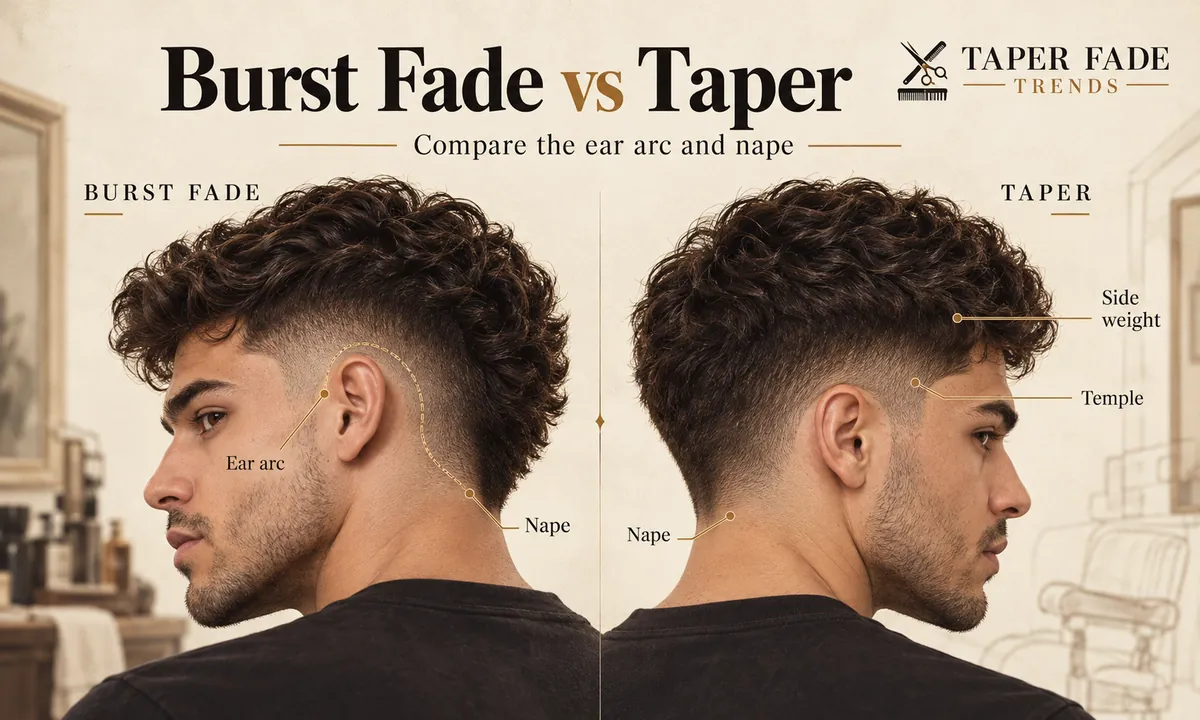
Burst fade vs taper: compare the ear arc and nape
Burst fade vs taper compared by ear arc, side coverage, nape treatment and shortest finish, plus a five-part barber brief and the photos to bring.
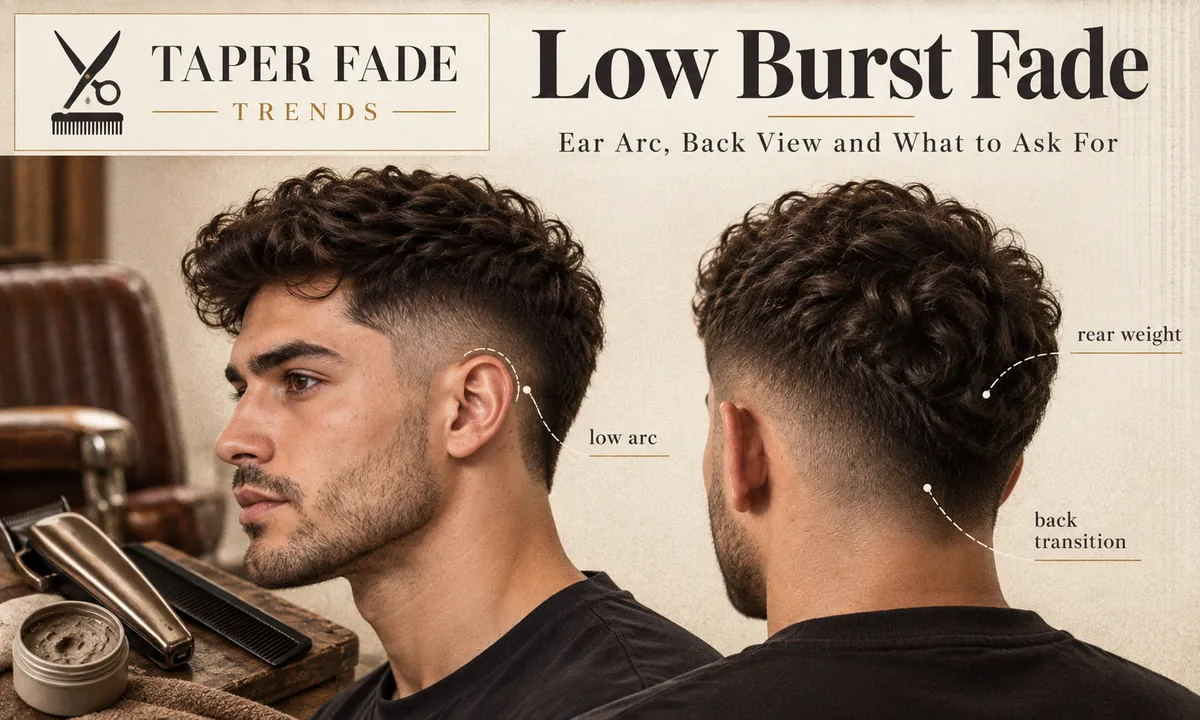
Low burst fade: the low ear arc and back transition
A low burst fade curves low around the ear and can keep length at the back. Compare skin vs shadow, burst vs drop fade, and what to tell your barber.
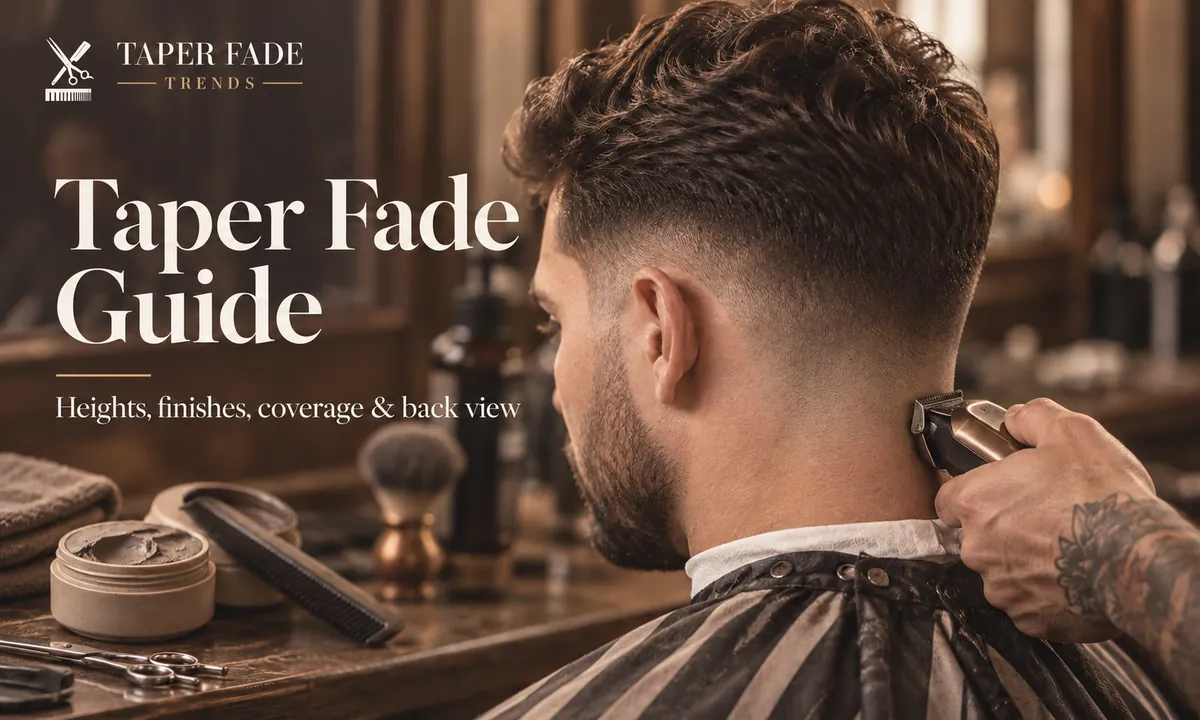
Taper fade: a visual guide to heights, finishes and top styles
Where a taper fade sits from the front, side and back, how low, mid and high differ, and how to ask for side coverage and a finish with or without skin.
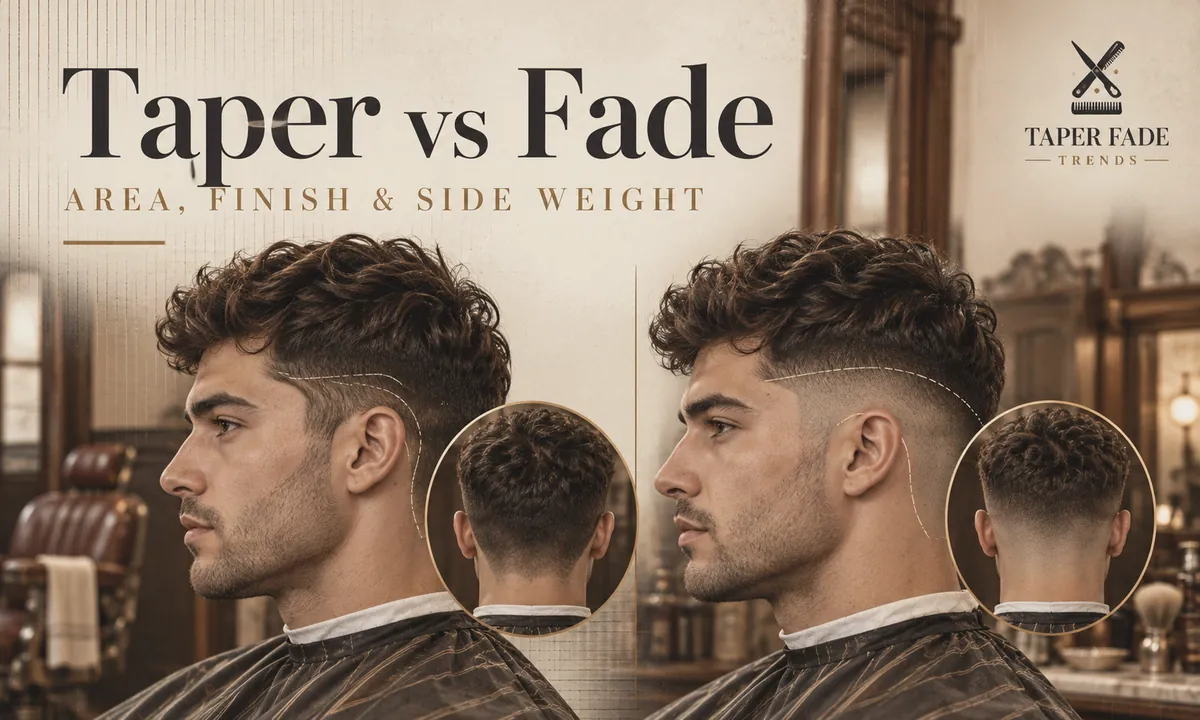
Taper vs fade: what changes in area, finish and side weight
Taper vs fade compared by coverage, height, shortest finish and side weight, with a back-view check and word-for-word barber scripts for either cut.
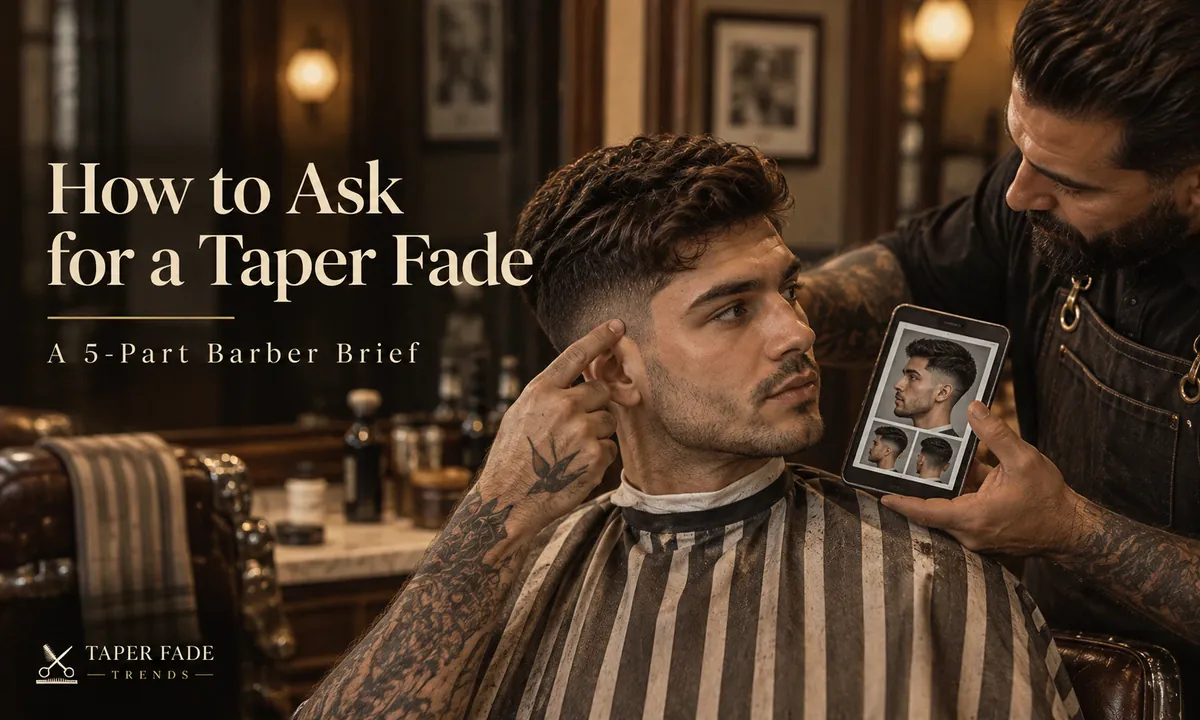
How to ask for a taper fade: a five-part barber brief
How to ask for a taper fade: say where it may reach, how short the base goes, how much side weight stays and what to do on top, then check the plan first.
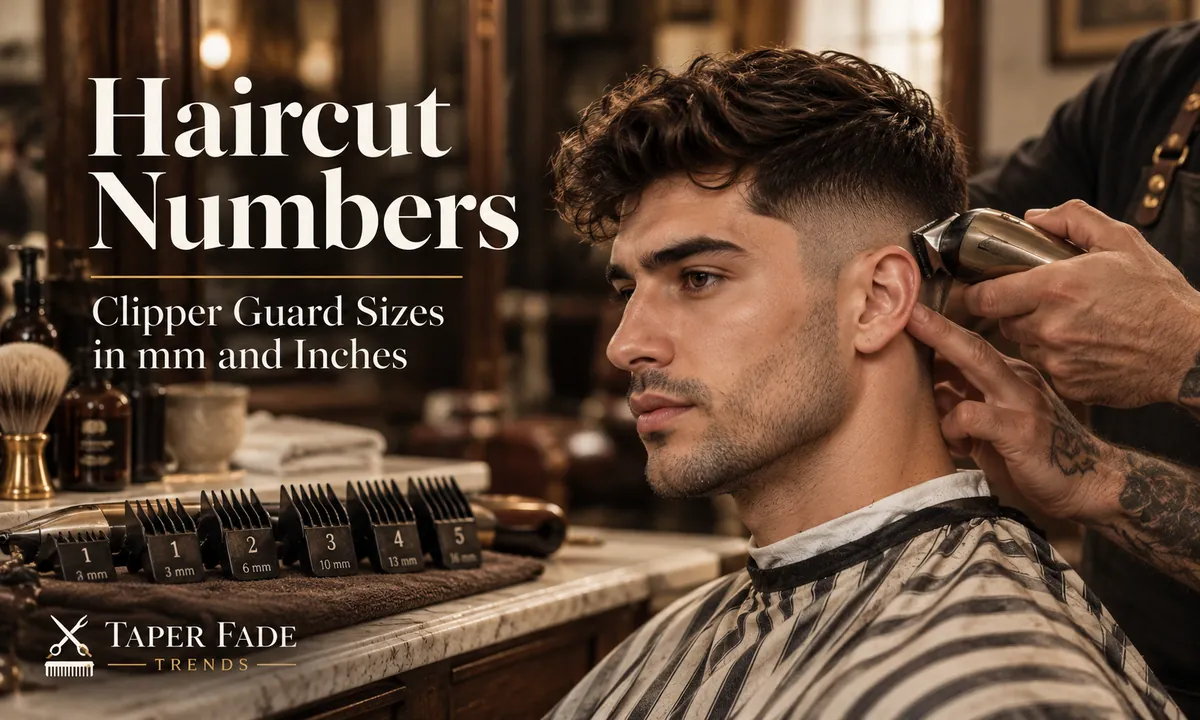
Haircut numbers: clipper guard sizes in millimeters and inches
Haircut numbers in mm and inches, checked against Wahl, Andis and Oster specs, plus why #0 isn’t always no guard and what to tell your barber.
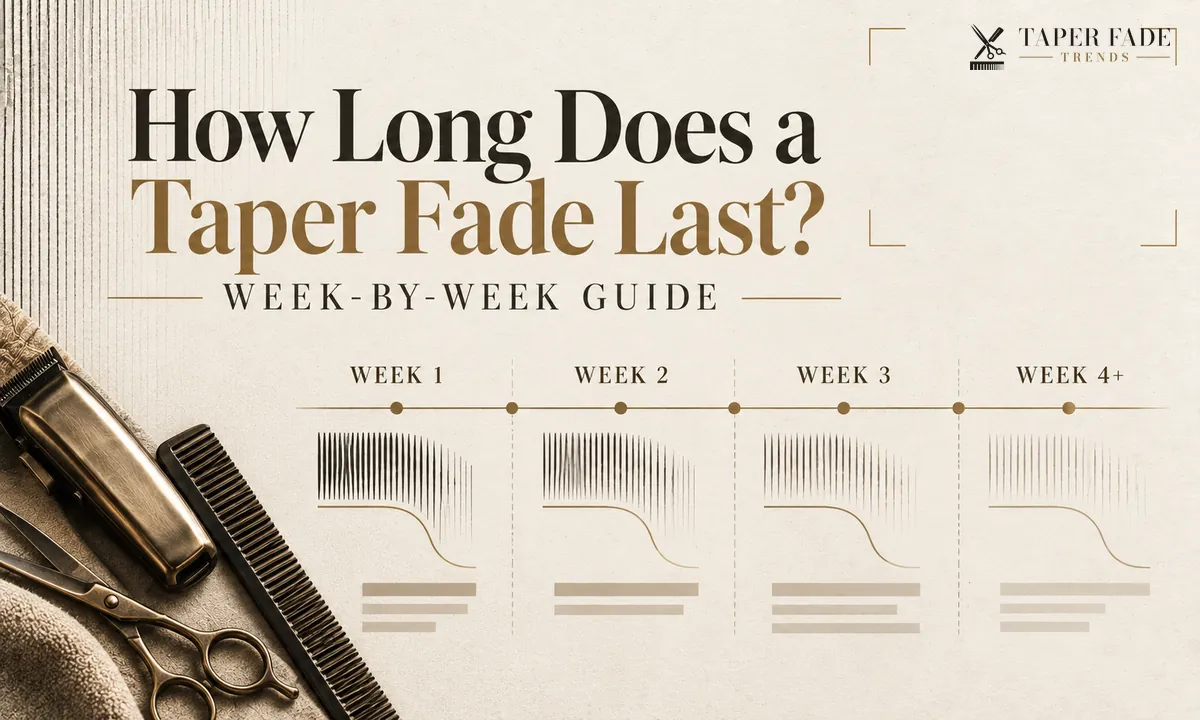
How long does a taper fade last? Fresh, tidy and grown-out stages
How long does a taper fade last? Sharpest for 1 to 2 weeks, tidy for about 2 to 4. See what changes each week and when a touch-up beats a full cut.
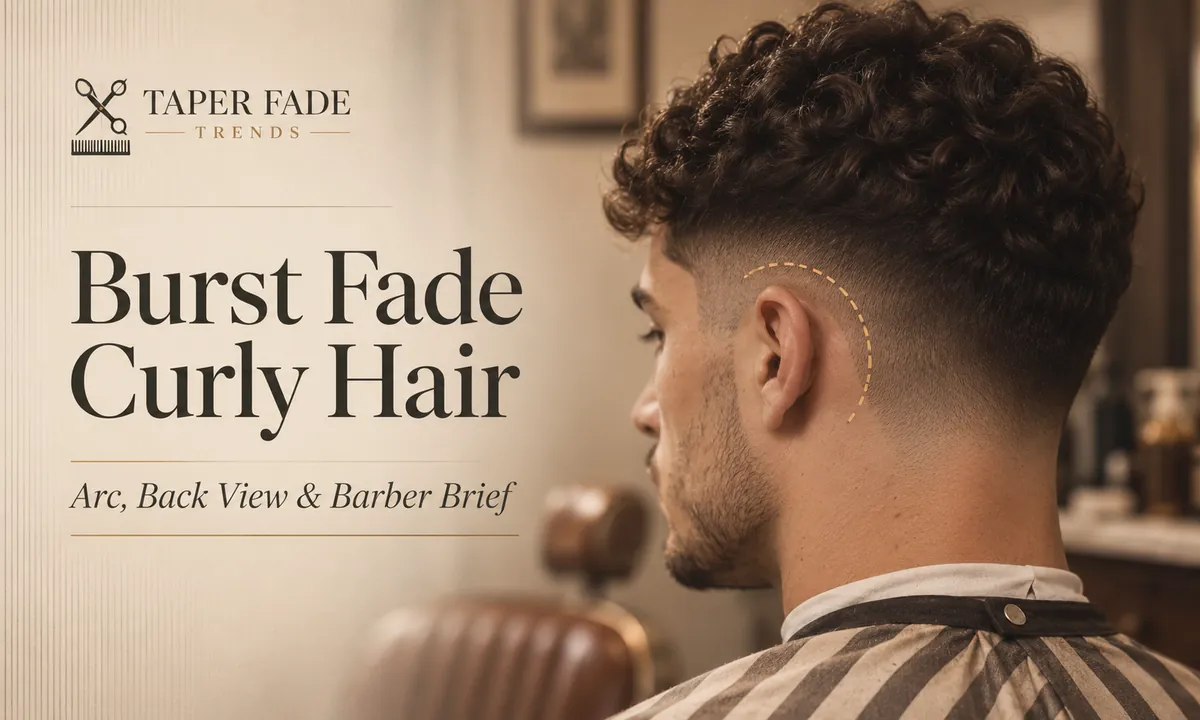
Burst fade curly hair: keep the curl shape around the ear
A burst fade on curly hair curves around the ear. Set the arc, skin or shadow finish and nape on dry curls, then take a six-point brief to your barber.
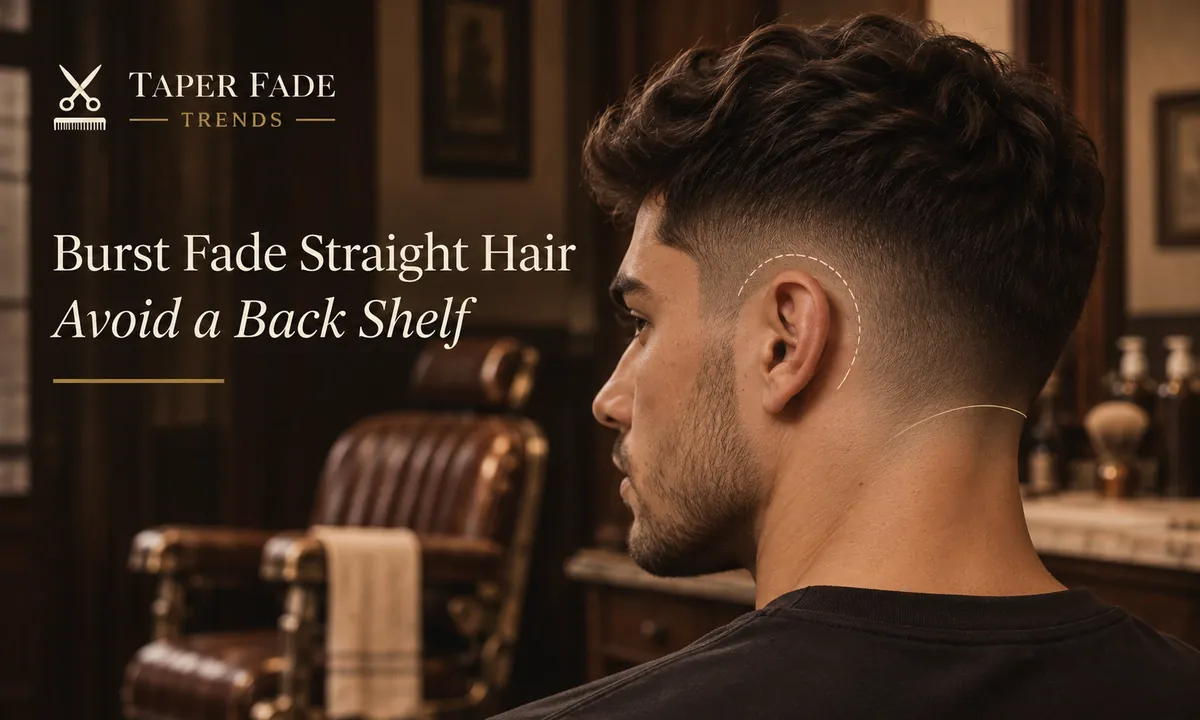
Burst fade straight hair: avoid a disconnected-looking back
A burst fade on straight hair shows every step. See where the ear arc should stop, how the crown connects, and what to tell your barber to avoid a shelf.
More in burst fades
Burst fades: all 8- Burst fade: arc height, shortest finish and back view15 min
- Low burst fade: the low ear arc and back transition12 min
- Burst taper fade: what the side and back should showYou are here
- Burst fade curly hair: keep the curl shape around the ear12 min
- Burst fade straight hair: avoid a disconnected-looking back10 min
- Burst fade black men: waves, coils and longer tops13 min
- Burst fade mullet: map the ear arc and keep the back12 min
- Burst fade vs taper: compare the ear arc and nape10 min