Mid taper fade wavy hair: work with the natural bend
A mid taper fade on wavy hair starts the blend around temple height and keeps the shortest work at the sideburns, around the ears and at the nape, while the top keeps enough length for its natural bend. Because shops place “mid” differently, settle placement, side weight, shortest finish and dry shape with your barber first.
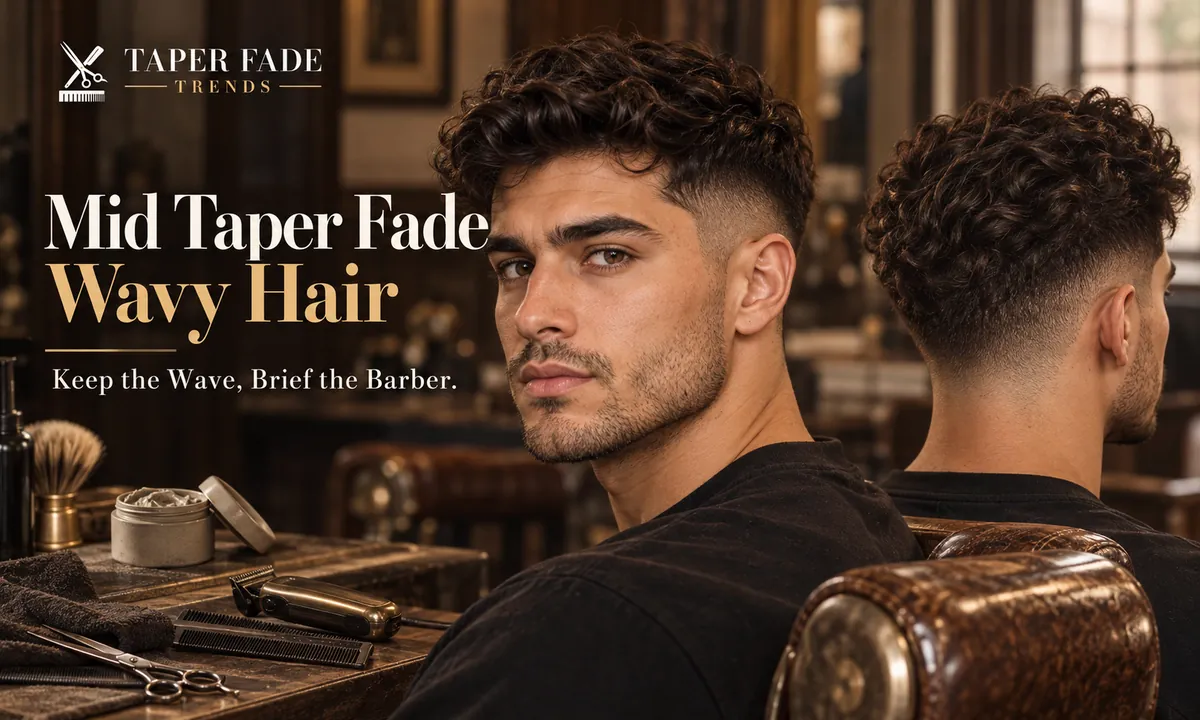
Seven decisions turn the name into an order a barber can follow. Where you can’t settle one, the right-hand column says what to do instead.
| Decision | What to settle | If you can’t settle it |
|---|---|---|
| Placement | A line on your own head where the blend starts | Point to it on a side photo |
| Side coverage | Which of the temple, ear and nape zones the taper covers | Ask the barber to describe the blend around the ear before cutting |
| Shortest finish | How short the base goes: skin, a shadow or a short visible length | Say “visible hair, not skin” or show it in a photo |
| Side weight | How much wavy hair stays above and behind the ear | Show where the sides start to push out when dry |
| Top length and dry shape | Whether the top should lie, lift, part or fall into a fringe | Describe the dry result and keep more length, not less |
| Growth direction | Where any cowlick or whorl sits | Ask the barber to check it on dry hair |
| Wave type | Natural waves or a trained 360 pattern | Say which; “waves” alone is ambiguous |
Mid taper fade wavy hair: what actually changes
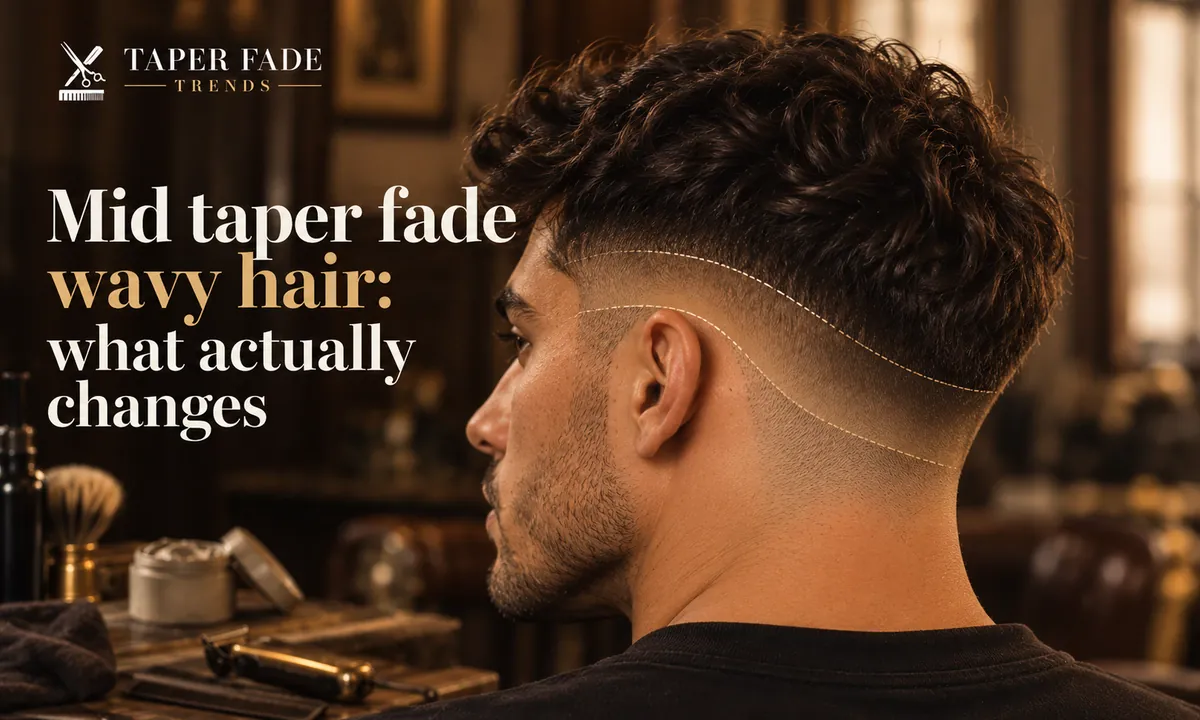
Mid taper fade wavy hair is a perimeter taper that starts around temple height, does its shortest work at the sideburns, ear perimeter and nape, and leaves enough wavy hair above it to hold the dry shape you chose. The name fixes none of the numbers: placement, side weight, shortest finish and top length are separate choices.
That matches how the published guides describe the cut. Burst & Taper calls it a localized blend around the temple, sideburn and neckline, and Barberstake says the taper normally begins around the temple and shortens toward the ears and neckline. The perimeter is the outer edge of the haircut around the temples, ears and nape.
On wavy hair, the taper changes the dry outline because it removes side weight, the bulk of hair sitting beside the head. The waves above then sit closer to the head. A full mid fade carries the short work across most of the side and back and keeps less of that weight; the mid taper fade guide compares the two on every hair type.
Where “mid” starts is a landmark, not a universal line
No published standard fixes where a mid taper starts. Taper Trends puts it between the top of the ear and the temple, while Barberstake puts it around temple level. Point to the line on your own head, then say how far the blend should travel around the ear and toward the nape.
The transition, which barbers also call the blend, is the zone where length changes from the longer top to the shortest finish. A pointed finger on a photo carries more information than the word “mid”.
Natural waves are not 360 waves
Natural waves and 360 waves are different things. Naturally wavy hair bends on its own when dry. 360 waves, as CADMEN Academy describes them, are natural hair trained by daily brushing and overnight compression into a circular pattern radiating from the crown. A taper over 360 waves has to protect that trained pattern, which this guide does not cover.
| Naturally wavy hair | 360 waves | |
|---|---|---|
| What it is | A bend the hair has on its own when dry | A pattern trained from the crown outward with brushing and a durag |
| What the taper changes | The dry outline, once side weight comes off | How much of the trained pattern survives on the sides |
| Covered here | Yes | Only this distinction |
CADMEN treats looser wavy hair as a borderline case for 360 waves: some well-defined 2B or 2C hair can train into a basic pattern, usually shallower than on curlier hair.
A taper can change how natural waves look where it removes side weight, but it does not touch the top. For 360 waves the risk is different: CADMEN notes that cutting the wave section too short sets the training back. Say which pattern you want kept, and point to where it must survive.
How much wavy hair to keep on top
No single top length suits every mid taper on wavy hair, and the guides disagree. Taper Trends gives one to three inches and says waves read as texture below about an inch; Barberstake suggests three to five inches for medium or thick hair. Describe the dry result instead: lie, lift, part or fringe.
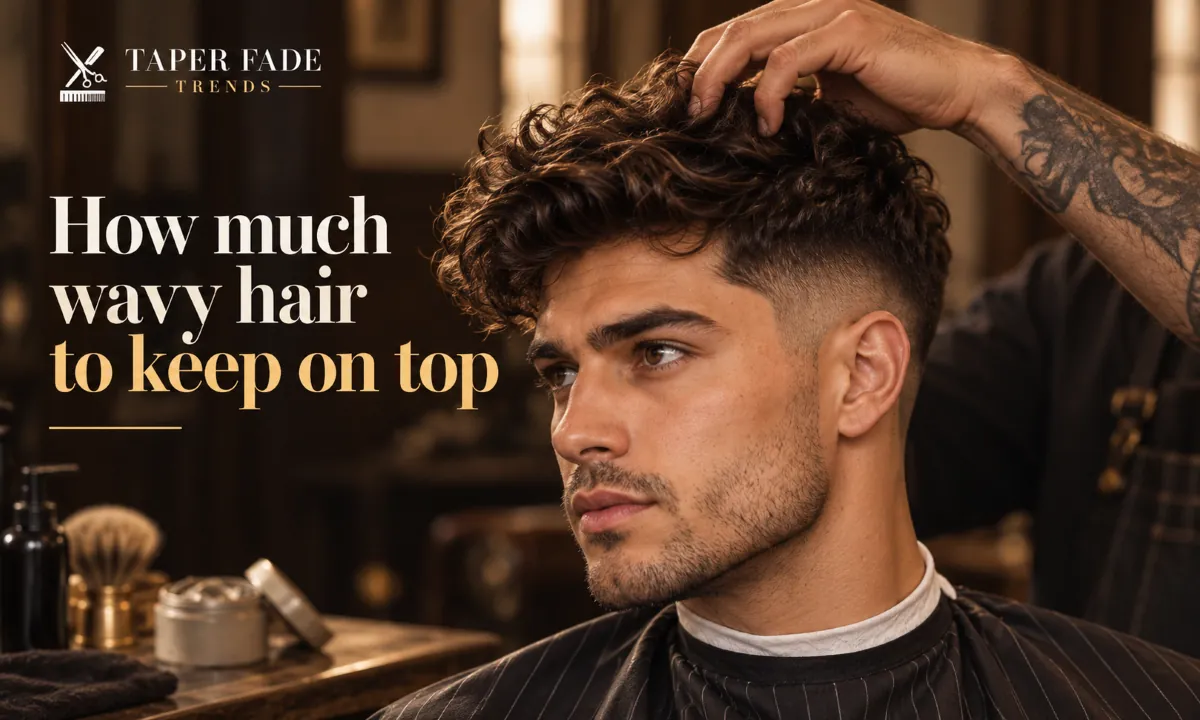
The gap between those two ranges is two inches at the overlap and four at the extremes, which is the difference between a short crop and a top that falls past the eyebrows. Neither guide says how its numbers were measured, and this guide has no measured cut of its own, so it prints no length.
What holds across every source is the direction of the risk. A top cut too short loses the wave, and the hair does not go back on. If you are between two lengths, ask for the longer one and take more off at the next visit.
Choose the shape by wave pattern, density and growth direction
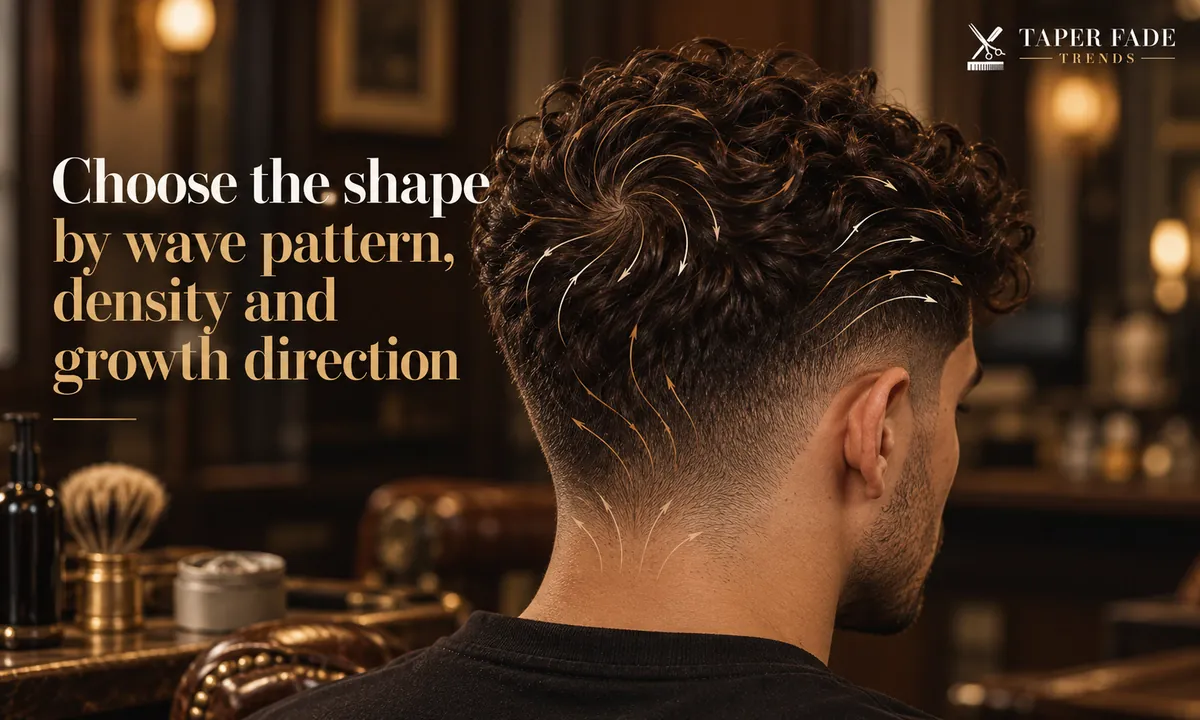
Three things on your own head decide which mid taper shape works: how tightly the hair waves, how much bulk the sides carry when dry, and which way the hair grows. Check all three on dry hair, since that is the state you wear it in.
Loose versus tighter natural waves
Looser waves usually need more length before the bend shows as movement, while tighter waves show texture on a shorter top. Judge your own wave dry, at the length you plan to keep, rather than from someone else’s photo.
Density, dry bulk and thinning
Density is how much hair grows in a given area, and it decides how much bulk the sides carry after the taper. If your sides already stand away from the head when dry, ask for weight removed where they push out. If they lie close, say you want the weight kept.
Ask for that weight to come out selectively, not by heavy thinning. Burst & Taper and Barberstake both warn that over-thinning can leave waves frizzy or uneven.
Cowlicks, whorls and the neckline
A cowlick or whorl, a spot where hair grows in a different direction, is a constraint to mark before the cut, not something a guard number fixes. Point it out on dry hair and ask how much weight to leave beside it, because removing bulk next to a direction change can make that patch stand away from the head.
Mark the nape as well. Hair at the back often grows in more than one direction, and the back view is where a barber sees it.
Three wavy top shapes over the same mid taper
One mid taper can sit under three different wavy tops, and each is decided by one variable: how much movement you want, how short the top can go, or which way the front falls.
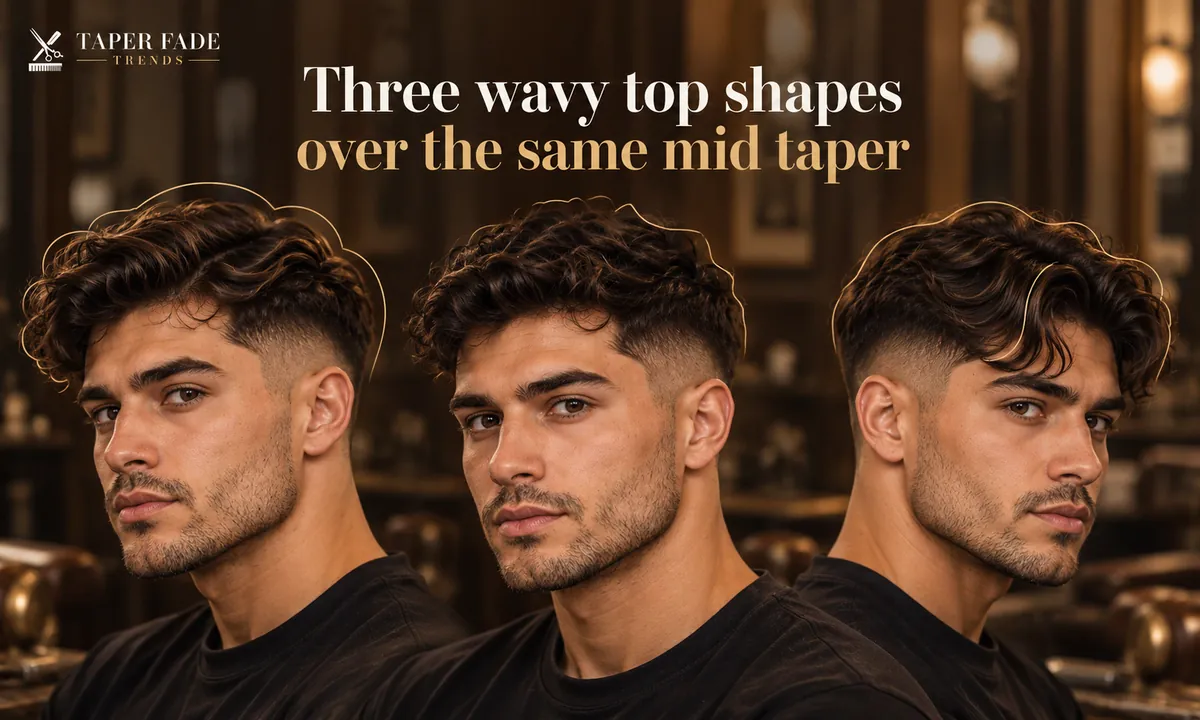
| Top shape | Deciding variable | What changes | Pick it if |
|---|---|---|---|
| Natural wavy flow | How much movement you want to see | The top keeps its length and bend | Your waves already hold a shape dry |
| Short textured waves | How short the top can go before the wave stops showing | Texture replaces movement | You want less daily work and accept a quieter wave |
| Wavy fringe or part | Which way the front hairline falls | The front is set to fall forward or to one side | Your front already falls one way when dry |
Natural wavy flow
Natural wavy flow suits waves that already hold a shape when dry. The decision is how much top stays above the taper. If dense sides widen the outline, ask for side weight reduced rather than a higher blend, since raising the start takes off more hair than the problem needs.
Short textured waves
A short textured top trades visible movement for a faster morning. The risk is going past the point where your wave still shows, and that point differs from head to head. Start longer than you think and come down a little at each visit.
Wavy fringe or part
Build a fringe or part with the way your front hairline falls, not against it. A cowlick at the front can push a fringe up or to the side, so name it in the brief. A fringe also changes how it falls as it grows, which makes it the shape most sensitive to time between cuts.
What to tell your barber
For a mid taper fade on wavy hair, tell your barber five things: where the blend may start, which zones it covers, the shortest finish, how much side weight stays, and what the top should do dry. Show front, both profiles and back of one reference, and ask the barber to repeat the plan back.
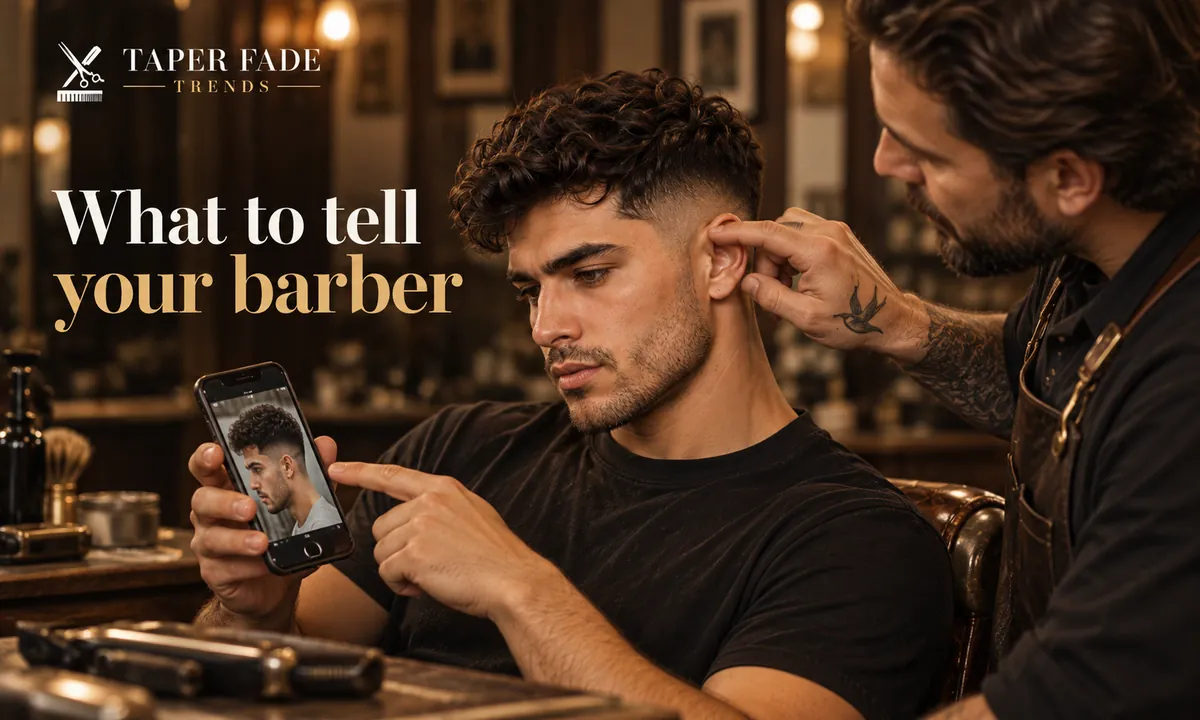
The general method, with the checks to run before the clippers start, is in how to ask for a taper fade. This section adds what changes for wavy hair.
A 15-second brief with blanks
Fill each blank from your own head or a reference photo, and leave clipper settings to the barber unless you know them.
- “Start the blend here, at ____, and no higher.”
- “Taper the ____ only.” (temple, around the ear, nape)
- “Keep the side weight above the blend; take it down only where ____ pushes out.”
- “Shortest point: ____.” (skin, a shadow, or visible hair)
- “The top should ____ when it’s dry, like this photo.” (lie, lift, part or fall forward)
- “Neckline ____, and check my cowlick at ____ first.” (natural or lined up)
If you want the setting for next time, ask which guard or blade the barber used and write it down. A guard number only means something inside one clipper system, so it records your barber’s method rather than a recipe for anyone else.
Reference photos to bring
Bring four views of one reference cut: front, left profile, right profile and back. A single three-quarter shot can hide the nape and the far side. Add your own dry hair from the same angles, so the barber can compare your growth direction and density with the target.
- The profiles show where the blend starts and how much side weight stays.
- The back shows nape coverage and how the neckline ends.
- The front shows the hairline, any fringe or part, and the outline width.
A photo shows a result, not the settings behind it. Point at what you want copied: the placement, the side weight or the top.
Style without flattening the wave
Style a wavy mid taper by the dry shape you want, then pick the drying method. Air-drying and diffusing are both options, and neither changes the taper; the perimeter grows out the same way however you dry the top.
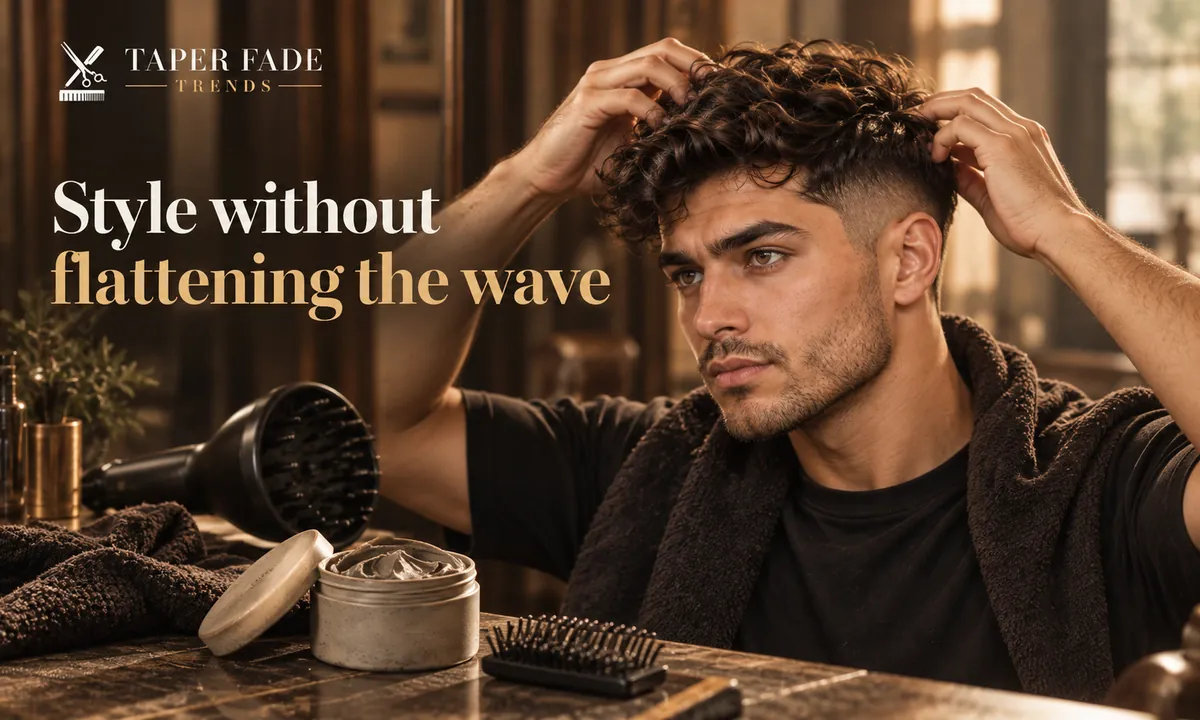
| Method | What it does | Pick it if |
|---|---|---|
| Air-dry | Lets the wave settle with no added lift | The cut looks right to you without help |
| Diffuser | Adds lift and root volume while keeping the wave | Air-drying leaves the top flatter than you want |
Air-drying a wavy mid taper
Yes, you can air-dry a mid taper on wavy hair when you want the wave to settle without added lift. Taper Trends and Barberstake both treat air-drying as the softest, most natural finish. The cut has to look right in that state, so ask the barber to judge your waves dry before finishing.
Pat the hair with a towel instead of rubbing it, and leave it alone while it dries; both guides make the same point.
When a diffuser helps
Use a diffuser when air-drying leaves the top flatter than you want. Keep the heat low or medium, as both guides advise. This guide names no product, because none was tested for it.
Grow-out, touch-ups and limits
No single touch-up interval fits every wavy mid taper, and the guides disagree. Taper Trends and Barberstake’s mid taper page say two to three weeks, Barberstake’s broader guide says three to four, and Burst & Taper gives no fixed schedule. Rebook when the sideburns or nape stop matching your reference.
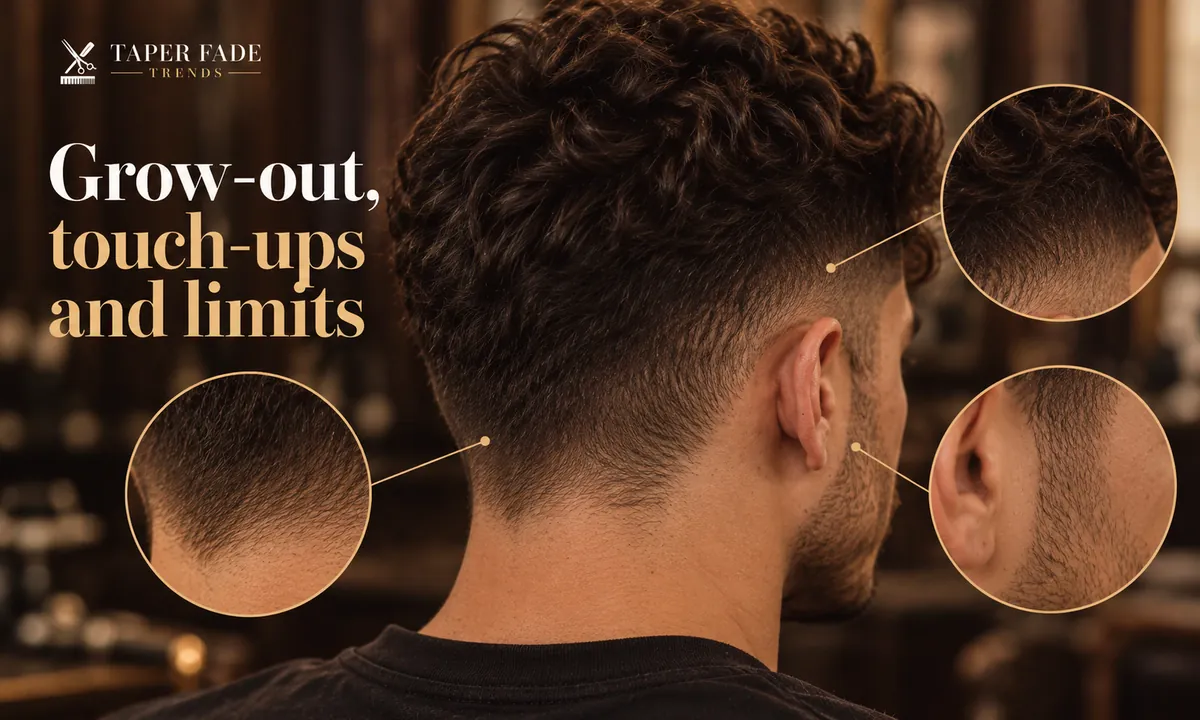
Those are the edges. The wavy top runs on a slower clock, and Burst & Taper notes it can often go longer between reshaping cuts. For a week-by-week view of the edges, see how long a taper fade lasts.
What changes first as it grows
The sideburns, the nape and the side weight change first, and four factors decide how soon:
- A closer shortest finish shows regrowth sooner, because there is less length to hide it.
- More contrast between hair color and skin makes new growth easier to see.
- A lined-up neckline loses its edge sooner than a natural one.
- Your own growth rate sets the pace, which is why no fixed interval holds.
Note how many weeks it took before the cut stopped looking deliberate. That number is your interval.
When another taper or fade fits better
Choose a different cut when the placement, side weight or top you want falls outside a mid taper, and describe the outcome, because labels vary between shops.
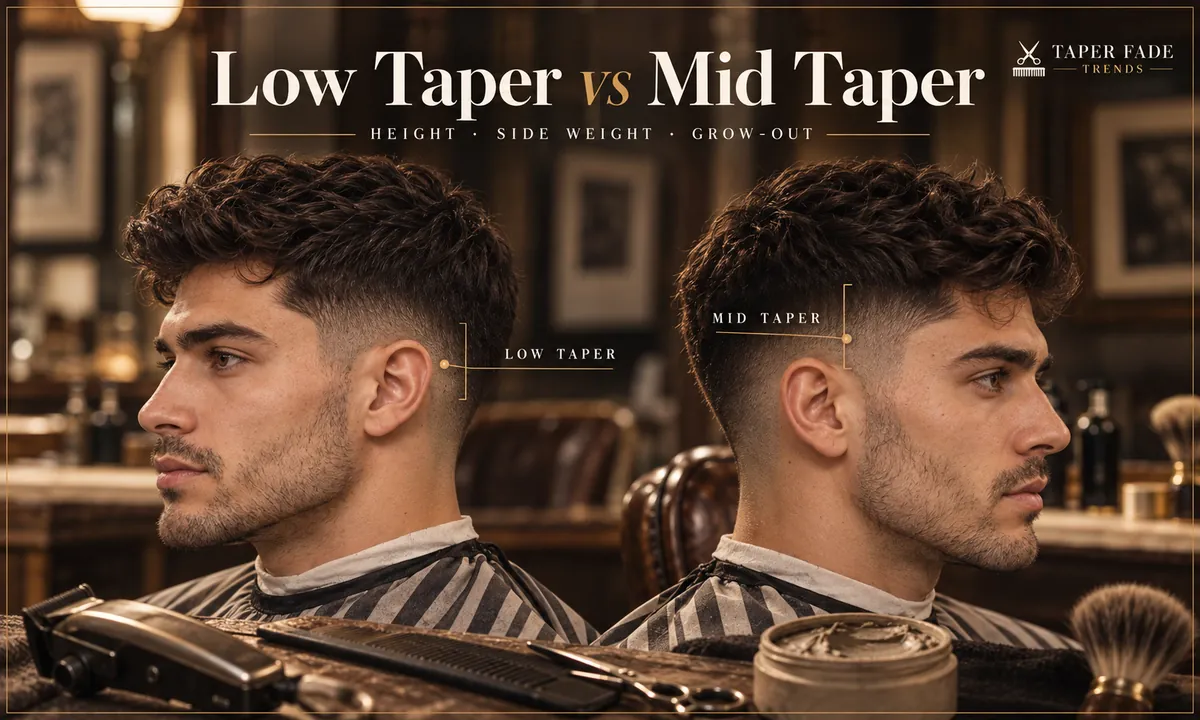
- For a lower start that keeps more side weight, compare low taper vs mid taper.
- For less side weight and short work across the whole side, ask for a full mid fade.
- For hair that curls rather than waves, the mid taper fade for curly hair guide covers dry length and shrinkage.
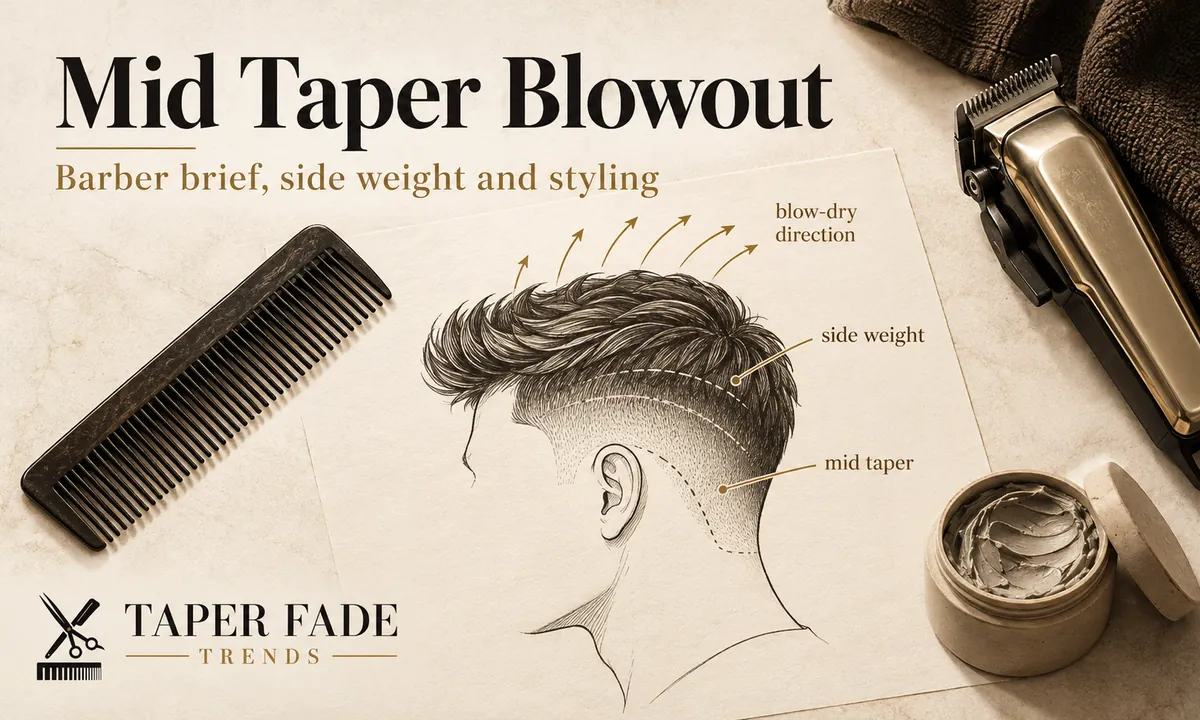
- For a built-up, blow-dried top, see the mid taper blowout.
- For a top clipped short all over, ask for a mid taper buzz cut.
If close cuts leave bumps at the back of your neck, the American Academy of Dermatology lists frequent close-shave haircuts among the things that can irritate the skin there in acne keloidalis nuchae. Its self-care advice for people with the condition is to avoid haircuts that shave the back of the neck. A shadow finish at the nape is the gentler request, and a dermatologist is the right person to ask about the skin.
Method, image notes and sources
Taper Fade Trends’ editorial team wrote this guide to help readers order a mid taper that suits their own wave pattern. It compares current wavy-taper guides with a barber academy’s explanation of 360 waves and the American Academy of Dermatology’s skin guidance, read on October 21, 2026. Where the guides conflict on top length or touch-up timing, the page shows both figures instead of picking one.

No named barber has reviewed this guide, and no real cut was photographed or measured for it. Top length, shortest finish and tool settings therefore stay unrecorded. Every figure is an illustration that explains placement and shape, labeled in its caption; none is a haircut result.
Sources cited in this guide:
- CADMEN Academy: 360 waves, what they are and how they’re done, on 360 waves
- Taper Trends: Mid taper fade wavy hair, on placement, top length, drying and upkeep
- Barberstake: Taper fade for wavy hair, on placement, top length, drying and upkeep
- Barberstake: Mid taper fade wavy hair, on thinning and upkeep
- Burst & Taper: Mid taper fade for wavy hair, on placement, thinning and upkeep
- American Academy of Dermatology: Acne keloidalis nuchae, causes
- American Academy of Dermatology: Acne keloidalis nuchae, self-care
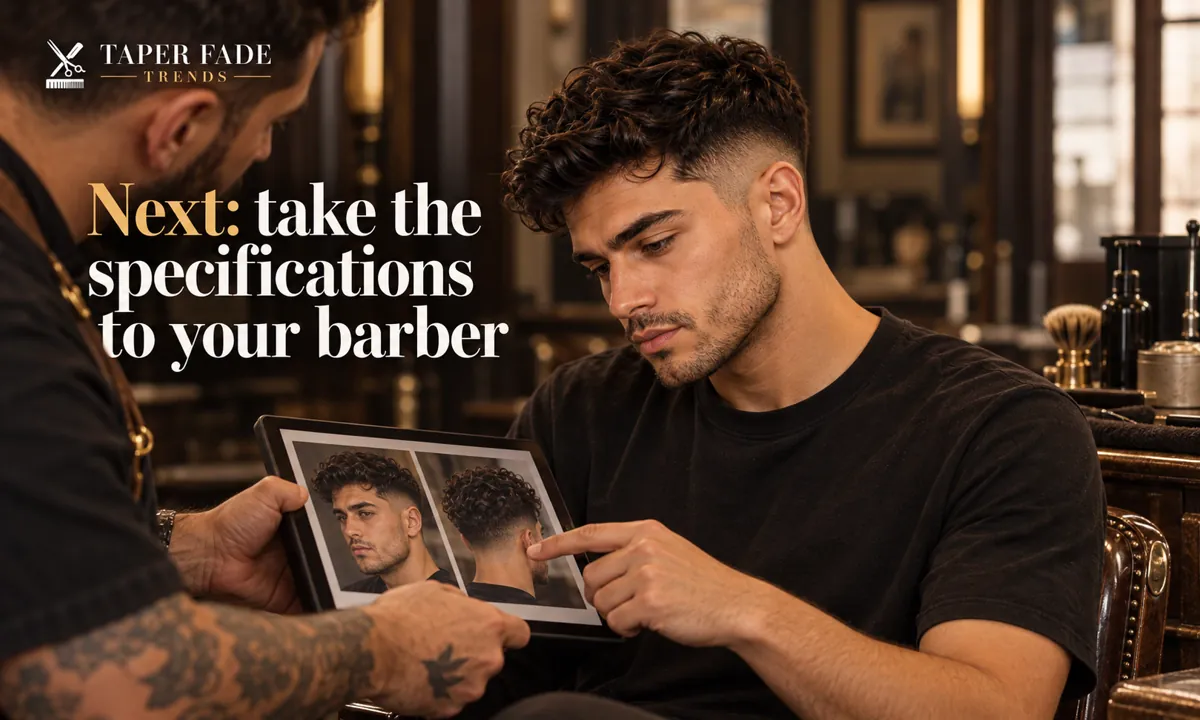
Next: take the specifications to your barber
If you are still choosing a height, the mid taper fade guide compares placement, finish and side weight on every hair type. When your seven decisions are settled, how to ask for a taper fade turns them into a five-part brief you can read out in the chair.
Keep reading
All guides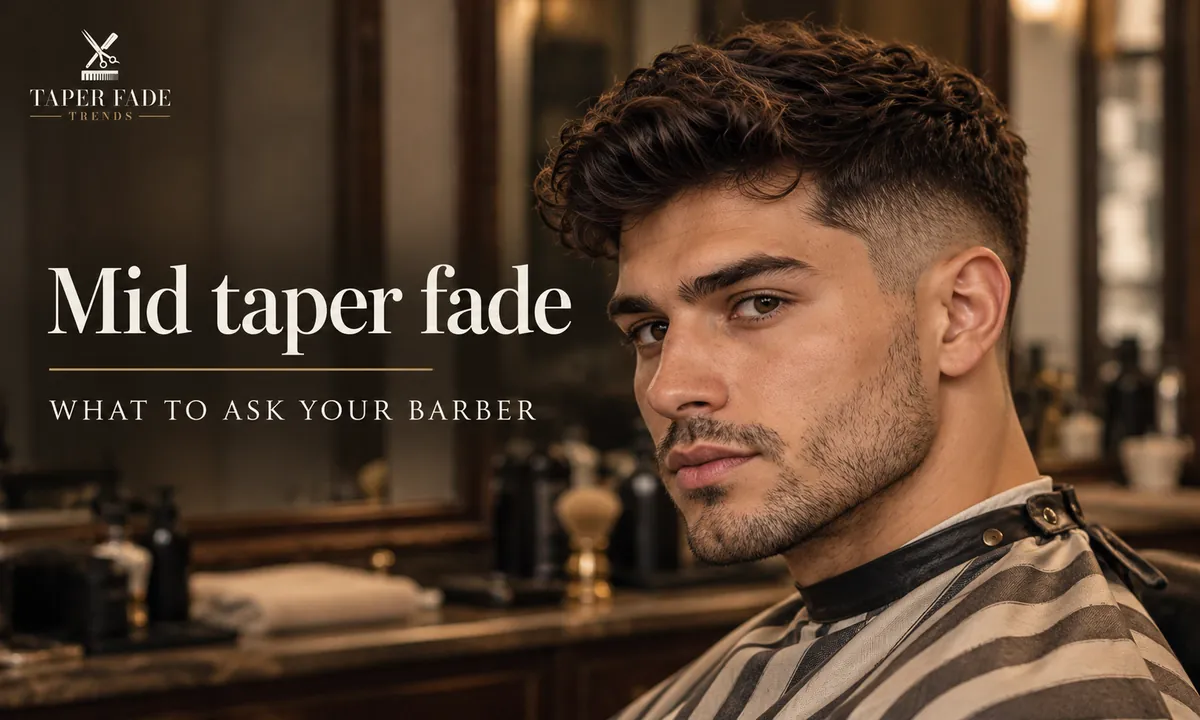
Mid taper fade: what it is and what to ask your barber
What a mid taper fade is, how it differs from a full mid fade, why skin is optional, and the four specs to give your barber before the cut starts.
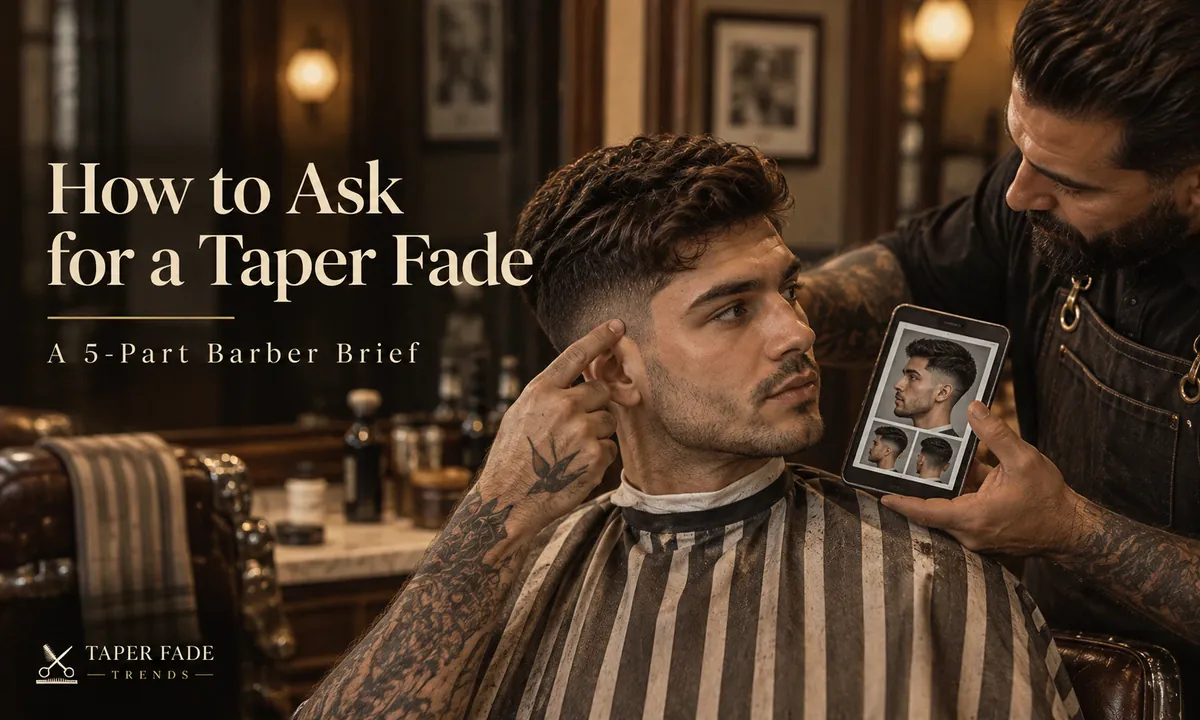
How to ask for a taper fade: a five-part barber brief
How to ask for a taper fade: say where it may reach, how short the base goes, how much side weight stays and what to do on top, then check the plan first.
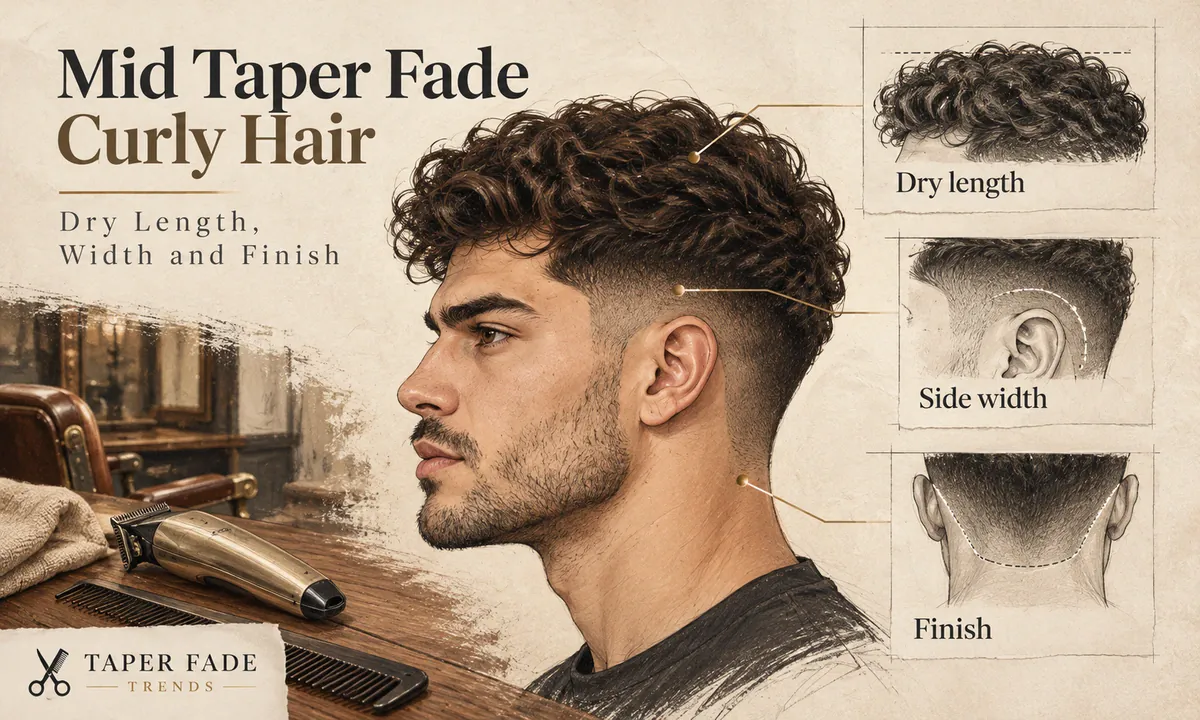
Mid taper fade curly hair: choose dry length, side width and finish
Mid taper fade curly hair guide: what it keeps vs a full mid fade, how to judge dry length and side width, and the four specs to give your barber.
Low taper vs mid taper: what changes when only the height moves
Low taper vs mid taper compared on height, side weight, shortest finish and grow-out, why switching mid to low takes time, and what to tell your barber.
Low taper fade wavy hair: what to ask for
A low taper fade on wavy hair keeps the waves and cleans the edges. What to keep, what to tell your barber, how to air-dry it, and how 360 waves differ.
High taper fade wavy hair: keep your wave pattern
See how a high taper fade works on naturally wavy hair: how much top length to keep, what to tell your barber, and how to air-dry and maintain it.
Mid taper blowout: keep volume without flattening the sides
A mid taper blowout is a temple-height taper plus enough top and upper-side length to dry up and out. What to tell your barber and how to style it.
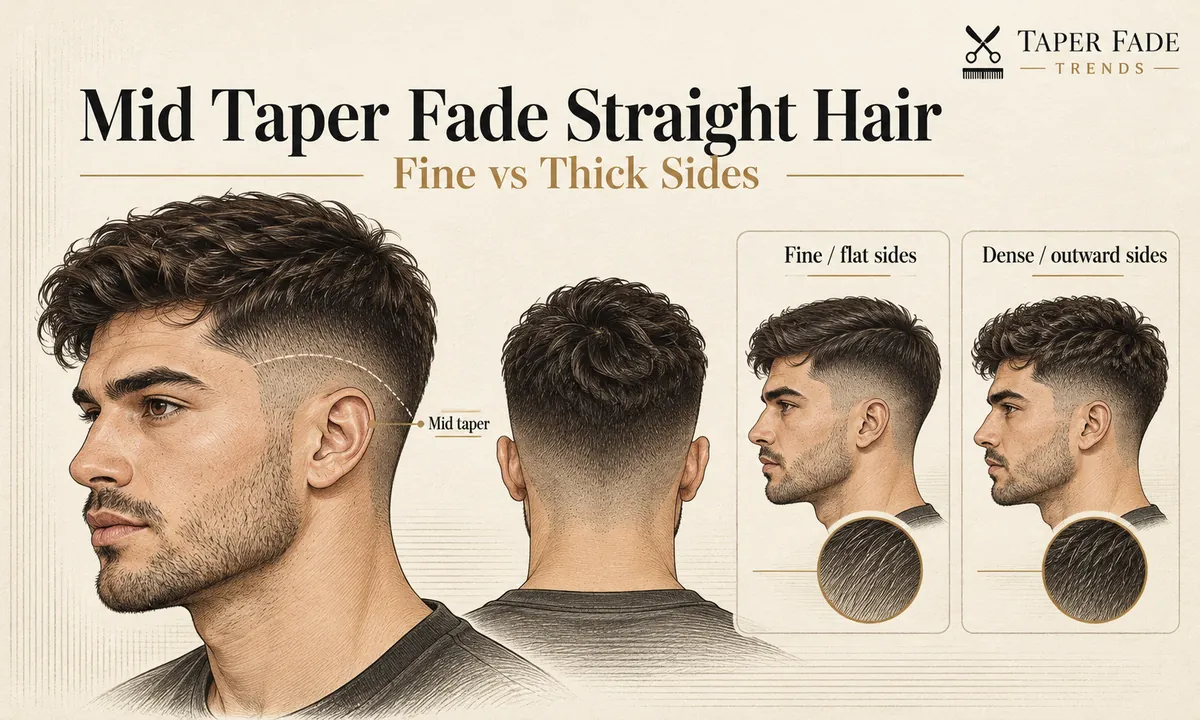
Mid taper fade straight hair: fine, flat and outward-growing sides
Mid taper fade straight hair guide: how much side weight to keep on fine or dense sides, why sides stick out after a cut, and what to tell your barber.
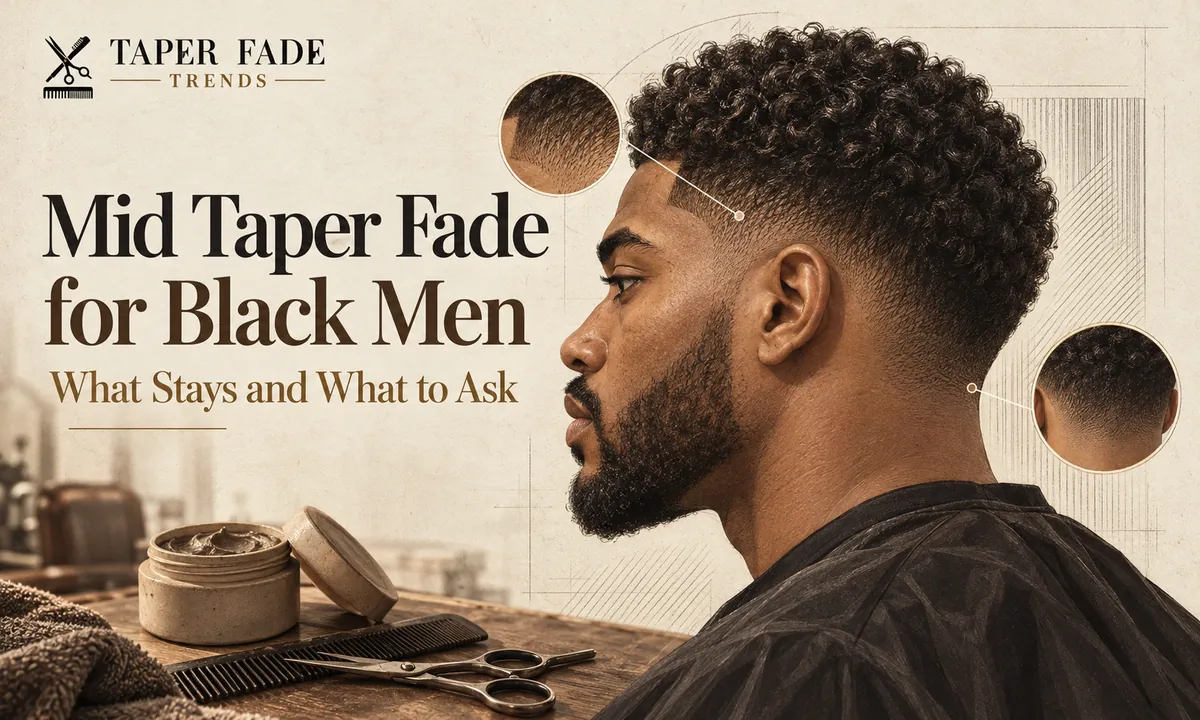
Mid taper fade Black male guide: what stays and what to ask for
Mid taper fade Black male guide: keep more side weight than a full mid fade, set finish and hairline, protect waves, coils or locs, and brief your barber.
More in mid taper fades
Mid taper fades: all 7- Mid taper fade: what it is and what to ask your barber12 min
- Mid taper blowout: keep volume without flattening the sides11 min
- Mid taper fade curly hair: choose dry length, side width and finish9 min
- Mid taper fade straight hair: fine, flat and outward-growing sides11 min
- Mid taper fade Black male guide: what stays and what to ask for13 min
- Mid taper fade wavy hair: work with the natural bendYou are here
- Low taper vs mid taper: what changes when only the height moves10 min