Blowout low taper fade curly hair: keep volume, keep definition
A blowout low taper fade for curly hair keeps a full, lifted curly top and most of the upper-side length while the hair shortens gradually at the temples, sideburns and nape. The name is not a guard recipe, so five things still need saying: taper placement, shortest finish, retained side weight, top shape and curl goal.
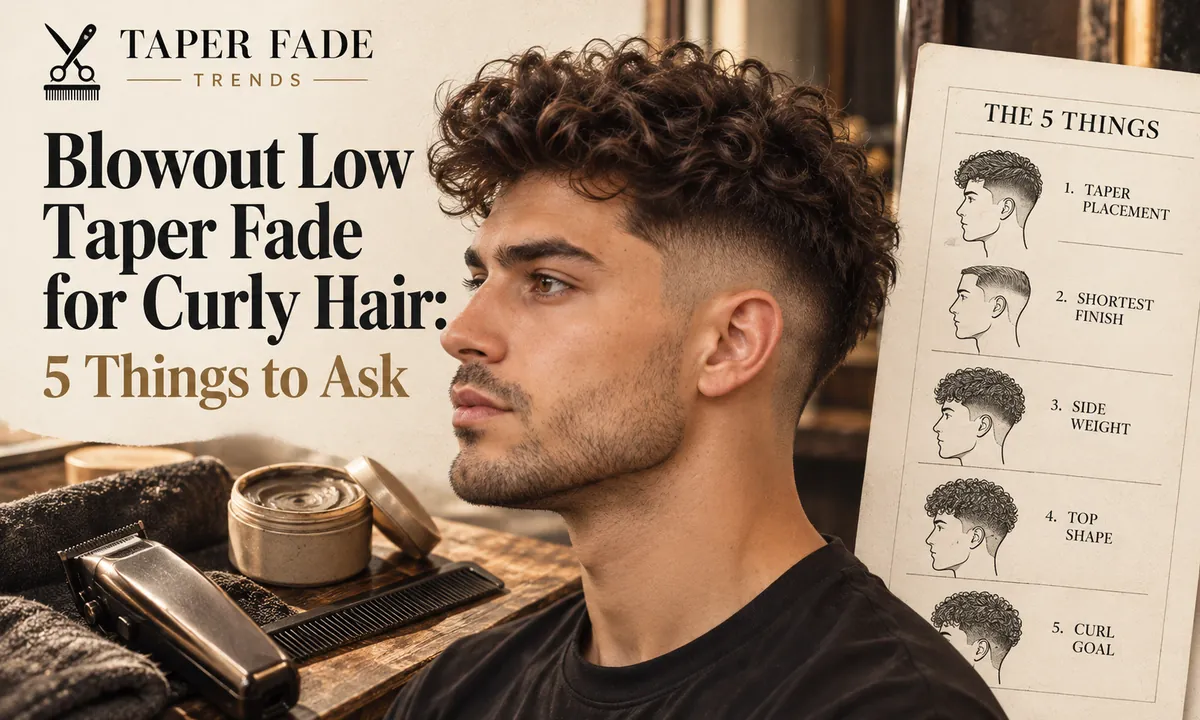
What a blowout low taper fade changes on curly hair
A blowout low taper fade for curly hair is a haircut and style combination that keeps a fuller curly top while tapering the lower perimeter. The shortest hair sits at the temples, sideburns and nape; most curl length and upper-side fullness stay. The name describes that shape. It does not tell a barber which guard to use or how short to go.
A taper shortens hair gradually toward the hairline instead of stopping at one length. The perimeter is the outer edge of the cut around the ears and neck, the nape is the back of the neck, and a guard is the clipper attachment that sets how much hair is left.
| Variable | What the name tells the barber | What you still decide |
|---|---|---|
| Taper placement | Low: shortening stays at the lower perimeter | Exactly where it stops at the temple and nape |
| Shortest finish | Not set | Skin, light stubble or visible hair |
| Side coverage | Kept to the lower edge | How far around the ears and back the taper runs |
| Retained side weight | Fuller sides than a full fade | How much length stays above the taper |
| Top length | Not set | Where the curls should sit when dry, not stretched |
| Top shape and fringe | Blowout: a lifted or outward top | Up, out, rounded or forward; fringe or none |
| Curl goal | Not set | Defined curl groups, expanded volume or a balance |
| Edge detail | Not set | A crisp line-up or a natural hairline |
| Styling commitment | Not set | Whether you will dry it daily or wear it air-dried |
Fill in the right-hand column before the appointment and you have most of the barber brief further down. No row has a measurement here, because a haircut name cannot supply one.
Blowout is the top shape; low taper is the perimeter
Blowout describes the top shape, the low taper controls the perimeter placement, and the shortest finish is specified separately. A blowout is the top-shape and styling goal, not a fixed guard recipe. A low taper is localized lower-perimeter shortening; “low” does not define the shortest finish.
| Term | What it controls | What it does not set |
|---|---|---|
| Blowout | Top and upper-side shape, usually lifted or pushed outward | Guard number or taper height |
| Low taper | Where the shortening sits: temples, sideburns, nape | How short the shortest point is |
On curly hair, “blowout” often means a rounded, expanded curl shape rather than straight, blow-dried height. Barber.Style’s guide to the term makes that point and warns that the name is not a precise cutting formula: one barber may hear a soft temple taper, another a larger skin fade. Shops also use “taper” and “fade” loosely; if the shortening climbs high across the sides, the result reads closer to a blowout fade. The taper vs fade guide sorts out the two words.
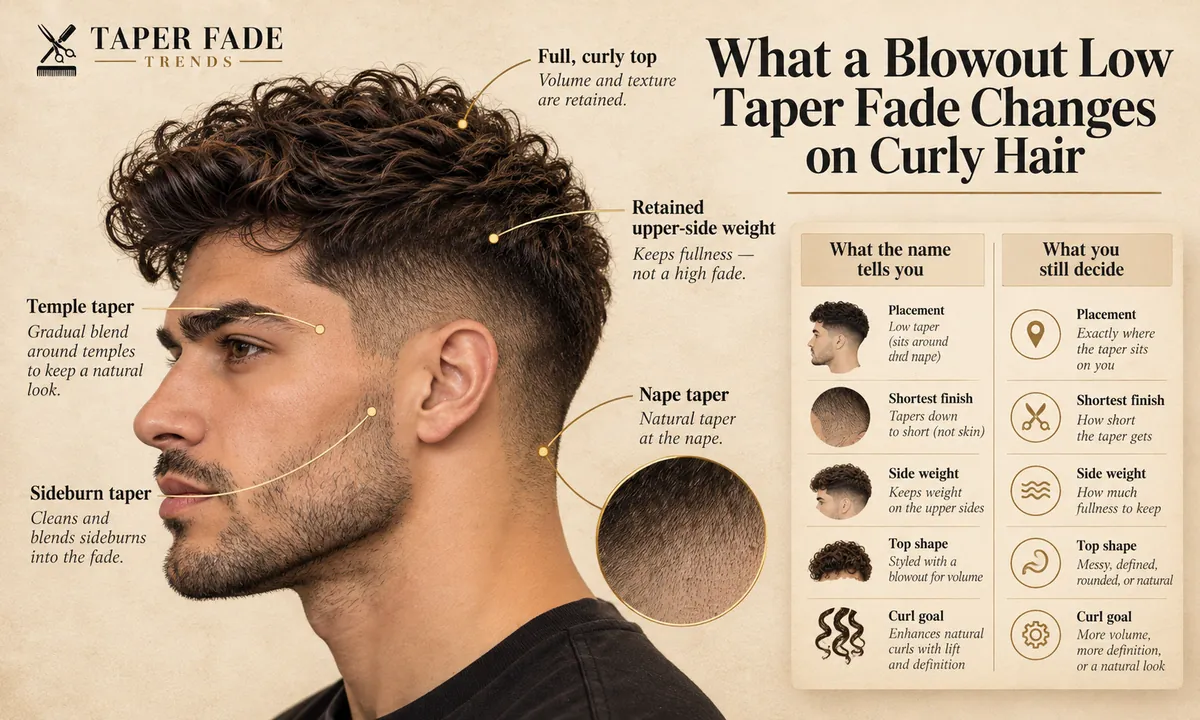
Choose the cut before you sit down
Settle five details before the appointment: taper placement, shortest finish, retained side weight, top shape and curl goal. A reference photo shows the result of those choices, not the choices themselves, so the barber has to guess any detail the photo does not show clearly. The same five apply whether you call it a low blowout taper or a blowout taper on curly hair.
Set the taper placement and shortest finish
A low taper on a blowout stays near the lower perimeter, around the temples, sideburns and nape, instead of climbing across the sides. No universal measurement marks where “low” ends, so point to the stopping place on a side photo and a rear photo rather than quoting a number. Placement and finish are separate instructions.
Keep enough side weight for the shape you want
Retained side weight is the length left on the upper sides so the taper connects to the fuller curly top. Keep enough that the sides support the top shape without hollowing it out. No universal inch or guard number applies, because density, shrinkage and starting length vary from head to head, so describe the goal by how the sides should look.
Density is how much hair grows in an area. Shrinkage is how much shorter curls sit when dry than when wet or stretched, and it changes the whole brief: a top that looks long while stretched can finish well short of the photo once it dries. Ask for the curls to sit where they sit in the photo when dry, and ask the barber how they will judge top length, dry or stretched. Mullet Style’s guide to this cut describes the same trap and notes that thinning the upper sides too hard leaves a narrow top sitting over faded temples.
Choose definition, expansion, or a balance
Choose whether the top should show distinct curl groups, expanded volume or a balance of the two, and use that same goal for the reference photo and the styling. Curl definition means how distinctly curls remain grouped after styling; it is not a curl-type diagnosis. More expansion usually means less separation between curl groups.
| Goal | What the top looks like | Reference photo to bring |
|---|---|---|
| Definition | Curls stay in distinct groups | Curls that read as separate groups |
| Expansion | A fuller, rounded outline with less separation | An outward, lifted top |
| Balance | Visible curl groups with lift at the roots | Something in between, with a note on the priority |
A blowout low taper fade for curly hair can also carry a fringe, the hair left longer across the front hairline, because the terms control different areas: the fringe is the front, the blowout is the top shape and the low taper is the lower perimeter. Barber.Style lists a forward fringe as one blowout option. Judge fringe length dry, since a curly fringe shrinks too.
Once those choices are made, the reference photo has one job: show them from every angle.
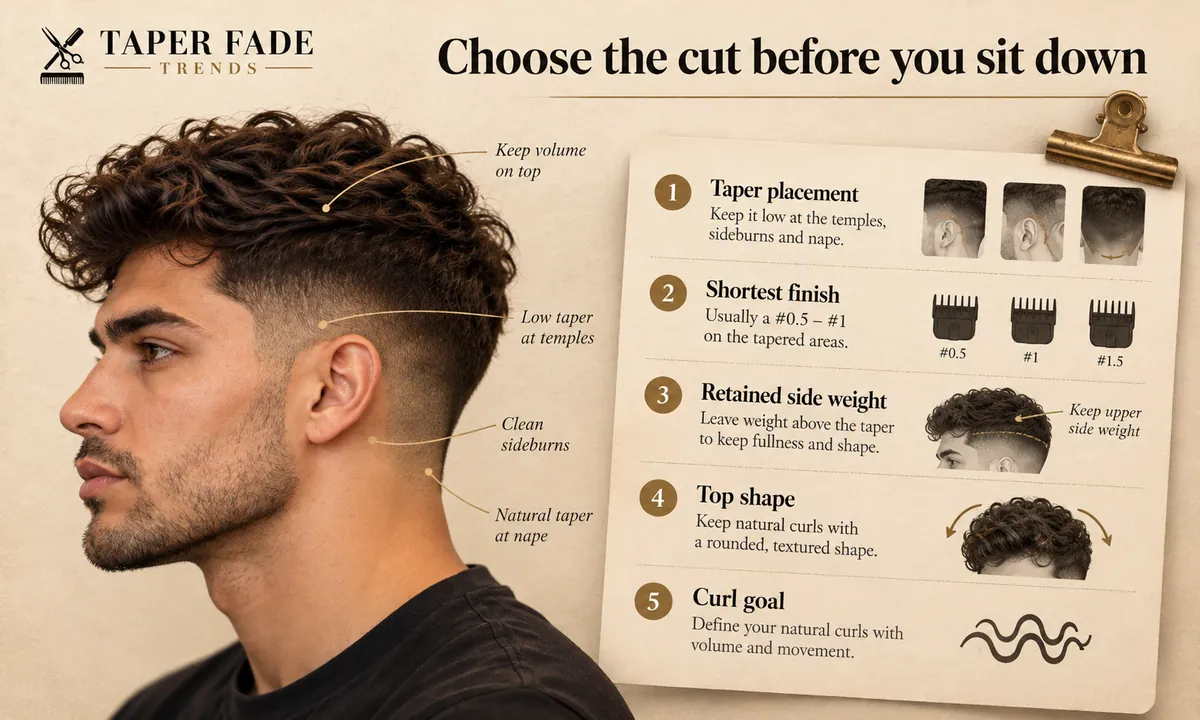
See the same cut from every angle
A reference for a blowout low taper fade needs the same cut from the front, left, right and rear. Each angle shows a different choice. A front photo alone hides where the taper stops at the nape and how much side weight stays in profile, which are the details most likely to be misread.
| View | What to check | Choice it shows |
|---|---|---|
| Front | How full the top and any fringe look; how wide the upper sides read | Top shape, retained side weight |
| Left and right | Where the taper starts at the temple and sideburn; whether both sides match | Taper placement, retained side weight |
| Rear | Where the taper meets the nape; how the crown (top back of the head) lies | Taper placement, shortest finish |
Barber.Style recommends photos of one haircut from the front, side and back for the same reason. Collect all of them from the same cut on the same person: angles borrowed from different haircuts describe a cut that does not exist.
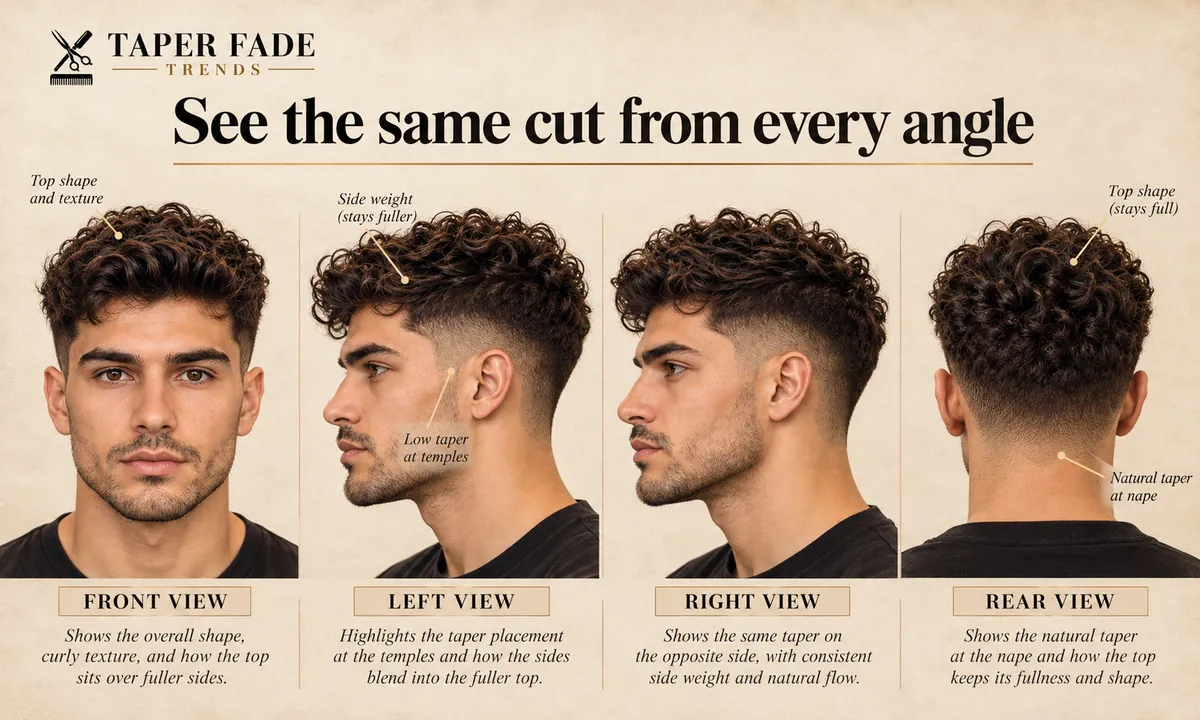
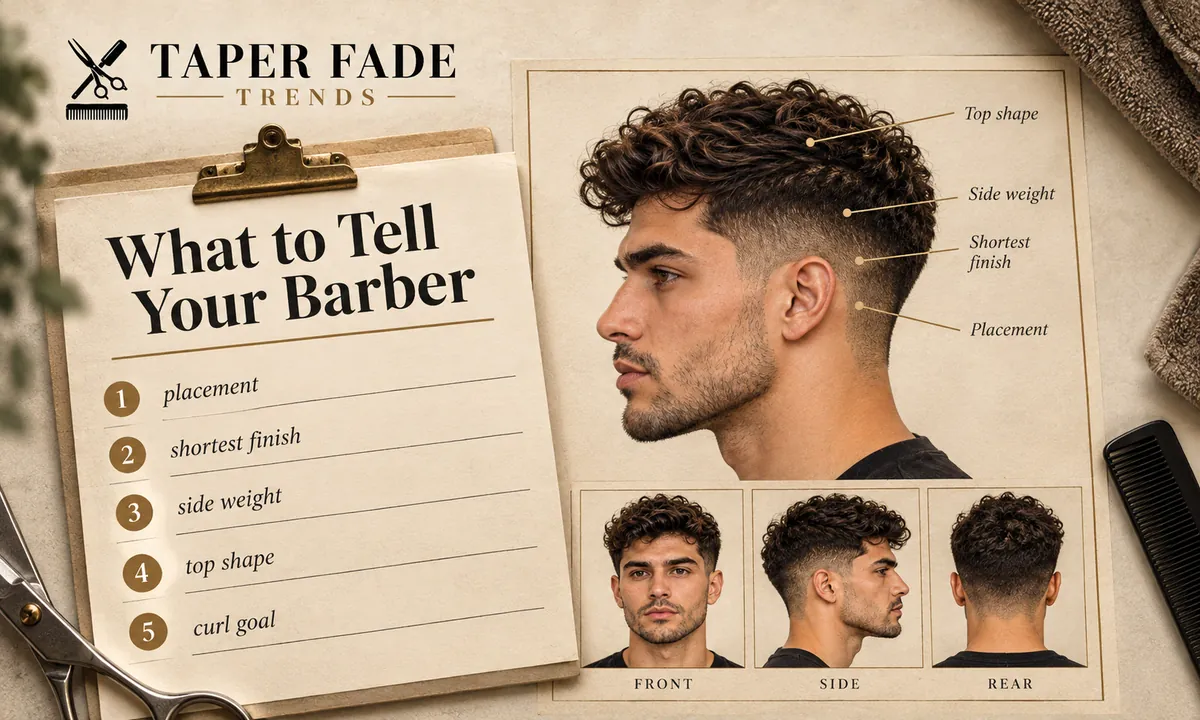
What to tell your barber
Give the barber five outcomes in plain words, and bring front, side and rear photos of one cut. “Blowout taper” alone is not a complete instruction, so say each part out loud. Fill the brackets with your own choices:
- Placement: “Keep the taper low, around my temples, sideburns and the back of my neck. Don’t take it higher than this photo.”
- Shortest finish: “At its shortest I want (bare skin / light stubble / visible hair). You pick the clipper setting.”
- Side weight: “Leave enough length on the upper sides to blend into the top, so it doesn’t sit on thin sides.”
- Top shape: “Keep the top full and (lifted / pushed outward / forward), (with / without) a fringe, sitting like the photo when it’s dry.”
- Curl goal: “I want (separate, defined curls / expanded volume / a balance of both).”
The shortest finish is an outcome, not a tool setting; the barber decides which clipper setting produces it on your hair. A shorter finish gives more contrast against the curly top and a longer one gives a softer edge.
Before the clippers start, also mention three things a photo cannot show: your density and any crown whorl or cowlick (a spot where hair grows against the general direction), whether you want a line-up or a natural hairline, and how often you will actually dry and style it. A cut built for a daily blow-dry looks different left to air-dry. For a brief that works on any taper, read how to ask for a taper fade.
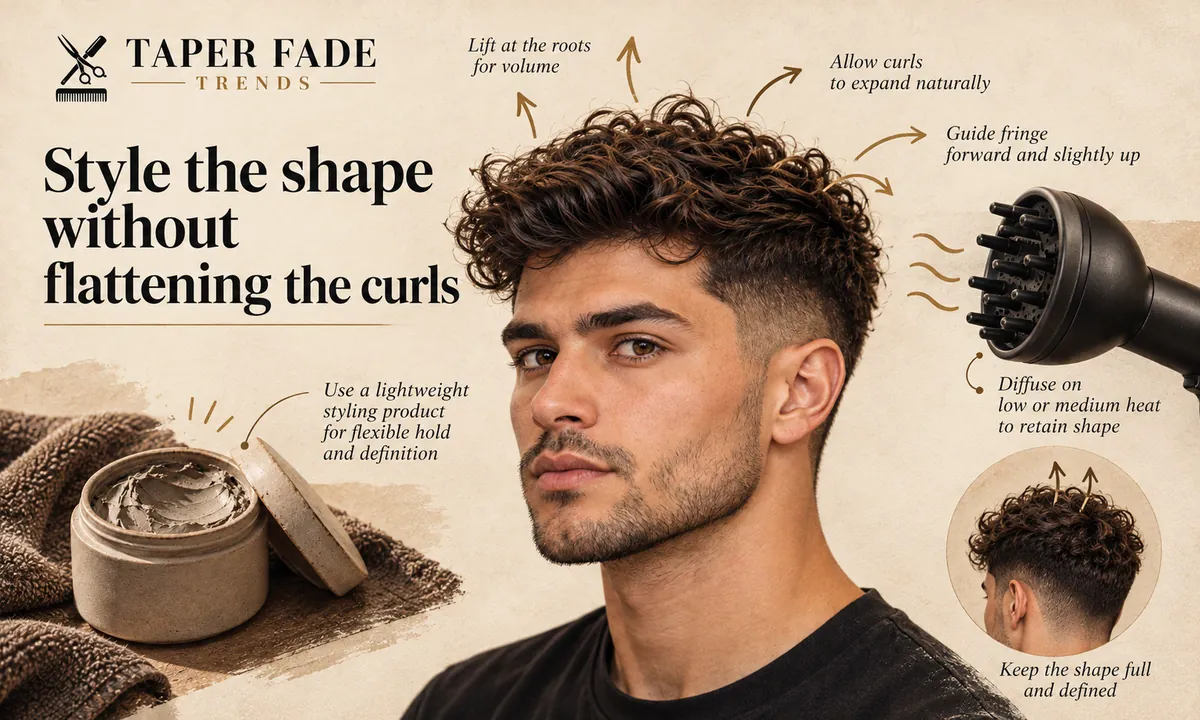
Style the shape without flattening the curls
Style the top toward the curl goal you chose (defined curls, expanded volume or a balance) and keep any heat low or medium. The American Academy of Dermatology says excessive heat can damage any hair type and advises limiting blow-drying, using low or medium settings and a heat-protecting product.
Point the airflow in the direction you want the shape to go: up for lift, outward for expansion, forward for a fringe. A diffuser, a dryer attachment that spreads the airflow, keeps curls grouped while they dry. Handling the curls before they set breaks up the groups, which helps an expanded finish and works against a defined one.
You do not have to blow-dry it. If your natural curl already sits in a shape you like, the cut can be worn air-dried; it just will not match a lifted, dried reference photo. Tell the barber which version you will wear most days.
This guide gives no product amounts or drying times, because none were recorded on a real cut, and no single routine behaves the same on every head of curls. Repeat whatever you can describe step by step: starting condition, product, method and time.
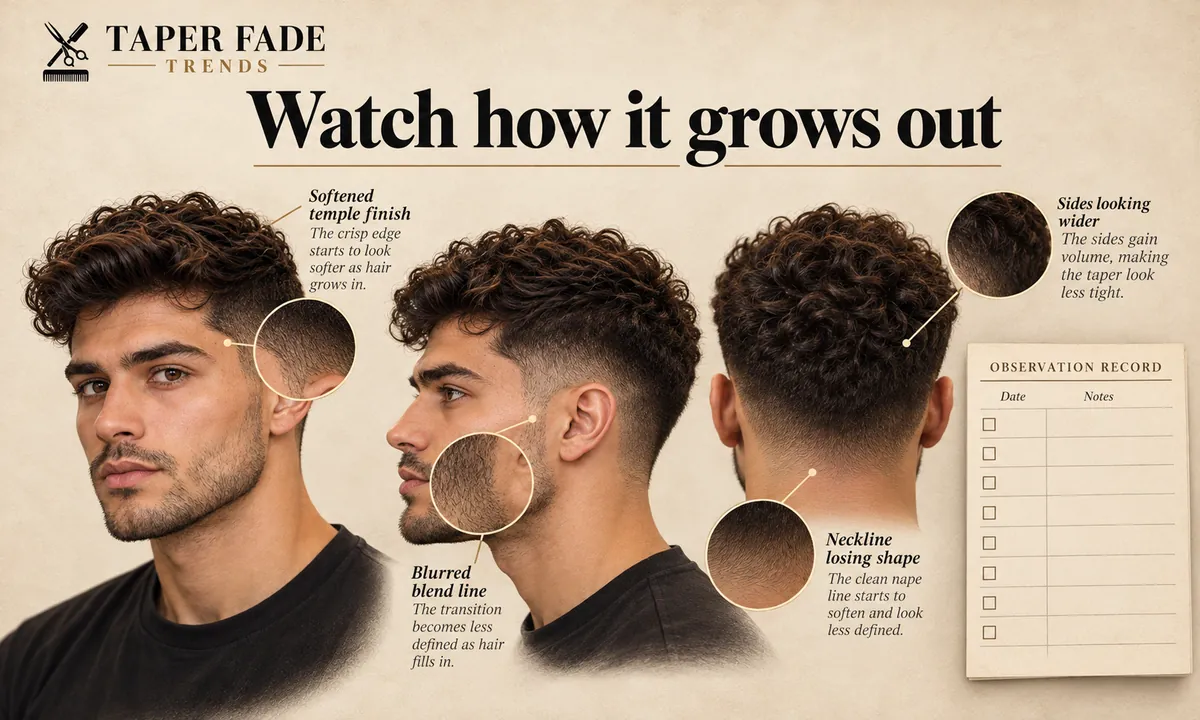
Watch how it grows out
No rebooking interval fits every head. A blowout low taper fade is due for a perimeter cleanup when the signs below appear, and how soon depends on your growth rate, how short the finish was, the contrast between hair and skin, the neckline and how crisp you like the edges.
- The shortest finish no longer reads as short at the temple and sideburn.
- The line between the tapered area and the upper sides has blurred.
- The neckline at the nape has lost its shape.
- The sides look wider than in your reference photos.
A skin-short finish loses its crisp contrast sooner than one that leaves visible hair, and a sharp line-up shows regrowth sooner than a natural hairline. If the top still works, ask for a taper and edge cleanup only, so the curl length you are growing is not cut back at every visit.
To learn your own timing, photograph the same four views on the day of the cut and again whenever one of these signs shows, and date each set.
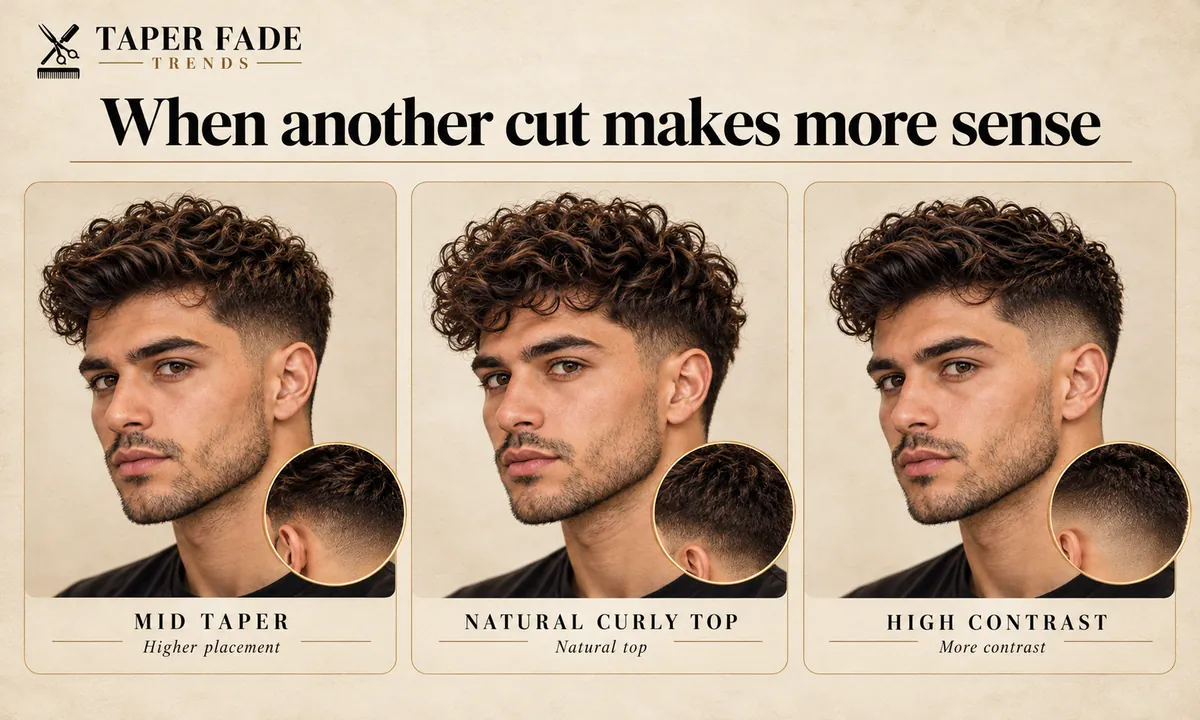
When another cut makes more sense
Choose a different cut when your priority is one this cut sets aside: more contrast at the sides, a top that needs no lift, or less weight left on the sides.
| If you want | Consider | What changes |
|---|---|---|
| The taper to start higher on the sides | A mid taper fade | More contrast; less side weight stays above the taper |
| The same low taper under a natural, unlifted top | A curly low taper fade | The top follows the curl instead of a blowout shape |
| Bold contrast with the curls kept mostly on top | A high taper fade on curly hair | The taper climbs high and the sides lose fullness |
If you are deciding between the first two placements, the low taper vs mid taper comparison sets them side by side.
A photo also cannot show the styling state or the time since the cut. The same haircut looks different freshly dried, air-dried or two weeks grown, so choose the shape from the photo and ask the barber what it will look like on your hair.
Method, sources, and image credits
Taper Fade Trends built this guide by comparing how current barber and haircut guides use the terms “blowout,” “low taper” and “fade,” separating the details a client must specify, and citing dermatologist guidance for heat. The terms are not standardized, so this guide fixes its own meanings in the opening sections.
The figures are illustrations, not photographs, and none shows a real haircut result. This guide contains no original haircut photography, measurements or timed routine. When those are added, this note and the figure captions will say so. Corrections follow the site’s editorial policy; report an error through the contact page.
Sources cited in this guide, all viewed October 13, 2026:
- American Academy of Dermatology, Tips for healthy hair (last updated August 12, 2024) · heat guidance
- Barber.Style, Blowout Taper: Meaning, Variations and What to Ask For (updated July 28, 2026) · terminology, shortest finish, reference photos, fringe, grow-out
- Mullet Style, Blowout Low Taper Fade Curly Hair: 20 Styles (September 23, 2026) · taper zone, side weight, shrinkage, definition versus expansion

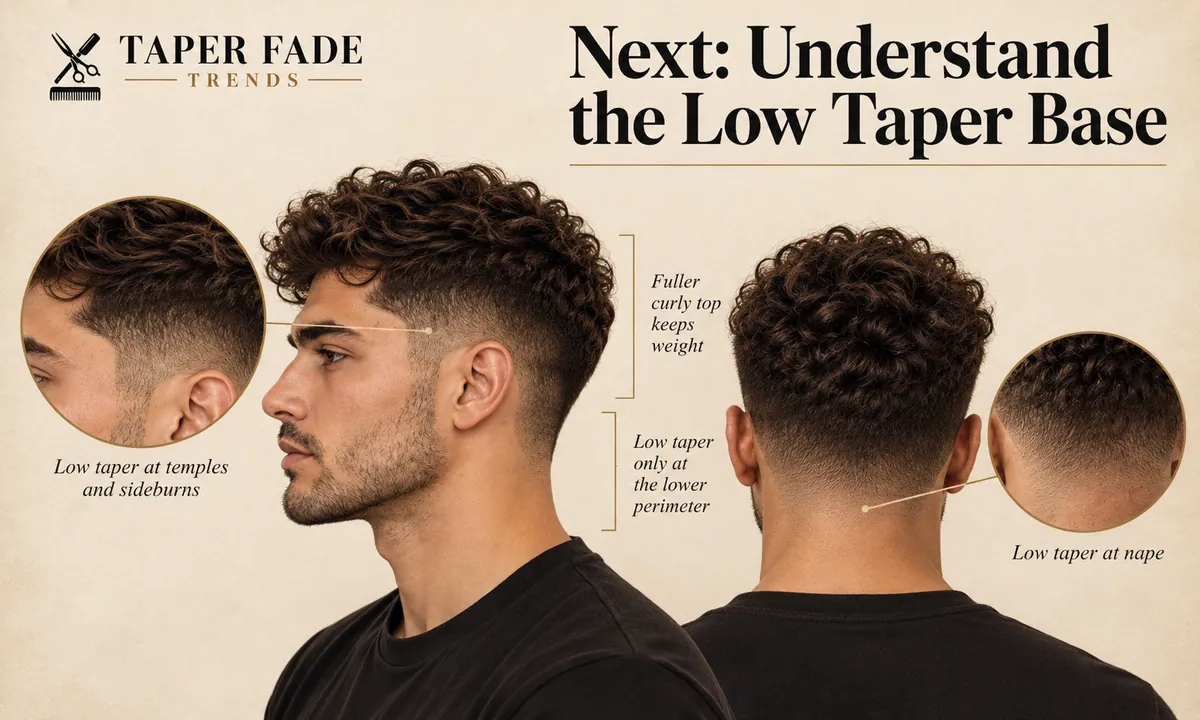
Next: understand the low taper base
Read the low taper fade guide next: the low taper is the base this cut builds on, and that guide covers its placement, shortest finish and side-length choices under any top, curly or not.
Keep reading
All guides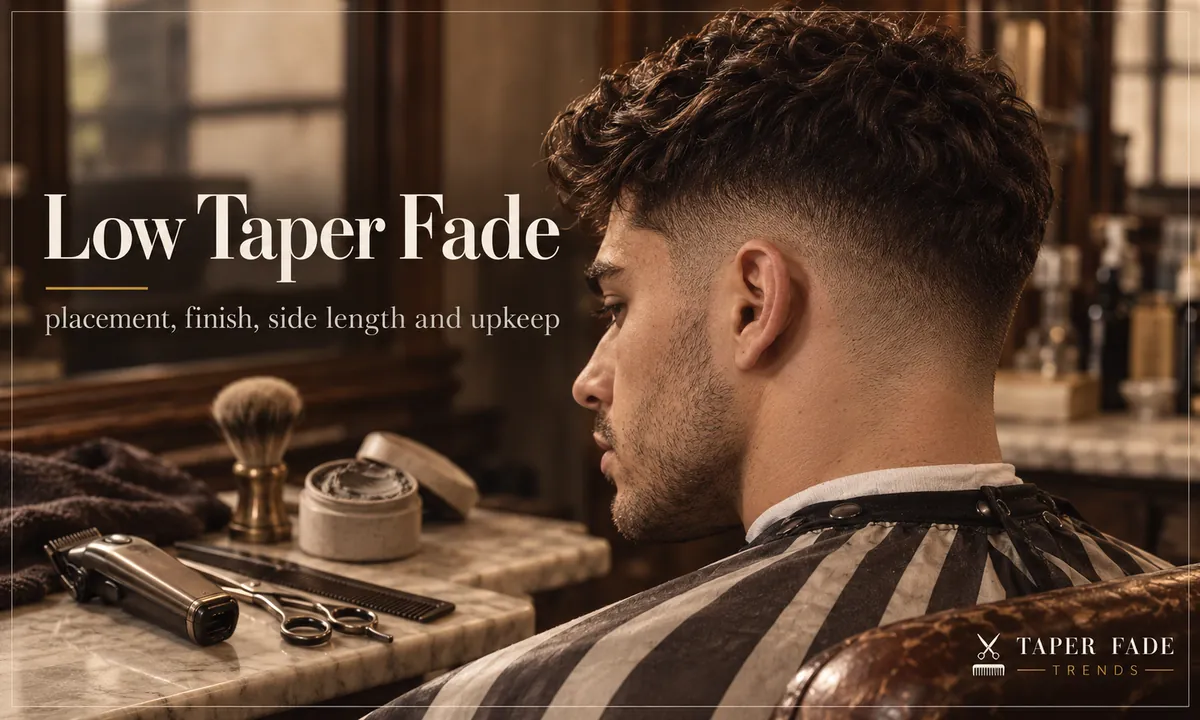
Low taper fade: placement, finish, side length and upkeep
A low taper fade shortens the sideburns and nape and keeps the sides full. See the four choices to make, whether it can go to skin, and what to say.
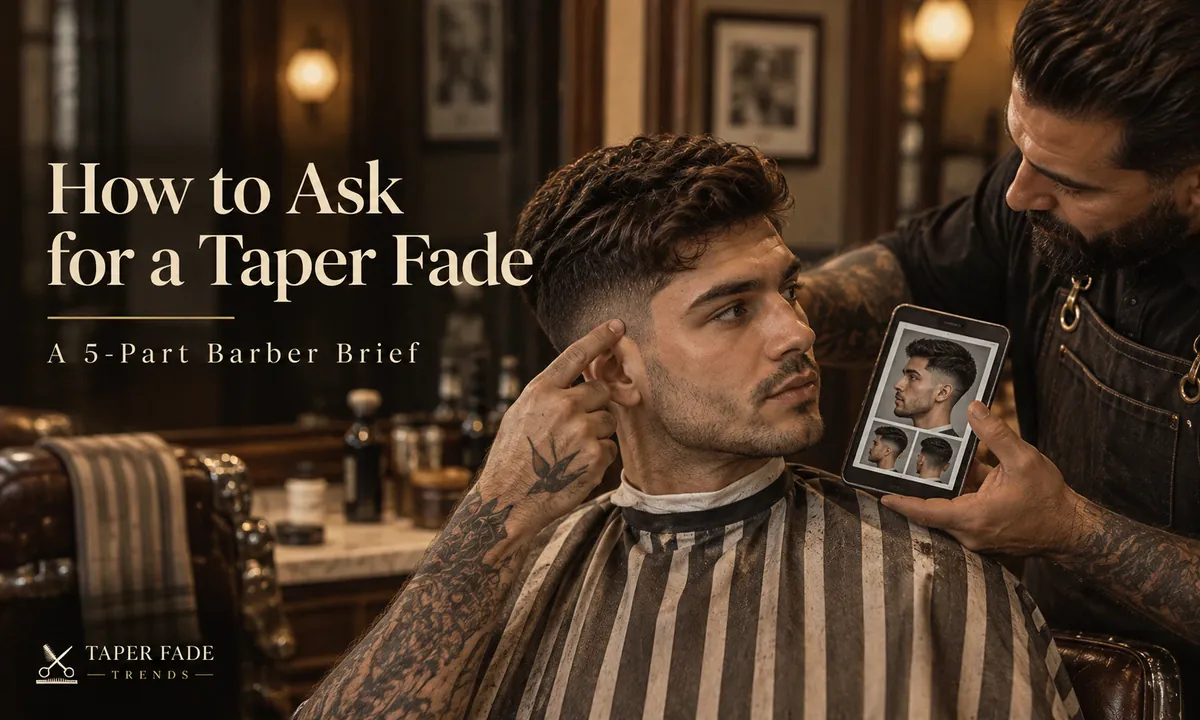
How to ask for a taper fade: a five-part barber brief
How to ask for a taper fade: say where it may reach, how short the base goes, how much side weight stays and what to do on top, then check the plan first.
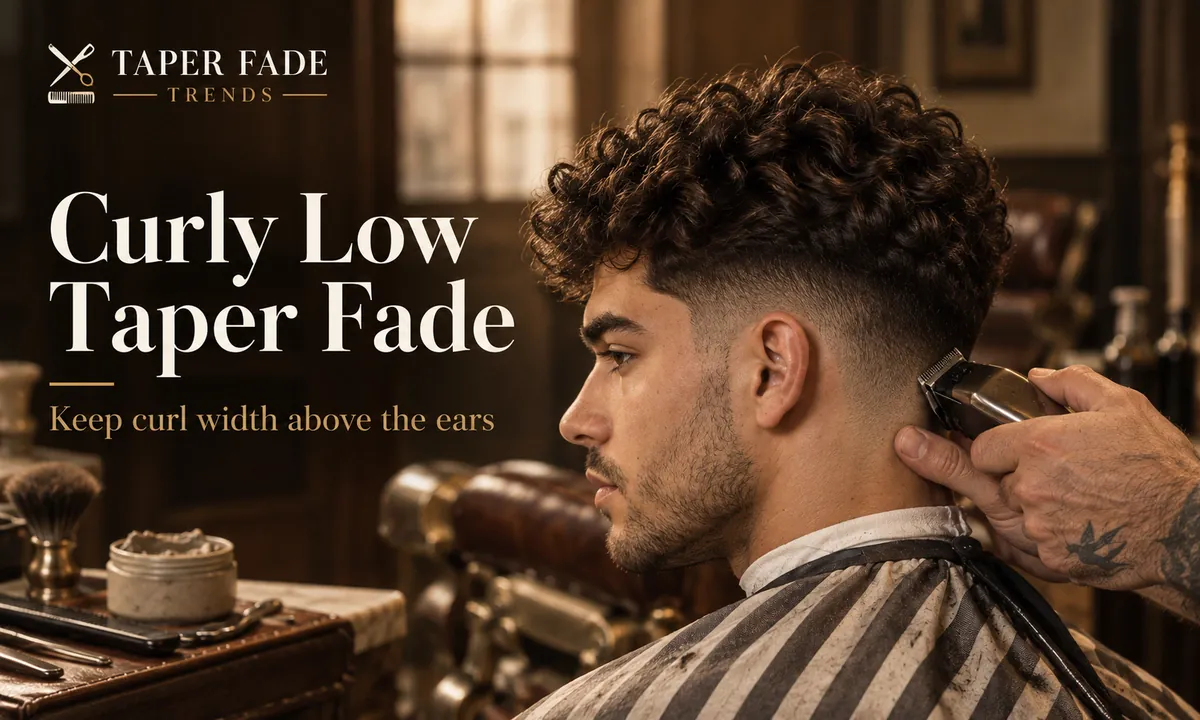
Curly low taper fade: keep curl width above the ears
A curly low taper fade cleans the temples, sideburns and nape but keeps curl width above the ears. What to decide, check dry and tell your barber.
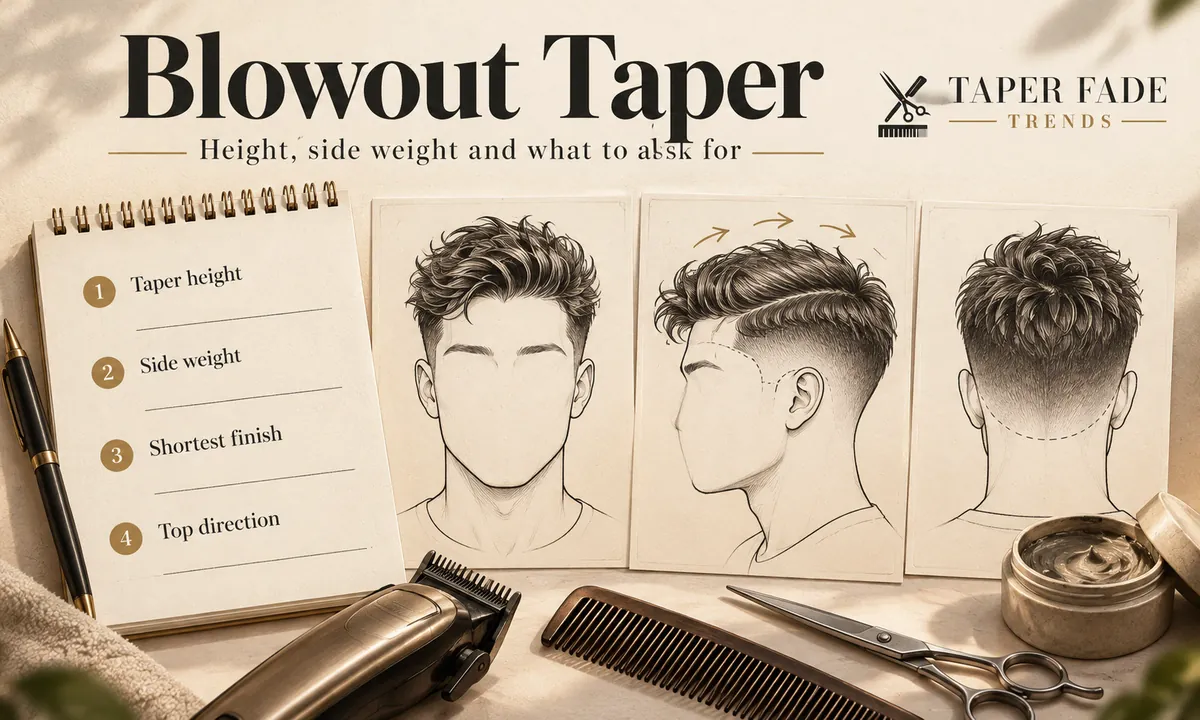
Blowout taper: choose lift, silhouette and taper height
What a blowout taper is, how taper height, side weight and finish differ, how much top length sources suggest, and a barber brief to fill in.
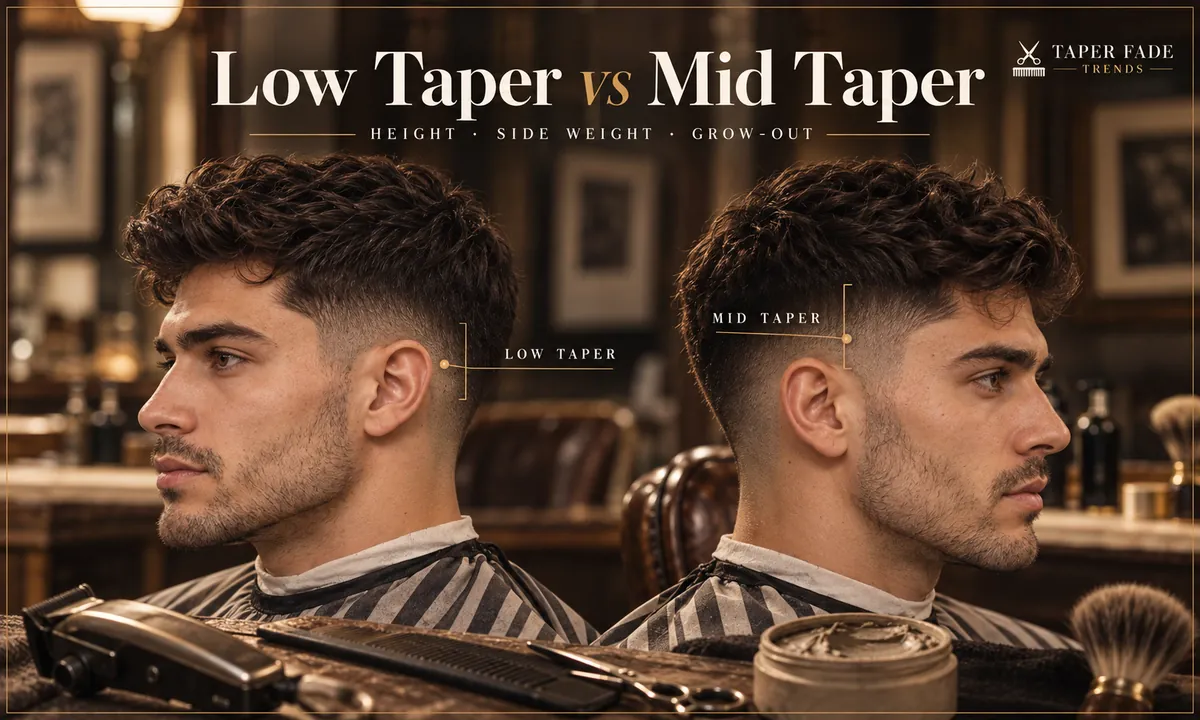
Low taper vs mid taper: what changes when only the height moves
Low taper vs mid taper compared on height, side weight, shortest finish and grow-out, why switching mid to low takes time, and what to tell your barber.
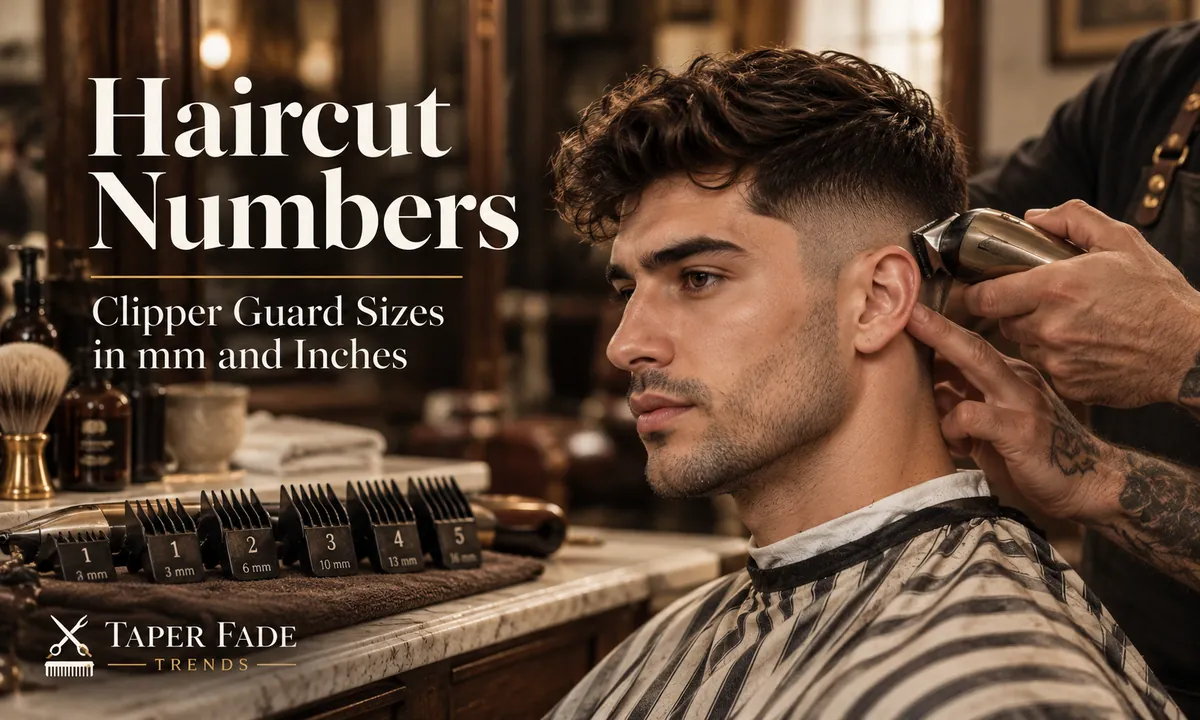
Haircut numbers: clipper guard sizes in millimeters and inches
Haircut numbers in mm and inches, checked against Wahl, Andis and Oster specs, plus why #0 isn’t always no guard and what to tell your barber.
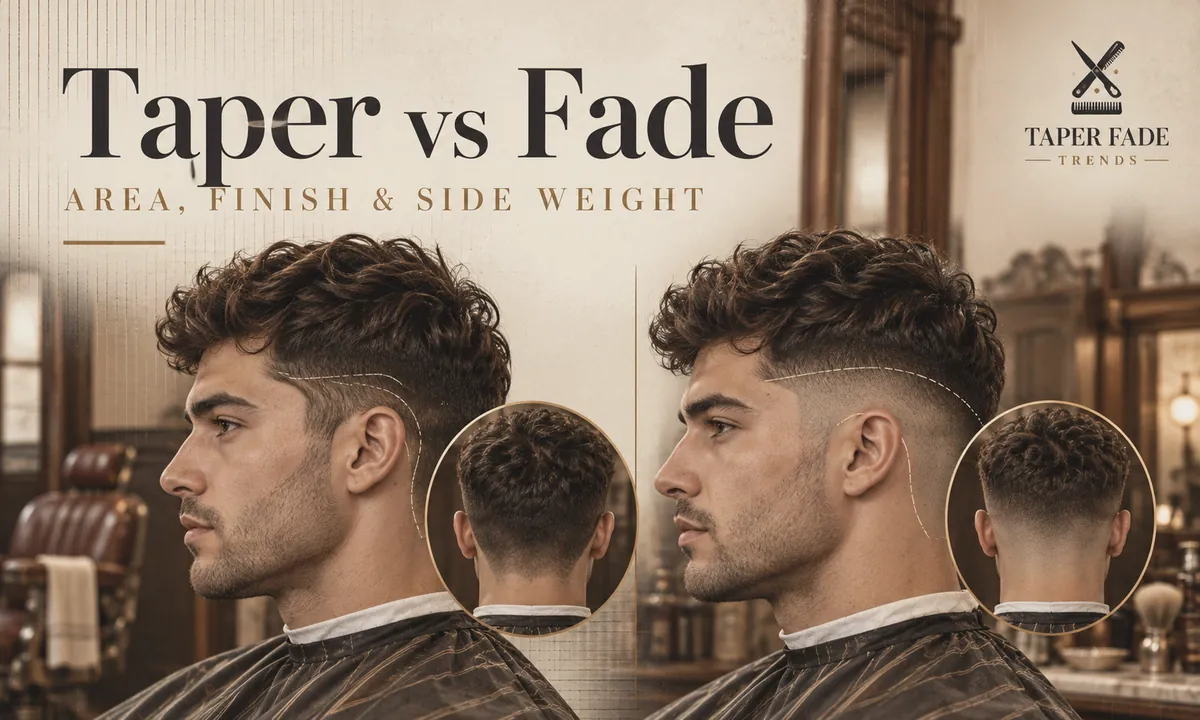
Taper vs fade: what changes in area, finish and side weight
Taper vs fade compared by coverage, height, shortest finish and side weight, with a back-view check and word-for-word barber scripts for either cut.
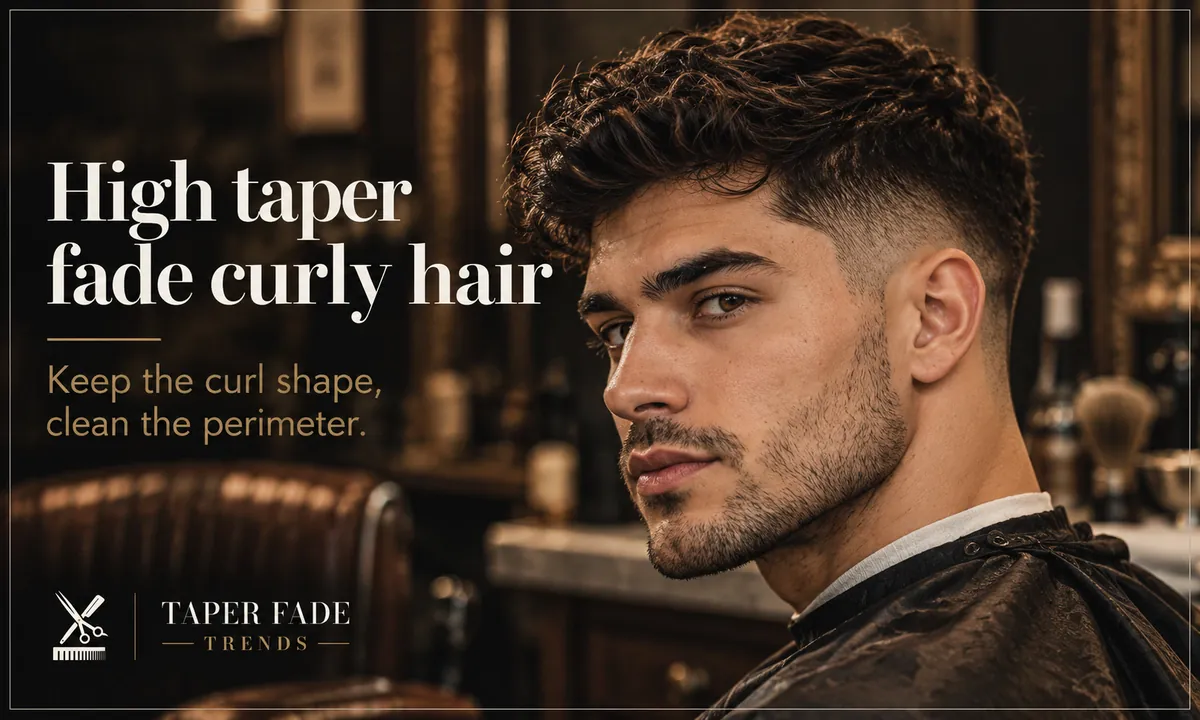
High taper fade curly hair: keep the curl shape, clean the perimeter
How a high taper fade works on curly hair: what side weight to keep, why curls are judged dry, how to measure shrinkage and what to tell your barber.
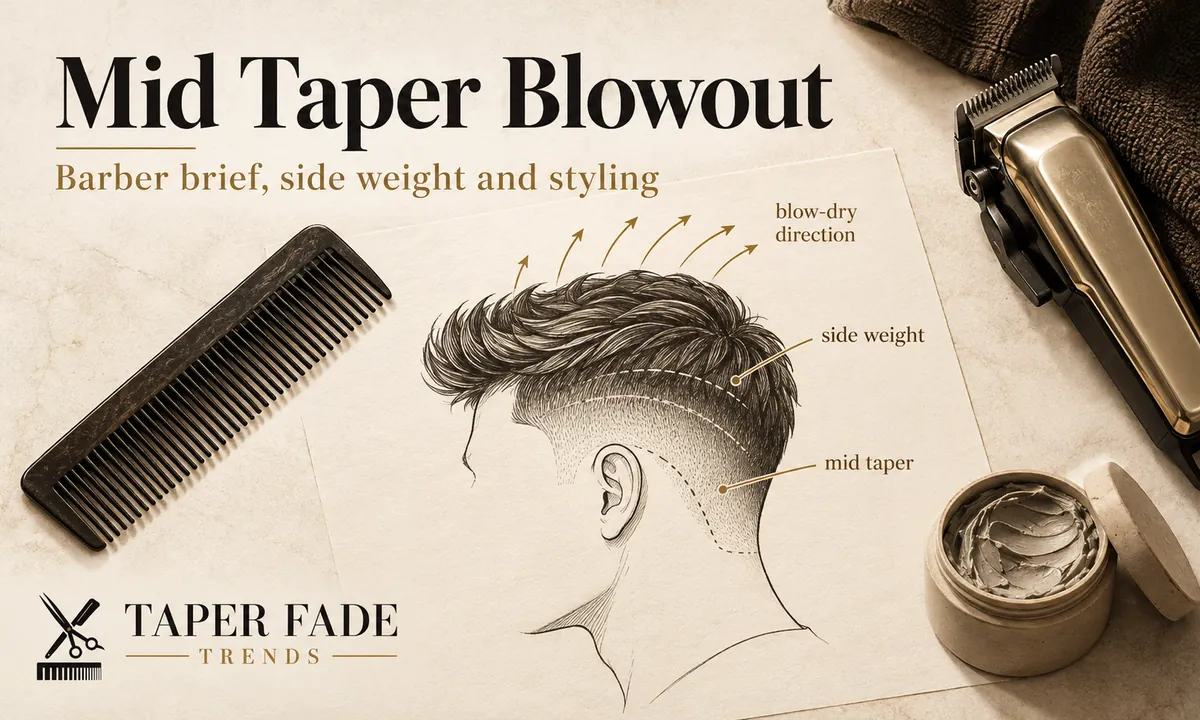
Mid taper blowout: keep volume without flattening the sides
A mid taper blowout is a temple-height taper plus enough top and upper-side length to dry up and out. What to tell your barber and how to style it.
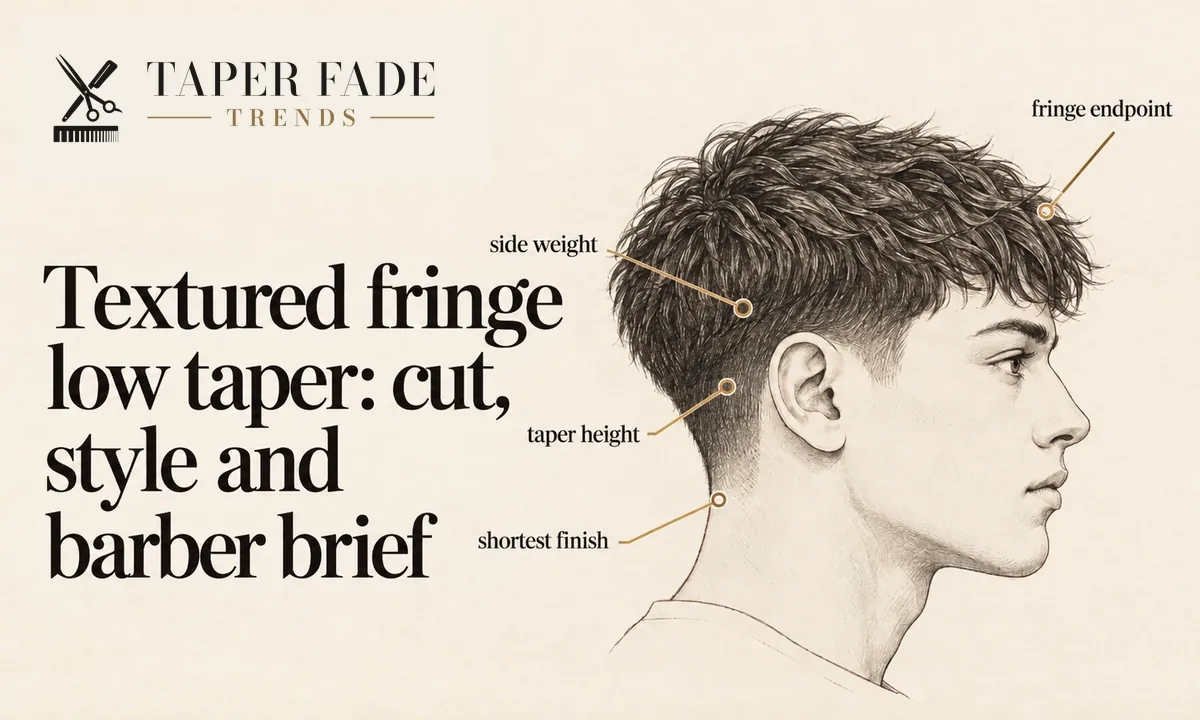
Textured fringe low taper: cut, style and barber brief
A textured fringe low taper explained: four choices to settle, whether straight hair needs a perm, what to tell your barber, and fixes for a flat fringe.
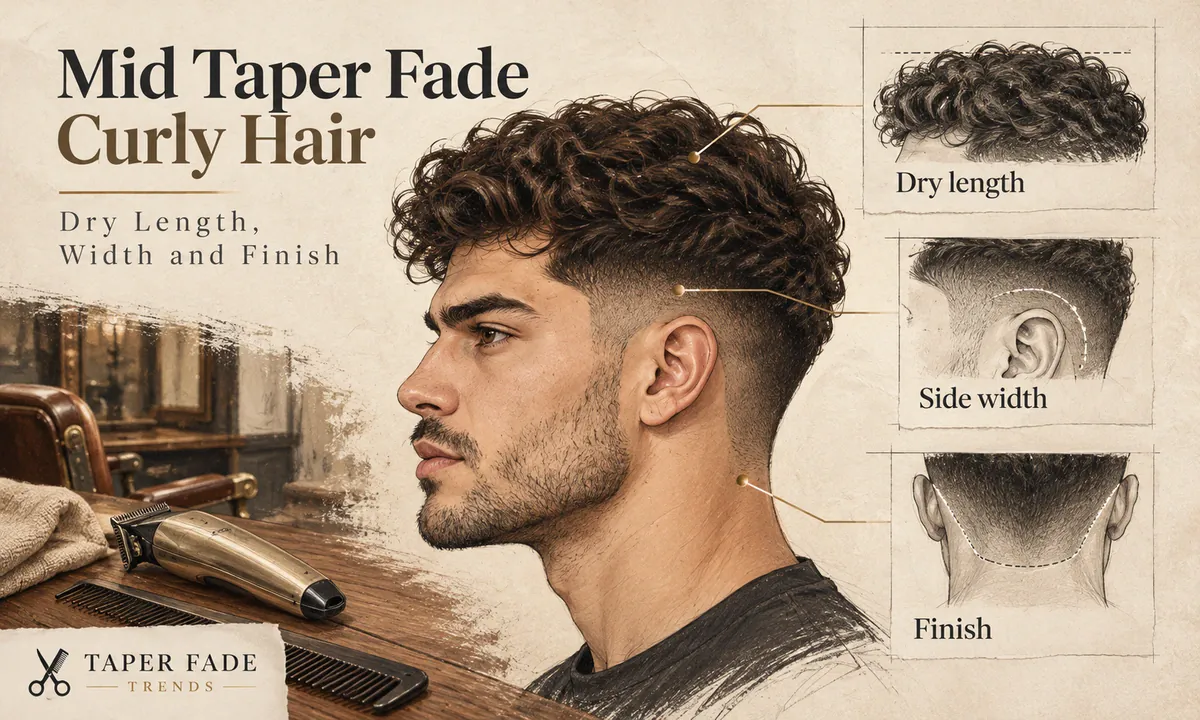
Mid taper fade curly hair: choose dry length, side width and finish
Mid taper fade curly hair guide: what it keeps vs a full mid fade, how to judge dry length and side width, and the four specs to give your barber.
More in low taper fades
Low taper fades: all 14- Low taper fade: placement, finish, side length and upkeep12 min
- Low taper fade straight hair: density, sides and top length11 min
- Low taper fade Black male guide: choose the top, hairline and nape10 min
- Curly low taper fade: keep curl width above the ears10 min
- Low taper fade buzz cut: compare top length and finish12 min
- Textured fringe low taper: cut, style and barber brief12 min
- Blowout low taper fade curly hair: keep volume, keep definitionYou are here
- Low taper fade wavy hair: what to ask for13 min
- Asian low taper fade: choose by how your sides grow7 min
- Middle part low taper fade: keep the curtains connected8 min
- Low taper fade with dreads: protect the loc boundary12 min
- Low taper mullet: keep length behind the ears13 min
- Low taper vs mid taper: what changes when only the height moves10 min
- Low taper vs low fade: compare coverage and side weight11 min