How to choose taper height using side weight
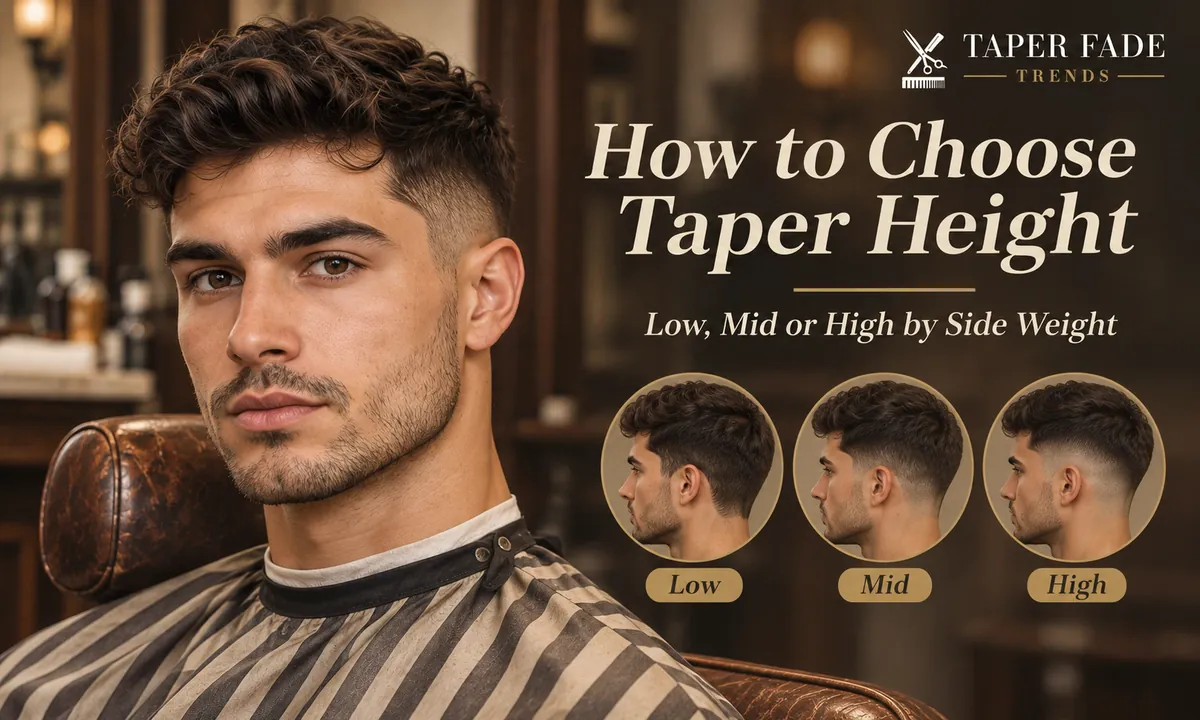
How to choose taper height comes down to side weight. With top length, coverage and shortest finish held equal, a low taper keeps the most, a mid taper removes more above the ear, and a high taper removes the most. Pick the lowest height that fixes the problem, then tell your barber the highest point the blend may reach.
| Decision | What to settle |
|---|---|
| Taper height | Low, mid or high, and the highest point the blend may reach |
| Side weight | How much fullness stays above the ear |
| Coverage | A narrow edge or a wider band of short work |
| Shortest finish | Visible hair, shadow or skin at the lowest point |
| Top length | Your current length, held constant when you compare references |
| Reference photos | Front, both sides and back, plus your own before photos |
| Return date | How soon you can rebook, which can change how the barber builds the cut |
What taper height changes
Taper height changes how far up the side the short blend reaches, which decides how much side weight stays. A low taper reaches the least, so it keeps the most. A mid taper reaches higher and a high taper higher still, so each removes more. All of this assumes top length, coverage and shortest finish match.
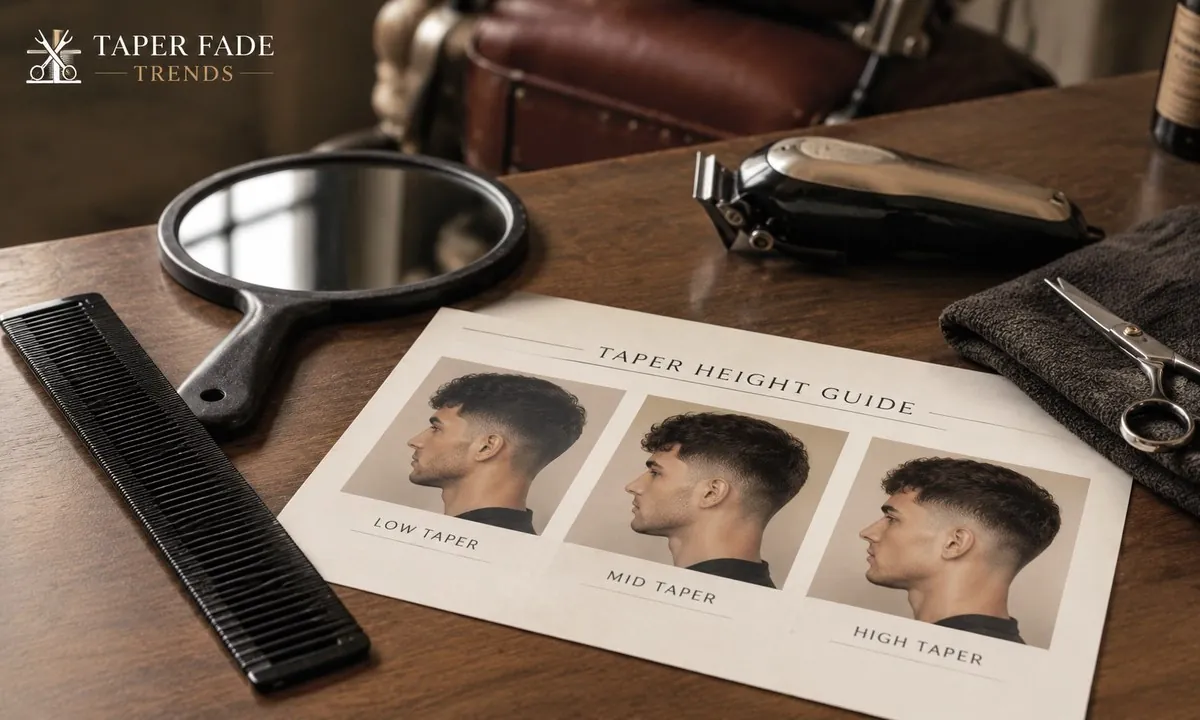
Taper height is where on the side of your head the short blend ends and your full side length begins. Side weight is the visible hair left on the sides above that blend.
| Height | Where the short blend reaches | Side weight kept | How consistent the label is |
|---|---|---|---|
| Low | Near the ear, sideburn and nape | Most | Sources agree closely |
| Mid | Higher, around the temple | Medium | Landmarks run from above the ear to temple level |
| High | Higher again, above the temple | Least | Landmarks run from above the temples to near the crown |
Treatwell puts a mid taper at temple level, while Man of Many places it above the ear and below the temple. For a high taper, Treatwell says above the temples, Man of Many about two inches from the hairline for its high option, and Taper Empire near the crown. Point to a spot on your own head instead of trusting the word.
Taper height is one of four separate choices. Coverage is how much of the sides and back the short work covers, from a narrow edge to a wider wraparound. Shortest finish is what is left at the lowest point: visible hair, a shadow of stubble or bare skin. Top length, the fourth, changes how strong the contrast looks. None of them fixes another, so a low taper can end at skin and a high one at visible hair. The taper fade guide covers all four.
A guard number is not a taper height. A guard sets the approximate length a clipper leaves, while taper height is where the blend sits. On Wahl’s chart a #2 leaves about 6 mm (1/4 in), but a #2 does not mean a mid taper, because clipper model, taper lever and barber technique change the real length.
The taper lever is a thin handle on the side of the clipper that adjusts closeness between guard lengths, which is why the same guard can land at different lengths.
Wahl guide-comb chart; other brands, models and lever settings vary
Wahl guide-comb chart; other brands, models and lever settings vary
Agree on placement and finish separately with your barber. The haircut numbers guide has the full chart and the brand differences.
Check your current side weight
If the sideburns or neckline look untidy and you like the side shape, start with a low taper. If the hair above the ears makes the sides look too round or wide, ask about a mid or higher taper. Inspect both sides first, because texture, top shape and asymmetry can change the result.
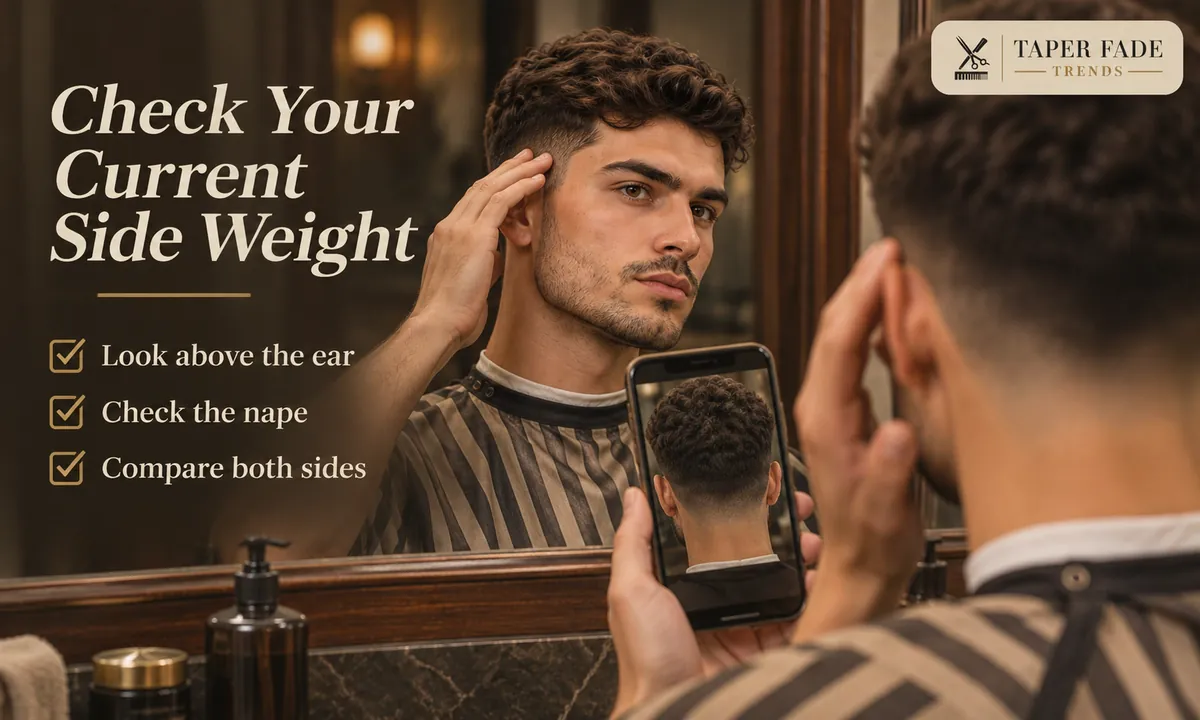
Beard Beasts reduces the choice to one question: “Do the sides need tidying, or do they need taking in?”
In a mirror, note the shape of each side above the ear, the front shape, the nape and the direction the hair grows. A cowlick is a patch that grows against the surrounding hair, and a whorl is a spot where hair grows outward in a spiral. Photograph both profiles and the nape before any cut, so you have a before record.
Hair type shifts the answer. Fine hair can look thin if the blend rises too far, while thick, curly or coarse hair builds width quickly and often handles a mid taper better, according to Beard Beasts.
Face shape can inform the silhouette you prefer, but published rules contradict each other. Treatwell and ReadySleek steer round faces toward mid or high tapers, while Man of Many says low tapers tend to suit rounder faces. Judge your own density, growth direction and reference photos instead of a fixed face-shape rule.
How to choose taper height in five steps
Choose taper height by deciding which side shape you want to keep, not by picking a fashionable label. Pick the lowest height that removes the bulk you dislike, compare references with the same top length and shortest finish, and ask your barber to confirm the highest point the blend may reach.
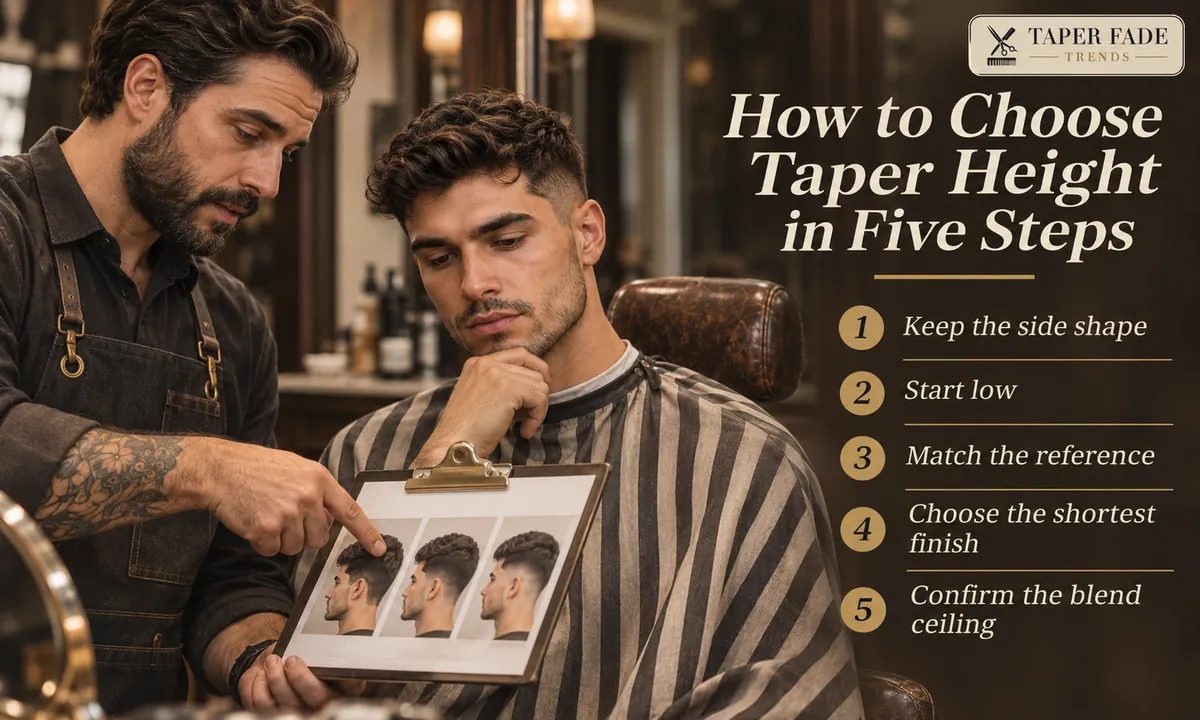
Step 1: Identify the side area to keep
Point in the mirror to the part of the side panel you want to keep and the part you want gone. Name a landmark for each: sideburn, temple, behind the ear or nape. Mention any cowlick or whorl at the sides, because growth direction can shift where the blend lands.
Step 2: Pick the lowest sufficient height
The lowest sufficient height is the lowest taper that removes the side bulk you dislike. Starting lower keeps the next visit open, because a barber can take a taper higher at the next cut, but a higher taper becomes lower only after the shortened hair regrows.
ReadySleek and Man of Many’s Nick Hall, a former barber, give the same start-low advice. Not every shop agrees: Cutters Yard suggests a mid taper as a starting point because the barber can soften the blend.
| Height | Pick it when | What you will see | Trade-off |
|---|---|---|---|
| Low | Only the sideburns or neckline look untidy | Cleaner edges, most side weight kept | Leaves room to go higher next visit |
| Mid | Bulk above the ear still makes the sides look wide | A blend that reaches the temple area and removes more side weight | Going lower later needs regrowth |
| High | You want the most side weight removed and the strongest contrast | The least side weight and the highest placement | Going lower later needs regrowth, and guides report regrowth showing sooner |
The low taper versus mid taper guide compares the first two options in full.
Step 3: Set coverage and shortest finish
Coverage and shortest finish are separate from height, so name the finish you want instead of assuming one. Sources disagree on whether a taper can reach bare skin: Treatwell says it stops short, while Man of Many says it does not necessarily go all the way down.
A skin finish also raises a skin-care question, which the taper fade guide covers with dermatology sources.
If the short work in your reference runs across most of the side, it is probably a fade. Taper versus fade explains the check, and high taper versus high fade does the same at the top of the range.
Step 4: Compare honest reference angles
Compare references only when top length and shortest finish match, and judge the side and back views, not the front alone. A photo that differs in top length, finish, lighting or camera angle says little about height.
Choose references on hair that behaves like yours at the sides, with similar density, texture and growth direction. A photo also cannot confirm the guard or lever behind a cut, so leave tool settings to your barber.
Step 5: State a blend ceiling
A blend ceiling is the highest point you allow the short blend to reach, shown on your head or on a reference photo. The term is this guide’s own, not an industry standard, so point to the spot instead of only naming it.
The Good Barbers makes the same case for naming a landmark such as the temple, because one person’s “medium” can sit about two centimeters from another’s.
Say which side area must stay full, including behind the ear, and ask your barber to repeat the ceiling before any short work begins. The barber may adjust for growth patterns, so approve any revised boundary before cutting starts. Nick Hall says he checks the desired outcome repeatedly during the pre-cut consultation.
Check your choice from four angles
Check a taper height from four angles before you approve the plan: front, left side, right side and back. A side photo shows the temple and sideburn blend but not how the taper climbs around the nape. Use the same four views on your references and in the mirror, and agree the rear blend before any cutting.
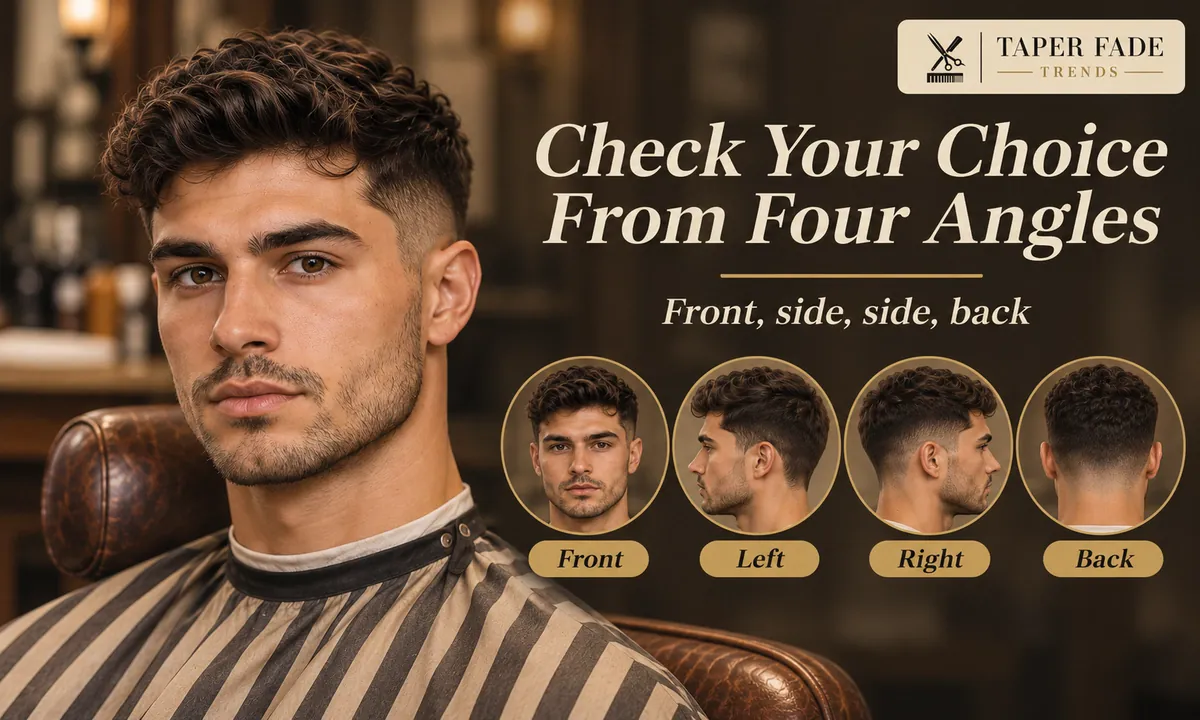
Hall’s rule of thumb is that the back should match the sides, so a low taper at the sideburns gets a low taper at the nape, unless you want the back left long. The Good Barbers says the back and neckline are where clients and barbers most often disagree.
- Front: both sideburns should match in length and shape.
- Left side: the blend should stop at the agreed ceiling, with the panel above the ear as full as you wanted.
- Right side: repeat the check, because asymmetry can make the two sides differ.
- Back: the neckline should have the shape you asked for, and the rear blend should sit as high as agreed.
A self-check does not replace your barber’s judgment, and growth direction can change what you see.
Set the barber brief
Tell your barber the height you chose, your blend ceiling (the highest point the blend may reach), how much side hair should stay, and whether the shortest finish shows skin. Then give the top length and show side and back references. Ask the barber to repeat the plan before cutting, because haircut names alone may not set the same boundaries.
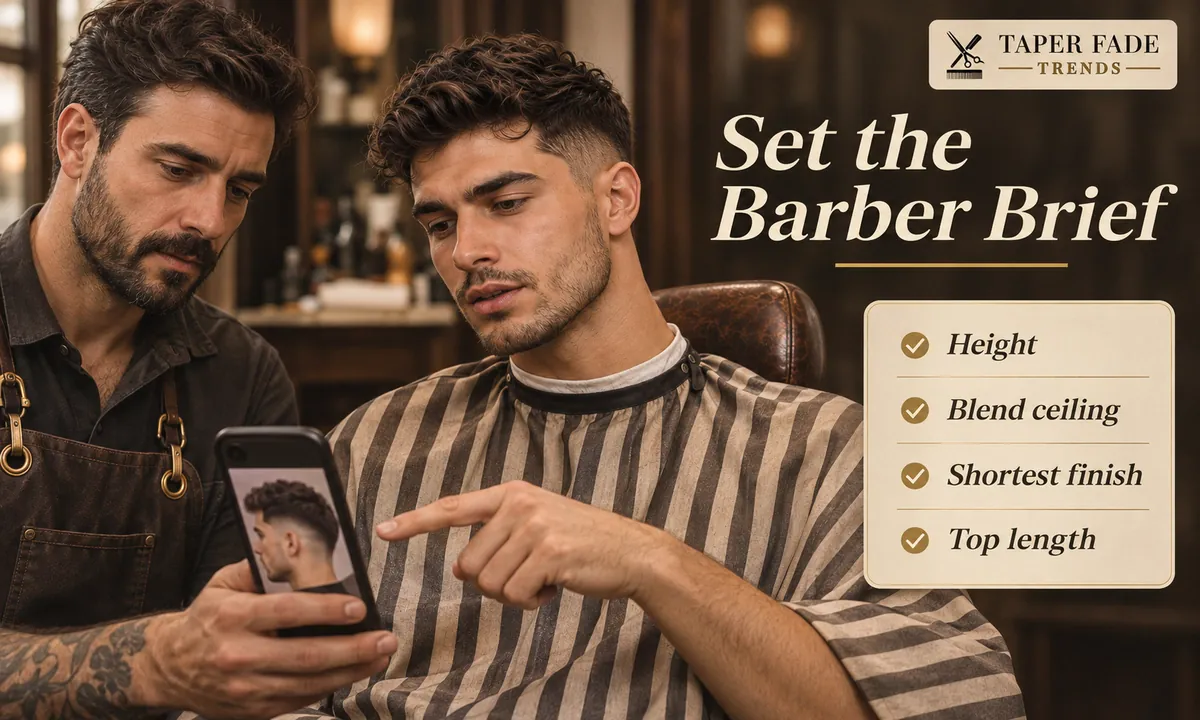
“I’d like a low, mid or high taper (pick one), and I’m pointing to the highest point it may reach on my head and in this photo. Keep the side panel above and behind my ear full, finish at visible hair, shadow or skin (pick one), leave the top at about this length, and keep the neckline this shape. Can you repeat the plan back to me?”
Describe the outcome and let the barber choose the tools.
| You say | Your barber confirms |
|---|---|
| The blend ceiling, shown on your head and the photo | Where that point falls on your head, adjusted for growth |
| The side area that must stay full, including behind the ear | How much length stays in that area |
| The shortest finish: visible hair, shadow or skin | The guard, lever setting or blade that gets there |
| Whether the rear blend stays low or rises | Whether your neckline shape and growth allow it |
Say how soon you can return, too. The Good Barbers says it builds a cut differently when the gap will be long. For longer wording, see how to ask for a taper fade.
What can go wrong
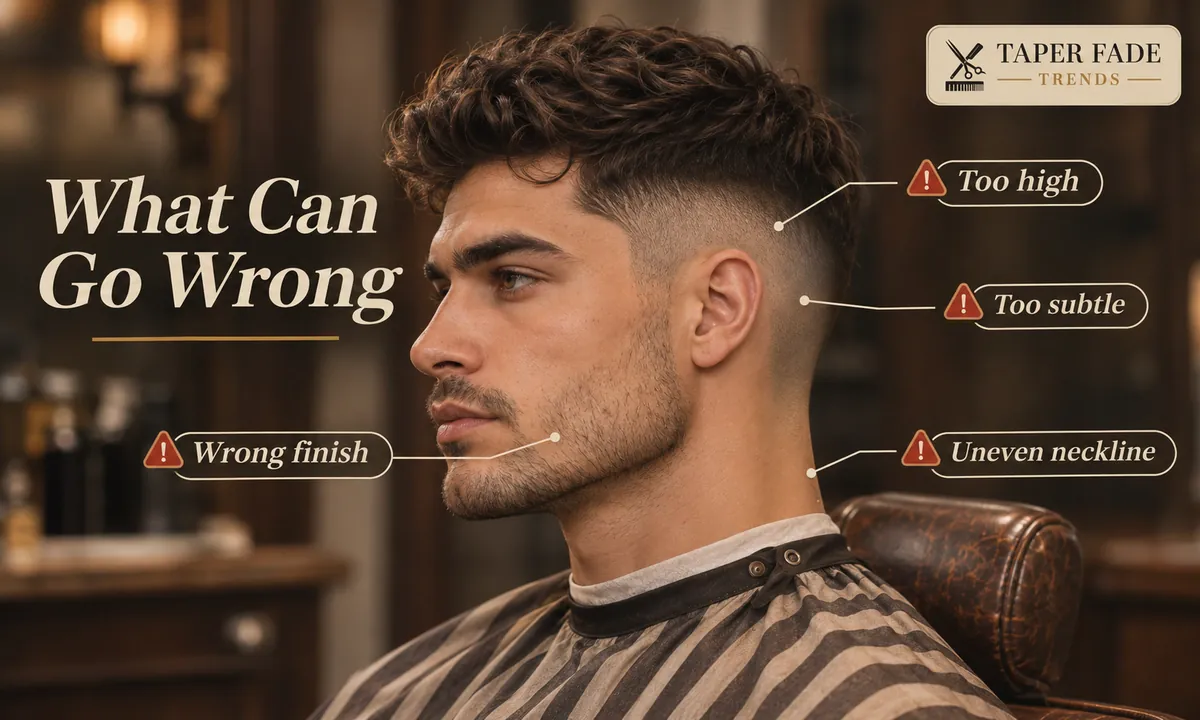
Four things go wrong with taper height: the blend sits higher than agreed, the cut is too subtle for the sides, the shortest finish is not the one you expected, or the neckline is uneven. Each is easier to settle before the first clipper pass than after it.
| Problem | Before the cut | After the cut |
|---|---|---|
| Blend sits higher than agreed | Point to the ceiling again and ask the barber to repeat it | The shortened hair stays short until it regrows. Ask the barber to tidy only the edges (sideburns, ear line and neckline) meanwhile |
| Cut too subtle, sides still wide | Name the area above the ear that looks too full and ask about a mid taper | The blend can be taken higher at a later visit |
| Shortest finish not what you expected | Name visible hair, shadow or skin in your brief | A longer finish can be cut shorter later. A shorter one must regrow, so state the finish when you rebook |
| Uneven neckline or one side higher | Check the back and both sides against your references and mention any cowlick or whorl | Ask the barber to correct it |
This guide covers choosing a height, not cutting one. Treatwell notes that a taper depends on a blend you cannot see on your own head, and The Good Barbers says a blend cannot be fixed at home. If the real issue is a wider band of short work rather than height, compare low taper versus low fade.
Grow-out and switching height
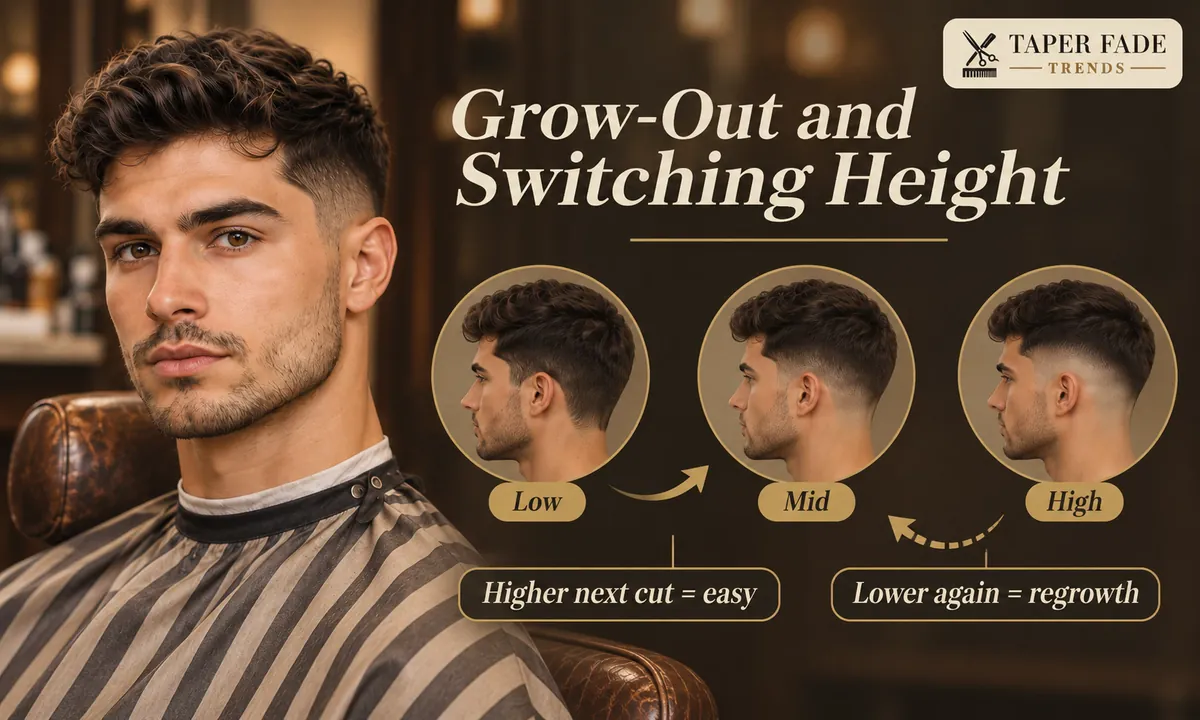
Switching up is quick and switching down is slow. A cut can go higher at the next visit, while a higher taper becomes lower only as the shortened hair regrows. Here, grow-out covers the sides and nape only; the top follows its own timeline. Routines between visits are in how to maintain a taper fade.
Can a high taper become low at the next visit?
A high taper cannot always become a full-looking low taper at the next appointment, because the higher side sections are already cut short. The barber can stop trimming those areas and tidy only the edges while they regrow. How long that takes depends on your starting length and growth, and no guaranteed number of weeks is established.
ReadySleek puts the wait for going from mid to low at three to four weeks of growing. Treat that as one shop’s estimate.
Does a higher taper need more appointments?
A higher taper tends to show regrowth sooner because the contrast line is easier to see, but height alone does not set your schedule. Shortest finish, coverage, growth rate and edge sharpness also matter.
Published schedules for a high taper run from every one to two weeks at Taper Empire to every two to three weeks at Man of Many. Decide what grow-out you can accept instead of treating one published interval as a rule. How long a taper fade lasts covers the regrowth question in more detail.
How this choice guide was made
Taper Fade Trends Editorial compared published explanations of low, mid and high taper placement from barbershops and grooming publishers, checked clipper guard lengths against Wahl’s published chart, and mapped what a reader can inspect before a visit. We did not cut, measure or photograph hair for this guide, and the figures are illustrations, not documented cuts. No barber has reviewed this guide yet; when one does, the name, role and review date will be added here.

Height labels are not standardized, since barbers and publishers place low, mid and high differently, and “blend ceiling” is this guide’s own term. Source pages were checked on November 8, 2026.
Sources: Cutters Yard on definitions and the mid starting point; Taper Empire on landmarks and schedules; Treatwell on landmarks, face shape and skin; Beard Beasts on the tidy-or-take-in rule; ReadySleek on switching direction; The Good Barbers on naming landmarks; Man of Many on landmarks, the back and starting low; Wahl UK and Wahl USA on guard lengths and the taper lever.
Keep reading
All guides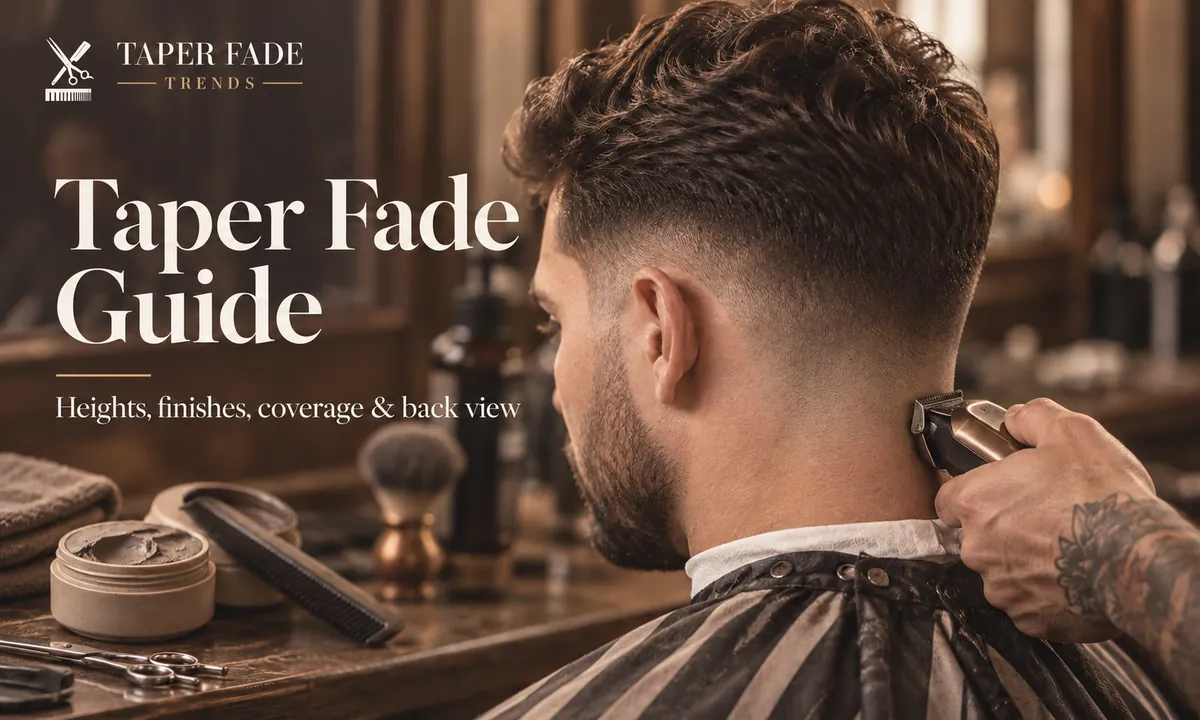
Taper fade: a visual guide to heights, finishes and top styles
Where a taper fade sits from the front, side and back, how low, mid and high differ, and how to ask for side coverage and a finish with or without skin.
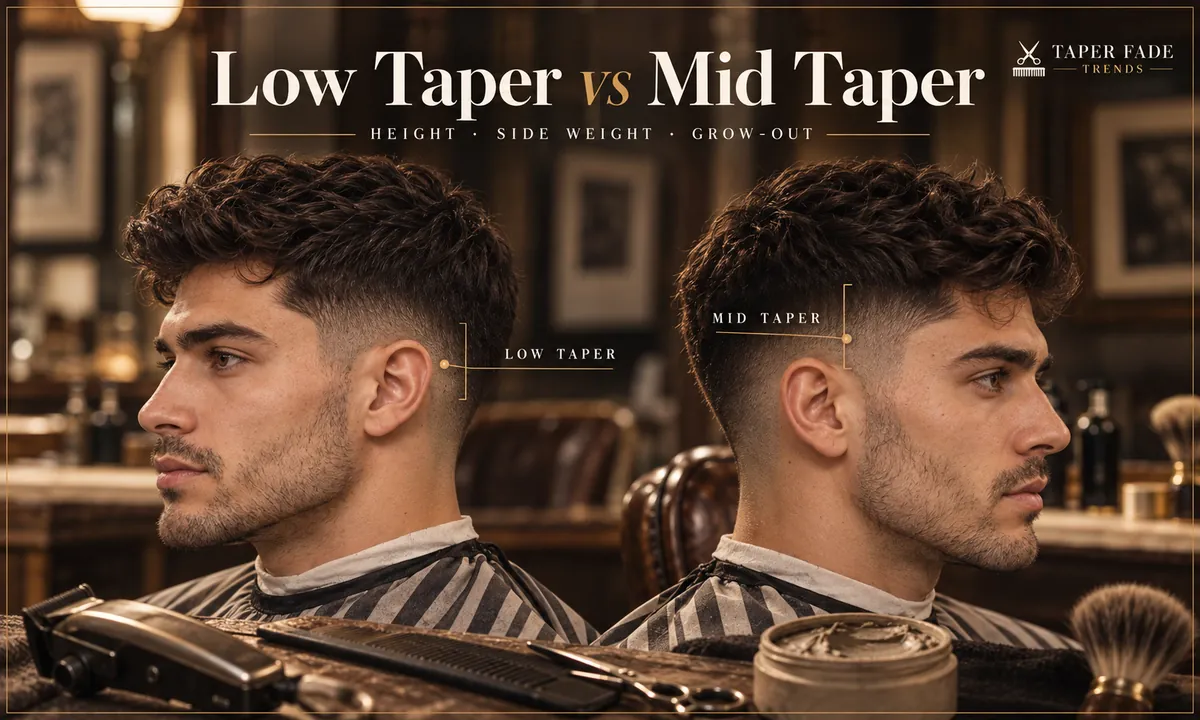
Low taper vs mid taper: what changes when only the height moves
Low taper vs mid taper compared on height, side weight, shortest finish and grow-out, why switching mid to low takes time, and what to tell your barber.
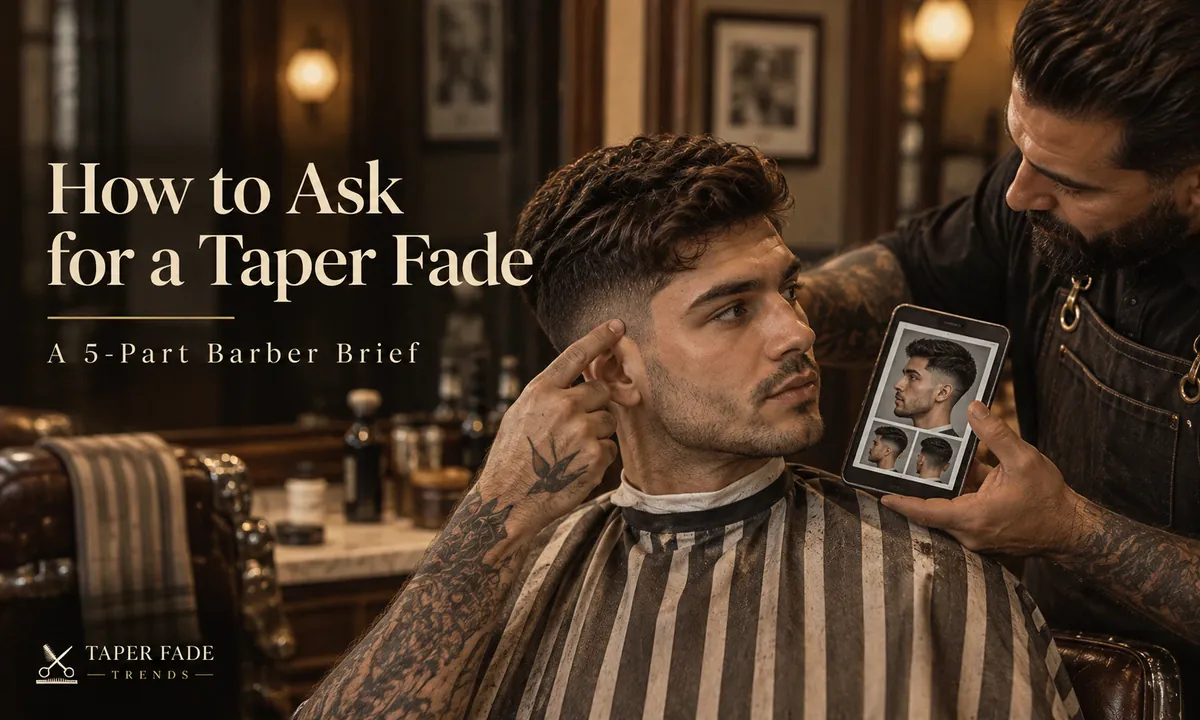
How to ask for a taper fade: a five-part barber brief
How to ask for a taper fade: say where it may reach, how short the base goes, how much side weight stays and what to do on top, then check the plan first.
More in taper fade basics
Taper fade basics: all 7- Taper fade: a visual guide to heights, finishes and top styles12 min
- Classic taper haircut: shape, specs and barber brief16 min
- Blowout taper: choose lift, silhouette and taper height13 min
- How to choose taper height using side weightYou are here
- Taper vs fade: what changes in area, finish and side weight10 min
- Haircut numbers: clipper guard sizes in millimeters and inches10 min
- Burst fade vs taper: compare the ear arc and nape10 min