Low taper fade Black male guide: choose the top, hairline and nape
A low taper fade for Black men shortens hair only at the sideburns and lower nape, so the upper sides and top keep their shape. Choose the top first (waves, coils, an Afro, twists, braids or locs), then decide the hairline finish, how short the taper goes and how the neckline ends.
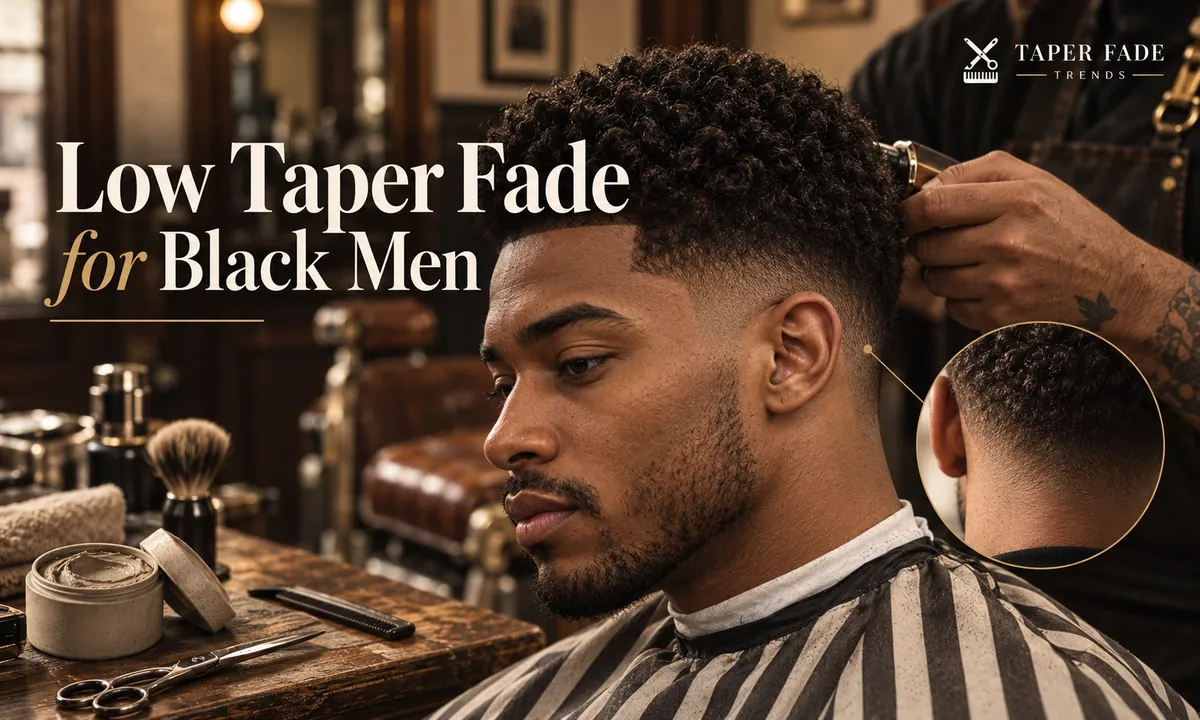
Quick spec: six things to settle before the clippers come out.
| Setting | What you decide | Say it like this |
|---|---|---|
| Taper placement | Low: sideburns and lower nape only | “Keep the taper low, just the sideburns and the back of my neck.” |
| Side coverage | How much hair stays above the ears | “Keep the weight above my ears.” |
| Shortest finish | Skin, near-skin, or a little hair left at the bottom | “Leave a little hair at the bottom.” or “Take it down to skin.” |
| Top shape | Waves, coils, Afro, twists, braids or locs | “Don’t cut into the top. Just clean the edges.” |
| Hairline | Natural, soft cleanup, or crisp line-up | “Keep my hairline natural. Don’t push it back.” |
| Nape and beard | Neckline shape and the sideburn-to-beard blend | “Taper the neckline to match the sides.” |
What a low taper fade for Black men changes
A low taper fade for Black men changes only the edges. Hair gets gradually shorter at the sideburns and along the lower nape, while the upper sides and the top stay full. “Black men” describes who is searching, not one hair texture, so the same low placement works under waves, coils, an Afro, twists, braids or locs.
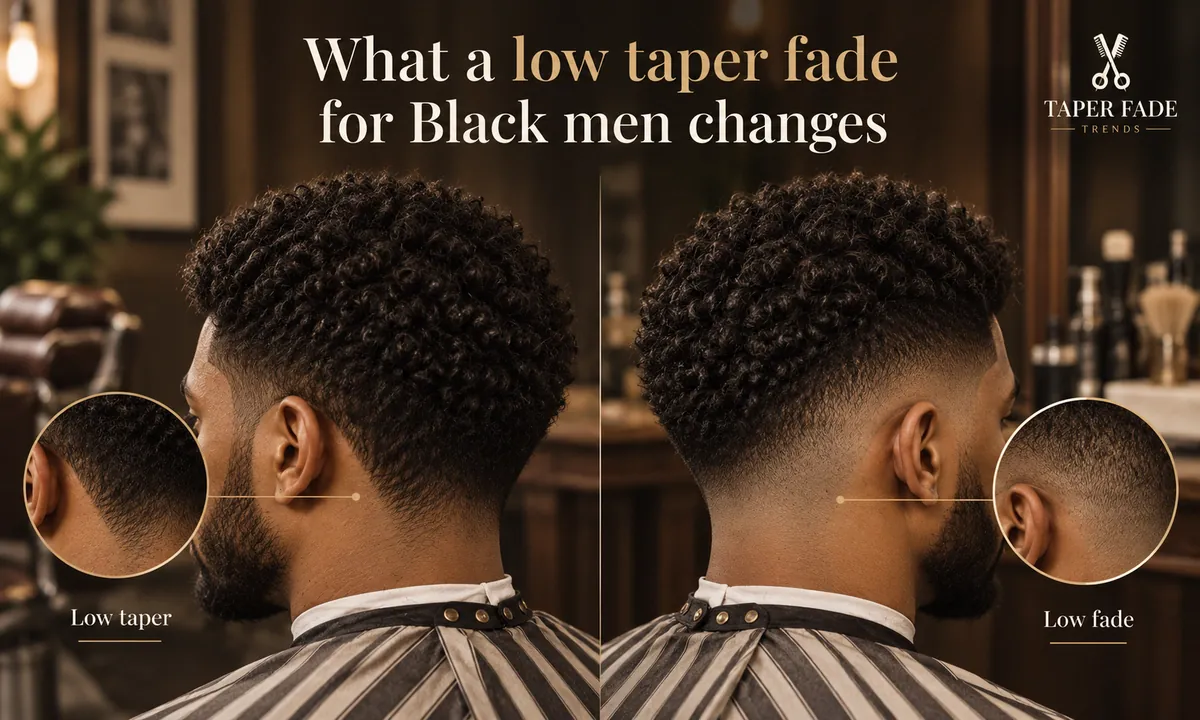
That definition lines up with two independent descriptions. Former barber Nick Hall, writing for Man of Many’s taper fade guide, describes a taper as a length change usually visible only at the sideburns and neckline. HairWow’s low taper guide for Black men adds that a low taper, unlike a low skin fade, doesn’t need to take a large panel off the side.
Low taper vs low fade
A low taper keeps the short work at the sideburns and neckline and follows your natural hairline. A fade, as Hall defines it, runs around the whole head and ends above the natural hairline, blending toward skin. Barbers and websites mix the two words all the time, so describe placement, side coverage and shortest finish instead of trusting the label.
| Low taper | Low fade | |
|---|---|---|
| Where the short work sits | Sideburns and lower nape | A band around the whole head |
| Upper sides | Mostly kept | Shorter all the way around |
| Neckline | Follows your natural hairline | Ends above it |
| Shortest finish | Your choice: skin, near-skin or some hair | Usually blended toward skin |
“Low” describes where the blend starts, not a clipper guard number. How short the bottom of the taper goes is a second, separate decision. A low taper can finish at skin or leave hair at the edge, so say both: “low taper, left a little long at the bottom” is a different cut from “low taper, down to skin.”
Choose the top shape first
Pick the top before anything else, because the top decides what the taper has to leave alone. Waves need the pattern protected above the temples. Coils and Afros need their outline and bulk kept. Twists, braids and locs need the edges cleaned without shrinking the style. Only then set the taper height and the hairline.
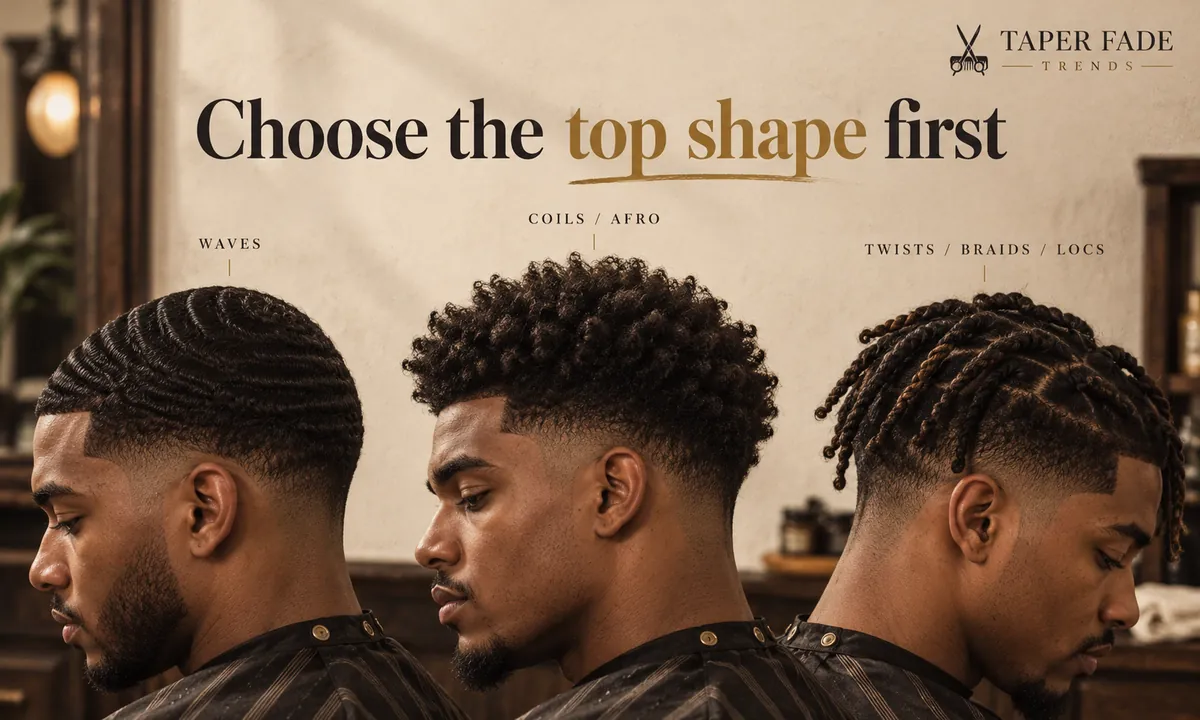
| Top | Protect | The mistake to head off |
|---|---|---|
| Waves | The pattern above the temples and toward the crown | Clipper work climbing high enough to break the pattern |
| Coils or short Afro | The shape on top, set before the taper | A top cut so short the result reads as a plain short fade |
| Full Afro | The round silhouette at the sides and back | A taper pushed up into the outline |
| Twists, braids or locs | The perimeter and the outer sections | A taper taken high enough to shrink the style |
Waves
Waves need the clipper work to stop below the pattern. HairWow’s texture notes warn that too much clipper work above the temple can break the flow, and its style table says to avoid cutting too high into the crown. Before the first pass, ask the barber to show you where the taper will stop.
Coils and Afro
For coils and any size of Afro, agree on the top shape before the taper starts. The taper is judged by how little it cuts into that outline, so the barber should shape the top first and keep the taper to the edges and neckline, as HairWow recommends. For Afro tapers, Hall’s advice is to choose a barber who cuts dense, coily hair often and check their portfolio first, because barbers with little practice on Afro hair can find it harder to blend.
Twists, braids and locs
A low taper can sit under twists, braids or locs when the barber cleans only the edge zone. Show how much hair at the temples and nape can go without exposing the base of the outer sections. HairWow makes the same point for twists and short locs: clean the perimeter rather than shrink the whole style.
Choose how much outline to keep
The hairline and the neckline are two separate choices from the taper itself. A low taper can sit next to a natural front edge, a soft cleanup or a crisp line-up, and the neckline can follow the taper or stay fuller. Decide both before any edge work starts, because cut hair can’t be put back.
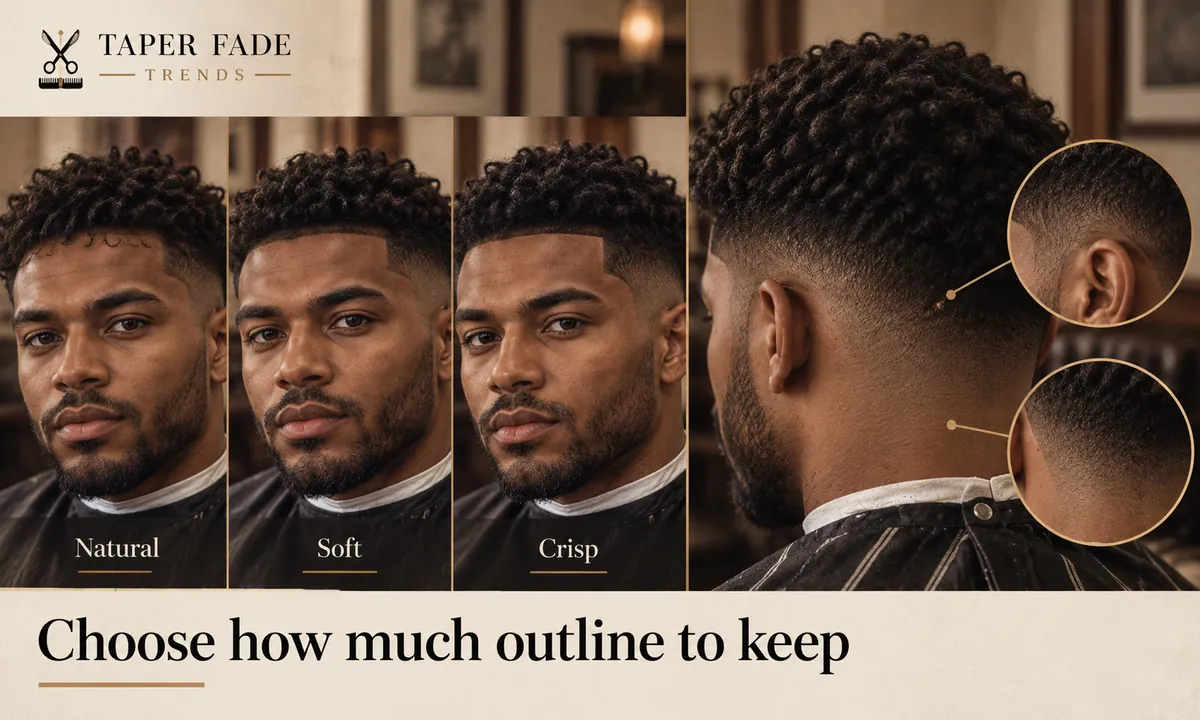
Natural hairline vs line-up
Yes, you can keep a natural hairline with a low taper. A line-up is an add-on, not part of the taper. Ask for natural (left alone), soft (strays only) or crisp (edge and corners drawn). HairWow advises that a sharp line-up should follow your real hairline instead of pushing it back, and that light corners usually look better kept soft.
Side coverage and nape
Keep as much side hair as the top needs to look balanced, and show it on your own head: point to where the weight should stay above the ears. Then say how the neckline should end. Hall’s rule is to match the back to the sides, so a low taper at the sideburns gets a low taper at the nape too.
Build the barber brief
Tell the barber five things in this order: keep the taper low, protect the top, set the shortest finish, choose the hairline, and describe the nape and any beard blend. Bring side and back photos, not only a front shot. Outcomes give the barber a target, and the guard and blade choices stay with the barber.
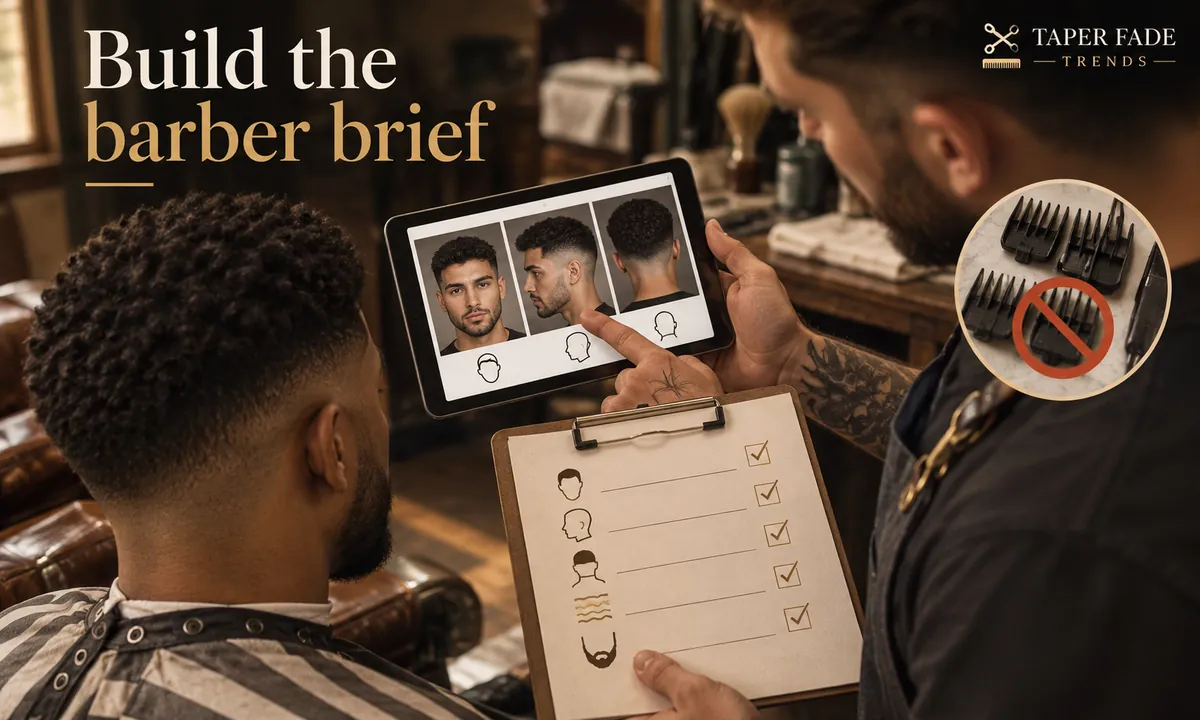
- Keep the taper low: sideburns and lower nape only, nothing higher.
- Name the top (waves, coils, Afro, twists, braids or locs) and say whether it gets cut at all, and by how much.
- Choose the shortest finish: skin, near-skin, or a little hair left at the bottom.
- Choose natural, a soft cleanup or a crisp line-up, and ask that any line follow your own hairline.
- Ask for a neckline tapered to match the sides, and say whether the sideburns should blend into your beard.
If you’re torn between two heights, ask for the lower one. As Hall puts it, a barber can take a taper higher on the next pass, but hair that’s gone can’t go back.
What to show in reference photos
Bring a side profile and a back view, plus a front shot for the hairline. Hall’s point is that one front photo isn’t enough, because the differences between tapers sit around the ears and neckline. Check that your photo really shows a low taper: HairWow lists asking for a low taper while showing a mid fade as a common mistake.
- A front photo shows the hairline finish and how the temples meet the top.
- A side profile shows where the taper starts at the sideburn and how much hair stays above the ear.
- A back view shows the nape, the neckline and the bottom edge of the taper.
A photo shows the outline. It doesn’t show the guard, the blade setting, the products or how many days old the cut is, so treat those as unknown and let the barber judge them on your hair.
What not to guess: guards and intervals
There is no single guard number for a low taper. The same look can come from different clippers, guards, blade settings and techniques, depending on the barber, your hair density and your starting length. Ask for the visible result and let the barber pick the tools. This guide gives no guard numbers because none of its examples come from a recorded cut.
Styling and grow-out
There is no fixed rebooking date for a low taper. Hall suggests a cleanup every two to three weeks to keep tapered edges crisp, and HairWow gives a similar range with sooner visits for a sharp line-up. Your growth rate, how short the bottom is and how crisp the front is decide when your cut looks grown out.
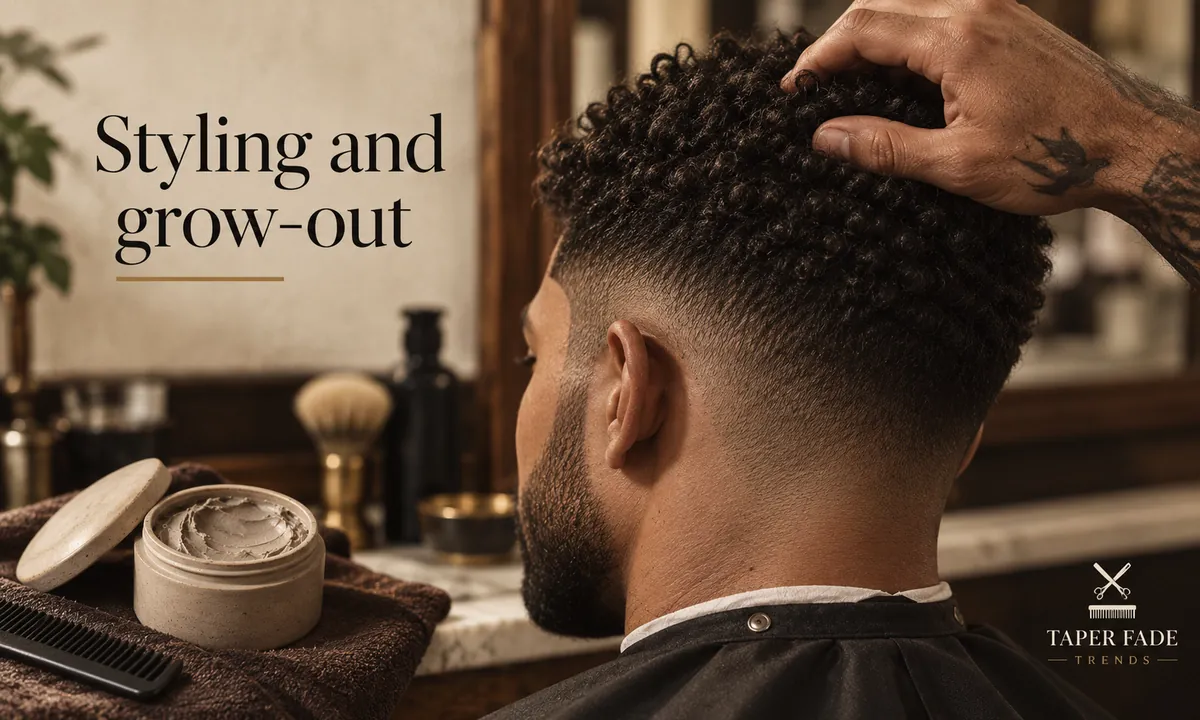
Watch the sideburns and the neckline. Hall notes that regrowth shows most around those two areas, and he rates the low taper as the height that grows out most cleanly because the blend sits near the natural hairline. The top grows on its own schedule, so keep styling it the way you already do and leave the edges to the barber.
One exception runs the other way. If you get bumps at the nape, dermatology guidance from the Primary Care Dermatology Society lists avoiding short haircuts among the ways to manage acne keloidalis nuchae. That can mean a longer finish at the back and fewer close cleanups, not more.
When another taper or fade fits better
Choose a different height when you want more contrast. A mid taper starts around the middle of the sides, above the ear but below the temple. A high taper sits up around the temples. A fade wraps the whole head. According to Hall’s comparison, the higher the taper, the sooner regrowth shows.
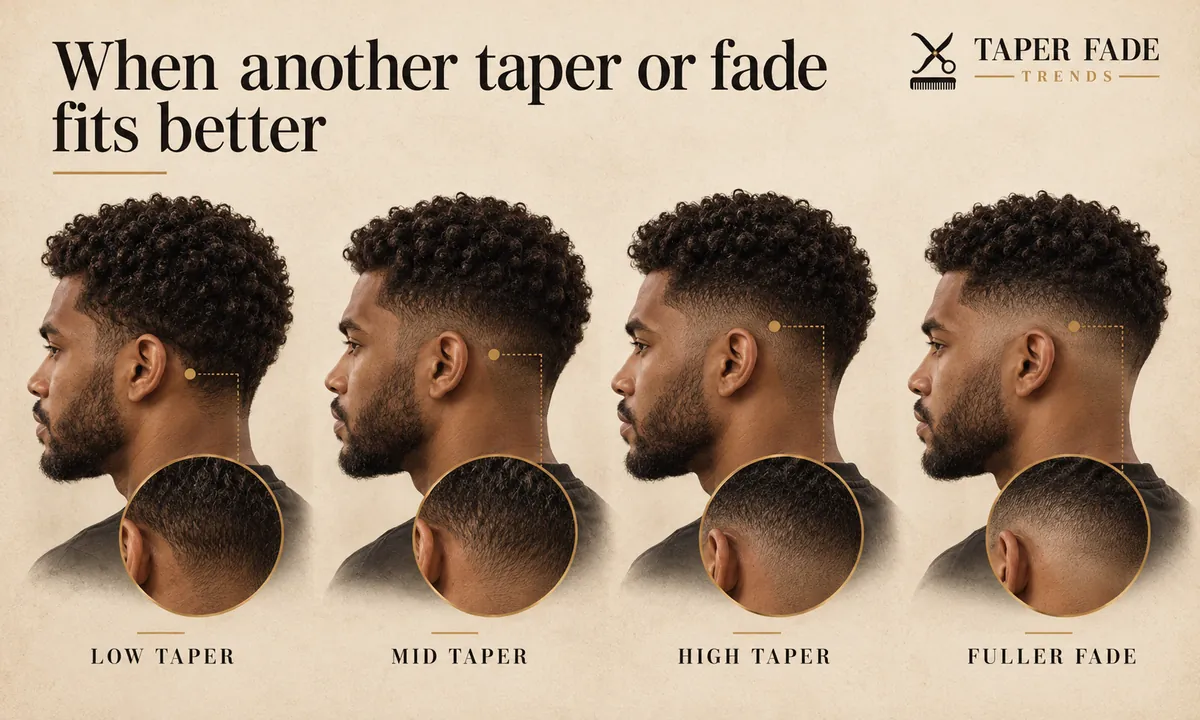
| Option | Where it starts | Contrast | Upkeep |
|---|---|---|---|
| Low taper | Sideburns and neckline, near the natural hairline | Lowest | Lowest; grows out most cleanly |
| Mid taper | Middle of the sides, above the ear, below the temple | Moderate | A cleanup every few weeks |
| High taper | Up around the temples | Highest | Edges need regular attention |
Source for the table: Man of Many’s taper fade guide by former barber Nick Hall. If you want the same low placement but the whole back taken shorter, ask for a low fade and use the comparison table above.
How this guide was researched
The Taper Fade Trends editorial team wrote this guide from the published barber guidance and dermatology sources listed below, checked on October 6, 2026. We did not photograph or record any haircuts for it, so the page has no real-cut photos and no guard numbers. Every image is an illustration made by Taper Fade Trends and labeled as one. The guide has not been reviewed by a barber.
Barbers and publishers use “taper” and “fade” inconsistently. Where sources disagree, this guide describes placement, side coverage and shortest finish instead of picking a label.
Sources:
- Man of Many: 7 best taper fade haircuts for men, according to a barber, by Nick Hall, a former barber with a barbering certificate. Taper vs fade definitions, taper heights, photo angles, upkeep.
- HairWow: Low taper fade for Black men. Low taper vs low skin fade, texture notes, line-up advice, common mistakes.
- American Academy of Dermatology: Acne keloidalis nuchae causes and self-care. Close-shave haircuts and the back of the neck.
- American Academy of Dermatology: Razor bumps. Why short-cut curly hair can grow back into the skin.
- Primary Care Dermatology Society: Acne keloidalis nuchae. Short haircuts and management.
Keep reading
All guides
Low taper fade: placement, finish, side length and upkeep
A low taper fade shortens the sideburns and nape and keeps the sides full. See the four choices to make, whether it can go to skin, and what to say.
Curly low taper fade: keep curl width above the ears
A curly low taper fade cleans the temples, sideburns and nape but keeps curl width above the ears. What to decide, check dry and tell your barber.
Low taper fade straight hair: density, sides and top length
Low taper fade straight hair guide: how much side weight to keep for your density and growth direction, why sides stick out, and what to ask your barber.
High taper fade Black male styles: waves, coils, twists and locs
High taper fade Black male guide: how it sits with waves, coils, twists and locs, skin vs. guard finishes, and a fill-in barber brief.
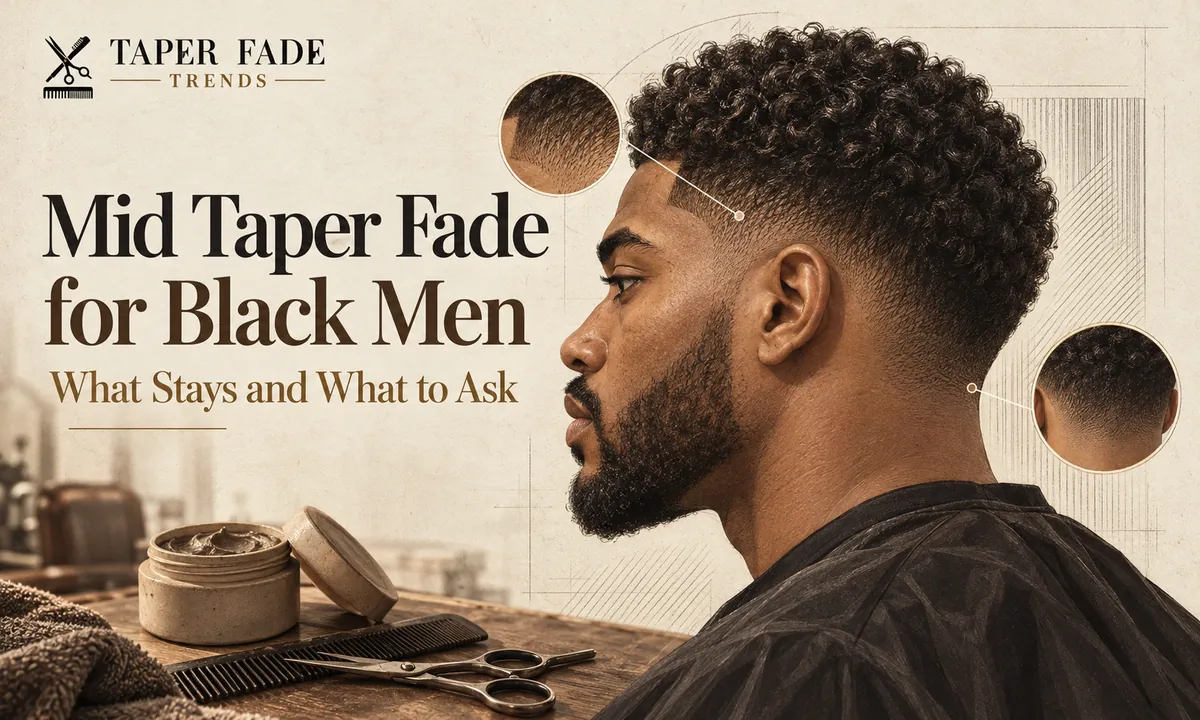
Mid taper fade Black male guide: what stays and what to ask for
Mid taper fade Black male guide: keep more side weight than a full mid fade, set finish and hairline, protect waves, coils or locs, and brief your barber.
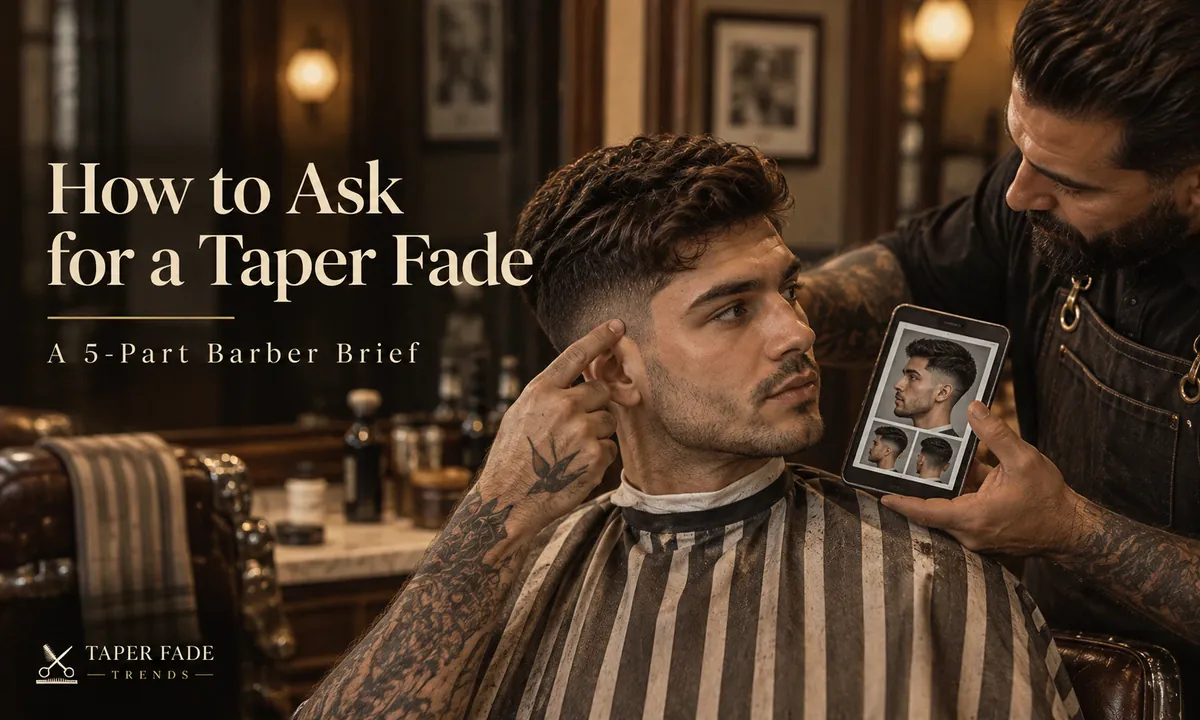
How to ask for a taper fade: a five-part barber brief
How to ask for a taper fade: say where it may reach, how short the base goes, how much side weight stays and what to do on top, then check the plan first.
More in low taper fades
Low taper fades: all 14- Low taper fade: placement, finish, side length and upkeep12 min
- Low taper fade straight hair: density, sides and top length11 min
- Low taper fade Black male guide: choose the top, hairline and napeYou are here
- Curly low taper fade: keep curl width above the ears10 min
- Low taper fade buzz cut: compare top length and finish12 min
- Textured fringe low taper: cut, style and barber brief12 min
- Blowout low taper fade curly hair: keep volume, keep definition11 min
- Low taper fade wavy hair: what to ask for13 min
- Asian low taper fade: choose by how your sides grow7 min
- Middle part low taper fade: keep the curtains connected8 min
- Low taper fade with dreads: protect the loc boundary12 min
- Low taper mullet: keep length behind the ears13 min
- Low taper vs mid taper: what changes when only the height moves10 min
- Low taper vs low fade: compare coverage and side weight11 min