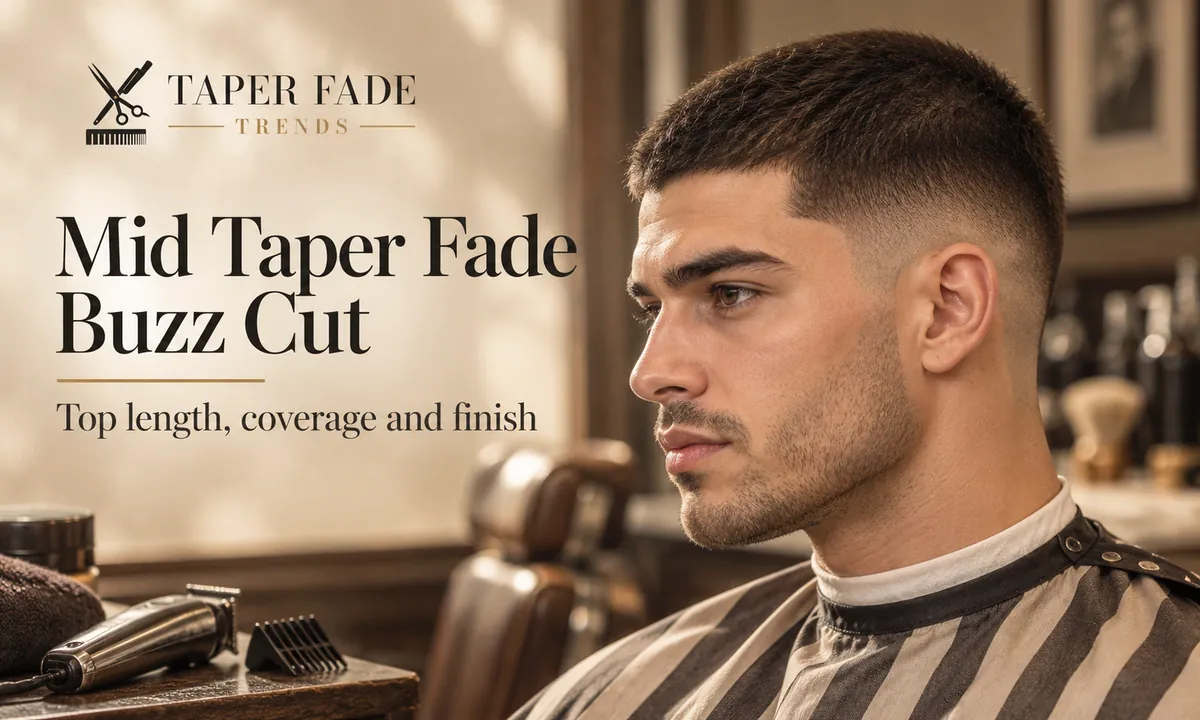
Mid taper fade buzz cut: top length, coverage and finish
A mid taper fade buzz cut keeps the top clipper-short and limits the taper to the sideburns, ears and nape, so the sides stay fuller than a full mid fade. It comes down to separate choices: the top length, how far the taper spreads, and how short it ends. None of the three is set by the name.
| Field | What to decide | Say it like this |
|---|---|---|
| Top length | A length, or a guard with its brand | “About a quarter inch on top,” or “Wahl #2” |
| Taper start | Around temple height; a zone, not a measurement | “Start it here,” with a finger on the spot |
| Coverage | Sideburns, ear perimeter and nape only | “Keep it off the rest of the side” |
| Shortest finish | Shadow, stubble or skin | “Shadow at the bottom, not skin” |
| Side-panel weight | More hair kept than a full mid fade | “Keep the sides fuller” or “a bit tighter” |
| Neckline | Natural or lined up | “Natural neckline” |
| References | Side and back at minimum | Front, both sides and back if you have them |
What a mid taper fade buzz cut is
A mid taper fade buzz cut is an evenly clipped short top over a localized taper. The taper starts around temple height and does its shortest work at the sideburns, ear perimeter and nape, so the side panel keeps more hair than a full mid fade. Its shortest finish can be shadow, stubble or skin.
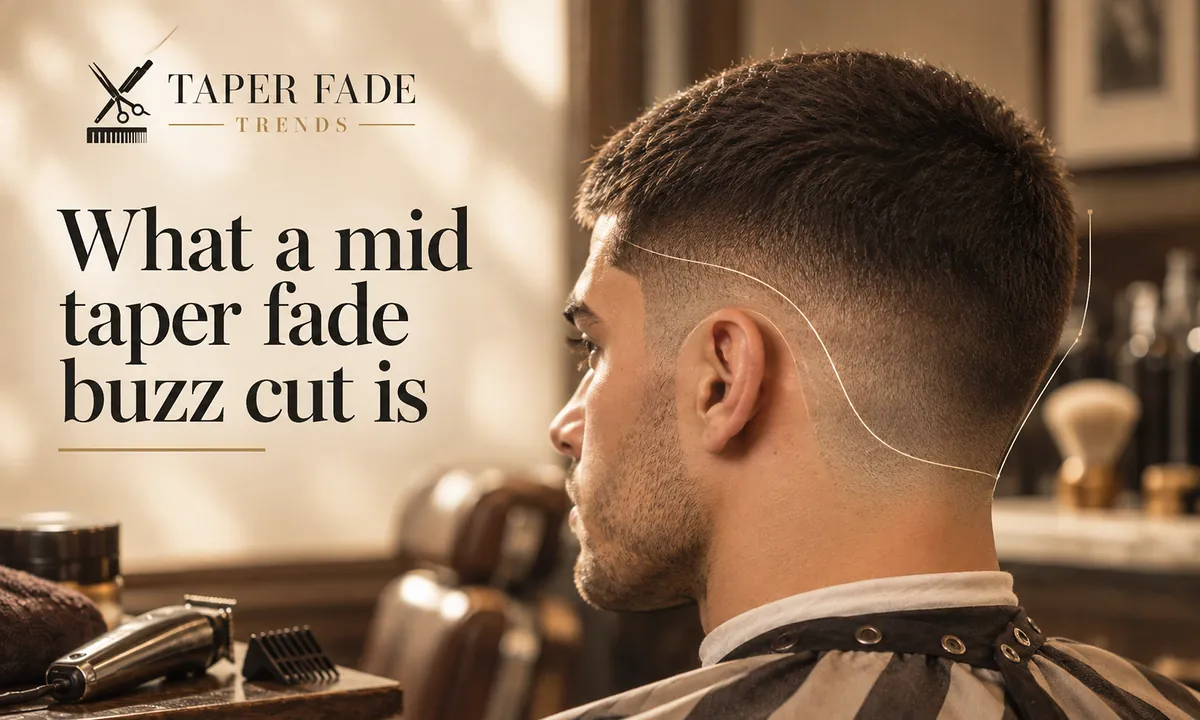
The perimeter is the edge of the hair around the ears and neck, the nape is the back of the neck, and the side panel is the hair between the top and the ear. Shadow is hair cut close enough to tint the scalp. Stubble is a little longer and reads as texture.
“Buzz cut” has a rough boundary. Wahl’s guard chart calls a #1 a short buzz cut, a #2 a traditional buzz and a #3 still a buzz on the longer side, and it puts a #4 in crew cut or brush cut territory. If you want something in between, give the length rather than the label.
“Mid” is a placement zone, and shops draw it in different places. Published guides put the start anywhere from the middle of the ear up to the temple. Point to the line on your own head. The guide to the mid taper fade covers the taper under longer tops; this page covers the clipper-short version.
Mid taper vs mid fade on a buzz cut
A mid taper and a full mid fade can start at the same height and still be different haircuts. The mid taper keeps its shortest work at the sideburns, ear perimeter and nape and leaves the side panel fuller. A full mid fade carries the graduation across most of the sides and back. Ask for coverage, not just height.
| Attribute | Mid taper buzz cut | Full mid fade buzz cut |
|---|---|---|
| Start height | Around the temple | Can start at the same height |
| Coverage | Sideburns, ear perimeter and nape | Most of the sides and back |
| Side-panel weight | More hair kept above and behind the ear | Less; the side reads as one gradient |
| From the back | Short work stays at the nape | Short work wraps around the back |
| Shortest finish | Shadow, stubble or skin, by request | Shadow, stubble or skin, by request |
Some guides split the two by the bottom instead, with a taper leaving a shadow and a fade going to skin. Either way, the bottom finish needs its own sentence. The taper vs fade guide lays out how coverage, height and finish separate the two families.
Choose the buzz length on top
Pick the top as a length you want to see, then let the barber match it on their clippers. On Wahl’s chart, #1 through #3 run from 1/8 to 3/8 inch. Quote the length, or the guard with its brand, because a guard number only means one length inside one maker’s system.
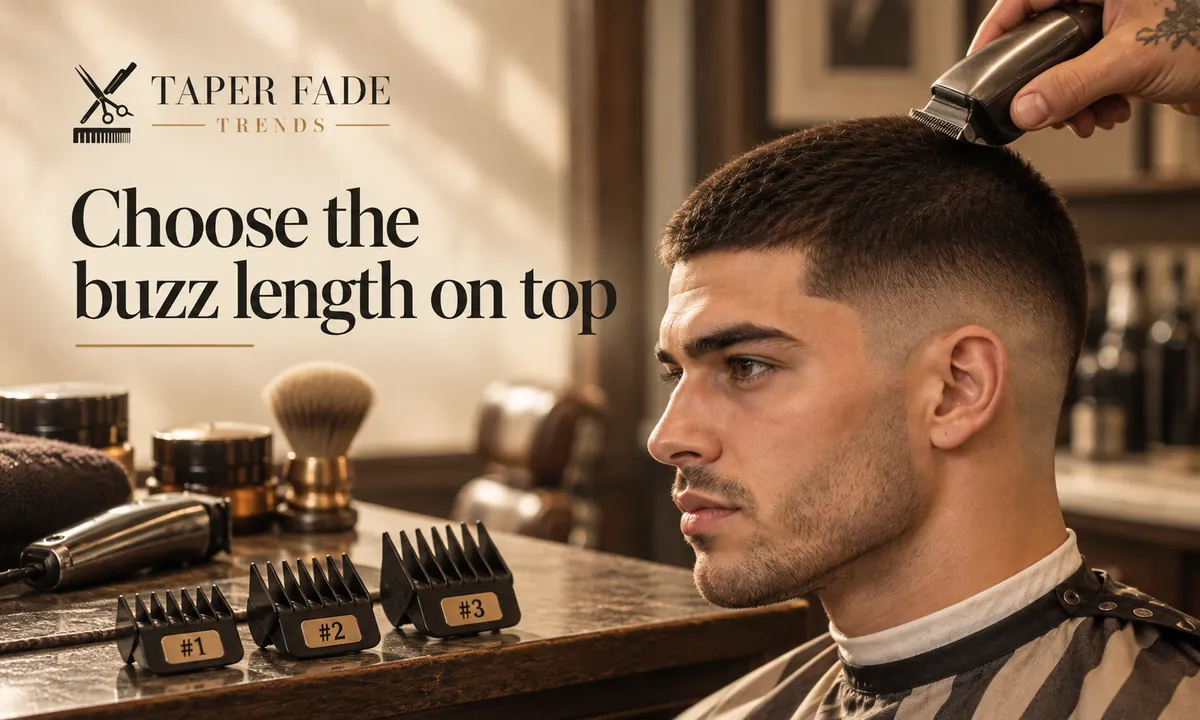
A guard, which Wahl also calls a guide comb, is the attachment that holds hair away from the blade and sets the cutting length. Our guide to clipper guard numbers found Wahl, Andis and Oster agreeing from #1 to #3 on the models it checked, then splitting below #1 and above #4.
#1, #2 and #3 in the Wahl system
On Wahl’s guide-comb chart, a #1 leaves 1/8 inch, a #2 leaves 1/4 inch and a #3 leaves 3/8 inch, which works out to about 3, 6 and 10 mm. Those are nominal cutting lengths inside Wahl’s system, not a promise of how the top will look, and other brands can label lengths differently.
| Wahl guard | Listed length | About | How Wahl describes it |
|---|---|---|---|
| #1 | 1/8 in | 3 mm | A short buzz cut |
| #2 | 1/4 in | 6 mm | A traditional buzz cut |
| #3 | 3/8 in | 10 mm | Still a buzz, on the longer side |
| #4 | 1/2 in | 13 mm | Crew cut or brush cut territory |
Each step adds 1/8 inch, so going from #1 to #2 doubles the length while #2 to #3 adds half again. The visible jump is biggest at the short end. If you are torn between two guards, take the longer one first. A barber can take more off in the same visit, but nobody can put it back.
Why the same guard can show different scalp
The same guard can show different amounts of scalp because density, texture, growth direction, hair color against the skin, cutting direction and lighting all change what you see. A #2 on dense, dark hair and a #2 on fine hair close to the skin’s tone are the same length but read as different cuts.
| Variable | What it changes at the same guard |
|---|---|
| Density | Fewer hairs per area let more scalp show through |
| Texture | Curly and coily hair sits shorter than its cut length |
| Growth direction | A crown whorl or cowlick can look shorter or patchy |
| Hair against skin | Dark hair on light skin shows the most contrast |
| Cutting direction | Wahl says cutting with the grain can miss hairs |
| Lighting | Overhead light shows more scalp than soft side light |
So a photo of someone else’s #2 cannot tell you what a #2 will do on your head. If more scalp shows than you expected, the usual fix is to go one guard longer on top.
What a photo can and cannot prove
A reference photo shows visible length, contrast, where the taper starts and how far it spreads. It cannot show the guard, blade, lever setting, cutting direction or how many days have passed since the cut. If the settings matter, get them from the barber who did the cut instead of reading them off the picture.
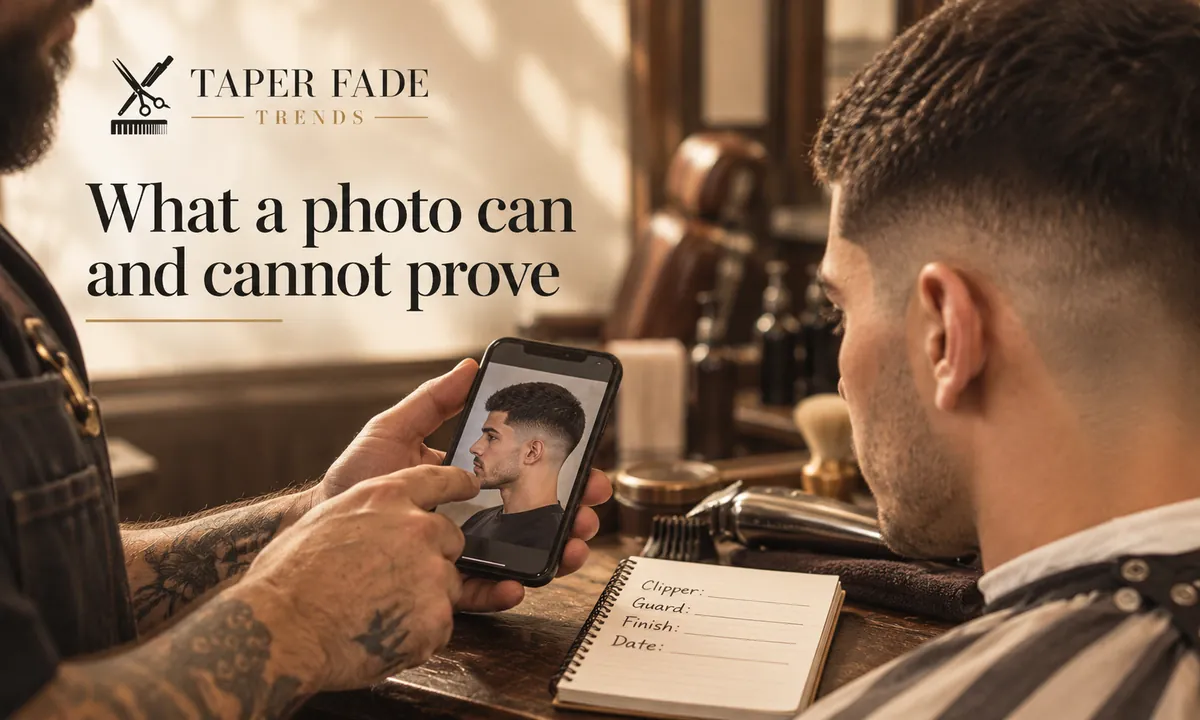
Record a cut you want repeated
When a mid taper fade buzz cut comes out right, photograph the front, both sides and the back before it grows. Then ask the barber what they used and write it down:
- the clipper brand, top guard and length
- where the taper starts and how far it spreads
- the shortest finish and any blade or lever setting the barber names
- the neckline
- the date
Write Unknown for anything nobody recorded. A photo with none of these notes is a shape reference, not a specification.
Choose the taper finish and side weight
Choose the shortest finish by how much contrast you want at the edge, and the side-panel weight by how much of the side should still read as hair. The two are independent: shadow or skin can sit under a fuller or a tighter side panel, and each pairing reads and grows out differently.
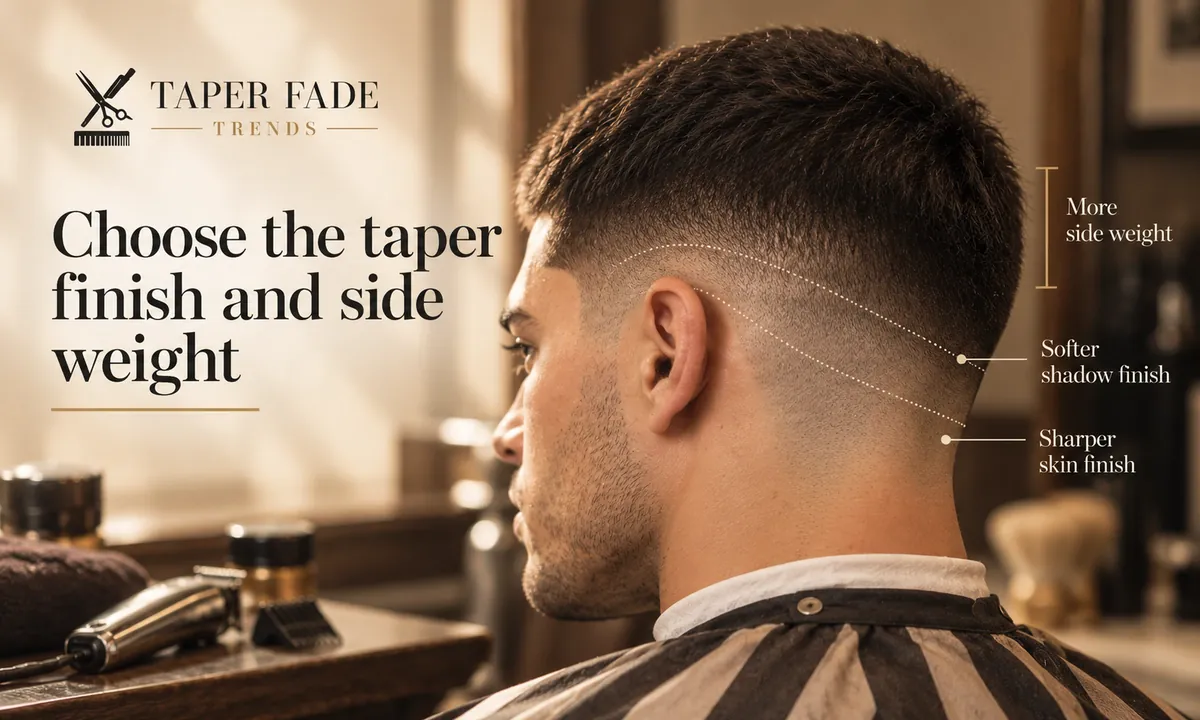
| Pairing | How it reads | What shows first as it grows |
|---|---|---|
| Shadow finish, fuller side panel | Softest edge; sides stay close to the top | Little; regrowth blends into hair already there |
| Shadow finish, tighter side panel | Soft base with less bulk above the ear | The outline before the base |
| Skin finish, fuller side panel | Sharp base, sides keep their presence | Regrowth at the base |
| Skin finish, tighter side panel | Highest contrast; closest to a full mid fade | Regrowth at the base, soonest |
On a buzz, side-panel weight is easiest to describe by comparison: a fuller panel stays close to the top length, and a tighter one steps down toward a full mid fade. Describe what you want to see, and let the barber choose the guards that get there.
Your hair changes how each pairing reads. Fine or sparse hair can make a skin finish look more exposed than the reference suggested, and curly hair shrinks, so describe side weight by how it looks dry. Show the barber any cowlick at the ear or nape before the first pass.
Shadow vs skin finish
A mid taper fade buzz cut does not have to finish at skin. “Mid” describes where the taper starts, not how short it ends, and shops disagree on whether “taper” implies skin. Ask for shadow, stubble or skin by name. If you are unsure, start at shadow, because a barber can go shorter but cannot add hair back.
What to tell your barber
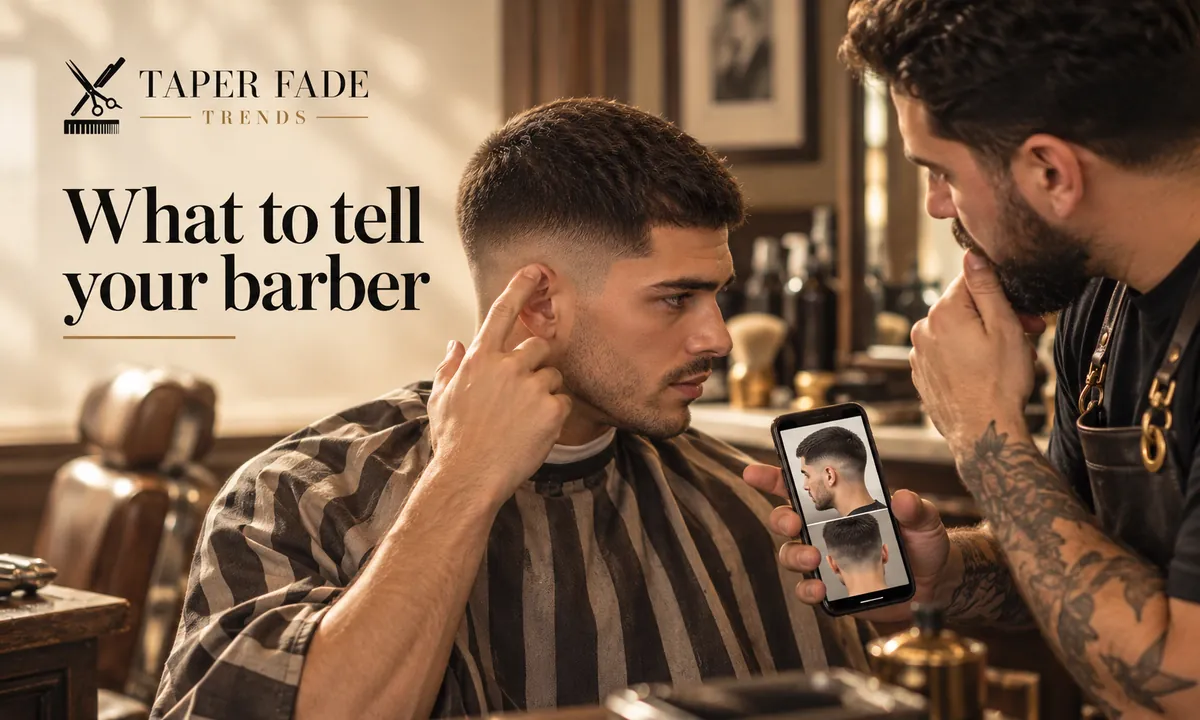
Tell the barber the top length, where the taper should start, that it stays at the sideburns, ears and nape, how much weight the side panel keeps, and the shortest finish. Add the neckline. Show a side and a back reference, and treat any guard number copied from another cut as a starting point, not a recipe.
A reusable barber brief
Fill in the brackets and read it out:
- “On top, about [length], or a [brand] #[number] if you use that system.”
- “Start the taper around [the temple / a little lower], and don’t take it above [point to the spot].”
- “Keep it to my sideburns, around the ears and the nape, and leave [more / a bit less] weight on the side than a full mid fade.”
- “Take the shortest point to [shadow / stubble / skin].”
- “Neckline [natural / lined up].”
Then ask the barber to say the plan back before the clippers start, the check our guide on how to ask for a taper fade recommends. If you wear a beard, ask for the sideburn and beard line to be planned in the same visit.
Reference photos to bring
Bring at least one side profile and one back view of a mid taper fade buzz cut, plus a front view if the top matters. A front-only photo hides how far the taper spreads around the ear and nape. Point to the detail you want in each photo, and pick references with hair similar to yours.
- Both side profiles show where the taper starts and how much side weight stays. Heads are not always symmetrical, so take both if you can.
- The back shows the nape, the neckline and how short the bottom goes.
- The front shows the top length and the hairline.
How this cut grows out
A mid taper fade buzz cut loses its shape first at the bottom of the taper and the neckline. MedlinePlus says healthy hair takes about a month to grow half an inch, roughly 1/8 inch a week, which is the length of a Wahl #1. A skin finish can be back to about #1 length within a week or so.
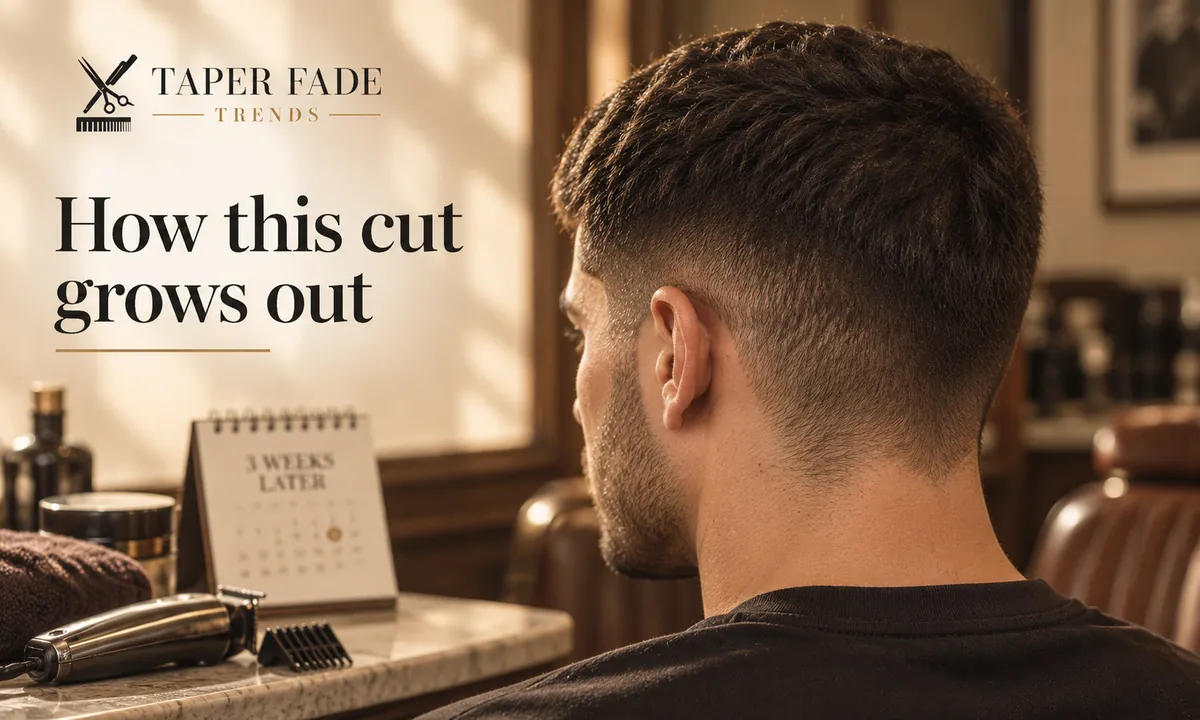
The top changes in proportion. On a #1 top, a week of growth roughly doubles the length; on a #3, it adds about a third. Growth rates vary from person to person, so treat this as rough math, not a schedule. What brings your refresh point forward:
- a skin finish rather than shadow or stubble
- a lined-up neckline, which has an edge for growth to cross
- a shorter top, where the same growth is a bigger share
- faster-growing hair, or a preference for a crisp edge
Use a visual trigger, not a universal calendar
No evidence-backed rebooking interval fits every mid taper fade buzz cut. Published guides give fixed ranges that disagree. Photograph the sides and back the day of the cut, then rebook when the nape, sideburns or top no longer match those photos. The weeks that took are your interval, not a rule for anyone else.
Use the same angles and the same light each time, or the comparison misleads you. Our guide to the rebooking interval for a taper fade walks through what changes week by week.
Limits, scalp notes and alternatives
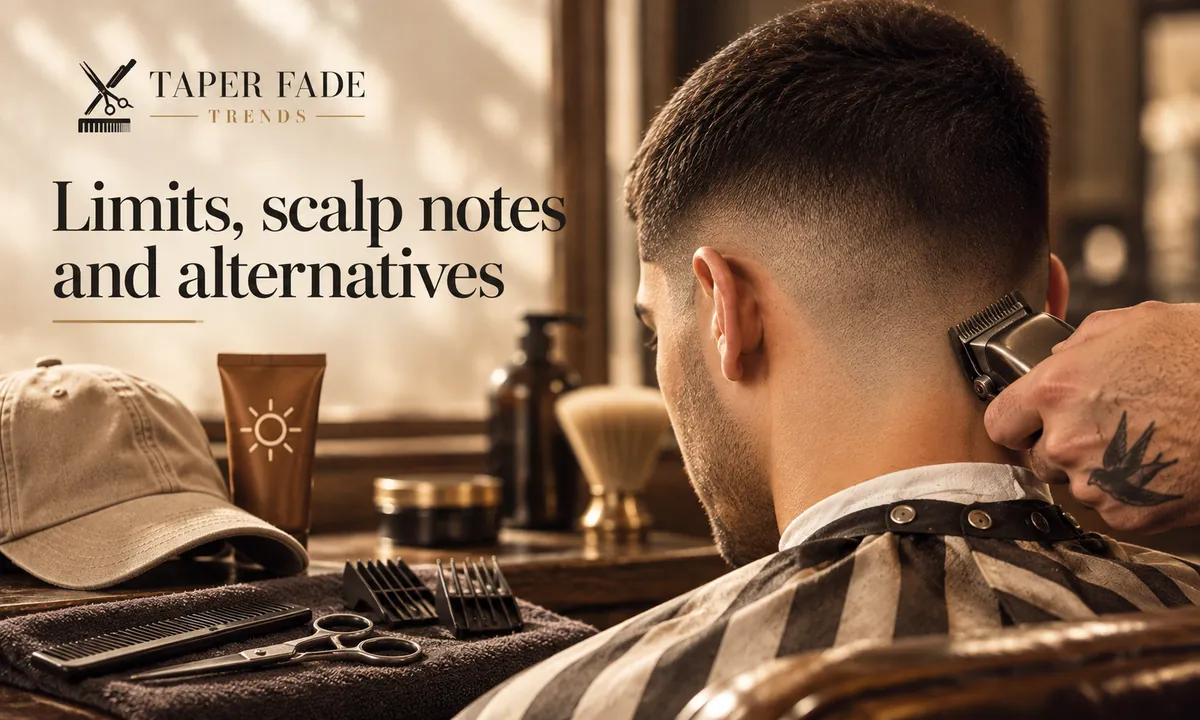
A mid taper fade buzz cut is the wrong order if close cutting at the nape irritates your skin, if you want contrast across the whole side, or if you want the taper to start lower or higher. Each alternative below changes one variable.
If close shaving irritates your nape
If you have acne keloidalis nuchae (AKN), the American Academy of Dermatology advises haircuts that avoid shaving the back of the neck and head, because shaving there can make AKN flare. Ask for a shadow or a guarded finish at the nape, and see a dermatologist about the skin itself; a haircut photo cannot diagnose it.
The AAD’s self-care page adds that most people with AKN need medical treatment from a dermatologist as well as self-care.
Sun on a short top
A #1 or #2 top leaves the scalp visible, so treat it as exposed skin outdoors. The AAD’s sunscreen advice is a broad-spectrum, water-resistant SPF 30 or higher on all skin not covered by clothing. For thinning hair, it advises sunscreen on the scalp or a wide-brimmed hat.
When another short cut fits better
Adjust the finish, the top length or the side weight inside this cut first. If the problem is placement or coverage, switch cuts.
| Cut | What changes | Choose it when |
|---|---|---|
| Full mid fade buzz cut | Graduation across most of the sides and back | You want strong contrast across the whole side |
| Low taper fade buzz cut | Taper starts lower, near the ear and nape | You want a quieter taper and fuller sides |
| High taper fade | Taper starts above the temple | You want more contrast set higher |
| Crew cut | Around a Wahl #4 or longer on top | You want more top than a buzz gives |
If you are weighing the first two rows, the comparison of low taper vs mid taper shows what changes when only the height moves.
Method and sources
Taper Fade Trends Editorial wrote this guide to help readers choose a top length, a taper coverage and a shortest finish, then brief a barber on all three. Guard lengths come from Wahl’s published chart and growth rate from MedlinePlus. The two skin notes come from the American Academy of Dermatology. The definitions follow this site’s taper and fade guides, and every source was checked on October 21, 2026.

No barber has reviewed this version yet. When one does, their name, role and review date will be added here. The figures are labeled illustrations, not photographs of documented cuts, and no guard settings are claimed for any image. This guide has no measured cut record or grow-out log. Found an error? Our editorial policy explains how corrections are made and dated, or you can contact us.
Sources:
- Wahl USA: Ultimate Guide to Hair Clipper Guard Sizes
- MedlinePlus: Hair Problems
- American Academy of Dermatology: Acne keloidalis nuchae, self-care
- American Academy of Dermatology: How to apply sunscreen
Next: brief the barber before you sit down
Once the top length and finish are settled, the remaining risk is wording. Our five-part barber brief turns placement, coverage, finish and side weight into lines you can read out. Save a side and a back reference to your phone before the appointment.
Keep reading
All guides
Mid taper fade: what it is and what to ask your barber
What a mid taper fade is, how it differs from a full mid fade, why skin is optional, and the four specs to give your barber before the cut starts.
Low taper fade buzz cut: compare top length and finish
A low taper fade buzz cut is two choices: how long the top is and how short the taper ends. Compare Wahl #1 to #4, skin or no skin, and what to say.
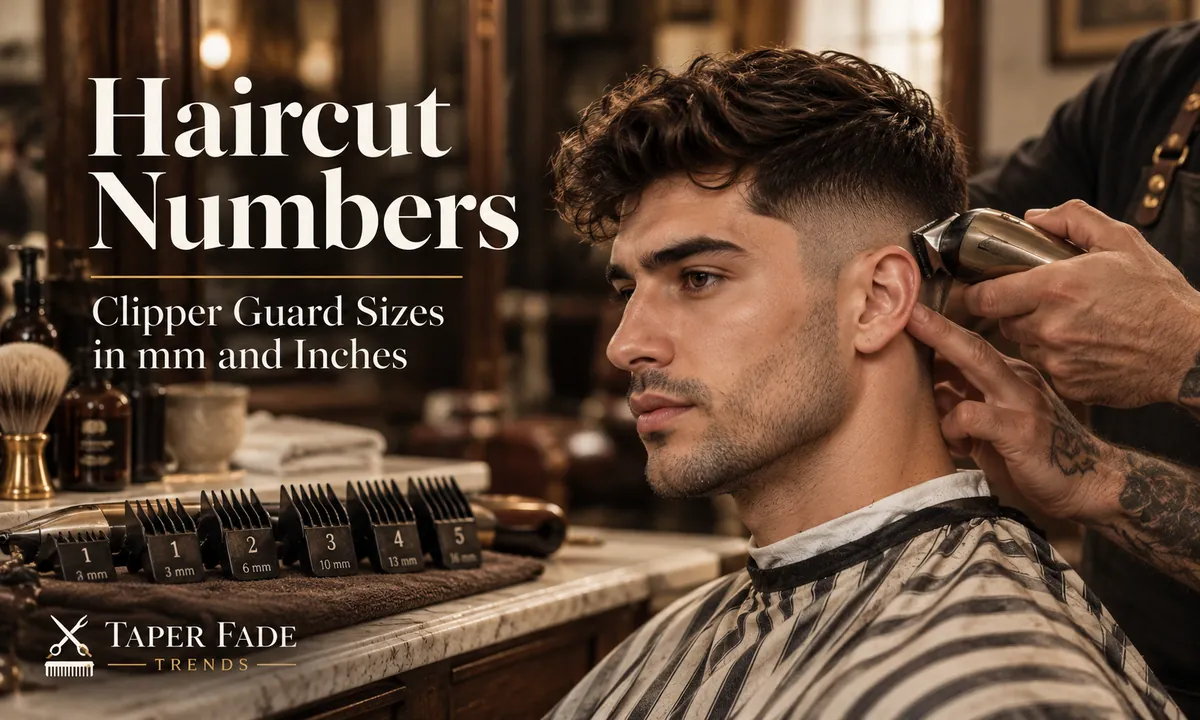
Haircut numbers: clipper guard sizes in millimeters and inches
Haircut numbers in mm and inches, checked against Wahl, Andis and Oster specs, plus why #0 isn’t always no guard and what to tell your barber.
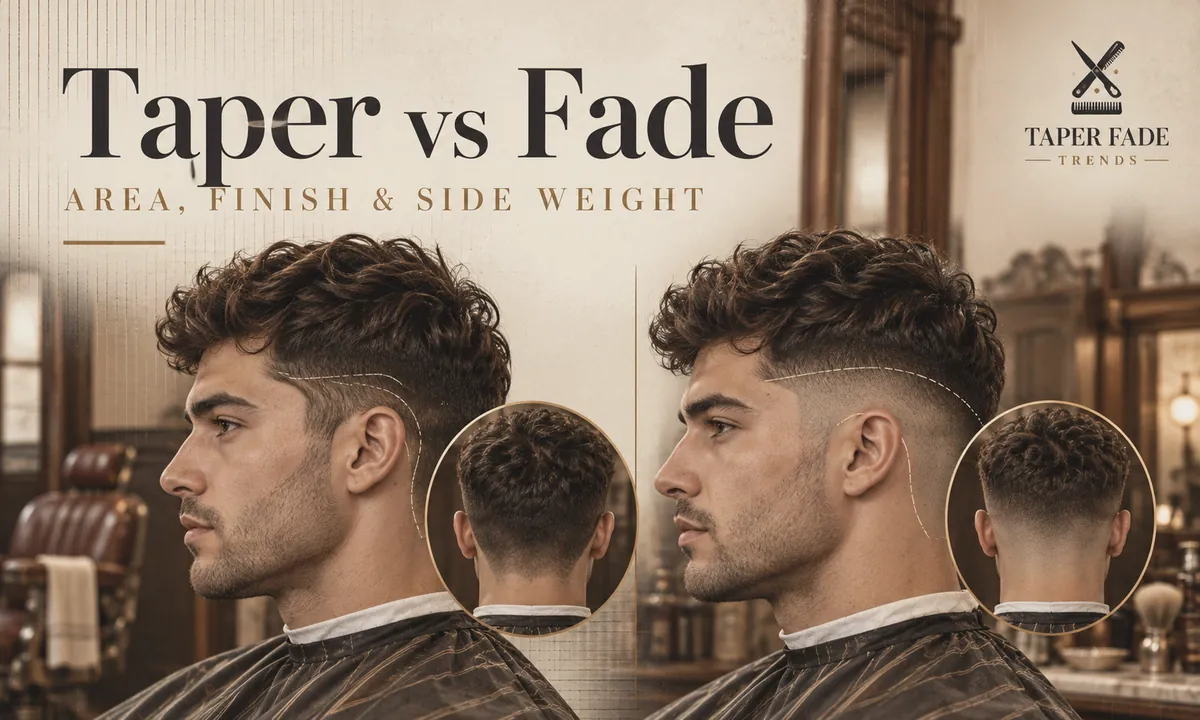
Taper vs fade: what changes in area, finish and side weight
Taper vs fade compared by coverage, height, shortest finish and side weight, with a back-view check and word-for-word barber scripts for either cut.
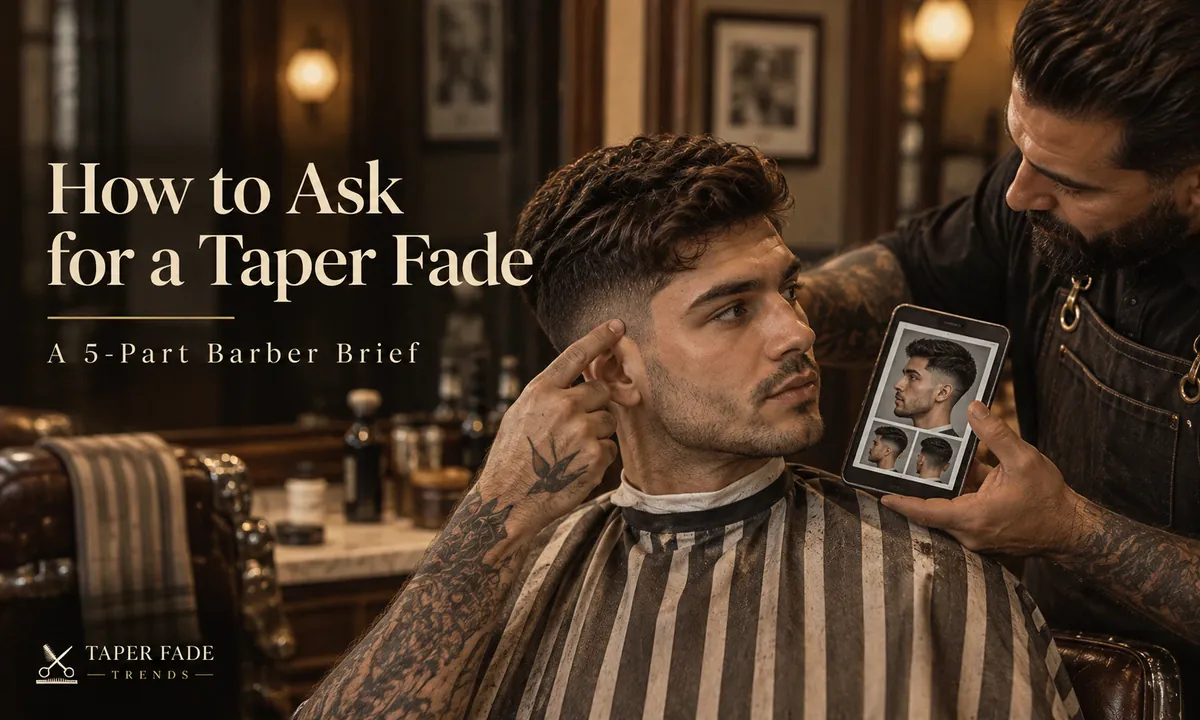
How to ask for a taper fade: a five-part barber brief
How to ask for a taper fade: say where it may reach, how short the base goes, how much side weight stays and what to do on top, then check the plan first.
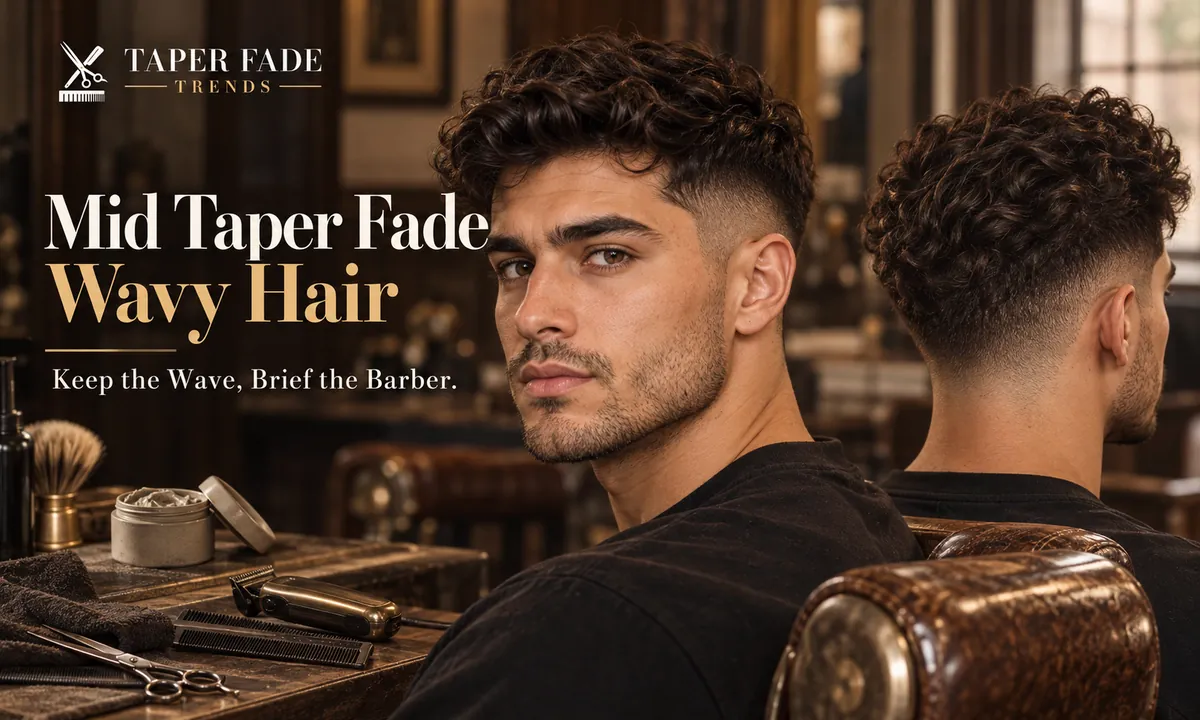
Mid taper fade wavy hair: work with the natural bend
Mid taper fade wavy hair guide: where the taper starts, how much side weight to keep, why top-length advice conflicts, and what to tell your barber.
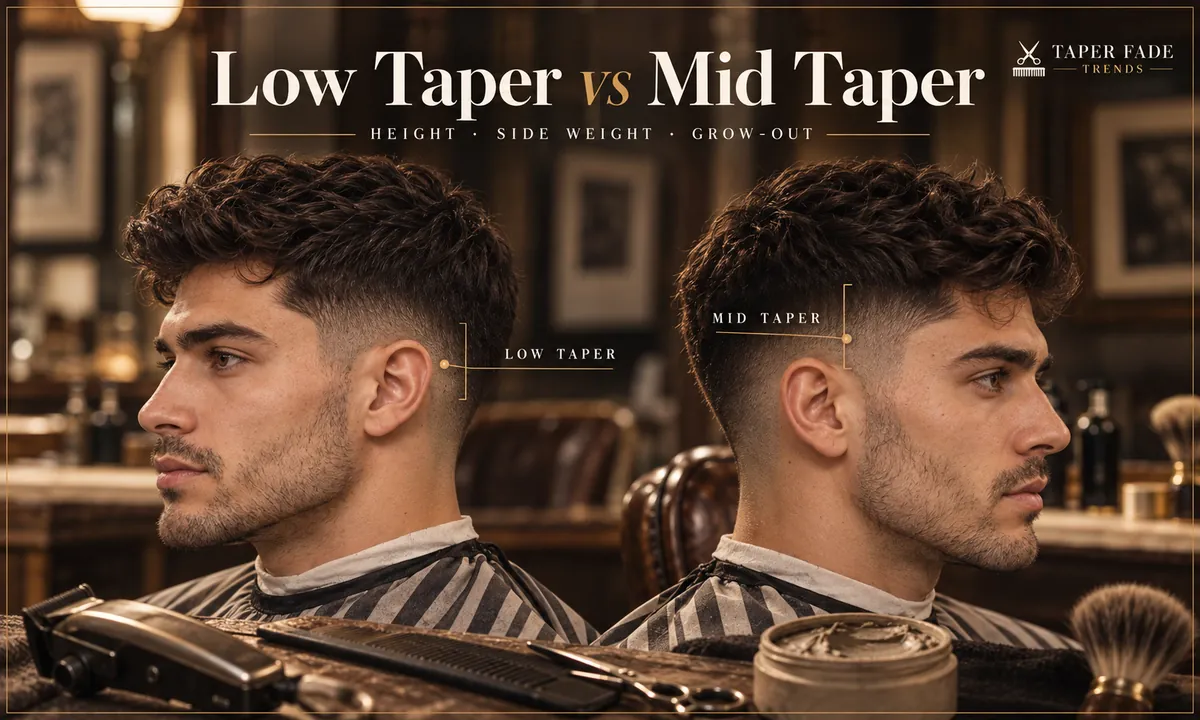
Low taper vs mid taper: what changes when only the height moves
Low taper vs mid taper compared on height, side weight, shortest finish and grow-out, why switching mid to low takes time, and what to tell your barber.
More in mid taper fades
Mid taper fades: all 8- Mid taper fade: what it is and what to ask your barber12 min
- Mid taper blowout: keep volume without flattening the sides11 min
- Mid taper fade curly hair: choose dry length, side width and finish9 min
- Mid taper fade straight hair: fine, flat and outward-growing sides11 min
- Mid taper fade Black male guide: what stays and what to ask for13 min
- Mid taper fade wavy hair: work with the natural bend12 min
- Mid taper fade buzz cut: top length, coverage and finishYou are here
- Low taper vs mid taper: what changes when only the height moves10 min