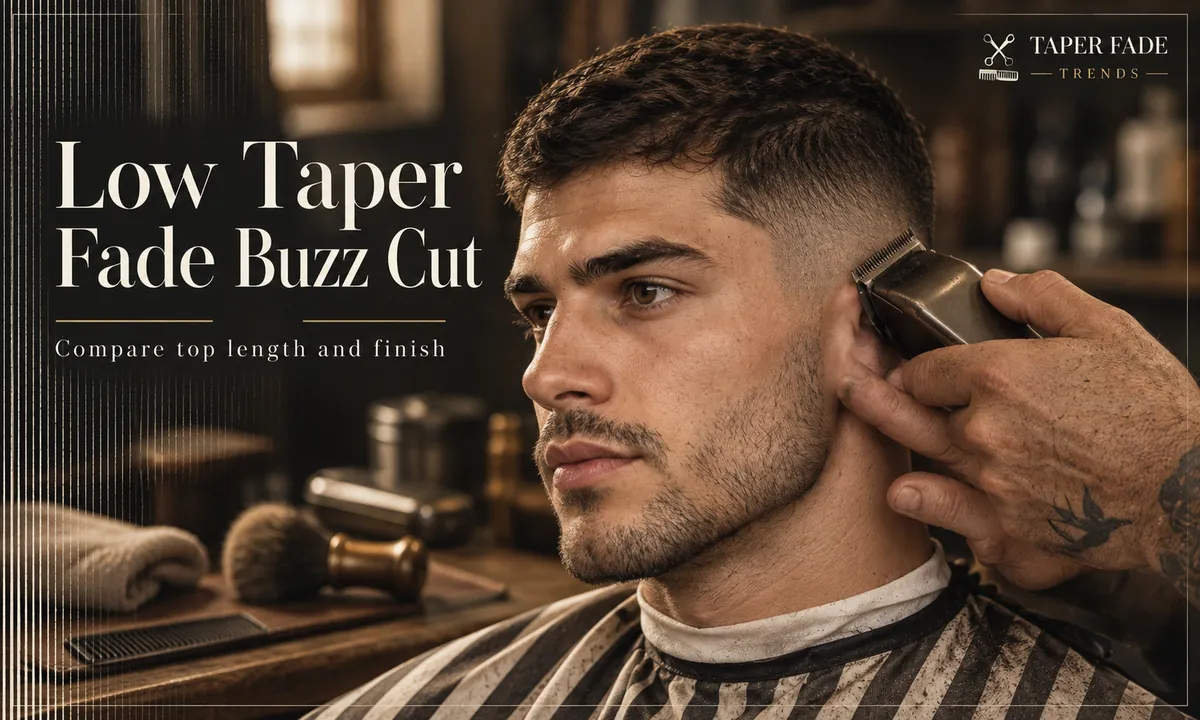
Low taper fade buzz cut: compare top length and finish
A low taper fade buzz cut pairs an evenly clipped top with a short taper kept low at the sideburns, temples and nape. It comes down to two separate choices: how long the top is and how short the taper ends. A #2 top doesn’t require skin at the bottom, so name both before the clippers start.
| Decision | What to say | Why it matters |
|---|---|---|
| Top length | A length in inches or millimeters, or a guard with its brand, like Wahl #2 | Guard numbers aren’t universal |
| Placement | Low: short work at the sideburns, temples and nape | “Low” is a position, not a guard number |
| Side coverage | Narrow at the edges, or wider around the sides and back | Wider coverage turns it into a fade |
| Shortest finish | Visible hair, shadow or skin | The haircut’s name doesn’t settle it |
| References | A side view and a back view, ideally front and both sides too | The nape never shows in a profile photo |
What is a low taper fade buzz cut?
A low taper fade buzz cut is a short haircut with an evenly clipped top and tapering kept low around the sideburns, temples and nape, so most of the side hair stays at or near the top length. The top length and the shortest finish at the bottom of the taper are separate choices, and each needs its own instruction.
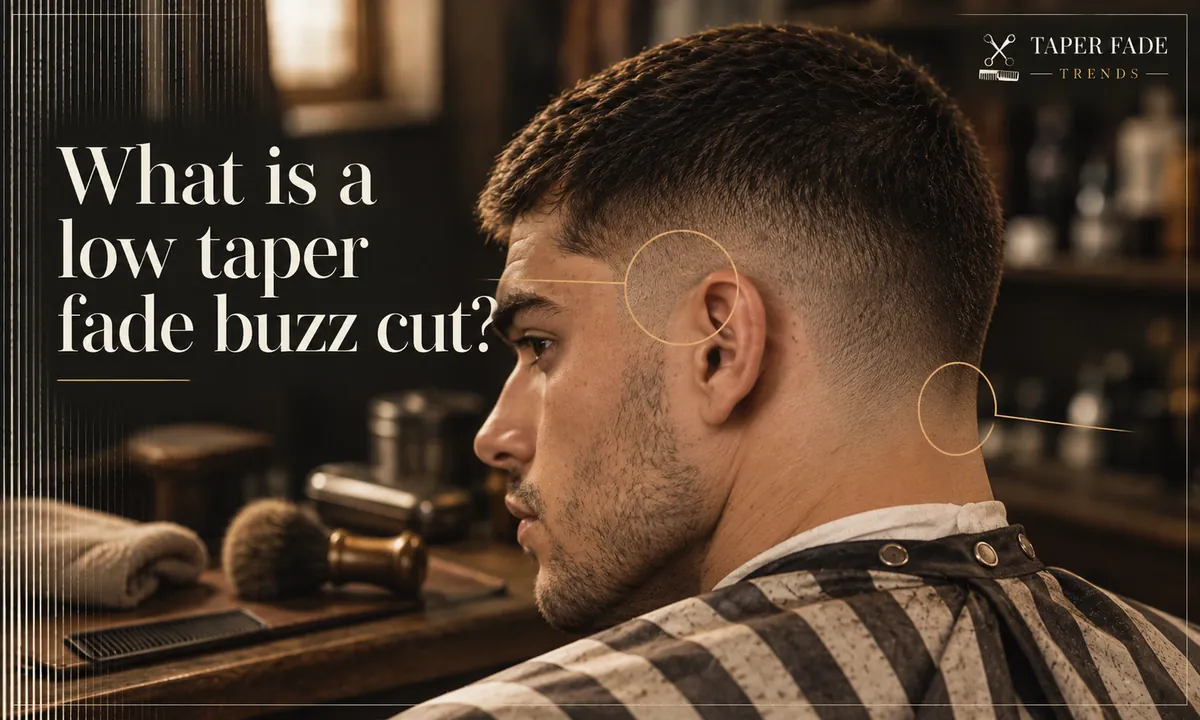
Two independent descriptions line up with that. Barber.Style describes a low taper as shortening kept close to the sideburns and neckline with most of the sides left full, and lists softening the edges of a buzz cut as one of its uses. Beard Beasts describes the same cut as a guarded top over sides that blend upward into it.
Where sources split is the bottom. Several buzz-cut guides say a taper never reaches skin, while Barber.Style lists skin, a zero and a #0.5 or #1 as base options for the same low taper. Our taper fade guide documents the same disagreement among barbers. Treat the finish as something you say out loud.
For the low placement under longer tops, see the low taper fade guide. This page covers the clipper-short version.
Choose the top length
There is no single correct top length for a low taper fade buzz cut. Pick the length you want to see, then let the barber match it on their own clippers. On Wahl’s guide-comb chart, #1 through #4 run from 1/8 inch to 1/2 inch, and Wahl labels each one differently.
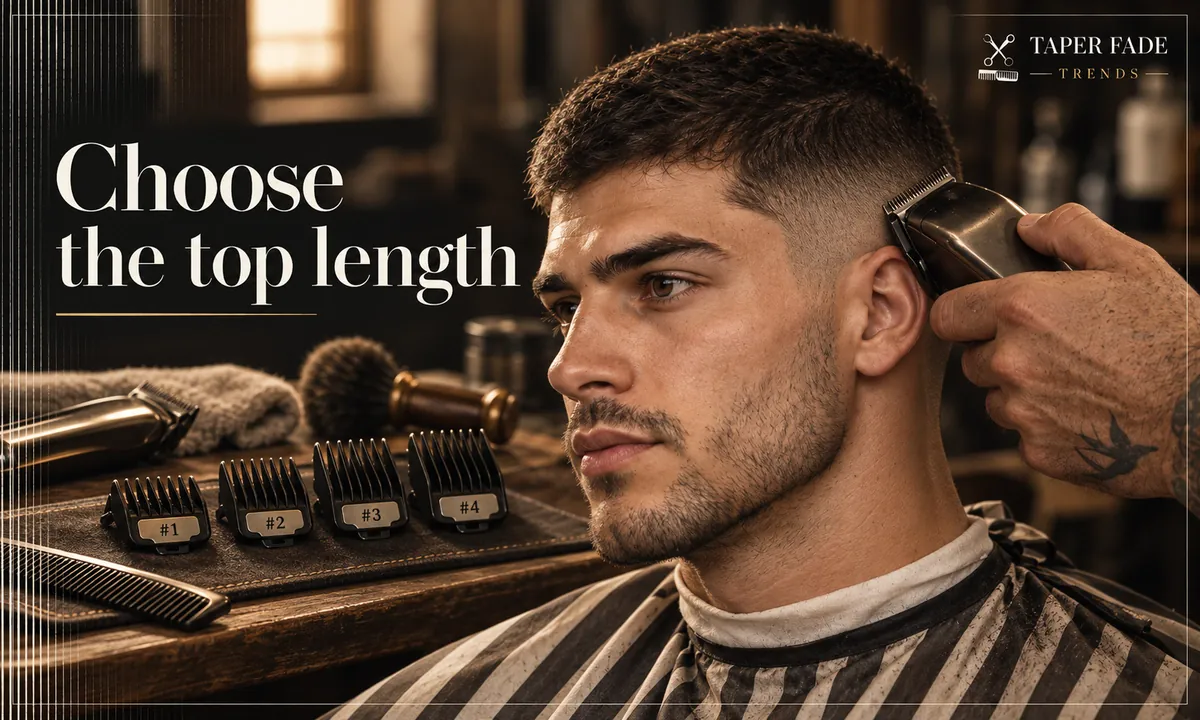
| Wahl guard | Listed length | About | How Wahl describes it |
|---|---|---|---|
| #1 | 1/8 in | 3 mm | A short buzz cut |
| #2 | 1/4 in | 6 mm | A traditional buzz cut |
| #3 | 3/8 in | 10 mm | Still a buzz cut, on the longer side |
| #4 | 1/2 in | 13 mm | Crew cut or brush cut territory |
Those are one manufacturer’s numbers. A guard sets the length on that system only, and the millimeter figures here are rounded conversions.
#1 vs #2 vs #3 vs #4
Each step from #1 to #4 adds 1/8 inch, so the whole range is 3/8 inch. The visible change is biggest at the short end: #1 to #2 doubles the length, while #3 to #4 adds a third. Expect #1 to show the most scalp, and how much depends on your density.
Wahl places a #4 in crew-cut or brush-cut territory, though plenty of people still call it a buzz. If 1/2 inch is the length you want, say “half an inch on top” and skip the argument about the label.
Unsure? Wahl’s own buzz cut guide suggests starting with a higher guard on a first buzz, since a barber can take more off but can’t put it back.
Why the same guard can look different
The same guard number can look different on two heads because density, texture, growth direction, hair-to-scalp contrast and the clipper itself all change what you see. Wahl notes that its taper lever moves the cut closer or longer between guard sizes, so even one guard on one brand can land at more than one length.
| Variable | What it changes |
|---|---|
| Density | How much scalp shows at the same length |
| Hair-to-scalp contrast | How sharply dark hair reads on light skin, or light hair on dark skin |
| Texture | Curly and coily hair sits shorter than its cut length |
| Growth direction | A cowlick can make one patch look shorter or uneven |
| Clipper and lever | The length actually left behind |
| Lighting | How much scalp a photo seems to show |
FadeBuzzCut’s guard guide makes the brand point bluntly: Wahl, Andis and BaByliss PRO comb guards track closely, but Oster’s detachable-blade clippers use a different numbering scale. A “one” from two barbers can mean two lengths.
Choose the shortest taper finish
A low taper fade buzz cut can finish at visible hair, a shadow of stubble or bare skin, and the top guard doesn’t decide which. Shops disagree on whether “taper” implies skin, so say the placement first and the finish second: “low taper, finished at a shadow,” for example. Then ask what that means on their clippers.
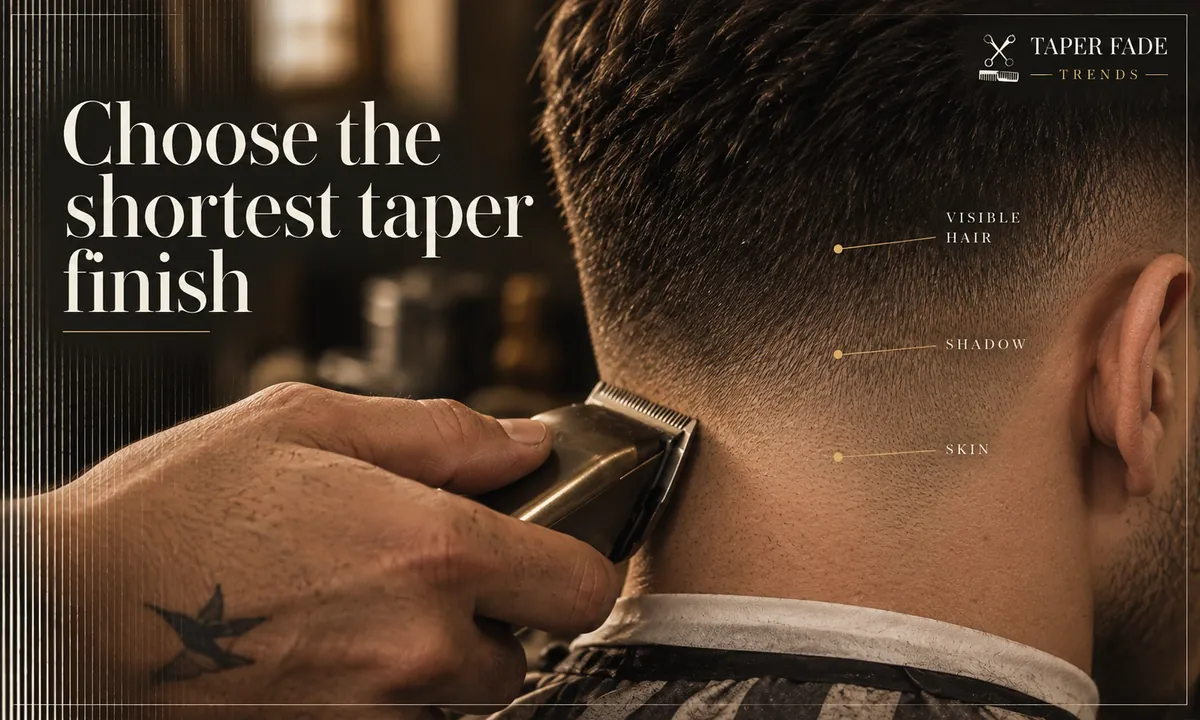
The finish changes only the bottom of the taper. The gap between the top length and the finish is what makes the taper stand out.
| Pairing | What you see | Grows out |
|---|---|---|
| Short top over visible hair | Almost one length; the taper barely shows | Softest, least to lose |
| Short top over skin | A small, sharp step at the edges | The skin edge blurs first |
| Longer top over visible hair | A gentle taper with more contrast above it | Gradual |
| Longer top over skin | The strongest contrast this cut can have | Shows regrowth soonest |
Visible hair, shadow or skin
Visible hair, shadow and skin describe what is left at the lowest point of the taper, not the top. For scale, Wahl lists its shortest guard, the #1/2, at 1/16 inch and describes it as about as short as you can go short of bald. Below that, shops use an open blade or a shaver, and the words they use vary.
| Finish | What’s left at the bottom | Words to use |
|---|---|---|
| Visible hair | Short hair that still reads as hair | “No skin, leave some hair,” plus a length |
| Shadow | Fine stubble that tints the scalp | “Shadow, not skin” |
| Skin | Bare-looking scalp | “Down to skin” |
“Zero” means different things in different shops. Pair it with “skin” or “no skin.”
Keep placement and finish separate
“Low” says where the taper sits, not how short it ends. A low taper can finish at visible hair or at skin. What turns it into a fade is coverage: once the short zone wraps around the sides and back instead of staying at the edges, you’re looking at a low fade.
Once both choices are made, check them against reference photos and your own hair.
How to compare reference photos
A useful reference set for a low taper fade buzz cut shows the front, both profiles and the back, in similar light. Use it to agree on the visible shape: where the taper sits, how far it spreads and roughly how close the bottom looks. It can’t tell you which guard, lever setting or blade produced it.
| View | What to look for |
|---|---|
| Front | Sideburn length and shape, the hairline, how the top reads |
| Profiles | Where the taper starts above the ear, how much side hair stays |
| Back | How the taper meets the nape and how far it spreads across |
Check both profiles. Growth patterns differ side to side, and a single profile can hide a taper that sits higher on the other side.
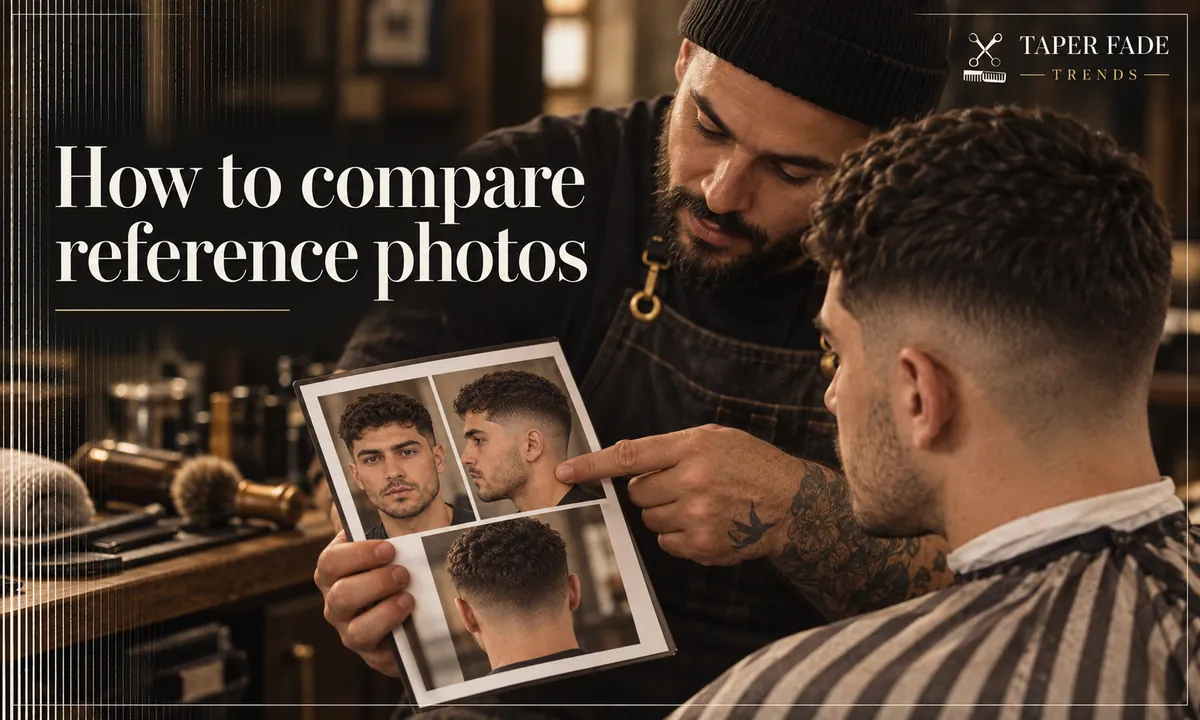
If the short hair in your reference spreads well beyond the sideburns, temples and nape, the photo shows a fade, not a low taper.
Which hair characteristics change the result?
Four things about your own hair change how a low taper fade buzz cut turns out: density, growth direction, texture and hair-to-scalp contrast. Check them before the appointment and tell the barber, because a reference photo of different hair shows the shape but can’t promise your result.
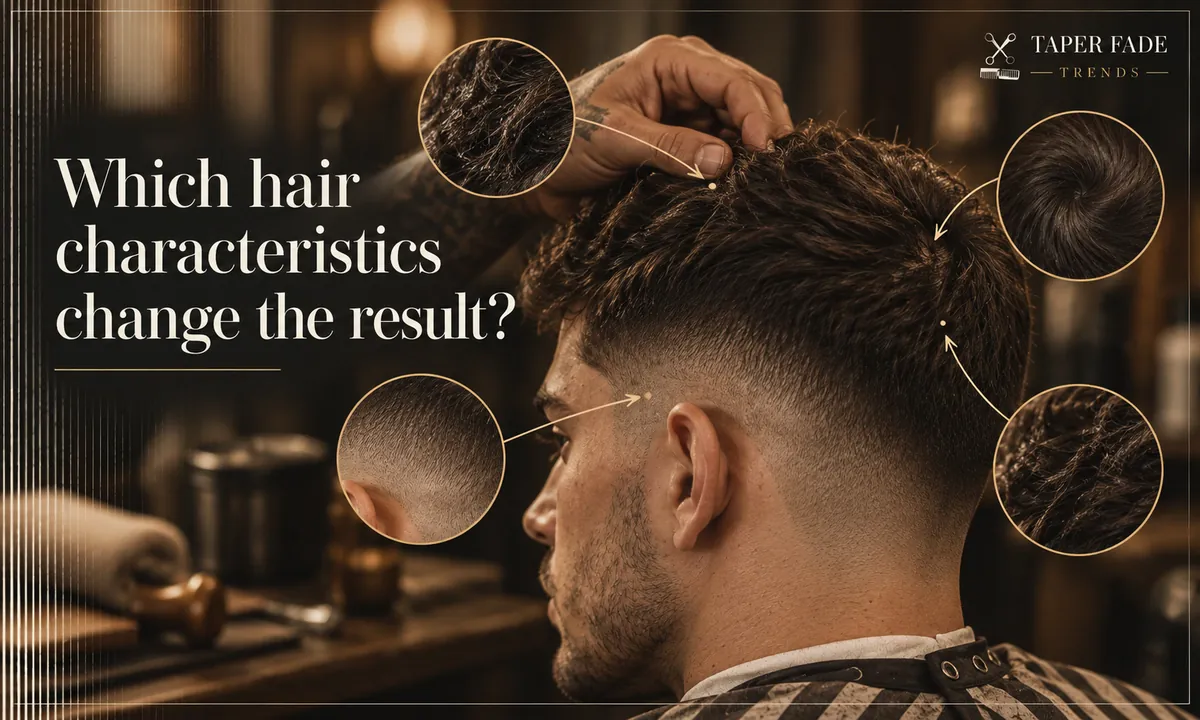
| Characteristic | How to check | What to tell the barber |
|---|---|---|
| Density | How much scalp shows through now | Where it’s thinner, if anywhere |
| Growth direction | Look for cowlicks at the crown, nape, sideburns | Where each one sits |
| Texture | Straight, wavy, curly or coily | Bring references with similar texture |
| Hair-to-scalp contrast | Hair color against scalp tone | How visible you want the taper and finish |
Some competing guides assign a guard to each face shape. We found no barbering or manufacturer source that supports a rule like that, so this guide leaves it out. For texture-specific advice on the low placement, see low taper fade on straight hair, curly low taper fade, low taper fade for wavy hair, the low taper fade for Black men and the Asian low taper fade.
Low taper buzz cut vs full fade buzz cut
A low taper buzz cut keeps its short work at the sideburns, temples and nape, while a full fade buzz cut carries the short hair across more of the sides and back. Either can finish at visible hair, shadow or skin. Compare coverage and how much side hair stays, not just how close the bottom looks.
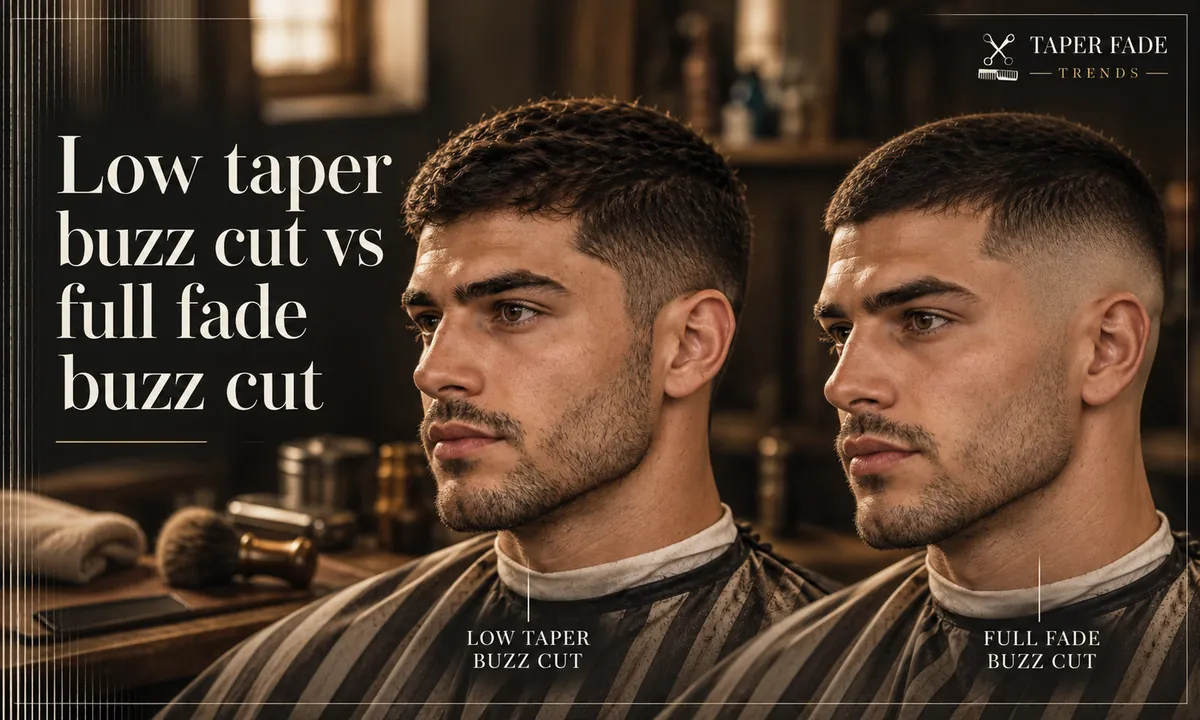
| Criterion | Low taper buzz cut | Full fade buzz cut |
|---|---|---|
| Coverage | Narrow, at the edges | Wide, around the sides and back |
| Side hair kept | Close to the top length | Less, with a visible gradient |
| Shortest finish | Visible hair, shadow or skin, by request | Visible hair, shadow or skin, by request |
| From the front | Reads as nearly one length | Clear contrast between top and sides |
Coverage changes gradually, and shops label the middle ground differently. Our taper vs fade guide covers the naming and the back-view check.
What to tell your barber
Ask for a low taper kept to the sideburns, temples and nape, then give the top length, the shortest finish and how far the short work may spread. Show a side and a back photo, and ask the barber to repeat the plan before cutting. Describe the result; leave guard and lever choices to them.
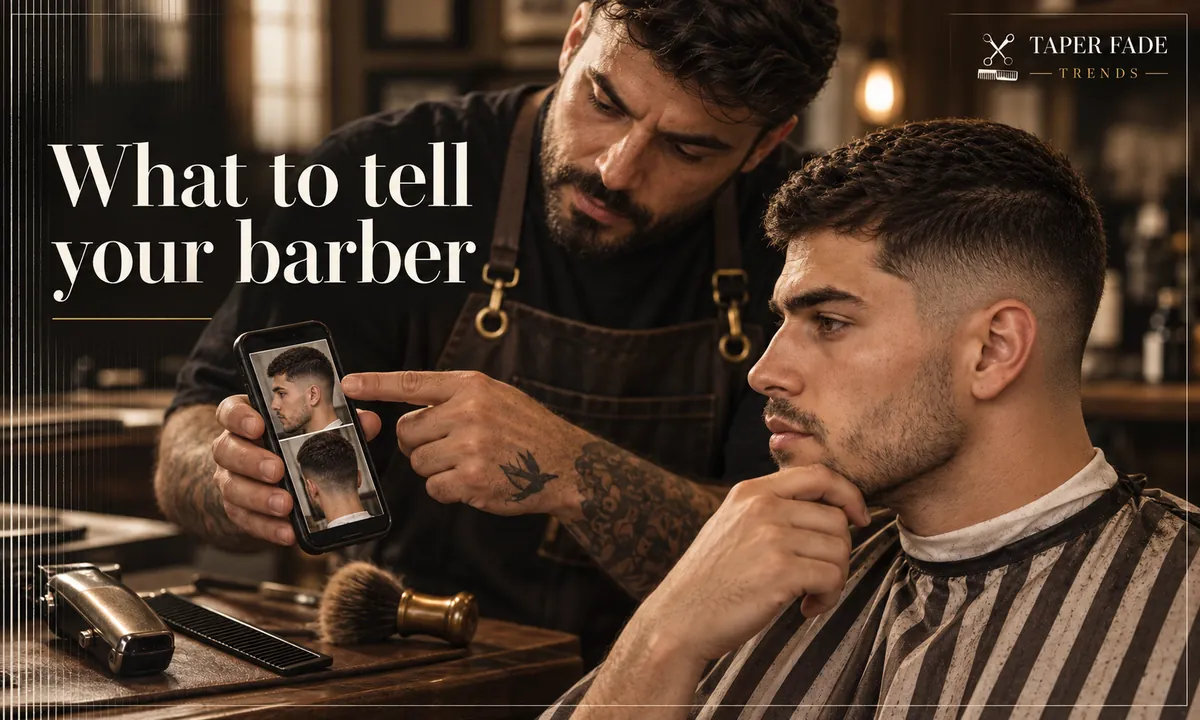
- “Low taper, kept to the sideburns, temples and nape. Don’t carry it around the sides.”
- “Top at [length, or the guard and brand], even all over.”
- “Finish the taper at [visible hair / a shadow / skin]. What does that mean on your clippers?”
- “[Natural / tapered / squared] neckline.”
- “I have a cowlick here,” if you do.
If a reference only gives a guard number, ask which clipper it refers to. If it doesn’t say, give the barber the length instead.
How it grows out and when to return
A low taper fade buzz cut loses its shape fastest at the bottom of the taper, and the closer that finish, the sooner it shows. MedlinePlus puts healthy hair growth at about half an inch a month, roughly 1/8 inch a week. That is the length of a Wahl #1.
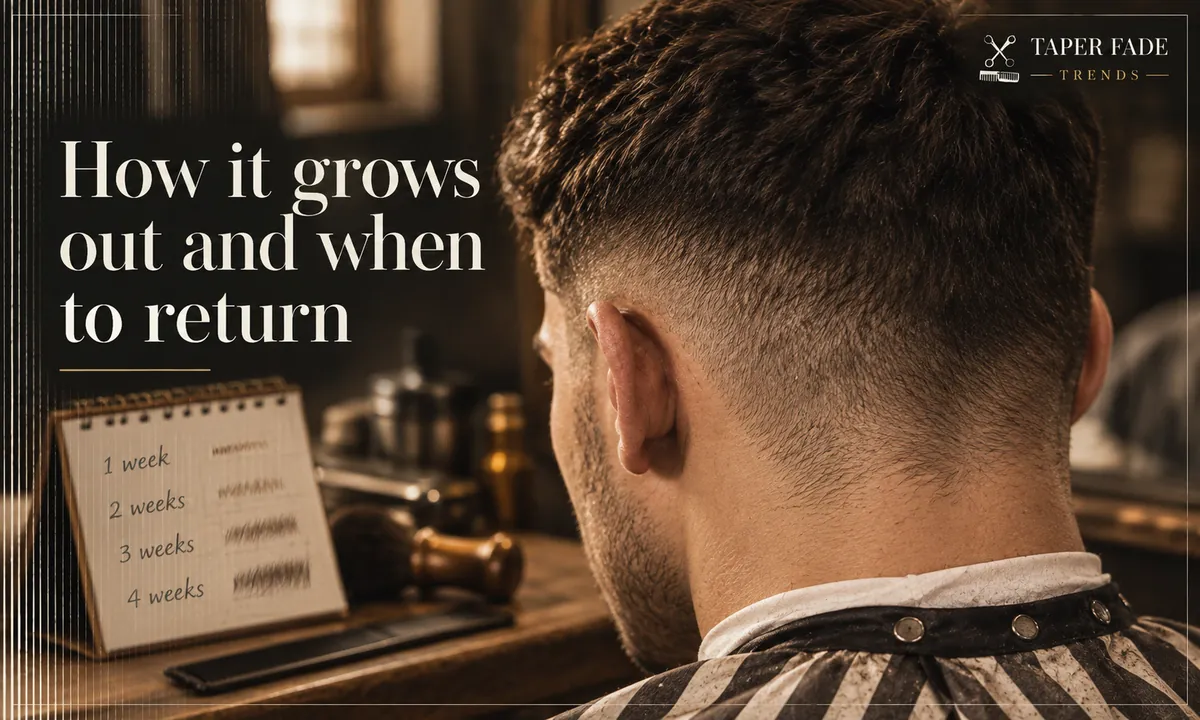
Run the arithmetic on a buzz. A skin finish is back to about #1 length within a week. A #2 top at 1/4 inch reaches roughly #4 length in two weeks. Growth rates vary, so treat these as rough math, not a schedule.
Published shop guidance follows the same pattern. Barber.Style suggests a skin taper may need refreshing after two to three weeks and a #0.5 or #1 finish can stay tidy for three to five. For keeping the top at a home-buzz length, Wahl suggests rebuzzing every one to two weeks, depending on hair type and growth. These are rules of thumb, not measurements.
The practical test: photograph the fresh cut from the side and back, and rebook when the nape and sideburns stop matching those photos.
What photos cannot prove
A haircut photo shows placement, coverage, the shape on top and roughly how close the finish is. It can’t reliably show density, growth direction, how long ago the cut was done, editing, or the guard, lever and blade used. Treat those as unknown unless whoever made the cut recorded them.
| Unknown from a photo | Why |
|---|---|
| Guard, lever, blade | Settings leave no mark, and numbers vary by brand |
| Density | One angle and one light can’t show it across the head |
| Growth direction | You see how the hair lies, not how it grows |
| Days since the cut | A cut on day one and day ten look different |
| Editing and lighting | Both change how much scalp and contrast appear |
How this guide was checked
Taper Fade Trends Editorial wrote this guide to help readers choose a top length and a shortest finish and brief a barber on both. We checked guard lengths against Wahl’s published chart, compared how barbering and grooming sources describe a low taper and where they disagree on skin, and took growth rate from MedlinePlus. Every source was checked on October 11, 2026.
No barber has reviewed this version yet. When one does, their name, role and review date will be added here. The figures on this page are labeled illustrations, not photos of documented cuts, and no guard settings are claimed for any image. Found an error? Our editorial policy explains how corrections are made, or you can contact us.
Sources:
- Wahl USA: Ultimate Guide to Hair Clipper Guard Sizes
- Wahl USA: How to Give Yourself a Buzz Cut
- Barber.Style: Low Taper Fade
- Beard Beasts: Buzz Cut Low Taper
- FadeBuzzCut: Clipper Guard for Buzz Cut
- MedlinePlus: Hair Problems
- American Academy of Dermatology: Razor bump remedies
Find the next guide for your taper
If you want more length on top than a buzz, the low taper fade guide covers the same placement under longer styles. If low leaves the sides heavier than you want, compare low taper vs mid taper, or go straight to the high taper fade. Save a side and a back reference before the appointment.
Keep reading
All guides
Low taper fade: placement, finish, side length and upkeep
A low taper fade shortens the sideburns and nape and keeps the sides full. See the four choices to make, whether it can go to skin, and what to say.
Taper fade: a visual guide to heights, finishes and top styles
Where a taper fade sits from the front, side and back, how low, mid and high differ, and how to ask for side coverage and a finish with or without skin.
Taper vs fade: what changes in area, finish and side weight
Taper vs fade compared by coverage, height, shortest finish and side weight, with a back-view check and word-for-word barber scripts for either cut.
Low taper vs mid taper: what changes when only the height moves
Low taper vs mid taper compared on height, side weight, shortest finish and grow-out, why switching mid to low takes time, and what to tell your barber.
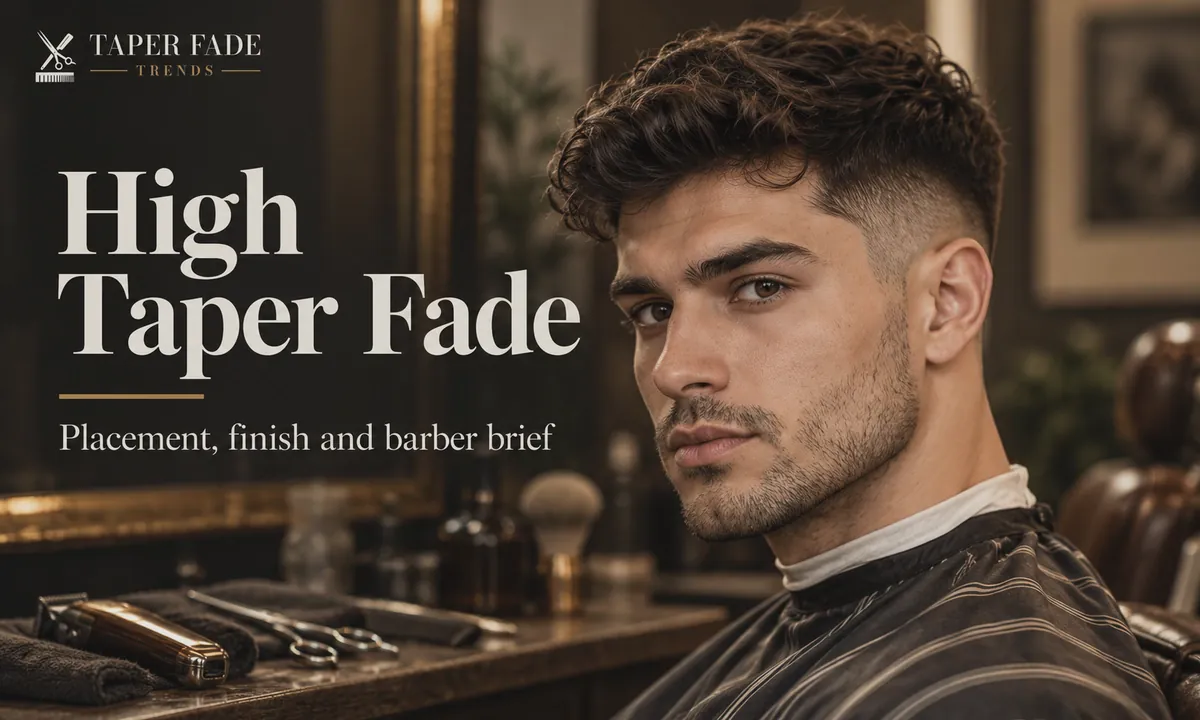
High taper fade: placement, finish and barber brief
Where a high taper fade sits, how much side weight stays, skin vs shadow finishes, what the back should look like, and exactly what to tell your barber.
More in low taper fades
Low taper fades: all 14- Low taper fade: placement, finish, side length and upkeep12 min
- Low taper fade straight hair: density, sides and top length11 min
- Low taper fade Black male guide: choose the top, hairline and nape10 min
- Curly low taper fade: keep curl width above the ears10 min
- Low taper fade buzz cut: compare top length and finishYou are here
- Textured fringe low taper: cut, style and barber brief12 min
- Blowout low taper fade curly hair: keep volume, keep definition11 min
- Low taper fade wavy hair: what to ask for13 min
- Asian low taper fade: choose by how your sides grow7 min
- Middle part low taper fade: keep the curtains connected8 min
- Low taper fade with dreads: protect the loc boundary12 min
- Low taper mullet: keep length behind the ears13 min
- Low taper vs mid taper: what changes when only the height moves10 min
- Low taper vs low fade: compare coverage and side weight11 min