Mid taper fade waves: preserve 360-wave connections
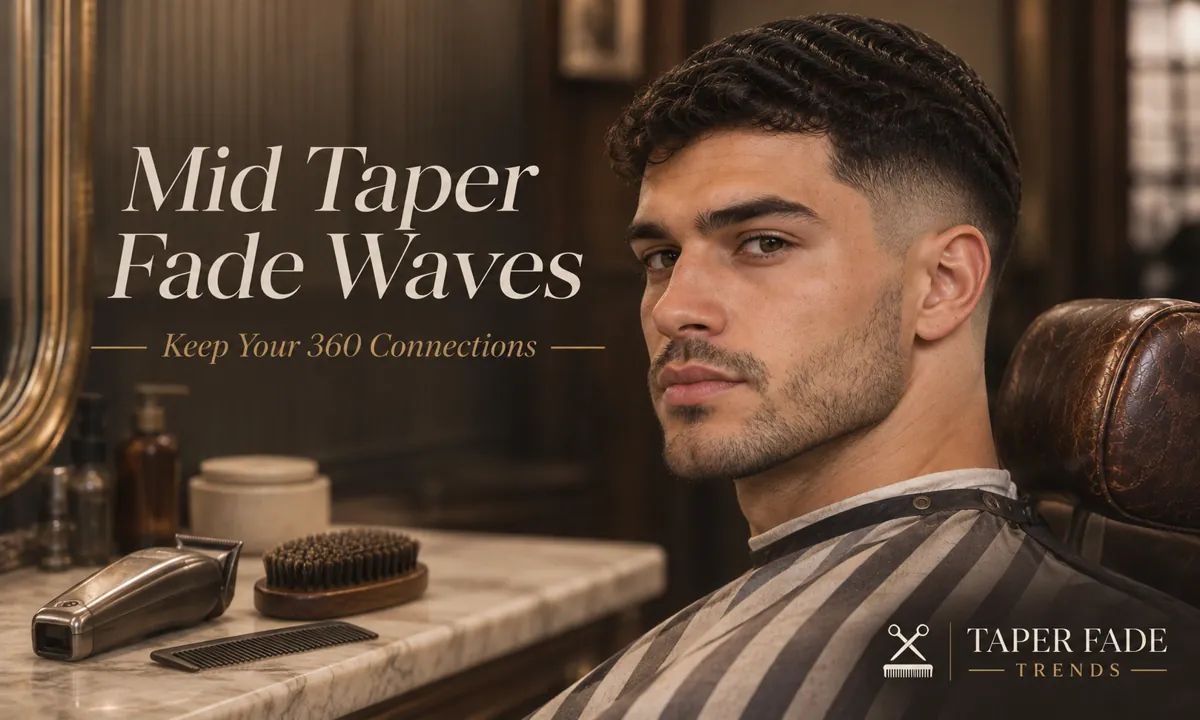
A mid taper fade with 360 waves shortens the sideburns, temples and nape while the brushed pattern stays on the top and crown. The trade-off is the side pattern: a higher or wider blend can cut through visible wave connections. Settle the maximum taper height, the shortest finish and the side area to keep before the clippers start.
| Decision | What to show or say | What stays unknown until the cut |
|---|---|---|
| Wave type | 360 waves or natural waves | How far your pattern has connected on the sides |
| Maximum height | Touch the highest spot the blend may reach | Where this barber’s “mid” lands on your head |
| Coverage | Temples, sideburns and nape only, or wider | How far the blend actually travels |
| Side connections | Must stay, or some loss is fine | How much pattern the blend removes on your density |
| Shortest finish | Visible hair, shadow or skin | What the word “taper” means in this shop |
| Top and crown | Untouched, or trimmed by agreement | Whether a trim flattens the pattern |
| Line-up | Natural or sharp | How far the edge moves the hairline |
What is a mid taper fade with 360 waves?
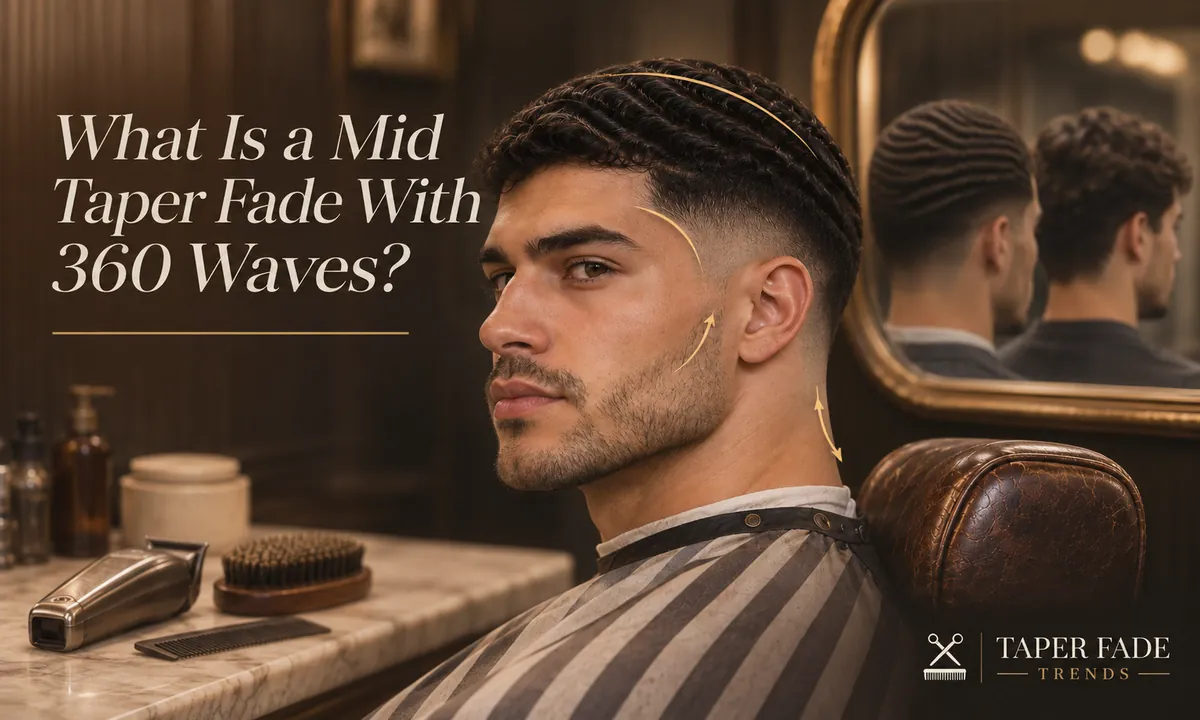
A mid taper fade with 360 waves shortens hair mainly at the temples, sideburns and nape while the brushed wave pattern stays visible above the blend. “Mid” describes a relative height, not a fixed measurement. The safe way to order it is to name the highest point the blend may reach and the side pattern you want kept.
In this guide, a mid taper fade is a localized blend at the temples, sideburns and nape, with its maximum height and shortest finish agreed separately. 360 waves are a directionally trained ripple pattern around the crown, built and held by brushing and compression. The clippers frame that pattern; they don’t create it, a point Mid-Fade’s 360-wave guide also makes.
The blend is the stretch where length steps down. The crown is the swirl at the back of the top. The nape is the hairline at the back of the neck. Shops place “mid” at different heights, so point to the spot on your own head.
The cut without the wave focus is covered in mid taper fade basics, and taper fade heights and finishes sets out how this site names height and finish.
360 waves versus natural wavy hair
Trained 360 waves follow a brushed direction around the crown, while naturally wavy hair bends on its own and is usually worn longer and loose. A mid taper works with either, but the request changes: with 360 waves you protect the side connections; with natural waves you keep enough length and side weight for the bends to move.
| Hair | How the pattern forms | What the mid taper request protects |
|---|---|---|
| 360 waves | Brushed and compressed in set directions from the crown | Side connections near the temples |
| Natural waves | Bends that form on their own in longer hair | Length and side weight so the bends can move |
Where can the taper break wave connections?
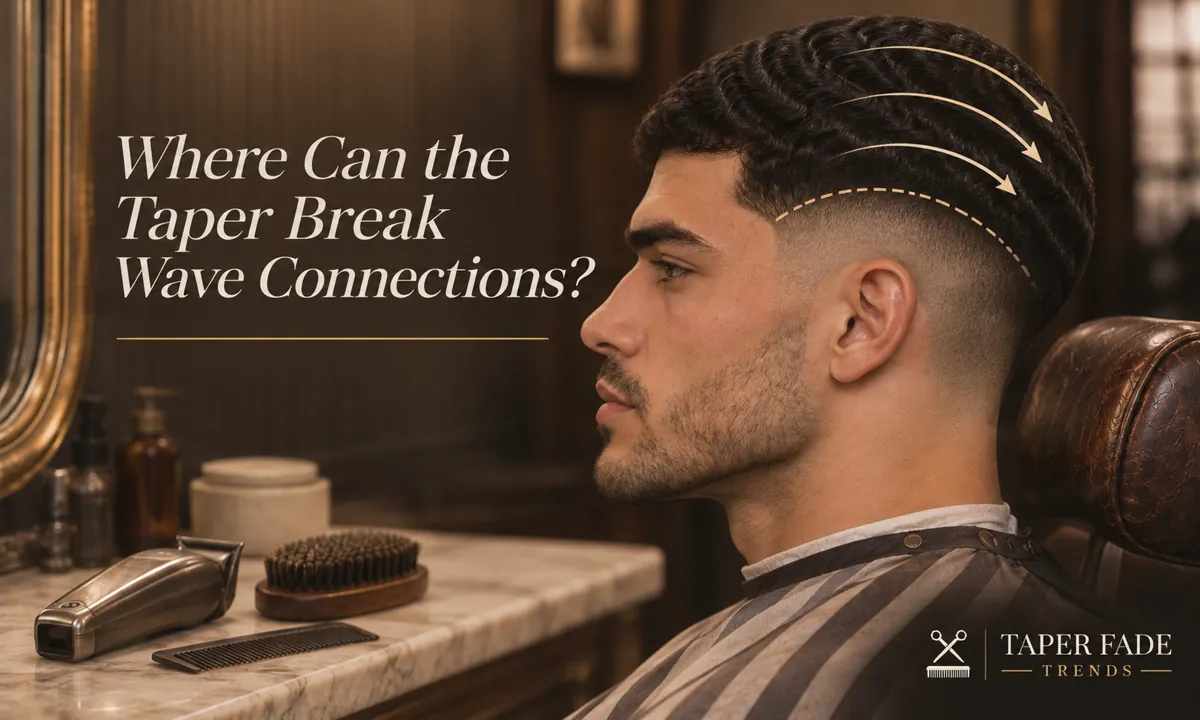
A mid taper can break visible side-wave connections wherever the shorter blend crosses an established brushed pattern. A side-wave connection is the unbroken run of trained pattern from the crown down onto the side hair. The temple edge and upper side are where to look before cutting, because that is where a mid blend usually starts.
Read the side of your head in three bands. Above the blend, the pattern stays. Inside the blend, length steps down and connections can break. Below it, the hair is too short to hold much pattern.
A lower or narrower taper ordinarily leaves more patterned hair, but density, growth direction and the barber’s hand all move the line, and no taper height guarantees unbroken connections.
Height, coverage and shortest finish are different
A mid taper fade has three separate controls: the height the blend starts at, the area it covers, and how short the bottom goes. Changing one doesn’t set the others, and none of them is a guard number.
| Control | What you specify | What it does to the waves |
|---|---|---|
| Height | The highest point the blend may reach | Higher leaves less patterned side hair |
| Coverage | Temples, sideburns and nape only, or broader | Broader removes more side pattern |
| Shortest finish | Visible hair, shadow or skin | Changes contrast at the base, not the pattern above |
Carry the blend across most of the sides and back and it becomes a different haircut, a full mid fade. Taper versus full fade compares the two.
Should you choose a low or mid taper?
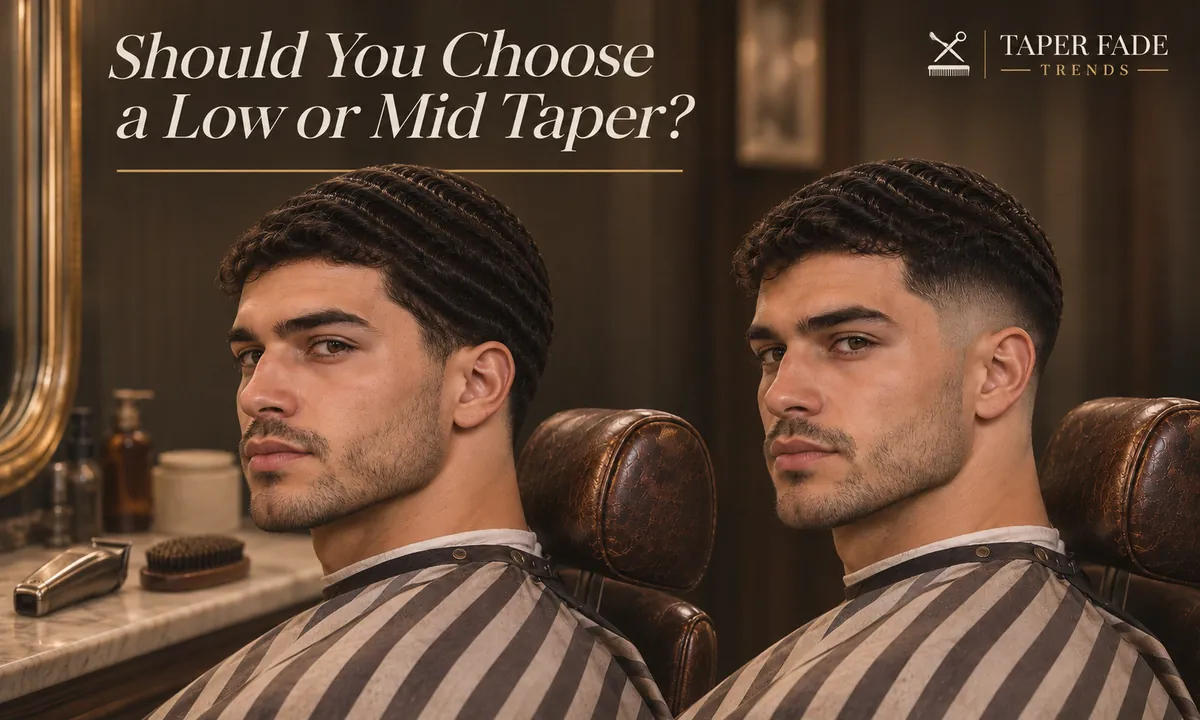
Choose a low, narrow taper when keeping the most 360-wave coverage on the sides matters most. Choose a mid taper when you accept losing some temple-side pattern for more visible contrast at the edges. If your side connections are still incomplete, show a side photo and ask the barber to start low and conservative.
| Option | Keeps | Trades away | Pick it when | Avoid it if |
|---|---|---|---|---|
| Low taper | Ordinarily the most side pattern | Some edge contrast | Side connections come first | You want obvious contrast at the temple |
| Mid taper | Pattern above the blend, plus top and crown | Some temple-side pattern | Contrast is worth a little side pattern | Your side connections are still forming |
| Full mid fade | Top and crown pattern | Most of the side pattern | Side connections don’t matter to you | The sides must stay connected |
Starting low is the reversible choice. A barber can raise the line at the next cut, but side hair that has been taken off has to grow back before it can rejoin the pattern. Low taper versus mid taper compares the two heights in full.
Which reference looks fit your pattern?
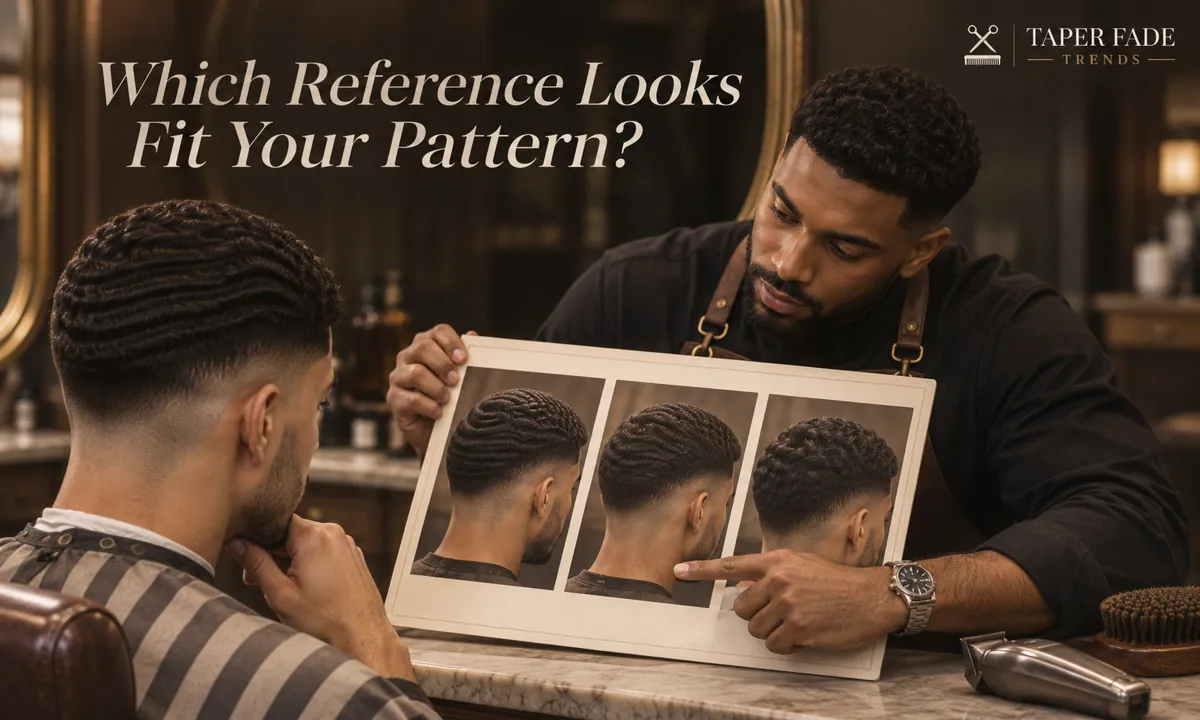
Pick a reference that matches your wave state: fully connected 360 waves, a developing or partial pattern, or natural loose waves. A photo of a different state won’t predict your result. Check that it shows a real haircut, and don’t read a guard number or finish off the picture; ask the barber to confirm both.
Some guides label their wave images as AI-generated, as Burst & Taper does on its wavy-hair page and Men Hairs Cut does on its 360-wave example. Those labels are honest, but an illustration shows an idea, not a cut someone wore out of a shop.
Fully connected 360 waves
Fully connected 360 waves need the most protection, because the pattern runs from the crown onto the sides and a higher start cuts away more of it. Choose a reference with left, right and back views, and say which side area must stay. A front photo rarely shows whether the side waves stay connected below the temple.
Developing or partial wave patterns
You can get a mid taper before your 360 waves fully connect, but cutting the sides shorter can remove the pattern you are still building. Ask the barber to leave more length and start lower. The guides we checked give no evidence-backed waiting period.
If only part of your head is patterned, say which part when you name the area to keep.
Natural loose waves
Natural loose waves depend on length and side weight more than on pattern protection, so match the reference to your hair length, not to a brushed 360 pattern. Ask for the taper to stay local to the temples, sideburns and nape so the upper sides keep enough weight for the bends to sit.
What should you tell the barber?
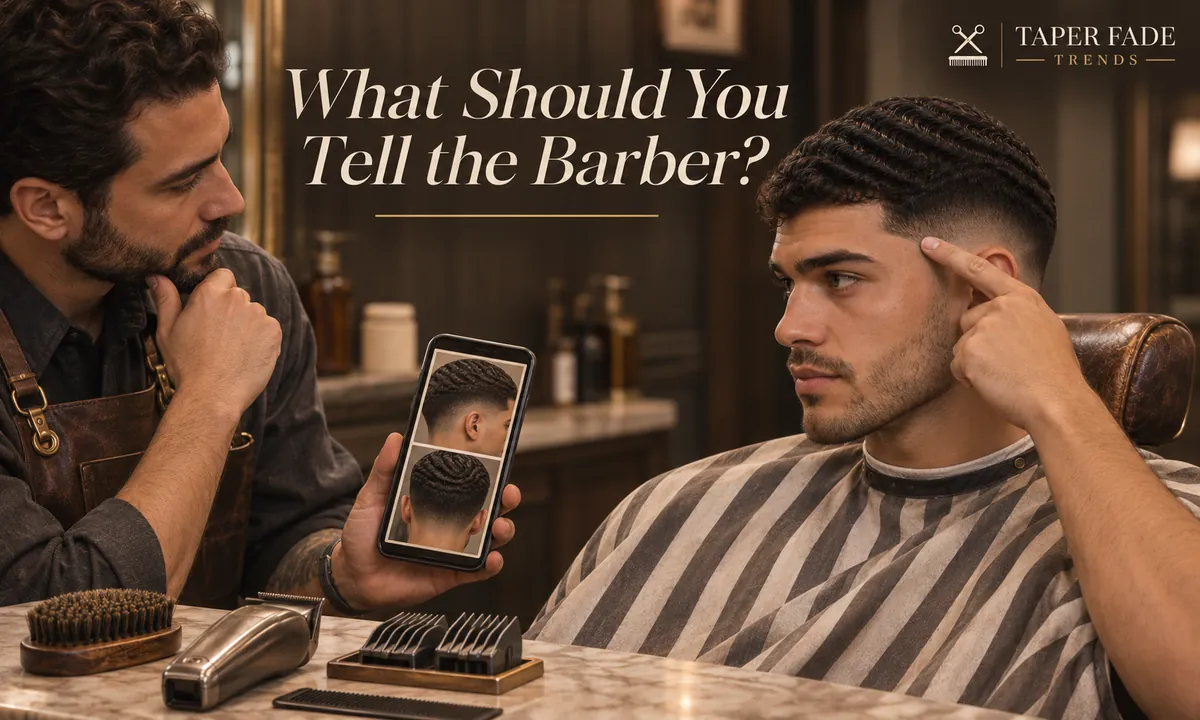
Ask for a mid taper limited to the temples, sideburns and nape, then touch the highest spot it may reach. Say whether your side connections must stay, name the shortest finish, and say what happens to the top. Confirm the plan with side and back photos before the first pass.
This brief is an editorial template and has not been barber-reviewed. The general five-part version is in how to ask for a taper fade; this one adds the wave decisions.
| Decision | Say | Show |
|---|---|---|
| Area and height | “Mid taper, temples, sideburns and nape only. Don’t go above this point without asking.” | The spot, on your head and on a side photo |
| Side connections | “My side waves need to stay connected from the crown down to the blend.” | Left and right photos |
| Shortest finish | “Finish with visible hair,” “a shadow” or “skin.” Pick one. | A reference for the look, not the settings |
| Top and crown | “Leave the top and crown alone,” or, if you’re wolfing, “perimeter only.” | A top and crown photo |
| Line-up and neckline | “Natural line-up and neckline,” or “sharp.” Pick one. | A back photo |
Wolfing means letting the top grow out uncut while you keep brushing. If you are, the barber should touch only the taper and the line-up.
Bring these views of your own head in even light, no filters: front, left side, right side, back, and top. Before the clippers start, ask the barber to point to the planned start line on your side photo.
What guard and cutting direction?
No guard number protects 360 waves on every head. Wahl lists its #1 guide at 1/8 inch and #2 at 1/4 inch, but the clipper’s taper lever changes closeness between guard lengths, so one number can leave different lengths. Ask the barber to match your existing side pattern and note the settings used.
Wahl Color-Coded Cutting Guide Set; Wahl’s label size, not a wave recipe
Wahl Color-Coded Cutting Guide Set; Wahl’s label size, not a wave recipe
Sizes are from Wahl’s cutting guide set; other brands can number guards differently, which the haircut numbers chart explains. One gallery prescribes an even #1 on top for waves (Men Hairs Cut). A single number ignores density and how developed the waves are, so treat it as that guide’s preference.
Cut direction means cutting with or against the way the hair grows. Wahl’s guard guide says cutting against the growth gives more consistent results because every hair feeds through the guard. That advice is about even length, not about a brushed pattern, so ask your barber which direction they’ll use on the top and why.
How do you keep the taper and waves?
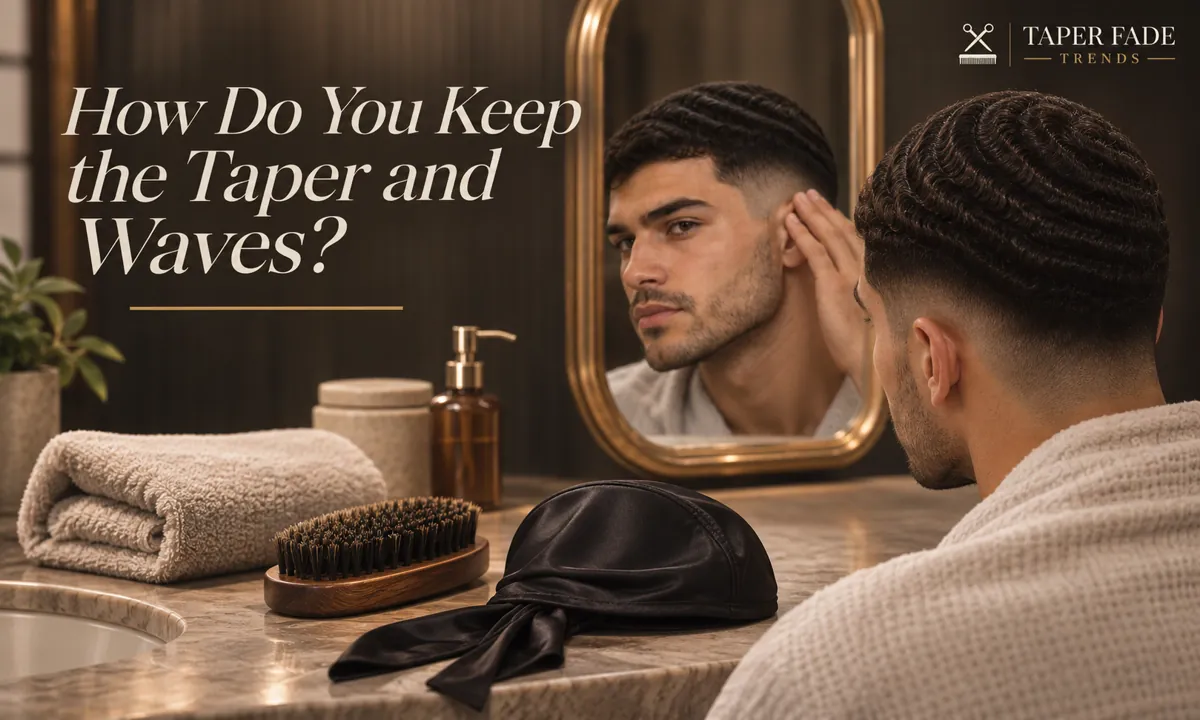
Keep a mid taper’s edges with barber touch-ups when the outline stops looking deliberate. Keep trained 360 waves separately at home with gentle directional brushing, washing and compression that suits your scalp. They are two jobs: brushing won’t tighten the taper, and a touch-up won’t train the waves. No fixed brush count is evidence-based.
The American Academy of Dermatology’s styling guidance says to keep brushing to a minimum, and that people with tightly curled or textured hair should brush when the hair is wet to reduce breakage. Compression means a snug durag or wave cap, usually worn overnight. No product or brush was tested for this guide, so none is recommended.
| Part | Who handles it | What it needs | Change the method when |
|---|---|---|---|
| Taper edges | Barber | Re-cut outline at temples, sideburns and nape | The edges no longer look deliberate |
| Trained 360 waves | You | Directional brushing, washing, compression if your scalp tolerates it | Hair breaks or the scalp gets irritated |
| Natural waves | You | Light scrunching and air-drying if the shape holds | Hair breaks or the scalp gets irritated |
A skin finish and a sharp line-up show regrowth sooner than a shadow and a natural edge. Published guides often suggest two to three weeks for a mid taper, as Taper Empire does, but that is a general estimate. Note how many weeks your own cut lasts; how long a taper fade lasts shows how to find that baseline.
Can you air-dry natural waves?
Naturally wavy hair over a mid taper can be scrunched lightly and air-dried if the shape holds, and the AAD lists air-drying as a gentler option than heat. Trained 360 waves follow a brushed, compressed routine, so air-drying alone won’t keep that pattern. Avoid rough towel rubbing, and change the method if hair breaks or the scalp gets irritated.
What could go wrong with a mid taper and 360 waves?
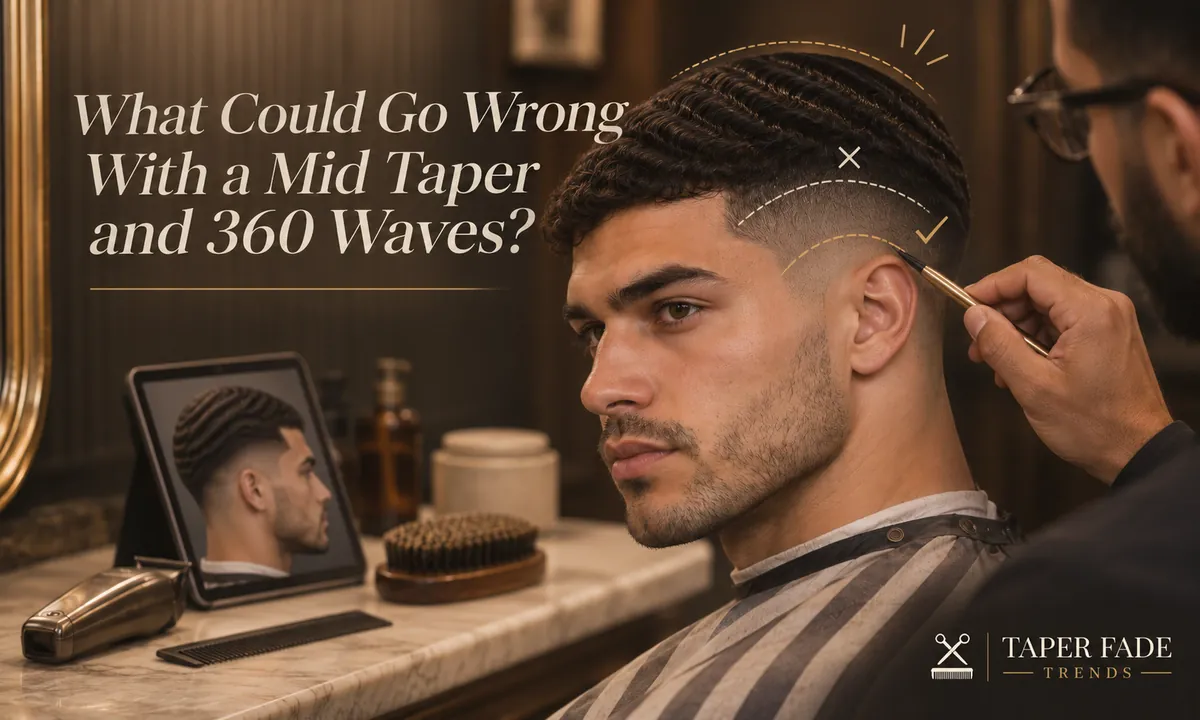
Four problems come up most with a mid taper over 360 waves: a blend higher than agreed, broken side connections, a trimmed top or crown, and a result that doesn’t match the reference. Each has a fix you can apply at the next visit. Skin bumps at the nape are a separate issue, covered in the note below.
| Problem | Why it happens | Fix |
|---|---|---|
| Blend higher than agreed | “Mid” sits at different heights in different shops | Mark the start line on a side photo before the next cut |
| Side connections broken | The blend crossed the brushed pattern | Ask for a lower, narrower start; the sides need time to grow back |
| Top or crown trimmed | The top wasn’t named as untouched | Say “leave the top and crown alone” before the first pass |
| Result unlike the reference | A photo can’t show guard, lever, direction or density | Compare side and back views and ask what settings were used |
If your side connections must stay unbroken, a mid taper may be the wrong cut. Ask about a low, narrow taper instead.
Method, sources and next cut

Taper Fade Trends Editorial wrote this guide in October 2026 by comparing published haircut guides, Wahl’s guard documentation and American Academy of Dermatology guidance. Where guides disagree, such as on cut direction or rebooking intervals, the disagreement is stated rather than settled.
The figures are AI-generated illustrations, labeled as such. They explain placement and are not photographs of a real haircut. No measured cut, client photo set or barber review is claimed, and the guide has not been barber-reviewed. If something here is wrong, see the editorial policy for how to report it.
Sources cited in this guide:
- Mid-Fade, Mid Fade With 360 Waves
- Burst & Taper, Mid Taper Fade for Wavy Hair
- Men Hairs Cut, Mid Taper Fade: 10 Sharp Looks
- Wahl USA, Color-Coded Cutting Guide Set (#1–#8)
- Wahl USA, Ultimate Guide to Hair Clipper Guard Sizes
- Taper Empire, How to Maintain a Mid Taper Fade
- American Academy of Dermatology, Hair styling without damage
- American Academy of Dermatology, Acne keloidalis nuchae: causes
- American Academy of Dermatology, Acne keloidalis nuchae: self-care
Before your next appointment, take side and back photos of your current waves, mark the highest point the blend may reach, and work through the brief in how to ask for a taper fade with your barber.
Keep reading
All guides
Mid taper fade: what it is and what to ask your barber
What a mid taper fade is, how it differs from a full mid fade, why skin is optional, and the four specs to give your barber before the cut starts.
Low taper vs mid taper: what changes when only the height moves
Low taper vs mid taper compared on height, side weight, shortest finish and grow-out, why switching mid to low takes time, and what to tell your barber.
How to ask for a taper fade: a five-part barber brief
How to ask for a taper fade: say where it may reach, how short the base goes, how much side weight stays and what to do on top, then check the plan first.
Mid taper fade wavy hair: work with the natural bend
Mid taper fade wavy hair guide: where the taper starts, how much side weight to keep, why top-length advice conflicts, and what to tell your barber.
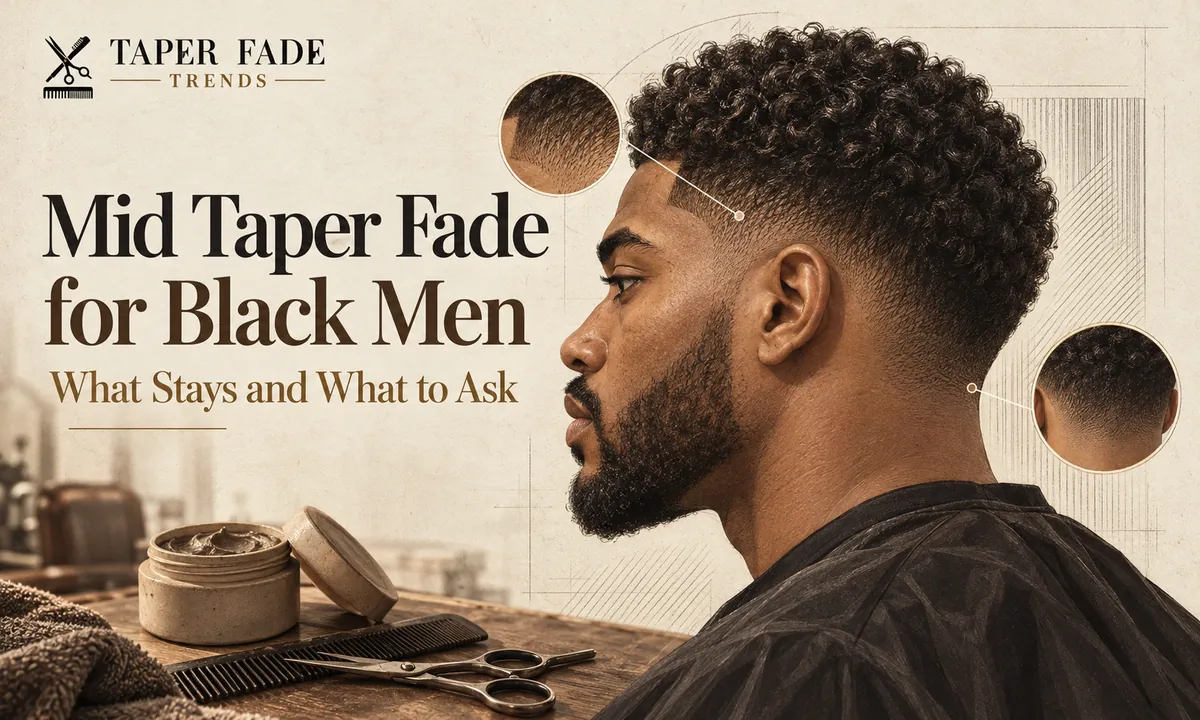
Mid taper fade Black male guide: what stays and what to ask for
Mid taper fade Black male guide: keep more side weight than a full mid fade, set finish and hairline, protect waves, coils or locs, and brief your barber.
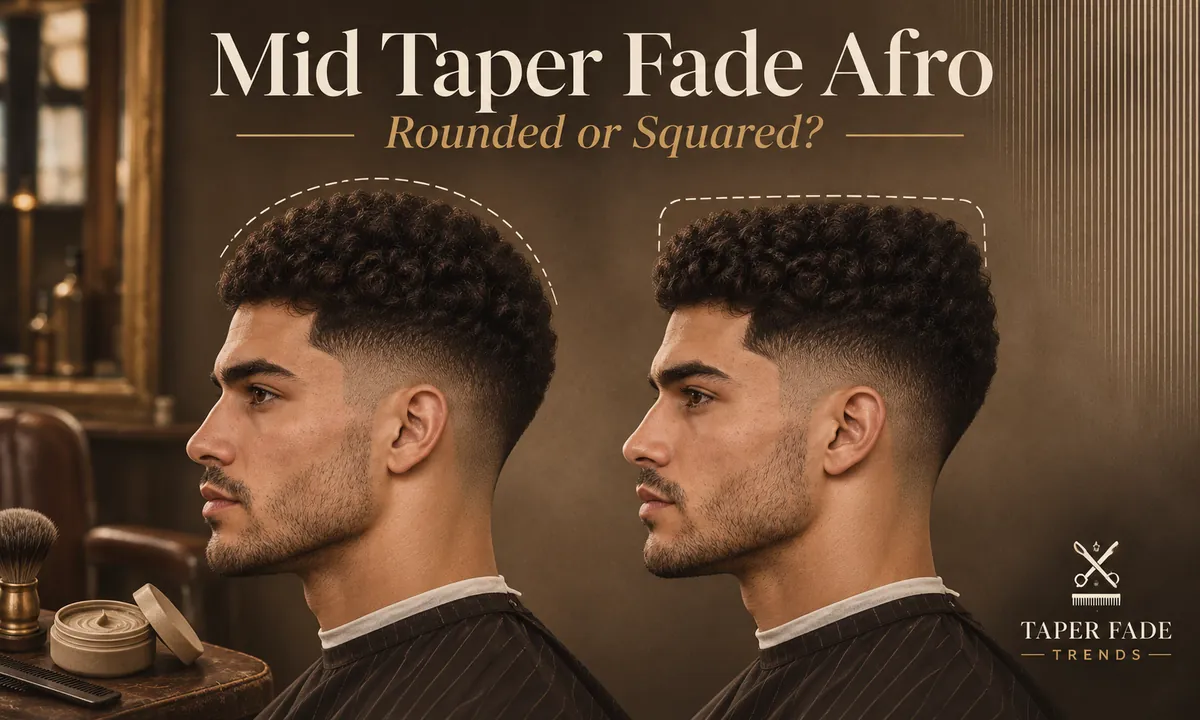
Mid taper fade Afro: choose a rounded or squared top
A mid taper fade Afro, rounded or squared: what to keep on top and at the sides, which finish to name, and the exact words to use with your barber.
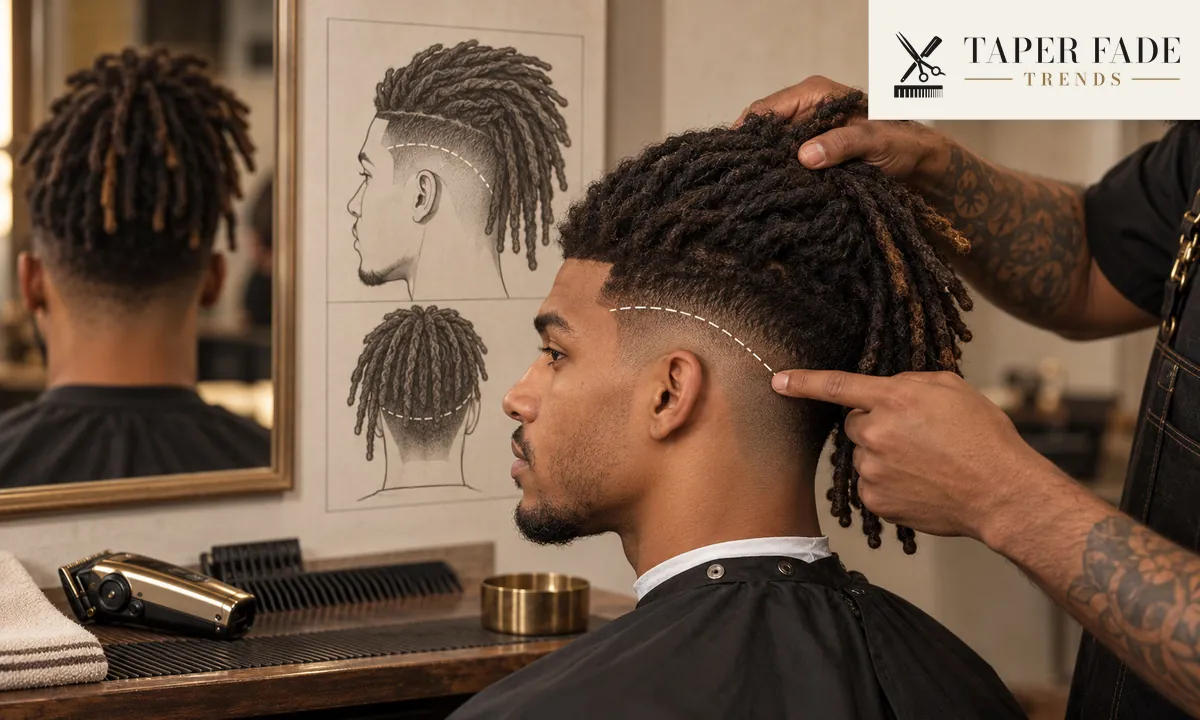
Mid taper with dreads: where the clippers stop and your locs begin
A mid taper with dreads shortens only the loose hair at the temples and nape. See where the clippers stop, what to tell your barber and when to go lower.
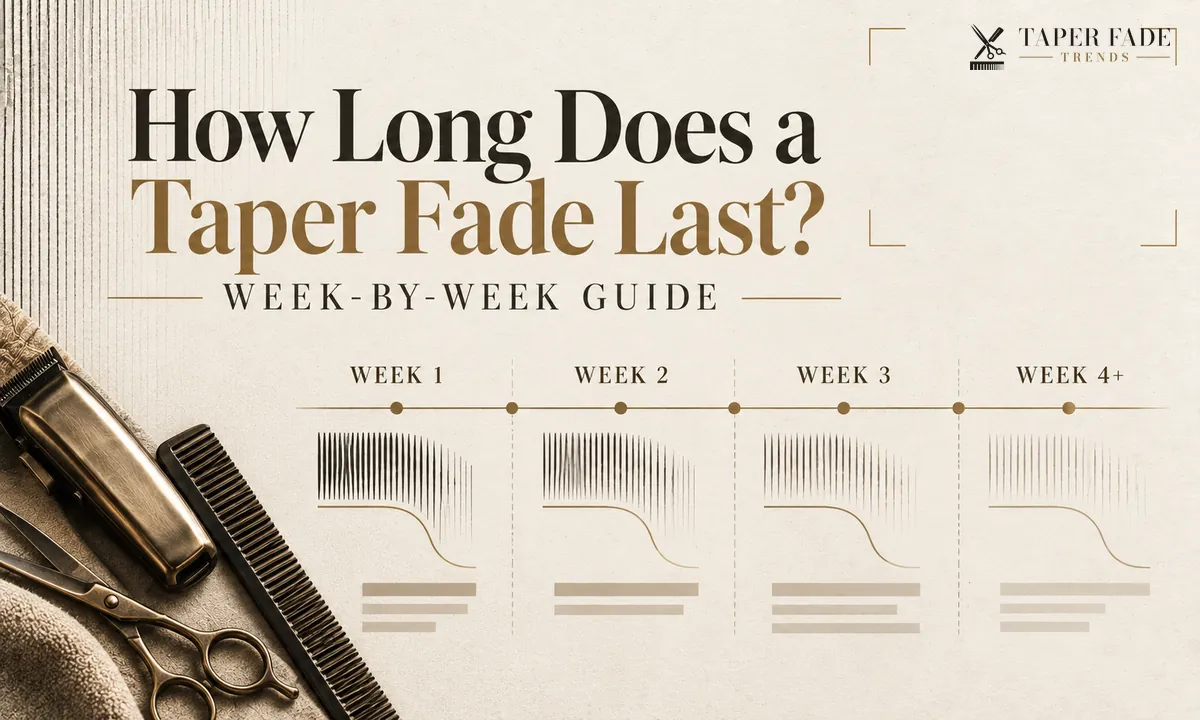
How long does a taper fade last? Fresh, tidy and grown-out stages
How long does a taper fade last? Sharpest for 1 to 2 weeks, tidy for about 2 to 4. See what changes each week and when a touch-up beats a full cut.
More in mid taper fades
Mid taper fades: all 15- Mid taper fade: what it is and what to ask your barber12 min
- Mid taper blowout: keep volume without flattening the sides11 min
- Mid taper fade curly hair: choose dry length, side width and finish9 min
- Mid taper fade straight hair: fine, flat and outward-growing sides11 min
- Mid taper fade Black male guide: what stays and what to ask for13 min
- Mid taper fade wavy hair: work with the natural bend12 min
- Mid taper fade buzz cut: top length, coverage and finish8 min
- Mid taper fade with beard: how the sideburn blend works13 min
- Mid taper fade middle part: set the part, then the taper12 min
- Mid taper with dreads: where the clippers stop and your locs begin8 min
- Mid taper fade Afro: choose a rounded or squared top10 min
- Mid taper fade waves: preserve 360-wave connectionsYou are here
- Low taper vs mid taper: what changes when only the height moves10 min
- Mid taper vs mid fade: how much side hair comes off10 min
- How to choose taper height using side weight12 min