Mid taper with dreads: where the clippers stop and your locs begin
A mid taper with dreads shortens only the loose hair at the temples, sideburns and nape, and leaves every loc and the roots that feed it alone. Before the clippers start, you and the barber agree where that loose hair ends. Height, skin or no skin, and any front taper come after that line is set.
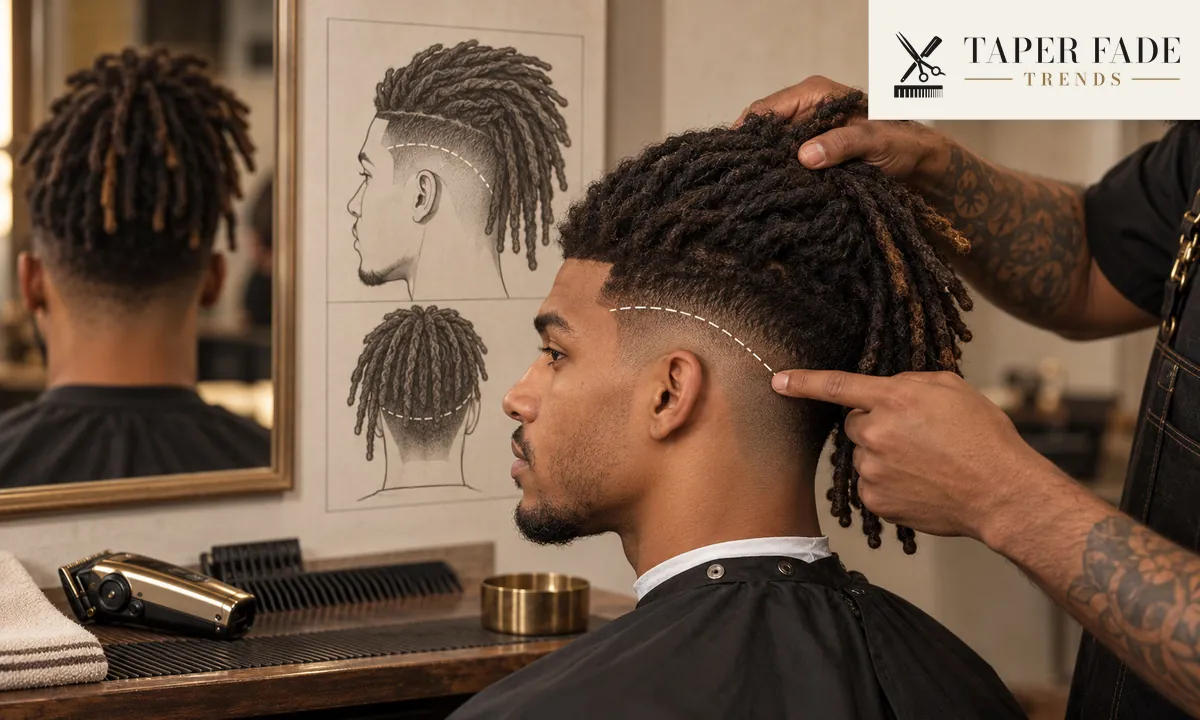
What is a mid taper with dreads?
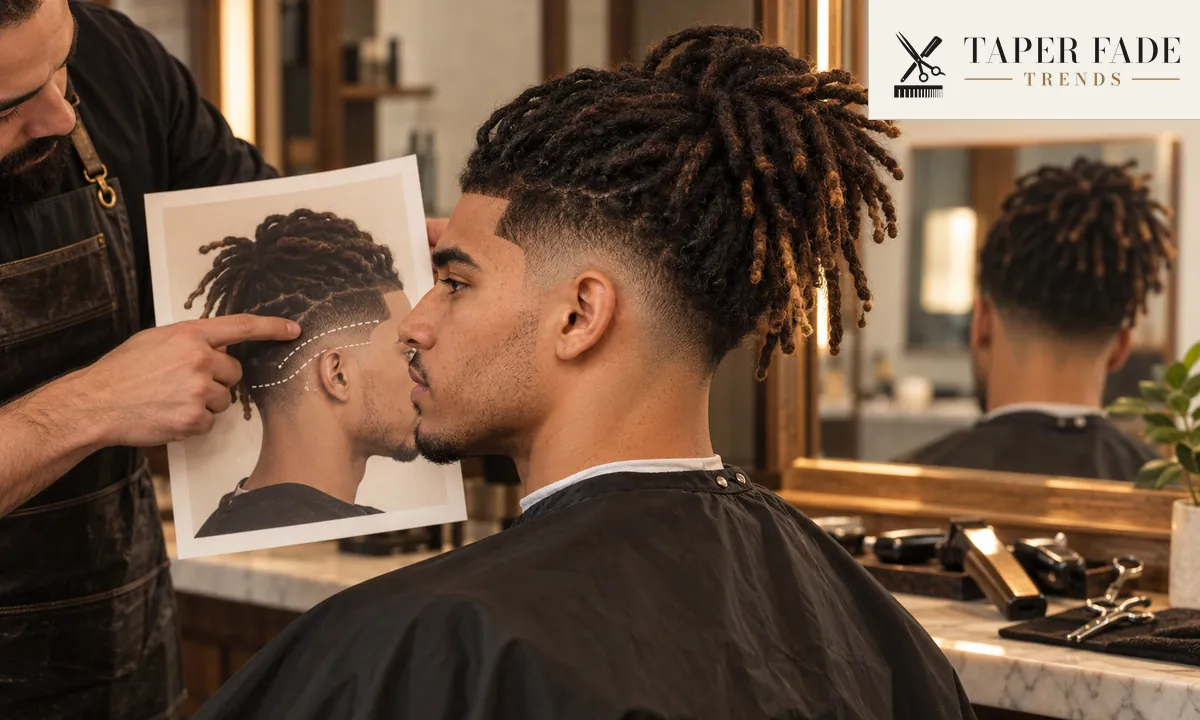
A mid taper with dreads is a mid-height taper cut only into the loose perimeter hair, while the locs and the roots feeding them stay intact. “Mid” is where the blend starts, around temple height, not a guard number. The shortest point can be visible hair, stubble or skin; the name does not decide it.
The shortest work sits at the sideburns, around the ears and at the nape, so the side panel keeps more hair than a full mid fade would leave. That matches this site’s mid taper fade definition. Cadmen Academy’s barber guide describes the same request on locs: the sides are faded and the locs on top are not cut. Shops still use “taper” and “fade” loosely (the taper vs. fade guide explains the gap), so describe the cut instead of trusting the label.
| Spec | What to decide | Limit |
|---|---|---|
| Temple placement | The highest point the blend may reach, pointed to on your own head | No standard measurement; another person’s photo does not set your height |
| Side coverage | A narrow perimeter only, or a wider band with less side weight | Wider coverage brings the clippers closer to your locs |
| Shortest finish | Visible hair, stubble or skin | Chosen separately from height; no guard number defines it |
| Nape | Tapered or natural, and where the back blend stops | Separate from the locs above it |
| No-cut boundary | The first loc partings and any front hair you are keeping | Has to be mapped on your head, in the chair |
| Front hairline | Natural, a line-up or a front taper | Three different choices |
| Upkeep | Perimeter refresh and loc care | No interval fits every wearer |
Height, coverage and shortest finish
Placement is how high the blend starts. Coverage is how far around the head it travels. The shortest finish is how close the bottom gets. On locs, coverage is the setting to watch. Two cuts with the same height can bring the clippers very different distances from your first row of locs.
Mark the loc boundary before cutting
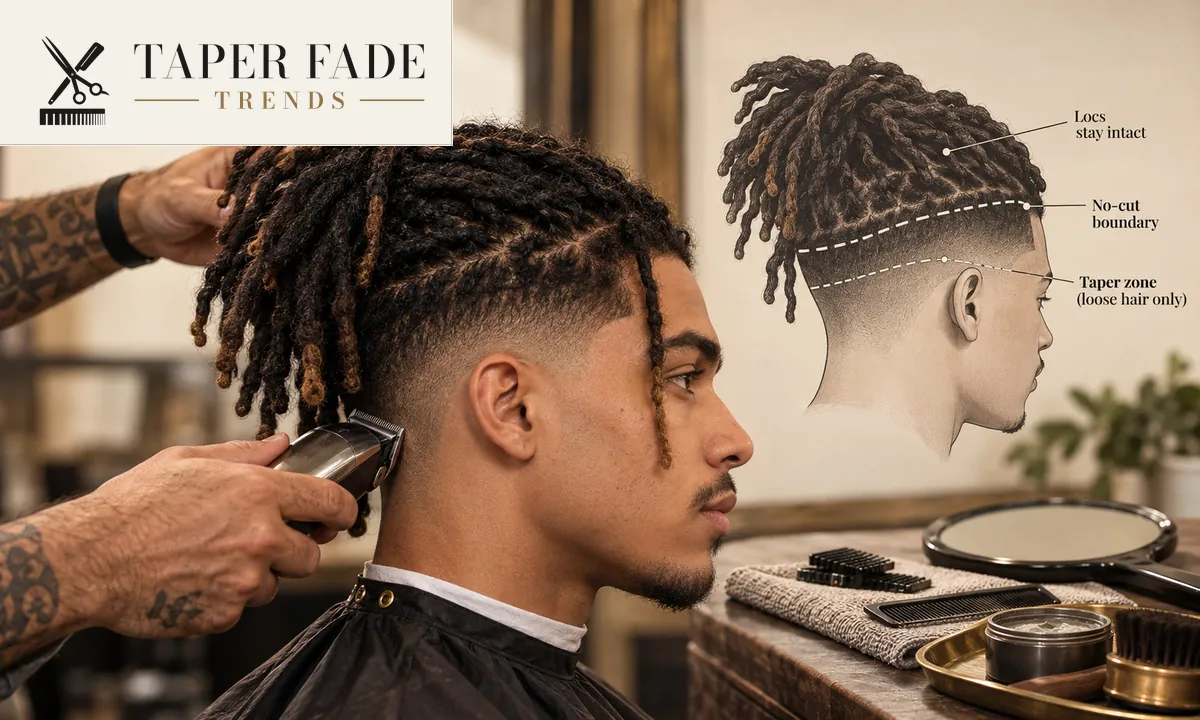
The no-cut boundary is the line between loose perimeter hair and the hair that feeds each loc. Lift the locs, find the first partings and agree on that line before any clipper touches the scalp. If neither you nor the barber can see it, ask a loctician to map it first.
A loc base is the section of scalp and hair that anchors one loc. Trichologist Dr. Kari Williams, interviewed by NaturallyCurly, advises sectioning locs along the hairline large enough to support their weight. That means hair near your edge may be holding up a loc even when it looks loose in the mirror. Cadmen’s guide tells barbers to ask which locs near the perimeter must not be touched. If yours doesn’t ask, say it first.
- Go ahead when you and the barber can both point to loose hair outside every loc base.
- Stop and see a loctician when either of you cannot tell where a base ends.
- Re-agree the line if the plan has the clippers crossing a parting.
A photo of someone else’s cut cannot show where your roots sit.
Front taper is a separate choice
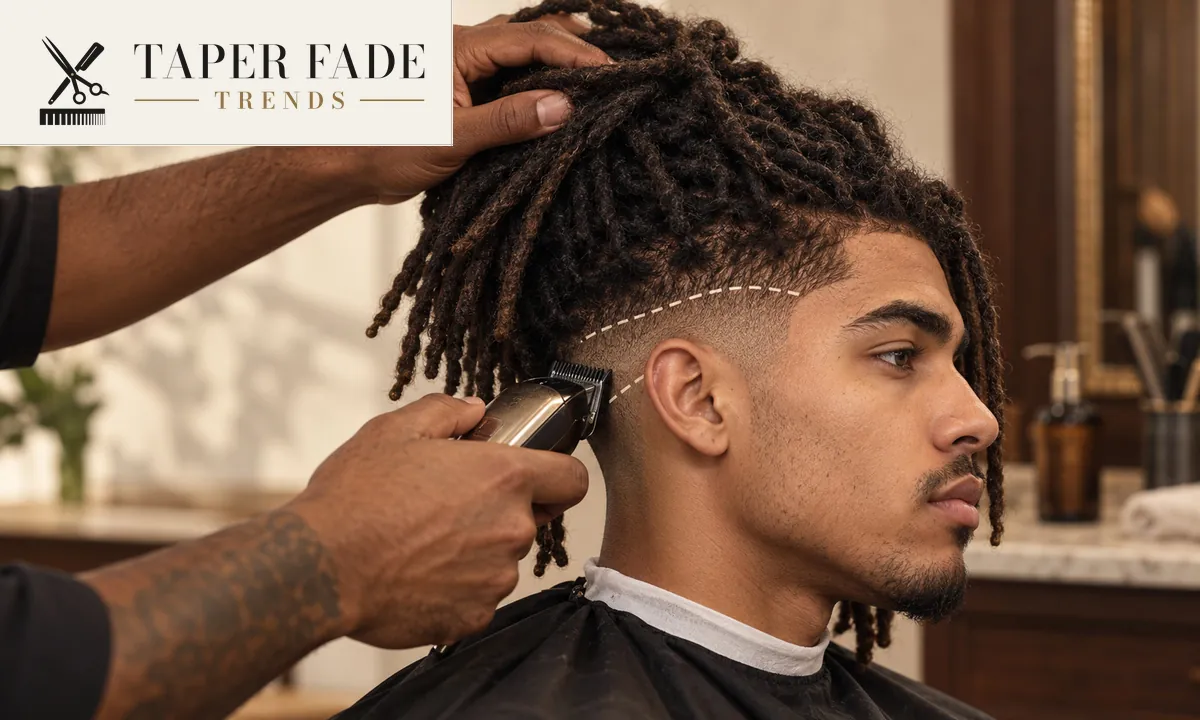
A front taper shortens the forehead hairline. A mid taper describes the sides and nape. You can have either without the other. A line-up is a third option that sharpens the existing edge. If you want one, ask the barber to follow your hairline, not push it back. Whether a front taper fits depends on loose hair ahead of your first row, covered below.
If a loc gets cut by mistake
Cadmen tells barbers to say so straight away. A loc cut near the root may need to be restarted or reattached by a loctician. One cut further down can sometimes be retwisted and left to grow. Clipping the locs up and away from the sides before the clippers start is how a careful barber avoids it.
Choose by loc stage and perimeter
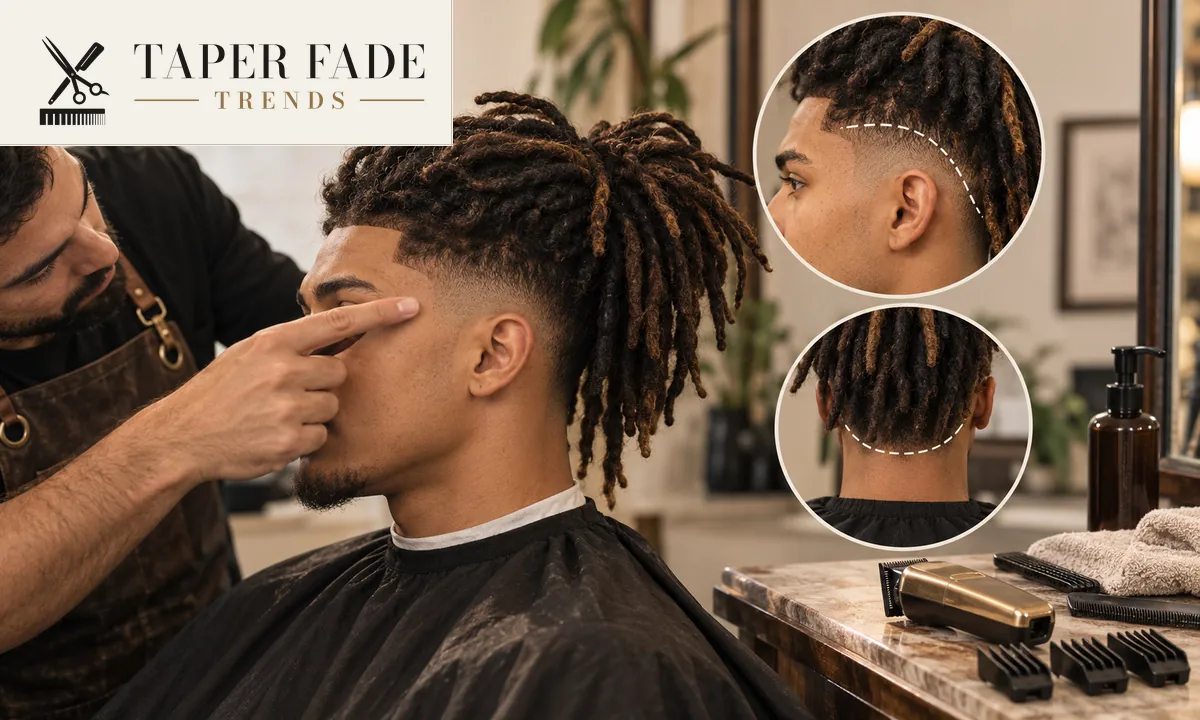
Starter locs can take a mid taper, but their roots are still settling, so the line between loc and loose hair is harder to read. Mature locs usually show that line more clearly, yet age adds no loose hair. Set the taper width from the loose hair you have, not from the locs in a reference photo.
| Your situation | What it changes | Plan around it |
|---|---|---|
| Starter locs | Partings are less settled and harder to read | Have a loctician map them before the barber sets the edge |
| Mature locs | The line is easier to see, with no extra loose hair | Check the loose hair outside the locs, not loc length |
| Locs that reach the temples | Little loose hair sits outside the bases | Go narrower or lower |
| Edge already cut close | Less loose hair is left to blend | Show the barber the current edge first |
| Planning more locs at the sides | Hair cut now can’t join a loc until it regrows | Remove less now; widen later if you still want to |
Four perimeter options to compare
The mid taper options that matter for locs differ by where the blend stops and which loc bases stay protected, not by loc length. Compare four: a natural front with a narrow taper, a separate front taper, locs tied back and a narrow nape. The illustration below shows the boundary all four share, not four recorded haircuts.
| Option | What decides it | What you see | Pick it if |
|---|---|---|---|
| Natural front, narrow taper | Loose hair at the temples and nape | A small blend; the front hairline stays as grown | Your first row sits close to the hairline, or the boundary isn’t mapped yet |
| Separate front taper | Loose hair ahead of the first row | A set-back front edge plus the side taper, so two edges to refresh | That loose hair has been confirmed on your head |
| Locs tied back | How much of the sides the locs expose | The taper shows when the locs are up and hides when they hang | You wear your locs up often |
| Narrow nape | How far the back blend runs | A tidy neckline with little back hair removed | You want a clean neck with minimal removal |
Tying locs back does nothing for the roots on its own. The American Academy of Dermatology notes that longer, heavier locs pull more, and it suggests thicker locs and looser styles. Keep the tie loose at the hairline.
Can you add a front taper without losing locs?
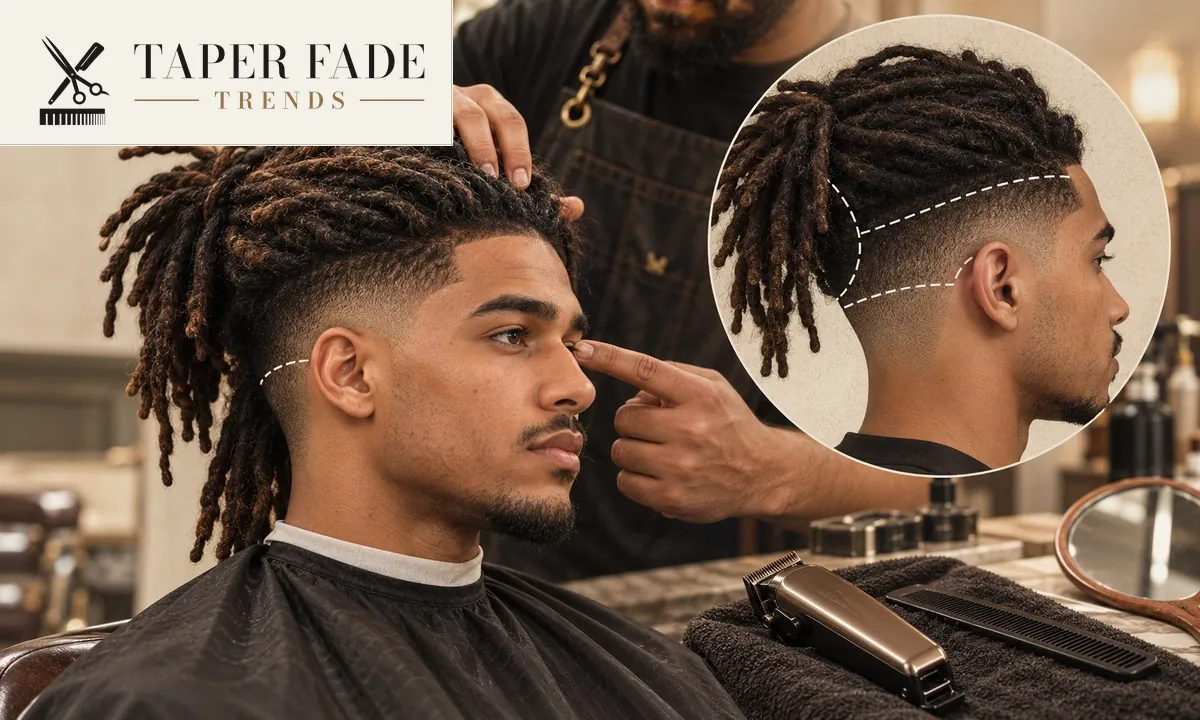
A front taper can sometimes sit in loose hair ahead of established locs, but not every hairline has that space. If the taper you want would cross the first row’s roots, getting it means altering that row. Have the boundary mapped on your own hairline before agreeing to remove any front hair.
| What the mapping shows | What it means | Next step |
|---|---|---|
| Loose hair ahead of the first row | A front taper fits without touching a loc | Agree that it stops at the boundary |
| The taper would cross first-row roots | That row would be altered | Accept the change, or keep the front natural |
| Nobody can tell | The boundary is unmapped | Keep the front natural until a loctician checks it |
Give the barber a no-cut brief
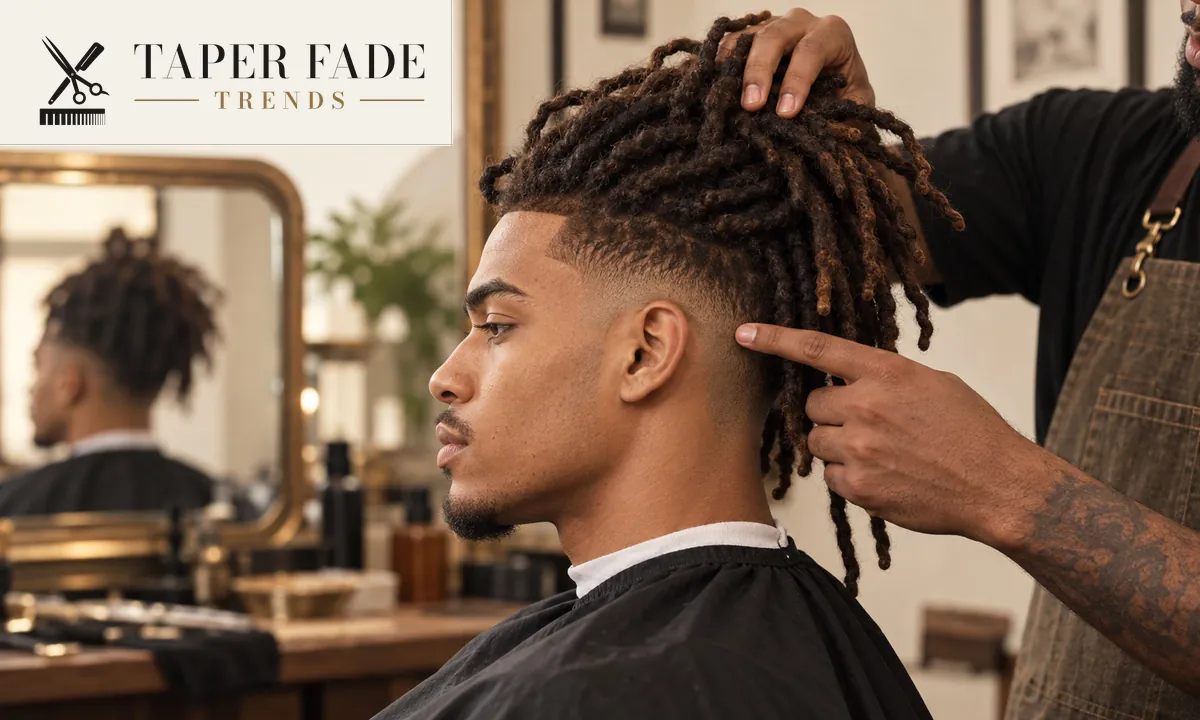
A no-cut brief gives the barber five things: the highest point the mid taper may reach, how much side hair stays, the shortest finish, whether the front hairline stays natural, and the boundary around your loc bases. Show side and back views, then ask the barber to repeat the boundary before starting.
Say it in this order:
- “Keep the taper at mid height and stop it here.” Point to the spot at your temple.
- “Only shorten the loose hair outside my locs, and keep the sides as full as you can.”
- “Take the shortest point to visible hair.” Swap in stubble or skin if that is what you chose.
- “Leave my front hairline natural.” If you chose a front taper, say “Set the front taper only in the loose hair we marked.”
- “Don’t trim any locs. Taper the nape narrow, stop at this line, and tell me the line back before you start.”
Spell out that the locs stay. Cadmen warns barbers that a client who says “cut it” may mean fade the sides, not take off the locs. Treat the script as a template and adjust the wording to suit your barber.
In the chair, expect the barber to gather your locs up and clip them away from the sides, blend upward, then switch to a detail trimmer with short passes at the hairline. That is the method Cadmen teaches. Ask for a mirror check from both sides and the back before you leave.
Bring four reference views (front, left side, right side and back) plus photos of your own hairline from the front and at each temple. Guard numbers are the barber’s call, because they mean different lengths on different clippers; the haircut guard numbers guide explains why. The general five-part brief in how to ask for a taper fade works here too, with the no-cut boundary added.
Coordinate the haircut and retwist
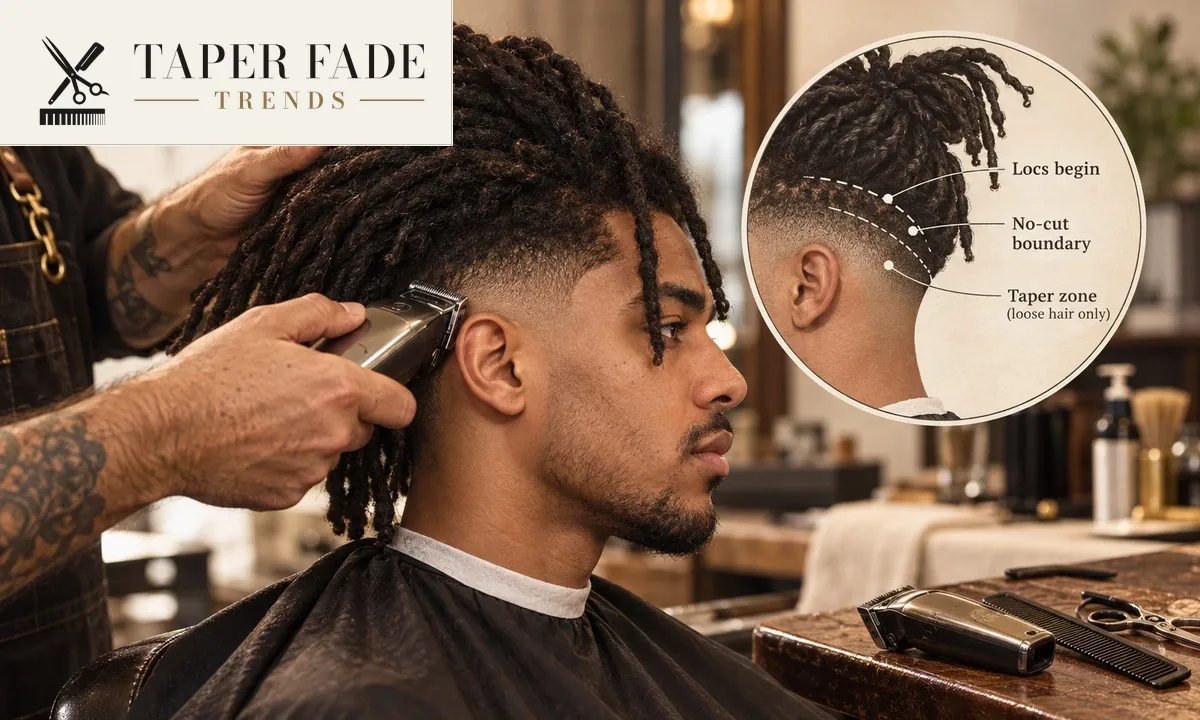
No barber or dermatology source reviewed for this guide sets a fixed order for a mid taper and a loc retwist, and neither service needs the other on the same day. If the boundary is unclear, see the loctician first so the bases are separated before clipping. If it is already clear, book whichever suits you.
- Boundary unclear: loctician first, then the barber, with the partings already separated.
- Boundary clear: book around your comfort and around when your partings are easiest to see.
- Same day: fine, but the boundary is still agreed before the clippers start.
If your roots are sore after a retwist, that is a signal about tension, not timing. The AAD’s rule of thumb is that a style that hurts is too tight.
Keep tension and clipping risks separate
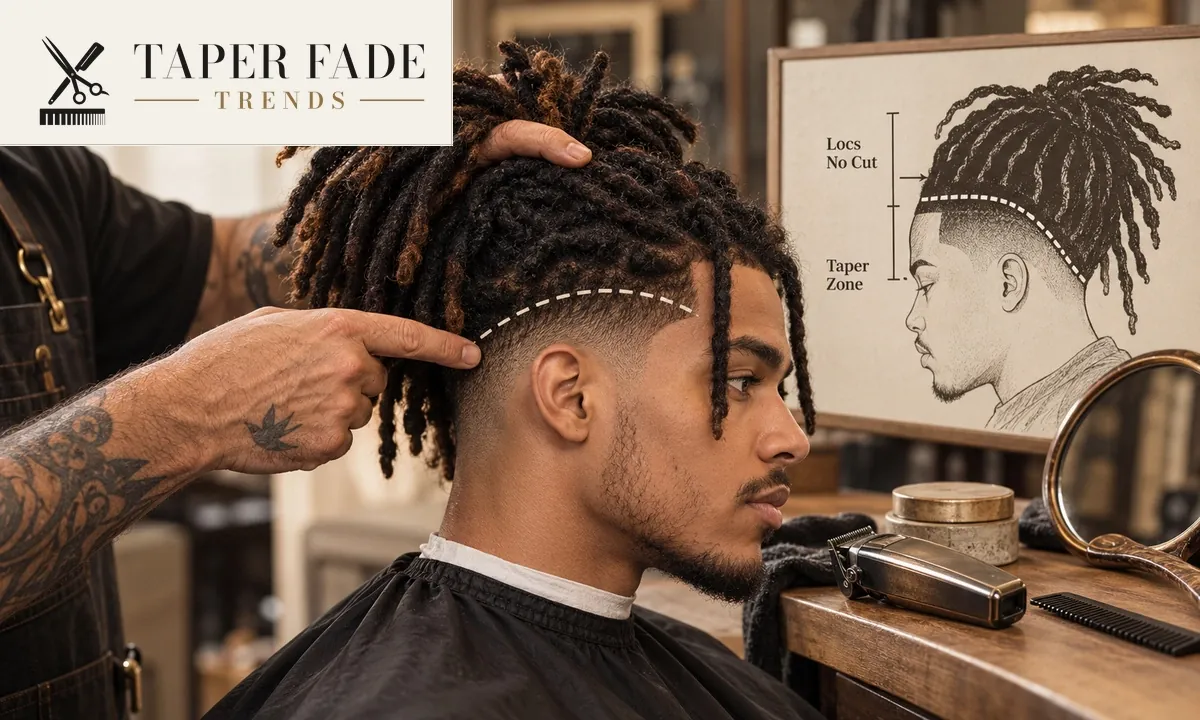
Tight or repeatedly pulled locs can cause traction alopecia, and the American Academy of Dermatology lists locs among styles that do this when worn too tight. Clipping loose perimeter hair is a different action. Cutting into a loc base costs that loc hair, which is a separate problem. New or persistent hair loss needs a dermatologist.
| Tension from styling | Clipping a loc base | |
|---|---|---|
| What happens | Repeated pulling stresses the follicles | Hair that anchors a loc is cut short |
| Change course now if | Pain, stinging, crusts, or scalp pulled up like a tent | A plan has clippers crossing a parting |
| Early signs to check monthly | Broken hairs around the forehead, a receding hairline, patches of loss | A first row that looks thinner after each visit |
| Can it be undone? | Can become permanent if the pulling continues | A loc cut near the root may need restarting or reattaching |
| Who to see | A board-certified dermatologist | A loctician |
Upkeep and growing it out
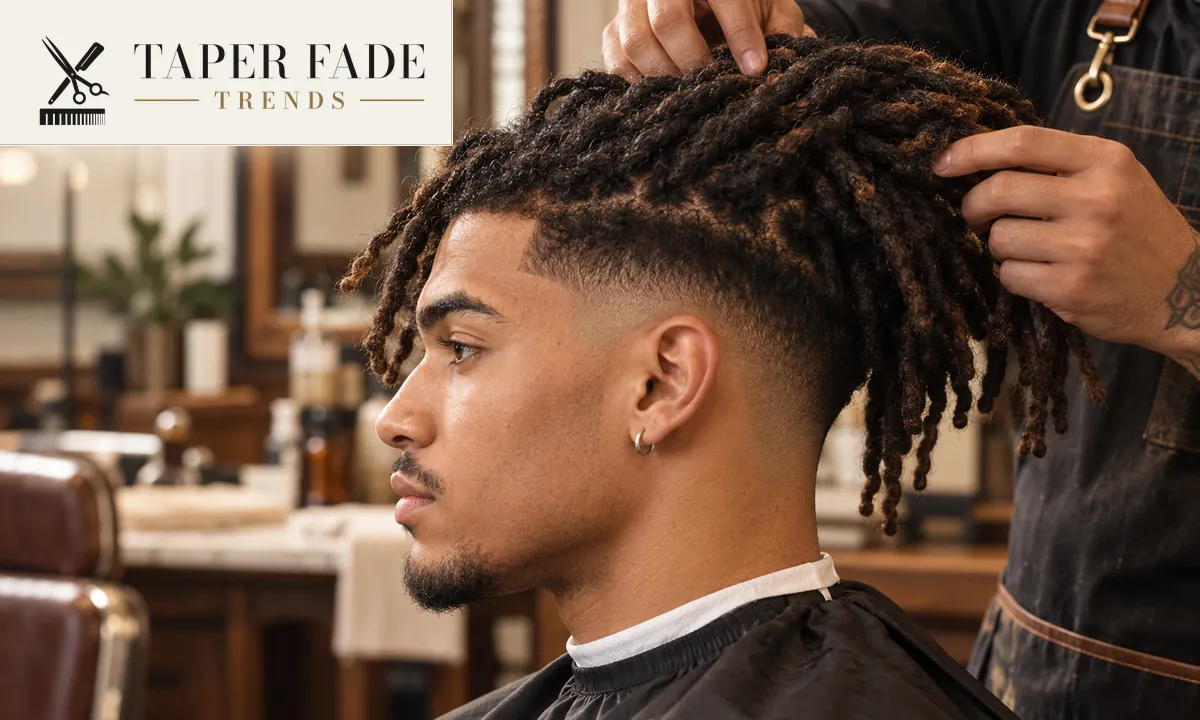
A mid taper with dreads runs on two schedules: the perimeter needs a barber, the locs need loc care, and no single interval fits both. Scalp hair grows about half an inch a month, so a skin finish shows regrowth sooner than a shadow. Refresh the edge when it stops looking deliberate to you.
That growth figure comes from MedlinePlus. Published intervals disagree: Cadmen suggests two to four weeks for a fade on locs, and other style guides stretch to five. Use your first cut to find your own cycle. Note the week the edge stopped looking right, as the how long does a taper fade last guide suggests. A skin finish, a crisp neckline and fast growth bring that week forward. A shadow and a natural outline push it back.
To grow the taper out, stop shortening the perimeter. The regrown hair is loose hair. A loctician can tell you whether it is long enough to join an existing loc, needs more time or is better started as a new one. Don’t assume it will join on its own.
When a lower cut makes more sense
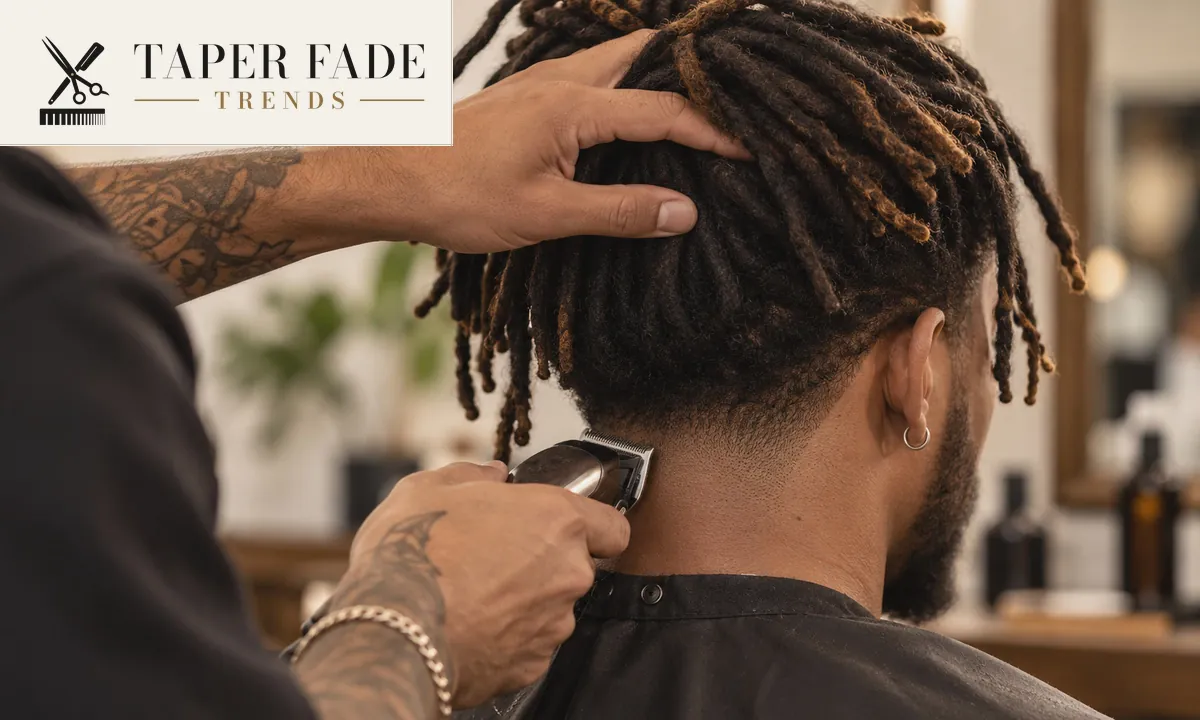
A low taper or an untouched perimeter is the more conservative choice when your loc bases reach the temples, when you plan to add locs at the sides, or when nobody has mapped the boundary yet. Both remove less hair than a mid taper. You can raise a taper later; cut hair takes months to return.
| Option | What it removes | Choose it when |
|---|---|---|
| Untouched perimeter | Nothing at the edge | The boundary is unmapped, or you plan locs at the sides |
| Low taper | Less side hair than a mid taper | Loc bases sit near the temples but you want a defined edge |
| Mid taper | Loose hair up to the agreed height | Loose hair outside every base is confirmed |
| Full mid fade | The most side hair | You want more side exposure and have the loose hair for it |
The low taper fade guide covers the lower option, and low taper vs. mid taper compares the two by height and side weight. The high taper fade guide for Black men applies the same rule to locs and braided bases: if reaching a height would cut into a base, lower the taper. For a picked-out top instead of locs, the mid taper fade Afro guide covers a rounded or squared outline at the same height. For brushed 360 waves, see the mid taper fade waves guide.
Method and sources
Taper Fade Trends Editorial prepared this guide to help loc wearers settle one decision before a barber visit: where the clippers stop. It compares barber education, dermatology guidance, a trichologist’s loc-care advice and this site’s own taper definitions. Sources were checked on October 22, 2026.
The images on this page are labeled illustrations, not photographs of real haircuts, and the boundary they show is generic. This version contains no client photos and has not been reviewed by a named barber or loctician. If real haircut photos or a review are added, they will be credited with names, dates and recorded cut details. “Mid,” “taper” and “fade” vary between shops, and no guard number, interval or price applies to every wearer.
Sources:
- Hairstyles that pull can lead to hair loss, American Academy of Dermatology
- How to Cut a Fade with Dreadlocks: Barber Guide, Cadmen Academy
- Loc-care advice from trichologist Dr. Kari Williams, NaturallyCurly
- Hair Problems, MedlinePlus (National Library of Medicine)
Bring the boundary plan to your appointment
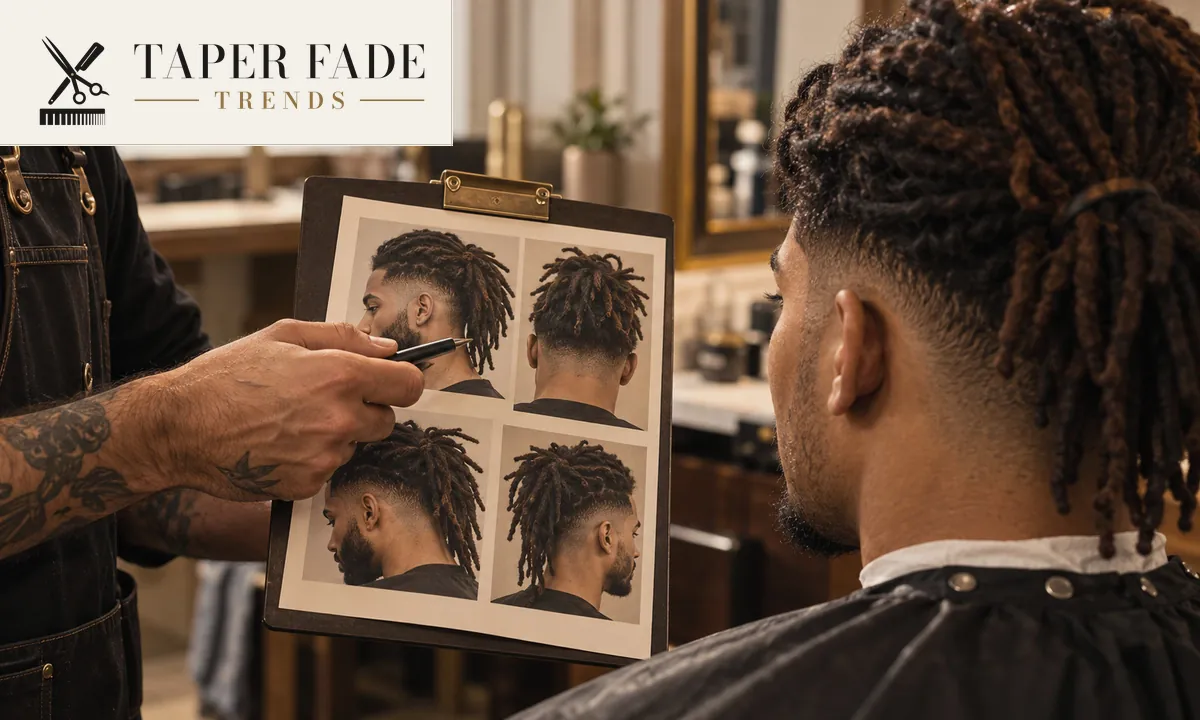
Before you book, write four short lines: the highest placement, the shortest finish, whether the front hairline stays natural, and who confirmed the no-cut boundary. If nobody has confirmed it yet, book the loctician first. Then take those four lines and the script above to the barber.
Keep reading
All guides
Mid taper fade: what it is and what to ask your barber
What a mid taper fade is, how it differs from a full mid fade, why skin is optional, and the four specs to give your barber before the cut starts.
How to ask for a taper fade: a five-part barber brief
How to ask for a taper fade: say where it may reach, how short the base goes, how much side weight stays and what to do on top, then check the plan first.
Low taper fade: placement, finish, side length and upkeep
A low taper fade shortens the sideburns and nape and keeps the sides full. See the four choices to make, whether it can go to skin, and what to say.
Low taper vs mid taper: what changes when only the height moves
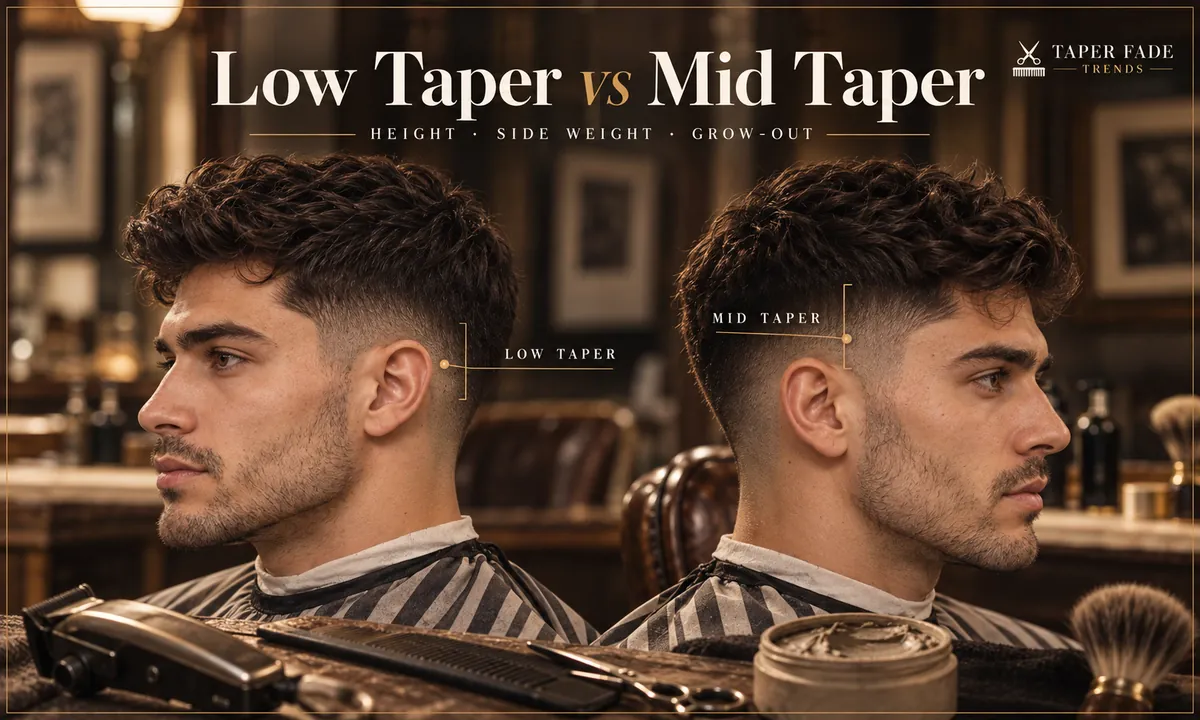
Low taper vs mid taper compared on height, side weight, shortest finish and grow-out, why switching mid to low takes time, and what to tell your barber.
High taper fade Black male styles: waves, coils, twists and locs
High taper fade Black male guide: how it sits with waves, coils, twists and locs, skin vs. guard finishes, and a fill-in barber brief.
Low taper fade with dreads: protect the loc boundary
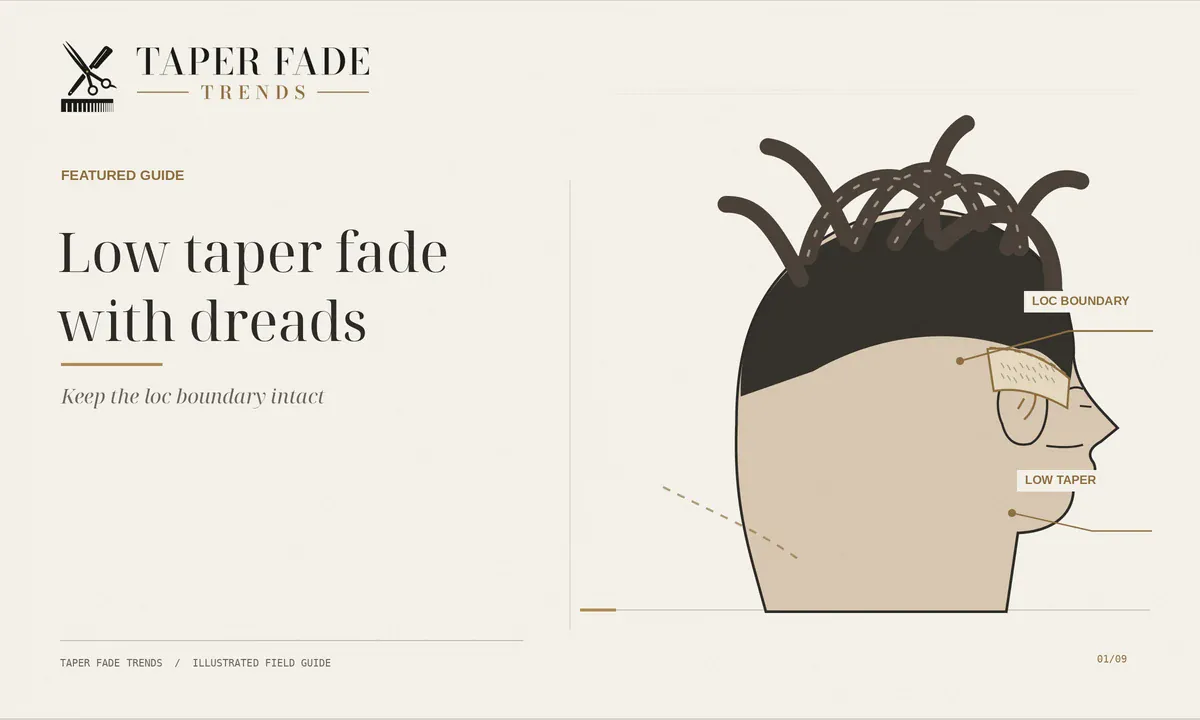
Low taper fade with dreads: which loc bases to protect, how to set the taper zone and endpoint, and what to tell your barber and loctician first.
Mid taper fade Black male guide: what stays and what to ask for
Mid taper fade Black male guide: keep more side weight than a full mid fade, set finish and hairline, protect waves, coils or locs, and brief your barber.
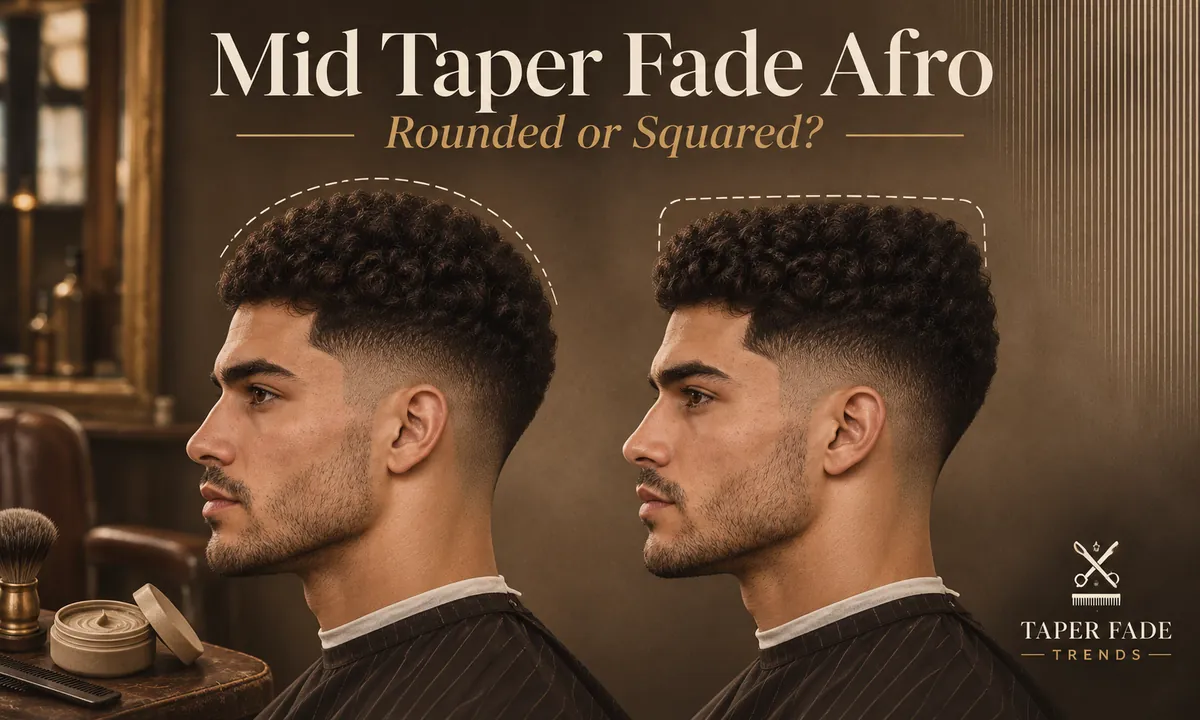
Mid taper fade Afro: choose a rounded or squared top
A mid taper fade Afro, rounded or squared: what to keep on top and at the sides, which finish to name, and the exact words to use with your barber.
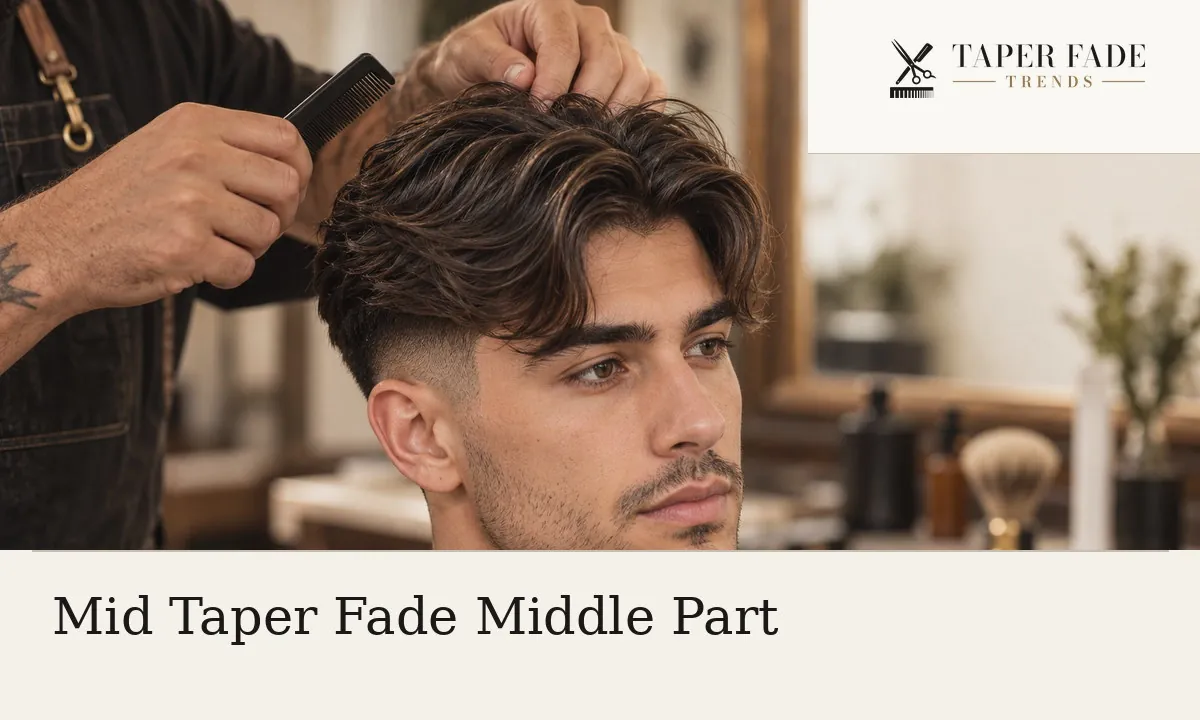
Mid taper fade middle part: set the part, then the taper
Mid taper fade middle part guide: set the part first, keep the curtains connected to the sides, and give your barber a clear brief before the cut.
More in mid taper fades
Mid taper fades: all 15- Mid taper fade: what it is and what to ask your barber12 min
- Mid taper blowout: keep volume without flattening the sides11 min
- Mid taper fade curly hair: choose dry length, side width and finish9 min
- Mid taper fade straight hair: fine, flat and outward-growing sides11 min
- Mid taper fade Black male guide: what stays and what to ask for13 min
- Mid taper fade wavy hair: work with the natural bend12 min
- Mid taper fade buzz cut: top length, coverage and finish8 min
- Mid taper fade with beard: how the sideburn blend works13 min
- Mid taper fade middle part: set the part, then the taper12 min
- Mid taper with dreads: where the clippers stop and your locs beginYou are here
- Mid taper fade Afro: choose a rounded or squared top10 min
- Mid taper fade waves: preserve 360-wave connections11 min
- Low taper vs mid taper: what changes when only the height moves10 min
- Mid taper vs mid fade: how much side hair comes off10 min
- How to choose taper height using side weight12 min