Low taper fade with dreads: protect the loc boundary
A low taper fade with dreads keeps the locs at full length and shortens only a low band of loose hair at the temples, sideburns and, if you want it, the nape. Before the first clipper pass, agree on three things: which loc bases stay untouched, how much perimeter the taper covers and how short its endpoint goes.
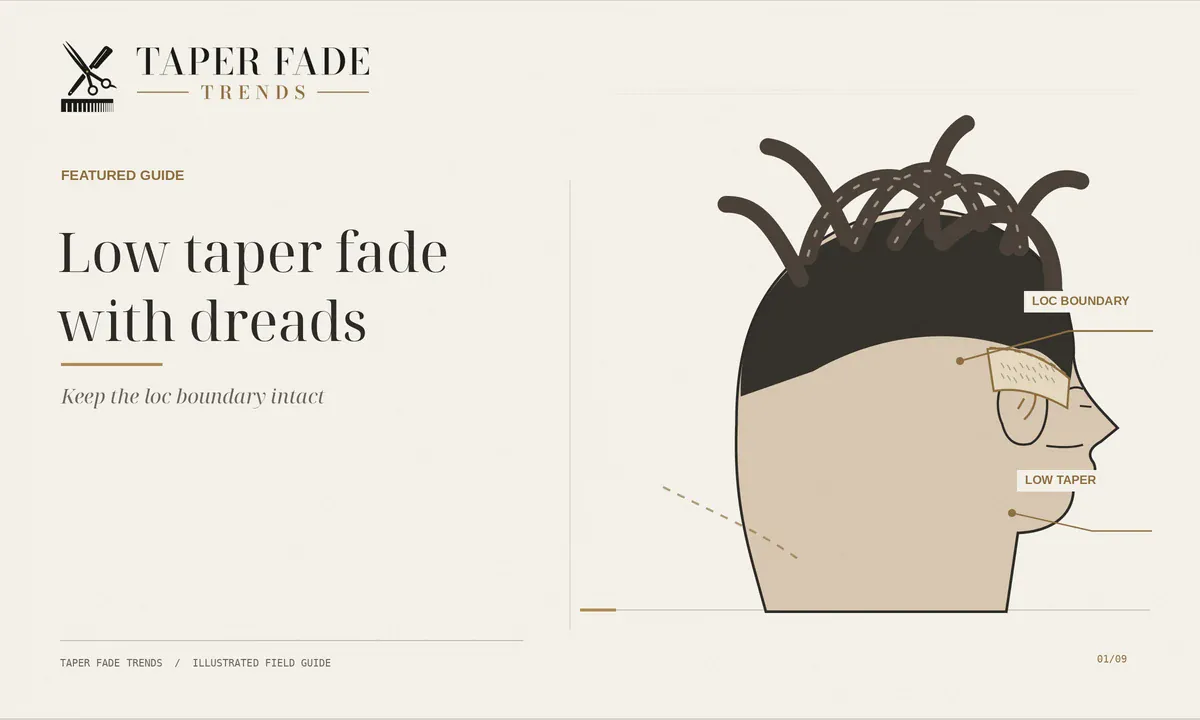
Use this as the checklist for the chair.
| Specification | What to state |
|---|---|
| Taper zone | Temples and sideburns, with the nape optional. Point to where it stops instead of naming a height. |
| Shortest endpoint | Visible hair or skin-close. Shops use “taper” and “fade” differently, so say which. |
| Loc boundary | Each loc base the barber must not cut, pointed out on your head. |
| Loc length | Unchanged. A loc trim is a separate service, so ask for it separately if you want one. |
| Hairline finish | Natural, a soft clean-up or a sharper line-up. A style choice, not a hair-health measure. |
| Service order | No professional standard sets retwist before or after the cut. Agree it with both professionals. |
What a low taper fade with dreads changes
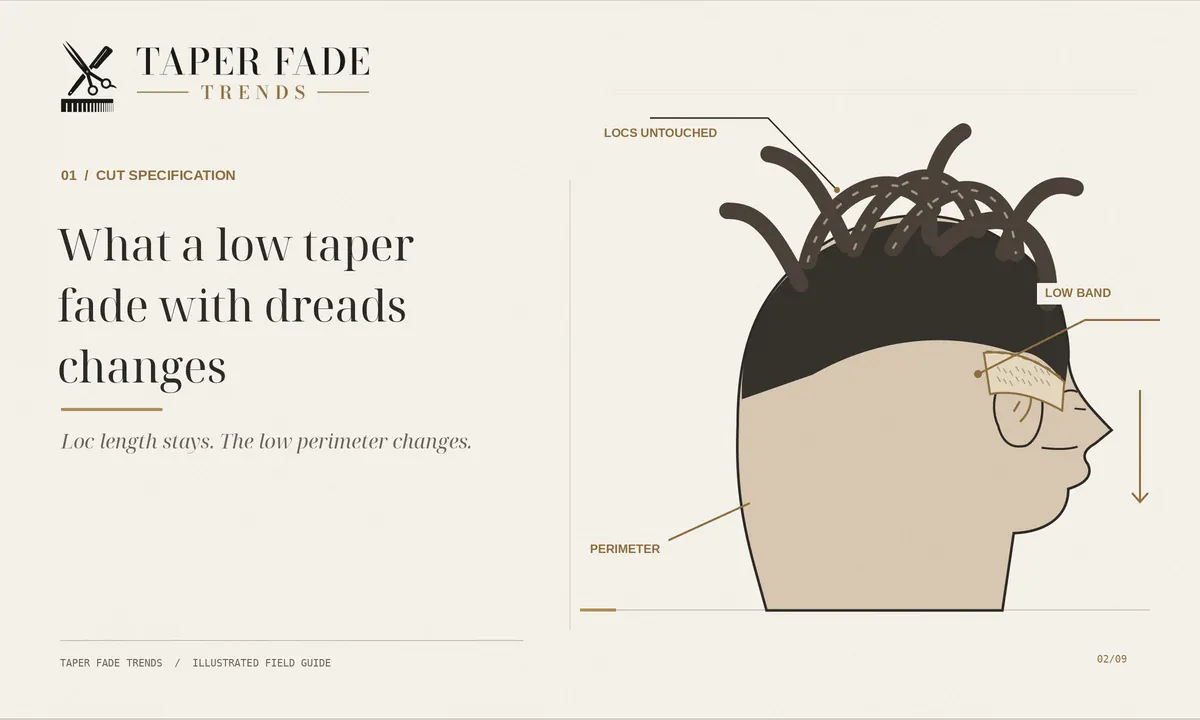
A low taper fade with dreads changes only the perimeter. The barber shortens loose hair below and around the locs and leaves the locs themselves alone, which is how CADMEN Barber Academy’s guide to fading around locs describes the service. Trimming loc ends or cutting locs off are separate services, so name the one you are booking.
The taper zone is the low band where length steps down: the temples, the sideburns and, if you include it, the nape, which is the hairline at the back of the neck. The shortest endpoint is the length where the taper stops, either visible hair or skin-close, meaning cut so short the scalp shows.
The haircut name will not carry those details. CADMEN’s taper versus fade explainer defines a taper as a graduation that stops before bare skin and a fade as one that reaches skin, yet other shops let a low taper finish at skin, as our low taper fade guide shows. Describe the zone and the endpoint instead of trusting the label.
People also search “low taper with dreads” and “dreads with a taper fade.” Both describe this appointment when the blend stays low. A blend that starts higher uses more perimeter hair, and low taper vs mid taper compares the two placements.
Protect the loc boundary before clippers start
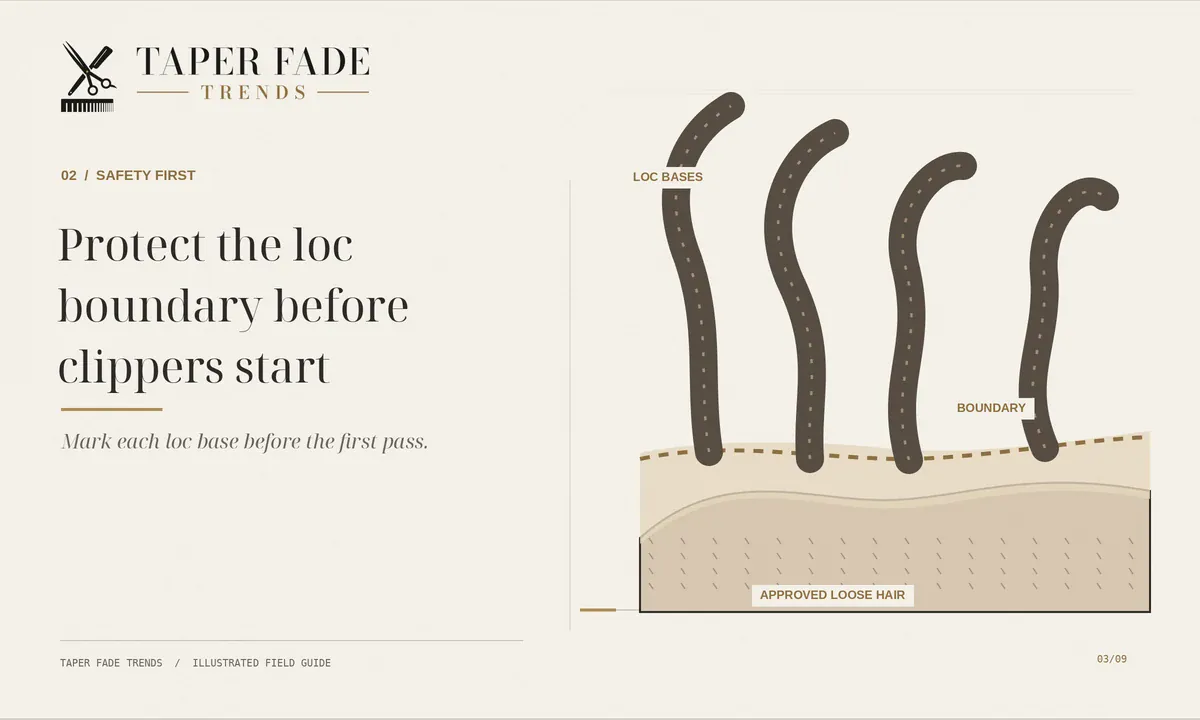
The loc boundary is the line between hair that belongs to existing or planned locs and loose perimeter hair approved for the taper. Mark it on your head before clippers start. The barber sets the taper; a loctician settles any loc base or parting the two of you cannot agree on. If the line stays unclear, cut less.
The risk sits on that line. CADMEN’s loc fade guide treats the fade itself as standard work and the perimeter as the place where a loc gets cut by accident, a mistake that is not easily fixed. Its consultation has the barber ask:
- where the fade should start
- whether any locs near the perimeter must not be cut or touched
- which loose or fraying locs near the fade line may be fragile
- what you liked or disliked about past fades with locs
Expect the barber to clip or tie your locs up and away from the sides, switch to a detail trimmer at the hairline and work in short passes, checking that no loc has slipped into the path. Those steps come from the same guide. If your barber skips the questions, give the answers anyway.
Loc bases, loose perimeter hair and the taper zone
At the perimeter, loc bases stay, approved loose hair gets shortened, and the taper zone is where that shortening happens.
| Term | What it is | Who decides |
|---|---|---|
| Loc base | The section of hair at the scalp that forms an existing or planned loc | You and the barber, before cutting; a loctician settles doubts |
| Loose perimeter hair | Hair at the temples, sideburns or nape that is not part of a loc | The barber shortens it once you approve |
| Taper zone | The low area where length steps down toward the hairline | You and the barber, from reference photos |
Can you add a front taper without cutting locs?
Not always. A front taper needs no loc cut if it uses only loose hair outside the loc bases. If established locs sit inside the band you want shortened, the taper means restructuring or removing some of them. Make that call with your barber and loctician before cutting, because a loc cut at the root may need restarting.
| Where the wanted taper sits | What it means for the locs | Who to ask |
|---|---|---|
| Only loose hair outside any loc base | No loc needs to be cut | The barber, once the loc boundary is marked |
| Where established locs already sit | Some locs may need restructuring or removal | Barber and loctician together, before any cutting |
| Unclear which hair is loc base | Cut less, or stop, and reassess | A loctician |
A front taper is a band of shorter hair at the front and temples. A line-up, also called an edge-up or shape-up, is different: it cleans the outline of the hairline without shortening a band behind it. Neither treats the hairline. If your edges are sore or thinning, read the hairline section below first.
If a loc gets cut by mistake
Ask the barber to stop. CADMEN tells barbers to say so right away rather than hope the client misses it. Its guide adds that a loc cut near the root may need restarting or reattaching by a loctician, while one cut further down can sometimes be retwisted at the frayed end. See your loctician before the next haircut.
Choose the taper area and finish
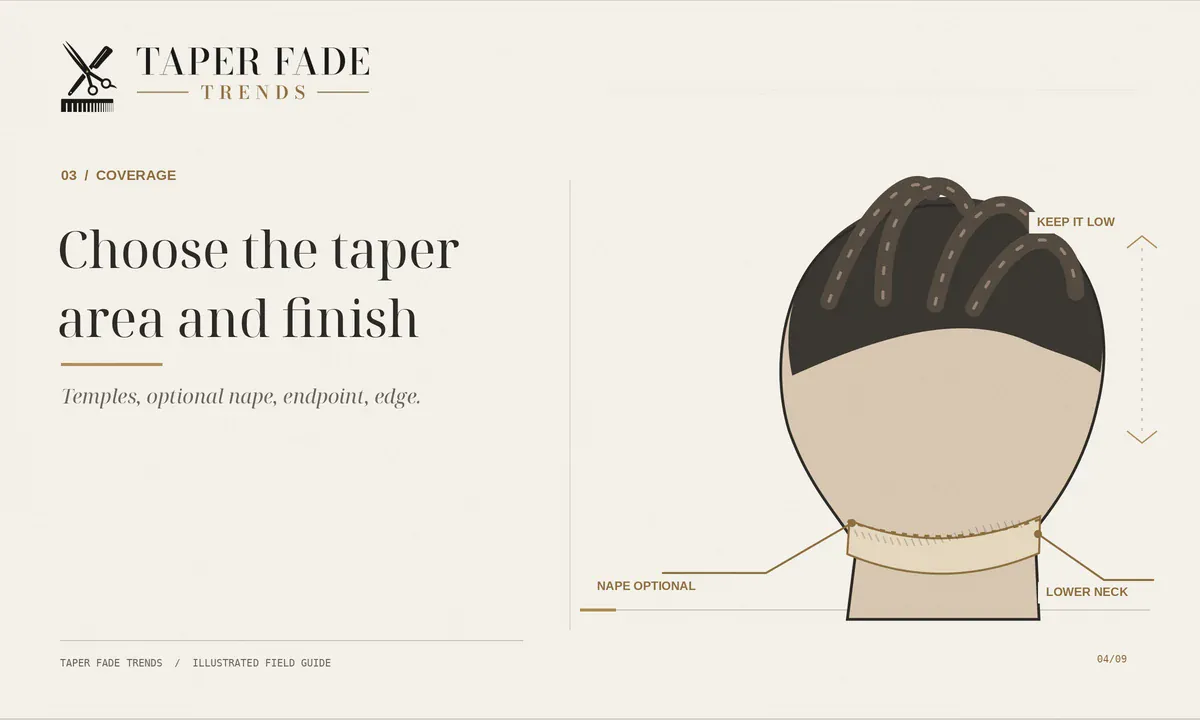
Before you sit down, choose three things in this order: how much perimeter the taper covers, how short its endpoint goes and how the hairline edge is finished. The loc boundary limits all three, because the taper can only use hair approved for cutting.
- Coverage: temples and sideburns only, or the nape as well.
- Shortest endpoint: visible hair or skin-close. The closer finish has more contrast and shows regrowth sooner.
- Hairline finish: natural, soft clean-up or sharper line-up. This changes the edge, not the length.
Density, curl pattern and growth direction change how the same specification looks. The low taper fade guide’s texture section covers that on any hair.
Temple-only vs temple-and-nape
Temple-only shortens the temples and sideburns; temple-and-nape adds the hairline at the back of the neck. Neither is better. The deciding question is whether you want a clean outline under the locs at the back, which matters most if you often wear them tied up and the nape is on show.
| Criterion | Temple-only | Temple-and-nape |
|---|---|---|
| Hair shortened | Temples and sideburns | Temples, sideburns and nape |
| What shows | A shorter face-side edge; the back is untouched | A shortened outline all round, including under the locs |
| Boundary check | At the temples and sideburns | At the temples, sideburns and again at the nape |
Coverage is easier to add than to remove. You can start temple-only and add the nape later, but undoing a nape taper means waiting for it to grow. The same goes for a taper that creeps a little wider or higher at each visit: over several cuts it takes hair the perimeter locs needed, so repeat your limit every time. The low taper mullet guide makes the same point about keeping length behind the ears.
Low taper vs skin-close low fade
A low taper and a skin-close low fade sit in the same place but finish differently. In CADMEN’s definitions, a taper stops at short visible hair and a fade continues to bare skin. Barbers do not all follow that split, so on locs, ask by endpoint and coverage instead of by label.
| Criterion | Low taper | Skin-close low fade |
|---|---|---|
| Shortest endpoint | Short, visible hair | Bare skin |
| Contrast at the base | Softer | Sharper |
| Regrowth | Shows more gradually | Stubble within 2 to 5 days, per CADMEN |
| Beside the loc boundary | Leaves some length near the loc bases | Leaves none at the endpoint, so settle the boundary first |
CADMEN notes that a low taper taken to skin is often called a “low skin fade.” If you want different finishes at the temples and nape, give each zone its own endpoint. The taper vs fade guide compares the two cuts on any hair.
How loc stage changes the taper
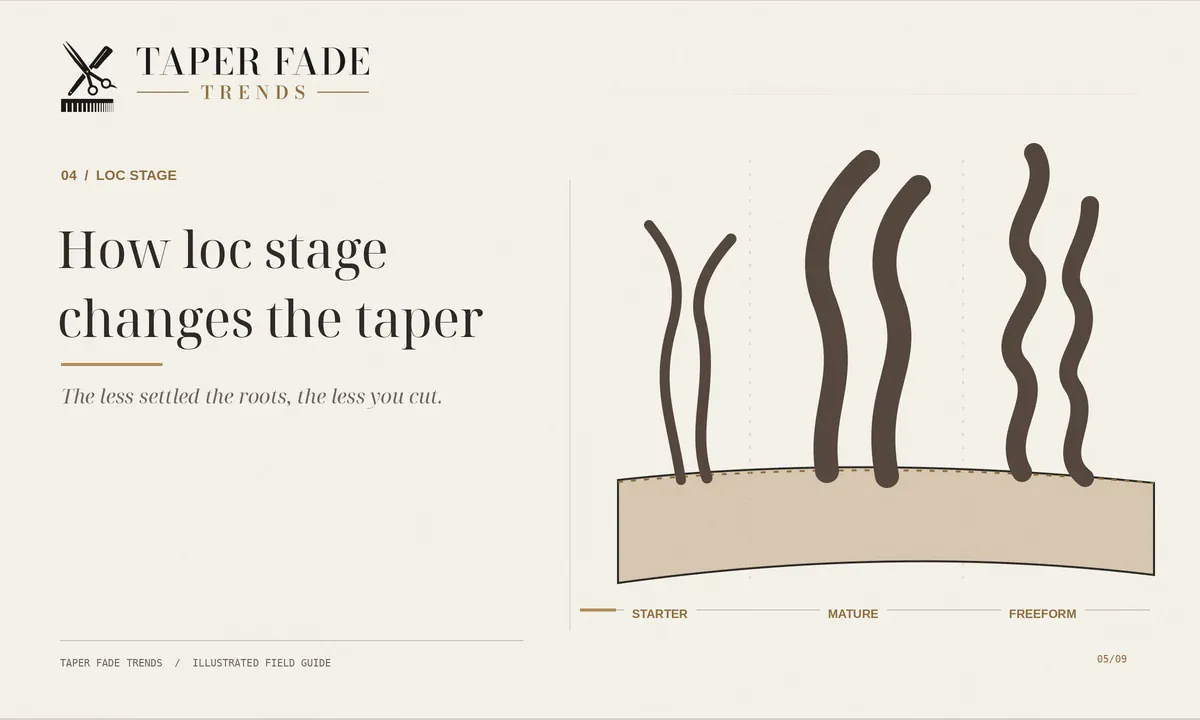
Loc stage does not decide whether you can get a low taper. It decides how hard the loc boundary is to read. Starter locs blur it, mature locs show it and freeform locs make it irregular, so the less settled the sections near the hairline, the more conservative the first taper should be.
Starter locs
Starter locs can take a low taper, but the first cut needs extra boundary control, because loose or forming sections near the hairline can pass for stray hair. Point out every section meant to become a loc, keep the taper narrow, and recheck the boundary at each visit while the locs form.
Mature locs
Mature locs have established bases, so the boundary is easier to see, but they are not risk-free. A taper set too wide or too high can still reach a perimeter loc. Decide whether the taper stays outside the outer row of locs or deliberately reshapes it, and say which before the first pass.
Freeform or semi-freeform locs
Freeform locs form with little or no routine twisting. Semi-freeform locs mix sections left to form on their own with sections that are shaped and retwisted less often, as SalonCentric’s guide to loc styles for stylists describes. Irregular sections make the boundary harder to read from outside, so point to it on your head, not only on a photo.
What to tell your barber and loctician
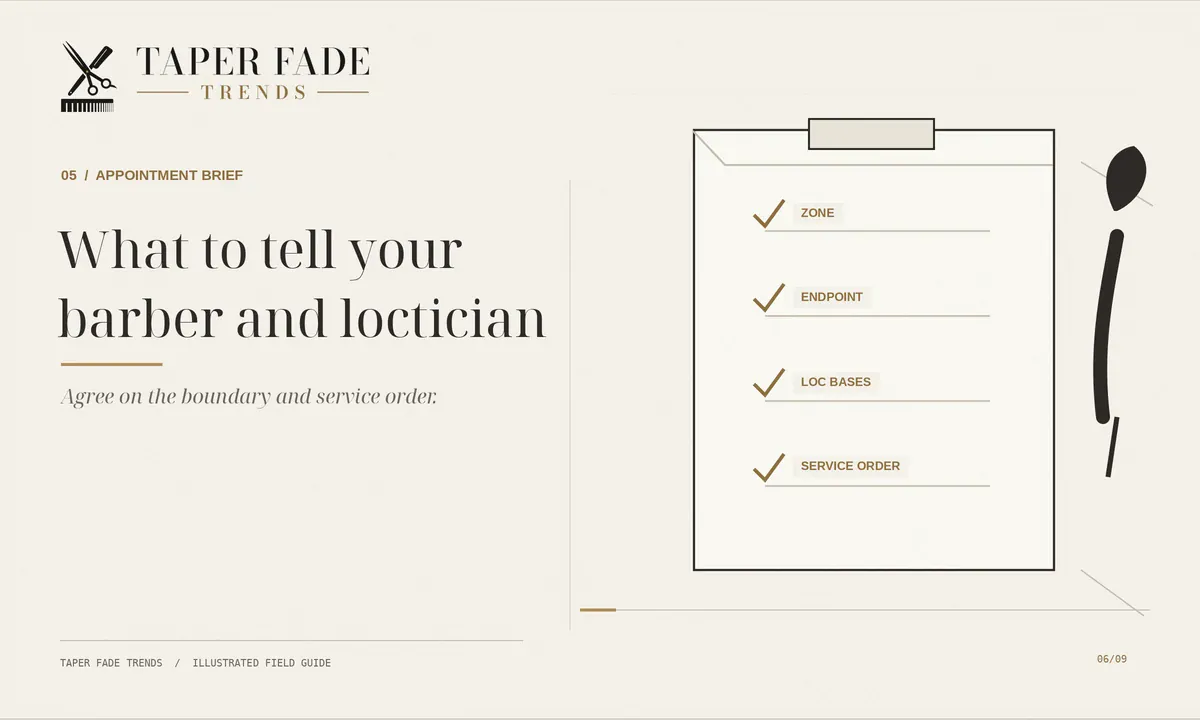
Tell the barber the taper zone, the shortest endpoint and the loc bases that stay. Ask the loctician about any hair whose place in a loc is unclear. Each professional answers a different question, and when they work in separate shops, you carry the answers between them, so write them down.
| Person | Ask about | Not their call |
|---|---|---|
| Barber | Taper zone, shortest endpoint, hairline finish | Which loc bases may be cut without your say |
| Loctician | Loc bases, parting and roots when ownership is unclear | A hair-loss diagnosis |
| Dermatologist | Pain, stinging, scalp crusts, broken hairs, thinning or patches of loss | The haircut |
Agree these four points before the first clipper pass:
- Which loc bases stay untouched, pointed out on your head.
- Taper coverage and shortest endpoint, named per zone if they differ.
- Whether any loc footprint changes, yes or no.
- Which comes first, the taper or the retwist.
Barber brief
State the outcome in this order and let the barber choose the tools:
- Taper zone: “Taper the temples and sideburns only,” or “Taper the temples, sideburns and nape.”
- Shortest endpoint: “Keep the shortest hair visible,” or “Take the shortest point to skin.”
- Loc boundary: point to each loc base that stays and say, “These stay untouched.” Ask the barber to repeat the list back.
- Hairline finish: “Natural,” “soft clean-up” or “sharper line-up,” front and nape.
- Blend limit: “Keep it low. Show me the first guideline before you blend any higher.”
- Locs: “No loc trim. Keep the length.”
Bring front, left, right and back reference photos of someone with similar loc placement and density, not just similar length. One flattering angle cannot show the whole loc boundary or the nape. Point to what you want in each photo, then still say the endpoint out loud, because photos hide it.
Guard numbers do not match across clipper brands, so describing the result is more reliable than quoting one; the haircut numbers chart explains why. For the general version of this script, see how to ask for a taper fade.
Retwist first or haircut first?
No barbering or loctician standard we found sets one order for every client. The case for retwisting first is visibility: freshly retwisted roots and parts make the loc boundary easier to see. When loose perimeter hair or starter locs leave that boundary unclear, ask both professionals which order they want and book to match.
Styling, grow-out and hairline limits
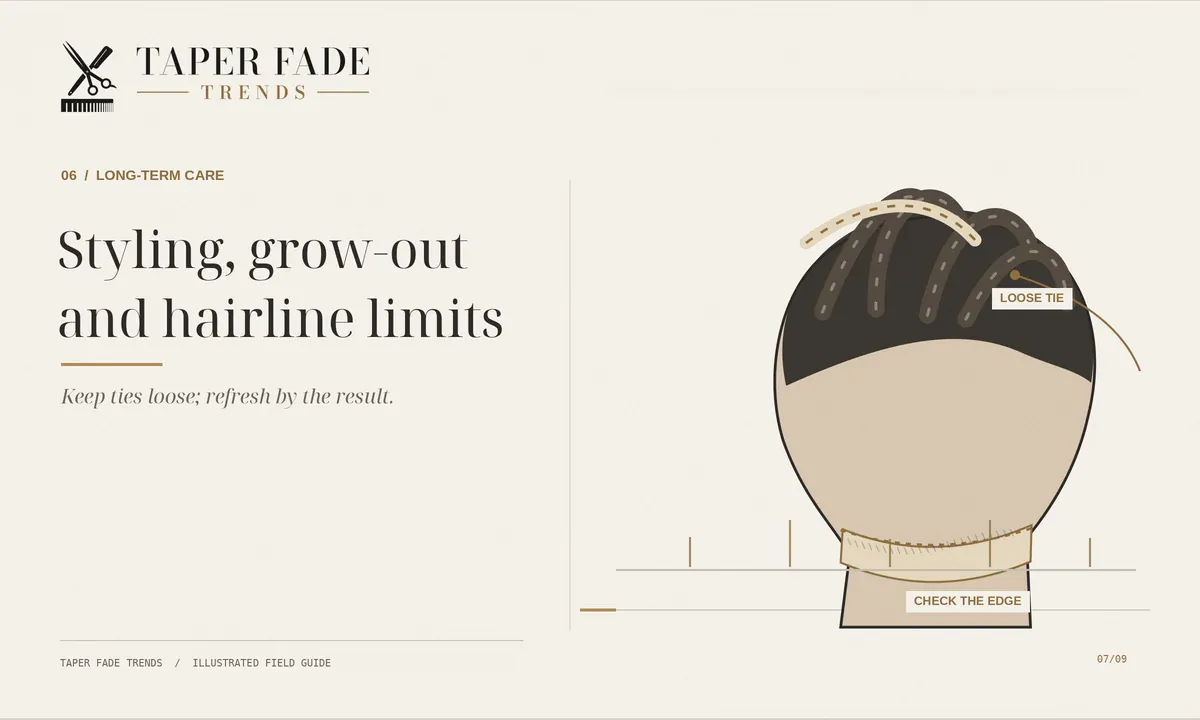
Judge the taper and the locs separately. The taper needs a refresh when its endpoint and edge stop matching what you agreed; the locs follow their own retwist schedule. The one overlap is tension, because styles that pull locs tight sit on the same hairline the taper outlines.
The American Academy of Dermatology lists locs among the styles that can cause traction alopecia when they are too tight, and notes that longer locs are heavier and pull more. If you tie your locs up to show the taper, keep the tie loose and avoid wearing it pulled tight every day.
Set your own refresh schedule
No one has measured a refresh interval for tapers on locs. CADMEN’s loc guide suggests the same cadence as any fade client, every 2 to 4 weeks, and says some loc clients go longer because the locs draw the eye. Treat that as a starting range, then let your own first grow-out set the schedule.
Photograph the front, both sides and the back just after the cut, repeat from the same angles each week, and note when the endpoint or edge stops matching what you asked for. How long a taper fade lasts covers what usually softens first.
When hairline symptoms are not a barber question
No source we found shows that a taper causes, prevents or treats hair loss. The AAD links traction alopecia to repeated pulling, including tight locs, and says the hairline is one of the first places it shows. A barber or loctician cannot diagnose it, so nobody should promise that a front taper will save a hairline.
The AAD says to change a hairstyle right away if it causes pain, stinging, scalp crusts or tenting, where sections of scalp are pulled up like a tent. It also advises people who wear pulling styles to check monthly for broken hairs around the forehead, a receding hairline or patches of loss, and early care from a board-certified dermatologist, because traction alopecia can become permanent the longer it goes untreated.
When to skip the taper for now
Postpone the taper when nobody at the appointment can say which hair is loc base and a loctician has not settled it. Postpone it too if your hairline is sore, crusted or thinning; see a dermatologist first. And if you want to keep a loc in the area the taper would need, choose a narrower taper zone instead.
How this guide was researched
Taper Fade Trends Editorial built this guide from two CADMEN Barber Academy guides, one on fading around locs and one on taper versus fade terminology, the American Academy of Dermatology’s page on hairstyles that pull, and SalonCentric’s professional guide to loc styles. All were checked on October 21, 2026. Forum threads and competing hairstyle pages were read to see what readers ask; they are not cited as authority.
Every image on this page is a labeled illustration, not a photograph of a client or a finished cut. This guide does not report a recorded haircut or a joint barber and loctician consultation, so it gives no guard numbers or measured heights. No barber or loctician has reviewed this version of the page; when one does, their name, role and review date will go here.
Sources cited:
- How to Cut a Fade with Dreadlocks: Barber Guide, CADMEN Barber Academy
- Low Taper vs. Taper Fade: What Is the Actual Difference?, CADMEN Barber Academy
- Hairstyles that pull can lead to hair loss, American Academy of Dermatology
- 7 loc styles for your client, SalonCentric ProBeauty Central
Found an error? Contact us or read the editorial policy, which explains how corrections are made and dated.
Next step: bring the boundary, not just the haircut name
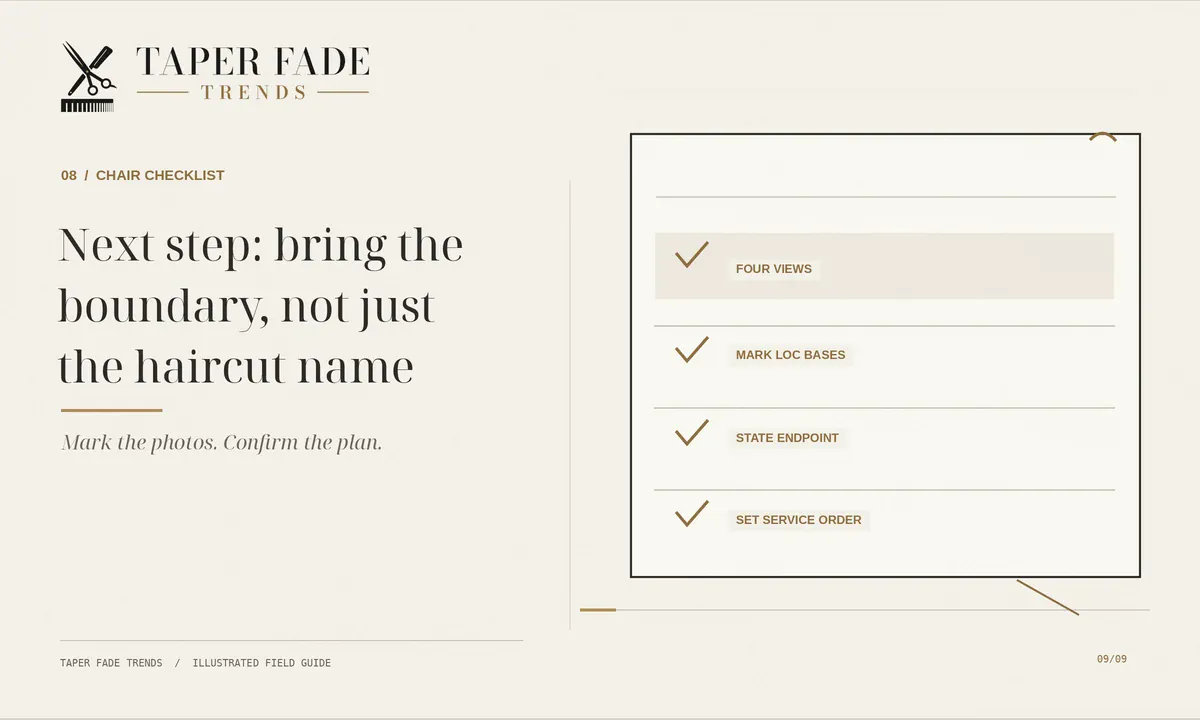
Before the appointment, take front, left, right and back photos of your own head, mark the loc bases that stay, and settle the service order with both professionals. Then bring the marked photos and the taper fade barber brief to the chair.
Keep reading
All guides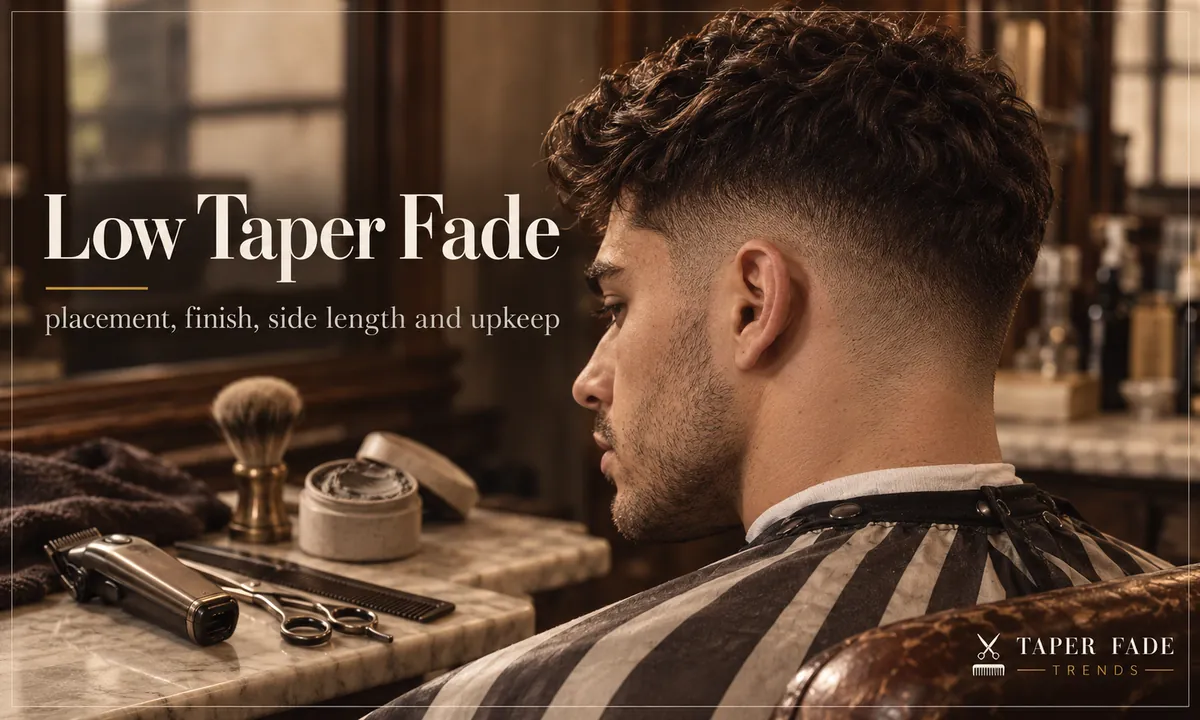
Low taper fade: placement, finish, side length and upkeep
A low taper fade shortens the sideburns and nape and keeps the sides full. See the four choices to make, whether it can go to skin, and what to say.
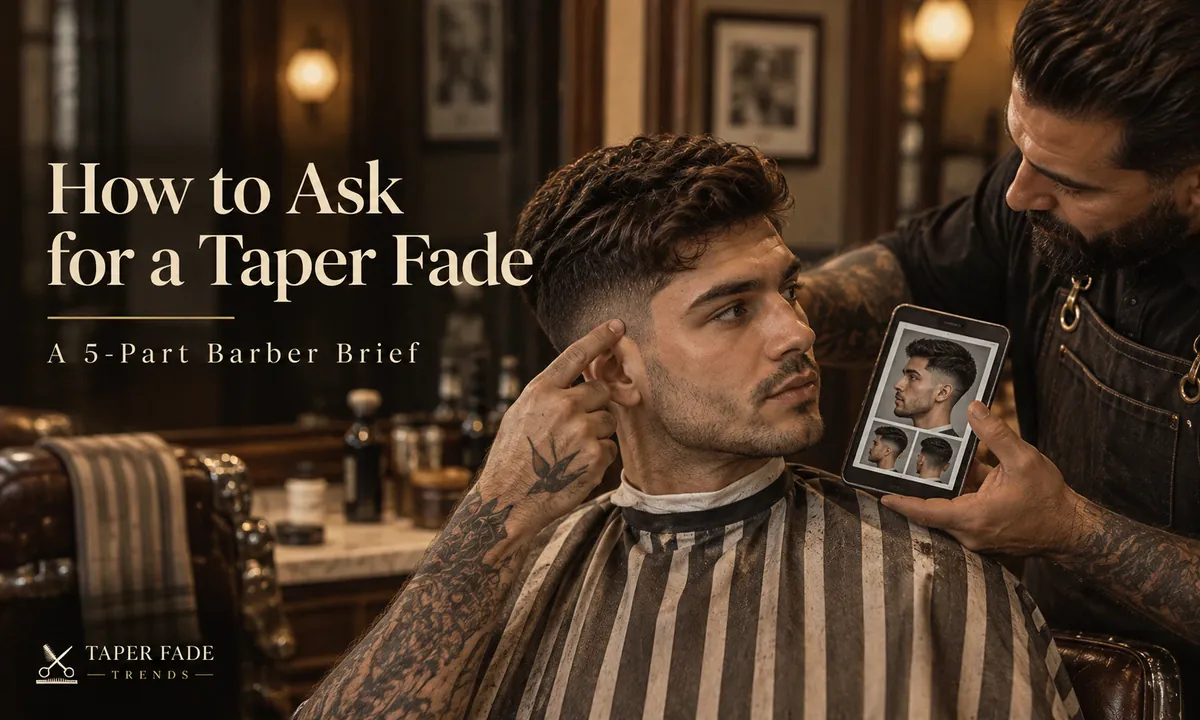
How to ask for a taper fade: a five-part barber brief
How to ask for a taper fade: say where it may reach, how short the base goes, how much side weight stays and what to do on top, then check the plan first.
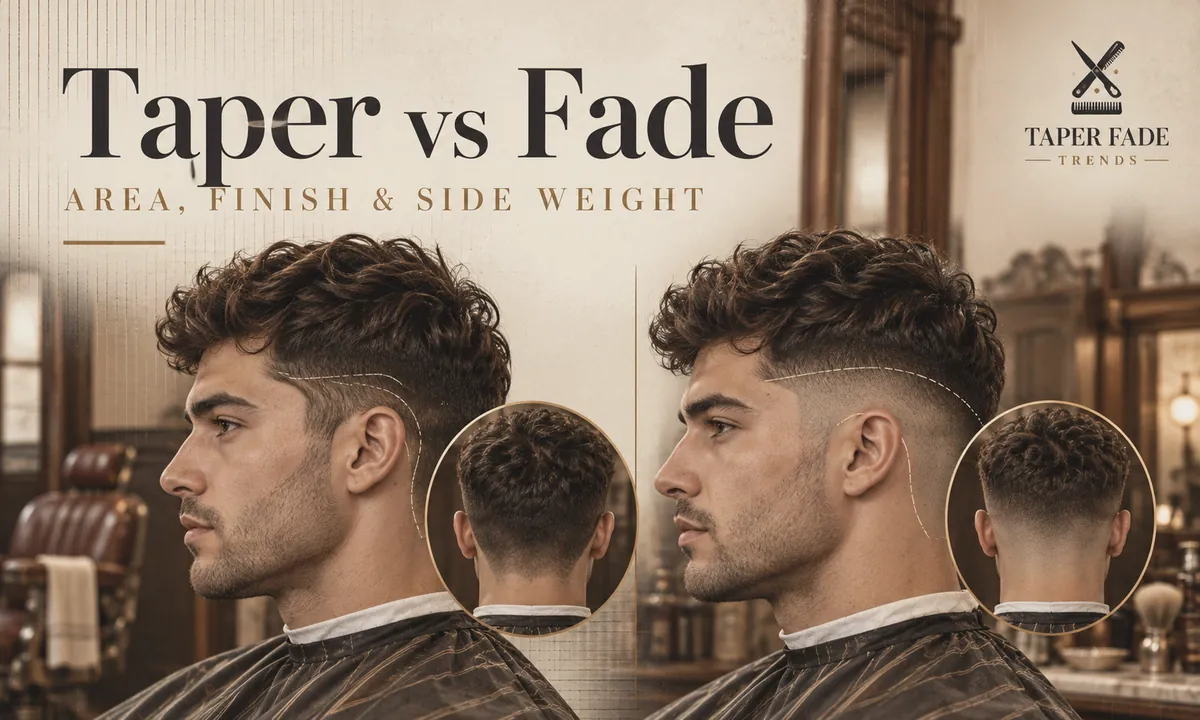
Taper vs fade: what changes in area, finish and side weight
Taper vs fade compared by coverage, height, shortest finish and side weight, with a back-view check and word-for-word barber scripts for either cut.

Low taper vs mid taper: what changes when only the height moves
Low taper vs mid taper compared on height, side weight, shortest finish and grow-out, why switching mid to low takes time, and what to tell your barber.
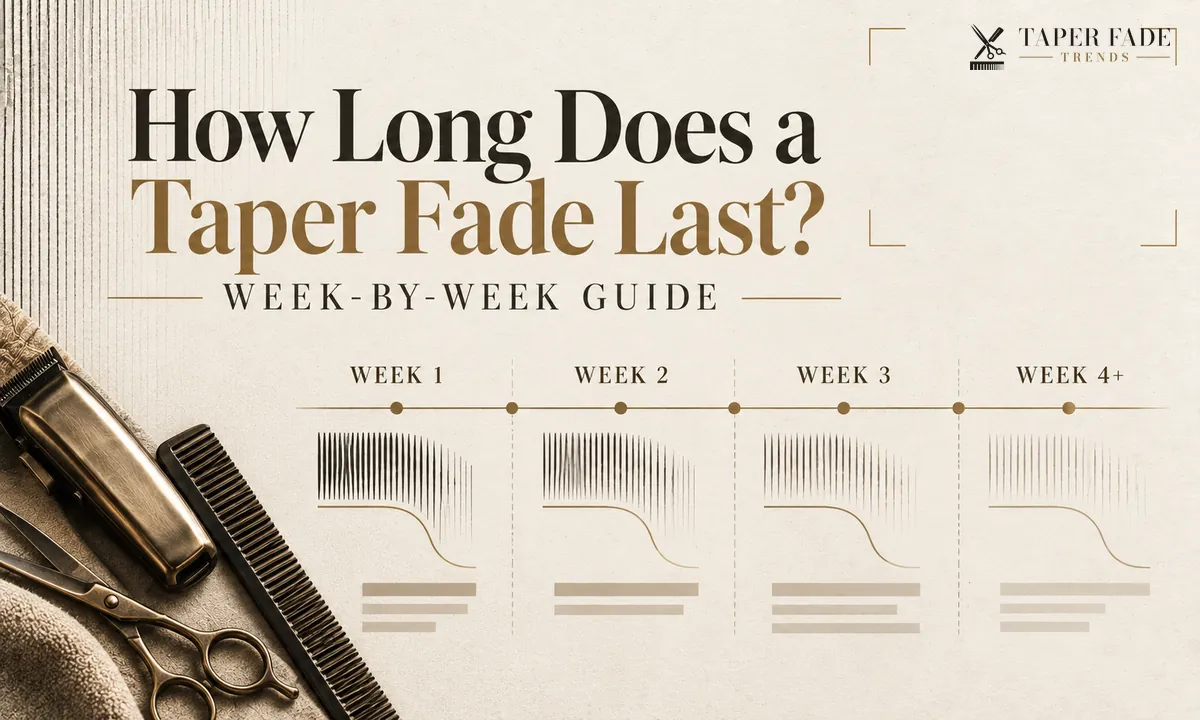
How long does a taper fade last? Fresh, tidy and grown-out stages
How long does a taper fade last? Sharpest for 1 to 2 weeks, tidy for about 2 to 4. See what changes each week and when a touch-up beats a full cut.
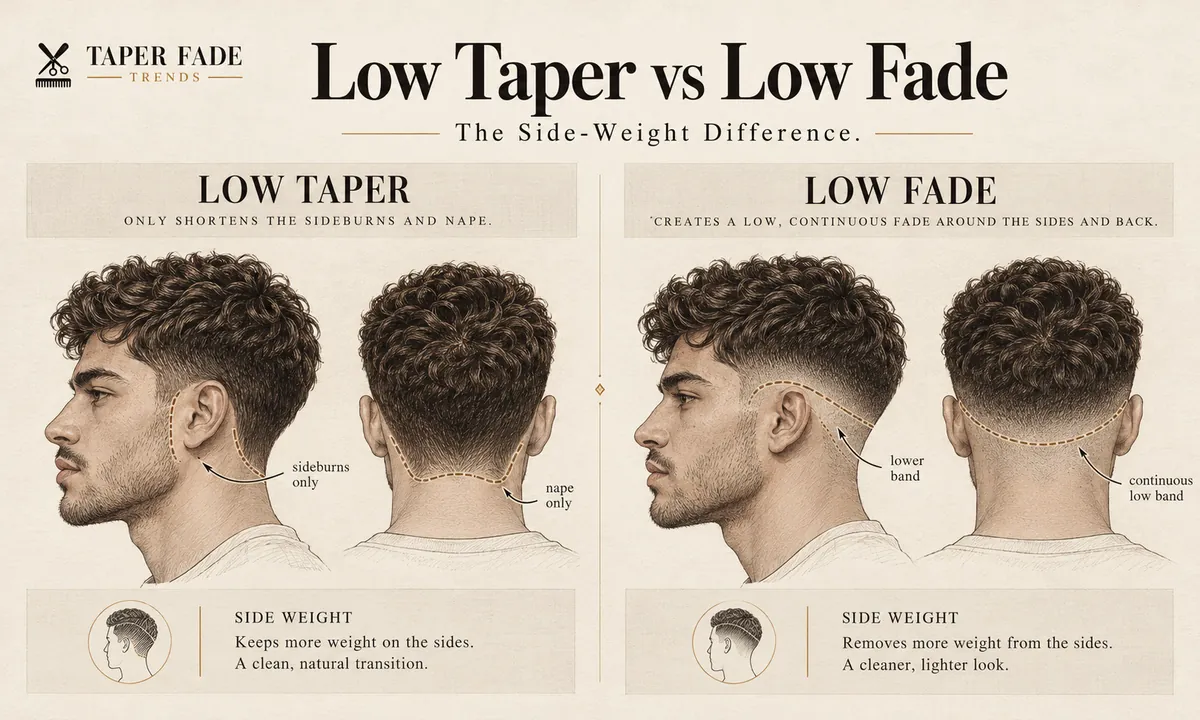
Low taper vs low fade: compare coverage and side weight
Low taper vs low fade: a low taper shortens the sideburns and nape; a low fade shortens a band around the lower sides and back. Compare finish and upkeep.
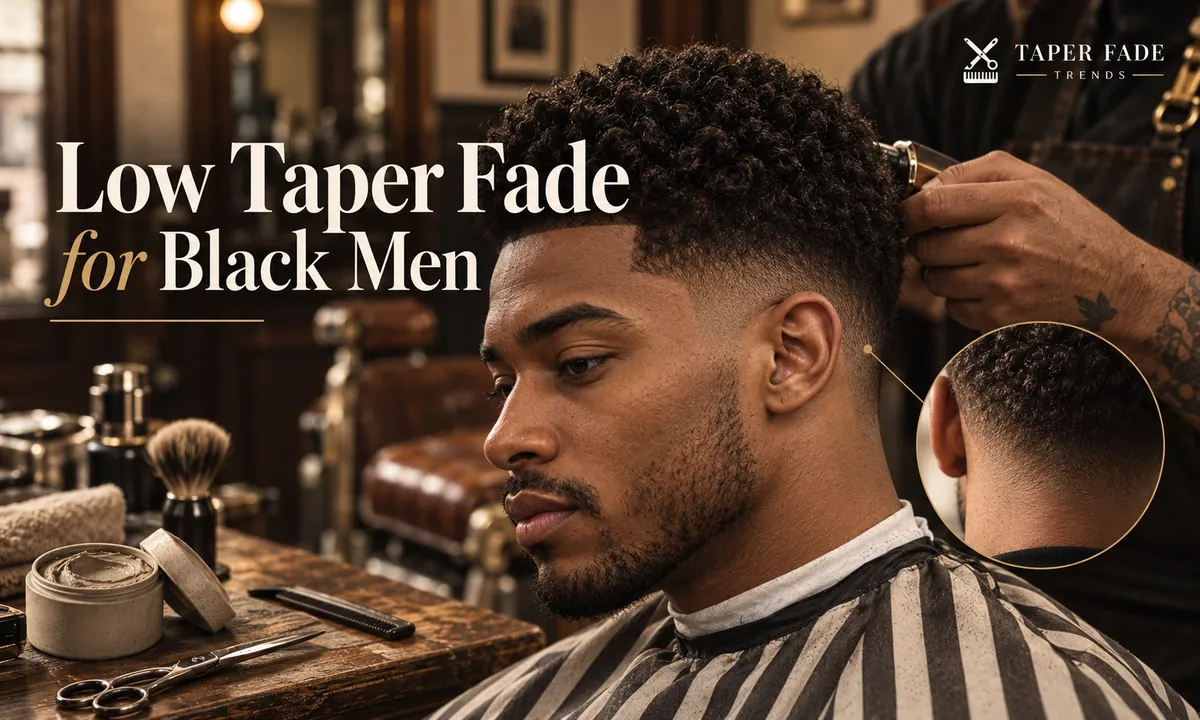
Low taper fade Black male guide: choose the top, hairline and nape
Low taper fade Black male guide: pick the top, hairline and nape, then use a five-point barber brief, with dermatologist advice on bumps at the nape.
More in low taper fades
Low taper fades: all 14- Low taper fade: placement, finish, side length and upkeep12 min
- Low taper fade straight hair: density, sides and top length11 min
- Low taper fade Black male guide: choose the top, hairline and nape10 min
- Curly low taper fade: keep curl width above the ears10 min
- Low taper fade buzz cut: compare top length and finish12 min
- Textured fringe low taper: cut, style and barber brief12 min
- Blowout low taper fade curly hair: keep volume, keep definition11 min
- Low taper fade wavy hair: what to ask for13 min
- Asian low taper fade: choose by how your sides grow7 min
- Middle part low taper fade: keep the curtains connected8 min
- Low taper fade with dreads: protect the loc boundaryYou are here
- Low taper mullet: keep length behind the ears13 min
- Low taper vs mid taper: what changes when only the height moves10 min
- Low taper vs low fade: compare coverage and side weight11 min