Mid taper fade with beard: how the sideburn blend works
A mid taper fade with beard is a mid-height taper concentrated around the sideburn and neckline, with the sideburn deliberately blended into the beard or kept separate from it. Beard density decides which of those the sideburn can support, so describe the placement, the shortest finish, and the connection before anyone mentions a guard number.
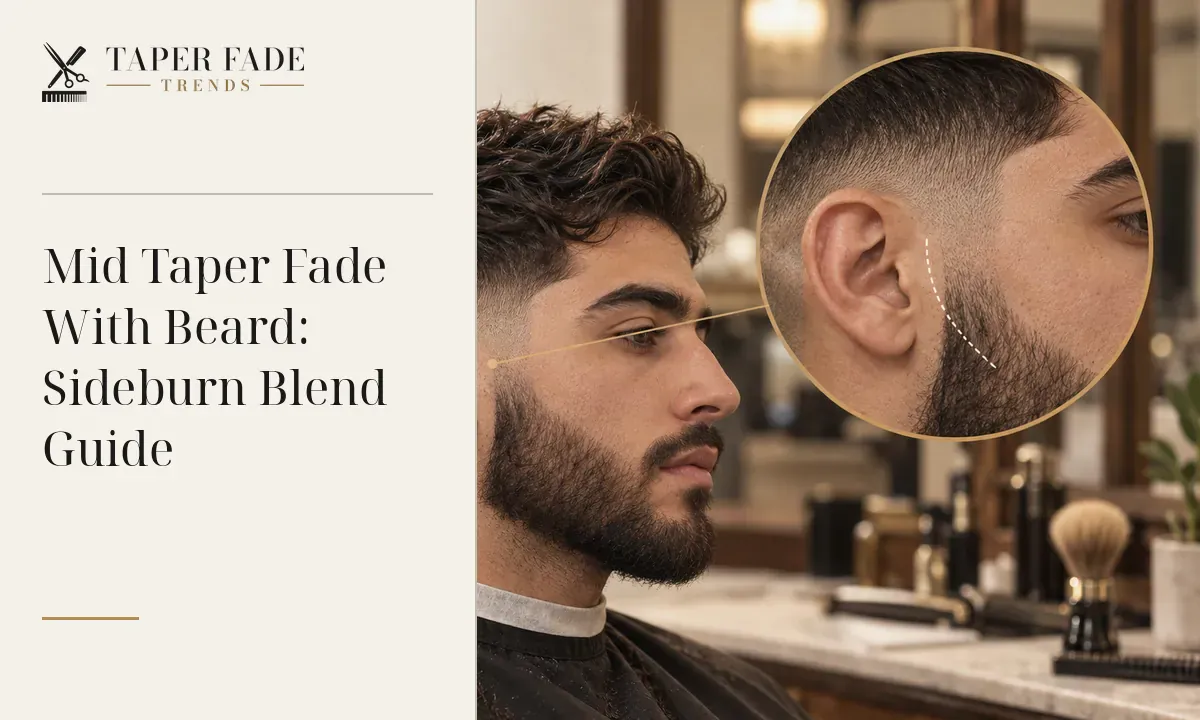
What is a mid taper fade with beard?
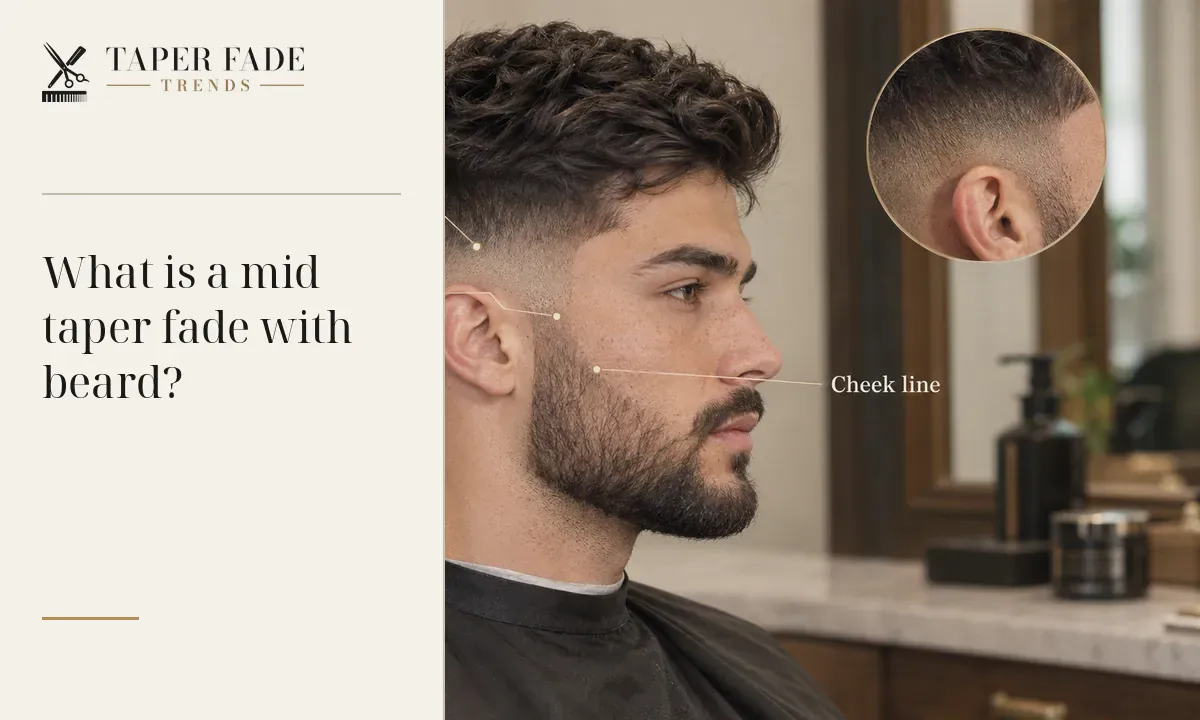
A mid taper fade with beard keeps the haircut’s shortest work at the mid-temple, sideburn, and nape, then plans how the sideburn meets the beard: a gradual blend or a deliberate separation. “Mid” describes where the taper starts. It does not require a skin finish, and no single guard sequence defines it.
A few terms carry the rest of this guide. The sideburn is the strip of hair in front of the ear. The sideburn transition is the short zone where scalp hair hands off to facial hair. The nape is the hairline at the back of the neck. The shortest finish is the minimum visible hair at the base of the taper, and it is a separate choice from taper height: a skin finish shows no hair, a shadow finish leaves a faint shade.
A mid taper works a localized area at the sideburn, ear perimeter, and nape. A full mid fade carries the graduation across most of the sides and back, so it takes off more side coverage. Shops do not use “taper,” “fade,” and “taper fade” the same way, which is why describing placement, coverage, and finish works better than the label. For the haircut without the beard question, see the mid taper fade guide.
Use this table as the order sheet. Anything nobody has specified stays Unknown.
| Specification | What to decide or record |
|---|---|
| Taper placement | Around the mid-temple and sideburn. Point to the start line, because shop naming varies. |
| Coverage | Sideburn, ear perimeter, and nape. A full mid fade covers more of the side. |
| Shortest finish | Skin, shadow, or visible hair. Unknown until you say it. |
| Beard connection | Connected, shorter transition, or deliberate disconnect. |
| Sideburn density | Dense and even, moderate, or sparse and patchy. An observation, not a diagnosis. |
| Beard length | Stubble, short, or full. |
| Top length and shape | Decided separately from taper placement. |
| Edge finish | Natural or lined, at the cheek line and the neckline. |
| Tool settings | Guard, blade, and taper lever only when recorded for a cut you liked. Otherwise Unknown. |
Where the taper meets the beard
The haircut meets the beard at the sideburn, and no single start point fits every head. The barber sets how wide the sideburn transition runs from your natural sideburn, your beard density, the taper height you chose, and where the cheek line sits. The cheek line is the upper edge of the beard on the cheek.
Guides disagree about which taper height connects most easily. A former barber writing for Man of Many says a low taper tends to connect more naturally because the transition stays close to the natural hairline, while Haircut Vibes argues that mid height leaves the gradient the most room. Neither claim is measured. What decides the join on your head is the growth at the sideburn and the shortest finish next to it.
Choose the sideburn transition for your beard density
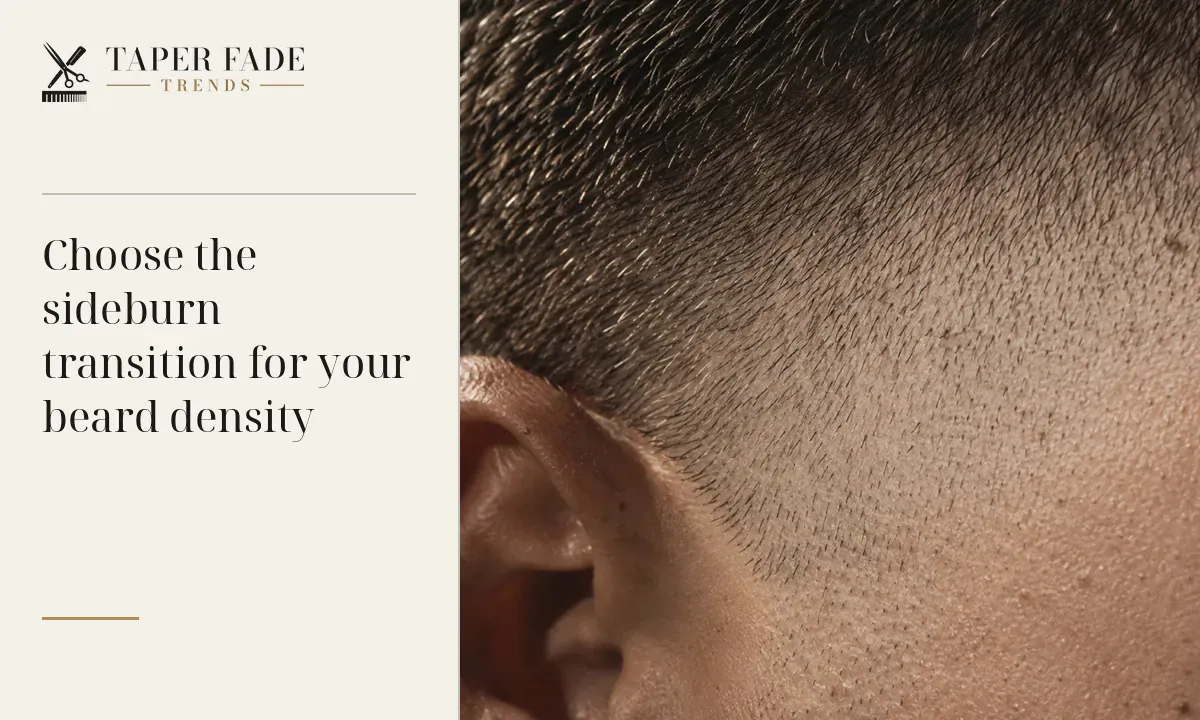
Beard density decides how much visible gradient a barber can build at the sideburn. Dense, even growth gives hair to step through, so the length can change gradually. Sparse or patchy growth usually looks cleaner with a shorter transition or a deliberate disconnect. A haircut reshapes the hair that is already there; it cannot add density.
The beard does not have to mirror the haircut’s height. What has to match is the handoff at the sideburn. In a connected blend, the top of the sideburn should end close to the length of the taper it meets, so there is no unexplained step or accidental hard break. Taper height, sideburn width, cheek line, and beard length are separate controls.
| Situation at the sideburn | Join to consider | Limit to accept |
|---|---|---|
| Dense, even growth | Connected, with a gradual length change | No fixed blend width; the barber sets it for your cut |
| Sparse or patchy growth | Shorter transition, or a deliberate disconnect | The transition can only use the growth that is there |
| Scalp hair and beard differ sharply in texture or color | Deliberate disconnect | The gap has to look planned, not accidental |
| You want contrast between haircut and beard | Deliberate disconnect | You give up the single continuous shape |
Dense, even sideburn and beard
Dense, even growth through the sideburn gives a barber enough hair to step the length down gradually. Gradual does not have to mean wide. How long the transition runs is a decision about your cut, and no single width suits every sideburn.
Before the clippers touch the side, ask the barber to show you where the change in length will start and where it will stop on the cheek.
Sparse or patchy sideburn
A sparse or patchy sideburn can still work with a mid taper fade, but a continuous gradient cannot run through hair that is not there. The barber can shorten the transition, shape around the stronger growth, or leave a deliberate disconnect. Keep what grows there instead of cutting a wide fade by default.
The American Academy of Dermatology (AAD) says genes determine whether a beard has thin, sparse areas. Its grooming tips for patchy growth are to pick a beard style that lets you trim or remove the sparse areas, or to let the beard grow so longer nearby hairs fill the patches. This guide describes what a barber can see at the sideburn. It does not diagnose why growth is sparse.
Connected or deliberately disconnected beard
A connected beard is not automatically better than a disconnected one. Connect the haircut and beard when the sideburn has enough growth for a controlled gradient and you want one continuous shape. Disconnect them when density is weak, the textures or colors differ sharply, or you prefer contrast. The failure is an accidental hard break, not separation itself.
A connected beard blend is a gradual length change through the sideburn with no accidental hard break. Philips’ beard-fade guide describes the same goal from the beard side: shorten the beard in stages toward the sideburn until the top of the sideburn blends with the sides of the haircut. A disconnected beard is an intentional visible separation between the haircut and the beard, not a failed fade.
Once you know which connection your sideburn can carry, compare it across beard lengths before you choose a reference photo.
Mid taper fade with beard examples to compare
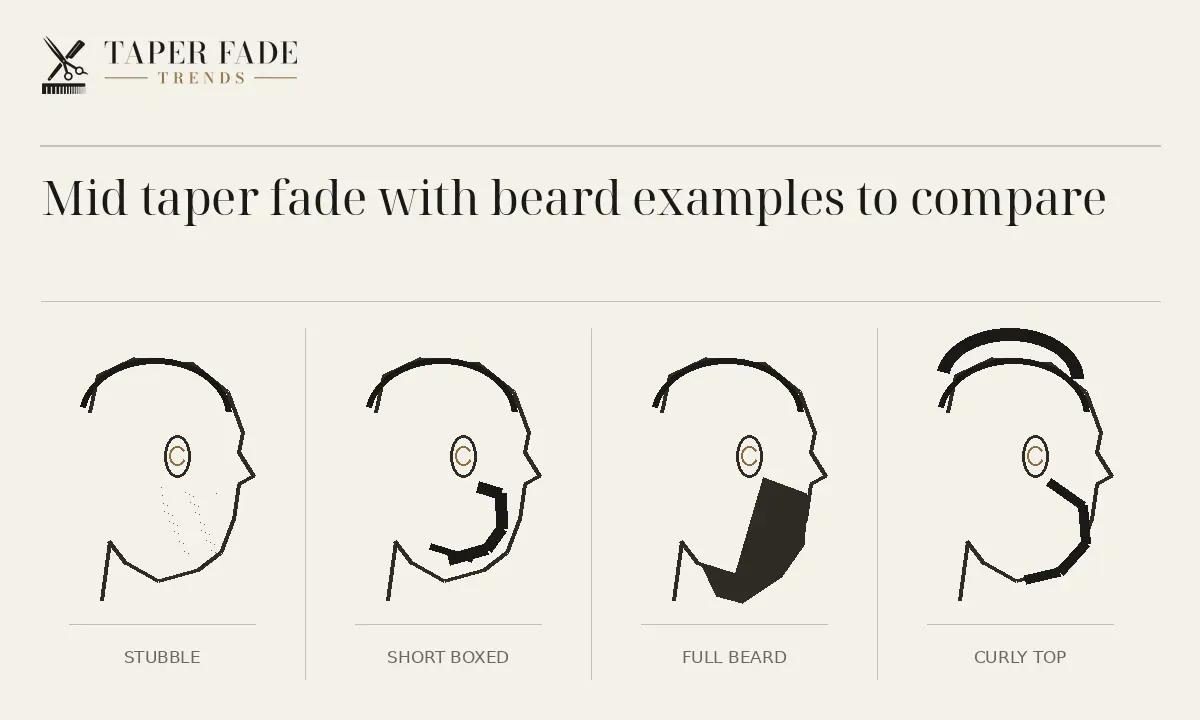
Four profiles show how beard length, edge finish, and top texture change the same mid taper fade with beard at the sideburn. They are labeled illustrations built from the specification table, not photographs of recorded cuts, so none of them lists a clipper setting.
| Profile | Deciding variable | What changes at the sideburn | Choose it if |
|---|---|---|---|
| Stubble with a shadow finish | Beard length | Beard and taper sit close in length, so the transition is a small step | You want the beard and sides to read as one short surface |
| Short boxed beard with a defined connection | Edge finish | The transition and the outline are easy to see | You want crisp edges and will name the cheek line and neckline |
| Full beard with a longer transition | Beard length and density | The transition can run longer, or stop on purpose | Your sideburn growth is dense and even, or you want a disconnect |
| Curly or coily top with a shaped beard | Top texture | The top keeps its volume while the beard connection is judged on its own | Your top is curly or coily and you want the two decisions kept apart |
Stubble with a shadow finish
Stubble keeps the beard and the taper close in length, so the sideburn transition is a small step rather than a long gradient. Pairing it with a shadow finish leaves a little hair on both sides of the join.
Say the finish out loud. A photo rarely shows whether the shortest point is skin or shadow.
Short boxed beard with a defined connection
A short boxed beard is trimmed to an even short length with a defined outline. A defined connection is a sideburn transition whose width and end points are set on purpose, whether it blends or stops. The deciding variable is the edge finish: whether the cheek line and neckline stay natural or are lined.
Decide the beard edges and the haircut perimeter together, so both read as the same finish.
Full beard with a longer transition
A full beard gives the sideburn transition more length to cover, so it can run longer. How much longer is a decision for the cut; no number applies to every beard. Dense, even growth is what lets a longer change read as gradual.
With sparse growth at the sideburn, use the shorter transition or the deliberate disconnect from the density table instead.
Curly or coily top with a shaped beard
A curly or coily top changes the bulk and styling of the cut, not what the beard connection is, so decide the top and the sideburn transition separately. A shaped beard is a beard trimmed to a deliberate outline.
Curly and coily hair usually looks shorter dry than stretched, so describe the top length as you want it to look dry and bring a reference photo of similar texture. The mid taper fade for curly hair guide covers dry length and side width in detail.
What to tell your barber
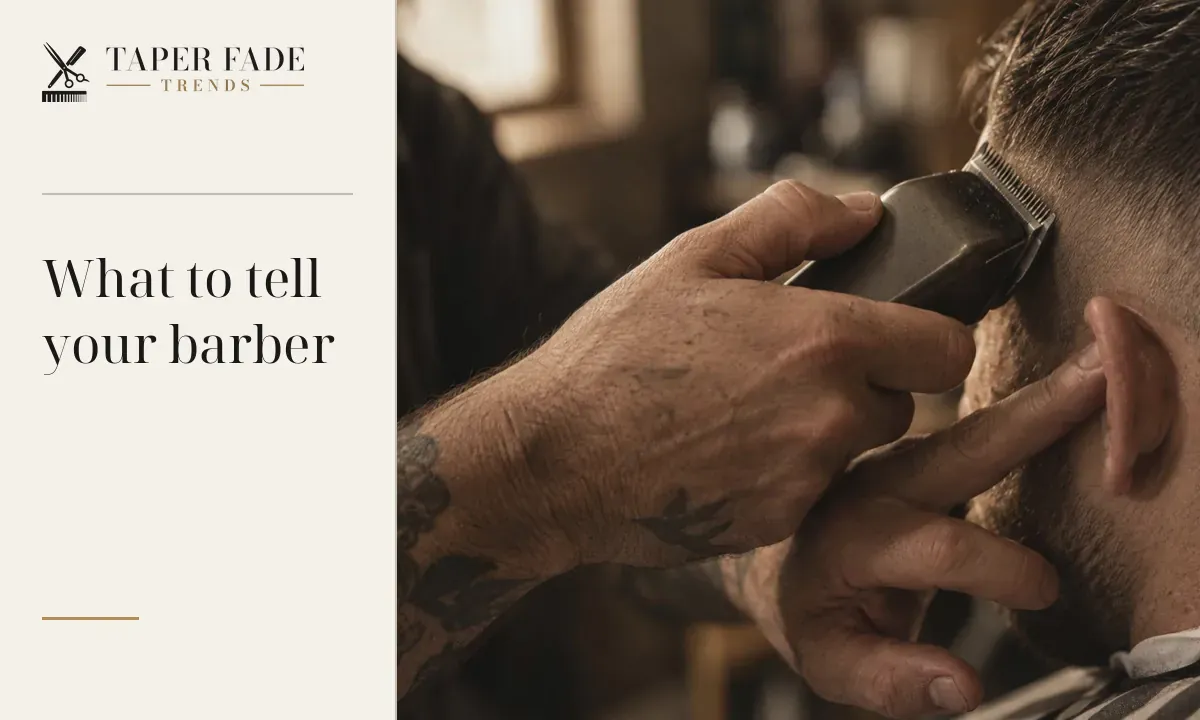
Tell the barber five things you can see: where the taper should start, whether the shortest point shows skin or shadow, what length and shape stay on top, whether the sideburn connects to the beard, and whether the cheek line and neckline look natural or lined. Show a side-profile photo with the request.
Book the haircut and the beard trim in the same visit, at least the first time, so one barber shapes the sideburn from both sides. For the general consultation, read how to ask for a taper fade.
Five decisions to state
- Where the taper should start. Point to it on a side-profile photo, because “mid” varies by shop.
- Skin or shadow at the shortest point. If you are unsure, say so and ask the barber to explain the difference on your hair.
- What length and shape stay on top, with your hair texture named in the same sentence.
- Whether the sideburn connects to the beard or stays visibly separate. If your sideburn growth is patchy, say so and ask what it can support.
- Whether the cheek line and neckline look natural or lined.
A script that covers all five: “I want a mid taper starting about [here, shown in the photo]. Keep [skin / shadow / visible hair] at the shortest point. Leave [top length and shape] on top. At the sideburn, [blend into the beard / keep a clean separation]. Keep the cheek line and neckline [natural / lined].”
Why a side-profile photo matters
A side-profile photo shows the two things a barber has to judge for this cut: where the taper starts and how the sideburn meets the beard. A front photo shows neither clearly. The former barber at Man of Many gives the same advice: bring a side profile and a back view, not a single front shot.
A photo shows a result, not the settings that produced it, so pair it with the five decisions. Check that your reference set covers:
- The left side, with the ear and sideburn in frame
- The right side, framed the same way, because the two sides can differ
- The front, with the hairline and cheek line visible
- The back, with the nape and neckline visible
- Even light and no heavy filter, so density and edges are not altered
The cut is decided in the chair. What you can safely maintain between visits is a smaller job.
Styling, grow-out, and skin limits
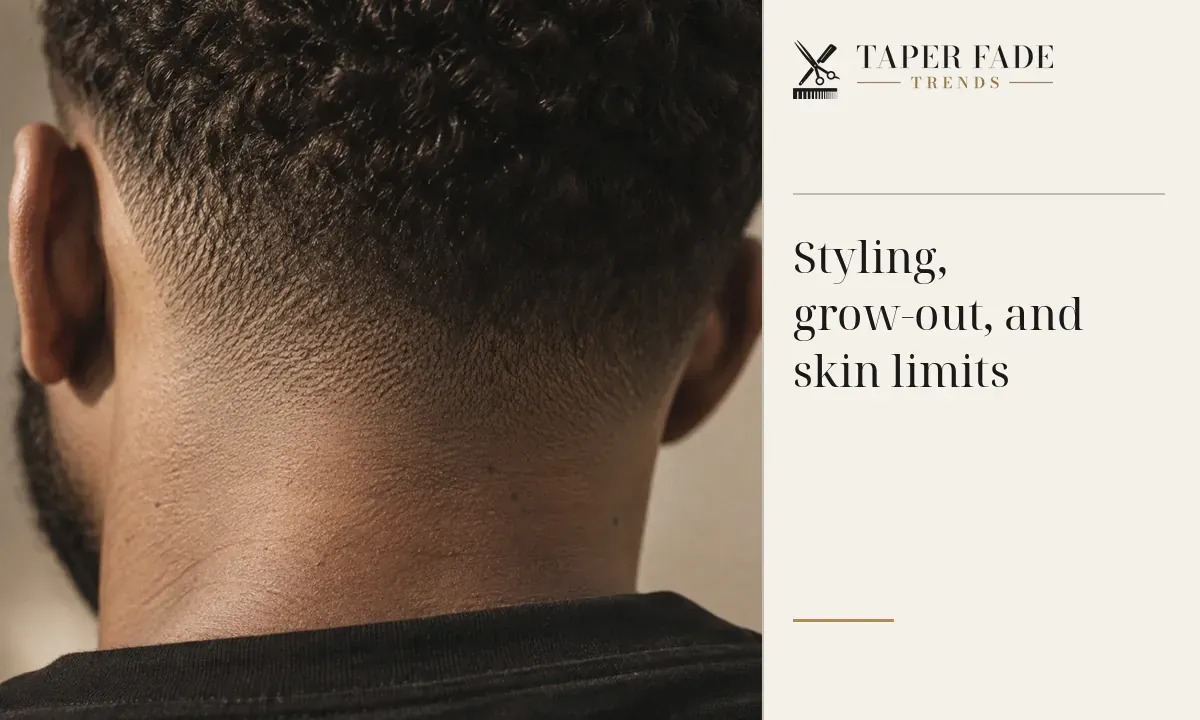
No universal rebooking interval exists for a mid taper fade with beard. Published guides give fixed ranges that disagree, roughly one to four weeks. Regrowth shows first where hair is shortest, so a skin finish and lined edges bring the next visit forward, while a shadow finish and natural edges push it back.
| Variable | Rebook sooner when | Wait longer when |
|---|---|---|
| Shortest finish | Skin or shadow, where regrowth shows first | Visible hair stays at the shortest point |
| Contrast between hair and skin | High, so regrowth is easy to see | Low, so regrowth blends in |
| Growth rate | Your hair grows quickly | Your hair grows slowly |
| Cheek line and neckline | Lined, so grow-in crosses a visible edge | Natural, so there is no line to cross |
| How crisp you like it | You want the day-one sharpness | You accept some softness |
Track your own cycle instead of a calendar. The guide to how long a taper fade lasts shows how to set that baseline.
Home maintenance versus the blend
Brush and shape the beard at home, and trim obvious strays at the neckline or cheek line only if you are confident. Leave the sideburn transition to a barber unless you cut hair yourself; reshaping it at home is how the line ends up higher than intended.
Rebook when the cut stops matching a side-profile photo of a cut you liked. These cues usually show first:
- The sideburn handoff develops a step, or the gap of a deliberate disconnect fills in.
- The neckline loses the line you chose.
- The beard perimeter loses its outline.
Trimming only the beard between haircuts moves one side of the join and leaves the other where it was. The taper fade maintenance guide covers what to touch and what to leave.
Skin-close finish, razor bumps, and the nape
Skin is an optional finish for a mid taper fade with beard, not part of its definition. A shadow finish keeps visible hair at the shortest point, which means less scalp exposure and fewer close passes at the sideburn and nape. If close shaving gives you bumps, a shadow finish is the gentler request.
The AAD explains in its razor bump guidance that razor bumps form when shaving cuts hairs short and coarse, curly hairs curve back into the skin, and that they are especially common in men with darker skin tones. Its advice is to shave in the direction the hair grows, avoid shaving closely or pressing hard, and never pull the skin taut. The AAD also notes that ingrown hairs can appear during the stubble phase of growing a beard or after trimming one.
Bumps that keep returning on the back of the neck can be acne keloidalis nuchae (AKN) rather than razor bumps. The AAD lists frequent close-shave haircuts among the things that irritate the nape, and its self-care advice for people with AKN is to choose haircuts that avoid shaving the back of the neck and head.
When another option is a better fit
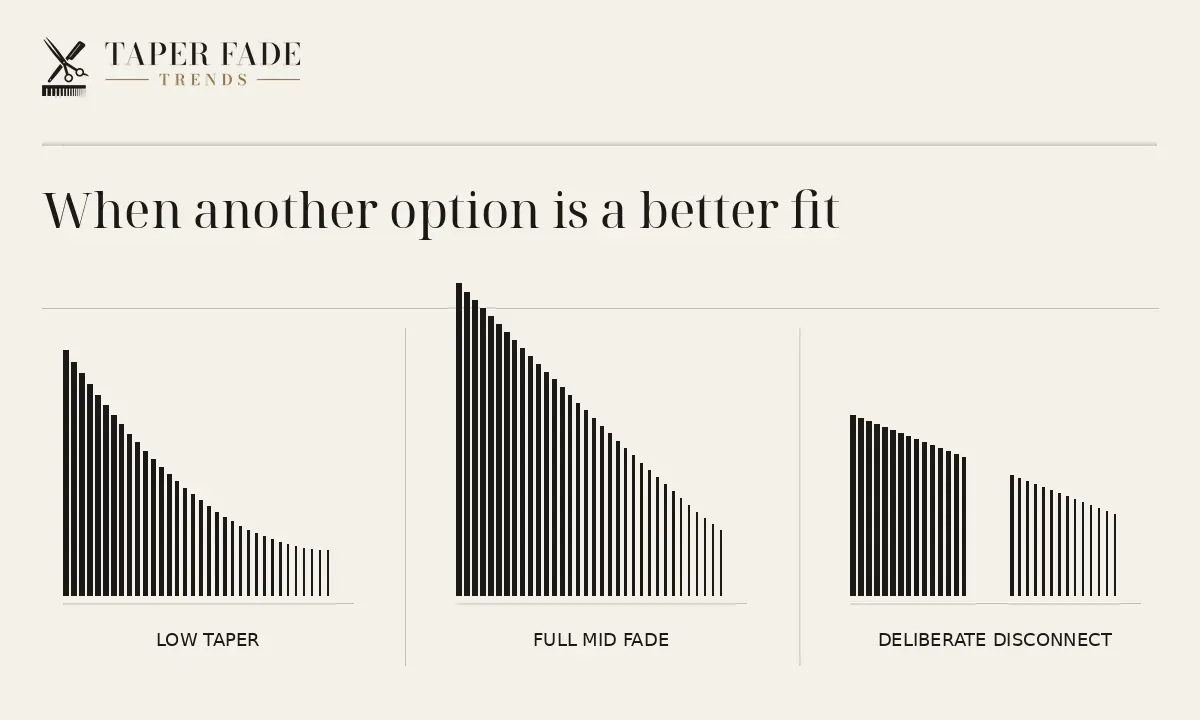
Choose a low taper to keep more side bulk, a full mid fade for stronger contrast, or a deliberate disconnect if your sideburn growth is sparse. The disconnect changes only the beard connection, so it can sit on any taper height.
| Option | Choose it if | What changes | What you give up |
|---|---|---|---|
| Low taper | You want to keep more side bulk | The taper starts lower, so more of the side stays full | Some contrast |
| Full mid fade | You want stronger contrast | The graduation runs across most of the side and back | Side bulk; the label also varies by shop, so describe coverage |
| Deliberate disconnect | Your sideburn growth is sparse, or you want separation | The beard stops short of the sideburn on purpose | The single continuous shape |
For the full height comparison, read low taper vs mid taper.
Method, image provenance, and sources
Taper Fade Trends prepared this guide to help readers describe and compare a mid taper fade with beard before a barber visit. Terms are not standardized: shops use “taper,” “fade,” and “taper fade” differently, and where a mid taper starts varies by shop. The guide therefore describes placement, coverage, and finish instead of relying on labels, and where published guides disagree, it says so.
The figures on this page are illustrations, labeled in each caption. They explain geometry; they are not photographs of a real haircut. No measured cut record, grow-out log, or barber review is claimed, and no clipper settings are given because none were recorded. Skin guidance comes from the American Academy of Dermatology. The page is written and maintained by the Taper Fade Trends editorial team.
Sources cited in this guide:
- American Academy of Dermatology: DIY treatment for 5 common beard problems
- American Academy of Dermatology: Razor bump remedies for men with darker skin tones
- American Academy of Dermatology: Acne keloidalis nuchae, causes
- American Academy of Dermatology: Acne keloidalis nuchae, self-care
- Philips: How to fade your beard
- Man of Many: 7 best taper fade haircuts for men, according to a barber
- Haircut Vibes: 20 mid fade haircut ideas with a beard
If the beard connection is settled but the haircut height is not, compare the full mid taper fade guide next.
Keep reading
All guides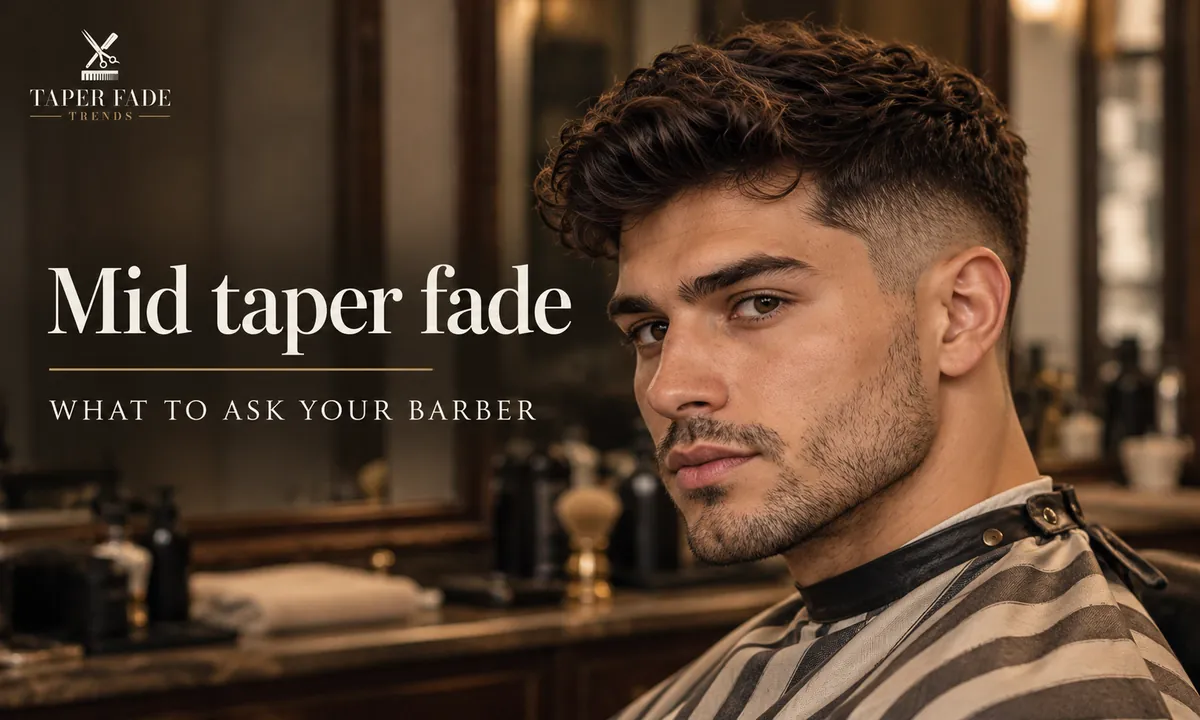
Mid taper fade: what it is and what to ask your barber
What a mid taper fade is, how it differs from a full mid fade, why skin is optional, and the four specs to give your barber before the cut starts.
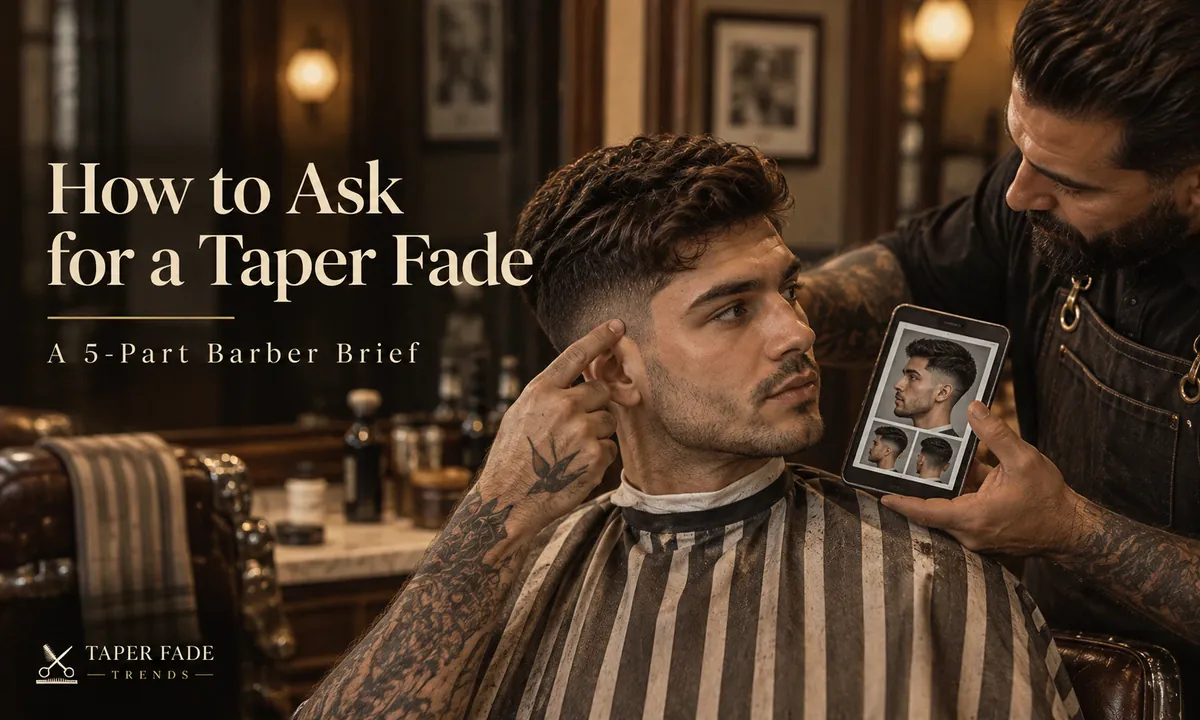
How to ask for a taper fade: a five-part barber brief
How to ask for a taper fade: say where it may reach, how short the base goes, how much side weight stays and what to do on top, then check the plan first.
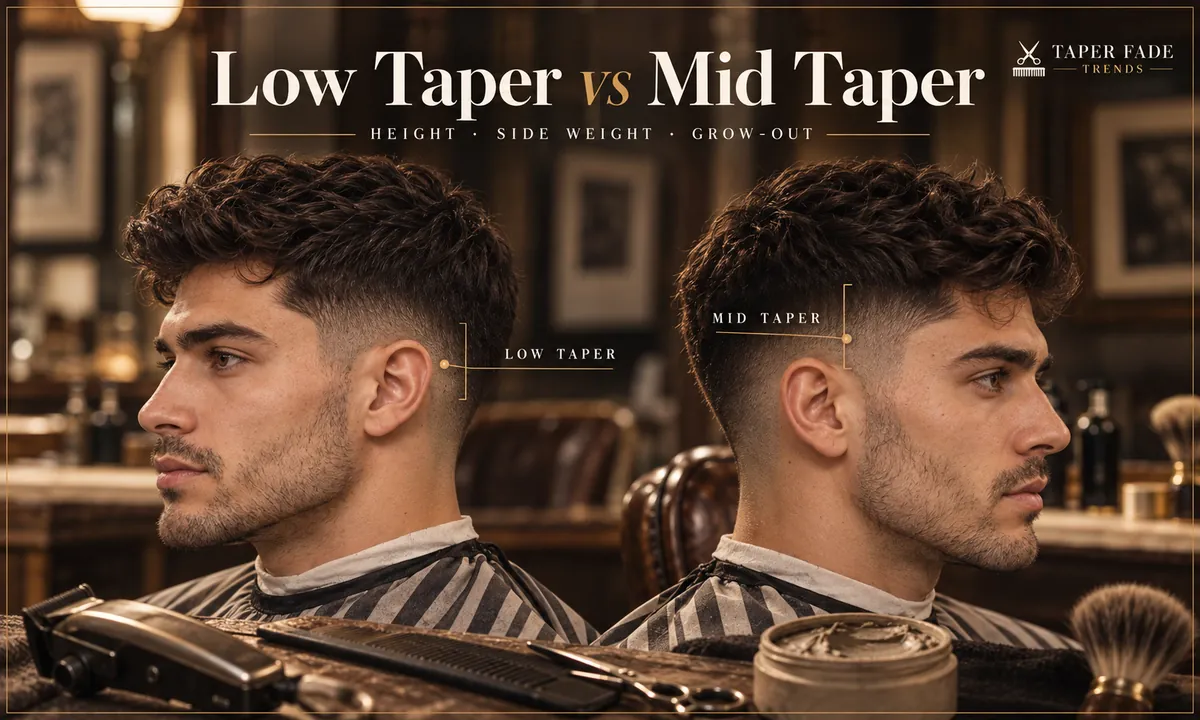
Low taper vs mid taper: what changes when only the height moves
Low taper vs mid taper compared on height, side weight, shortest finish and grow-out, why switching mid to low takes time, and what to tell your barber.
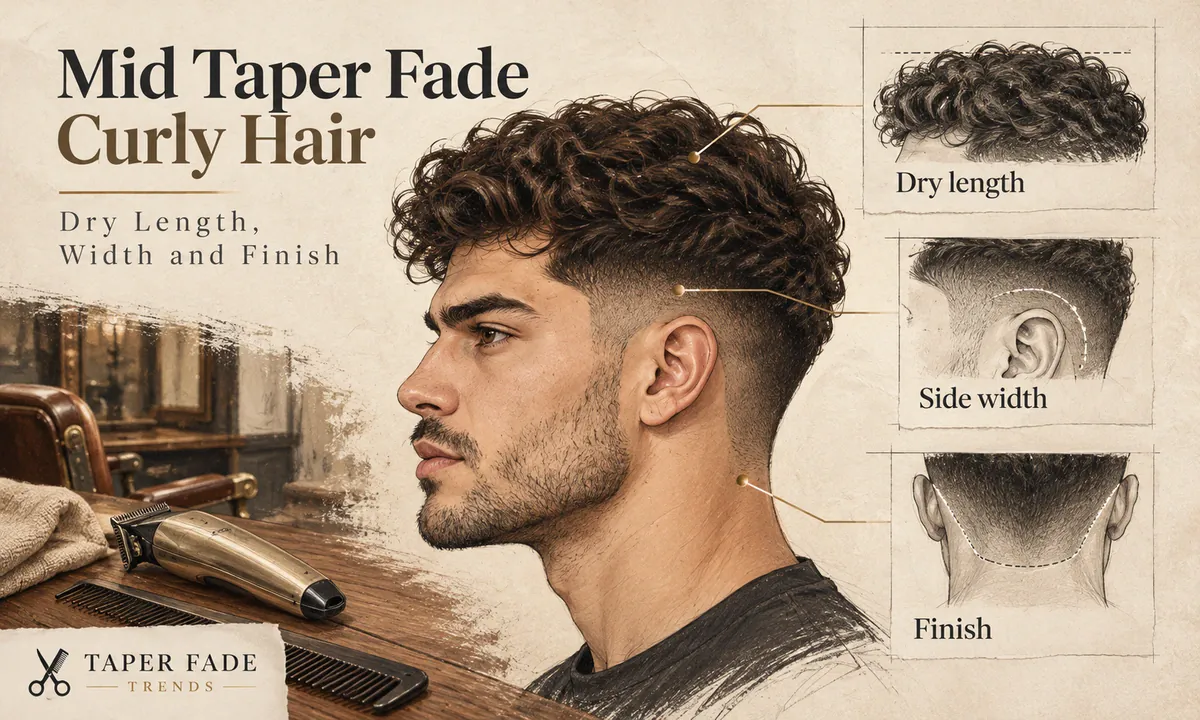
Mid taper fade curly hair: choose dry length, side width and finish
Mid taper fade curly hair guide: what it keeps vs a full mid fade, how to judge dry length and side width, and the four specs to give your barber.
Mid taper fade buzz cut: top length, coverage and finish
Compare Wahl #1, #2 and #3 tops on a mid taper fade buzz cut, see how it differs from a full mid fade, and get a five-line brief to read to your barber.
Mid taper fade wavy hair: work with the natural bend
Mid taper fade wavy hair guide: where the taper starts, how much side weight to keep, why top-length advice conflicts, and what to tell your barber.
High taper fade with beard: how the sideburn meets the beard
A high taper fade with beard hinges on the sideburn. Choose a blend or a clean break, plan around beard density, then brief your barber before the cut.
More in mid taper fades
Mid taper fades: all 15- Mid taper fade: what it is and what to ask your barber12 min
- Mid taper blowout: keep volume without flattening the sides11 min
- Mid taper fade curly hair: choose dry length, side width and finish9 min
- Mid taper fade straight hair: fine, flat and outward-growing sides11 min
- Mid taper fade Black male guide: what stays and what to ask for13 min
- Mid taper fade wavy hair: work with the natural bend12 min
- Mid taper fade buzz cut: top length, coverage and finish8 min
- Mid taper fade with beard: how the sideburn blend worksYou are here
- Mid taper fade middle part: set the part, then the taper12 min
- Mid taper with dreads: where the clippers stop and your locs begin8 min
- Mid taper fade Afro: choose a rounded or squared top10 min
- Mid taper fade waves: preserve 360-wave connections11 min
- Low taper vs mid taper: what changes when only the height moves10 min
- Mid taper vs mid fade: how much side hair comes off10 min
- How to choose taper height using side weight12 min